❌

Reading view

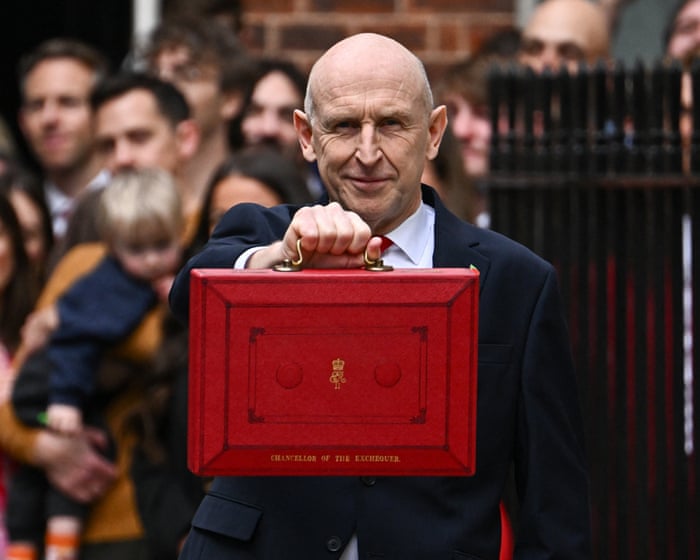
Healey backs away from cutting welfare cost amid warnings of public finance shortfall

Experts round on chancellor over ‘scattergun’ budget, saying he ducked big tax and spending decisions

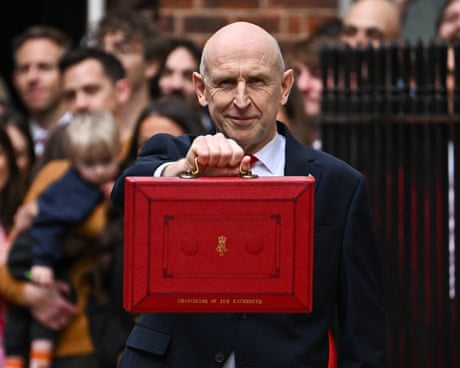
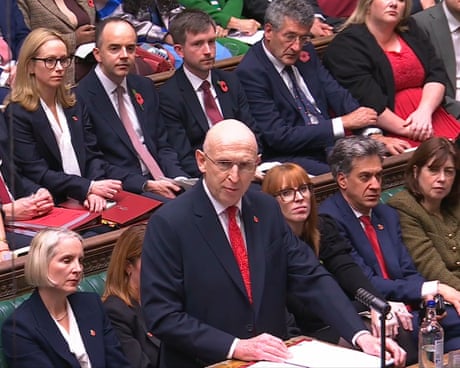
John Healey has backed away from cutting the cost of welfare this parliament, amid dire warnings his first budget could lead to brutal spending cuts because of a £28bn shortfall in public finances.

Experts rounded on Healey’s steady-as-she-goes budget on Thursday, with the Institute for Fiscal Studies saying he had left himself a mountain to climb by ducking big tax and spending decisions.

Continue reading...

© Photograph: Wiktor Szymanowicz/Future Publishing/Getty Images

© Photograph: Wiktor Szymanowicz/Future Publishing/Getty Images

© Photograph: Wiktor Szymanowicz/Future Publishing/Getty Images

  •  

The ‘breathing space budget’ – breathing space for the government, that is | John Crace

John Healey aced the morning-after media round because his Martin Lewis measures left nothing to challenge him on

Maybe it had been one of the greatest acts of political genius after all. The day after the budget is usually the moment when things start to fall apart. When clued-up journalists and economists have had a chance to go through all the fine points the chancellor would rather everyone had missed. The forecasts that suggest everything is predicated on a wing and a prayer. The hidden unfunded tax cuts. The greater-than-expected spending commitments.

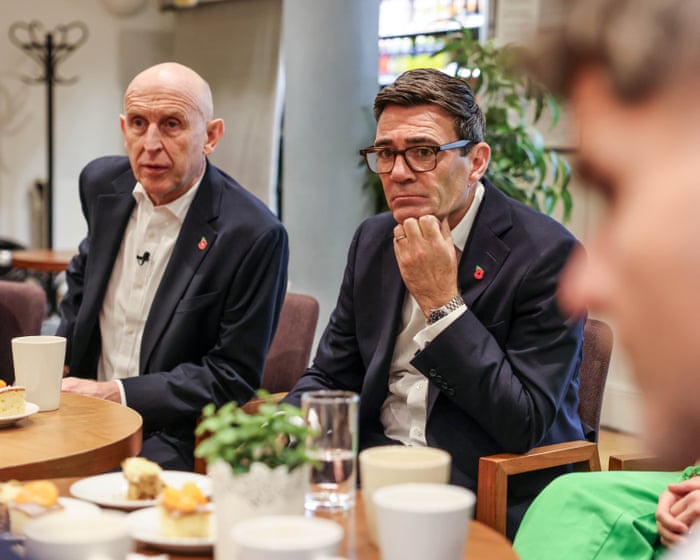
But on Thursday morning Andy Burnham and John Healey could afford themselves a sigh of relief. All had gone about as well as they could have hoped. It turns out that when you don’t make any massive tax or spending commitments, there isn’t a great deal to unravel. All there had been was a raft of small-scale interventions designed to help people with their personal finances. Call it the Martin Lewis budget. In fact, Healey and Lewis now seem unable to get through the day without spending some time with each other. They certainly can’t stop talking about one another. It’s becoming unhealthily co-dependent. The gods of small things.

Continue reading...

© Photograph: WPA/Getty Images

© Photograph: WPA/Getty Images

© Photograph: WPA/Getty Images

  •  

UK politics: Burnham denies preventing ministers from speaking about plans for closer relationship with EU – as it happened

Prime minister wrote to ministers saying he did not want them to ‘advocate for specific options or opine on the likely outcome of the process’

Selling nicotine-free vapes to children under the age of 18 has become illegal from today, the government has said.

Children were already banned from buying vapes containing nicotine. But, under the Tobacco and Vapes Act, shops across the UK will now be banned from selling nicotine-free vapes, and nicotine pouches, to children.

Vaping can be a way to help established adult smokers who are already addicted to nicotine from tobacco to swap to a less dangerous product. Vaping is considered safer than smoking, but that is a low bar. Vapes should therefore never be used by children or non-smokers.

Some children have already come to harm from bad reactions to vapes. The long-term health harms of vaping in today’s children will only become clear over time. They are however unlikely to be good; inhaling multiple, often heated, chemicals into the lungs may well do irreversible harm.

Continue reading...

© Photograph: Darren Staples/AFP/Getty Images

© Photograph: Darren Staples/AFP/Getty Images

© Photograph: Darren Staples/AFP/Getty Images

  •  

Healey’s budget paves way for ‘brutal’ spending review next year, warns IFS

Thinktank says chancellor has given himself a mountain to climb after ducking big decisions in low-key speech

John Healey has paved the way for a “brutal” spending review next year after his budget failed to cover a £28bn shortfall in the public finances needed to avoid a return to austerity, according to Britain’s leading tax and spending experts.

A day after his address to the Commons, the Institute for Fiscal Studies (IFS) said the chancellor had left himself a mountain to climb by ducking several big decisions in his debut tax and spending statement.

Continue reading...

© Photograph: WPA/Getty Images

© Photograph: WPA/Getty Images

© Photograph: WPA/Getty Images

  •  

John Healey faces questions over budget leak that moved bank share prices

Treasury select committee asks FCA to investigate whether tax surcharge leak led to ‘improper release of inside information’

John Healey is facing pressure to clarify whether he permitted a market-sensitive budget leak ahead of his statement, which moved bank share prices.

The chair of the influential Commons Treasury select committe, Meg Hillier, has written to the Treasury and the Financial Conduct Authority watchdog (FCA) to assess whether a story leaked to Bloomberg, and published more than an hour before the budget was revealed, led to an “improper release of inside information”.

Continue reading...

© Photograph: House of Commons/Reuters

© Photograph: House of Commons/Reuters

© Photograph: House of Commons/Reuters

  •  

Lloyds executive criticises Healey for linking bank tax rises to energy bill support

Chief financial officer says he hopes budget measure is temporary as sector provides loans that fuel growth

A senior Lloyds Banking Group executive has criticised the chancellor for linking bank tax increases to energy bill support for UK households, as he warned the government against extending the higher levy beyond March 2028.

Lloyds’s chief financial officer, William Chalmers, acknowledged that the economic environment was “challenging” but said the government should not seek to ease pressure on households at the expense of the banking sector as it provides loans that could fuel UK growth.

Continue reading...

© Photograph: Nathan Stirk/Getty Images

© Photograph: Nathan Stirk/Getty Images

© Photograph: Nathan Stirk/Getty Images

  •  

‘Scattergun’ budget will still leave Britons facing higher energy bills, says thinktank

Healey’s attempt to provide ‘breathing space’ gives rich almost as much as poor, says Resolution Foundation

John Healey delivered a “scattergun” budget that did little to boost living standards and left Britain facing “a painful second half” of the parliament, a leading economic thinktank has warned.

The Resolution Foundation said on Thursday that measures to ease household gas and electricity costs would still leave energy bills higher this year than during the last energy shock.

Continue reading...

© Photograph: RichSTOCK/Alamy

© Photograph: RichSTOCK/Alamy

© Photograph: RichSTOCK/Alamy

  •  

UK politics: Burnham denies preventing ministers from speaking about plans for closer relationship with EU – as it happened

Prime minister wrote to ministers saying he did not want them to ‘advocate for specific options or opine on the likely outcome of the process’

Selling nicotine-free vapes to children under the age of 18 has become illegal from today, the government has said.

Children were already banned from buying vapes containing nicotine. But, under the Tobacco and Vapes Act, shops across the UK will now be banned from selling nicotine-free vapes, and nicotine pouches, to children.

Vaping can be a way to help established adult smokers who are already addicted to nicotine from tobacco to swap to a less dangerous product. Vaping is considered safer than smoking, but that is a low bar. Vapes should therefore never be used by children or non-smokers.

Some children have already come to harm from bad reactions to vapes. The long-term health harms of vaping in today’s children will only become clear over time. They are however unlikely to be good; inhaling multiple, often heated, chemicals into the lungs may well do irreversible harm.

Continue reading...

© Photograph: Darren Staples/AFP/Getty Images

© Photograph: Darren Staples/AFP/Getty Images

© Photograph: Darren Staples/AFP/Getty Images

  •  

Healey vows to cut welfare bill before next election with ‘tough’ approach to young people

Chancellor’s comments come as fiscal watchdog says disability benefits will cost £100bn a year before end of decade

John Healey had said there will be a reduction in the welfare bill before the next election, with a “tough” approach to young people who do not accept support to get a job or training.

The chancellor was repeatedly pressed on the issue in broadcast interviews after documents from the Office for Budget Responsibility suggested sickness and disability benefits would cost £100bn a year before the end of the decade.

Continue reading...

© Photograph: Bloomberg/Getty Images

© Photograph: Bloomberg/Getty Images

© Photograph: Bloomberg/Getty Images

  •  

‘I earn £126,000 – but nothing’s left at the end of the month’: readers react to the budget

From a young chef and a single father to business owners and a pensioner, Guardian readers reveal how John Healey’s measures will affect them

Louie, 24, a chef living in London, says a lot of people have “written off the idea of even considering getting a property” in their 20s.

Continue reading...

© Photograph: Graham Robinson

© Photograph: Graham Robinson

© Photograph: Graham Robinson

  •  

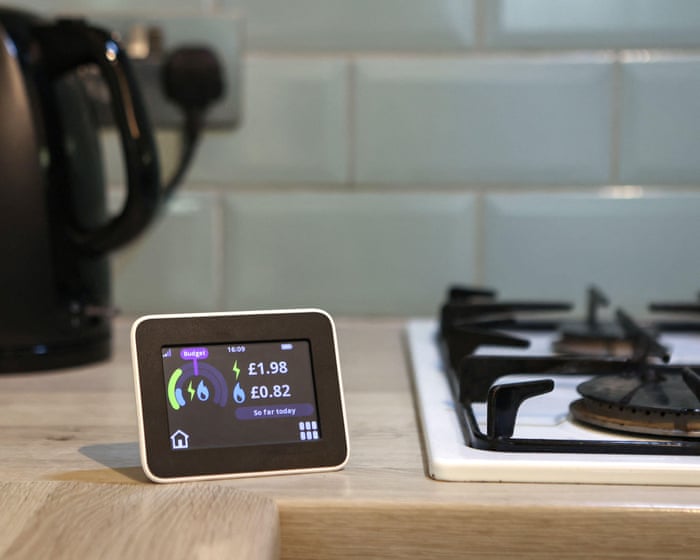
How will John Healey’s energy support package affect you?

Chancellor’s ‘new course’ includes a £100 one-off payment, low-carbon upgrade loans and an end to standing charges

John Healey has unveiled a package of support for households being buffeted by “global economic storms”.

“I’m setting a new course to get energy costs down in line with Europe,” the chancellor said in his maiden budget. In the long term, he hopes that changes in how Britain covers the cost of renewables and grid upgrades will “drive down all aspects of energy bills”.

Continue reading...

© Photograph: Washington Imaging/Alamy

© Photograph: Washington Imaging/Alamy

© Photograph: Washington Imaging/Alamy

  •  

Britain’s New Budget Exposes the Economic Cost of War and the Limits of Fiscal Flexibility

Chancellor John Healey has unveiled emergency household support, higher taxes on banks and new defence commitments as the Middle East conflict puts renewed pressure on Britain’s economy. Behind the immediate relief measures lies a difficult calculation over growth, public spending and national security.

Britain’s government has attempted to reconcile rising energy prices, constrained public finances and growing defence obligations in a Budget that illustrates how international conflicts are reshaping domestic economic policy.

Presenting his first Budget on 28 October, Chancellor of the Exchequer John Healey announced a £100 energy payment for millions of households, an extension of electricity VAT relief and additional measures intended to support businesses facing rising operating costs.

The package comes as Prime Minister Andy Burnham’s administration confronts the economic consequences of the conflict in the Middle East, alongside continuing financial commitments arising from Russia’s war against Ukraine.

The central difficulty is that Britain must simultaneously protect household purchasing power, support economic growth and finance a more expensive security environment, without allowing government borrowing to expand beyond its fiscal targets.

Energy prices dictate economic policy

The most immediate measures concern energy.

Under the Treasury’s Budget proposals, up to 20 million households in England occupying properties in Council Tax bands A to D will receive a £100 payment from January 2027.

The government has allocated £2.6 billion for the programme, including corresponding funding arrangements for the devolved administrations.

The temporary reduction in VAT on domestic electricity will also remain in place until July 2027, a measure expected to reduce the annual Ofgem price cap by approximately £50 in April.

Meanwhile, the Chancellor announced plans to remove standing charges from domestic gas bills, transferring fixed costs into consumption-based charges.

Although the government estimates that the change could benefit a majority of households, its distributional effects will depend on individual consumption. Lower gas users may benefit differently from households with substantial heating requirements.

The measures demonstrate how energy prices have become a direct constraint on fiscal policymaking.

Britain’s exposure to internationally traded gas means that disruptions originating outside Europe can quickly influence domestic prices, regardless of the source of individual energy supplies.

Banks and businesses face different treatment

Rather than introduce broad increases in personal taxation, the government has chosen targeted revenue measures.

The Bank Corporation Tax Surcharge will temporarily increase from 3 to 6 per cent between January 2027 and March 2028, helping finance household energy support.

The government has also announced changes to gambling taxation intended to fund assistance for smaller businesses in retail, hospitality and leisure.

Fuel duty will remain frozen until July 2027, extending a policy intended to limit motoring and transport costs.

These decisions reflect competing pressures.

Households and smaller businesses require relief from higher costs, while the Treasury must demonstrate that its spending commitments remain consistent with fiscal discipline.

The distribution of the tax burden is therefore becoming an important political question, particularly when the government is simultaneously seeking private investment to stimulate growth.

Growth forecasts reveal limited room for manoeuvre

The latest forecasts from the Office for Budget Responsibility offer little prospect of rapid economic expansion.

According to figures published alongside the Budget, British GDP is expected to grow by 1.2 per cent in 2026 and just 1 per cent in 2027.

Inflation is forecast to peak at 3.8 per cent in the first quarter of 2027 before gradually returning towards the Bank of England’s 2 per cent target.

The Chancellor’s fiscal headroom — the margin available before the government’s borrowing rules would be breached — has narrowed to approximately £15 billion in 2029–30.

This creates an unusually difficult environment for policymaking.

Further economic disruption could reduce tax receipts or increase spending demands, leaving the Treasury with limited capacity to respond without revising its plans.

Defence spending enters the fiscal equation

The Budget also places national security increasingly within the government’s wider industrial strategy.

Britain remains committed to reaching defence spending equivalent to 3.5 per cent of GDP by 2035, with an interim target of 3 per cent in 2030.

The government has announced plans for the National Wealth Fund and British Business Bank to deploy up to £5 billion over four years into defence, dual-use technologies and other sectors supporting national security.

It has also committed an additional £500 million to support Ukrainian air defences during the coming winter.

These measures extend beyond immediate military procurement.

They seek to strengthen domestic industrial capacity, encourage private investment and establish supply chains capable of sustaining higher defence expenditure.

However, the precise financing arrangements for Britain’s longer-term NATO commitments are to be determined at the next spending review.

A European problem without a common fiscal solution

Britain’s predicament closely resembles that confronting European Union governments.

Across Europe, policymakers are attempting to finance defence modernisation and energy security while maintaining social expenditure and industrial competitiveness.

The difference lies partly in the institutional frameworks within which those decisions are made.

EU governments operate under European fiscal rules, while Britain sets its own borrowing and debt targets. Nevertheless, all face the same underlying pressures from energy markets, interest rates and international security commitments.

For British businesses trading with the European Union, the effects of energy costs and industrial investment policies on either side of the Channel will remain particularly significant.

The October Budget consequently represents more than an exercise in temporary household assistance.

It exposes the difficulty of sustaining public services, improving competitiveness and responding to geopolitical instability when economic growth is modest and available fiscal resources are limited.

Whether the measures provide lasting relief will depend less on the immediate payments announced by the Chancellor than on the course of energy prices, inflation and economic growth over the coming year.

  •  

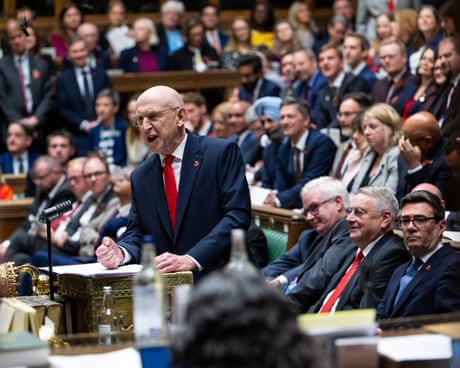
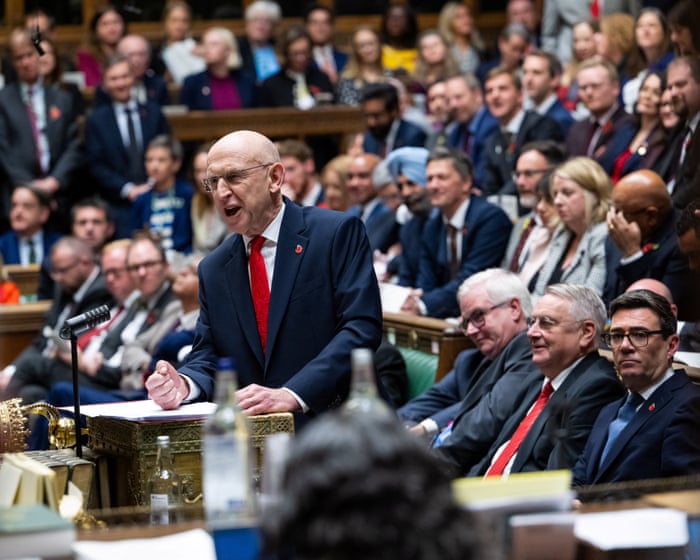
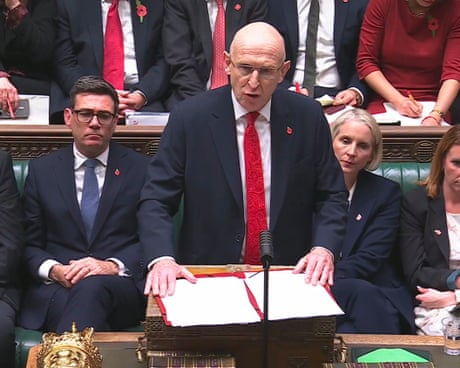
Budget 2026: Healey hikes taxes on banks and landlords to fund £100 handouts to 20m households

Few surprises as chancellor uses low-key speech blaming ‘global economic storms’ for stoking energy prices and cost of living crisis

John Healey raised taxes on banks and landlords to fund a £100 winter handout for 20 million families as official forecasts made clear there is no end in sight for the cost of living crisis.

In his first budget, the chancellor blamed “global economic storms” for the grim outlook, as the war in Iran drives up oil and gas prices.
Continue reading...

© Photograph: House of Commons/AFP/Getty Images

© Photograph: House of Commons/AFP/Getty Images

© Photograph: House of Commons/AFP/Getty Images

  •  

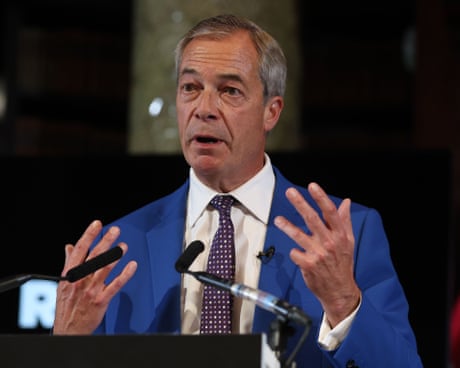
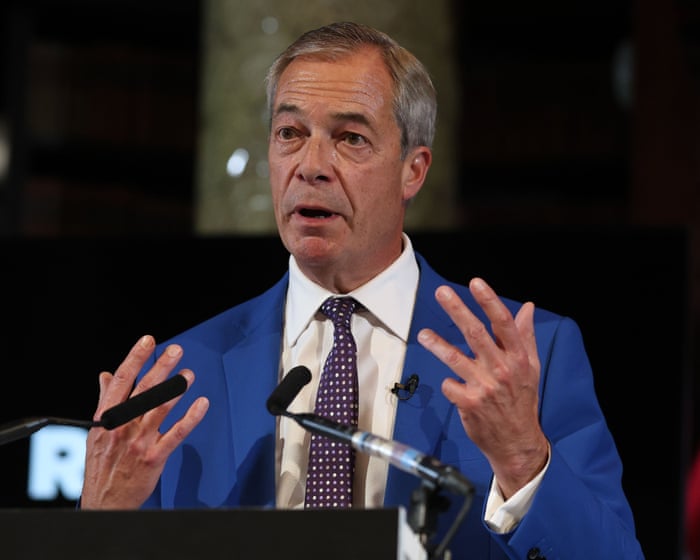
Nigel Farage skips budget in Commons over seating ‘altercation’ concerns

Reform UK leader ‘shocked’ by £10bn pledged to Ukraine and doubles down on cutting tax for crypto investors

Nigel Farage skipped the chancellor’s first budget because he was worried he would get in a “physical altercation” with another MP in a row over seating arrangements.

The Reform UK leader was not present in the House of Commons but gave a press conference afterwards in which he said he was “shocked” by the £10bn going to support Ukraine and doubled down on his party’s policies on cutting tax for crypto investors.

Continue reading...

© Photograph: Zeynep Demir Aslim/ZUMA Press Wire/Shutterstock

© Photograph: Zeynep Demir Aslim/ZUMA Press Wire/Shutterstock

© Photograph: Zeynep Demir Aslim/ZUMA Press Wire/Shutterstock

  •  

Budget winners and losers: pensioners and households gain as banks and betting shops hit

How the Burnham government’s first attempt to ease cost of living pressure pans out for key stakeholders
Budget 2026: key points at a glance

Every budget has its winners and losers, and John Healey’s first as chancellor was no exception. While some gained from tax breaks and rule tweaks, others will either pay more, or had their hopes of reforms dashed. Here are some of those with reason to cheer, or sigh:

Continue reading...

© Photograph: Richard Pohle/PA

© Photograph: Richard Pohle/PA

© Photograph: Richard Pohle/PA

  •  

Budget 2026 calculator: find out if you are better or worse off

Use our interactive tool to see how you have been affected by John Healey’s tax and spending announcements

Continue reading...

© Photograph: Peter Dazeley/Getty Images

© Photograph: Peter Dazeley/Getty Images

© Photograph: Peter Dazeley/Getty Images

  •  

‘A pretty grim picture’: outlook for UK living standards slashed despite Healey’s budget

OBR cautions about Middle East war dragging down growth and triggering a fresh cost of living crisis

British households face a “pretty grim picture” for living standards as the war in the Middle East drags down growth and triggers a fresh cost of living crisis, the government’s independent forecaster has said.

In a report as John Healey announced his first budget, the Office for Budget Responsibility (OBR) issued a sharp downgrade for growth in 2027, household disposable incomes and the public finances despite the measures taken by the chancellor.

Continue reading...

© Photograph: Vuk Valcic/SOPA Images/Shutterstock

© Photograph: Vuk Valcic/SOPA Images/Shutterstock

© Photograph: Vuk Valcic/SOPA Images/Shutterstock

  •  

Budget 2026: John Healey offers £100 payments to households to help navigate ‘global economic storms’

Payment to 20m homes part of package to help cut energy bills and ease cost-of-living crisis, paid for by smaller than expected bank windfall tax

John Healey promised to steer Britain through “global economic storms,” as he announced a package of measures to cut consumers’ energy bills, funded by a smaller-than-expected windfall tax on banks.

In his first budget, the chancellor said 20m households in council tax bands A to D would receive a £100 payment – a measure he said would cost £2.6bn.

Continue reading...

© Photograph: House of Commons/UK Parliament/PA

© Photograph: House of Commons/UK Parliament/PA

© Photograph: House of Commons/UK Parliament/PA

  •  

Budget 2026: key points at a glance

John Healey is announcing his financial update – here are the main points, with political analysis

John Healey starts by saying that his budget is “delivered at a time when global uncertainties and pressures are swirling worldwide and hitting people here at home”.

Healey says he will meet the fiscal rule that day to day spending must be covered by tax receipts and the investment rule that government debt, defined as public sector net financial liabilities, must be falling as a percentage of GDP in the third year of the forecast.

The government will have £15bn of headroom in 2029-30 and £20bn in 2030-31, according to the Office for Budget Responsibility, the government’s forecaster.

Government borrowing will be 4.2% of GDP this year, 3.4% next year, then 2.9% and 2.1% 1.8% by 2030-31, the OBR says.

Predictions of slowing growth were wrong, Healey says. The OBR says GDP will grow by 1.2% this year, 1% next year, 1.6% in 2028, 1.8% in 2029, 1.7% in 2030, 1.6% in 2031. In March the OBR had predicted GDP growth of 1.1% in 2026, rising to 1.6% in 2027 and 2028, and dropping to 1.5% in 2029 and 2030.

Government debt is forecast to be 83.2% of GDP this year, 83.8% next year, and then falling to 83.1%, 82.3% and 81.7% in the following years.

Continue reading...

© Composite: PA;EPA;Getty

© Composite: PA;EPA;Getty

© Composite: PA;EPA;Getty

  •  

Budget 2026: £100 energy payment for millions and rise in bank tax as watchdog warns on stalling living standards – as it happened

OBR says that living standards are forecast to rise by just 1% over the whole post-Covid decade

Martin Lewis said that, when he met John Healey this morning, the chancellor said that, having removed standing charges from gas bills, he would also like to get rid of them from electricity bills. Lewis said:

The chancellor said he will be talking to Ofgem about how they get rid of the charge on electricity as well, but that is ‘trickier’ apparently and will take longer.

Continue reading...

© Photograph: House of Commons/UK Parliament/PA

© Photograph: House of Commons/UK Parliament/PA

© Photograph: House of Commons/UK Parliament/PA

  •  
❌