One of the biggest problems in our world of politics is voters' common refusal to accept the concept of tradeoffs. Author Robert Mulligan says it "is one of the most basic principles in economics, that in order to have more of one thing, you have to accept having less of something else." Likewise, economist Thomas Sowell noted, "There are no solutions. There are only tradeoffs."
It's a basic idea that we all understand on a personal level. I've been thinking about trading my 15-year-old car for a new one, as it would be nice to have a vehicle with power windows and Bluetooth. But buying one means using money I could spend on other pleasures. Such is life.
Politics is funny, though. Politicians make promises where everyone gets everything their heart desires. We can have a single-payer healthcare system without any of the resulting shortages. We can have tariffs that don't drive inflation—or that wall Mexico pays for. It would be nice if lawmakers just leveled with us about the ups and downs of policy choices.
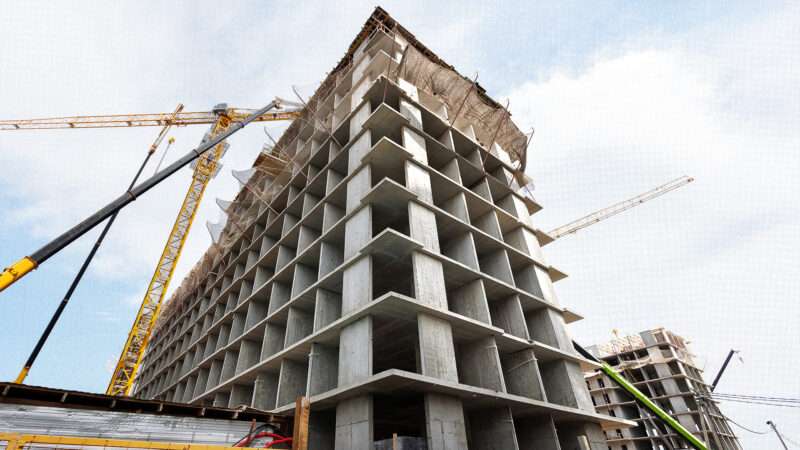
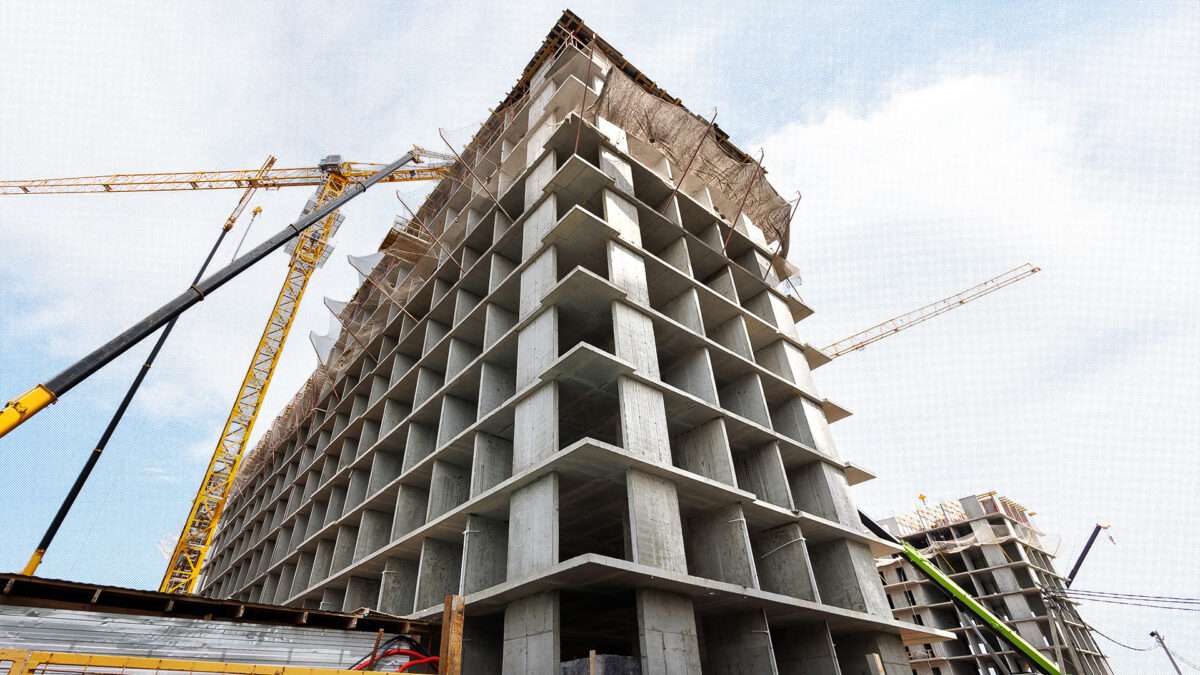
One initiative this election, Proposition 45, best epitomizes that tradeoff issue. It seeks to reform the state's "landmark" environmental law, the California Environmental Quality Act (CEQA). Do we want more building and the good it brings, or do we maintain the Byzantine regulatory process so we can stop construction of projects we don't like?
Complex regulations aren't best reformed at the ballot box, but since Gov. Ronald Reagan signed the law in 1970, CEQA has entangled construction projects of every sort in a maze of hearings, Environmental Impact Reports, and litigation. CEQA was meant to assure developers mitigated any environmental damage. That sounds fine, but it has led to long delays, enormous costs, and special interests that use the process to stop projects or exact non-environmental demands (e.g., union wage concessions).
There's wide consensus in the Legislature that CEQA has exacerbated the state's housing crisis, halted business growth, and slowed our economy. The law even endangers the state's environmental priorities, as cynical actors have used it to derail parks, transit projects, infill housing, wildfire-fighting brush-clearance projects, you name it.
Lawmakers have exempted various projects from CEQA, but have done so on a piecemeal basis—and only those that fit a narrow scope. Sponsored by the level-headed California Chamber of Commerce, Proposition 45 attempts broad reform for any "essential" project. Per the measure, that includes housing, water systems, clean energy, health facilities, police and fire stations, brush clearance, broadband, education facilities, and transportation projects except for the bullet train.
As the Legislative Analyst's Office explains, Proposition 45 "creates more binding time limits for state and local governments to do both CEQA and permitting reviews. This includes time limits for determining if a project application is complete, finishing the EIR, and granting other types of approvals and permits." Some of the changes are deep in the weeds, but it's all meant to speed things up—and to limit what the courts can review.
"CEQA lawsuits, inclusive of appeals, typically take four to five years to resolve, stalling most approved projects and often deterring lenders, investors and grant-making agencies from funding them," explained a September report from the Holland & Knight law firm. Ask any knowledgeable person about why California is incapable of building anything efficiently and they will point to these CEQA impediments. If the state wants to reduce housing prices, it needs to fix this logjam.
As a voter, you must answer a simple question: Do the benefits outweigh the downsides? Again, the downside is that in speeding up approval of projects that you like, it will also speed up the process for projects that you don't like. No wonder opponents are raising the arguable specter that Proposition 45 will help companies build data centers, given those centers are widely unpopular.
We need more housing, including suburban subdivisions. We need more businesses. We need better freeways. We need to speed the process for brush clearance to prevent devastating wildfires. So, yes, I eagerly support this measure. Will it likely mean I'll see the speedier construction of, say, underused light-rail lines and absurdly costly subsidized apartment buildings that annoy me? Probably. Oh well, some bad will come with the good, no matter what the campaigns tell you.
For instance, the "yes" side claims that Proposition 45 offers the "same strong protections." California's environmental protections will still be strong, but they obviously won't be the "same." And opponents claim CEQA needs reform, but this particular fix is the wrong way to go about it. That canard just reflects a myopic refusal to accept downsides inherent in any reform.
To me, Proposition 45 has far more pros than cons. You do you. But be an adult and recognize the tradeoffs. As sci-fi author Robert Heinlein wrote, "there ain't no such thing as a free lunch (TANSTAAFL)."
This column was first published in The Orange County Register.
The move comes amid a federal dispute over election oversight and a court ruling blocking efforts to set aside more than 20,000 mail-in ballots.
California Gov. Gavin Newsom announced Thursday that he would deploy election lawyers and observers across the state to protect voters’ rights, escalating a confrontation with President Donald Trump’s administration over federal involvement in polling places ahead of the elections.
The legal teams will be sent to key districts with closely contested races, Newsom said, warning against unauthorized interference in the electoral process.
“A warning to Donald Trump: I’m deploying election lawyers to key battleground districts in California to protect every vote. And I just made it a FELONY to illegally seize ballots,” the Democratic governor wrote on social media platform X.
Newsom also approved legislation making the unlawful seizure of election ballots a felony, establishing criminal penalties for unauthorized interference with ballots.
A warning to Donald Trump:
I’m deploying election lawyers to key battleground districts in California to protect every vote.
And I just made it a FELONY to illegally seize ballots.
The measures follow the Trump administration’s announcement that it would deploy federal agents to polling places to prevent potential electoral irregularities. Trump has repeatedly accused California of failing to address alleged voter fraud.
Speaking Wednesday night on Jimmy Kimmel Live, Newsom criticized the administration’s approach, accusing the White House of trying to suppress votes and create grounds to challenge the election results.
He argued that the administration was seeking to create conditions that could later be used to question the outcome and allege fraud.
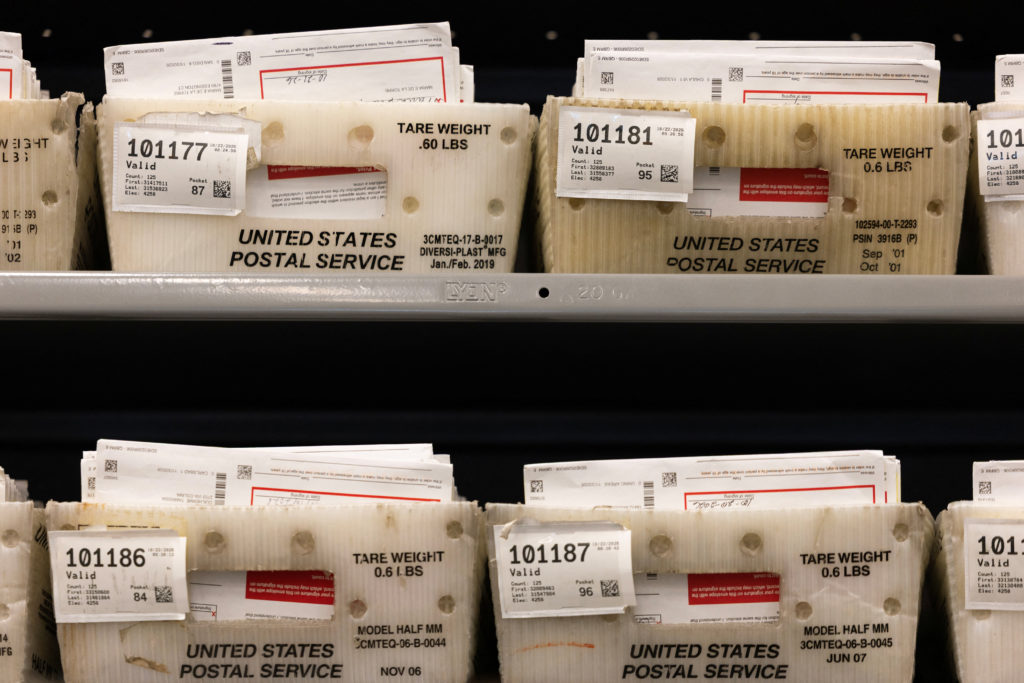
The dispute has also reached the courts. On Wednesday, a federal judge rejected a Justice Department request to set aside more than 20,000 mail-in ballots cast in California while authorities verified voters’ citizenship.
The judge warned that withholding the ballots would cause widespread disruption and interfere with an electoral process already underway.
California officials had also questioned the reliability of the voter list submitted by the federal government and rejected its request to verify voters’ citizenship before ballots were counted.
The Justice Department confirmed it would appeal the ruling, setting the stage for further legal disputes between federal and state authorities before the election process concludes.
"Una advertencia para Donald Trump: estoy desplegando abogados electorales en distritos clave de California —donde la contienda está muy reñida— para proteger cada voto", escribió Newsom a través de su cuenta en la red social X.
A federal judge rejected on Wednesday a Trump administration request to stop California from processing the ballots of up to 20,000 people over allegations they are likely noncitizens, warning it would "wreak havoc" on the midterm elections.
A dual U.S.-Salvadoran citizen from California accused of murdering a woman in front of their toddler son before abandoning the child near her remains has been extradited to El Salvador to face charges, the Department of Justice (DOJ) announced Thursday.
Michael Alejandro Castillo Murga, 27, of Beaumont, California, was handed over to Salvadoran authorities Wednesday to face charges of aggravated femicide and imperfect homicide in the 2019 killing.
The extradition marks the first time the U.S. has surrendered an American citizen to face prosecution for crimes committed in El Salvador, according to the DOJ.
Castillo Murga holds dual U.S. and Salvadoran citizenship.
Salvadoran authorities allege Castillo Murga picked up Melvi Fernanda Nájera Quezada, 23, and their son from her mother's home Jan. 31, 2019, supposedly to begin living together as a family.
Investigators allege he instead killed Nájera Quezada and abandoned their child near her body, which was discovered near a highway the next day.
An autopsy determined she died from severe bleeding caused by cuts to her neck and other wounds inflicted with a plastic knife, according to the DOJ.
Farmworkers discovered the boy, who was younger than 2, several days later in a rugged area near where his mother's body was found. He was severely dehydrated and starving with cuts on his face, insect bites and signs of abuse, authorities said.
Investigators linked Castillo Murga to the killing through cellphone location data and witness accounts. Authorities also said he sent his girlfriend a photograph showing bloodstains on his face and neck.
Prosecutors also accused Castillo Murga's grandmother and a lawyer of helping conceal evidence. According to the DOJ, the pair arranged for two people to clean blood from the interior and exterior of Castillo Murga's vehicle using water, car shampoo and vinegar, but they were unable to remove all the blood.
Castillo Murga escaped to Guatemala around Feb. 2, 2019, with assistance from his grandmother and lawyer before eventually entering the U.S., according to prosecutors.
U.S. Marshals arrested him in October 2024 in response to an extradition request from El Salvador.
Castillo Murga challenged his extradition in federal court, but a judge rejected his petition in November 2025 and denied a subsequent request to halt the transfer in September 2026.
A federal judge gave the government until noon on Friday to share which states had received letters trying to enlist them in an effort to find evidence of voter fraud.
The department has issued grand jury subpoenas to local election officials as part of a widening effort to prove unsubstantiated claims about large numbers of illegal voters in the state.
Voters casting their ballots in Los Angeles in June. At least two employees of Los Angeles County Registrar-Recorder’s office received grand jury subpoenas last week.
The sanctuary state of California released an illegal alien drug trafficker from jail after he was arrested for car theft, Breitbart News has learned. Immigration and Customs Enforcement (ICE) agents lodged a detainer, but it was ignored.
An election integrity expert raised concerns Wednesday about California and Washington after the Justice Department identified thousands of suspected noncitizen voter registrations, including cases in which residents told officials they were not U.S. citizens yet were still registered to vote.
In an interview with Fox News Digital, J. Christian Adams, president of the Public Interest Legal Foundation, blamed the states’ automatic voter registration systems and local officials’ refusal to use available federal tools to verify citizenship.
"Noncitizens are getting on the rolls all over the country through the motor voter program. They're going into (the) DMV. Sometimes they're even telling the DMV they’re not citizens, and states are still registering them to vote," Adams said.
"That's why aliens are getting on the rolls in states like Washington and California that have automatic voter registration."
California and Washington both require U.S. citizenship to register to vote, though their automatic voter registration systems differ. California DMV customers who indicate they are eligible to vote can be automatically registered, while Washington's automatic registration through the Department of Licensing is tied to transactions requiring proof of U.S. citizenship, such as obtaining an enhanced driver's license or ID.
However, federal officials said they identified more than 20,000 likely noncitizens on California voter rolls, many with addresses in Los Angeles County, and more than 400 suspected cases in Washington. The findings come just ahead of the Nov. 3 midterm elections.
Washington Secretary of State Steve R. Hobbs pushed back against the Justice Department on Wednesday, criticizing its findings for containing "several glaring deficiencies."
The list included U.S. citizens and individuals who are not currently registered to vote, Hobbs said.
"Without individualized proof of ineligibility, it would be both irresponsible and illegal for election officials to decline to process a registered voter’s ballot. If you have individualized proof, I invite you to provide it so election officials can take appropriate steps that are consistent with federal and state law," Hobbs said.
The California secretary of state also pushed back last week, saying a review of the DOJ’s data on Los Angeles County found "significant accuracy problems with their sweeping claims."
"At best, this litigation is a reckless political stunt. At worst, it threatens to disenfranchise thousands of Californians this election," the office said.
Adams also blamed election officials for refusing to use the Department of Homeland Security’s Systematic Alien Verification for Entitlements (SAVE) database to identify noncitizens on voter rolls.
He described SAVE as the "best database there is for aliens" that is "just sitting there waiting for them to use."
"They don't want to check. They don't have to check. Federal law doesn't require them to check. What federal law does is make data available through the SAVE database at DHS," Adams said.
Hobbs criticized the DOJ’s reliance on the SAVE database, calling it "unreliable" and arguing that the absence of a citizenship record does not establish immigration status.
"It cannot rely on the mere absence of a name from the SAVE database or the department’s assertions based on the vague and untested methodology described in the lawsuit against California," Hobbs said.
As a result of lax regulations, Adams said his team has identified major voter roll issues in California beyond noncitizen registration, including duplicate registrations and registrations associated with deceased residents.
"It's what we expect now from California because partisan politics has taken over election administration in that state," he said.
"They think it's part of the program to disenfranchise people if they check citizenship, but it's not," he added. "They're saying that everything's fine here. ‘Don't look at us. We're as good as it can be,’ But the reality is they're really not using the data that are available to keep the rolls clean."
Other states, including Florida and North Carolina, have used the SAVE database and found fewer issues, according to Adams, contrasting their approach with California and Washington.
While the Justice Department's disclosure marks a rare public accounting of suspected noncitizen voter registrations, Adams said the findings will likely not affect the upcoming midterm elections.
Audits usually happen during off-election years when there is sufficient time for legal review, according to Adams. Waiting until just before an election in an even-numbered year can result in courts dismissing challenges due to "laches," a legal principle that penalizes someone for waiting too long without a valid reason to file a legal claim.
"There's very little you can do right before an election. That's why the hard work in these cases is in odd-numbered years, not in October or even-numbered years. So, you really have to do this stuff early, or you could lose on what's called laches," he said.
Despite the timing, Adams, who worked in the DOJ’s Voting Section more than a decade ago, applauded the department for taking the matter seriously.
California Gov. Gavin Newsom (D) is warning President Trump against trying to meddle in his state’s elections amid growing concerns from Democrats over federal interference in next week’s midterms. “A warning to Donald Trump: I’m deploying election lawyers to key battleground districts in California to protect every vote,” Newsom wrote on social platform X. “And…
California Gov. Gavin Newsom (D) is warning President Trump against trying to meddle in his state’s elections amid growing concerns from Democrats over federal interference in next week’s midterms. “A warning to Donald Trump: I’m deploying election lawyers to key battleground districts in California to protect every vote,” Newsom wrote on social platform X. “And…
U.S. District Judge David O. Carter on Wednesday rejected the Justice Department's emergency request to force California to set aside mail-in ballots associated with more than 20,000 registered voters whose citizenship the Trump administration has questioned, ruling that the last-minute intervention would disrupt an election already underway.
The over 20,000 voters identified by Department of Justice officials as "likely aliens" were designated as such after Homeland Security Investigations and federal partners "used multiple data-enrichment and verification methods" to flag potential noncitizens on California’s voter rolls. California officials, however, disputed the list's accuracy, citing a preliminary review that identified U.S.-born individuals and voters with no voting history among those flagged.
Carter, a Clinton appointee, ruled that the Justice Department's last-minute effort to intervene in California's election violated constitutional and federal-law constraints, while questioning the reliability of the government's evidence that the flagged voters were noncitizens.
"The district court denied our emergency request to sequester ballots from 20,000 suspected noncitizens," First Assistant U.S. Attorney Bill Essayli said in a statement provided to Fox News Digital. "This ongoing emergency disenfranchises American citizens through dilution. The Solicitor General authorized an immediate appeal. We filed our Notice of Appeal and will immediately seek an emergency order from the Ninth Circuit."
The Trump administration has suffered a string of defeats in election-related cases in the lead-up to the midterm elections, raising questions whether the administration will be able to deliver on its promises of improved election integrity ahead of the 2028 presidential election. President Donald Trump and other administration officials have repeatedly raised concerns about widespread voter fraud in U.S. elections, though those claims have not been supported by evidence demonstrating fraud on such a broad scale.
California election officials argued that complying with the Justice Department's request would be virtually impossible because county election offices had already processed more than 500,000 ballots, separating them from identifying information and preventing officials from reliably linking those votes to individual voters.
Carter warned that the requested intervention would "wreak havoc and disrupt the election that is already underway," though he noted that federal authorities were free to pursue individual voting fraud cases.
Experts were divided along ideological lines in the case.
"It tells you something very revealing and unfortunately badly revealing about California officials that they don’t even want to check," von Spakovsky told The Center Square. "In California, for example, they have automatic voter registration. When you go in to get a driver’s license, they don’t ask you, ‘Would you also like to register to vote?’ The state of California just automatically registers you, and when you ask them, they say, ‘Well, it’s up to the individuals to tell us they’re not eligible to vote.’"
Rick Hasen, a University of California, Los Angeles, election-law professor, meanwhile, called the Justice Department’s request a "total overreach of federal power," arguing that "the Constitution’s clear that states have the authority to run Congressional elections unless Congress passes a statute otherwise — and Congress didn’t do so here."
 Login