Login

Haiti Postpones Presidential Elections Until 2027 Amid Escalating Gang Violence
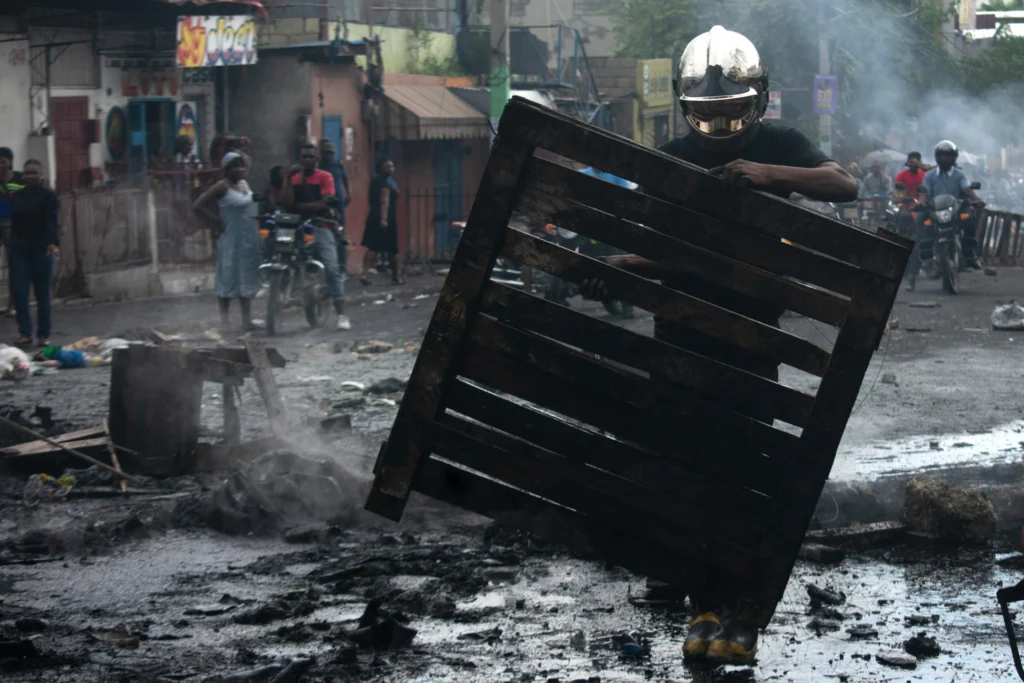
Haiti has postponed its presidential and legislative elections once again, pushing the first round from December 13 to July 18, 2027, as armed gangs and a decade-long institutional vacuum leave the country with no elected official since 2016.
The move had been expected since the start of the month, when the council extended the deadline for candidate registration to October 31 without setting a new voting date.
The first round of the presidential and legislative elections, together with the constitutional referendum, now falls on July 18, 2027. A second round -including presidential and legislative runoffs and local elections- is scheduled for October 4 of that same year. The campaign, originally due to begin on October 5, will open on April 15, 2027, roughly three months before polling day.
RELATED: UN Security Council Reaffirms Mandate in Haiti Despite Attacks
Under the updated schedule, candidate registration will remain open through February 9, 2027, while voter registration is extended to May 20. The council’s online platform shows that nearly 890,000 voters are registered on the electoral roll, far short of the 7.7 million people of voting age.
Despite repeated calendar revisions, candidates have continued to register for the elections. According to the Provisional Electoral Council ’s latest updates, over 7,300 candidates have registered for different elected positions. The provisional list includes 19 candidates for President, 369 for the Senate, 1,293 for the Chamber of Deputies and 5,623 for local elections.
Haïti a de nouvelles dates pour les élections présidentielle, législatives et municipales à venir :
— Frantz Duval (@Frantzduval) October 29, 2026
18 juillet 2027 pour le premier tour – 4 octobre 2027 pour le deuxième tour, selon une communiqué du Conseil électoral provisoire. pic.twitter.com/A4raK78ifp
Text reads: “Haiti has new dates for the upcoming presidential, legislative and municipal elections: July 18, 2027 for the first round – October 4, 2027 for the second round, according to a communiqué of the Provisional Electoral Council.”
The Provisional Electoral Council (CEP) framed the decision as an effort to keep the process moving. “The updated calendar aims to facilitate the continuation of electoral operations under conditions that allow the stakeholders concerned to fulfill their obligations in accordance with the provisions of the legal framework,” the council explained in a statement accompanying the new plan.
The body also pledged to move forward “with dialogue, professionalism and rigor,” targeting elections that are inclusive, credible and transparent. It promised to respect “the right of each citizen to participate in the democratic life of the country.”
That language contrasts sharply with conditions on the ground. Haiti has not held an election since 2016, when Jovenel Moïse won the presidency. He took office in February 2017 and was assassinated on July 7, 2021, at his residence in Port-au-Prince.
Since that killing, no elected official has occupied any post in the country’s state structure. Successive transitional governments have cycled through without managing to organize a vote. Prime Minister Alix Didier Fils-Aimé, the current leader, has governed on an interim basis since November 10, 2024.
The elections were first set for August 30 of this year. The political and security crisis, driven by armed gang violence and the failure to restore institutional stability, forced a postponement to December 13. That date has now been abandoned for July 18, 2027.
Gangs Hold the Capital
Armed gangs control most of Port-au-Prince. The main force arrayed against them is the Gang Suppression Force (GSF), created in September 2025 under a UN Security Council mandate and renewed for six additional months when it reached its first anniversary.
The latest delay unfolds as hundreds of Salvadoran soldiers search the Haitian capital for four kidnapped colleagues. Those troops belonged to the GSF and vanished on October 18, when armed gangs ambushed them on the outskirts of Port-au-Prince.
The #GSF confirms that it has received, through a third-party humanitarian organization, remains suspected of being those of the four personnel from the Salvadoran contingent currently missing.
— Gang Suppression Force – Haiti (@GSForceHaiti) October 25, 2026
At this stage, the GSF is not in a position to confirm that the remains are those of… pic.twitter.com/JvfLg1DfCG
PM Fils-Aimé presides over a country under siege. He holds no elected mandate himself, and the security conditions that have justified every postponement show no sign of easing.
For Haitians, the wait has now stretched past a decade without a chance to cast a ballot. Each interim administration has promised elections and delivered another delay. The violence cited as the obstacle has, in turn, deepened with every year of institutional drift.
Whether July 2027 becomes a genuine election day depends on factors no schedule can secure: safe streets, working electoral machinery and a minimum of political consensus. As things stand, the only firm date in Haiti is a next postponement.