The trouncing of the far right provides a playbook for social and environmental movements in other countries facing elections, including the US, Spain and France
Thank you, Brazil, for demonstrating how the far right can be trounced while protection for the Amazon is strengthened. In a world where nature and democracy appeared to be bleeding out in tandem, voters and forest defenders in this global south powerhouse have shown it is possible to staunch the flow. This should provide much needed inspiration and, more practically, a playbook for social and environmental movements in other countries facing elections, including the US, Spain and France.
The astonishing comeback victory of Luiz Inácio Lula da Silva in Sunday’s presidential runoff against his extreme right challenger Flavío Bolsonaro has brought oceans of rapturous supporters on to the streets, while also thrilling conservationists, climate activists and social justice campaigners across the world.
Critics warn of climate danger as president in Texas claims change will save companies and consumers billions
Donald Trump said his administration is “terminating” Biden-era regulations holding oil and gas companies accountable for large leaks of planet-warming methane during a rally in Lubbock, Texas, on Tuesday evening.
“Tonight, I’m officially terminating Biden’s expensive and unnecessary methane regulations to save consumers and energy producers,” Trump said, lifting what he called “crippling regulations on methane that caused prices to skyrocket” for small oil and gas operators. The change would save consumers and energy producers $45bn and unlock 210m barrels of oil, he said, which is equivalent to about 10 days of US petroleum consumption.
Extreme heat accelerated disappearance of Triglav glacier from mountain revered as a symbol of Slovenian identity
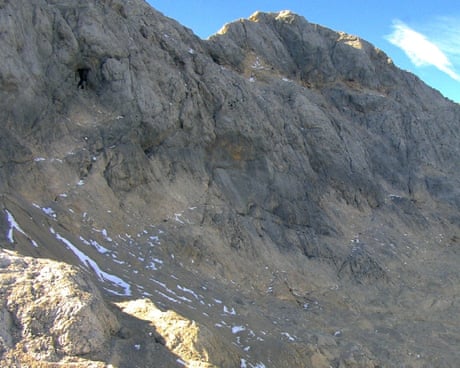
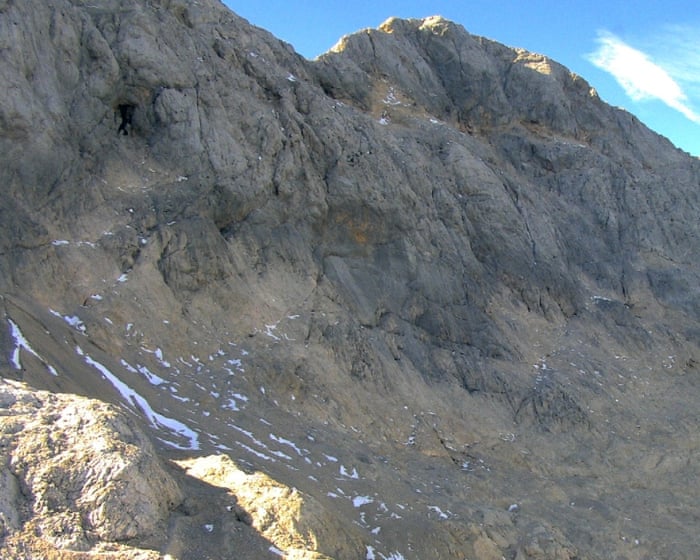
The final ice patch has vanished from Slovenia’s Triglav glacier, the latest Alpine casualty of Europe’s scorching summer.
The once mighty ice mass lost 93% of its surface area between 1983 and 2003, shrinking to cover less than a hectare of overheated rock, but went on to surprise researchers who feared its imminent demise, clinging on to the mountain for two more decades.
The Northern Cheyenne Tribal Council voted unanimously this October to ban data centers on tribal land in Montana. The ban follows a decision in August by the Fort Peck Tribes to bar officials from projects involving data center developers.
But Montana’s Tribes are now split. Next door to the Northern Cheyenne, the Apsáalooke, or Crow Tribe, has not taken an official position and remains open to hearing proposals from companies, according to Shane Doyle, an Apsáalooke tribal member and The Nature Conservancy’s Indigenous right relations director. Doyle grew up on the Crow Reservation and has consistently advocated for reciprocity with the land, rendering him a voice in the dissent, whether he intends to be or not.
The stakes are highest in Crow country. In the small city of Hardin, at the Crow Indian Reservation’s northern edge, a former cryptocurrency mine is being actively converted into an AI data center. About 14 miles northwest of the reservation, Texas-based Quantica Infrastructure plans to build its Big Sky campus on nearly eight square miles of ranchland near the town of Broadview, north of Billings, Montana’s most populous city. As it’s currently planned, the data center would rank among the largest data centers in the world. The Yellowstone River Valley is “the heart of the Crow Nation,” Doyle said.
Krystal Two Bulls, who is Oglala Lakota and Northern Cheyenne, has been tracking these data centers closely. As the executive director of Honor the Earth, a nonprofit tracking data centers on or near reservation lands, she takes an extensive view of history and geography when it comes to tribal land and AI developments.
“Broadview is still a traditional territory of the Northern Cheyenne and also the Crow,” she told Truthout. “It may not technically be on the reservation, but it definitely is still going to have an impact on the land and the people around it.”
The divide over data centers comes as developers eye Montana for its land, water, and power, and as Tribes test how far their sovereignty can actually reach. Bans like the Northern Cheyenne’s are enforceable on tribal land, said Matthew Fletcher, a University of Michigan Law professor and member of the Grand Traverse Band of Ottawa and Chippewa Indians. But tribal bans on off-reservation data centers that affect reservation waters are “unlikely to be enforceable,” Fletcher said, unless a tribe can show a very significant threat to its waters, enterprises, or citizens’ health.
Quantica has asked Northwestern Energy for more than 7,000 megawatts. The utility currently serves about 750 average megawatts, said Anne Hedges, executive director of the Montana Environmental Information Center. “We’ve never imagined something this massive,” she told Truthout. The company’s plan includes about 1,700 megawatts of gas generation, which alone would be more than the gas generated by all Montana’s existing gas plants combined.
The gas would affect more than just the rural Broadview community. A retired Billings pulmonologist modeled the air-quality impact of 1,700 megawatts using EPA tools, Hedges said, and found fine-particulate pollution spreading to communities east of the site, including the Crow, Northern Cheyenne, and Fort Peck reservations. “It’d be a disaster,” she said.
The Northern Cheyenne resolution, which passed by a vote of 8-0, covers all land on the reservation, says Melissa Lonebear, a Northern Cheyenne citizen and tribal council member. It quashes any extant or future data center discussions on their territory. (None are currently active.) “We have fought historically to preserve our land,” says Lonebear. “We have fought against coal development, coal bed methane, all these things.”
The Northern Cheyenne own nearly all of the land within their reservation, which makes the Tribe a target for developers looking for large, contiguous sites, Lonebear said. She added that the governor had remarked in a closed meeting with tribal leaders that big corporations were looking for land. “I almost felt like we would be targeted,” she said.
Fort Peck’s ban bars the tribal government, individuals, and entities from discussing proposals to build data centers on the tribe’s reservation. The tribe passed the ban after three companies approached the tribe about data center projects on tribal land, Tribal Chairman Floyd Azure told Montana Free Press. Azure had asked standard questions about the benefits to his community, and after learning about the required natural resources, he strongly rejected theirs and any future proposals. Azure did not respond to Truthout’s request for comment.
Tribal water rights in the state define what is available for development projects like data centers. Fort Peck and the Northern Cheyenne coordinate with state environmental agencies, such as Montana’s Department of Natural Resources and Conservation (DNRC), to enforce these rights. “Physical and legal water availability analysis are part of the water rights permitting process, as is an assessment of adverse effect to other water right,” Patricia Spencer, a DNRC spokesperson, told Truthout.
Water rights are set out in an agreement between a tribe and a state, and sometimes the federal government. Such an agreement limits the amount of water available to the tribe within the state’s overall supply, which is sourced from groundwater and rivers near and far. “The proposed datacenter in Hardin is located in a basin closed by the compact, and DNRC cannot process or grant an application for an appropriation of water within the Bighorn River Basin,” Spencer said in an email. “At this time, DNRC has not received any water rights applications or change applications tied to that facility.”
The Crow’s calculation also includes revenue, according to Lonebear. The Absaloka coal mine, which was long the Tribe’s marquee employer and profit source, shipped its last rail car of coal in 2024, the Billings Gazette reported. In August, a Senate committee advanced the Crow Revenue Act, a bill with full-throated support from Crow reservation chairman Frank White Clay that would give the Crow ownership of their coal, previously paternally managed by the Hope Family Trust. In exchange, the Hope family is offering federal coal reserves in Bill Mountains, which they’re anticipated to lease to Signal Peak Energy, whose customers are in Japan and South Korea. The Crow also plan to participate in the mining directly in the future.
The Absaloka coal mine reduced capacity and then halted production in April 2024 after losing its main client, Xcel Energy’s Sherburne County Generating Station (Sherco Plant), in Minnesota, which pivoted to cheaper, cleaner alternatives like natural gas. It’s a loss that left the Crow without a clear surrogate source of revenue.
“The Crow Tribe has decided to develop their coal… and so the rest of the world should not be in our way for that,” Conrad Stewart, energy director of the Crow Tribe, told Inside Climate News.
We’re trying to always make sure that we protect our water, keep it clean, make sure there’s enough for the fish and for people to drink and use in the community … So I think a data center would conflict with that.
Water is on everyone’s mind. “We’re trying to always make sure that we protect our water, keep it clean, make sure there’s enough for the fish and for people to drink and use in the community,” says Doyle. “So I think a data center would conflict with that, with all our values.”
Asked whether the Crow will follow suit on the ban, Two Bulls said she was “hopeful,” but added that she doesn’t think the Crow will “entertain a ban or even a moratorium,” citing her understanding that tribal leadership sees data centers as a way to replace declining coal revenue.
The Crow chairman and executive officers all declined requests for comment.
Water may be a forefront issue, but that may not be the same for tribal consultation. Without a federal permit, federal land, or federal money, the federal consultation duties don’t apply: Section 106 of the National Historic Preservation Act, NEPA review, and the federal government’s consultation obligations to Tribes.
The Montana Department of Environmental Quality has a public comment period that closes October 29 on Quantica’s water well. The company hasn’t yet applied for a water right, according to the DNRC, and that application will come with its own public notice.
Asked whether Montana’s Department of Natural Resources and Conservation must notify or consult the Crow Tribe, DNRC spokesperson Patricia Spencer pointed to the general public notice process. “Public notice, including an opportunity for the public to comment and make objections, is a part of the water rights permitting process,” Spencer told Truthout. “The Crow Tribe–Montana Water Rights Compact would not have any bearing on an application near Broadview.”
Meanwhile, the Montana Public Service Commission is developing a large-load tariff for data centers. The state legislature is scheduled to convene in January 2027, with what Hedges describes as dozens of data center bills. No Native legislators sit on the energy committee drafting them, and at the same time she called the American Indian Caucus “a force to be reckoned with.”
“We do not anticipate the construction and operation of our Big Sky Campus will impact tribal lands or water rights,” a Big Sky Digital Infrastructure spokesperson told Truthout over email.
“If we put a project like this in around Yellowstone County, in that river valley, it’s gonna be an environmental impact similar to a coal mine, or something that’s gonna cause irreparable harm to the area. I think that’s why there’s so much opposition to it right now,” Doyle said.
Italian army removes and defuses 250 explosives encased in ice for more than 100 years after hikers’ sightings
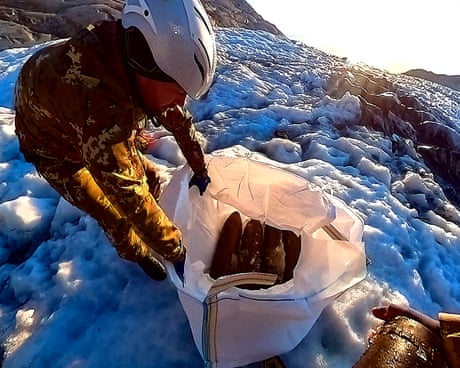
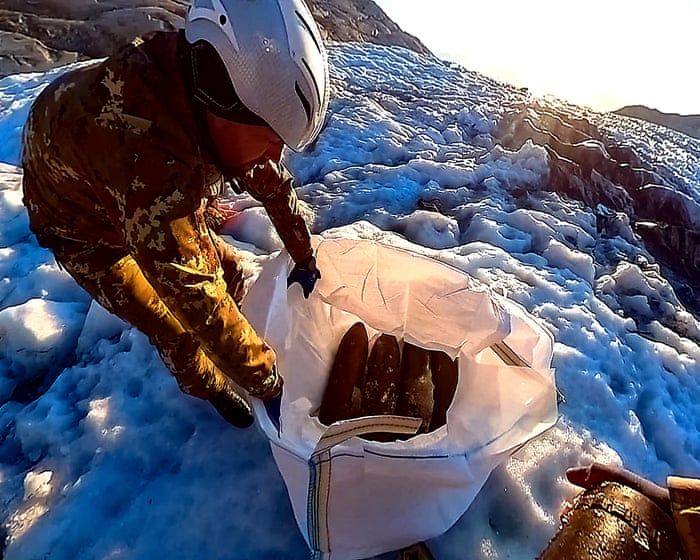
A significant cache of unexploded bombs from the first world war emerged this summer from rapidly retreating glaciers in the Dolomites, the Italian army has said.
The devices, which included Italian artillery shells and French mortar bombs, were removed and defused by the army’s Julia Alpine brigade, according to a statement.
Exclusive: Coordinated airstrikes on territory held by al-Shabaab are driving the civilian population to find refuge alongside a river where rising water levels are a threat to safety. Is it a deliberate military strategy?
The water was rising rapidly. It had already reached Cayni Ali’s waist. Her home, five metres from the flooded River Juba in southern Somalia, never stood a chance. There was nowhere to go. Ali’s city of Jilib was under attack. Repeated airstrikes, said the mother of six, were pinning its population beside the rising river.
“The drones come all the time,” said the 27-year-old. “We hear them constantly. They kill animals, civilians. The town is big but destruction is everywhere.”
UK allies have long urged people to stockpile supplies for a crisis. How are people from France to Australia being advised to prepare?
The UK has told people to fill their pantries with food for three days in case of catastrophe, joining a host of countries urging citizens to ready themselves for core systems failing.
Such advice, once dismissed as the preserve of preppers, has become more common in government circles as climate breakdown worsens weather extremes and geopolitical tensions turn cyber-attacks and sabotage into a regular occurrence.
People succumbed to heat at highest rates in Malta, Italy and Hungary, with health issues, loneliness and poverty exacerbating toll
Heat killed a record 50,000 people in European cities this summer, new research suggests, with scientists blaming climate breakdown for two in every three of the deaths.
Morgues and funeral homes filled with bodies from June to August as the heat added by planet-baking pollution cut short an extra 32,000 lives in urban areas, the researchers found. Hot days pushed vulnerable bodies into overdrive and warm nights prevented them from recovering.
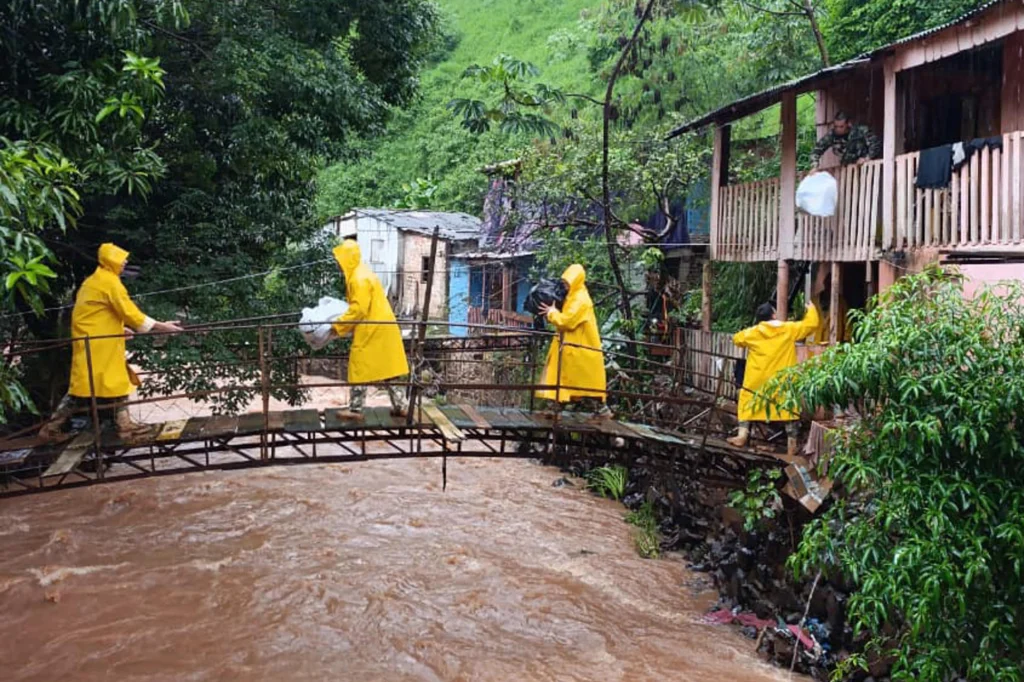
Severe flooding caused by heavy rainfall and the rising Parana River has forced the evacuation of some 4,200 families in eastern Paraguay, with local authorities monitoring vulnerable areas to move residents into temporary shelters.
More than 1,000 severely damaged homes are concentrated in the municipality of Ciudad del Este, where the rising waters have swallowed entire parcels of land. Remansito neighborhood was hit hardest. Around 35 families who work in recycling had to abandon houses submerged under the floodwater.
The emergency extends beyond that city. In the department of Ñeembucú, severe flooding has been reported in the towns of Ayolas and Cerrito. Local authorities and rescue teams continue to watch the most exposed areas as they coordinate the transfer of affected residents to temporary shelters.
The scale of the crisis has grown quickly. Just days earlier, official figures put the number of affected households at 3,000, a count that has now risen above 4,200 as the river keeps climbing.
Residents along the riverbank say the situation worsens considerably each time the gates of the Itaipu Binacional hydroelectric dam open. They argue that releasing the reservoir’s excess water has an immediate and direct impact on homes built along the coastal strip.
Representatives of the hydroelectric facility defended the maneuver. The gate openings, they said, respond strictly to technical safety protocols established for operational contingencies. The dam’s administration rejected the claim that these operations are the main cause of the river overflowing in the region.
The dispute places technical necessity against lived experience. For the communities watching water pour into their streets, the relationship between the releases and the flooding feels direct. For the dam operators, the gates are simply doing what they were designed to do under extreme conditions.
The national weather agency has offered little relief. Projections from the Directorate of Meteorology and Hydrology warn that rain will continue falling through the weekend across the country’s eastern zone. The agency urged the public and protection agencies to maintain precautionary measures amid the risk of new landslides.
#Paraguay | Families in La Rivera have been affected by flooding along the Paraná River, with rising water levels impacting homes and surrounding communities. Footage captures the extent of the flooding and the challenges faced by residents as they deal with its consequences.… pic.twitter.com/7GKTOoXEnB
Solidarity has also moved through the affected areas. Neighbors in working-class sectors have organized to supply community kitchens and distribute donations of basic goods. That support network has become essential for families who left their homes with little more than what they could carry.
The flooding follows a pattern familiar to the region. The Paraná River, one of South America’s largest waterways, regularly swells after sustained rains, but the current emergency has outpaced local capacity to respond.
With the forecast showing no break in the weather, the number of displaced families could continue to rise. Shelters are filling, and the most vulnerable households, including those who earn their living from recycling along the riverbank, face an uncertain wait before the waters recede enough to return.
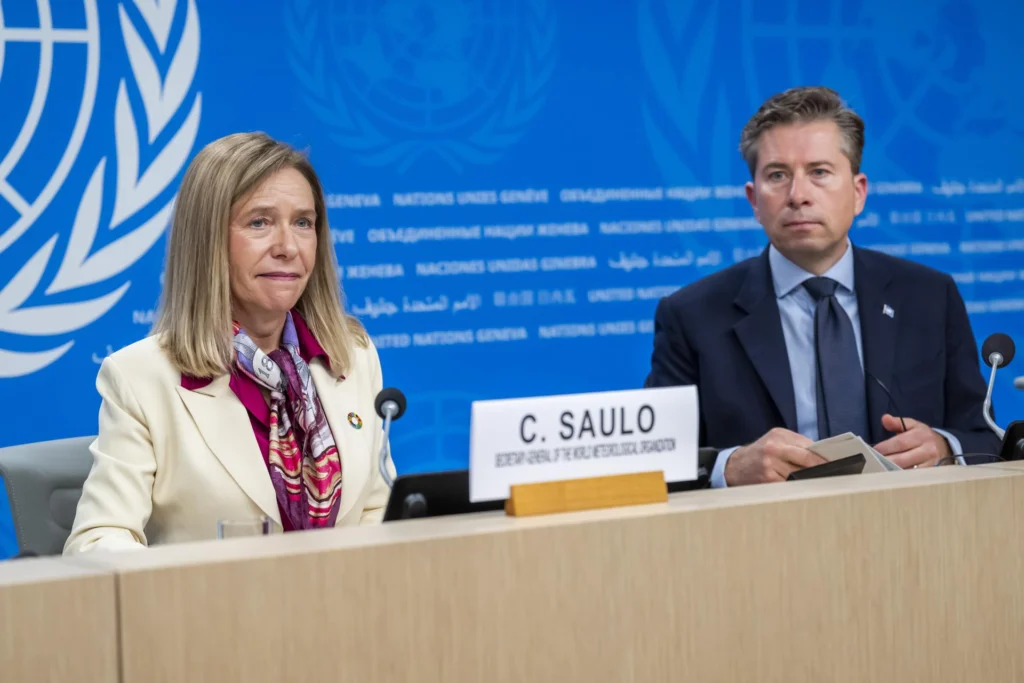
The UN World Meteorological Organization warned Wednesday that the current El Niño episode could push Pacific sea surface temperatures to 3.8 degrees Celsius above the average between November 2026 and January 2027, levels its top official called unprecedented in four decades of monitoring.
The alert came during a joint press conference in which the World Meteorological Organization (WMO) Secretary-General Celeste Saulo acknowledged that the phenomenon now sits “literally outside the scales of monitoring that we have used over the past four decades.”
Her assessment placed the coming months among the most severe climate events recorded since such tracking began.
Saulo and UN humanitarian coordinator Tom Fletcher issued an urgent call for the international community to prepare in advance for the consequences they expect.
Fletcher put the human cost in stark terms. The phenomenon “will shake Latin America, eastern and southern Africa, Asia and the Pacific with extreme heat, droughts and floods,” he warned, and could push food insecurity to affect as many as 50 million people worldwide.
The warning singled out regions already struggling with fragile agricultural systems and limited infrastructure, where a single failed harvest can tip entire communities into crisis.
El Niño is set to hit fragile communities hard.@UNOCHA and @WMO are sounding the alarm, appealing for immediate assistance to support communities already affected by what has been described as the strongest El Niño on record. https://t.co/LDrygGkPPwpic.twitter.com/H1XcVA3AR7
The temperature projection of 3.8 degrees above the long-term average would place this El Niño beyond the upper bands of the monitoring framework built over forty years. Saulo noted that extreme weather events are already being recorded and will tend to multiply as the phenomenon gains intensity. She stressed, however, that the crisis “does not have to inevitably trigger a humanitarian disaster,” a message both officials repeated throughout their appearance.
To front-load the response, Fletcher announced the allocation of 50 million dollars from the UN emergency fund. The money will assist 11 of the most vulnerable countries as a priority, including Chad, El Salvador, Ethiopia, Somalia and South Sudan. The list reflects the broad geographic reach of the expected impacts, spanning the Horn of Africa, the Sahel and Central America.
Both representatives insisted that a window of opportunity remains open. Extreme conditions “do not have to translate into humanitarian emergencies or fatalities” if precautions are taken in time, they argued, framing preparedness as the difference between a difficult season and a catastrophic one.
A Narrow Action Window
Saulo and Fletcher directed their appeal beyond governments. WMO and the humanitarian office urged development banks and international financial institutions to release funds in a coordinated manner before the worst damage occurs. The underlying premise is simple, El Niño cannot be stopped, but its worst human impacts can be mitigated and prevented.
Latin America appears prominently in the forecast. Central America has already been placed on maximum alert over drought conditions linked to the so-called Super El Niño, and the new warning extends that concern across the region. Africa faces the mirror problem in several zones, with eastern and southern areas bracing for a combination of heat, drought and flood depending on local geography.
WMO’s warnings marks a departure from the cautious phrasing typical of international agencies. Describing the phenomenon as off the scale is not a rhetorical flourish but a technical judgment, one intended to shake loose the funding and coordination that slow-moving bureaucracies often withhold until emergencies are already visible. For Saulo and Fletcher, the next three months represent the period when that response must be assembled, not the period when it can still be debated.
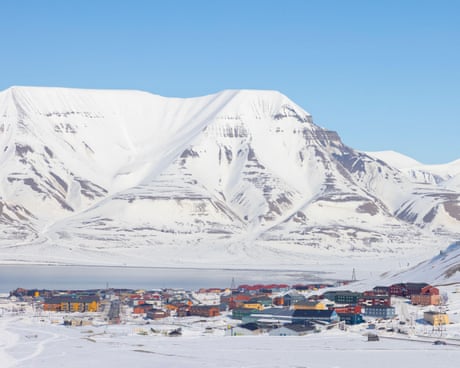
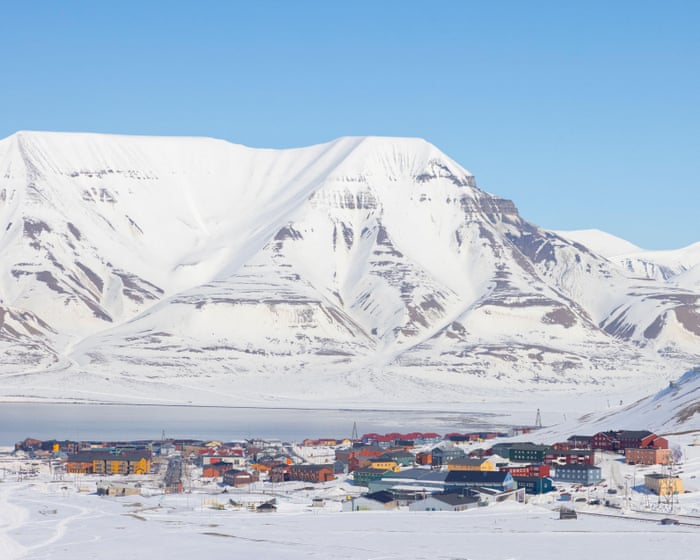
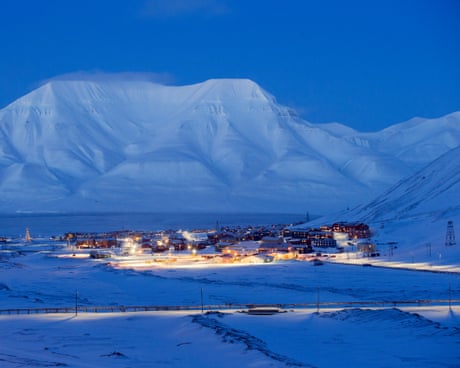
As glaciers melt and permafrost thaws, Longyearbyen, on the remote Arctic islands of Svalbard, faces climate-induced problems from tap water to housebuilding to landslides
On a rugged mountain plateau of snow-dusted rocks, in the remote archipelago of Svalbard, a glaciologist, Andy Hodson, points out the “ears” of ice, white against the rock, that gave Foxfonna glacier its name, after the arctic fox.
The small glacier, on a mountain 8 miles (15km) outside the Norwegian village of Longyearbyen, is a popular summer hike for tourists who come here seeking the Arctic experience.
In 2022, I helped push through the international agreement to protect biodiversity. Wars and economic pressures can make nature seem like a ‘nice-to-have’. But it is a critical asset, and Cop17 must deliver real action
When I was five, property developers came to cut down the woods behind my home in La Tuque, Quebec. My mother encouraged me to climb one of the trees in protest, then told the developers, straight-faced, that there was nothing she could do when they asked her to get me down. A few days later, the tree was cut down anyway.
I thought about that tree in the early hours of a freezing Montreal morning in December 2022, as the gavel came down on a global agreement between nearly 200 countries to halt and reverse the loss of nature by 2030. I thought about how important nature is for our health, our food security and our economies, but also how much passion there is around protecting it, and how it has the power to inspire people all around the world.
Warning for other Arctic communities as residents told not to use water in Longyearbyen in Svalbard, one of the fastest-warming places in the world
Residents of a remote town in Norway that is in one of the fastest-warming places in the world have been told they must no longer drink tap water due to heavy metal contamination that scientists have linked to the thawing permafrost.
Longyearbyen, in the archipelago of Svalbard, gets its main drinking water supply from a 1.5 mile-long (2.5km) dammed lake called Isdammen, or “ice pond”. Higher temperatures as a result of the climate crisis have thawed permafrost, leading to newly exposed bedrock leaching metals into the pond.
This story originally appeared in Common Dreams on Sep. 14, 2026.It is shared here under a Creative Commons (CC BY-NC-ND 3.0) license.
In what environmental advocates describe as “another gift to the fossil fuel industry,” the Trump administration plans to end rules limiting the release of planet-heating emissions from power plants that burn coal and gas.
In 2024, the EPA under the Biden administration used the Clean Air Act to require that many new gas plants and existing coal plants reduce their carbon emissions by 90%, including by installing carbon capture technology, by 2032.
The EPA estimated that the rule would reduce the amount of CO2 emissions by about 1.38 billion metric tons over the next two decades, the equivalent of about a year of emissions from the entire US electric power sector.
Another gift to the fossil fuel industry! The US will allow power plant polluters to dump unlimited planet-warming pollution that power plants pump into the air while burning coal and gas.@maxinejoselowhttps://t.co/ZeiSaFkEpC
— Safe Climate Campaign now @safe-climate.bsky.soc (@safe_climate) September 14, 2026
On Monday, Lee Zeldin, the EPA administrator under President Donald Trump, announced an end to this policy at a meeting of energy ministers at the Group of 20 conference in Houston.
Not only will this prevent the enactment of a policy that the EPA has estimated would prevent around 1,200 premature deaths and 360,000 asthma cases by 2035. But the administration is also rolling out a proposal seeking to prevent future administrations from regulating carbon emissions as a health risk.
It is an effort that runs parallel to the administration’s rescission of the 2009 “endangerment finding,” which allowed the EPA to regulate vehicle emissions under Section 202 of the Clean Air Act on the grounds that they are harmful to human health. That move is also being challenged in court.
Power plants are regulated under a different section of the Clean Air Act, Section 111, which allows the EPA to regulate facilities that “cause, or contribute significantly to” dangerous air pollution.
But whereas the courts have previously interpreted this statute to regulate the outputs of entire facilities, the Trump administration is asking courts to adopt a novel reading of the statute which says each individual chemical under scrutiny must “contribute significantly” to climate change.
As Meredith Hankins, legal director for climate and energy at the Natural Resources Defense Council, explained in a policy memo last week, it likely won’t be easy for the administration to prove that the CO2 emissions from US power plants aren’t a significant driver of climate change.
“Power sector emissions account for a quarter of total US emissions, so if they cannot be counted as significant, it’s hard to conceive of any emissions that would,” Hankins wrote. “In fact, if the US power sector were a nation, it would be the world’s fifth-largest emitter after China, the United States, India, and Russia. That’s a pretty ‘significant contribution’ to the problem.”
The effort to gut power plant regulations comes after the hottest meteorological summer recorded in US history and amid a year with one of the largest numbers of climate disasters on record, including widespread drought, destructive wildfires, and repeated flooding and tornado outbreaks.
As the planet has warmed over the last half-century, the US has seen a sharp, near-sevenfold increase in weather disasters costing over $1 billion, according to data from the National Oceanic and Atmospheric Administration.
“While wildfires rage, floods devastate communities, and families struggle to afford skyrocketing electricity bills and insurance premiums, the Trump administration is handing the fossil fuel industry a license to keep polluting,” said Holly Bender, chief program officer for the Sierra Club, following news of the EPA’s rollback of power plant rules. “This is full-throated climate denial while the climate crisis happens in real time and a shocking betrayal of the American public.”
She added that “the Sierra Club will fight back against this reckless and dangerous proposal with everything we have in the courts, in Congress, and in communities across the country.”
If successful, the reversal of the power plant rules would be one of the most significant steps in Zeldin’s push to eviscerate the EPA’s authority to combat climate change on behalf of the fossil fuel industry. Earlier this summer, during a meeting of the National Coal Council, he bragged that “many of the items” on the industry’s “wish list are now done.”
He has put the wheels in motion to roll back virtually every Biden-era regulation on the coal industry, including rules limiting pollution from mercury and toxic metals, controls on toxic wastewater from coal plants, and limits on coal ash.
And while seeking to undermine the legal basis to regulate greenhouse gases, Zeldin’s EPA has also taken a sledgehammer to its practical ability to do so, dismantling offices that collect climate data, erasing information about human-caused climate change from the agency’s websites, and filling research panels with scientists employed by the fossil fuel industry.
Former State Department energy official Alan Eyre noted that on the world stage, the US “has always been obstructionist” when it comes to climate policy. Under Trump, he said, “we’re actively malevolent.”
For more than four months, Brian, a commercial fisherman in his late 40s, had been waiting for the weather conditions to be right for us to go fishing outside Bagenkop, a small harbor town on the southern tip of the Danish island of Langeland.
“One more problem has come up,” Brian told me over the phone in early May. “I have lost my fishing license." He was no longer allowed to sell fish for a living. Instead of preparing his boat to go out to sea and to show me how fishing in Denmark had changed over his lifetime, Brian was now removing the registration number from its hull.
Across Denmark, coastal fishing communities are shrinking as catches decline. At the same time, warming seas, overfishing and pollution are putting increasing pressure on marine ecosystems.
“Plenty of fish in the sea”? Not anymore, say UN experts, with 35% of the world’s marine fish stocks being fished faster than they can be biologically replaced. Today, more than half of the fish we consume worldwide comes from fish farms.
This summer, sea temperatures along Denmark’s beaches reached 28 degrees Celsius, a record high. On September 2, the UN Environment Program warned that the world is likely to cross 1.5 C of warming above pre-industrial levels within the next few years. As the climate warms, the pressure on marine ecosystems grows.
In August, Iceland voted not to restart accession talks with the European Union, in part because of concern that it would lose sovereign control of its fishing industry. While fishing is not as major a part of Denmark’s GDP as it is Iceland’s, the EU’s impact has meant independent Danish fishermen have struggled to survive in the face of corporate competition.
For Brian, though, it’s about more than regulations. It is about watching the ocean he grew up with slowly disappear.
Nets covered in black slime
His story reflects a larger shift happening along the Danish coastline. Coastal fishermen, once a central part of the country’s history, are a vanishing breed.
For Brian, it was never about the money. Even when he was a teenager and he told his father he wanted to be a fisherman, his father said it was a bad idea. But the pull of the sea was irresistible. His life as a fisherman began as a hobby, accumulating experience and knowledge just by spending as much time as possible on water. He learned how to read the currents, the weather, and fish movements through experience rather than education. In 2019, despite the uncertainty surrounding the industry, he bought a commercial fishing boat. “When I started as a teenager, there were fish everywhere,” he said. But over the years, the numbers have dwindled starkly. Every few years, another Danish harbor became economically unsustainable. First Bogense, then Kerteminde, later Nyborg and Spodsbjerg. Each one of them followed the same pattern: fewer fish, declining landings, and growing questions about whether it was possible for small fisheries to continue their operations.
While working on this story, I spoke to ten small-scale Danish fisheries across the country. Half of them said they do not expect to still be fishing five years from now. In 2019, they said, ten nets could bring in between 150-200 kilos of plaice on a single trip. Two years later, the same nets would return with only two kilos. As the catches became smaller, so did the possibility of keeping a commercial license. Brian no longer caught and sold enough fish to keep his permit.
One day still stands out to him as perhaps the single worst he has experienced at sea. He had three nets in the water. The first one he hauled in looked normal. The second held fewer fish than expected. Then he started pulling in the third — the net was completely empty and covered in thick, black slime.
Marine biologist Stiig Markager told me that what Brian saw was a tell-tale sign of oxygen depletion. In 2025, around 40% of Danish marine areas were affected by low oxygen levels. Oxygen depletion happens when too many nutrients, mainly nitrogen and phosphorus from agriculture and wastewater, enter the sea. These nutrients fuel large algae blooms.
When the algae die and sink to the seabed, bacteria begin decomposing them, consuming enormous amounts of oxygen in the process. Climate change exacerbates the problem. “Warmer water contains less oxygen. At the same time, biological processes speed up when temperatures rise.” In practice that means algae grow faster, oxygen is consumed more quickly, and deep waters struggle to recover. Together, these processes reinforce each other. “When oxygen disappears, it damages the seabed ecosystem,” Markager said.
A new global study argues that aquatic deoxygenation is approaching an “unsafe space” and should be considered a potential tenth planetary boundary. The global ocean has lost around 2% of its oxygen over the past 50 years. The consequences for marine life are catastrophic, forcing either flight or suffocation.
Marine biologists have studied oxygen depletion in the Danish seas for decades. But, Brian says, “fishers are often the first people to see the effects of that depletion, directly in their nets.” It is a first-hand experience, fishers say, that is often discounted or ignored. Many independent coastal fishers say they feel increasingly excluded from political conversations about the ocean, despite spending their working lives at sea.
Source: DCE – Danish Centre for Environment and Energy, Aarhus University, Oxygen depletion in Danish waters, 2014–2025.
“It feels like we’re not really welcome anymore,” Brian said. He believes small-scale fisheries like his are being pushed out while decisions about the seas are increasingly made by those on land. “I think they don’t want so many people out there seeing what’s actually happening.”
For years, debates about oxygen depletion in Denmark have become deeply political. Marine scientist Stiig Markager says that the results of environmental research have repeatedly clashed with agricultural and political interests. “There is complete opposition from agriculture and from Venstre (a major center-right political party) to making research publicly available,” he said. “There is a clear political strategy from Venstre that there must be no interference with agriculture.”
According to Markager, tensions between environmental researchers and agricultural interests intensified during the early 2000s, as scientists linked nitrogen runoff from farming to oxygen depletion in Danish waters. Despite decades of plans and political promises, Markager says, the recovery many researchers hoped for never fully arrived.
For this story, I also contacted both the Minister of Environment and the Minister for Food, Agriculture and Fisheries to ask for an interview about the state of Danish waters and the future of small-scale fishing. Neither had time to answer questions.
“When I started as a teenager, there were fish everywhere.” Brian said in BK Kar“Fishers are often the first people to discover oxygen depletion, directly in their nets,” Brian explained."I have lost my fishing license," Brian said on a phone call.
What remains is behind glass
One harbor that has felt the impact of the changing nature of Danish waters is Bønnerup Strand, which has transformed from a fishing town into a tourist destination. The harbor now features an ice cream shop, a hot dog kiosk, a seafood restaurant, and a mini golf course. The iconic blue Danish fishing boats are conspicuous only by their absence. Instead, boats built for leisure, not commercial fishing, are docked at the harbor.
Along the quay, an outdoor exhibition has been installed behind glass panels. It started last year, created by a local group of volunteers trying to preserve what Bønnerup Strand used to be. The pictures show fishing nets piled high, men in blue overalls, boats unloading their catch, and fish laid out in crates.
Movement. Noise. Purpose. It was a harbor bustling with life. Hans, in his 60s now, was once a fisherman in Bønnerup Strand. He walks past the diorama and tells me that twenty years ago “there were 60 or 70 fishing boats here, now there are two.” Some of the independent fishers chose to leave, their lives no longer making economic sense. Others lost their licenses. The rest have disappeared, not all at once, but gradually. Some left before it was too late, others had their boats seized by the bank when their revenue became too low. “Quite a lot of my colleagues had their boats taken by them," says Hans, referring to banks who repossessed boats because independent fishermen no longer made enough money to pay for them.
You could say that the gradual suffocation of the Danish seas began in 1909 with the invention of the artificial nitrogen fertilizer that transformed global agriculture. Artificial fertilizer rapidly became central to modern-day farming. By 1959, nearly 75% of farms were using fertilizer to increase crop production. At first, the growing amounts of nitrogen entering the sea did not appear harmful. During the 1960s and 70s, the extra nutrients actually increased algae and plankton growth, creating more food for some fish species. “There were actually more fish,” says Markager, the marine scientist, “but by the mid-1980s, the consequences had become impossible to ignore.”
Fish auction hall, Esbjerg, 1968. Tonny Sørensen. Esbjerg harbor, 1972. Knud Rasmussen.Fish auction, Esbjerg, 1934. Gustav Bjerknæs .
On October 8, 1986, on Danish television fishermen in Gilleleje were seen pulling dead lobsters from the sea. The images became the subject of alarmed national conversation. For the first time, the public saw what oxygen depletion meant for life beneath the surface of the sea.
Hans, the fisherman from Bønnerup Strand, told me he was part of the television coverage himself. “Fishers had talked about pollution long before the dead lobsters,” he said. “But suddenly people started paying attention.” The public outrage pushed Denmark to act. In 1987, the country introduced its first Water Environment Plan, aiming to reduce phosphorus emissions from wastewater by 80% and nitrogen emissions by 50% within five years. For many fishers and marine scientists, it became the first real sign that the environmental crisis in Danish waters was finally being taken seriously. During the 1990s, nitrogen and phosphorus pollution declined significantly. Water in several fjords and coastal areas became clearer, and conditions slowly began improving. For a moment, it appeared the damage could still be reversed.
But by the early 2000s, many coastal fisheries were once again experiencing declining catches and, with it, a growing uncertainty about the future. Hans was one of those affected. Coming from a family that had fished for five generations, the harbor was never a tourist destination for Hans. It was a way of life. But on a sunny Friday in April back 2005, he sailed out to Kattegat for plaice. He knew it was over. “I said to my employee: “this is the last trip. I start working on land from Monday.”” He had made the decision months earlier, as the numbers of fish dwindled and regulations tightened.
It wasn’t an easy choice, but he had four children to think of. Climate change had taken away his livelihood. “You can’t do anything about it,” he said. “If you think too much about it, you go crazy.” Researchers describe this kind of environmental grief as solastalgia, the distress caused by watching a familiar environment change beyond recognition. Unlike homesickness, solastalgia happens while still remaining in the same place. For coastal fishers, the sea remains physically present, but the ecosystem they once knew and depended on, is disappearing.
Adapting has always been part of the job, says Hans. “There has always been a species that disappeared and then another one came.” But eventually, nothing was replacing what was lost anymore.
Hans in his shop, Møllefisk.
In 2002, marine scientists Stiig Markager and Peter Bondo Christensen from DMU, the Danish Environmental Research Institute, published research showing that around 75% of Denmark’s nitrogen emissions originated from agriculture through waterways and atmospheric pollution. The findings intensified tensions between marine scientists, politicians, and agricultural organizations about who was responsible for the declining marine environment.
In response to the worsening marine crisis, Denmark established DMU in 1989 to monitor oxygen depletion, nutrient pollution, and ecological changes beneath the surface. But their findings were inconvenient. By 2007, after nearly two decades as an independent institution, DMU was folded into Aarhus University as part of a wider restructuring of Denmark’s research sector. The decision sparked criticism from several environmental researchers and organizations, who feared the changes could weaken the independence of Danish environmental monitoring.
“Agriculture succeeded in closing DMU,” former researcher Bo Normander told the media. “Nature has lost.” In 2015, the Danish government introduced the controversial Landbrugspakke, easing environmental regulations on fertilizer use in an effort to increase agricultural production.
Critics warned that the policy could worsen nitrogen pollution in Danish waters at a time when oxygen depletion remained a recurring problem. In the years that followed, researchers from Aarhus University reported rising nitrogen emissions instead of the reductions politicians had promised. Markager argues that despite decades of environmental warnings, nitrogen pollution reductions largely stalled. While nitrogen pollution in Danish waters declined significantly after the first Danish Water Environment Plans in the 1980s and 1990s, researchers say the reductions have largely stagnated over the last 20-25 years.
Now, Denmark is trying to reverse that trend. In the first week of September, the country passed a historic new law changing how agricultural nitrogen is regulated. The law will take effect in 2027 and represents a significant tightening of the rules introduced in 2015.
Under the system introduced in 2015, farmers were allowed to fertilize closer to what was considered the agronomic optimum for their crops, while still operating within nationally defined nitrogen quotas and other rules. The new system moves in the opposite direction. Instead of relying primarily on broad national rules, nitrogen regulation will increasingly take the environmental sensitivity of individual areas into account.
Where a farm is located will thus matter much more. The requirements will vary depending on factors such as whether fields drain towards vulnerable rivers or coastal waters, and whether they lie above areas important for groundwater and drinking-water protection. For farmers, this means that the amount of nitrogen they can use will become more restricted in areas where the surrounding environment is particularly vulnerable.
For fishermen like Brian and Hans, the law represents a change they have long been asking for: an attempt to redress the damage done to Danish seas.
“I don’t think we’ll have fish out here ever again.” said Hans Fisker, owner Møllefisk at Bønnerup Strand“Quite a lot of my colleagues had their boats taken by them." Boat on land, Bønnerup Strand.
But understanding how the water became polluted is more complicated than it first appears. Much of the pollution data commonly referred to in public debates focuses on point-source pollution, which emanates from identifiable sources like wastewater treatment plants, industrial discharge, and fish farms, and is generally easier to measure. But most nitrogen pollution in Danish waters actually comes from diffuse sources, mainly agricultural runoff carried from fields through rainwater, rivers, groundwater, and the atmosphere. Unlike point sources, diffuse pollution is far harder to measure directly and comes with greater uncertainty in the data. As a result, wastewater pollution can often appear to be the biggest issue, even though agriculture remains the dominant source of nitrogen input into Danish waters.
For Hans, the consequences appear almost irreversible. These days, the fish often do not return. “There are still plaice here, but they’re too thin. They don’t gain weight.” Scientists point to several overlapping causes, and the suggested solutions are just as diverse. Activists call for stricter rules, fishers say there are already too many. Farmers reject blame, and governments insist wastewater is already being purified. Plenty of fingers are being pointed, but the problem remains.
Hans doesn’t expect it to change. “I don’t think we’ll have fish out here ever again.” These days, he’s on the other side of the industry, buying catch from fisheries and selling it to customers. “People have to get used to the fact that we don’t always have everything available on demand. With a changing climate, fish shops may no longer offer cod, salmon, or plaice like we’ve been used to.” Instead, he says, squid is becoming the new normal.
Still, while independent fisheries disappear, the demand for fish continues to grow. Instead of restoring the ocean, parts of the fishing industry are increasingly moving onto land.
In northern Denmark, companies like Skagen Salmon are now raising fish entirely inside closed artificial systems, where the water, oxygen, and temperature are carefully controlled. Outside, Skagen Salmon looks like a factory. No windows, just a large grey box near the coastline.
If the building had windows, the fish inside could look out at the sea. But these fish will never see, taste, or feel those waters. Instead, they are raised in artificial tanks until they reach market size. They are then slaughtered and sold to supermarkets and fish shops across the country.
https://youtu.be/XKDIe7PXMCw
Video from Skagen Salmon recirculating aquaculture system (RAS), by Victoria Jensen.
This story originally appeared in Prism on Aug. 31, 2026.
After years of organizing, residents in Howard County, Maryland, say they’re running out of options to find out what their plastic recycling corporate neighbor, W.R. Grace, is emitting.
The multinational chemical company and the state’s main permitting agency have fulfilled state and federal permitting and regulatory requirements for W.R. Grace’s pilot program to recycle plastic.
“As long as the facility meets local zoning and land-use requirements, MDE is obligated to review an air quality permit application for activities related to the facility,” the Maryland Department of the Environment (MDE) said in its final determination letter, granting the necessary air permit. While MDE required the company to control and monitor for volatile organic compounds and “forever chemicals,” an environmental impact assessment was not required given the scope of the pilot project. MDE’s air quality control regulations prohibit a source from causing a nuisance or odor.
In recent weeks, residents have reported foul odors emanating from the W.R. Grace facility, which initiated the pilot program in 2023. Residents told Prism that they don’t know whether the air is toxic; W.R. Grace has claimed that some of the information about the process is proprietary, limiting what the public can learn about its operations and emissions.
Residents of Cedar Creek and River Hill, two communities in Columbia, Maryland, that sit as close as 240 feet from the chemical facility, said the company can legally leave the public in the dark. This isn’t just an issue for Maryland residents, but should ring an alarm bell for communities across the country.
“Even in this very Democratic city … no one’s listening,” said Shamieka Preston, a community organizer with the Stop Grace Coalition who said she lives 400 feet outside the facility’s fenceline. Preston ran for Howard County Council to represent District 4 and lost her primary election in June. She ran on a platform to hold W.R. Grace accountable after other attempts failed, including a court challenge to the company’s operations permit and trying to change zoning rules about how far industrial facilities have to be from residential areas.
In 2022, Preston moved her family from California for a better quality of life and safety. In Maryland, her family could live in a larger house and access high-quality public schools. Soon after the family’s move to Cedar Creek, W.R. Grace applied for its permit.
Plastics recycling
Advanced chemical recycling, or “pyrolysis,” refers to the process of applying extreme amounts of heat to plastic without the presence of oxygen, turning it into pyrolysis oil. Once that oil is refined, it can be used as transportation fuel. W.R. Grace disputes that its experimental technologies conduct pyrolysis.
“Grace scientists have developed a new way of recycling plastic that has the potential to reduce emissions, save energy, and lower costs compared to other plastic recycling options such as pyrolysis,” a W.R. Grace spokesperson told Prism in an email.
The company “followed the proper MDE process, including participating in a public hearing and a 120-day comment period,” the spokesperson said, adding that the “pilot research project will not impact the health or wellbeing of our local community or the employees who work at the facility every day.”
Plastics recycling, pyrolysis, and chemical recycling are the latest forms of so-called solutions to the climate crisis, said Rita O’Connell, a staff organizer at Beyond Plastics, a research and advocacy organization housed at Bennington College in Vermont. She told Prism that people should be wary of the narrative that plastic is recyclable and its consumption relatively harmless. O’Connell has consulted with the Stop Grace Coalition.
About 6% of all plastics that have ever been produced have been successfully recycled, she said.
“The promise of chemical recycling for legislators and municipal leaders is, ‘Oh good, we don’t have to worry so much about this plastic crisis because we can just send it off to be turned back into plastic,’” O’Connell said. “That essentially functions as an incredibly effective public relations campaign for the plastics and the petrochemicals industries to keep making as much plastic as they want.”
Maryland residents are also concerned that W.R. Grace has claimed many of the components of its research are proprietary, including information about feedstock sources and composition, fuel, and what chemicals are used in the heating process. The company has repeatedly stated that atmospheric emissions from the pilot program will be “low,” despite the thermal oxidizer running 16 hours per day, 250 days per year.
Lisa Krausz, who lives in River Hill near the W.R. Grace facility, told Prism that the emissions aren’t any less of a concern just because the pilot program engages in less chemical recycling than a commercial operation might. In fact, “pilot projects can actually be more risky because they’re testing stuff,” Krausz said. “It’s all experimental.”
W.R. Grace isn’t required by the state to make public what catalyst it uses to break down plastic feedstock. But, Krausz said that some catalysts, like chromium, can become toxic after exposure to high heat.
Who does plastics recycling really benefit?
The Biden administration ushered in a wave of experimentation with advanced chemical recycling. In 2022, the Environmental Protection Agency (EPA) announced that its New Chemical Division would “streamline” the review of “environmentally friendly chemical substitutes” in order to bring new fuels to market that would help reduce greenhouse gas emissions. Sources of fuel that are derived from “waste” such as plastic are included in this effort.
Despite the lofty goals of chemical recycling to meet the moment of unprecedented plastic pollution, environmental advocates caution that plastic pyrolysis is a way to offer the oil and gas industry a public relations lifeline and convince the public that recycling is an effective means of waste management.
Scott Throwe, vice president of the consulting organization Throwe Environmental, worked at the EPA for three decades, including helping to lead development and enforcement of Clean Air Act regulations.
Throwe said there is almost no federal guidance or leadership on the subject of pyrolysis. Without a risk analysis for the industry, specific regulations addressing air pollutants that result from this process, or understanding the manifold and complex risks of emissions, companies simply have to make sure their emissions don’t violate the current Clean Air Act regulations—even if those regulations were written prior to pyrolysis facilities starting to operate.
Deregulation and destabilization at the EPA have a filter-down effect on states. “There’s a very strong laissez-faire attitude at EPA with the states right now, and the state agencies basically, for all practical purposes, have carte blanche,” Throwe said. The problem, he said, is that state agencies might not have the breadth of experience or institutional knowledge to establish and maintain robust monitoring schemes.
“This is a pilot plant, so things are going to go wrong—that’s the nature of pilot operations,” Throwe told Prism.
Correction, Aug. 31, 2026: This story has been updated to correct where two residents live: Lisa Krausz live in River Hill, and Shamieka Preston lives in Cedar Creek.
Editorial Team: Sahar Fatima, Lead Editor Carolyn Copeland, Top Editor Stephanie Harris, Copy Editor
This story originally appeared in Common Dreams on Aug. 31, 2026.It is shared here under a Creative Commons (CC BY-NC-ND 3.0) license.
President Donald Trump on Monday warned Americans that they risk becoming “backwards and poor” unless they allow Big Tech companies to build artificial intelligence data centers in their communities.
In a social mediapost, the president expressed indignation that any town or city wouldn’t welcome data centers, which have drawn nationwide opposition for generating pollution and jacking up utility bills.
“The only reason that communities throughout the USA should not want Data Centers is if they want to end up being backwards and poor,” Trump wrote. “If they want to be successful and rich, with far lower taxes and jobs all over the place, let Data Reign.”
In reality, AI data centers create very few jobs once they are completed, as most of their functions are fully automated.
Trump then said that Americans “will only have yourselves to blame” if they “kill the Golden Goose” that is AI data centers.
“China could not be happier with this anti Data Center movement,” Trump wrote. “Actually, they can’t believe it is happening!”
Building AI data centers has become massively unpopular throughout the US.
A poll conducted by Embold Research and published by Heatmap Pro earlier this month shows that 75% of Americans now oppose building AI data centers in their area, including 61% registering strong opposition.
While Republicans polled in the survey were more supportive of data centers than Democrats and independent voters, it nonetheless found that opposition among Republicans outweighed support by 43 points.
Polling analyst G. Elliott Morris marveled at how politically tone deaf the president sounds when it comes to data centers, commenting that “Donald Trump is actively trying to help as many Democratic senators as possible get elected.”
Longtime GOP operative Frank Luntz similarly noted data centers’ unpopularity, citing a recent Gallup poll showing 63% of Republican voters oppose having one of the facilities built in their communities.
“We’re about to see whether President Trump can sway those voters to support them, as he’s done on many issues before,” Luntz remarked.
Democratic US Senate hopeful Abdul El-Sayed wasted no time tying the president’s position on data centers to his opponent, Republican Mike Rogers.
“Make no mistake—this is Mike Rogers’ position on data centers,” wrote El-Sayed. “He’s got up to $2.6 million invested in companies cashing in on the data center boom, all while Michiganders watch their utility bills soar. You can’t trust a word out of Mike’s mouth because he’s only out for himself, for Donald Trump, and for Big Tech—not Michigan.”
Faiz Shakir, a longtime adviser to US Sen. Bernie Sanders (I-Vt.), observed that Trump is merely “sharing the perspective of Wall Street and Big Tech” and is showing “no interest… in grappling with the mass revolt across American communities, or to learn anything from them.”
Screenwriter David Simon, creator of the acclaimed television series The Wire, accused Trump of brazenly lying about data centers’ economic benefits.
“If data centers are a geographic benefit to communities, you can be sure they’d be siting and building them in affluent and politically connected environs,” wrote Simon. “Curiously, they’re dumped in poorer, less influential places. Go fucking figure.”
Republican Kentucky state Rep. Savannah Maddox took issue with the president disparaging communities opposed to data centers, which include many of the rural communities that voted for him in three presidential elections.
“Rural doesn’t mean ‘backwards and poor’ and development doesn’t always equate to being ‘successful and rich,’” wrote Maddox. “President Trump wouldn’t be president without the rural voters who inhabit America’s heartland. It is not wrong of us to question the sudden and wide-scale effort to convert arable land into data centers. We are not stupid for wanting to protect our rural way of life.”
This story originally appeared in Common Dreams on Aug. 27, 2026.It is shared here under a Creative Commons (CC BY-NC-ND 3.0) license.
Scientists and climate action campaigners on Thursday pointed to the collapse of a glacier as a likely cause of disastrous flash flooding in Tibet and Nepal’s Rasuwa district, where emergency workers are searching for more than 1,300 missing people after water and mud poured into the Trishuli River valley, crashing through villages where thousands of people live and sweeping away bridges, homes, and miles of roads.
An initial assessment by geologists and glaciologists found that in satellite imagery taken before the flooding, a glacier was seen about 4,000 feet above the valley where at least 353 people were later killed Wednesday by the rushing waters and mudslide.
The glacier appeared about 2 million square feet smaller after the flooding, while the valley was “strewn with ice and mud” and the nearby river was “swollen beyond its banks, submerging the surrounding vegetation beneath murky brown floodwaters.
The scientists said an “ice avalanche”—a massive chunk of ice that fell off a glacier in the mountainous region and into the valley below, was likely at least partially to blame for the flash flooding, but noted that it was too early to rule out other or additional causes.
The satellite imagery appeared to show that “a glacier in the area basically snapped off in a clean break, allowing it to fall just over a vertical kilometer to the valley bottom,” Daniel Shugar, a geologist at the University of Calgary in Canada, told The New York Times. “The bottom looks like a bomb exploded—it’s just deposits from the broken-up glacier.”
The chunk of ice was likely about 2,000 feet wide, Shugar told the Times, and fell nearly 4,000 feet—a fall that would have “pulverized” the ice into water.
Aakriti Dotel, national network coordinator for the climate action group Nepalese Youth for Climate Action said the floods were “another painful reminder of the growing climate crisis facing Nepal and the Himalayas.”
“As our glaciers melt and extreme weather events become increasingly unpredictable, communities living downstream are bearing the devastating consequences,” said Dotel. “We mourn the lives lost and the livelihoods affected and call for urgent global climate action. There must be stronger support for vulnerable mountain communities, and accountability from those most responsible for the climate crisis.”
The disaster stunned officials in the area, where there had been no rainfall before the floodwaters and mudslide overtook the region.
Intense videos circulating on social media Wednesday showed people attempting to run away as water and mud crashed into villages in the region.
🇳🇵🌊 Nepal flash flood kills at least 95, hundreds missing
➤ A massive flash flood swept away villages in Nepal’s mountainous Rasuwa district near the Tibet border Wednesday, killing at least 95 people and leaving hundreds missing, including 384 tourists and eight South Korean…
Tom Fletcher, the United Nations humanitarian chief, said he had mobilized $2 million from the UN Global Emergency Fund “to save lives with emergency medical care, shelter, water.”
The secretary-general of the Nepal Red Cross told CNN that about 20,000 houses have been “swept away” in the region.
“These people do not have anything,” said Rishi Khanal. “To feed them for some time, some days is a very serious thing to us… The shelter problem is there. The drinking water problem is there.”
A police officer in the village of Syabrubesi told the Times that waves of water crashed into his police station Wednesday morning, right after he got off the phone with a friend who had warned him a flood was headed toward the town.
“One of my senior officers and I were together when the wave struck. I was thrown out, but he was unlucky and was buried or swept away,” he told the newspaper. “I cannot explain how big the waves were. They engulfed several-meters-high buildings in a fraction of seconds… It wasn’t just water. It was a combination of boulders, sand, and thick sludge.”
Seven people were working at the station when the flood hit, and the officer is one of three who have been found alive. He said he was concerned that the other four are among the missing.
Homes, schools, government buildings, and the office of a hydropower project are among the infrastructure destroyed in Syabrubesi.
More than 160 glaciers in Nepal have entirely melted in recent decades, as scientists have warned that continued fossil fuel extraction is heating the planet and causing dangerous extreme weather. The area of the country’s glaciers also shrank by about one-quarter between 1970-2010.
At The Conversation, Levan Tielidze, a research fellow in glacial geomorphology at Monash University, wrote that “it’s too early to say this was the exact cause. But we know that the great ice stores of the Himalayas—known as the world’s ‘third pole’ because it contains the largest amount of snow and ice after the Arctic and Antarctic—are no longer safe.”
Tielidze continued:
What happened in Nepal is likely due to an enormous ice-and-rock landslide sweeping down a mountain pass and gathering up ice, water, rock, trees and dirt. The landslide was so large it was originally thought to be an earthquake, as the seismic energy registered as a 4.4 magnitude quake on seismographs. By the time it reached Gyirong Port—a China-Nepal border crossing—the wall of debris resembled a tsunami of dirt. Early estimates suggest the wave may have been 30 meters high.
Rising global temperatures have been linked to previous collapses of glaciers, including in Switzerland last year when the Birch Glacier wiped out nearly an entire town of 300 residents, who had evacuated before the disaster. Eleven mountain climbers were also killed by a glacier collapse in Italy in 2022.
“Every destabilized glacier in a warming Himalaya is a ticking time bomb that can go off unannounced, and when it does, those least responsible for the climate crisis pay with their lives,” said Savio Carvalho, head of campaigns and networks for 350.org. “This moment of grief has a clear message for world leaders: Delay is deadly. Rich countries must finally deliver the finance and protection they owe frontline communities. Without a rapid transition away from fossil fuels, the planet will continue to heat up and lives can be lost in a flash.”

 Login