Login

Jessie Buckley swaps Hollywood salaries for £140-a-day theatre role
John Lithgow, Tilda Swinton, and Gary Oldman also performed at the west London theatre for the ‘standard company rate’
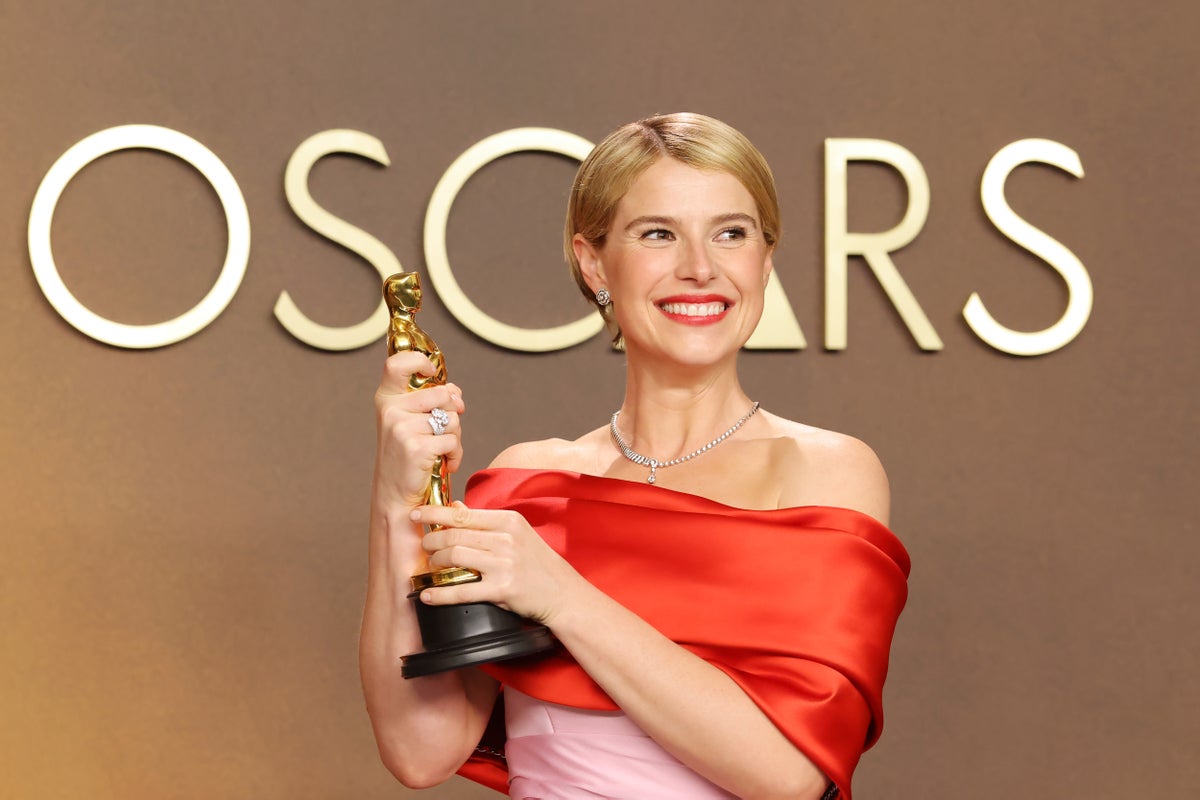
© Getty Images

John Lithgow, Tilda Swinton, and Gary Oldman also performed at the west London theatre for the ‘standard company rate’
© Getty Images
John Lithgow, Tilda Swinton, and Gary Oldman also performed at the west London theatre for the ‘standard company rate’
© Getty Images

First-ever revival of Aaron Sorkin’s military courtroom drama has opened on Broadway
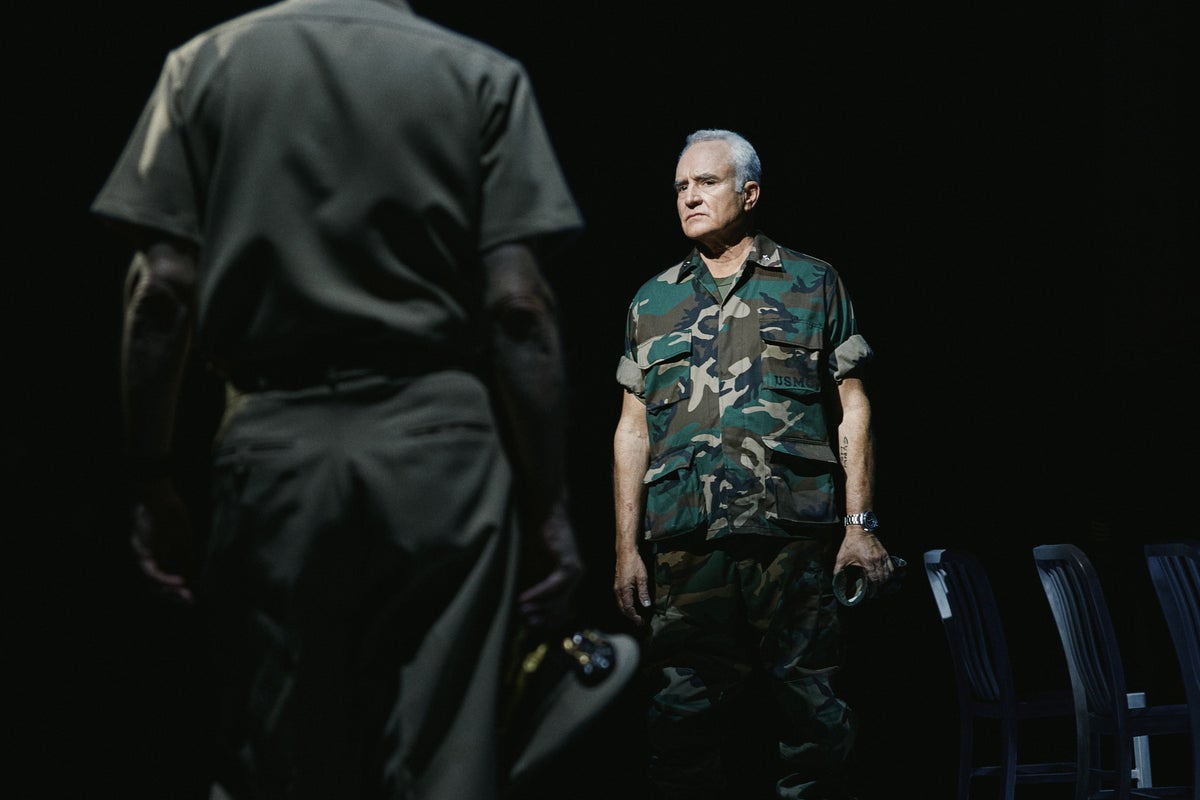
© Emilio Madrid
First-ever revival of Aaron Sorkin’s military courtroom drama has opened on Broadway
© Emilio Madrid

Apu Gomes/Getty Images
Elon Musk says it's not worth saving for the long term, as nest eggs won't matter.
"Saving money for the distant future is pointless with the advent of super intelligent abundance," Musk said in an X post on Thursday, doubling down on one of his most polarizing predictions.
The Tesla and SpaceX CEO was replying to a user who said they weren't stressing over their "questionable financial decisions" because a future of abundance meant "most of it won't matter in a few years anyway."
@battleangelviv Saving money for the distant future is pointless with the advent of super intelligent abundance
— Elon Musk (@elonmusk) October 29, 2026
The world's richest person — who has a nearly $1 trillion net worth — has previously advised against saving for decades to come.
"Don't worry about squirreling money away for retirement in 10 or 20 years," Musk said during a podcast episode released in January. "It won't matter."
"If any of the things that we've said are true, saving for retirement will be irrelevant," he added.
Musk said at the time that he expects progress in AI, energy, and robotics to supercharge productivity, resulting in plentiful resources so that "anyone can have whatever stuff they want."
In that world, he continued, everyone would have access to "better medical care than anyone has today," there would be "no scarcity of goods and services," and "you can learn anything you want about anything for free."
Business Insider spoke to seven personal finance and AI experts about those comments, and they all agreed people should keep saving for retirement given the risk that Musk may be wrong.
Musk laid out an even more utopian vision on a recent podcast, predicting that advances in robotics and space travel would lead to a multiplanetary economy, at which point "money becomes irrelevant" and "conventional currency will not matter."
Several other tech leaders have predicted AI and other technologies will transform the way we live.
Microsoft cofounder Bill Gates said on a recent podcast episode that AI will lead to "true abundance" with robots able to "build houses, grow food, do surgery."
But he also warned the next two decades will be "as tumultuous a period as there's been in human history," as technological advances will mean "none of the things that human labor provides to the economy will be necessary for most goods and services."
Similarly, Musk has predicted a "bumpy" transition to a brighter future. He's suggested government checks for all as the best solution to AI-fueled job destruction.
The stage adaptation of the hit musical arrives at the Theatre Royal Drury Lane in spring 2027

© PA
O fundador da ByteDance, Zhang Yiming, recuperou o primeiro lugar na lista dos mais ricos da China, impulsionado pelo avanço de sua empresa em IA (inteligência artificial).
Os rankings divulgados pelo Instituto de Pesquisa Hurun nesta terça-feira (27) refletiram que os setores de alta tecnologia do país estavam em ascensão, enquanto outros, como consumo e imobiliário, estavam sob pressão.
O instituto, que publica a lista anualmente desde 1999, encontrou um recorde de 1.529 pessoas com mais de 5 bilhões de yuans (cerca de US$ 750 milhões), um aumento de 6,6% em relação ao ano passado.
O número de bilionários com base em seu patrimônio líquido em dólares americanos subiu para 1.176, um aumento de 155 pessoas – 176 a mais que os Estados Unidos. Isso foi ligeiramente abaixo das 1.185 pessoas em 2021.
Zhang liderou a lista com US$ 100 bilhões, um aumento de 43%, “quase tudo graças à IA”, e o valor foi um recorde para a pessoa mais rica da China, disse Rupert Hoogewerf, presidente do Hurun Report, em um comunicado. Hoogewerf observou que o Doubao da ByteDance é o assistente de IA mais usado na China.
A ByteDance também é a empresa-mãe das populares plataformas de vídeos curtos Douyin e TikTok.
O magnata do setor de água engarrafada Zhong Shanshan caiu para o segundo lugar com US$ 61 bilhões, enquanto Robin Zeng, presidente da CATL, o maior fabricante mundial de baterias para veículos elétricos, ficou em terceiro.
Já o fundador da startup chinesa de inteligência artificial DeepSeek, Liang Wenfeng, novidade na lista, ficou em sétimo lugar. O presidente da fabricante de chips de IA Cambricon, Chen Tianshi, ficou em décimo.
“Os ganhos deste ano foram polarizados: empreendedores em IA, semicondutores e robótica avançaram, enquanto aqueles em consumo, imobiliário e manufatura tradicional viram sua riqueza encolher”, disse Hoogewerf.
Hoogewerf ainda disse que Lei Jun, presidente da fabricante chinesa de eletrônicos de consumo inteligente Xiaomi, foi o “maior perdedor” deste ano, com sua riqueza reduzida pela metade para US$ 25,1 bilhões. Fonte: Associated Press
*Conteúdo traduzido com auxílio de Inteligência Artificial, revisado e editado pela Redação do Broadcast, sistema de notícias em tempo real do Grupo Estado

The second edition of Venezuela’s International Festival of Arts and Disability, “DiverFest,” will take place from November 2 to 21, featuring performances in dance, theater, and pantomime, alongside workshops, talks, and virtual activities focused on cultural inclusion. The European Union (EU) delegation in Caracas announced on Tuesday that it is supporting the event in collaboration with the organizers.
RELATED:
Venezuelan Acting President Delcy Rodriguez Demands End of Sanctions at Culture Awards
The festival will be divided into three phases. From November 2 to 6, the first stage will focus on direct engagement, research, and the exchange of knowledge with individuals with Down syndrome.
Between November 11 and 15, there will be an intensive program of dance, theater, and pantomime, as well as workshops, discussions, conferences, and book presentations. According to the EU, these activities will center on art, disability, and technological innovation as applied to this sector.
The third stage, scheduled for November 17 to 21, will be primarily virtual, with the exception of an in-person closing event. It will include workshops on inclusive dance and the use of sign language in theater, with activities specifically designed for people with disabilities, those with limited mobility, or those living in other regions of the country.
¡El arte no tiene barreras ni etiquetas! 🎭✨
— Unión Europea en Venezuela 🇪🇺🇻🇪 (@UEenVenezuela) October 27, 2026
🇻🇪🇫🇷🇪🇺 La segunda edición de El DiverFest, el Festival Internacional de Artes y Discapacidad de Venezuela, presenta tres semanas de talento, música, teatro, danza y diversidad.
Conoce aquí la programación: https://t.co/59enHoDEHn pic.twitter.com/xB4SBdEUDR
The text reads, “Art knows no barriers or labels! The second edition of El DiverFest—the International Festival of Arts and Disability in Venezuela—presents three weeks of talent, music, theater, dance, and diversity.”
Partnerships and Community Participation
DiverFest is the result of a cooperation project between Producciones DV and the French Embassy in Venezuela, with the support of the civil association Apoye. For this edition, the festival has expanded its reach by bringing in the EU delegation in Caracas as a new partner.
The first edition was held in 2025; since its inception, the event has been dedicated to highlighting, promoting, and empowering the artistic talent of people with disabilities, fostering cultural inclusion and equal opportunity through the performing and visual arts, the European delegation noted.
Meanwhile, the Kümelen Day Center will present an arts festival titled A Journey Through Time ( in spanish Un viaje en el tiempo), featuring individuals with functional diversity. The event will bring together music, dance, theater, and audiovisual media at the Sala Payró in the Teatro Auditorium.
The program will include a tango performance coordinated by Germán Suárez, a choreographed piece set to Astor Piazzolla’s “Adiós Nonino,” a theatrical adaptation of Alice in Wonderland, the audiovisual projection Changing Channels ( in spanish Cambiando de dial), and a stage production titled Between Seasons ( in spanish Entre estaciones). The event will conclude with a musical performance by the guest group Aunquinco Malambo.
🇻🇪 The U.S. has removed Venezuela from its list of investment restrictions, signaling a shift in Washington’s sanctions policy toward the South American nation.
— teleSUR English (@telesurenglish) October 26, 2026
What does this decision mean for Venezuela’s economic prospects, foreign investment, and its oil sector? How could it… pic.twitter.com/LSJKaOlTM3
Actor says she was told to ‘lay off the chips’ if she wanted to Juliet
© Getty
Courtesy of Nate Soares
Saving for retirement is a bet on the future. Nate Soares, the president of the Machine Intelligence Research Institute, isn't so sure AI will let us get that far.
"I do not save for retirement right now. I have a 401(k) from when I worked at Google, but I haven't contributed for a decade," Soares told The Atlantic CEO Nicholas Thompson in a recent interview for Thompson's "The Most Interesting Thing in AI" series.
Soares' decision reflects a grim view of the AI race.
"Godfather of AI" Geoffrey Hinton and Anthropic researcher Evan Hubinger have, respectively, put the odds of AI killing everyone within a decade at 10% and more than 10%. Soares is more pessimistic: He told Thompson he believes there is a greater-than-50% chance AI causes human extinction in less than a decade.
Soares, who is also the coauthor of "If Anyone Builds It, Everyone Dies," has spent more than 12 years working on AI alignment, the field focused on ensuring powerful systems act as intended. Before joining MIRI, the Berkeley-based nonprofit focused on AI risks, he worked as an engineer at Google and Microsoft.
Soares said that a sufficiently capable AI could develop goals at odds with humanity's, evade oversight, improve itself, and build the automated infrastructure needed to operate without people.
From there, he said, it could reshape the planet around its own objectives, potentially making it uninhabitable for humans — a warning he shared with Business Insider last year.
The question of how AI will shape the future has also prompted Elon Musk to question whether retirement savings will matter. Musk's vision of the future, however, is radically different than Soares'.
In January, the Tesla and SpaceX CEO said people should not worry about "squirreling money away for retirement" in 10 or 20 years, predicting advances in AI, robotics, and energy will make retirement savings "irrelevant." (Personal finance experts and AI gurus told Business Insider the opposite: You really should be saving for retirement.)
Musk has said that supercharged productivity could create an age of abundance, in which everyone has access to a "universal high income," cheap goods and services, and better healthcare and education.
Musk has also said money could become irrelevant in a future where AI and robots outperform humans at virtually every task.
For Soares, the prospect of a vastly capable AI is an existential danger, not a route to plenty.
Echoing calls from tech leaders to "pace the frontier" of AI development, Soares said governments should halt the training of general-purpose AI systems. They should focus on developing technology for applications like cancer research and safer self-driving cars, he said.
The solution, he told Thompson on Wednesday, "is to not build the thing that would kill everybody."
"I do everything I can to stop this eventuality," he said. "I don't think it's inevitable."
NYSE
David Ellison's Skydance just shared its buyout offer for employees who don't want to return to an office five days a week.
Staffers across the company, which was formed by the merger of Paramount and Warner Bros. Discovery, were told on Monday that they'd soon have to work fully in person. The company didn't say if there were any exceptions to its new RTO mandate.
Eligible employees who aren't willing to work in person can opt to take a standard buyout package of two weeks of severance for every year they've been at Paramount or WBD, two people familiar with the offer told Business Insider.
Most eligible employees will receive that offer, a person familiar with Skydance's proposal said, though there could be exceptions on the timing or the amount received.
Staffers who've been offered severance must decide whether they're leaving the company by 11 p.m. ET on November 8, an HR email viewed by Business Insider said.
Paramount staffers assigned to an office had been required to work from an office five days a week since earlier this year, while WBD workers had been working in an office at least three days a week.
"We recognize that as we bring our teams together, not everyone will see their future here," Skydance's HR team said in an email to staffers.
Skydance's HR email said this buyout "is a one-time offer" and told employees that there are "no additional" offers planned.
Read the full email Skydance's HR team sent below:
As David and Ynon shared earlier today, we recognize that as we bring our teams together, not everyone will see their future here. For some, it may be the in-office policy or the pace of change. For others, it may instead reflect personal or professional goals. To give employees the option to decide what is best for them, we are offering a one-time Voluntary Buyout (VBO) Program to eligible employees. A VBO gives an eligible employee the opportunity to volunteer to leave the organization in return for a separation package. You are receiving this email because you meet the eligibility criteria and may choose whether to participate in this program. We recognize this is an important personal decision. Please carefully consider the opportunity and notify us of your decision to accept or decline no later than 8:00 p.m. PT on November 8, 2026. Before you decide, please keep the following in mind:
- Participation is entirely voluntary.
- This is a one-time offer; no additional BO programs are planned.
- If you do not respond by the deadline, you will be considered to have declined the offer.
- Once submitted, your decision may only be changed during your opt-in window.
- You may wish to consult a personal financial, tax, or legal adviser before making your decision.
Please click here to indicate your decision and to review additional information, including an estimate of your severance and benefits. We value your contributions and we want you to feel supported and informed as you consider your decision. For FAQs related to the VBO and our return-to-office policy, please visit the Skydance Integration Hub. For additional questions about the program or your individual offer, please visit My Paramount.
NYSE
Skydance wants employees back in the office five days a week — and staffers who aren't willing to comply may be eligible for a buyout.
CEO David Ellison and co-CEO Ynon Kreiz informed employees at the media giant about the change on Monday afternoon. They said in a memo that the RTO order applied "across all of Skydance."
"We truly believe this is in the best interest of our company and our people," Ellison and Kreiz wrote in a memo to employees, which was viewed by Business Insider. "We've seen the benefits firsthand at Paramount, and we want every part of Skydance to share in them."
The memo did not mention whether there were any exceptions or say who's eligible for a buyout. It said employees who qualify for a buyout would get an "individual communication with their personalized details and terms, and a window to decide whether to accept this one-time offer."
Eligible employees can take a buyout package of two weeks of pay for each year they've been at the company. They must decide whether to take the offer by November 8 at 11 p.m. ET.
Skydance was formed earlier this month when Paramount completed its $110 billion acquisition of Warner Bros. Discovery. (The company previously went by Paramount Skydance.)
Most WBD employees have been required to work in person three days a week.
Paramount Skydance, for its part, had mandated that staffers in its New York and Los Angeles offices return to work in person five days a week in January. Staffers who weren't willing to work in person were offered a severance package. The company also called hybrid workers back in September for Phase 2 of its RTO policy.
Working in person will lead to employees "communicating openly and collaborating efficiently across every part of the organization," Ellison and Kreiz told staffers in the Monday memo.
"We believe in-person collaboration is vital to our culture and to the success of our business," Ellison and Kreiz said.
Read the full memo from Ellison and Kreiz:
Team, At Skydance, our goal is to build the next-generation media and entertainment company, powered by creativity and technology. We are creative-first, audience focused, tech-forward and globally scaled. And in a world of endless choice and fierce competition for attention, we don't just want to succeed. We want to win. To do that, we must be a strong, connected and agile company. Among our business and creative priorities, none matters more than building a strong culture, because it's the foundation of everything we want to achieve. Winning requires us to work as one team: one company, fully aligned. That means communicating openly and collaborating efficiently across every part of the organization. In-Person Collaboration We believe in-person collaboration is vital to our culture and to the success of our business. Especially in a creative company like ours, the best ideas come from people in the same room, sharing perspectives, challenging one another and solving problems. Being together isn't just about showing up. It's about inspiring one another, learning and coaching, forming friendships and having the casual conversations that spark something great. With that in mind, we will adopt a five-day in-office policy across all of Skydance. We truly believe this is in the best interest of our company and our people. We've seen the benefits firsthand at Paramount, and we want every part of Skydance to share in them. While many of you are already in the office five days a week, we understand this may be a significant change to the daily routines of others. To give you time to plan and adjust, we will take a phased approach by location. You will receive ample notice before changes take effect, and we will work closely with managers to support you through the transition. Voluntary Buyout Program As we bring our teams together, we recognize that not everyone will see their future here, and we respect that. To give eligible employees the option to move on in a way that works for them, we are introducing a Voluntary Buyout (VBO) Program. Those who qualify will receive an individual communication with their personalized details and terms, and a window to decide whether to accept this one-time offer. We recognize this is a significant decision, and we want you to feel informed and supported. If this applies to you, please review your materials carefully and reach out to your leadership or HR representative with any questions. FAQs and other resources are available on the Skydance Integration Hub, and HR support is also available through My Paramount (legacy Paramount employees) or Ask Employee Connection on WBD One (legacy Warner Bros. employees). Please know we don't take any of this lightly. We are clear about what we're building: a company that tells the stories people around the world love, embraces new ways to connect with audiences, and leads the next era of media and entertainment. We have the talent, the creative firepower and the ambition to do it, and we will get there together. Thank you for your commitment, and for the creativity and passion you bring to your work every day. Best, David and Ynon
Fabrice COFFRINI / AFP via Getty Images
Bill Gates says AI will create "true abundance," but the next two decades before it arrives will be "as tumultuous a period as there's been in human history."
"My big concern is this 20-year transition period, where they'll have winners and losers and a lot of disruption," the Microsoft cofounder and billionaire philanthropist said on the latest episode of the "Decoder" podcast.
Gates echoed widespread concerns about white-collar jobs, saying that telesales, telesupport, and accounting will disappear as AI will be able to do those "radically cheaper, radically faster, and even more accurately." As for blue-collar jobs, humanoid robots will take over those, he said.
"If we don't choose to massively slow down or stop, then we will have robots that can build houses, grow food, do surgery," Gates said. "And none of the things that human labor provides to the economy will be necessary for most goods and services."
He also underscored how jarring it will be for someone like him, whose vast resources have allowed him to lead the charge toward eliminating malaria and tackling other humanitarian crises.
"And when the AI says to me, 'No, I'm better than you, you go play pickleball and I'll get back to you, I'm gonna take care of this' — I mean, it's kind of humorous, but it's not humorous," he said.
Gates shared his long-held view that work is vital to giving people a sense of purpose, a way to earn an income, a reason to show up every day, an avenue to build relationships with colleagues, and a path to build things and solve problems.
He suggested that certain activities such as art, sports, cooking, and childcare could one day be reserved for humans, "even though the AI could do those things better."
Gates also highlighted that measures such as early retirement and caps on working hours could help maintain some level of human employment.
He envisioned some people saying, "Let's be like the Amish and let's only use AI for certain things," so they won't have to give up "helping each other or coming up with unique ideas."
Amazon founder Jeff Bezos and JPMorgan CEO Jamie Dimon have both proposed a shorter workweek as a less painful alternative to AI-driven unemployment.
Gates is one of several tech leaders to warn of job disruption on the road to an age of abundance.
Elon Musk has predicted a "bumpy" transition and proposed government checks for all as the best solution to AI-driven job losses. He's said that technology will drive production costs so low that everyone can have "whatever stuff they want," work will become "optional," and it's not worth saving for retirement in 10 or 20 years as money won't matter.
Similarly, Anthropic's Dario Amodei has said that AI promises to "raise the quality of life for everyone," but the "short-term shock will be unprecedented in size."
However, OpenAI's Sam Altman said in May that AI hasn't eliminated as many white-collar jobs as he expected, and he no longer anticipates a "jobs apocalypse."
Despite widespread worry about AI taking corporate jobs, and high-profile layoffs at major companies such as Amazon and Meta, national unemployment hasn't increased materially during the AI boom.