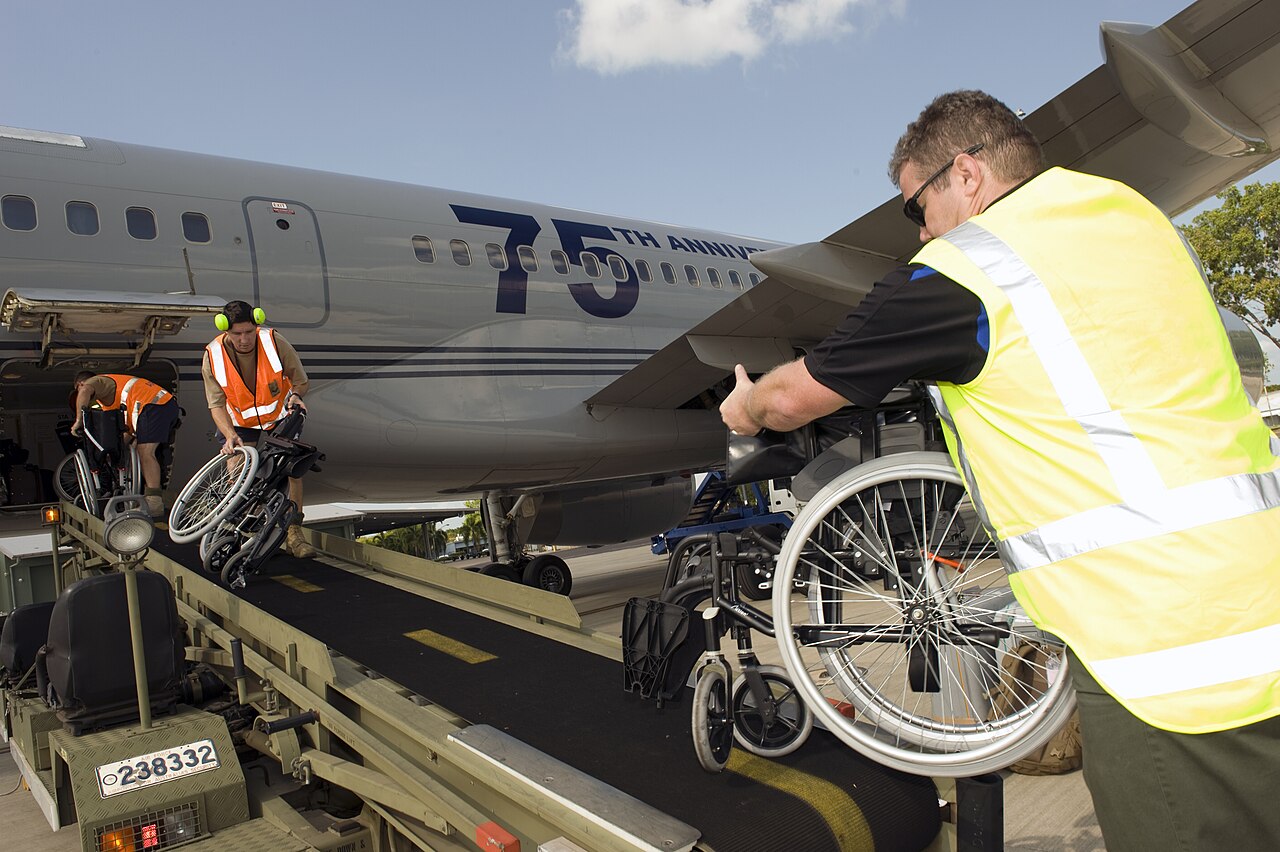
New EU legislation will waive airfares for people accompanying disabled passengers if the companion’s presence is deemed required by the airline.
Updated passenger rights greenlit by MEPs last week (20 October) close a loophole allowing airlines to turn away passengers with reduced mobility.
Once approved, agreed changes mean airlines will allow disabled people the opportunity to travel with companions free of charge – if required for safety reasons – from 23 October 2027.
Ministers in the council had proposed alternative legislation that would allow airlines to collect taxes and charges for required companions. But in a win for disabled rights, negotiators for the European Parliament succeeded in insisting such charges be waived.
Rapporteur Matteo Ricci, an Italian MEP for the Socialists & Democrats (S&D), called the decision a “significant step forward” following the vote in Strasbourg.
This comes after a previous vote in July required airlines to fully cover the replacement of mishandled mobility equipment and allow people with disabilities or reduced mobility to sit next to their companions at no extra charge.
Companions not required by airlines must pay
Under new rules, passengers already travelling with an accompanying person not required by airlines – such as a personal assistant to help with their needs – will still need to pay for an extra ticket.
This was not made clear by Ricci who told reporters last week: “All people with disabilities or reduced mobility will have the right to have a companion traveling with them free of charge.”
In reality, the text adopted at plenary allows airlines to determine based on safety judgements whether or not companions of disabled people can travel for free.
So under new rules, many people with disabilities may not be able to bring companions free of charge.
“This leaves a gap for passengers who need personal assistance, but whose accompaniment is not required by the airline,” said Maltese S&D-group MEP Alex Agius Saliba. The co-chair of parliament’s disability group told EUobserver: “Their support needs are no less real, and the additional ticket can remain a financial barrier.”
Advocacy group the European Disability Forum (EDF) said when a provisional agreement was reached that updated enforcement of passenger rights offers “insufficient protection” for disabled passengers.
Disability rights whack-a-mole
Daniel Casas, policy officer at the EDF, thinks new rules are a step in the right direction.
This article continues, but the full version is available only to EUobserver.com subscribers. Visit account.euobserver.com/membership
Two hundred years ago, the invention of Braille allowed blind people to read and write. By the 1930s, recorded sound made "talking books" possible. Developments in text-to-speech technology in the 1980s made reading more accessible and widespread. Then came personal computers, screen readers, smartphones, cameras, GPS, voice assistants, and myriad other technological advancements that gave blind people more independence.
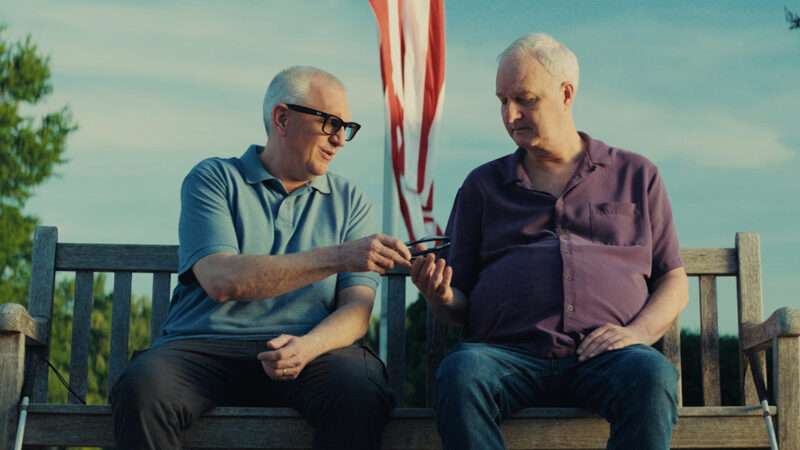
Now a pair of sunglasses can read your mail, describe the person in front of you, tell you what is on a restaurant menu, and help you find your way home. Meta, the parent company of Facebook, is using artificial intelligence to turn glasses into a hands-free companion. For any person, this technology is impressive. For the approximately 700,000 Americans who are blind, it is potentially life-changing.
In June, Meta announced that every single blind veteran in the United States could receive its AI glasses free of charge. According to the Department of Veterans Affairs (V.A.), approximately 130,000 American veterans are legally blind, and over 1 million veterans have vision impairment that makes performing daily activities difficult. Don Overton, a blind veteran and former executive director of the Blinded Veterans Association, told Meta that he had "lost [his] independence" after losing his eyesight in a bunker explosion. "The moment I put on my Ray-Ban Meta glasses," he said, "I got my independence back."
The V.A. has a history of failing to fully support blind veterans. In 2022, the V.A.'s Office of Inspector General found that claims processors were instructed to contact visually impaired veterans by telephone, but 87 percent of claims showed no evidence of these calls ever happening. A 2022 investigation by the Senate's Special Committee on Aging found that "roughly 90 percent" of V.A. websites were not compliant with federal accessibility requirements. "We feel we've been abandoned by the agency that is tasked with providing our care and services for us," Overton toldThe Washington Post in 2022.
Meta's AI glasses have come under fire due to their privacy risks. The company was sued in March after Swedish publications Svenska Dagbladet and Göteborgs-Postenreportedly found that Meta's contractors in Kenya were accessing videos by users of their AI glasses. "We see everything, from living rooms to naked bodies," one worker noted.
Users should be aware of those risks. Still, for blind veterans, companies such as Meta have stepped up to fill a gap that the government has failed to address.
 Login