❌

Reading view

Listen: is the European Commission’s climate resilience plan enough?

Production: By Europod, in co-production with Sphera Network.

EUobserver is proud to have an editorial partnership with Europod to co-publish the podcast series “Briefed” hosted by Léa Marchal. The podcast is available on all major platforms.

Find the full transcript below: 

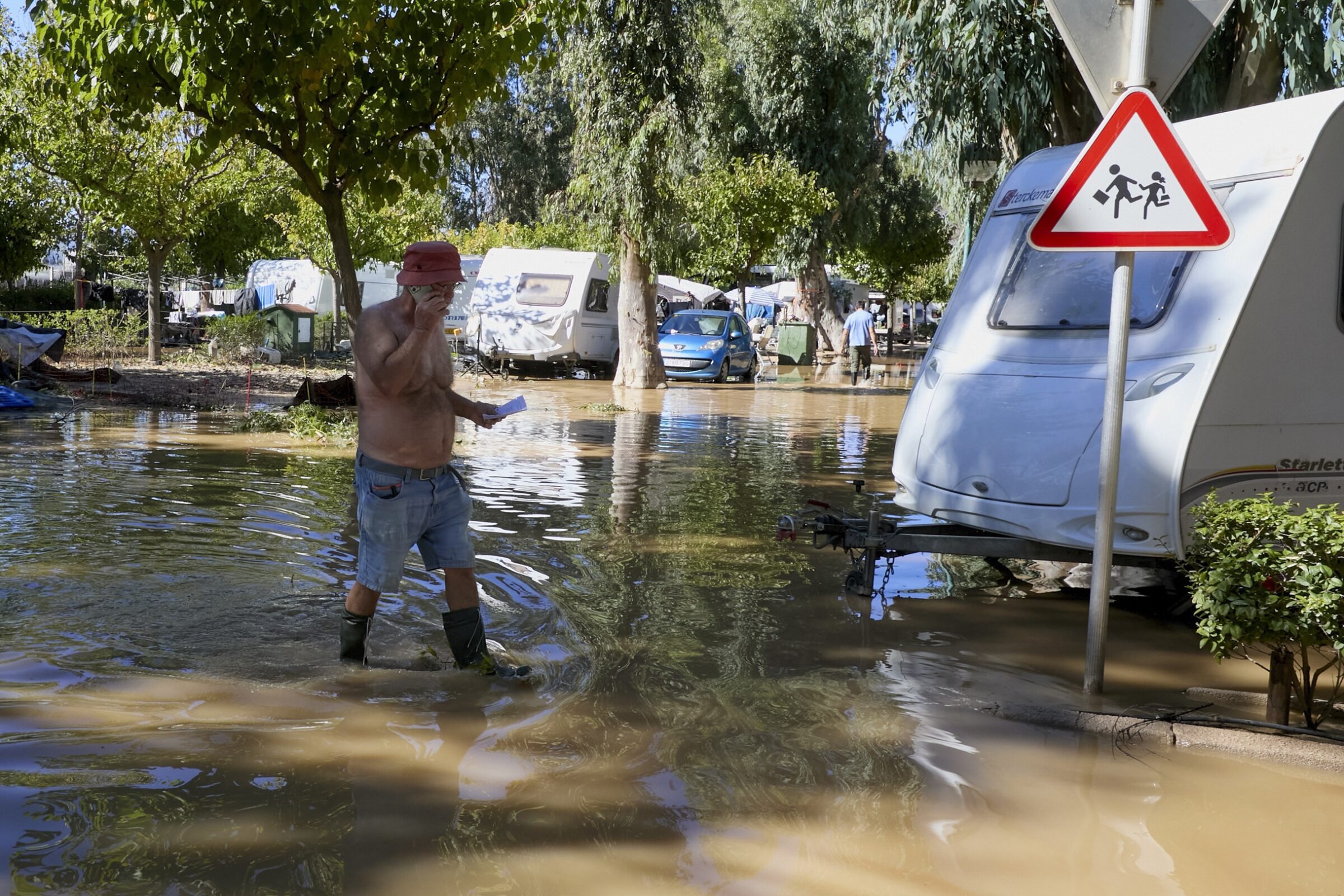
The European Commission has unveiled its plan to help Europe adapt to climate change. But as extreme heat and climate disasters become the norm, the plan offers very few binding commitments.

So what does it actually change? Let’s start with what’s on the table. The commission is proposing a law that would require all 27 member states to work from the same reference scenario for rising temperatures. And, based on that, to adopt national adaptation plans.

The idea is to stop countries from redoing their own analyses and justifying what their actions are based on. From now on, the shared assumption would be: 1.5 degrees of warming by 2030, 2 degrees by 2050, and 3 degrees by 2100.

There is already something notable here: this scenario is more pessimistic than the Paris Agreement, which aims to keep global warming well below 2 degrees.

The European commissioner for climate, Wopke Hoekstra, gave an explanation ot that: 

“It would be unwise not to prepare for the scenarios science puts on the agenda: so scientists are saying 1,5 might do more or less for now, but by 2050 you’re looking at 2 degrees. And by 2100, you’re looking at 3. so I would argue we need to do 2 things: one is staying close to 1,5 and make sure if there is an overshoot, we bring things down, and at the same time, let’s not contemplate and wait but let’s prepare also for a hollow future, that is also the logic of the proposal.”

Now, this assumption is also at the source of another criticism: the EU isn’t doing enough to cut greenhouse gas emissions in the first place.

At yesterday’s press conference, a journalist asked the commissioner how he could defend the Paris Agreement while the EU was lowering climate ambitions at the same time. Because in recent years, the EU has watered down several key measures of the Green Deal.

Think of the rollback on the end of combustion-engine cars, the suspension of the regulation on methane emissions, or the one on imported deforestation.
In parallel, the commission is no longer proposing new legislation to cut emissions.

Now, moving to the proposition in itself, will they really help countries to prepare for climate events to come, starting by with the next summer?

Not immediately. The package will make it easier to share useful data with national authorities, notably thanks to Copernicus, the EU’s Earth observation programme.

The commission will also publish a catalogue of adaptation solutions, available to everyone.

So overall, the package is mostly about exchanging information and ideas, and about commitments to implement national adaptation plans. It also streamlines some existing work, which is always useful.

But what the commission does not do is force member states to take concrete action, or let’s say, to show tangible results.

The Climate Law already requires countries to have adaptation plans. But those plans don’t come with quantified targets. Whether it’s about adapting soils, making buildings more resilient to heat, or protecting vulnerable people.

This is something the Greens in the European Parliament regret. German MEP Kai Tegethoff warns that the risk is to end up with plenty of information about the risks, and then do nothing about them. He is calling for binding targets.

And then, there’s one last thing: money. The commission hasn’t announced any new funding for adaptation.

So: technical tools and encouragement, but no obligations and no cash.
Commissioner Hoekstra even highlighted the amounts already allocated in the current budget, and in the proposal for the next one.

But as we know, negotiations on the next long-term EU budget are heading towards cuts. So it is unlikely that there would be an increase in the budget for climate measures.

This transcript was updated on 29 October to correct MEP Kai Tegethoff’s nationality to German.
  •  

Poll shows public revulsion on caged hens ahead of EU-ban deadline

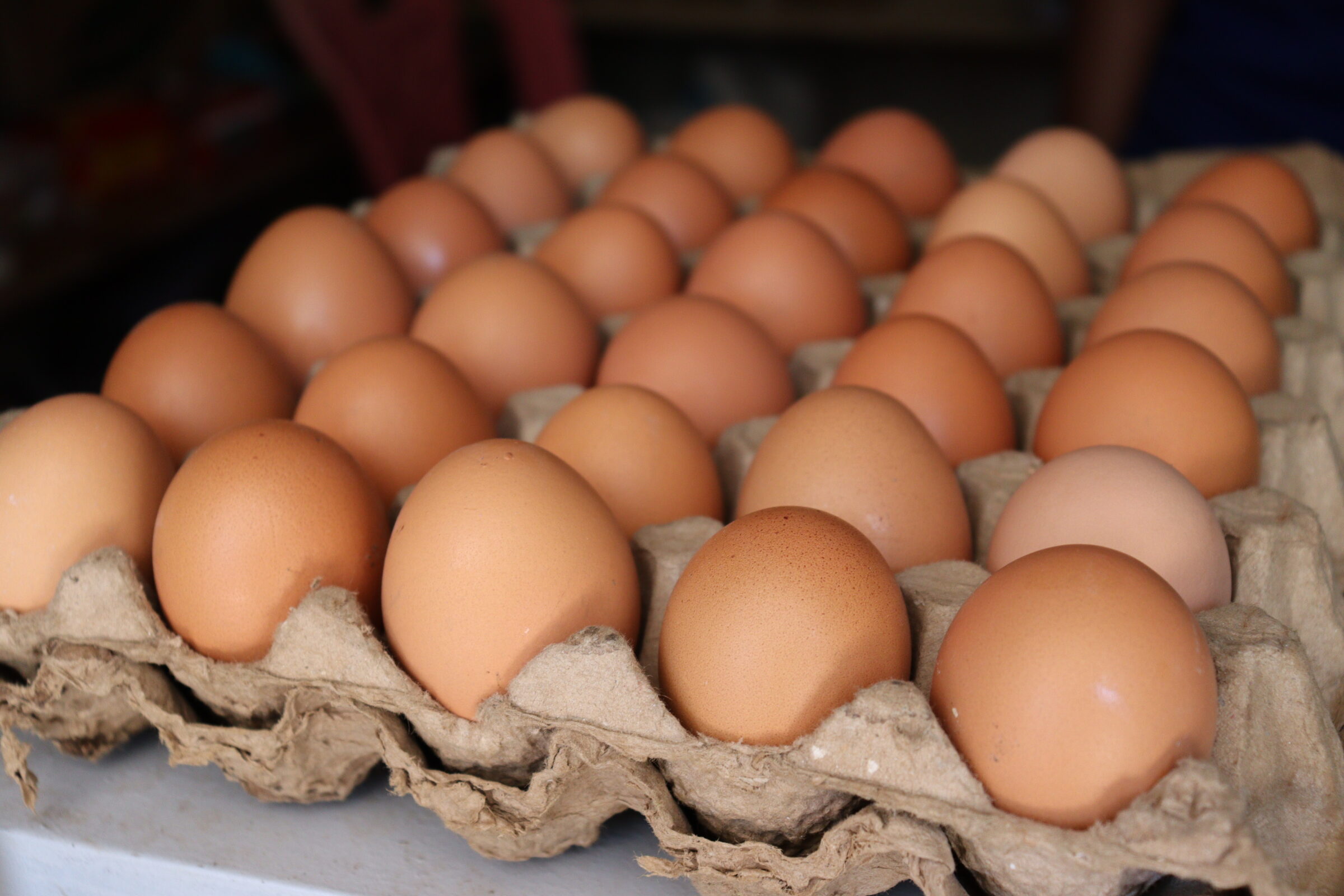
More than half of Europeans believe hens should no longer be caged, according to new data released on Tuesday (13 October). 

And 75 percent of Europeans wanted the last hen in the EU out of its cage by 2035 at the latest, according to a poll conducted by Savanta on behalf of Humánny pokrok, an animal rights non-profit.

Pollsters asked 25,080 adults across 25 member states for their views on keeping hens in cages.

The results show that 16 percent of people were not sure when or if putting hens in cages should be banned, while 7 percent of Europeans supported hen-caging until at least 2045.

The survey comes five years after 1.4 million citizens signed the European Citizens’ Initiative (ECI) to ‘End the Cage Age’ and the European Parliament voted to endorse it.

‘Now is the time’

“This data shows millions of Europeans care about animal welfare,” said Barry Andrews, an Irish Renew MEP.

“Over 1.4 million signed the ECI, which was also supported by MEPs. Now is the time for the Commission to finally make a legislative proposal,” he added.

The delay in tabling legislation came after Copa Cogeca, a farming lobby group, insisted that banning hen cages could take up to 15 years.

But the new data says 52 percent of Europeans wish a hen cage ban was already in place.

The country most supportive of a hen cage ban was Austria, where 65 percent of people believed the last hen should have already left its cage, and 2 percent said cages for hens should never be banned.

Thomas Waitz, an Austrian Greens-group MEP, said an EU ban on animal cages is “long overdue” and urged Olivér Várhelyi, commissioner for health and animal welfare, to deliver an “ambitious timeline”.

“This long period of indecision is not just an affront to the European consumers who want better Animal Welfare, it also harms European farmers and producers who need reliable information for their investments,” Waitz said.

In Bulgaria, the member state which polled as least supportive, 33 percent of people believed the last hen should have already left its cage whereas 9 percent said cages should never be banned.

This article continues, but the full version is available only to EUobserver.com subscribers. Visit account.euobserver.com/membership

  •  

‘Made in Europe’ wind, solar, and nuclear power can protect us from future energy shocks

The American humorist Will Rogers observed that there are three kinds of people in this world: those who learn by reading; those who learn by observation; and the rest, who have to learn by peeing on the electric fence for themselves.

In Europe, we have been learning things the hard way.

The Russian invasion of Ukraine and the resulting turmoil came as a shock to our energy system. More recently, the conflict in the Gulf has sparked fresh shock waves. 

Having built on our experience of the energy crisis in 2022, Europe was better prepared. But the fact of the matter is that we were still left exposed to external shocks.

Since the start of the conflict, the EU spent more than €100bn more on imported oil and gas, compared to the same period last year. We are not only learning the hard way – we are learning the expensive way.

And the lesson could not be clearer: we need to free ourselves from fossil fuel imports, as much as possible and as soon as possible.

The more clean energy that we produce – from homegrown sources like renewables, nuclear, and geothermal – the lower our bills become. At the same time, we also strengthen our energy security, cut our emissions, and reinforce our energy independence.

That’s the direction we are taking

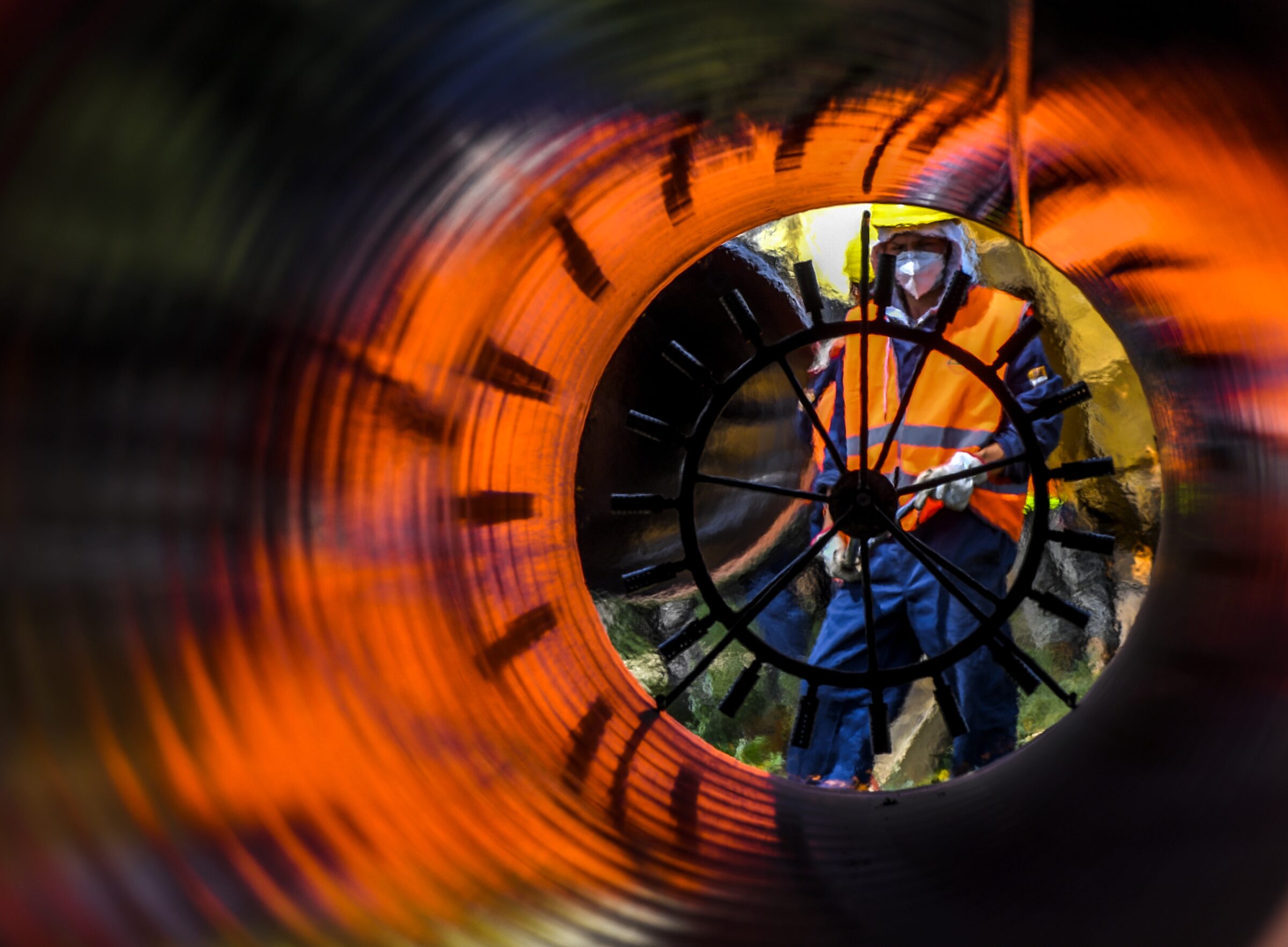
Last year, we added 89 gigawatts of renewable energy to our energy system. One gigawatt is enough to provide electricity for up to 1m households.

And for the first time ever, the EU produced more electricity from solar and wind than from fossil fuels.

In other words, more of our energy is being “made in Europe”, which makes us less reliant on fossil imports. Since 2022, we have decreased our gas consumption significantly, to the order of 17 percent.

But it’s not just about how Europe generates electricity – it’s about how we share it. Over the past decades, EU countries have linked up their electricity markets to a degree not seen elsewhere in the world.

This makes it much easier to support each other with supplies in times of need, as well as to buy and sell electricity across borders at the best price.

This progress has firmed up the foundations of our energy system. But can these foundations withstand our uncertain times? I believe that they can and they will – as long we stick to a solid strategy.

This article continues, but the full version is available only to EUobserver.com subscribers. Visit account.euobserver.com/membership

  •  

Video game industry believes EU Kids Act will drive small creators and old games into extinction

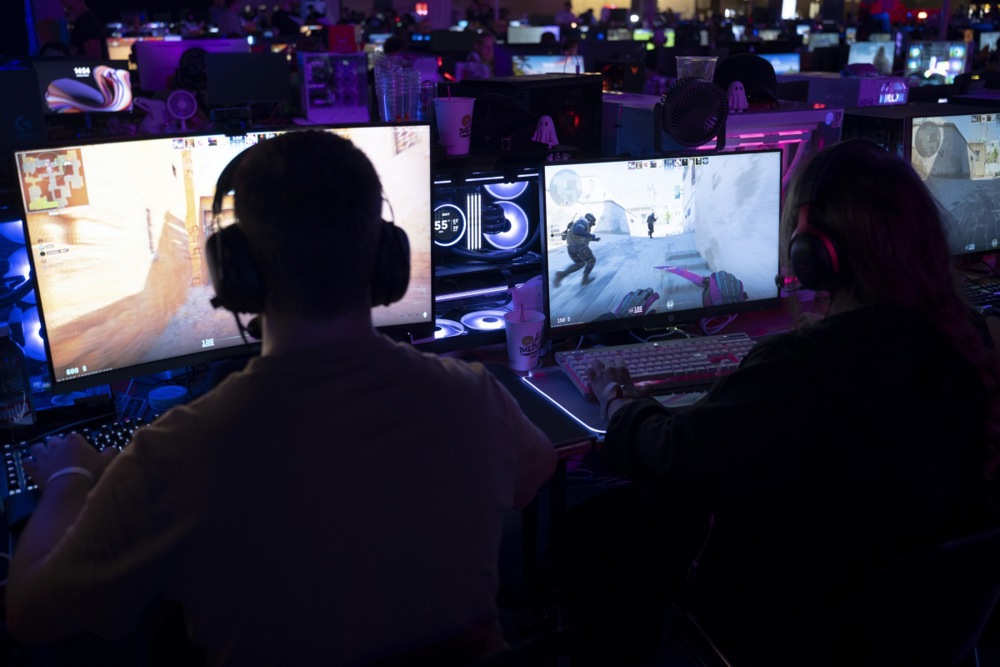
A new law aimed at protecting children could kill off old video games and threaten small developers, industry trade groups have warned.

The EU Kids Act was unveiled by commission president Ursula von der Leyen last month as a chance to “give childhood back to our children” and put parents “in the driving seat”.

It would require videogames to be catered to children by default with stringent requirements including an eight-hour nighttime lock-out, a ban on screenshots, and guardian supervision.

Gamers wanting to play the full version of games would have to pass age verification checks to access features, like multi-player tournaments or mystery boxes. 

The European Commission is gathering feedback on the act with respondents quick to criticise the threat posed to videogame makers.

Stop Killing Games, a campaign to protect videogames, has opposed the act.

“This could turn the EU into a pariah state for videogames,” said Ross Scott, the consumer group’s founder. He reckons the regulation could spark a race to update games or deactivate them.

MEPs have also joined in sounding the alarm bell.

Proposed law could kill games

If the law passed, developers would need to make a child mode version of games and gate the full games behind a verification step.

“This is going to bury developers with compliance steps, and a whole lot of cost,” said Scott.

Age verification with zero-knowledge proof (meaning developers cannot collect data) will likely be required. “In practice, providers would likely need to engage a third-party age assurance provider,” also said Lauro Fava, partner at law firm Pinsent Masons.

The Commission’s impact assessment claims that third-party age verification apps would reduce costs, but failed to provide estimates.

Fava called it “strange” that these were missing, and thinks the commission “arguably downplayed” the cost of compliance.

Gamer’s Voice, an advocacy group, asserted that small games would struggle to pay for age-verification and other compliance measures, likely to inlclude game redesigns.

The Kids Act would outlaw features ‘increasing social comparison’ for minors, meaning functions like leaderboards and kill counts could be restricted.

And while the cost to developers is not known, it is feared prices could increase for players.

The wide scope of the draft law means community servers and hobbyist-developed games could be subjected to the new rules. Any game, new or old, would have to follow measures unless strictly offline in a physical format or built only for educational purposes.

And since the rules would apply to games made or consumed in the EU, it is feared game makers could block access to their games on the bloc.

This article continues, but the full version is available only to EUobserver.com subscribers. Visit account.euobserver.com/membership

  •  
❌