Belgium is pressing ahead with a new bill allowing police to potentially raid a person’s home suspected of harbouring an undocumented migrant.
Set for a vote next Thursday (4 November) in Belgium’s parliament, the law paves the wave for similar provisions in the EU’s deportation regulation.
Although Belgium abstained in the vote on the EU-level law given internal objections over possible EU deportation facilities abroad, Belgium’s coalition government appears determined to allow authorities to force their way into homes.
The new law, championed by Belgium’s rightwing migration minister Anneleen Van Bossuyt of the N-VA, has triggered widespread criticism.
A spectrum form human rights defenders to Belgian judges have issued multiple warnings that the law would potentially violate constitutional rights of those who host undocumented immigrants.
If a person is suspected of hosting an undocumented migrant deemed a security threat, then the police can enter their home between 5AM and 9PM and search through their documents and personal belongings even if children are present.
This article continues, but the full version is available only to EUobserver.com subscribers. Visit account.euobserver.com/membership
Confirmed Ukrainian military losses have exceeded 220,000, while the share of missing personnel is rising.
Ukraine lost thousands of personnel both during the Kursk region operation and in the battle for Krynky.
Following an unofficial pause, Ukraine has resumed attacks on Russian refineries — and with considerable success.
Ukraine claims to have hit another two Russian Su-34 aircraft. Russia has suffered too many such losses over the past two months.
Videos of the day: a report on a soldier who operates drones with his chin; a welcome for Ukraine’s ombudsman in Oleshky.
In Ukraine Battlefield update, we report fairly regularly on the enormous losses suffered by Russian soldiers. The Ukrainian command publishes them daily. This figure is probably inflated, but it shows a trend. And that trend shows that October is already the bloodiest month since the start of the full-scale invasion.
Verified figures are also published by the independent Russian outlets Mediazona and the Russian BBC. The problem is that they can only verify these figures retrospectively, while the Russian state is placing ever more obstacles in their way as they seek information about deaths.
As Dima Treshchanin wrote, the author of the project, they are currently working on deaths from the summer of 2025.
However, we devote less attention to Ukrainian military losses. Unfortunately, these are also high.
However, when independent analysts examined its data, they found it credible. Each entry links to a source of information on a Ukrainian website, mostly an obituary, and the analysts did not find many duplicates either.
Ukrainian losses are tracked by the UA Losses project. It is an anonymous website and its background is a mystery. Ukrainian authorities describe it as propaganda and have blocked access to its website in Ukraine.
UA Losses has updated its data in recent days.
This article continues, but the full version is available only to EUobserver.com subscribers. Visit account.euobserver.com/membership
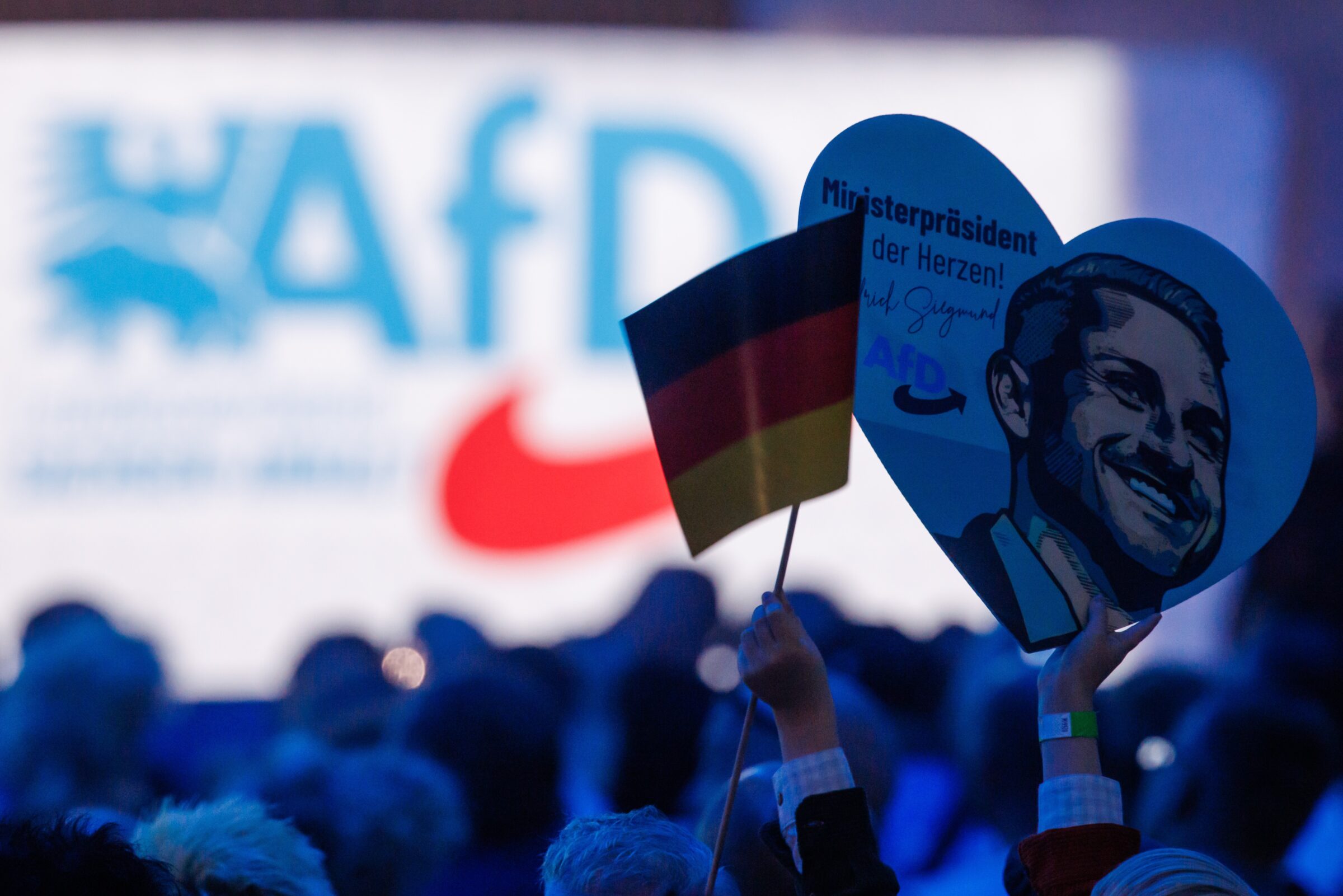
One could ask, what might politicians from a far-right party — as the Federal Office for the Protection of the Constitution describes Alternative for Germany (AfD), write to one another?
More than 400,000 emails exchanged by AfD members between March 2013 and September 2026, effectively covering the party’s entire history, have appeared online.
They were published by hackers from the Distributed Denial of Secrets (DDoSecrets) organisation, who obtained 284 gigabytes of data, including minutes from meetings of the party leadership, payslips, strategic documents, membership lists and donors’ names.
AfD and its enemies
According to the Correctiv website, the material also includes election campaign plans, for example for the 2025 parliamentary election. Their authors describe how to reach potential voter groups. They describe the governing parties at the time as enemies.
It is unclear yet whether all the emails are genuine, but the party has confirmed the leak. German media outlets with access to them estimate that assessing the information could take months.
It is already clear that the emails offer an insight into how Germany’s currently strongest political party operates and how it approaches certain issues, including neo-Nazism.
The media are gradually uncovering messages that are uncomfortable for AfD’s leading figures, including its co-chair Alice Weidel.
One of the most striking findings is that in private she was not as radical as she liked to portray herself in public. And, according to German media, the difference is considerable.
The leaked emails also suggest how the German party sought to forge closer ties with the US conservative Maga movement and president Donald Trump, whom it saw as a potential ally.
In foreign policy, they also point to deeper links with Russia than had previously been known.
Thousands of emails could also play a role in a potential ban on the party, which is not yet decided upon but is being debated in Berlin.
So what have they revealed?
What had not previously been known about relations with Russia
This article continues, but the full version is available only to EUobserver.com subscribers. Visit account.euobserver.com/membership
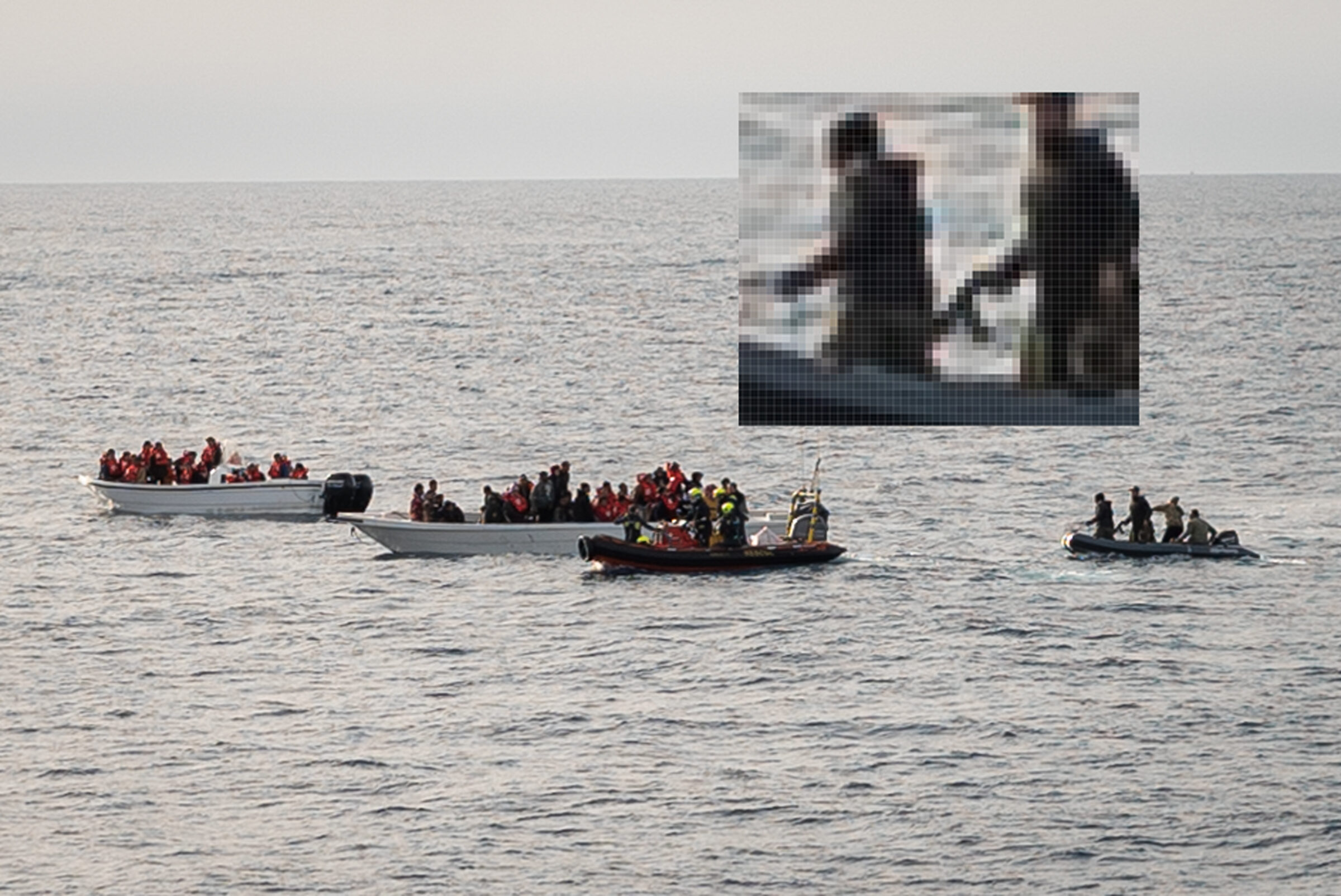
When Sulaiman saw the Humanity 1 approaching, he thought to himself: “if they are Libyans, let me die. I will not go back there.”
The 25 year old Nigerian man is one of many rescued by theGerman NGO SOS Humanity on Tuesday (27 October) to have escaped living hell in Libya, at the hands of a regime paid by the EU to keep migrants away from its borders.
“I was in prison for one year, for no reason,” said Sulaiman, whose name has been changed to preserve his anonymity. “Any time in the morning they come to distribute food, there are beatings. No one lets you go without a beating,” he told EUobserver.
Every day he’d subsist on one small slice of bread in “a cage for 100 people, where there are all skeletons,” he described with tears in his eyes.
Sulaiman had tried to leave Libya twice before on small boats, but each time he’d been pulled back to land by violent militias, one of whom he described to be an ‘official’ authority.
Data from the International Organisation for migration (IOM) and the UN found over 200,000 people to have been illegally intercepted in the central Mediterranean and returned to Libya since 2016.
And like many other search and rescue organisations, SOS Humanity’s own work has been significantly impeded by Libyan groups – whether they be the so-called Libyan coast guard or paramilitary groups known for hijacking small migrant boats in open sea to rob everyone on board and pull them back to illegal detention facilities.
Men, women, families with children, and unaccompanied minors alike are kept in prisons until they can pay their way out.
“I lied, and told my family I was in Tunisia,” a young boy from Sudan told EUobserver.
“I knew my mother couldn’t take it, knowing what would be happening to me in Libya,” he said, after having been rescued by SOS Humanity alongside 27 others in the early hours of Tuesday. He is one of 10 children aboard traveling alone.
This article continues, but the full version is available only to EUobserver.com subscribers. Visit account.euobserver.com/membership
I moved to Poland from London with my Polish husband, and we are raising our two-year-old son here. My son will grow up and live his entire life within the digital infrastructure that the government is building today. The fact that I was not born in Poland does not mean I don’t care about its future, as a mother, I have an obligation to fight for my son’s rights as a Polish citizen.
Recently, I saw that the Polish Ministry of National Defence has signed a Letter of Intent with the American analytics company Palantir Technologies.
Having lived through what happened in the United Kingdom when our government signed similar agreements, I believe that Polish people deserve to know what happens when public systems are handed over to a foreign defence contractor.
Among the company’s founding investors was In-Q-Tel, the CIA’s venture capital arm.
In London, I was part of a campaign group fighting against Palantir’s contract with our National Health Service (NHS).
Under that agreement, the US defence contractor gained deep access to NHS data systems, including mental health records, reproductive health data, and medication history.
Olivia Law-Zygadlo: ‘I have seen what happens when people in the United Kingdom did not ask questions until it was too late, and I cannot stay silent and watch exactly the same thing happen in Poland’ (Pic: Author)
Heavily redacted contracts
Over 100 pages of the contract remain heavily redacted and hidden from the public. Because Palantir is an American corporation, citizens cannot easily hold them to account or use basic data access requests in the way they could with an EU-based company.
In the UK, two parliamentary committees and the British Medical Association are calling on the government to exit the contract before the break clause in 2027.
Poland is not the first European country Palantir has approached, but other allied nations have already drawn the line.
In Switzerland, the Swiss armed forces rejected Palantir’s offers nine times. The military’s conclusion was that it was technically impossible to guarantee that sensitive national data would not reach American intelligence services.
When a Swiss investigative outlet reported on this, Palantir sued them and lost on 22 of 23 counts. In Germany, the Bundeswehr explicitly excluded Palantir from a military cloud procurement on grounds of data sovereignty, with senior military officials stating that granting external industry employees’ access to the national database was completely unacceptable.
Poland is now preparing to deepen its cooperation with a company that the Swiss and German militaries both rejected on security and sovereignty grounds.
It is our children who will have to face the long-term consequences of today’s decisions. I have seen what happens when people in the United Kingdom did not ask questions until it was too late, and I cannot stay silent and watch exactly the same thing happen in Poland.
If you care about data sovereignty, public transparency, and protecting the next generation, join us at the public protest against Palantir’s contracts in Poland, organised by Nasze Dane, on 8 November at Plac Konstytucji in Warsaw at 3pm.
If you have come across messages such as “what Europe needs is a peaceful continent” on Facebook or X, you may have encountered coordinated inauthentic behaviour (CIB).
CIB is a manipulative communication tactic that uses a combination of authentic, fake and duplicated social media accounts to operate as an adversarial network across platforms such as X, Facebook or Bluesky.
By coordinating their activity, these accounts can amplify particular messages and create an online impression that may not reflect the reality of public opinion.
The tactic spread massively during Covid.
In a paper entitled ‘Coordinated inauthentic behavior: An innovative manipulation tactic to amplify Covid-19 anti-vaccine communication outreach via social media’, Monica Murero wrote that such operations could be “one of the greatest threats to freedom of expression and democracy in our society”.
But this distortion becomes particularly visible during elections.
Indeed, with political momentum, spreading messages and content online can influence how voters perceive the strength of an incumbent government and the prospects of its opposition.
Manufacturing political dominance
The latest example is Serbia.
Ahead of parliamentary elections in Serbia, the Balkan Free Media Initiative (BFMI), in collaboration with Clemson University’s Media Forensics Hub, investigated how coordinated networks promoted former Serbian PM and president Aleksandar Vučić while undermining independent media.
“CIB corrupts the public signal that democracies rely on to understand themselves,” head of research at BFMI Vanesa Valcheva told EUobserver.
The findings point to a broader problem for democratic debate: online visibility can be manipulated to sustain an image of political dominance, even when the picture on the ground appears different.
“Incumbents often try to look unbeatable to discourage opposition voters, reassure their supporters, and show outside partners that things are unlikely to change,” Valcheva said.
Before the rise of these coordinated online operations, the digital space offered dissent more room to breathe.
But nowadays, CIB networks can undermine the online space by repeatedly circulating messages that support a particular political interest and make it appear more widely shared than it is.
And indeed, Vučić dominated the space on X and Facebook while the streets suggested otherwise.
This article continues, but the full version is available only to EUobserver.com subscribers. Visit account.euobserver.com/membership
More than a year ago, we launched our Hungary Briefing series, a weekly roundup of news from Hungary’s election campaign. The series continues, covering developments following the historic election and the actions of the Tisza government. This week’s topics:
The great Covid scam.
Former minister kept €25m in cash at home.
Closer ties with the Czech Republic.
Mixed results for the revolution’s anniversary commemorations.
Poll of the week: Tisza supporters lean liberal.
The Covid scam
Shortly after the Covid pandemic broke out in the spring of 2020, the Orbán government purchased almost 17,000 ventilators for 300 billion forints, equivalent to €860m at the exchange rate at the time.
The machines were imported from China through various foreign intermediary companies. Viktor Orbán later said he had consulted mathematicians about how many ventilators Hungarian hospitals would need under the worst-case scenarios.
They did not save lives
Yet most of these machines never reached hospitals — and even if they had, they would not have been able to save lives. György Velkey, a state secretary in the Tisza government, wrote on Facebook, citing a 2020 military medical report, that only around half the machines had been classified as usable. The remaining half were either recommended for hospital use “only with serious compromises” or not recommended at all.
Many of the machines are still gathering dust in warehouses.
In 2023, former opposition MP Tímea Szabó showed what 12,000 unopened ventilators looked like in a warehouse in Gödöllő. The Hungarian state was paying 80 million forints, or approximately €200,000, a month just to store them.
The middlemen cashed in
And that is not all: the companies contracted by the Ministry of Foreign Affairs and Trade, headed by Péter Szijjártó, made a fortune from procuring the machines. Further details emerged after a raid on Tuesday(27 Ocober) by the National Tax and Customs Administration (NAV).
NAV detained three people, while an international arrest warrant was issued for the suspected leader of the criminal organisation. He is believed to be in Indonesia — and the news outlet 444 discovered that he operates a Ferris wheel in Bali.
“Acting as part of a criminal organisation, the perpetrators who sold ventilators and medical masks to state bodies during the Covid-19 pandemic laundered more than three billion forints [approximately €7.5m] in profits, then deprived the state treasury of 660 million forints [approximately €1.7m] by evading tax,” NAV said.
Footage recorded during the raid also reveals the luxury in which the suspects lived. As 444 notes, this may be only part of the story: other companies may also have been involved in the overpriced procurement deals. There is no word yet on whether the authorities are investigating any responsibility Szijjártó or Orbán may bear in the case.
Presented as a success story
The Orbán government tried to portray its pandemic response as a success story. In early 2025, it released a short film entitled How We Defeated the Covid Pandemic.
Almost 49,000 people died in the pandemic in Hungary. According to international statistics, the country had the world’s fifth-highest death toll per million inhabitants.
Former minister kept €25m in cash
Hungarian authorities accuse Miklós Seszták, who served as development minister in the Orbán government between 2014 and 2018 and was re-elected to parliament this year, of accepting at least 11 billion forints, or approximately €27.5m, in bribes. On Wednesday (28 October), a court extended his pre-trial detention until the end of January.
Its ruling revealed an important detail in the corruption case.
During a search of Seszták’s home, investigators found an empty safe in which, according to the court, he had kept nine billion forints in cash — approximately €25m at the current exchange rate. He had arranged for the money to be hidden before he was questioned.
As 444 calculated, that amount of cash would be extremely heavy: 450,000 banknotes with a face value of 20,000 forints could weigh 450kg.
They did not know where to put the cash
Commenting on the news, investigative journalist Szabolcs Panyi wrote that “in principle, this is entirely consistent with what several colleagues and I have long been hearing from sources with inside knowledge of the NER” — the political and economic system built around Orbán.
According to Panyi, as early as the 2010s, one of the major problems facing people within the Orbán regime was how to store the vast amounts of cash generated by corruption. They could not deposit it in a bank without having to explain where it came from.
This article continues, but the full version is available only to EUobserver.com subscribers. Visit account.euobserver.com/membership
The Russian army was killing city residents on Thursday morning.
Russia claims to have captured Dobropillia. Ukraine says its attack on the town failed.
The ceasefire in Oleshky is being observed, but preparations for further fighting are under way during it.
Maps of the day — Oleshky, Dobropillia
Videos of the day — the destroyed centre of Kherson; Kramatorsk prepares for street fighting; did one surface-to-air missile hit two Russian missiles?; an impressive shootdown of a jet-powered Geran by an F-16
The Russian army was killing city residents on Thursday morning. First, a warning to all readers: this latest edition of the Ukraine Battlefield update contains several videos and photographs of victims of Russian attacks that may be distressing. Consider whether you wish to continue reading today.
We do not usually publish such footage, but so much of it emerged within just a few hours today that we are publishing it to explain why, during October, Russia killed more Ukrainian civilians than at any time since the battle for Mariupol.
Ukrainian cities in the rear are currently suffering more than at any point since the start of the war. This is partly because the United States has stopped supplying missiles for Patriot systems — which Europe pays for anyway — and partly because of the mass deployment of jet-powered drones.
Shooting them down is more complicated, and the air defence success rate has therefore fallen. Russia is also attacking populated areas, which inevitably increases the civilian death toll.
Thursday morning was particularly tragic. Russian weapons killed people in Dnipro, Kremenchuk, and Chernihiv. In every case, the victims were ordinary residents, including children in several cases.
This article continues, but the full version is available only to EUobserver.com subscribers. Visit account.euobserver.com/membership
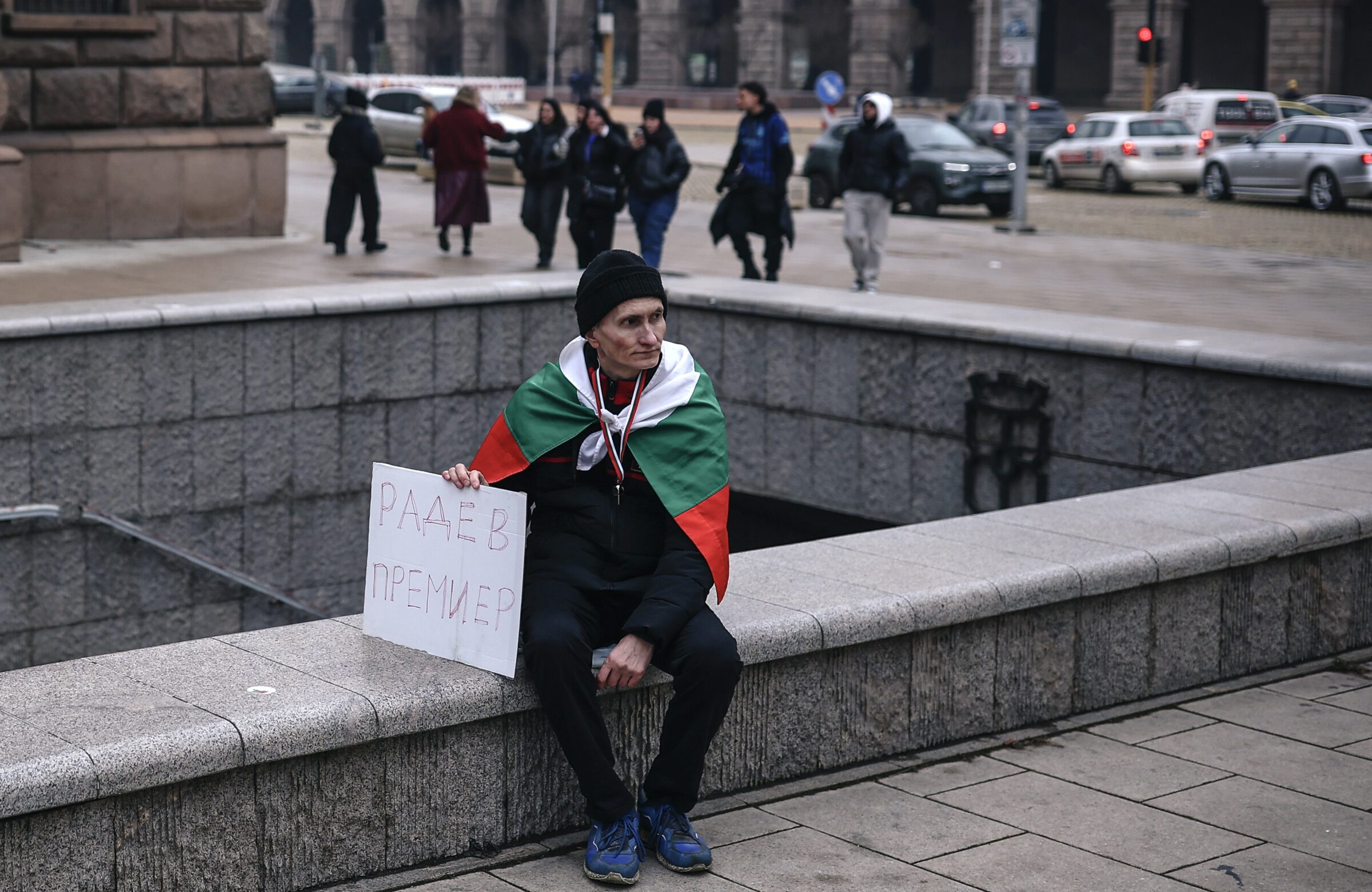
On Sunday (1 November) Bulgarians vote in a presidential runoff. The question that will outlast the result is not who wins, but whether the winner is willing to say no to prime minister Rumen Radev.
Radev spent nine years as president with Iliana Yotova as his vice-president.
He resigned in January to enter party politics and the office passed to her automatically; she has never been elected to it.
In April his Progressive Bulgaria coalition won 131 of parliament’s 240 seats, and it now backs her for a full term.
In the first round she led Andrey Gyurov, a former caretaker prime minister backed by the pro-Western opposition, by fewer than three points. Turnout was 22 percent – the lowest on record.
The presidency’s power to say no
An elected majority is legitimate; so is cooperation between government and president. The constitutional risk begins where cooperation becomes an expectation of loyalty. An institution can keep every legal power and still lose the will to use it against political allies.
In Bulgaria those powers are modest but real.
A president can send a law back, and parliament must debate and vote on it again in public. Radev’s majority can pass it a second time with 121 votes, but the second vote is on the record.
A president can also refer a law to the Constitutional Court, commands the armed forces, and chairs the Consultative Council on National Security, where the state assesses threats to itself.
None of this can stop a determined majority. All of it can force one to explain itself.
Both governments suspect Russian involvement, although responsibility has not been conclusively established; more than two dozen sailors are dead or missing.
The first strike in Bulgaria’s exclusive economic zone came on 6 October. By then Yotova had been president for nine months without once convening the security council. She convened it the next day, after the opposition demanded it in public.
Yotova knows how to use a veto: in February she returned an Electoral Code amendment that limited the number of polling stations in countries outside the EU, calling it unconstitutional.
That parliament was not Radev’s. Against his majority the test came in July, with the 2026 budget. The reformist and conservative opposition, the Podkrepa trade union and a petition with more than 32,000 signatures asked her to return it. Y
Yotova argued that a veto would deepen financial uncertainty and promulgated the budget. On 20 October, the Constitutional Court upheld the budget as a whole but struck down two provisions inserted through it. The challenge came from MPs and the ombudsman, not the presidency.
Nato dispute
One policy dispute between the candidates concerns Article 4 of the Nato treaty. Gyurov wants Bulgaria to request consultations with its allies. Yotova initially opposed invoking it, but later acknowledged that coordinated action with other allies remained an option.
Radev ruled it out on the day of the first attack because the ships were struck outside Bulgarian territorial waters. Yet Article 4 does not require an attack on national territory; it applies whenever an ally considers its security threatened. Whether to invoke it is a political choice. Territorial eligibility is not the obstacle.
The test of an independent presidency is not whether it agrees with the government on Article 4. It is whether it would demand a public account of what the state knew, what it did and what went wrong, and publish it even when it embarrasses the people who put it in office.
The European Commission’s rule-of-law report in July noted that most of Bulgaria’s regulators had their mandates renewed without becoming any more independent. A renewed mandate is not proof of oversight. Neither is a convened council.
The same test applies to Gyurov, an independent nominated by the reformist parties We Continue the Change and Democratic Bulgaria, who told CNN on 23 October that Bulgaria needs a counterweight to its government. A counterweight that only ever pushes against Radev is a faction, not an institution. A president elected by the opposition would have to challenge the opposition too.
Both are entitled to a clear account of what Bulgaria saw, when it acted and what failed.
Brussels, for its part, should judge institutional independence not by formal procedures, but by whether those institutions are willing to challenge those in power. The question to ask is simpler: when did it last contradict the government?
Radev has a mandate to govern. The next president will hold a separate one: to question, to return, to refer and, when necessary, to refuse.
Europe does not need a Bulgaria that pretends it never makes mistakes. It needs one that can find and correct them before its sailors, its neighbours and its allies pay for them.
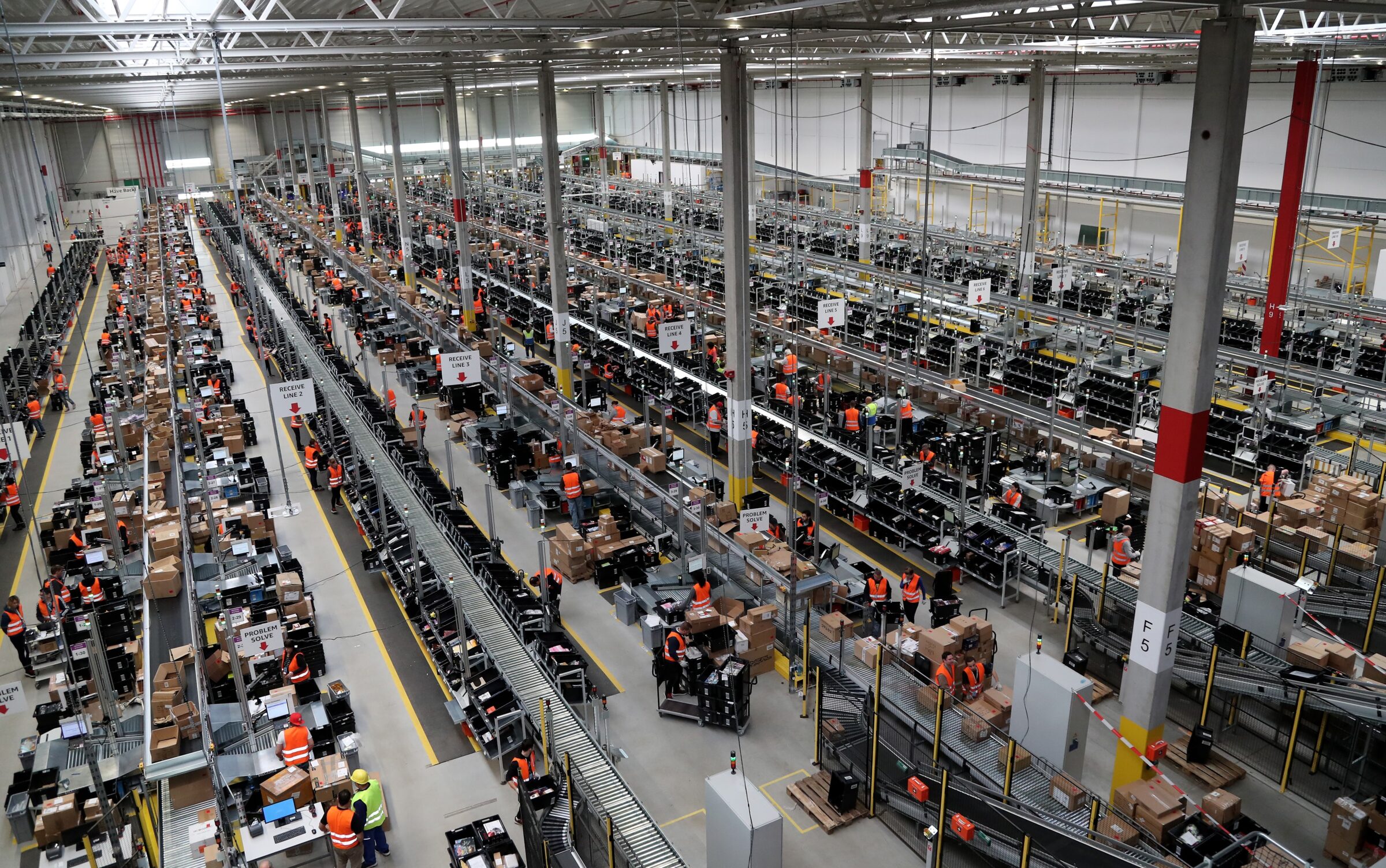
The European Parliament’s employment committee has highlighted the need for regulating automated control of workers after visiting Amazon warehouses in Germany and Poland this week.
Seven of the committee MEPs visited Amazon warehouses employing some 5,000 workers on Monday and Tuesday (26-27 October) ahead of the Commission’s Quality Jobs Act proposal expected in December.
The trip follows the committee’s hearing on working conditions in Amazon in January, where workers raised concerns about efficiency goals, safety, and surveillance using AI tools, which may be regulated more rigorously as a part of the upcoming act.
According to a 2023 survey by UNI Europa, a labour union federation, about a half of Amazon’s employees said their work had a negative impact on their mental and physical health.
Workers’ progress throughout the day is usually watched through security cameras, but also the work badges scanned in check points in various locations in the warehouse, and scanning devices used to identify products.
In the city of Sosnowiec, home to one of Amazon’s Polish warehouses, employees are overworked by “constant pressure of being judged, which is very hard to cope with mentally,” Agata Wypiór, recently-named vice secretary of Amazon’s European Works Council and Solidarność union leader told EUobserver.
Leaving worker management and performance monitoring to algorithms means “these processes become almost invisible,” Li Andersson, head of the delegation, told EUobserver.
“The way the workers describe it, it sounds like a digital panopticon: when you work faster you have to work even faster.“
Workers themselves often do not know what data is collected on them and how it is being used to set productivity targets, Anderssen highlighted.
This article continues, but the full version is available only to EUobserver.com subscribers. Visit account.euobserver.com/membership
Fighting near Kostiantynivka through the eyes of a missing Ukrainian soldier: hunger, thirst, exhaustion and, ultimately, disappearance.
Rubikon released a video of an attack on a Ukrainian position in southern Kostiantynivka — an area Moscow has claimed to have captured for months.
Russians used ballistic missiles against Kyiv’s Pivdennyi Bridge, leaving a large hole in it and forcing its closure.
Near Komar, Ukrainian soldiers reached the village of Vesele, cutting the distance to Velyka Novosilka by a third.
Maps of the day: Kostiantynivka, Komar
Videos of the day— the aftermath of the Russian attack on a Kyiv bridge; a drone attack on a Russian convoy, seen from both Ukrainian and Russian cameras.
Fighting near Kostiantynivka through the eyes of a missing Ukrainian soldier: hunger, thirst, exhaustion and, ultimately, disappearance. Despite Russian claims that it has captured the city, fighting continues for the first city in the belt of Donbas “fortresses”. Further details can be found in the second part of the Ukraine Battlefield update.
Little, however, is known about the people holding Ukraine’s defences despite Russia’s superiority and their immense hardship. Ukrainian newspaper Hromadske published a lengthy report on the fate of one of them.
His name is Hennadii Osadchyi. He is 42, has a wife, Nadya, and an 18-year-old daughter. They live in Kropyvnytskyi, in central Ukraine.
He was mobilised in autumn 2025 and, on 16 December that year, was sent to the front in Kostiantynivka as a member of the 100th Brigade. By the time he went silent, he had spent 230 days defending the city without rotation.
His wife decided to speak about what he experienced during those seven months. Her information comes from the messages they exchanged. When Hennadii enlisted, he weighed 96kg.
By the time he went silent, he weighed half as much. His messages to his wife explain this dramatic change.
This article continues, but the full version is available only to EUobserver.com subscribers. Visit account.euobserver.com/membership
New research by Corporate Europe Observatory (CEO) and LobbyControl shows that Big Tech lobbying is pushing the EU towards sweeping deregulation of data protection rules.
The new publication finds signs of an intensive lobbying campaign between Big Tech and Germany and Ireland which are helping to gut fundamental European data protection safeguards.
The report documents extensive contacts between Big Tech companies and European policymakers over the EU Commission’s proposed Digital Omnibus.
The aim is to change and influence how personal data are used to develop and operate AI systems, warns CEO.
“It is a really drastic change,” Bram Vraken researcher and campaigner at CEO told EUobserver.
Introduced by the commission last November, the Digital Omnibus forms part of the EU executive’s wider drive to simplify regulation and strengthen European competitiveness.
The commission has presented the proposal as a way to make Europe “simpler and faster” and to “adapt” its regulatory framework to a “more volatile world”.
The Digital Omnibus “provides a simple, innovation-friendly environment for our European AI ecosystem to grow,” said commission’s president Ursula von der Leyen.
But the proposed changes potentially create broad exemptions from existing data protection rules for AI companies.
“What we see is a creation [of] this huge backdoor, which in many cases will make the GDPR (General Data Protection Regulation) meaningless,” Vraken said.
If adopted by the European Parliament, the changes would allow companies to collect people’s personal data to train and operate AI systems without consent.
Google and Meta
Under the parliament’s rules, all MEPs and their assistants must publicly declare scheduled meetings with lobbyists and third-country representatives and access to these information is public.
From November 2025, CEO and LobbyControl identified 655 meetings with lobbyists in the parliament, the report says. This comes as Big Tech lobby budgets hit record levels.
This article continues, but the full version is available only to EUobserver.com subscribers. Visit account.euobserver.com/membership
Two graphs show that Ukrainians are currently attacking at least as much as Russians. They are also advancing just as often.
The map, meanwhile, illustrates the territory Russians have captured in Donbas this year. It is smaller than in previous years.
New tanks and other equipment have begun appearing in Russian storage facilities. Russia is preserving them, possibly for another war.
Videos of the day: a Russian quad bike accident at the front; a Russian worker climbing an anti-drone net; Ukrainian children playing with a Russian drone.
Part of the population still believes that Russia is winning the war. It does not matter that it has failed to subjugate Kyiv for more than four and a half years, or to capture Donbas even after 12 years. It still has 20 percent of Donetsk oblast left to occupy — not 10 percent, as Russian president Vladimir Putin claims.
Of course, victory in war can be measured in different ways, and the movement of the front is not always decisive. But when it comes to activity at the front itself, the battlefield is essentially frozen. And Russian momentum is far weaker than it was at this time a year ago.
In today’s Ukraine Battlefield update, we present two graphs and one map showing that Russia is not currently winning the war on the battlefield.
The first graph suggests that Ukrainians are now launching attacks more frequently than Russians. It was published by the Ukrainian account Oko Hora.
It calculated the ratio of attacks on the basis of data from the Ukrainian general staff. The staff reports the number of engagements and the number of Russian attacks, meaning that the difference between them indicates Ukrainian attacks.
This methodology may not be precise, but other battlefield reports also suggest far greater Ukrainian activity than a few months ago or last year.
This article continues, but the full version is available only to EUobserver.com subscribers. Visit account.euobserver.com/membership
This year, in France, a small book was published with major implications for the future of Europe:Notre déni de guerre [Our Denial of War] written by a military historian, Stéphane Audoin-Rouzeau.
Audoin-Rouzeau specialises in a subject that was long regarded a niche field: the First World War.
He delves into facts, developments, and societal, political and social undercurrents that are long past and therefore seem of little concern to most people.
But according to him, these matters are more relevant to modern Europeans than ever before. The more time passes, the more parallels he sees between the period around the First World War and the times we now live in.
With one very significant parallel: the denial that war is drawing nearer.
His argument is that Europeans have enjoyed peace for so long that they no longer know what war is. They don’t recognise it, cannot see it coming and therefore don’t know how to avert it.
Many have come to believe that if they don’t attack anyone or declare war on anyone, no one will attack them in return – the typical logic of people who have only known peacetime.
Europe’s problem, in his view, is that not everyone in the world lives in peacetime, and that others therefore operate according to a different logic – the logic of wartime.
This article continues, but the full version is available only to EUobserver.com subscribers. Visit account.euobserver.com/membership
A historically-high number of voters have chosen parties classified as authoritarian or populist, according to new research looking at 31 countries across Europe, not just the EU.
Germany saw the starkest rise, with the Alternative for Germany (AfD) getting over 20 percent of the last national parliamentary vote, while in contrast parties classified as radical left split the 13.8 percent of votes between them.
The Authoritarian Populism Index, published by two European think tanks, EPICenter and the Nordics-based Timbro late last week (22 October), analyses parliamentary election results for 260 parties in 31 countries since 1946, or since the year free elections were first held.
The high support for populists is a result of mainstream parties not being able to “adequately address the concerns of our time,” Emelie Franzén, EPICenter’s research coordinator, told EUobserver.
The populists’ success is a “result of a lack of trust towards the elites,” Mateusz Michnik, economic analyst for EPICenter, told EUobserver. He also added that populists are more effective communicators than mainstream parties, especially in crisis situations, such as the Covid pandemic, the migration wave of 2015, or Russia’s 2022 attack on Ukraine.
The Index has been classifying populist parties since 2016, defining them as groups where representing the people above the elite is “a central organising principle of their political worldview,” the author says.
Reinhard Heinish, political science professor in Salzburg, told EUobserver that the report “combines different hard-to-measure concepts, and needs to interpreted with some caution.”
Despite this overarching characteristic, their profile is far from uniform, the report’s author, Andreas Johansson Heinö, Timbro’s director, warned.
“Most are culturally conservative, while economically they are almost evenly divided between left and right.” The populist parties included in the study tend to be eurosceptic, but only a minority supports leaving the EU, he added.
Throughout the 1950s and 1960s, about 10 percent of Europeans chose authoritarian or populist leaders. Since 2000, the number started to increase, reaching just under 30 percent in 2019.
Now, parties outside of the political mainstream have seats in 11 out of 31 European governments.
“Populists can ‘infect’ other political parties with populism,” Michnik said, which he thinks explains a surge of anti-migration policies across the continent.
Contrary to Germany, Bulgaria, and Norway, which recorded the largest increases in the past years, Hungary’s score radically decreased with the April elections that brought an end to Viktor Orbán’s rule.
Ukrainian pressure towards Velyka Novosilka has slowed, but not stopped.
The Russian offensive near Orikhiv has stalled, as elsewhere, and Z-channels are again looking for reasons why reality does not match their maps.
The weekend was marked by Storm Shadow missiles, which destroyed factories producing Iskander components.
Russians are attacking bridges in Zaporizhzhia.
Two people died on a train in Voronezh after a Ukrainian drone fell on it; according to the Russians, it was debris from a downed aircraft.
Russians destroyed a Czech Dita howitzer.
Maps of the day – Velyka Novosilka direction; Orikhiv
Videos of the day– destruction of the Czech Dita howitzer; Storm Shadow missiles; a tank destroyed a position on the frontline with direct fire; a MiG-29 shot down a drone.
Ukrainian pressure towards Velyka Novosilka has slowed, but not stopped. The battle for Dobropillia continues, but without any major developments. Today, therefore, attention turns to the section of the front that was the main focus in spring, when the Ukrainian army managed to clear hundreds of square kilometres and push the Russians out of 26 villages.
This is where the borders of three regions meet: Donetsk, Zaporizhzhia and Dnipropetrovsk oblasts. It has received less attention in recent months because there have been more active areas of the front, but the creeping Ukrainian counteroffensive has not stopped and the Russians must now seriously consider the risk it poses to their forces in the direction of Velyka Novosilka.
This town was one of the launching points for the unsuccessful Ukrainian offensive in summer 2023. The Russians captured it in early 2025 and have since moved slowly westwards and north-westwards. They have not got far at all. Following the events of spring, the front is now less than 15 km from Velyka Novosilka.
Now, under ideal circumstances, the Russian army risks losing some of the gains it has made in this sector during nearly two years of heavy fighting.
This article continues, but the full version is available only to EUobserver.com subscribers. Visit account.euobserver.com/membership
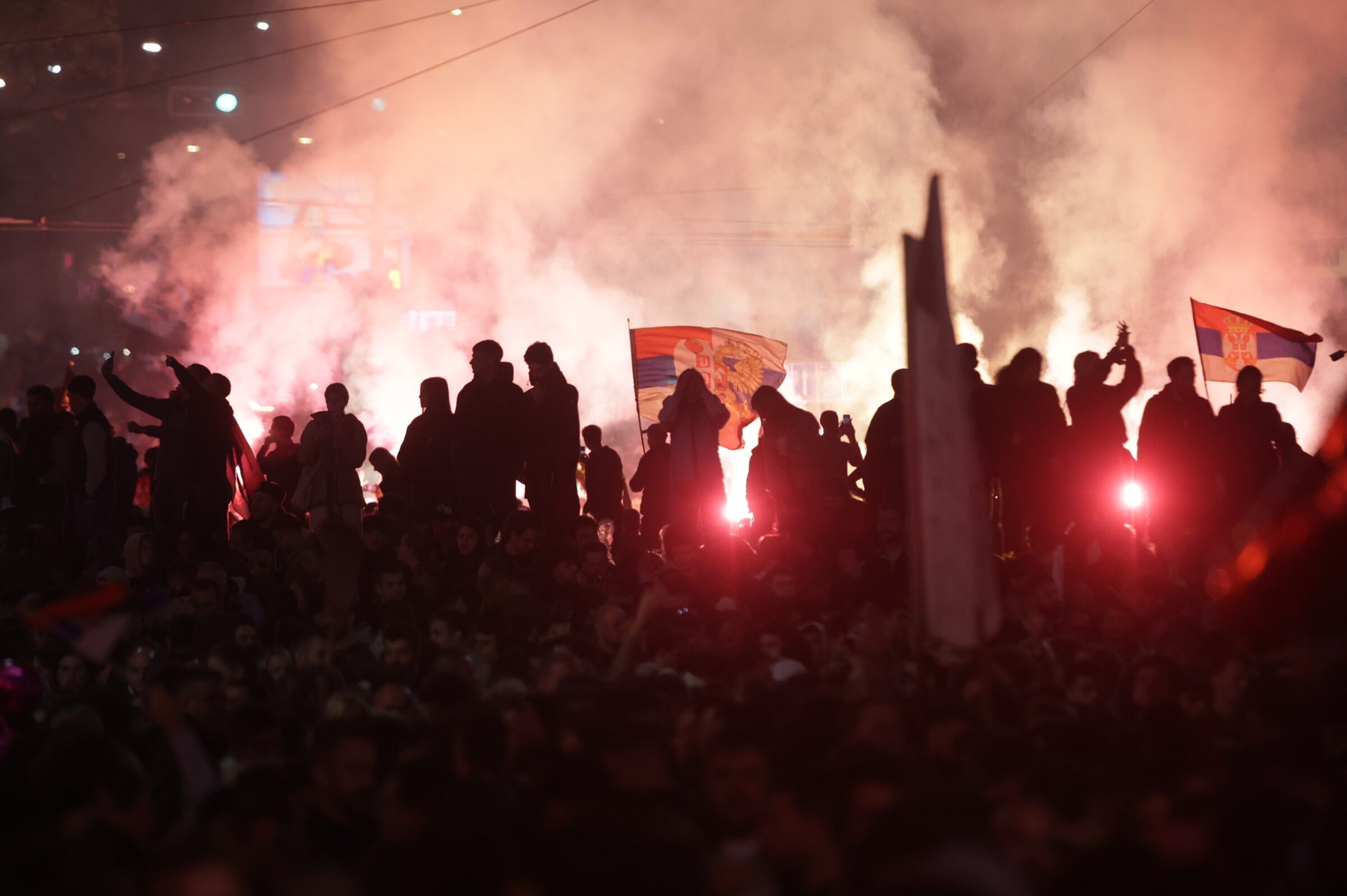
“Tonight we celebrate victory, tomorrow we build the future,” said Radomir Sajčić, professor at Belgrade University, speaking on behalf of the students at their headquarters on Sunday’s evening (25 October). “The voice of the people is being heard”.
The student-backed list won Serbia’s parliamentary election at the weekend, in a vote that amounts to the biggest challenge so far to president Aleksandar Vučić’s long-standing grip on power.
And that night, Vučić (unexpectedly) acknowledged defeat. “Vox populi, vox dei,” [The voice of the people is the voice of God], he said, marking a significant moment in the Serbian political landscape that Vučić has dominated for more than a decade.
The 56-year-old politician served as prime minister from 2014 to 2017, then won the 2017 and 2022 presidential elections. Critics accuse him of authoritarianism, control over the media, and manoeuvring between the European Union, Russia, and China.
However, this years historic turnout (nearly 70 percent ), the highest since the break-up of Yugoslavia in 1992, has overturned his SNS party (Serbian Progressive Party).
In the 250-seat parliament, the Student’s List will have the majority – 140 seats, and second comes Vučić’s SNS with 104 seats. The remaining seats will be shared mainly between ethnic national-minority parties.
“It was effectively a referendum on president Aleksandar Vučić,” the Serbian pro-democracy group Kreni-Promeni, who backed the Students’ List, told EUobserver.
From student protests to electoral change
The opposition was unable to seriously challenge Vučić in the previous parliamentary elections, partly because of its fragmentation. However, a significant turning point in Serbian politics came in November 2024, when 16 people died after a canopy collapsed at the railway station in Novi Sad.
The tragedy then sparked massive demonstrations across Serbia, led primarily by students. Hundreds of thousands of people took part. They blamed the disaster largely on the government and its corruption.
The student protests gave rise to Vučić’s main challenger in this year’s elections: the Student List (SL). The 250 candidates running for parliament included individuals selected by students, primarily academics.
“The students have selected prominent citizens – experts in their own fields,” Miloje Savić, a volunteering poll observer, told EUobserver. “They know which values they are supposed to protect and represent,” he added.
The student electoral list was led by Ilija Srdanović, a professor at the Faculty of Medicine in Novi Sad.
The weekend result thus represent a major political breakthrough for a movement that emerged less than two years ago from protests against the government’s long-standing corruption.
For the SNS, this defeat is “a huge blow to him [Vučić]”, senior research associate at the University of Belgrade, Jelena Vasiljević told EUobserver.
But, as the poll winner and Vučić’s most successful opponent, the SL is not out of the woods yet.
Students smeared as ‘blockaders‘
Even as he acknowledged defeat, Vučić continued to use the same online rhetoric, referring to winners as the “students’ blockade list”. Vučić also warned of investor uncertainty and damage these results might have on the gas trade.
Serbia's Vučić after conceding defeat in election:
What brought us down is this verified revolution, which they carried out with direct support from various European countries, and the deep American state, the one against President Trump.
Taken together – the language and the economic warnings – offer an insight into how the SNS and Vučić will depict the incoming government.
“They would be framing the student movement as not as a legitimate political power, but as an extension of the protest movement and as a risk to economic stability,” Vanesa Valcheva, head of research at Balkan Free Media Initiative (BFMI), told EUobserver.
This article continues, but the full version is available only to EUobserver.com subscribers. Visit account.euobserver.com/membership
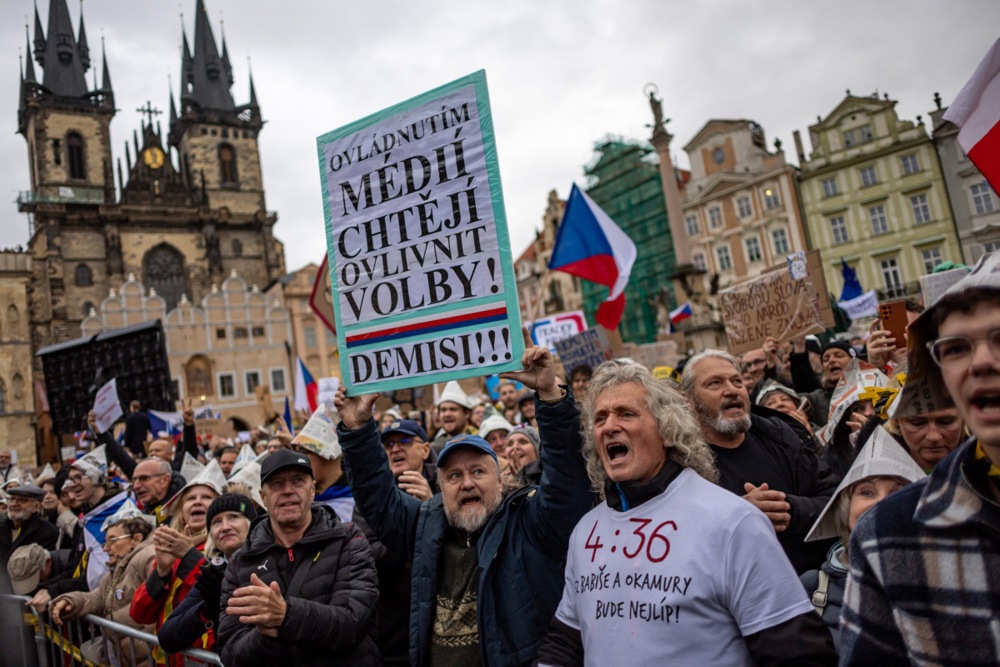
The lower house of Czech parliament became a nighttime battleground for the future of the country’s public service media at the weekend, when MPs pushed through the abolition of public service media licence fees in the bill’s first reading in the chamber on Saturday (24 October).
Czech MPs voted to pass a bill that lays the groundwork to abolish TV and radio licence fees and move public media under the state budget.
The weekend vote was not yet a vote on the law’s final approval: the government coalition only needed to prevent the bill’s rejection which the opposition had sought.
The controversial vote was scheduled for 4.36am on Saturday – by no means a typical time for such a vote. Opposition parties had failed to postpone the vote, and also did not have enough numbers to reject the bill.
Out of 177 lawmakers present, 96 MPs voted in favour of the bill, while 81 opposition MPs voted to reject it. Prime minister Andrej Babiš did not take part in the vote.
MPs from the Czech Republic’s five opposition parties also failed to pass a proposal to return the bill for redrafting to the coalition formed by ANO (led by the PM) and the far-right parties Freedom and Direct Democracy (SPD) and Motorists to Themselves.
The bill will now go to the parliament’s media and culture committee. This will be followed by lengthy debate at the law’s second reading, where amendments may be submitted. The proceedings will likely last several days.
4.36am vote planned at last-minute
Babiš’s governing majority only added the agenda item for ending licence fees on the Chamber of Deputies’ (lower house of parliament’s) agenda on Friday morning. It even took by surprise the MPs of ANO, SPD and Motorists.
The coalition leadership formed by Babiš and foreign minister Petr Macinka (Motorists) had kept the plan secret all week, so that it would not become public and opposition parties could not prepare obstruction tactics.
Protesters had gathered outside the parliament through the night in the early hours of Saturday morning. Demonstrations carried on throughout the Czech Republic over the weekend.
This article continues, but the full version is available only to EUobserver.com subscribers. Visit account.euobserver.com/membership
Incumbent president Iliana Yotova is leading Bulgaria’s 2026 presidential election race, alongside her running mate, Kiril Vulchev, securing 47.3 percent support among likely voters, according to a poll released on Wednesday (21 October).
Andrei Gyurov, a former caretaker prime minister, and his running mate, Georgi Kandev, rank second with around 30 percent. Leaving the pro-Russian Kostadin Kostadinov and Petar Volgin is in third place on just over ten percent.
Bulgaria is voting on Sunday (25 October) and the vote can be seen as “a test of the government’s stability”, according to Ivaylo Iliev, a political scientist, with whom we analyse Bulgarian presidential elections in three points.
1. A test of the government’s stability
The election could consolidate political influence around prime minister Rumen Radev, or expose the limits of his camp’s support.
The PM’s Progressive Bulgaria, which secured a parliamentary majority in April 2026, is facing criticism over its budget plans and handling of security threats. Recent attacks on merchant vessels in the Black Sea have raised questions about Bulgaria’s ability to protect its interests and reassure its allies.
Iotova, who served as Radev’s vice-president for nine years, is closely associated with the prime minister. And her victory could be interpreted as an endorsement of the governing camp.
“Radev has his candidate in these elections and he is obviously the favourite to win a second round,” Iliev says.
However, the Black Sea attacks have “definitely negatively affected both” Iotova’s campaign and public confidence in the government’s security response, he adds.
The government’s response, alongside its nuanced position on Russia’s war against Ukraine, may appeal to voters sceptical of confrontation with Moscow. At the same time, it also risks complicating Bulgaria’s relations with its European and Nato partners.
“Radev demonstrates two different types of behaviour”, says Iliev.
On the domestic front, he is “balanced”, “vague” or even “without specifics”, Iliev says. For Radev does not want “to cause discontent among his pro-Russian voters”.
On the foreign policy however, Radev is more seeking to get as close as possible to the European consensus, but “with a minimal effort.”
2. Taking the government to account?
The second question is whether the presidency can act as a counterweight to the executive or will reinforce the same centre of political influence.
Gyurov’s campaign has warned against putting “all the eggs in one basket”. Concentrating power around Radev and Iotova could weaken independent scrutiny he says.
A Gyurov victory could give the presidency a more “independent voice”, says Iliev.
However, institutional checks and balances do not necessarily translate into electoral support.
This article continues, but the full version is available only to EUobserver.com subscribers. Visit account.euobserver.com/membership
Russian journalists reveal what the Kremlin and US are discussing.
Starshield was supposedly fixed, but that doesn’t seem to be the case.
Russians advance in Rai-Oleksandrivka towards Sloviansk.
Russia loses two combat Sukhoi aircraft in accidents in one day.
Map of the day: Rai-Oleksandrivka
Videos of the day: Kramatorsk evacuation; Russian Su-30 crashes; how helicopters hunt drones.
Russian journalists have described the nature of talks between the Kremlin and the US. A demilitarised zone in Donbas. A Ukraine without Nato membership but is allowed to join the EU membership in return. Sanctions against Russia eased, Russian gas in Europe and news talks on the Nord Stream 2 pipeline. And America makes its own deals with Russia.
This is how, according to The Economist, the US proposal to the Kremlin for ending the war sounded, presented in Moscow on Wednesday (21 October) by Steve Witkoff, Trump’s negotiator.
It sounds like something Russia might welcome, but that does not appear to be the case. At least not according to the findings of the Russian exile website Verstka, which a day later published an extensive report on the mood among Russia’s Kremlin-linked elite.
The article, signed by the newspaper’s editorial board, contains numerous quotes from government officials and people close to the regime, whose views on the prospect of swiftly reaching a peace deal and ending the fighting are sceptical.
Verstka wrote that war fatigue was mounting among these people, whose names it naturally did not disclose, but that they fully defer to Russian president Vladimir Putin and are waiting to see what he agrees with US president Donald Trump.
“It can be said with certainty that American sympathies have shifted to our side. We have been working on this for a year and a half,” a source close to the foreign ministry told the journalists, describing Moscow’s strategy.
Russia achieved this through the following argument: since Ukraine considers itself a victim — which it undoubtedly is, editor’s note — and asks for assistance, but is unwilling to make concessions in return for that assistance, it is no longer in fact a victim, but a player with ambitions of its own, which Western taxpayers are unwilling to fund.
Incidentally, the Slovak government uses very similar rhetoric and arguments.
According to the same source, Moscow will emphasise during the talks the hopelessness of Ukraine’s supposed situation.
Another quoted voice was a political strategist directly linked to the Kremlin, who pointed out that Trump’s son-in-law Jared Kushner did not directly take part in the talks in St Petersburg on 21 October, reportedly due to illness.
Nevertheless, this source also praised the US approach, even if Trump’s dispute with Ukraine proved only short-lived: “We have nothing to lose from these solutions. And we could gain both an improved budget and an advantage on the battlefield.” At the same time, the domestic political strategist saw no fundamental changes that could lead to an end to the fighting.
The extent of the irrationality prevailing within the regime was illustrated by statements from another unnamed representative of a formally non-governmental organisation working directly with the Kremlin.
In his analysis, he claimed that Ukrainian president Volodymyr Zelensky had created a dictatorial system from which neither elections nor a coup could remove him, and that the war would not end while he remained in office. He also cited reports by Russia’s foreign intelligence service claiming that Kyiv was cooperating with Mexican drug cartels.
Another government official had low expectations of the Americans: “For almost two years now, we have been saying that Trump is supposedly one of us and that the talks are constructive, but they have produced no results. We are fighting, burning, drowning, suffering alongside our homeland.”
The man spoke of a “peace wing”, allegedly comprising people in the presidential administration responsible for domestic policy and economic circles, but this did not mean that there was any open opposition to the war.
“There is no escape from the ship. We are waiting for them to have had enough of the war,” the official said.
This article continues, but the full version is available only to EUobserver.com subscribers. Visit account.euobserver.com/membership

 Login