❌

Reading view

EU considering Canada as ‘associate member,’ von der Leyen says, despite internal opposition

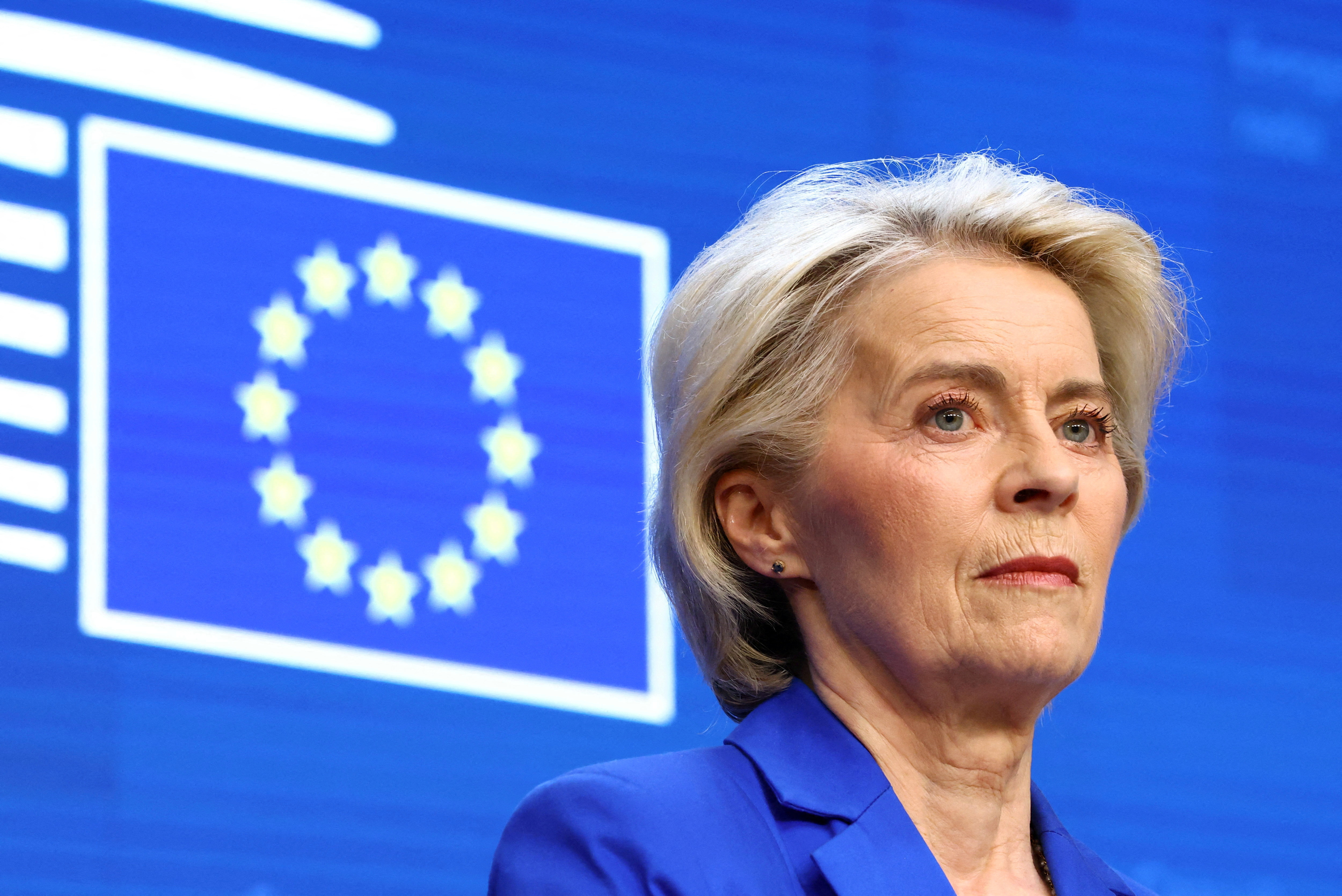
European Commission President Ursula von der Leyen said on Thursday the EU and Canada continue to explore Canada becoming the union’s first “associate member,” a term so divisive among member countries that it does not appear in a joint declaration.

The European Union and Canada aim to deepen cooperation on AI, climate, energy and security, von der Leyen said in a speech at a Canada-EU summit in Montreal.

The associate member term, which Germany and several other EU countries oppose, has no legal meaning.

“Our idea is simple: it is an association without accession,” von der Leyen said. “We can build a partnership that comes closer to membership than anything we have done before.”

“We can work on everything, from AI and climate to energy or security,” she said.

Canadian and EU leaders, however, dropped the idea of associate EU membership from their joint declaration, seen by Reuters, agreeing instead to an “ever closer association.”

The declaration, which officials plan to make public on Friday, said work to define the Canada-EU relationship would continue until another summit next year.

CANADA SEEKING TO REDUCE US DEPENDENCE

Deeper ties ​to Europe are part of Prime Minister Mark Carney’s strategy to reduce Canada’s economic and security reliance on the US since ⁠President Donald Trump imposed tariffs on a range of Canadian goods. Still, Canada’s efforts to draw closer to the EU risk angering Trump as trade talks between Canada and the US ​continue.

Von der Leyen first floated associate membership for Canada six weeks ago, prompting a rebuke from countries that argued they could not agree to a concept that had no legal status and had not been fleshed out, diplomats said.

Three EU diplomats, speaking on condition of anonymity, said they were surprised von der Leyen continued to use the “associate member” term, since the declaration deliberately excluded it.

Speaking later at the summit, European Council President Antonio Costa said the idea of associate membership for Canada was “audacious,” but that he shared von der Leyen’s ambition.

A previous draft statement ​had included at least two references to Canada as an associate member, including an acknowledgment that defining the term would take another year.

Carney said the term for Canada’s new relationship with the EU is insignificant.

“This new alliance is not a marketing exercise. The name doesn’t matter,” he told reporters.

“What matters is that the complementarities of our two jurisdictions strengthen our sovereignty, strengthens Europe’s sovereignty, various strategic autonomies, critical minerals, energy, other aspects, AI,” Carney said.

Canada and the EU were both trying to find an effective response to the geopolitical threats Trump has posed, said Mark Manger, a professor at the Munk School of Global Affairs at the University of Toronto.

“Canada and the EU both are now in this position where the most important ally they relied upon is suddenly not behaving like an ally anymore,” he said. Manger said Canada and the EU have an enormous opportunity to expand their relationship, but that it would take time to address regulatory inconsistencies, build new undersea cables linking Canada to Europe and secure common supply chains, some of the objectives mentioned in the joint declaration.

The declaration also proposes conducting a joint feasibility study on Canadian liquefied natural gas exports to Europe ‌and enabling ⁠young Canadians and Europeans to work across the Atlantic.

Von der Leyen called for deeper cooperation between the EU and Canada on Arctic security.

“When we see Russia rebuilding its Arctic military footprint, pursuing hybrid strategies against its neighbors and reshaping the security of the Arctic, it impacts the European Union and Canada,” she said. “We have to act and change our strategic posture and, together with like-minded partners like Canada, stand up for these values.”

Later on Thursday, Carney will meet with European business leaders before hosting a dinner with EU leaders.

  •  

Cyprus falls below EU average for preschool education participation

Cyprus recorded a preschool education participation rate of 89.2 per cent in 2024 among children aged three to the start of compulsory primary education, according to figures published by Eurostat on Thursday.

The rate was below the EU average of 94.4 per cent and the European target of 96 per cent participation by 2030.

According to Eurostat, almost half of the EU regions for which data were available had already reached the 96 per cent target.

Of the 198 Nomenclature of Territorial Units for Statistics (NUTS) 2 regions with available data, 99 had achieved or exceeded the target.

These regions were mainly concentrated in Belgium, Denmark, Germany, Spain, France, Lithuania, Hungary, Poland, Portugal and Sweden, where more than half of the regions had reached the target. Luxembourg had also achieved the 96 per cent participation rate.

Eurostat identified 20 EU regions where virtually all children aged three to the start of compulsory primary education participated in preschool education.

Almost half of these were in France, which accounted for nine regions, while another five were in Belgium.

Five capital or metropolitan regions also recorded full participation of 100 per cent: the Brussels-Capital Region in Belgium, Île-de-France in France, Zagreb in Croatia, Budapest in Hungary and the Warsaw metropolitan area in Poland.

A participation rate of 100 per cent was also recorded in Portugal’s Centro region and in the German regions of Hamburg and Mecklenburg-Western Pomerania.

  •  

Young Cypriots rank lowest across the EU for social activism

Only 26 per cent of young Cypriots say that they have taken part in at least one initiative to bring about social change in the past year, ranking the Republic lowest among all 27 member states.

The findings are according to the latest Eurobarometer survey on youth and democracy, which was carried out in the age group from 15 to 30 and provide insights on the views and opinions of young Europeans.

According to the survey’s findings, an average of 55 per cent of young Europeans took part in at least one initiative to bring about social change in the past year, up from 48 per cent in 2024.

The actions included the signing of a petition, participating in a rally or sending a letter to a politician.

At 73 per cent, Luxembourg ranked highest followed by Malta, 70 per cent and Belgium, 64 per cent.

The highest engagement was recorded in the human rights sector, 36 per cent, ranking first in 23 out of all 27 member states.

This is followed by equal rights, 33 per cent, and health and well-being, 30 per cent.

The survey shows overall growing engagement among young people, with 75 per cent having participated in the activities of one or more organisations in the last 12 months, compared to 64 per cent in 2024.

These activities were mostly organised by sports clubs, 26 per cent, or a youth club or youth organisation, 20 per cent.

  •  

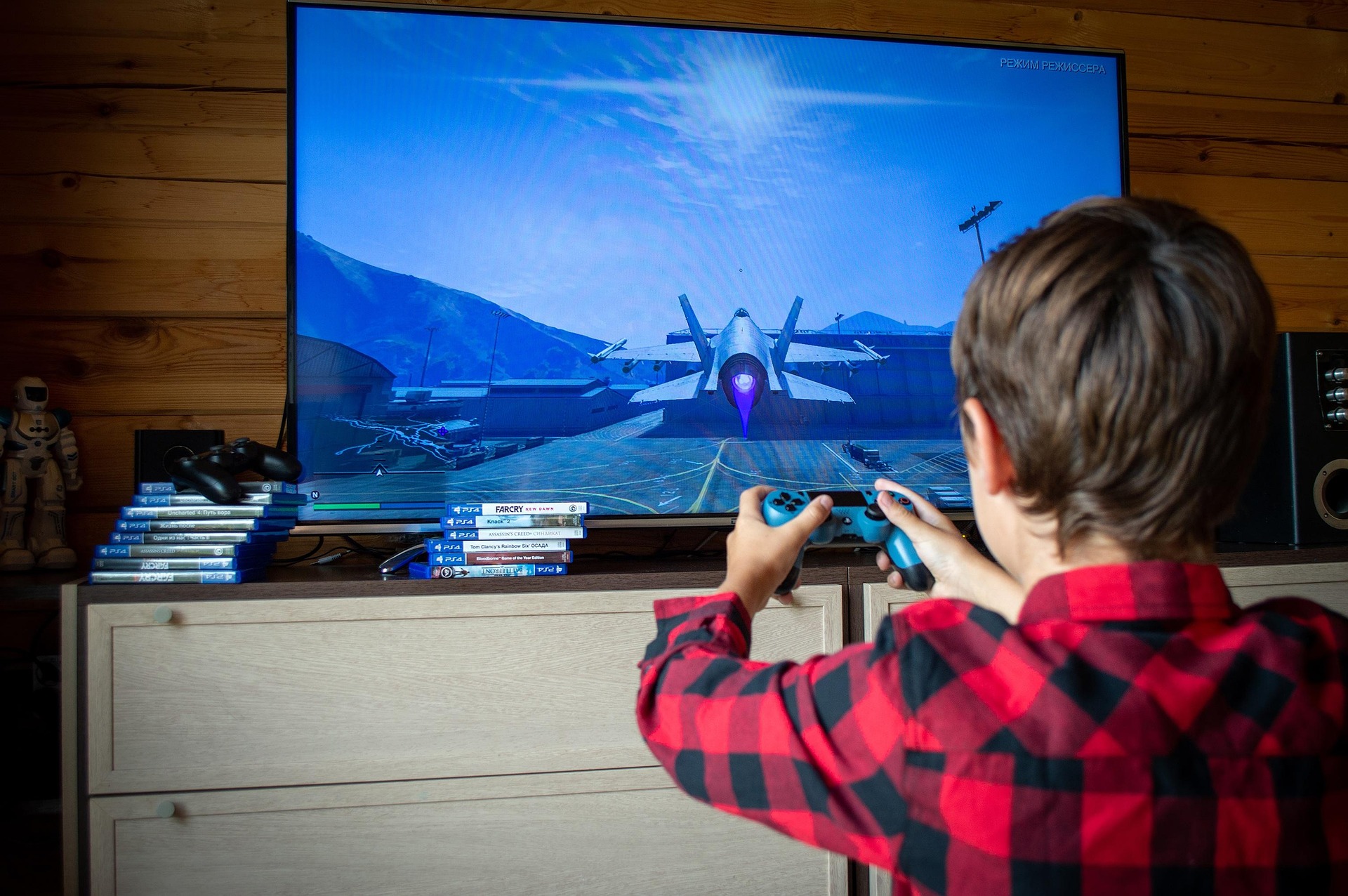
Cyprus has second smallest video game market in Europe

Cyprus has the second smallest video game market among 36 European countries, with only Malta spending less, according to a report published on Tuesday by the European audiovisual observatory.

Consumer spending on video games in Cyprus reached €12.51 million last year, ranking 35th of the 36 countries included in the analysis, ahead of only Malta which recorded €8.31 million.

With a population of about 1.26 million, spending per person in Cyprus came to €9.93; The European average was €47.29, almost five times higher.

Across the 36 countries examined, the video game market totalled €27.73 billion in 2025.

The report places Cyprus, Luxembourg and Malta in a category of small European markets where mobile gaming dominates, with about 98 per cent of consumer spending in Cyprus last year being linked to mobile platforms.

The report says these markets have high smartphone use and a limited presence of traditional consoles and PCs in the recorded data, with revenue mainly stemming from in-game purchases as well as digital currencies.

  •  
❌