❌

Reading view

A right-wing ad says ‘liberals are the new racists.’ What does that make the GOP?

“Liberals are the new racists,” according to an unintentionally comical political ad that aired during the World Series this week.

The ad plays out of context clips of three women of color (Rep. Alexandria Ocasio-Cortez, D-N.Y.; Rep. Ilhan Omar D-Minn.; and “The View” co-host Sunny Hostin) speaking about race, cut together with a horror movie aesthetic. Then comes the ad’s real message: “Today’s liberals are full of hate. They hate America. They’re obsessed with skin color,” says an unnamed female narrator obscured by shadow. “I can’t even show my face, because my skin is white and they’ll spew hate at me,” she laments.

Days before the midterm elections that will serve as a referendum on the job performance of America’s most abjectly racist president in a century, I couldn’t help but wonder who ponied up the reported $550,000 it costs to air a 30-second spot during this year’s Fall Classic.

If “liberals are the new racists,” according to America Next, who are the old racists? Maybe it’s the people at the highest positions of power and influence in the Grand Old Party and the MAGA movement?

New York Times reporter Ken Bensinger posted to X that the ad was paid for by America Next, a PAC created by former Republican Louisiana Gov. Bobby Jindal. According to its website, America Next is “not focused on elections” but rather “winning the war of ideas.” Bensinger also cited Federal Elections Commission data showing America Next paid $250,000 to a firm called Breakthrough LLC for the specific purpose of “opposition” to the Democratic candidate for Senate in Michigan, Abdul El-Sayed. The Guardian reported that Breakthrough was founded by former Jindal aide Timmy Teepell, whose son Tommy went viral after asking El-Sayed if he’d denounce the Muslim Brotherhood at a campaign event earlier in October. (Neither of the Teepells, nor America Next responded to The Guardian’s request for comment.)

It’s particularly ironic for Jindal, the son of immigrants from India, to bankroll an ad accusing the left of being “racist” and “obsessed with skin color.” It has, after all, only been a month since MAGA’s recent heated debate over whether Indian Americans can ever be “real Americans,” which was sparked by a Republican candidate’s outrage at a photo of nonwhite University of Texas football fans.

And the irony is further enhanced by the fact that among the defining features of the second Trump administration — which also include unprecedented levels of corruption, illegal foreign incursions and killings without due process, repeated violations of Americans’ constitutional rights and a vast censorship industrial complex — is the complete normalization of the kind of gutter racism that, prior to President Donald Trump’s political rise, had been pushed toward the fringes of society.

On Wednesday, the Trump War Room X account (the Trump White House’s more overtly political account) quote-posted an official White House account post warning, “The chaos, looting, and destruction we’re watching [in France] is exactly the future radical Democrats are pushing for America.” To drive home its point, the War Room account posted a photo of Trump with the caption, “Which way Western Man?”

For the uninitiated, “Which Way, Western Man?” is the title of a book published in 1978 that has become a foundational text for the neo-Nazi movement. It praises Adolf Hitler, advocates for violence against Jews and Blacks; quotes liberally from the antisemitic forgery, “The Protocols of the Elders of Zion;” and likens birth control to “the knife by which [the] civilized White man is cutting his own throat.” (That line, in particular, is evocative of a post Charlie Kirk wrote the day before his assassination: “Islam is the sword the left is using to slit the throat of America.”)

It must be said that this is hardly the first time the Trump administration has embraced Nazi sloganeering in its political outreach. The Department of Homeland Security has already put many “Which way Western Man” posts on the internet. It even used the white supremacist marching song “By God We’ll Have Our Home Again” on its social media accounts back in January.

But if “liberals are the new racists,” according to America Next, who are the old racists? Maybe it’s the people at the highest positions of power and influence in the Grand Old Party and the MAGA movement?

For the uninitiated, “Which Way, Western Man?” is the title of a book published in 1978 that has become a foundational text for the neo-Nazi movement. It praises Adolf Hitler, advocates for violence against Jews and Blacks and quotes liberally from the antisemitic forgery, “The Protocols of the Elders of Zion.”

At a GOP get-out-the-vote rally in Michigan on Monday, Health and Human Services Secretary Robert F. Kennedy, Jr. — noted anti-vax maniac and serial fabulist — went on a fact-bereft and racist rant seemingly directed at El-Sayed, saying, “There are five hundred million Arabs in the world. And yet they don’t produce science … They don’t win the Nobel Prize. They don’t win the Fields Medal. They don’t win the Wolf Prize.”

Two days later the Libs of TikTok X account — which is so influential on the White House that Reuters noted its “symbiosis” with the administration has “has triggered harassment and threats” — posted a photo of four Black high school students with the caption: “St. Cloud Area Schools in MN announces students chosen for an award. What do you notice?” As vile as it is for Libs of TikTok to draw children into its culture war obsessions, the obvious implication is that the Black students are undeserving. There’s a word for that.

And, of course, Trump in recent weeks has filled his campaign rallies with rank racism. Whether it’s repeatedly calling Somalis “low IQ” or referring to El-Sayed as “Abduladadalalalala” or using an antisemitic slur to defend Kansas Sen. Roger Marshall — Trump is very comfortable in his own skin as an old-school bigot.

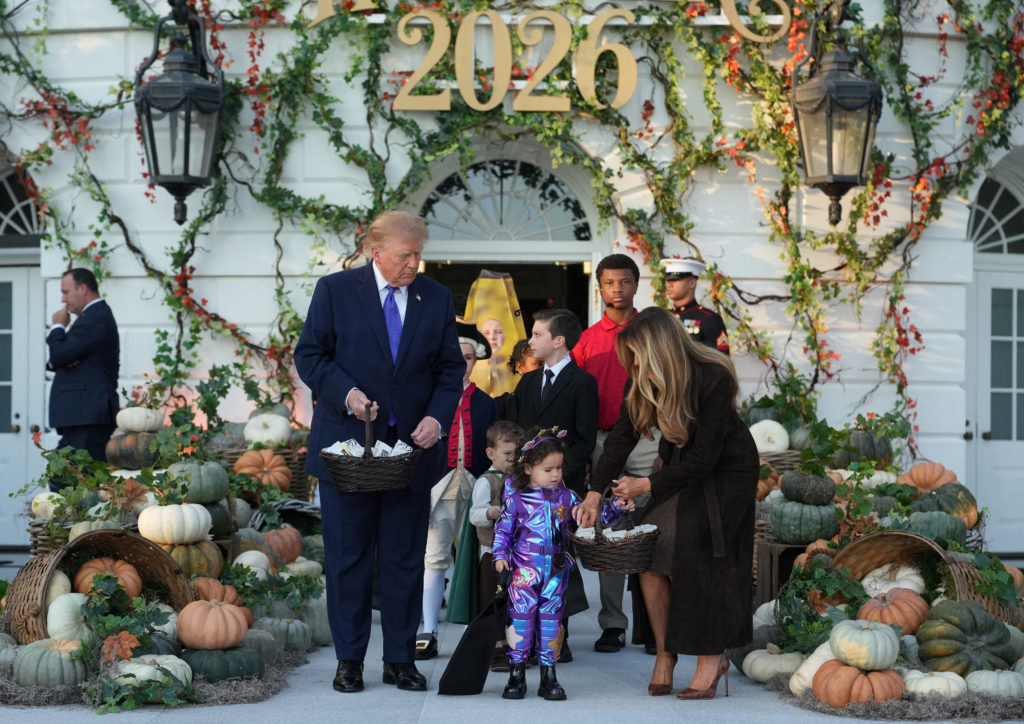
While trying to frame anyone but themselves as racist, Trump and his MAGA allies dig ever deeper into the swamps of prejudice, then laugh about it. On Thursday, the White House posted an image of a pumpkin with a sombrero carved into it, and a caption reading, “Spooky szn is here.”

It’s an obvious troll meant to signal that Mexicans are scary, with the added goofy internet meme lingo deployed to soften the delivery. But fear and hatred of the other is the message — and normalizing racism is the point.

The post A right-wing ad says ‘liberals are the new racists.’ What does that make the GOP? appeared first on MS NOW.

  •  

Trump’s broken promise not to start new wars is personal to N.C. voters

FAYETTEVILLE, N.C. — A promise not to start foreign wars was a central plank of Donald Trump’s 2024 platform. In North Carolina, home to the nation’s most populous military base, Fort Bragg, people have taken that broken promise personally.

Elizabeth Boahn, 48, from Stedman, voted for Trump in 2016, 2020 and 2024. But in 2026, with her 18-year-old son, Colby, on the verge of joining the Navy after graduation, she’s regretting her support.

“It’s heartbreaking. I just, I pray that he doesn’t have to go over there,” said Boahn, referring to the Middle East.

When you shake a man’s hand, you look him in the eye. If they can’t, you don’t trust them … be a man of your word.”


—Elizabeth Boahn

“My granddaddy taught me this, and he was a Marine. When you shake a man’s hand, you look him in the eye. If they can’t, you don’t trust them … be a man of your word,” Boahn said. Asked if she considered Trump a man of his word, she said, “Nope.”

Asked how the war with Iran had affected her life, Boahn said, “it’s on the verge of taking my son away … 18 years old, hasn’t even really begun to live a life.”

She had choice words for the president. “He’s going over there and starting wars, that is destroying our economy. It’s causing my struggle of living,” she said.

Boahn’s frustration with the president’s broken promise stood in contrast to how some veterans who spoke to MS NOW reflected on Trump’s failure to stay out of foreign military conflicts.

Chad McKeown, who voted for Trump in 2024, served in the Army for 20 years and deployed to Afghanistan and Iraq. After returning home, he started Kraken Customs, an auto body shop that emphasizes hiring veterans.

Kraken Customs, an auto body shop that puts an emphasis on hiring veterans.
Kraken Customs, an auto body shop that emphasizes hiring veterans.MS NOW

McKeown acknowledged the costs of the war with Iran. “This whole thing is an economic nightmare,” said the 45-year-old entrepreneur, who said his business is still doing well despite the headwinds.

But asked about his thoughts on the war itself, McKeown said it’s part of the military’s culture not to question orders from the commander in chief.

“When you put your life on the line for your country in the service — whether it’s Army, Air Force, Navy, Marine Corps, now Space Force — you learn how to humble yourself amongst those that are appointed above you,” he said.

The moment you get on the side of naysaying them or becoming a shadow governor, you are discrediting what we’re all supposed to be standing for.”


—Chad McKeown

“The moment you get on the side of naysaying them or becoming a shadow governor, you are discrediting what we’re all supposed to be standing for,” he said.

Mary Hampton, an Army veteran from Vander who voted for Trump three times, echoed that deference. “Do I want our troops home? Yes, I do, absolutely. But I’ve got to leave those decisions to other leaders that are in charge right now,” she said.

Reagan Juan, an Army veteran, has service in her blood. Her grandfather, Don Feeney, is one of the original members of Delta Force, the prestigious elite U.S. Army special operations unit. Juan, who was named after President Ronald Reagan, said she voted for Trump in 2024 solely because of his promise not to start any foreign wars.

“That’s such a big promise. We’re not just promising, you know, more funding for education, or we’re not promising tax cuts. This is people’s lives, our real lives,” said Juan, whose husband also served in the military.

“There needs to be way more checks and balances. There needs to be more oversight. There needs to be more transparency in what is actually going on,” Juan said. “There needs to be a clear end state. There needs to be a clear exit strategy. If we aren’t doing that, I don’t know what we’re doing out there,” she said.

Juan said she feels “shame” for voting for Trump and repeatedly described the war in Iran as “reckless.”

An Elon University poll from March 2026, shortly after the war began, found that 51% of North Carolina voters opposed military involvement in Iran. A more recent poll from Elon University in September found that number virtually unchanged, with 52% of registered voters disapproving of the war. That is lower than national polling averages on the issue: An October Pew poll found 65% of Americans disapproving of the president’s handling of the conflict.

My delivery expense has nearly doubled. My prices have been inflated, but my margins have remained the same, or less.”


—Jason Bruton

The longer this war has gone on, the less patient Jason Bruton has become. Bruton, an auto body shop franchisee, voted for Trump three times.

“The war in Iran is dragging on too long. I was supportive of it in the beginning when I thought it would be like a monthlong war,” he said. The Pentagon estimated that the war has cost more than $47 billion dollars, an investment Bruton doesn’t think will pay dividends.

“My delivery expense has nearly doubled. My prices have been inflated, but my margins have remained the same, or less, because I’m absorbing some of the cost of doing business and to help keep my customers,” Bruton said.

The post Trump’s broken promise not to start new wars is personal to N.C. voters appeared first on MS NOW.

Kraken Customs, an auto body shop that puts an emphasis on hiring veterans.

  •  

“L’unica cosa importante era salvargli la vita”: giornalista interrompe la diretta per salvare un cane travolto dall’alluvione, la storia di Alejandro e Bartolito

Immaginate la scena: un inviato televisivo con il microfono in mano, immerso nel fango e nell’acqua alta di una strada allagata, sta documentando in diretta nazionale le conseguenze devastanti di un’alluvione. All’improvviso, l’attenzione della telecamera si sposta: un cane sta per essere inghiottito dalla furia della corrente, ormai incapace di nuotare e di mettersi in salvo. A quel punto la cronaca si ferma, il microfono viene messo da parte e l’inviato si lancia letteralmente in acqua, finendo completamente sommerso pur di afferrare l’animale e tirarlo a riva.

È esattamente ciò che è accaduto a Puerto Vilelas, nella provincia argentina del Chaco, dove le recenti e violente inondazioni hanno costretto all’evacuazione oltre mille persone. Il giornalista Alejandro Pueblas, inviato dell’emittente A24 per il programma América Noticias, ha scelto di sospendere il proprio lavoro di reporter per compiere un salvataggio disperato insieme al suo operatore di ripresa, Valentín Correa.

L'articolo “L’unica cosa importante era salvargli la vita”: giornalista interrompe la diretta per salvare un cane travolto dall’alluvione, la storia di Alejandro e Bartolito proviene da Il Fatto Quotidiano.

  •  

Sparks fly between Bresnahan, Cognetti in Pennsylvania House debate

Rep. Rob Bresnahan (R-Pa.) and Democrat Paige Cognetti clashed on the debate stage Thursday night over the ongoing war in Iran, the growing presence of data centers in their district and other hot-button issues.  Cognetti, who has served as the mayor of Scranton, Pa., since 2020, and Bresnahan are vying to represent Pennsylvania’s 8th Congressional…

  •  

DOJ issues new grand jury subpoenas to California election officials

Federal prosecutors in California have issued grand jury subpoenas to state and local election officials Thursday, according to a person with knowledge of the effort and a spokesperson for the Los Angeles County Registrar-Recorder’s office, which administers elections in the county. The person was granted anonymity to discuss sensitive investigative steps.

MS NOW has obtained three subpoenas issued last week to employees of the Los Angeles County Registrar’s office. Each subpoena demands the recipient testify on Nov. 4, the morning after Election Day, and produce documents, including any records or communications reflecting the county’s efforts to screen for noncitizen voters or prevent the counting of any noncitizens’ votes.

The move expands the Department of Justice’s controversial probe into suspected noncitizens who are registered to vote in California. Earlier this month, the Department of Justice sued California to demand officials there set aside mail ballots cast by any of the roughly 20,000 registered voters it identified as “likely noncitizens,” according to a database compiled by the Department of Homeland Security.

A district court denied the Justice Department’s request for a temporary restraining order that would have forced California to segregate any mail ballots cast by alleged noncitizens and refrain from counting or tabulating them unless and until California could verify their citizenship. The DOJ has already appealed that order, and Bill Essayli, the top federal prosecutor in Los Angeles, has said that he expects the case will ultimately be decided by the Supreme Court.

California Attorney General Rob Bonta described the DOJ’s grand jury subpoenas as an attack.

“The Trump Administration’s escalating attacks on our hardworking elections officials in California are unacceptable,” Bonta said in a statement shared on X. “As Judge Carter said in his opinion yesterday,‘these threats must stop.’”

California and L.A. County officials have criticized the DOJ for claiming, without evidence, that thousands of noncitizens are registered to vote, especially after the county said it reviewed a sample of registered voters on DHS’s list and found information indicating that many were born in the U.S.

The subpoenas, which were first reported by Bloomberg, are signed by Assistant U.S. Attorney General Michael Wheat, a veteran federal prosecutor who first joined the Justice Department in the 1980s. Wheat has brought criminal charges in recent weeks against alleged noncitizens for election-related crimes.

Wheat has also been tied to the investigation of Rep. Ilhan Omar, who, according to a search warrant issued earlier this month, is being scrutinized for potential immigration fraud.

The post DOJ issues new grand jury subpoenas to California election officials appeared first on MS NOW.

  •  

House Oversight Democrat maintains support for Peltola, defers to Alaska for next steps

Editor’s Note — This article was updated to more accurately reflect Garcia’s comments from his CNN interview. Rep. Robert Garcia (D-Calif) reaffirmed his support Thursday for Democratic Senate candidate Mary Peltola after the House Oversight Committee announced a probe into ballot stacking allegations against her, though he acknowledged the state “should investigate any time there…

  •  

Dr. Oz’s new Medicare proposal would be bad news for rural seniors

Under the leadership of Mehmet Oz, the Centers for Medicare & Medicaid Services, or CMS, is seeking to heavily restrict traditional Medicare enrollees’ use of remote monitoring devices for their health conditions. A proposed rule would eliminate coverage for these services unless the service is provided at a physician’s office. This rule would particularly hurt enrollees who have difficulty traveling to in-person appointments, such as rural seniors. And it would undercut a key Republican effort to alleviate the harms of last year’s “big, beautiful bill.”

Remote monitoring programs allow patients to collect their health data themselves (such as taking their own blood pressure, oxygen levels or blood sugar) and transmit the data to healthcare providers, who can use the information to help manage the patient’s health. These programs aren’t just convenient; they make it easier to proactively manage chronic diseases before there is an emergency. Patients and providers don’t have to rely on a single data point at a scheduled appointment or waiting until the condition worsens.

Where the HHS inspector general suggested a scalpel, CMS would use a hammer.

Consequently, reliance on remote monitoring has expanded in recent years. Almost 1 million Medicare enrollees received it in 2024 alone. Remote monitoring has proved particularly valuable to those who have chronic medical conditions but face obstacles to in-person appointments. For instance, residents in rural communities and areas with shortages of health professionals don’t need to travel long distances for appointments as frequently. Transportation is a critical social determinant of health, and if one has poor vision or limited mobility, in-person appointments are especially challenging.

To justify the new restrictions, the CMS cites a 2025 report by the Department of Health and Human Services’ inspector general. Those findings raised concerns about suspicious billing practices and patients not receiving treatment. But the report called for a measured approach: closer monitoring of billing while preserving Medicare enrollees’ ability to benefit from this program. CMS would go much further: Because most medical practices lack the bandwidth to launch and oversee their own remote monitoring programs, requiring the service to be provided by someone at a physician’s office practically eliminates the benefit. In short, where the HHS inspector general suggested a scalpel, CMS would use a hammer.

Already, a bipartisan group of House members is calling on Oz to reconsider the rule, but it fits within a broader context of the Trump administration’s quiet campaign to curtail Medicare’s effectiveness.

Much of the attention on H.R. 1 — what Trump called the “big, beautiful bill” — focused on its draconian cuts to Medicaid, but the law also triggered an automatic $500 billion cut from Medicare between 2026 and 2034. The law also delayed until late 2034 the implementation of finalized rules that would help very low-income Medicare enrollees access programs to help cover premiums and cost-sharing of benefits.

The new CMS proposal, however, is particularly curious in light of how the “big, beautiful bill” came to be.

Since then, CMS has allowed a subsidy program for Medicare Part D prescription-drug costs to expire. And it introduced a pilot program in six states that uses artificial intelligence to review the medical necessity of prescribed care. The practice, also known as prior authorization, previously was rarely used in traditional Medicare. The pilot program has already resulted in significant delays in care.

The new CMS proposal, however, is particularly curious in light of how the “big, beautiful bill” came to be. To stanch the proverbial bleeding that rural communities are projected to face from the bill’s cuts, Republicans created a $50 billion fund for rural healthcare. Technological innovation was a central pillar of this effort, known as the Rural Health Transformation Program.

Restricting remote monitoring does anything but foster innovative technologies. And the effects will be felt increasingly in the years to come. The RHTP is a relative pittance compared to H.R. 1’s Medicaid cuts and will do little to prevent closures of rural hospitals or key hospital services. And when a rural hospital closes, the driving time to the next hospital increases by 20 to 40 miles on average, regardless of whether one is on Medicaid or Medicare — which makes the ability to monitor one’s health at home all the more important.

While remote monitoring programs are imperfect and deserve oversight, they help provide healthcare in typically underserved areas. What’s more, by facilitating earlier detection, these programs can result in better patient outcomes, which are less costly to treat. In other words, remote monitoring is good for patients and for the healthcare system itself.

Along with Social Security, Medicare is considered the “third rail” of American politics. Not only is the program popular, but seniors (roughly 90% of its enrollees) vote at high rates, and younger voters prefer to protect the program for when they age into it. The politics of Medicare retrenchment may ultimately prove to be less visible than the consequences of slashing health programs. Elected officials understand the political costs of reducing Medicare spending. Yet under Oz’s leadership, CMS is demonstrating how to weaken Medicare through a series of administrative decisions that preserve the appearance of coverage while weakening access to care. Medicare’s greatest vulnerability may not be outright cuts, but rather the quiet erosion of the benefits on which seniors have been counting.

The post Dr. Oz’s new Medicare proposal would be bad news for rural seniors appeared first on MS NOW.

  •  

Alaska Senate race shenanigans still don’t justify the DOJ’s lawsuit

Alaska’s Republican governor ordered an investigation into Democrat Mary Peltola’s Senate campaign Wednesday after The New York Times reported her campaign was involved with another person named Dan Sullivan ending up on the ballot alongside Sen. Dan S. Sullivan, the Republican incumbent. That report that Peltola’s campaign attempted to put a finger on the scale provoked a fresh round of outrage from President Donald Trump, and, at first glance, it may have seemed to support an unprecedented lawsuit by the Department of Justice lawsuit to pre-emptively discredit a Peltola victory. But not even Wednesday’s political bombshell justifies the DOJ’s involvement.

There’s a lot to find concerning about the Peltola campaign’s shenanigans, but the federal government has no power to force Alaska to alter its election procedures.

The Peltola campaign denies it did anything untoward, but there’s plenty to be concerned about in the Times’ reporting. According to Peltola’s former campaign manager, who spoke extensively with the Times but retracted her comments before publication, the campaign worked with Senate Democrats’ campaign arm to recruit the second Dan Sullivan to run. The DOJ’s lawsuit to intervene in Alaska’s election in case the incumbent Republican senator loses also leans heavily on the Peltola campaign’s supposedly nefarious moves to confound voters.

But even if there were attempts to confound voters, that doesn’t mean voters will be confounded. The ballot makes exceedingly clear which Dan Sullivan is which. The incumbent Dan S. Sullivan has the word “Incumbent” next to his name and the label “Registered Republican,” and Daniel J. Sullivan Jr.’s name is left unadorned.

And Edward Foley, a law professor and former Ohio solicitor general, explained in an MS NOW essay why concerns of voters accidentally denying the incumbent senator re-election are “significantly mitigated” by the state’s ranked choice voting system.

That doesn’t mean we should entirely disregard the reported shady tactics and condescension from people working to get Peltola elected. At one point, some Democratic strategists seemed to delight in the idea of confusing the public:

In one exchange of text messages obtained by The Times, Peltola advisers seemed to make fun of voters while watching a focus group, surmising the participants would be susceptible to being tricked into voting for a ballot spoiler.

“Do we have a scheme for you,” wrote a consultant for the Peltola campaign. A pollster on the chat wrote that one voter seemed like the perfect audience “for our ballot strategy plan :)”

Despite Gov. Mike Dunleavy’s call for an investigation, and the DOJ’s lawsuit, the Times report makes clear that “ballot-stacking tactics are common in politics and generally considered legal — and have been employed by both parties in Alaska.” But the department’s lawsuit says it has an “obligation to protect the integrity of its election” and, if Peltola wins, wants to block certification “pending an investigation to determine whether votes cast for Daniel J. Sullivan were meant to be cast for Senator Sullivan,” according to their lawsuit.

The DOJ’s suit quotes an initial claim from Carol Beecher, Alaska’s director of the division of elections, that Daniel J. Sullivan wanted to be on the ballot “for the purpose of confusing or misleading voters and compromising the fairness of the ballot.” But now Beecher is firmly against the DOJ’s suit. State lawyers in a motion to dismiss filed Monday argued that the federal government “lacks authority to intervene in state elections at all, much less in support of a favored candidate.”

If anything, in its own efforts to affect the race’s outcome, the DOJ may have jumped the gun.

Nothing in the Times’ report changes that. There may be consequences for Peltola and her campaign staff at the state level. As election law expert Rick Hasen noted, if anyone lied under oath about cooperation between Democrats and Dan J. Sullivan, then there could be cause for a perjury prosecution, but no allegations on that front had arisen as of Thursday afternoon.

Any such testimony would have come from Dan J. Sullivan’s lawsuit to remain on the ballot earlier this year. The Alaska Supreme Court ruled in his favor, allowing him to remain an option for voters. Again, there’s a lot to find concerning about the Peltola campaign’s shenanigans, but the federal government has no power to force Alaska to alter its election procedures.

If anything, in its own efforts to affect the race’s outcome, the DOJ may have jumped the gun. I imagine there would be a lot more willingness to criticize Peltola outright, and a potentially less mixed bag reaction from Alaskans, without the federal intervention. As it stands, the case will still fall flat, and Alaska’s voters will still have their say in who represents them in the U.S. Senate — even if they have to take a few seconds longer to read their ballot.

The post Alaska Senate race shenanigans still don’t justify the DOJ’s lawsuit appeared first on MS NOW.

  •  

Pro-ICE influencer’s possible deportation sparks infighting in MAGA world

Some influencers in MAGA world are at one another’s throats over the arrest and possible deportation of one of the movement’s loudest anti-immigration cheerleaders.

Samuel Sey, a Christian blogger and Ghanaian immigrant, has gained popularity for his vocal defenses of Immigration and Customs Enforcement agents waging Donald Trump’s racist anti-immigrant crackdown. But as I explained in this week’s Tuesday Tech Drop, he was arrested last week after reportedly overstaying his visa.

The Department of Homeland Security told The Christian Post that Sey is “an illegal alien from Ghana” who has accepted “voluntary departure” from the country.

The MAGA movement, it seems, is torn over the ordeal.

On one hand, a Black immigrant who overstayed his visa would seem like a prime target for a movement like MAGA. On the other hand, a Black immigrant willing to celebrate Trump’s brutality toward immigrants is useful to the movement for propaganda purposes — and that seems like a big reason why some conservatives are expressing sympathy for him.

Christian nationalist influencer Joel Webbon faced some backlash over a prayer in which he thanked God for Sey’s arrest and for “shutting his mouth from spewing out more lies and slander against your servants.” Webbon, who also prayed for Sey’s deportation, is someone known for promoting bigotry and arguing that the U.S. could use even more racism.

Webbon’s remarks drew criticism from various conservative commentators and influencers who apparently have a soft spot for Sey despite MAGA’s mass deportation push. But that’s clearly not a universal stance among conservatives — even Sey’s podcast co-host, who has praised Trump’s immigration policy as “loving,” said his views were “unchanged” after Sey’s arrest.

So much for the Trump administration’s claims of only targeting the “worst of the worst” immigrants. And while some conservatives are bristling over that fact, others are still sticking to the script.

The post Pro-ICE influencer’s possible deportation sparks infighting in MAGA world appeared first on MS NOW.

  •  

U.S. attorney’s eugenics comments spotlight extremism within the DOJ

The stench of eugenics continues to waft through Donald Trump’s administration.

A new report from The Bulwark sounds the alarm on disturbing remarks made by Ellis Boyle, a North Carolina-based U.S. attorney, during a discussion about crime with conservative influencer Cassie Clark. The outlet reported on Boyle’s comments about removing people with “bad” gene pools from society:

“What I’ve observed is, you know — it occurs to me, and this is not a new thought; I heard someone else say it. And I started looking — and if you look, you see it: 5% of the population cause 90% of the crime.”

And Boyle kept going:

“I think there’s a big component — if you took out [the] 5% of the population that’s bad and removed them from society, so they don’t create mayhem and create, you know, babies with the gene pool of more bad, then I think, in two, maybe three generations, think of how great this population would be. But that’s something that takes willpower.”

In response to the backlash against Boyle, Clark attempted to defend him from criticism, writing on X: “Removing the people who keep hurting everybody else from free society is called incarceration. … What it is not is eugenics.”

Yet Boyle advocated for removing people from society to limit their supposedly bad “gene pool” — which is absolutely a key tenet of eugenics.

Boyle’s office didn’t immediately respond to MS NOW’s request for comment.

Trump’s bigoted and baseless remarks about some immigrants having “bad genes” that make them prone to criminality have echoed textbook eugenicists by suggesting that America’s woes could be addressed by altering the nation’s genetic makeup.

The president and Elon Musk, the Republican Party’s biggest donor, have made a habit of trafficking in this kind of racist pseudoscience — and so have others in their orbit.

Late last year, I wrote about about people with ties to Musk and a bunch of other Silicon Valley tech bros appearing in the Epstein files, with emails showing that they discussed eugenics. Health Secretary Robert F. Kennedy Jr., another prominent voice of racist pseudoscience, has been accused by critics of using the nation’s top health agency to support eugenics ideology as well. Dr. Demetre Daskalakis, a top infectious disease expert, said in his resignation letter from the Centers for Disease Control and Prevention that eugenics “plays prominently in the rhetoric being generated” at Kennedy’s agency.

Members of the MAGA movement routinely take umbrage at people making historically accurate comparisons between them and groups like the Nazis and the Ku Klux Klan. Aside from the movement’s numerous Nazi scandals, ceasing to promote eugenics would certainly make those comparisons seem less apt.

The post U.S. attorney’s eugenics comments spotlight extremism within the DOJ appeared first on MS NOW.

  •  

Pennsylvania congressional races could hinge on who voters blame for high prices

Democrats are favored to take the House in November, but the size of their potential majority could hinge on a handful of competitive races. Four are in Pennsylvania, where President Trump and Republicans made significant gains in 2024. Now, Democrats are betting that the president's low approval ratings and frustration over high prices will shift the political landscape. Lisa Desjardins reports.

  •  

Team Trump pushes notorious phrase linked to white supremacists (again)

If you spend enough time paying attention to political messaging, you’ll inevitably hear about “dog whistle” politics. The idea is straightforward: Just as actual dog whistles can only be heard by canines, officials and candidates often use coded language to deliver subtle messages to targeted audiences in ways that are not immediately obvious to everyone else.

Donald Trump and his allies have been using these rhetorical tactics quite a bit lately.

On Wednesday afternoon, for example, the official “war room” account for the president’s political operation published an item to social media that read, “Which way Western Man?” The typical person might not have given this much thought, but it’s quite likely that fascists recognized the phrasing immediately.

Last year a Newsweek report supplied the relevant context after Trump’s Department of Homeland Security pushed a similar message:

The Trump administration has been accused of quoting a white supremacist who was backed by a Neo-Nazi group, as part of its social media campaign to recruit immigration enforcement agents.

In a post shared to X on Monday, the Department of Homeland Security (DHS) said “Which way, American man?”, a quote appearing to reference Which Way, Western Man, a 1978 book by the avowed white supremacist William Gayley Simpson, who argued Hitler was right and Jews must be killed.

The post from the president’s official “war room” account came three weeks after Homeland Security Secretary Markwayne Mullin published an item of his own via social media that accused the left of trying to “vandalize the demographics of America.”

For some generous observers, it might be tempting to give the Republican administration the benefit of the doubt, but there’s also a track record to consider. The New York Times reported earlier this year:

The posts have referred to neo-Nazi literature, ethnic cleansing and QAnon conspiracies, mused about deporting nearly a third of the U.S. population, and promoted lyrics from an anthem bellowed by the far-right militants of the Proud Boys.

Their authors are not on society’s fringe. They are in the offices of the White House and the departments of Homeland Security and Labor, using official government accounts.

The article highlighted several messages, including one from January in which the White House and DHS jointly posted a recruitment ad for Immigration and Customs Enforcement. The message began, “WE’LL HAVE OUR HOME AGAIN.”

It wasn’t long before observers noted this same phrase is the name of a song, which, as the Times noted, was written by members of a self-described “pro-White fraternal order” and has been embraced by white nationalist groups.

To be sure, administration officials have repeatedly denied that they’re trying to send signals to right-wing extremists and have insisted that the rhetorical similarities are coincidental.

That said, William Braniff, director of the Polarization and Extremism Research and Innovation Lab at American University, told the Times that one or two posts might be easy to overlook. But “when you add it all together,” Braniff said, “it’s much harder to dismiss.”

The post Team Trump pushes notorious phrase linked to white supremacists (again) appeared first on MS NOW.

  •  

‘Sick of the waste’: Democrats seize on Linda McMahon’s office furniture flap

When Ben Carson led the Department of Housing and Urban Development, he faced a variety of controversies, but one of the most embarrassing involved furniture he bought for his office at taxpayer expense. In one especially memorable congressional hearing, the then-secretary offered a rambling, and at times contradictory, explanation for the spending, initially saying the furniture was necessary in part for “security” reasons, before ultimately blaming his wife.

Around the same time, then-Environmental Protection Agency Administrator Scott Pruitt also spent more than $43,000 to install a soundproof phone booth in his office for reasons that never made any sense.

Nothing of consequence came of the incidents, even if the controversies might have served as cautionary tales for future Cabinet members: It’s best to exercise caution when it comes to public funds and office decor.

It’s a lesson Education Secretary Linda McMahon, who actually served alongside Carson in the first Trump administration, failed to learn. The New York Times reported:

Linda McMahon, the education secretary, plans to spend $43,000 on new furniture for her government office, a work space makeover that comes as she lobbies Congress to shut down her department.

Ms. McMahon’s team has informed Congress that her current furniture is worn out and “cannot be configurationally or aesthetically integrated into the agency’s new office space,” according to Education Department records reviewed by The New York Times that have not been publicly disclosed.

I know effectively nothing about interior design, but I suppose “cannot be … aesthetically integrated” is another way of saying “looks funny.”

The amount of money is notable in its own right, but that McMahon wants to spend money on furnishing an office she doesn’t think should exist adds an element to the story that makes it unavoidably worse.

Two Democratic senators — Patty Murray of Washington, the vice chair of the Senate Appropriations Committee, and Tammy Baldwin of Wisconsin, the ranking member of the Senate Appropriations Subcommittee on Labor, Health and Human Services, Education and Related Agencies — wrote to the secretary this week, pressing her to abandon her spending plans.

“It has come to our attention that as you cut off funding for students, push out staff, and do all you can to illegally dismantle the very department you lead, you plan to spend $43,278.64 on new furniture for your own office,” the senators wrote. “You vowed to put yourself out of a job; now you expect American taxpayers to pick up the tab to refurnish your own office.”

“Secretary McMahon, you have asked students, families, and teachers across the country to endure extraordinarily painful cuts in the name of ‘fiscal responsibility,’ and you have pushed out nearly half of the staff at the Department,” they added. “This year, you have asked Congress to slash funding for important K-12 programs and to cut funding for higher education programs by nearly $5 billion. But it is clear that you do not think that you should have to abide by the same rules you want to apply to others.”

Murray and Baldwin concluded, “The American people are sick of the corruption, sick of the waste, and sick of the hypocrisy coming out of all corners of this administration.”

The Education Department’s press secretary told the Times the agency was “saving taxpayers millions of dollars,” in large part by moving to smaller offices as part of the broader effort to dismantle the department altogether. It’s a line McMahon is likely to repeat the next time she testifies on Capitol Hill.

The post ‘Sick of the waste’: Democrats seize on Linda McMahon’s office furniture flap appeared first on MS NOW.

  •  

Eyeing Alaska, Trump and Republicans pick a fight over campaign mischief they can’t win

For the past several weeks, Republicans worried about the outcome of Alaska’s U.S. Senate race have focused on one aspect of the contest above all others: the fact that there are two Dan Sullivans on the ballot.

After months of arguments, a state judge in Alaska ruled in late June that retired teacher Dan J. Sullivan could run against incumbent Republican Sen. Dan S. Sullivan, and a few months later, after the first round of balloting, state election officials finalized the top four candidates for Alaska’s unique system. Both Dan Sullivans advanced to the general election.

This has generated all kinds of allegations that the Democratic nominee, former Rep. Mary Peltola, and her allies coordinated behind the scenes to get the other Sullivan onto the ballot. The candidate and her team repeatedly said they weren’t involved, but The New York Times published a report Wednesday that called those denials into question. From the article:

The Peltola campaign has repeatedly denied any involvement in his candidacy. But The Times has found, based on interviews and text messages, along with documents prepared for a potential lawsuit against the campaign, that not only did Ms. Peltola’s team work with people trying to recruit Mr. Sullivan to run for Senate, but the effort was much broader. The group worked to coax other would-be spoilers into the race, to dilute the incumbent’s support and help catapult the Democrat to victory.

Not surprisingly, Republicans who were already worked up about the allegations when there was no evidence became apoplectic in response to the newspaper’s report. Donald Trump published four separate rants to his social media platform, for example, each of which alleged unidentified crimes, called for Peltola’s disqualification or both. Around the same time, the president told reporters that the Democratic nominee “should resign,” and at a Wednesday night rally in Ohio, he also called for her prosecution.

On Thursday morning, Trump hedged on whether Peltola should be allowed to serve in the Senate, even if Alaskans elect her.

Other Republicans went down a similar path. Incumbent Alaska Gov. Mike Dunleavy ordered an investigation into whether Peltola’s campaign should face criminal or civil penalties; Attorney General Todd Blanche scurried to Fox News to accuse Democrats of “cheating”; House Oversight Committee Chairman James Comer launched a congressional investigation; and even Sen. Lisa Murkowski, who’s generally been friendly with Peltola, complained of “a culture of deception.”

For now, it’s fair to say that there are legitimate questions about what transpired, though they don’t yet have definitive answers. That said, even if the allegations are true, it’s important not to lose sight of the relevant details.

There’s a qualitative difference between genuine electoral scandals and routine campaign mischief. Asking an official who oversees a state elections system to “find” 11,780 votes that don’t exist is disgraceful on a historic scale, but looking for candidates with names similar to an opponent is a tactic with a deep American pedigree. It’s common enough to have earned a familiar name: ballot-stacking.

That’s not to say it’s a good thing. It’s not. But both parties have utilized this strategy for generations — there’s a classic story from 1946 about John F. Kennedy’s first congressional primary, which included two men named Joseph Russo — and it’s never been the subject of hysterics, Justice Department prosecutions or federal investigations.

The same is true of campaign mischief in general. Republicans, including one of Trump’s own lawyers, tried to help Kanye West qualify for the presidential ballot in 2020, as part of a dumb trick. GOP operatives did the same thing in the 2024 race, trying to boost Cornel West’s independent presidential campaign as part of an effort to improve Trump’s chances.

Even in the Sullivan-Peltola race, the Senate Republicans’ top super PAC has invested in a Green Party candidate from Arizona — not because it supports his candidacy, but because it’s playing a cheap electoral game.

Similar tactics have been common in Alaska for a while, including in 2010, when some of Murkowski’s critics encouraged people with similar names to register as write-in candidates.

Again, if members of Team Peltola denied involvement in a scheme they were involved in, they’ll deserve to be criticized for underhanded campaign tactics. But to pretend that the latest apparent instance of ballot-stacking is some kind of hair-on-fire scandal is a mistake.

The post Eyeing Alaska, Trump and Republicans pick a fight over campaign mischief they can’t win appeared first on MS NOW.

  •  

House GOP launches probe into Peltola campaign ballot stacking allegations

House Oversight Committee Chair James Comer (R-Ky.) launched an investigation Thursday into allegations that Democrat Mary Peltola’s campaign sought to recruit candidates to peel votes away from incumbent Sen. Dan Sullivan (R-Alaska) in the state’s Senate race. A New York Times report found that Peltola’s campaign worked with national Democrats to recruit someone with the…

  •  

Trump won’t rule out sending troops to polling sites. Most Americans are against it, a study finds.

With the midterm elections expected to determine the Republican Party’s control of Congress for the last two years of President Donald Trump’s term, there are new concerns rising over his potential to use the military at polling sites, which is against federal law.

Trump and senior officials won’t rule out sending troops to polling sites, and in September a senior Pentagon official reportedly told senators that there were discussions about deploying troops on Election Day. The Trump administration’s most senior general said in August that there were no plans to send troops to polling sites.

A new study shows that the majority of Americans — regardless of political party — do not support using troops at polling sites and say that it would significantly reduce the overall public’s confidence in the military as an institution.

The Democracy and Security Network at the German Marshall Fund of the United States, with NORC at the University of Chicago, polled 2,800 Americans between Oct. 7 and Oct. 20, half of whom were veterans, and found that 59% of respondents agreed that the president should not use the federal military to monitor or administer elections. The margin of error for the poll was plus or minus 3 percentage points.

“The introduction of military forces into any election in the United States — a scenario that has not been seen in roughly 150 years — could do significant and irreparable harm to the legitimacy of the vote,” the report’s authors wrote.

The president has repeatedly threatened to invoke the Insurrection Act, which gives him the authority to send troops or federalize a state’s National Guard to suppress an insurrection, and Trump administration officials have previously cited authorities under Title 10 of the United States Code to send troops to American cities to assist local law enforcement with protests against Immigration and Customs Enforcement.

“People are worried. I think they’re just worried about law enforcement or federal military in general being more involved in elections, and I’m not confident that they’re particularly looking at military versus ICE versus FBI or they’re just concerned in general about that level of interference,” said Lauren Voss, one of the researchers who conducted the study.

Earlier this year, Trump said in an interview with The New York Times that he regretted not ordering the National Guard to seize voting machines in swing states after he lost the election in 2020.

Trump has also repeatedly called into question the security of the U.S. election system and amplified false claims of widespread voter fraud in what many say is an attempt to sow doubt among Americans about the election results.

In a recent interview with Time magazine, the president said he hadn’t ruled out invoking the Insurrection Act or declaring a national emergency around the midterm elections on Nov. 3.

Last month, the undersecretary of defense for policy, Elbridge Colby, reportedly said during a closed-door Senate Armed Services Committee hearing that there were discussions taking place about deploying the National Guard to polling places during the midterms.

Federal law prohibits the use of military troops at polling locations during an election, except if force is necessary to repel an armed enemy of the United States.

An American official convicted of violating the “troops at polls” law, as it is called, can face up to five years in prison “and be disqualified from holding any office of honor, profit, or trust under the United States,” according to the statute.

But the German Marshall Fund’s study found that only 64% of Americans knew that the use of troops at the polls is illegal.

The disparity was more pronounced when political party was factored in, with only 42% of Republicans knowing about the prohibition versus 72% of Democrats.

The president has increasingly deployed the military within the United States, including along the border to assist U.S. Customs and Border Protection and the Department of Homeland Security in security operations, and in Washington, D.C., where he says the National Guard’s continued presence is necessary to combat crime.

The researchers found, overall, that domestic deployments are contributing to the declining trend of Americans’ trust in the military as an institution.

Based on the survey results, the researchers concluded that the general public expects troops to refuse unlawful orders, that the courts should order that a military campaign should end if it is found in violation of international law, and that Congress has an obligation to hold the president accountable for ordering illegal military operations by cutting off funding.

Secretary of Defense Pete Hegseth has repeatedly failed to directly answer whether he has plans to deploy troops to the polls next week, calling it a hypothetical. But in a recent memorandum, he did outline how he planned to use the Department of Defense to “ensure the integrity of the upcoming election,” namely to root out any foreign actors who attempt to interfere in it.

In a recent letter to Sen. Elissa Slotkin, D-Mich., a member of the Senate Armed Services Committee, the assistant secretary of defense for homeland defense and hemispheric affairs, Mark Ditlevson, confirmed that the Pentagon had no plans to deploy active duty troops or federalize the National Guard to polling sites.

Gen. Dan Caine, chairman of the Joint Chiefs of Staff, also assured Slotkin in an earlier letter that there were no plans to send troops to seize voting machines, ballots or other election-related materials.

The post Trump won’t rule out sending troops to polling sites. Most Americans are against it, a study finds. appeared first on MS NOW.

  •  
❌