❌

Reading view

Kazakhstan as a Gateway for European Higher Education in Central Asia


As European universities look beyond traditional markets, Kazakhstan is rapidly positioning itself as a practical platform for long-term academic and research engagement in Eurasia. Under a deliberate state strategy, the country is shifting from sending students abroad to attracting international universities, standards and expertise onto its own territory.

President Kassym-Jomart Tokayev has made the development of Kazakhstan as a regional academic hub a clear priority. The goal is twofold: give Kazakh students access to high-quality international education without leaving the country and create a competitive destination that can also serve students from neighboring Central Asian states, the South Caucasus and beyond.

A Growing International Presence

According to the Ministry of Science and Higher Education, Kazakhstan has established roughly 40 strategic partnerships and projects with foreign universities, ranging from full branch campuses to joint programmes and research collaborations. These involve institutions from the United Kingdom, the United States, Germany, France, Italy, Poland, South Korea and others. Education is delivered through more than 160 international programmes.

British universities currently have one of the most visible footprints. Cardiff University opened its first overseas campus in Astana in September 2025 — the first Russell Group presence in Central Asia — offering programmes in computer science, business, civil engineering and earth sciences. Coventry University Kazakhstan launched in Astana in 2024 and opened a second campus in Almaty in September 2026, with further expansion of its Astana facilities planned. Heriot-Watt University operates in Aktobe, while De Montfort University has a presence in the country. Priority fields include engineering, IT, business, energy and creative industries.

German engagement is particularly relevant for Europe. Anhalt University of Applied Sciences is active in Almaty, focusing on applied sciences, engineering, energy and industrial digitalization. Broader Kazakh-German academic ties are already substantial: dozens of Kazakh universities cooperate with around 100 German partners. President Tokayev has used meetings with German rectors to propose deeper cooperation in dual education, artificial intelligence, technology transfer and joint research.

Other notable projects include partnerships involving the University of Arizona (notably with Kozybayev University in Petropavlovsk), Woosong University from South Korea, and collaborations with institutions from France, Italy and Poland. Formats vary — standalone campuses, programmes hosted by local universities, double degrees and strategic research alliances — allowing European institutions to choose models that match their risk appetite and strategic goals.

Why European Universities Are Paying Attention

Several practical factors make Kazakhstan attractive:

•⁠ ⁠Access to a wider regional market. A campus or joint programme in Kazakhstan can reach not only Kazakh students but also applicants from Uzbekistan, Kyrgyzstan, Tajikistan and further afield. The country’s geographic position between Europe and Asia, combined with relatively open visa and mobility conditions, supports this.

•⁠ ⁠Strong demand for international credentials. Young Kazakhs increasingly seek English-medium education, internationally recognized degrees and programmes aligned with global standards in AI, computer science, cybersecurity, engineering, biotechnology, energy and business.

•⁠ ⁠Government support and lower entry costs. Kazakhstan has offered infrastructure access, organizational assistance and, in some cases, educational grants or preferential conditions. Partnership with existing local universities often allows foreign institutions to use established facilities rather than building from scratch, reducing initial capital requirements.

•⁠ ⁠Alignment with industrial priorities. The country is interested in training specialists for energy, oil and gas, mining, mechanical engineering, digitalization, agriculture and water management — sectors where European expertise in green technologies, dual education models and applied research is highly valued.

•⁠ ⁠A multilingual academic environment. Kazakhstan is a Bologna Process participant, which facilitates recognition of qualifications and alignment with European quality assurance frameworks.

Students and the Broader Market

Kazakh youth’s interest in foreign university programmes is rising, particularly in British and American offerings. Roughly 9,000 students are already enrolled in various foreign university projects operating in the country. At the same time, Kazakhstan itself is attracting a growing number of international students: more than 35,000 from 88 countries were enrolled in the 2025–26 academic year, with more recent figures pointing toward 37,000–40,000. The largest groups come from India, Turkmenistan, Uzbekistan, China and Russia. The official target is 100,000 international students by 2029, supported by the “Study in Kazakhstan” campaign.

For European universities, this creates a dual opportunity: serve the domestic Kazakh market while also attracting fee-paying international students who see Kazakhstan as a more affordable and accessible alternative to studying in Europe itself.

Strategic Prospects for Europe

European universities — especially technical universities and research-oriented institutions — are well placed to expand further. Priority areas identified by the Kazakh side include energy and green technologies, artificial intelligence, mechanical engineering, industrial automation, transport and logistics, agricultural technologies and water resource management.

There is particular interest in European dual-education models that tightly integrate academic study with practical training in industry. Joint laboratories, research centers, double-degree programmes, academic mobility and the joint training of doctoral candidates are all seen as realistic next steps. Kazakhstan also seeks to host more of this activity outside Astana and Almaty — in regional centers such as Aktobe, Atyrau, Petropavlovsk, Turkestan, Kyzylorda and Ust-Kamenogorsk — where programmes can be tailored to local industrial needs.

Beyond teaching, the longer-term value lies in research collaboration and technology transfer. Training specialists to international standards creates a pipeline of engineers, researchers and managers who can later work on joint industrial and investment projects. For European institutions and their industry partners, this represents a way to build sustained presence in a strategically important region without relying solely on student mobility to Europe.

Looking Ahead

Kazakhstan’s demographic profile, economic modernization agenda and geographic position give it real potential as a regional platform for higher education and applied research. The existing projects with British, German, American, Korean and other universities demonstrate that the model can work. For European universities prepared to move beyond traditional student recruitment, Kazakhstan offers a chance to establish a durable foothold in Eurasia — combining teaching, research and industry engagement in a market that is actively seeking European standards and expertise.

The window is open, but it is becoming more selective. After a period of rapid expansion of foreign campuses, Kazakhstan’s higher education leadership has signalled a preference for partnerships that deliver clear added value aligned with national economic priorities. Institutions that approach the market with concrete proposals in priority technical and research fields are likely to find a receptive partner.
Main Image: By Ken and Nyetta – Central Downtown Nur-Sultan, Kazakhstan, CC BY 2.0, https://en.wikipedia.org/w/index.php?curid=77444517
  •  

Kazakhstan prepares a list for Moscow, Kenya appeals to Kyiv: three governments try to get citizens out of Russia’s war

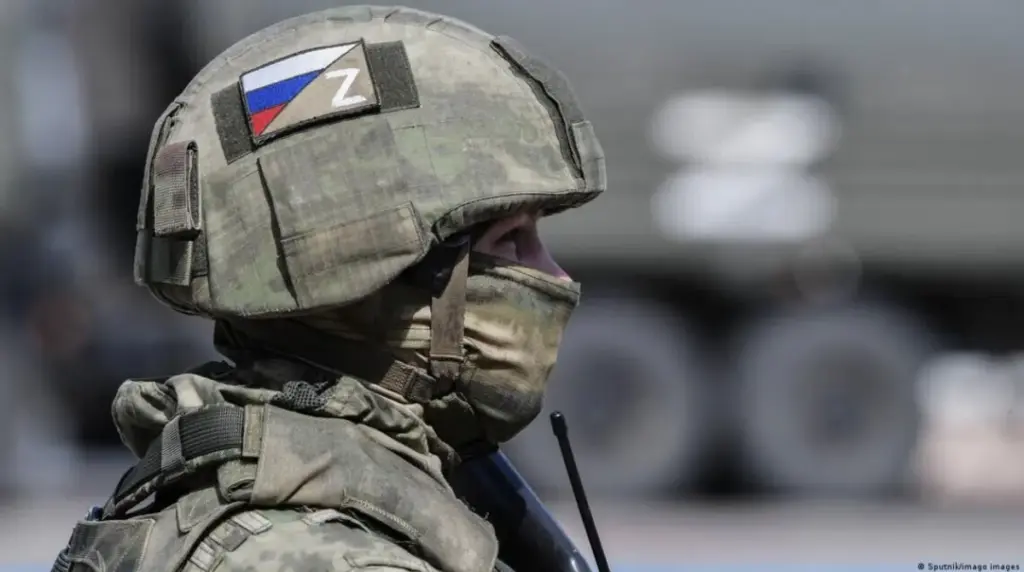
Russian soldier in camouflage wearing a helmet marked with the Russian flag and “Z” symbol.

Kazakhstan, Kyrgyzstan, and Kenya are seeking the return of citizens drawn into Russia’s war, Ukraine’s Foreign Intelligence Service (SZRU) said on 25 October. According to relatives and officials the agency cites, many of the men had gone to Russia for work, only to be tricked or forced into its army.

Russia fills its ranks partly with foreigners. In April, Ukraine’s military intelligence (HUR) said the Russian Defense Ministry plans to enlist at least 18,500 of them in 2026. Foreign recruits let the Kremlin put off hard choices about another mobilization at home, the Atlantic Council argued in May. Home governments have pushed back before, among them Ghana in August. The new statements show the limit of that pushback. Once a man is serving in Russia’s army, his government has to ask Russia to let him go.

Kyrgyz minister: contracts are forced in enlistment offices and jails

Kyrgyz Foreign Minister Jeenbek Kulubaev addressed the problem at a parliamentary committee on 13 October, answering lawmakers’ questions. He said Kyrgyz citizens in Russia are forced to sign contracts at military enlistment offices or in pretrial detention centers. If warned in time, diplomats try to stop the men from reaching the front.

Kazakhstan is compiling a list for Moscow

Kazakhstan is negotiating with Russia over citizens in the combat zone. Its Foreign Ministry said on 7 October that it was checking each hotline request. Once the checks are complete, the ministry said, it will send the compiled list to the Russian side.

SZRU separately cited unnamed relatives of one Kazakh worker. After he complained about working conditions, they said, he and other men were taken to an enlistment office and forced to sign contracts.

Kenya wants five men held by Ukraine treated as possible trafficking victims

Prime Cabinet Secretary Musalia Mudavadi, who also handles foreign affairs, gave lawmakers a count on 8 October. “The Ministry has records of 354 Kenyan nationals involved in the Russian-Ukraine crisis,” he told them. Families who petitioned Parliament dispute that number and put their own count at 841, Kenya’s The Star reported.

extends russian-oil waiver second time — one bessent had told allies wouldn't make · post kenyan mercenary clinton mogesa 29 eliminated ukraine while fighting russia 3b0f96ae -7509-4691-ac12-dbd809d8c68d has extended its
Explore further

Kenya says Russia agreed to stop recruiting its citizens – families of the missing are still waiting

Ukraine holds five Kenyans captured while fighting for Russia, and Nairobi has already appealed to Kyiv over them. The government told Parliament it wants them treated as people who may have been trafficked abroad.

For Kenyans still serving in Russia’s army, the way out runs through Russian officers. Moscow informed Nairobi that unit commanders will consider requests to end military contracts case by case, the same government response said.

  •  

The money starts as bags of cash in a Moscow market and ends up clean in China, leaked files show

money starts bags cash moscow market ends up clean china leaked files show · post branch russia’s state defense bank promsvyazbank russian-occupied donetsk ukraine 2023 banko_psb_en_placo_bakuaj_komisaroj_(donecko) news ukrainian reports

Russia's state-backed payment firm A7 took in at least 283 tons of cash rubles, worth more than $14 billion, between November 2024 and July 2025, and turned much of it into payments to China that hide where the money came from, the International Consortium of Investigative Journalists (ICIJ) and Russian investigative outlet Proekt reported on 21 October, citing leaked internal records.

Cut off from Western banks over its war against Ukraine, Russia now moves money the way drug gangs launder theirs: cash goes in, and clean-looking wire transfers come out abroad. The overlap is literal.

Last year, UK investigators found that a network laundering British drug gangs' cash had bought a Kyrgyz bank that was handling payments for Promsvyazbank, Russia's state defense bank. That same bank co-owns A7, which "is also likely to facilitate cash-based money laundering," anti-money-laundering expert George Voloshin told ICIJ. On 1 October, the US Treasury named A7 a "significant transnational criminal organization." Most of the market cash pays Chinese suppliers, and China supplies about 90% of the high-priority Western-restricted items Russia imports for its weapons. Drone makers working for the Russian army are among A7's clients, Proekt found in April.

From market stalls to a defense bank vault

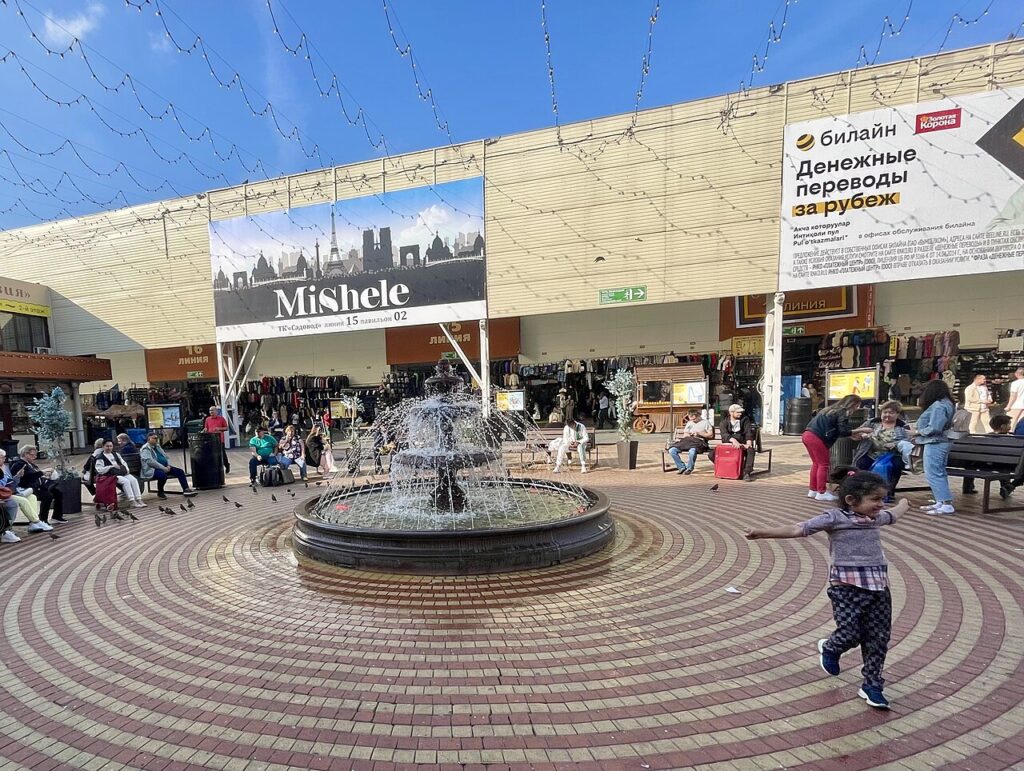
Much of the cash came from Moscow's giant Sadovod market, where broker teams known as "departments" collect bags of rubles from traders, the records show. Vans take the numbered bags to an A7 office, where about 50 cashiers count the money before it is trucked to Promsvyazbank. The bank vaults it and credits A7. At its peak, A7 handled at least 58 tons of cash a month.

Russia's central bank has flagged the problem itself. Money of unknown origin comes "primarily" from Moscow's wholesale and retail markets and from illegal crypto exchanges, a senior Central Bank official said in September, as quoted by ICIJ.

Sadovod market in Moscow, where broker teams later collected cash for the A7 payment firm, Russia, 19 September 2023
Sadovod market in Moscow, where broker teams later collected cash for the A7 payment firm, Russia, 19 September 2023. Photo: Nikita Andreev/Wikimedia Commons

Clean money for Chinese factories

A7 then orders shell companies outside Russia to pay its clients' suppliers, mostly Chinese exporters. The money moves through Kyrgyzstan, largely via the state-owned Trading Company of the Kyrgyz Republic, and the wire transfers carry no trace of cash or of Russia. The records list accounts at ICBC, Bank of China, Agricultural Bank of China, and China Construction Bank. One $287,000 transfer went through Standard Chartered's Hong Kong branch with "Sadovod" recorded as the client.

Chinese banks began refusing Russia-linked payments in December 2023 under the threat of US secondary sanctions. Stripping the funds of their origin makes them easier for Chinese banks to accept, illicit-finance expert Zachary Tvarozna told ICIJ. "The only company that sees everything is A7 itself," Voloshin said.

A7, Promsvyazbank, the Chinese banks, and Kyrgyzstan's economy ministry did not answer ICIJ's questions. A7 has publicly rejected the US accusations, saying it runs "a modern, multi-tiered compliance system."

germany holds up european union's latest russia sanctions package illustrative businesscensornet baltics poland block new
Explore further

US Treasury cracks down on Russia-China-Kyrgyzstan payment network, expands sanctions

Sanctioned, but still moving

A7 launched in late 2024, co-owned by Promsvyazbank and led by Moldovan oligarch Ilan Shor, a "sanctioned and convicted criminal fraudster," according to the US Treasury. Ukraine sanctioned its network in February, and the UK followed in May. A7 claimed to have moved more than 7.5 trillion rubles, about 13% of Russia's 2025 foreign trade transactions, and its network also helped Iran sell oil and buy weapons, the Treasury said.

Sanctions did hit A7's crypto side. Daily volume of its ruble token A7A5 fell 96% from its peak by June 2026, blockchain analytics firm Elliptic found. The cash channel is harder to touch: Western banks can see where A7's money lands, but not where it starts.

  •  

'We're Never Going To Be The Major Player': Former Diplomat's Reality Check On US Ambitions In Central Asia

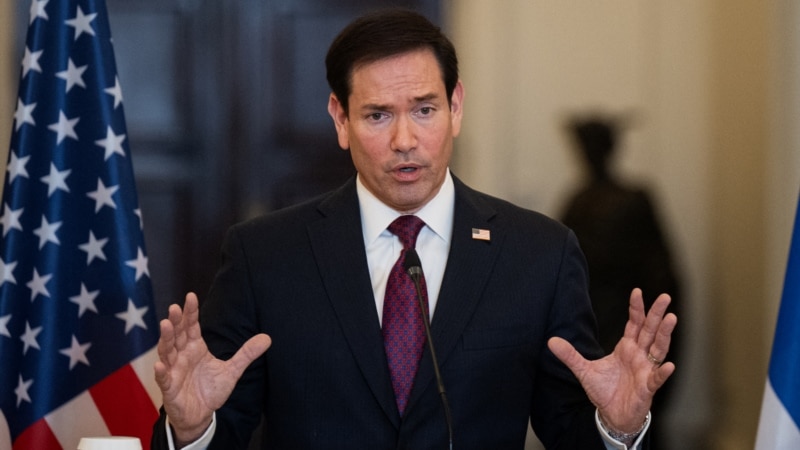
Marco Rubio has brought nearly 300 American business representatives to Uzbekistan for a meeting with representatives of the five states of Central Asia. But Daniel N. Rosenblum, a former US ambassador to Uzbekistan and Kazakhstan, cautions that investment faces major obstacles.

  •  

Rubio Heads To Central Asia As US Seeks Bigger Role In Region Dominated By Russia, China

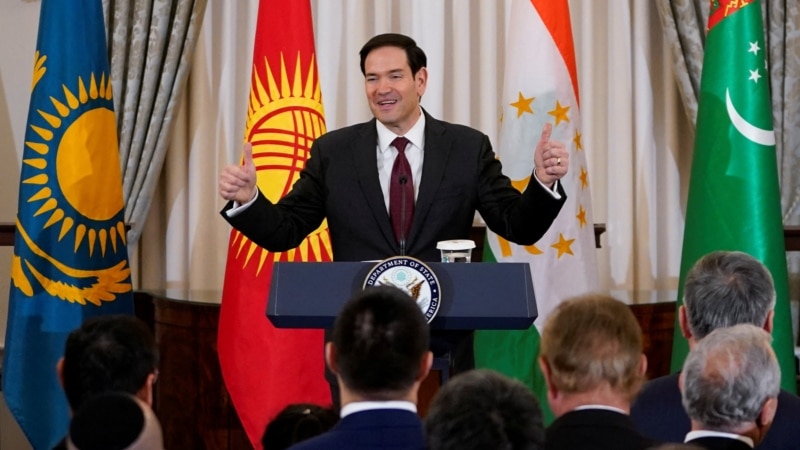
US Secretary of State Marco Rubio heads to Uzbekistan this weekend for talks with five Central Asian countries as the Trump administration seeks to strengthen commercial ties and expand Washington's strategic presence in the region.

  •  

India’s Central Asia missile sales spark a new Great Game

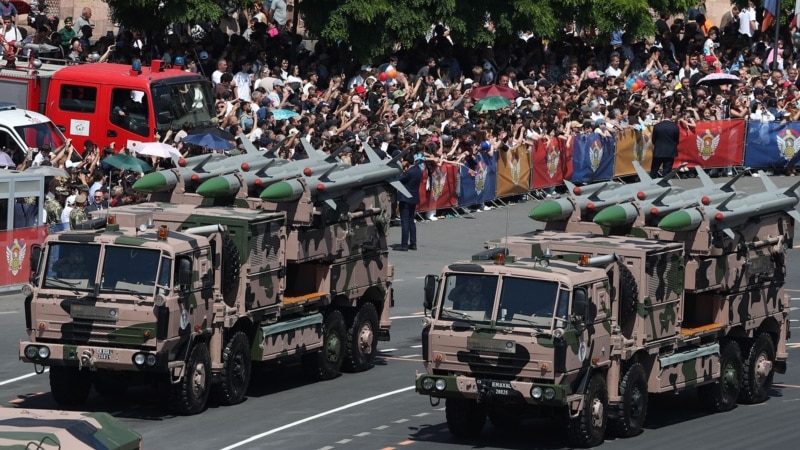
A flurry of landmark arms deals is reshaping Central Asia’s strategic landscape, as regional states leverage alternative defense suppliers to assert their sovereignty amid Russia’s waning dominance and an intensifying Sino-Indian rivalry. Indian Defense Secretary Rajesh Kumar Singh confirmed the export of India’s domestically developed Akash surface-to-air missile system to Tajikistan and Turkmenistan, multiple media […]

The post India’s Central Asia missile sales spark a new Great Game appeared first on Asia Times.

  •  

Kyrgyz Activist Gets 2 Years For Criticizing Growing Chinese Presence

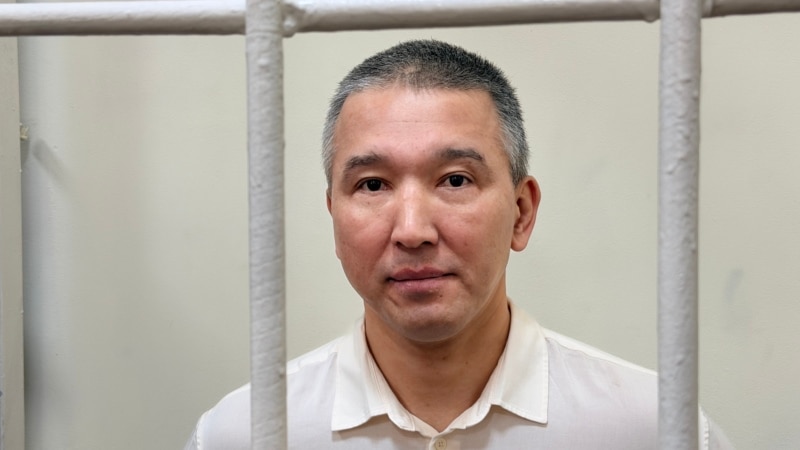
The Lenin District Court in Bishkek found activist and politician Mavlyan Askarbekov guilty and sentenced to two years in prison on offenses related to a law on incitement of racial, ethnic, national, religious, or interregional hatred, a verdict he called "absurd."

  •  
❌