❌

Reading view

Ukraine and the Netherlands team up on missile defense as Europe plans its own missile killer, free of US approval
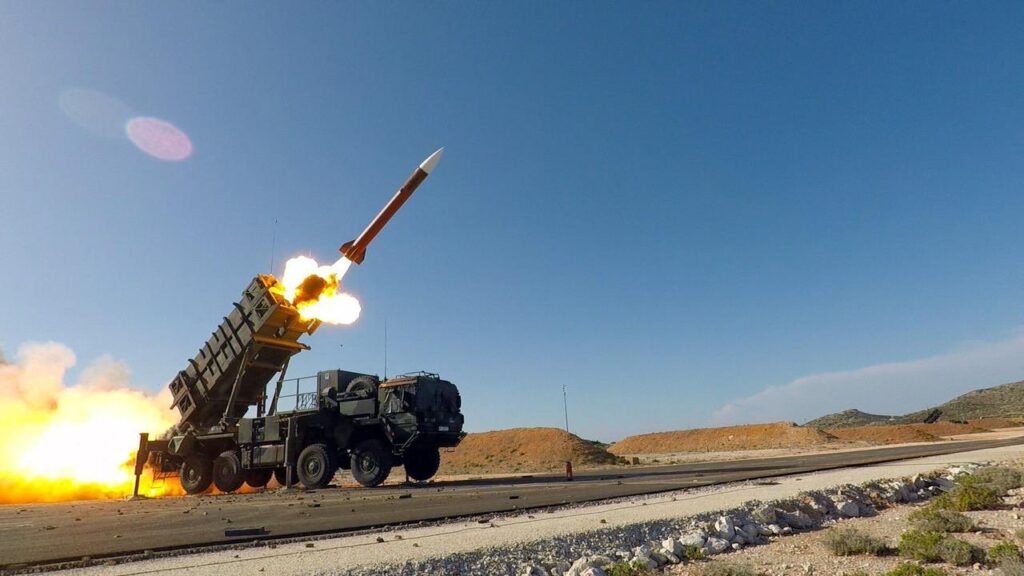
Patriot air defense system

  • Ukraine and the Netherlands are working together on a new missile defense project
  • "Bliksem" may be an effort to develop a ballistic missile interceptor that can hit incoming missiles above the atmosphere
  • It's a rare and valuable capability, and one Ukraine needs—but it won't come quickly or cheaply

Ukraine and the Netherlands will collaborate on an air-defense project called "Bliksem," Ukrainian President Volodymyr Zelenskyy announced during his visit to the Netherlands on Wednesday, 28 October.

Zelenskyy didn't offer a lot of details. But if the Bliksem initiative he referenced on Wednesday is the same Bliksem initiative that a consortium of European companies launched this summer, then Ukraine could be in line to acquire one of the world's most powerful missile interceptors.

But not quickly. Nor cheaply.

ukraine advertise its new ballistic missiles until factories can mass-produce ex-security officer says · post test launch fp-7 missile prototype fire point news ukrainian reports
Explore further

Ukraine fired its first FP-7 ballistic missile in combat. Its maker says next version will do what Ukraine needed since 2022

The pan-European Bliksem project aims to develop a so-called "exo-atmospheric" interceptor. That is, a missile that can fly higher than 100 km—above Earth's atmosphere—in order to hit the most dangerous ballistic missiles during their mid-course phase of flight, before they tip back into the atmosphere and streak down toward their targets.

On Wednesday, Zelenskyy and Dutch Prime Minister Rob Jetten met with the heads of Dutch and Ukrainian companies in the defense, energy, and software sectors, Zelenskyy said. "We defined key priorities and decisions that can strengthen our practical economic cooperation: defense production, joint technology and energy projects, industrial development, and, very importantly, satellite technologies and air defense," Zelenskyy said.

"Our teams have been tasked with working out a specific air defense project, Bliksem," Zelenskyy continued. "We have already started this work."

If the Dutch-Ukrainian Bliksem is the same as the wider European Bliksem, then it's an effort to develop a missile in the class of the American Terminal High Altitude Area Defense (THAAD) and Standard Missile-3 (SM-3), as well as the US-Israeli Arrow 3. All three are exo-atmospheric.

Cued by radars and satellites and boosted 100 km into the sky, they punch right through the hazy Kármán line that delineates the border between the atmosphere and space.

Cold of space
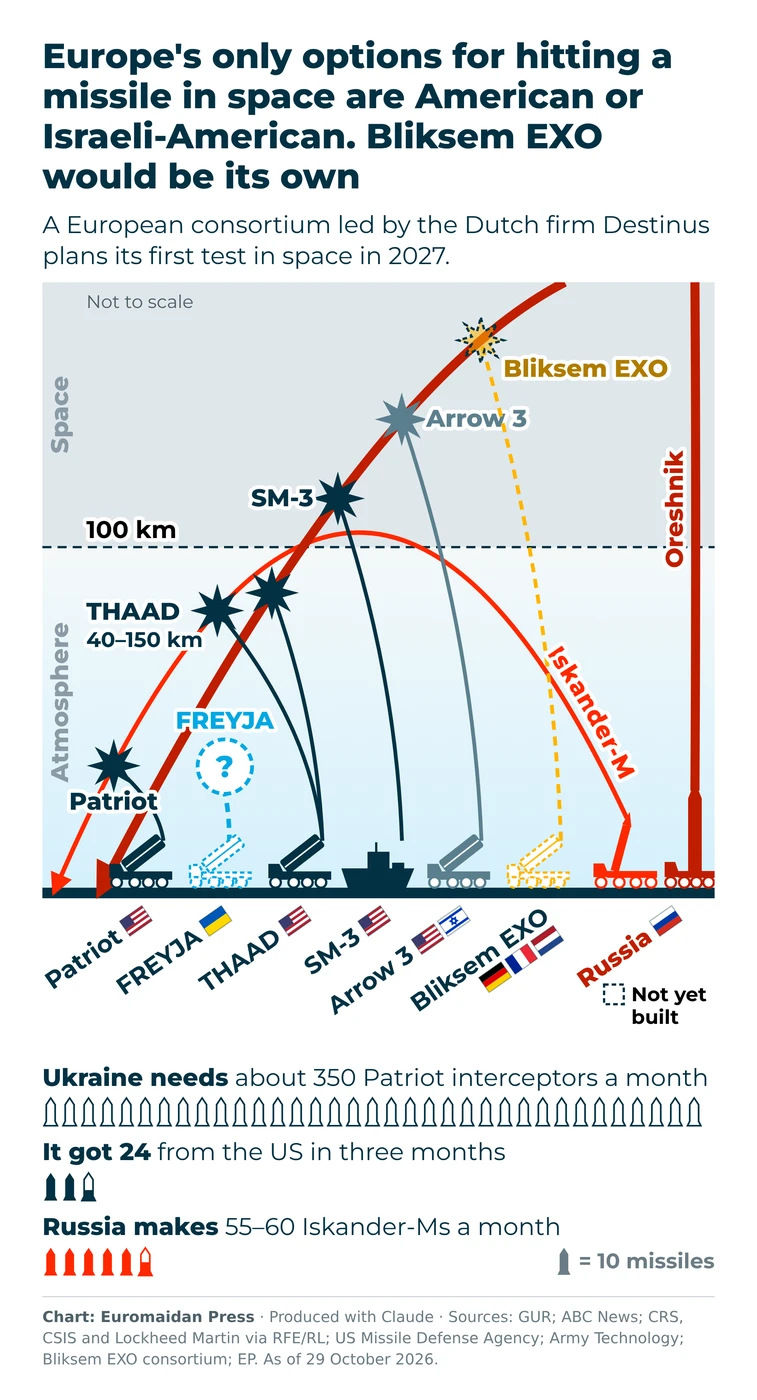
Freyja Bliksem EXO Europe air defense Thaad Sm-3 Arrow3 patriot iskander oreshnik
Chart: Euromaidan Press

Up there in the cold vacuum, the interceptors can see clearly with sensitive infrared seekers—and distinguish incoming ballistic missiles from any decoys the missiles may deploy. Thrusters maneuver the interceptors to directly impact incoming missiles, destroying them with kinetic energy rather than explosive warheads.

While Germany has a few Arrow 3s, most European powers lack exo-atmospheric interceptors. Their only option for shooting down the heaviest incoming ballistic missiles (such as Russia's intermediate-range Oreshnik) is to hit them in the final seconds of flight, when even a destroyed ballistic missile can cause damage by scattering supersonic debris.

To plug that air defense gap, this summer five European companies—Destinus, MBDA, Safran, Airbus, and Thales—signed a letter of intent to form the Bliksem EXO consortium. The goal: to test the interceptor's kill vehicle in space in 2027.

The companies signed in Paris at the first meeting of an anti-ballistic coalition that Ukraine launched with nine European countries, including the Netherlands, with Dutch Prime Minister Rob Jetten present. They said the design would draw on Ukraine's experience against Russian missiles. The lead firm, Destinus, is Dutch. Given Zelenskyy's statement, it's possible Ukrainian firms will join the consortium itself.

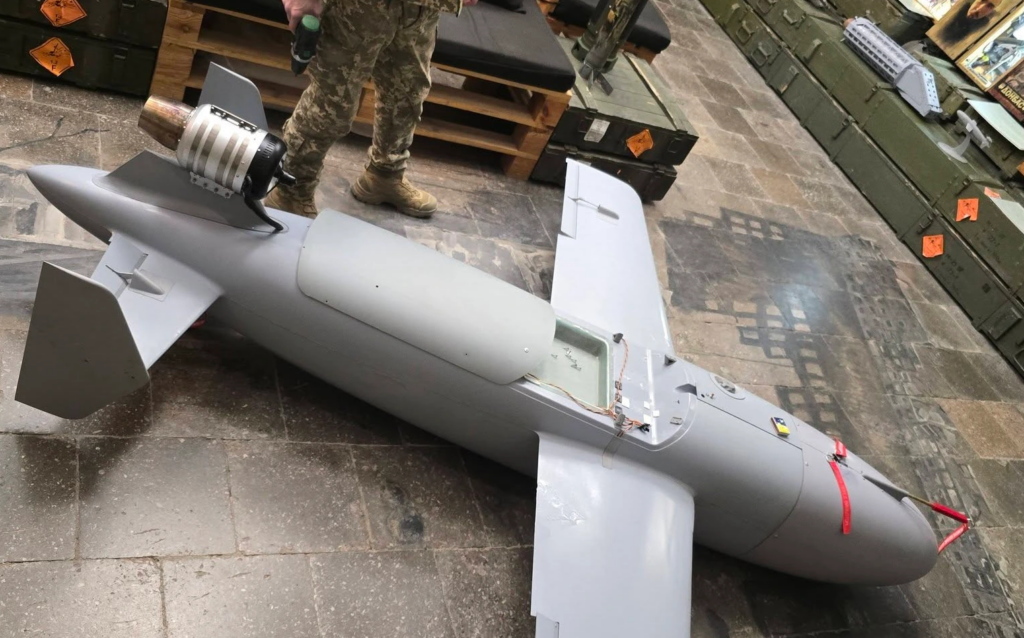
Bars jet-powered drone. Photo: Museum of the Russian-Ukrainian War
Explore further

Ukraine’s answer to Russia’s jet Shaheds: a jet drone named Bars, built to strike Russia and now turned around to hunt them

If the timeline holds and any technology Bliksem EXO develops actually works, the result could be a new interceptor rivaling the THAAD, SM-3, and Arrow 3—and one unbound by American export restrictions. Europe could arm itself for mid-course missile defense. Ukraine could, too, significantly stiffen its missile defenses that are in a state of collapse owing to a deepening shortage of American-made Patriot missile interceptors.

Don't expect Bliksem to bear fruit quickly or cheaply. The THAAD, SM-3, and Arrow 3 interceptors each needed a decade or more to move through development to deployment. And leaving aside their multi-billion-dollar development costs, the missiles are expensive. A single THAAD interceptor costs $12 million. Even the Americans can't afford to stockpile more than a few hundred THAADs at a time.

A Bliksem interceptor could eventually—and at great cost—lend Ukrainian forces a capability they currently lack: an active defense against a big ballistic missile like the Russian Oreshnik.

Ukraine is also building its own anti-ballistic system, FREYJA, with European partners. Zelenskyy wrote on 21 October that officials had found ways to speed it up so it reaches testing by the end of this year.

But neither project will solve a much more urgent problem: how to shoot down the dozens of smaller ballistic missiles Russia has been launching at Ukrainian cities every month. Ukraine got only 24 Patriot interceptors from the US in three months and needs about 350 a month, Zelenskyy told ABC News on 23 October. Meanwhile, Russia produces 55–60 Iskanders a month, according to Ukrainian military intelligence.

To stop the ballistic barrage, Ukraine simply needs more Patriots—and soon.

  •  

This is the fancy new F-16 Ukraine could get. It’s not what its pilots need most.

First flight of an F-16 Block 70 from Lockheed Martin's Greenville factory in 2023.

  • Ukraine's air force has discussed the F-16 Block 70/72 with US manufacturer Lockheed Martin, which then gave President Zelenskyy a model of one
  • The Block 70/72 is smarter and tougher than Ukraine's ex-European F-16 Block 15 Mid Life Updates, but that doesn't mean the newer model is a major priority
  • The Ukrainian air force needs munitions more than it needs new airframes

When Ukrainian President Volodymyr Zelenskyy met a Lockheed Martin team led by Orlando Sanchez Jr., head of its aeronautics division, in Kyiv on 19 October, the talk was of Patriot interceptors and of repairing the Ukrainian air force's small but growing fleet of ex-European F-16 fighters inside the country. Lockheed designed the F-16 and still builds it.

But the Lockheed officials may have had other things on their minds. They gave Zelenskyy a scale model of a new and improved F-16 variant in Ukrainian livery, according to a photo posted by the MilitaryNewsUA account.

In late September, Ukraine's air force commander, Lt. Gen. Anatolii Kryvonozhko, and Lockheed discussed a possible move to newer F-16s. Now we have a clearer idea what those F-16s might look like—and what they might be capable of. The model Lockheed officials gave to Zelenskyy appears to be based on the Block 70/72 version of the classic supersonic fighter that Lockheed manufactures at its factory in Greenville, South Carolina.

❗A model of the F-16 Block 70/72 fighter that Lockheed Martin representatives gifted to Volodymyr Zelenskyy during their personal meeting yesterday. pic.twitter.com/tprj5yuj2z

— 🪖MilitaryNewsUA🇺🇦 (@front_ukrainian) October 20, 2026

It's a world-class jet. But a pricey batch of factory-fresh Block 70/72s isn't actually at the top of the Ukrainian air force's wish list. Not as long as the air force's existing warplanes lack munitions.

The Block 70/72 boasts a better radar, more fuel capacity, and a tougher airframe compared to older F-16 models, which have been flying since the late 1970s. The F-16 is still one of the most numerous fighter types in US Air Force service. Surplus 1980s-vintage F-16s from Denmark and the Netherlands make up the bulk of the Ukrainian air force's front-line fleet. Norway's six are still being refurbished, and Belgium's are coming.

Whether Ukraine ever gets new F-16s is anyone's guess. Kyiv would need to pay around $100 million per copy, or find an ally to finance the purchase. Either could be a heavy lift. And to be sure, Ukraine has options as it rebuilds its battered air force. Sweden is donating 16 older Saab Gripens, the first due early next year, and Kyiv plans to buy 20 newer ones. Kyiv has negotiated to buy 16 Dassault Rafales from France, which may not arrive until 2028. Belgium has promised as many as 53 older F-16s, the last of them perhaps not until 2029.

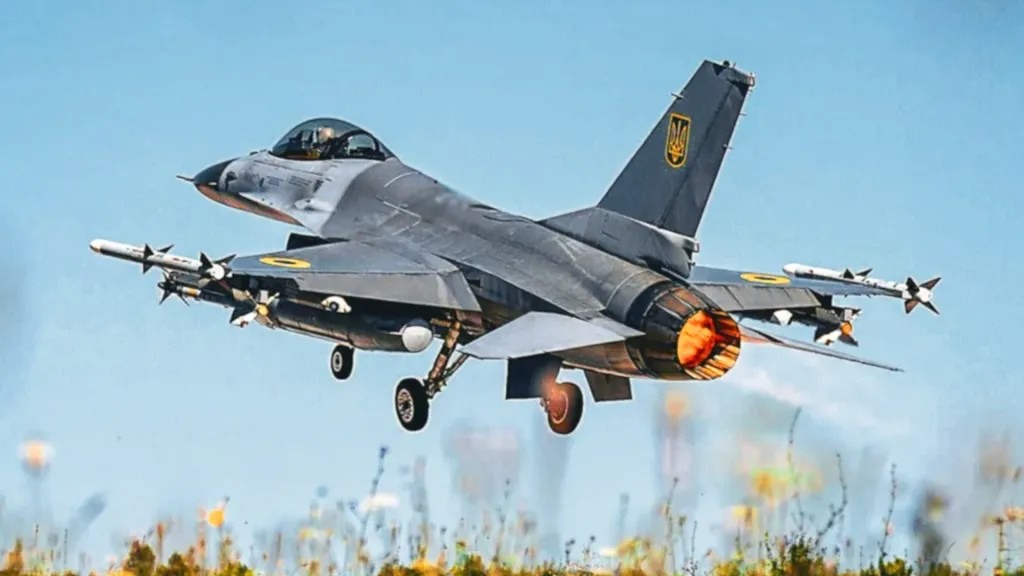
Ukrainian F-16s.
Ukrainian F-16s. Ukrainian air force photo.

Welcome jets

But new Block 70/72 F-16s would be welcome. The Block 70/72 builds on what already makes the F-16 great: its agility, flexibility, reliability, excellent electronic warfare systems, and compatibility with a wide array of munitions.

Where the Block 15 Mid Life Update F-16s Ukraine currently flies have the older analog AN/APG-66(V2) radar, the Block 70/72 has a digital APG-83 active electronically scanned array radar. It can also carry overwing conformal fuel tanks for extra range.

Perhaps most exciting for the Ukrainian air force, a newly made Block 70/72 is good for 12,000 hours of flight: enough for about 30 years at 400 flying hours a year. An aging Block 15 has a structural life of about 8,000 hours, and Ukraine's jets fly hard. Zelenskyy has said about half of them spend long stretches abroad for repairs, many at Sabena Aerospace Engineering in Belgium, a process that can take months.

Ukraine F-16 Pilots Rationing Missiles as Russian Attacks Intensify | NEWSMAX2

Ukraine’s American-made F-16 fighter jets are defending the skies against Russian drones and cruise missiles — but a critical shortage of U.S.-made missiles is putting that mission at risk.

In an… pic.twitter.com/WQgbasdks5

— Ukrainian Air Force (@KpsZSU) September 16, 2026

Newer F-16s require less maintenance. They can fly and fight more often. In that sense, 50 Block 70/72s are worth more than 50 Block 15s.

But the availability of airframes isn't the biggest problem in the 107th Aviation Wing, the Ukrainian air force's sole F-16 unit. The wing is desperately low on air-to-air missiles. Its pilots often resort to gunning down Russian drones and cruise missiles with the F-16's built-in 20-mm cannon—a risky tactic given how close a fighter must get to its target to make use of its gun.

While a few billion dollars' worth of fresh F-16s could keep the 107th Aviation Wing in fighting shape for decades to come, fresh airframes aren't actually the most urgent priority. Given a choice between getting new F-16s or getting substantial supplies of missiles for its old F-16s, the wing would surely opt for the latter.

take off formation fly low navigate terrain—ukraine's f-16 trainees finished uk course russia helped design · post ukraine's air force carrying aim-120c aim-9 missiles fuel tanks terma pylons self-defense systems
Explore further

Belgium’s 10 F-16s bring Ukraine’s promised fleet to about 100 jets. Fewer than 40 are flying, as Russia’s jet drones run them ragged

  •  

One year of Ukrainian arms exports, and industry has questions: how much army gained, where Berlin office is, who joins joint ventures

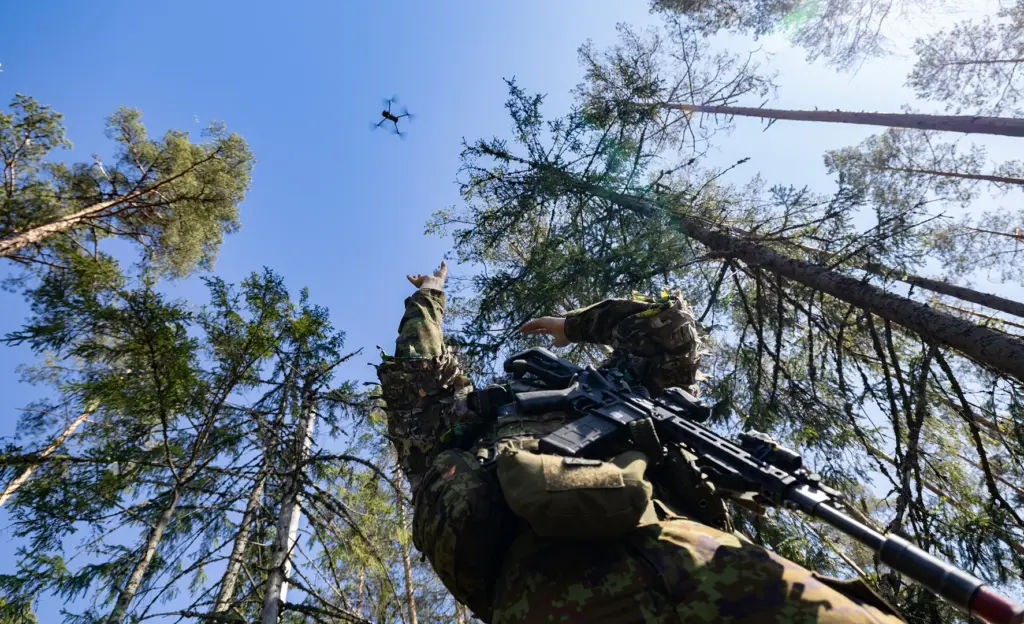
Estonian and Ukrainian soldiers fly drones together during Exercise Hedgehog 2025 in Estonia, where Ukrainian operators were credited with knocking out two battalions in a simulated engagement. Photo: vbl/OR-7 Ardi Hallismaa/ERR

Ukraine now builds far more weapons than it can afford to buy. A year ago, it promised to sell the surplus abroad and turn the proceeds back into its own army. However, 12 months later, that promise has barely materialized: a state fee of up to 30% is pricing Ukrainian arms out of foreign markets, and no one can say how much the army has actually gained, said Ihor Fedirko, executive director of the Ukrainian Council of Armorers.

President Volodymyr Zelenskyy announced the resumption of controlled weapons exports in October 2025, resting it on four promises: 1) sell what Ukraine makes beyond its own needs, 2) channel part of the proceeds into a special fund for the army, 3) open export offices in Europe and the US, and 4) establish joint ventures abroad.

The surplus is real: Ukraine's defense output is projected to reach $55 billion in 2026, far beyond what the state can finance. A year on, Fedirko checked each promise in turn.

1) Export of surpluses: rules that strangle businesses

    On 1 July 2026, the government approved rules for controlled arms exports. They shortened the maximum application review period from 90 to 30 days, but also introduced an export fee: 20% for finished products and technologies, and 30% for components. For finished products exported under the special procedure, the contract value must be at least $334,000.

      In September, the Ukrainian Council of Armorers, together with other associations, proposed a zero rate, no advance collection of the fee, refunds for deals that fall through, and simplified test shipments. The industry was promised that its amendments would be taken into account and that the resolution would be rewritten.

      Even in early October, however, the rules still needed work. According to Fedirko, the new mechanism has effectively not started working. Whether it can bring in additional funds for defense depends on how acceptable the export terms are to manufacturers.

      Fedirko says, though, that judging by current decisions, the state intends to keep the export fee.

      “The industry is ready to discuss its contribution to defense financing. But the rate must be economically justified,” he says.

      2) Procurement for the Ukrainian military: balance is only being established

      He adds that the Ukrainian Council of Armorers intends to push for a rate significantly lower than 20%, one that would let companies fulfill contracts and invest in production.

      With such high rates, Fedirko says, the competitiveness of Ukrainian weapons on foreign markets is in question, as is the ability to send even small test batches to potential buyers.

      “The fundamental requirement is post-payment: after the contract has actually been fulfilled and the manufacturer has been paid. A company should not pay the state in advance a share of income it has not yet received,” he says.

      He added that, given all this, the real export figures remain unclear, as does how much exports have actually brought the military.

      “The military and manufacturers must feel the benefit of exports. I sincerely hope that next year will bring much better results,” he says.

      In addition, on 12 October, the Ukrainian Parliament passed bill No. 15400 in the first reading. It provides for crediting the export fee to a special fund directed to the Ministry of Defense: 50% for the procurement, modernization, and repair of weapons and equipment, and 50% for the pay of Armed Forces personnel.

      The bill has not yet been adopted, but Fedirko says he expects “final adoption and launch of the mechanism.”

      3) Export offices: offices in Germany and Denmark

      On 3 November, the Ukrainian government named the first cities for export offices: Berlin and Copenhagen. On 15 December, it again spoke of preparing an office in Berlin. In reality, Fedirko says he does not know the office’s status, and it likewise remains unclear how companies can apply to it and how many contracts it has helped close.

      4) Joint ventures abroad: There are concrete results in this area

      According to Fedirko, eight joint ventures have been created, five of which are already supplying products to Ukraine. He stresses that this is the result of work by Ukrainian companies, foreign partners and the state, and that it deserves recognition.

      As early as February 2026, the authorities spoke of plans to create ten joint ventures in Europe within a year. At the same time, they announced Quantum Frontline Industries in Germany, with a planned annual capacity of 10,000 drones for Kyiv.

      Beyond the number of ventures and deliveries, however, it is important to understand how other manufacturers can join the Build with Ukraine program.

      “Who accepts applications, by what criteria are decisions made, and what support does a company receive?” Fedirko asks.

      In other words, joint ventures are already delivering results, but the rules of participation and the state support mechanism must be clear to companies that want to develop production abroad.

      •  

      Ukraine’s answer to Russia’s jet Shaheds: a jet drone named Bars, built to strike Russia and now turned around to hunt them

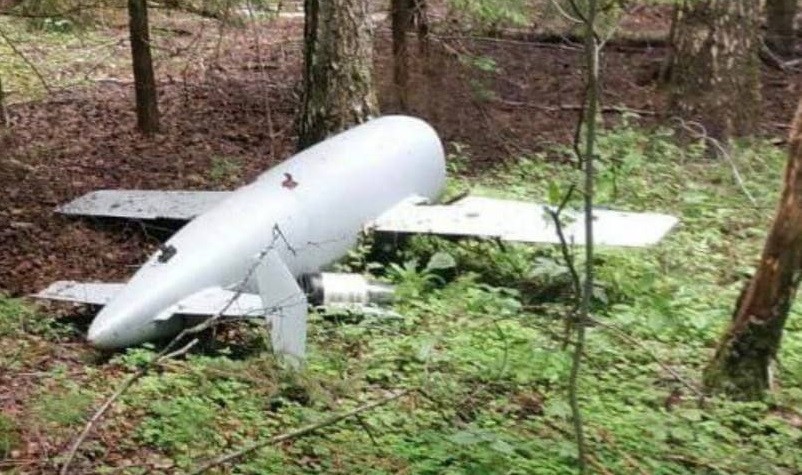
      Bars jet-powered drone. Photo: Museum of the Russian-Ukrainian War

      • One of Ukraine's best and fastest interceptor drones is an air-to-air version of the Bars one-way attack drone
      • Bars are some of the best defenses against Russia's fastest Geran-4 and Geran-5 drones
      • But there may be too few small jet engines to rapidly scale up Bars production

      Russia's latest jet-propelled Geran-4 and Geran-5 one-way attack drones fly at 500 km/h or more, nearly three times as fast as an older, propeller-driven Geran-2.

      That's too fast for many of Ukraine's air defenses. In particular, the inexpensive interceptor drones that Ukrainian forces deploy by the thousand.

      Russia launched more than 2,700 jet Gerans at Ukraine in September, and Ukraine is shooting down only about 55% of them, according to Ukrainian President Volodymyr Zelenskyy. The speed disparity is a big part of the problem.

      Ukrainian forces are scrambling for new defenses against the speedy Gerans. Among the best is actually a Ukrainian take on the Geran-4 and Geran-5: a fast, jet-propelled one-way attack drone that the Ukrainians have modified for air-to-air use.

      Against jet drones, the air-to-air Bars have a hit rate of around 30%, Zelensky said during a joint press conference with German Chancellor Friedrich Merz in Kyiv on 4 October. "The Bars have shown positive results," Zelensky said. "They currently have the highest percentage. Others are also catching up."

      Is this the Bars missile?
      Explore further

      Did Ukraine just unleash its first Bars cruise missiles? A 500 km strike deep inside Russia suggests it

      In July, Ukraine and Germany agreed to jointly produce Bars, with Germany financing the first phase. Ukraine has reportedly been launching Bars at targets on the ground since at least the summer of 2025. But it was only recently that clear photos and videos of the drones have circulated.

      Over the weekend, Ukraine’s 1021st Anti-Aircraft Missile and Artillery Brigade released footage of one jet drone hunting another. Observers identified the interceptor as a Bars and its target as a Geran-5. After launching from an elevated ramp with help from a rocket booster, the drone's operator—seeing what the drone saw through a front-facing infrared camera—steered the drone toward the Russian drone, possibly destroying it.

      Exactly how the operator controlled the Bars—whether by satellite or mesh radio or some other command and control system—is unclear. Equally unclear: what kind of warhead a Bars would employ in the air-to-air role. Many smaller interceptor drones lack warheads. Instead, they simply slam directly into their targets, wrecking them in the collision.

      Ukraine’s 1021st Anti-Aircraft Missile and Artillery Brigade has released the first footage of the Ukrainian Bars jet-powered drone in its interceptor configuration engaging a Russian Geran-5 drone. https://t.co/FRBKZQR9lF pic.twitter.com/njPJWXsDwo

      — Special Kherson Cat 🐈🇺🇦 (@bayraktar_1love) October 17, 2026

      Mystery drone

      Bars isn't small. It likely packs an explosive warhead. Potentially one that the operator can remotely trigger when the interceptor passes near its target.

      Bars is adaptable. Its maker has reworked it from a 22-kg warhead and a 700-km range to a 60-kg warhead and a stated range of more than 1,000 km, and a heavier variant can carry a 105-kg warhead.

      In the air-to-air interceptor role, long range is terribly important but speed is everything. There's an obvious way for the Ukrainians to boost the Bars' speed from its reported 700 km/h top speed to potentially even faster. They could shrink the drone's warhead and its fuel load, making it lighter in order to make it faster.

      That may explain how a Bars can chase down a Geran-5 even as the Russians, by one Ukrainian analyst's estimate, try to push the Geran-5 toward 700 km/h or more.

      A Korkut air defense vehicle.
      Explore further

      Turkey’s Korkut guns now shoot down Russian drones over Ukraine. Almost half of the jet-powered Shaheds still get through

      Cost is important, too. Russia churns out Gerans for an estimated $100,000 or so per drone. The cheaper the drone, the more copies the Russians can fling at Ukrainian cities. If it takes three or more interceptor drones to take down each of those 2,700 jet Gerans, Ukraine may need to deploy 8,000 to 10,000 interceptors a month.

      Ukraine already builds more than 2,000 Bars a month, its maker says, but mostly in strike versions. How many go to air defense, and how much each costs, isn't public.

      The supply of small jet engines could be a constraint. “Engines are a key element; we really import them in large quantities,” Zelensky said in an interview with Financial Times. "There are also domestically produced engines, but there are not enough of them.” A Ukrainian-made engine for Bars passed final tests in September.

      •  

      Belgium’s 10 F-16s bring Ukraine’s promised fleet to about 100 jets. Fewer than 40 are flying, as Russia’s jet drones run them ragged

      take off formation fly low navigate terrain—ukraine's f-16 trainees finished uk course russia helped design · post ukraine's air force carrying aim-120c aim-9 missiles fuel tanks terma pylons self-defense systems

      • Belgium is speeding up the delivery of surplus Lockheed Martin F-16 fighters to Ukraine
      • The 53 or so ex-Belgian jets are welcome, but the initial delivery for 2026 is for just 10 airframes, not all of which will be flyable
      • The Ukrainian air force's sole F-16 wing is fighting hard with too few aircraft

      Belgium has announced it will accelerate the delivery of surplus Lockheed Martin F-16 fighters to Ukraine. Instead of delivering three flyable F-16s before the end of the year, Brussels will ship 10.

      It's unclear how many will be flyable. Previously, Belgian officials explained the first seven secondhand F-16s would include just three airworthy examples. The other four would be broken down for spare parts.

      It's good news for Ukraine, but hardly cause for nationwide celebration. The handful of flyable F-16s that should arrive in the coming two months could make good recent F-16 losses. But those shipping-soon Belgian F-16s won't actually grow Ukraine's F-16 fleet by much, if at all.

      The dozens of supersonic F-16s in action in Ukraine fly often and fight hard. They shoot down Russian drones and cruise missiles, tangle with Russian warplanes, and lob precision glide bombs at Russian forces on the ground. Russia launched about 2,000 jet-powered drones at Ukraine in September, up from some 350 in June, and F-16s are among the few weapons fast enough to catch them, the Wall Street Journal's editorial board noted. Every 300 flying hours, each jet must go abroad for a lengthy inspection.

      Netherlands delivers final F-16s to Ukraine, completing 24-jet donation program.
      Explore further

      Ukraine loses another F-16 to onboard emergency

      The main constraint on the pace of F-16 sorties, besides maintenance demands and the availability of trained pilots, is munitions: running low or out of air-to-air missiles and glide bombs, the F-16s routinely aim their 20-mm guns at Russian targets. But even 20-mm ammunition sometimes runs low.

      The busy F-16s and their equally busy pilots need reinforcement. But reinforcements are slow coming. Belgium is only slightly accelerating its F-16 shipments amid reports it will eventually give Ukraine all 53 F-16s it's gradually retiring as new Lockheed Martin F-35 stealth fighters arrive to re-equip the Belgian air force.

      Further complicating the picture, Norway's six F-16s, promised in 2023, were still being refurbished in Belgium this spring. Some arrived there in pieces.

      Yes, Ukraine got 24 fight-ready F-16s from the Netherlands and most of the 19 Denmark promised. But it's lost five of those jets since 2024. And others are so worn out from relentless flying that they're badly in need of maintenance. The Belgian firm Sabena, which services Ukrainian F-16s, has struggled to keep up, and President Volodymyr Zelenskyy has said about half of the jets spend long stretches abroad for repairs. That slows the return of repaired planes and further squeezes the front-line force.

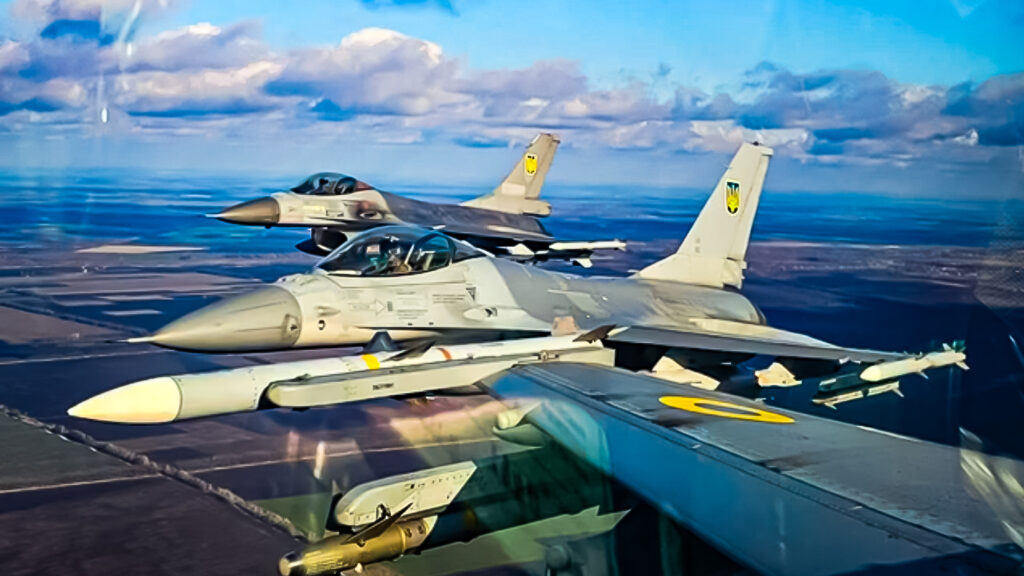
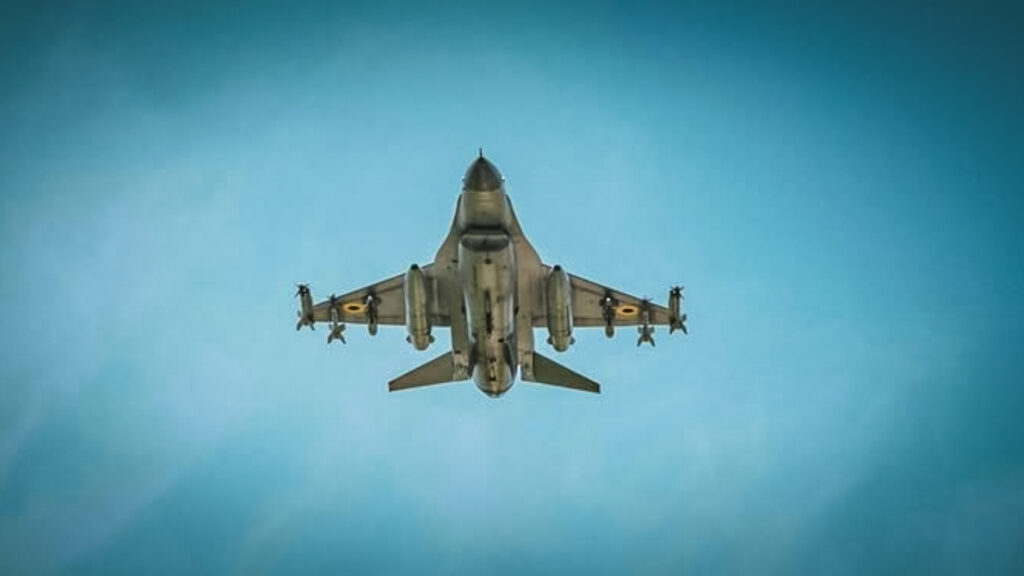
      A Ukrainian F-16.
      A Ukrainian F-16. Ukrainian air force photo.

      One wing, too few jets

      DonorF-16s promisedReached UkraineStatus
      Netherlands2424Complete
      Denmark19At least 12Further deliveries due
      Norway60Being refurbished in Belgium
      Belgium53010 by end of 2026, the last in 2029
      TotalAbout 100At least 36, five since lostFewer than 40 in service
      Sources: Militarnyi, The Aviationist, Airdatanews, Euromaidan Press.

      In short, it's possible the Ukrainian air force's 107th Aviation Wing, its sole F-16 unit, has fewer than 40 ready-to-fight F-16s. Those 53 Belgian F-16s will help grow the wing, but piecemeal. Ukraine should expect a handful of operational jets from Belgium this year. Under a schedule from May, the last 27, half the total, may not arrive until 2029.

      To be clear, additional F-16s support the 107th Aviation Wing. The Netherlands sold 18 of its old F-16s to Romania for a token price in order to equip a training squadron, funded by a consortium of Ukraine's allies, that feeds trained pilots to the 107th Aviation Wing. But these 18 jets aren't available for front-line use. They don't even legally belong to Ukraine.

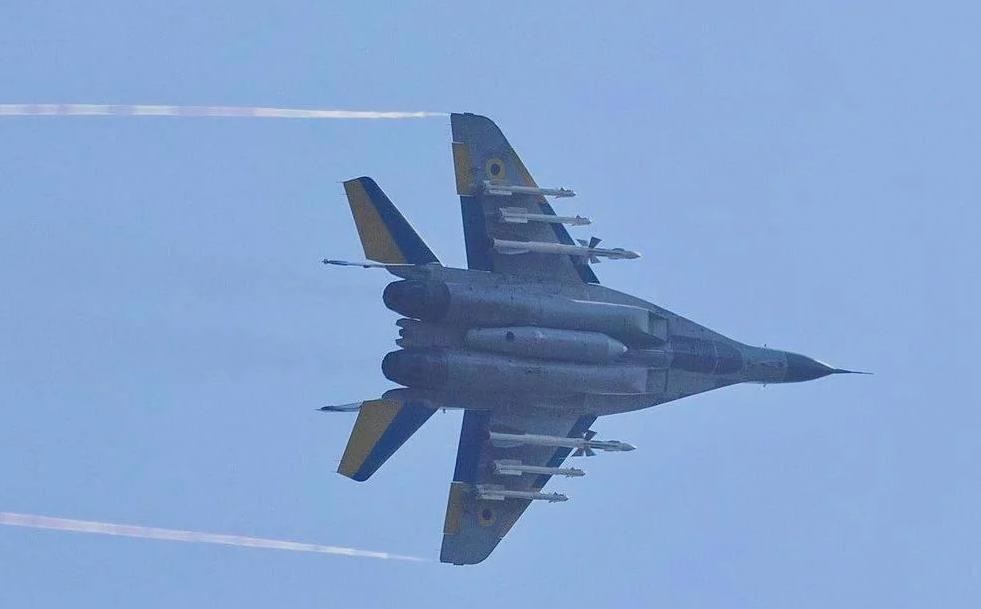
      MiG-29 with R-27s and R-73s.
      Explore further

      Ukraine is running short of its best missiles for hunting Russia’s jet drones. Now MiG-29s are firing 1970s weapons

      The delays in supplies of combat-ready F-16s matter because the Ukrainian air force is under stress. Its last few dozen ex-Soviet warplanes, including Mikoyan MiG-29 and Sukhoi Su-27 fighters, are even older and wearier than the ex-European F-16s are. And they've suffered staggering losses in the air and on the ground in nearly 56 months of hard fighting in the wider war.

      The air force does have a few ex-French Dassault Mirage 2000s that are at least as capable as the F-16s, but France has donated only a handful of the supersonic jets—and one has crashed. Any further supplies of Mirage 2000s could be complicated by the French presidential election in April 2027. The leading far-right and far-left parties are both friendly toward Russia and hostile to Ukraine.

      Some relief is coming, although not quickly. Sweden has pledged 16 surplus JAS-39C/D Gripen fighters to the Ukrainian war effort; the first of these could arrive early next year. Later on, Ukraine also plans to buy 20 newer JAS-39E/Fs. Kyiv has also negotiated to purchase 16 new Rafale fighters from Paris, but the soonest these could arrive is 2028.

      For now, F-16s are the main solution to Ukraine's air defense problems. Kyiv surely wishes it had more of them, sooner.

      •  
      ❌