The Cyprus Animal Party has urged the education ministry to promote healthier food in schools and reconsider events such as Tsiknopempti, which are associated with meat consumption.
In a statement marking World Vegan Day on November 1, the party said schools should practise the healthy eating habits they teach pupils, rather than promote excessive meat consumption.
It cited findings presented to parliament on October 29 concerning meals provided to National Guard soldiers.
Meat is served seven times a week in military kitchens, eight times in frozen meals and nine times through catering, it said.
The party said it was not seeking to abolish traditions or impose vegan diets, but wanted more plant-based options, highlighting Cyprus’ locally available legumes and other plant foods.
It also called for greater emphasis on health, animal welfare and the environment.
The overall picture regarding the provision of meals to conscripts serving in the National Guard is satisfactory, members of the House audit committee said on Thursday during a discussion of the Audit Office’s special report on the matter.
Presenting the report’s findings, Audit Office director Akis Kikas said that €10 million is allocated annually to feeding National Guard conscripts, describing the meals as satisfactory in terms of quantity and quality, as well as efforts to avoid waste.
“The Audit Office’s assessment is that the food is very satisfactory,” he said.
The audit included unannounced inspections and meal tastings at catering facilities and military kitchens, alongside a questionnaire distributed to 1,100 randomly selected conscripts across Cyprus.
Christina Stefanou, representing the treasury’s public procurement directorate, said catering was introduced on a pilot basis in Larnaca in 2018 and Nicosia in 2019, following a defence ministry tender.
Military kitchens purchase ingredients through a treasury framework agreement, with spending on raw materials amounting to €3.3 million.
Deputy defence ministry permanent secretary Stelios Kountouris described the overall findings as positive, saying several improvements had already been implemented or were underway.
He said an electronic ordering system had been introduced to reduce waste, with encouraging results, while individual dietary requirements were being taken into consideration.
Kountouris also confirmed that the recruitment of professional cooks was underway and had reached the evaluation stage.
A health ministry representative said menus had been prepared in cooperation with clinical dietitians.
National Guard inspector-general Andreas Charalambous welcomed the findings, describing the Audit Office’s observations as manageable and saying implementation of its recommendations had begun.
On food safety, Kountouris said laboratory inspections were conducted by the State General Laboratory and Veterinary Services, while ingredients were checked upon delivery and unsuitable products could be returned.
Concerns were also raised over catering contracts, which run for two years with an option to renew for another two, with suggestions that more frequent tenders could better reflect fluctuations in food prices.
The frequency of meat consumption was also questioned, with calls for dietitians to review whether serving meat up to nine times a week was nutritionally appropriate.
Committee chairman Zacharias Koulias said some minor difficulties had been identified but appeared likely to be resolved.
“I believe we are at a good level despite the findings of the report,” he said, adding that the National Guard was making a considerable effort to ensure soldiers were properly fed.
He also questioned the frequency of meat consumption.
Committee member Nikos Kettiros said considerable improvements had been made in recent years, but further examination was needed into the amount of food discarded daily and why soldiers were not eating it.
“If so much money is being spent, so many quality checks are being carried out, and some soldiers still continue to choose food from outside, this is something we need to address, not to punish the young people serving their country, but to find out why they are not eating the food,” he said.
He also called for the deployment of professional cooks to be reviewed, noting that some military kitchens operated without qualified staff while four professional cooks were assigned to officers’ clubs.
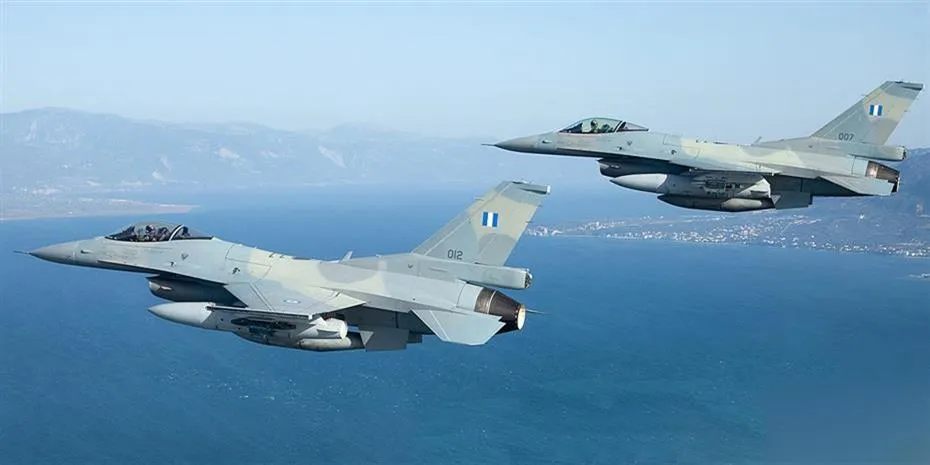
Defence Minister Vasilis Palmas has said that Greek F-16 fighter jets and a Greek Navy vessel now have a permanent presence in Cyprus, in what appears to mark a shift from his earlier statements that the deployment was temporary.
“There is a permanent presence of F16 fighter aircraft while at the same time there is a Greek Navy vessel permanently in Cyprus, ” he said, with Thessaloniki port as the backdrop to his statements.
Speaking to Defence Redefined in the city, where he attended Wednesday’s celebrations marking the anniversary of October 28, 1940, Palmas said defence cooperation between Cyprus and Greece had moved “from slogans to political action”.
He described cooperation between Athens and Nicosia as excellent at both political and military levels, stressing the close historical and national ties between the two countries.
Palmas also referred to the participation of Cypriot commandos in the Ochi Day military parade, a first, saying their presence carried both symbolic and practical significance, demonstrating the close relationship between the armed forces of the two countries.
The minister highlighted bilateral defence agreements and joint programmes, including cooperation under the European Union’s Safe defence financing scheme.
Turning to Cyprus’ wider defence partnerships, Palmas referred to cooperation with European countries, including France and Israel, which has become an increasingly important supplier of military equipment to the National Guard.
He confirmed that a new contract for the acquisition of an offshore patrol vessel from Israel had been signed on October 26.
The agreement involves Israel Shipyards building the new vessel, with Rafael Advanced Defence Systems supplying its naval systems, while the existing Ioannides patrol vessel will also undergo a systems upgrade.
The deal follows earlier Israeli media reports of a naval procurement agreement valued at approximately €150 million.
Palmas indicated that further Israeli defence equipment programmes are being planned to meet the operational requirements of the National Guard and strengthen the Republic’s deterrent capabilities.
His remarks came as he met Greek Defence Minister Nikos Dendias in Thessaloniki on Wednesday, with the two ministers discussing the latest international security developments and bilateral defence cooperation.
The minister’s latest statements on the Greek military presence are particularly significant given that, Palmas had explicitly ruled out any decision on a permanent deployment of Greek military assets to the island.
In the statements made in June, he said the F-16s and the Greek frigate Elli remained in Cyprus as part of a temporary deployment following heightened regional tensions.
“We have not discussed either a temporary extension or a permanent presence,” he said in June, adding that any longer-term arrangement would depend on a reassessment of security conditions.
The latest Greek frigate publicly identified as deployed to Cyprus is the Nikiforos Fokas (F-466), which replaced the Elli in July following the latter’s almost 100-day deployment. Like its predecessors, the vessel is equipped with Greece’s Kentavros counter-drone system.
The deployment forms part of a continuous Greek naval presence established in March, following the drone strike on the British base at Akrotiri. The frigates Kimon and Psara were initially dispatched, followed by the Elli and subsequently the Nikiforos Fokas.
Palmas and Dendias had reviewed the deployment during talks in Athens, with the Cypriot minister describing Greece’s response as providing a “protective umbrella” for the Republic.
Although Palmas maintained in June that the deployment was temporary, Greek military aircraft and naval vessels continued to operate in and around Cyprus in subsequent months.
In an interview with the Cyprus Mail in June, Palmas defended Cyprus’ expanding network of defence partnerships, insisting that the Republic would not seek anyone’s approval before entering into military agreements.
“The Republic of Cyprus is a recognised state and has every right to conclude agreements, develop relations and forge alliances with any member of the international community it considers appropriate,” he said at the time.
“We will not ask anyone’s permission for the agreements we make, whether they concern the country’s political activity, defence or security. The security of our citizens is non-negotiable.”
The government has also budgeted more than €1.28billion for defence strengthening between 2027 and 2029, with spending expected to rise substantially as procurement programmes move forward.
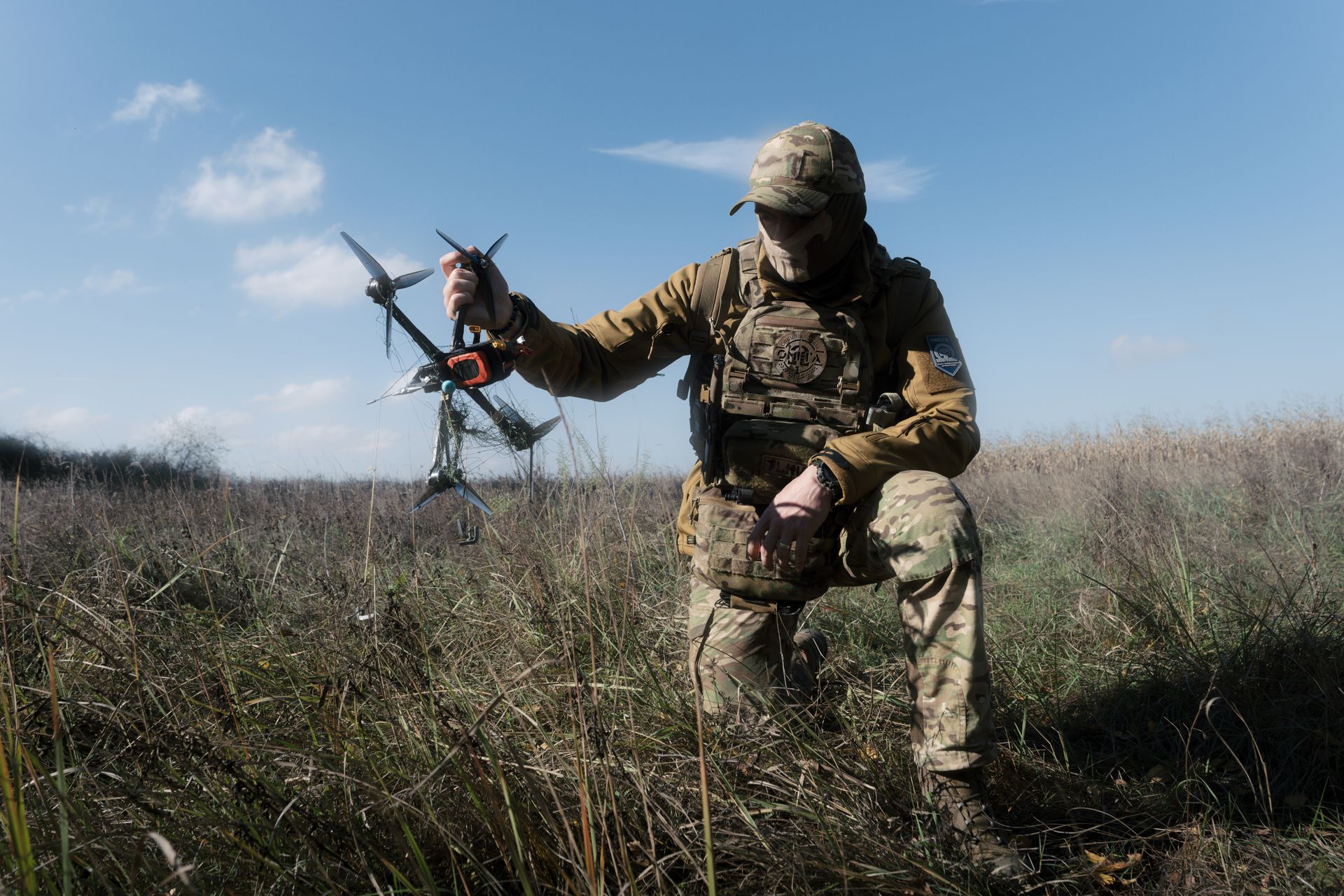
At a training with the Ukrainian National Guard’s Omega unit, engineers from the defense tech company BlueBird Tech describe how to use their net gun, named Chipa, to entangle an approaching drone’s propellers.

 Login