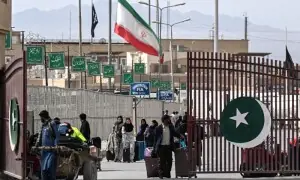
THE petroleum minister’s explanation in the National Assembly that the recent closure of the Iran border has disrupted liquefied petroleum gas supplies and driven up prices identifies a major cause of the current crisis. The subsequent partial border reopening has failed to ease the shortage.
While the closure may have triggered the present shortages and price hike, the problem recurs every winter. Pakistan produces only about a quarter of the LPG it needs. The rest is imported, mainly from Iran. The disruption of cross-border trade has therefore exposed the vulnerability of a market that depends heavily on external supplies. The Iran war has also complicated efforts to bring in more by sea. The minister says efforts are being made to increase seaborne supplies, but consumers have yet to see relief.
The state must explain what additional volumes have been secured, and when they will arrive. Further, why were no contingency measures taken before the Iran border closure, especially when the authorities knew that the onset of winter would push up demand? The decision-makers owe an explanation to people suffering due to sudden shortages and price shock.
That said, the current LPG supply disruption is only part of the wider story. LPG prices have historically surged as winter approaches, even without a major supply shock. This recurring pattern suggests that the crisis is not simply the result of border closure.
Inadequate advance planning, weak market oversight and the failure to build reliable supply arrangements leave consumers exposed whenever demand rises or imports are interrupted. The consequences are particularly harsh for households without access to piped natural gas. Millions of families in northern Pakistan, remote and hilly areas, and parts of Punjab depend on LPG for cooking and, during colder months, heating.
Low gas pressure and restricted supplies in connected areas also push more consumers towards cylinders, adding to demand. With the official price around Rs280 per kg and reported market rates reaching Rs500-800, an essential fuel has become unaffordable for many. Blaming the Iran border closure is but an attempt to cover up the ministry’s failure to do its basic duty: ensure adequate supplies ahead of the closure and enforce the official fuel price.
INDIA’S nuclear jingoism was on ample display during Operation Marka-i-Haq in May 2025 when it fired dual-use BrahMos cruise missiles with conventional payload, unmindful of the fact that the dangerous caper could have been misconstrued by Pakistani air defenders as a nuclear attack. Despite an agreement on pre-notification of flight testing of ballistic missiles, the Indians, while testing the Agni V MIRV-capable missile, have shown a blithe disregard for established pre-notification protocols that mandate a 72-hour pre-test notification, a fact pointed out by Pakistan’s Foreign Office in 2024.
While the Indians keep up an implacable momentum of vertical proliferation of nuclear and missile technology, the world indulges them through exceptionalism enshrined in the nuclear waiver for the Nuclear Suppliers Group and membership of the Missile Technology Control Regime.
The Indians have slyly wangled the concession from the USA and IAEA in the civil nuclear deal to keep eight reactors out of IAEA oversight. These pressurised heavy water reactors consume less nuclear fuel than they produce, which can be harvested for strategic military purposes.
It should be remembered that it was the Indians who introduced the nuclear arms race in the subcontinent because of their grandiose big-power pretensions. Their nuclear explosions in 1974 and 1998 forced Pakistan to follow suit out of its security compulsions.
The world indulges India through nuclear exceptionalism.
The Indian nuclear security architecture was provided conceptual ballast by Gen K. Sunderji and Krishna Subramanyam in the 1980s, when they came up with the notion of no-first use of nuclear weapons against a non-nuclear nation, with a caveat of making an exception for biological and chemical attacks. However, India kept developing its conventional forces, especially the armoured and mechanised component, as per the Sunderji doctrine, aimed at tearing Pakistan asunder.
On the geopolitical level the Indians have acquiesced to the status of a regional surrogate to accommodate balancing needs of the US vis-a-vis a rising global competitor, China. While enjoying nuclear exceptionalism the Indians went on a shopping spree for nuclear technology as well as the conventional hardware to operationalise the military strategy that sought an elusive space for conventional wars under the nuclear overhang.
The operational manifestation of these military ambitions was a slew of concepts starting with Cold Start and graduating to proactive operations. The latest manifestation of those concepts is the Dynamic Response Strategy that is based on rapidly deployable all-arms-based integrated battle groups and multidomain-enabled terrain-customised brigade-sized groups called Rudra Brigades.
Pakistan relies on its full-spectrum deterrence, keeping strategic nuclear ambiguity for greater liberty of action to deny India the space for conventional conflict.
While India deploys non-state actors to keep Pakistan destabilised through terrorism, it cleverly conflates Pakistan’s principled support to the victims of Indian state repression in Occupied Kashmir, a UNSC-recognised dispute, with militancy. It has also withdrawn from its international law commitments by illegally holding the Indus Waters Treaty in abeyance and imperilling the food security of Pakistan.
India under the BJP and RSS sway has adopted a foreign policy based upon the antiquated notion of ‘Akhand Bharat’ that covets the territories of neighbours based on historical myths. The inflammatory statement of Prime Minister Narendra Modi at Barmer, Rajasthan, during an election rally that “Indian nukes are not kept for Diwali” indicates a bellicose mindset.
It is against the backdrop of the above facts that the notions of nuclear deterrence in the subcontinent have to be understood. Since the stability of nuclear deterrence is based upon nuclear dialectics between two rational actors, Indian irrationality adds dangerous instability to the nuclear equation.
The deployment of canisterised ground-based ready-to-use nuclear missiles and the submarine-launched nuclear ballistic missiles point to an aggressive nuclear intent when viewed in the context of Indo-Pak distrust and irrationality of the ideologically driven BJP leadership.
The well-known military historian Martin Van Creveld had coined a term for wars in the nuclear era: “Non-trinitarian”, where, unlike Clausewitz’s trinitarian wars, the only political objective would be deterring and not winning the wars.
Whether India has strengthened or reduced its strategic deterrence by fielding shallow-range submarine-based missiles is a point to ponder by Indian nuclear strategists.
FEW companies are hailed as proof of free-market genius more than Tesla. Yet, at every turn that mattered, it stood on public capital.
In 2010 it borrowed $465m from a US federal programme open to every carmaker building cleaner vehicles, in a country where transport is now the largest source of greenhouse gases. It paid the Treasury’s own cost, roughly one to 3.4 per cent, with principal deferred until production began. One of the smallest borrowers, it became the star, repaying with interest nine years early. Regulatory credits, earned by beating emission rules and bought by those that fall short, then carried it into profit.
Pakistan asks its banks to do alone what no quintessential capitalist economy asks of its own: lend to priority sectors without the state sharing the risk and the price. This is not a lesson taken from state-led economies such as China, where public support is part of the model. It comes from the market economies themselves, which do it openly and without apology. Tesla is not their exception; it is their method.
Look at where they aim interest subsidies, and how deep. Farming comes first: America lends beginning farmers money to buy land at under 2pc and caps their operating microloans at 5pc, while Canada pays the interest on the first C$250,000 of each grower’s cash advance. Housing is next: France gives first-time buyers zero-interest loans and compensates banks through tax credits. Then enterprise: Britain lends start-ups unsecured at a fixed 6pc, with mentoring, and its firms outlive their peers; Germany’s KfW cheapens founders’ loans and absorbs four-fifths of any loss so local banks will lend.
In every case, the taxpayer took the first risk and part of the financing cost, at the stage private finance would not, and demanded performance in return. And the subsidy went to the borrower, the priority-sector player, not the lender: the bank is paid only the market interest the borrower is spared.
Subsidies have built giants, and an emerging economy needs them more, not less.
That is the global norm. Why, then, is Pakistan so averse to it? Here, subsidy for producers is treated as a dirty word, subsidised credit is misread as a benefit to banks, and lenders are blamed for holding back from risks their peers abroad never shoulder unaided. Asking them to match the world’s lending without the world’s toolkit is neither fair nor realistic.
The money exists; its direction is the problem. This year’s federal budget allocates Rs838bn to the Benazir Income Support Programme, up by a sixth, and almost as much to the power sector; provincial budgets add their own spending on wheat, fertiliser and household relief. Little of it is designed to make the poor bankable.
BISP is indispensable. Reaching some 10 million families through a national registry and digital payments, it is one of the country’s institutional achievements, and that safety net must stay. But a stipend, by its nature, protects rather than transforms. A net that never becomes a springboard keeps the poor safe, but poor.
BISP must now be balanced with wealth creation at the lower strata of society, so that families able to work have a path from support to enterprise. Wealth, like subsidy, is not a bad word. It can be created at every level, including the bottom, and it is what keeps incomes rising sustainably. The cliché about wealth must go, just like subsidies.
So add a ramp without lowering the floor: dedicate a tenth of BISP’s allocation to an enterprise window within the programme; that is smaller than this year’s increase, so no family need receive less than last year.
Run it as the world does. Target precisely: older people, persons with disabilities and households with no working member keep their full stipend; working-age households, starting with the women BISP serves, get concessional credit for livestock, horticulture, cottage industry, solar trades and digital work. Price it for the borrower: the first loan interest-free and repeat loans at no more than 5pc, the state paying the difference. Pay for delivery: lenders earn the subsidy only for verified results, and every loan comes with training and a mentor. Build the exit: the stipend tapers only once the business stands, and the subsidy steps down with each cycle.
Even at today’s rates, that tenth could carry some Rs400bn of lending: over a million small businesses. Audit it independently after three years; scale it only if it works.
Two objections deserve answers. Credit alone, global trials show, raises poor families’ incomes only modestly; what lifts them for good is capital paired with training and continued support while the business finds its feet, which is this design. Nor does the window raid BISP: it is paid for from the programme’s growth and serves the same households.
It is time to retire the reflex that subsidies never create wealth or welfare. Bad design is bad; subsidy is not, if it pays for the initial risk rather than permanent inefficiency. Subsidies have built giants, and an emerging economy needs them more, not less.
Washington’s decisive bet on Tesla was not a stipend but a loan, tied to milestones. Pakistan’s Teslas are smaller — a woman’s dairy herd, a tailor’s workshop, a graduate’s laptop — but they deserve the same deal: capital to start, conditions to keep, and a way out. Then the cycle begins again with the next borrower. That is routine in every quintessential capitalist economy, and it should be in Pakistan too.
The writer is a development-focused and impact-oriented banker.
PARLIAMENT has recently been debating the future of Pakistani democracy, but those debates will be for naught unless our leaders also develop the capacity to acknowledge each other’s positions.
The past two days have seen the government and opposition benches trading blame for democracy’s present, rather sorry state.
On Wednesday, JUI-F chief Maulana Fazlur Rehman accused the government of misusing the Constitution and resorting to unconstitutional measures. He also said his party was “prepared to die” resisting the government if the latter continued pursuing a policy of confrontation and violence, and proposed a new Charter of Democracy as the way out.
Regretting that his efforts to mediate between the government and the PTI had failed because the government had changed course and imposed an emergency and governor’s rule in KP, the maulana said the political leadership had grown too intolerant for parliament to do its job.
He was not wrong, though the fault is hardly the government’s alone.
The maulana’s rebuke drew two kinds of response. Minister of Defence Khawaja Asif resorted to personal attacks, insinuating that the JUI-F chief was merely sore at being denied a share of power in KP.
PPP Chairman Bilawal Bhutto-Zardari, on the other hand, was more circumspect. Though he, too, laid much of the blame for parliament’s dysfunction on the opposition, he nonetheless urged it to exercise its powers and return to parliamentary committees.
“Those who want this House to remain dysfunctional and do not want the people of Pakistan to benefit from it have succeeded,” he told the opposition benches. “You have played a part in helping these people achieve their objective.” It was a surprisingly candid admission that the House’s dysfunction serves interests other than the people’s, even if the PPP chief left out his own party’s role in getting us here.
They may have yet to come to terms with it, but both ruling and opposition parties have lost credibility and political ground due to their ongoing vendetta. The maulana’s call for a new Charter of Democracy, though welcome, looks difficult to realise when the two sides cannot even agree to sit together in parliamentary committees.
The imposition of emergency and governor’s rule in KP was a gross misstep by the federal government, and it has spoiled the chances of a negotiated settlement. But the opposition, too, has gained little from confrontation.
Unless both sides start to show some flexibility on key matters, make compromises and enter negotiations without preconditions, they risk further deepening this crisis of their own making.
If enough lawmakers on both sides of the aisle are willing to admit that matters have gone too far, there may yet be hope for parliament, and for Pakistani democracy. The question is, are they ready to do so?
ISLAMABAD: Pakistan remained deeply hostile to journalism and its practitioners in 2025-26 despite a decline in documented violations against media workers, according to a new report issued by an Islamabad-based media watchdog.
“About 10 cases a month [against media personnel], their nationwide spread and severity in the period showed that fewer violations did not mean greater safety,” stated Freedom Network’s latest annual Impunity Report 2026, titled “From Violence to Lawfare: Process as Punishment for Journalists”.
Produced with technical assistance from International Media Support (IMS), the report was authored by journalist Adnan Rehmat and Freedom Network Executive Director Iqbal Khattak.
It finds that “impunity has evolved from a failure to punish violence into a broader system of coercion”.
Peca increasingly used to punish dissent, says Freedom Network report
The report was released on Thursday ahead of the International Day to End Impunity for Crimes against Journalists, observed worldwide, including in Pakistan, on Nov 2 each year.
“Despite the presence on the statute books of two laws to combat impunity for crimes against journalists, such a finding should be a matter of concern for those at the helm of affairs of the two safety commissions established under these laws,” Mr Khattak said.
Cases documented between October 2025 and August 2026 included one work-related killing, three attempted assassinations, 18 threats of murder or harm, 11 assaults, 13 legal actions and 32 threats of legal action.
Punjab recorded 49 cases, just over half the total, followed by Khyber Pakhtunkhwa, Islamabad and Balochistan. Digital and independent journalists were targeted most often. Victims or their families identified government authorities and officials as alleged instigators in nearly two-thirds of the cases.
The report identifies the controversial Prevention of Electronic Crimes Act (Peca) and its increasing use against journalists by the National Cyber Crime Investigation Agency (NCCIA) to punish dissent as “central to this legal siege” of online journalism in the country.
‘Recurring pattern’
A detailed analysis of representative Peca-related cases against journalists reveals a recurring pattern in which allegations of defamation, false information, harassment or reputational harm are channelled through cybercrime procedures, including in cases involving reporting on public expenditure, corruption or official conduct.
Even without a confirmed FIR or conviction, the process itself becomes “punitive” through summonses, device scrutiny, travel, legal costs, detention, repeated hearings, and reputational harm, the report says.
It adds that relief is commonly limited to bail or procedural protection rather than final vindication.
The report also provides guidelines for journalists and other media practitioners facing Peca-related cases to help minimise the harmful effects of legal action.
It expresses concern over the lack of institutional safeguards for media workers despite the establishment of two high-powered safety commissions, one at the federal level and the other in Sindh.
“The federal journalist protection mechanism is effectively dysfunctional, while the Sindh Commission, although more visible, has limited reach and demonstrated protection impact outside Karachi,” it says.
• Achakzai questions govt’s handling of Tehran diplomacy, Afghanistan ties • Senate resolution seeks coordinated national action to curb population growth
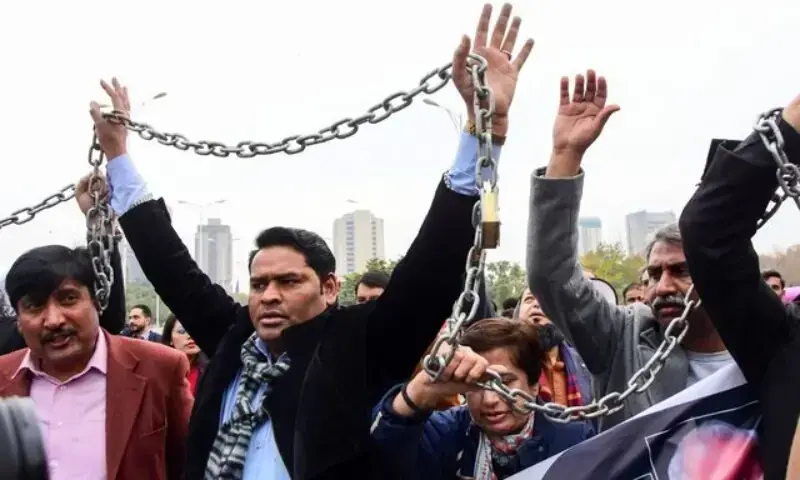
ISLAMABAD: Lawmakers in the National Assembly and Senate on Thursday raised concerns over the political situation in Khyber Pakhtunkhwa and alleged human rights violations, while both houses also discussed electoral reforms and the need to strengthen parliamentary institutions.
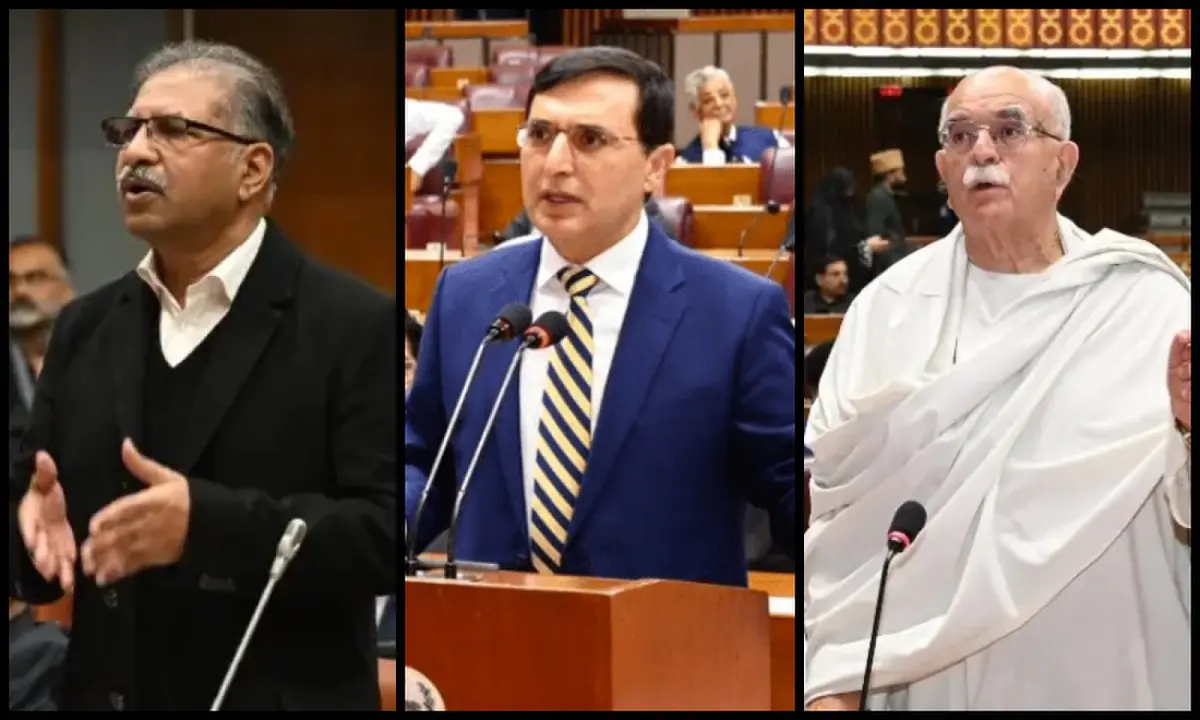
National Assembly Opposition Leader Mehmood Khan Achakzai criticised the government for failing to take parliament into confidence over recent diplomatic developments in Tehran.
“How can four people decide the future of the whole nation?” he asked, warning that such decisions could push the country towards “anarchy and civil war”.
Mr Achakzai also opposed the suspension of trade with Afghanistan, describing Afghans as traditional friends of Pakistan and criticising the country’s past policies towards its neighbour.
PTI Chairman Barrister Gohar Ali Khan said the parliamentary proceedings and the prevailing political situation in KP were creating a negative impression among the public. He also called for an end to hereditary politics in the country.
Rights concerns raised
Meanwhile, speaking on a point of order in the Senate, PTI parliamentary leader Barrister Syed Ali Zafar accused the government of undermining constitutional protections through the imposition of emergency and governor’s rule in KP.
He argued that fundamental human rights could not be suspended or compromised, regardless of the political situation. “There is one thing that cannot be broken, suspended or compromised: the fundamental human rights of the people of Pakistan,” he said.
Mr Zafar expressed concern over the detention of Noreen Niazi, sister of jailed PTI founder Imran Khan, claiming that she had suffered a heart attack and was hospitalised but her family was not being allowed to meet her.
Responding to the concerns, Adviser to the Prime Minister on Political Affairs Rana Sanaullah said Noreen Niazi had been provided medical treatment in Lahore and was in satisfactory condition.
On allegations that her family was being denied access, Mr Sanaullah assured the house that details would be sought and the matter addressed according to the circumstances.
He defended her detention, alleging that she had sought to create unrest by mobilising people for a protest march towards Islamabad.
Senate Opposition Leader Allama Raja Nasir Abbas also criticised the government’s actions in KP, alleging that the province had been “snatched from the people”.
He also questioned the imposition of emergency and governor’s rule in KP, arguing that democratic institutions could not function without respect for the law.
Population growth resolution
Separately, the Senate passed a resolution calling for urgent and coordinated national action to address the challenges posed by the country’s rapidly growing population.
The resolution, moved by PPP Vice President Senator Sherry Rehman, called for a comprehensive national response to population growth and its impact on public services and socioeconomic development.
Ms Rehman said Pakistan’s population was projected to reach approximately 390 million by 2050 at the current growth rate, placing unprecedented pressure on national resources.
ISLAMABAD: A private think tank has found more fiscal faults than benefits of the much-discussed creation of new provinces, advising priority to stronger local governments instead of new provinces if public service delivery was actually intended.
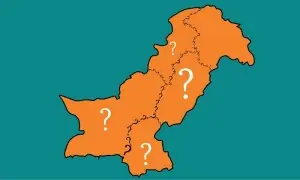
In its latest market analysis release on Thursday, Policy Research Institute of Market Economy (Prime) highlighted the additional annual recurring cost of Rs47 billion to Rs57bn in case of creation of two more provinces — South Punjab, Bahawalpur and remaining Punjab — and up to Rs730bn if 30 divisional units were to upgrade to provincial status.
“Any proposal for creating new provinces should include a formal fiscal costing exercise before constitutional or legislative changes are pursued”, the think tank said, adding that the costing should estimate the recurring expenditure required for the governor, chief minister, provincial assembly, secretariat, high court and other core institutions, together with the likely NFC resource envelope of each proposed unit. This would make it possible to assess whether the expected administrative benefits justify the additional recurring burden,” it said.
If the number of provinces increases to six, South Punjab receives an illustrative allocation of Rs1tr under the existing NFC, while Bahawalpur receives Rs537bn. In case of 30 provinces, allocations differ considerably, ranging from Rs7201bn for Lahore and Rs691bn for Karachi to Rs46bn for Loralai and Rs50bn for Zhob. Thus 11 of the 30 proposed units receive less than Rs150bn per annum.
Think tank puts annual recurring bill at Rs47-57bn for two provinces and up to Rs730bn for 30
The estimated annual recurring cost of a new provincial government is Rs22.4bn under the low-cost scenario and Rs25.9bn under the high-cost scenario, therefore Rs47-56bn per annum for two and Rs610-730bn for 30 provinces.
Using a 10pc fiscal sustainability benchmark based on the low recurring-cost estimate, 16 of the 30 proposed provinces would remain at or below the threshold, while 14 exceed it. The burden is particularly high in the smallest units: the core provincial structure would absorb around 49pc of Loralai’s allocation, 45pc of Zhob’s and 37pc of Rakhshan’s even under the low-cost estimate.
Every proposed province with a population below 1.2 million would require more than one-third of its NFC allocation to finance the core provincial government structure.
The findings therefore show that the fiscal implications of restructuring depend strongly on the number and size of the provinces created. Limited restructuring involving relatively large units produces a much smaller recurring burden, whereas several smaller division-based provinces would face disproportionately high administrative costs relative to their expected NFC resources.
Therefore, at the fiscal level, creation of new provinces will put additional pressure on fiscal resources of smaller provinces, especially those with lower NFC allocations and constrained revenue generation capacity. A greater portion of their available resources would be consumed by ongoing government expenses, resulting in reduced fiscal room for other provincial spending, such as public service provision and developmental expenditure, the analysis showed.
Therefore, the think tank emphasised that provincial restructuring should be evaluated not only in political and administrative terms, but also through a clear fiscal framework.
• CPPA seeks Rs2.56 per unit additional fuel cost adjustment to recover Rs33bn • Industrial representatives insist fuel levies inflating generation costs
ISLAMABAD: The manufacturing sector and the power division on Thursday unanimously called for the removal or reduction of the petroleum levy on furnace oil and diesel used for power generation, stressing that it was resulting in about Rs10 per unit additional impact to electricity costs.
The National Electric Power Regulatory Authority (Nepra) conducted the hearing on a request by the Central Power Purchasing Agency (CPPA) to allow distribution companies to charge the additional FCA in November bills. A government official said the proposed adjustment was the highest for comparable months in recent years.
Industrial representatives Amir Shaikh, Arif Bilwani, Tanveer Bari and Rehan Javed, representing various chambers of commerce and industry, said the government was charging substantial petroleum levies — about Rs76,000 per tonne on furnace oil and Rs80 per litre on diesel — which could otherwise be reduced to lower generation costs amid the energy crisis arising from the Iran conflict.
Representatives of entities under the power division confirmed that furnace oil- and diesel-based generation accounted for 3.6 per cent of total power generation in September because of the unavailability of liquefied natural gas (LNG) and other cheaper sources.
Industrial representatives said removing the levies could reduce generation costs from around Rs62 per unit to Rs44-50 per unit.
They argued that the levy was also increasing the government’s subsidy burden, effectively shifting money from one pocket to another.
The representatives said the prime minister had previously removed certain charges to subsidise power tariffs, but the relief had since been discontinued. They also pointed out that continuation of the surplus incremental package was imposing an additional burden of around Rs11 per unit on grid consumers and demanded its immediate suspension.
Naveed Qaiser, chief financial officer of the Power Planning and Monitoring Company (PPMC), agreed that petroleum levies on diesel and furnace oil had a substantial impact on generation costs.
He said the power division had been fighting for their removal or reduction at relevant forums and urged business representatives to continue raising the issue with senior government officials.
Mr Qaiser said reducing electricity tariffs remained a government priority, particularly for industry, to improve competitiveness with regional economies.
He said these efforts had already helped reduce tariffs by around Rs10 per unit for consumers generally and up to Rs18 per unit for industry, achievements that should also be acknowledged.
CPPA’s Rehan Akhtar said the actual fuel cost in September stood at Rs10.022 per unit against the reference rate of Rs7.46, resulting in the request for an additional FCA of Rs2.56 per unit.
He said the total financial impact was estimated at Rs32.76bn, mainly because of changes in the generation fuel mix and higher costs of alternative fuels.
However, he maintained that the net increase in the FCA would not exceed Rs1.45 per unit, as the existing positive adjustment in October would expire and be replaced by the proposed Rs2.56 adjustment in November.
Nepra and industrial representatives also raised concerns over discrepancies in power generation data submitted by the CPPA and demanded greater transparency.
They questioned a previous adjustment of Rs16bn on account of LNG prices, arguing that timely reporting of those prices could have avoided a substantial portion of the proposed additional FCA.
Officials from Nepra’s Monitoring and Enforcement Division also questioned the authenticity and consistency of information supplied by government entities.
Nepra member Amina Ahmed acknowledged the concerns, saying the regulator was aware of the discrepancies but did not want to turn the proceedings into a “circus” by publicly taking up every inconsistency.
Industrial representatives also questioned coal procurement practices at the Port Qasim power plant, alleging that the producer was procuring coal through affiliated entities at prices significantly higher than those paid by other plants.
They demanded a comprehensive investigation, including by the National Accountability Bureau. Nepra assured participants that only prudent coal costs would be allowed and that the producer would have to bear the impact.
Government entities reported a 6.5pc increase in overall power demand in September, including a 6.7pc rise in industrial consumption.
Industry representatives maintained that the higher industrial consumption reflected a shift from captive power generation to the national grid rather than the impact of the incremental package.
Average fuel cost surged by almost 37.5pc year-on-year in September, mainly because expensive, heavily taxed fuels were used to compensate for reduced LNG supplies amid the regional conflict and increased reliance on imported coal.
According to CPPA data, high-speed diesel (HSD) accounted for 213 gigawatt-hours (GWh), or about 1.6pc of total grid supply, at a generation cost of Rs62.14 per unit. This compared with 80GWh generated at Rs54 per unit in August.
Furnace oil-based generation stood at 263GWh in September, down from 321GWh in August, while its generation cost declined to Rs44.86 per unit from around Rs46.
Its share of total generation remained close to 2pc.
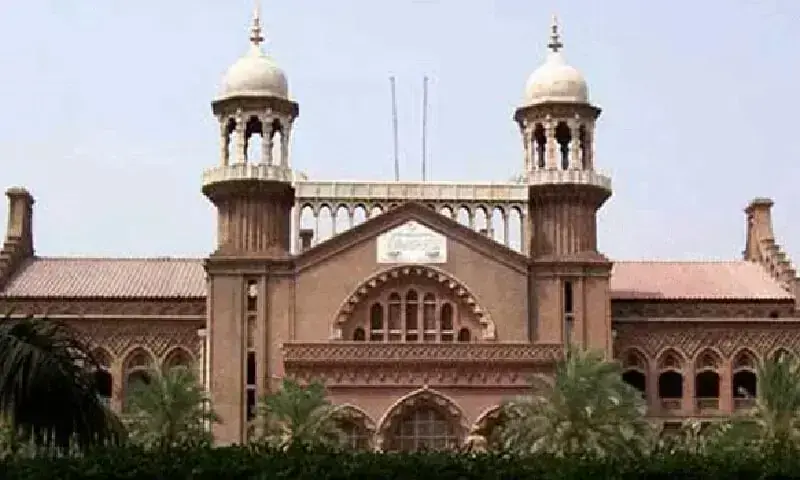
LAHORE: The Lahore High Court has held that merely uploading an appellate order to the Federal Board of Revenue’s (FBR) Inland Revenue Information System (IRIS) does not constitute valid service under the Income Tax Ordinance, 2001.
An LHC division bench comprising Justice Mirza Viqas Rauf and Justice Anwaar Hussain decided three connected reference applications led by Tahir Mehmood.
The applications challenged three orders of the Appellate Tribunal Inland Revenue, which had dismissed the taxpayers’ appeals as time-barred on the ground that uploading the orders to IRIS constituted sufficient service.
In one case, the taxpayer argued that Covid-19 and quarantine following a foreign trip had prevented him from accessing the portal. In the other two cases, the taxpayers said they learned of the Commissioner (Appeals)’ orders only after receiving recovery notices in April 2026, months after the orders had been passed.
Justice Anwaar Hussain, who authored the judgement, held that Section 218(1)(d) of the ordinance recognises electronic service only when carried out in the prescribed manner.
He observed that Rule 74 of the Income Tax Rules limits an electronic address to a fax number or an email address and requires confirmation of transmission.
IRIS, by contrast, is an internal, web-based workflow system for tax administration, the judge noted, adding that placing an order in a taxpayer’s account does not establish its transmission to an electronic address as required under the rule.
The judge distinguished between accessibility and service, observing that an order may be accessible without having been served in accordance with the law.
He further held that the limitation period could not begin from an event that the law did not recognise as its starting point.
Rejecting the department’s argument that Rule 74 could not restrict the parent provision, the judge said the requirement of service in the “prescribed manner” was part of the ordinance itself.
The judge also dismissed the contention that taxpayers were required to routinely monitor IRIS.
The judge said the department could not dismiss the pandemic-related explanation, as the correctness of the tribunal’s conclusion involved a question of law that the high court was competent to examine.
Observing that technology was an instrument of statutory administration rather than an independent source of statutory authority, the judge said modernisation could not dispense with legal safeguards.
The court referred to rulings of the Peshawar and Islamabad high courts and the Delhi High Court, as well as Articles 4 and 10A of the Constitution.
The bench set aside the impugned orders and directed the tribunal to decide the appeals afresh on merit.
LAHORE is choking again, and the government’s answer is to send more machines onto its streets. On Wednesday, its air quality index reached 296, putting children, outdoor workers, and the elderly at particular risk.
Yet Punjab plans to acquire 30 more truck-mounted fog cannons. These can suppress road dust locally, but their ability to reduce the fine particles most harmful to health remains questionable. Authorities must explain what the existing fleet has achieved in terms of measurable pollution reduction before spending more public money.
Last year, disruptions to Punjab’s air monitoring network raised suspicions that pollution levels were being hidden; officials cited technical faults. Whether equipment is recording pollution or spraying water, public confidence depends on transparent data and independent scrutiny. A temporary improvement at a pollution hotspot, or near a monitoring station, cannot prove that the city’s air is becoming safer.
Monitoring should expose pollution. Punjab must publish continuous readings and independent assessments of its interventions. It should also fund research into the relative contributions of traffic, industry, construction, and crop burning, how these change with the seasons, and which measures actually reduce exposure.
That scientific effort must extend beyond the border. Punjab officials say easterly winds have been bringing polluted air from India into Lahore. But this does not absolve Pakistan of responsibility for its own emissions. The air over the two Punjabs is shared, and both populations suffer when political hostility obstructs cooperation.
Calls for joint action are not new. Cooperation was proposed with Indian Punjab in 2017 and 2024. Yet neither initiative led to sustained cooperation. Environmental diplomacy with New Delhi should be prioritised, despite wider tensions. Both sides could begin by exchanging verified air-quality and weather data, jointly studying the movement of pollutants and developing common approaches to agricultural burning and industrial emissions. Universities and scientific institutions could help build a shared evidence base.
At home, dedicated research funding, stronger monitoring, and open evaluation of anti-smog spending are essential. Enforcement must continue, but decisions should follow evidence, not the visibility of machinery on city roads. Until the air itself improves, no amount of official activity can be called progress.
PESHAWAR: An inquiry into the recent deadly collapse of a school roof here has held the owner responsible for using substandard construction material.
It also pointed out negligence on the part of the relevant departments.
The inquiry report was presented to Governor Faisal Karim Kundi during a meeting chaired by him here, according to an official statement issued by his office.
The meeting was attended by adviser to the governor Dr Amir Abdullah, chief secretary Dr Fakhar Alam Irfan, education secretary Inayatullah Waseem and members of the inquiry committee.
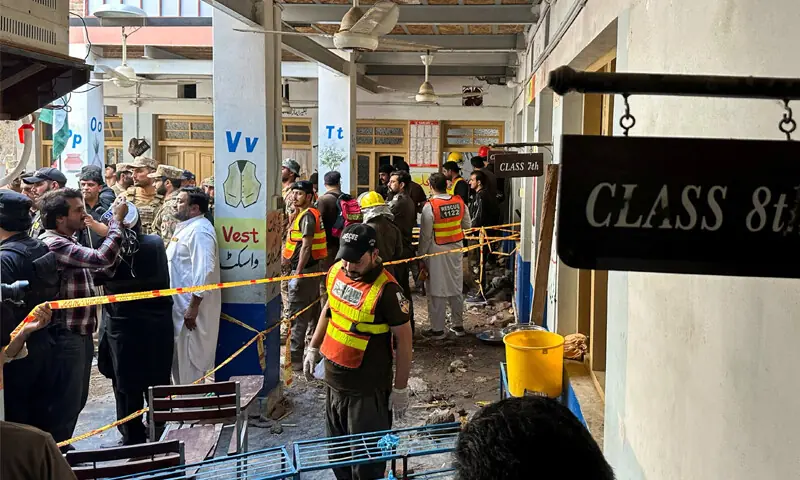
At least 30 children and a schoolteacher were killed and dozens of others injured when the roof of a multi-storey private school collapsed in the Dir Colony area.
Rescue officials said that the ceiling of a classroom collapsed onto students after the roof of the floor above gave way, causing the two storeys to crumble.
The governor later ordered an inquiry into the incident.
On Wednesday, the inquiry committee held the school owner responsible for using substandard construction material.
The meeting, chaired by the governor, was also briefed about negligence by the relevant departments.
Mr Kundi received a detailed briefing on the causes of the incident, statements of the relevant officials, the responsibilities of various departments, the inquiry committee’s findings and its recommendations.
The governor directed authorities to examine the legal aspects of the report in consultation with the law department.
He said that strict action should be taken against those responsible for the school collapse.
KARACHI: Two young sisters were allegedly shot dead by their brother over their use of social media in Drigh Road, within the jurisdiction of Shah Faisal Colony police, on Wednesday, police said.
Korangi SSP Fida Husain Janwari told Dawn that Sobia, 25, and Hira, 20, were gunned down inside their home in New Rehmanabad by their brother, Rehan.
The senior officer said the initial investigation suggested that the suspect had warned his sisters against using TikTok, which appeared to be a possible motive behind the double murder.
He said the suspect had fled the crime scene and efforts were on to ensure his arrest.
The SSP added that the alleged killer had a criminal record and had been arrested multiple times and sent to jail in connection with criminal cases.
The bodies were shifted to the Jinnah Postgraduate Medical Centre (JPMC) for medico-legal formalities.
Firing on under-construction building leaves watchman dead
A watchman was gunned down and two labourers were wounded in an armed attack on an under-construction building in the Garden area.
The Soldier Bazaar police said two armed men riding a motorcycle resorted to indiscriminate firing on the under-construction Jumani Square located on Nishter Road near Alibhai Auditorium. As a result, three persons sustained critical injuries and were taken to the Civil Hospital Karachi where Aslam, 30, was pronounced dead on arrival.
The police said the victim was watchman of the building. The injured labourers were identified as Shahid Ali, 25, and Shakir Ali, 28.
The police in a statement said the incident appeared to be related to extortion.
RUSSIA’S growing engagement with Afghanistan’s Taliban rulers is reshaping the regional diplomatic landscape. For Pakistan, which has historically maintained close links with Afghan political and religious networks, the development presents both a challenge and an opportunity.
The question is not whether Moscow will replace Islamabad as Kabul’s principal interlocutor, but whether Russia’s expanding diplomatic, security and economic engagement will give the Taliban greater room to manoeuvre in their dealings with Pakistan.
Russia’s approach towards the Taliban has been gradually shaping up. In July 2025, Moscow became the first country to recognise the Taliban government formally. Earlier, it announced the removal of the Taliban from its list of prohibited terrorist organisations in April that year. In May 2026, Russian officials announced plans to establish a “full-fledged partnership” with Kabul, encompassing security, trade, cultural exchanges, and humanitarian cooperation. That same month, a military-technical cooperation arrangement further underscored the deepening relationship. Moscow, therefore, has been moving beyond limited diplomatic engagement towards a more sustained relationship with the Taliban authorities. Multiple factors may be shaping Moscow’s approach toward the Taliban.
First, Moscow remains concerned about the spread of militant violence into Central Asia, narcotics trafficking, and the activities of Islamic State-Khorasan (IS-K). The deadly 2024 attack near Moscow reinforced Russian concerns about transnational extremist networks.
From the Kremlin’s perspective, dealing with the Taliban is a pragmatic necessity — whatever its reservations about the nature of their government, the Taliban exercise effective control over Afghanistan’s state institutions and security apparatus.
In parallel, Russia seeks to preserve its influence in Eurasia and prevent Afghanistan from becoming a source of instability that could invite renewed intervention by external powers. Economic cooperation, including potential opportunities in energy, transport, agriculture, and infrastructure, adds another dimension to this policy. Moscow’s outreach should, therefore, be understood as an effort to protect its own interests and expand its regional options.
Russia’s close ties with Kabul won’t automatically ensure action against anti-Pakistan terrorists.
Second, Russia’s recognition of the Taliban has important implications for Pakistan’s diplomatic leverage. For years, Islamabad’s geographical proximity, economic connections, and historical links with the Taliban gave it considerable access to Kabul. Russian recognition gives Kabul an additional source of international legitimacy. Its expanding relations with Moscow also offer the Taliban another channel for diplomatic engagement, security cooperation, and economic opportunity. The more external partners Kabul acquires, the less dependent it may feel on Islamabad for diplomatic access and international engagement.
This does not mean that Pakistan’s influence will disappear. Geography, cross-border commerce, people-to-people links, and the management of shared security concerns remain important. However, these factors do not automatically translate into political compliance. Pakistan’s leverage will increasingly depend on whether it can demonstrate the mutual benefits of cooperation rather than rely on historical relationships or geographical realities alone.
Third, Russia’s approach to the TTP will be the most consequential test. Islamabad’s central security concern is that terrorist groups operating from Afghan territory threaten Pakistan’s citizens and security personnel. The Taliban authorities’ generalised statement is that Afghan territory will not be used against other countries, but they are reluctant to specifically say that Afghan territory will not be allowed to be used against Pakistan.
Moscow’s priorities, however, do not match Pakistan’s. Russia’s immediate security concerns centre particularly on IS-K and the threat of extremist violence spreading into Central Asia and Russia itself. Although the Taliban also oppose IS-K, this convergence does not necessarily mean Moscow will place Pakistan’s concerns about the TTP at the centre of its Afghan policy.
Pakistan should, therefore, avoid assuming that Russia’s close relations with Kabul will automatically produce action against anti-Pakistan terrorists. Russian influence could provide an additional diplomatic channel, but its effectiveness will depend on Moscow’s willingness to address the TTP issue and the Taliban leadership’s readiness to respond.
Fourth, Russia’s interest in regional stability gives it a potential role in facilitating dialogue, reducing tensions and encouraging practical cooperation. Pakistan should welcome constructive Russian involvement without outsourcing its Afghan policy to Moscow.
The Shanghai Cooperation Organisation could provide a useful multilateral framework. Pakistan, Russia, China, and the Central Asian states share an interest in preventing Afghanistan from becoming a base for transnational terrorism. Coordinated intelligence exchanges, border-security cooperation, counter-narcotics measures, and structured consultations with Kabul could help establish a regional approach. Such cooperation would be more sustainable than expecting any single country to exercise decisive influence over the Taliban.
Fifth, Pakistan needs to adapt its Afghan policy to a more competitive diplomatic environment. Islamabad should deepen engagement with Russia while maintaining direct communication with the Taliban leadership. It should also coordinate with China, the Central Asian republics, and other relevant regional actors to develop a common understanding of the threats emanating from Afghanistan.
At the bilateral level, Pakistan has to involve the Taliban in a meaningful dialogue and create a workable environment that builds the Taliban regime’s stake in the mutual benefits of the two countries. This could include arrangements to exchange information on terrorist networks, investigate cross-border incidents, prevent attacks, and maintain communication between security officials. Economic cooperation and the facilitation of legitimate trade should accompany these measures, giving both sides practical incentives to reduce tensions.
Diplomatically, Russia’s Afghan outreach is thus neither an inevitable strategic setback for Pakistan nor a guarantee of improved regional security. It is a development that reflects the Taliban’s efforts to widen their international options and Moscow’s decision to protect its own interests. Whether this produces greater stability or further competition will depend on how regional states use their expanding diplomatic channels.
Pakistan will have to carefully observe that Russia’s engagement helps address the region’s shared security concerns. Islamabad’s influence over Kabul will ultimately depend less on who has the closest relationship with the Taliban and more on who can help produce practical results: a secure border, action against militant violence, functioning trade routes and a stable regional environment.
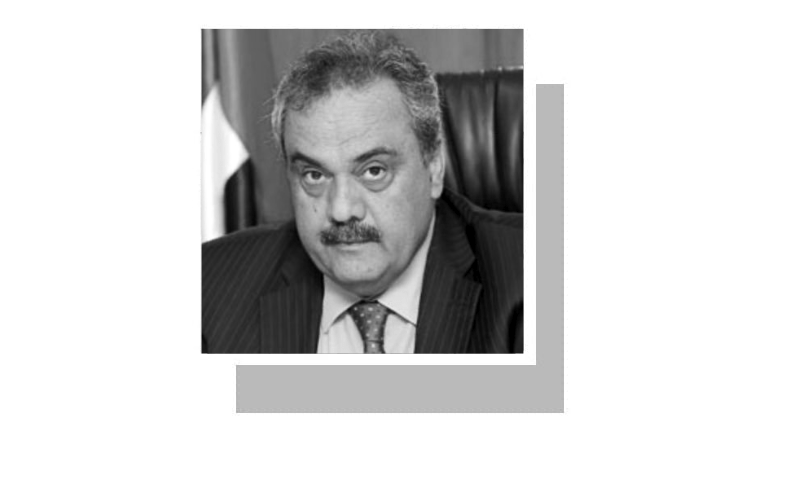
The writer is a former special representative of Pakistan for Afghanistan. He served as Pakistan’s ambassador to the UAE and Iran.
LAST month, I argued in this space that Iran is emerging as a big regional power to our west. The question I left hanging was whether it would use its newfound centrality to avenge the past or to build a future. Last week offered the first real glimpse of an answer.
On Oct 26, Saudi Arabia’s defence minister, Pakistan’s defence chief, and Turkiye’s intelligence chief sat down in Tehran with Mohsen Rezaei, secretary of Iran’s Supreme National Security Council. The joint statement that followed was thin, pledging only continued dialogue on regional peace and security. But the significance of the Tehran huddle lies less in what was said than in the fact that it happened at all, and where.
Consider who came. The three visitors are the signatories of the Makkah Joint Defence Agreement, signed in August, a pact many read as a hedge against precisely the kind of Iran I described last month. Saudi Arabia was struck repeatedly by Iran during the war, hosted American forces that attacked Iran, and is under fire from the Houthis even now. Yet, the Saudi defence minister led the delegation, and they travelled to Tehran. Not Riyadh, Ankara or Islamabad, nor a neutral venue like Doha or Muscat.
When three of the region’s largest military powers, one of them nuclear-armed, come to your capital to talk about regional security, they are acknowledging that no regional security arrangement is possible without you, and that the road to one runs through your door. For a country that spent four decades behind a wall of sanctions and was treated as a problem to be contained rather than a party to be consulted, this is a milestone.
The significance of the Tehran huddle lies less in what was said than in the fact that it happened at all, and where.
It also happened in the teeth of American pressure. Washington was openly weighing a fresh round of strikes, US forces were reportedly ready to move within 96 hours of an order, and a naval blockade was choking Iran’s southern ports. The region’s middle powers came anyway, having concluded that Iran would still be standing after this war and that they need a working relationship with it whatever Washington decided.
The second thing worth noticing is what Iran chose to emphasise. Rezaei told state television that Tehran and its three guests had agreed that the region’s security is to be achieved through the countries of the region. A senior Pakistani security official told Reuters the meeting’s primary aim was a regional mechanism to prevent military attacks between them. Foreign Minister Abbas Araghchi has said for months that Tehran will welcome any regional security arrangement that excludes foreign forces.
Put these together and the outline of the order Iran wants comes into view. It rests on three pillars: non-aggression among the states of the region, an alignment of their interests, and the exit of outside powers, above all America, from the business of guaranteeing Gulf security.
This is a window into the kind of power Iran wants to project. Last month, I worried that once the Americans were gone, the Iranian military machine would turn its gaze to the riches of the Gulf monarchs and present bill after bill. That risk has not gone away. But the posture on display in Tehran was not that of a power seeking to dominate its neighbours by force. It was that of a power seeking to become the indispensable centre of a regional system it helps design.
The China analogy is instructive here too. In 1954, with Beijing still shunned by much of the world, Zhou Enlai put forward the Five Principles of Peaceful Coexistence in negotiations with India. Mutual non-aggression sat at their heart, alongside non-interference in internal affairs. Non-aggression is the language of a power confident of its own weight, which wants its neighbours to accommodate it rather than fear it.
There is hard strategic logic beneath the soft language. A non-aggression architecture without foreign forces is the one in which Iran’s advantages count most. Take American bases and carriers out of the Gulf, and Iran’s hold over Hormuz, its missile arsenal, and its network of allies make it the pre-eminent power on the Gulf littoral by default. In that setting, a non-aggression pact is not a concession but a way of having one’s pre-eminence ratified by one’s neighbours.
Nor did the idea originate in Tehran. In May, Saudi Arabia itself floated a non-aggression pact between Iran and the states of the region, reportedly modelled on the 1975 Helsinki Accords. Iran is now taking an idea its rivals put on the table and making it the organising principle of an order with itself at the centre. That, too, is what emerging powers do.
None of this is settled. The factional contest I described last month is playing out in plain sight. The hard-line daily Kayhan treated oil above $115 a barrel as proof that pressure on shipping works better than diplomacy, while moderate papers warn of a wave of bankruptcies in Isfahan, Tabriz, and Arak as the blockade bites. Which camp prevails will decide whether the language of non-aggression is here to stay.
Pakistan has a particular stake in all this. An Iran that seeks pre-eminence through a regional architecture is a neighbour Pakistan can work with, and help shape from the inside. An Iran that seeks it through reparations, tolls, and coercion would place us in an impossible position between our western neighbour and the Gulf states on which so much of our economy depends.
The huddle does not answer last month’s question. But it shows that the option of building a future is on the table, in Iran’s own words, and that its neighbours are prepared to engage on those terms. That is a milestone. Whether it becomes a trajectory depends on whether the voices in Tehran speaking the language of non-aggression win the argument at home, and whether Washington, after its elections on Nov 3, lets them.
WASHINGTON: Global commodity prices are set to surge 23 per cent in 2026, the World Bank said on Wednesday, citing rising energy prices and disruptions to cargo shipping during the Middle East war, grain shipment problems in the Black Sea and high demand for safe-haven assets such as gold.
Oil, natural gas, food and metals prices all rose sharply this year as global shocks mounted, the World Bank said in its latest Commodity Markets Outlook. It said the situation could worsen if the conflict in the Middle East ratcheted up and damage to Russian oil infrastructure continued.
Commodity prices were expected to ease by 7pc next year, it said, but continued shocks — including forecasts for the worst El Nino weather effect since 1950 — could keep food commodity prices elevated, raising the spectre of higher inflation and tighter monetary policy.
The global economy was more vulnerable to future supply shocks at the moment. Global oil stocks have been depleted during the war in the Middle East, and global oil supply is expected to drop 5.2% in 2026, the biggest drop in four decades outside the 2020 global recession, the bank said.
Energy up 32pc, metals 25pc, gold 40pc in 2026; food prices face El Nino threat
“Commodity markets are being hit by several major shocks at once,” said Ayhan Kose, the World Bank’s deputy chief economist. “Higher energy costs and trade disruptions are driving up prices across a broad range of commodities, threatening to worsen inflation, food insecurity, and economic growth.” The bank released its twice-yearly report on Wednesday, two days before foreign ministers from the world’s 20 largest economies are due to gather in Atlanta, Georgia for a meeting that will focus on the wars in the Middle East and Ukraine.
Kose said the World Bank was focused on protecting the world’s poorest people and supporting low-income countries already grappling with heavy debt burdens.
The bank had already provided $8.7 billion in low-cost loans and other aid to 25 countries affected negatively by the war in the Middle East, the report said. This included 10 countries that retooled existing programs to cover crisis-related expenses, and 19 that had tapped new resources, with some using both.
The report, released twice a year, said global energy prices surged 32pc in 2026, reaching their highest level since Russia’s 2022 invasion of Ukraine.
With oil output down, Brent oil prices were expected to remain elevated in the near term, averaging $92 per barrel for the year. Prices would be even higher if oil demand were not forecast to drop 2.5pc this year, the third-largest drop behind the 2020 Covid shock and the 1980 oil crisis.
It said food commodity prices were set to rise just over 10pc in 2026 due to grain shipment disruptions caused by hostilities between Russia and Ukraine in the Black Sea, and another 7pc plus in 2027, for a cumulative increase of nearly 18pc.
An adverse scenario that coupled a record El Nino, more Black Sea grain shipment disruptions, escalation in the Middle East conflict and ongoing damage to Russian oil infrastructure could drive food prices 12pc higher than expected, it said. That could trigger a food crisis like the one seen in the early 2010s, when more than 40 million additional people were pushed into extreme poverty, the bank noted.
Fertiliser prices were expected to rise 14pc in 2026 due to a surge in urea prices, then return to 2025 levels in 2027.
Metals prices were projected to rise 25pc and hit a new high in 2026, with aluminium, copper and tin all setting new records as a result of supply disruptions and strong demand from investments in renewable energy, electric vehicles and data centres, the bank said.
Precious metals prices were projected to surge by 40pc in 2026, amid elevated demand for safe-haven assets triggered by geopolitical and policy uncertainty, with some moderation seen in 2027.
THE PPP appears quite perturbed over the fact that the creation of new provinces or administrative units continues to be discussed. Speaking at an event in Karachi on Tuesday, PPP chairman Bilawal Bhutto-Zardari asserted that no one outside Sindh could decide its future. “So we should now put a full stop to this conversation as well.”
The Bhutto scion said the people of Sindh and their elected representatives had “given their verdict” on this matter, ostensibly referring to a Sindh Assembly resolution in early September.
Solely on principle, his position cannot be faulted. The Constitution does lay out a clear process for decisions of this sort, and it gives the elected assembly of each affected province a final say on the matter. Of course, there are public representatives from the same province, albeit from other parties, who disagree with the PPP chairperson’s view. However, that disagreement alone cannot be used to override a defined legal process.
Unfortunately, as recent events in KP have shown, the public’s mandate and verdicts delivered through the ballot box can be brushed aside if the centre is sufficiently motivated. For KP, its decisions are now being made not by its elected representatives, but by administrators handpicked by Islamabad.
It can be argued that this is, perhaps, not a fair comparison, but Mr Bhutto-Zardari should still realise that his position may not hold as much force as he thinks it does, and it will, therefore, not be as easy to bury this agenda as he would like. There are many voices within the federal government’s ruling coalition that are actively advocating for the division of all provinces into more ‘manageable’ units.
As was seen in KP, such voices can be amplified to find causa proxima, the trigger for an intervention, if it comes to that. Therefore, a better course of action would be to address governance grievances proactively.
The primary reason for governance failure in Pakistan is not the geographical size of the existing provinces but the reluctance of provincial capitals to empower local bodies. Few can convincingly argue that the local government system, as it exists today, is capable of positive change at the grassroots level.
At the same time, simply creating more provinces will only add heavy, expensive layers of provincial bureaucracy at a time when Pakistan can ill afford them. There are also steep social costs to consider, as pushing forward without public validation could trigger ethnic strife.
Therefore, empowered local bodies remain the best answer to all those issues which seem to warrant a fracturing of the provinces in the eyes of those demanding an administrative restructuring. The decrepit LG system needs to be revitalised, with resources invested in it judiciously. Doing so can improve service delivery at the neighbourhood level in a meaningful way.
• Court upholds FST order reinstating 40 officers linked to 2023 boat capsize off Greece
• Agency argues tribunal overturned sackings on technicalities; three-judge bench directs agency to fulfil requirements of due process
ISLAMABAD: The Supreme Court on Wednesday cleared the way for the Federal Investigation Agency (FIA) to reopen a departmental inquiry against officials allegedly linked to the fatal 2023 Greek migrant boat capsize tragedy.
However, the court rejected the FIA’s appeal against an April 14 Federal Service Tribunal (FST) ruling, upholding the order to reinstate the dismissed FIA officers.
A three-judge Supreme Court bench, headed by Justice Muhammad Ali Mazhar, took up appeals moved by the Directorate General Federal Investigation Agency (FIA) challenging the FST order.
Pursuant to the Greece boat tragedy of 2023, FIA had penalised and dismissed 40 officers who were found to have allegedly facilitated the human smuggling of vulnerable individuals.
Around 286 people departed from Libya, of whom 155 were killed when the boat capsized off the coast of Greece.
Representing FIA, Deputy Attorney General Raja Shafqat Abbasi argued that the FST had set aside the dismissal orders merely on technical and procedural lapses, such as the non-compliance of procedure and a lack of opportunity for cross-examination.
He argued that officers posted at the time at the Lahore, Karachi and Multan airports were under a statutory duty under their job descriptions to properly scrutinise tickets, passports, visas and the purpose of the visits to Libya, noting it was a war-torn country rather than a tourist destination.
It was the duty of the officers to apply their minds as to why more than 286 persons were travelling to Libya from different airports of the country, Mr Abbasi said.
The counsel submitted that there was at least gross omission and negligence, amounting to direct facilitation on the part of these officials, which enabled human smugglers to traffic innocent citizens from Pakistan to Libya and onward to Europe via a sea route.
This led to the deaths of 155 Pakistanis and caused serious damage to the image of Pakistan internationally, he added.
Mr Abbasi contended that if there was any procedural lapse in holding the departmental inquiry, the accused officials were not entitled to a “clean chit” of reinstatement in the job.
At most, a fresh opportunity should be given to the FIA to conduct a de novo inquiry after providing a due opportunity for hearing and cross-examination, so that appropriate action may be taken against those found responsible in accordance with the law, the counsel contended.
Concluding the hearing, the Supreme Court referred the matter to the FIA to initiate a fresh inquiry, if they deem it fit, in accordance with the law against the officials for whom evidence was on the record, after giving the officials an opportunity for a hearing.
• Border Health Services vaccination setup abolished; new ministry tender due in a month • Officials arrested for bypassing ministry via parallel procurement committees • Pilgrims asked to arrange jabs thru travel agents
ISLAMABAD: The Ministry of National Health Services has decided to issue a new procurement tender for meningococcal meningitis and influenza vaccines for overseas travellers within a month, following its decision to abolish the existing vaccination setup through Border Health Services (BHS).
The decision follows a high-level inquiry ordered by Prime Minister Shehbaz Sharif into the BHS. The probe exposed severe flaws and financial irregularities in a previously awarded public-private partnership contract.
Federal Health Minister Mustafa Kamal confirmed that authorities have halted the current vaccination process for religious pilgrims and overseas job seekers. Furthermore, all BHS officials involved in floating the unauthorised tender have been arrested for bypassing ministry oversight.
“I can assure that they will be fixed for keeping the ministry in the dark,” Mr Kamal said. “I am carrying a good reputation and have remained clean throughout my career. So I will not tolerate any attempt to defame me.”
With the BHS system dismantled, the ministry has directed pilgrims to arrange their mandatory vaccinations directly through their travel agents until the ministry’s central procurement committee floats a replacement tender.
The inquiry by the prime minister was triggered by allegations that the new contract inflated vaccination costs to approximately Rs4,500 per pilgrim, up sharply from around Rs1,250 per dose under the previous arrangement.
Meanwhile, seven companies petitioned the Islamabad High Court challenging alleged irregularities in the bidding process.
A five-member inquiry committee chaired by the Cabinet Division secretary examined the legal basis, rationale and approvals for the contract.
The panel included the Intelligence Bureau director general, the Drug Regulatory Authority of Pakistan (Drap) chief executive officer, the Public Procurement Regulatory Authority managing director and a representative from the Attorney General’s Office.
Official documents collected by the inquiry committee and reviewed by Dawn reveal that BHS officials created parallel committees to bypass federal oversight.
On May 9, the health ministry established an official six-member procurement committee chaired by BHS Director Dr Mir Muhammad Hassan Builo, alongside a grievance committee led by the federal director general of health.
However, on June 10, BHS unilaterally formed its own procurement committee chaired by Dr Pardeep Kumar and a separate redressal committee led by Dr Shahbaz Ahmed Hashmi, proceeding to float the tender independently.
A senior ministry official, speaking on the condition of anonymity, claimed the health ministry was kept in the dark.
“The major violation was that the PPRA rules were followed for a public-private partnership. In fact, Public Private Partnership Authority rules should have been applied for the tender,” the official explained.
“As per the agreement, the private company had to procure the vaccine, and the amount had to be deposited in a National Database and Registration Authority account. Nadra would then cut its charges and distribute the share between BHS and the private company. The positive thing was that not a single rupee had to be spent from the exchequer.”
The official noted the 1,250-rupee price in 2026 occurred because a company secured cheaper stock. Previously, per-dose charges for meningitis vaccines were Rs2,555 in 2025, Rs2,244 in 2024, Rs2,476 in 2023, and Rs2,550 in 2022. Influenza vaccines cost Rs1,426 in 2025 and Rs1,670 in 2024.
Another official noted the tender will be re-advertised but argued the seven petitioning companies should provide the 1,250-rupee rate they cited.
He noted the vaccine’s maximum retail price is around Rs1,300, but it was historically sold for over Rs2,000. Uncoordinated past procurements triggered the use of fake vaccination certificates, causing trouble for pilgrims and embarrassment for the federal government.
ARTIFICIAL intelligence is usually presented as weightless, almost entirely digital. We ask it to write, calculate, translate or create an image, and the response appears instantly. Yet every answer depends on a substantial physical system. This comprises data centres, specialised processors, cooling equipment etc.
In reality AI has both ‘brain’ and ‘muscle’. Algorithms, software, researchers, engineers and companies comprise its brain. Its muscle consists of electricity, computing infrastructure, minerals, manufacturing capacity and reliable networks. The first phase of global AI competition focused mainly on the brain. As AI becomes more widely used, the muscle is becoming impossible to ignore.
The International Energy Agency expects electricity demand from data centres to more than double by 2030, with AI a major driver. The challenge is not simply producing more power. It is producing reliable electricity supply and expanded transmission networks to accommodate the needs of large data centres. Oil and gas reserves beneath the ground are not the same as electricity delivered to a data centre. Resources become strategic only when they can be converted into dependable infrastructure.
The physical foundations of AI also include copper, aluminium, silicon, and rare-earth materials. Advanced semiconductor technologies depend on specialised materials, while mining and refining remain concentrated in a limited number of countries. The digital economy has not escaped geography! An algorithm can cross a border in milliseconds, but a power plant, mine or factory cannot.
This creates a new geopolitical equation. Countries with the strongest AI research and software ecosystems may still depend on others for energy, minerals and manufacturing. Resource-rich countries, meanwhile, may possess the muscle of the AI economy without the universities, capital, software and semiconductor capabilities needed to turn it into computing power. The long-term advantage may belong to countries that can connect the two.
The digital economy has not escaped geography.
Pakistan illustrates this challenge clearly. It is not currently a leading frontier-AI power and faces serious constraints in reliable electricity, advanced computing, research funding etc. Yet it has a large young population, growing software and IT-services sectors, universities, engineering talent, hydropower and renewable-energy potential, and significant mineral resources. The strategic challenge is therefore not simply to acquire more resources or develop more algorithms, but to connect the country’s physical assets with its scientific and technological capabilities.
That would require moving beyond traditional models of exporting raw materials and low-value services. An AI-era strategy would use reliable energy, connectivity and mineral resources to support data centres, cloud services, local research, advanced applications and value-added manufacturing. AI could strengthen sectors such as agriculture, textiles, logistics, mining, health, education and public administration. In this model, AI becomes an industrial multiplier rather than merely another software sector.
Resource wealth alone, however, guarantees neither technological independence nor prosperity. Natural resources cannot substitute for universities, skilled workers, capital, innovation and capable institutions. The relationship between AI’s brain and muscle is better understood as multiplication rather than addition. A country with excellent algorithms but unreliable power will struggle to scale, while a country with abundant energy but weak research capacity may remain a commodity supplier.
The lesson extends beyond Pakistan. Countries such as the United States have extraordinary strengths in research, capital, technology companies and advanced computing. China combines rapidly advancing AI with industrial scale and manufacturing capacity. Gulf countries possess energy and capital, while Australia and Canada have substantial mineral and energy advantages.
None controls every part of the AI system. Interdependence will remain unavoidable, but countries that connect more stages, from energy and minerals to computing and applications, will have greater strategic influence.
For Pakistan and other natural resource-rich countries, the message is immediate. An AI strategy cannot stop at applications, start-ups or policy statements. It must also address reliable electricity, data-centre infrastructure, digital skills, research institutions, mineral value addition and industrial capacity.
The next phase of the AI race will not be decided solely by who builds the smartest models. It will also be decided by who can power them, supply them and apply them productively. AI has a brain. But without muscle, even the most brilliant brain cannot move.
LAHORE: Additional District & Sessions Judge (AD&SJ) Rafaqat Ali Gondal on Tuesday recused himself from hearing the bail application of Ahmed Tanveer, a key suspect, in the rape case of an Azeri woman, and referred the matter to the Lahore High Court for further proceedings.
Earlier, Advocate Safdar Shaheen Pirzada, counsel for the suspect, filed an application seeking exemption for his client from personal appearance before the court.
The counsel stated that the suspect’s interim bail expired on Oct 27, but he could not appear before the court because he had been arrested in another case.
He said Ahmed was in jail for a 14-day identification parade in connection with the other case.
He asked the court to exempt the petitioner/suspect from appearing for one hearing.
However, AD&SJ Gondal expressed his inability to hear the matter.
The judge informed the counsel that he had prepared a reference of the matter and forwarded it to the high court for further action.
Without naming a case, Punjab Chief Minister Maryam Nawaz, last week, had alleged that in a recent rape case, it was revealed that the suspect’s wealthy family allegedly offered huge money to the victim in exchange for withdrawing her allegations, despite her statement already having been recorded under Section 164.
“It was further alleged that the judge who granted bail to the accused had also been bribed,” she added.
Defence-C police had registered the case on the complaint of the Azeri woman, who accused three men of subjecting her to gang rape. She also accused two women of abetment in the crime.
Now all five male and female suspects are in police custody.

 Login