❌

Reading view

¿Puede África saltarse etapas en su senda de desarrollo?

El concepto de leapfrogging equivale en teoría a ahorro de tiempo y dinero en zonas pobres y rezagadas. Evoca innovación y otras formas de imaginar el porvenir. Y está rodeada por un halo de modernidad, con propuestas que oscilan entre lo razonable y los sortilegios tecno-optimistas. Tan halagüeños algunos, que permiten vislumbrar a frágiles economías encabezando la vanguardia digital en tiempo récord, como en un sueño futurista.

Seguir leyendo

© NurPhoto (NurPhoto via Getty Images)

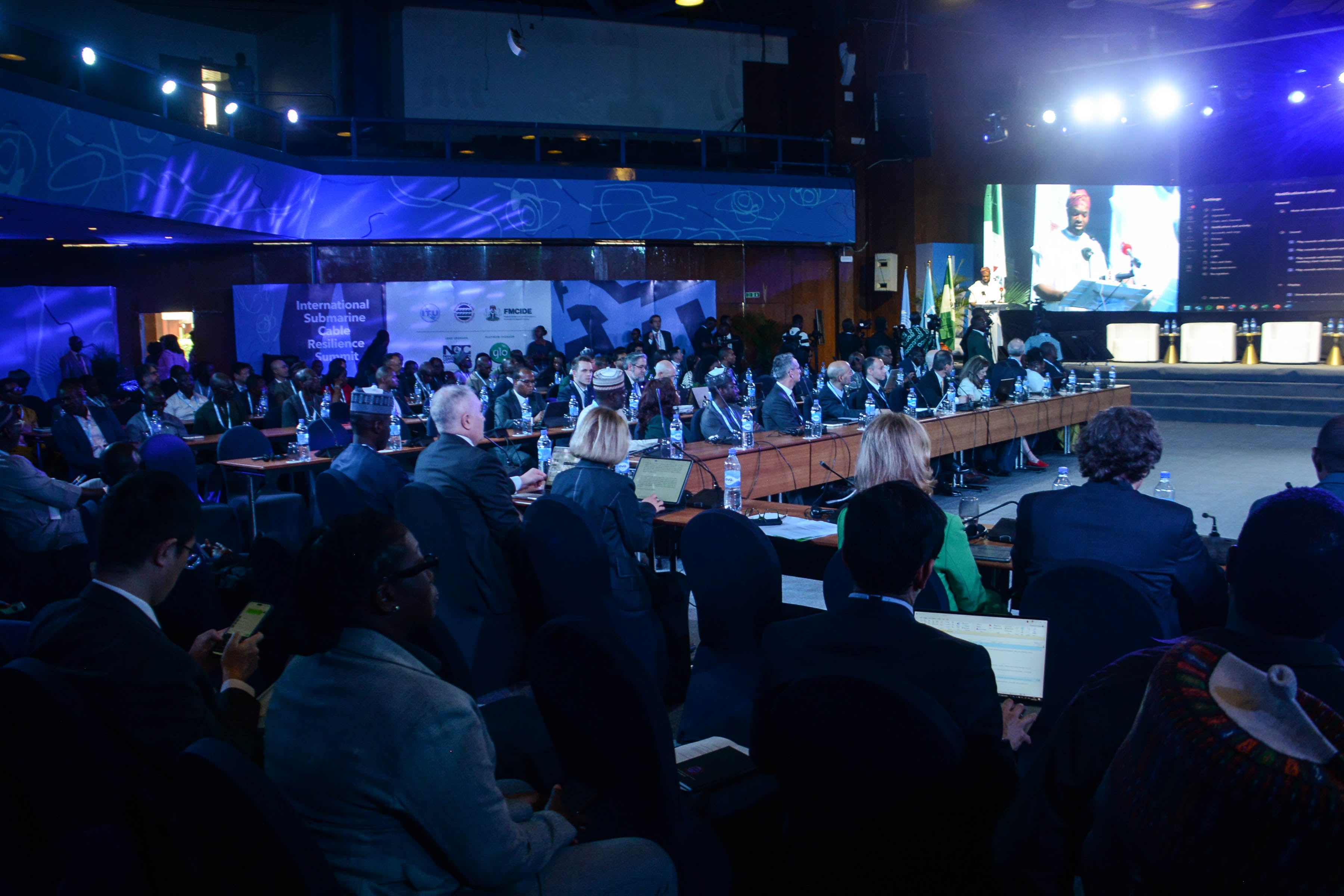
El ministro de Economía Digital de Nigeria, Bosun Tijani, interviene en una cumbre mundial centrada en la prevención de interrupciones en las redes de conectividad globales, en febrero de 2025 en la capital, Abuya.
  •  

A cauda que salvou vidas: como 9 pessoas sobreviveram à queda de um Boeing que matou 96 pessoas em 76 segundos

Uma tragédia que marcou a aviação civil da Nigéria completa 20 anos nesta quinta-feira: em 29 de outubro de 2006, o Boeing 737-200 decolou do Aeroporto Internacional Nnamdi Azikiwe, em Abuja, para o voo 53 da ADC Airlines, mas caiu pouquíssimo tempo depois, matando 96 pessoas – entre elas autoridades políticas – e deixando apenas nove sobreviventes.

A repercussão do episódio na época mudou as diretrizes de segurança de voo e treinamento de pilotos na Nigéria, que passaram a ser mais rigorosos após a reação ao caso.

O que aconteceu?

O voo ADC 53 saiu de Calabar, fez uma escala em Lagos e pousou na capital federal, Abuja, por volta das 10h20 (horário local) do dia 29 de outubro de 2006, antes de ir para seu destino final, Sokoto, no extremo norte da Nigéria. Por volta das 11h14, a tripulação solicitou autorização para dar partida aos motores, apesar da forte instabilidade meteorológica, com tempestades de rápida formação sobre a região do aeroporto.

O capitão Charles Kolawole Atanda e o Primeiro Oficial Celestine Okonneh ignoraram os avisos da torre de controle de Abuja sobre as rajadas de vento e pediram autorização imediata de decolagem na Pista 22. Demorou apenas 76 segundos, após sair do solo e atingir aproximadamente 1.000 pés de altitude, para o avião entrar em uma nuvem de tempestade e perder sustentação.

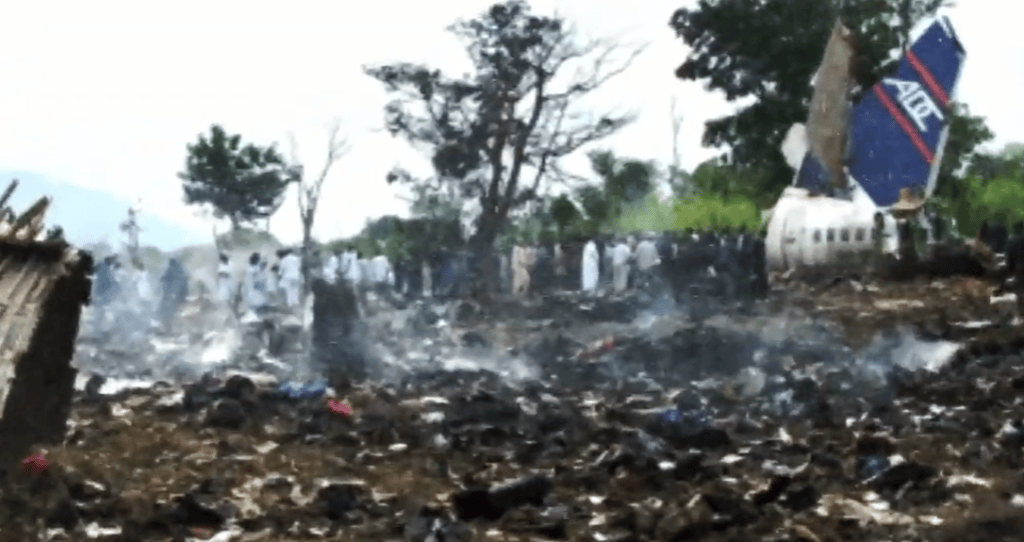
A asa esquerda colidiu com a copa de uma árvore e a aeronave despencou em alta velocidade em um campo agrícola, explodindo no impacto. As partes dianteira e central da fuselagem ficaram destruídas, mas a cauda do avião partiu-se e permaneceu quase intacta.

Mortos e feridos

Eram 105 ocupantes. Entre os 100 passageiros estavam figuras que vinham ganhando notoriedade na sociedade nigeriana, como o Sultão de Sokoto, Muhammadu Maccido (considerado na época a maior autoridade muçulmana da região), senadores, diplomatas e três filhas do então governador do estado de Kogi, Ibrahim Idris.

Apenas nove pessoas acomodadas no fundo do avião sobreviveram: uma comissária de bordo e oito passageiros – entre eles as três filhas do governador. Todos saíram do acidente apenas com ferimentos leves.

Investigações

acidente ADC 53 nigéria
Parte traseira do avião ficou quase intacta, e nove pessoas sobreviveram à tragédia do ADC 53 na Nigéria, em 2006 • Reprodução/Youtube

As investigações foram conduzidas pelo antigo Bureau de Investigação de Acidentes (AIB, na sigla em inglês) da Nigéria, renomeado atualmente para Gabinete de Investigação de Segurança, com ajuda do Conselho Nacional de Segurança nos Transportes (NTSB) dos Estados Unidos.

A perícia concluiu que houve “erro do piloto e fenômeno meteorológico adverso”: ao atravessar a tempestade, o avião sofreu uma microexplosão descendente (que acontece quando uma coluna de ar extremamente densa e fria despenca de uma nuvem de tempestade em alta velocidade), perdendo repentinamente a sustentação do ar.

Além disso, o “nariz” da aeronave ficou excessivamente para cima, na tentativa de ganhar altitude, interrompendo o fluxo de ar para os motores Pratt & Whitney JT8D-15. O erro primário, no entanto, foi a decisão dos pilotos em decolar em condições perigosas e desfavoráveis, contrariando avisos explícitos e procedimentos padrão.

O relatório apontou ainda que o radar primário do aeroporto de Abuja estava desligado no momento do acidente, atrasando por alguns minutos a localização exata dos destroços pelas equipes de resgate. Havia irregularidades ainda na licença de voo do primeiro oficial.

Melhorias

A tragédia do Voo 53 repercutiu, gerando comoção nacional e uma onda de protestos no país sem precedentes. Entre 1995 e 2006, foram mais de 500 mortos em acidentes aéreos na Nigéria.

Para dar uma resposta, o então presidente Olusegun Obasanjo exonerou e remanejou o Ministro da Aviação, Babalola Borishade, ordenando uma varredura completa nas companhias aéreas. A ADC Airlines teve sua licença operacional suspensa por tempo indeterminado e encerrou definitivamente suas atividades em 2007.

Além disso, passou a ser obrigatório para todos os pilotos comerciais do país o treinamento periódico de procedimentos de reconhecimento e recuperação de windshear (mudança brusca na direção ou na velocidade do vento em uma curta distância ou intervalo de tempo) em simuladores de voo. Desde então, a Nigéria reduziu radicalmente seus índices de acidentes na aviação comercial.

  •  

Ebola Workers in Congo Attacked by Machete Mob as Cases Pass 10,000

Two community health workers trying to spread awareness of Ebola in the eastern Congo were attacked by a machete-wielding mob on Friday, further demonstrating the difficulty of controlling the deadly disease among hostile and suspicious rural residents as the total number of cases surpassed 10,000.

The post Ebola Workers in Congo Attacked by Machete Mob as Cases Pass 10,000 appeared first on Breitbart.

  •  

Risk grows of continental spread of Ebola after case is reported in Nigeria

The risk of continental spread of Ebola looms as Nigeria becomes the fourth African country to report a confirmed case of the deadly virus since the outbreak was declared in the Democratic Republic of Congo (DRC) in mid-May.

Caused by the rare Bundibugyo strain of the virus, it has since become the world’s second-deadliest Ebola outbreak ever and the fastest-growing on record. It has killed 4,803 patients, nearly half of all the 9,876 confirmed cases in the eight provinces of DRC’s eastern region as of October 23​

The real scale of deaths is likely much higher, since community transmission of the virus had already begun in DRC’s Ituri province by mid-February, three months before it was detected and officially declared an outbreak on May 15.​

Neighboring Uganda, which is backing armed groups in Ituri, undermining the already delayed and severely underfunded health response, also reported its first case on May 15. However, after two deaths and 20 confirmed infections, the health ministry declared Uganda Ebola-free in late July. The WHO also certified this in late August, after no new cases were confirmed for 42 days.​

However, its Ebola-free status has now come under question with the first case in Nigeria. The 42-year-old patient is a Ugandan national and Swiss citizen. She is the wife of a Swiss diplomat at its embassy in Nigeria’s capital, Abuja, where she resides.​

After a two-and-a-half-week-long vacation in Uganda, she and her husband returned to Abuja on October 3. Four days later, she fell ill. Initially suspected of Malaria, she was treated at two private hospitals before being tested positive for Ebola and isolated on October 20.​

Uganda makes a false claim

Soon after she was tested positive in Nigeria, the Ugandan health ministry claimed that the patient had traveled to the DRC.

However, the “information supplied to WHO did not include [her] travel” to any country other than Uganda, WHO representative in Nigeria Pavel Ursu said on October 22.

“So far, there ​is no validated information that this case traveled to DRC,” added Wessam Mankoula, the Head of Health Emergencies of the continent’s highest health authority, the Africa Centers for Disease Control and Prevention (CDC).​

Then on October 23, the Swiss foreign ministry said explicitly that the patient had not traveled to the DRC, directly contradicting Uganda’s claim, indicating that she was infected in Uganda.

Uganda, meanwhile, still maintains that it has no confirmed Ebola cases. The WHO and Africa CDC are now examining a hypothesis that she may have contracted the virus at the airport in Uganda’s capital, Kampala, where a Kenyan businessman, infected during his travels in the DRC, was also present while she was boarding her flight to Abuja.

The Kenyan businessman had spent seven years in the DRC. While traveling on business, he had already fallen ill in September and was treated in multiple hospitals, but was not diagnosed with Ebola. Early symptoms of Ebola are often similar to other diseases in the region, including Malaria. He was reportedly provided antibiotics and sent home at one of the hospitals.​

An illegal border crossing

The man in question traveled by road to Uganda from the conflict-ridden, mineral-rich, Ebola-affected province of North Kivu, parts of which are occupied by the Rwandan army and its proxy, the M23, which Uganda also supports, according to the UN.​

It is unclear how the Kenyan businessman reached Kampala from North Kivu. Soon after the outbreak was declared, Uganda had closed the border with DRC, except for humanitarian trucks. Mankoula said he had crossed the border illegally.

In Kampala, he boarded a flight to Nairobi on October 3 from Entebbe Airport, through which the Uganda-born Swiss citizen who later tested positive in Nigeria was also passing that day to catch her flight to Abuja.

“Has there been any touch or contact between two cases [him and the case in Nigeria] at the airport at the same time?” This is one of the theories that is currently under investigation,” said Mankoula of the Africa CDC.  

When the Kenyan businessman landed in Nairobi, he was already ill. The family member who picked him up from the airport drove him straight to the Nairobi Hospital, where he died two days later. Eight others who came into contact were also infected and isolated. They include four health workers and four family members, one of whom died later on October 23.

Even as health authorities examine whether he was also the source from whom the Nigerian case contracted the virus,  virologist Marion Koopmans, who is also a member of the WHO’s Ebola emergency committee, has cast doubt on this theory.

“I think that is very speculative unless there is evidence of sharing the same ​space in a manner that could explain that. Random presence at the same location, a large airport, is not a supported epidemiological link by any standard of what we currently know,” she said.

If he was not the source, that could mean Ugandan authorities are either not revealing or are unaware of potential cases in the country. Even if he was the source, questions remain about Uganda’s Ebola-free status, as others he may have come into contact with – either in the airport or on his way to it in Kampala –  could also have contracted the virus.

Nigeria at risk of community transmission

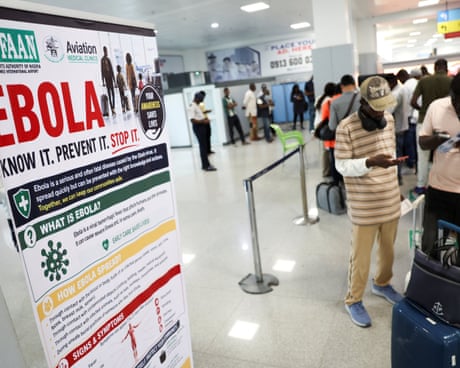
Either way, Nigeria is now at risk of community transmission. The Nigerian case landed on October 3 in Abuja, at one of the busiest airports in West Africa. Only on October 20, 13 days after developing symptoms, was she tested positive for Ebola and isolated.​

Amid fears that the virus may have infected others who may have come into contact with her during this period, especially health workers, Nigerian Health Minister Muhammad Ali Pate said that authorities were tracing all 44 contacts. “We are trying to contain it so it doesn’t go out to the communities. Hopefully, it won’t get to that,” he added.​

“When we identified at-risk countries, Nigeria was not part of this list. It is now. That list would have to be redrawn, and North and Southern Africa could also be at ​risk,” said Jean Kaseya, director-general of the Africa CDC, adding, “We need to consider that no one is safe today.”

  •  

Eni, ceduta la controllata nigeriana AENR ad Apex Global Energy

Eni, completata la cessione delle attività onshore e in acque poco profonde: il Gruppo resterà presente in Nigeria nel deep offshore e in Nigeria LNG

Eni ha finalizzato la cessione della propria controllata Agip Energy and Natural Resources (Nigeria) Limited (AENR) ad Apex Global Energy Limited (APEX), società interamente posseduta da Sterling Oil Exploration and Energy Production Company Ltd. (Sterling), tra i principali operatori attivi nell’onshore nigeriano. AENR, interamente controllata da Eni, opera in Nigeria nell’esplorazione e produzione di idrocarburi onshore e in acque poco profonde, attraverso una partecipazione del 5% nella Renaissance JV.

La joint venture vede Renaissance con una quota del 30% e il ruolo di operatore, TotalEnergies con il 10% e Nigerian National Petroleum Company Limited (NNPC) con il 55%. La transazione ha ottenuto l’approvazione di tutte le autorità competenti e si inserisce nella strategia di Eni di ottimizzazione delle attività upstream, attraverso il ribilanciamento del portafoglio e la dismissione degli asset considerati non strategici.

La cessione di AENR non comporta però l’uscita di Eni dalla Nigeria. Il Gruppo continuerà infatti a essere presente nel Paese con attività di esplorazione e sviluppo di asset deep offshore. Eni manterrà inoltre la propria partecipazione in Nigeria LNG, proseguendo così le attività nel Paese nei segmenti ritenuti strategici.

L'articolo Eni, ceduta la controllata nigeriana AENR ad Apex Global Energy proviene da Affaritaliani.it.

  •  

Mystery over source of Ebola infection in Nigeria fuels concern about spread of virus

Switzerland says patient is wife of Swiss diplomat and believed to have contracted virus while travelling in Uganda

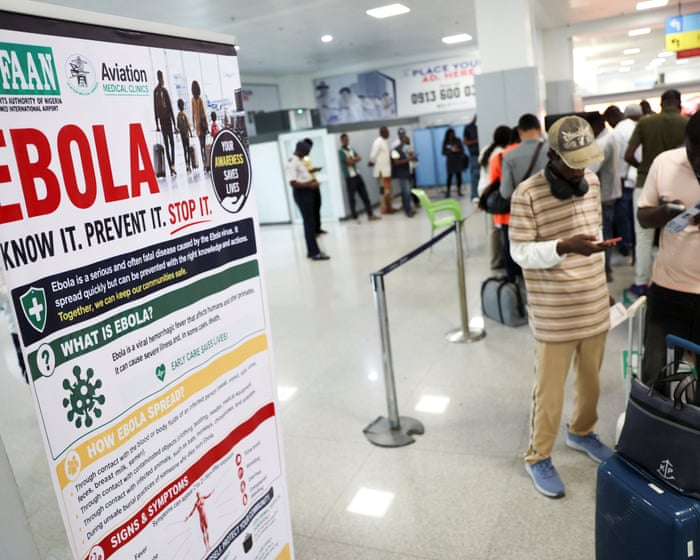
Health officials across Africa are racing to determine how Nigeria’s first Ebola patient ⁠in more than a decade ⁠became infected, amid fears ​the outbreak could spread further after reaching a fourth African country.

The Swiss foreign ministry said on Friday the patient in Nigeria, the Ugandan-born wife of a Swiss diplomat based in Abuja, had not travelled to the Democratic Republic of ⁠Congo, where the outbreak was first detected in mid-May before spreading to Uganda, Kenya and now Nigeria. The woman was believed to have contracted Ebola while travelling with her husband in Uganda, the ministry added.

Continue reading...

© Photograph: Sodiq Adelakun/Reuters

© Photograph: Sodiq Adelakun/Reuters

© Photograph: Sodiq Adelakun/Reuters

  •  

Ebola Outbreak in Africa Reaches Widest Expansion Ever

Health officials are urgently seeking answers about the origins of a case newly identified in Nigeria, the first in that West African nation.

© Marvellous Durowaiye/Reuters

Nizamiye Hospital in Abuja, Nigeria, where the country’s first Ebola patient was admitted this week. An African health official said that if authorities could not come up with ways to stamp out the outbreak, “the whole continent can be affected.”
  •  

Integration and the Neighbours Who Integrated Perfectly Until You Had to Live Next Door

How successful is racial integration in Britain? The ultimate test, says James Hartwood, is living next door – which is when even small cultural differences are magnified to the max and tensions can boil over.

The post Integration and the Neighbours Who Integrated Perfectly Until You Had to Live Next Door appeared first on The Daily Sceptic.

  •  
❌