Pike said she went into the execution chamber prepared to die in peace and woke up alone and confused in a hospital bed, and now lives in constant pain.
Pike said she went into the execution chamber prepared to die in peace and woke up alone and confused in a hospital bed, and now lives in constant pain.
The US Federal Communications Commission (FCC) floated new rules to bar telecoms providers on a list of entities deemed national security threats from directly accessing US phone numbers for VoIP calls, a move slammed by Chinese authorities as unreasonable suppression of its enterprises.
Should the rules be approved at an FCC meeting in November and subsequently introduced, the curbs are intended to block access to the numbers from companies on its Covered List. This includes divisions of China Mobile, China Unicom and China Telecom, alongside numerous vendors.
The proposal is part of an ambition by the agency to cut so-called illegal robocalls in the US and is being promoted by the authority as a national security measure.
In comments published by Chinese state news agency Xinhua today (30 October), the country’s foreign ministry representative Guo Jiakun slammed what was described as unreasonable suppression of the country’s enterprises.
He reportedly said the US had “overstretched the concept of national security and abused state power to unreasonably suppress Chinese companies”.
Guo argued such moves seriously impede normal economic and trade exchanges and “do not serve the interests of any party, including US companies and consumers”.
China plans to take measures to safeguard “legitimate rights and interests”, Guo said.
Defensive FCC chair Brendan Carr unveiled the move on 28 October, saying it would strengthen the nation’s robocall defences.
The plan would require companies to obtain national security-focused certifications to access private numbers, with changes set to be made to US VoIP numbering authorisation rules.
“We are going to enhance the vetting process that all providers must go through before they obtain access to telephone numbers,” Carr said.
“This will make it substantially more difficult for bad actors to operate in our networks. This step is part of our broader effort to look at every portion of the lifecycle of a call and make it more difficult for illegal robocalls to get through.”
The proposal is the latest FCC move targeting enterprises on the Covered List, which is largely made-up of companies from China.
Companies in the crosshairs and authorities in China have repeatedly slated such measures.
Canadian operator Rogers broadened the reach of a direct-to-device (D2D) satellite service by striking roaming deals covering key nations in and around the Pacific Ocean.
Rogers Satellite users are gaining access when in Australia, New Zealand and Japan in a move which brings the total number of non-domestic nations accessible to four.
The company lit a roaming deal with T-Mobile US earlier this year.
Rogers Satellite offers messaging and access to apps including Facebook Messenger, X and WhatsApp. There are also mapping services from Google and AllTrails, with AccuWeather providing meteorological information.
“Canadians want to stay connected wherever their travels take them,” Rogers CTO Mark Kennedy said.
Customers on Rogers’ Ultimate plans along with some Roam Like Home and Travel Passes options can access its D2D service.
The operator’s roaming arrangement in Japan looks likely to be through KDDI, which tapped Rogers to provide roaming access for its D2D users earlier this year.
Mobile World Live (MWL) brings you our top three picks of the week as a pair of US operators shrugged off SpaceX’s mobile threat, Anthropic’s IPO filing revealed mounting revenues and costs, and Amazon secured FCC clearance for its $11.5 billion acquisition of Globalstar.
T-Mobile US CEO quashes SpaceX MVNO talk
What happened: T-Mobile US CEO Srini Gopalan and Verizon CEO Dan Schulman ruled out MVNO agreements with SpaceX in their respective earnings calls, as the latter played down the threat from Elon Musk’s Starlink as it prepares to enter the US mobile market.
Why it matters: “I see no room for an MVNO with SpaceX,” Gopalan said on the company’s Q3 results call, adding a resale arrangement would be “a wholly different thing”.
Earlier in the week, Schulman argued building of a competing terrestrial network would require 65,000 to 80,000 macro sites and estimated costs of $300 billion to $500 billion over seven or eight years. “There’s no magic wand, there’s no secret sauce, there’s no shortcut,” he said. Last week, AT&T CEO John Stankey similarly questioned the threat posed by SpaceX, emphasising the time and scale of construction required to match incumbent networks.
The comments follow reports SpaceX is seeking access to at least 80,000 US cell sites as it develops Starlink Mobile, targeting an early 2028 launch for its direct-to-device (D2D) service.
According to Reuters, AT&T shares fell 5.6%, Verizon lost 1.6% and T-Mobile dropped 5% in the wake of reports on SpaceX’s cell-site plans. Bernstein analysts told the publication: “The competitive impact may still be years away, but anticipation alone, reinforced by each successive spectrum and infrastructure move, is likely to remain an overhang on sector sentiment.”
What happened: Anthropic filed to list Class A shares on the Nasdaq Global Select Market under the symbol ANT, disclosing a sharp rise in revenue alongside substantial infrastructure commitments and a large net loss.
Why it matters: Inits registration statement with the US Securities and Exchange Commission (SEC), the AI player revealed it generated $16.3 billion in revenue in the first half of 2026, compared with $1.2 billion a year earlier and $4.6 billion for the whole of 2025. However, it reported a net loss of $80.7 billion. Compute and infrastructure costs accounted for most of its $2.4 billion cost of revenue.
Jonathan Tower, founder and managing partner of Catapult, told Fortune: “Extraordinary revenue growth doesn’t necessarily trend into extra extraordinary investment returns.” He warned investors risk “confusing the magnitude of the AI opportunity with the profitability of its participants”.
Anthropic warned in its filing: “We do not expect our revenue will continue to grow at comparable rates, and we cannot assure you that it will continue to grow at all.” It attributed its explosive growth to “early-stage adoption dynamics, the nascency of the AI market, and rapid initial customer expansion,” noting that it “may not be sustainable over time, and may decline significantly and more rapidly than we anticipate” as the market matures.
What happened: Amazon’s proposed $11.5 billion acquisition of Globalstar cleared a key regulatory hurdle after the US Federal Communications Commission (FCC) approved the deal, advancing the company’s plans to add D2D services to its Leo satellite business.
Why it matters: The FCC Space Bureau approved Amazon’s acquisition of around 25MHz of Globalstar’s mobile satellite spectrum and authorised access to its C-3 system, a 48-satellite constellation set to increase network capacity.
The deal also preserves Apple’s pact with on Globalstar for satellite features, with Amazon agreeing to maintain connectivity for current and future iPhones and Apple Watches.
The regulator explained the transaction could improve coverage in underserved areas, strengthen emergency communications and expand industrial and enterprise data services.
Earlier this year, FDM CCS Insight principal analyst Luke Pearce said the deal gives Amazon “a major shortcut in providing satellite services to smartphones” and “strengthens its position against SpaceX’s Starlink”.
Richard Haas, spectrum policy consultant at LS Telecom, argued Amazon was acquiring Globalstar “for its spectrum assets first and foremost”, noting “companies aren’t willing to wait until regulators start assigning more MSS spectrum” and were buying assets to catch up with Elon Musk’s satellite venture.
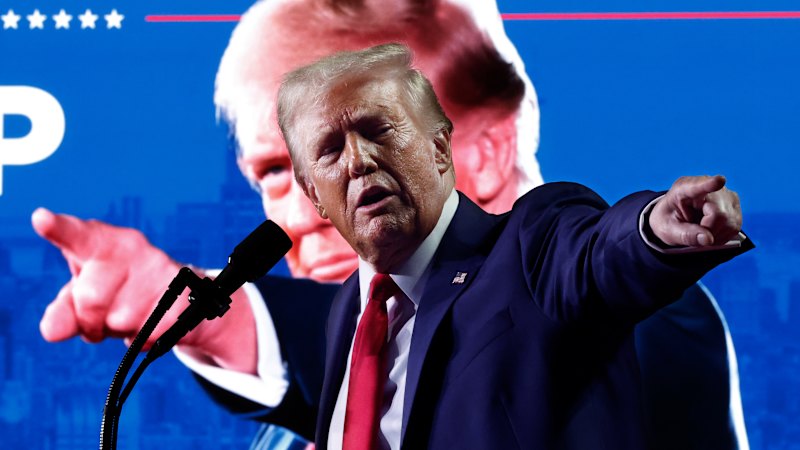
The cost of living, the explosive growth of data centres, political integrity and the popularity of President Donald Trump himself are under scrutiny in this election cycle.
The cost of living, the explosive growth of data centres, political integrity and the popularity of President Donald Trump himself are under scrutiny in this election cycle.
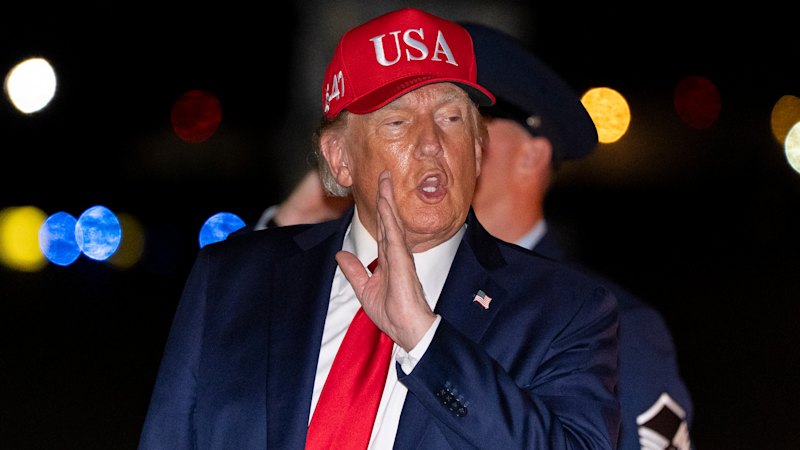
The president will phone into nearly 20 “tele-rallies” in the final days of the campaign instead of travelling to Kansas and Iowa, saying he no longer needs to.
The president will phone into nearly 20 “tele-rallies” in the final days of the campaign instead of travelling to Kansas and Iowa, saying he no longer needs to.
Conservatives have slammed Barack Obama for mocking a beloved American institution. But is this restaurant really as tacky as Donald Trump’s White House decor?
Conservatives have slammed Barack Obama for mocking a beloved American institution. But is this restaurant really as tacky as Donald Trump’s White House decor?
A US university tackled discrepancies in broadband access across its residences by tasking Boldyn Networks to provide a network which treats all buildings as equals.
The neutral host infrastructure player installed the network across 44 residences at Radford University in the US state of Virginia. Around 3,000 students are now being promised a consistent browsing experience through the institution’s ResNet service.
Matt Loecke, SVP for Higher Education with Boldyn Networks US, said the network takes “the day-to-day” off the plate of “an already stretched IT team” at the university.
Boldyn Networks explained it handles the everyday running of the network, enabling Radford University’s IT staff to focus on “initiatives including complex ERP and LMS transitions”.
It stated the IT team would likely also benefit as they work to deploy AI capabilities.
The company cited predictability as a key benefit for Radford University, highlighting hardware management, predetermined service costs and full-time customer care facilities.
Ryan Bailey, director of IT infrastructure at Radford University, said the institution wants to remove barriers to students getting online and welcomed the option to keep his staff focused on “projects that will define how we teach and work” over the next ten-years.
Japanese conglomerate Hitachi Group revealed when a fresh entity borne of two US subsidiaries would commence operations, a move unveiled earlier this year as it looks to capitalise on businesses’ digital transformation plans.
Hitachi Digital Services and GlobalLogic are being combined to provide a one-stop shop for digitalisation. The company originally explained the united business would aid internal transformations and help external organisations with their own digital shifts.
The united Hitachi Digital entity is scheduled to launch on 1 April 2027, comprising around 35,000 staff across 27 countries.
Hitachi stated the business can offer extensive expertise in vertical industries and emerging applications of AI including for physical purposes.
Staff are also well-equipped to handle AI data and intelligence, cloud and site reliability engineering, and enterprise systems. Hitachi highlighted “longstanding operational technology and domain knowledge” in the industrial sector.
Jun Abe, EVP and head of the Digital Systems and Services Sector, said Hitachi Digital would drive an evolution of the company into a “global digital services” player which would “work alongside clients throughout their business transformation”.
Hitachi is hoping to feel the benefits of the new unit itself through a so-called “customer zero” strategy, whereby it applies fresh services and knowledge to its own digital transformation.
The company previously stated Hitachi Digital would target businesses operating in the automotive, rail and energy sectors.
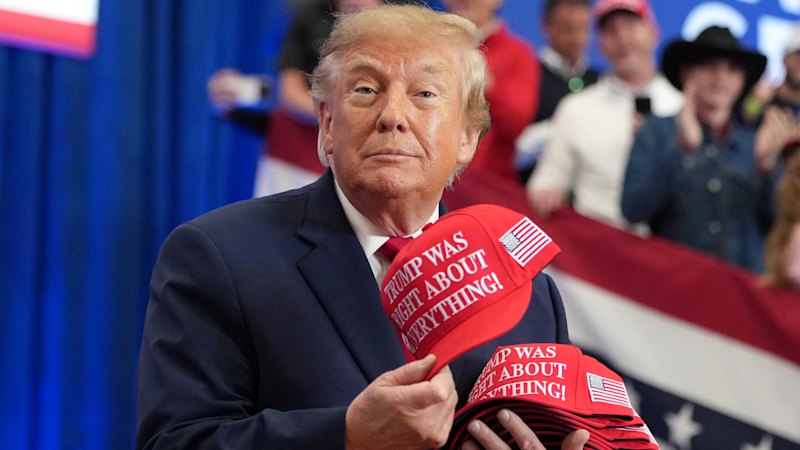
The midterm congressional elections will give Americans a chance to deliver a verdict on how US President Donald Trump’s second term has delivered on its promises.
The midterm congressional elections will give Americans a chance to deliver a verdict on how US President Donald Trump’s second term has delivered on its promises.
 Login