Login

WFP Warns Hunger in Haiti to Reach Historic High in 2027
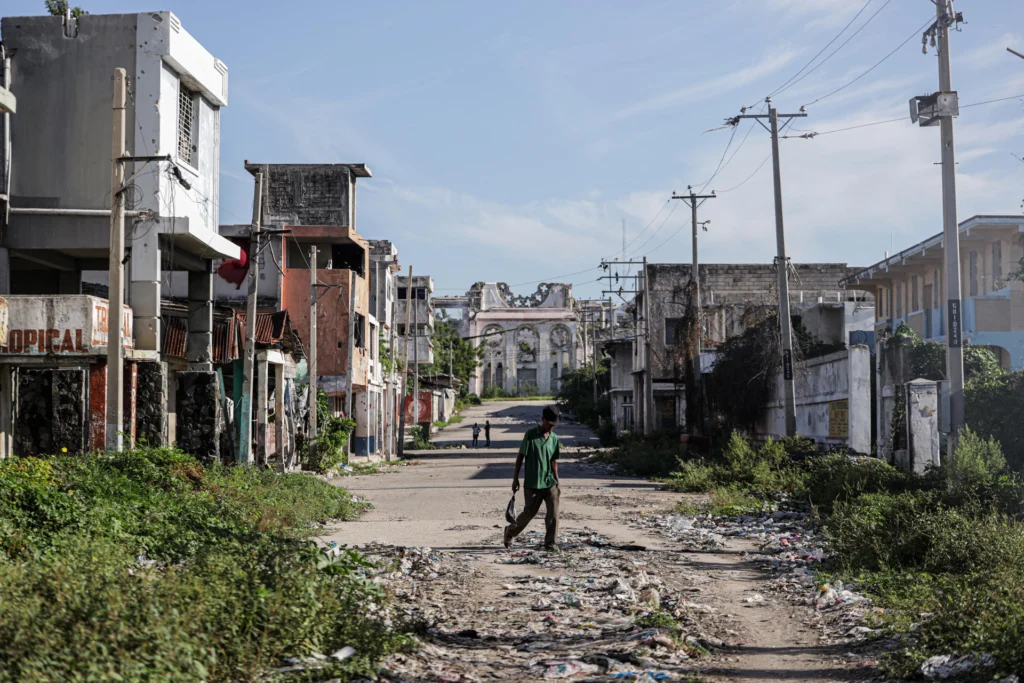
The UN World Food Programme warned that 6.35 million Haitians will suffer acute food insecurity between March and June 2027, a record driven by armed violence, economic collapse and climate shocks.
The projection marks an increase of more than 500,000 people compared to the same period in 2026. WFP attributed the escalation to the violence of armed groups, economic instability, poor agricultural yields and the impact of the El Niño weather phenomenon.
RELATED: Haiti Postpones Presidential Elections Until 2027 Amid Escalating Gang Violence
1.8 million of residents will fall into Phase 4 of the Integrated Food Security Classification, the category corresponding to nutritional emergency. At that critical stage, families face extreme food shortages, high mortality rates and severe malnutrition, forcing them into desperate survival strategies just to meet basic needs.
The security spiral has displaced more than 1.5 million people internally. Forced to abandon their homes and traditional livelihoods, most now survive in improvised camps marked by poor hygiene and extreme overcrowding. Many depend entirely on humanitarian aid for at least one daily ration.
#Haiti
— The Integrated Food Security Phase Classification (@theIPCinfo) October 29, 2026
Escalating insecurity, mass displacement, economic decline and climate shocks deepen the food crisis, with approximately half the population facing IPC Phase 3 or above acute food insecurity, including 1.8 million people experiencing Emergency (IPC Phase 4).
Read more:… pic.twitter.com/vuGk3KyqNH
Families Arrive With Nothing
Lauren Landis, WFP’s country’s Director in the Caribbean nation, warned that the constant mass displacements deepen the desperation of families who reach host areas without any belongings. She stressed the immediate need to combine emergency food assistance with long-term investments that allow farming communities to withstand climate and economic crises.
The agency maintains coordinated work with local authorities to assist 2.6 million citizens through social protection programs. These operations include direct food distribution, emergency cash transfers, school feeding initiatives and actions specifically aimed at eradicating childhood malnutrition.
The warning comes amid a broader security crisis. Armed groups control large portions of the capital and surrounding areas, cutting off roads, markets and farmland. That fragmentation has crippled agricultural production in a country that once fed itself.
El Niño phenomenon has compounded the damage. Irregular rainfall and prolonged dry spells reduced harvests across the north and south, leaving rural families with nothing to sell and nothing to store. The result is a hunger crisis that no single harvest will reverse.
🚨Haiti: Acute hunger is on track to reach record levels as violence, economic instability, displacement and El Niño unravel fragile food security gains.
— World Food Programme (@WFP) October 29, 2026
Read more https://t.co/5SvrnvPo7i pic.twitter.com/d18z3qmHZX
Funding Gap Threatens Aid
The United Nations issued an urgent appeal to the international community to increase financial resources and technical assistance for the Caribbean nation. The agency stressed that without predictable funding, the continuity of vital aid is at risk.
Millions of vulnerable people would face an irreversible deterioration in their living conditions, the warning stated. The scale of the projected crisis leaves little margin for delay. Food insecurity in Haiti has climbed steadily for years. Violence, inflation and natural disasters have pushed the country deeper into dependence on external assistance. The new figures confirm that the trend is accelerating rather than easing.
WFP’s response seeks to keep families fed today while rebuilding the systems that could feed them tomorrow. Landis argued that only that combination, emergency relief plus investment in agriculture, can break the cycle.
Between March and June 2027, the period covered by the projection, millions will need support that has not yet been secured. The question is not whether hunger will rise, but whether the world will respond in time.