ISLAMABAD: Pakistan and Saudi Arabia agreed on Friday to strengthen strategic cooperation in oil storage, refinery upgrades, crude oil and liquefied petroleum gas (LPG) procurement, and the minerals sector to promote bilateral economic ties, according to a statement issued by the Petroleum Division.
Saudi Arabia also announced the immediate introduction of same-day visa processing for Pakistani citizens at its embassy in Islamabad.
Pakistan has been planning to boost domestic storage for crude oil and refined products to increase its energy security. With no strategic petroleum reserves, the country has been left exposed to oil supply shocks resulting from the US-Iran war that has choked supplies through the Strait of Hormuz.
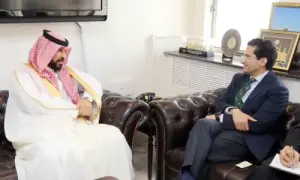
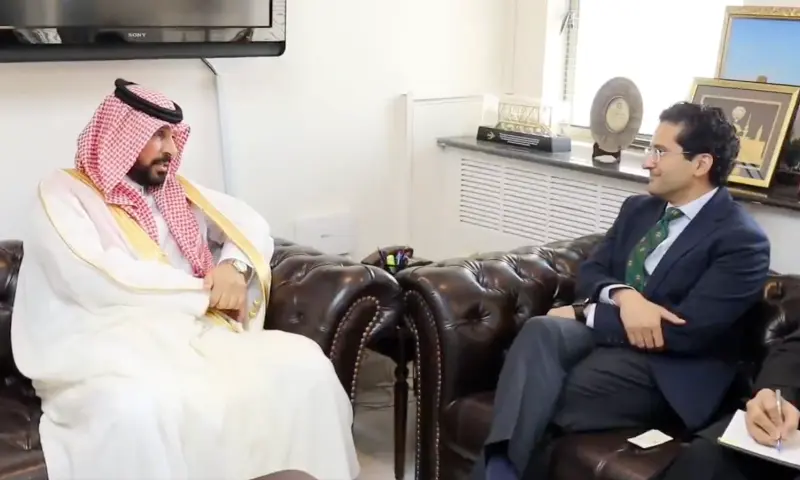
The developments were announced after Petroleum Minister Ali Pervaiz Malik met Saudi Arabia’s new ambassador to Pakistan, Dr Rajeh bin Tami Al-Baqami, to discuss opportunities for enhancing cooperation in the mining, petroleum and energy sectors, including strategic oil storage, refinery upgrades, LPG supplies and commercial engagement.
The minister appreciated the longstanding strategic partnership between the two countries and said Pakistan had approved a tax-neutral bonded policy modelled on international energy hubs such as Fujairah and Singapore, according to the statement.
“Under this framework, Saudi companies can establish commercial oil reserves in Pakistan without local tax liabilities, offering an opportunity to diversify maritime transit risks associated with the Strait of Hormuz and Bab al-Mandab while facilitating access to Asian markets,” the statement said.
“The petroleum minister highlighted that strategic oil storage facilities in Pakistan would provide Saudi Arabia with greater flexibility in managing supply routes and accessing regional markets,” it added.
The statement further quoted the minister as saying that Pakistan planned to develop a major petroleum storage and refining complex at Hub in Balochistan under the guidance of Technip Energies UK.
“The proposed facility, supported by the prime minister and the chief of defence forces, will have the capacity to accommodate Very Large Crude Carriers (VLCCs) and strengthen Pakistan’s potential as a regional energy corridor serving Central Asian and Chinese markets,” the statement quoted Malik as saying.
Malik also briefed the ambassador on investment opportunities under Pakistan’s ongoing refinery upgradation programme, which aims to modernise domestic refining infrastructure, improve operational efficiency and facilitate a transition to Euro-5 fuel standards.
He said the programme offered significant opportunities for Saudi investment and participation in Pakistan’s refining sector.
Appreciating Saudi Arabia’s support during recent global market disruptions, the minister thanked the Saudi authorities at Yanbu port for prioritising crude oil shipments to Pakistan.
He also discussed coordination with Saudi Aramco to increase crude oil procurement and arrange dedicated LPG shipments to meet Pakistan’s energy needs, particularly amid an anticipated rise in domestic gas demand during winter.
Both sides underscored that the strong defence and strategic partnership between Pakistan and Saudi Arabia provides a foundation for broader regional peace, stability and economic cooperation.
The Saudi envoy expressed Riyadh’s deep appreciation for Pakistan’s longstanding support, saying the two countries stood together in all circumstances.
The ambassador emphasised that the two countries’ defence and energy cooperation frameworks aimed to promote peace, stability and economic growth across the region.
The minister also announced that the Saudi embassy in Islamabad had introduced same-day processing of visa applications for Pakistani citizens to facilitate travel and strengthen business, cultural and people-to-people exchanges.
Malik invited Saudi Arabia’s Vice Minister of Mining, Khalid al-Mudafier, to attend the Pakistan Minerals Investment Forum, scheduled to be held in Islamabad on November 12 and 13, highlighting further opportunities for cooperation and investment in Pakistan’s minerals sector.
Both sides expressed their commitment to strengthening their longstanding relationship through enhanced cooperation, investment and mutually beneficial partnerships in the energy and petroleum sectors.
The minister assured the ambassador that Pakistan deeply valued its historic relationship with Saudi Arabia and remained committed to expanding cooperation across strategic sectors.
Earlier in July, Prime Minister Shehbaz Sharif directed authorities to increase the country’s strategic petroleum reserves as a cabinet committee approved amendments to the oil refining policy.
LAHORE – The Lahore High Court has ordered the traditional slip (parchi) system for patients in all government hospitals across Punjab to be abolished within four weeks.
The court ruled that patients arriving at emergency and outpatient departments must not be forced to stand in long queues to obtain slips and complete registration, and should instead be provided immediate medical examination and treatment.
Justice Malik Javed Iqbal Wains issued the written order on a petition filed by the Judicial Activism Panel. The court directed the Punjab Health Department to introduce an effective, technology-based system for managing patients in public hospitals, so that unnecessary delays, overcrowding and long queues at registration counters can be eliminated.
According to the court order, the petition concerning the lack of basic medical facilities in government hospitals has been pending since 2020. Despite several court notices and directions, no party has so far submitted an implementation report. The court held that the continued failure to comply with its orders reflects an unserious and negligent attitude on the part of the officials concerned.
During the hearing, Special Secretary Health Nabila Irfan assured the court that the traditional slip system in Punjab’s government hospitals would be abolished within four weeks and replaced with a modern and effective patient management system.
The court also directed the Punjab Health Department to submit a comprehensive report on the medical facilities available in government hospitals, their quality, and the steps taken to improve them.
The Lahore High Court ordered all concerned authorities to submit detailed implementation reports at the next hearing, warning that legal action may be taken against officers who fail to comply with the court’s orders without justification.
LAHORE – Punjab Chief Minister Maryam Nawaz has said that she will resign if even one rupee of corruption is proven against her.
Addressing a ceremony in Lahore, Maryam Nawaz said that where protests and vandalism take place every day, how can a laborer work? She said that to attract investment, the first step is to make the environment safe.
She said that if even one rupee of corruption is proven, she will step down, adding that a full-fledged campaign against corruption is under way in Punjab. Government employees who take bribes are being dismissed from service, and eradicating corruption is a priority.
Maryam Nawaz said that Punjab’s share in the national GDP is significant. She said encroachments that had lasted 25 years in Punjab have been cleared, and markets have been widened by removing illegal structures. Every sector, including industry, is undergoing change, she added, and Pakistan’s young population can become the country’s greatest asset.
A Pakistani traveler’s attempt to bring goat trotters and other food items into Canada proved costly, as he had his belongings seized at the airport and was also fined heavily.
Customs officials at Toronto Pearson International Airport found 16 kilograms of food items in the Pakistani passenger’s luggage.
According to the Canada Border Services Agency (CBSA), a trained detector dog at the airport signaled the presence of food items in the passenger’s baggage.
Upon searching the luggage, officers found goat trotters, chicken meat, desi ghee (clarified butter), and powdered milk.
Officials said the passenger had not declared these items to customs upon arriving in Canada. For violating the rules, all of the food items were confiscated and a fine of $1,350 was also imposed.
KARACHI – The National Cyber Crime Investigation Agency (NCCIA) has arrested a man in Karachi for allegedly defrauding a woman of Rs4.45 million by promising to marry her and later attempting to blackmail her using altered photographs.
According to the NCCIA, the suspect had created a fake identity under the name of Hussamuddin on a matrimonial application to establish contact with the victim.
Investigators said the suspect gained the woman’s trust by promising marriage and subsequently received Rs4.45 million from her through online bank transfers.
After obtaining the money, the suspect allegedly threatened to circulate her digitally altered photographs on social media and attempted to extort additional money by using the images as leverage.
The arrested suspect was identified as Hassam, son of Saleem. A case has been registered against him under the Prevention of Electronic Crimes Act (PECA) 2016.
During preliminary investigations, authorities reportedly discovered that the suspect may have targeted other women using a similar method.
The NCCIA has appealed to other potential victims to come forward and register complaints, assuring them that their identities will be kept strictly confidential.
The agency also advised users of matrimonial applications and social media platforms to exercise caution when interacting with strangers online and sharing personal information.
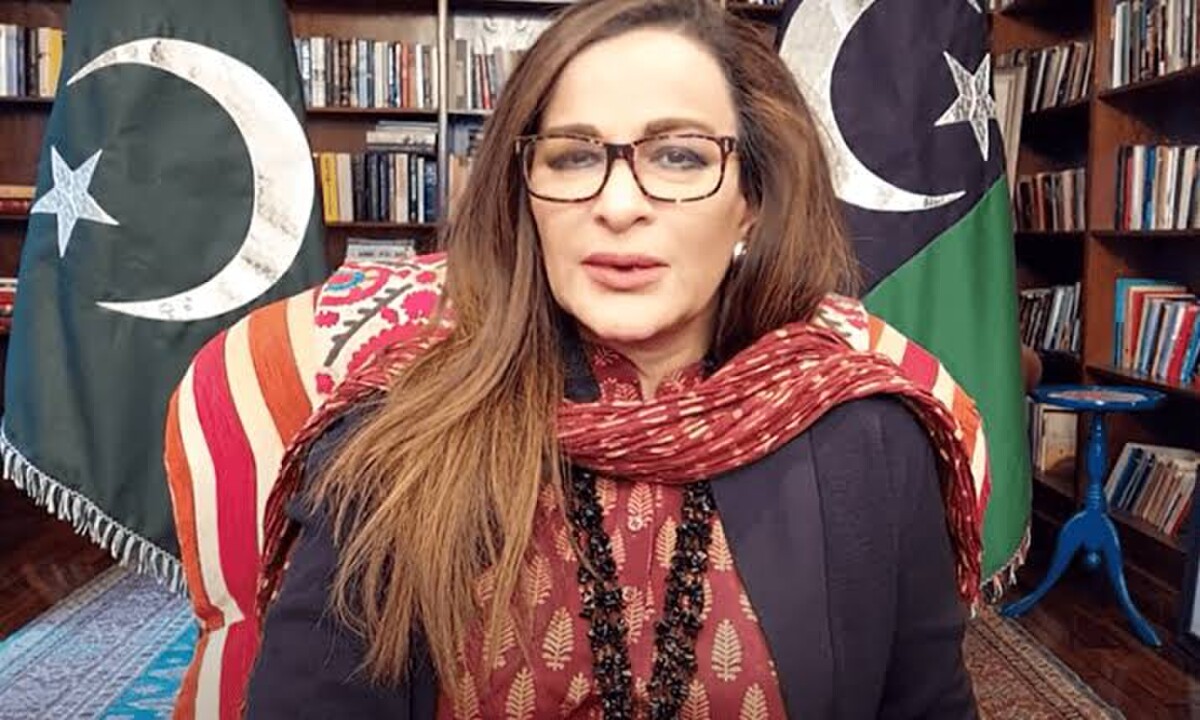
A PPP delegation called on Senate Opposition Leader Allama Raja Nasir Abbas on Friday and urged the opposition to join a proposed parliamentary committee on electoral reforms, Senator Sherry Rehman said after the meeting.
“He told us that he will respond [to the proposal] after consultation. We are hopeful that their response will be positive,” Rehman said in a video statement.
The proposal for the committee’s formation was shared by PPP chairperson Bilawal Bhutto-Zardari during the National Assembly (NA) on Thursday. He had said Parliament had decided to constitute a committee on electoral reforms in response to a PPP request and urged Opposition Leader in the NA Mehmood Khan Achakzai to nominate a representative to the committee since the opposition had described electoral rigging as a “fundamental issue”.
PTI lawmakers had quit the parliamentary standing committees last year on the directives of their party chief.
Another PPP delegation, comprising party’s secretary general Nayyar Bokhari, Senator Waqar Mehdi, Nadeem Afzal Chan and Rehman, visited Senate Opposition Leader Abbas today with yet another invitation to join the proposed body.
“Every political party should ensure its participation in the committee. We all know that the PTI has boycotted parliamentary committees. So we asked them to join this committee, play an active role in it, express their reservations and suggest reforms,” Rehman said in the video statement.
These committees, she said, were the “heart of parliamentary work”.
She further stated that the PTI should participate in other parliamentary committees as well and “strengthen Parliament’s role”.
Rehman added that Abbas had welcomed the PPP delegation, expressed gratitude to Bilawal and said they would respond to the proposal after consultation.
“We are hopeful that their response will be positive,” she said.
A day earlier, another PPP delegation invited Opposition Leader Mehmood Khan Achakzai to participate in the parliamentary committee to promote consultation and discussion among parliamentary representatives on electoral reforms.
Later, in a press conference, Raja Pervez Ashraf said the PPP delegation had a meeting with Achakzai on Bilawal’s instructions to invite him to join the committee.
“The PPP wants the PTI to participate in parliamentary standing committees as well as the electoral reforms committee,” he added.
Achakzai had sought time to consult before responding to the invitation, he said.
Addressing a rally in Karachi earlier this month, Bilawal had also extended an olive branch to the opposition parties, saying their positive engagement with the federal government could result in the reversal of governor’s rule in Khyber Pakhtunkhwa.
The PPP chairman had invited the opposition to join the Parliamentary electoral reforms process and “engage with the federal government”.
LAHORE: A judicial magistrate on Friday granted the National Cyber Crime Investigation Agency (NCCIA) a further four-day physical remand of the prime suspect in a Rs35 billion fraud involving the online sale of counterfeit US postage stamps.
The NCCIA produced suspect Faheem Akram and his co-suspect, Naeem, before the court after their previous four-day remand expired.
The investigating officer (IO) sought further custody of the suspects for interrogation.
Magistrate Naeem Wattoo granted the agency’s request and extended the physical remand of both suspects by four days.
The IO was directed to produce the suspects again on Nov 3.
The initial investigation revealed that the suspect had allegedly been operating a website since August 2023 through which he sold more than five million counterfeit US postage labels online.
According to the US Department of Justice, Akram was indicted by a federal grand jury in Florida in September 2026 over the alleged sale of more than 5.1 million counterfeit postage labels, which prosecutors say caused losses of more than $126 million to the US Postal Service.
US prosecutors allege that the website sold the labels for around $2 each, regardless of the weight, size or destination of a package. A US court order authorised the seizure and shutdown of the website.
The NCCIA had arrested the suspect, a resident of Khanewal, in Lahore.
Money trail
In a press conference on Oct 20, NCCIA’s Lahore Zone Additional Director Atif Ameer said that 16 bank accounts had been used in the scam. Seven of the accounts were operated by the suspect, five by his brother, two by his wife, and one each by his sister and aunt.
He said the agency had expanded the investigation across several parts of the country.
“Eight special teams were formed in Punjab, Islamabad and Sindh to trace the suspect and investigate the network,” he said and added the teams conducted raids at 35 locations and questioned 47 people as part of the investigation.
“Investigators also employed digital and forensic techniques to establish the suspect’s movements and identify people associated with the operation.”
Ameer added that investigators analysed 122 call-data records, 50 IMEI-tracking reports and audio and video recordings from 120 cameras.
“Artificial intelligence and other modern technological tools were also used during the investigation. A locator operation continued for 10 days as investigators attempted to establish the suspect’s whereabouts and trace his activities,” he said.
The NCCIA said the major focus of the investigation was the financial trail generated by the online sale of the counterfeit stamps.
“We are examining transactions conducted through the 16 bank accounts and attempting to determine the flow of funds between the accounts allegedly belonging to the suspect and his relatives.
“The involvement of family members is also being examined as part of the investigation, particularly the alleged use of their bank accounts in connection with the online business,” the additional director said.
He said the role of other individuals in operating the website, processing orders, receiving payments or distributing the counterfeit stamps was also being probed.
“Investigators are also working to establish the full scale of the operation and verify the volume and value of the transactions,” he said.
En 1933 el escritor británico James Hilton publicó la que sería su novela más exitosa: Lost horizon («Horizontes perdidos»), que Frank Capra popularizaría todavía más cuatro años después al adaptarla al cine. Cuenta la historia de un diplomático que, por una serie de circunstancias, acaba en un recóndito monasterio del Himalaya llamado Shangri-La, cuyos habitantes […]
LAHORE: The Lahore High Court on Friday directed the counsel for Noreen Niazi, sister of former prime minister and PTI founder Imran Khan, to file a separate miscellaneous application seeking medical treatment and family meetings.
On Wednesday evening, Noreen was shifted to the Punjab Institute of Cardiology (PIC) following her deteriorating health conditions, on the recommendation of the doctors of the Kot Lakhpat Jail, where she has been detained.
Justice Abher Gul Khan issued the direction while hearing a petition filed by Sakeena Niazi challenging the extension of the preventive detention of PTI founder Imran Khan’s two sisters, Noreen and Dr Uzma Khan.
The judge asked the petitioner’s counsel whether an application had been filed seeking permission for medical treatment and meetings with family members.
Advocate Rana Mudassar Umar, counsel for the petitioner, replied that an application to this effect had been submitted to the deputy commissioner.
The judge directed the counsel to also file a separate civil miscellaneous application with the court. The counsel argued that there was no lawful justification for extending the detention of the two women.
He said Noreen, 70, had never suffered from a heart ailment before.
Questioning the circumstances that led to her hospitalisation, Advocate Umar asked what kind of pressure had been exerted on her during detention that she had to be taken to hospital.
He argued that the fresh detention orders were replicas of the previous ones, with only the dates changed. He further argued that suspending the detention notification would pave the way for the women’s release.
PTI Secretary General Advocate Salman Akram Raja, who was also present in court, claimed that Noreen was ill and had been shifted to the hospital’s intensive care unit.
However, neither her family members nor her lawyer had been allowed to meet her, he added. He said he was unaware whether she was still in hospital or had been shifted back to jail.
Asked whether the home secretary, who was abroad, had returned to the country, Additional Advocate General Nasir Chohan said he would check and inform the court.
Another petition, filed by Shahrez Khan challenging the detention of his mother, Aleema Khan, is yet to be fixed for a hearing.
Imran’s sisters were detained by authorities in September, under Section 3 of the MPO, as the PTI geared up for a planned protest march towards Islamabad.
Their detention was ordered for 30 days and would have expired on Oct 19 for Aleema and Oct 20 for Uzma and Noreen. However, they remained in jail, and the government later informed the LHC that their detentions had been extended on Oct 7.
On Sept 24, the LHC had turned down a request to immediately suspend the preventive detention notifications issued against Noreen and Dr Uzma.
Earlier this month, Imran’s cousin, Qasim Zaman, was also taken into custody when he went to Adiala jail to meet the ex-prime minister.
The detention had come amid reports of a crackdown on the PTI ahead of its countrywide protest and march to Islamabad, which the party had called to demand Imran’s release from jail and mobilise people for the supremacy of the Constitution.
BAJAUR: A police officer was martyred after terrorists attacked a police post in Khyber Pakhtunkhwa’s Bajaur district, officials said on Friday.
The attack on the police post in Silai Pati area in the remote Barang tehsil, bordering Malakand district, occurred late on Thursday night.
Mansoor Khan, a spokesperson for the district police, while confirming the attack, told Dawn that a group of Fitna al-Khawarij terrorists targeted the Silai Pati police post, prompting the personnel to retaliate bravely and courageously.
Fitna al Khawarij is a term the state uses for terrorists belonging to the banned Tehreek-i-Taliban Pakistan.
The official said that the police official embraced martyrdom after putting up a brave resistance.
He added that the attackers fled after an effective response by the personnel deployed at the post.
Later, funeral prayers for the martyred cop were held at the Police Lines in Khar, which were attended by Deputy Commissioner Adnan Farid Afridi, DPO Khan Zeb Mohmand and elders of the area.
A large number of police officials and political and social activists also attended the funeral prayers before the body was dispatched to his native area in Barang tehsil for burial.
No group has claimed responsibility for the attack.
On Thursday, Bajaur district administration banned pillion riding for 10 days by invoking Section 144 of the Code of Criminal Procedure (CrPC), owing to the security situation. The notification said the measure was taken in view of reports from intelligence agencies and the police department.
Earlier, the authorities imposed a 15-day ban on pillion riding in Bajaur on September 5, citing the security situation back then as well.
KP has been witnessing terrorist attacks and security challenges for a long time. According to a recent report from the Centre for Research and Security Studies, Pakistan recorded a sharp 83 per cent increase in violence-linked fatalities during the third quarter of 2026, reversing a declining trend reported in the first and second quarters as terrorism and counter-terrorism deaths surged nationwide.
Balochistan and KP remained the epicentres of violence, jointly accounting for 98pc of all fatalities during the period. Balochistan recorded 829 deaths, nearly 59pc of the national total, while KP reported 556 fatalities, accounting for more than 39pc.
FAISALABAD – Police have registered a case against a driver for allegedly raping an eight-year-old domestic worker in Faisalabad.
According to police, the suspect, who worked as a driver at the same residence as the victims, allegedly assaulted the girl before throwing her onto a neighbour’s rooftop and fleeing the scene.
Police said the victim was shifted to a hospital for medical treatment following the incident.
The accused, who worked as a driver, escaped after the alleged assault, prompting police to launch a search operation to arrest him.
A case has been registered on the complaint of the victim’s mother, and further investigation is underway.
Earlier this month, another disturbing case of sexual assault has been reported as a mosque prayer leader has been accused of sexually abusing students.
The suspect, identified as Ammar Imtiaz, has been taken into custody after Phagwari police received complaint against him. Authorities registered a case and launched an investigation into the allegations, while medical examinations of three children set to help establish evidence.
Police registered FIR No. 145/26 against the suspect at Phagwari Police Station. Seven children have so far been identified as alleged victims, although the allegations remain under investigation.
The suspect allegedly confessed during interrogation to sexually abusing multiple children. However, this claim has not been independently verified, and the allegations have yet to be established through the investigation and legal proceedings.
According to the available information, Imtiaz had been serving as the imam of a local mosque for the past three years. He was also reportedly teaching children to recite the Holy Quran, placing him in a position of trust within the local community.
Police are now investigating the allegations and collecting evidence, including through the planned medical examinations of three children. Further details about the alleged incidents and the children identified in the case are expected to emerge as the investigation progresses.
In 1933, the British writer James Hilton published Lost Horizon, the most successful novel of his career. Four years later, Frank Capra turned it into a film that made it even more famous. It tells the story of a diplomat who, after a chain of accidents, ends up in a remote Himalayan monastery called Shangri-La. […]
KARACHI – A Karachi court has sentenced a police official to death after finding him guilty of killing a young man in a staged police encounter in the Gulistan-e-Jauhar area.
The Model Criminal Court East handed down the death sentence to police official Shehryar in the case.
The court also sentenced two co-accused police personnel, Nasir and Faisal, to life imprisonment.
Additionally, all three convicts were ordered to pay Rs500,000 each as compensation to the victim’s family.
According to the prosecution, personnel of the Shaheen Force signalled Aamir to stop in Gulshan-e-Iqbal. When he failed to comply, the police officers chased him and entered a residential apartment, where they opened fire on him.
The police officials had initially portrayed the incident as an encounter. However, a case was subsequently registered against the accused at Shahrah-e-Faisal Police Station in 2022.
The court announced its verdict after finding the accused guilty in the case.
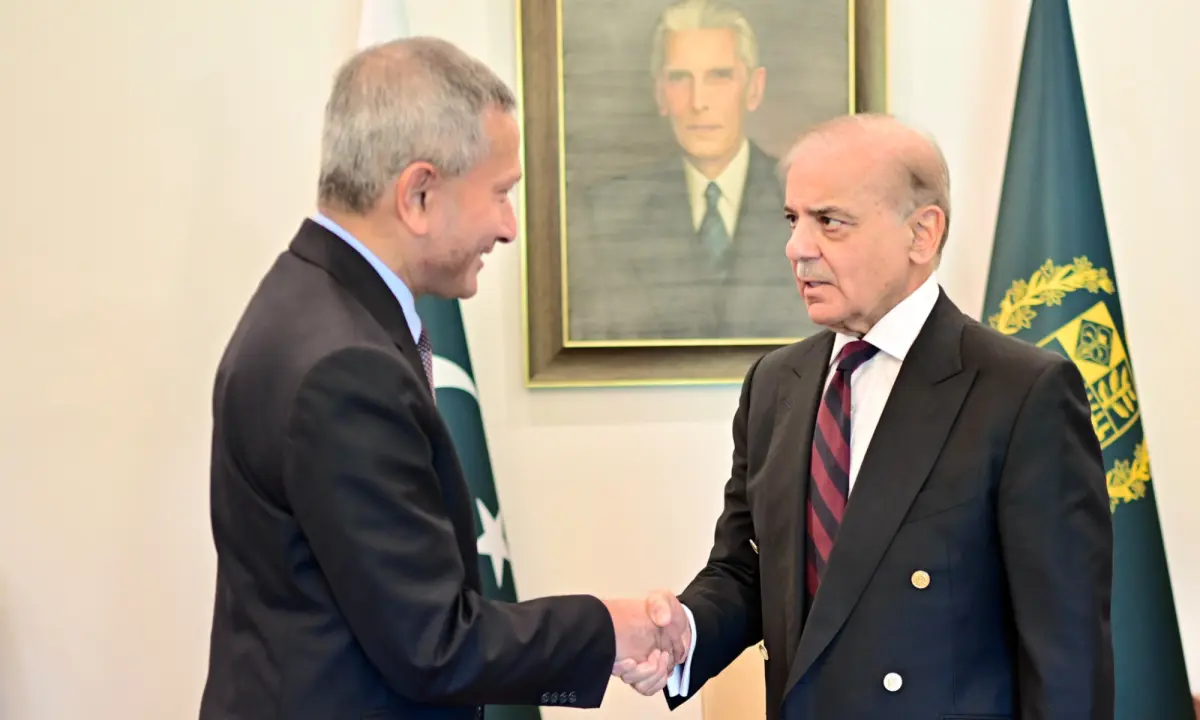
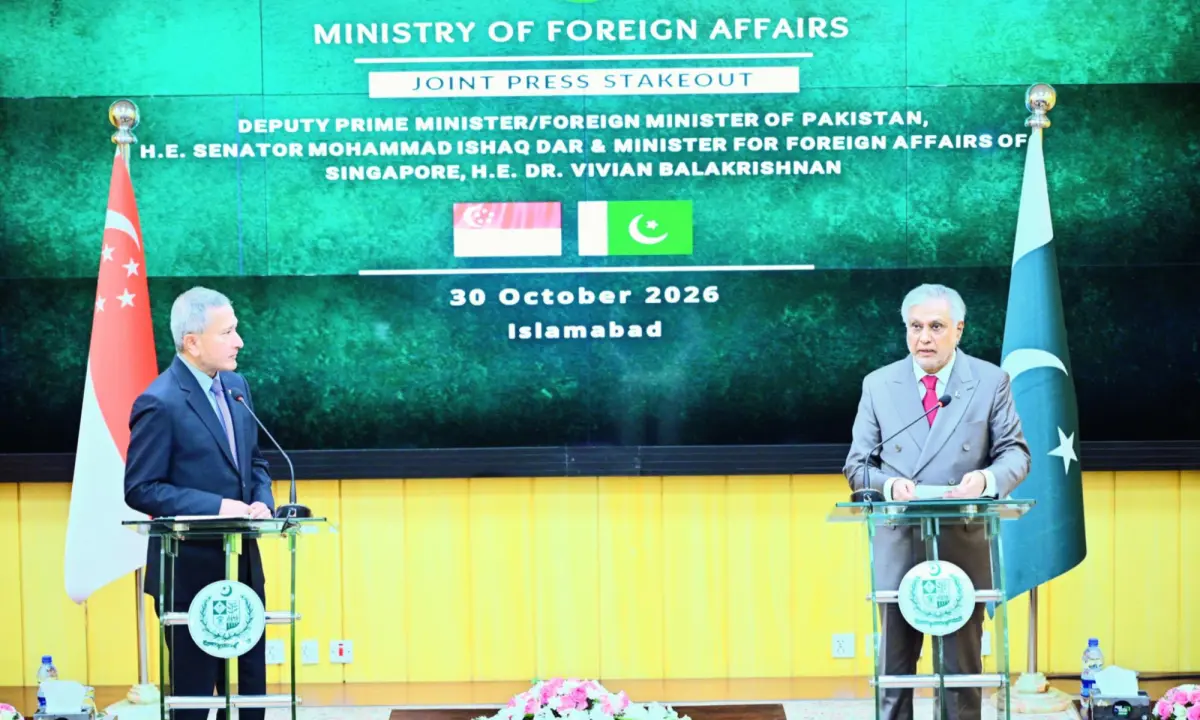
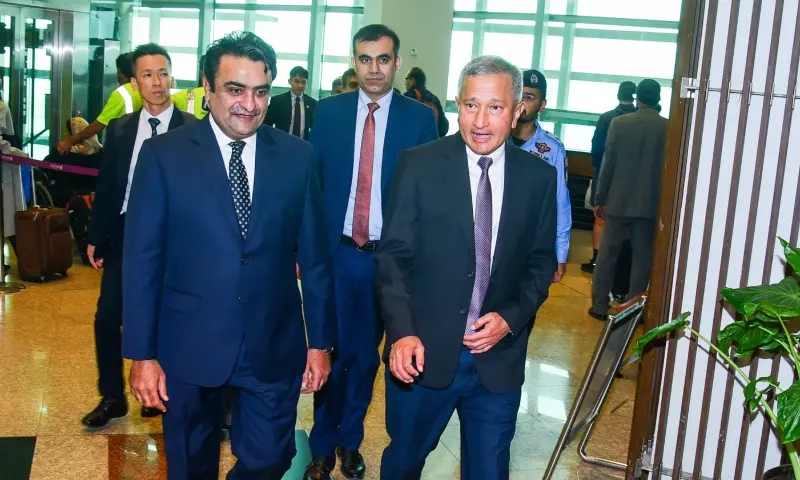
Prime Minister Shehbaz Sharif on Friday expressed admiration for Singapore’s “remarkable economic transformation” and achievements in innovation and development.
The development came during a meeting with Singapore’s foreign minister, Vivian Balakrishnan, who is currently in the country on an official visit.
According to the Prime Minister’s Office (PMO), the premier reaffirmed Pakistan’s commitment to further strengthening its longstanding and friendly relations with Singapore, particularly as the two countries are commemorating the 60th anniversary of the establishment of diplomatic relations this year.
“The prime minister expressed admiration for Singapore’s remarkable economic transformation and achievements in innovation and development. He underscored the importance Pakistan attaches to its partnership with Singapore, both bilaterally and multilaterally including within the Association of Southeast Asian Nations (Asean),” it said.
The statement said that the two sides discussed ways to enhance bilateral trade and investment and expand cooperation in priority areas, including the digital economy, fintech, infrastructure development, logistics, small and medium enterprises and the services sector. They also discussed exploring new avenues for mutually beneficial economic cooperation and enhancing people-to-people contacts.
“The two sides also exchanged views on regional and international developments and reaffirmed their commitment to continued engagement and cooperation at bilateral and multilateral fora,” it said.
Possible resumption of direct flights discussed
The meeting came shortly after Dar discussed with the visiting diplomat the possible resumption of direct flights between Pakistan and Singapore “to facilitate business travel and close contact between our peoples”.
Dar shared this while addressing a press conference alongside Balakrishnan. He began by saying that Pakistan and Singapore enjoyed longstanding and friendly ties focused on mutual respect and goodwill, and Pakistan was one of the first countries to recognise Singapore following its independence in 1965.
He noted that Balakrishnan’s visit to Pakistan was the first one by a Singaporean foreign minister in over two decades.
“I am grateful that he was kind to accept my invitation,” he said, adding that the trip was particularly significant as the two countries were commemorating 60 years of diplomatic relations this year.
“The visit reflects our shared commitment to strengthen this friendship and broaden our cooperation.”
Dar said that delegation-level talks and a restricted meeting between the two sides earlier in the day focused on strengthening political and economic ties, expanding cooperation in technology and education and promoting culture and people-to-people contact.
“We also exchanged views on key regional and international developments,” he added.
He further stated that the two sides had recognised “the considerable untapped potential in our relationship” and stressed the importance of sustained engagement.
“We agreed to hold regular bilateral political consultation and promote high-level exchanges to strengthen cooperation between our governments and institutions,” he said, adding that economic cooperation was central to the discussions.
He said “we welcomed the significant growth” in bilateral trade between the two countries and discussed ways to build on this progress further.
“We agreed to encourage closer engagement between our business communities through the exchange of business delegations and stronger links between our chambers of commerce,” he elaborated.
Moreover, Dar continued, the reopening of the Trade and Investment Office at Pakistan’s High Commission in Singapore had also been discussed.
“The reopening of the Pakistan Trade and Investment Office is a testament to Pakistan’s resolve to promote stronger B2B ties with our friendly country Singapore.”
Beyond trade and investment, he said: “We discussed the scope for closer cooperation in education, research and innovation, including digital technologies and artificial intelligence. We also considered ways to strengthen links between our universities and research institutions. We also agreed to deepen cooperation in human resource development, agriculture and climate domains.”
Dar noted that Pakistani professionals in Singapore contributed to its economy and society and served as a “valuable bridge between our two nations”.
He said, “We agreed to encourage greater cultural, academic, youth and people-to-people exchanges.”
Moreover, he said, “We also discussed the possible resumption of direct flights to facilitate business travel and close contact between our peoples.”
Pakistan’s engagement with the Association of Southeast Asian Nations (Asean) as the country’s “oldest sectoral dialogue partner” also came under discussion, Dar said.
“Pakistan attaches great importance to practical cooperation with the organisation and its member states. I convey Pakistan’s best wishes to Singapore as it prepares to assume the Asean chairmanship in 2027.
“We look forward to working closely with Singapore in support of its priorities as the chair and to further strengthening the Pakistan-Asean cooperation.”
Dar said the meetings in Islamabad also presented the opportunity to share perspectives on regional and international peace and the security landscape.
“We discussed the impact of regional tensions on maritime trade,” he said, adding that secure sea routes and uninterrupted supply chains were essential to trade and economic stability.
He said the two sides had reaffirmed the central role of dialogue and diplomacy, respect for international law and adherence to the principles of the UN Charter in addressing regional and global challenges.
The DPM said he had conveyed to the visiting dignitary that Pakistan remained engaged with key regional and international partners to encourage continued dialogue and diplomacy as it was the “only viable means to resolve outstanding challenges”.
On Palestine, he said, “I expressed concern over the continued expansion of illegal settlements and efforts to alter the status of the West Bank and Al-Quds Al-Sharif. I stressed the urgent need for unhindered delivery of humanitarian assistance to the people of Gaza. I reiterated firm support for an independent, sovereign, viable, and contiguous state of Palestine based on pre-June 1967 borders with Al-Quds Al-Sharif as its capital, which is the stated policy of the Islamic Republic of Pakistan”.
In the context of South Asia, Dar said he briefed the visiting dignitary on the importance of a “just, durable and peaceful settlement of the longstanding Jammu and Kashmir dispute in accordance with the relevant UN Security Council resolutions”.
He concluded his speech by saying: “We look forward to working very closely with Singapore to carry forward the understanding reached today. Pakistan and Singapore’s friendship remains strong and forward-looking as we mark 60 years of diplomatic relations.
“We have committed to deepening this partnership and building a more prosperous future for our people.”
Speaking after him, Balakrishnan began by saying: “This is a significant year for Singapore and Pakistan. We have never forgotten that Pakistan was one of the earliest countries to recognise Singapore’s independence. And that’s why we are commemorating the 60th anniversary of diplomatic ties.”
Over the years, he said, there had been high-level exchanges between the two countries.
He added that “we’ve had opportunities for a substantive and productive exchange of views”.
“We’re in constant communication, far more than people realise — that we have a very effective partnership.”
Balakrishnan continued that Pakistan and Singapore had “excellent ties” at the diplomatic level.
“In fact, they are so good that it makes it even more obvious that actual trade relations — and looking at the numbers and the data — ought to be much higher. And that, I would say, is the first order of business.
“We need to facilitate greater trade and investment flows. We need to strengthen the links, especially between SMEs, between businessmen, and they need to meet, they need to know each other, they need to understand the business opportunities and the risks on both sides in Southeast Asia as well as South Asia,” he added.
Balakrishnan said governments of the two countries needed to facilitate these interactions and identify new opportunities for mutually beneficial cooperation.
“In an increasingly uncertain global environment, including on the business side of it, I think it is all the more important for our two countries to remain open, connected and constructively engaged with each other,” he said.
The two sides, he said, also discussed carbon markets, which “we think is another fertile opportunity for Singapore and Pakistan to work together”.
“It will be another promising avenue to attract investments into projects in Pakistan that reduce emissions while supporting sustainable development, and our officials are exploring opportunities in this area.”
Speaking about the exchange of a memorandum of understanding (MoU) on disaster management between Singapore and Pakistan, he said it reflected “our shared commitment to strengthen disaster preparedness and response”.
Disasters, he said, were not something one wished for. “But it is something which we have to prepare for and to be acutely aware that at the rate things are going, and with the progression of climate change, this is a current and clear threat. And the more we can work together and prepare together, the more resilient we will be”.
Unfortunately, Pakistan had extensive experience in responding to large-scale natural disasters, Balakrishnan said, adding that Singapore could learn from Pakistan in how to cope with disasters and be more resilient for the future.
“Through this MoU, we hope to explore cooperation in areas including early warning systems, the sharing of best practices, strengthening search and rescue capabilities, as well as hopefully conducting joint training and exercises.
“It’s again worth remembering that disasters do not respect boundaries, do not have passports, and again, the more we can work together, the better,” he added.
Moreover, the Singaporean foreign minister said “we welcome the opportunities to deepen cooperation between our institutes of higher learning, which includes the Nanyang Technological University and the National University of Singapore with Pakistan’s National University of Sciences and Technology”.
“I want to emphasise that this is just the beginning. We hope to expand that list in due time.”
On regional and international developments, he congratulated Dar for the “incredibly valuable role that Pakistan is playing”.
“For instance, we know there is crisis in the Gulf, and in fact, most of the energy that comes through the Gulf is actually headed to the east — South Asia, Southeast Asia, and to Northeast Asia.
“And the unique, but very constructive and valuable role that Pakistan plays is the one which we commend you for, and we wish you every success because if you succeed, it’s good for all of us.”
He emphasised that international law was critical for both Pakistan and Singapore.
And in the case of Singapore, he said, “because we are an island city state and our trade volume is three times our GDP, the maritime arena is essential. And therefore, the United Nations Convention of the Law of the Sea 1982, which sets out the freedom of navigation and overflight, especially in straits used for international navigation as a right not by the grace of littoral powers — This is of acute importance to us, and we are very, very heartened that Pakistan stands in exactly the same position this issue with us”.
He noted that Singapore would take the chairmanship of Asean next year while Pakistan was already the chair of the Shanghai Cooperation Organisation. This, he said, would present another set of opportunities for these two regional blocs, “two dynamic, diverse regional blocs, to look for opportunities to do together”.
He then moved on to education, saying that opportunities in this area were also discussed.
“We are living in an age of a new industrial revolution, AI and digital technologies, and it is essential to ensure that our young people have the relevant skills not for yesterday’s jobs, but for tomorrow’s jobs.
“And so, this emphasis on skills and relevant qualifications and capability and human talent development is another very important area for cooperation between Pakistan and Singapore,” he added.
Talks on enhancing trade, investment cooperation
Earlier, the two leaders held talks and discussed ways to enhance cooperation in trade and investment, the Foreign Office (FO) said.
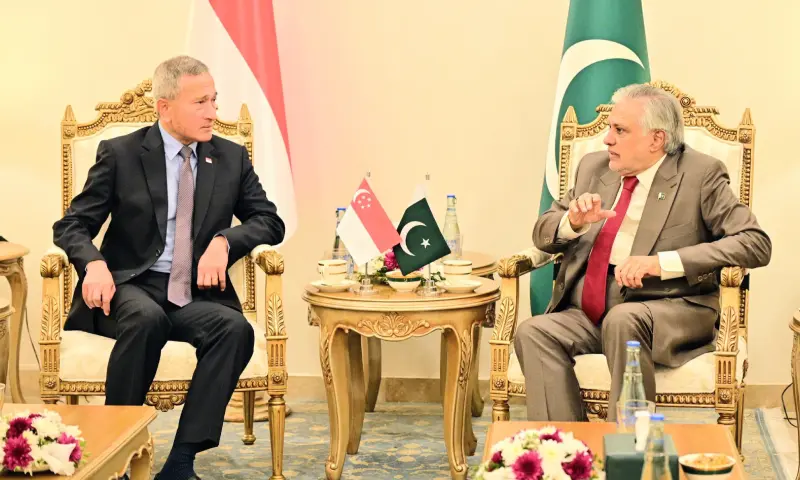
Balakrishnan arrived in Islamabad earlier in the day. He called on DPM Dar at the Ministry of Foreign Affairs.
The FO said in a statement that the two leaders reviewed the “longstanding and friendly relations” between Pakistan and Singapore as the two countries marked 60 years of diplomatic relations.
They underscored the importance of sustained high-level exchanges and discussed ways to further enhance cooperation in trade, investment, connectivity and skills development, while promoting business-to-business exchanges and people-to-people contacts, the statement added.
Dar and Balakrishnan also discussed cooperation at multilateral fora and Pakistan’s enhanced engagement with Asean, particularly in the context of Singapore’s forthcoming chairmanship of the body in 2027.
Moreover, exchanging views on regional and global developments, Dar emphasised the importance of dialogue and diplomacy in resolving disputes and advancing lasting peace and stability, the statement said.
Delegation-level talks
Later, their opening remarks from delegation-level talks between the two sides were televised, with Dar saying that the depth of diplomatic relations between Pakistan and Singapore was not reflected in economic ties.
He said his focus had been on “economic diplomacy” after joining the Foreign Office, adding: “If we work together, […] I am sure we can reach a new level of economic relations.”
The DPM further suggested the Board of Investment in Pakistan could work with its counterpart in Singapore.
He said the two countries had “great cooperation” on multilateral issues and Singapore’s interest in regional issues was “greatly appreciated”.
“You remain in touch, and we keep sharing developments with you.”
He added that the two had also discussed Palestine and Kashmir issues, among other matters, in a restricted meeting.
“So I think this friendship and great cooperation will continue from our side, and I am sure you will always reciprocate, rather go a mile ahead of us,” the DPM said.
For his part, the Singaporean foreign minister recalled that Pakistan was one of the “early countries to recognise Singapore post independence”. He pointed out that Singapore was 61 years old and was commemorating the 60th anniversary of diplomatic ties with Pakistan.
According to the FO, the delegation-level talks focus on expanding trade and investment, strengthening cooperation in agriculture and food security and enhancing connectivity to promote tourism and business exchanges.
“The two sides also explored collaboration in education, vocational training, disaster management and information technology. The Singaporean foreign minister highlighted the potential of carbon markets to attract green investment to Pakistan. Dar emphasised the importance of stronger institutional mechanisms and regular follow-up to advance mutually beneficial cooperation,” it said.
“The Ministers also exchanged views on regional and global developments. Singapore’s foreign minister commended Pakistan’s sustained efforts to promote dialogue and diplomacy in the region and its important contributions to regional peace and stability,” it added.
“Both sides agreed to build on the positive momentum generated by the visit, ensure timely follow-up on the understandings reached, and sustain engagement to further strengthen Pakistan-Singapore relations across all areas of mutual interest,” it said.
After the meeting, Dar and Balakrishnan also exchanged a MoU on cooperation in disaster management between Pakistan’s National Disaster Management Authority and the Singapore Civil Defence Force in Islamabad.
“The MoU reflects the shared commitment of Pakistan and Singapore to strengthening cooperation in disaster preparedness and response and building resilience against natural disasters,” the FO statement on the document’s exchange said.
ISLAMABAD – Electricity consumers across Pakistan could face a fresh financial burden during the coming winter months, as power tariff is expected to rise significantly between December and February, according to reports.
Reports said fuel price adjustments (FPA) could increase by two to three times during these three months, potentially resulting in higher electricity bills for consumers.
The expected increase has been linked to rising prices of liquefied natural gas (LNG), coal and other fuels, which are pushing up the cost of electricity generation.
Officials said local gas availability for power plants could also become a major challenge during winter, as domestic gas supplies are often insufficient to meet household demand during the colder months.
Meanwhile, lower hydropower generation in winter could force power producers to rely more heavily on expensive fuels to maintain electricity production.
Higher international fuel prices are also expected to contribute to increased fuel price adjustments, adding further pressure on electricity consumers.
Reports added that authorities had previously made efforts to limit the impact of fuel costs through measures that included two-hour load management and other steps to control the financial burden.
However, rising international fuel prices, particularly LNG, have made the outlook for electricity costs more challenging.
QUETTA – Security forces have foiled an attempted drone attack on a security checkpost in Balochistan’s Kharan district, destroying five drones during the operation.
Reports said terrorists belonging to Fitna al-Hindustan attempted to target a checkpost in an area of Kharan using low-altitude drones.
However, security personnel responded swiftly and effectively, intercepting and destroying all five drones before they could strike the installation.
No casualties or damage to property were reported in the incident.
Security forces reiterated their determination to eliminate terrorism from Balochistan and maintain peace and security across the province.
Earlier this week, security forces have killed nine Indian-sponsored terrorists during two intelligence-based operations in Balochistan.
According to ISPR, security forces conducted two intelligence based operations in Kachhi and Wadh districts of Balochistan, on reported presence of terrorists belonging to Indian proxy, Fitna al-Hindustan.
The first intelligence based operation was conducted in Kachhi district. During the conduct of operation, terrorists hideout was busted by security forces and after an intense fire exchange, seven Indian sponsored terrorists were killed. Weapons and ammunition were also recovered.
In another intelligence based operation in district Wadh, security forces tracked and intercepted terrorist movement and after an intense fire exchange, two Indian-sponsored killed. Weapons and ammunition were also recovered.
Relentless Counter Terrorism campaign under vision “Azm e Istehkam”, as approved by Federal Apex Committee on National Action Plan, by security sources and law enforcement agencies of Pakistan will continue at full pace to wipe out menace of foreign-sponsored and supported terrorism from the country.
KARACHI: Sindh Senior Minister Sharjeel Inam Memon has announced that an internship programme for fresh graduates is being launched from next month through the iwork4Sindh platform.
He said that the programme would provide young people with better opportunities to gain practical experience.
He said the Sindh government is taking practical measures to provide employment opportunities to young people and enhance their professional capabilities. “The government wants young people to have an appropriate platform to utilise their abilities and access better opportunities,” he added.
Mr Memon added that the next phase of physical short courses for skilled individuals is also being launched on the iwork4Sindh platform in collaboration with companies.
These courses will focus on developing young people’s skills in accordance with market requirements, he said, adding that in the present era, traditional education alone is not sufficient, as practical skills and professional training are also of great importance to secure employment.
Regarding the performance of the iwork4Sindh platform, the minister said that more than 5.3 million visits had been recorded on the platform so far, while the number of registered candidates had increased to 137,770 and the number of registered companies had reached 726.
The senior minister said that 26,677 active job opportunities were currently available on the platform, while the number of applications submitted had reached 480,000.
He mentioned that during the past three months, 4,800 candidates had completed various courses, while around 6,000 candidates were currently undergoing training in different courses.
He said career counselling was also continuing to guide young people and help them choose better career paths for the future, with 18 to 20 sessions being conducted every week.
• Ex-health officials slam country’s ‘too little, too late’ disaster response; demand climate-proof hospitals, early warnings, heat action plans • Study calls for climate change to be declared global health emergency • Heat-related deaths rise 36pc since Paris accord; economic losses estimated at over $1tr
ISLAMABAD: Health and environmental experts in Pakistan have called for urgent measures to address growing climate-related health risks after a Lancet report warned that rising heat-related deaths, floods, droughts and economic losses are outpacing global efforts to combat climate change.
The 2026 Lancet Countdown report, launched at the British Library in London, called for climate change to be recognised as a “global health emergency”, warning that climate-related health risks continue to worsen a decade after the Paris Agreement.
The report found that average annual heat-related deaths worldwide have risen 36 per cent since the Paris Agreement. In 2023, heat was linked to a record 710,000 deaths, with more than 70pc attributed to human-caused climate change. Meanwhile, heat-related economic losses reached an estimated $1.07 trillion in 2025.
Former Punjab health minister Professor Dr Javed Akram told Dawn that the warning was particularly urgent for Pakistan, where the devastating 2022 floods displaced communities, damaged health care infrastructure, disrupted access to essential medicines and increased the risk of waterborne diseases and malnutrition.
“Extreme heat further threatens vulnerable populations, particularly children, older adults, outdoor workers and people living with chronic illnesses,” he said.
Mr Akram criticised Pakistan’s disaster management approach, saying policies had historically been reactive rather than proactive, with preparations beginning only after disasters strike.
“Pakistan must strengthen heat-health action plans, establish effective early-warning systems, climate-proof hospitals, improve disease surveillance, and expand access to safe water and sanitation,” he said.
He urged federal and provincial governments to allocate dedicated funding for climate-resilient health care and called on international partners to provide predictable, grant-based climate finance.
Former special assistant to the prime minister on health Dr Zafar Mirza also warned that climate change had become a growing public health emergency in Pakistan.
“Extreme heat, flash floods, cloud bursts and worsening air quality cause illness and death, while disrupting healthcare, contaminating water, undermining nutrition and deepening poverty and psychological distress,” he told Dawn.
Dr Mirza said Pakistan needed climate-resilient health facilities, stronger disease surveillance, early-warning systems and coordinated action across health, climate, water, energy and finance.
Dr Muhammad Irfan Khan, professor of environmental science and former dean at International Islamic University, expressed concern that Lancet Countdown’s launch statement did not mention Pakistan despite its exposure to climate-related disasters. “Pakistan’s experience should inform global priorities, research and investment,” he said, citing Germanwatch’s Climate Risk Index 2025, which ranked Pakistan as the country most affected by extreme weather in 2022.
He urged international institutions to give greater visibility to vulnerable countries and ensure affected communities help shape climate responses.
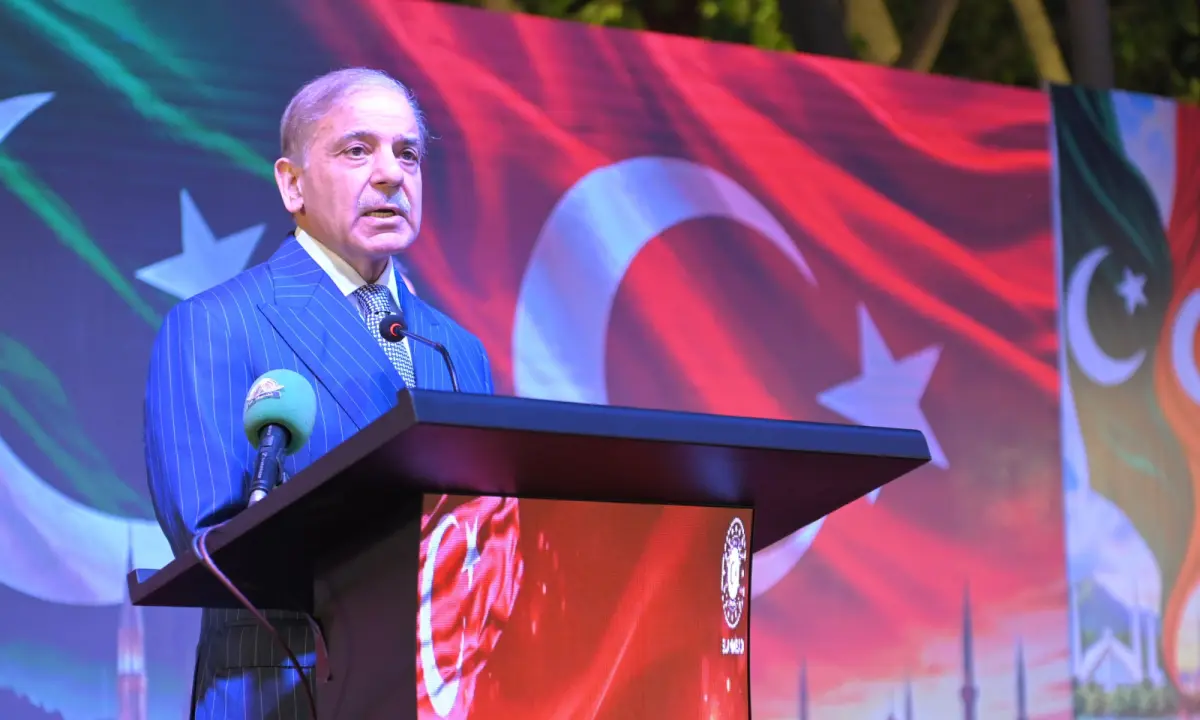
Prime Minister Shehbaz Sharif on Thursday affirmed that Pakistan and Turkiye would continue to push for dialogue and diplomacy while strengthening their defences under the Makkah Defence Agreement.
He made the remarks while addressing an event in Islamabad marking the 103rd national day of Turkiye, with which Pakistan enjoys strong bilateral ties and maintains multi-sectoral cooperation.
The premier said the pact, signed on Aug 7 between Pakistan, Turkiye and Saudi Arabia, marked an “important milestone” in cooperation between Islamabad and Ankara.
“It strengthens our collective deterrence and reinforces our shared commitment to regional peace and stability,” PM Shehbaz noted.
“While we strengthen our defences, we shall continue to champion dialogue, diplomacy, respect for international law and the peaceful settlement of disputes.”
The prime minister hailed Turkiye’s diplomatic support during Marka-i-Haq last May, when India initiated unilateral aggression against Pakistan, triggering a four-day conflict between the nuclear-armed neighbours.
“Turkiye stood firmly by our side with unwavering commitment and dedication. This sincere act of solidarity was a profound source of comfort and strength for the people of Pakistan, a gesture that will forever remain etched in our hearts and our memories,” he emphasised.
Additionally, the premier observed that Islamabad and Ankara’s relationship had evolved into a “multifaceted strategic partnership”, spanning political dialogue, defence, trade, culture and people-to-people ties, among other areas.
He stressed that the economic partnership between Pakistan and Turkiye needs to match the heights of the political and strategic bond between both nations.
“In July this year, at the Pakistan-Turkiye business conference in Istanbul, I announced the establishment of the President Tayyip Erdogan Special Economic Zone in Karachi,” PM Shehbaz said.
“Now I invite Turkish businessmen to look at Pakistan with its young population, strategic location and growing economic opportunities. Let us translate the goodwill between our two peoples into joint ventures, shared prosperity and meaningful jobs for our young people.”
During his speech, the prime minister highlighted the longstanding, historic ties that the two countries shared, recalling that during the Khilafat Movement — a campaign to protect the Ottoman Empire after World War I — people donated whatever they could from the subcontinent, including money and jewellery, to support their “Turkish brethren”.
“A century ago, our forefathers sent their love across the seas. Generations later, that love returned to our doorsteps during our darkest times,” he added, referring to humanitarian aid from Turkiye during the 2005 earthquake and the devastating floods of 2010.
PM Shehbaz also highlighted that under Turkish President Recep Tayyip Erdogan’s instructions, Turkiye established a modern hospital, a school and modern villages for the people of Muzaffargarh after the floods.
“The 100 years between the Khilafat Movement and that moment seemed to close into a single circle,” the premier said, noting that when a massive earthquake rocked Turkiye in February 2023, “the people of Pakistan grieved as if the rubble lay upon our own homes”.
“We stood with our Turkish brothers and sisters, in their hour of sorrow, just as they had stood with us.”
Earlier this week, Pakistan, Turkiye, Saudi Arabia and Iran participated in a quadrilateral meeting where Iranian President Masoud Pezeshkian called for “regional unity” and hoped that the presence of other Islamic powers would “further consolidate regional unity and cohesion”.
Earlier this month, both nations signed an agreement to enhance cooperation in combating terrorism, narcotics trafficking and organised crime and agreed to establish a joint working group to strengthen collaboration between their interior ministries.
The decisions were taken during a meeting between Interior Minister Mohsin Naqvi and his Turkish counterpart Mustafa Çiftçi in Istanbul.
ISLAMABAD: Pakistan rose to 95th place among the 139 economies of the world featured in the ‘Global Innovation Index 2026’ published by the World Intellectual Property Organisation (WIPO), it emerged on Thursday.
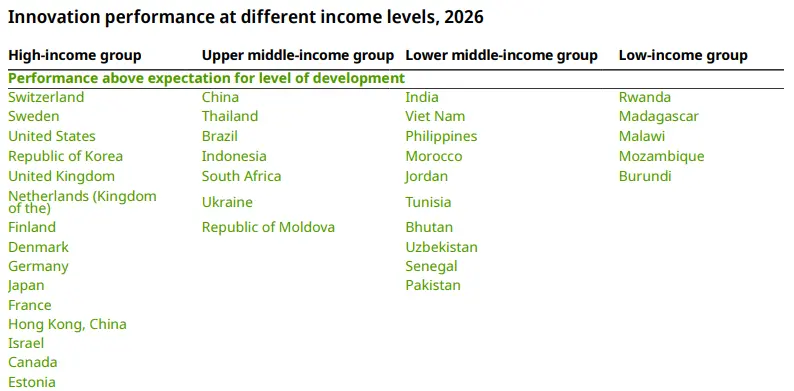
Advancing in rank from 99th place in 2025, Pakistan also reclaimed its “overperformer” status for the fourth time, a status given to economies identified as performing above expectations for their level of economic development. It also held the status in 2022 and 2024.
The global index report showed that Pakistan performed better in innovation outputs than innovation inputs in 2026. This year, Pakistan ranked 121st in innovation inputs and 72nd in innovation outputs — both higher than last year.
“Innovation overperformance shows that innovation does not follow a straight line from income to results,” the report said.
“The 2026 overperformers show that economies can generate more innovation than expected for their level of development when they build on focused strengths.”
A list of countries that performed above expectations for their level of development in innovation in 2026, according to the Global Innovation Index 2026. — screengrab from WIPO report
WIPO highlighted that Pakistan’s strengths were concentrated in the digital economy, particularly mobile app creation, ICT services exports, high-tech imports, and software spending. It added that the country’s “relatively strong” scientific production and university quality supported a developing digital economy.
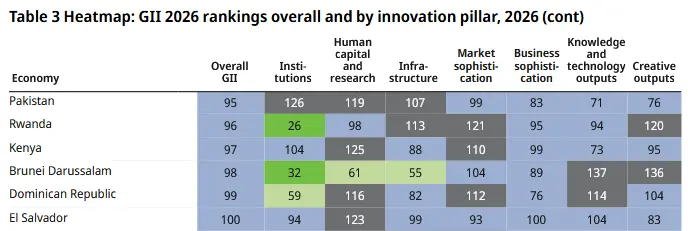
In the 2026 index, Pakistan ranked 15th among the 36 lower middle-income group economies and eighth among the 11 economies in central and southern Asia. It did not rank among the top innovation clusters in any specific innovation pillar of the index (including ‘human capital and research’, ‘infrastructure’, etc).
This partial screengrab from WIPO report shows Pakistan ranks 95th overall and does not rank among leading countries in any innovation pillar, in Global Innovation Index 2026.
Pakistan’s GII ranking (2020-2026) showed a rise over the past seven years, ranking 107th in 2020; 99th in 2021; 87th in 2022; 88th in 2023; 91st in 2024; and 99th in 2025.
Meanwhile, Switzerland, Sweden and the United States remained the world’s top three innovation economies, with Switzerland ranking first for a 16th consecutive year. The organisation noted, “In a period of major geopolitical and economic turbulence, the most striking feature about the top of the ranking is its stability.”
According to the report, the leading economies broadly remain the same as in 2025, with no new economy in the top 15 since last year, and Europe once more accounting for the largest share of the group with 14 economies out of 25 innovation leaders. Additionally, the Netherlands moved up to seventh place and Austria to 18th.
“The main signal at the innovation frontier this year is continuity, rather than the emergence of any single new entrant,” the report said.
Five Asian economies were also among the top 25: South Korea and Singapore in fourth and fifth place respectively; China remaining 10th — as the only middle-income economy among the innovation leaders — Japan at 12th and Hong Kong, China in 14th place.
The report highlighted that the presence of Asian economies was now an “established feature of the top ranks, rather than a development unique to this year”.
According to the report, the GII 2026 Innovation Tracker pointed to “continued but slower progress across the innovation cycle”. Most indicators advanced, with notable gains in scientific output, corporate research and development (R&D), battery costs and technology adoption; however, about three-quarters remained below the decade average.
Research effort nonetheless remained at a historic high, it pointed out, with global R&D intensity close to two per cent of GDP.
The WIPO report identified that the near-term environment was more demanding than the previous year: “Global growth of about 3.4pc in 2025 is expected to ease to around 3pc in 2026, held back by higher energy prices and elevated uncertainty, before recovering modestly in 2027.”
It highlighted that AI-related investment remained “the main engine on the upside”, with the largest hyper-scalers set to spend over $1 trillion on AI infrastructure across 2025 and 2026.
“This will be increasingly financed through debt and private credit, meaning a downward revision of expected AI returns could tighten financing conditions well beyond the sector,” it added.
The report noted that emerging economies, including Pakistan, could build on their standout strengths to improve their overall innovation performance.

 Login