A bipartisan pair of senators are pressing Kalshi and Polymarket over prediction markets tied to the Nov. 3 midterm elections. “We write to express concerns about election-related prediction markets and to request specific information about your companies’ efforts to prevent insider trading, market manipulation, and wagers based on material nonpublic information,” Sens. Elizabeth Warren (D-Mass.)…
A bipartisan pair of senators are pressing Kalshi and Polymarket over prediction markets tied to the Nov. 3 midterm elections. “We write to express concerns about election-related prediction markets and to request specific information about your companies’ efforts to prevent insider trading, market manipulation, and wagers based on material nonpublic information,” Sens. Elizabeth Warren (D-Mass.)…
Elizabeth Warren and others joined by unions and industry experts in warning against the weakening of regulations
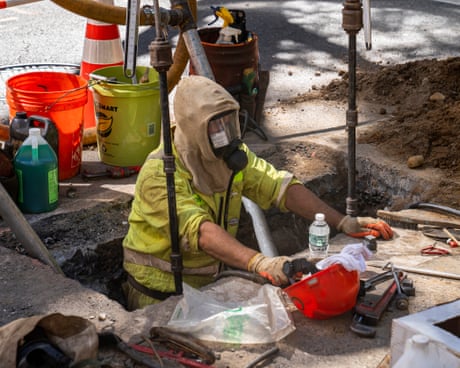
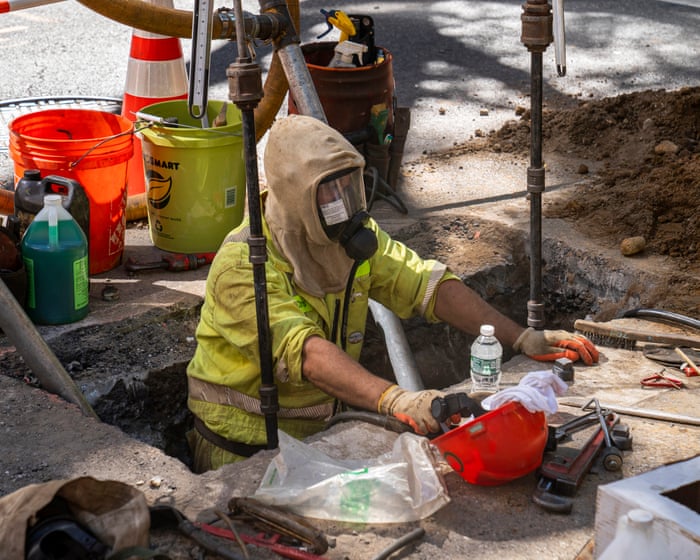
The senator Elizabeth Warren, the congresswoman Ilhan Omar and several other Democratic lawmakers are calling on the Occupational Safety and Health Administration (Osha) to abandon a rollback of respirator mask regulations, a change the lawmakers say would weaken worker protections against hazardous substances.
Under the proposed rules, employers would face fewer requirements to provide workers with respirators masks when working with substances including “lead, asbestos, formaldehyde and inorganic arsenic, among other chemicals”, the lawmakers wrote in a letter to the Osha assistant secretary, David Keeling, a former UPS and Amazon executive.
China’s National Bureau of Statistics published the 2026 edition of its yearbook this week, revealing that the national population declined by 3.39 million in 2025 - the fourth decline in a row, and the worst since 2022.
Luanda, 28 oct (Prensa Latina) El presidente de Angola, João Lourenço, expresó hoy condolencias al Rey Felipe VI de España, ante el trágico accidente ferroviario ocurrido en ese país, que dejó decenas de muertos y más de un centenar de heridos.
Over half of the 45 mainstream Jewish schools in the UK say a core part of their mission is teaching children to “love Israel,” possibly breaching UK government rules against the promotion of partisan political views in schools
Ministry of Health stated on Tuesday that six Palestinians were killed and 32 injured during the preceding 24 hours, as Israeli shooting and shelling continued across Gaza. Israeli naval vessels fired live ammunition & shells at Gaza's coast and fishermen
Brasilia, 28 oct (Prensa Latina) El Gobierno de Brasil expresó hoy su consternación por el grave accidente ferroviario ocurrido en la provincia española de Toledo, que dejó hasta el momento 68 muertos y 15 heridos graves.
Ciudad de México, 28 oct (Prensa Latina) La Cancillería de México expresó hoy sus condolencias al pueblo y Gobierno de España “por el lamentable accidente ferroviario ocurrido en Urda, Toledo”, con saldo hasta el momento de más de 60 fallecidos.
Elon Musk is under attack! Countless Democrats are admitting they plan to investigate or even jail him if they take back power on Congress in the midterms. They can't tell you what he specifically did wrong, but they'll come up with something.
Just as bad, or even worse, however, is that some of his critics want to nationalize his companies, including Starlink, which provides crucial infrastructure to Ukraine. Former Labor Secretary Robert Reich, a far-left populist Democrat, thinks Starlink is too important to be left under Musk's control, and that the federal government would do a better job administering it. I doubt that, but let's hear what he had to say:
NEW: Robert Reich calls for the "defunding" of Elon Musk, calls for Democrats to go after Musk's companies.
"Democrats ought to [start] laying the groundwork for nationalizing Starlink & SpaceX… It should be a public corporation."
From the horse's mouth: Reich thinks Democrats should be laying the groundwork to nationalize Starlink and SpaceX. This idea is crazy and reckless—and even dangerous. Here's why.
Now it's important to go over some of the background here. Starlink is a product that Ukraine uses to provide internet to its people, but only for civilian uses. Musk has maintained that while he is very happy to provide internet to Ukraine in the face of unrelenting invasion, Starlink cannot be used for offensive military purposes, because this would make his satellites a legitimate target of Russia in terms of their war effort. We want to avoid that. Separately, Starshield, a different system, is administered by the Pentagon, and Musk claims he has no control over it.
What happened last week is that a slowdown of the Starshield system resulted in reduced effectiveness of Ukraine's counterstrikes against Russia. And look, that was a problem. I traveled to Ukraine earlier this summer as part of a delegation arranged by a pro-Ukrainian nonprofit. I saw up close how important Starshield is to the defense of a free Ukraine. Moreover, there's entirely too much griping about Ukraine coming from some corners of right-wing media. Some people often seem to forget that Russia is invading Ukraine, not the other way around. It's Russia that won't accept a peace deal. When President Donald Trump called for an immediate ceasefire, Ukraine stopped hitting energy infrastructure in Russia—but Russia kept attacking anyway. Ukrainian President Volodymyr Zelenskyy has agreed to immediately stop fighting and freeze the conflict along the current lines, just like Trump wants. It's Russian President Vladimir Putin who won't negotiate.
We don't know for sure who ordered the Starshield slowdown. The U.S. government has denied doing so. Musk has, however, claimed Ukraine violated the terms of service of Starlink, using it for offensive military purposes, and thus that system was slowed down. I understand why that might be frustrating for the Ukrainians, but the fact is that it's Musk's company, so he makes the rules. It belongs to him.
And importantly, it has to stay that way. Nationalizing the company would be an insane step to take in response to a tech owner having a say in how his product is used. Do we really trust the government to operate these companies as efficiently as their founders? Of course not. Moreover, in this specific case, it might bring us closer to a direct confrontation with Russia—and as much as it's a good thing to undermine the Russian conquest of Ukraine, we do not want to start World War III.
And there are the broader philosophical harms. We are experiencing an unprecedented flourishing in the tech space, with AI, driverless cars, robotics, and such. When the government nationalizes a successful tech company, it sends a warning to all the others: If you're too good at what you do, we might take you over. We might punish you. This disincentivizes investment and innovation at a time when they're desperately needed.
Nationalizing Musk's companies is doing Ukraine no favors. But it will hurt America's interests too. We want to encourage Musk, Jeff Bezos, Sam Altman, Mark Zuckerberg, and all the rest to compete with one another to design products that make life better, earning them profits along the way. It doesn't work if the government butts in. Unfortunately, far-left thinkers like Reich, Sens. Bernie Sanders (I–Vt.) and Elizabeth Warren (D–Mass.), and many of the people who are about to be elected to Congress for the first time actually want to slow down the pace of tech. That's how much they hate Musk.
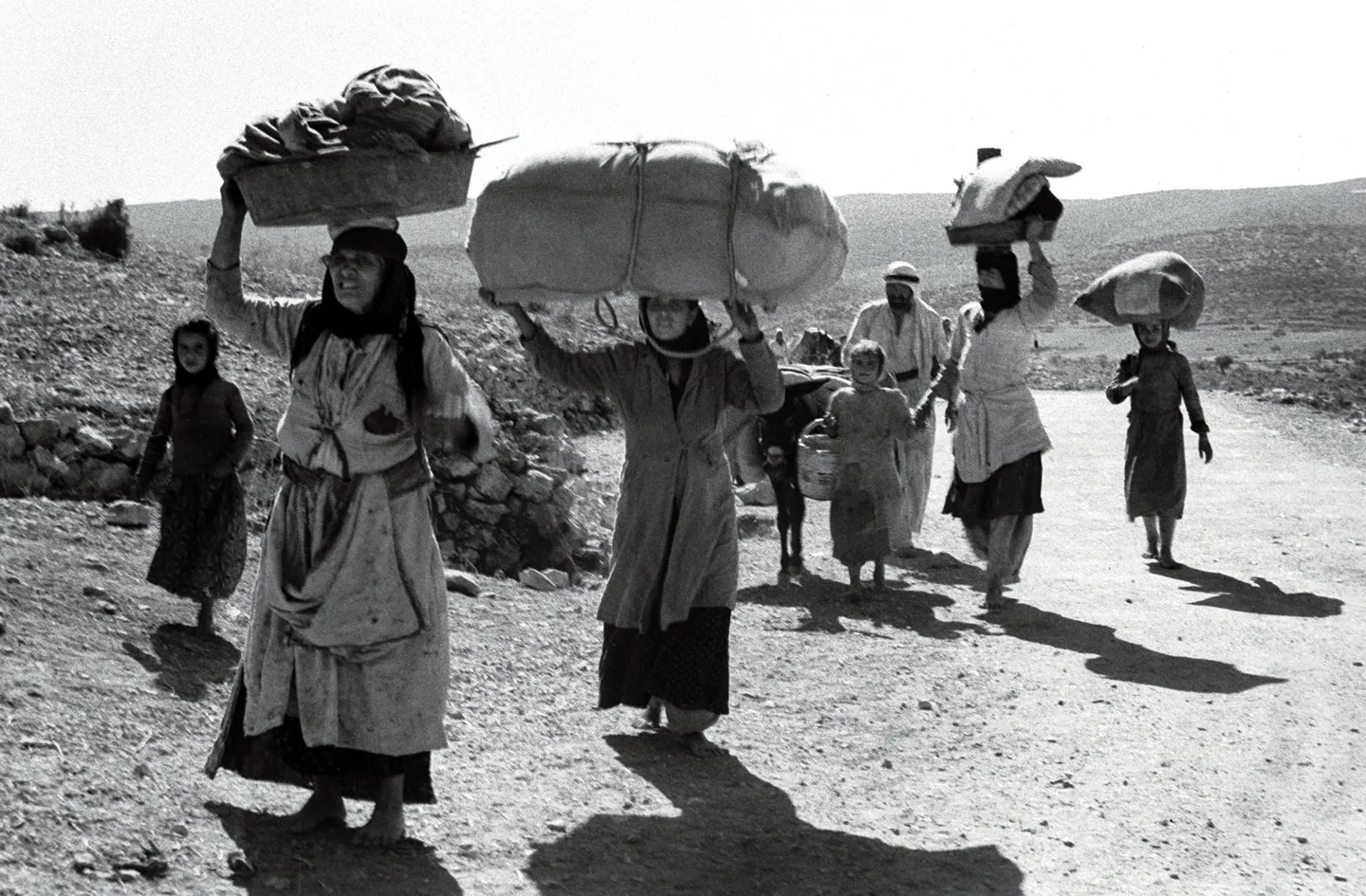
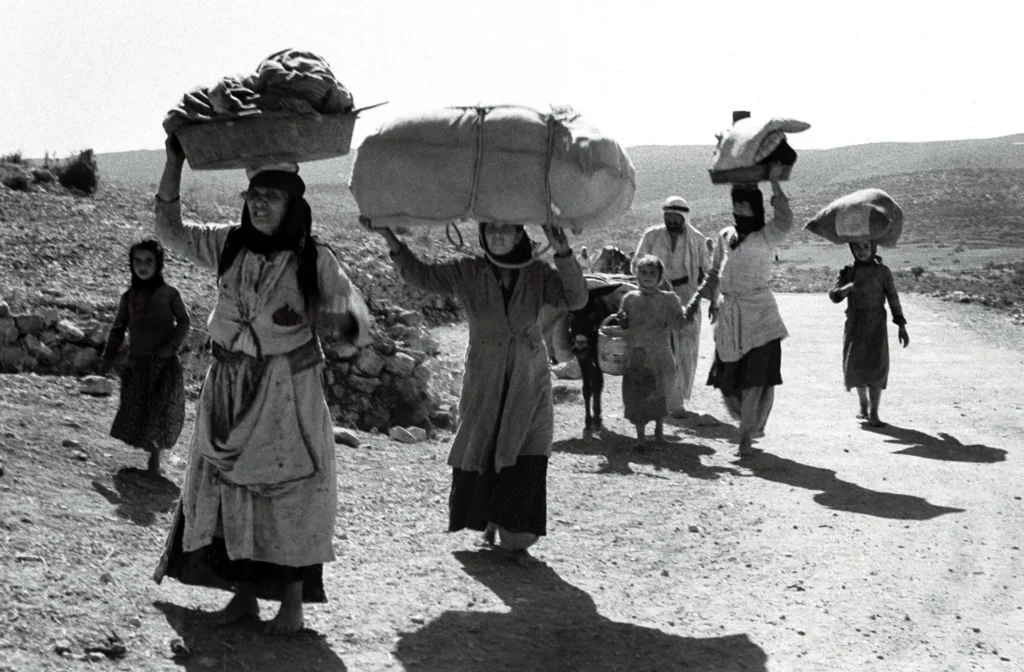
The article examines how editorial disputes, legal restrictions and institutional decisions shape the way Palestinian history, suffering and political expression are presented to the public.
The International Labour Organization (ILO) introduced the World Day Against Child Labour in 2002. The day is observed annually on 12 June. The 2026 World Day focuses on reinforcing and accelerating actions aimed at preventing and eliminating child labour, with a key message: ‘Red Card to Child Labour: Fair play for children, decent work for adults’.
Background
The United Nations (UN) defines child labour as work performed by children under the minimum legal age specified for that kind of work, or work that, because of its hazardous nature or detrimental conditions, is prohibited. Forms of work that are beneficial to a child’s personal and social development, that do not interfere with schooling, but rather provide useful experience and skills, may be encouraged. Child labour is driven by poverty, paired with a lack of access to decent work for adults and young people, weak social protection and a lack of free, high-quality public education.
Addressing root causes and advancing social justice were at the heart of the Sixth Global Conference on the Elimination of Child Labour, held in Morocco in February 2026, in the context of the failure to achieve the Sustainable Development Goal (SDG) Target 8.7 on ending child labour by 2025. The Conference adopted the Marrakech Global Framework for Action against Child Labour, a renewed roadmap aimed at eliminating child labour by 2030 through a human rights-based approach centred on social dialogue and multi-sectoral cooperation. The Marrakech commitments prioritise aligning national legal frameworks with international labour standards, ensuring universal access to quality education, and expanding social protection systems. They also highlight the unique challenges within the African region, the agricultural sector, one of the largest for child labour, and the emerging threat of online exploitation.
World Day Against Child Labour 2026
The 2026 World Day Against Child Labour comes after the Sixth Global Conference on the Elimination of Child Labour. Building on the Marrakech commitments, the 2026 campaign carries the message ‘Red Card to Child Labour: Fair play for children, decent work for adults‘, highlighting the link between child labour, poverty, and the lack of adequate work opportunities for adults. At the same time, it emphasises the shared responsibility of governments, employers, workers’ organisations, businesses and consumers, aiming to encourage governments and international partners to translate the Marrakech commitments into concrete national measures ahead of the 2030 deadline.
According to the International Labour Organization (ILO) and UNICEF, 138 million children worldwide are still affected by child labour, with nearly 54 million exposed to hazardous work. In response, the 2026 campaign advocates for stronger action to prevent child labour and support the withdrawal and rehabilitation of affected children through access to quality education, universal social protection, decent work and sustainable livelihoods for adults, strengthened legal frameworks and enforcement mechanisms, improved data collection and monitoring systems, as well as responsible practices across agriculture and global supply chains.
International legal framework
Freedom from child labour is a fundamental human right, enshrined in the ILO Declaration on Fundamental Principles and Rights at Work (1998), the ILO Conventions and the UN Convention on the Rights of the Child (1989). ILO Convention No 138 on the minimum age, adopted in 1973, has been ratified by 177 countries, including all EU Member States. This key document lays down standards for the minimum age for employment. ILO Convention No 182 on the worst forms of child labour, adopted in 1999, has been ratified by 187 countries, including all EU Member States. It calls on members to take measures to secure the prohibition and elimination of the worst forms of child labour as a matter of urgency. These include all forms of slavery or practices similar to slavery; commercial sexual exploitation or illicit activities; and work likely to harm children. The UN Convention on the Rights of the Child (CRC) has been ratified by 196 countries, including all EU Member States. The CRC confers upon children the right to protection from economic exploitation, and urges parties to set a minimum age for employment, regulate working hours and conditions, and provide for penalties. Despite international commitments made by nearly all United Nations member states, 41 countries still lack important legal protections against children doing work that could be harmful or interfere with their education.
EU action
The EU’s firm commitment to eliminating child labour is enshrined in Article 32 of the Charter of Fundamental Rights of the EU, which prohibits the employment of children and states that the minimum age of employment may not be lower than the minimum school-leaving age. Moreover, young people admitted to work must have working conditions appropriate to their age and be protected against economic exploitation and any work likely to harm their safety, health or physical, mental, moral or social development or to interfere with their education.
The European Parliament has repeatedly condemned child labour and its various forms, both within and outside the EU, through a number of resolutions. In its February 2020 resolution on child labour in mines in Madagascar, Parliament stressed that the EU’s long-term budget should reflect its commitment to eliminating the worst forms of child labour. In its March 2021 resolution on children’s rights in view of the EU strategy on the rights of the child, Parliament also urged the Commission and Member States to eradicate child labour and all forms of work harmful to children’s health, safety and development. Later that year, in its resolution on sustainable and responsible corporate behaviour, Parliament advocated banning imports of products linked to severe human rights violations, including child labour, and stressed that combating such practices should be systematically reflected in EU free trade agreements. In the same vein, Parliament further reinforced provisions aimed at preventing forced and child labour in global supply chains during negotiations on the directive on corporate sustainability due diligence, adopted in 2024. Finally, in its 2022 resolution on new EU rules on products made with forced labour, Parliament called for stronger cooperation with international partners committed to eradicating forced labour globally and banning goods produced under forced labour conditions. In addition, Parliament’s Coordinator on Children’s Rights, currently Vice-President Ewa Kopacz, acts as a central contact point to help ensure that children’s rights are systematically integrated into EU policies and legislation.
This is a further update of an ‘At a glance’ note, the previous edition of which was by Yanis Stefanou, in 2025.
 Login