❌

Reading view

Russian Drone Strike Kills 14 at Dnipro Railway Station as Ukraine Faces New Wave of Attacks

A Russian jet-powered drone struck a crowded railway platform in the Ukrainian city of Dnipro on Thursday, killing at least 14 people and injuring 14 others. The attack has renewed questions about the protection of civilian transport infrastructure and Ukraine’s ability to defend its cities against increasingly varied aerial threats.

At least 14 people were killed when a Russian drone struck the main railway station in Dnipro on 29 October, hitting a platform where passengers were waiting beside two trains.

The attack took place at approximately 11am local time, according to Ukrainian officials, and struck an area occupied by a commuter train and a scheduled passenger service.

Ukraine’s state railway operator, Ukrzaliznytsia, said the drone hit the platform where train No. 866, operating between Dnipro and Zaporizhzhia, was standing.

The number of fatalities was subsequently confirmed by Oleksandr Hanzha, head of the Dnipropetrovsk regional military administration.

Fourteen people were also reported injured, including an 11-year-old boy. Six of the wounded were in serious condition, with medical personnel treating multiple shrapnel injuries.

The attack occurred despite an elevated warning of aerial danger.

Ukrzaliznytsia reported that passengers remained on the platform when the drone struck, raising questions about the practical difficulties of evacuating busy railway stations during air-raid alerts.

A Drone Penetrates Ukraine’s Air Defences

According to Ukraine’s Air Force, Russian forces launched four jet-powered attack drones towards Dnipropetrovsk region.

Three were intercepted by Ukrainian air defences, while the fourth struck the railway platform.

The use of jet-powered unmanned aircraft is significant because these systems present different interception challenges from the slower propeller-driven drones frequently used in Russian attacks.

Their speed can reduce the time available for detection, identification and engagement, particularly when an attack is directed towards an urban area with substantial civilian activity.

The circumstances of the Dnipro strike nevertheless require further investigation, including the precise drone model, its flight path and the conditions under which the aircraft penetrated Ukrainian defences.

The railway operator’s account indicates that the platform was crowded when the attack occurred.

Dnipro Mayor Borys Filatov described the incident as a tragedy and emphasised that the victims were ordinary civilians using public transport.

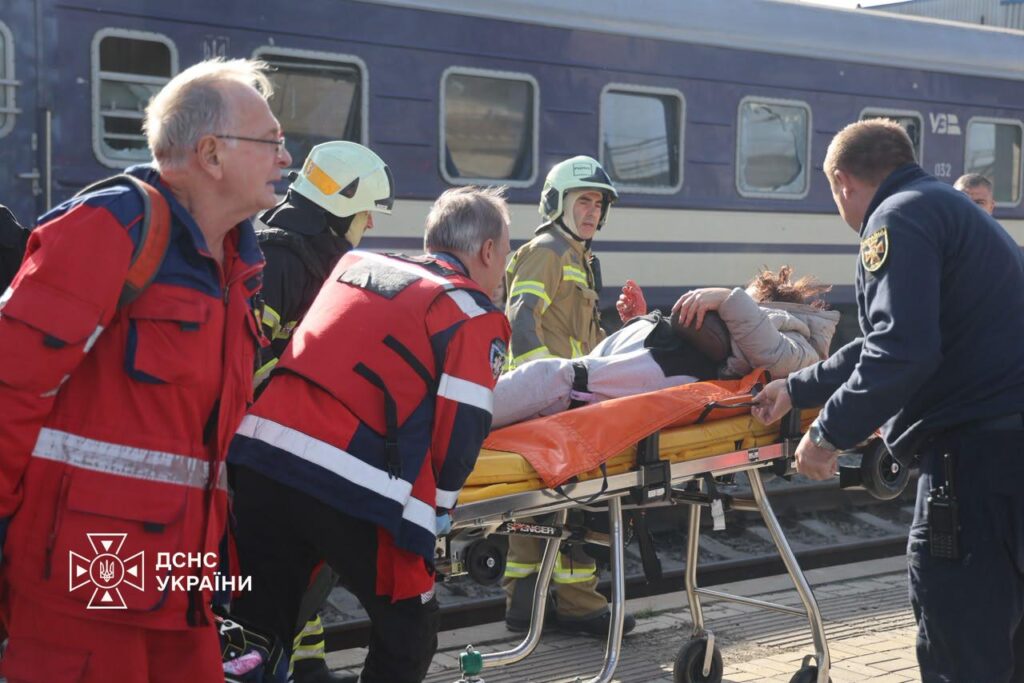
Emergency services, police and medical teams were deployed to the station, where rescuers treated the injured and recovered the bodies of those killed.

Railways Remain Essential to Ukraine

Ukraine’s railway network has retained considerable importance throughout Russia’s full-scale invasion, which began in February 2022.

With civilian air transport severely restricted, trains provide a principal means of travelling between cities and moving people away from areas exposed to military operations.

Rail services also support the movement of humanitarian supplies, commercial goods and essential equipment.

Dnipro is especially important because of its position in central-eastern Ukraine and its transport connections with areas nearer the front line.

The route towards Zaporizhzhia serves a population that has experienced repeated attacks and displacement during the war.

Disruption to railway services therefore affects more than transport schedules. It can interfere with access to employment, medical treatment, family networks and evacuation routes.

Railway infrastructure may also have military logistical functions, but this does not remove the legal protections afforded to civilians and civilian objects under international humanitarian law.

The law requires parties to distinguish between military objectives and civilians, and prohibits indiscriminate attacks.

Whether a particular strike constitutes a violation depends on evidence concerning the target, intended military advantage, precautions taken and foreseeable civilian harm.

Ukrainian authorities have characterised the Dnipro attack as an assault on civilians. Russia had not provided a substantiated explanation for the specific strike in the reporting available on Thursday.

Further Fatalities Across Ukraine

The attack formed part of a wider series of Russian strikes against Ukrainian cities on 29 October.

In Chernihiv, two teenage girls were killed in an attack on a central street, while an additional strike in Kremenchuk killed three people at a residential building.

The incidents brought the reported death toll from these attacks to at least 19.

They occurred as a temporary localised ceasefire around Russian-occupied Oleshky, in Kherson region, continued to permit preparations for humanitarian assistance.

The contrast illustrates the limited geographical scope of the Oleshky arrangement.

Although the ceasefire offers an opportunity to deliver supplies to civilians trapped by the fighting, it does not represent a general cessation of hostilities.

Zelensky Calls for Continued Pressure on Russia

President Volodymyr Zelensky condemned the Dnipro attack and urged Ukraine’s international partners to maintain pressure on Moscow.

He argued that easing sanctions while Russian forces continued striking civilian areas would undermine efforts to secure a reduction in hostilities.

The attack also adds urgency to Ukraine’s continuing requests for air-defence assistance, particularly systems and interceptors capable of addressing multiple categories of aerial threat.

European governments face difficult decisions about supplying additional equipment while maintaining sufficient stocks for their own security requirements.

For Ukraine, the immediate priority remains the treatment of the injured, investigation of the strike and restoration of safe railway operations.

For its international partners, the incident raises a question extending beyond Dnipro: how to protect the civilian infrastructure upon which daily life depends while Russia retains the capacity to launch repeated aerial attacks across the country.

  •  

Russian jet drone hits Dnipro railway platform, killing 14 people next to a Zaporizhzhia-bound train

A firefighter with an extinguisher on the smoke-filled platform at Dnipro railway station after the Russian drone strike, with the bodies of those killed blurred, Dnipro, Ukraine, 29 October 2026

A Russian jet-powered drone hit a platform at Dnipro's railway station on 29 October, killing more than a dozen people waiting by a train, Dnipropetrovsk Oblast head Oleksandr Hanzha reported. An air alert was on, but many passengers had not left the platform. The strike came hours after another overnight Russian drone barrage across Ukraine.

Russia's air war on Ukraine leans more and more on jet-powered drones, and Ukraine's air defenses have stopped nearly 60% of the Geran-4 type over the past three months. Rail is among Russia's main targets: by late August, its strikes had damaged 492 locomotives as Moscow tried to cut Ukraine's export corridors, and in September Russia struck a passenger train near the Polish border. Civilians waiting for transport keep paying the price, and this month a Russian bomb killed 30 bus passengers in Kramatorsk.

One drone reached the platform

Around 11:00, Russia sent four jet-powered attack drones toward Dnipropetrovsk Oblast, the Air Force said. Air defenses destroyed three. The fourth hit a platform where a train stood, the state railway company Ukrzaliznytsia said.

By early afternoon, the death toll had reached 14. Another 14 people were wounded, 13 of them in hospital and six in serious condition, Hanzha reported. Among them is an 11-year-old boy. A 40-year-old man lost both legs.

Rescuers on a platform at Dnipro railway station beside an electric train after a Russian jet-powered drone strike, Dnipro, Ukraine, 29 October 2026
Rescuers on a platform at Dnipro railway station beside an electric train after a Russian jet-powered drone strike, Dnipro, Ukraine, 29 October 2026. Photo: State Emergency Service of Ukraine

Many stayed on the platform despite the alert

Ukrzaliznytsia's monitoring team flagged heightened danger as the jet drone approached, and train crews and the station got orders to halt traffic, the company said. An evacuation was announced on the electric train to Zaporizhzhia more than 10 minutes before the strike. The driver's assistant walked through every car, and announcements told passengers to move at least 200 meters away.

“Unfortunately, despite all this, many people were in the immediate vicinity of the train at the fatal moment of the strike, hence such a significant number of dead and wounded,” Ukrzaliznytsia wrote.

Rescuers evacuating an injured civilian from a platform at Dnipro railway station beside an electric train after a Russian jet-powered drone strike, Dnipro, Ukraine, 29 October 2026
Rescuers evacuating an injured civilian from a platform at Dnipro railway station beside an electric train after a Russian jet-powered drone strike, Dnipro, Ukraine, 29 October 2026. Photo: State Emergency Service of Ukraine

Kyiv ties the strike to sanctions relief

Ukrainian President Volodymyr Zelenskyy linked the attack to the lifting of some sanctions on Russia. “How many such terrorist strikes Russia has carried out against our people since sanctions were lifted from some Russian oligarchs and energy, instead of going for de-escalation,” he wrote. Sanctions on Moscow and its war machine must not weaken while the war goes on, he added, calling for new and stronger sanctions steps from the EU, the US, and the G7.

russia’s sanctioned top diplomat heads campaign against sanctions its war · post russian foreign minister sergei lavrov addresses un general assembly new york united states 24 2022 photo/cia pak un7955720
Explore further

Russia’s sanctioned top diplomat heads to the US to campaign against the sanctions on its war

Overnight, Russia launched 112 drones

Overnight on 29 October, Russia attacked Ukraine with 112 drones, 40 of them jet-powered, the Air Force reported. Air defenses downed or suppressed 97, but drones hit seven locations.

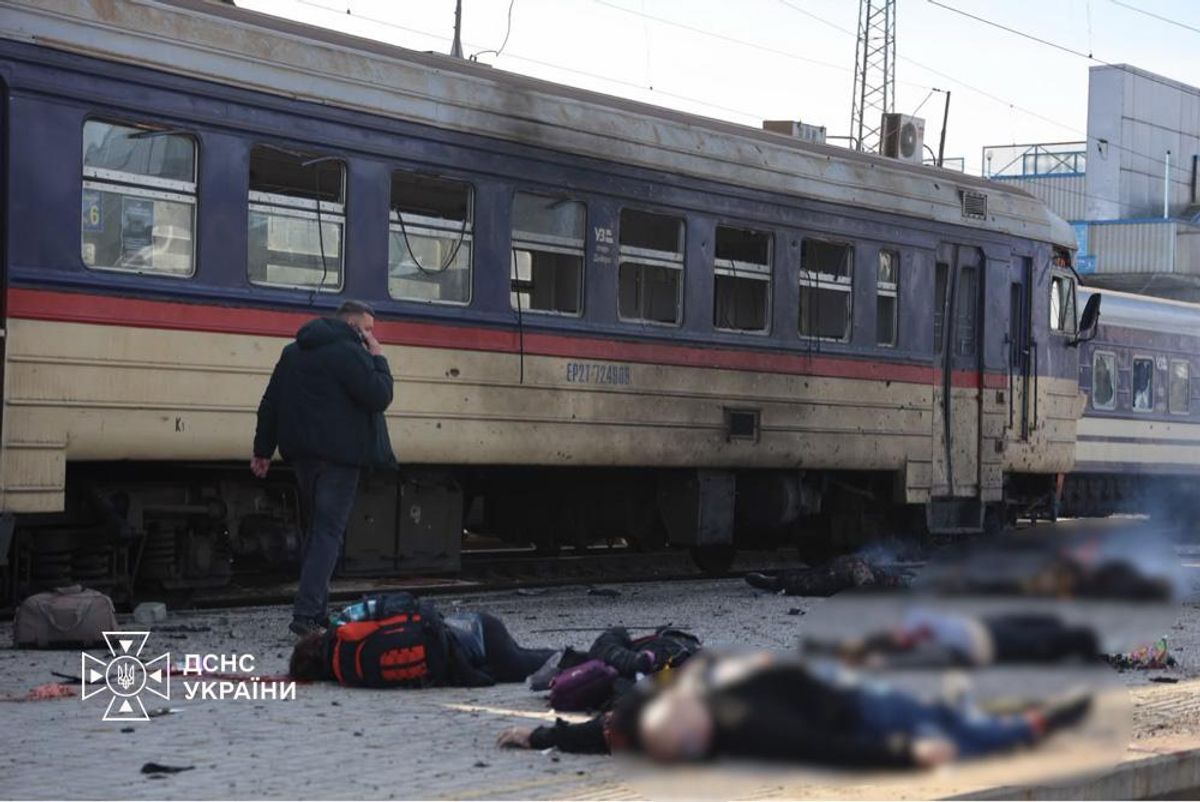
A man stands beside a shrapnel-marked electric train at Dnipro railway station after the Russian drone strike, with bags and the blurred bodies of victims on the platform, Dnipro, Ukraine, 29 October 2026
A man stands beside a shrapnel-marked electric train at Dnipro railway station after the Russian drone strike, with bags and the blurred bodies of victims on the platform, Dnipro, Ukraine, 29 October 2026. Photo: State Emergency Service of Ukraine

In Zaporizhzhia, a Russian FPV drone hit a municipal bus in the morning, wounding a woman and a man, Zaporizhzhia Oblast head Ivan Fedorov reported. Two later Russian strikes on the city wounded two more men and damaged 15 vehicles. In Bilenke in Zaporizhzhia Oblast, Russian attacks killed a 49-year-old man.

  •  

Finland gives Ukraine 10 diesel locomotives that keep trains running when Russian strikes cut the power

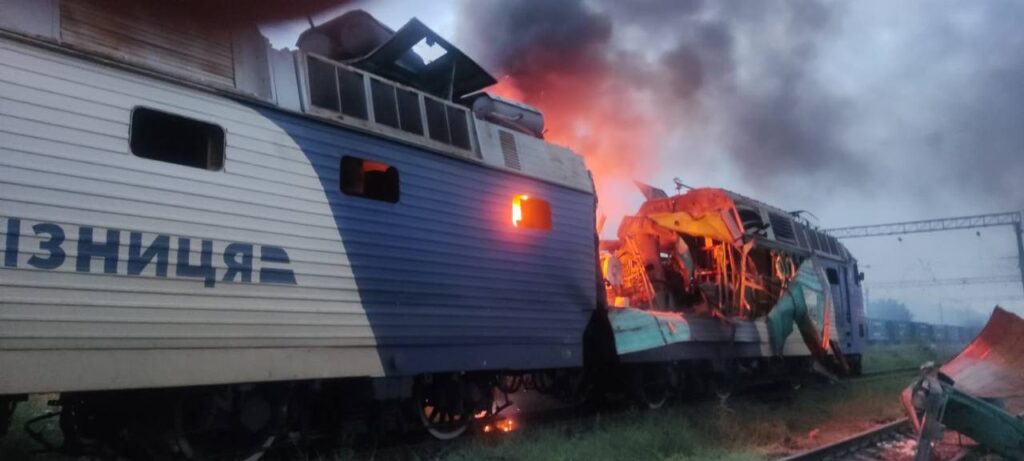
The image shows a train in Ukraine on fire, hit by a Russian drone. Source: Oleksii Kuleba

Finland will donate diesel locomotives to Ukraine’s state railway, the Office of Ukraine’s President reported. Helsinki also pledged new winter aid, and the two countries signed deals on drones, housing, and satellite communications during Finnish Prime Minister Petteri Orpo’s visit to Kyiv. One of them is a first step toward a satellite link Ukraine would control itself.

With Russia replacing its missiles as fast as it fires them, Ukraine heads into winter needing equipment that works without the grid. Russian strikes have damaged or destroyed almost 600 locomotives of Ukraine’s state railway since the full-scale invasion began, more than 300 of them diesels, the infrastructure minister said. The attacks have reached engines even near the Polish border, on the railway that carries Ukraine’s evacuations, grain, and cargo.

Diesels that keep moving when the grid goes down

Finland will hand 10 locomotives and their spare parts to Ukrzaliznytsia, Ukraine’s state railway, free of charge. Infrastructure Minister Mykola Kalashnyk announced the deal, signed on 22 October at a Ukrainian-Finnish business forum. The engines need no power from overhead lines, so trains can keep running during blackouts.

The engines are Dv12 diesels that VR, Finland’s state rail company, is taking out of service. A VR shareholders’ meeting moved them into state ownership, and the Finnish state is donating them, Yle reported. VR puts their value, spare parts included, at about €2.1 million. Finland’s government said the gift will not affect VR’s ability to run trains at home.

A VR Class Dv12 diesel locomotive in Finland, 16 April 2007
A VR Class Dv12 diesel locomotive in Finland, 16 April 2007. Photo: Matthew Ross/Wikimedia Commons

Ukrainian Prime Minister Serhii Koretskyi and Orpo signed the donation certificate, one of seven documents signed that day. Two others plan Ukrainian-Finnish drone production in Finland, one for military and dual-use systems and one for heavy drones. Another covers a precast concrete plant for industrial housing construction.

The day’s agreements are worth around €300 million in total, Zelenskyy said. Projects worth €200 million are already under way within the two countries’ Drone Deal, he added. Under an earlier plan, most drones made in Finland would go to Ukraine.

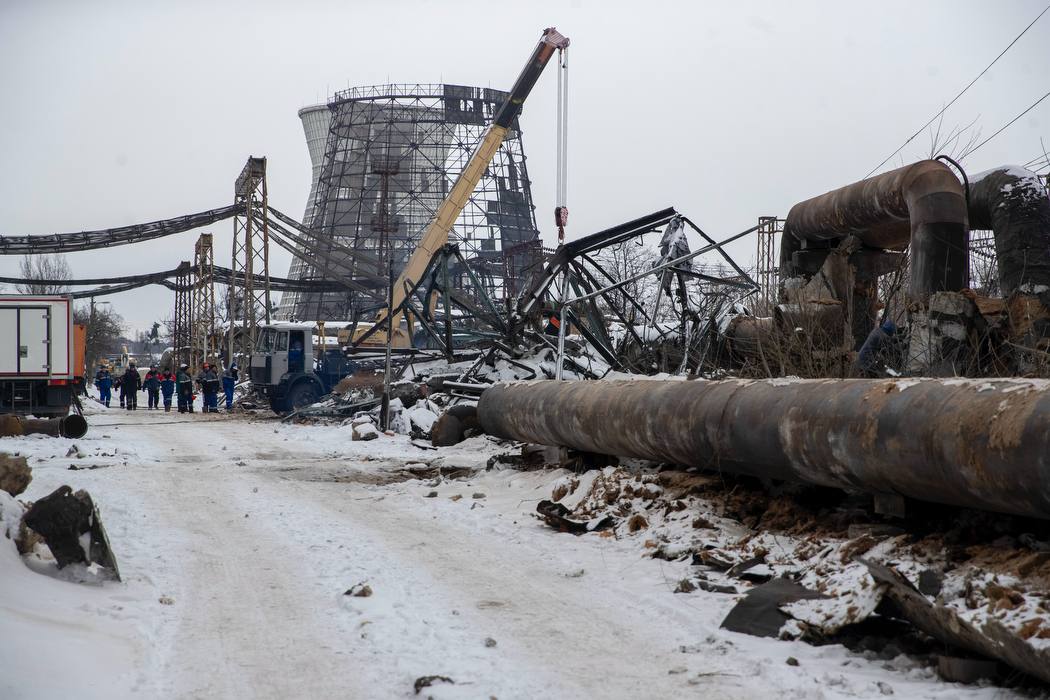
The Darnytska Combined Heat and Power Plant in Kyiv sustained critical damage from a Russian strike on 3 February 2026. Photo: Vitali Klitschko
Explore further

Finland backs €28.5 million power plant project as Ukraine braces for Russia’s next winter energy assault

Winter money now, a 36th military package by year’s end

Orpo announced a new €10 million package. Of it, €5 million goes to the Ukraine Energy Support Fund and €2 million to humanitarian aid for winter. The last €3 million goes to the Ukraine Recovery Program, for energy and water supply. Finland will also deliver mobile heating containers by December.

Finland has given Ukraine five defense packages this year, worth more than €500 million combined, Militarnyi reported. A 36th package is being prepared together with Ukraine’s military. “We plan to make a decision by the end of this year,” Orpo said. In September, Finland approved a package worth about €290 million.

A satellite link Ukraine would own

Ukraine’s Defense Ministry signed a letter of intent with Finnish satellite firm ICEYE and telecom company Nokia, Militarnyi reported, citing ICEYE. The parties will explore building a secure satellite communications system under Ukraine’s control. The aim is to reduce Ukraine’s dependence on foreign commercial operators.

In this model, the state customer owns the satellites, ground stations, and user terminals, RBC-Ukraine reported. The network could serve defense, border protection, emergency services, and disaster recovery. The letter sets out no timeline or funding.

“Modern warfare has proven that reliable communications are a matter of national security,” Zelenskyy said in the companies’ statement. ICEYE CEO Rafal Modrzewski said Ukraine needs “secure, sovereign and high-performance satellite communications systems that it controls.”

The deal comes after a speed cap on Starlink disrupted Ukrainian drone missions this month. The EU, meanwhile, is pushing three European firms to merge into one SpaceX rival. ICEYE has supplied Ukraine with radar satellite imagery for years.

Days before the signing, tracking firm LeoLabs said a Russian government-owned satellite, Cosmos 2612, had spent weeks shadowing an ICEYE radar satellite, coming within 500 meters. The ICEYE satellite is widely believed to provide imagery to Ukraine.

Neither fix is quick. Ukraine’s big locomotive order arrives from 2027, and the first satellites of the ICEYE-Nokia system are expected to launch only in 2028.

  •  

Rail freight transport dropped by 1.8% in 2025

In 2025, the EU rail freight transport performance fell by 1.8%, declining from 375.1 billion tonne-kilometres (tkm) in 2024 to 368.2 tkm, and marking the fourth consecutive year of decline. 

Germany remained by far the largest contributor to rail freight transport performance in the EU, with one third of the EU total (33.5%; 123.5 billion tkm). Poland was the second-largest contributor (14.7% of the EU total; 54.3 billion tkm), followed by France (9.3%; 34.4 billion tkm).

This information comes from data on railway freight transport published by Eurostat on 14 September. The article presents a handful of findings from the more detailed Statistics Explained article on railway freight transport. 

Compared with 2024, rail freight transport performance measured in tonne-kilometres decreased in 16 EU countries, while 8 countries recorded an increase. The largest decreases were recorded in Ireland (-35.2%), Latvia (-18.8%) and Estonia (-17.3%). By contrast, the highest increases were recorded in Greece (+9.3%), Portugal (+8.4%) and France (+6.6%). 

Click to enlarge

Change in the rail freight transport between 2024 and 2025  (% change, based on tonne-kilometres). Chart. See link to the full dataset below.

 Source dataset: rail_go_typepas

Freight per capita: from 0.03 tonnes in Ireland to 10.7 in Luxembourg

Relative to the country’s population, the volume of rail freight transported per capita was highest in Luxembourg (10.7 tonnes), Austria (10.5) and Lithuania (8.5). The lowest rates were observed for Ireland (0.03 tonnes per capita), Greece (0.06) and Spain (0.5).

Click to enlarge

Rail freight per capita, 2025  (in tonnes). Chart. See link to the full dataset below.

 Source datasets: rail_go_typepas and demo_gind

For more information

Methodological notes

  • The data presented in this article include only main railway undertakings. In order to meet the main undertaking threshold, the railway undertaking must achieve a total volume of goods of at least 200 million tonne-kilometres or at least 500 000 tonnes of total weight.
  • There are no railways in Cyprus and Malta. 

  •  
❌