
❌

Reading view

Bolivia Opposition Calls for Probe Into Leaked Cerimedo Tapes
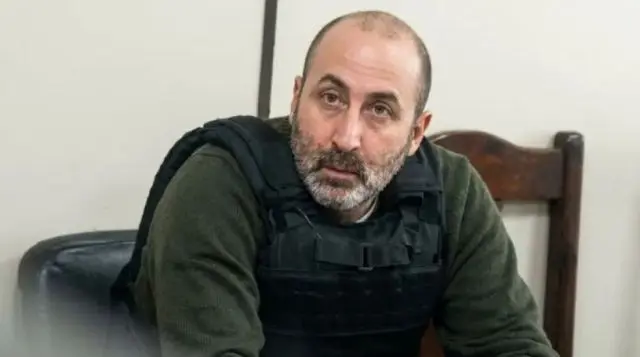
Bolivia opposition demands investigation into leaked Fernando Cerimedo recordings and alleged ties to Rodrigo Paz’s government.

Recordings allegedly linking Argentine political strategist Fernando Cerimedo to President Rodrigo Paz’s inner circle have yet to be authenticated.


Bolivia’s main parliamentary opposition force has called for an immediate prosecutorial investigation into leaked recordings allegedly linking Argentine political strategist Fernando Cerimedo to President Rodrigo Paz’s government, including one purportedly capturing a conversation with First Lady María Elena Urquidi.

RELATED: Bolivian VP Formally Accuses First Lady and Cerimedo of Influence Peddling

Lissa Claros, head of the Libre Alliance caucus in the lower house, called on prosecutors Wednesday to appoint a special team to establish the authenticity of the recordings, which have circulated in recent months, and clarify Cerimedo’s role in the administration.

“The recordings keep emerging every day, yet the Public Prosecutor’s Office has not issued a statement. Do they want the Cerimedo case to go unpunished? Bolivia needs to know what role Mr. Cerimedo played,” Claros said. “Was he the one running the state from the shadows, or not?”

Claros insisted that the investigation must be impartial and that everyone should be subject to scrutiny, including the president’s wife.

El agente argentino de la derecha latinoamericana Fernando Cerimedo era el "presidente en la sombra" de Bolivia: ponía y sacaba ministros a su antojo y todos los directores del Estado le respondían, reveló su exesposa Nadia Beller. 🇧🇴🗣️ #teleSUR #12Oct pic.twitter.com/1S11od16En

— teleSUR TV (@teleSURtv) October 12, 2026

Text ReadsArgentine agent of the Latin American right Fernando Cerimedo was the “shadow president” of Bolivia: he appointed and removed ministers at will, and all the state directors answered to him, revealed his ex-wife Nadia Beller. 🇧🇴🗣️

One of the recordings purportedly captures a conversation between Cerimedo and Urquidi about government affairs. Its authenticity has not been established through official forensic examinations.

The leaked material has fueled scrutiny of Cerimedo’s reported ties to Paz’s inner circle and his alleged influence within the executive branch. The allegations have also drawn on statements and recordings released by Cerimedo’s former partner, lawyer Nadia Beller, remarks by Vice President Edmand Lara, an opposition figure, and reports in local media.

Cerimedo has been held in pretrial detention in Bolivia since August following a shooting attack by hired gunmen targeting Beller. He faces formal charges of attempted femicide as the alleged intellectual author of the attack, as well as separate proceedings over alleged domestic and family violence against Beller and alleged illicit enrichment.

Cerimedo’s political activities across Latin America have also come under scrutiny. In Brazil, he promoted a false narrative of electoral fraud in 2022. In Argentina, he played a significant role in the digital strategy for Javier Milei’s 2023 presidential campaign.

His company was also linked to disinformation operations during Chile’s constitutional referendum campaign, in which the Rejection bloc opposed the proposed constitution. His reported political connections extend to Argentine politician Patricia Bullrich, Honduran politician Nasry Asfura and other right-wing figures in the region.

In Bolivia, Cerimedo reportedly joined Paz’s political circle as an adviser, a relationship now at the center of questions raised by the leaked recordings.

Libre’s call for a formal investigation comes as the recordings remain unauthenticated, leaving allegations about Cerimedo’s role in the government unresolved.

  •  

Oposición boliviana exige investigar audios que vinculan a Cerimedo con el Gobierno

Tras la filtración de una decena de audios que salpican al círculo cercano del presidente Paz, la principal fuerza opositora demanda transparencia y pide investigar el rol de Cerimedo en el Ejecutivo.
  •  

Bolivia’s right-wing government eliminates diesel subsidy

“Nothing in life is free,” goes an old Latin American saying, and Bolivia’s right-wing President Rodrigo Paz has proven this once again. The International Monetary Fund confirmed that it will disburse $1.9 billion to Bolivia, which will naturally have to repay the loan.

A few hours later, as part of the agreement with the neoliberal-leaning international financial institution, Paz announced that he would eliminate the subsidy on diesel, the fuel typically used by transporters and farmers for production. According to reports from La Paz, the price will increase by 100% (for now), as it will be adjusted to international market rates.

Several experts assert that the government’s decision will lead to an imminent increase in the price of food, mining, and transportation, thereby negatively impacting the country’s working population, which constitutes the vast majority.

While the government claims that these types of neoliberal measures will help control inflation, economist Fernando Romero argues that eliminating the diesel subsidy could cause inflation – which was projected to reach 14% by the end of the year – to rise to 20% by December 2026.

But this seems to matter little to a government whose primary goal – whether its own or one set by international financial institutions for the Third World – is to reduce the fiscal deficit at all costs.

“You [Bolivians] elected me to solve problems … If [the IMF] is lending us funds to revive the country, I cannot buy diesel at a high price and sell it cheaply … That is why we have decided that diesel will cost the same as it costs us to buy it abroad, and that price will be the same for everyone,” Paz said in an address to the entire country.

Just a few months in office, many protests

The truth is that this is not the first time Paz has sought to meet the IMF’s demands. In December of last year, just a few weeks after being sworn in as president, Paz raised the price of diesel and gasoline, sparking protests across the country.

A few months later, between May and June, thousands and thousands of Bolivians took to the streets to protest the government’s plan to allow land to be seized to settle debts, which was followed by demands from the Bolivian Workers’ Confederation (COB) and various peasant groups for higher wages and improved fuel supplies, among other things. Following harsh repression, the protests quickly escalated into demands for the president’s resignation, which led to increased tensions and clashes between law enforcement and thousands of workers who blocked major highways across the country. These protests left 14 dead and nearly 400 people detained.

It now appears that Paz will not back down from his policy, despite the fact that in less than a year he has faced significant protests against him that have gradually eroded his public image. According to some polls, Paz’s approval rating barely reaches 32%.

But Paz has also prepared for possible demonstrations. The Bolivian Congress, which supports Paz, has just extended the state of emergency – which had been declared last June – by 90 days. According to Interior Minister Marco Oviedo, there are: “threats of renewed and coordinated blockades, marches, and strikes, as well as early warnings regarding calls to action, escalations, ultimatums, and the mobilization of social groups [in the coming days].”

Announcement of protests

Indeed, several agricultural workers and truck drivers have announced that they will mobilize all their members unless the government reverses its plan to eliminate the diesel subsidy. “The increase in the price of diesel spells the end for all our productive sectors; that is why we have united to defend our livelihoods and our daily work, because right now, not only is there no diesel, but we are being forced to buy it at double the price,” the main leaders of these workers said at a press conference.

And while the bulk of those likely to protest against Paz will be the poorest workers, it should not be overlooked that a significant portion of industries, mining companies, and various other businesses rely on diesel to power their machinery. This suggests that discontent will arise not only among the poorest but also among the middle class and various business owners who foresee rising production costs without any real affordable alternatives.

Similarly, transportation unions have stated that if the price of fuel doubles, they will be forced to double the cost of fares. In fact, transport operators traveling between departments have already raised fares by between 50% and 100%.

Consequently, the rising costs of food, supplies, diesel, production, transportation, and so on lead several experts to predict that Paz’s decision (while it may please the IMF) will spark demonstrations and a new cycle of protests against the administration.

However, given the extension of the state of emergency, it does not appear that Paz is very interested in curbing the protests, but rather in resisting them and cementing the elimination of the subsidy in the long term, thereby bolstering the neoliberal program, which he calls “Bolivia’s new path.”

Read more: Bolivian president consolidates power as protests continue to grow

Whether Bolivian workers (who have a long tradition of resistance and popular mobilization) will succeed in thwarting the intentions of Paz and his international allies remains to be seen.

But, as seen in other countries such as Ecuador, neoliberal governments have opted for a strategy of wearing down popular protests. For example, Lenin Moreno’s government raised fuel prices only to back down in the face of massive social protests. Years later, Guillermo Lasso and Daniel Noboa did the same, until the protesters grew weary and they finally succeeded in eliminating the subsidy on certain fuels.

For now, it seems that Bolivian workers are not willing to back down, although all signs indicate that neither will the Paz administration nor future neoliberal politicians. Whoever emerges victorious will do so by sheer resistance and the ability to remain united.

  •  
❌