An experimental therapy called CRMA-1001 is a remarkable development because, instead of targeting the virus directly, it silences the viral DNA; this is promising because current treatments rarely eliminate the DNA, which allows the virus to rebound
The Geosynchronous Satellite Launch Vehicle carrying on board the GSLV-F18 rocket is scheduled to lift off at 11.51 p.m. on Friday (October 30, 2026) from the second launch pad at the Satish Dhawan Space Centre
A blue light flickers into existence on a flexible film just 70 microns thick, tracing the precise ridges and valleys of a human fingerprint. Unlike traditional touch sensors, there are no internal cameras, no complex processors, and no dense web of wiring connecting individual sensors to a central computer. The light is not a projected image; it is the material itself reacting to physical pressure, glowing exactly where it is pressed and with an intensity that matches the force applied.
Beyond the Pixel
For years, the development of "electronic skin" has been hindered by a reliance on sensor arrays. These systems operate as grids of discrete points, meaning they can only perceive what happens at specific coordinates. This architecture often results in low spatial resolution-typically under 100 dpi-and creates significant bottlenecks in data processing and wiring.
Researchers at the National University of Singapore, led by Professor Lim Chi Tek of the Department of Biomedical Engineering and the iHealthtech institute, have bypassed the concept of pixels entirely. Their device, called the eLuminator, functions as a continuous surface rather than a collection of points.
In the scorching, mineral-rich springs of Kamchatka, bacteria have evolved to thrive in heat that would instantly denature the proteins of most life forms. For researchers at the Russian Academy of Sciences, this specific resilience offered a unique opportunity to test a radical idea: can biological material survive the violent re-entry of a rock into Earth's atmosphere? In late August 2025, they found a tentative yes. By shielding heat-loving microbes with a specific mineral, the team demonstrated that a fragment of life could theoretically endure the fiery descent of a meteorite, a critical hurdle for the hypothesis of lithopanspermia-the transfer of life between planets.
The experiment, conducted as part of the "Bion-M” satellite mission, did not send actual living rock into space. Instead, it engineered a proxy. The satellite orbited Earth at 372 kilometers in a sun-synchronous path from August 20 to September 19, 2025. On its exterior, scientists mounted artificial "meteorites” containing two specific biological samples: spores of Bacillus subtilis and a strain of thermophilic bacteria named Carboxydocella thermoautotrophica 019. The key variable was not the height or the duration of the flight, but the material wrapping the cells. The microbes were mixed with glauconite, a green mineral commonly found in sedimentary rocks.
When the spacecraft re-entered the atmosphere, the skin of the vehicle experienced temperatures reaching 1,200 °C. In a typical re-entry, the boundary layer of superheated air would strip heat directly into the payload, sterilizing any organic matter exposed to the surface. However, the glauconite acted as a thermal insulator. Rather than conducting the intense heat of atmospheric friction to the bacterial cells, the mineral matrix buffered the temperature spike. This physical barrier was the difference between sterilization and survival.
Imagine a sheet of graphene-a single layer of carbon atoms-where a fold only a few atoms wide transforms the material's electrical behavior. Researchers have demonstrated that by introducing sharp, nanoscale creases into this two-dimensional crystal, they can fundamentally alter how electricity flows through it. This suggests a future for nanoelectronics where circuitry is controlled not through chemical doping or external magnetic fields, but through the physical geometry of the material itself.
The Mechanics of the Fold
The phenomenon is driven by flexoelectricity, a process where a non-uniform bend in a material forces electrical charges to separate. In graphene, an extreme crease shifts electrons toward one side of the atomic lattice, creating an electrical dipole-distinct regions of opposite charge. The critical discovery is that the intensity of this effect depends not on the total height of the fold, but on its sharpness.
Experimental measurements revealed a staggering disparity: in zones where the curvature is most acute (less than a billionth of a meter), the electrical polarization is 100,000 to 10 million times stronger than in areas with gradual bends. This makes the precise geometry of a nanometer-scale crease a powerful lever for manipulating electronic properties.
The new tool is among several solutions being developed to protect both people and polar bears as the impacts of climate change increase the likelihood of dangerous encounters
The new tool is among several solutions being developed to protect both people and polar bears as the impacts of climate change increase the likelihood of dangerous encounters
The new tool is among several solutions being developed to protect both people and polar bears as the impacts of climate change increase the likelihood of dangerous encounters
On this week's episode of Freed Up, Robby "Lestat" Soave and Christian "Lizard" Britschgi sport their Halloween costumes while reviewing Nathan Fielder's buzzy new documentary, You Can See Everything. During their discussion, they analyze the psyche of Elizabeth Holmes as well as the differences between documentaries and biographical dramas, and Christian gets an opportunity to defend his written critique of the film. Next, the boys shift gears and unpack reports that Mary Peltola's Senate campaign in Alaska helped recruit a second "Dan Sullivan" to confuse voters who meant to support the incumbent, Sen. Dan Sullivan (R–Alaska).
0:00—Halloween costumes
4:58—Robby and Christian review You Can See Everything
9:05—The ethical dilemmas in You Can See Everything
16:00—Elizabeth Holmes is still a liar
30:00—The Dropout vs. You Can See Everything
42:24—Mary Peltola's dirty tactics come to light.
54:06—Freed Up live for the 2026 midterm elections
If you enjoy Freed Up, come watch Robby debate at our upcoming Reason Versus event in Washington, D.C. Tickets are available here.
For more than half a century, federal officials have classified drugs into legal categories that determine who can manufacture, prescribe, or study them, and who goes to prison for possessing or selling them. Those classifications carry enormous consequences. They also reflect decades of political pressure, moralization, myth, and stigma.
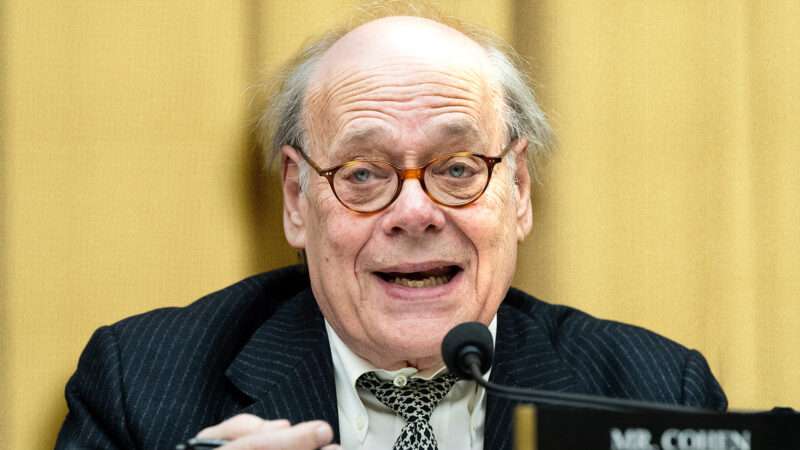
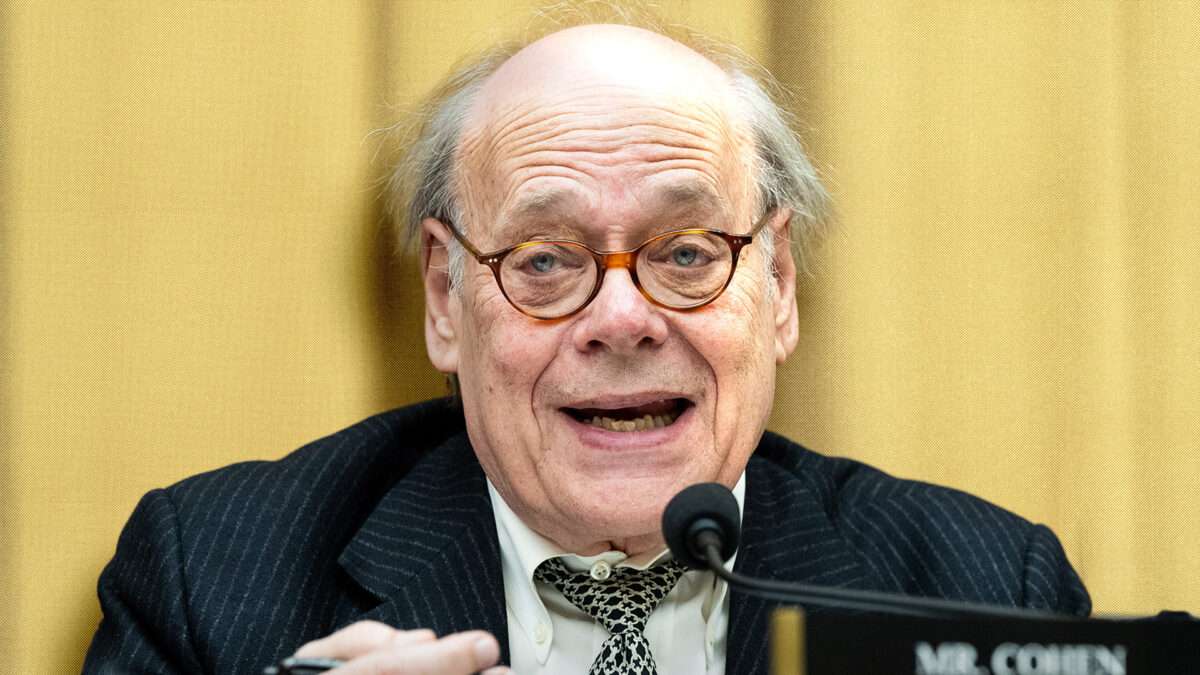
Rep. Steve Cohen (D–Tenn.) proposes to change that. His Public Health and Research Reforms in Controlled Substances Act of 2026 would substantially overhaul federal drug scheduling, shift key decisions from law enforcement to health officials, ease research restrictions, deschedule marijuana, and reduce mandatory prison penalties.
While the proposal preserves too much of the drug prohibition infrastructure, it represents a major step toward a more rational, evidence-based, and humane drug policy.
The Controlled Substances Act currently combines judgments about a drug's potential for abuse with judgments about its medical usefulness. Congress vested scheduling authority in the attorney general, who generally exercises it through the Drug Enforcement Administration (DEA). The Department of Health and Human Services (HHS) evaluates the scientific and medical evidence, but the DEA makes the ultimate legal determination of whether a drug has a "currently accepted medical use" for scheduling purposes, as the Justice Department explained in a 2024 legal opinion. Schedule I, the most restrictive category, includes substances deemed to have a high potential for abuse and no currently accepted medical use. These restrictions impede research, while officials cite insufficient evidence of medical usefulness to justify continued restrictions.
Cohen's bill would transfer authority to assess medical usefulness and drug-related risks—and to make scheduling decisions—from law enforcement to HHS, where those judgments more rationally belong. Under the new system, controlled substances would receive two classifications: a Roman numeral, I through IV, reflecting risks associated with misuse, substance use disorder, and threats to public health; and a letter, A through E, reflecting therapeutic value.
A substance could therefore be classified as high risk while still recognized for substantial medical benefits. That reflects an everyday reality of medical practice. Fentanyl, for example, can cause fatal respiratory depression and remains an indispensable anesthetic and analgesic. A drug's dangers do not erase its benefits.
The bill would also replace the vague "potential for abuse" standard for adding substances to the schedules with a standard based on the potential to develop a substance use disorder, expressly excluding isolated or occasional nontherapeutic use. Taking a substance for pleasure would no longer, by itself, satisfy that threshold.
Among the proposal's most consequential provisions is a requirement that officials consider whether scheduling a substance would itself threaten public health, including by encouraging people to substitute other drugs. They must also consider whether people use a substance to help control problematic use of another scheduled drug, as well as the harms associated with that other drug.
That would force federal officials to confront consequences that drug warriors routinely ignore. Banning a substance does not eliminate demand. Consumers may turn to underground suppliers, face uncertain potency and contamination, or switch to more dangerous products. Making a particular drug harder to obtain can leave its users worse off.
These requirements could be critical in disputes over kratom and its alkaloids, such as 7-hydroxymitragynine (7-OH), which some consumers report using for pain or to reduce their use of other opioids. Such reports should be part of an honest assessment of what consumers stand to lose when the government closes a legal supply channel.
An expert committee would evaluate each substance and publish its evidence and reasoning, making scheduling decisions more transparent and easier to challenge.
HHS would also assume from the DEA responsibility for registering researchers who study controlled substances. Qualifying researchers would gain an expedited registration pathway, with faster decisions for eligible small preclinical pilot studies. Federal officials currently demand evidence that these drugs have medical benefits while imposing restrictions that make it harder for researchers to obtain the drugs and conduct the studies needed to generate that evidence.
Cohen would require officials to reconsider existing classifications, setting a two-year deadline for 32 named substances and an eight-year deadline for most others. If officials miss those deadlines, statutory fallback classifications would apply.
The bill would also repeal the legal obligation of the director of the Office of National Drug Control Policy, the "drug czar," to oppose specified legalization efforts—a remarkable requirement for an office supposedly focused on evaluating drug policy.
Marijuana and tetrahydrocannabinols (THCs) would come off the controlled substance schedules altogether. The bill expressly makes that change retroactive, extending it to past offenses, pending cases, convictions, and juvenile adjudications.
Its sentencing reforms also merit praise. The proposal would remove the quantity-based trafficking provisions that impose five- and 10-year mandatory minimums and eliminate specified mandatory penalties when death or serious injury results. The bill would also limit certain repeat-offender sentencing enhancements to prior convictions that meet the narrower definition of a "serious drug felony." Among other requirements, the person must have served more than a year in prison and been released within 15 years of the new offense. Eligible prisoners could receive reduced sentences, and the Bureau of Prisons would be required to identify them, notify them, and file motions on their behalf.
These changes could spare people years of imprisonment. They deserve support even from those of us who would go much further.
The shortcomings remain significant.
First, the bill preserves criminal penalties for peaceful conduct involving drugs that remain controlled. It leaves the general federal simple-possession statute intact, including mandatory minimum jail terms for repeat offenses. Congress would continue to authorize imprisonment for possessing a substance without government permission.
Second, transferring power to HHS offers no guarantee against political interference. The secretary would appoint the expert committee in consultation with the drug czar. Its required membership emphasizes addiction medicine, toxicology, and substance-use services, without expressly reserving seats for pain patients, ordinary consumers, or civil liberties advocates.
The bill would allow emergency scheduling to bypass the new expert committee's review. It would also retain features of the current system: Temporary restrictions could last two years, with a possible one-year extension, and the statute would expressly exclude those orders from judicial review.
The bill would also transfer production quotas to HHS rather than abolish them. As I have argued before, presuming to know how much of each opioid more than 320 million Americans will need in the coming year exemplifies what economist Friedrich Hayek called the "fatal conceit." These quotas have contributed to shortages of injectable opioids in hospitals, jeopardizing care for surgical patients and those on ventilators. Transferring that power to a health agency does not solve the underlying knowledge problem. Congress should abolish the quotas.
The proposal substantially increases many maximum fines even as it reduces mandatory prison penalties. For an individual convicted of Schedule I or II trafficking without a qualifying prior conviction, the fine ceiling would rise from $1 million to $10 million. Congress should question this punitive expansion.
Finally, marijuana descheduling would leave Food and Drug Administration (FDA) authority intact. The bill expressly preserves the agency's powers under federal food and drug law, allowing it to regulate cannabis products that qualify as drugs, foods, or other products within its jurisdiction. It provides no explicit protection for a recreational cannabis market from FDA restrictions.
Those weaknesses warrant amendments. Scientific evidence can help people understand risks, but it cannot, by itself, justify depriving competent adults of the freedom to decide which risks they will accept. Autonomous adults should remain free to make informed choices about what they put into their bodies.
Cohen, who is retiring from Congress at the end of his term, is unlikely to see this sweeping reform pass during the brief post-election lame duck session. But his proposal can serve as a benchmark for reforming the Controlled Substances Act in the next Congress. Providing his successors with a framework that places greater weight on scientific evidence, recognizes the harms of prohibition, and reduces unjust punishment would leave Cohen with a substantial drug policy reform legacy.
Researchers hope to better understand the drivers of major health challenges facing younger people, such as mental illness and rising cancer rates, through the recruitment of 100,000 people for Australia’s largest intergenerational study of wellbeing and ageing.
The independent and not-for-profit research institute the Sax Institute on Thursday launched the 18 and Up study, which will follow the health of those aged 18 to 45 throughout their lives.
The TechIsland TechPro Community will hold its fourth meetup on November 3, 2026 in Limassol, bringing together professionals working at the core of Cyprus’ technology sector for an evening of discussion, knowledge exchange and networking.
The community was created by TechIsland, the largest technology association on the island, as a dedicated platform for CTOs, CIOs, CISOs, technology architects, software developers, DevOps and platform engineers, data and AI specialists, cybersecurity professionals, UX experts and digital transformation leaders.
Its purpose is to give these professionals a space to meet peers outside their own organisations, exchange practical experience, discuss the challenges they are facing and build stronger connections across Cyprus’ technology ecosystem.
Following three meetups earlier this year, the community will come together with a programme combining a focused panel discussion with informal networking over drinks and bites.
At the centre of the evening will be the panel ‘Inside the Vault: Building Secure Systems for Digital Assets & Data’.
The discussion will take a practical look at how organisations protect what matters most, from customer data and production databases to API credentials, encryption keys, sensitive information and digital assets, while still enabling teams to move fast and keeping systems manageable in practice.
Joining the panel will be Anastasiia Sanina, Head of B2B Partnerships at The Vault, Denis Rybin, Director of Information Security at inDrive, Ingrid Camilleri, Chief Digital Officer at Cablenet, and Igor Bulatenko, Head of Information Security at Exness.
The conversation will be led by Andreas Neocleous, Chief Consulting Officer at PwC Cyprus, who will bring the speakers’ different perspectives together and guide the discussion around the practical decisions technology and security teams face.
The 4th TechIsland TechPro Community Meetup, powered by The Vault, will take place from 19.00 to 21.00.
Attendance is free of charge, including drinks and bites, but registration is required.

 Login