Ms. Huerta, a champion for workers and Latinos, revealed this year that she had been sexually assaulted by Cesar Chavez. But some women said she rebuffed their own complaints about abuse within the movement.
Dolores Huerta, seen in a 1988 rally, was remembered Wednesday in California as a transformative leader who won rights for Latinos, farm workers and women.
The three siblings used their wealth and influence to lure and sexually assault women for more than a decade. Eleven of the victims spoke on Tuesday before the brothers were sentenced.
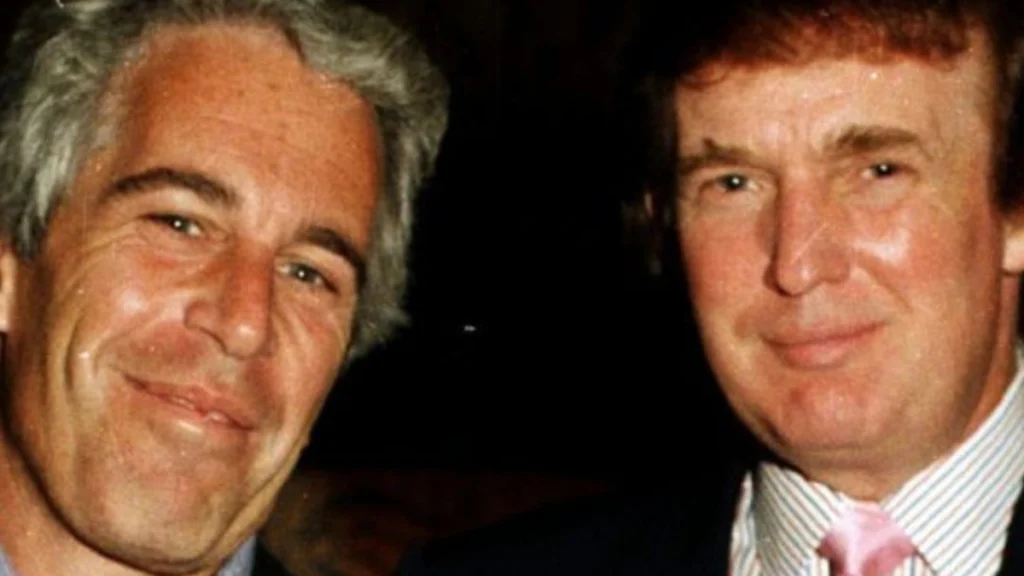
A House Judiciary Committee report alleges Donald Trump was actively involved in Epstein’s abuse of young women.
On Monday, Democratic lawmakers released a report calling for a special counsel to investigate possible ties between U.S. President Donald Trump and the late convicted sex offender Jeffrey Epstein, just over a week before the midterm elections.
The more than 50-page report by Democrats on the House Judiciary Committee alleges that Trump was an “active participant in Jeffrey Epstein’s abuse of young women in the mid-to-late 1990s.”
The document, titled “The Case Against Donald Trump Emerging From the Epstein Files and the Justice Department’s Desperate Efforts to Cover It Up,” includes the names of five women who have accused Trump of “raping or sexually assaulting them” in the company of Epstein.
Among the women’s accounts is one being made public for the first time. It describes an alleged rape by Trump during a pageant held in November 1993 at the Plaza Hotel in New York City, although the account provides no evidence beyond the woman’s statements.
“The women who survived Epstein deserve to be heard, Congress must have the full files that the law requires, and an independent special counsel must investigate Epstein’s accomplices and the Justice Department’s cover-up, and ensure that state and foreign prosecutors have the evidence they need to pursue justice,” said Rep. Jamie Raskin, the committee’s top-ranking Democrat.
🇺🇸 Rep. Ted Lieu says there is “ample evidence” in the full Epstein files alleging Donald Trump raped children.
Trump, for his part, has repeatedly denied committing any wrongdoing related to Epstein’s actions. He has also repeatedly said that he had a falling-out with Epstein years ago and barred him from Mar-a-Lago, his Florida residence, “for being a creep.”
The Democratic lawmakers’ report also calls for greater federal cooperation in legal proceedings against Epstein’s accomplices and increased congressional action to uncover all possible connections within his sex trafficking network.
With the document’s release, Democrats are signaling that they have no intention of backing down from their efforts to continue investigating the connections between Trump and Epstein’s sex trafficking network. They are doing so at a time when they could win a majority in the House of Representatives and even challenge Republican control of the Senate on Nov. 3.
The midterm elections will determine all seats in the House of Representatives and one-third of the seats in the Senate, as well as numerous state and local offices.
The Roman Catholic archdiocese might now avoid bankruptcy by reaching a settlement with 1,300 people who said they had been abused by clergy members and lay leaders.
St. Patrick’s Cathedral in Midtown Manhattan. The Archdiocese of New York includes Manhattan, the Bronx, Staten Island and several Hudson Valley communities.
The vice president backed an advertisement featuring Democrat Amy Acton’s mother, who has been estranged from Dr. Acton since her stepfather was charged with child rape.
One of the unfortunate quirks of the American system is that you can't lie to the government, but the government can lie to you. Samuel Tunick found himself on the receiving end of this setup last year at Atlanta International Airport. When agents from the Department of Homeland Security (DHS) asked for his phone password, he allegedly gave them a self-destruct code that wiped his data. Tunick now faces five years in prison for destroying evidence.
It turns out that the feds were lying to Tunick the entire time. A new court filing, first reported by 404 Media, shows that the DHS had sent out an order to seize Tunick's phone over his involvement in environmentalist protests in Atlanta. When he landed at the airport, however, agents told Tunick that they were looking for "kiddie porn" and he would be allowed to leave with his phone if he cooperated. They also repeatedly denied him access to his lawyer when he asked.
"There can be no real debate that if law enforcement had acted similarly elsewhere in Atlanta, their actions would be unconstitutional. But the government says it was entitled to act this way because Mr. Tunick was returning from an international vacation" in the Dominican Republic, his lawyers wrote in the filing, which includes internal DHS communications and excerpts from his interrogation video.
U.S. law recognizes a "border exception" to Fourth Amendment privacy rights, allowing federal agents to search incoming travelers for contraband. U.S. Customs and Border Protection (CBP) claims that this exemption also allows them to hold travelers for questioning and search their electronic data. Tunick's case reveals just how widely the agency stretches this loophole.
A few hours before Tunick landed, Homeland Security Investigations (HSI) agent Travis Mcghie emailed the CBP station in Atlanta with his photo and information, stating that he is under investigation for "suspected terrorist activities." (Tunick is involved in Save the Atlanta Forest, also known as Stop Cop City, a protest movement against a local police training center.) The email asked CBP to "conduct a 100% baggage exam, retain all electronics and collect passcodes," stating that the HSI will be at the airport to conduct an interrogation.
Pulled into the secondary screening room, Tunick "almost immediately" told CBP officers that "I don't really want to speak without a lawyer any more," according to the filing, which cites the interrogation tape. He would ask for a lawyer multiple times.
The agents asked Tunick if he had "kiddie porn" on his phone and stated that "because you're refusing to talk, we have the authority to go through your phone to see what we're looking for." One of them, Latoya Castro, told Tunick that "either you can give us your password so that we can go through it no problem, or you can refuse to do that, unfortunately, we will have to seize your phone."
Both of those statements were a lie, of course. The HSI's email had asked CBP to take Tunick's phone, whether or not he cooperated.
The lie about child porn may not only have been meant to intimidate Tunick. While there arecontradictory lower court rulings about the border search exemption, some courts have ruled that the CBP can only search electronics for "digital contraband," or files that are themselves illegal. A search for child sex abuse material would be on stronger legal ground than a search for mere evidence of other crimes.
Tunick was using GrapheneOS, a secure phone system that allows users to set both a real password and a "duress password" that wipes out all data when entered. The interrogation tape shows his phone appearing to reset after he gave the officers a passcode. HSI agent Nathan Burnham and FBI agent Andrea Coble then entered the room.
"You are not under arrest. Once these gentlemen are done with you, pursuant to your entry into the country, you're free to leave," Burnham said, referring to the CBP officers.
Tunick's lawyers argue that the judge should throw out the phone password Tunick provided and everything that resulted from entering it as an "involuntary" response made under "unlawful interrogation," because the CBP agents did not read Tunick his Fifth Amendment rights and ignored his multiple requests to consult with his lawyer before answering their questions.
The CBP claims that secondary screening at the border doesn't count as a criminal investigation, so detainees don't have the same rights as criminal suspects. "Since the international arrivals inspection is an administrative function, CBP policy and federal regs do not permit the presence of lawyers during secondary examinations," a spokesmantoldReason earlier this year.
But Tunick's lawyers insist that his experience was "far outside" a normal border crossing: He was accused of a serious crime to his face, faced an investigation for a different serious crime he didn't know about, and clearly could not leave the situation until he gave information to government agents.
"I hope people understand that the charges against me are meant to intimidate people against protecting their data and their privacy, and the government hopes to set a precedent that no one has the right to privacy," Tunick told 404 Media.
Defend the Atlanta Forest, the movement that Tunick is involved with, has been amajor nuisance for authorities in Georgia. Protesters attacked and burned construction equipment throughout 2022, and police shot a protester in 2023 under unclear circumstances, claiming that they were fired at during a raid.
The Trump administration has brought down the federal government against the movement. In June 2026, the Department of Justice broughtfederal charges against two alleged arsonists, citingNational Security Presidential Memo 7, which directs the feds to go after left-wing domestic terrorism.
But beyond the email line about "suspected terrorist activities," there is no indication of what specific crimes the feds suspected Tunick of, or why they suspected him. And the whole setup of the interrogation was designed to hide those answers. In fact, instead of charging Tunick under typical obstruction or evidence-destruction laws, federal prosecutors chose ararely-used statute that doesn't require them to disclose what the underlying investigation was about.
"Many times the government wants to highlight what it was trying to investigate because that ups the stakes on what the defendant was doing," former prosecutor Daniel RichmantoldThe New York Times. "This is a case where I think they're trying to avoid exactly that by focusing only on the destruction, and not what the investigation was about."

 Login