❌

Reading view

Brazil’s victory for the planet and democracy: seven lessons from Lula’s win

The trouncing of the far right provides a playbook for social and environmental movements in other countries facing elections, including the US, Spain and France

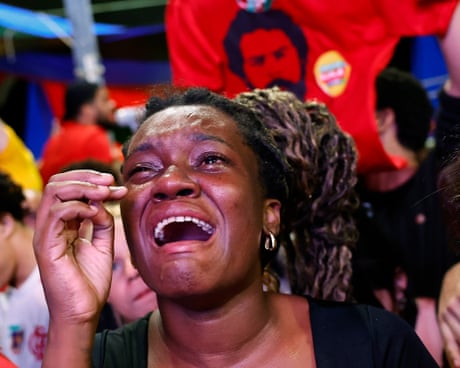
Thank you, Brazil, for demonstrating how the far right can be trounced while protection for the Amazon is strengthened. In a world where nature and democracy appeared to be bleeding out in tandem, voters and forest defenders in this global south powerhouse have shown it is possible to staunch the flow. This should provide much needed inspiration and, more practically, a playbook for social and environmental movements in other countries facing elections, including the US, Spain and France.

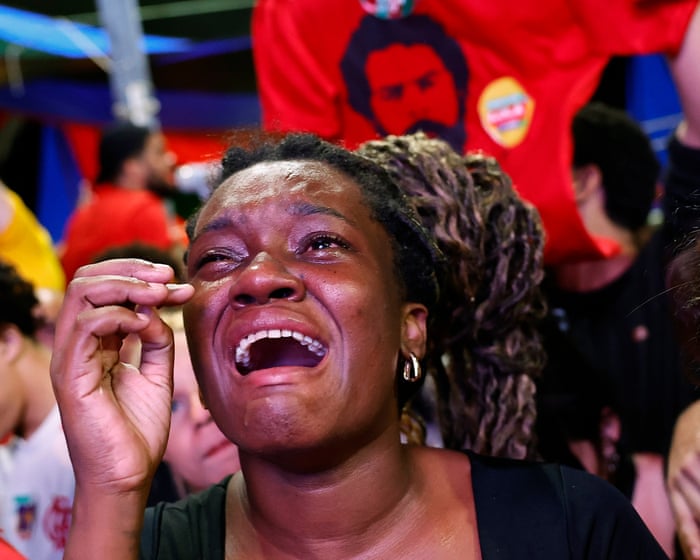
The astonishing comeback victory of Luiz Inácio Lula da Silva in Sunday’s presidential runoff against his extreme right challenger Flavío Bolsonaro has brought oceans of rapturous supporters on to the streets, while also thrilling conservationists, climate activists and social justice campaigners across the world.

Continue reading...

© Photograph: Andre Coelho/EPA
© Photograph: Andre Coelho/EPA
© Photograph: Andre Coelho/EPA

  •  

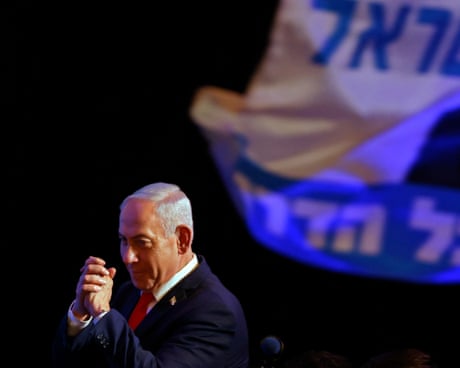
Netanyahu accused of smearing Arab voters to hold on to power

Prime minister claims Arab Israeli parties used foreign backing to steal elections, in which his coalition lost its majority

Benjamin Netanyahu has been accused of using smear tactics to cling to power, after he claimed that Arab Israeli parties had used foreign backing to “steal” Tuesday’s election, in which the prime minister’s coalition lost its parliamentary majority.

Netanyahu and his allies called on the internal security service, Shin Bet, to investigate alleged vote buying and other irregularities in Palestinian communities in Israel, supposedly funded by foreign money.

Continue reading...

© Photograph: Jalaa Marey/AFP/Getty Images

© Photograph: Jalaa Marey/AFP/Getty Images

© Photograph: Jalaa Marey/AFP/Getty Images

  •  

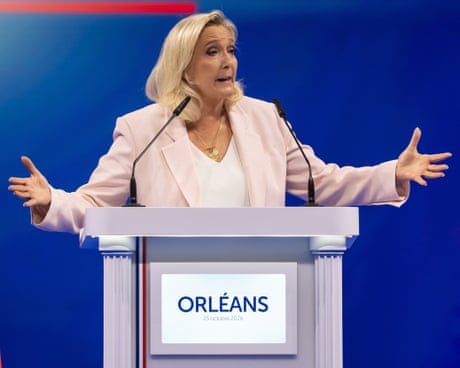
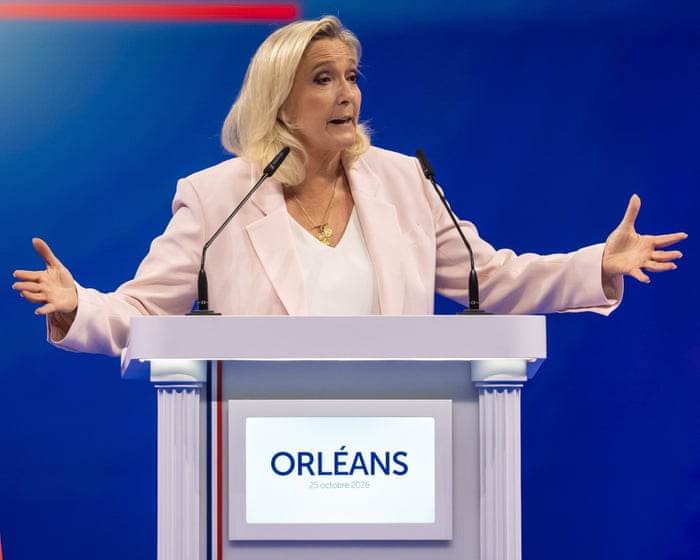
The Guardian view on the far right’s plans for Brussels: doing the work of Xi, Putin and Trump | Editorial

If ever enacted, proposals by Marine Le Pen and the AfD leader, Alice Weidel, to hollow out EU institutions would be a continental act of self-harm

Following the Brexit referendum in 2016, Marine Le Pen was in a predictably celebratory mood. Britain’s vote to leave the European Union, she told one interviewer, was the first breach in the “Brussels Wall”. Ms Le Pen’s Front National party was at that point committed to taking France down the same path, given the chance. But as the UK’s self-inflicted economic wounds became a cautionary tale for the rest of Europe, the notion of Frexit was put on ice.

Instead, Ms Le Pen now hopes to lead far-right allies in hollowing out the EU from within. This month, both she and the leader of Alternative für Deutschland, Alice Weidel, outlined their visions of a “Europe of nations” in which EU institutions would be stripped of both cash and power. Ms Weidel’s “new deal for Europe” would abolish elections to the European parliament, and seek German opt-outs in areas such as migration, defence and common borrowing. Ms Le Pen’s party, now called National Rally, proposes slashing French contributions to the EU budget by 60% over a five-year presidential term, and ending the role of Brussels in proposing common policies for the 27 member states.

Do you have an opinion on the issues raised in this article? If you would like to submit a response of up to 300 words by email to be considered for publication in our letters section, please click here.

Continue reading...

© Photograph: Christophe Petit-Tesson/EPA

© Photograph: Christophe Petit-Tesson/EPA

© Photograph: Christophe Petit-Tesson/EPA

  •  

These four elections could change the world in 10 days – Stateside with Kai and Carter

Benjamin Netanyahu is in the fight of his political life. Voters in Israel are heading to the polls on Tuesday to decide an election that could determine whether Netanyahu will remain the country's prime minister (and affect the outcome of the corruption charges against him). But the Israeli election also arrives at a time when voters around the world seem to be rejecting authoritarianism. A student-run movement stunned the world on Sunday when its candidates routed Serbia's long-serving leader, Aleksandar Vučić. That same day, Brazilians beat back a campaign by Flávio Bolsonaro – the son of Jair Bolsonaro, the disgraced former president – in a historic upset. Carter Sherman speaks to Julian Borger, the Guardian’s senior international correspondent, about how these four elections could reshape the political world order in just 10 days, and why the upcoming US midterm elections are the biggest test for global democracy.

Continue reading...

© Photograph: Grid

© Photograph: Grid

© Photograph: Grid

  •  

Ten days that could shake the world: democratic norms at stake in four pivotal elections

Brazil, Israel, Serbia and the US are holding elections within the space of 10 days. Will the authoritarian right cement its global gains, or can pro-democracy forces make a comeback?

Four elections on four continents within 10 days could profoundly reshape global politics, propelling the world further along its current authoritarian trajectory or marking a limited comeback for democratic norms.

In all four contests, basic democratic norms are at stake at a time when autocracy is advancing worldwide at an alarming rate. According to the Sweden-based V-Dem Institute, which uses multivariable assessment tools, the democratic freedoms enjoyed by the average global citizen are down to levels last seen in 1978 – long before the fall of the Berlin Wall and the collapse of communism in Europe.

Continue reading...

© Illustration: Guardian Design/Getty Images

© Illustration: Guardian Design/Getty Images

© Illustration: Guardian Design/Getty Images

  •  

Leaked trove reveals extent of far-right AfD’s efforts to court Trump and Maga allies

Exclusive: Documents show German party’s scramble to request support after president’s 2016 election win and co-leader’s pursuit of Steve Bannon

A data leak from Germany’s far-right German Alternative für Deutschland (AfD) has revealed the extent of efforts by the party to court Donald Trump and other leading figures in the Maga movement, stretching back more than a decade.

The trove reveals the pains the AfD took in wooing the president, whom they saw from the beginning as a potential ally, with senior party officials agonising over the wording of an obsequious congratulatory telegram when he was elected in 2016, which included the wish that his “hopes as a person be fulfilled”.

Continue reading...

© Photograph: Omer Messinger/Getty Images

© Photograph: Omer Messinger/Getty Images

© Photograph: Omer Messinger/Getty Images

  •  

A violent and coordinated youth uprising? That’s exactly the picture Europe’s enemies want to paint | Alberto Alemanno

Each country’s protesters have distinct grievances. Listen to them, not the voices telling us Europe is ungovernable

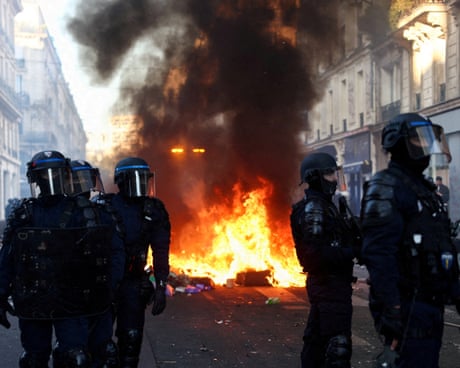
Last Saturday night, the town hall of Limoges in west-central France was set ablaze. By Sunday, images of the fire destroying a symbol of the French republic, and other scenes of unrest across France, were everywhere, but being used to tell very different stories about what is happening in Europe.

For some, the flames announced a pan-European youth revolt, proof that a single movement was sweeping the continent. Donald Trump, who had already insisted that the French schools protests were not about schools but about migration and Islam, urged Europeans to “close the borders”. The mayor of Limoges saw the fingerprints of an alleged ultra-left insurrection.

Alberto Alemanno is the Jean Monnet professor of EU law at HEC Paris and the founder of The Good Lobby

France readers Q&A: Guardian Europe columnists Rokhaya Diallo and Alexander Hurst will be live taking questions from our readers about the unrest in France from at 1500 BST / 1600 CEST on Friday 23 October. Send your questions by email now to conversations@theguardian.com or post questions in the comments from 0900 BST here.

Continue reading...

© Photograph: Aurélien Morissard/AP

© Photograph: Aurélien Morissard/AP

© Photograph: Aurélien Morissard/AP

  •  

Europe’s far right seizes on protest violence to push authoritarian anti-immigration agenda

Nationalist leaders are framing unrest as consequence of failed liberal governance and open borders

Europe’s far-right leaders have jumped on the violence that rocked numerous cities last weekend, framing it as the inevitable consequence of failed liberal governance and open-border policies and insisting only they can restore law and order.

Months away from key elections in Spain, France and Italy, authoritarian nationalists are eager to weaponise the wave of street unrest, originating in peaceful protests over the cost of living and deteriorating public services but hijacked by violent rioters.

Continue reading...

© Photograph: Abdul Saboor/Reuters

© Photograph: Abdul Saboor/Reuters

© Photograph: Abdul Saboor/Reuters

  •  

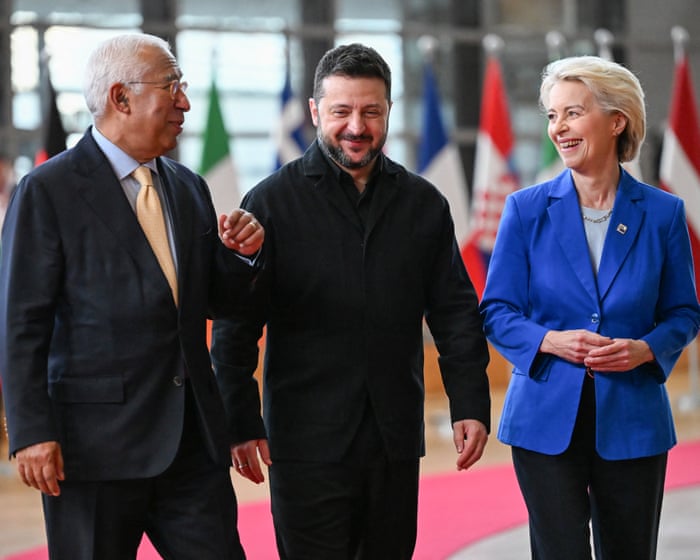
​Europe stands by Ukraine – but how long can that last?

As US support ebbs away, looming European elections and growing financial strains across the continent could fracture the precious coalition that has kept Ukraine afloat

Europe woke up last Friday to another belligerent outburst from Donald Trump – this time berating Ukraine’s wartime leader Volodymyr Zelenskyy again. Just a few days after his diesel deal with the Kremlin, the US president said Zelenskyy was more difficult to deal with than Vladimir Putin and blamed Ukraine’s leader for rocketing oil prices – without any reference to the impact of his own war on Iran.

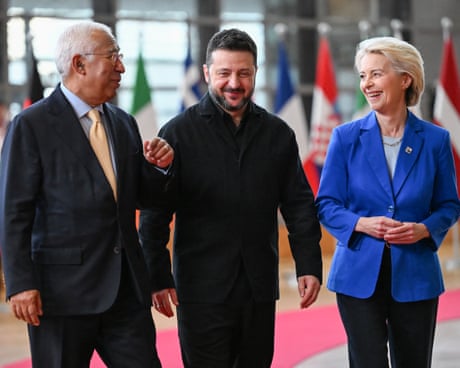
The contrast in Europe was obvious. When Zelenskyy walked into the multi-coloured summit room of the European Council headquarters in Brussels that Friday morning, the EU’s 27 leaders burst into applause, getting to their feet to offer big hugs and brisk handshakes. European Council president António Costa told Zelenskyy and the media: “This is no time to withdraw the support to Ukraine,” calling instead for increased pressure on Russia. Zelenskyy was thankful, pointedly saying he was happy to have “huge support” from “real leaders”.

Continue reading...

© Photograph: Nicolas Tucat/AFP/Getty Images

© Photograph: Nicolas Tucat/AFP/Getty Images

© Photograph: Nicolas Tucat/AFP/Getty Images

  •  

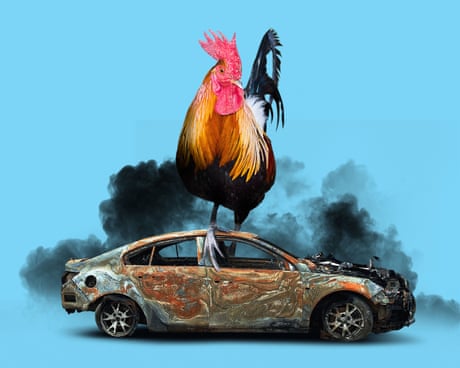
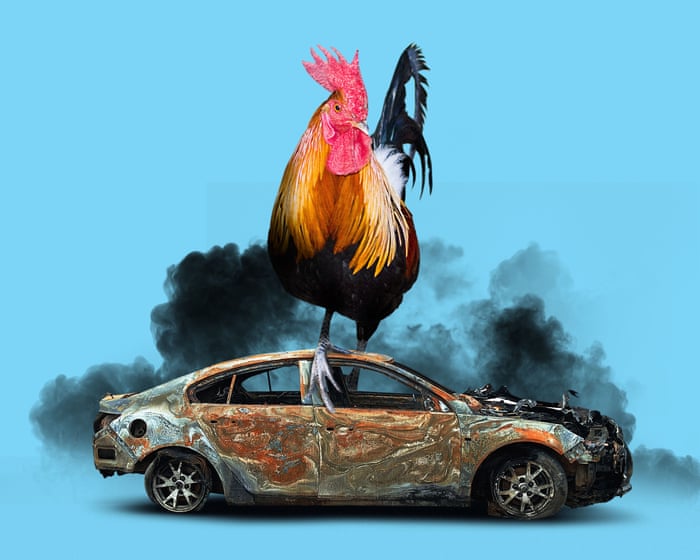
From strife-torn France to the UK, rightwing populists win when they stir chaos while promising order | Rafael Behr

Marine Le Pen and Donald Trump are arsonists who play at being firefighters. Nigel Farage is finding that act harder to pull off in Andy Burnham’s Britain

An election where one side represents chaos will nearly always be won by the party that promises order instead. Public fatigue after years of turbulent Tory rule accounted for Labour’s 2024 landslide victory more than any policy in Keir Starmer’s manifesto. Across the Channel, Marine Le Pen, leader of the far-right National Rally (RN), is currently on course to win next year’s presidential poll with a pledge of “restored authority and security” for a country that has spent years cycling between enervating stasis and explosive crisis.

Le Pen has been boosted in recent days by scenes of city centres ablaze and shops being looted as student demonstrations mutated into riots. Street confrontation is a more standard feature of the political repertoire in France than in most settled democracies, but the destruction was disturbing by any measure.

Rafael Behr is a Guardian columnist

Continue reading...

© Composite: Guardian Design/Getty Images

© Composite: Guardian Design/Getty Images

© Composite: Guardian Design/Getty Images

  •  
❌