❌

Reading view

Erhurman to Turkic states: No obstacles to close relations with Turkish Cypriots

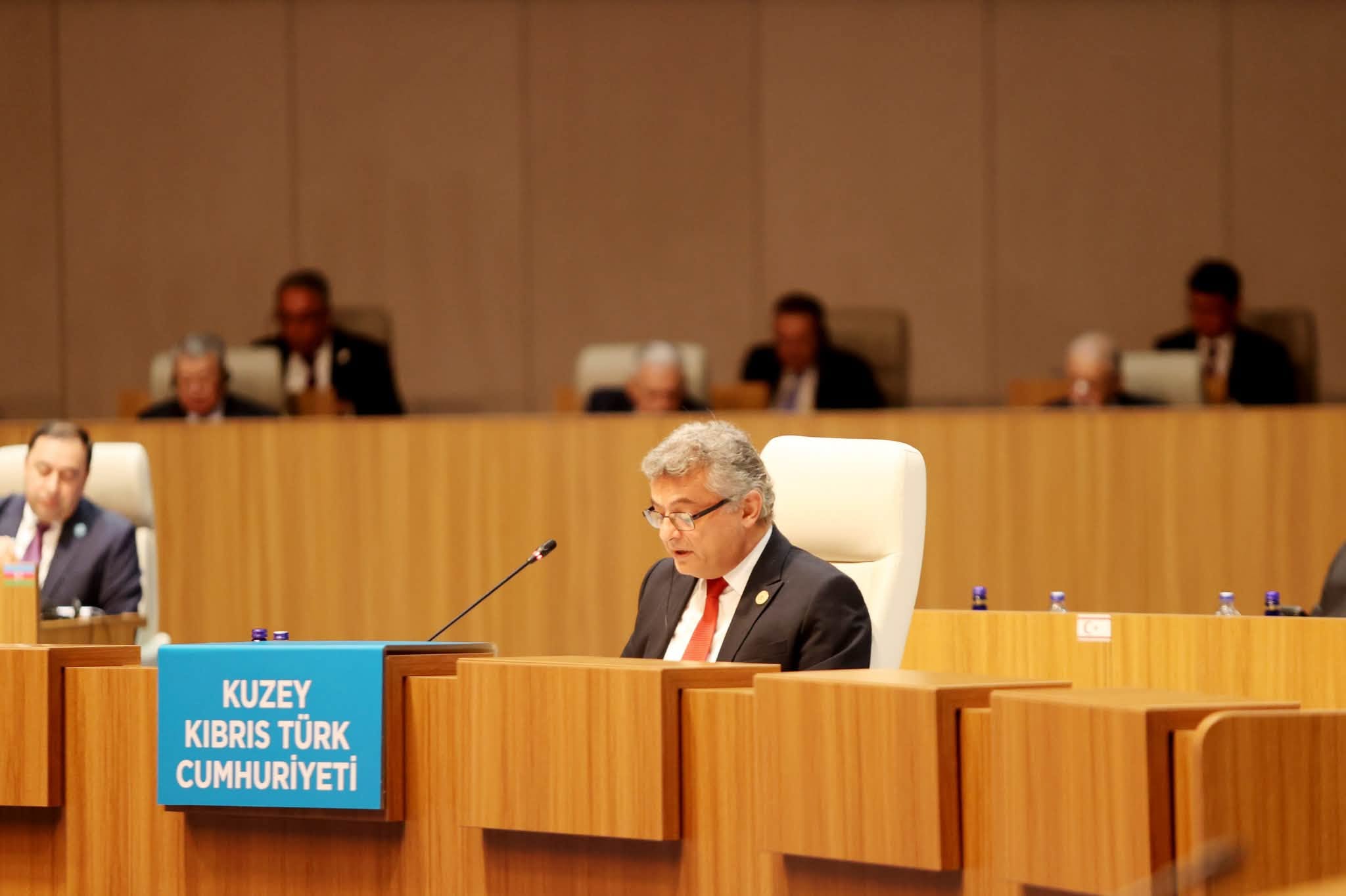
Turkish Cypriot leader Tufan Erhurman on Friday told the leaders of member states of the Organisation of Turkic States there are “no obstacles” to them establishing close relations with the Turkish Cypriots, as he addressed the organisation’s summit in Ankara.

He said that the Turkish Cypriot people have “for many years” been subject to “an unjust isolation which has limited their direct contacts with the international community, their economic and social development, and their integration with the world”.

“However, a nation’s ability to engage with the international community in the fields of culture, art, sports, science, education, and economics is a fundamental issue of human rights which must be considered beyond political agreements,” he said.

To this end, he pointed out that “the Turkish Cypriot people, through their will for a solution demonstrated in 2004 and their constructive stance in subsequent negotiation processes, have repeatedly shown their desire for integration with the world and for a just and lasting solution on the island”.

“Despite this, attempts are being made to prevent our young people from participating in international sports competitions, to prevent cultural events from being held in our country, and to prevent our people from having direct contact with the world,” he said.

He added that “such initiatives negatively impact efforts to build mutual trust and create a favourable environment for a solution on the island”.

Erhurman, Ankara, Turkic states

Developments ‘aligned with EU goals’

On this front, he made reference to a letter he had received from United Nations Secretary-General Antonio Guterres in response to concerns he had raised regarding efforts undertaken by the Greek Cypriot side to bring about the cancellation of a children’s football camp organised by FC Barcelona and a music festival in Kyrenia.

He said that Guterres had described those initiatives as “discouraging”, and that the secretary-general had “emphasised that initiatives hindering the establishment of trust and which lead to the cancellation of international events run contrary to joint efforts”.

Additionally, he referred to a second letter on the same matter he received from the European Commission, which, he said, “reaffirmed the European Union’s 2004 goal of ending the isolation of the Turkish Cypriot people”.

He added that the letter had also “said that initiatives which contribute to the socioeconomic development of the Turkish Cypriots, especially young people, and enable them to establish close relations with the European Union are consistent with the EU’s goals”.

“The common message of these two letters is clear. There is a strong political and legal basis for developing contact, dialogue, and cooperation with the Turkish Cypriot people in all areas, and this basis is confirmed and supported by the UN and the EU. Steps taken in this context will contribute to the creation of an environment of mutual trust and to efforts for a solution,” he said.

As such, he added, “I want it to be known that there are no obstacles to establishing close relation with the Turkish Cypriots in the fields of science, academia, culture, technology, and diplomacy”.

“We can develop joint research programmes between our universities, bring our youth together in academic and cultural exchange projects, and forge stronger ties in the field of sports,” he said.

‘The reintegration of the Turkish Cypriot people’

He added that “by developing shared cultural spaces such as exhibitions, concerts, opera, and performing arts, we can enhance the cultural dialogue among our artists”, and that “by bringing together our entrepreneurs, businesspeople, and researchers, we can create new opportunities in the fields of trade, investment, the digital transformation, and innovation”.

On this front, he said that “the Turkish Republic of Northern Cyprus, with its higher education resources, young workforce, tourism potential, and strategic location in the eastern Mediterranean, has the capacity to make significant contributions to these collaborations far exceeding its population and land areas”.

“In this context, we are ready to act with the goal of being an economic, scientific, and cultural bridge between the Turkic world and the eastern Mediterranean,” he said.

He then added that “the fundamental goal of all these efforts is to strengthen peace, stability, and cooperation on the island of Cyprus and in the region”.

“Our approach is clear. The reintegration of the Turkish Cypriot people into the world and the search for a solution in Cyprus are not mutually exclusive, by rather processes which reinforce one another,” he said.

To this end, he said that he will “continue to work for a fair and lasting solution on the island in close consultation with the Republic of Turkey”.

“We want the eastern Mediterranean to become a region where mutual respect, inclusive cooperation, and common prosperity, not tensions and exclusionary policies, prevail,” he said.

The day’s summit was, however, somewhat overshadowed by the absence of Azerbaijani President Ilham Aliyev, who elected not to travel to Ankara amid deteriorating relations between his government and Turkey, once his country’s closest ally.

On the surface of the matter is a rift which emerged following Azerbaijan’s decision to ban the wearing of headscarves at public schools in the country – a move which infuriated Turkish President Recep Tayyip Erdogan to the extent that he criticised Baku during his speech to the UN general assembly last month.

  •  

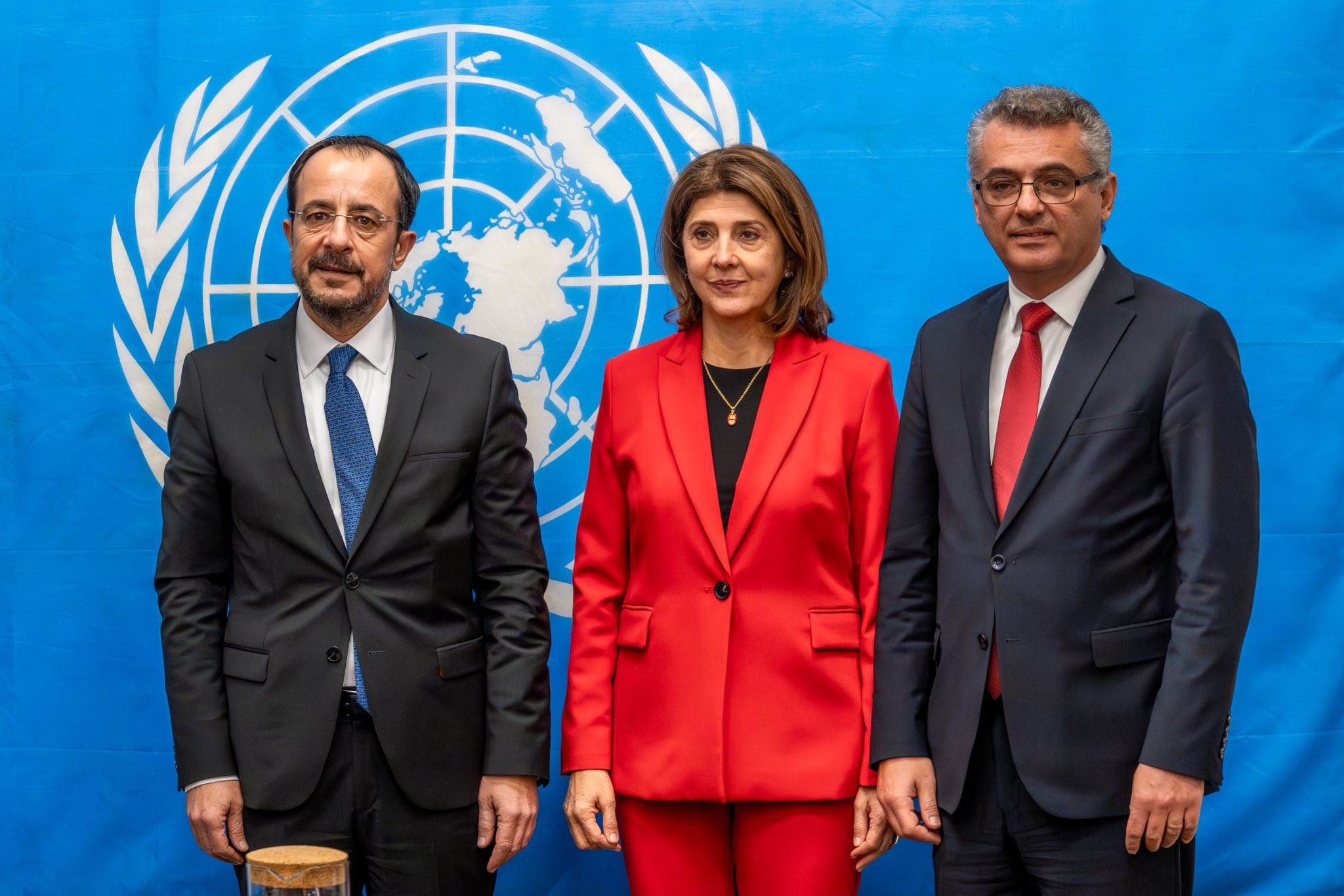
Holguin to meet Christodoulides in latest round of contacts

UN envoy for Cyprus Maria Angela Holguin is currently in Cyprus and will be meeting with President Nikos Christodoulides on Friday at 12.30pm.

Holguin will also be meeting with Turkish Cypriot leader Tufan Erhurman on Monday, and hold a tripartite meeting with both Christodoulides and Erhurman on November 9.

On Tuesday, Christodoulides said both he and Erhurman had agreed to make “no further statements” on matters of substance related to the Cyprus problem ahead of Holguin’s trip.

  •  

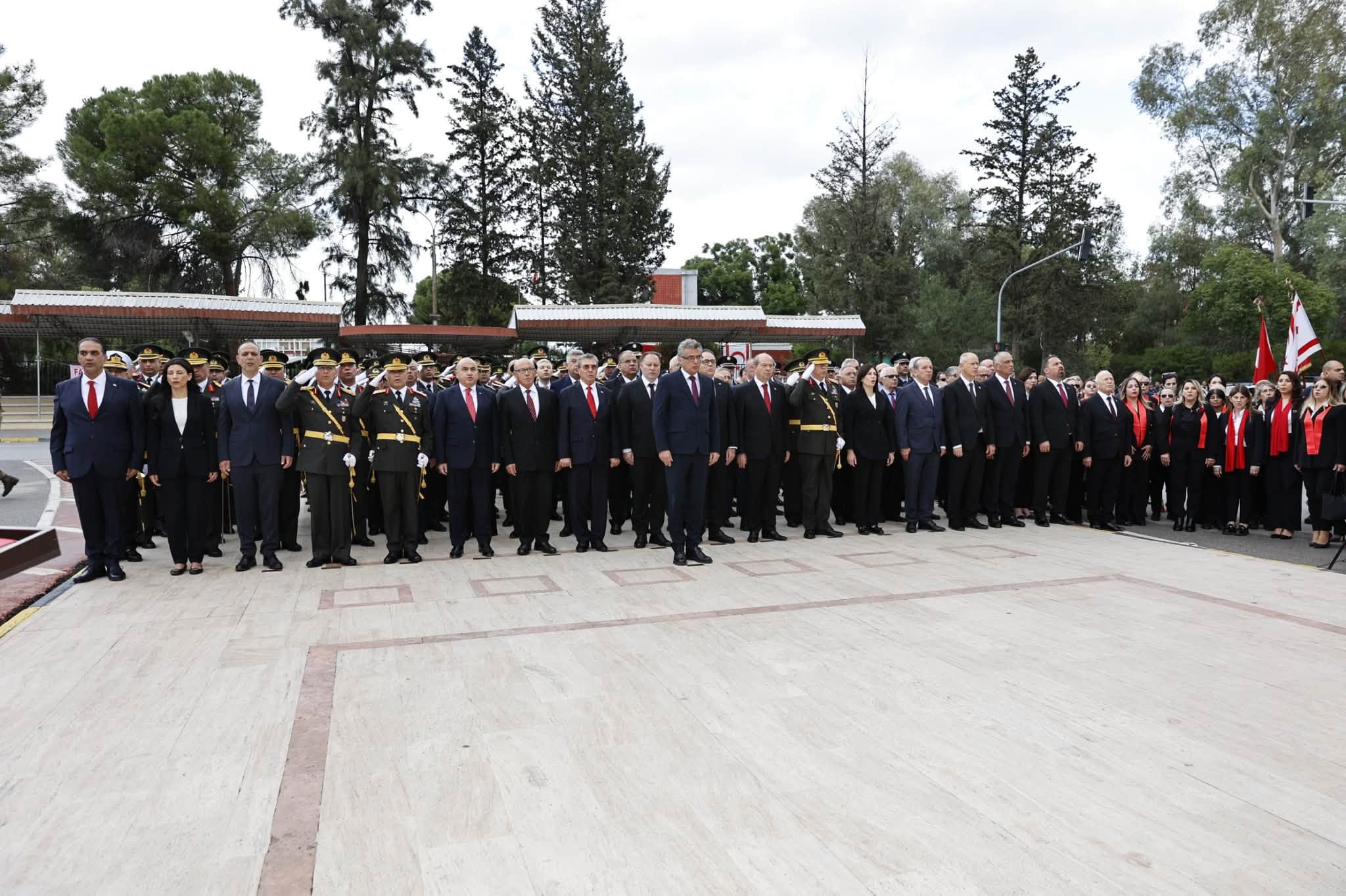
Turkish Cypriots celebrate 103rd anniversary of creation of Turkish republic

Turkish Cypriots on Thursday marked the 103rd anniversary of the establishment of the Republic of Turkey with events held in various towns and cities throughout the course of the day.

The celebrations centred in Nicosia, where a wreath-laying ceremony was held at the statue of the Republic of Turkey’s founding president Mustafa Kemal Ataturk at the capital’s walled city’s Kyrenia gate.

That ceremony was attended by Turkish Cypriot leader Tufan Erhurman, two of his predecessors, Mehmet Ali Talat and Ersin Tatar, Turkish ambassador in Nicosia Ali Murat Bacsceri, Turkish Cypriot ‘prime minister’ Unal Ustel, Turkish Cypriot Nicosia mayor Mehmet Harmanci, and various other dignitaries.

At its conclusion, Erhurman signed a memorial book, addressing Ataturk, writing that “I am proud to stand before you on the 103rd anniversary of the founding of the Republic of Turkey.”

“The great determination, courage and foresight you displayed while leading the Turkish nation’s fight for its existence continue to guide us today. The principles and revolutions you created, and the modern values entrusted to us by the republic have illuminated our path for over a century,” he wrote.

Erhurman: Turkish Cypriots advance on enlightened path opened by Republic of Turkey

He added that “the Turkish Cypriot people continue to advance on the enlightened path opened by the Republic of Turkey”, and that “we wish to express once again, in the presence of your cherished memory, our determination to bring our country to the level of contemporary civilisations, prioritising the peace, security and wellbeing of our people above all else”.

Earlier in the day, Tatar issued a statement of his own, describing the establishment of the Republic of Turkey as “the highest expression of our ideal of independence, our will for modernisation and our belief in a strong future”.

“The republic is the strongest guarantee of our nation’s path to sovereignty, freedom and a dignified future. On this meaningful day, I commemorate with gratitude, mercy and respect, first and foremost Mustafa Kemal Ataturk, his comrades in arms, our beloved martyrs and all our veterans who have passed away,” he said.

Elsewhere, a parade was due to be held on Nicosia’s arterial Dereboyu avenue on Thursday afternoon, while wreath-laying ceremonies and parades were also to be held in the towns of Famagusta, Kyrenia, Morphou, Trikomo and Lefka, and in the villages of Galatia, near Trikomo, and both Lysi and Lefkoniko on the Mesaoria plain.

  •  

Holguin arriving in Cyprus on Thursday

UN envoy for Cyprus Maria Angela Holguin will be arriving on the island on Thursday for meetings with President Nikos Christodoulides and Turkish Cypriot leader Tufan Erhurman, before holding a tripartite meeting with both leaders on November 9.

On Tuesday, Christodoulides said both he and Erhurman had agreed to make “no further statements” on matters of substance related to the Cyprus problem ahead of Holguin’s trip.

  •  

Leaders take vow of silence on Cyprus problem substance ahead of Holguin visit

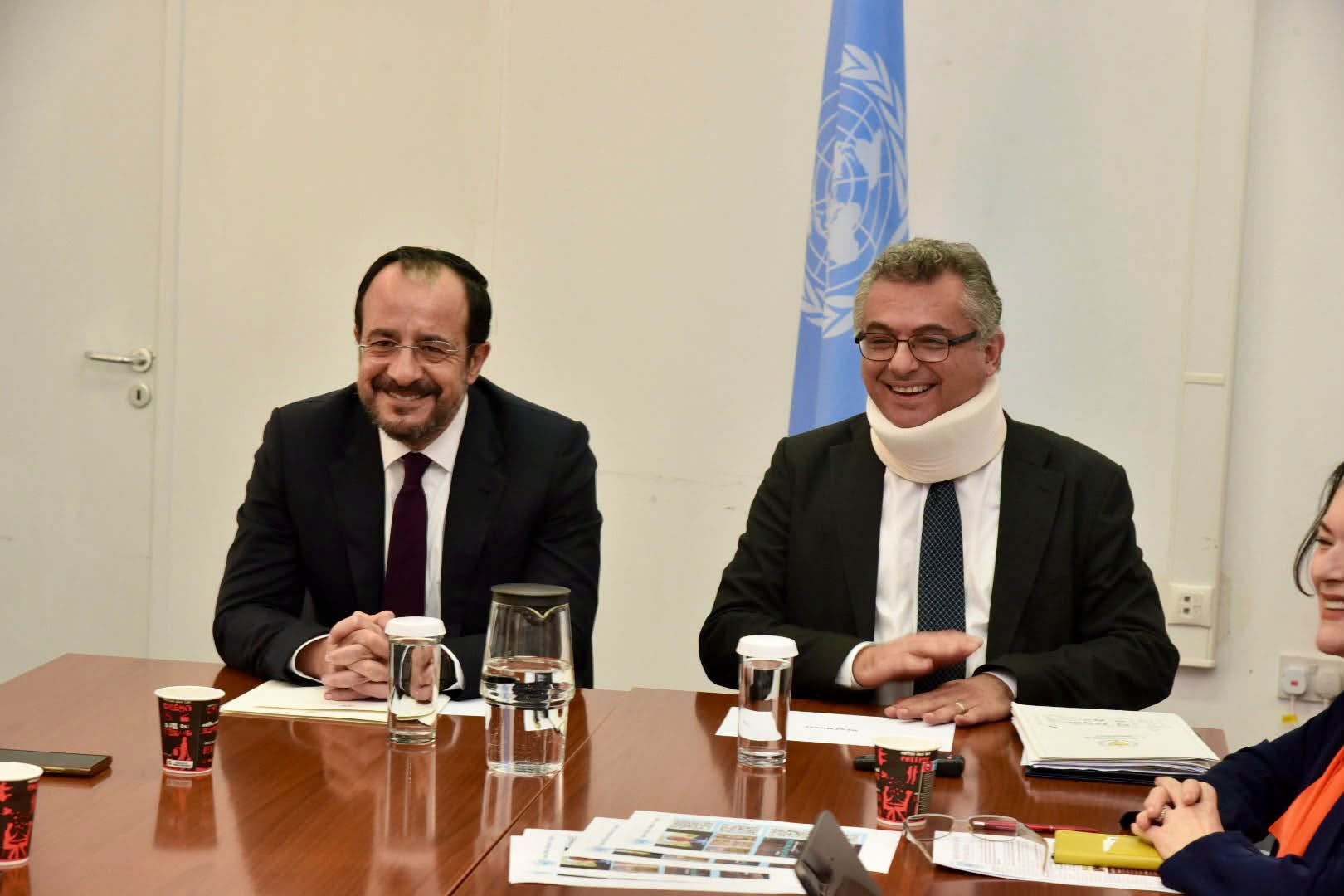
President Nikos Christodoulides on Tuesday said that both he and Turkish Cypriot leader Tufan Erhurman have agreed to make “no further statements” on matters of substance related to the Cyprus problem ahead of the forthcoming arrival on the island of United Nations envoy Maria Angela Holguin on the island.

“It was a very good and constructive discussion, which will continue during Holguin’s presence in Cyprus. For this reason, we have agreed not to make further statements regarding specific issues, and we also agreed that no joint statement would be issued,” he said after meeting Erhurman in the morning.

Both leaders had also met the bicommunal technical committees on cultural heritage and on youth, as well as the civil society steering committee, following their one-on-one meeting.

Of those meetings, Christodoulides said that they were “constructive” and that “various views and suggestions were put forward” by committee members.

He added that those suggestions will be discussed by himself and Erhurman going forward.

Holguin expected to arrive on Thursday

Holguin is expected to arrive on the island on Thursday, and will hold meetings with both Erhurman and Christodoulides, before holding a tripartite meeting with both leaders at the end of her stay.

Prior to Tuesday’s meeting, Christodoulides had stressed that his proposal to open and repopulate the fenced-off area of Varosha under the United Nations’ administration and open the port of Famagusta under the European Union’s control is “mutually beneficial”.

“I believe this is a mutually beneficial proposal. It creates a positive situation for both sides and serves as a practical test of whether we are truly committed to moving forward, specifically by taking bold confidence-building measures which also send a strong message to society as a whole,” he said.

Erhurman had said last week that he had rejected the proposal, lamenting that it fell short of an entry into force of the European Union’s direct trade regulation.

“Is this the entry into force of the direct trade regulation? No, it is not the entry into force of the regulation, but since [the port] would be under EU control, direct trade would begin,” he said.

As such, he said, the proposal was unbalanced.

The direct trade regulation is a pending EU regulation which would allow Turkish Cypriot goods, as certified by the Turkish Cypriot chamber of commerce, to be exported directly into Europe via the Green Line, and given preferential treatment inside the European single market as European goods.

It was proposed in July 2004, three months after the rejection of the Annan plan to reunify Cyprus by the Greek Cypriot side in a referendum, and shortly after the Republic of Cyprus’ accession to the EU.

Menelaou had cited progress on crossing points

Previously, Greek Cypriot chief negotiator Menelaos Menelaou had said that a dispute over the routing of the planned transit road between Athienou and the Nicosia suburb of Aglandjia “has been overcome”.

He said that the outstanding dispute now remains over the question of whether a planned crossing point to connect Louroujina, the southernmost Turkish Cypriot village, with nearby Lymbia, will open at the same time.

The Turkish Cypriot side’s position is that the road between Athienou and Aglandjia constitutes two crossing points, one in Athienou and one in Aglandjia, and that they are part of a package of four alongside plans for a crossing point in the eastern Nicosia suburb of Mia Milia, and one in Louroujina.

However, the Greek Cypriot side treats the road between Athienou and Aglandjia as one crossing point, counterweighted by the Mia Milia crossing point, and is therefore of the view that the Louroujina crossing point should only be opened if a second transit road, through the Turkish Cypriot Kokkina exclave in the Tillyria region, also be opened.

  •  

EU and Turkey Plan Cyprus Talks as New Dispute Threatens Diplomatic Opening

The European Union and Turkey are preparing high-level talks before the end of October in an attempt to revive negotiations over Cyprus, following an initiative by United Nations Secretary-General António Guterres.

Cypriot President Nikos Christodoulides announced the planned meeting on 16 October during the European Council summit in Brussels, saying discussions would address both the resumption of negotiations over the island’s division and the possibility of improving relations between Ankara and the EU.

The initiative follows diplomatic contacts in New York involving Guterres, European institutional leaders and the Cypriot government. However, renewed differences over the conditions for negotiations have already cast doubt on whether the process can produce substantial progress.

On Sunday, 18 October, Christodoulides accused Turkish Cypriot leader Tufan Erhürman of imposing preconditions before formal negotiations could resume, particularly concerning arrangements for a rotating presidency in a reunited Cyprus.

The disagreement underlines the difficulties facing an initiative intended to reconnect the UN peace process with the EU’s broader relationship with Turkey.

Brussels seeks a negotiating role

Christodoulides said the planned meeting between the EU and Turkey would examine how to establish the necessary conditions for negotiations to restart within the previously agreed UN framework.

He indicated that any improvement in EU–Turkey relations would be linked to progress over Cyprus.

The president’s announcement in Brussels follows months of diplomatic consultations involving the Commission, European Council and UN.

European Commission President Ursula von der Leyen and European Council President António Costa have urged Turkish President Recep Tayyip Erdoğan to support the renewed peace initiative.

Turkey’s relationship with the EU encompasses trade, customs cooperation, migration and regional security. Ankara remains an EU candidate country, although accession negotiations have been effectively stalled for years.

Cyprus remains one of the principal obstacles to any substantial improvement in that relationship.

The island has been divided since Turkey’s military intervention in 1974. The internationally recognised Republic of Cyprus joined the EU in 2004, but EU law remains suspended in areas where its government does not exercise effective control.

The self-declared Turkish Republic of Northern Cyprus is recognised only by Turkey.

Disagreement over political equality

The UN has traditionally sought a settlement based on a bizonal, bicommunal federation with political equality between the Greek and Turkish Cypriot communities.

Negotiations collapsed at Crans-Montana in Switzerland in 2017 amid unresolved disputes over security guarantees, political representation, territory and the presence of Turkish troops.

Erhürman, who became Turkish Cypriot leader in 2025, has expressed support for renewed negotiations within a federal framework. However, he wants assurances about political equality and the structure of future talks.

The latest dispute concerns whether the principle of a rotating presidency between the two communities should be accepted before negotiations resume.

Christodoulides rejected that demand on 18 October, arguing that substantive questions should be negotiated together rather than settled in advance.

The Turkish Cypriot leadership regards rotating executive power as an essential element of political equality, while the Greek Cypriot side objects to making agreement on that arrangement a prerequisite for restarting discussions.

The disagreement has emerged despite recent efforts by the United Nations to improve relations between the communities.

In a statement issued on 13 October, the UN confirmed that Christodoulides and Erhürman had met in Nicosia and agreed to continue discussions, including participation in bicommunal initiatives.

The two leaders subsequently attended a joint event in Pyla, although their public differences persisted.

Turkey’s position remains decisive

A Cyprus settlement would require agreement not only between the island’s communities but also on Turkey’s military presence and the system of security guarantees established at independence.

Ankara has long maintained that Turkish Cypriots require effective political equality and credible security arrangements.

Greek Cypriot leaders argue that the continuation of foreign intervention rights and Turkish military deployments would be incompatible with a fully sovereign and reunited state.

The EU cannot resolve those differences independently of the UN process, but it can influence the economic and institutional framework within which a settlement might operate.

A comprehensive agreement would affect property ownership, trade, customs arrangements, border administration and the application of European law throughout the island.

The European Commission has sought a greater role in supporting the UN-led peace process, reflecting Brussels’ interest in progress towards a settlement.

Negotiations face immediate test

The UN Secretary-General’s personal envoy, María Ángela Holguín, has warned that the opportunity for renewed negotiations may be narrowing.

Disagreements over diplomatic representation, contacts with foreign missions and the status of Turkish Cypriot institutions have complicated relations between the two communities.

Christodoulides has also referred to a series of proposals intended to advance discussions, including the future of the fenced-off area of Varosha. Their full contents have not been publicly disclosed.

The proposed EU–Turkey meeting offers a separate diplomatic channel through which Brussels can assess Ankara’s willingness to support renewed negotiations.

No final date, detailed agenda or list of participants had been publicly confirmed by 18 October.

The immediate test will be whether the parties can agree on the basis for formal talks without attempting to settle disputed constitutional questions before negotiations begin.

  •  
❌