❌

Reading view

Gulf states must rethink trillion-dollar defence in light of US-Iran war, says report

IISS study questions over-reliance on American support and ‘over-dependence on expensive, high-end systems’

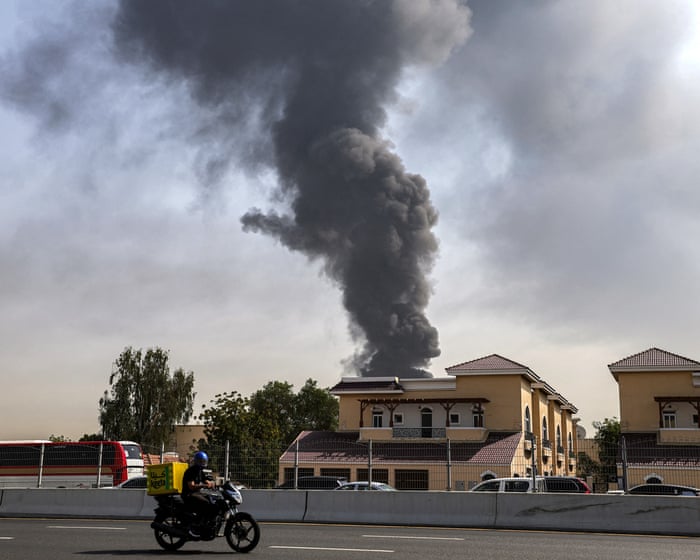
Gulf states are going to have to reconfigure their trillion-dollar defences given the damage inflicted on their economies and the questionable continued value of US bases in the face of Iranian attack, according to a study by the International Institute for Strategic Studies.

The report says that in the weeks before the 8 April ceasefire, 12 regional states, overwhelmingly in the Gulf, faced 4,670 Iranian one-way attack drones and more than 1,400 ballistic missiles. Nearly half were aimed at the United Arab Emirates. Although the vast majority were repelled, one estimate of the damage to energy infrastructure cited by the report is put as high as $58bn (£43bn).

Continue reading...

© Photograph: AFP/Getty Images

© Photograph: AFP/Getty Images

© Photograph: AFP/Getty Images

  •  

Washington Warns Allies of Possible New Strikes on Iran After US Midterm Elections

The United States has privately warned Middle Eastern allies to prepare for renewed military operations against Iran following the 3 November congressional elections, according to diplomatic sources. Although President Donald Trump has not authorised further strikes, the warnings have heightened concerns about regional escalation, energy infrastructure and the consequences for European economies already facing rising fuel costs.

American officials have advised several governments in the Middle East to prepare for possible new military strikes against Iran after next week’s US midterm elections, raising the prospect of another escalation in a conflict that has already disrupted international energy markets.

According to an Associated Press investigation published on 29 October, two diplomats familiar with the warnings said US officials had urged regional allies to consider the possibility of Iranian retaliation against energy facilities and other critical infrastructure.

The diplomats emphasised that President Donald Trump had not made a final decision to resume military operations.

Nevertheless, Washington’s warnings suggest that preparations are being discussed for a potential campaign extending over several days.

Regional governments are concerned that retaliatory action by Iran or organisations aligned with Tehran could prolong the fighting beyond the duration initially envisaged by the United States.

The White House and American officials declined to comment on the reported communications.

Military Preparations and Political Timing

The warnings come as Trump approaches the final days of campaigning ahead of the 3 November elections.

The president has repeatedly suggested that further military action against Iran could follow the vote, although he has also claimed that the conflict may be approaching its conclusion.

During a campaign appearance in Texas, Trump said the war could end within weeks, while reiterating his insistence that Iran must not acquire nuclear weapons.

The timing of possible military action remains uncertain.

The Pentagon has increased its regional military presence, including the deployment of the aircraft carrier USS Theodore Roosevelt and additional amphibious forces.

Approximately 9,000 military personnel were associated with the deployment announced in September.

However, the movement of forces does not establish that an attack has been authorised or that particular targets have been selected.

American military preparations can also serve as deterrence, signalling and contingency planning.

The distinction is important because the political consequences of renewed strikes would depend on their scale, objectives and Iranian response.

Tehran Maintains That Diplomacy Remains Possible

Iran has indicated that it remains willing to pursue negotiations.

Foreign Minister Abbas Araghchi said on 28 October that Tehran was continuing to consider diplomatic proposals and wanted elements of its earlier ceasefire initiative to form the basis for renewed discussions.

That proposal had previously been rejected by Washington.

The continuing disagreement concerns both the conditions for ending military operations and wider questions about Iran’s nuclear programme.

The United Arab Emirates has urged the parties to seek political solutions and avoid returning to large-scale fighting.

Regional governments face a particularly difficult position because they may be exposed to retaliation even when they are not directly involved in American military operations.

Energy facilities, airports, ports and other infrastructure could become targets during an escalation.

Such attacks would also affect civilian populations and commercial activity beyond the immediate combatants.

The Conflict Has Already Spread

The war involving Iran, the United States and Israel began in late February and has subsequently affected other parts of the Middle East.

Iran-aligned Houthi forces have carried out attacks on Saudi oil infrastructure and airports, prompting retaliatory operations by a Saudi-led coalition against targets in Yemen.

These developments have complicated attempts to contain the conflict geographically.

The United States has not conducted a strike against Iran since early September, according to the reporting available on 29 October.

However, the absence of recent American attacks has not removed the risk of renewed operations.

Regional governments are therefore considering a range of possible developments, including limited strikes, a longer military campaign or retaliatory attacks preceding any American operation.

None of these scenarios should be treated as inevitable.

Europe Faces Another Energy Risk

For the European Union, a renewed confrontation would have implications extending well beyond diplomatic relations with Washington.

The Middle East remains a major source of global oil and liquefied natural gas supplies.

The Strait of Hormuz is particularly important to international energy shipping, connecting producers in the Persian Gulf with markets in Europe and Asia.

An increase in attacks on shipping, production facilities or export terminals could place further pressure on global energy prices.

The consequences would not necessarily be confined to countries purchasing oil or gas directly from the region.

European consumers compete in internationally connected markets, meaning supply disruptions can influence prices even where import arrangements have been diversified.

The EU has substantially reduced its dependence on Russian pipeline gas since 2022, but growing reliance on liquefied natural gas creates exposure to fluctuations in international supply and demand.

A further Middle Eastern escalation could therefore complicate Europe’s efforts to rebuild gas reserves and contain industrial energy costs before winter.

Higher fuel prices would also affect transport, food production and household expenditure.

The Strategic Dilemma for European Governments

European governments must balance several interests.

They support efforts to prevent nuclear proliferation, maintain relations with the United States and preserve stability in the Middle East.

At the same time, they have a direct economic interest in avoiding prolonged disruption to maritime trade and energy production.

A new American military campaign could revive debates concerning the legality, necessity and proportionality of military action, particularly if diplomatic alternatives remain available.

European governments may also face decisions about the protection of their nationals, regional diplomatic missions and commercial shipping.

The immediate significance of Washington’s warnings lies in the possibility of renewed hostilities, not in confirmation that such hostilities have been ordered.

With the American elections approaching, governments across the Middle East and Europe are preparing for developments that remain contingent on decisions in Washington and Tehran.

Whether the warnings lead to military action or renewed diplomacy will determine the next phase of a conflict whose economic effects are already being felt far beyond the region.

Photo: Mass Communication Specialist Seaman Kaylianna Genier / US Navy / Wikimedia Commons (Public Domain).

  •  

JD Vance letter may offer last chance to avert fresh conflict between US and Iran

US vice-president writes to top Iranian security official in sign Washington has not abandoned diplomacy
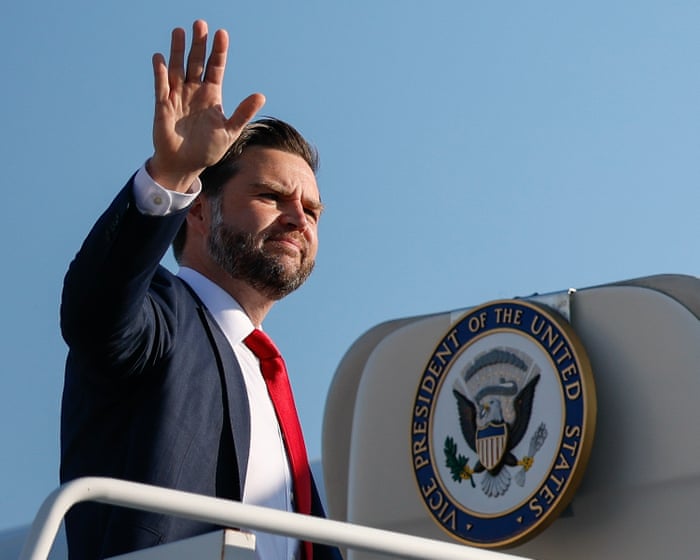
Hopes of averting a major new conflagration between Iran and the US soon after Tuesday’s midterm elections could rest on Iran’s response to a personal letter from the US vice-president, JD Vance, offering to restart diplomacy.

The letter, written after predominantly Qatari mediation, was sent to the secretary of Iran’s supreme national security council, Mohsen Rezaei on Sunday. It requires Tehran to agree to make commitments on its nuclear programme at the start of a process that would lead to the opening of the strait of Hormuz within seven days in return for US sanctions relief.

Continue reading...

© Photograph: Evan Vucci/Pool Reuters/AP

© Photograph: Evan Vucci/Pool Reuters/AP

© Photograph: Evan Vucci/Pool Reuters/AP

  •  

Cuts like a knife: Canadian rocker Bryan Adams trolls Trump with new song

Musician wrote a ‘love letter’ to Canada with a new album – and some pointed commentary about the US president

Lake Ontario, the vast body of water that straddles the US-Canada border, has gone by many names over the centuries: Lac Saint-Louis, Lacus Ontarius, Skaniadorio, Cataraqui Lake. But one thing it will never be called, says the Canadian rock star Bryan Adams, is Lake America.

In his new song Lake Ontario, Adams takes aim at the US president, Donald Trump, accusing him of “breaking the peace” between the people who live on the lake’s shores.

The ‘lake of shining waters’ is what the Iroquois called her

It’s a First Nations name – not an executive order.

But things weren’t going his way in Iran

So like a baby tossing the toys from the pram

You can push us to the brink

But where the open road divides

Continue reading...

© Photograph: Christopher Polk/Billboard/Getty Images

© Photograph: Christopher Polk/Billboard/Getty Images

© Photograph: Christopher Polk/Billboard/Getty Images

  •  

It’s easy to see through Trump’s Ukraine ploy | Kenneth Roth

In advance of the midterms, Trump is blaming Kyiv for high gas prices while making clear moves to support Russia

As the US midterms approach, Donald Trump is abandoning Ukraine’s democracy in a desperate effort to deny responsibility for worsening inflation. Yet this past weekend’s dramatic elections in Brazil and Serbia show that voters can see through such subterfuge.

There is nothing like a political party’s corrupt indifference to the plight of ordinary people to galvanize voter turnout. If US voters follow in the footsteps of their Brazilian and Serbian counterparts, a Democratic landslide is likely.

Continue reading...

© Photograph: Kevin Lamarque/Reuters

© Photograph: Kevin Lamarque/Reuters

© Photograph: Kevin Lamarque/Reuters

  •  

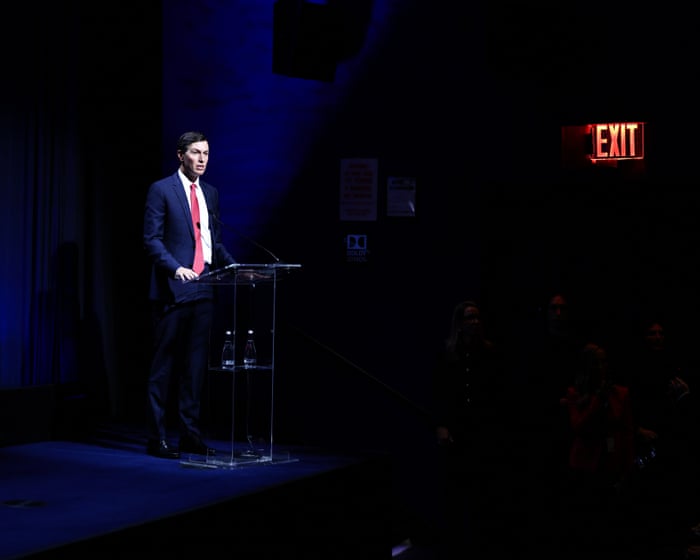
New book makes fiery claims about Jared Kushner’s finances in Trump’s first term

Kushner threatens to sue, denying allegations that two slush funds were set up to influence his Middle East role

A new book containing incendiary claims about Jared Kushner’s financial dealings during Donald Trump’s first term has ignited a political and media firestorm.

The book by author Matthew Cole is called Princes and Thieves: Jared Kushner and Mohamed bin Zayed’s Secret Plot to Remake the Middle East and was released in the US this week. An excerpt was published by Vanity Fair last Thursday, and immediately drew a furious response from Kushner, who called its claims “completely insane”. The book contains numerous allegations about Kushner, whose father-in-law is Trump and who has served as one of his top diplomatic envoys in the Middle East – the most explosive of which are claims linking him to huge bank accounts allegedly funded by Gulf states.

Continue reading...

© Photograph: Charly Triballeau/AFP/Getty Images

© Photograph: Charly Triballeau/AFP/Getty Images

© Photograph: Charly Triballeau/AFP/Getty Images

  •  

US ambassador suggests Trump could blame Canada if midterms don’t go his way

Pete Hoekstra, controversial US ambassador to Canada, has also accused Canadian officials of interfering in US elections

The US ambassador has suggested Canada could be blamed if Republicans perform poorly in next week’s midterm elections, the latest intervention from a controversial figure who has been accused of inflaming a bitter dispute that has angered and baffled residents of both countries.

On Wednesday, CTV news reported that Pete Hoekstra told business leaders at a closed door meeting that if a number of swing races – including Maine and Michigan – go to the Democrats, it could make things harder for Canada because Donald Trump might try to blame the loss on it.

Continue reading...

© Photograph: Canadian Press/Shutterstock

© Photograph: Canadian Press/Shutterstock

© Photograph: Canadian Press/Shutterstock

  •  

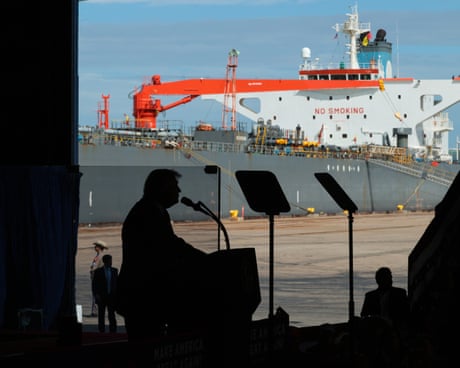
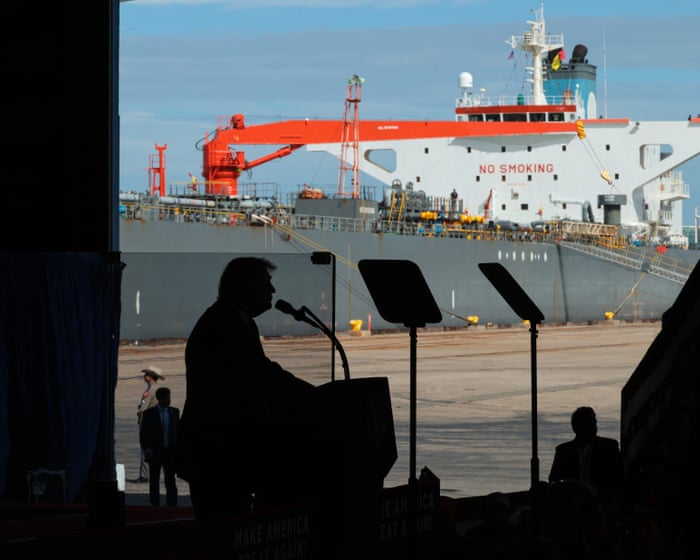
Trump shows off tanker with ‘1m barrels of oil’ and floats Venezuela as 51st state

President at Texas campaign rally hails deal struck with post-Maduro government as ‘greatest oil victory in history’

Donald Trump suggested Venezuela would become the 51st state of the United States on Tuesday as the president showed off a tanker he claimed had “one million barrels of oil on it” from the country, nine months after deposing its president.

At a campaign rally in Corpus Christ, Texas, Trump touted a US oil deal with Venezuela, which the US attacked in January, capturing its long-serving leader Nicolás Maduro.

Continue reading...

© Photograph: Chip Somodevilla/Getty Images

© Photograph: Chip Somodevilla/Getty Images

© Photograph: Chip Somodevilla/Getty Images

  •  

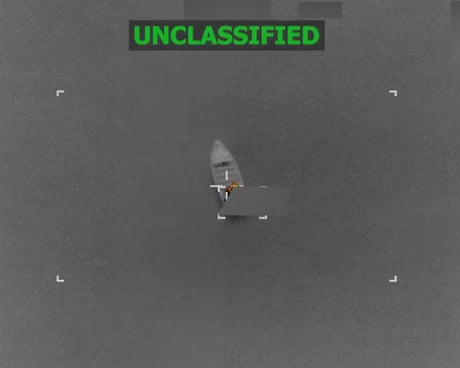
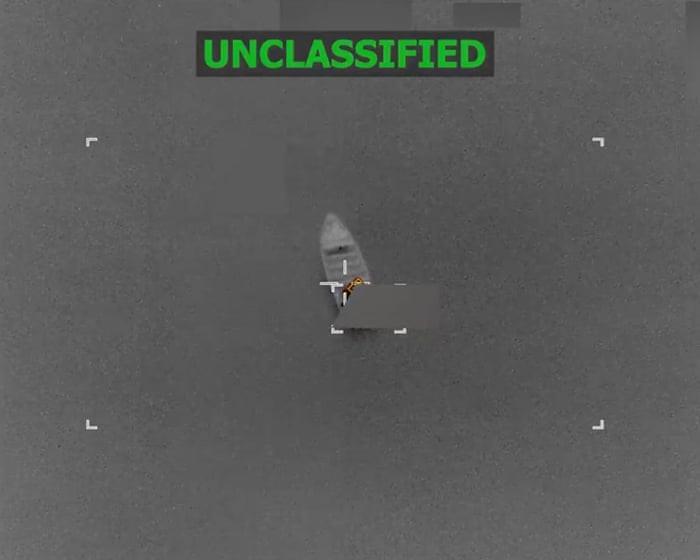
US military says strike on alleged drug vessel in eastern Pacific kills five people

US military says it carried out an airstrike on an alleged drug-trafficking boat in latest attack in region

The US ⁠military ⁠said on ​Tuesday ⁠it killed ⁠five ​people ‌after ‌an airstrike on a ‌suspected drug-trafficking vessel in ​the ⁠eastern Pacific.

Tuesday’s strike was among more than 70 such attacks since the beginning of Donald Trump’s second presidency, according to media tallies. Collectively, they have killed more than 240 people.

Continue reading...

© Photograph: US Southern Command via X

© Photograph: US Southern Command via X

© Photograph: US Southern Command via X

  •  

US bans vehicles from China’s BYD at Japan military base, calling them ‘unacceptable’ risk

US military says the restrictions on the electric vehicles at Kadena airbase also apply to delivery drivers and taxis

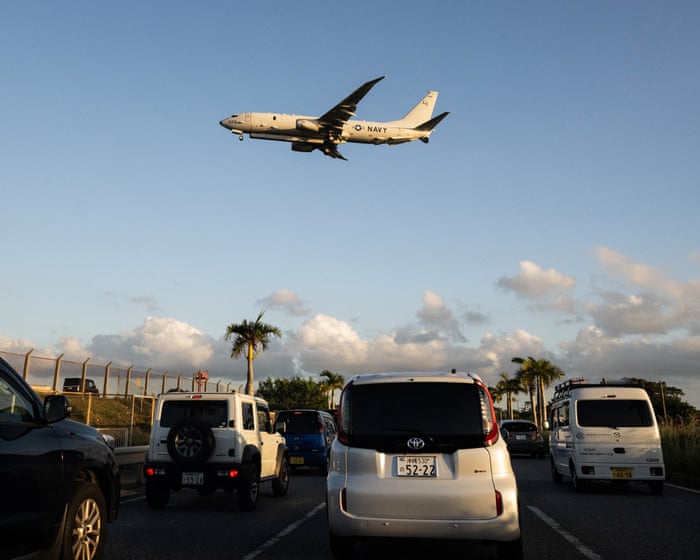
One of America’s biggest overseas military bases has banned vehicles made by the Chinese electric vehicle maker BYD over security concerns, the US military in Japan said on Tuesday.

The ban, which went into effect this week at Kadena airbase on the southern Japanese island of Okinawa, has fueled speculation that similar measures could be taken at other US military facilities as part of Washington’s crackdown on Chinese technology it suspects of being used to collect sensitive information.

Continue reading...

© Photograph: Andrew Caballero-Reynolds/AFP/Getty Images

© Photograph: Andrew Caballero-Reynolds/AFP/Getty Images

© Photograph: Andrew Caballero-Reynolds/AFP/Getty Images

  •  

US seized American heir’s cellphone in violation of treaty agreement, lawyer says

James ‘Fergie’ Chambers, in prison in Spain, has applied for asylum as US seeks extradition over alleged Hamas support

US authorities seized wealthy activist James “Fergie” Chambers’s cellphone at some point after Spanish police arrested him in July without notifying him or his attorneys, the Guardian has learned.

Chambers, a US citizen and wealthy donor to leftwing and humanitarian projects, is imprisoned in Madrid. His case is the first known instance of the US seeking to extradite a citizen over alleged support for Hamas, an accusation tied to money Chambers has donated to support Palestinians, including the Sameer Project, in Gaza.

Continue reading...

© Photograph: Chedly Ben Ibrahim/NurPhoto via Getty Images

© Photograph: Chedly Ben Ibrahim/NurPhoto via Getty Images

© Photograph: Chedly Ben Ibrahim/NurPhoto via Getty Images

  •  

Ukraine’s military says Starlink satellite connection stable after recent restrictions

But Elon Musk, whose company SpaceX owns Starlink, accuses Ukrainian military of violating ⁠the company’s terms

Ukraine’s military has a “stable connection to Starlink”, the Ukrainian government said, 10 days after its ability to use the satellite communications system was suddenly restricted.

But hours after the announcement, SpaceX CEO Elon Musk, whose company owns Starlink, accused the Ukrainian military of violating ⁠the company’s terms. Neither Musk nor the US government, which operates Starshield using Starlink technology, took responsibility for imposing the curbs.

Continue reading...

© Photograph: Sergey Dolzhenko/EPA

© Photograph: Sergey Dolzhenko/EPA

© Photograph: Sergey Dolzhenko/EPA

  •  

US and Israel are warned against launching fresh strikes on Iran

Multinational ‘anti-war bloc’ uses Istanbul summit to call for a diplomatic solution to Middle East crisis

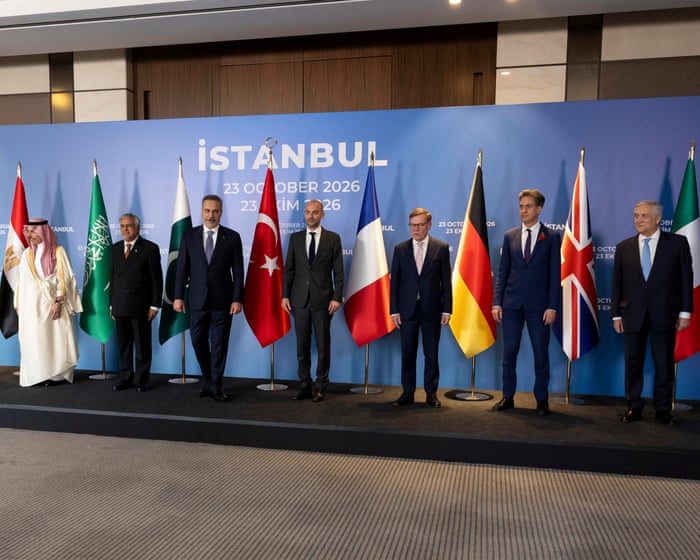
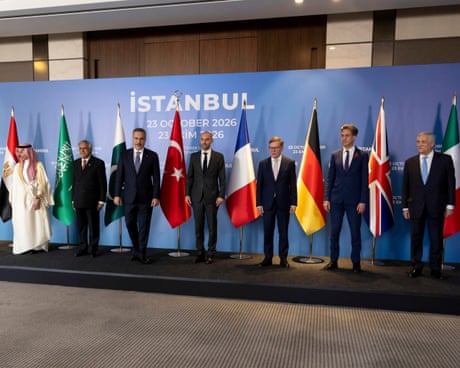
Foreign ministers at a summit of eight European and Middle Eastern countries have urged the US and Israel not to renews their attacks on Iran, warning a fresh outbreak of fighting would spread conflict and push oil prices even higher.

The development of a new multinational “anti-war bloc” represents a challenge to the increasingly open plans by the US and Israel to relaunch strikes on Iran while talks on Tehran’s nuclear programme remain deadlocked.

Continue reading...

© Photograph: Massimo Percossi/EPA

© Photograph: Massimo Percossi/EPA

© Photograph: Massimo Percossi/EPA

  •  

Abu Dhabi Peace Talks: Why Putin’s Ambitions May Defeat Trump’s Economic Bargain

Washington is offering Moscow sanctions relief, commercial opportunities and a possible return to European energy markets. Yet the Kremlin’s objectives in Ukraine extend far beyond economic interests, raising questions about whether Vladimir Putin has any intention of accepting a settlement that preserves Ukraine as an independent European state.

The Kremlin has announced plans for renewed negotiations between Russia, Ukraine and the United States in Abu Dhabi during the first half of November, reviving a diplomatic process that has repeatedly failed to produce a settlement to Moscow’s war against Ukraine.

Russian presidential spokesman Dmitry Peskov said on Friday, 23 October, that the discussions would concentrate on post-war security arrangements. He also left open the possibility of eventual European participation, although the initial meeting is intended to remain trilateral.

The announcement follows talks in St Petersburg between Vladimir Putin and Donald Trump’s special envoy Steve Witkoff. Yet the emerging American proposals reveal a fundamental problem: Washington appears increasingly prepared to offer Russia substantial economic incentives, while Moscow has provided little indication that its political objectives in Ukraine have changed.

The economic bargain taking shape

According to details reported on 23 October, citing The Economist, the American proposals involve Ukraine abandoning its ambition to join NATO in exchange for investment, security arrangements and the prospect of European Union membership.

Russia would receive sanctions relief, renewed commercial relations with American companies and potentially the restoration of natural gas exports to Europe. A demilitarised zone in Donbas is also reportedly under consideration.

The commercial dimension extends beyond theoretical proposals.

American and Russian representatives have discussed investment in the Nord Stream pipeline system and possible arrangements involving Lukoil’s international assets. The negotiations surrounding Russian energy infrastructure suggest that Washington regards commercial cooperation as a potential instrument for securing Moscow’s agreement.

There is no established evidence that Witkoff, Jared Kushner or members of Trump’s family would personally benefit from these arrangements. Nevertheless, the involvement of investors in strategically important Russian assets raises questions about whether economic agreements might advance independently of a settlement acceptable to Ukraine.

The Trump administration has already demonstrated its willingness to relax economic pressure. On 16 October, the president waived major provisions of the Graham sanctions legislation, which he had signed into law only four weeks earlier.

As EU Today previously examined, the decision suspended measures designed to increase the economic costs of Russia’s continuing aggression. Washington justified the waiver on the grounds that sanctions could interfere with negotiations.

Why Putin’s objectives are not primarily economic

The central weakness in a settlement built around commercial incentives is the assumption that Putin’s territorial and political demands can ultimately be exchanged for economic advantages.

Russia’s objectives have never been confined to Donetsk, Luhansk or access to Western markets.

In his July 2021 essay on the historical unity of Russians and Ukrainians, Putin advanced a conception of the two nations as belonging to a single historical and cultural space. His interpretation, examined by the Centre for Eastern Studies, challenged the legitimacy of Ukraine’s development outside Moscow’s political influence.

These ideas preceded the full-scale invasion of February 2022. They also followed Russia’s annexation of Crimea in 2014 and its intervention in eastern Ukraine.

Putin’s demands therefore concern more than military geography. They involve the extent to which Ukraine can exercise independent political authority, determine its international alliances and integrate with Western institutions.

Even a settlement granting Moscow substantial territory could leave this larger objective unresolved.

An independent Ukraine, increasingly integrated into the European economy and protected by Western security commitments, would remain outside Russia’s political control. For a Kremlin leadership that has repeatedly questioned Ukraine’s separate historical identity, such an outcome would represent a limitation on its wider ambitions.

Putin reinforced this position on 22 October when he again described Ukrainian territory in Donbas as historically Russian.

The advantages of negotiations without compromise

This creates an apparent contradiction. Why would Moscow return to negotiations if its broader objectives remain incompatible with the proposed settlement?

One explanation is that participation itself offers Russia strategic advantages.

Negotiations can preserve diplomatic engagement with Washington, complicate attempts to introduce additional sanctions and maintain American pressure on Kyiv to accept territorial concessions.

They also provide opportunities to negotiate economic arrangements before fundamental security questions have been resolved.

For Putin, the political timetable in Washington is relevant. Trump’s presidency is constitutionally limited to January 2029. Moscow can seek to exploit the present administration’s interest in a diplomatic agreement while continuing military operations.

None of this establishes that Putin has definitively rejected compromise. However, the Kremlin’s willingness to attend negotiations is not equivalent to a willingness to abandon its demands.

Russia continues attacking Ukrainian cities and energy infrastructure. As EU Today reported on 22 October, Russian forces launched 21 ballistic missiles against Kyiv shortly after Witkoff’s discussions with Putin.

The simultaneous pursuit of diplomatic engagement and military pressure allows Moscow to negotiate while attempting to alter conditions on the battlefield.

Europe cannot be treated as an economic bargaining chip

The proposed return of Russian gas exposes another contradiction in Washington’s approach.

The European Union has already adopted binding legislation to phase out Russian gas imports, with full restrictions taking effect during 2027.

The European Commission reiterated on 19 October that it had no plans to reverse its position. Reopening Nord Stream would also face sanctions, infrastructure and political obstacles, particularly in Germany.

Consequently, Washington cannot independently promise Moscow renewed access to European energy markets.

Nor can it guarantee Ukraine’s accession to the EU. Membership requires agreement among the existing member states, completion of accession negotiations and ratification of the relevant treaty.

A settlement negotiated primarily between Washington and Moscow would therefore depend on European decisions over which neither government has unilateral authority.

This helps explain the significance of Peskov’s remarks about possible European participation. Moscow needs European cooperation to secure meaningful sanctions relief and access to markets, even while seeking to negotiate Europe’s security arrangements principally with Washington.

The unresolved question

Trump’s approach rests on the proposition that economic incentives can make a settlement more attractive to Moscow than continued warfare.

Putin’s position presents a different calculation. The Russian president must weigh the benefits of restored commercial relations against the political implications of recognising Ukraine’s durable independence and Western orientation.

Those objectives may prove incompatible.

A settlement that restores Russian energy revenues without credible guarantees against renewed aggression could reduce Moscow’s economic constraints while leaving the causes of the war unresolved.

The decisive test in Abu Dhabi will therefore not be whether negotiators can agree on investment, pipelines or sanctions relief. It will be whether Russia is prepared to accept a Ukrainian state whose sovereignty, political direction and future European integration remain beyond Moscow’s control.

Until that question is answered, renewed negotiations may offer Washington the prospect of a diplomatic achievement while allowing the Kremlin to pursue objectives it has not publicly abandoned.

  •  

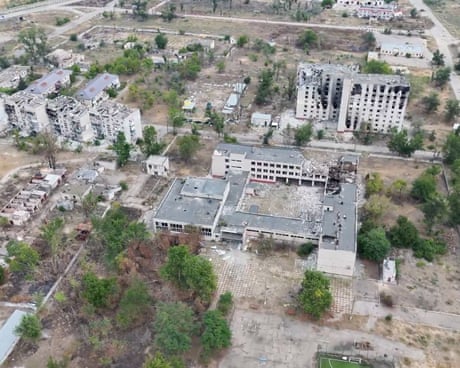
Russia and Ukraine agree to local ceasefire in Oleshky amid deepening humanitarian crisis

People in Russian-occupied city facing severe shortages of food, water and electricity, with some reportedly surviving on weeds

The White House has said that Russia and Ukraine have agreed to a ceasefire in the Russian-occupied city of Oleshky, where a deepening humanitarian crisis has left thousands of civilians struggling to survive.

In a statement on Friday, the White House said both sides had agreed to halt all military operations in the city from 27 October to allow humanitarian aid deliveries and preparations for the evacuation of civilians.

Continue reading...

© Photograph: 34th Separate Marine Brigade "Borysfen"/Reuters

© Photograph: 34th Separate Marine Brigade "Borysfen"/Reuters

© Photograph: 34th Separate Marine Brigade "Borysfen"/Reuters

  •  

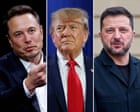
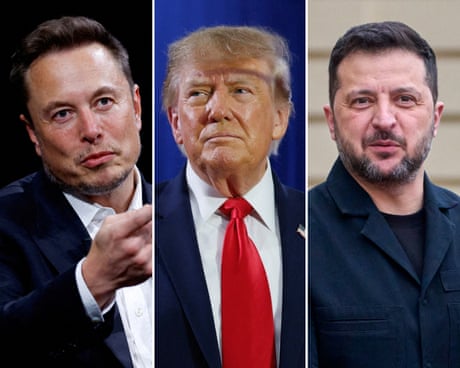
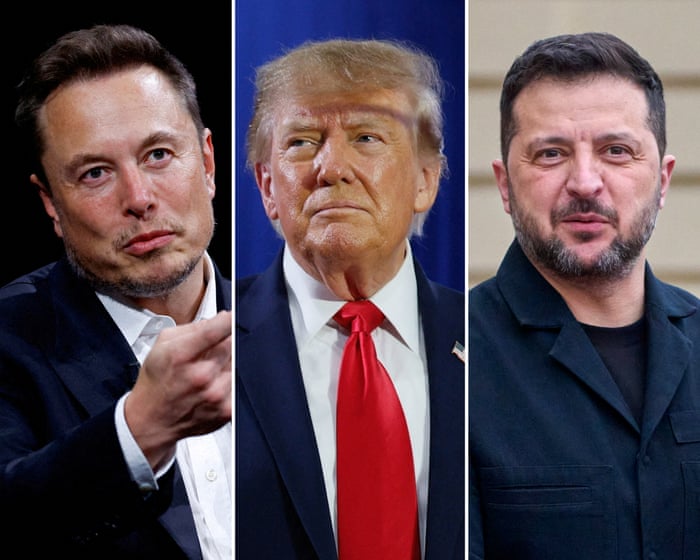
Trump, Musk, Zelenskyy: who is blaming who in the Ukraine-Starlink row?

A war of words has erupted over who is responsible for the restrictions on Starshield access in Ukraine

A war of words has erupted between the Trump administration, officials in Kyiv and Elon Musk over who is to blame for limiting Ukraine’s access to Space X’s military-grade version of Starlink.

The restrictions to Starshield have rendered many of the drones used by Kyiv to strike behind the frontlines inoperable and hampered air defence systems that stop Russian attacks, according to Ukrainian officials.

Continue reading...

© Composite: Reuters/Pool EPA/AP

© Composite: Reuters/Pool EPA/AP

© Composite: Reuters/Pool EPA/AP

  •  

Russia bombards Kyiv with missiles hours after agreeing to resume talks with Ukraine

Experts say Russia is trying to destroy energy infrastructure before winter and US ‘appeasement and flattery’ will not achieve peace

Russia has carried out a massive “demonstrative” attack on Ukraine, bombarding Kyiv with ballistic missiles just hours after Vladimir Putin said he had agreed to resume trilateral negotiations after talks with the US envoy Steve Witkoff.

Overnight, Moscow pounded the Ukrainian capital, killing at least two people and wounding 22, including four children. Targets included the southern bridge over the Dnipro River, civilian houses, energy infrastructure, an ambulance station, office buildings and a clinic.

Continue reading...

© Photograph: Efrem Lukatsky/AP

© Photograph: Efrem Lukatsky/AP

© Photograph: Efrem Lukatsky/AP

  •  

‘You are a humanitarian also, sir’: the US feeds Putin with lies as Ukraine’s children take cover and die | Andrew Roth

Steve Witkoff’s flattery of the Russian leader could be just the start of a mendacious stratagem from a US president who says Moscow ‘has been fine on Ukraine’

They say the first casualty of war is truth. For the Trump administration, the road to peace with Russia now encompasses some extraordinary lies.

Steve Witkoff delivered one as he sat down with Vladimir Putin in St Petersburg on Wednesday, aiming to close the deal on Russia’s land grab in Ukraine with the White House’s strategy of maximum pressure on Kyiv and saccharine flattery of the Kremlin.

Continue reading...

© Photograph: Pete Kiehart/The Guardian

© Photograph: Pete Kiehart/The Guardian

© Photograph: Pete Kiehart/The Guardian

  •  

Putin orders release of jailed American as he meets Trump envoy for Ukraine talks

Russia frees Stephen Hubbard after US request while Steve Witkoff praises Putin, wanted by ICC as war criminal, as a ‘humanitarian’

Vladimir Putin ordered the release of an American man from a Russian jail as he met Donald Trump’s envoy Steve Witkoff in St Petersburg on Wednesday for fresh talks on ending the war in Ukraine, amid increasingly close relations between Moscow and Washington.

Trump had previously asked Putin to free Stephen Hubbard, a 74-year-old former teacher who had spent more than four years in Russian jails on charges of fighting as a mercenary for Ukraine.

Continue reading...

© Photograph: Gavriil Grigorov/Reuters

© Photograph: Gavriil Grigorov/Reuters

© Photograph: Gavriil Grigorov/Reuters

  •  
❌