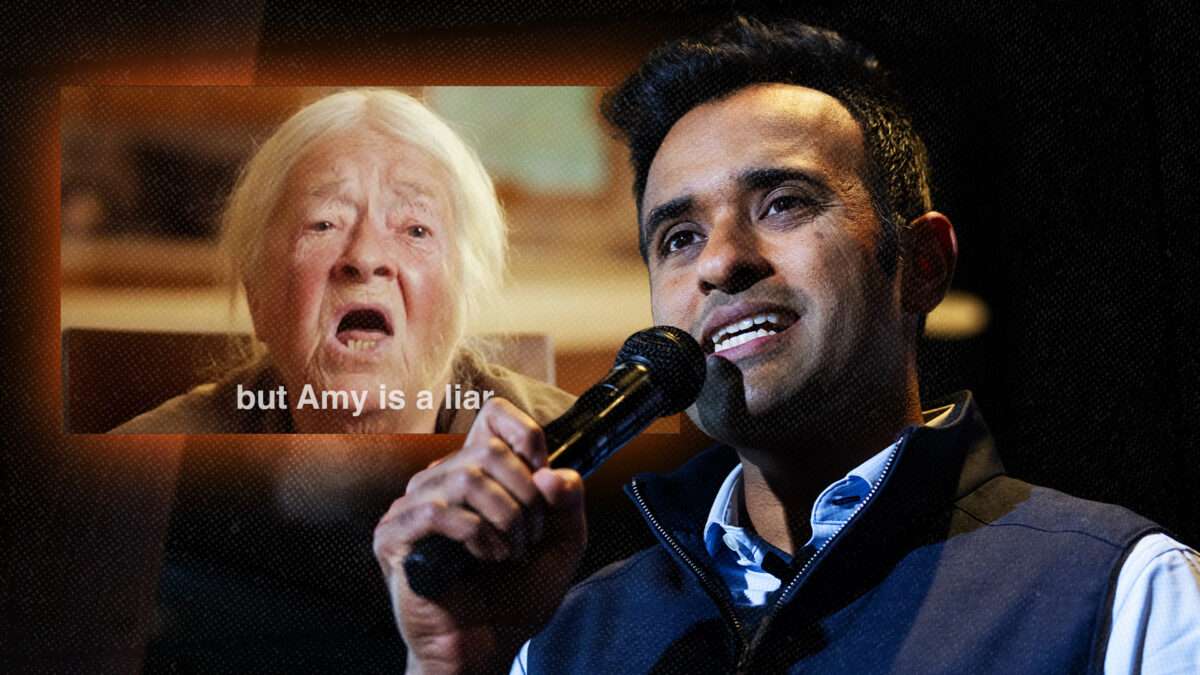
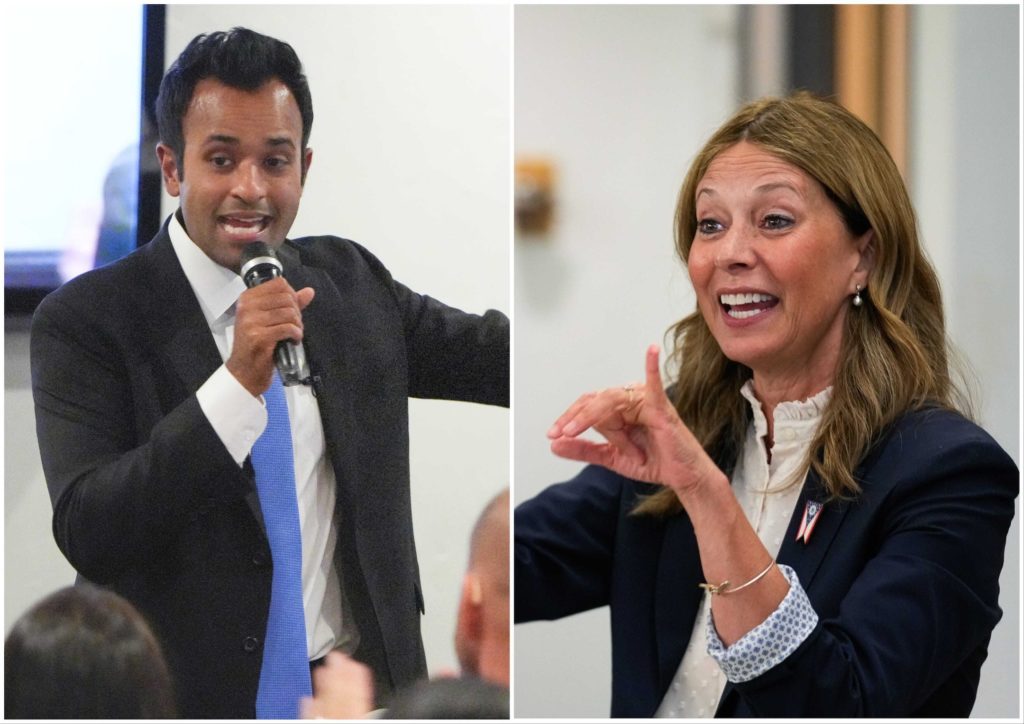
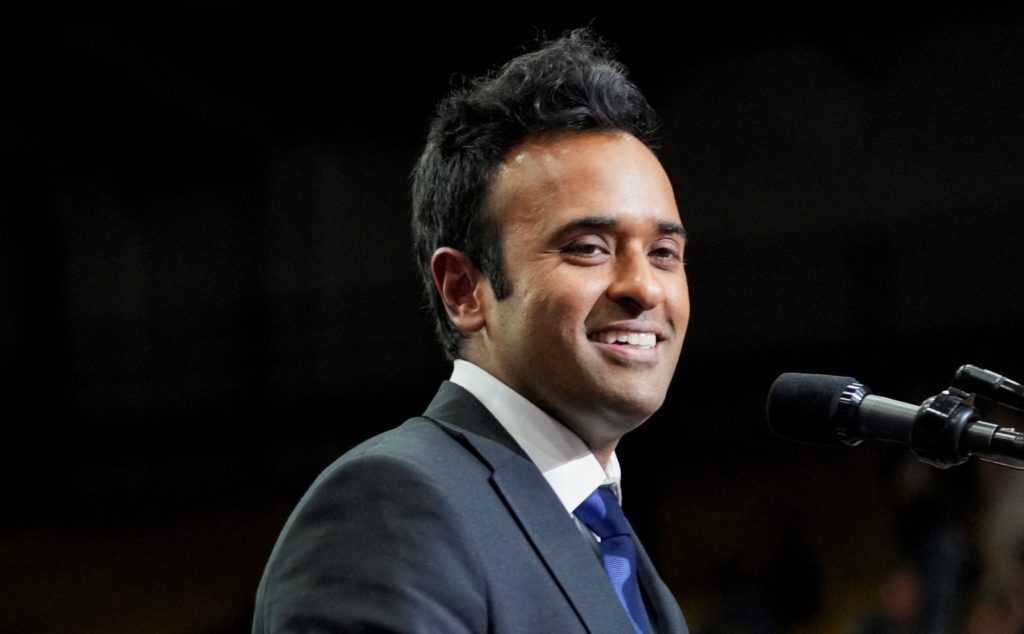
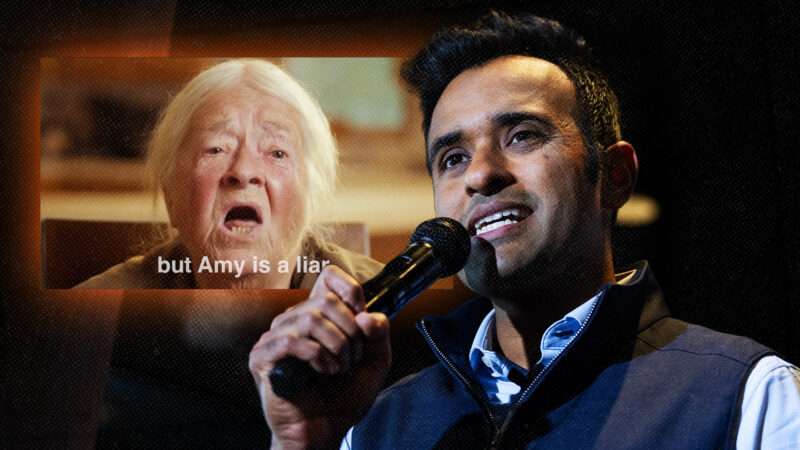
There’s a campaign moment I can’t stop thinking about. It happened shortly after the campaign of Vivek Ramaswamy, the Republican nominee for governor of Ohio, released a shocking attack ad featuring the estranged mother of his Democratic opponent, Amy Acton.
In the ad, as many readers will know by now, Acton’s mother accuses her daughter of lying and tells Ohioans not to vote for her. Acton, 60, says she has not spoken to her mother since she was 12, when she and her brother were removed from their mother’s custody after their stepfather was arrested and charged with raping her. Acton says she last saw her mother at the courthouse, where her mother came to support her husband as her daughter testified against him.
Ohio gubernatorial nominee Vivek Ramaswamy’s (R) campaign is no longer airing a controversial ad featuring his opponent’s mother after it ran its course on the air. The campaign previously put millions behind the ad, even after backlash from members of both parties. The ad features Ramaswamy’s Democratic opponent Amy Acton’s mother, who calls her daughter…
Ohio gubernatorial nominee Vivek Ramaswamy’s (R) campaign is no longer airing a controversial ad featuring his opponent’s mother after it ran its course on the air. The campaign previously put millions behind the ad, even after backlash from members of both parties. The ad features Ramaswamy’s Democratic opponent Amy Acton’s mother, who calls her daughter…
President Donald Trump on Wednesday said that Ohio Democrat Senate nominee Sherrod Brown, who served three terms in the Senate after some time in the House of Representatives before losing his seat in 2024, "was a stone-cold loser for Ohio."
My home state of Ohio has earned a not-so-nice distinction in the 2026 election: It is the site of "the ugliest" contest in the country. Nasty attack ads have been an ongoing feature of the governor's race between Republican Vivek Ramaswamy and Democrat Amy Acton—piercing many a peaceful Hulu-watching session on my end with allegations that Acton is a pill-popping drunk and Ramaswamy a con man.
But the nastiness reached a whole new level in recent weeks, with the release of a Ramaswamy campaign ad implying that Acton lied about childhood sexual abuse by her stepfather.
Understandably, many Republicans bristled at being viewed as the party that defends accused child rapists. Not Trump. His only regret here is that he didn't get to run an ad like this, he said.
The ad features Acton's mother, Donna Arthur, from whom Acton has been estranged for decades for what seem like very good reasons. When Acton was 12, her mom took her stepfather's side when she accused him of sexually abusing her for years.
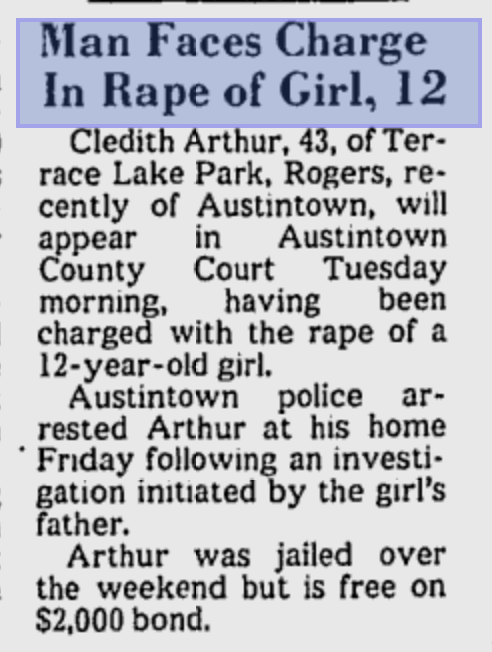
In 1978, Acton's stepfather, Cledith Arthur, was arrested and charged with child rape. Records from the case, obtained by Signal Statewide, "also contains a reference to a previous incest charge against Cledith Arthur from 1974…although it's not clear how that case was resolved."
Acton's mom lost custody of both Amy and her brother. But the stepfather was never tried, since he and Acton's mom fled the state. He remained a fugitive—and married to Amy's mother—until he died in 2004.
screenshot of Clip from the Youngstown Vindicator on July 17, 1978
In the new Ramaswamy campaign ad, Acton calls her daughter a liar. "It's not easy for a mother to say this, but Amy has a serious problem. She is a liar," says Arthur in the video. "She lies about her past.…She's lied her entire life. My daughter needs help."
Arthur doesn't outright say "she lied about being molested by her stepfather," but given the historical context here, the implication is pretty clear. In effect, the Ramaswamy campaign has helped Acton's mom accuse her daughter on a national scale of making it all up.
That's despicable, even by political campaigning standards.
And—providing us with some hope for humanity—it also backfired. People roundly condemned the ad and the Ramaswamy campaign for running it. Acton's brother, Philip Stearns, corroborated her story. Even many Republicanshave objectedto the ad.
There are still some lines you don't cross, public figures left and right seemed to agree.
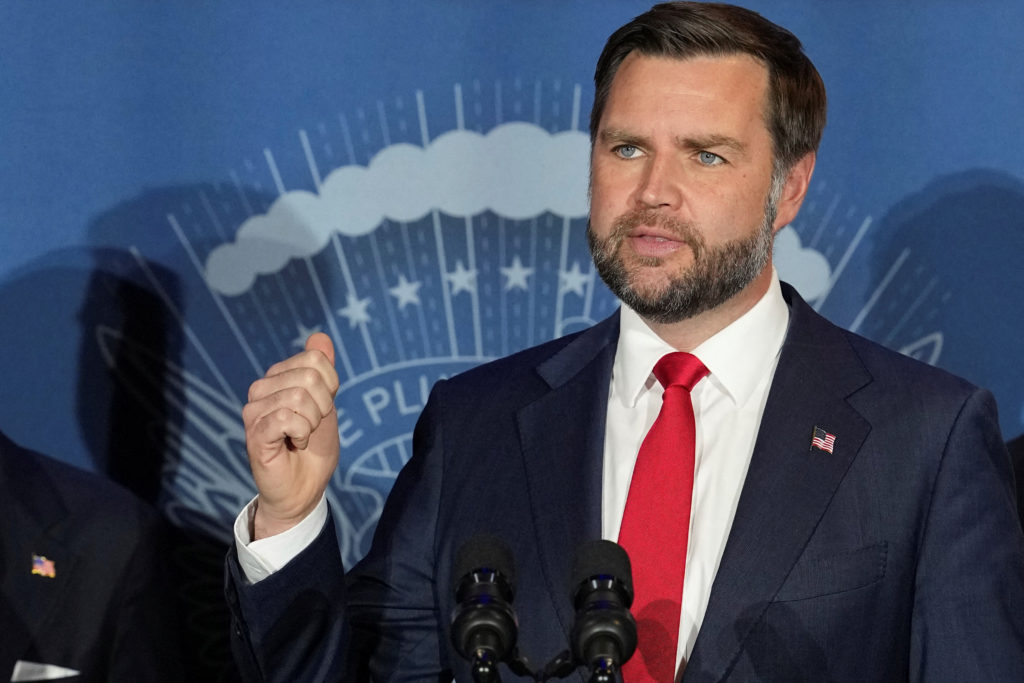
Public figures except President Donald Trump and Vice President J.D. Vance.
Telling Republicans to "stop whining" about the ad, Vance said he was getting "a little bit disgusted when I see Republicans across the country who are whining more about that advertisement than they are about what the congressional Democrats and other Democrats want to do to the United States of America."
"Vivek Ramaswamy had the audacity to run a TV commercial which calls it out like it is and calls Amy Acton a liar," Vance continued.
Trump went further, calling the ad "very powerful" and urging the Ramaswamy campaign to keep it up. Trump also criticized the current Ohio governor, Republican Mike DeWine, for calling the ad "deeply troubling."
DeWine is a moderate Republican who, for the most part, adheres to pre-Trump standards of decency. Their differing reactions here seem a perfect microcosm of pre-MAGA and post-MAGA standards for conduct and bounds of acceptability.
DeWine "probably wants a Dumocrat to win," Trump wrote in a Truth Social post last Thursday. "I suggested, on the other hand, that Vivek should keep it up, and let everyone listen to the mother of a defective, dishonest, and incapable Candidate, explain how the daughter is a DISASTER who, uncontrollably, lies, cheats, and steals!"
Talking to reporters that same day, Trump just kept repeating that if an ad had been made with his mom calling him a liar, the press would love it. He stuck to that talking point again and again, acting clueless about the childhood sexual abuse allegations at the center of this whole controversy.
The idea that the president would passionately post about and answer questions about this without knowing the whole story is almost beyond belief. But even if Trump somehow didn't know the full context when he first started talking about it, he was made aware and then kept right on praising the ad.
Trump on Ramaswamy Ad: The mother is calling the daughter a terrible person and a liar. Why would you shield somebody from that? Why would we do that? So I told him, leave it up and say thank you God. I only wish I could have had an ad like that. pic.twitter.com/M2TYz3jhUy
At a campaign rally in Iowa last Thursday, he said, "I only wish I could have had an ad like that against somebody."
Ramaswamy has also defended the ad, saying, "Unfortunately, the person I'm running against does have serial problems with the truth" and that the ad highlights a "pattern" of the "people who are closest to her" telling Ohioans not to vote for her.
But this is no longer just about one candidate's mistake or one campaign's poor judgment. The response from Trump and Vance has raised Ramaswamy's ad into bigger and uglier territory.
"It's actually kind of hard to find a prominent Republican who is defending the ad other than Vivek Ramaswamy himself, Vice President JD Vance and, quite fervently today, President Trump," noted CNN's Kaitlan Collins last Friday.
But Trump and Vance are the leaders of not just the Republican Party but the nation. And as we've seen again and again, Trump's responses tend to set the tone for what will become acceptable among conservatives by and large.
"Vance's acceptance of this campaign ad only breathes life into the disease that we should be seeking to cure," former New Jersey Gov. Chris Christie toldThe Washington Post.
Do voters agree?
Whatever happens with Ramaswamy next Tuesday, it will be impossible to know how much of it is related to this ad campaign and how much of it is related to many other possible factors. But it's hard not to look at the Ohio gubernatorial election results now as something of a referendum on what type of political discourse is OK. Are voters over Trump-style belligerence and nastiness? Or do they accept the premise that politics is a war in which no low is too low if it helps you win?
In the News
Release the FISA Ruling: "Two Democratic senators who have long overseen US intelligence say the Trump administration is illegally withholding a secret court's findings from Congress until lawmakers renew a program that lets federal agents read Americans' communications without a warrant," reportsWired:
Seven months ago, the Foreign Intelligence Surveillance Court objected to search filters that let intelligence analysts pull Americans' messages from intercepted data without the approvals, written justifications, or records the law requires. The court approved another year of surveillance anyway. The ruling has never been made public, and Senators Ron Wyden of Oregon and Adam Schiff of California say the administration's own deadline for releasing it passed in September.
"This opinion details serious abuses of Americans' rights under Section 702 of the Foreign Intelligence Surveillance Act (FISA) and, by law, should have been released before September 13," wrote Wyden and Schiff in a letter to the director of national intelligence and the U.S. Attorney General. "Yet this opinion remains hidden over a month later, suggesting that the administration hopes to secure a renewal of Section 702 while keeping Congress and the public in the dark."
Wishful thinking from Flock. Garrett Langley, the CEO of Flock, told a conference of cops to believe him rather than what's right in front of their eyes. The backlash to Flock "is not real," he said at the International Association of Chiefs of Police conference, per leaked audio obtained by 404 Media:
"Somebody was paying for [the social media posts and] stopped paying for it," Langley said about the many viral posts criticizing his company's technology. "Social media chatter on Flock is down about 95 percent from July. It went down 50 percent last week when Ukraine bombed a Russian data center with a drone. Literally 50 percent overnight. And so look, I'm the last person, my wife as well, she's like 'This is crazy, these people are getting paid to say these things,'" he added, repeating a disproven theory that Ukraine's strikes on Russian data centers had a significant impact on internet bot activity.
"It's anonymous bots, and so it is not real," he continued. "Inorganic activity has led to organic activity, but when I look at protests across the country, it is the same people with the same signs and the same message. That's not normal. That's not organic at all." Langley's comments echo another unsubstantiated theory that said opposition to Flock comes from a far-left network spreading propaganda at the behest of China.
The backlash is widespread and multifaceted. Backlash to Flock "has just exploded, like no other issue that I have seen in my time at the ACLU," Becca Eastwood, deputy policy director at the American Civil Liberties Union of Iowa, told Reason recently.
On Substack
Techlash on the campaign trail. Democrats have been panning data centers in campaign ads, but artificial intelligence was the subject of only a small fraction of ads, notes the Blue Horizon Project, an initiative from Chamber of Progress "to restore tech optimism in the Democratic Party and reset the relationship between Democrats and the technology sector." And when Democrats have focused on AI and data centers, it's been more about economics than general anti-AI sentiment, Dave Vorland writes:
Data centers are the important exception to the lack of ads focused on AI and technology. In AdImpact's tables, they appear among the three leading Democratic advertising topics in 5 of the 21 Toss-Up House races. They are not politically irrelevant, and dismissing the local backlash would be a mistake.
But look more closely at what these ads actually argue. Using AdImpact's data on 2026 campaign spending, ads matching either a tax-language screen or energy message, or both, account for $69.76 million, or 76.2% of all data center advertising.
The race with the highest spending on data centers is the Ohio Senate race, where Democratic spending accounts for $32.10 million. AdImpact's data shows Sherrod Brown's campaign spent over $1.5 million to air a data center ad 3,100 times. The message shows that while he is willing to hit his opponent for the data center tax breaks, his solution is ensuring that data centers don't raise energy costs, an idea that could have been drawn directly from our Data Center Development Playbook.
Vorland points out that "AdImpact's data for 2026 Congressional spending shows that less than $2.5 million went to ads supporting a data-center construction pause, moratorium, ban, or stopping new construction, a minuscule portion of the Democratic ad buy."
Interesting that "let data centers build but don't subsidize them" is the implicit message here. It feels like at least somewhat of a good sign that Democratic candidates don't by-and-large think "ban new data centers" is a message that voters want to hear.
More Sex & Tech News
• An interesting essay in Works in Progress looks at "the rise of prudishness" and what demographics might have to do with it.
• "Technology has advanced for centuries, shuffling workers among occupations, industries, and regions without making human labor obsolete," writes Nathan Smith at Human Progress:
As machinery pushed millions of Americans away from farming over the past century, most workers moved to factories, towns, and cities. They ended up with more comfortable lives than their predecessors plowing the fields. The AI economy will likely follow the same path: destroying jobs while creating better ones.
• The New Jersey Assembly recently advanced a bill that would increase prostitution penalties, and several other prostitution-related criminal justice bills are pending in the Assembly and state Senate. Tara Burns has details.
• Florida's attorney general said he plans to introduce even more stringent social media regulation, even as the state's earlier restrictions on minors using social media are still being challenged in federal court.
• British tech regulator Ofcom says its Online Safety Act isn't actually stopping kids from seeing "harmful content" online. So it wants to do more of it. "Instead of suggesting to repeal the Online Safety Act because it does not seem to be working or because it imperils online freedom, Ofcom's report proposes to broaden the law's scope," writesReason's Meagan O'Rourke.
NEW: The Online Safety Act has been a failure, according to a new report from Ofcom.
Ofcom have found "no significant change" in children encountering harmful content since the law came into effect last July. This is despite the signifigant threats to free speech and privacy.
• "Social media decentralized the information environment and weakened the influence of expert opinion. LLMs are likely to have the opposite effects," writes Dan Williams at Persuasion. "Whereas social media has been a democratizing technology, LLMs are a technocratizing force. They shift influence back towards expert opinion."
• Ten states have no birth centers and eight others only have one, according to a new report from The Commonwealth Fund. "Two dozen centers closed between 2023 and 2026, with some publicly blaming onerous regulations and steep increases in malpractice insurance," notesOhio Capitol Journal.
Ohio Republican gubernatorial nominee Vivek Ramaswamy faced widespread condemnation from both Democrats and fellow Republicans for releasing a television advertisement featuring the mother of Democratic candidate Dr. Amy Acton, a move that critics compared to the unethical tactics of Sen. Joseph McCarthy.
Republican candidate Vivek Ramaswamy's attempt to discredit Ohio gubernatorial opponent Dr. Amy Acton via an advertisement featuring her mother's testimony backfired, instead highlighting Acton's resilience in overcoming childhood trauma.
Former White House communications director Anthony Scaramucci on Sunday compared Ohio gubernatorial candidate Vivek Ramaswamy (R) to the pig characters in the George Orwell novel “Animal Farm” and predicted the candidate will lose to opponent Amy Acton (D). “Vivek Ramswamy has disgraced himself,” Scaramucci wrote on social media Sunday. “Ramaswamy started with soaring rhetoric, post-partisan,…
Republican commentator Scott Jennings took a swipe at Ohio gubernatorial candidate Vivek Ramaswamy (R) for using a controversial campaign ad featuring his opponent’s estranged mother. The ad, which Ramaswamy’s campaign is now spending $4 million to broadcast statewide, features Democratic gubernatorial candidate Amy Acton’s mother, Donna Arthur, accusing Acton of being a “liar” her whole…
The Cook Political Report is shifting a closely watched gubernatorial contest toward Democrats after a controversial campaign ad shook up the race. The nonpartisan election forecaster moved the governor’s race in Ohio from “toss up” to “lean Democrat,” now favoring Amy Acton (D) to beat Vivek Ramaswamy (R) in the Buckeye State. The race was…
A GOP campaign ad featuring the estranged mother of Ohio gubernatorial candidate Amy Acton (D) received blowback this week after it was revealed Acton’s mother stood by her husband after he was charged with sexually abusing Acton as a child. Court records show that the mother, Donna Arthur, has faced legal troubles of her own,…
Speaking at a campaign stop, Ramaswamy said the advertisement, which features Acton's mother calling her "a liar," had nothing to do with childhood abuse.
President Trump reiterated his support for Ohio gubernatorial candidate Vivek Ramaswamy’s (R) controversial ad that recently aired featuring Democratic opponent Amy Acton’s mother calling her a “liar.” “Why would you shield somebody from that?” Trump asked his supporters at a rally in Sioux City, Iowa, on Thursday night. The president said Ramaswamy had reached out to…
The controversy over Ohio GOP gubernatorial candidate Vivek Ramaswamy’s ad featuring his Democratic opponent Amy Acton’s mother is pitting President Trump and Vice President Vance against Ohio’s Republican establishment less than two weeks out from Election Day. A number of Ohio Republicans, including Gov. Mike DeWine and Sen. Jon Husted, have denounced the ad, which…
President Donald Trump said Thursday that Vivek Ramaswamy, the Republican nominee for Ohio governor, should keep running a controversial ad featuring the estranged mother of Democratic opponent Amy Acton.
On this week's episode of Freed Up, Robby Soave and Christian Britschgi condemn Vivek Ramaswamy's new attack ad against opponent Amy Acton before discussing their predictions for the 2026 midterm elections. Next, the boys get biblical with references to their favorite parables as they discuss Tyler Cowen's latest article on why he thinks Elizabeth Holmes—and most other non-violent female criminals—should not be in prison. The episode wraps with a thoughtful discussion on aging, state attorneys general, and the latest Meta settlement.
00:00—Vivek Ramaswamy ad controversy
20:00—2026 midterm elections
25:50—Should Elizabeth Holmes be in prison?
49:20—Getting older
58:55—An update on Rep. Ilhan Omar
1:03:10—The importance of grain
1:06:14—Robby and Christian extol author Michael Crichton
1:11:30—The war in Ukraine should end.
1:14:50—Meta settled with the state of New Mexico
1:20:00— Christian continues his crusade against state attorneys general.
If you enjoy Freed Up, come watch Robby debate at our upcoming Reason Versus in D.C. Tickets are available here.
Robby Soave on the left, Christian Britschgi on the right, Elizabeth Holmes in the middle with the words "bad blood" written above her face, and the Reason Freed Up logo in the bottom left corner
The campaign is in its final stretch and the attacks are getting increasingly personal. In Ohio, Republican gubernatorial candidate Vivek Ramaswamy's campaign is behind an ad featuring the estranged mother of his Democratic opponent, Amy Acton, disputing Acton's account of her childhood. For analysis, Geoff Bennett spoke with Democratic strategist Faiz Shakir and Republican strategist Whit Ayres.
In this segment of Free Media, Reason Senior Editor Robby Soave and Daily Caller Editor in Chief Amber Duke discuss Vivek Ramaswamy's controversial attack ad against his opponent Amy Acton in Ohio's gubernatorial race.
If you enjoy Free Media, come watch Robby debate at our upcoming Reason Versus in Washington, D.C. Tickets are available here.
Questions about the video will likely shadow Republican Vivek Ramaswamy, a biotech billionaire who previously ran for president but has never before held public office, in the final two weeks of the contest.
In Cincinnati, the vice president said it was "not really my concern" whether the controversial 60-second spot was appropriate, and said he was focused on supporting Republican candidates in their midterm races.

 Login



 NEW: The Online Safety Act has been a failure, according to a new report from Ofcom.