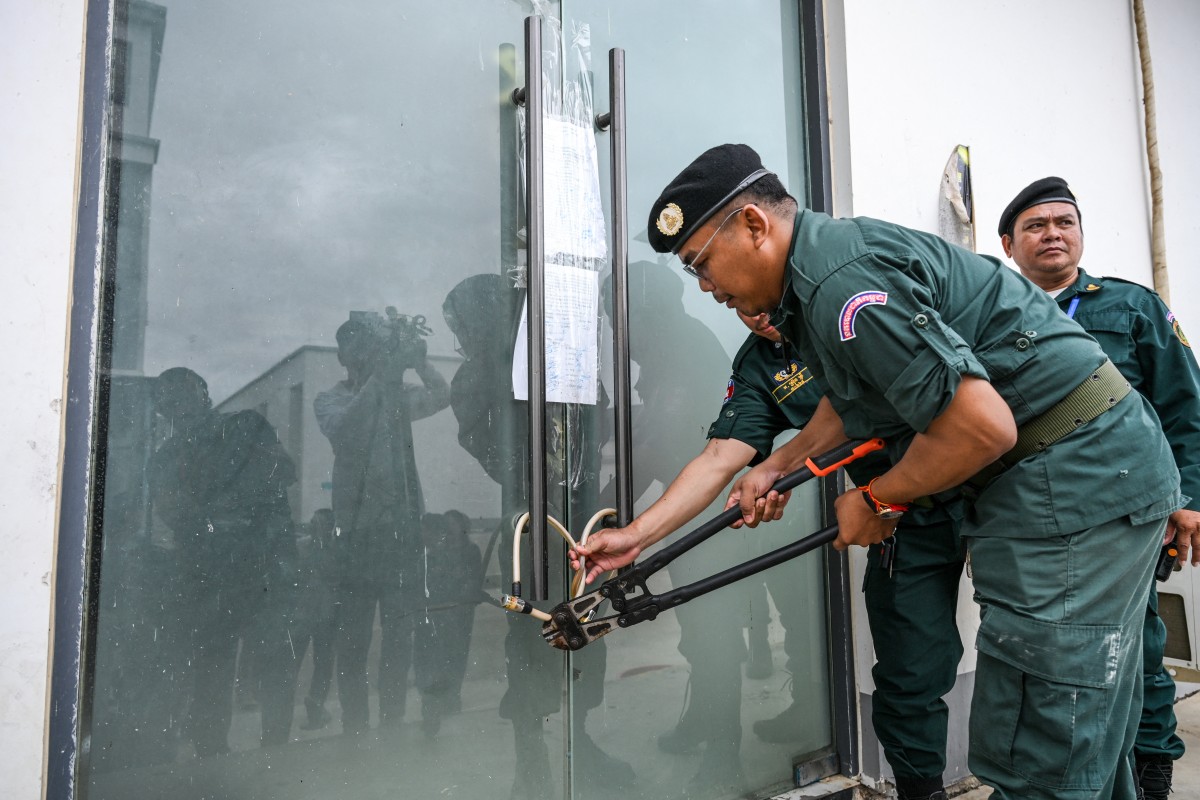
Madagascar authorities have dismantled scam centers linked to operations in Cambodia. The centers, primarily run by Chinese nationals, were involved in various fraud activities.
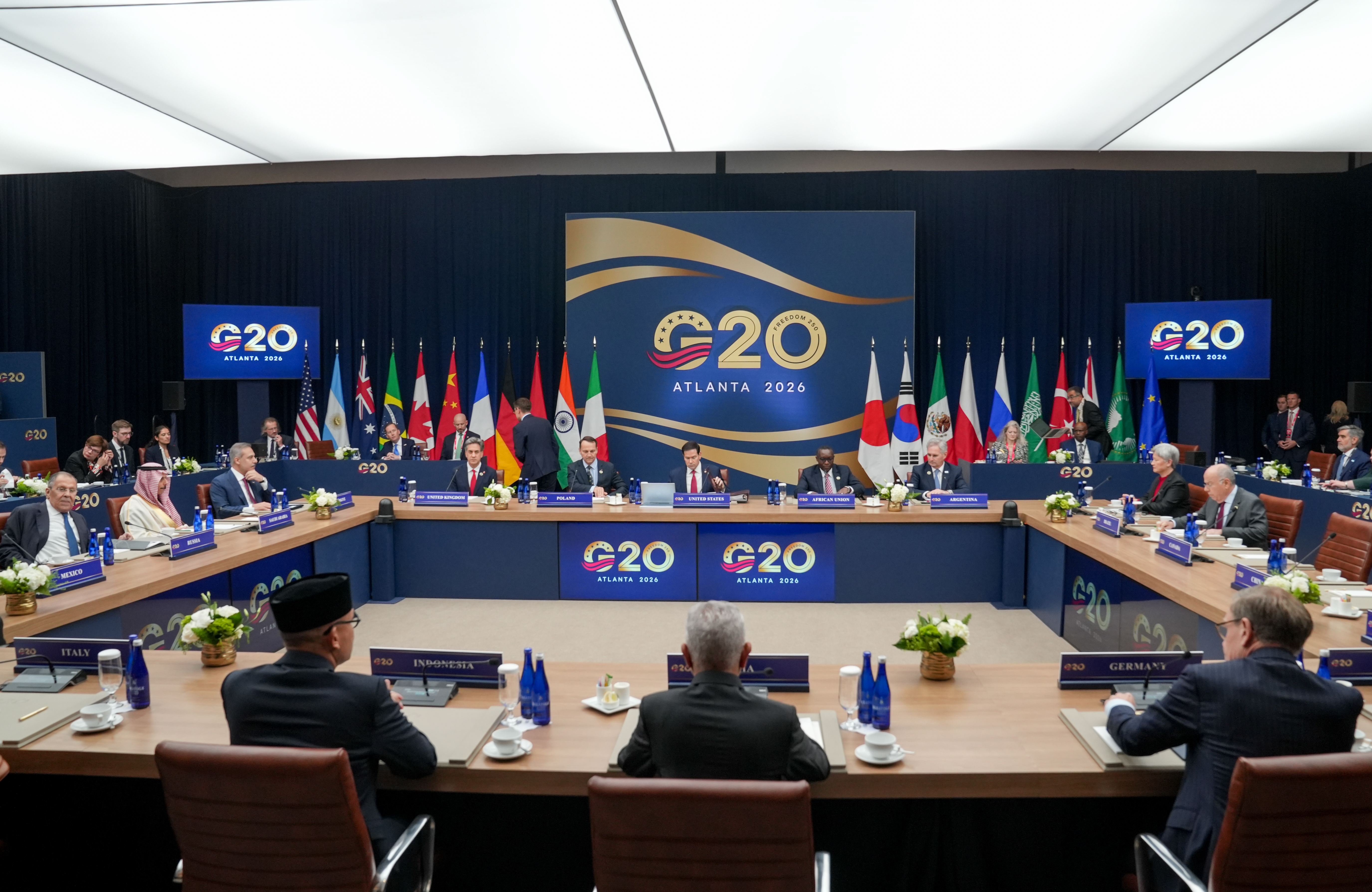
Divisions over Russia’s war with Ukraine overshadowed the talks, with U.S. Secretary of State Marco Rubio set to release a chairman’s statement instead of a joint communique
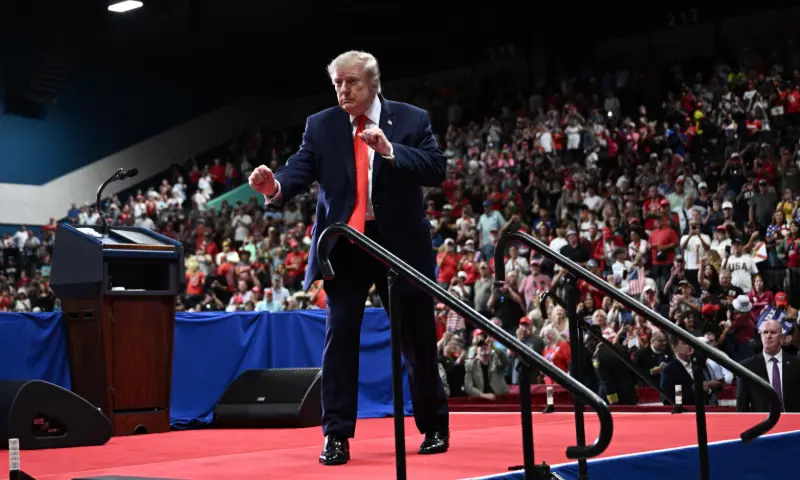
The U.S. President reinstated two rallies in Kansas and Iowa a day after cancelling them, saying Republicans “have a shot” in the midterms as a record 47.9 million Americans have already voted
Switzerland has opened a diplomatic mission in Pyongyang, marking the first time since 1974 that the country has established a political-diplomatic presence in North Korea. Prior to this development, Bern maintained only a humanitarian office in the country from 1997 until its closure in 2020 due to the COVID-19 pandemic.
Swiss Foreign Minister Ignazio Cassis traveled to North Korea on October 29 to preside over the opening ceremony and conduct bilateral ministerial consultations. This marks the first visit to Pyongyang by a senior Swiss official since 2003. During the visit, Cassis stated that the discussions focused on "geopolitical issues."
Official statements from the European Union note that Brussels has largely suspended direct bilateral dialogue with Pyongyang owing to North Korea's nuclear program and its military alliance with Russia. The EU characterizes Switzerland's move as a sovereign decision, noting that the country is not an EU member and that the initiative does not reflect a European consensus.
US Secretary of State Marco Rubio urged fellow G20 foreign ministers on Friday to work together for greater geopolitical stability and economic prosperity, warning that a series of crises posed serious threats to the global economic order.
But Russian Foreign Minister Sergei Lavrov’s participation in the two-day gathering in Atlanta – at Rubio’s invitation – has roiled many G20 ministers, aggravating deep rifts over the wars in Ukraine and the Middle East during a meeting that is expected to end without a joint declaration. Such statements require consensus that has been elusive if not impossible since Russia’s full invasion of Ukraine in 2022.
Russia’s presence sparks diplomatic tensions
British Foreign Secretary Ed Miliband addressed Lavrov directly during the meeting, telling him: “Only yesterday your drones attacked and killed 15 people. And there are countless examples like this of you killing innocent civilians throughout this war. We all know you are the aggressor.”
Lavrov later told reporters that Moscow’s position on the Ukraine conflict was unchanged, and Russia could not accept Ukraine as a “military threat to the lawful security interests of the Russian Federation,” according to Russian news agencies.
US officials said they skipped a traditional G20 family photo after European officials refused to be photographed with Lavrov. One US official said Washington wanted to avoid a “spectacle” that could overshadow the meeting. A third of members objected, including Australia and Canada, a Western diplomat said.
German Foreign Minister Johann Wadephul told reporters a photograph with Lavrov was unacceptable because “there is no normalcy with Russia.” Lavrov himself acknowledged that there had been “concerns” about the family photo, drawing head nods from many in the room, one participant said.
Rubio, saying the world faced interconnected crises that threatened global energy and food supply, trade and the freedom of navigation, urged his counterparts to find areas of agreement during the final ministerial meeting before a leaders summit in Miami, Florida, from December 14 to 16.
“We are tasked, on behalf of the nations that we serve, to work together … to coordinate responses to emerging crises and to protect our shared interests,” he said. “We can help set the context for expanded geopolitical stability and the broader economic prosperity agenda that our leaders will tackle.”
Global economic crises add to pressure
Two Western officials said G20 members were in broad agreement about the severity of the economic challenges facing nearly every country as a result of the war in the Middle East. Many participants worried that renewed US strikes on Iran would send oil prices sharply higher, deepening the pain, they said.
“The possibility for a new military operation in Iran is on everybody’s mind,” said one of the officials, who spoken on condition of anonymity because they were not authorized to speak publicly. “Everybody is under deep pressure.”
The foreign ministers’ meeting was expected to end with a chair’s statement, with the bigger effort focused on hammering out a joint declaration that could be signed by G20 leaders at their summit in December, Western officials said. It remains unclear if Russian President Vladimir Putin will attend the December gathering.
Consensus increasingly out of reach
With G20 members Russia, China and middle powers such as Brazil and India trying to navigate US-China strategic competition, you have “much more of a split than we’ve ever had,” said Heidi Crebo-Rediker, who was chief economist at the State Department during the Obama administration.
Over the past decade or so, G7 countries would at least “have agreed a coordinated platform before they came to the G20, but now we don’t even really have that,” she added.
Critical minerals and Ukraine on the agenda
Ministers are expected to discuss supply chain issues and challenges in procuring the critical minerals needed to produce advanced technologies during their discussion on Saturday.
Rubio has championed the Pax Silica initiative, aimed at uniting G20 countries concerned about China’s dominance in rare earths and other critical minerals.
But any movement on that front will probably come afterwards, experts said, pointing to a US-led statement on excess industrial capacity that some G20 trade ministers signed after the group failed to reach consensus.
Elaine Dezenski of the Washington-based Foundation for Defense of Democracies said such statements by ad hoc groups could offer a way forward in the current difficult environment.
“The right test is whether the US can build cooperation with partners when all-member consensus appears to be out of reach,” she said. She noted the Quad — a security grouping of the US, India, Japan and Australia — would also meet in Atlanta on Saturday, on the sidelines of the G20 gathering.
US President Donald Trump’s recent decisions on Russia, including a deal to buy diesel and waiving some sanctions, formed a challenging backdrop for the talks, along with Ukraine’s problems with its Starshield satellite services, participants said. Ukraine was not invited to attend.
Washington announced a multibillion-dollar sale of Patriot interceptors late on Friday, offering some good news to Kyiv.
Before the meeting, European Union foreign policy chief Kaja Kallas said she would call for increased support for Ukraine, while pushing for progress on accountability measures through the Special Tribunal and Claims Commission.
Tehran has restricted maritime traffic through the strait since the West Asia war erupted on February 28 with U.S.-Israeli strikes on the Islamic republic
Venezuela has exported 136.7 million barrels of crude oil to the United States since the start of 2026, surpassing the combined total deliveries for 2024 and 2025, according to preliminary Energy Information Administration (EIA) data.
For the week ending October 23, shipments totaled 4.3 million barrels. This averages 618,000 barrels per day, representing an 8% increase over the previous period and a three-week high.
Daily shipment volumes have remained above 500,000 barrels for 24 consecutive weeks. The average daily delivery over the last four weeks was 567,000 barrels, a 3% increase compared to the prior period.
More than 160,000 people across Germany are expected to join demonstrations on Saturday, organisers say, as a youth-led movement inspired by protests elsewhere in Europe takes to the streets to demand better education and lower living costs.
The protests follow a wave of Gen Z-led demonstrations across Europe this year. In Serbia, student-led activism helped unseat the country’s long-time leader at the ballot box, while protests in France have descended into rioting and looting.
A worker secures a fashion store with wooden boards ahead of expected protests by the youth movement “Gen Z regelt” in Frankfurt, Germany, October 30, 2026. —Reuters
The German protests, organised by campaign group Gen Z regelt (Gen Z takes charge), are planned in 34 cities including Berlin, Frankfurt and Munich. The group says it opposes compulsory military service and wants greater investment in education as many young Germans struggle with rising costs.
German authorities say they expect Saturday’s demonstrations, which coincide with Halloween festivities, to be largely peaceful but have warned of attempts by extremist groups to exploit the movement.
Parts of Germany’s far-left extremist scene and some groups linked to foreign extremist movements have joined efforts to mobilise support, according to the federal interior ministry.
“We all have those images from France in our minds - looting, burning houses, burning police vehicles, and attacks on police officers,” said Roman Poseck, interior minister for the state of Hesse, whose capital is Germany’s financial hub, Frankfurt.
“France must not be held up as a model in this regard.” In Berlin, some businesses along the luxury Kurfuerstendamm shopping boulevard boarded up windows and planned early closures ahead of the demonstrations amid concerns about possible unrest.
Gen Z takes charge
For organisers, however, the focus is on what they see as the growing pressure on younger generations in Europe’s largest economy.
“The government has offered no response to our concerns other than to continue making cuts and piling further burdens upon us,” said Steve, an 18-year-old due to speak at a rally in Munich, addressing Chancellor Friedrich Merz.
“We will continue to exercise our fundamental right to assemble until you stop ignoring us.” The protests come as Germany struggles to revive economic growth while facing growing pressure on pensions and public services as baby boomers retire and the working-age population shrinks.
But questions have been raised about who is driving the campaign and whether it is genuinely youth-led, given the broad mix of political and civil society groups involved.
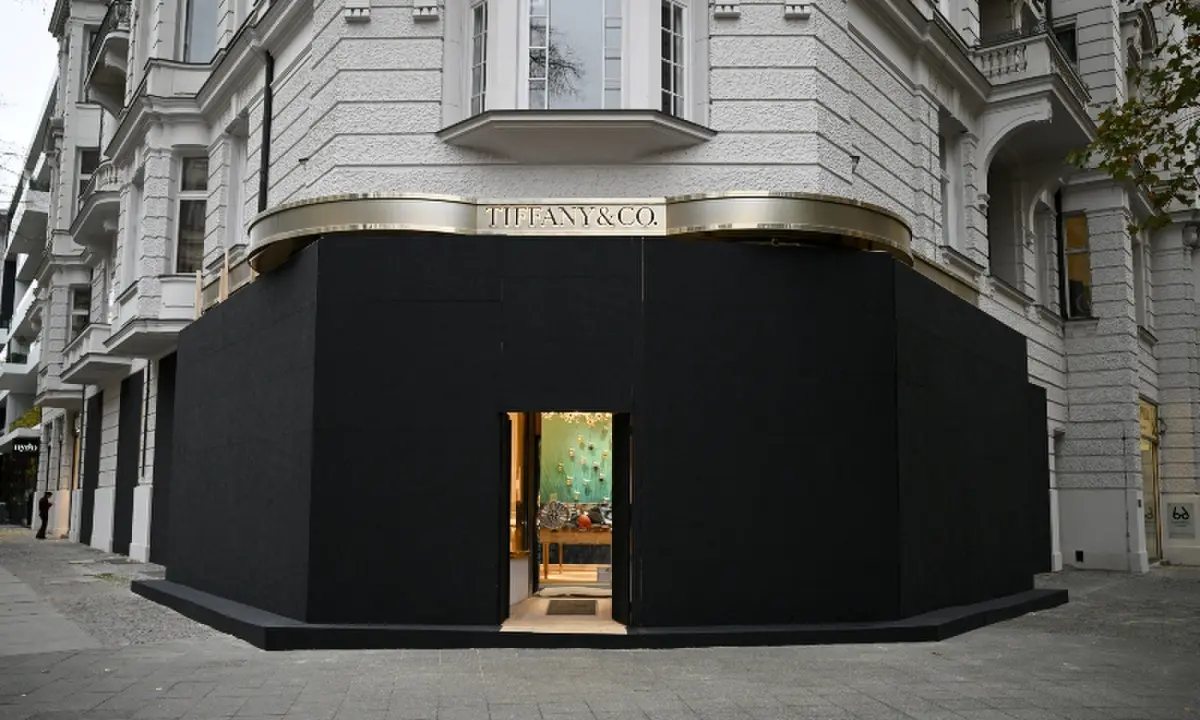
A Tiffany and Co store secured with wooden boards ahead of expected protests by the youth movement “Gen Z regelt” in Berlin, Germany, October 30, 2026. —Reuters
Germany’s national school student umbrella organisation, BSK, has distanced itself from the initiative and plans to hold a separate day of protest on November 20.
“We are distancing ourselves from ‘Gen Z regelt,’ but not from the students themselves, who have legitimate concerns,” said BSK secretary-general Amy Kirchhoff on Thursday.
Sean Baker, a student at the Technical University of Berlin, said he would join the protests on Saturday to call attention to the poor state of buildings on campus.
“When you go inside and enter the rooms, it looks like an abandoned building,” he told Reuters. “Yet this is where we’re expected to study on a regular basis.”
“Trump betrayed us. He did a whole 180,” said the 22-year-old American, whose family has Mexican roots.
Nunez had been drawn to the Republican billionaire’s promises: lowering prices, ending international wars, and releasing all of the files in the Jeffrey Epstein probe.
Now he is furious about the administration’s lack of transparency over Epstein — the late convicted sex offender who was a friend of Trump — as well as the war being waged against Iran, which has driven up gas prices and fueled broader inflation.
“Gas, insurance, food: everything went up and is more expensive than ever,” complained Nunez, who works as a sales rep and says he earns $1,600 a month.
“We’re not supposed to be at war with Iran. We’re only in this war because of Israel.”
Nunez says he will vote on November 3 for independent candidates — neither Republican nor Democratic.
Yuma County, where Nunez lives, perfectly illustrates the shift to the right within the Latino community in the United States, a trend that contributed to Trump’s victory in 2024.
In this corner of the Southwest, where the border wall between the United States and Mexico dominates the horizon, the Republican won by a 20-point margin.
‘Rude awakening’
In Somerton, an agricultural town whose population is almost entirely Latino and typically favours the Democrats, about 40 per cent of residents voted for Trump in 2024.
Mayor Gerardo Anaya says he thinks this was because they were angry at the runaway inflation seen under former president Joe Biden, as well as the daily influx of thousands of migrants.
“It was just a vote against the Biden administration,” the left-leaning mayor said.
But those who chose Trump are now experiencing a “rude awakening,” he added.
In this small town, which is surrounded by fields of lettuce, the parking lot of the only supermarket is abuzz with complaints.
Residents who spoke with AFP expressed outrage over the price of carne asada — a typical Mexican-style grilled meat — and the cost of diesel.
Rocketing gasoline prices have made a popular local pastime, driving off-road buggies in the desert, more expensive.
Trump’s image as a savvy businessman also no longer carries weight.
“I thought he was going to fix everything, but now I’m done. I don’t want anything to do with him anymore,” said one gardener, who preferred not to give his name.
‘Racist’
While the number of migrants at the border has dropped drastically, the gardener — who is of Mexican descent — said he could not accept the aggressive, large-scale enforcement raids taking place across the United States, some of which have led to the deportation of immigrants with no criminal records.
Trump “said he was going to go after criminals. That’s not what happened,” he says. “He’s a racist and that’s it.”
National polls show this sense of disillusionment among Latino voters is widespread, offering Democrats the hope that they can capitalise and seize control of at least one house of Congress next week.
But in Somerton, irritation with Trump does not necessarily translate into support for his opponents.
The gardener, for one, intends to abstain altogether.
At his hair salon, Jaime Sanchez remains undecided.
The 52-year-old had originally chosen Trump because of what he said was his opposition to abortion and his commitment to “family values.”
However, he admits to being troubled by the administration’s immigration policy, which can lead to the deportation of law-abiding adults, risking their separation from their American-born children.
“When a family isn’t united, there are greater dangers — more gangs, more drugs — because there’s no role model to provide guidance,” he said.
Jose Manuel Castro, an evangelical pastor from the neighbouring town of San Luis, told AFP he sees “a great deal of discontent.”
The 75-year-old conservative expects his congregation to cast a protest vote this time around.
In the long term, however, he believes that the shift of Latino voters, who tend to be religious, toward the Republican Party is only just beginning.
Many feel uncomfortable with an American Left that champions abortion and the rights of transgender individuals, he said.
“The Democratic Party promotes things that run counter to the principles of the Word of God,” he said.
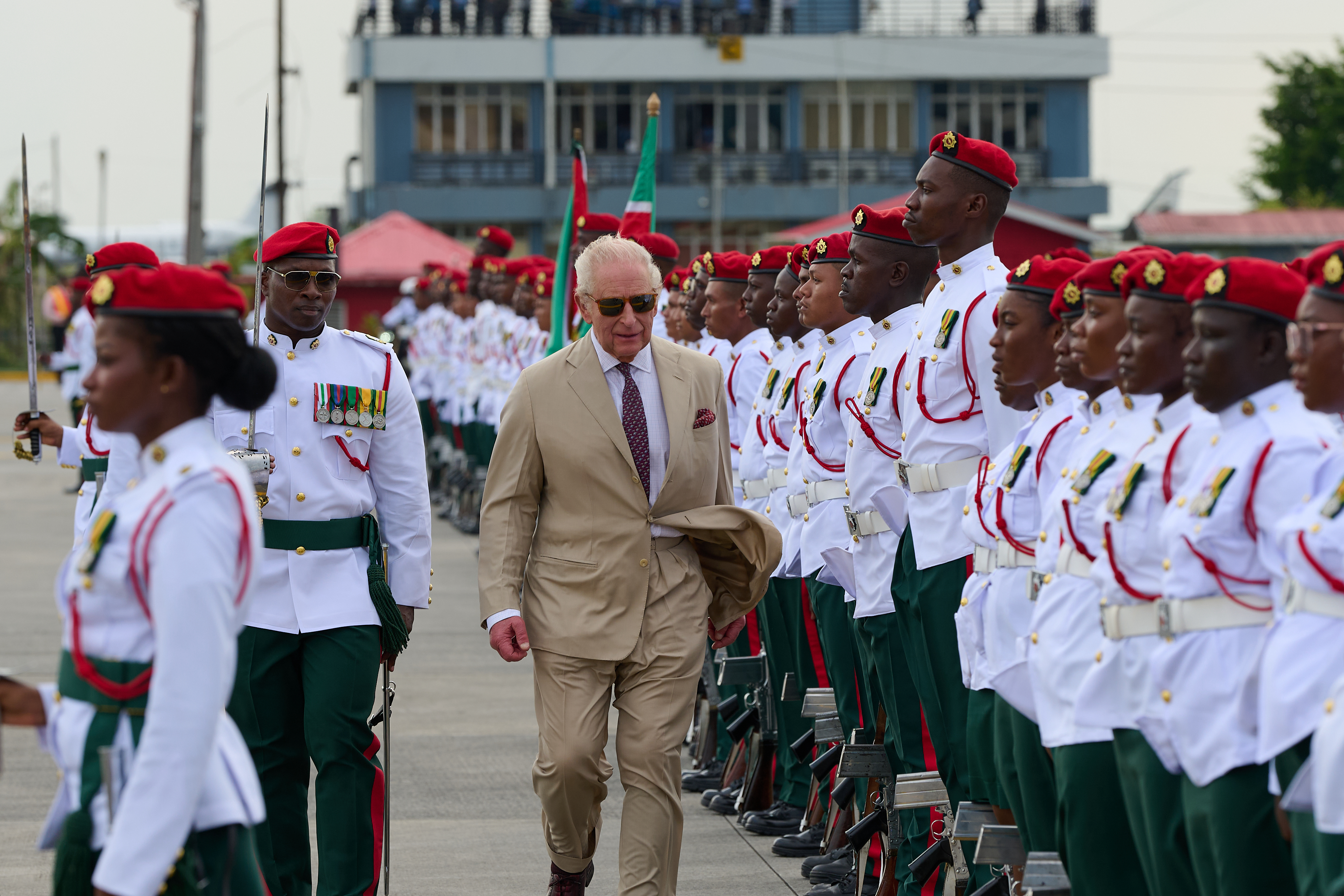
King Charles III encouraged nations to emulate Guyana’s efforts in forest conservation during his visit, highlighting the challenges of valuing nature and the dangers of deforestation.
Around 70,000 security personnel will be deployed on Saturday (October 31, 2026), matching the number mobilised a week ago, as authorities seek to avert a repeat of the October 17 unrest
Average prices for breeding bulls in Argentina rose sharply between August and October 2026, reaching 9,770,983 Argentine pesos ($6,324 USD) per head, according to data from the Secretariat of Agriculture, Livestock, and Fisheries. This represents a nominal increase of 61% and a dollar-denominated increase of 57% compared to the same period in 2025, when the average price was 6,056,272 pesos ($4,038 USD). The figures are based on the sale of 15,000 animals.
The price surge reflects real asset value growth beyond inflation, driven by producers' push to improve herd genetics amid stable climate conditions and improved forage availability. A key structural factor is the RIMI (Medium Investment Stimulus Regime), which allows producers to fully depreciate the cost of purchased livestock in the same period as the purchase, reducing tax burden and lowering the effective cost of investing in higher-genetic-quality stock.
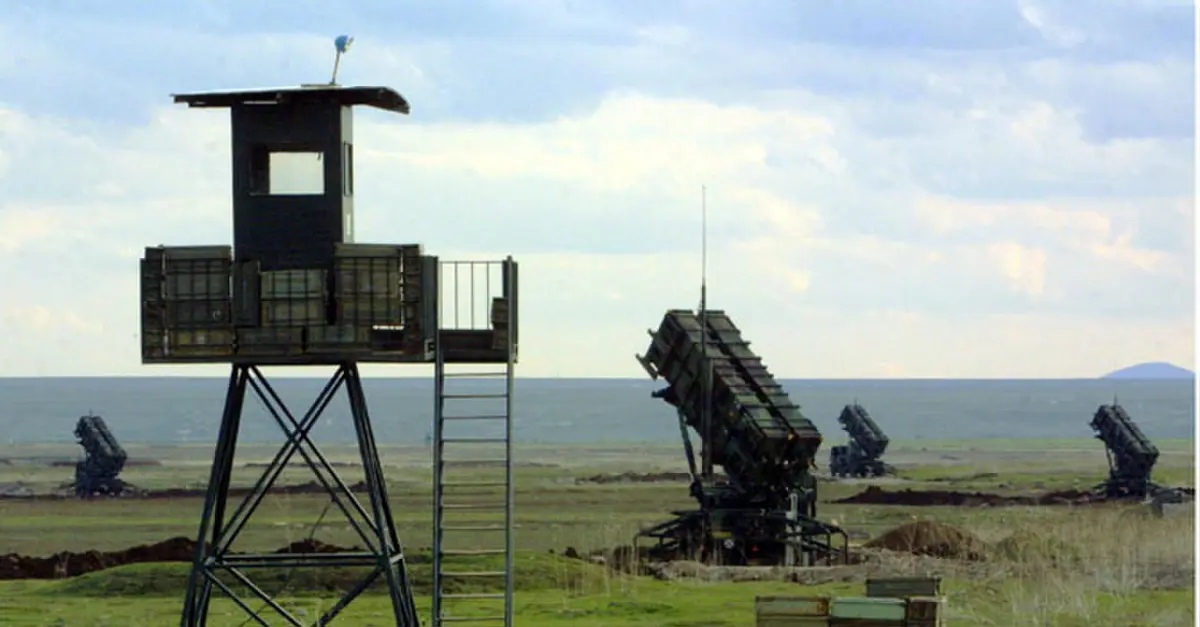
The Trump administration on Friday green-lit the sale of 500 Patriot missiles to Ukraine, the State Department said, but the Ukrainian president warned deliveries could take years.
The approval, which goes to Congress for review, comes after weeks of complaints by Ukrainian authorities that its supplies of the interceptor missiles were dwindling.
“The proposed sale will improve Ukraine’s capability to meet current and future threats by improving its integrated air and missile defense capabilities,” the department said in a statement.
The statement did not provide an estimate for when the weapons could be delivered to Ukraine.
But Ukrainian President Volodymyr Zelensky said late Friday in a post on X that “deliveries may begin ONLY IN A FEW YEARS.”
“We are asking our American partners to find a solution for the time when there is a real danger and a real need to use PAC-3 interceptors,” Zelensky said, using an acronym for the weapons.
The Ukrainian leader suggested that the US and European allies could give his country missiles they have stockpiled now, which would later be replenished by this new purchase.
Patriot missiles are among the most important weapons Ukraine has to intercept Russian drones and missiles.
“This proposed sale will support the foreign policy and national security objectives of the United States by improving the security of a partner country that is a force for political and economic stability in Europe,” the State Department said.
US-Ukraine tensions spiked earlier this month after Washington struck a diesel fuel deal with Russia. Ukraine also said that the US was slowing its access to satellite internet services and had stopped some intelligence sharing.
Tensions eased after Zelensky held talks with US envoys in Oslo on October 20.
The State Department said the weapons sale would be paid for with by donations from Ukraine’s allies but not with US funds.
RIYADH – The United States has directed its non-emergency government personnel and their family members stationed in Saudi Arabia to leave the country amid growing security concerns and fears of escalating regional tensions.
The decision comes amid reported Houthi attacks targeting Saudi Arabia and concerns that the security situation in the region could deteriorate further.
According to the report, the US Embassy in Riyadh issued a security alert for American diplomatic missions in Saudi Arabia, warning about continued threats posed by Iran-backed Houthi forces.
The alert stated that Houthi operations against Saudi Arabia have included attacks targeting civilian airports and other critical infrastructure.
It further warned that these attacks have resulted in civilian casualties and injuries, while also causing significant disruption to air travel.
The US Embassy cautioned that the ongoing tensions could rapidly expand beyond their current scope, potentially creating further security risks.
In addition to ordering non-emergency personnel and their families to depart, the embassy issued further instructions to American government employees remaining in Saudi Arabia.
According to the security advisory, US officials must obtain approval from their mission chief before using any airport in Saudi Arabia following Houthi attacks.
American personnel have also been instructed to exercise extreme caution while travelling within the country.
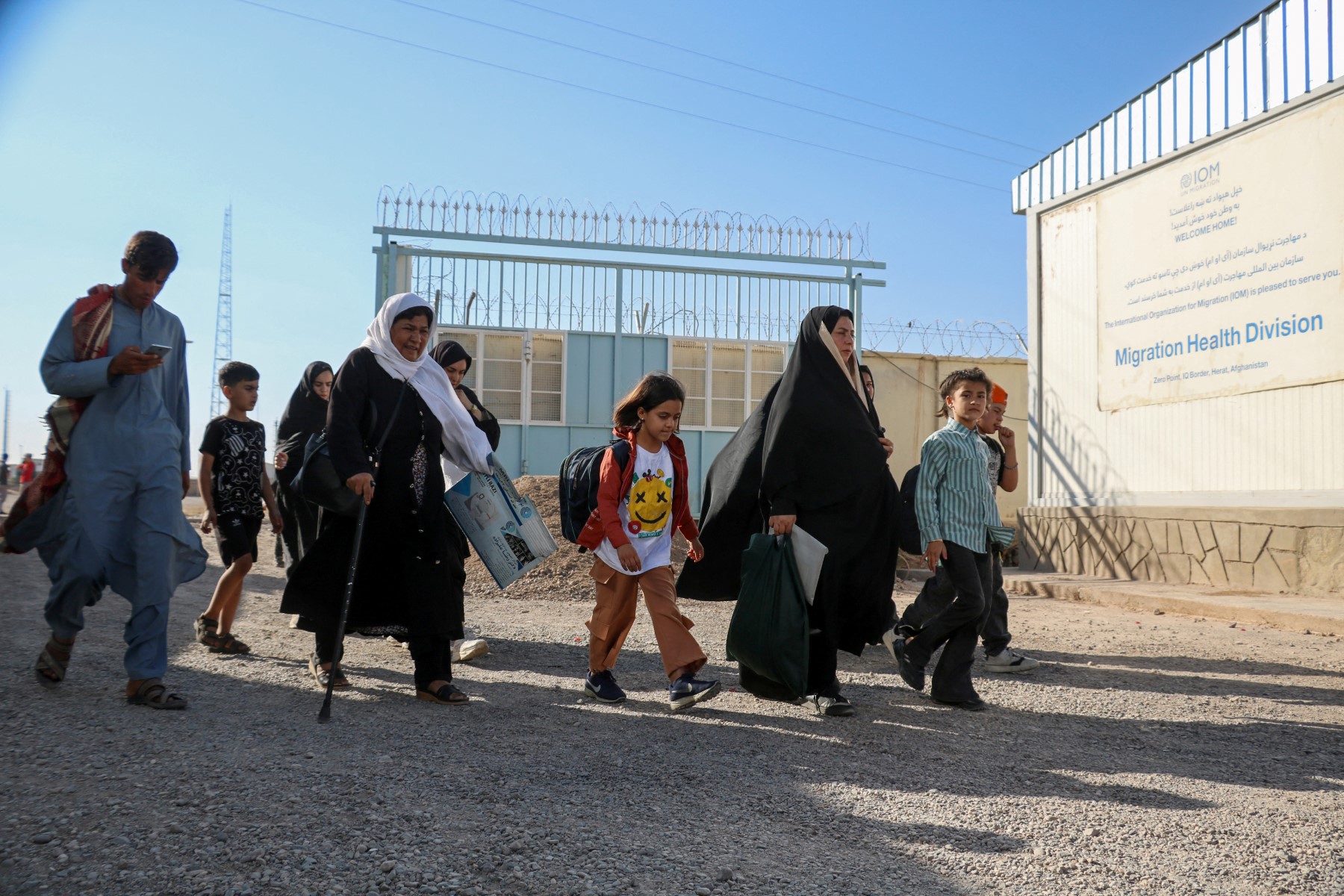
The Trump administration plans to deport certain Afghan immigrants, many of whom fled Afghanistan after the Taliban took control in 2021. Advocacy groups express concern about the deportation plans.
Bolivia has updated the nutritional packages provided to pregnant women and breastfeeding mothers as of Nov. 16. Under a Ministry of Health directive, ultra-processed foods and refined flour have been removed from the kits and replaced with chia seeds, whole wheat, and banana flour.
The quantity of milk provided has also increased from 5.4 kg (three cans) to 6 kg (six one-kilogram packets) to improve nutritional value for mothers and newborns.
Starting in January 2027, the distribution mechanism will transition to a digital format. The Service for the Development of State Productive Enterprises (SEDEM), which manages social subsidies, is introducing a mobile wallet via the "Mi Subsidio" application.
The G20 meeting in Atlanta concludes without a consensus on global security issues, impeded by disagreements over Russia’s war with Ukraine. Instead of a joint communique, a chairman’s statement will be issued by Secretary of State Marco Rubio.
The evolution of the electric vehicle market has moved from early models with limited battery life to the current influx of affordable Chinese series, though cold-weather performance and long-distance travel remain technical hurdles. Private importer Dinmukhamed Suleimanov categorizes this shift into three distinct waves of consumer demand.
The first wave emerged in the 2010s, led by the Nissan Leaf. While the vehicle advertised a 200-km range, real-world performance averaged approximately 140 km. These early units were hindered by rapid battery degradation and air-cooling systems that failed to maintain efficiency in winter.
The second wave began around 2020 with the introduction of the Volkswagen ID.4. This transition brought liquid battery cooling and extended ranges up to 500 km, though top-tier European versions cost between 50,000 and 60,000 euros. Users also reported failures in touch controls and multimedia systems during extreme cold.
 Login