Login

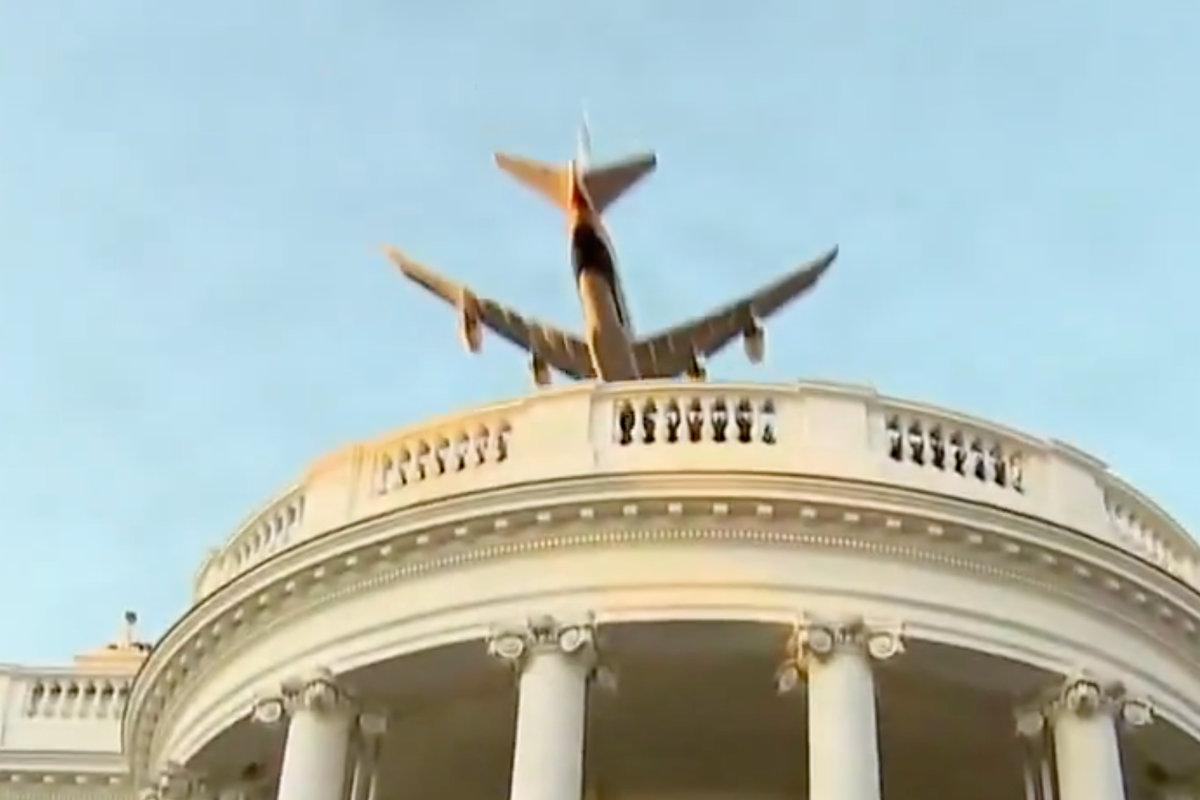
Trump’s Air Force One flies dangerous close to White House shocking and scaring visitors
Footage shows the jet soaring over the White House as Trump and children in costumes look skyward
© X/Rapid Response 47

Footage shows the jet soaring over the White House as Trump and children in costumes look skyward
© X/Rapid Response 47
The bipartisan legislation would give the Federal Trade Commission enforcement power by classifying unapproved restaurant listings as unfair or deceptive trade practices

© AFP via Getty Images
The bipartisan legislation would give the Federal Trade Commission enforcement power by classifying unapproved restaurant listings as unfair or deceptive trade practices
© AFP via Getty Images
Footage shows the jet soaring over the White House as Trump and children in costumes look skyward
© X/Rapid Response 47

‘She just lit up the room. If you were having a bad day, you see Zayla, she’s gonna turn it all around,’ the toddler’s mom said after the tragedy in Tennessee

© GoFundMe
‘She just lit up the room. If you were having a bad day, you see Zayla, she’s gonna turn it all around,’ the toddler’s mom said after the tragedy in Tennessee
© GoFundMe

© Copyright 2026 The Associated Press. All rights reserved
© Copyright 2026 The Associated Press. All rights reserved
More condoms have been recalled in France after a defective manufacturing process put people at risk of pregnancy and STIs

© AFP/Getty
More condoms have been recalled in France after a defective manufacturing process put people at risk of pregnancy and STIs
© AFP/Getty
After missing out on the F-22 and F-35 fighter programs, the B-21 Raider next-generation bomber deal, and absorbing billions in losses on the fixed-price KC-46 Pegasus tanker development, Boeing’s Defense, Space, and Security division has rebounded strongly with a series of major contracts.
Amid this turnaround, Boeing reported its third-quarter results on October 27, with CEO Kelly Ortberg assuring investors that the dark days for the company’s defense unit are over.
In the first three quarters of 2026, Boeing’s defense sector brought in US$23 billion in revenue and US$710 million in earnings, up from US$379 million a year earlier, a healthy 87.3 percent increase.
Meanwhile, the company reported a record backlog of US$745 billion, more than five times its market capitalization of about US$132.36 billion. This also includes a backlog of over 6,300 commercial airplanes.
The backlog at Defense, Space & Security grew to a record US$101 billion, with 23 percent representing orders from customers outside the US.
Rising defense sales also helped Boeing narrow its third-quarter losses.
In fact, Boeing believes its Defense unit will continue to deliver healthy growth after massive multi-year contract wins over the last two years and its decision to shun risky contracts, such as the fixed-price contract for the KC-46 Pegasus tanker development, in which it has already lost billions of dollars.
“We are going to see higher growth out of our defense portfolio than maybe what we thought a year ago. I think we were thinking more in terms of low-single-digit revenue growth. Clearly, that’s going to be more towards the high – middle-single- digit or higher going forward,” Ortberg said.
CEO Ortberg highlighted the recent 737 certification and Boeing’s win in the competition to build the Navy’s sixth-generation F/A-XX fighter as the company’s two most important third-quarter highlights.
“Recent milestones, including certification of the 737-7 and 737-10 and selection to design and build the Navy’s sixth-generation fighter aircraft, are important steps as we continue building on our progress.”
In September, the U.S. Department of War (DoW) selected Boeing to develop the Navy’s next-generation F/A-XX fighter jets. The contract is valued at over US$20 billion for the full-scale development phase.
This was the second time in as many years that Boeing was selected to develop a sixth-generation aircraft. Earlier, in March 2025, the US awarded Boeing the NGAD contract, now called the F-47.
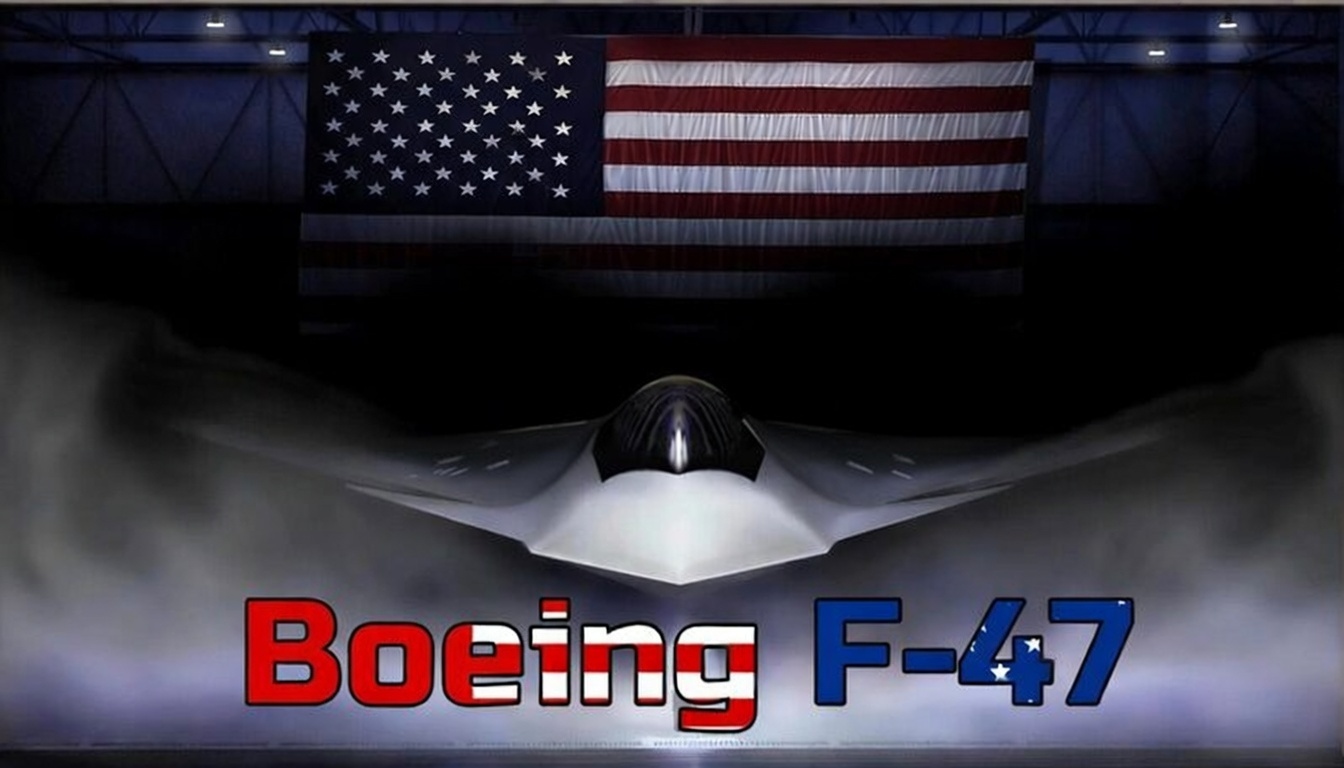
Boeing is therefore building the sixth-generation fighter for both the US Air Force (USAF) and the US Navy.
This is a remarkable turnaround, as Boeing has no genuine experience in building a stealth aircraft.
In 2015, Boeing lost the contract to build the USAF’s next-generation bomber, the B-21 Raider, to Northrop Grumman.
Earlier, Boeing lost the contract to build both fifth-generation fighters to Lockheed Martin.
In 1991, the Pentagon selected Lockheed Martin as the prime contractor for the F-22 Raptor. Boeing, however, participated in the project and built the aircraft’s wings and tail sections.
In 2001, Boeing’s X-32 lost the Joint Strike Fighter (JSF) competition to Lockheed Martin’s X-35, which became the F-35. That was a winner-take-all program.
Boeing then went roughly 24 years without winning a new fighter design competition.
During those years, the 1997 merger with McDonnell Douglas kept Boeing’s defense and aerospace business alive.
The merger with McDonnell Douglas brought the F-15 Eagle and F/A-18 Hornet/Super Hornet lines. Boeing continued production, maintenance, and upgrades of these aircraft, originally designed and built by McDonnell Douglas.
Its lack of experience in stealth technology and its failure to design and build a new (clean-sheet) fighter in over three decades were major impediments to Boeing’s bid to design and develop sixth-generation fighters.
In fact, the USAF’s NGAD program was widely described as existential for Boeing’s future as a fighter designer and builder.
Boeing, however, came from behind and not only won the NGAD contract, but also cemented its lead by winning the Navy’s next-generation fighter, the F/A XX.
“We scored a generational win with the US Navy when they selected Boeing to design, build, and deliver its sixth-generation fighter jet, making Boeing the exclusive sixth-generation fighter company for both the US Air Force and the US Navy,” Ortberg said.
Boeing also won substantial F-15EX orders.
In September, the Air Force awarded Boeing a US$2.38 billion contract for 22 additional F-15EX Eagle II fighters. This brings the total F-15EXs under contract to 120.
“In the quarter, we also received a contract to manufacture 22 more F-15EX aircraft for the US Air Force. And this award brings the total number of aircraft under contract to 120, with the potential for additional upside as the F-15EX continues to demonstrate the value of its unmatched payload and range capability,” Ortberg said.
Notably, the Air Force has significantly raised its overall planned buy of F-15EX fighters, from earlier targets of around 129 to roughly 267 aircraft.
According to the US force structure plan 2035, submitted to Congress earlier this month, nearly 20 percent of the USAF’s combat-coded fleet could be F-15EXs by 2035.

These new F-15EX orders would provide Boeing with stable cash flow for at least another decade.
Another major victory was new multi-year agreements for Patriot PAC-3 seeker production.
“Boeing received a seven-year contract to accelerate and eventually triple the PAC-3 Seeker production, supported by our early investments in facilities, workforce, and supply chain,” Ortberg said.
Besides, Boeing also saw growth in the MQ-25 Stingray aerial refueling drone and in the T-7A Red Hawk trainer program. Both programs have achieved Milestone C approval and moved into low-rate initial production.
Ortberg also stressed that all these programs are “being underwritten with the right contract type,” and the company has decided to avoid risky contracts, such as fixed-price contracts.
Boeing has lost more than US$7 billion on the KC-46A Pegasus fixed-price program.
The original firm-fixed-price development contract was valued at roughly US$4.9 billion. Boeing, however, has absorbed far more than that in overruns because, under the fixed-price terms, the company covers all costs above the agreed ceiling.
CEO Ortberg has repeatedly called it a “bad contract for the last decade.”
“The important part is all these programs are also being underwritten with the right contract type. So not only are
we booking more orders, we’re booking more orders that won’t result in some of the challenges we’ve had,” Ortberg said.
The F-47 contract is a cost-plus deal, Ortberg said. He declined to identify what type of contract Boeing signed for F/A-XX, but said it is “an appropriate contract type.”
Boeing has already decided to shun fixed-price contracts by 2022, when its newly appointed chief of the defense unit, Ted Colbert, announced the company would no longer bid on such contracts with the Pentagon.
The company also made major leadership changes as it worked its way back to recovery.
In July 2024, Boeing named Robert “Kelly” Ortberg to succeed Dave Calhoun as the company’s CEO.
Then, in September 2024, the company fired defense unit chief Colbert and replaced him with Stephen “Steve” Parker.
Two major labor strikes in 2024 and 2025 also impacted the company’s recovery.
However, strong defense sales and FAA certifications for the 737-7 and 737-10 aircraft have helped the company narrow its losses, build its backlog, and reassure investors of future growth potential.
“So the outlook is strong, our products are in strong demand, and the budget supports additional growth,” Ortberg said.
The post After F-22, F-35 and B-21 Raider Losses, Boeing Rebounds With Record Backlog. CEO Says “Dark Days Are Over” appeared first on EURASIAN TIMES.
Argentina and Ecuador paved the way for Flavio Bolsonaro to flee Brazil for the United States

© Reuters
Argentina and Ecuador paved the way for Flavio Bolsonaro to flee Brazil for the United States
© Reuters
Deep rifts over the wars in Ukraine and the US-Israeli war on Iran are likely to derail unified actions or statements at a two-day meeting of foreign ministers from the world's 20 largest economies in Atlanta, experts and diplomats said.
The US, which holds the rotating presidency of the G20 this year, has sought to focus its allies on trade imbalances while building a coalition to counter China's control of critical minerals, but the wars—and their economic impact—remain the top concern for many G20 members.
The US has not invited South Africa to the ministerial, which takes place from 30 to 31 October, while Russian Foreign Minister Sergei Lavrov is attending, adding to tensions. Even the traditional G20 family photo has caused some headaches, with some European officials now suggesting two separate pictures—one with Lavrov, one without.
With G20 members Russia, China and many middle powers such as Brazil and India trying to navigate US-China strategic competition, you have "much more of a split than we've ever had," said Heidi Crebo-Rediker, who was chief economist at the State Department during the Obama administration.
Over the past decade or so, G7 countries would at least "have agreed a coordinated platform before they came to the G20, but now we don’t even really have that," she added.
A State Department official told reporters on Thursday the Atlanta meeting would focus on energy and supply chain challenges, seen as crucial to the development of AI. The official said four G20 ministerial-level meetings held this year had achieved some consensus, but more work was needed before the 14 to 16 December leaders' summit in Miami.
US Secretary of State Marco Rubio, who is hosting the gathering, has championed the Pax Silica initiative, aimed at uniting G20 countries concerned about China's dominance in rare earths and other critical minerals.
But any movement on that front will probably come afterwards, experts said, pointing to a US-led statement on excess industrial capacity that some G20 trade ministers signed after the group failed to reach consensus.
"It's going to be very hard to have complete agreement on any of the larger strategic questions that you would ordinarily have on the agenda," Crebo-Rediker said.
Elaine Dezenski, a former US official who heads the Center on Economic and Financial Power at the Foundation for Defense of Democracies, a Washington-based think tank, said such statements by ad hoc groups could prove the way forward.
"The Atlanta meeting takes place within an environment of widening disagreement over the global economic order, and the right test is whether the US can build cooperation with partners when all-member consensus appears to be out of reach," she told reporters this week. She noted the Quad—a security grouping of the US, India, Japan and Australia—would also meet in Atlanta in coming days.
US President Donald Trump's recent decisions on Russia, including a deal to buy diesel and waiving some sanctions, could also weigh on discussions, along with Ukraine's problems with its Starshield satellite services.
“If it's not brought up, it’s certainly the elephant in the room that the US—and Trump in particular—has taken a very solid stance together with (Russian President) Vladimir Putin and against Ukraine," Crebo-Rediker said.
European Union foreign policy chief Kaja Kallas said she would call for increased support for Ukraine, while pushing for progress on accountability measures through the Special Tribunal and Claims Commission.
"Russia must be accountable," she wrote on X on 29 October.
Some countries may seek to avoid conflict, including Canada, Mexico, India and others still negotiating trade agreements with the US, said one G20 diplomat who declined to be named. "Everyone is trying to keep a low profile."
The meetings take place a day after Commerce Department data showed the US economy grew at its fastest pace in a year in the third quarter, buoyed by AI investment despite higher oil prices from the war on Iran, even as other countries face slower growth or even contractions.
They also fall just days before the 3 November midterm elections, which polls indicate could leave Trump without majorities in either house of Congress, and amid reports the US might launch fresh attacks on Iran.
Although Ukraine has not been invited to join the G20 ministers in Atlanta, Trump is also pushing hard for a ceasefire in Russia's war in Ukraine. Russia, Ukraine and the US are expected to hold technical-level trilateral talks in Abu Dhabi next month.


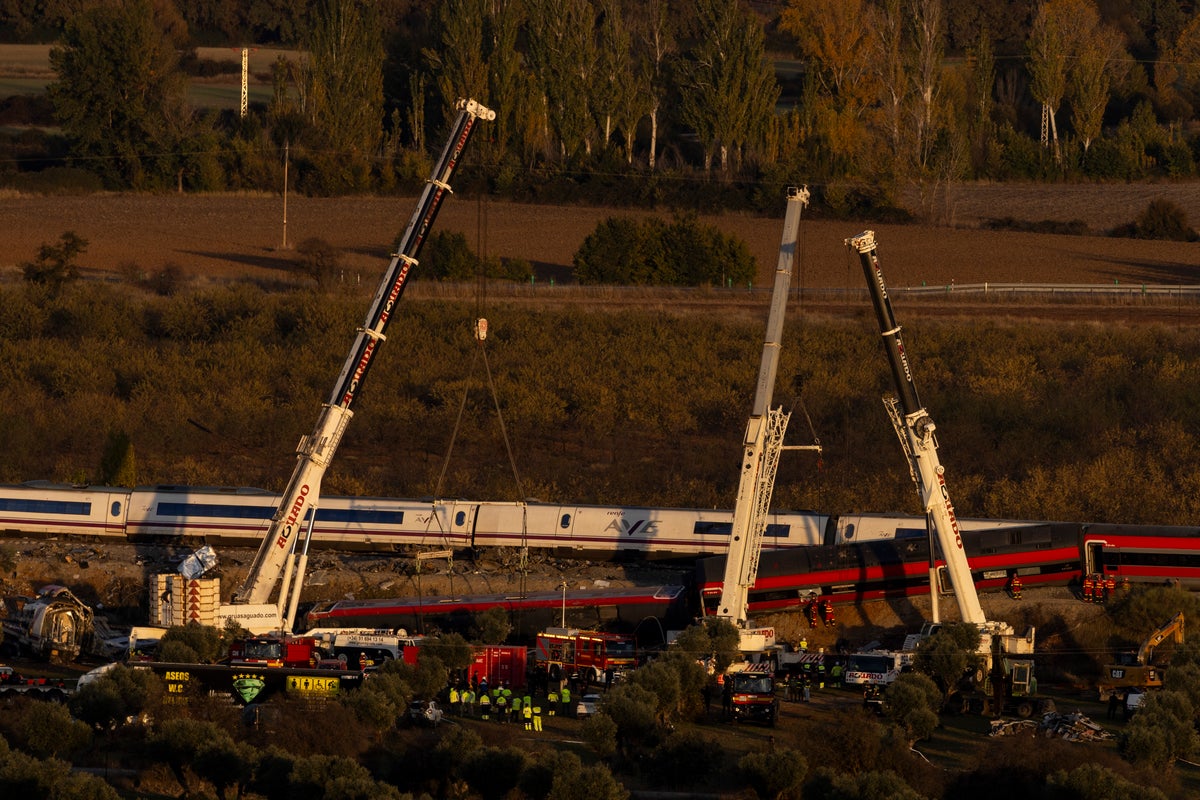
One train smashed into another on Wednesday near the Spanish town of Urda
© Getty
One train smashed into another on Wednesday near the Spanish town of Urda
© Getty