❌

Reading view

“The enemy has changed tactics”: Zaporizhzhia faces record number of Russian FPV drone attacks, hitting public transport 3 times in one day

Municipal bus in Zaporizhzhia hit by a Russian FPV drone, 29 October 2026. Photo: Zaporizhzhia Regional Prosecutor’s Office

Zaporizhzhia experienced a record number of Russian FPV drone attacks on 29 October, injuring 14 people, including a 14-year-old boy, regional authorities said.

Russian forces used FPV drones and multiple-launch rocket systems to attack civilian infrastructure, targeting municipal transport and damaging residential buildings, warehouses, and cars, prosecutors said.

Zaporizhzhia reports record FPV drone attacks

Zaporizhzhia Regional Military Administration head Mykhailo Semikin said Zaporizhzhia had experienced a record number of FPV drone attacks on Thursday. After meeting with military officials, he said the authorities were aware of the situation and relevant services and Ukrainian defenders were responding.

He said Russian forces had “changed their tactics and modified their drones,” adding that Ukrainian military personnel were working on countermeasures to address the new threats.

Semikin urged residents to remain calm, heed air raid alerts, and exercise particular caution.

Russian forces launched a record number of FPV drone attacks on Zaporizhzhia on 29 October, repeatedly targeting civilian public transport.

Drones struck a municipal bus, a minibus, and a trolleybus. Four people were injured in the bus attack alone. Across the city, at least 14… pic.twitter.com/WfemZSh7yr

— Euromaidan Press (@EuromaidanPress) October 29, 2026

Russian drones target municipal transport

The attacks included strikes on a municipal bus, a minibus, and a trolleybus, according to Semikin.

In the morning, a Russian FPV drone struck a municipal bus, injuring four people.

In a separate attack, Russian forces struck 15 vehicles, a warehouse building, and a power line, sparking a fire and damaging a nearby apartment building. Two men, aged 41 and 66, were injured.

At around midday, another FPV drone hit a minibus in central Zaporizhzhia, injuring one person. 

Later, a Russian drone struck a municipal trolleybus, critically injuring a 56-year-old woman and lightly injuring two other women, aged 71 and 66.

Russian attacks on Zaporizhzhia injured two men, aged 41 and 66.

The strikes set four cars and an open area on fire, damaged a warehouse, and damaged four cars and four buses.

📷Ukraine’s State Emergency Service pic.twitter.com/oqRfYvMa7T

— Euromaidan Press (@EuromaidanPress) October 29, 2026

Zaporizhzhia’s proximity to the front line

Zaporizhzhia lies relatively close to the front line in southern Ukraine, leaving the city exposed to Russian attacks with weapons that can be used at shorter ranges, including FPV drones and multiple-launch rocket systems. 

The proximity allows Russian forces to threaten civilian infrastructure more easily without relying solely on long-range missiles or drones.

Prosecutors investigate suspected war crime

The Zaporizhzhia Regional Prosecutor’s Office said it had opened a war crimes investigation. Investigators from the Security Service of Ukraine’s regional directorate are conducting the pretrial investigation.

The casualty count and damage reports were preliminary, and authorities said information was still being updated as the attacks continued.

Russian attacks kill civilians in several Ukrainian cities

Zaporizhzhia was not the only major city hit by Russian attacks on 29 October. In Dnipro, a Russian strike on the railway station killed at least 14 people. 

In Chernihiv, two teenage girls were killed and 23 people injured, including four children. In Kremenchuk, Poltava Oblast, three people were killed and 15 injured, including three children. 

The attacks damaged residential buildings and civilian infrastructure in all three cities.

  •  

Russian Drone Strike Kills 14 at Dnipro Railway Station as Ukraine Faces New Wave of Attacks

A Russian jet-powered drone struck a crowded railway platform in the Ukrainian city of Dnipro on Thursday, killing at least 14 people and injuring 14 others. The attack has renewed questions about the protection of civilian transport infrastructure and Ukraine’s ability to defend its cities against increasingly varied aerial threats.

At least 14 people were killed when a Russian drone struck the main railway station in Dnipro on 29 October, hitting a platform where passengers were waiting beside two trains.

The attack took place at approximately 11am local time, according to Ukrainian officials, and struck an area occupied by a commuter train and a scheduled passenger service.

Ukraine’s state railway operator, Ukrzaliznytsia, said the drone hit the platform where train No. 866, operating between Dnipro and Zaporizhzhia, was standing.

The number of fatalities was subsequently confirmed by Oleksandr Hanzha, head of the Dnipropetrovsk regional military administration.

Fourteen people were also reported injured, including an 11-year-old boy. Six of the wounded were in serious condition, with medical personnel treating multiple shrapnel injuries.

The attack occurred despite an elevated warning of aerial danger.

Ukrzaliznytsia reported that passengers remained on the platform when the drone struck, raising questions about the practical difficulties of evacuating busy railway stations during air-raid alerts.

A Drone Penetrates Ukraine’s Air Defences

According to Ukraine’s Air Force, Russian forces launched four jet-powered attack drones towards Dnipropetrovsk region.

Three were intercepted by Ukrainian air defences, while the fourth struck the railway platform.

The use of jet-powered unmanned aircraft is significant because these systems present different interception challenges from the slower propeller-driven drones frequently used in Russian attacks.

Their speed can reduce the time available for detection, identification and engagement, particularly when an attack is directed towards an urban area with substantial civilian activity.

The circumstances of the Dnipro strike nevertheless require further investigation, including the precise drone model, its flight path and the conditions under which the aircraft penetrated Ukrainian defences.

The railway operator’s account indicates that the platform was crowded when the attack occurred.

Dnipro Mayor Borys Filatov described the incident as a tragedy and emphasised that the victims were ordinary civilians using public transport.

Emergency services, police and medical teams were deployed to the station, where rescuers treated the injured and recovered the bodies of those killed.

Railways Remain Essential to Ukraine

Ukraine’s railway network has retained considerable importance throughout Russia’s full-scale invasion, which began in February 2022.

With civilian air transport severely restricted, trains provide a principal means of travelling between cities and moving people away from areas exposed to military operations.

Rail services also support the movement of humanitarian supplies, commercial goods and essential equipment.

Dnipro is especially important because of its position in central-eastern Ukraine and its transport connections with areas nearer the front line.

The route towards Zaporizhzhia serves a population that has experienced repeated attacks and displacement during the war.

Disruption to railway services therefore affects more than transport schedules. It can interfere with access to employment, medical treatment, family networks and evacuation routes.

Railway infrastructure may also have military logistical functions, but this does not remove the legal protections afforded to civilians and civilian objects under international humanitarian law.

The law requires parties to distinguish between military objectives and civilians, and prohibits indiscriminate attacks.

Whether a particular strike constitutes a violation depends on evidence concerning the target, intended military advantage, precautions taken and foreseeable civilian harm.

Ukrainian authorities have characterised the Dnipro attack as an assault on civilians. Russia had not provided a substantiated explanation for the specific strike in the reporting available on Thursday.

Further Fatalities Across Ukraine

The attack formed part of a wider series of Russian strikes against Ukrainian cities on 29 October.

In Chernihiv, two teenage girls were killed in an attack on a central street, while an additional strike in Kremenchuk killed three people at a residential building.

The incidents brought the reported death toll from these attacks to at least 19.

They occurred as a temporary localised ceasefire around Russian-occupied Oleshky, in Kherson region, continued to permit preparations for humanitarian assistance.

The contrast illustrates the limited geographical scope of the Oleshky arrangement.

Although the ceasefire offers an opportunity to deliver supplies to civilians trapped by the fighting, it does not represent a general cessation of hostilities.

Zelensky Calls for Continued Pressure on Russia

President Volodymyr Zelensky condemned the Dnipro attack and urged Ukraine’s international partners to maintain pressure on Moscow.

He argued that easing sanctions while Russian forces continued striking civilian areas would undermine efforts to secure a reduction in hostilities.

The attack also adds urgency to Ukraine’s continuing requests for air-defence assistance, particularly systems and interceptors capable of addressing multiple categories of aerial threat.

European governments face difficult decisions about supplying additional equipment while maintaining sufficient stocks for their own security requirements.

For Ukraine, the immediate priority remains the treatment of the injured, investigation of the strike and restoration of safe railway operations.

For its international partners, the incident raises a question extending beyond Dnipro: how to protect the civilian infrastructure upon which daily life depends while Russia retains the capacity to launch repeated aerial attacks across the country.

  •  

Russian jet drone hits Dnipro railway platform, killing 14 people next to a Zaporizhzhia-bound train

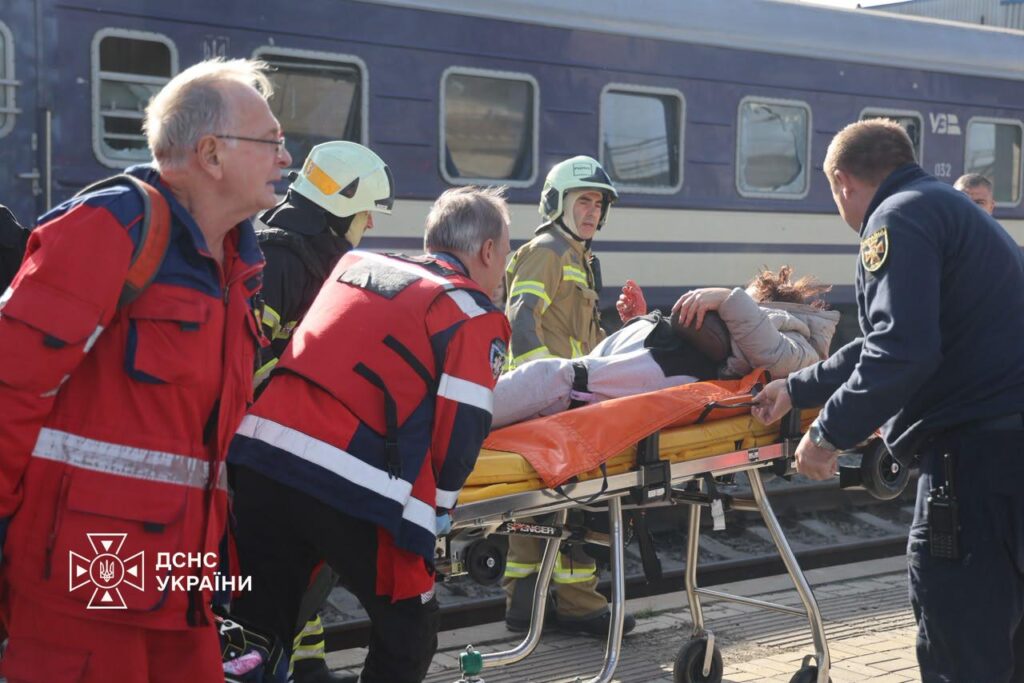
A firefighter with an extinguisher on the smoke-filled platform at Dnipro railway station after the Russian drone strike, with the bodies of those killed blurred, Dnipro, Ukraine, 29 October 2026

A Russian jet-powered drone hit a platform at Dnipro's railway station on 29 October, killing more than a dozen people waiting by a train, Dnipropetrovsk Oblast head Oleksandr Hanzha reported. An air alert was on, but many passengers had not left the platform. The strike came hours after another overnight Russian drone barrage across Ukraine.

Russia's air war on Ukraine leans more and more on jet-powered drones, and Ukraine's air defenses have stopped nearly 60% of the Geran-4 type over the past three months. Rail is among Russia's main targets: by late August, its strikes had damaged 492 locomotives as Moscow tried to cut Ukraine's export corridors, and in September Russia struck a passenger train near the Polish border. Civilians waiting for transport keep paying the price, and this month a Russian bomb killed 30 bus passengers in Kramatorsk.

One drone reached the platform

Around 11:00, Russia sent four jet-powered attack drones toward Dnipropetrovsk Oblast, the Air Force said. Air defenses destroyed three. The fourth hit a platform where a train stood, the state railway company Ukrzaliznytsia said.

By early afternoon, the death toll had reached 14. Another 14 people were wounded, 13 of them in hospital and six in serious condition, Hanzha reported. Among them is an 11-year-old boy. A 40-year-old man lost both legs.

Rescuers on a platform at Dnipro railway station beside an electric train after a Russian jet-powered drone strike, Dnipro, Ukraine, 29 October 2026
Rescuers on a platform at Dnipro railway station beside an electric train after a Russian jet-powered drone strike, Dnipro, Ukraine, 29 October 2026. Photo: State Emergency Service of Ukraine

Many stayed on the platform despite the alert

Ukrzaliznytsia's monitoring team flagged heightened danger as the jet drone approached, and train crews and the station got orders to halt traffic, the company said. An evacuation was announced on the electric train to Zaporizhzhia more than 10 minutes before the strike. The driver's assistant walked through every car, and announcements told passengers to move at least 200 meters away.

“Unfortunately, despite all this, many people were in the immediate vicinity of the train at the fatal moment of the strike, hence such a significant number of dead and wounded,” Ukrzaliznytsia wrote.

Rescuers evacuating an injured civilian from a platform at Dnipro railway station beside an electric train after a Russian jet-powered drone strike, Dnipro, Ukraine, 29 October 2026
Rescuers evacuating an injured civilian from a platform at Dnipro railway station beside an electric train after a Russian jet-powered drone strike, Dnipro, Ukraine, 29 October 2026. Photo: State Emergency Service of Ukraine

Kyiv ties the strike to sanctions relief

Ukrainian President Volodymyr Zelenskyy linked the attack to the lifting of some sanctions on Russia. “How many such terrorist strikes Russia has carried out against our people since sanctions were lifted from some Russian oligarchs and energy, instead of going for de-escalation,” he wrote. Sanctions on Moscow and its war machine must not weaken while the war goes on, he added, calling for new and stronger sanctions steps from the EU, the US, and the G7.

russia’s sanctioned top diplomat heads campaign against sanctions its war · post russian foreign minister sergei lavrov addresses un general assembly new york united states 24 2022 photo/cia pak un7955720
Explore further

Russia’s sanctioned top diplomat heads to the US to campaign against the sanctions on its war

Overnight, Russia launched 112 drones

Overnight on 29 October, Russia attacked Ukraine with 112 drones, 40 of them jet-powered, the Air Force reported. Air defenses downed or suppressed 97, but drones hit seven locations.

A man stands beside a shrapnel-marked electric train at Dnipro railway station after the Russian drone strike, with bags and the blurred bodies of victims on the platform, Dnipro, Ukraine, 29 October 2026
A man stands beside a shrapnel-marked electric train at Dnipro railway station after the Russian drone strike, with bags and the blurred bodies of victims on the platform, Dnipro, Ukraine, 29 October 2026. Photo: State Emergency Service of Ukraine

In Zaporizhzhia, a Russian FPV drone hit a municipal bus in the morning, wounding a woman and a man, Zaporizhzhia Oblast head Ivan Fedorov reported. Two later Russian strikes on the city wounded two more men and damaged 15 vehicles. In Bilenke in Zaporizhzhia Oblast, Russian attacks killed a 49-year-old man.

  •  

Guided bombs on Izium, strikes on Zaporizhzhia: Russian overnight attacks wound six, later strikes kill three

zaporizhzhia strike

Russia attacked Ukraine with 140 drones, including Shahed and Gerbera attack drones and Parodiya decoys, and four missiles overnight on 26 October, the Ukrainian Air Force reported. The missiles were one Kh-31P anti-radiation missile and three Kh-59/69 air-launched guided missiles, launched from occupied parts of Zaporizhzhia and Kherson oblasts.

Jet-powered Shaheds are becoming a larger part of Russia’s aerial campaign, challenging Ukraine’s air defenses and prompting efforts to develop faster interceptors. Alongside guided bomb attacks and strikes on energy infrastructure, these attacks add to the pressure on Ukraine’s defenses as winter approaches, and Ukraine says Russia has a plan for it.

Air defenses downed or suppressed 112 drones, including 56 of the 70 jet-powered Shaheds, and three Kh-59/69 missiles, according to preliminary Air Force figures. Hits were recorded at 15 locations, and debris fell at four more.

Four wounded in Zaporizhzhia

Russian strikes on Zaporizhzhia overnight wounded two women aged 22 and 30, and two men aged 40 and 61, the State Emergency Service (DSNS) said. The strikes damaged the windows of a hotel and two buses, a private house, and four outbuildings, and three cars caught fire. The oblast administration had first reported one wounded.

Russian strikes injured 8 people in Ukraine overnight on 26 October

Russia injured 2 women, aged 22 and 30, and 2 men, aged 40 and 61, in Zaporizhzhia overnight, Ukraine's State Emergency Service said. Russia also shattered windows in a hotel and 2 buses and damaged a house, and… pic.twitter.com/42bvnHt0qk

— Euromaidan Press (@EuromaidanPress) October 26, 2026

Later in the morning, Russian forces hit a shopping center building that had already closed, the administration said. The building caught fire. According to preliminary information, no one was hurt.

Guided bombs hit two districts of Izium

At about 02:40 on 26 October, Russian forces struck two districts of Izium in Kharkiv Oblast with guided aerial bombs, and three people needed medical help, the city military administration said, as Suspilne Kharkiv reported. More than 10 private houses and a youth sports school were damaged, and several streets lost power and internet.

Russia struck a burning Odesa Oblast plant twice more as firefighters worked

Overnight, a Russian attack destroyed an industrial enterprise in Odesa Oblast and set it on fire, the DSNS reported. As firefighters put out the blaze, Russian forces struck the site twice more. The rescuers were in shelter and were not hurt, but fire equipment was damaged. At another address, four garages were damaged and a car was destroyed. The oblast administration said there were no casualties.

Russia struck a burning Odesa Oblast plant twice more as firefighters worked on 26 October 2026
Russia struck a burning Odesa Oblast plant twice more as firefighters worked on 26 October 2026. Photo: State Emergency Service of Ukraine

Energy facility hit in Khmelnytskyi Oblast

On the evening of 25 October, a Russian attack damaged an energy facility in Kamianets-Podilskyi district of Khmelnytskyi Oblast, causing emergency power outages, the oblast administration said. Windows were also damaged in two residential buildings. No casualties were reported.

Meanwhile, Russian drones attacked the Nikopol district of Dnipropetrovsk Oblast more than 10 times overnight, damaging a high-rise and an administrative building, the oblast administration reported. No one was hurt. Mykolaiv Oblast also came under Shahed attack overnight, with no casualties, according to its administration.

The attack continued into the day. On the morning of 26 October, a Russian strike hit a civilian infrastructure site in Vinnytsia, the oblast administration said. Preliminary reports showed no casualties.

Strikes on 26 October kill three in Donetsk and Dnipropetrovsk oblasts

On 26 October, Russian aircraft dropped four guided bombs on homes and shops in the center of Yasnohirka near Kramatorsk, killing one person and wounding 10, the DSNS said. Among the wounded is a 13-year-old girl, Donetsk oblast head Vadym Filashkin said. In Sloviansk, a Russian airstrike destroyed a private house, and rescuers recovered the body of its owner, the DSNS said.

A Russian drone strike on Pavlohrad in Dnipropetrovsk Oblast killed one person and injured seven, including two children, the DSNS said. The injured include two 10-year-old girls, the oblast administration said.

Six hurt in Kharkiv Oblast over the past day

Over the past 24 hours, Russian attacks hurt six people in Kharkiv Oblast, oblast head Oleh Syniehubov said. In Kharkiv, a 60-year-old man and a 14-year-old boy suffered acute stress reactions. Two women aged 51 and 71 were wounded in Krasnopavlivka. His count lists two wounded men in Izium, aged 72 and 52, while the city administration says three people there needed medical help. Russian attacks also set fire to a house in Kotliary, a production building in Vilshany, a building in Derhachi, a house in Mykolaivka, and a site in Kharkiv’s Kholodnohirskyi district, the DSNS reported.

A damaged truck and a crater in Kharkiv Oblast after Russian attacks on 26 October 2026
A damaged truck and a crater in Kharkiv Oblast after Russian attacks on 26 October 2026. Photo: Kharkiv Oblast Military Administration

In Sumy Oblast, Russian attacks over the past day injured five people, the National Police said, including two women aged 76 and 56 hit by a drone in Sumy community.

On 25 October: two killed in Kherson and Donetsk oblasts

In Chernihiv Oblast, Russian attacks on 25 October injured a man at a hangar in Pryluky district and a woman at a grain store in the Novhorod-Siverskyi area, the oblast administration said. Drones also damaged a school in a village of Koriukivka community, and a strike destroyed 700 metric tons of potatoes at an enterprise in Mena community, the administration said. A large warehouse fire broke out in Koriukivka district, the DSNS said.

In Kherson Oblast, Russian attacks killed one person and wounded eight in the 24 hours to 06:00 on 26 October, the oblast administration reported. On 25 October, a Russian drone strike on a minibus in Kherson’s Central district killed one person and wounded six, the administration said after one more man sought medical help. Police said the minibus was hit by an FPV drone.

In Donetsk Oblast, Russian forces killed one person in Kramatorsk and wounded 10 across the oblast on 25 October, Filashkin said. Russia hit Kramatorsk with drones and six KAB-250 guided bombs, and 18 hits on Sloviansk wounded four, police said.

On 25 October, a Russian attack on Synelnykove district of Dnipropetrovsk Oblast sent a 30-year-old man to hospital, the oblast administration said. In Vinnytsia, the number of people injured in the Russian attack on the morning of 25 October rose to seven, two of them hospitalized, the DSNS said. In Uman, an 86-year-old woman burned in the Russian attack on 21 October died in hospital, the Cherkasy oblast administration said.

  •  

Fog blinds Ukrainian drones. Russia resumes mechanized assaults in the south after months-long pause, military officials say

Ukrainian soldiers. Source: 95th Separate Airborne Assault Polissya Brigade

Russian forces are preparing to resume mechanized assaults in southern Ukraine after a pause of several months and are moving armored vehicles toward areas where they plan to launch offensives, Anastasiia Shevchenko, deputy spokesperson for the Southern Forces Grouping, told Ukrinform on 22 October. The Huliaipole axis remains the hottest in the Southern grouping’s zone, with 10 to 20 combat engagements reported on an average day, she said.

On the Huliaipole axis, one of Russia’s largest force groupings is fighting Ukrainian forces, comprising units from several Russian combined-arms armies, the spokesperson says. Over the past week, as the weather worsened, Russian forces began local assaults there with infantry, motorcycles, and armored vehicles, seeking to break through toward Zaporizhzhia and blockade the city, Ukraine’s 7th Air Assault Corps reported, adding that the area is one of Russia’s key priorities in southern Ukraine. Russia has used fog this way before: last November, Russian troops moved under its cover to avoid detection by Ukrainian drones as they advanced on Huliaipole, the Institute for the Study of War assessed.

Russian forces have abandoned large-scale assaults across a broad front and are attempting to infiltrate Ukrainian positions in small groups. They periodically use motorcycles and quad bikes for assaults, Shevchenko said, adding that these vehicles are fast and maneuverable.

However, Russian forces should not expect to advance unimpeded, the spokesperson noted. Ukrainian units control Russian supply routes and systematically detect and strike Russian personnel and equipment while they are still moving toward their launch positions, she added.

“Specifically, speaking in numbers, since the beginning of October alone, units of the Southern Forces Grouping (Forces) have destroyed more than 3,000 occupiers and 1,300 pieces of weapons and military equipment. Thus, the enemy is suffering significant losses in the operational zone of the Southern Forces Grouping (Forces),” the spokesperson concluded.

Ukrainian drones disrupt Russian logistics

Russian forces had stopped using military vehicles because Ukraine’s unmanned systems forces controlled their logistics, Shevchenko said in comments to Ukrinform on 16 September. Ukrainian drones spotted Russian troops and equipment in time and struck them mostly on their routes of advance, she said.

Ukrainian air strikes destroyed bridges near Polohy in Zaporizhzhia Oblast, complicating Russian supply operations along the Huliaipole axis, Ukraine’s 7th Air Assault Corps reported on 21 September. Russian forces had used these bridges to move personnel, heavy equipment, and ammunition for their offensive toward Orikhiv. Disruptions to logistics have forced Russian units to rely more on motorcycles, which are more vulnerable to Ukrainian strikes, the corps said.

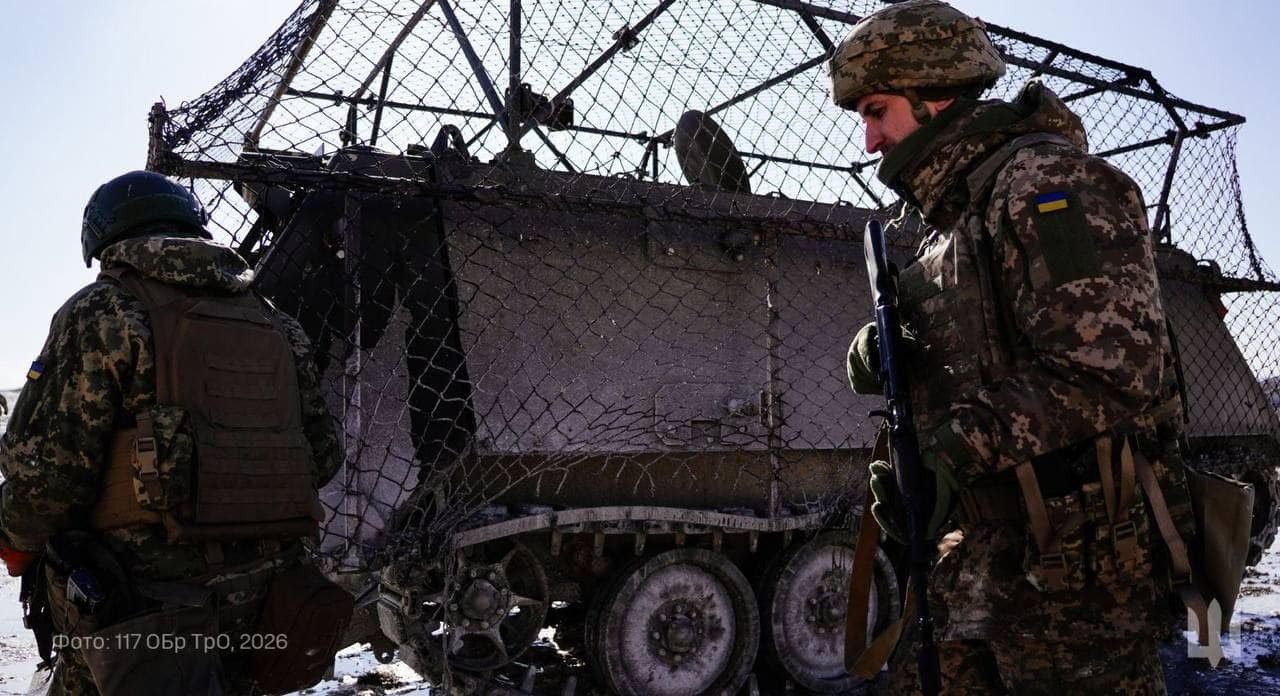
before russia's all-out war ukraine imported almost weapons four years later buys more than any country earth · post ukrainian soldiers 117th separate territorial defense brigade beside armored vehicle fitted
Explore further

Ukraine timed its Huliaipole operation around the weather — and it worked. Here’s why that won’t happen again soon

Russian forces are also expected to use fog and rain as cover for assaults, Mykola Zinko, deputy commander of the unmanned systems battalion of the 5th Assault Brigade, said on 19 October. Russia has brought up reserves, and its heavy equipment will move out under the fog, he said.

  •  

Russians try to sneak toward Zaporizhzhia through the dried-up Kakhovka Reservoir. Ukrainian intelligence captures three

Ukrainian Bratstvo Battalion fighters capture a Russian serviceman on the dried-up bed of the Kakhovka Reservoir during counter-sabotage operations. October 2026. Screenshot: Defense Intelligence of Ukraine/Telegram

Fighters of the Bratstvo Battalion, part of the Timur Special Unit of Ukraine’s military intelligence agency (HUR), captured three Russian servicemen and gave first aid to one of them, HUR reported on 19 October. They also found and destroyed Russian sabotage groups, HUR said, adding that counter-sabotage operations in the Zaporizhzhia direction are ongoing.

Russian forces have spent months trying to get closer to Zaporizhzhia, one of Ukraine’s largest cities. They may try to use the dried-up bed of the Kakhovka Reservoir to infiltrate north toward it as autumn fog and dense vegetation set in, the Institute for the Study of War reported on 26 September. Ukrainian troops are now clearing the area of Russian saboteurs trying to get into the rear of Ukrainian positions, according to HUR.

HUR’s video shows the fighting and the captures, with one dead Russian soldier blurred. At the end, a captured Russian says two of the three men in his group were killed by a “Baba Yaga,” the nickname Russian troops use for Ukraine’s heavy bomber drones.

HUR described what the Russian groups are trying to do:

“Using small sabotage groups, the enemy is attempting to penetrate deep into the rear positions of Ukraine’s Defense Forces, build up forces to destabilize the situation, disrupt logistics, and neutralize Ukrainian defenders’ combat crews.”

Russia seeks to bring the front closer to Zaporizhzhia

Russia’s objective in the Zaporizhzhia direction is to advance within artillery range of the city, hold forward positions, and protect its rear from Ukrainian strikes, the Institute for the Study of War noted.

In January, Russian forces were trying to capture Stepnohirsk and advance along the shore of the former Kakhovka Reservoir toward Zaporizhzhia. Taking the settlement would let Russian troops place long-range artillery or fiber-optic drones there to strike the city’s outskirts, Southern Defense Forces spokesperson Vladyslav Voloshyn told Ukrinform on 14 January.

Site of a Russian drone strike on a Zaporizhzhia residential area, 20 January 2026. Photo: Zaporizhzhia Regional Military Administration
Explore further

Russia drained the Kakhovka Reservoir. Now it hides in the dry bed to creep toward Zaporizhzhia

On 22 September, Anastasiia Shevchenko, spokesperson for the Southern Forces Group, said there were no signs of preparations for a direct offensive on Zaporizhzhia and that Russian forces lacked the troops and means to advance directly toward the city.

Dense vegetation and limited visibility: combat on the reservoir bed

The Kakhovka Reservoir was a vast artificial body of water on the Dnipro River in southern Ukraine that supplied water to millions of people, as well as to agriculture and industry. On 6 June 2023, Russian forces blew up the Kakhovka Hydroelectric Power Plant, the Southern Operational Command reported.

The bed of the Kakhovka Reservoir has nearly dried out after the dam was destroyed on 6 June 2023.
The bed of the Kakhovka Reservoir has nearly dried out after the dam was destroyed on 6 June 2023. Photo: Maksym Pavlovsky/Dumska

After the dam was destroyed, the bed of the former reservoir quickly became overgrown with willows, poplars, and shrubs, creating a new battlefield. Ukrainian troops have fought there before.

In November 2025, fighters from the same Bratstvo unit carried out a reconnaissance and sabotage operation 7 kilometers from the shoreline of the former reservoir, HUR said. They found and eliminated Russian troops, then raised the Ukrainian flag over the islands there and took control of the area.

In April, the Bratstvo unit’s chief of staff, who goes by the call sign “Dyviziia,” described the conditions on an earlier raid across the reservoir bed:

“You’re just constantly moving through these thickets, with no way to figure out which direction to go. You can literally see everything just two meters ahead of you.”

  •  

Ukraine has liberated more territory than Russia has captured since the beginning of fall—a trend that has persisted throughout 2026, Zelenskyy says

ukraine has liberated more territory than russia captured since beginning fall—a trend persisted throughout 2026 zelenskyy says · post ukrainian president volodymyr during evening address 1 image_2026-09-01_23-48-46 news reports

Ukrainian forces have liberated more territory since the beginning of the fall than Russian troops have captured during the same period. This trend has persisted throughout 2026, Ukrainian President Volodymyr Zelenskyy said in his 18 October address. He also reported that Dobropillia, Kostiantynivka, and five other settlements remain under Ukrainian control.

Russia systematically exaggerates its battlefield gains. A recent briefing by Valery Gerasimov, chief of the General Staff of the Russian Armed Forces, in which he claimed that Russian forces had captured 92 settlements since the beginning of September, as well as Kostiantynivka and Dobropillia, and advanced to within 5 kilometers of Zaporizhzhia, was based on “outright lies, manipulation, and exaggerations,” Ukrainian General Staff spokesperson Andrii Kovaliov said.

Ukraine also continues to defend areas near Kramatorsk, Zelenskyy said. He dismissed Russian claims about Zaporizhzhia.

“We are destroying Russians 20 kilometers from Zaporizhzhia, not five, as someone in Russia is fantasizing to Putin,” Zelenskyy said.

Ukrainian forces continue to hold back Russian assaults and destroy groups of occupying troops attempting to infiltrate Dobropillia, the president said. The Defense Forces are also defending positions elsewhere in Donetsk Oblast and in Kharkiv and Zaporizhzhia oblasts.

Zaporizhzhia axis: Russians seek to move artillery closer to the city

Russia seeks to advance on the Zaporizhzhia axis to bring the regional capital within range of its tube artillery, hold forward positions, and protect rear areas from Ukrainian strikes, the Institute for the Study of War (ISW) said on 18 October.

The aftermath of a Russian strike on Zaporizhzhia on 10 October 2026
The aftermath of a Russian strike on Zaporizhzhia on 10 October 2026. Photo: Ukraine's National Police

Maksym Kravchuk, spokesperson for Ukraine's Southern Group of Forces, refuted Gerasimov’s claims that Russian forces had captured Malokaterynivka, located south of Zaporizhzhia, stressing that the settlement remains under Ukrainian control, the Center for Countering Disinformation said on 18 October. Ukrainian troops recorded a video directly from Malokaterynivka to confirm this.

As of 18 October, Russian forces had advanced or infiltrated to within 24 kilometers of Zaporizhzhia, ISW said.

Dobropillia remains under Ukrainian control despite Russian assaults

Dobropillia is now a fortress anchoring Ukrainian positions along the highway leading northeast toward Kramatorsk. Russia first tried to take Dobropillia in August 2025 and is now trying again.

Russia is redeploying reinforcements to the Dobropillia axis and continues to send assault infantry through the village of Nove Shakhove despite heavy losses. Russian command will likely try to encircle or at least envelop Dobropillia and cut off Ukrainian supply routes from the direction of Bilozerske, Ukrainian military analyst Kostiantyn Mashovets wrote on 9 October.

Mashovets sees the push as the southern flank of a Russian effort to envelop the whole Sloviansk–Kramatorsk urban area.

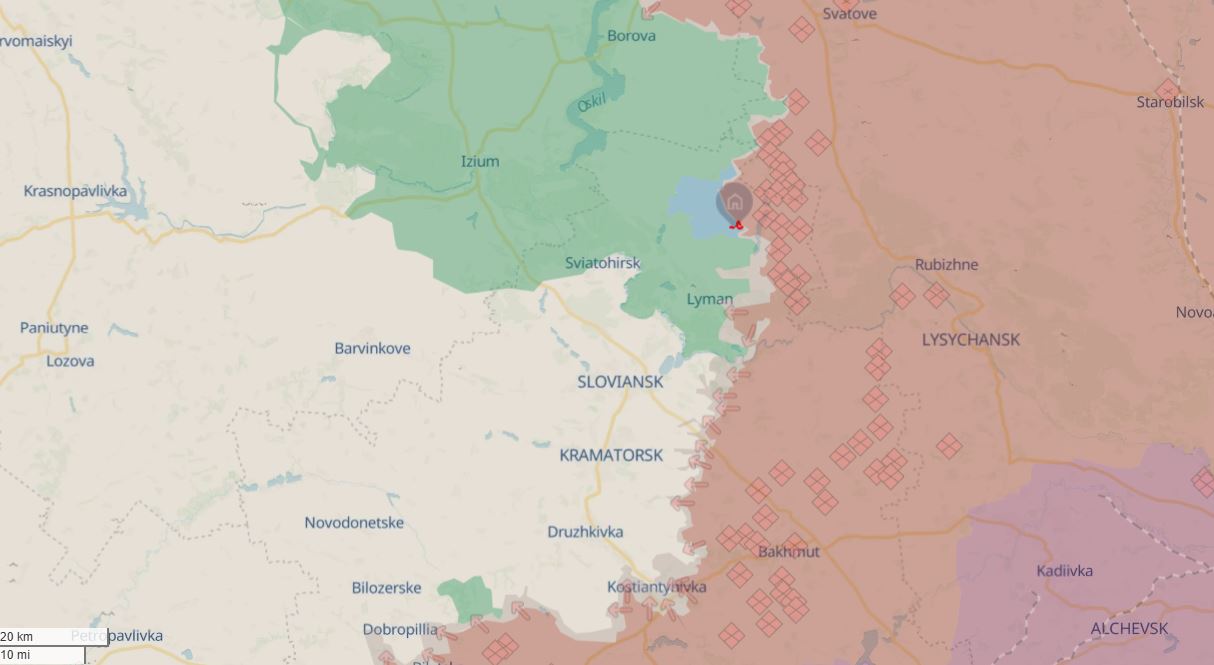
ukraine retook kolodiazi north lyman its drones hit 200-plus russian vehicles operation vivaldi’s last phase commander says · post northern donetsk oblast neighboring areas territory during vivaldi blue 2022 green
Explore further

Ukraine retook Kolodiazi north of Lyman as its drones hit 200-plus Russian vehicles in Operation Vivaldi’s last phase, Ukrainian drone officer says

Dobropillia remains under Ukrainian control, Zelenskyy said. On 18 October, footage located by analysts showed a Russian soldier hoisting a flag in the town's southeast after an infiltration, yet ISW has found no sign that Russian troops have dug in there.

Russia claimed to have captured Kostiantynivka, but ISW found no evidence

Ukrainian troops in and around Kostiantynivka are stopping Russia from locking in its gains in the city or pushing on toward Druzhkivka and Kramatorsk, ISW said on 17 October.

Russian officials claimed that capturing Kostiantynivka was an important step toward establishing control over the Sloviansk–Druzhkivka–Kramatorsk urban agglomeration and the entire Donetsk Oblast, ISW said in August. The Kremlin also claimed that Russian forces had captured the city as early as 5 July, the institute added.

Ruins of a street in Kostiantynivka, Donetsk Oblast, 9 April 2026
Ruins of a street in Kostiantynivka, Donetsk Oblast, 9 April 2026. Photo: UA Land Forces

A Russian military blogger claimed that Russian forces had full control over Kostiantynivka, but ISW found no evidence to support this claim, the institute said in its 16 October assessment. Russian troops had only infiltrated parts of southern and central Kostiantynivka without consolidating positions, and there was no evidence of their presence in its northern part, ISW added.

  •  

Russia hit Ukraine’s energy 76 times during a US-declared truce—and tens of thousands lost power overnight. Civilians killed and injured

russia hit ukraine’s energy 76 times during us-declared truce—and tens thousands lost power overnight civilians killed injured · post damage after russian strike detached houses poltava 17 2026 victim ukraine

Russia has kept striking Ukraine’s energy sector throughout the week since US President Donald Trump announced an energy ceasefire, Ukrainian President Volodymyr Zelenskyy said on 18 October. From overnight into Sunday, Russian drones and a ballistic missile hit substations, homes, and industrial sites from Odesa to Volyn. They killed civilians and left tens of thousands of families without power.

Russia fights along the front line while hitting cities and the grid behind it with drones, missiles, and glide bombs. Ukraine says Moscow plans up to 1,000 such munitions against 60 key infrastructure sites this winter, and jet-powered drones partly free it to concentrate missiles on fewer targets, the Institute for the Study of War assessed. With Graham Act penalties on hold and US sanctions on Russian diesel suspended, Russia faces no new US cost for its strikes on Ukraine’s grid. Protecting and restoring the grid falls to Ukraine’s air defenses and repair crews.

Russia hit energy sites 76 times in a week

Zelenskyy counted 76 deliberate Russian strikes on energy and oil-and-gas facilities since Trump’s announcement. Overnight, Russia hit substations in Vinnytsia, Zhytomyr, Khmelnytskyi, and Odesa oblasts, he said. In the past week, Russia fired almost 2,700 attack drones, 1,700 aerial bombs, and 66 missiles, most of them ballistic, mainly to cause a blackout. His message was aimed at Washington.

“America must see that Russia is not taking steps in return for the lifting of sanctions or deals. On the contrary, they take every signal that they can make money as proof that their bet on war is working and they can keep fighting,” Zelenskyy wrote.

US President Donald Trump signs the Lindsey O. Graham Sanctioning Russia and Iran Act in the Oval Office, 18 September 2026
Explore further

22 House lawmakers press Trump to implement Russia sanctions law. Diesel deal draws bipartisan backlash

Overnight, Russia launched one Iskander-M ballistic missile and 180 Shahed-type drones, 26 of them jet-powered, the Air Force reported. Air defenses downed or suppressed 152 drones, but strikes hit 20 locations.

russia hit ukraine’s energy 76 times during us-declared truce—and tens thousands lost power overnight · post rescuers site russian strike residential area zaporizhzhia 18 2026 zapo ukraine news ukrainian reports
Rescuers at the site of a Russian strike on a residential area of Zaporizhzhia, 18 October 2026. Photo: State Emergency Service of Ukraine

Power cuts from Odesa to Ternopil

Strikes left about 24,000 consumers in Odesa Oblast without power, oblast head Oleh Kiper said. In Vinnytsia Oblast, the attack damaged critical infrastructure and forced emergency outages, oblast head Natalia Zabolotna wrote. Drones hit three energy facilities in Ternopil Oblast, one of them for the second time, and cut power to some consumers, oblast head Taras Pastukh said.

Civilians killed and injured

A Russian strike on Zaporizhzhia killed a 27-year-old woman and injured two others, including a 16-year-old, the State Emergency Service reported. In Poltava, an evening attack killed one person, injured four, and damaged 10 detached houses, city council secretary Kateryna Yamshchykova said.

The aftermath of a Russian strike on Zaporizhzhia on 10 October 2026
Explore further

Five Russian bombs kill 17 in Ukraine’s Zaporizhzhia next day after Trump lets Russia ship first 300,000 tonnes of its diesel

A drone hit a high-rise in Odesa and set its roof on fire. A 13-year-old girl was hurt, city military administration head Serhii Lysak said, and Kiper put the number of injured at two.

In Dnipropetrovsk Oblast, Russian drones and artillery injured three people, oblast head Oleksandr Hanzha said. In Donetsk Oblast, Russian attacks killed seven civilians on Saturday, six of them in Sloviansk, oblast head Vadym Filashkin reported.

russia hit ukraine’s energy 76 times during us-declared truce—and tens thousands lost power overnight · post fire roof high-rise apartment building after russian drone strike odesa 18 2026 ukraine news
Fire on the roof of a high-rise apartment building after a Russian drone strike in Odesa, 18 October 2026. Photo: Odesa City Military Administration

Fires in the west, alerts across the border

A morning drone strike set warehouse and production buildings ablaze at an enterprise in Manevychi, Volyn Oblast, oblast head Roman Romaniuk said. With heavy smoke blowing toward the town, Romaniuk urged residents to stay indoors, shut windows and doors, and switch off ventilation. A repeat strike set an enterprise in the district on fire again, the State Emergency Service said, adding that air tests found no dangerous concentrations outside the site. In Lviv Oblast, drone debris damaged a logistics warehouse and two houses, oblast head Maksym Kozytskyi said.

russia hit ukraine’s energy 76 times during us-declared truce—and tens thousands lost power overnight · post fire enterprise manevychi volyn oblast after russian drone strike 18 2026 manevich ukraine news
Fire at an enterprise in Manevychi, Volyn Oblast, after a Russian drone strike, 18 October 2026. Photo: Volyn Oblast Military Administration

Polish military aircraft operated in Poland’s airspace twice during the attack, as the Government Security Centre warned residents of Lublin Voivodeship and later alerted Subcarpathian Voivodeship. In Lithuania, NATO jets failed to identify an object that apparently entered from Poland, Defense Minister Robertas Kaunas said.

A ceasefire Moscow never confirmed

Trump announced the energy ceasefire on 11 October, news that surprised Zelenskyy. A White House official said Russia was still weighing it. Hours later, Russia hit a Kharkiv power plant, and on 14 October it fired 39 ballistic missiles at the grid. Then Trump waived Graham Act penalties on buyers of Russian oil, and Secretary of State Marco Rubio said the administration wants 60 days to weigh the economic effects.

  •  

Russian Air Strikes Kill 20 in Zaporizhzhia, Including Three Children, as Rescuers Search Rubble

At least 30 people have been injured after Russian guided aerial bombs struck residential buildings in the Ukrainian city of Zaporizhzhia. The fate of several residents remains unknown as emergency workers continue searching collapsed apartment blocks.

At least 20 civilians, including three children, have been killed in Russian air strikes on the southern Ukrainian city of Zaporizhzhia on Saturday morning, 10 October, according to regional authorities. Rescue workers are continuing to search the ruins of residential buildings, with several people still unaccounted for.

The death toll rose from eight to 30 as emergency crews recovered more victims. The Zaporizhzhia regional military administration confirmed that three children were among those killed, while earlier reports recorded 16 injured, including three children. Two of the wounded were in a serious condition.

Authorities had previously reported that 12 people remained missing, although they did not provide a revised figure after the death toll increased. Rescue operations continued amid concerns that further victims could be trapped beneath collapsed concrete and other debris.

Apartment Buildings Destroyed by Guided Bombs

Russian forces launched the attack shortly before dawn, using guided aerial bombs against residential areas of Zaporizhzhia. According to the regional administration’s preliminary assessment, one five-storey apartment building suffered a direct hit and was destroyed, while part of another residential block collapsed.

The attack damaged at least 26 residential buildings in the Shevchenkivskyi and Voznesenivskyi districts, comprising 23 apartment blocks and three private houses. Three buildings sustained particularly extensive damage, while non-residential properties were also affected.

Firefighters, police officers and medical personnel were deployed to the affected neighbourhoods, supported by municipal workers and local residents. Emergency crews continued removing debris and examining unstable structures while officials assessed the extent of the destruction.

The Ukrainian National Police said that officers were documenting the consequences of the attack, including damage to civilian infrastructure. Investigators were also recording evidence for possible war crimes proceedings.

Search Continues as Casualty Figures Rise

The scale of the destruction has complicated efforts to establish the number of victims. The initial casualty figures increased repeatedly as rescuers gained access to damaged buildings and recovered bodies.

Earlier in the morning, authorities reported four deaths. The figure subsequently rose to seven, then eight, before reaching 11 shortly after midday. The number of injured also increased as information emerged from hospitals and emergency services.

At 10.15am local time, 16 people were confirmed wounded. Three were children, while two patients were described as seriously injured. The regional administration said most of the remaining casualties were in a condition of moderate severity.

Officials warned that the casualty figures could change as operations continued. The authorities had not established how many of those initially reported missing might still be trapped in the wreckage, and the recovery of additional bodies had not been accompanied by a revised missing-person count.

Zaporizhzhia Faces Continued Russian Air Attacks

Zaporizhzhia, an industrial city in south-eastern Ukraine, has remained exposed to Russian aerial attacks throughout the full-scale invasion. Its proximity to Russian-held territory in the surrounding region leaves residential districts vulnerable to aircraft-launched weapons.

Guided aerial bombs present a particular challenge for Ukrainian air defences. Unlike conventional unguided bombs, they can be fitted with glide and guidance systems allowing Russian aircraft to release them from considerable distances. Their substantial explosive payloads can cause extensive structural damage when they strike apartment buildings.

Saturday’s attack comes only three days after Russia launched another large-scale assault across Ukraine, targeting energy infrastructure and residential areas. As EU Today reported on 7 October, that operation killed at least 11 people and caused damage in several Ukrainian cities, including Zaporizhzhia.

The latest fatalities also follow earlier attacks on civilian facilities in the city. In February, Russian drones struck a maternity hospital in Zaporizhzhia, causing a fire and injuring patients.

The repeated strikes have placed continuing pressure on the city’s emergency services, which must respond to new attacks while repairing damage to residential buildings and public infrastructure.

Day of Mourning Declared

The Zaporizhzhia authorities have declared Sunday, 11 October, a day of mourning for those killed in Saturday’s bombardment. The announcement followed confirmation that the death toll had reached 11, including three children.

The Russian attack has also renewed attention to the vulnerability of densely populated urban areas to guided aerial bombs. Under international humanitarian law, deliberate attacks against civilians and indiscriminate attacks are prohibited, while all parties must distinguish between military objectives and civilian objects.

Ukrainian investigators are continuing to document the damage and civilian casualties. The precise circumstances of each impact, including the intended targets, have not yet been independently established.

For the families awaiting news of missing relatives, the immediate priority remains the search beneath the destroyed buildings. As of the latest available information on Saturday, rescue workers were still operating at the sites, and the authorities had warned that the number of dead could rise further.

  •  
❌