 Login

‘American Horror Story’ Finale: Paul Anthony Kelly on the Season 13 Ending and Whether He’ll Return
The 'Love Story' star speaks with THR about playing young Mr. Nas and his reaction to this season's conclusion: "I was flabbergasted."


First-ever revival of Aaron Sorkin’s military courtroom drama has opened on Broadway
© Emilio Madrid
First-ever revival of Aaron Sorkin’s military courtroom drama has opened on Broadway
© Emilio Madrid
Whether he was playing a stoic starship captain in ‘Star Trek’ or a telepathic mentor figure in the ‘X-Men’ franchise, Stewart was always able to imbue his characters with depth and humanity, writes Kevin E G Perry

© Paramount Pictures
Whether he was playing a stoic starship captain in ‘Star Trek’ or a telepathic mentor figure in the ‘X-Men’ franchise, Stewart was always able to imbue his characters with depth and humanity, writes Kevin E G Perry
© Paramount Pictures
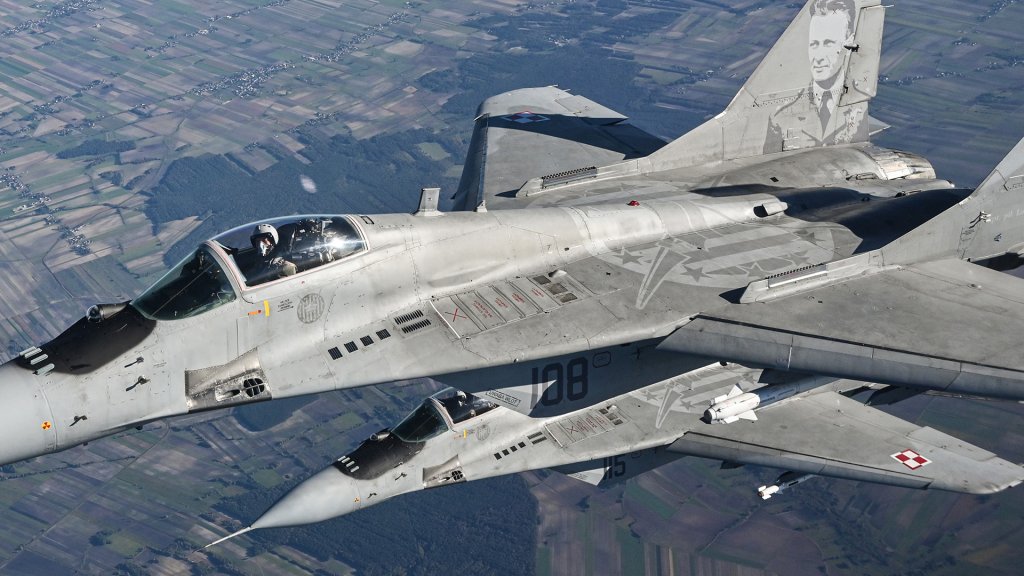
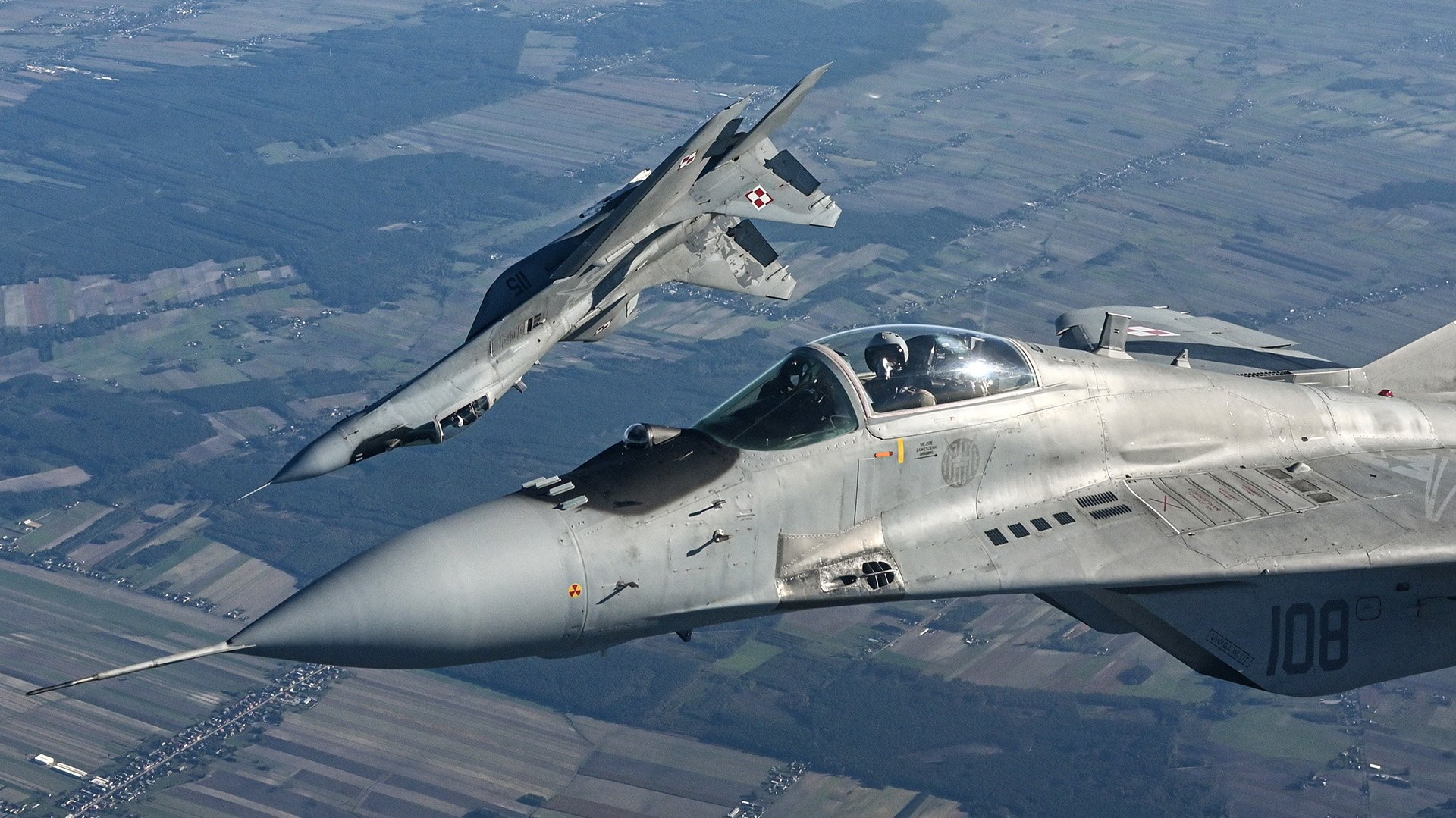
In a key indication of improving ties between Poland and Ukraine, Warsaw has reportedly agreed to provide two additional MiG-29 Fulcrum fighters, badly needed 20x102mm rounds for Ukrainian Air Force F-16s and artillery shells. Relations between the two countries soured this summer over a political spat between their respective leaders, however they appear to be restoring once-close ties.
The aircraft transfer will occur “in the near future,” Lt. Gen. Dariusz Łukowski, director of the Strategy and Defense Planning Department at the Polish Ministry of National Defense, told the Polish Rzeczpospolita (Rz) media outlet. “The decision has been made, and two MiG-29s will be handed over.”
Of the two Fulcrums, one has reached the end of its service life and may be used for parts while the other is still flying, Rz added. Deputy National Defense Minister Paweł Zalewski confirmed the MiG-29 agreement to another Polish media outlet, TVP Info.
“There is an agreement regarding the transfer of two MiG-29s to Ukraine,” Zalewski said. “As regards the remaining MiGs, the matter is ongoing.”
Poland had 14 MiG-29 aircraft as of December 2025, of which six to eight were nearing the end of their service life, a Polish official said at the time. It is unclear how many are still on hand.
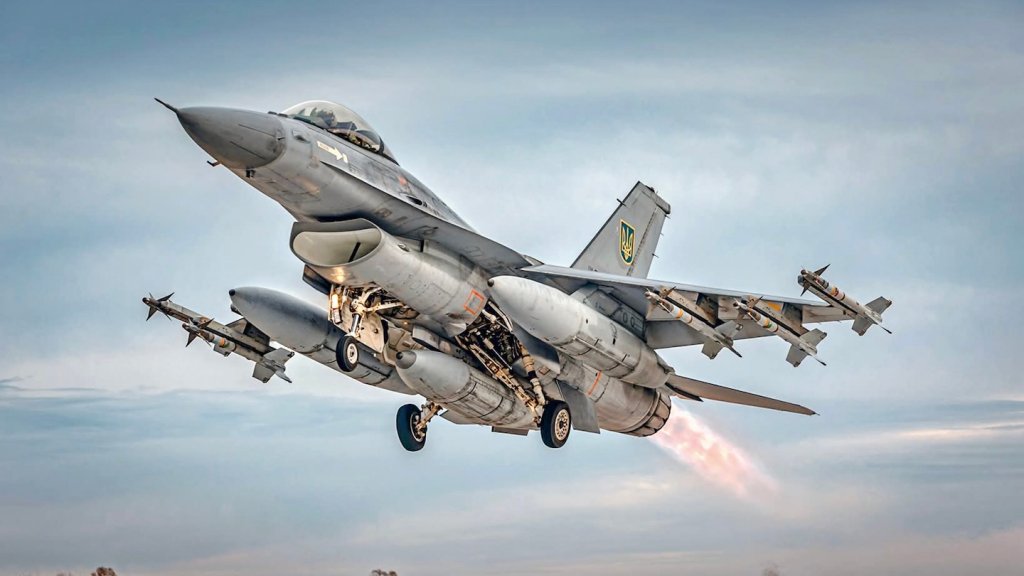
In addition to the jets, Rz reported that “Poland will provide Ukraine with, among other things, a supply of 155mm and 152mm artillery ammunition; 20x102mm combat rounds for the six-barreled cannons on F-16 fighter jets—used, for instance, to shoot down Russian unmanned aerial vehicles—as well as missiles for the Piorun short-range anti-aircraft systems.”
Additional MiG-29s are always welcome, as they remain the backbone of Ukraine’s fighter force even though the country has received donations of more modern F-16 Vipers and French Mirage 2000 fighters. Meanwhile, the 20mm cannon ammunition is critically needed.
As we have previously reported, Ukraine is struggling to maintain adequate stocks of air-to-air missiles for its fighters. AIM-9 Sidewinders and AIM-120 Advanced Medium-Range Air-to-Air Missiles (AMRAAM) have been heavily used against Russian cruise missiles and drones.
As a result, Ukrainian F-16 pilots have reportedly had to ration their missile shots. This has forced them to increasingly rely on their internal 20mm cannon when suitable missiles are not available. Such a tactic is far from an ideal substitute, as you can read about here. Still, Kyiv has reportedly been seeking tens of thousands of additional rounds of 20mm ammunition.
So far, there has been no official Ukrainian response. We reached out to Zelensky’s spokesman and Polish officials for comment.
Reports about the planned Polish weapons transfers to Ukraine mark a turning point in relations between Warsaw and Kyiv, as we noted at the top of the story.
For much of this conflict, Poland has been one of Ukraine’s staunchest allies, serving as a logistics hub and providing military assistance. Warsaw’s initial donation of MiG-29s opened the door for the transfer of dozens of others from several NATO nations. That was followed by the eventual provision of the aforementioned Vipers and Mirages. In addition, Sweden has agreed to provide 16 Gripen C/D fighters, with the first aircraft expected in early 2027, while a separate agreement covers the purchase of 16 new Gripen E fighters whose deliveries are not scheduled to begin until early 2029.

Relations between the two countries reached a nadir in June after Polish President Karol Nawrocki stripped Ukrainian President Volodymyr Zelensky of the Order of the White Eagle. It is Warsaw’s top award and was presented to Zelensky in 2023. That escalated a row between the allies over the memory of WWII.
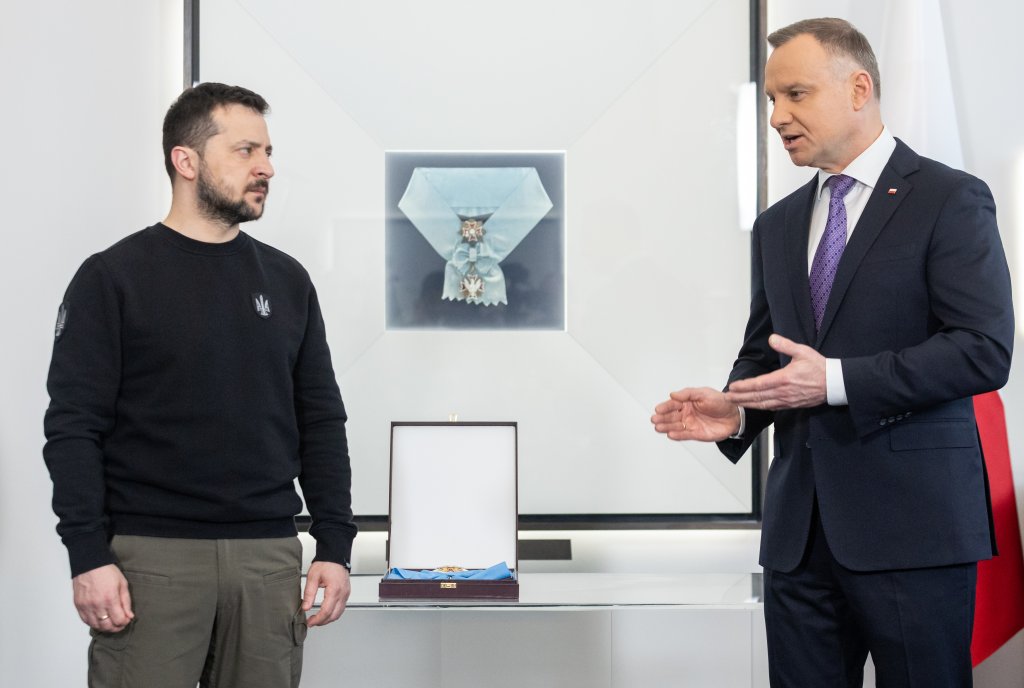
“Zelensky had infuriated Warsaw this month by naming a military unit after an insurgent army that took part in massacres against Poles in WWII,” AFP reported at the time.
After the stripping of the award, the rift grew more bitter, with Poland claiming Ukraine would not transfer drone technology needed to defend against Russian threats. The political kerfuffle culminated with Poland canceling the transfer of additional MiG-29s to Ukraine.
Relations between the two nations began to thaw earlier this month.
The first sign was Zelensky’s resuming use of Polish airports as a jumping-off point for overseas trips. Ukrainian officials have to travel by train to another country if they want to fly because airspace over Ukraine has been closed to non-military aircraft since the start of the all-out war.
After the medal incident, Zelensky opted to use airports in Moldova and Romania. However, on Oct. 14, the Ukrainian leader once again traveled to Rzeszów Airport in Poland.
Days later, Zelensky told reporters that stopping at Rzeszów was a signal that his relations with Poland were on the upswing.
“Our relations with Poland have indeed improved,” he said. I’m very grateful for this to both Poland and our teams, and I’m grateful to the Prime Minister [Donald Tusk]. I’m grateful to the people of Poland for supporting Ukraine. It’s very important for us to be together right now. There is only one enemy – Russia, which is deeply concerned about a strong alliance between Ukraine and Poland.”
“Even very difficult things, we’ll resolve them, I’m sure of it,” the Ukrainian leader added. “These will be mutually beneficial relations, out of respect, because of the importance of security in Europe.”

Though Polish officials are telling media outlets that deals are in place, there is still a lot that can go sideways before the aircraft and ammunition are in Ukrainian hands. Still, for Kyiv, even suggestions of a future transfer are better than having deals being called off.
Contact the author: howard@twz.com
The post Polish MiG-29s, F-16 Cannon Ammo Reportedly Headed To Ukraine As Bitter Warsaw-Kyiv Rift Heals appeared first on TWZ.


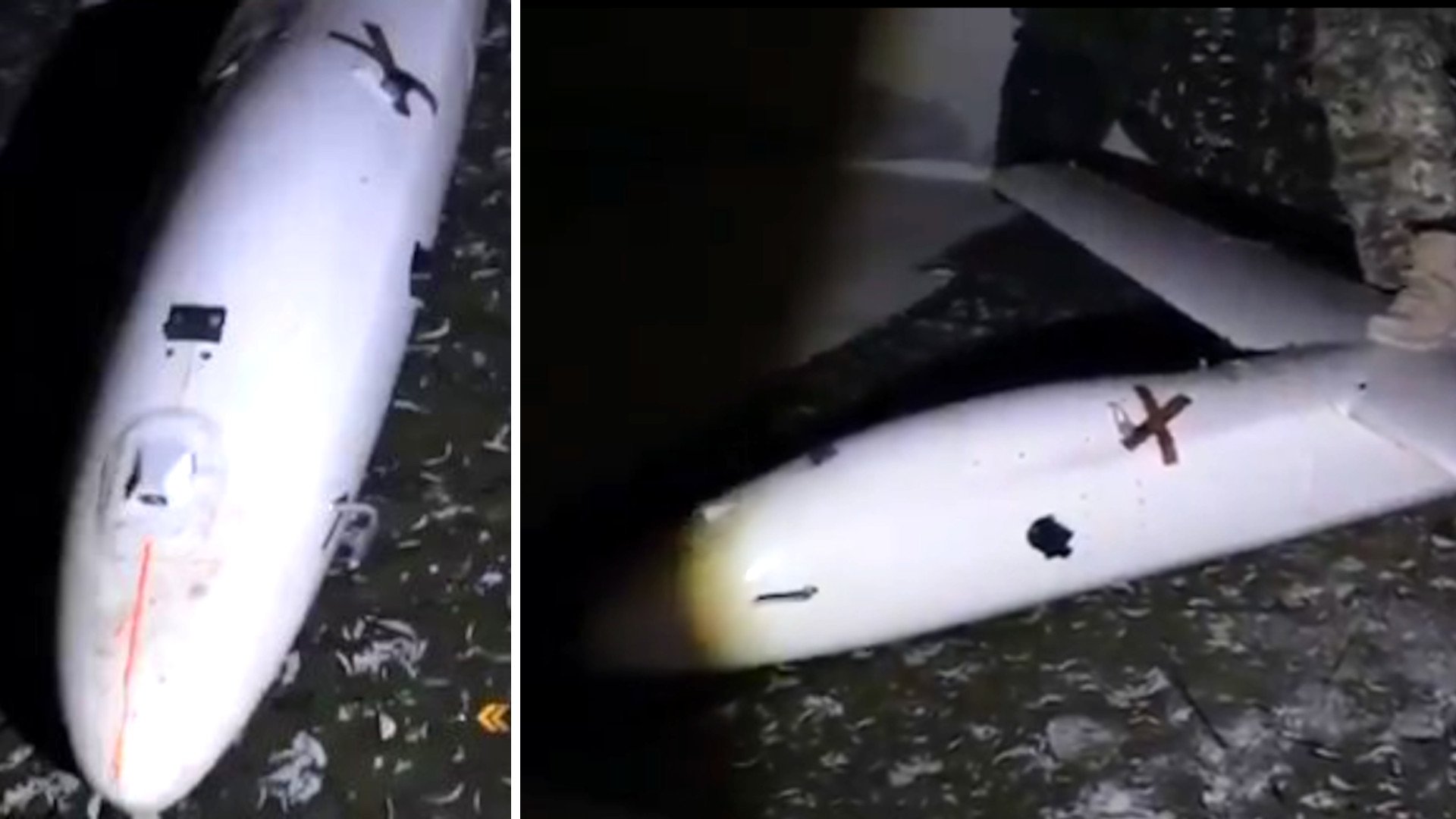
Iran claims to have brought down what looks to be a U.S.-made MQM-170C Outlaw G2 drone largely intact. A video shows it has a notable feature on top of its nose. In U.S. military use today, Outlaw-series drones are best known as an aerial target for use in training and testing.
The footage in question, and the accompanying claims, should be treated with caution given that the regime in Tehran and the country’s media outlets do routinely make exaggerated and unverified claims. That being said, so far, the footage looks to be credible. Furthermore, the U.S. military has pushed back on Iran’s version of events, but has not explicitly denied having lost one of these drones in the region recently.
For its part, Iran’s Islamic Revolutionary Guard Corps (IRGC) says it captured the MQM-170-series drone following what it described as an “offensive electronic warfare operation” somewhere to the “west of the Strait of Hormuz.” The IRGC also claims that the uncrewed aircraft was conducting reconnaissance on Iranian air defenses positioned along the country’s Persian Gulf coast. At the time of writing, no firm evidence has been provided to support either of these assertions. The IRGC has released the aforementioned video, seen below, which it says shows the drone being tracked via an infrared camera, as well as after its recovery.
#Iran / #USA
— War Noir (@war_noir) October 29, 2026: Islamic Revolutionary Guard Corps (#IRGC) Navy captured a US Drone after intercepting it with EW Systems.
The Drone captured by the IRGC Navy appears to be Griffon Aerospace Outlaw G2 “MQM-170C” UAV. pic.twitter.com/Xw6JYOu1s6
“In the past weeks and months, the IRGC has repeatedly lied out of desperation, and today is no different,” U.S. Navy Capt. Tim Hawkins, spokesperson for U.S. Central Command, told TWZ when asked about the specific Iranian claims.
“We’re not going to waste our time. U.S. forces remain vigilant and laser-focused on our assigned missions,” Hawkins said in response to a follow-up question about whether CENTCOM could confirm or deny the loss of an MQM-170-series drone for any reason.
As an aside, Iran recovered an Anduril Dive-LD uncrewed underwater vehicle (UUV) largely intact last month in what the IRGC claimed had been a “complex intelligence and operational action.” U.S. authorities ultimately confirmed the loss of the advanced UUV, but said it was the result of a malfunction.
As mentioned, the drone seen in the IRGC video does look to be an MQM-170C, or at least a closely-related variant thereof. It has an interesting feature on top of its nose: a single forward-looking aperture. This is something that is commonly associated with staring-type optics, which drones often use to aid with navigation. There is a possibility that it could be a seeker, if the drone were to be configured as a one-way-attack munition, but this seems unlikely.

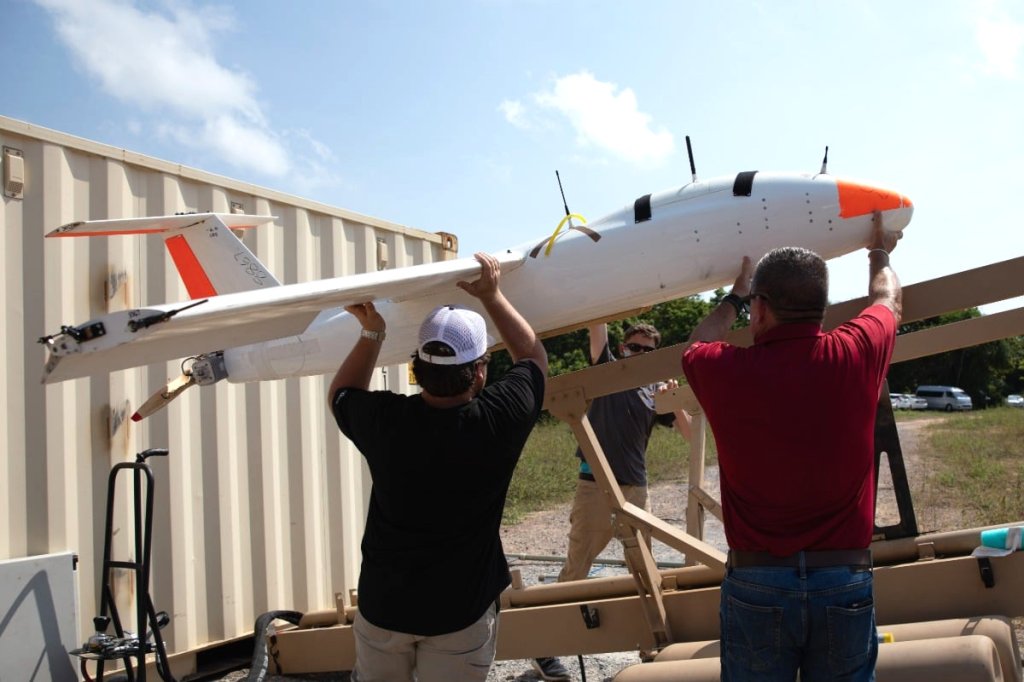

MQM-170C’s manufacturer, Griffon Aerospace, which refers to this design internally as the Outlaw Gen 2 (G2), does say on its website that it can be configured as “an inexpensive payload development platform offering great endurance, payload size, weight, and power.” The company’s website also says that the target configuration of the G2 has a gross weight of 150 pounds, but that this can grow to 225 pounds when used as a more general-purpose drone.
The drone, which is nearly 11 feet long and has a wingspan of 16 feet, otherwise has a stated maximum endurance of eight hours, top speed of 126 knots, and the ability to reach altitudes of more than 16,000 feet. The design is propelled by a 2-cylinder, 2-stroke combustion engine driving a single pusher propeller. The G2 gets into the air via a catapult-type launcher and can be recovered, either after a glide-in landing on suitable terrain or via parachute.

Griffon Aerospace also offers an ‘expanded’ G2E version with fixed tricycle landing gear as an “open and customizable platform for ISR [intelligence, surveillance, and reconnaissance] missions, subsystem testing, and R&D [research and development].” This version has a lower maximum takeoff weight and total endurance compared to the baseline G2, according to the company’s website. The IRGC video does not show any evidence of landing gear, but it could have broken away when the drone came down.
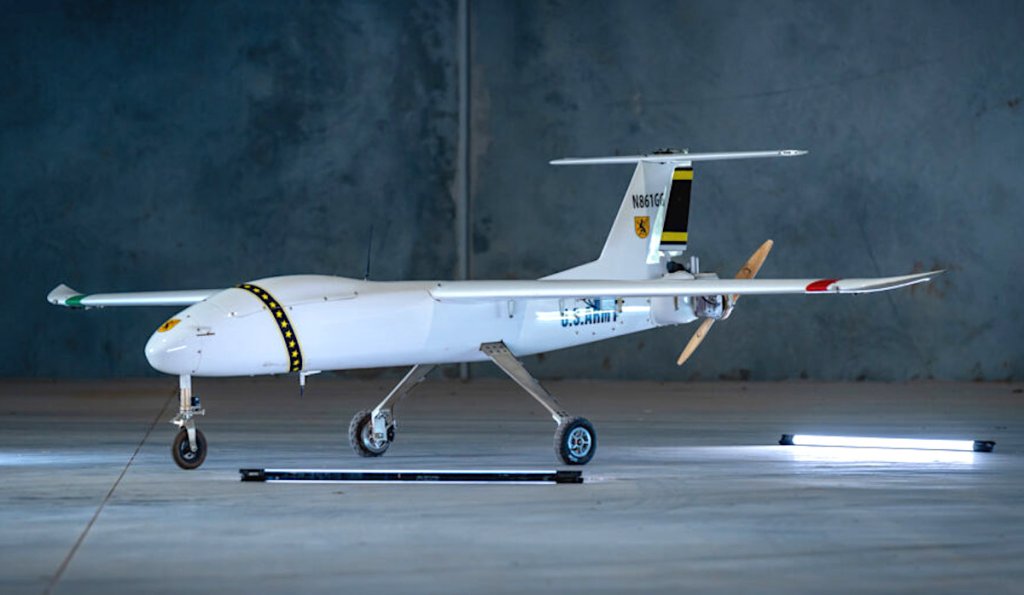
The larger Outlaw family, which traces back to the early 2000s, also includes the Gen 1 MQM-170A, which has a completely different design from the subsequent G2 drone. Griffon also developed a derivative of the Gen 1 design with a twin-boom tail, called the Outlaw Boomer, which the U.S. military designated the MQM-170B. There is also a twin-engine, twin-boom derivative of the Outlaw G2 that the U.S. military has at least tested in the past.

This brings us to the additional matter of a contract the U.S. Army awarded to Griffon Aerospace, valued at nearly $68 million, for the procurement of a Gen 3 version of the Outlaw on June 3. When the Pentagon first announced this deal, it was explicitly said to be “in support of Operation Epic Fury” against Iran. That portion of the announcement was quietly deleted sometime thereafter.
“A company official declined to provide details about the Gen 3 design,” Breaking Defense reported in a story published on June 5.
On August 25, Griffon received an additional contract from the Army, valued at just under $133 million, “to procure Griffon Outlaw systems, support equipment and field service representatives for system use and employment.” That announcement made no mention of operations against Iran.
At the time of writing, Griffon Aerospace’s website does not appear to make any mention of the Gen 3 Outlaw. TWZ has reached out for more information about this drone.
Given the known breadth of Outlaw designs to date, it is possible that the Gen 3 drone is substantially, if not entirely, different from any of the existing types. At the same time, the June contract announcement does establish a link between the Outlaw family and U.S. military use outside of training and testing, and specifically as part of real-world operations aimed at Iran.
There remains the potential that Iran simply captured an Outlaw target drone that U.S. forces lost control of during training or testing in the region. The drone seen in the IRGC video lacks the high-visibility orange markings typically seen on aerial targets, though these could easily have been painted over. Iranian authorities could have still fabricated the recovery, in part or in whole, though there is no firm evidence of that at present, either.

Another non-U.S. operator region could also be employing versions of the Outlaw, including in non-target drone roles, such as for surveillance and reconnaissance, or as decoys.
All of this does now come amid growing signs that the United States, as well as Israel, are preparing to launch a new major campaign against Iran. As TWZ reported recently, stimulating Iranian air defenses to glean key intelligence about their current capabilities and positions would be critical in the lead-up to any such operation.
“Stimulating Iran’s air defenses is critical,” our own Tyler Rogoway wrote on X earlier this month following unconfirmed reports of unusual Israeli air activity. “By Iran operating as if a full scale attack could be coming, their air defenses can be detected, categorized and geolocated. This is absolutely critical prior to a major air operation. Surveilling them during times of lower alert does not provide the same fidelity of actionable intelligence. Knowing where those threats are and how they are operating can mean the difference of life and death and/or will help standoff munitions make their way to their targets as those defenses can be suppressed, destroyed, or avoided entirely via careful mission planning.”
In September, claims had emerged that Iran had shot down a U.S.-made ADM-160 Miniature Air-Launched Decoy (MALD), but that remains unconfirmed. There were also reports of unusual, UAP-like objects flying over Iran, which have similarly not been confirmed.
15090 is the CAGE code for Raytheon, which is visible on the tail fins and other remnants.
— Trevor Ball (@Easybakeovensz) September 20, 2026
Source for images: https://t.co/weIo1Hh6RR pic.twitter.com/4LoBMChKZG
I don’t know what this is, or if it’s legit BUT remember we are in a new age of misdirection, decoy and guile. Specifically using low end drone technology. There are more ways to stimulate an enemy air defense system, distract a populous, assess the flow of public info from a… https://t.co/wW7YVlbayB
— Tyler Rogoway (@Aviation_Intel) September 21, 2026
As we wrote at that time:
“Such reports come amid an increasingly sophisticated use of low-end drones, decoys, and other forms of deception. These kinds of systems can be employed not only to stimulate adversary air defenses, but also to distract populations and probe how information moves out of a denied area. In such an environment, unusual aerial sightings should be viewed with caution — but not necessarily dismissed as irrelevant. We have been talking about how new forms of misdirection and guile will leverage relatively low-end technologies in future conflicts for many years now. While it isn’t clear if this light show in the sky over Iran was such an activity, it is certainly a reminder to keep that possibility in mind.”
It would certainly be plausible for suitably configured Outlaw drones to be in use now as another means of simulating Iranian air defenses. There is precedent even for ostensible target drones to be used operationally to deploy countermeasures and just as decoys in support of major strikes. U.S. BQM-34 Firebee target drones were notably used to spread radar-confusing chaff over the Iraqi capital Baghdad as part of the opening phase of Operation Iraqi Freedom in 2003.
It is also worth noting that the conflict with Iran this year has seen the first U.S. combat use of longer-range one-way attack drones, as well as explosive-laden kamikaze uncrewed surface vessels (USV). However, there is no evidence at present that drones in the Outlaw family have been configured in this way in any context.
Altogether, though still not definitively confirmed, Iran’s claimed recovery of an MQM-170C drone is an interesting development as the prospect that major hostilities in the region could resume soon continues to grow.
Contact the author: joe@twz.com
The post Let’s Talk About The U.S. Target Drone Iran Claims To Have Recovered Intact appeared first on TWZ.
The award-winning supporting player – from ‘Marriage Story’, ‘Nurse Jackie’ and ‘Severance’ – has spent her career slipping in and out of ensemble casts, and largely avoiding the press. But her starring role alongside Robert Pattinson in the ‘To Catch a Predator’-inspired thriller ‘Primetime’ has taken her to new heights. She speaks to Adam White about Chris Hansen, her early struggles, and her fears about finally coming out of her shell

© Emilio Madrid
The award-winning supporting player – from ‘Marriage Story’, ‘Nurse Jackie’ and ‘Severance’ – has spent her career slipping in and out of ensemble casts, and largely avoiding the press. But her starring role alongside Robert Pattinson in the ‘To Catch a Predator’-inspired thriller ‘Primetime’ has taken her to new heights. She speaks to Adam White about Chris Hansen, her early struggles, and her fears about finally coming out of her shell
© Emilio Madrid
Jim Smeal/Ron Galella Collection via Getty Images
Many celebrities have built their wealth from the ground up, but some were born into luxury.
Among these wealthy families are celebrities like Anderson Cooper, Julia Louis-Dreyfus, and Nick Kroll, who have had access to vast wealth and opportunities from an early age.
These stars were set up for success before stepping into the spotlight, which, in some cases, shaped their path to fame and fortune.
Here are 15 celebrities who were raised in wealthy families before they became famous.
Noam Galai/Getty Images
Kroll is an actor, comedian, writer, and producer known for Comedy Central's "The Kroll Show" and for creating and starring in Netflix's "Big Mouth" and "Human Resources," among other hit shows, but he's not the only success story in his family.
His father, Jules Kroll, founded a corporate investigation company, Kroll Inc., which he sold in 2004 for almost $2 billion, Forbes reported in 2014.
Nick Kroll grew up in Westchester County, New York. In 2009, he told The New Yorker that he and his siblings had a relatively normal childhood. He also said that although he was grateful that his father made time for him despite his job, he felt embarrassed when Jules would arrive at his Little League games in a limousine.
ANGELA WEISS/Getty Images
Journalist and commentator Anderson Cooper is a direct descendant of the Vanderbilts.
His great-great-great-grandfather, Cornelius Vanderbilt, built his fortune primarily through investing in steamships and railroads.
"He had more money than the US Treasury," Cooper told CBS in 2021.
Cooper's mother, Gloria Vanderbilt, grew up an American socialite because of her family's status. She later became an artist, actor, designer, and author. She died in 2019.
His father, Wyatt Emory Cooper, was Vanderbilt's fourth husband. Before he died at the age of 50, he worked as an author and an actor.
Gregg DeGuire/Getty Images
Gwyneth Paltrow comes from a family of entertainment-industry natives. She spent her childhood at prestigious private schools in Los Angeles and New York City before dropping out of college to act.
Bruce Paltrow, her father, was a nine-time Emmy-nominated director and producer. His most notable titles include "St. Elsewhere" and "White Shadow." Meanwhile, her mother is Emmy- and Tony-winning actor Blythe Danner of "Meet the Parents," "Meet the Fockers," and "The Last Kiss."
Despite her parents' success, Paltrow refers to herself as "completely self-made."
"People think, 'She's just a rich kid.' Until I was 18, I was. Then I was broke. I've never taken a dime off my parents. I'm completely self-made," she told Glamour in 2016.
David M. Benett/Getty Images
Supermodel and actor Cara Delevingne is the daughter of Charles Delevingne, a successful real-estate developer, and Pandora Delevingne, a socialite. Her paternal grandmother was a socialite, and her paternal grandfather was a notable lawyer and politician.
But that's not where it ends. According to Vogue, Cara's maternal grandfather, Sir Jocelyn Stevens, owned Queen magazine, which is now Harper's Bazaar. Further, her maternal grandmother, Janie Sheffield, was a lady-in-waiting to Princess Margaret, the sister of Queen Elizabeth II.
Mike Pont/Getty Images
Julia Louis-Dreyfus is the great-great-granddaughter of Léopold Louis-Dreyfus, who founded the Louis Dreyfus Company, a merchant firm that deals primarily with agriculture, food, and shipping.
Her father, Gerard Louis-Dreyfus, eventually became chairman of the company. In 2006, about 10 years before his death, Forbes estimated his net worth at $3.4 billion and ranked him the 200th-richest billionaire in the world.
In 2018, the "Seinfeld" star told The New Yorker that her father's wealth is overestimated by the press and that she finds the term "billionaire heiress" to be "heinous."
Donald Weber/Getty Images
Their father, Stephen Gyllenhaal, is an Emmy-winning director who has worked on films such as "Paris Trout," "Homegrown," and "A Dangerous Woman." Their mother, Naomi Foner Gyllenhaal, is an Academy Award-nominated, Golden Globe-winning screenwriter whose most notable film is "Running On Empty."
The Gyllenhaal siblings, Maggie and Jake, have had prolific careers since their costarring breakout roles in "Donnie Darko" in 2001.
In 2010, Jake told The Guardian, "My mother would say that there are people who have so much money who don't give any of it away, and there are other people who have much less money, who give more than the richest people in the world. It should all be about giving something back."
NBC/Getty Images
Pop artist King Princess — or Mikaela Mullaney Straus — is the great-great-grandchild of Isidor and Ida Straus.
Before the couple fell victim to the Titanic's sinking, Isidor served in the United States Congress and co-owned Macy's with his brother. Isidor and Ida Straus have been depicted in multiple movies and have a memorial garden in New York City.
In 2019, King Princess told Rolling Stone that she didn't inherit their money.
"They were very rich and Jewish, [but] I didn't inherit any of this money. It was a little frustrating, but whatever," she said.
The pop star's father, Oliver Straus, is also successful. He owns a recording studio in Brooklyn called Mission Sound, where world-famous bands like the Arctic Monkeys have recorded music.
Jeff Kravitz/Getty Images
Armand Hammer, Armie Hammer's great-grandfather, was an oil tycoon who managed Occidental Petroleum Corporation. In 1986, Forbes estimated Armand Hammer's net worth to be $200 million.
However, Armand Hammer's biographer, Neil Lyndon, referred to him as "the most satanic man of the second half of the 20th Century" and the "embodiment of sin [and] ruthless ego" in a 2022 docuseries, "House of Hammer."
Armie Hammer has also been mired in controversy. In 2021, multiple women accused him of sexual and emotional abuse. At the time, Armie said any interactions with his partners were consensual and denied the allegations. The Los Angeles Police Department investigated a claim of sexual assault, but he was not charged. In 2023, he told Air Mail he'd been emotionally abusive to his accusers.
Marc Piasecki/Getty Images
Lana Del Rey, whose given name is Lizzy Grant, is the daughter of Rob Grant, the founder of WebMediaProperties.com. According to Who API, Grant's company operated 1,600 websites and owned about 800 domain names as of 2012.
A 2012 article in The Guardian by Paul Harris discusses how Lana Del Rey hid her real identity as she rose to stardom.
"People were suspicious of the way Grant's failed album, and all her social media websites appeared to have been scrubbed from the internet just before Del Rey appeared," Harris wrote.
The same article also claims that her father backed her career when she was just starting out.
Axelle/Bauer-Griffin/FilmMagic/Getty Images
Actor Nicola Peltz Beckham, who has appeared in TV shows like "Bates Motel" and "Welcome to Chippendales" and movies including "Transformers: Age of Extinction," married Brooklyn Beckham — son of Victoria and David Beckham — in 2022. But even before her wedding day, she was part of a high-profile family known for its influence in business and social circles.
She was born in 1995 to parents Claudia Heffner and Nelson Peltz in Westchester, New York — her father is the founder of the investment firm Trian Fund Management and has an estimated net worth of $1.5 billion according to Forbes.
In a 2024 interview with WWD, Peltz Beckham acknowledged that she didn't have an upbringing like that of her character in "Lola," in which she starred as a stripper.
"I wanted to write a story from a person's perspective and another point of view that was not my personal view and not my upbringing. I am an actress and my dream is to get to look at the world from different perspectives," she said.
Rebecca Sapp/Getty Images for The Recording Academy
Singer Stella Lefty is the daughter of Eric Lefkofsky, CEO of Tempus AI and founder of Groupon. In Forbes' 2026 ranking of the 400 wealthiest Americans, Lefkofsky ranked 261st with an estimated net worth of $6.5 billion.
Business Insider's Callie Alhgrim reported a lot of negative online discourse about Lefty regarding her fame in relation to her father.
"Obviously, there's going to be this conversation around it, which I totally understand," Lefty told Vanity Fair in an interview published in August this year.
Robert Prange/Getty Images
Tennis player Jessica Pegula is the daughter of Terry and Kim Pegula, who own the Buffalo Bills and Buffalo Sabres. Terry Pegula founded the oil and gas company East Resources, which he sold the majority of for $4.7 billion in 2010, according to Forbes.
Terry Pegula ranked 120th in Forbes' 2026 list of the 400 wealthiest Americans.
Jessica Pegula said in an episode of Netflix's "Break Point" that "some people get this image that it's really easy for me because my dad is very wealthy, but that didn't happen till I was 17 or 18," adding that "they gave me a great childhood and instilled a lot of work ethic in me."
Gareth Cattermole/Getty Images for IMDb
Actors Kate and Rooney Mara are the daughters of Chris Mara and Kathleen Rooney, who come from NFL royalty.
Chris Mara's grandfather founded the New York Giants, and Rooney's grandfather founded the Pittsburgh Steelers, according to People.
In 2015, Forbes estimated the Rooney family's net worth at $1.2 billion.
Patrick Smith/Getty Images
Tennis player Emma Navarro is the daughter of billionaire businessman Ben Navarro.
He cofounded Sherman Financial Group and has an estimated net worth of $3.2 billion, according to the Forbes 2026 World Billionaires list.
In a 2021 interview with Charleston Magazine, Emma Navarro said: "My dad has always been in my corner, getting me the coaching and training, whatever I needed."
Kevin Mazur/Getty Images for SiriusXM
Singer Gracie Abrams is the daughter of Katie McGrath and J.J. Abrams.
J.J. Abrams is a filmmaker behind shows like "Lost" and major films, including some in the "Star Wars" series. He is the co-CEO of Bad Robot Productions, which Katie McGrath also leads.
"I had a safety net, and that allowed me the ability to experiment and to concentrate, and I had the gift of time to dedicate to doing this thing I loved," Abrams said in an episode of The New York Times' Popcast.
Joey Hadden/Business Insider
I wasn't about to sacrifice comfort to save a few bucks. Not when booking the longest train ride in the US.
Most people use trains to get from one place to another. But in February, Amtrak's California Zephyr was my destination. I wanted to thoroughly enjoy the 53-hour journey from snowy Chicago to sunny Emeryville, California.
That's why I spent $2,200 on a bedroom accommodation, a private cabin with a full bathroom.
While I was excited to stay in the tiny, moving hotel room, I wondered whether I'd regret spending so much. In the end, I was sure I had made the right choice for such a long journey.
Here's a look inside the 50-square-foot bedroom.
Joey Hadden/Business Insider
The California Zephyr is an Amtrak Superliner — a two-story train with coach seating, bedrooms, roomettes (a private cabin that's about half the size of a bedroom), a dining car, and a lounge car. There are also larger, family-sized bedrooms and accessible bedrooms.
I'd ridden the California Zephyr a year earlier, but I took a shorter trip in a roomette. This was my first time riding the entire route from Chicago to California. It was also my first time booking a bedroom on an Amtrak Superliner.
Joey Hadden/Business Insider
The couch folded out to form the bottom bunk, and the top bunk pulled down from the ceiling.
The Amtrak bedroom sleeps up to two passengers, though I traveled solo.
The booking also included some perks. Sleeper-car ticket holders get a first-class attendant, priority boarding, lounge access at some stations, and complimentary meals on board.
Joey Hadden/Business Insider
During the day, the lower bunk was set up as a couch, and the upper bunk was folded up. A single seat faced the couch with a pullout table in between.
Joey Hadden/Business Insider
The table also had two foldout leaves for more space. I thought this was a smart space-saving hack.
Joey Hadden/Business Insider
The closet had two hangers inside. I used it to store my coat, sweater, and winter boots.
Joey Hadden/Business Insider
The sink and vanity had two power outlets and an overhead light. Although the cabinets were stocked with extra hand towels, tissues, and soap, there was still enough space for me to store my own toiletries. The paneled mirror made getting ready in the morning feel a tad luxurious.
Joey Hadden/Business Insider
Only bedroom accommodations on Amtrak Superliner trains have private bathrooms.
Showering next to the toilet felt odd, but I couldn't deny that it was a clever use of a limited space. And I certainly preferred it over having just a toilet or just a shower.
To use the shower, I set the temperature first. Then I pressed a button to start the water. There was another button on the showerhead itself to turn the water on and off. On the wall above the toilet, I spotted shampoo, conditioner, and body wash.
Joey Hadden/Business Insider
The mirror was not only useful for getting ready — it also made the tight space feel larger.
Joey Hadden/Business Insider
When I changed my clothes each morning and evening, I pulled my suitcase down to the single seat. Passengers can also store their luggage in a shared space in the sleeper car, but I prefer to keep my stuff with me.
Joey Hadden/Business Insider
Both sets of controls had a reading light. One had a power outlet and a temperature dial, and the other had an attendant call button and lighting options.
Joey Hadden/Business Insider
The night setting was a dim blue light, which I thought added a dreamy glow to the space before bed.
Joey Hadden/Business Insider
When I pulled the top bunk down from the ceiling, I found a ladder on the cot and attached it to the far side of the bunk. There were safety straps that I hooked onto the ceiling.
There was also a mattress topper, soft bedding, and pillows. I used a wall-mounted pouch to store a water bottle and my phone.
I liked sleeping on the top bunk — despite hitting my head on the low ceiling — because I could store my backpack and other belongings on the couch below, which kept the room neat. I got seven hours of sleep that first night.
Joey Hadden/Business Insider
I pulled a lever beneath each couch cushion to form the lower bunk.
Although the room wasn't as tidy, since I didn't have as much space to store my belongings, I appreciated that the lower bunk was slightly larger than the top cot.
I also liked being right next to the window when I woke up in the morning. I got eight hours of sleep in this bunk.
Joey Hadden/Business Insider
Unlike most overnight trains I've taken, the bedroom was comfortable enough to actually enjoy spending 53 hours in a confined space. I arrived in California feeling well-rested and squeaky clean.
I wouldn't splurge on a bedroom for just any long-distance Amtrak train. I think the smaller roomette is comfortable enough and worth saving money on shorter overnight journeys. But for rides that are more than 24 hours long, I'll book a bedroom every time.

