❌

Reading view

Deadly disease sparks new CDC rule for US-bound flyers as major airlines seek delay

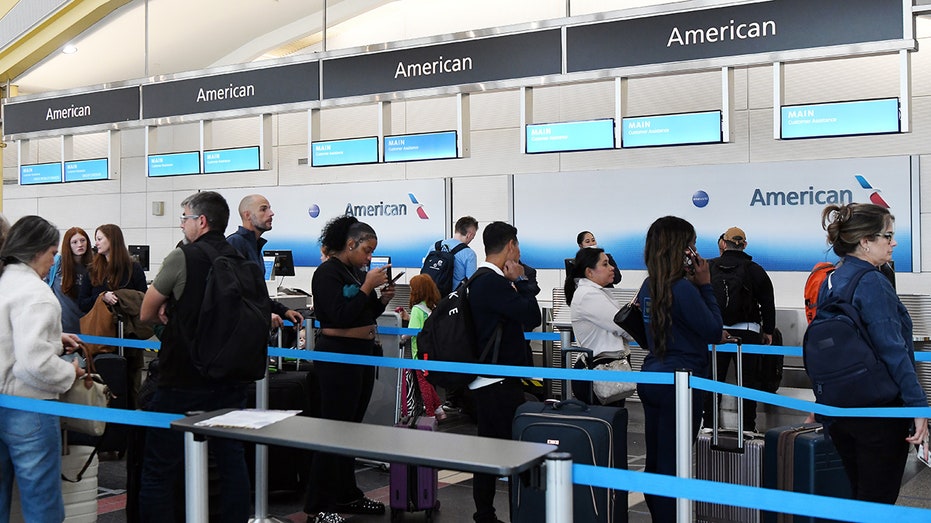
Major U.S. and international airline groups are pushing back against a new Ebola-related travel requirement that will affect millions of people flying into the United States.

Beginning Nov. 3, all passengers on international flights to the U.S. will have to confirm that they have not been in the Democratic Republic of the Congo (DRC) during the previous 21 days, according to the Centers for Disease Control and Prevention (CDC).

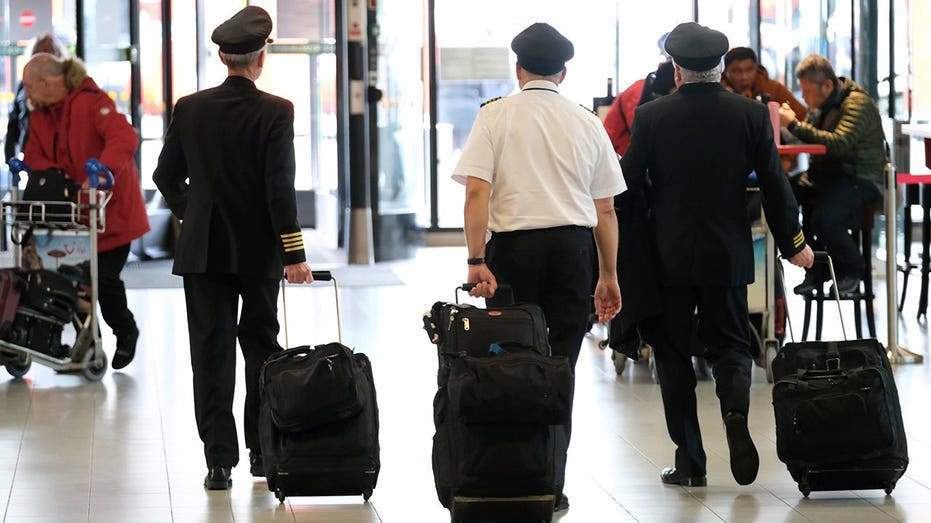
The requirement applies to everyone flying into or connecting through the U.S. — including American citizens, green card holders and airline crew members, the CDC said.

US ISSUES URGENT TRAVEL WARNING AS DEADLY EBOLA OUTBREAK SPREADS OVERSEAS

Travelers will have to complete a paper or digital statement before boarding, even if they have never visited the DRC. 

Airlines must collect the forms and keep them for at least 42 days after the flight arrives in the U.S., according to the CDC.

Airlines for America (A4A), which represents major carriers including American, Delta, Southwest, United and JetBlue, is asking the CDC to reconsider the requirement and give airlines more time to prepare, according to an Oct. 26 letter provided to Fox News Digital.

The group said it supports the CDC's public health goals but argued that the new requirement is too broad and is being introduced too quickly.

A4A asked the government for a "more proportionate and measured U.S. response" focused more closely on affected areas and travelers who have recently been there.

CLICK HERE TO SIGN UP FOR OUR LIFESTYLE NEWSLETTER

The group also asked for the Nov. 3 start date to be delayed.

"Changes to check-in systems, digital signatures, station procedures and training cannot readily be completed in the allotted time," A4A wrote.

Dr. Tyler Evans, a California-based infectious disease physician and CEO of Wellness Equity Alliance, told Fox News Digital, "This was a step in the right direction, given the fact that we really do have to take this seriously. We have to ensure that this does not cross borders."

He added, "This is the second-largest outbreak of Ebola in history. So this is very serious."

The International Air Transport Association (IATA), which represents more than 370 airlines around the world, has also asked the CDC to reconsider the requirement, Reuters reported.

"It is unreasonable for the U.S. government to require all airlines serving the U.S. market to modify their procedures to accommodate the collection of attestations from each individual (passenger and crew) flying to the United States in less than two weeks," IATA wrote in a letter, according to Reuters.

CLICK HERE FOR MORE LIFESTYLE STORIES

A4A is also asking the CDC to exempt airline crew members, arguing that existing aviation documents already contain information about crews and their travel.

The group has requested an exemption for U.S. military passenger charters as well, saying the military already tracks service members' health, safety and whereabouts.

The CDC said the requirement is intended to reduce the risk of Ebola entering the United States through air travel. 

The 21-day period reflects the maximum amount of time it can take for symptoms to appear after exposure.

Anyone who has been in the DRC during that period, including travelers who only passed through an airport there, will not be allowed to board a U.S.-bound flight unless they have a government exemption, the CDC said.

TEST YOURSELF WITH OUR LATEST LIFESTYLE QUIZ

"Some of the initial symptoms would just be flu-like symptoms. You'll have a high-grade fever, you'll feel sort of fatigued," the doctor said.

"[For] people that ... are asymptomatic, being able to screen is a very effective modality to reduce, to prevent or mitigate further transmission," Evans said.

Evans worked on the Ebola response twice in the past, both in West Africa and in the DRC, the two largest outbreaks in history.

"The reality is Ebola is one of the most infectious and has one of the highest case fatality rates of infectious diseases," Evans said.

But Americans often don't view Ebola as being relevant to them, he said. "When it comes to infectious diseases ... microbes don't sort of respect boundaries."

CLICK HERE TO DOWNLOAD THE FOX NEWS APP

Travelers who knowingly provide false information could face prosecution and fines, according to the CDC.

Fox News Digital reached out to the CDC and IATA for further information and comment.

  •  

Popular airline hits customers with steep fee hike for first time in 8 years

The era of the standard $99 airline credit card may be fading as American Airlines becomes the latest major carrier to adjust its price tag.

Beginning Jan. 24, 2027, the annual fee for both the Citi/AAdvantage Platinum Select MasterCard and the Citi/AAdvantage Business MasterCard will jump from $99 to $150, according to a company press release.

The adjustment marks the first price hike for the popular Platinum Select consumer card since 2018, signaling a shift in the travel rewards landscape.

MAJOR AIRLINE DITCHES SNACKS DURING SHORT FLIGHTS AS ‘ZERO SERVICE’ SPARKS DEBATE

To soften the blow of a nearly 52% fee increase, American Airlines, Citi and MasterCard are adding several new travel and lifestyle perks.

Whether those additions make up for the $51 increase will depend largely on how travelers use the card, Nick Ewen, editor-in-chief of The Points Guy, told Fox News Digital. 

"You have to look at the real dollar value based on your own travel habits," said Ewen, who is based in Florida. 

Cardholders will gain additional ways to earn AAdvantage miles on everyday spending, along with up to $120 toward Global Entry or TSA PreCheck application fees every four years, American Airlines confirmed.

Additionally, a new $100 annual statement credit for in-flight purchases will replace the previous 25% food and beverage discount. 

This makes the card significantly more rewarding for travelers, as the credit can be applied toward broad in-flight expenses, including Wi-Fi, which was explicitly excluded under the old discount system.

For someone who regularly spends money aboard American flights or already pays for Global Entry or TSA PreCheck, Ewen said the new credits could help offset the higher annual fee.

"If the answer is yes, you're definitely going to come out ahead," he said of travelers who typically spend up to $100 on in-flight purchases each year.

PASSENGER JET BOUND FOR US PLUNGES 27,000 FEET BEFORE CIRCLING FOR HOURS

The changes may not be for everyone, however.

"If you're only flying American once a year, you may not be able to stomach that additional increased annual fee," he said.

The changes also include adjustments to how cardholders can rack up rewards on everyday purchases, according to the press release. 

The personal Platinum Select card will offer three miles per dollar on eligible AAdvantage Hotels and Cars bookings and two miles per dollar on gas and EV charging, select streaming services, and eligible Rides and Rails purchases.

CLICK HERE TO SIGN UP FOR OUR LIFESTYLE NEWSLETTER

Existing perks — including preferred boarding, no foreign transaction fees and a free first checked bag on domestic American itineraries for the cardholder and up to four companions — will remain intact.

Ewen said the higher fee follows a broader shift among airline rewards cards. 

"American is far from the first airline that we've seen this increase in their annual fees," he said, pointing to similar changes from Delta, Southwest and United.

Entry-level airline cards that once hovered around $100 annually are increasingly moving closer to $150, Ewen said.

"This is definitely the norm, although it's not universal across the board," he added.

CLICK HERE FOR MORE LIFESTYLE STORIES

The move by American Airlines aligns with a broader trend sweeping the credit card sector.

Over the past few years, the travel rewards market has seen steady fee inflation as issuers pack mid-tier and premium cards with statement credits and subscription services.

Financial institutions are betting consumers will accept higher upfront costs in exchange for tangible, use-it-or-lose-it perks, transforming traditional flight-focused credit cards into broader lifestyle products, according to reports. 

The changes drew mixed reactions from cardholders online.

TEST YOURSELF WITH OUR LATEST LIFESTYLE QUIZ

"Call me crazy, but none of this is an upgrade," one Reddit user commented.

Another questioned the value of the new in-flight credit. 

"These inflight credit[s] [are] annoying," the person wrote. "They don't even stock them except for longer flights."

Others were more receptive to the new benefits, with one commenter pointing to the Global Entry or TSA PreCheck credit as a reason the higher fee could be worthwhile.

CLICK HERE TO GET THE FOX NEWS APP

"This has become more of a respectable airline card in my opinion now with this refresh," one user wrote.

  •  

Hidden danger in cockpit surfaces as 3 in 4 pilots report 'microsleep' episodes

A hidden problem is surfacing regarding certain pilots' behavior.

More than three in four pilots reported having at least one "microsleep" while operating an aircraft in recent weeks, according to a report by aviation consultancy Baines Simmons based on responses from 7,200 pilots across 32 European countries.

The findings were published by the European Cockpit Association (ECA), which represents over 44,000 pilots across Europe, according to a press release.

HOW MUCH REST SHOULD FLIGHT ATTENDANTS GET? NEW PROPOSAL IGNITES FIGHT IN THE SKIES

The concerns extend beyond brief episodes of sleep in the cockpit. Nearly 39% of pilots said they usually or always did not get enough rest to keep fatigue from building up, according to the report.

The findings also raised questions about whether pilots feel comfortable reporting when they are too tired to fly.

Only 37.2% said they typically report when they are too fatigued to fly, while 24.2% said they do not report it and fly anyway, according to the findings. 

"When pilots fear career consequences, fatigue goes unreported, and the risk returns to the cockpit," Capt. Coen George, an ECA board director, said in the press release.

He warned that the reluctance to speak up could leave airlines unaware of how widespread fatigue is among their crews.

In the United States, the Federal Aviation Administration (FAA) implemented stricter pilot rest and duty requirements in 2012 to address fatigue and improve safety, the agency said in a statement to Fox News Digital.

Under the rules, pilots must receive at least 10 consecutive hours of rest before a flight duty period, including an opportunity for eight uninterrupted hours of sleep. Pilots who feel fatigued or unfit to fly must report it and be removed from duty by the airline, according to the FAA.

Pilot fatigue can be particularly challenging when crews work overnight or travel across multiple time zones.

Matthew "Whiz" Buckley, a former U.S. Navy F/A-18 Hornet fighter pilot who later flew for American Airlines and FedEx, previously told Fox News Digital that having scheduled time off does not necessarily mean a pilot gets enough sleep.

"It's just unnatural to sleep during off-hours," Buckley said.

CLICK HERE FOR MORE LIFESTYLE STORIES

Pilots may arrive at a hotel early in the morning and then have to sleep during the day, while long-haul flights can further disrupt normal sleep patterns, Buckley said.

"Where it really takes a toll on the body for pilots is east-west," he said. "When you're crossing multiple time zones, [that's] when your body can really get messed up."

Buckley also emphasized that pilots ultimately have to assess whether they're rested enough to safely operate an aircraft.

"At the end of the day ... you know who determines if a pilot is fit to fly? You," Buckley said.

TEST YOURSELF WITH OUR LATEST LIFESTYLE QUIZ

Having nearly "77% of respondents [in the new survey] say that they reported micro-sleeping or dozing off while at work is definitely an alarming number, and the industry does need to take note of this," Bobby Laurie, a Pennsylvania-based travel expert and former flight attendant, told Fox News Digital. 

"But it's not necessarily a warning sign that the flight that you've been on had a pilot or both pilots asleep."

He said that while there are things the industry can do to "rectify this problem," travelers, too, should take note of a few things. 

"If you find yourself at the airport, and the departure board is saying you're delayed due to crew rest … you need to realize that the delay is posted for safety reasons. You might not have gotten to your destination in one piece if those crew members did not get the rest they needed," he said. 

CLICK HERE TO SIGN UP FOR OUR LIFESTYLE NEWSLETTER

Fox News Digital previously reported that rest requirements for flight attendants have faced scrutiny in the U.S.

The FAA recently proposed a nationwide rule that would prevent state and local governments from setting separate meal and rest-break requirements for flight attendants and pilots.

CLICK HERE TO DOWNLOAD THE FOX NEWS APP

Major flight attendant unions opposed the proposal, arguing that some crew members already work for hours without enough opportunities to eat, drink or use the restroom.

Fox News Digital reached out to Baines Simmons and Flight Safety Foundation for comment.

  •  
❌