British prosecutors charged two men Tuesday under the U.K.’s National Security Act following an incident at RAF Fairford, a key base used by the U.S. military’s heavy bombers.
Mohmed Abdulkarim, 24, of London, was charged with assisting a foreign intelligence service. Nouman Essghir, 24, was charged with entering a prohibited place for a purpose prejudicial to the United Kingdom, according to the Crown Prosecution Service.
British counterterrorism police said they believe the foreign country Abdulkarim was assisting was Iran, Reuters reported.
The charges follow a September incident near RAF Fairford in Gloucestershire, England. British police arrested five men outside the base in the early hours of Sept. 27, according to Reuters.
The base had been used by U.S. bombers to carry out strikes against Iran. About a dozen B-1 bombers were among the aircraft later withdrawn from RAF Fairford and returned to their home stations in the United States on security grounds, according to previous Fox News reporting.
RAF Fairford serves as a key European operating location for U.S. heavy bombers and has supported American military missions.
Frank Ferguson, chief crown prosecutor for the CPS Special Crime and Counter Terrorism Division, said the agency decided to prosecute the two men following a "complex" counterterrorism investigation.
"We will continue to work closely with our partners as this complex investigation continues," Ferguson said.
Both men were expected to appear Tuesday at Westminster Magistrates’ Court.
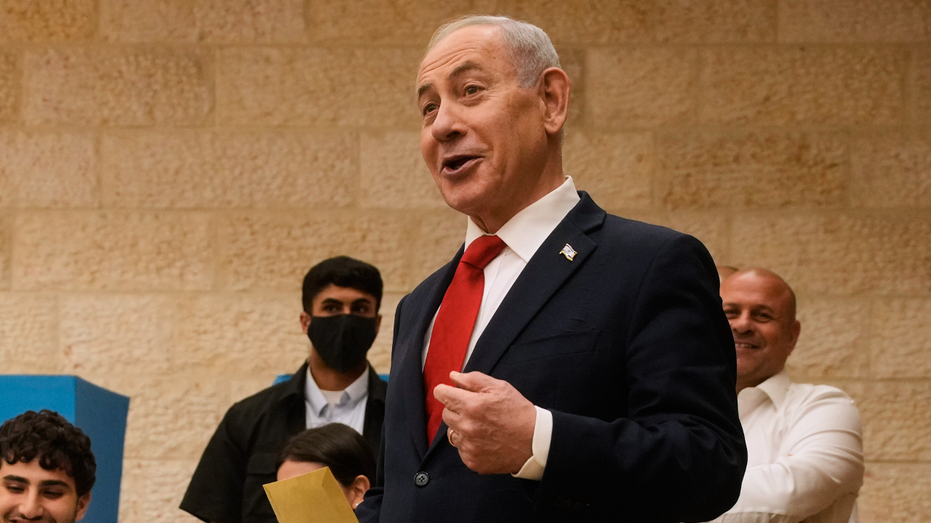
Ahead of Israel’s Oct. 27 national vote, President Donald Trump issued a sweeping endorsement of Prime Minister Benjamin Netanyahu’s re-election bid, calling him a "great warrior," an "even greater partner for peace" and an ally in the confrontation with Iran.
The backing could give Israel’s longest-serving prime minister a boost ahead of the country’s first national vote since the Hamas-led Oct. 7, 2023, massacre. The election is widely viewed in Israel as a referendum on whether to grant Netanyahu another term to pursue his war objectives, including disarming Hamas and Hezbollah and countering the nuclear threat from the Islamic Republic.
In response, Netanyahu thanked Trump for his "extraordinary endorsement." "Together we will never let Iran’s regime get nuclear weapons," he said.
Addressing the endorsement, Doron Spielman, international spokesman for the Israeli Prime Minister’s Office, told Fox News Digital that no personal or professional bond in the history of U.S.-Israel relations compares with the current partnership.
"Israel and the U.S. have stood together as the two countries bearing the torch for the West, and that is a direct result of the incredible relationship between President Trump and Netanyahu," he said.
He reiterated Netanyahu’s long-standing foreign-policy priority and central campaign promise: ensuring that Iran does not acquire atomic bombs under his watch.
"Israel prefers to do this with the U.S., which has been our greatest ally and friend, and who has already entered the front with us twice. But already at the time of Operation Rising Lion, Israel showed that it was willing to act alone. Israel acted for over a week before the U.S. joined," he said, in reference to the June 2025 military mission against Iran.
Israel’s longest-serving prime minister, with roughly 20 years in office, Netanyahu began his diplomatic career in 1982 as deputy chief of mission at Israel’s embassy in Washington, D.C. He served as Israel’s ambassador to the United Nations from 1984 to 1988 before entering politics with Likud. He became the party’s chairman in 1993 and was first elected premier in 1996.
After losing the 1999 election, Netanyahu returned to government in 2002 as foreign minister and later served as finance minister. He returned to the premiership in 2009, serving until 2021 and again from late 2022. He is widely credited with liberalizing Israel’s economy and helping transform the country into a global high-tech hub.
Netanyahu’s current political allies include Itamar Ben-Gvir’s Otzma Yehudit, Bezalel Smotrich’s Religious Zionism-Zehut, and the ultra-Orthodox parties Shas and United Torah Judaism. The newcomer Amcha Yisrael, led by Ofer Winter, could also join the bloc, although Winter is currently feuding with Likud over concerns that his party, which is hovering near the electoral threshold, could split the right-wing vote and potentially "waste" tens of thousands of ballots.
According to most Hebrew-language media polls, neither Netanyahu’s bloc nor the opposition led by Gadi Eisenkot currently has a clear path to securing the 61 Knesset seats needed to form a government.
If no candidate can assemble a governing coalition, Israel could head to another election, repeating the cycle of political instability that saw the country hold four national votes between April 2019 and March 2021.
Dan Diker, president of the Jerusalem Center for Security and Foreign Affairs, told Fox News Digital that any incoming government will face the same formidable security challenges as the current one, with few prospects for quick victories.
"The major challenge in this election will be what Netanyahu discussed in terms of adjusting the national security concept to prioritize prevention. That means taking very serious, assertive and aggressive military counterterrorism and nonmilitary actions against our enemies," Diker said.
The Israeli left, center and even far-right believe Netanyahu has failed to meet the expectations associated with his image as "Mr. Security," according to professor Tamar Hermann, a senior researcher at the Israel Democracy Institute.
"He promised to topple the Iranian regime, he promised to dismantle Hamas, he promised to crush Hezbollah. None of it was achieved," Hermann told Fox News Digital. "He gave a green light to not punishing vigilantes in the settlements who act against Palestinians. He also gave too much to the ultra-Orthodox parties, giving up on the idea of universal conscription."
Hermann said that Netanyahu’s current term has been his least successful, beginning with the judicial reform push, which triggered mass protests in 2023, and followed by the Palestinian terror attacks on Oct. 7. Netanyahu subsequently faced public anger over his handling of the hostage crisis, although, in coordination with Trump and his envoys, he ultimately secured the return of all the captives.
"In the eyes of some, his legacy will be that he inflicted a huge disaster upon Israel in terms of what happened to civilians on Oct. 7 and the deterioration of Israel’s international image," she said.
Michael Oren, a former Israeli ambassador to the United States, framed the upcoming election in terms of legacy and how Netanyahu will be remembered 50 years from now.
"There are two types of leaders: leaders in history and leaders of history," he told Fox News Digital. "There are leaders who go into office and perform as best they can, and there are leaders who go into office and see themselves as transformative, as having a historical role like Abraham Lincoln, Roosevelt or Churchill. Benjamin Netanyahu belongs to this category."
Oren said Netanyahu sees his mission as saving Israel from existential threats, foremost among them Iran, a goal he has yet to achieve.
"He is willing to endure virtually limitless criticism and condemnation around the world, as well as mass demonstrations against him, to fulfill this one role," he said. "To understand that is to understand Benjamin Netanyahu: He is a leader of history."
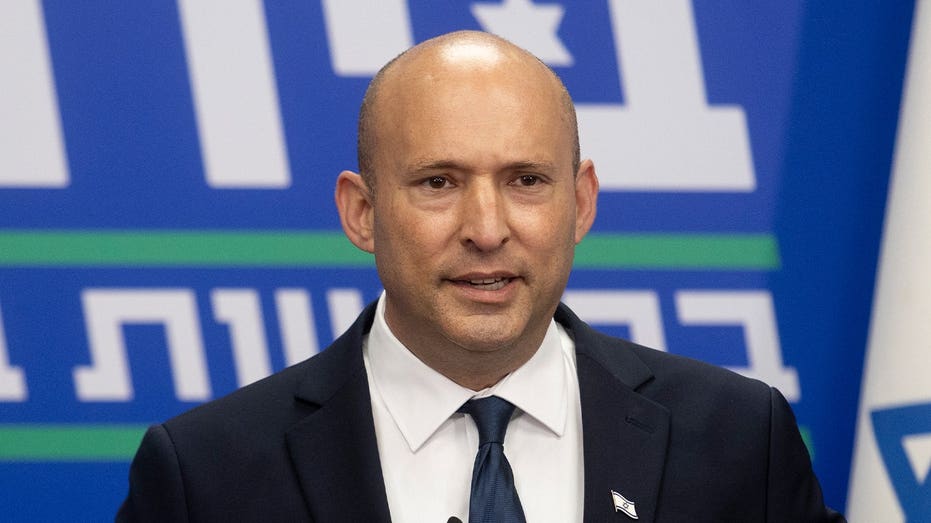
Former Israeli Prime Minister Naftali Bennett is seeking a political comeback with an ambitious vision for the Middle East: expanding the Abraham Accords, building economic partnerships with Arab nations and rebuilding Israel's strained international relationships, particularly with the United States.
For Bennett, whose American parents moved to Israel from San Francisco, the U.S. connection is both personal and political. The 54-year-old former technology entrepreneur, a familiar face on American television, believes his business background could help him work with President Donald Trump to advance regional diplomacy.
"Naftali Bennett is the right leader to strengthen Israel’s global standing, including among the American people, thanks to his proven track record of working with world leaders and bringing people together, both as prime minister and as a successful businessman," Bennett’s campaign told Fox News Digital.
"We are confident that our great friend in the White House, President Trump, and Israel’s allies around the world will welcome the opportunity to work with Bennett and the new government he intends to form. Together, we will revive the Negev Forum and expand the Abraham Accords, strengthening regional security and stability. That is why so many leaders across the Middle East and beyond who share a vision of a more secure, prosperous and stable region are eager to see Bennett lead Israel’s next government."
"He was a businessman, not a career politician, same as me," Bennett told The Times of Israel in June, referring to Trump. "His worldview is, let's get stuff done. Let's look at results, not process. And that's precisely my view."
Bennett said he would aggressively pursue regional agreements through economic cooperation, seeking to build on the U.S.-brokered Abraham Accords. But while his ambitions overlap with Trump's regional agenda, the president endorsed Prime Minister Benjamin Netanyahu for re-election on Oct. 18.
Bennett also faces an unusual political challenge at home. His joint Beyachad, or Together, party with former Prime Minister Yair Lapid is polling behind both Netanyahu's Likud and former military chief Gadi Eisenkot's Yashar party.
A Channel 12 poll published Oct. 23 projected 23 Knesset seats for Eisenkot, 21 for Netanyahu and 15 for Bennett and Lapid.
Yet Bennett knows better than most Israeli politicians that leading the largest party is not necessary to become prime minister. In 2021, he took office despite his Yamina party winning just seven of the Knesset's 120 seats, demonstrating the power of coalition negotiations in Israel's parliamentary system.
Born in Haifa to American immigrants, Bennett served in Israel's elite Sayeret Matkal and Maglan military units before co-founding cybersecurity company Cyota, which was sold for $145 million in 2005.
He entered politics as Netanyahu's chief of staff, later led the Yesha Council representing West Bank settlements and served as economy, education and defense minister.
A religious Zionist and longtime opponent of Palestinian statehood, Bennett stunned Israel's political establishment in 2021 when he formed a coalition spanning right-wing, centrist, left-wing and Arab parties, ending Netanyahu's 12 consecutive years in power.
The coalition collapsed in 2022, leaving many former supporters accusing him of betraying his electoral promises.
Einat Halevy Levin, a strategic advisor who has known Bennett for years, described a politician who has spent his time outside office preparing for a second opportunity.
"In 2021, he wasn't prepared. He hadn't built a governing party; he had built another election campaign," Halevy Levin told Fox News Digital.
She said she met Bennett at his home in November 2023, following the Oct. 7 Hamas attack, when he had decided to return to politics.
This time, according to Halevy Levin, Bennett spent years building a political organization, carefully screening candidates and developing the infrastructure needed to govern.
"I've known him since he was economy minister. He was always daring and full of creative ideas, but was more inclined to stick to his own views," she said. "He has undergone a transformation."
Bennett's regional ambitions reflect an approach to diplomacy shaped by his business experience, according to Halevy Levin.
She recalled attending a meeting with a senior official from a neighboring country who appeared astonished by Bennett's detailed knowledge of its economy and priorities.
"He wasn't looking at the country through a military lens," she said, describing Bennett's focus on identifying shared economic interests rather than approaching every regional relationship primarily as a security challenge.
In an interview with Israel's Channel 13 on Sunday, two days before the election, Bennett pointed to his meetings as prime minister with Egyptian President Abdel Fattah el-Sisi, Jordan's King Abdullah II and UAE President Mohammed bin Zayed as examples of the diplomacy he hopes to revive.
He argued that Israel needs to present a new vision of a Middle Eastern renaissance and identified extremist settler violence in the West Bank as a major source of damage to its international standing.
"We need to eliminate Jewish terrorism in Judea and Samaria, and I say this precisely as a supporter of the settlement movement," Bennett said. "They do not represent the overwhelming majority of settlers, but right now this is the problem causing us the greatest damage internationally."
Bennett said he would direct Israel's senior police, military and intelligence officials to produce a plan within three days to crack down on extremist violence.
His foreign policy, however, remains firmly on the Israeli right.
On Iran, Bennett has promoted his "Octopus Doctrine," advocating direct action against Tehran rather than focusing exclusively on Iranian-backed groups.
"If Hezbollah fires at us, we strike Iran," he declared at an Aug. 19 policy conference.
On Gaza, Bennett opposes Palestinian statehood and supports maintaining Israeli security control until Hamas is disarmed. He has also proposed excluding Qatar and Turkey from Gaza's future arrangements while involving Egypt.
Those positions raise questions about how significantly his government would depart from Netanyahu's policies.
Danny Citrinowicz, a senior researcher at Israel's Institute for National Security Studies and former head of the Iran branch in Israeli military intelligence, argued that restoring Israel's diplomatic standing requires more than a change in leadership.
"If Bennett thinks he can support annexing E1 (an area east of Jerusalem where planned Israeli settlement construction could further fragment the West Bank), oppose a Palestinian state, continue the occupation of Gaza and simultaneously meet with Sisi and Abdullah and attract investment to Israel, he simply doesn't understand the depth of the international crisis," Citrinowicz said.
Citrinowicz argued that without a fundamental change in Israeli policy toward the Palestinians, replacing Netanyahu would not be sufficient to restore the country's international standing.
His warning comes amid changing American public attitudes toward Israel. A February 2026 Gallup survey found 36% of Americans sympathized more with Israelis, compared with 41% who sympathized more with Palestinians, a statistically insignificant five-point difference but a significant shift from the long-standing pro-Israel advantage.
A comeback built on lessons from 2021
Beyond foreign policy, Bennett is promising a sweeping domestic overhaul.
In an Oct. 25 manifesto, he pledged to redirect 30 billion shekels in government benefits toward families who work and serve in the military, reduce food prices by 30%, establish a state commission of inquiry into Oct. 7 and introduce an eight-year term limit for prime ministers.
His alliance with Lapid gives him an established political organization, but he faces competition from Eisenkot and continuing attacks from Netanyahu, who has warned that a future opposition coalition could depend on left-wing and Arab parties.
With Israel's fragmented parliamentary system requiring at least 61 seats to govern, coalition negotiations could prove as consequential as the election results themselves.
Bennett has already demonstrated that political reality once.
Now, four years after his first government collapsed, he is seeking to convince Israelis that the unconventional politician who became prime minister with seven seats has returned better prepared — and with a vision that could reshape Israel's place in the Middle East.
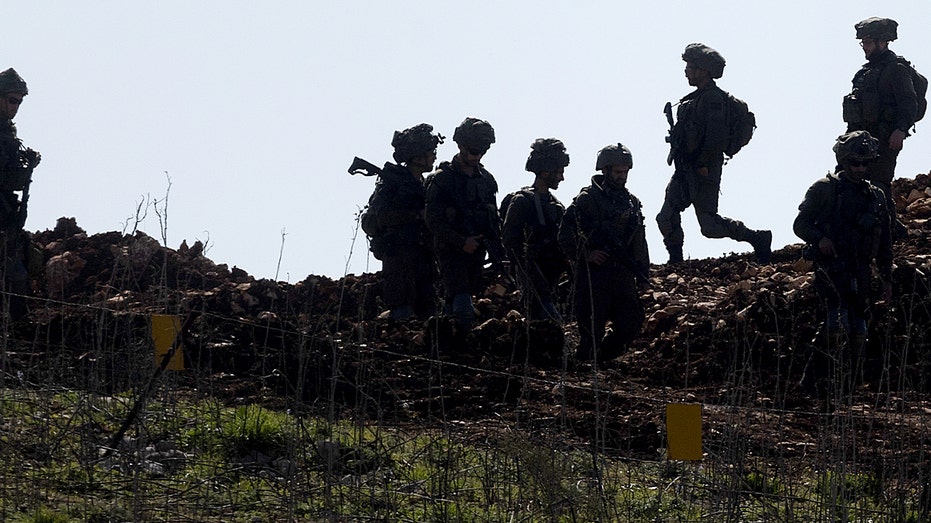
The Israeli military launched large-scale domestic military exercises on Sunday to counter surprise border infiltrations and ground raids across northern and central Israel, mobilizing multiple divisions and air assets amid rising regional tensions.
The drills, set to continue over 48 hours, came as an Israeli security expert invoked the 1973 Yom Kippur War, when Egypt and Syria used exercises to disguise preparations for a surprise attack, warning that escalating tensions in the region could in fact trigger what he described as a "dangerous miscalculation."
The large-scale maneuvers, the IDF said, involve the Northern Command’s 210th Division, the West Bank Division, and the Central Command’s 98th and 96th divisions, alongside the Israeli Air Force.
The exercise, scheduled just ahead of Israel's elections Oct. 27, aims to "maintain the forces’ alertness and readiness, strengthen the ability to defend communities, and make full use of aerial capabilities for defense in the area," according to the IDF.
On Friday, the IDF said troops would practice "a variety of scenarios, including a surprise attack and infiltration into Israeli territory by air and land," incorporating lessons learned from the Oct. 7, 2023, Hamas-led attacks on Israel.
"This exercise is mostly about non-state actors with or without Iranian support," Israeli national security analyst Dr. Ehud Eilam told Fox News Digital.
"It's aimed at those in Syria, Lebanon, and Jordan who might try to infiltrate into Israel or send ground raids. Some are supported by Iran; others are not. It could be planned by Iran or be a local initiative."
"This is a massive exercise, the biggest one in recent years, aimed at protecting the borders," the former Israeli Ministry of Defense researcher added.
"It's all about making sure that the election day on October 27 will run smoothly. It's also a message to Iran and others: don't try to provoke us during election day, so nothing will be disrupted."
The Israeli drills followed a show of force by Tehran days earlier, during which the Islamic Revolutionary Guard Corps (IRGC) fired roughly 30 ballistic missiles across two distinct weapon classes, according to reports.
That live-fire display highlighted Iranian strike capabilities and sparked renewed alerts about commercial shipping in the Strait of Hormuz and prompted the Israeli military to heighten its alert level while maintaining maximum readiness for a targeted strike against Iran.
During a visit to the IDF's Central Command on Wednesday, Chief of Staff Lt. Gen. Eyal Zamir warned that the risk of escalation was growing.
"Given the numerous warnings across all fronts and the sensitivity of the current period, the potential for escalation has increased," Zamir said.
"To ensure better operational control on the ground, we have reinforced our troop deployments across all sectors, including moving the 98th Division into the area to strengthen security and stability."
"Part of mutual deterrence: a few days ago, Iran had their own pretty big exercise, and that was actually more intimidating as far as Israel is concerned because they launched missiles and prepared for a war with Israel," Eilam said.
"This exercise on Sunday and Monday is against Iran's proxies and allies at the border of Israel."
Sunday’s Israeli drill also followed an Oct. 19 mission in which Israeli fighter jets and aerial refueling tankers flew 800 miles across Syrian and Iraqi airspace to Iran’s border.
Washington was notified in advance and viewed the maneuver as a non-kinetic show of force following the postponement of a broader strike package earlier in the month.
Despite the deterrence signals, Eilam warned that large-scale military exercises carry the "risk of miscalculation" and particularly when troop movements could be mistaken for preparations for an attack.
"During the Cold War, every time the Soviet Union or NATO carried out a major drill, having so many troops in the field meant they might attack if that was the intention," Eilam said.
He pointed to the 1973 Yom Kippur War, when Egypt and Syria used military exercises to help conceal troop buildups along Israel's borders.
Israeli intelligence largely dismissed the movements as routine drills, allowing the two countries to achieve strategic surprise when they launched a coordinated, two-front attack on Yom Kippur.
"The classic example in Israel is 1973, when Egypt and Syria conducted a major exercise just before the war that turned into the actual attack," the analyst said.
"Israel and Iran are now watching each other very closely and both sides suspect the other might strike first," Eilam added before stating that there is the chance of what they call "miscalculation — that each side suspects the other and strikes first by mistake."
"It's all about sending messages to each other."
"It remains uncertain whether there will eventually be an Israeli attack on Iran because it depends on U.S. authorization," Eilam concluded.

 Login