Israelis headed to voting centers on Tuesday, October 27, in legislative elections to choose the members of the parliament, known as the Knesset.
The event marks Israel’s first general election since the October 7 attacks, which Netanyahu’s government expanded into a multi-front regional war.
Who is competing in the elections?
For many, these elections serve as a direct referendum on Prime Minister Benjamin Netanyahu and the far-right bloc he heads.
The Pro-Netanyahu Bloc
This bloc comprises the National Liberal Party (Likud) led by Netanyahu, the Religious Zionist Party (HaTzionut HaDatit) led by current Finance Minister Bezalel Smotrich, and Jewish Power Party (Otzma Yehudit) led by National Security Minister Itamar Ben-Gvir.
The coalition advocates for the consolidation of Israeli rule throughout the occupied Palestinian territories, explicitly rejects the possibility of Palestinian statehood, promotes the expansion of settlements and the implementation of hardline security measures against Palestinians. It also calls for disavowing the Oslo Accords, and the total disarmament of Hamas.
The anti-Netanyahu bloc
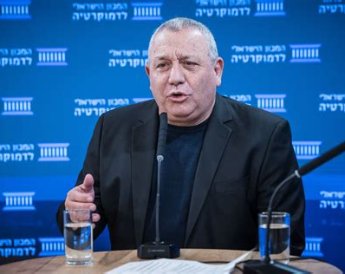
The primary competitor to Netanyahu and his coalition is the bloc led by Gadi Eisenkot, a former military chief of the Israeli forces. It represents a center-right to center-left opposition when it comes to Israeli internal affairs, but of course not to Palestinians and their destiny.
Eisenkot is the architect of the “Dahiya Doctrine,” an Israeli military strategy that calls for applying massive, disproportionate firepower and the widespread destruction of civilian infrastructure in order to create long-term deterrence, and discourage the local population from supporting any force resisting Israel.
He was also a member of Netanyahu’s war cabinet for the first eight months of Israel’s genocide in Gaza.
Eisenkot’s bloc includes the Yashar Party, led by Eisenkot, and the Together alliance (Beyachad), led by former prime minister Naftali Bennett. It also includes The Democrats (HaDemokratim) – a merger of the Labor and Meretz parties – led by Yair Golan, a retired IDF Major General.
Israel Is Our Home Party (Yisrael Beiteinu) led by Avigdor Liberman, is also part of Eisenkot’s coalition.
Liberman, who formerly held ministerial portfolios in the Israeli government as minister of finance, defense, foreign affairs, strategic affairs, transportation, and national infrastructure alongside being a deputy prime minister, is known for his hawkish stances towards Palestinians.
Defending the use of live ammunition by Israeli forces against Palestinian demonstrators during the 2018 Gaza border protests (known as the Great March of Return), Liberman stated:
“There are no innocents in Gaza.”
Although the components of this coalition are united by their goal to oust Netanyahu, they remain deeply aligned with their political rival’s traditional right-wing stance regarding the Palestinian cause.
The coalition opposes the creation of an independent Palestinian state, while supporting the ongoing military operations in the Gaza Strip, the West Bank and other parts of West Asia, and maintaining existing settlement frameworks.
Some of the coalition’s affiliated parties further encourage separating Israeli and Palestinian populations, and retaining complete Israeli security control over strategic areas such as the Jordan Valley. They also demand the full demilitarization of any future Palestinian entity.
Others call for the dismantling of the Palestinian Authority, the annexation of Area C in the West Bank, and the entrenchment of discriminatory policies against Arab citizens in Israel.
The Arab-led lists
The Arab-led lists represent the minority of Palestinian citizens in Israel (also known as Arab-Israelis), a community that makes up roughly 21% of Israel’s total population, estimated at 10.3 million.
Even though both lists fight for the same minority group’s rights, they hold opposing views on the goals, values, and strategy needed to represent them effectively.
While representing a minority, these lists hold a critical and often polarizing role in Israeli elections, as they frequently act as a critical balance of power that strongly determines whether a governing coalition can be formed.
These lists include the Joint List and the United Arab List.
The Joint List
The Joint List consists of:
- The Democratic Front for Peace and Equality (Hadash) led by Yousef Jabareen, a prominent Palestinian legal scholar, academic, and politician.
- The Arab Movement for Renewal (Ta’al) led by Dr. Ahmad Tibi, a prominent Palestinian politician, who has served as a member of Knesset since 1999.
- The National Democratic Alliance (Balad) led by a prominent Palestinian politician and historian Sami Abu Shehadeh.
The coalition advocates for Palestinian self-determination and civil rights, for an end to the Israeli occupation, and for the establishment of an independent Palestinian state along the 1967 borders with Jerusalem as its capital.
It also demands full legal equality and state recognition for Palestinian Arab citizens as an indigenous national minority, and calls for immediate government and law enforcement intervention to curb the increase in organized crime in Arab municipalities.
Structural reforms to secure building rights, expand municipal boundaries, and stop punitive home demolitions are top priorities on the Joint List’s agenda.
The United Arab List
The United Arab List (Ra’am) is an Islamist and conservative political party led by Mansour Abbas, a prominent Palestinian politician, whose party was the first independent Arab-Muslim faction to join an Israeli government.
Unlike traditional Arab political lists, Ra’am demonstrates a willingness to ally with Jewish political parties in government. It uses a pragmatic, integration-focused strategy to gain political influence and enhance the socioeconomic wellbeing of Arab-Israeli citizens.
Ra’am prioritizes the immediate domestic needs of Arab communities inside Israel, such as fighting local organized crime, improving public infrastructure, securing budgets, and resolving housing issues.
Netanyahu is alarmed by surging Arab voter turnout
Media reports indicated that Arab citizens voted in numbers not seen in decades, which in turn pushed Netanyahu to launch an urgent social media campaign, warning of the growing participation of Arabs.
Urging his supporters to go out and vote, Netanyahu appeared in a video, accusing Ra’am of bribing voters with envelopes of cash in the southern areas occupied by Israel.
“My brothers and sisters, Likud voters, this is an emergency call, because they are trying to steal the election from us. This morning, the police announced something serious and unusual. They caught three of Ra’am’s senior financial figures with envelopes of cash in the south. This is criminal. They will get to everyone. You have been warned, the voter turnout in the Arab sector in the south is incomparably higher than in the Jewish sector. You must go out and vote,” Netanyahu said.
He also claimed that left-wing women escorted Arab women to the polls.
Shortly before polls closed at 10:00 pm local time, the final reported voter turnout reached 74.3%, the highest in decades, with exit polls showing no clear winner, and pointing to a political deadlock.
It is expected that the final tally and initial results will be published between Thursday afternoon, October 29, and Friday morning, October 30, while the official results will be announced on November 4, 2026.
All roads lead to genocide, no matter which bloc wins
While many are looking forward to the loss of Netanyahu’s bloc in the elections, hoping that a new government will be less brutal against Palestinians and people across the West Asia region, analysts suggest that Eisenkot’s bloc adopts the same Zionist ethnic cleansing-based ideology.
In an interview with BreakThrough News, Israeli-American author, activist and founder of Palestine House of Freedom Miko Peled argued that there are no differences between the two competing blocs when it comes to issues like Israel’s war on Iran, the mass killing in Gaza, forcing Palestinians to flee the besieged enclave. Meanwhile, disputes on the internal Israeli issues – mainly the draft of ultra-orthodox jews in the military and initiating an independent inquiry into the failure of the army and intelligence on the October 7 attacks – remain serious.

 Login