
❌

Reading view

Venezuela Appoints Oliver Blanco as New Foreign Minister
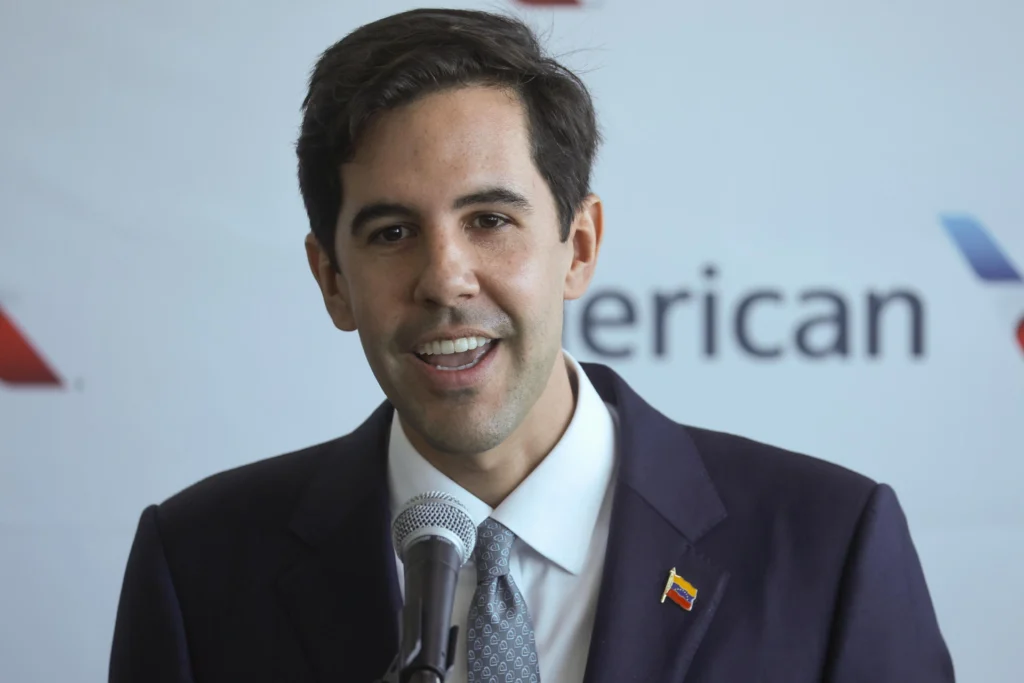
Oliver Blanco, 35 years old, has a degree in International Studies and a master’s degree in Political and Government Studies. Photo: EFE.

Venezuela’s Acting President Delcy Rodriguez appointed Deputy Minister Oliver Blanco as the country’s new Foreign Minister on Thursday, while outgoing top diplomat Félix Plasencia will lead the mission to recover Venezuelan gold held in the United Kingdom.


Acting President Delcy Rodriguez announced the moves in Caracas during an event focused on the National Electric System, where she also outlined plans for the country’s energy infrastructure.

The reshuffle places a 35-year-old diplomat at the helm of the Foreign Ministry and redirects a veteran official toward a long-running dispute over state assets frozen abroad.

RELATED: Delcy Rodríguez Announces Transformations, Labor Dialogue, and Reforms in Venezuela

“I have decided to appoint Oliver Blanco as Foreign Minister of the Bolivarian Republic of Venezuela. I hope this strengthened team keeps advancing in the changes and the geopolitical recovery of Venezuela in areas of cooperation and friendship with all countries,” Rodriguez said.

He designado a Oliver Blanco, joven profesional de las relaciones internacionales, como nuevo ministro del Poder Popular de Relaciones y Comercio Exterior. Confío en su preparación, compromiso y capacidad para asumir esta importante responsabilidad al servicio de Venezuela.… pic.twitter.com/A0gaqGOWnv

— Miraflores Al Momento (@MirafloresAM) October 29, 2026

Text reads: “I have appointed Oliver Blanco, a young professional in international relations, as the new Minister of People’s Power for Foreign Relations and Trade. I trust in his preparation, commitment and ability to take on this important responsibility in the service of Venezuela. I thank Félix Plasencia for his dedication and work at the head of the Chancellery, and who will now assume new international strategic tasks.”

The new Foreign Minister Blanco, holds a degree in International Studies from the Central University of Venezuela and a master’s degree in Political and Government Studies from the Metropolitan University. His previous post covered Europe and North America, a portfolio that included some of the governments most active in the sanctions and asset disputes that have defined Venezuela’s recent foreign relations.

Gold Recovery Mission

Felix Plasencia, who steps down as Foreign Minister, will now serve as director of International Affairs for the Presidency. His immediate priority is clear. “His first task is to settle in the United Kingdom until we recover the gold that belongs to Venezuelans,” the Acting President Rodriguez stated.

The assignment follows a request Rodriguez made on Wednesday. She asked the Foreign Ministry and the Attorney General’s Office to begin formal procedures to recover Venezuelan gold retained at the Bank of England. The precious metal has been at the center of a legal battle involving rival claims over Venezuela’s legitimate government, with London courts weighing which authority controls the reserves.

Recibo con mucha humildad y compromiso la responsabilidad que me ha encomendado la presidenta encargada, @delcyrodriguezv.

Defenderé nuestra soberanía y el interés nacional con firmeza, trabajando siempre por alcanzar beneficios concretos para nuestra gente.

Me siento orgulloso… pic.twitter.com/AamIdSnuvS

— Oliver Blanco (@OliverBlanco) October 29, 2026

Text reads: “I accept with great humility and commitment the responsibility entrusted to me by the Acting President @delcyrodriguezv. I will defend our sovereignty and national interest firmly, always working to achieve concrete benefits for our people. I am proud to accompany the Acting President in this process of democratic transformation, to which we all have something to contribute to bring it to a successful conclusion.”

Cabinet Reshuffle Expand

The changes extend beyond the two senior positions. Marynna Saatdjian will take over as Vice-minister for Europe and North America, filling the role Blanco leaves behind. Saúl Ameliach, until now a Vice-minister at the Ministry of Economy and Finance, moves to head the Vice-ministry of International Trade.

Acting President Rodriguez framed the appointments as part of a broader effort to strengthen Venezuela’s diplomatic corps. She emphasized that the government will continue pursuing cooperation and friendship with all countries while defending national sovereignty.

The diplomatic shift carries particular weight given the gold dispute. Venezuela has pursued the release of its reserves held in London for years, arguing the assets belong to the Venezuelan people and are needed for social programs and economic recovery. By sending Plasencia directly to the United Kingdom, the government signals it intends to press the matter with renewed intensity.

With Blanco at the Foreign Ministry, Plasencia handling international affairs from the Presidency and new vice ministers in place, the administration has assembled a team positioned around two core objectives: restoring full diplomatic engagement and reclaiming state assets held overseas.
  •  

Venezuela Demands Bank of England Return Its Gold Reserves

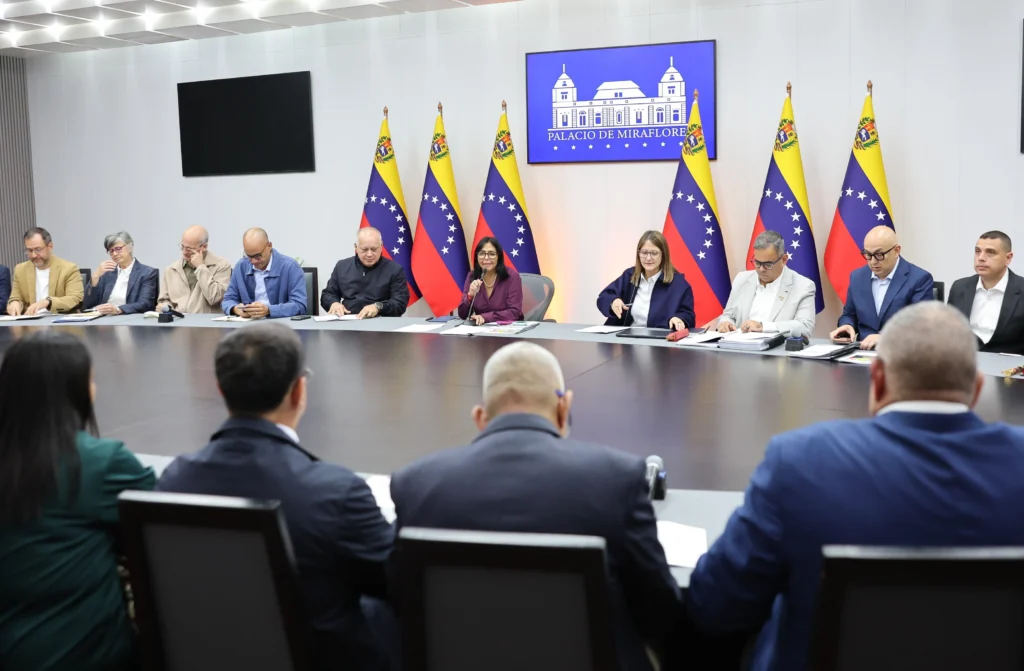
Acting President Delcy Rodriguez pointed out that the gold retained is the reserve of the Central Bank of Venezuela. Photo: Venezuelan Presidential Press.

Acting President Delcy Rodriguez demanded Wednesday that the Bank of England return Venezuela’s gold, calling the metal a Central Bank reserve that belongs to the Venezuelan people and declaring that no excuse remains.


Venezuelan Acting President Delcy Rodriguez delivered the demand during a working meeting with the Council of Ministers and regional authorities held at Miraflores Palace. She insisted the gold constitutes a reserve of the Central Bank and belongs to the nation.

Rodriguez recalled that the National Assembly, including the 2015 legislature, had produced an agreement in which political sectors of Venezuela called for the gold’s return, framing the demand as a settled matter of national will.

RELATED: Venezuela Oil Production Hits 1.25 Million Barrels Daily in Major Recovery

The Acting President added that an irrational legal action that opposition figures had attempted was dropped by those same actors. That withdrawal, she argued, removed any remaining justification for the Bank of England to hold the metal.

“There is no excuse. That is the only thing I have to tell the Bank of England. They must return Venezuela’s gold, which belongs to Venezuelan men and women”, she stated.

The language was direct. Rodriguez offered no room for negotiation, framing the gold as a sovereign asset held outside the country against the will of Venezuelan institutions.

#28Oct | La presidenta encargada de Venezuela, Delcy Rodríguez, solicitó a la Cancillería de la República y a la Procuraduría General que inicien las gestiones correspondientes para recuperar el oro venezolano que se encuentra en el Banco de Inglaterra.

“No voy a dejar de exigir… pic.twitter.com/0c91WycZcn

— El Diario (@eldiario) October 28, 2026

Text reads: “The Acting President of Venezuela, Delcy Rodriguez, requested the Ministry of Foreign Affairs and the Office of the Attorney General to initiate the appropriate steps to recover the Venezuelan gold that is at the Bank of England. “I will not stop demanding the Bank of England to return our gold. Enough excuses. There was an agreement”, said Rodriguez, referring to the agreement to recover international reserve assets reached last August during the first cycle of dialogue between the delegations of the elected National Assembly in 2015 and the government (…)”

Mining Push Grows

The same working session included a live link with Mining Minister Hector Silva from the Choco plant in Bolivar state. Silva confirmed the arrival of 41 surface machines, part of a total of 544 pieces of equipment purchased by the state.

Those machines are meant to boost gold and coal production. The government tied the mining drive to strengthening the country’s reserves and generating income for social projects, health care, and worker welfare.

The equipment delivery anchors the government’s broader argument. Venezuela insists it does not need foreign permission to manage its resources, whether gold underground or gold stored abroad.

The Bolivarian government also pledged a productive revival across the country to energize the engines of the economy and support organized local development. The gold demand sits at the center of that agenda. Every program announced, from ham production to health brigades, depends on revenue the government says its reserves should generate.

Venezuela has long argued that the Bank of England’s refusal to release the gold violates its sovereignty. Acting President Rodriguez renewed that claim in the sharpest terms, insisting the metal funds the welfare of a people, not the accounts of a foreign institution.

No response from the Bank of England appears in the official record. The demand now stands public, delivered from the presidential palace and addressed directly to London.

  •  

Russia Sells 62 Tonnes of Gold in Biggest Reserve Drawdown Since 1998

Russia’s central bank has reduced its gold holdings to their lowest level in nearly seven years as the Kremlin faces a widening budget deficit, declining energy revenues and mounting expenditure on its war against Ukraine.

Russia has carried out its largest sustained reduction in gold reserves since the financial crisis of 1998, disposing of approximately 62 tonnes of the precious metal since December 2025 as the government draws on accumulated reserves to finance a growing federal budget deficit.

According to figures released by the Bank of Russia on Tuesday, 20 October, the country’s monetary gold reserves declined by another 200,000 troy ounces, equivalent to approximately 6.2 tonnes, during September.

The latest reduction brings Russia’s official gold holdings to 72.8 million troy ounces, or approximately 2,264 tonnes, their lowest level since the end of 2019.

The central bank has now reduced its gold holdings for ten consecutive months, reversing the accumulation strategy pursued by Moscow in the years preceding its full-scale invasion of Ukraine.

Largest gold sell-off since the 1998 crisis

The scale of the current reduction is exceptional by Russian historical standards.

According to International Monetary Fund data cited in reporting on the latest figures, the only more rapid depletion of Russian gold reserves in the country’s modern history occurred during the 1998 financial crisis.

At that time, Russia’s central bank disposed of approximately 118 tonnes of gold over three months as the government defaulted on domestic debt and the rouble collapsed.

Some of those holdings were subsequently replenished, leaving the country’s gold reserves approximately 50 tonnes lower at the end of 1998.

The reduction recorded during 2026 has already exceeded that annual net decline, although Russia’s present financial position differs substantially from the circumstances surrounding the 1998 default.

The monetary value of Russia’s remaining gold reserves stood at approximately $301.6 billion at the end of September, compared with $333.5 billion a month earlier. The change reflects movements in gold prices as well as the reduction in physical holdings.

Budget deficit reaches 7.3 trillion roubles

The sales come as the Russian government struggles to contain expenditure associated with its continuing military campaign against Ukraine.

Moscow now expects its federal budget deficit to reach 7.3 trillion roubles, approximately $87 billion, in 2026. That represents 3.2 per cent of gross domestic product, twice the deficit originally anticipated.

Military and security expenditure is expected to account for approximately 38 per cent of total federal spending this year.

The government has increasingly relied on its National Wealth Fund, established to accumulate surplus energy revenues, to cover budget shortfalls.

The central bank’s gold transactions are linked to operations involving the fund. Under this mechanism, the Bank of Russia conducts corresponding market sales following Finance Ministry transactions using the fund’s assets.

Figures published by Russia’s Finance Ministry earlier this month showed that the National Wealth Fund’s liquid assets had fallen to approximately 3.8 trillion roubles, equivalent to $45 billion, as of 1 October. This was down from approximately 4 trillion roubles a month earlier.

The fund’s total assets remained substantially larger, at almost 13 trillion roubles, but much of that amount is invested in shares, bonds and other holdings that cannot immediately be converted into funds for government expenditure.

War expenditure puts pressure on Kremlin finances

Russia’s fiscal problems have been compounded by weaker oil and gas revenues, a slowdown in economic activity and the increasing cost of sustaining military operations.

Although energy exports continue to generate substantial income, government revenue has failed to keep pace with spending commitments.

Moscow has consequently increased domestic borrowing, introduced additional taxes and sought alternative sources of budget financing.

The latest gold figures provide further evidence of the financial demands imposed by the war, now approaching its fifth anniversary.

They do not indicate that Russia is approaching an immediate financial collapse. The country still holds considerable gold and foreign exchange reserves, with the central bank reporting total international reserves of approximately $731.8 billion at the end of September, although access to part of its overseas assets remains restricted by Western sanctions.

Nevertheless, the continued liquidation of gold holdings reduces the reserve assets available to the Russian authorities at a time when military spending remains elevated and the government faces pressure to meet its domestic financial commitments.

For President Vladimir Putin, the growing budget deficit introduces an additional economic consideration into decisions over the duration of the war.

The September figures show that Moscow is increasingly drawing on assets accumulated before the invasion to support current expenditure, while its capacity to rebuild those reserves remains dependent on future revenues and the government’s ability to restrain spending.

  •  

State Bank of Pakistan profit falls 20% to Rs 2 trillion

KARACHI: The State Bank of Pakistan’s consolidated profit fell nearly 20% to Rs 1.999 trillion for the fiscal year ended June 30, 2026, as a sharp decline in interest and markup earnings outweighed a turnaround in exchange-related gains, according to the central bank’s consolidated financial statements approved Thursday. The central bank reported profit after tax ... Read more

The post State Bank of Pakistan profit falls 20% to Rs 2 trillion appeared first on BOL News.

  •  
❌