After being held hostage by Hamas for 246 days following the October 7 attacks, Noa Argamani became one of the world's most recognizable advocates for those still in captivity.
Now, she's building a new path in venture capital at Vine Ventures, working with Israeli founders to scale their businesses in the US.
As part of Business Insider's The Long Play, Argamani opened up about the life and career she is building now, and how she plans to use her platform to support entrepreneurs in the region.
In a conversation with Business Insider editor in chief Jamie Heller titled "The Next Chapter," Argamani talked about how she chose venture capital as a career path, connecting with Michael Milken, and continuing her advocacy work.
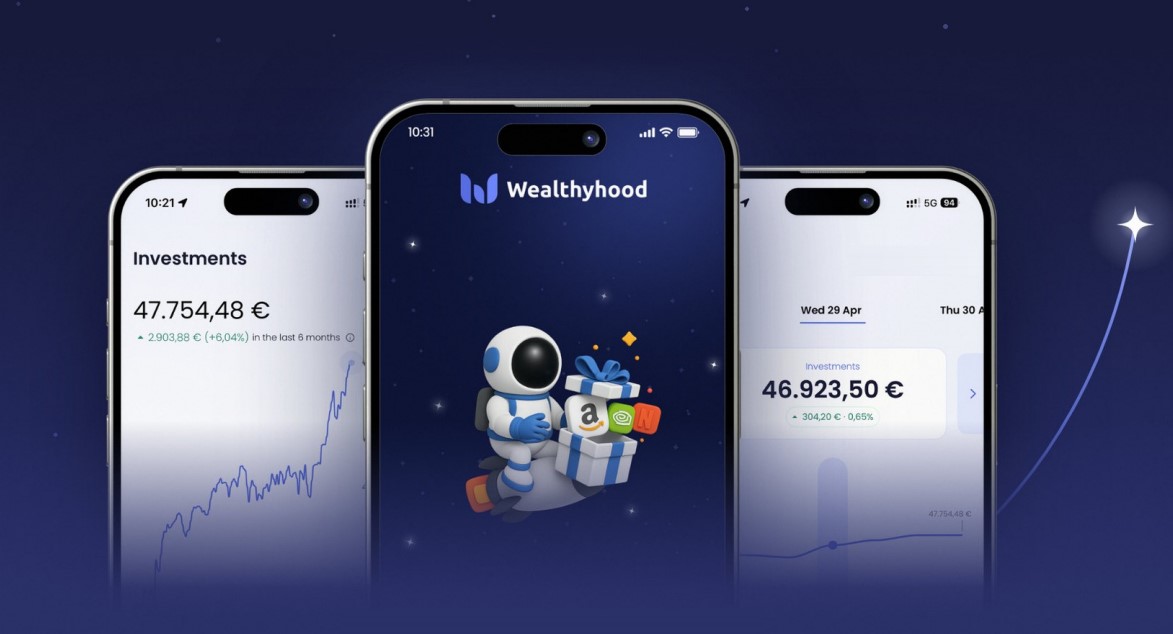
Investment platform Wealthyhood has recorded a five-fold increase in investors and an eight-fold rise in client assets in Cyprus between June and September 2026, with data from its partnership with the Bank of Cyprus pointing to growing interest in local shares, exchange-traded funds and accessible long-term investing.
The figures, published in ‘Wealthyhood’s Cyprus Investor Pulse 2026‘ report, cover anonymised and aggregated data from clients resident in Cyprus between June 1 and September 30, with the findings highlighting how lower entry costs and simpler account funding can encourage participation in financial markets.
Alexandros Christodoulakis, co-founder and chief executive of Wealthyhood, told the Cyprus Mail that the response from Cypriot investors had exceeded expectations in terms of the quality of their engagement.
“People in Cyprus didn’t need to be convinced that investing matters. What they were missing was a simple, trusted way to start, and once that existed, they moved quickly,” he said.
The report found that 88.6 per cent of clients who deposited money went on to buy a stock or exchange-traded fund (ETF), compared with 80.4 per cent among clients who signed up in Greece during the same period.
Christodoulakis said the company was encouraged by the extent to which customers were continuing to invest after opening their accounts, rather than simply registering and leaving the platform.
“Of those who joined in June or July and invested, 88.9 per cent were still invested on September 30,” he said.
“Seven in ten (70.3 per cent) have never sold an investment, and six in ten (59.1 per cent) made a second deposit within 30 days of their first,” Christodoulakis continued. “People are not trying the app once and walking away; they are building a habit.”
He added that four months of activity remained an early snapshot, but that the quality of engagement had been particularly encouraging.
Low entry barriers foster early activity and habit-building
The report also found that 58.4 per cent of new investors made their first investment within 7 days of signing up, while 14.4 per cent invested on the same day.
The typical first deposit was €100, while the typical first investment amounted to €55. Almost two-thirds of investors, or 64 per cent, started with €100 or less, suggesting that many were entering the market with relatively modest sums.
More than half, or 56.8 per cent, made their first investment in an ETF, which allows investors to buy into a collection of companies through a single product.
The most popular first investment was the Vanguard S&P 500 ETF, accounting for 16.6 per cent of first investments, followed by Bank of Cyprus shares at 10.2 per cent.
Christodoulakis said traditional barriers to investing included high minimum investment requirements, fees that eroded smaller amounts, paperwork and complicated terminology.
“Faced with that, many people who could invest simply never start. Not because they don’t care about their future, but because the first step looks expensive, complicated and opaque,” he stated.
Wealthyhood aims to address these obstacles by allowing customers to invest in international and local markets from €1, with zero commission and fractional shares, alongside an education hub containing more than 50 guides.
The platform also offers Autopilot, an automated investing service through which users can make regular investments without having to manage each transaction manually. The typical Autopilot user invests €150 a month, according to the report.
Christodoulakis said access to financial markets needed to be accompanied by a better understanding of investment products and their risks.
“Access alone isn’t enough, though. People also need to understand what they’re buying and why, which is why education sits at the core of the app, not in a corner of it,” he said.
Investor demographics reveal mature and higher-earning profile
The report’s demographic findings challenge the assumption that investment applications primarily attract younger users.
The typical investor in Cyprus is 40 years old, works full-time and declares an annual income of between €30,001 and €50,000. The largest age group is 35 to 44, accounting for 31.7 per cent of investors, followed by those aged 45 to 54 at 25.9 per cent and those aged 25 to 34 at 25.3 per cent.
People under 30 account for 19.3 per cent of investors.
Income levels were also higher than those recorded among investors in Greece. Some 31 per cent of Cypriot investors declared annual incomes above €50,000, while 24 per cent reported incomes below €20,000, compared with 58 per cent of investors in Greece in the latter category.
Full-time employees account for 86.5 per cent of investors, while 4.7 per cent are self-employed.
Finance and insurance is the most common industry, employing 31.5 per cent of investors, followed by information technology at 10.5 per cent and the public sector at 8.1 per cent.
Nicosia district accounts for 50.5 per cent of investors, followed by Limassol at 25.6 per cent, Larnaca at 14.9 per cent, Paphos at 5.1 per cent and Famagusta at 3.9 per cent.
Christodoulakis said the available data was not yet sufficient to establish how the investor profile had changed over time or to draw reliable conclusions about customers’ previous investing experience.
However, he said the behaviour observed so far pointed towards a cautious, long-term approach, characterised by small initial investments, ETFs and limited selling.
“One number I’d like to see change: about one in six new investors is a woman. Closing that gap is one of the biggest challenges for retail investing, in Cyprus and beyond,” he said.
He added that the market was increasingly being shaped by working people seeking greater control over their long-term finances, rather than traders attempting to profit from short-term market movements.
“As cost and complexity keep falling, I expect that profile to broaden, especially to younger people and to women,” he said.
Domestic shares drive engagement alongside global ETFs
The availability of domestic shares has also helped attract investors to the platform, with the Bank of Cyprus emerging as its most-bought individual stock.
Cypriot and Greek shares became available through Wealthyhood on July 17, allowing customers to hold domestic investments alongside international stocks and ETFs.
Customers can access Bank of Cyprus shares and 8 other companies listed on the Cyprus Stock Exchange, namely Vassiliko Cement, Demetra Holdings, Logicom, Cyprus Cement, Petrolina, Atlantic Insurance, Pandora Investments and GlobalWealth Group.
Within less than 3 months of the launch, 29.2 per cent of buyers had purchased at least 1 Cypriot share.
The Bank of Cyprus was bought by 35.8 per cent of stock investors, ahead of US technology company NVIDIA at 21.3 per cent and SpaceX at 12.6 per cent.
Among investors who purchased Cypriot shares, 82.6 per cent chose the Bank of Cyprus, followed by Vassiliko Cement at 16 per cent, Petrolina at 12.3 per cent and Logicom at 8.2 per cent.
The report found that domestic shares were bringing new participants into the market. For 52.8 per cent of investors holding Cypriot shares, a local company had been their first investment on Wealthyhood, compared with just 1.8 per cent among other investors.
Those holding Cypriot shares also had larger portfolios, with a typical portfolio 1.8 times the size of those held by other investors and containing 3 investments rather than 1.
Christodoulakis said familiar domestic companies could provide an accessible entry point for people who were less comfortable with international markets.
“People invest more readily in companies they know, and familiar local names are often the bridge into the market,” he said.
However, he stressed that local shares were complementing rather than replacing international investments.
The report found that 8.6 per cent of money invested since July 17 had gone into Cypriot shares, while Greek shares accounted for 12.3 per cent. Some 18.9 per cent of buyers had purchased at least 1 Greek share.
Across portfolios, 37.6 per cent of invested money was allocated to the United States, 21.1 per cent to global ETFs, 16.5 per cent to the rest of Europe, 11.3 per cent to Greece and 8.9 per cent to Cyprus.
The figures also showed the importance of ETFs in investors’ portfolios. The Vanguard S&P 500 ETF, which tracks the 500 largest US companies, had been purchased by 42.7 per cent of ETF investors and was held by 24.4 per cent of all investors on September 30.
Other popular ETFs included the Vanguard LifeStrategy 80 per cent Equity fund, purchased by 13.6 per cent of ETF investors, the SPDR MSCI World at 13.1 per cent and the iShares Nasdaq 100 at 11.9 per cent.
Among investors who still held investments on September 30, 42.5 per cent held only ETFs.
Dual exchange listings and long-term literacy goals
The report also examined access to shares listed in Athens. On September 30, 25.6 per cent of investors held at least 1 stock listed on Euronext Athens, including the Bank of Cyprus, while 7.6 per cent held a stock listed on the Cyprus Stock Exchange and 4.2 per cent held shares listed on both exchanges.
Athens-listed stocks accounted for 17.1 per cent of invested money, while Cyprus Stock Exchange-listed shares represented 2.1 per cent.
After the Bank of Cyprus, the most widely held Athens-listed stocks were Eurobank, at 5.1 per cent, followed by Allwyn and Alpha Bank, each at 2.8 per cent. Half of the 10 most widely held names were banks.
Christodoulakis said the company’s priorities in Cyprus were to improve financial education, encourage customers to turn initial investments into regular habits and expand the role of automated investing.
He said Wealthyhood and the Bank of Cyprus shared a responsibility to help close the financial literacy gap, particularly among younger people and women, by improving understanding of risk, diversification and the importance of time in investing.
“Giving people access to markets is only half of the job; helping them understand risk, diversification and time is the other half,” he said.
The company also wants to build on existing customer behaviour through services such as Autopilot, which can make regular investment contributions easier to maintain.
Christodoulakis said the first months of activity had demonstrated a clear appetite for accessible investing in Cyprus, but that the next challenge was to turn the initial momentum into sustained participation.
“Four months in, Cyprus has shown us the appetite is real. Now the work is to turn that early momentum into a generation of long-term investors,” he said.
Michael Burry, the investor of "The Big Short" fame.
Bloomberg/Getty Images
"The Big Short" investor Michael Burry says Anthropic's IPO filing has fueled his worries about AI.
Burry said a dense web of AI deals has made the industry "catastrophically vulnerable."
Writing on Substack, Burry described AI financing arrangements as "garish and audacious."
Michael Burry says Anthropic's IPO filing this week has reinforced his concerns that the entire AI ecosystem is at risk of disaster.
The investor of "The Big Short" fame wrote in a Substack post on Tuesday that the first in-depth look at Claude's parent company, ahead of what could be the biggest IPO in history, threw up a bunch of red flags.
Burry pointed to Anthropic's huge spending commitments, slowing revenue, and tangled ties.
He said that Anthropic has struck deals to buy about $537 billion of compute from the likes of Amazon, Alphabet, and Microsoft, and reached preliminary agreements worth hundreds of billions more with others such as SpaceXAI, putting its total commitments at about 12 times its current annual run-rate revenue.
"This is not stated clearly in the S-1, and in my view it is the most deserved headline from it," Burry wrote in a Tuesday Substack post.
He underscored how hyperscalers like Amazon and Alphabet act as Anthropic's "lenders, vendors, channel providers, and shareholders." He also outlined its deal with Broadcom, which involves Apollo and Blackstone and includes convertible notes and structured credit tranches.
"Just remember, the reason this is so complex is because too much debt is needed, and it must be unloaded from the balance sheets of those involved," Burry wrote.
"While some may see all the circularity and connectedness as security on the way up, and that is not wrong, it does leave the entire organism catastrophically vulnerable either on a pause or on the way down," he added.
He also described financing arrangements in the AI space as "garish and audacious," and said hyperscalers aren't generating enough cash to fund the AI buildout so they're resorting to "Byzantine" deals.
Burry said it was a "very similar" situation with vendor financing during the dot-com bubble, saying "people keep making the same mistakes with every new thing."
Burry's worries
In its filing, Anthropic said its revenue surpassed $16 billion for the first six months of this year, a 14-fold increase from the first half of 2025. Its operating loss narrowed by about two-thirds to below $700 million, and it generated nearly $4 billion in operating cash flow.
Burry initially commented on Anthropic's filing in a Substack chat thread on Monday.
He said that revenue was "slowing," citing Anthropic's claim that third-quarter revenue was 86 times the $197 million it generated in the fourth quarter of 2024, or about $16.9 billion.
That would mean Anthropic's revenue grew by about 46% between the second and third quarters of this year, after soaring 144% between the first and second quarters.
"Overall slowing of growth is not attributed to a decline in tokenmaxxing, but I did not expect that to be mentioned," Burry wrote.
Michael Burry raised concerns about Anthropic's growth in a Substack comment.
Substack/Cassandra Unchained
Burry was referring to the trend of maximizing AI token consumption, which has fallen out of favor in recent months given its costs.
In another comment, Burry wrote that large language models (LLMs) like Claude are "improving" and "already being used more efficiently and that trend will continue, to the detriment of their growth rate."
Burry said he's focused on the complexity and fragility of the debt financing many AI deals, hurdles to installing new graphics chips shoring up demand for older chips, a potential crash in memory chip prices once the shortage eases, compression and small language models (SLMs) reducing the need for computing power, and the "fundamentals behind not just companies but the deals they are doing."
Michael Burry laid out his chief concerns about LLMs.
Substack/Cassandra Unchained
Responding to a subscriber who said that Big Tech companies are shifting from Anthropic's AI models to their own, and that tokens are rapidly being commoditized, Burry wrote: "Yes, that is what I hear."
Anthropic did not immediately respond to a request for comment on Burry's posts.
The contrarian investor shot to fame after his massive wager against the mid-2000s housing bubble was chronicled in the book and movie "The Big Short." He pivoted from running a hedge fund to writing about his personal investments on Substack last winter.
A recurring theme of his work since then has been deep skepticism of the AI boom. He's flagged slowing growth, overinvestment in microchips and data centers, aggressive accounting, hidden liabilities, and circular financing deals.
Rick Nott, Senior Managing Director at Angeles Investments
Angeles Investments
Rick Nott has used AI to save himself a lot of tedious work as a wealth advisor.
He said new AI products may help other advisors save time too, but they won't replace humans.
Nott spoke to Business Insider about how he uses the technology to save him time now.
Rick Nott is a senior managing director and private wealth advisor at Santa Monica, California-based Angeles Wealth Management. He spoke to Business Insider about how he uses AI, and why he's excited and afraid when looking at AI-native financial planning platforms. The conversation has been edited for length and clarity.
When Claude first rolled out its solution for financial advisors, I felt fear and excitement. How complicated will it be? How will it work?
I'm not a software developer, but I have some basic tech skills. LLMs have allowed me to dig into coding, which I'd been avoiding learning because it's a lot of work. I know enough to know what I want, how it should look, and how to check the outputs, and now I can automate more of my process. AI has become the glue between the various systems we use and the different workflows we have.
I've shown some colleagues how I operate. One told me that I basically have another full-time employee's worth of output through the technology, by automating data collection processes and making it easier to analyze my clients' portfolios.
What AI unlocks
I started my career while still in college in the late 2000s doing data reporting work for a wealth firm. Between all of the software advisors use, there's a lot of manual work, typically done in Excel, to connect it together.
Previously, I could only provide balance sheet reporting for clients with more than $100 million because it took so much manual work. Now I can do it with someone with significantly less.
As a family's net worth grows, so does complexity. For many, understanding their overall financial system is their biggest pain point.
Banks and brokerage accounts are the easy part, but trusts, business ownership structures, and private investments, which all report differently and require cash on hand to make capital calls, can take huge amounts of manual work to analyze.
Imagine a wealth advisory business serving 30 families, each holding about 10 private investments. Each investment generates about 10 documents a year, including quarterly reports, capital calls, distribution notices, and tax documents. Each of these 3,000 documents takes a skilled analyst 15 to 30 minutes to analyze and distill into our reports.
That's 750 to 1,500 hours a year, most of it crammed into the few weeks after each quarter closes. With AI, that data is extracted and mapped as it arrives, and one analyst reviews the work instead of a team racing against a deadline.
Our goal is to create a one-page document or report on their phone that's as close to real-time as possible.
There's a lot you can do with all of your data in one place. For example, a two- or three-sentence prompt could expand into a full email to a client, with all relevant and accurate information already populated. You can then personalize that to fit the right tone for your client.
How AI changes the job
AI tools like Claude for financial advisors will be disruptive, and others will gain access to the same connectivity I've built.
I think of it as part of a dynamic that's been going on for years in my industry. Vanguard, ETFs, lower costs, and robo-advisors have all put a squeeze on financial advisors.
But if you believe a lawyer's only job is writing contracts, or a financial advisor's only job is putting together a portfolio, there's a fundamental kind of misunderstanding of what the actual job is.
As long as investing involves human judgment, financial advisors will have a job. AI doesn't improve investment decisions or results.
I tell my clients that my role is to be the architect of their financial operating system, and, as with an actual operating system, a centralized source of data is essential.
When you have a big-picture view of what your family's mission is, you can avoid getting distracted by market noise and news. From there, you can go a layer down to make strategic plans and ask if we're moving in the right direction, and what opportunities we may have. Another layer down, we work with a CPA to save money on taxes.
A full picture of a balance sheet makes it possible to actually know what liquidity you have available. Now I can spend more time developing relationships, the thing that runs our business. I get to know anything and everything about the clients I'm working with and those I'd like to work with.
The future of financial advisors and AI
I have a natural excitement around tech, and watching the Anthropic webinar was incredible. My main concern is that it's not a subscription-based plan; it's token-based, which could lead to surprise bills for users who don't yet know how to manage their token usage.
At small RIAs without the expertise, people will be uploading 100-page PDF documents just to ask basic questions, like the ages of kids in a trust. That will rip through tokens.
We priced it out internally, and we would have to pay significantly more for a token-based plan instead of the subscription-based licenses we have now. Maybe eventually everyone will have to pay for tokens that way, and the cost of tokens is going down.
We learn to do things faster and at lower cost, but in this industry, we do that for a particular reason: to spend more time with the people we serve.
The primary way that our clients give us information is still by talking. There's a significant amount of nuance. You may be able to understand something and infer what's really being said. But note-taking software is still wrong all the time. You have to review it.
Money is emotional, and I seriously question whether AI can replace our need to connect with another human being.
Do I see someone sitting across the table from AI on a speakerphone? Probably not.
The author and her husband approach investing differently, but have figured out how to find a common ground.
Courtesy of Laura Leavitt
My husband and I have different approaches to investing.
He's risk-tolerant, and I'm a bit more risk-averse.
Still, we've managed to talk through financial decisions and find a common ground.
The conversation started because of a windfall: it was the first month that we didn't have the preschool tuition payment because my son was starting kindergarten. "I'd love for this money not to just disappear into the monthly budget," I said to my husband.
He nodded, and immediately had a suggestion. "What if we used it to start up a brokerage account? It'd be good to have some investments that are accessible without penalty before retirement."
Our approaches to investing differ
I knew, deep down, that this was a reasonable response to my point: we both already were on board with the idea of paying ourselves first, where we commit to an amount ahead of time for savings and retirement investments and then live on whatever we earn above that. This strategy served us well, and I wasn't opposed… exactly.
"I was actually hoping to use some of it to add to our emergency fund," I told him slowly. "And maybe getting some additional solar panels I've been looking at."
We have recently lived through instability that made me really appreciate the kinds of standard comforts that are currently easily accessible. Our family experienced the impact of a major hurricane only two years ago (Hurricane Helene), and when water, electricity, and telecommunications were interrupted for days and then weeks, I realized that a relatively modest amount of money and supplies would have made weathering a period of instability easier.
This is the place where my husband and I diverge: I tend to see things somewhat pessimistically, believing there's a good chance supply chains will be interrupted more than a few times during our lifetimes due to a variety of factors.
My husband has a generally optimistic, risk-tolerant approach to life. He knows we've made a solid plan for retirement, so he sees that a brokerage account offers promising returns (not guaranteed, but based on historical data) on funds that we've worked hard to earn. I'm sometimes fearful of the possibility of losing everything in a stock market crash.
I don't think either of us is truly at odds with the other person: my husband witnessed Helene and set to work setting up a battery backup system for our solar panels, an impressive feat and investment that falls more in line with my own risk-averse nature.
And I've never squashed his goals of investing for both short and long-term stability, even if, deep down, I want all our savings in high-yield savings accounts with FDIC protection.
We've learned how to figure out what's right for us
In order to make these conversations civil and positive, we tend to follow three steps.
First, we each get to make the case for why this investment, and why right now.
I think some of the way that we both get over our anxieties about spending or saving well is that we want to be heard, so he hears me out when I want to construct an expensive greenhouse on our property to grow more food, and I hear him out when he identifies that our current ages merit a somewhat risk-tolerant strategy so that we can reap the benefits when the market jumps higher.
Frequently, this process of hearing each other out helps us find an in-between pretty organically, and finding an in-between is the second step. Sometimes, we realize that, for instance, we are too busy to take full advantage of a greenhouse right now and should table it for a year or two. However, maybe this is a good year to invest in a higher-speed home charger for our electric car. Because many of his goals are "invest as much as possible," it's usually possible to buy some portion of the physical items I want while still contributing to our investments.
When I'm advocating for a deeper emergency fund, housed in a high-yield savings account rather than a market-invested brokerage account, I typically ask that we contribute in a percentage-based way. If I ask, for instance, for a windfall to be split 30/70, he gets to invest 70% of the money toward higher yields, and I get 30% in a very secure account. It's not exactly what either of us would like, but it ultimately gives us some benefits of both risk-averse and risk-tolerant strategies.
Finally, any time we find a split that really feels aligned for us, we see if we can make it a rule for the future, the third step. No one loves having to reinvent the wheel every time new money conversations come up. When that 70/30 split worked well for us once, I've returned to it for later money decisions, and while it sometimes needs to be adapted, it lets us balance each of our needs without a long discussion. My husband, famously of few words, likes when we can keep the conversations a little shorter and get back to playing a board game or watching a silly TV show to relax.
When we hear each other out, find a useful middle ground, and operationalize the result for future use, we find ways to invest in both a more secure and a more growth-focused future, favoring methods that work well for both our risk tolerance levels.

 Login