❌

Reading view

My husband has Alzheimer's, and I have cancer. We spent $500 a month on Uber rides until we found a $3 alternative.

A senior couple aboard a paratransit bus.
Carol Colborn and her husband, William, pay $3 a ride for a paratransit service.

Courtesy of Carol Colborn

  • Carol Colborn is a full-time carer to her husband, William, who has Alzheimer's disease.
  • She struggled, especially after being diagnosed with cancer, and the pair was confined to the house.
  • A Medicare benefit designed to help carers and keep their loved ones at home changed all that.

This story is based on an interview with Carol Colborn, 77, a retired academic from Mesa, Arizona. It has been edited for length and clarity.

My husband, William, and I married in 2008 when I was 60, and he was 65.

We both retired and went on an amazing adventure together: RV-ing full time across North America for eight years.

We drove to every state in the US, every state in Mexico, and every province in Canada. Then we traveled the world, visiting 29 countries in total.

The trips stopped after William was diagnosed with Alzheimer's disease in 2018, so we're glad we built so many happy memories on the road.

He'd shown symptoms of the illness, mostly forgetfulness. I gave him a shopping list of three items written in large print, and he'd come back with two.

We had a ritual: he'd bring me a mug of herbal tea while we watched TV in the evening. It made me calm and serene and helped me sleep better. He'd done it every day since our wedding and, when he forgot the first time, I was distraught.

A man and a woman under a statuette of a butterfly.
The Colborns didn't want to leave their home and go into assisted living.

Courtesy of Carol Colborn

William had mild cognitive impairment for the first four years, which progressed into moderately severe Alzheimer's.

He needed 24/7 support, and I was his full-time caregiver. He stayed in bed a lot of the time, but I gave him his medication, three meals a day, and baths.

I had chemotherapy for lung cancer

His mobility was limited, but we still did our evening walks past four houses. It was his main exercise.

Things were relatively manageable until July 2025, when I was diagnosed with lung cancer. I had surgery in September and was in the hospital for four days.

My daughter and William's daughter stepped up to care for him, but it was a temporary arrangement because they lived in other states.

I began chemotherapy and had to juggle my husband's health needs with my own. It was incredibly stressful.

A woman ringing a bell at a hospital after completing treatmenf for cancer with two medical professionals standing next to her.
Colborn, after completing her chemotherapy for lung cancer.

Courtesy of Carol Colborn

"How can I take care of him while taking care of myself?" I asked myself. We considered assisted living, but we couldn't bear the thought of leaving our own home.

One of our biggest expenditures was transport. William gave up driving long ago, and I'd never driven. It meant we'd spend around $500 a month on Uber rides to get to things like his doctors' appointments and my cancer procedures.

We were paying between $30 and $40 a trip. It got to the point where we stayed home most of the time because we couldn't afford the cost.

It was exhausting trying to navigate the Medicare system

The walls closed in on us. We didn't go to mass or socialize with our friends. Things like date night at a restaurant were out of the question.

It was exhausting trying to navigate the Medicare system. It felt as if I was fighting for every benefit and getting nowhere. Every day was a challenge.

Earlier this year, I saw an ad on Facebook for Ez Health, a free or low-cost service that deals with Medicare on your behalf. It explained how federal legislation passed in January 2024, called Community Health Integration, aims to keep people who want to stay in their own homes as long as possible.

An older couple sitting in a booth in a restaurant.
The Colborns can enjoy date nights together again.

Courtesy of Carol Colburn

The program supports carers like me. We were appointed a health advocate, known as a guide, who helped me through the qualification process.

We suddenly got many of the benefits I'd been struggling for, including eight hours a week of respite care. We also had access to medical professionals who came to your home, such as a physical therapist, a palliative nurse, a dentist, and a phlebotomist.

Dining out again has strengthened our marriage

Our transport is subsidized. The guide introduced us to a local paratransit service that costs $3 per ride. It has saved us as much as $400 a month. Best of all, it's opened up our world.

We use it not only for grocery shopping and health appointments — I'm having maintenance therapy for my cancer now — but also for date nights. Dining out again is transformative and has strengthened our marriage.

These days, rather than William's caregiver, I refer to myself as his "present companion," as I steer him through his later years.

Read the original article on Business Insider
  •  

Current, former CMS leaders offer advice on Medicare changes ahead

Current and former leaders at the Centers for Medicare and Medicaid Services (CMS) on Wednesday advised Medicare beneficiaries to pay close attention to their options this year upon reenrolling in plans, as major changes in recent years have only made the landscape more complex. Speaking at The Hill’s “Bang for Your Buck: Get the Most…

  •  

Social Security Is Like a Ponzi Scheme. How Do We Fix It?

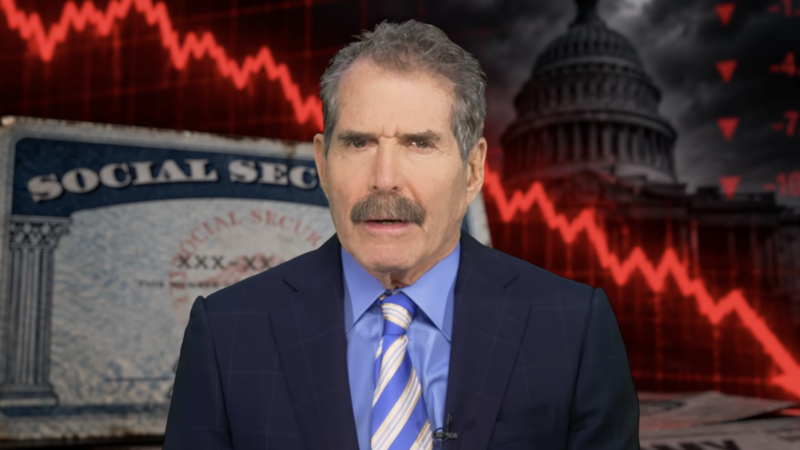
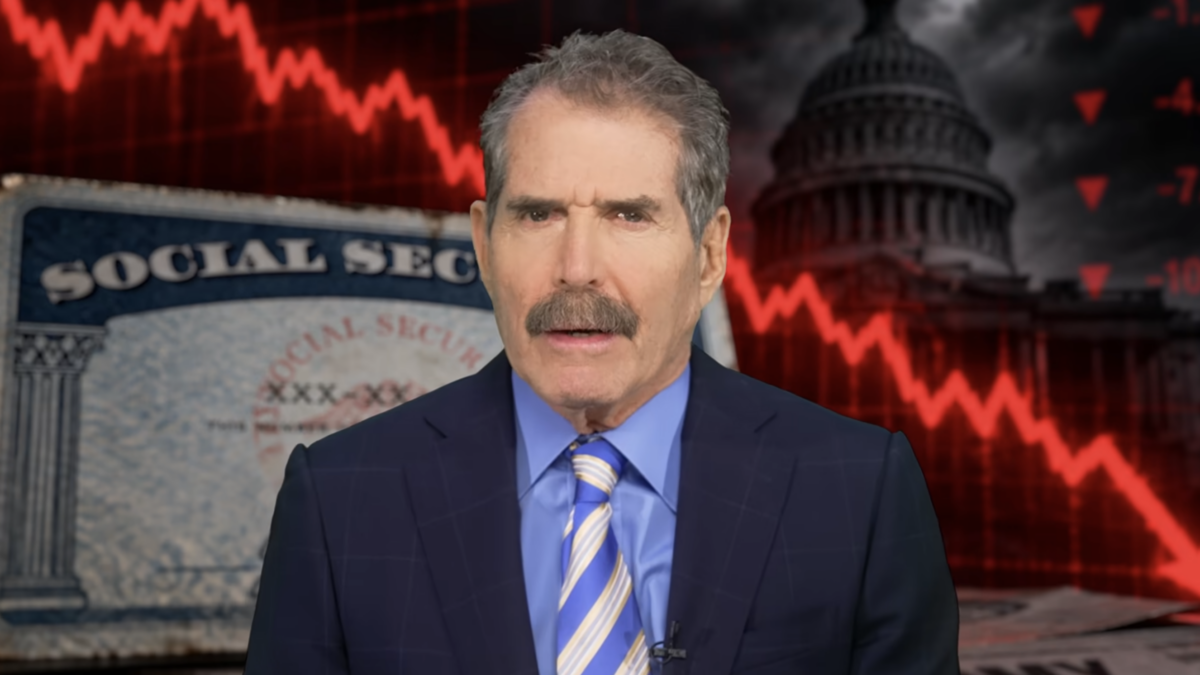
John Stossel stands in front of a Social Security Card and the U.S. Capitol with a red downward arrow | Stossel TV

"We will always protect Social Security, Medicare!" says President Donald Trump.

That would be nice.

But when I look at these programs' balance sheets, I don't see how he's protected anything. Both Social Security and Medicare are on track to run out of money.

Politicians mostly ignore the problem. Worse, progressives like Sen. Bernie Sanders (I–Vt.) and Rep. Alexandria Ocasio-Cortez (D–N.Y.) say they want to expand Social Security benefits.

That's just irresponsible.

My new video points out what we've known for years: These programs are unsustainable.

The problem is that people like me live longer. We like getting monthly Social Security checks and medical care that appears free.

Since we vote more consistently than others, politicians don't want to make us mad by cutting our handouts.

My fellow geezers say, "Social Security is not a handout! I contributed to the 'trust fund' every year. I'm just getting back what I paid in!"

But that's not true. Today, most of us get back much more than we paid in.

In 1935, politicians created the handout, saying, even if you don't save for retirement, government will save for you.

But that was another political lie. They didn't create individual retirement accounts. They didn't save our Social Security payments. They spend every penny as it comes in.

It's why Social Security is like a Ponzi scheme.

Bernard Madoff went to jail because he used new investors' money to pay old investors. That's exactly what our government does.

Few Americans realize it.

"What happens to the money?" I ask people on the street.

"It's held in trust," said one woman.

It isn't.

When politicians started Social Security, there were enough young workers to tax to cover the cost of sending checks to old people.

But now, since we live longer, there aren't enough young workers to fund our payments.

Social Security's costs exceed its income by billions of dollars.

"There is a plan out there to save it, but it requires some tough choices," says the Cato Institute's Romina Boccia. "Commonsense tweaks we can make."

Those include raising the retirement age, capping checks to the affluent, and letting young people opt out of Social Security. Reforms like that require tradeoffs. But ignoring the problem doesn't make it disappear.

We need to act, says Boccia, because Social Security is like the Titanic—gradually heading for disaster.

"Make reforms now," she says, "we can avoid the iceberg. [But] if we wait until the iceberg is in front of our noses and try to turn the ship, we're going to run right into it."

Medicare will hit its iceberg in 2033; then benefits will automatically be reduced. Social Security will hit it the year before.

At that point, incoming taxes will cover only about 78 percent of promised retirement benefits.

Yet irresponsible Democrats say: Spend even more.

"Human wants and needs are unlimited," replies Boccia. "There's always another program that needs more funding."

Sanders says, pay for it by taxing the rich more.

"There isn't enough money even that the rich would have, to pay for the…unfunded liabilities," Boccia points out.

If only politicians had listened years ago, when Cato and the Heritage Foundation proposed letting workers put some of their Social Security money into personal retirement accounts. Instead of relying on future taxpayers, workers could accumulate real assets that grow over time.

Personal accounts give workers something Social Security doesn't: assets we own.

"Even a conservative portfolio of stocks and bonds that got you a 5 percent annual return would have made you many times more [than Social Security]," says Boccia.

Private accounts helped Chile rise from one of the poorest countries in Latin America to one of the richest. Yet leftists still object to capitalists getting a cut of the pie.

"We lack gratitude for what the free market provides," says Boccia.

We should adjust these programs now.

The longer politicians wait, the worse the choices become.

But today's politicians will probably be gone by then.

Our children get the bill.

COPYRIGHT 2026 BY JFS PRODUCTIONS INC.

The post Social Security Is Like a Ponzi Scheme. How Do We Fix It? appeared first on Reason Magazine.

  •  

Medicare Advantage cuts leave millions scrambling to find coverage

Health care costs are climbing, putting new pressure on millions of Americans and raising questions about the coverage they can afford. The challenges extend to Medicare Advantage. In some parts of the country, insurers are pulling out of markets or eliminating plans that many rely on. We hear from seniors struggling to navigate those changes, and Geoff Bennett discusses more with Dan Weissmann.

  •  

RFK Jr. Wants To Cut Red Tape in Kidney Care. He Should Go Further.

Health and Human Services Secretary Robert F. Kennedy Jr. and a graphic of a kidney | Illustration: BONNIE CASH/UPI/Newscom/Peakstock/Envato

Like most of American healthcare, kidney care has for decades been plagued by red tape. The Trump administration says it wants to change that. On Tuesday, Department of Health and Human Services (HHS) Secretary Robert F. Kennedy Jr. announced his department's Kidney Care National Plan, which promises to introduce more competition, reduce regulatory barriers, expand patient choice, and overhaul America's kidney transplant system.

Much of the plan focuses on barriers to entry in dialysis care, which treats nearly 558,000 Americans. While dialysis can be performed at home, most patients receive treatment at specialized facilities, which must comply with federal certification requirements governing equipment, staffing, water quality, and patient safety in order to participate in Medicare.

Kennedy argues that regulatory barriers have discouraged competition and innovation, leaving patients with fewer dialysis treatment options. "Dialysis technology is an extraordinary technology," said Kennedy at the press conference, but "because of monopolies in the system and the barriers to new entrants, we have not seen any real improvements in that technology."

Of course, the existence of large or even monopolistic companies is not in itself evidence of a problem, but government regulation can often entrench those companies' positions in the market. "I like the fact that they're recognizing that a lot of regulatory…barriers are contributing to the problem, and that's refreshing to hear," says Jeffrey Singer, a practicing general surgeon and senior fellow at Reason Foundation, the nonprofit that publishes Reason. Singer says that removing barriers that prevent new companies from competing with established providers could not only increase choice but also drive down prices.

HHS says that two companies, DaVita and Fresenius Medical Care, control approximately 74 percent of the American dialysis market. As of 2019, roughly a third of Americans lived in areas where the only available dialysis provider was one of those two companies, according to the agency. The administration argues that government regulation has helped entrench this dominance by making it difficult for new providers to enter the market.

To address this, the Kidney Care National Plan suggests a number of reforms, including simplifying certification requirements. HHS also plans to investigate whether dominant dialysis providers have used payment arrangements and legal strategies to secure higher reimbursements without delivering better care.

The 17-page report calls for a review of existing requirements, but it does not specify which regulations will be repealed, nor does it establish a timeline for doing so. It also does not propose any significant reduction in the government's role in financing the distorted market. Instead, the plan largely seeks to make existing government-financed systems such as Medicare more competitive and efficient.

Kennedy has also correctly identified the need for reform regarding kidney donations. Nearly 90,000 people are waiting for a kidney transplant at any given time in America, and 11 people die every day waiting for a kidney. The transplant process is currently managed by Organ Procurement Organizations (OPOs), which are federally certified nonprofits responsible for recovering organs from donors and coordinating their transfer. There are currently just 55 federally designated OPOs operating in the United States, and HHS argues that they behave as "regional monopolies." Since no new OPOs have been approved in the last year, the Kidney Care National Plan suggests fast-tracking certification.

The plan also seeks to make living kidney donation easier by reducing financial barriers. Following the passage of the Honor Our Living Donors Act in February, HHS revised federal reimbursement rules so that a donor's eligibility for financial assistance is no longer determined by the transplant recipient's income. Eligible donors can receive up to $6,000 to cover expenses, including travel, lost wages, and childcare.

However, the reforms proposed stop short of allowing kidney donors to receive direct compensation for the organs themselves, which remains prohibited under federal law. "I can sell my blood. Why can't I sell my kidney?" Singer asks.

Peter Jaworski, director of the Georgetown Blood and Plasma Research Group, feels similarly, arguing that financial incentives are available to nearly everyone involved in kidney transplantation except the donors themselves. "According to this plan, it's OK to use incentives to encourage them to be more productive, to actually do a better job," Jaworski tells Reason, referring to transplant surgeons, hospitals, and organ procurement organizations. "The only exception, once again, is the donor who is offering a kidney."

Better solutions exist, according to Jaworski, who points to the proposed End Kidney Deaths Act. The bill, which was introduced by Rep. Nicole Malliotakis (R–N.Y.) last year, would offer living kidney donors a $50,000 refundable tax credit, distributed over five years. "We have those systems in order to make sure that we can treat patients. That's the point of blood donation. That's the point of plasma donation. That's the point of kidney donation too."

America's plasma market is an excellent example of financial incentives encouraging donation. Unlike many other countries, the U.S. allows plasma donors to be compensated, and despite accounting for just over 4 percent of the world's population, it supplies approximately 68 percent of the plasma collected globally for manufacturing medicines.

"Why do you think America does it? Is it because in America there's way more altruism than in France or Italy or Belgium? No, it's because in the United States you can be paid to donate plasma," argues Jaworski.

The Trump administration appears to recognize that government overreach has stifled competition and restricted patient choice. It also recognizes that living adults donating kidneys will be part of the solution to the long, deadly waiting lists. But its plan leaves the government's outsize role in kidney care largely untouched. For patients facing years on dialysis or waiting for a lifesaving transplant, recognizing the problem is not enough.

The post RFK Jr. Wants To Cut Red Tape in Kidney Care. He Should Go Further. appeared first on Reason Magazine.

  •  
❌