❌

Reading view

Massive Celebrations Erupt Across Brazil After Lula’s Run-off Victory
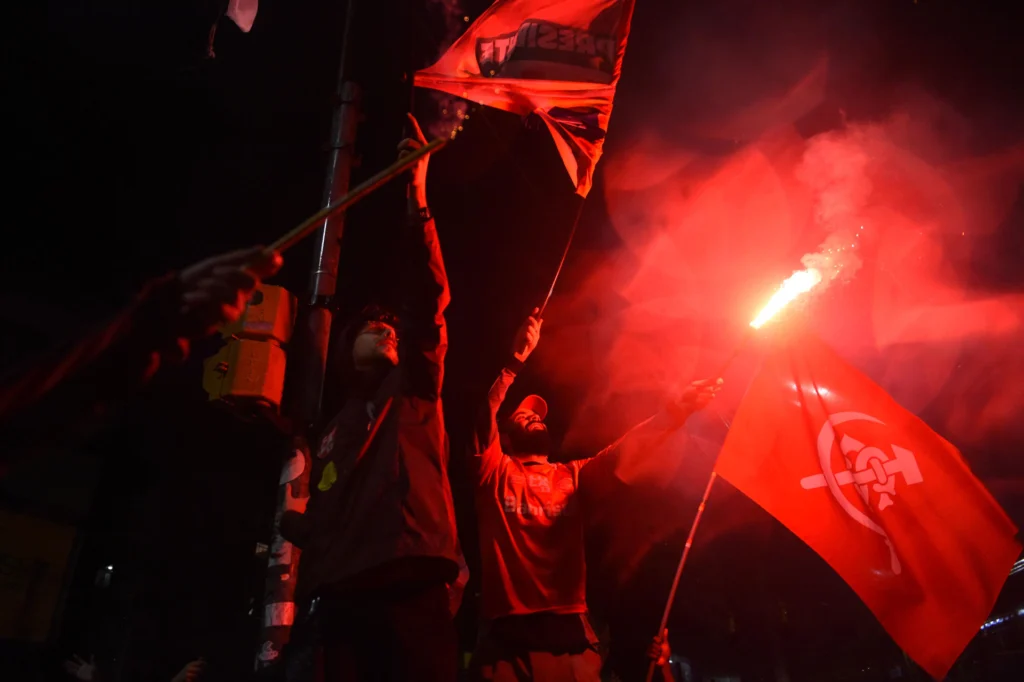
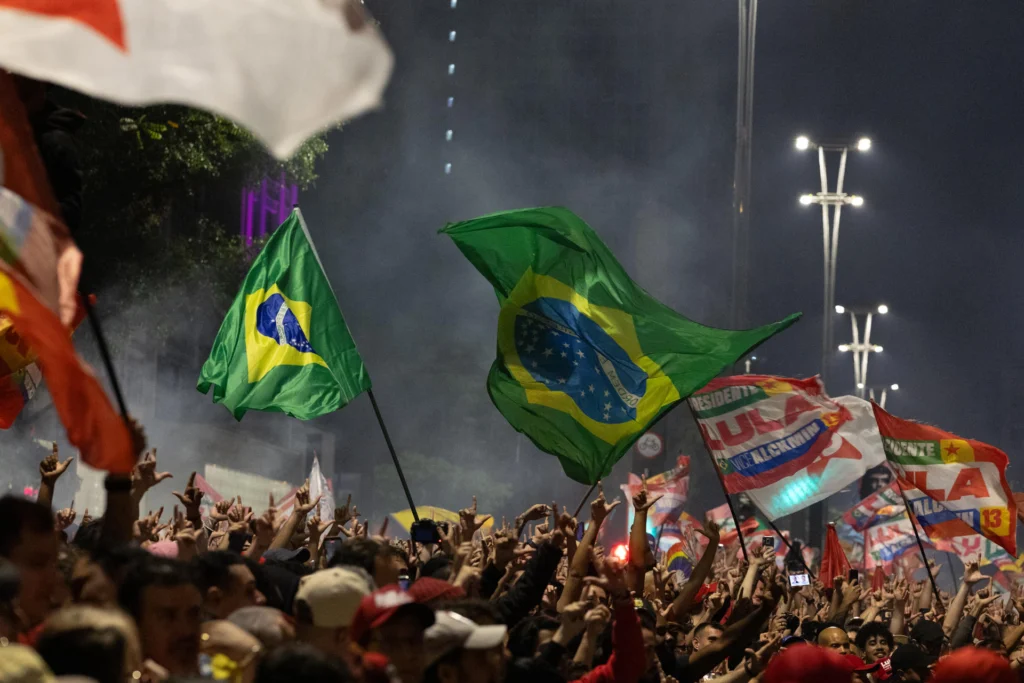
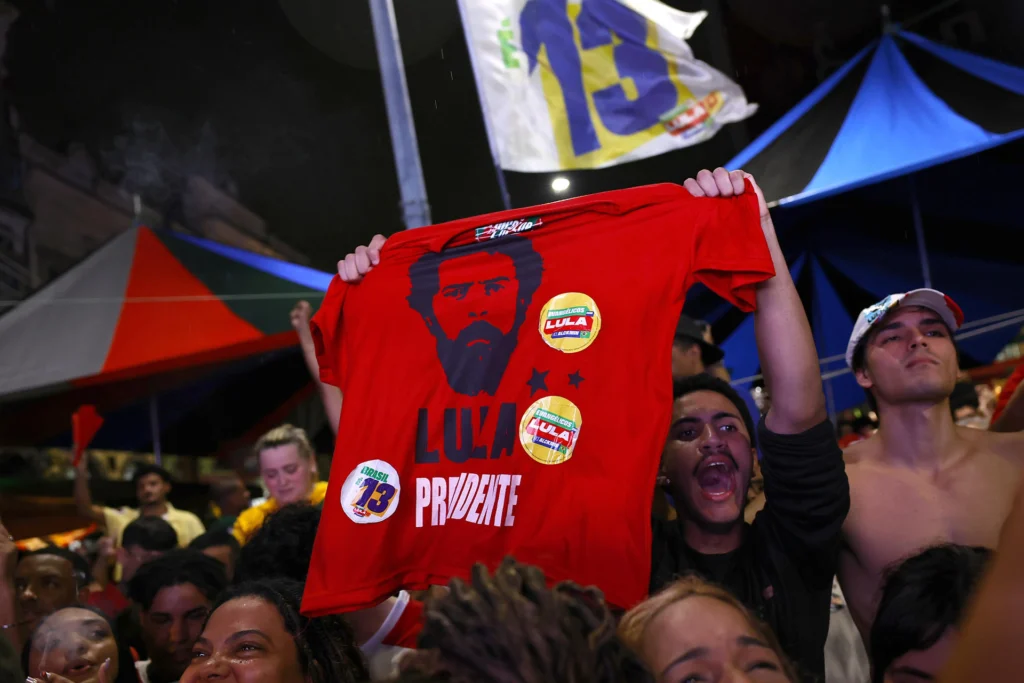
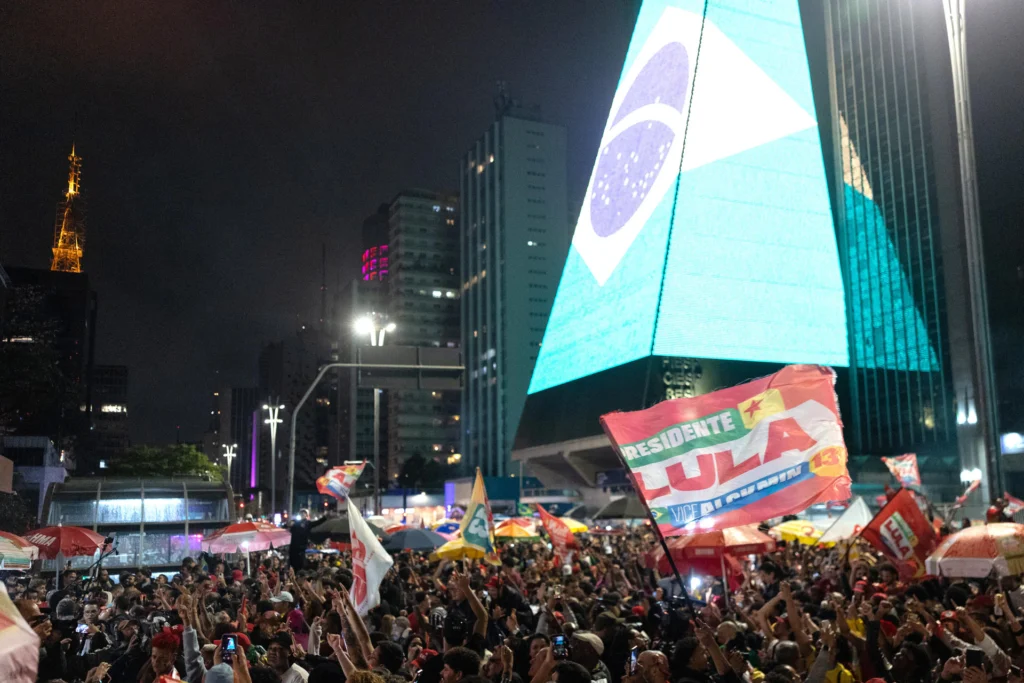
Supporters of the President of Brazil celebrate this Sunday after Lula won the second round of elections with 51.79% of the vote, compared to 48.21% for the far-right senator Flávio Bolsonaro, in a comeback unprecedented in the democratic history of the country. Photo: EFE.

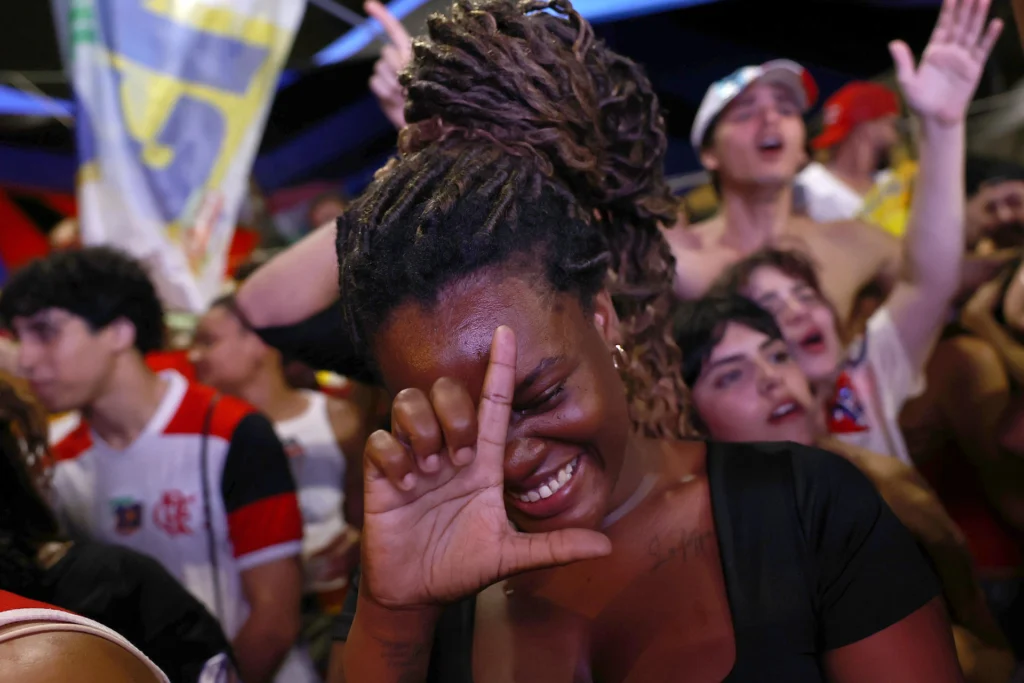
Hundreds of thousands of Brazilians poured into the streets of the country’s largest cities on Sunday night to celebrate Luiz Inácio Lula da Silva’s runoff victory, sealed with more than 64 million votes and a comeback without precedent in Brazil’s democratic history.


Hundreds of thousands of Brazilians filled the streets of the country’s main cities to celebrate the victory of Luiz Inácio Lula da Silva at the Presidential election on Sunday, October 25.

With 100% of the vote counted, the Superior Electoral Court (TSE) indicated that the current President obtained 51.79% of the votes against 48.21% for the ultra-right senator Flávio Bolsonaro.

RELATED: Lula Celebrates Reelection, Promises Education Reform and Sovereign AI

According to the official tally, Lula exceeded 64 million votes, making him the first president elected four times in the country. The count turned out to be a historic comeback, with 10 million votes won by the leader of the Workers’ Party (PT) between the first and second round.

Salvador, the capital of Bahia state, erupted first. The Rio Vermelho neighborhood, a traditional gathering point for left-wing activists, was taken over by the celebrations. Largo da Dinha filled with Lula voters, and fireworks lit the night sky near the Casa de Iemanjá. In the Imbuí district, neighbors leaned from the balconies of their buildings to join the party. More festivities unfolded in Graça, Pituba and Vila Laura.

🇧🇷 | Festejos masivos en São Paulo: miles de personas colmaron la Avenida Paulista para celebrar la victoria de Lula da Silva tras imponerse en el balotaje frente a Flávio Bolsonaro. Banderas, cánticos y euforia tiñen el corazón financiero de Brasil. pic.twitter.com/67Ipi8gK8e

— Mundo en Conflicto 🌎 (@MundoEConflicto) October 26, 2026

Bahia was decisive. The state contributed more than 6.4 million votes in the second round, 71% of its total, and almost 1.2 million in Salvador alone, 73% of the capital’s ballots, according to BNews. Those numbers helped reverse the first round, when Flávio Bolsonaro had finished ahead.
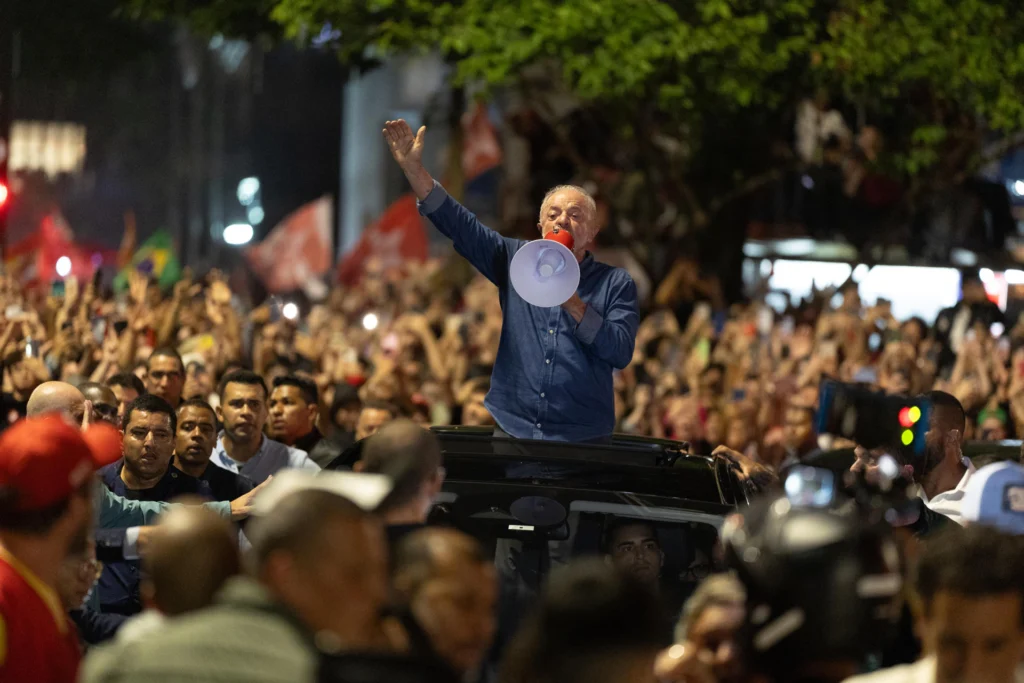
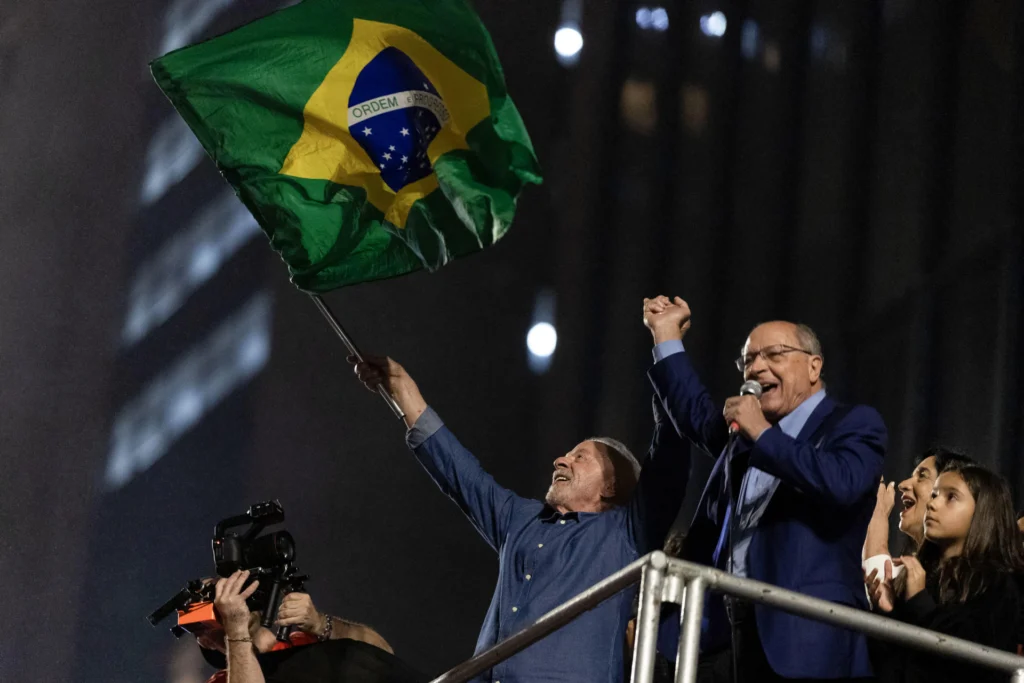
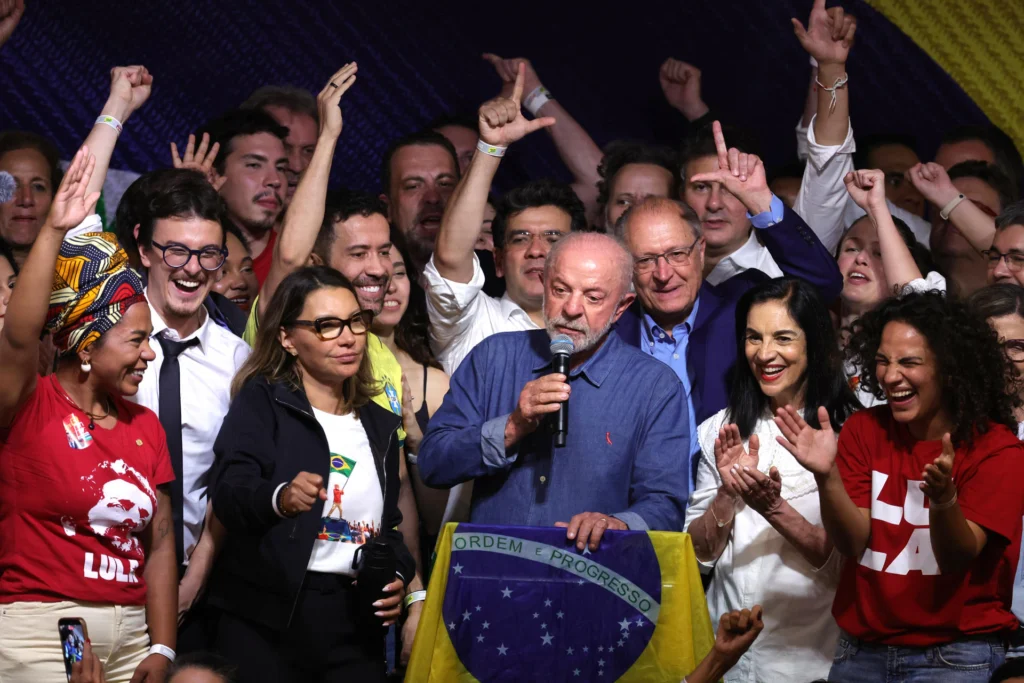
The President of Brazil, Luiz Inácio Lula da Silva, and the Vice-president, Geraldo Alckmin, celebrate the electoral victory along with the people in Sao Paulo / Photos: EFE.

A Red Sea of People

In the federal capital, block 405 of Asa Norte became the main concentration point for Lula’s supporters. A true “sea of people,” dressed in red and waving flags and umbrellas, vibrated when the official victory announcement arrived. Celebrations also spread to Águas Claras and Guará, where some drivers sounded their horns through the night.

Across the political divide, supporters of Flavio Bolsonaro and of reelected Federal District governor Celina Leão had planned a Victory Act at the National Museum of the Republic that same Sunday. The contrast between the two gatherings captured the split that defined the contest.

In Rio de Janeiro, crowds also took to the streets to mark the historic comeback, one that Datafolha described as unprecedented since 1989.

SEGUIDORES DE LULA SALEN A CELEBRAR SU REELECCIÓN EN BRASILIA

🇧🇷🎉 Simpatizantes del presidente Luiz Inácio Lula da Silva se congregaron en una zona de bares de Brasilia, la capital de Brasil, para festejar su victoria sobre Flávio Bolsonaro. pic.twitter.com/zRm57ipIzX

— News On Demand (@OnDemand_News) October 26, 2026

With this recent electoral victory, Lula, now 80 years old, returns for a fourth term after finishing second in the first round, and after the courts sentenced his previous rival, Jair Bolsonaro, to more than 27 years in prison for attempting to overturn the 2022 result. Flávio Bolsonaro, the imprisoned former President’s eldest son, carried the family banner this time and lost it.

The reelection also comes with a strengthened legislative position. The Workers’ Party (PT) gained more than 20 seats in the Chamber of Deputies compared with 2022.

The Brazilian result breaks with a regional trend that had favored right-wing candidates allied with Trump, and it repositions Brazil at the center of South American politics.
  •  

Lula Celebrates Reelection, Promises Education Reform and Sovereign AI

Luiz Inácio Lula da Silva celebrated this Sunday, October 25 his re-election in Brazil with a call to govern without adversaries. Photo: EFE.

Luiz Inácio Lula da Silva celebrated his reelection on Sunday with a pledge to govern for all 215 million Brazilians and a warning that digital platforms will be regulated.


The triumph arrived with 51.79% of valid votes against 48.21% for Flavio Bolsonaro, with 99.99% of the votes countedcounted. Lula had finished second in the first round and secured a fourth term with the runoff.

Once the ballots were tallied, the Brazilian President affirmed that there are no more adversaries. “I have to govern for 215 million,” Lula said, promising to treat all citizens on equal terms and to give women greater respect in public policy.

RELATED: Latin American Leaders Celebrate Lula’s Fourth Term in Brazil

The President promised to make full day schooling universal through high school and to extend the Pé-de-Meia incentive to all students at that level, a program that keeps young people from abandoning the classroom for work. He also announced a university version of the program.

Lula also announced that care policies for older people will be taken seriously, calling the elderly responsible for the existence of Brazilians. “I have no preference for any religion. I have preference for the faith of the Brazilian people,” he said, defending a secular state that guarantees full religious freedom.

The re-elected President framed the result as more than a win at the polls. “This election was a defeat of denialism. It was a defeat of the lie,” he declared. He confessed that the debates left him shaken, despite his long experience and a year of constant meetings with leaders of the G20, the BRICS and the G7.

None of that, he said, prepared him to face “a genuine representative of the militias in this country,” referring to Flavio Bolsonaro. “I never imagined that a person could lie so much with such shamelessness, as if he had not a bit of sincerity inside him,” he added.

Minha gratidão eterna ao povo brasileiro, à juventude que tomou as ruas em defesa da democracia e a cada pessoa que fez um esforço imenso para votar e defender o futuro do nosso país.

Vocês me emocionam e renovam minha esperança. Essa vitória é de um povo que acredita, que luta… pic.twitter.com/bYpKMdFgP0

— Lula (@LulaOficial) October 26, 2026

Regulating Platforms, Building AI

Lula announced that digital platforms will be regulated and demanded that crimes committed online receive the same treatment as crimes in real life. He questioned companies that earn millions in Brazil without paying taxes while trying to steer the vote, and denounced foreign interference through those platforms during the campaign.

The President’s plan for technology carries a nationalist stamp. “I do not want to depend on North American artificial intelligence. I want to create a Brazilian one,” he said. To achieve it, he proposed using the country’s renewable energy to attract data centers, on the condition that companies reserve part of their capacity for Brazilian information.

That project feeds a larger ambition, to move Brazil from a developing country to a developed one, powered by the digital, green and creative economies. Lula credited the people’s creative potential rather than himself. “We want to be a central country in political and economic decisions and in the promotion of peace,” he said.

“We are going to teach the world how climate policies are handled in this country,” he promised, noting that this year Brazil will reduce deforestation for four consecutive years for the first time.

Obrigado, povo brasileiro!

📸 @ricardostuckert pic.twitter.com/OHkV0hThoQ

— Lula (@LulaOficial) October 26, 2026

Lula thanked the people for their generosity in the second round and the young people who took to the streets to defend democracy. He recalled the elderly who reached the polls carried by their grandchildren and cancer patients who voted anyway, convinced their ballot was essential. To that conviction he attributed the lowest abstention and the fewest null votes in the country’s history.

Lula achieves his fourth term after an unprecedented comeback, and his party, the Worker’s Party (PT), gains more than 20 seats over what he achieved in 2022 in the Chamber of Deputies. The re-election, which term officially starts on January 1, 2027, represents a break with the regional trend of triumphs by right-wing candidates allied to U.S. President Trump.

  •  

Latin American Leaders Celebrate Lula’s Fourth Term in Brazil

Congratulatory messages to Luiz Inácio Lula da Silva arrive from all over the region on the night of this Sunday, October 25, when the official count confirmed his victory in the ballooning in Brazil. Photo: EFE.

Presidents and former leaders across Latin America celebrated Luiz Inácio Lula da Silva’s fourth term on Sunday after the official count confirmed his runoff victory in Brazil with 51.79 percent of valid votes.


Brazilian President Luiz Inácio Lula da Silva won Sunday’s presidential runoff against Senator Flávio Bolsonaro with 51.79% of valid votes, securing a fourth term, with 99.99% of precincts reported, and drawing congratulations from leaders across Latin America.

RELATED: Lula Wins Brazil Elections: Decisive Victory Confirmed With Over 99% of Votes Counted

With nearly all precincts counted, Lula had 64,255,891 votes against 59,825,984 for Bolsonaro, a margin of 4,429,907 votes. Lula had finished second in the first round, and the pollster Datafolha described the turnaround as unprecedented since 1989.

Latin America Reacts

Former Argentine President Cristina Fernández de Kirchner was the first to write, addressing the Brazilian people before the candidate. She called the vote “an authentic electoral October 17,” a reference to the 1945 mass workers’ rally in Buenos Aires that secured the release of Juan Domingo Perón and is considered the founding date of Peronism. She added that Lula, in his seventh presidential election, “knew how to awaken feeling and meaning in his compatriots to win this battle.”

FELICITACIONES… primero al pueblo brasileño que hoy protagonizó un auténtico 17 de Octubre electoral y después… a usted, compañero presidente Lula, que en su séptima elección presidencial supo despertar en sus compatriotas sentimiento y sentido para ganar esta batalla.

— Cristina Kirchner (@CFKArgentina) October 26, 2026

From Havana, President Miguel Díaz-Canel spoke on behalf of the Cuban government and people. He celebrated a “historic victory that guarantees the continuity of the path of peace, sovereignty and social justice undertaken by the Brazilian people under your leadership.” He also offered Cuba’s support for Latin American and Caribbean unity and integration.

Estimado hermano @LulaOficial, te felicito en nombre del gobierno y pueblo cubanos por esta victoria histórica que garantiza la continuidad del camino de paz, soberanía y justicia social emprendido por el pueblo brasileño bajo tu liderazgo.

1/2 pic.twitter.com/5U9azS8Mvc

— Miguel Díaz-Canel Bermúdez (@DiazCanelB) October 26, 2026

The President of Uruguay, Yamandú Orsi, communicated this Sunday with the Brazilian President, Luiz Inácio Lula da Silva, to congratulate him on his victory in the second round of elections and highlight the democratic holiday that the country lived.

“I just got in touch with Brazil’s president-elect, Luiz Inácio Lula da Silva, a friend. I congratulated him on the triumph and for the democratic holiday that represents an electoral process”, said Orsi in his social networks.

Acabo de comunicarme con el presidente electo de Brasil, Luiz Inácio Lula da Silva, un amigo.

Lo felicité por el triunfo y por la fiesta democrática que representa un proceso electoral.

— Yamandú Orsi (@OrsiYamandu) October 26, 2026

For his part, the President of Paraguay, Santiago Peña, congratulated Luiz Inácio Lula da Silva for his victory in the second round of the presidential elections of Brazil, in which he defeated the ultra-right senator Flávio Bolsonaro.

“Congratulations @LulaOficial on your election as President of Brazil. Greeting the Brazilian people for this great democratic day”, published Peña on social network X.

The ruler affirmed that Paraguay and Brazil share “a common agenda of integration and development”, while promising to continue “working together for the well-being” of their peoples.

Felicidades @LulaOficial por tu elección como Presidente del Brasil. Saludo al pueblo brasileño por esta gran jornada democrática. El Paraguay y Brasil comparten una agenda común de integración y desarrollo. Seguiremos trabajando juntos por el bienestar de nuestra gente.

— Santiago Peña (@SantiPenap) October 26, 2026

“I congratulate President @LulaOficial on his victory. Bolivia and Brazil are neighboring and fraternal countries, united by a shared history and common challenges,” stated the Bolivian President Rodrigo Paz, while he seeks to strengthen bilateral relationship and create more opportunities for both nations.

Felicito al presidente @LulaOficial por su victoria. Bolivia y Brasil somos países vecinos y hermanos, unidos por una historia y desafíos comunes. Seguiremos trabajando juntos para fortalecer nuestra relación y generar más oportunidades para nuestras naciones. 🇧🇴🤝🇧🇷

— Rodrigo Paz Pereira (@Rodrigo_PazP) October 26, 2026

Bolivia’s former President Evo Morales chose a more intimate tone. “Brother of my soul and comrade in struggle, congratulations on this beautiful and heroic victory,” he wrote on social media.

For the Aymara leader, the Brazilian’s re-election reaches across the continent. “Your triumph renews the hope of the peoples who fight for social justice, dignity and sovereignty,” he added, closing with cheers for the Brazilian people and the Latin American region.

@LulaOficial ! Hermano del alma y compañero de lucha, felicidades por esta hermosa y heroica victoria!

Tu triunfo renueva la esperanza de los pueblos que luchan por la justicia social, la dignidad y la soberanía. Desde Bolivia, te enviamos un abrazo revolucionario y fraterno,… pic.twitter.com/XflrKlOz5F

— Evo Morales Ayma (@evoespueblo) October 26, 2026

Colombian Former President Gustavo Petro argued that Brazil had halted the advance of fascism in Latin America and credited a people who resisted a flood of fake bots. He also highlighted Brazil’s electoral system, which runs on public software and which, in his view, citizens guarded to prevent fraud.

Petro affirmed that the victory saves social justice and the country’s natural resources from foreign ambition. “Well done Lula,” he wrote. “This is a triumph for humanity and a strategic defeat for the forces of darkness.“

Se ha detenido el fascismo en America Latina en Brasil.

El pueblo brasileño libre logró frenar la avalancha de los bots falsos y el sistema electoral con software público y bien cuidado por la gente evitó fraudes, se salva la justicia social en Brasil y el intento extranjero de… pic.twitter.com/oETnxYC6Sq

— Gustavo Petro (@petrogustavo) October 26, 2026

Mexico’s President, Claudia Sheinbaum, also congratulated Lula. “Long live democracy, the people of Brazil won. Congratulations President Lula!” Sheinbaum noted in a social media post.

Viva la democracia, ganó el pueblo de Brasil. ¡Felicidades presidente Lula!

— Claudia Sheinbaum Pardo (@Claudiashein) October 26, 2026

Numbers and Background

In the 2022 runoff, Lula beat Jair Bolsonaro by 50.90% to 49.10%. Jair Bolsonaro’s supporters then called for a military coup, and courts later sentenced the former President to 27 years in prison for trying to overturn that result. From prison, Bolsonaro named his eldest son, 44, as his candidate.

Earlier on Sunday, voting was extended by two hours, to 7 P.M., by Supreme Court justice Cristiano Zanin. The vote count was paused and then resumed.

On October 4, Flavio Bolsonaro had led the first round with 47.03% against Lula’s 45.16%. Surveys on the eve of the runoff showed a technical tie at 51 and 49 percent. The final tally reversed that picture and closed the door on the Bolsonaro family’s return to power.

Lula will be sworn in for his fourth term on January 5, 2027. His new victory is expected to have significant implications beyond Brazil’s borders. As the largest economy and most populous country in Latin America, Brazil plays a central role in regional diplomacy, trade, and environmental policy.

  •  

Lula Wins Brazil Elections: Decisive Victory Confirmed With Over 99% of Votes Counted

Photo: EFE.

With 99.75% of the vote counted, Brazil’s presidential runoff was declared “mathematically defined,” putting incumbent Luiz Inácio Lula da Silva on track to defeat Flavio Bolsonaro.


Luiz Inácio Lula da Silva has secured reelection as Brazilian President, defeating Flávio Bolsonaro in a closely contested presidential runoff and winning an unprecedented fourth term in office, with a difference of over four million ballots and more than three percentage points.

RELATED: Brazilian Expats in Asia and Oceania Back Lula in Majority of Nations

The count, which surpassed 99 percent of polling stations, was declared mathematically defined well before the final numbers landed.

The result marks a significant political moment for the region’s largest democracy, signaling both continuity with Lula’s political legacy and a new chapter in Brazil’s evolving democratic landscape.

Historic Outcome

As vote counting progressed throughout the evening, Lula steadily maintained an advantage that ultimately became impossible for his rival to overcome. Electoral analysts and officials declared the race mathematically decided before the final ballots were counted, effectively confirming Lula’s return to the nation’s highest office.

The election represented one of the most consequential political contests in recent Brazilian history. Lula, a president known for his social programs and efforts to reduce poverty during his previous administrations, campaigned on promises of economic inclusion, institutional stability, and national reconciliation. Throughout the campaign, he emphasized the need to strengthen democratic institutions, expand opportunities for lower-income Brazilians, and restore Brazil’s international standing.

Flávio Bolsonaro entered the race carrying the political legacy of his father, former President Jair Bolsonaro, sentenced to 27 years in prison for attempting to overturn the 2022 election results. His campaign appealed primarily to conservative voters, highlighting issues related to public security, economic liberalization, and traditional values. The contest therefore became a referendum not only on competing political platforms but also on two distinct visions for Brazil’s future.

Voter turnout remained strong across much of the country, reflecting the high stakes of the election. Major urban centers, as well as many rural areas, reported significant participation levels as citizens headed to polling stations to determine the direction of the nation for the coming years.

Political observers noted that the campaign was marked by intense debates over economic policy, environmental protection, public spending, and Brazil’s role in international affairs. These issues dominated public discussions and helped mobilize millions of voters on both sides of the political spectrum.

Regional Impact

Lula’s victory is expected to have significant implications beyond Brazil’s borders. As the largest economy and most populous country in Latin America, Brazil plays a central role in regional diplomacy, trade, and environmental policy.

One area likely to receive immediate attention is environmental policy, particularly regarding the Amazon rainforest. During the campaign, Lula reiterated commitments to environmental protection and sustainable development, issues that have attracted growing international concern in recent years. Global leaders and environmental organizations are expected to monitor how these commitments translate into government action.

Economically, investors and business leaders will be looking for signals regarding fiscal policy, market regulation, and social spending priorities. Lula faces the challenge of balancing economic growth with social programs designed to reduce inequality and improve living standards for millions of Brazilians.

The election also highlights the resilience of Brazil’s democratic institutions. Despite a highly polarized political environment and an intensely competitive campaign, the electoral process proceeded under established constitutional rules. The public security balance described a day characterized by widespread calm and a low rate of irregularities at voting centers.

Lula, the President re-elected, becomes the most popular presidential candidate in Brazil’s history and he will be sworn in for a fourth term on January 5, 2027. With the election effectively settled before the final count was completed, Brazil begins a new political era under the leadership of Lula, a figure whose return to power is likely to influence both national policy and regional politics for years to come.

Obrigado, povo brasileiro!

📸 @ricardostuckert pic.twitter.com/OHkV0hThoQ

— Lula (@LulaOficial) October 26, 2026
  •  

Brazil Presidential Runoff Enters Counting Phase After Extended Voting Hours

Photo: EFE.

Brazil’s final polling stations closed at 7 p.m. local time Sunday, ending a two-hour Supreme Court extension and clearing the way for the vote count to resume in the presidential runoff.


The official cutoff had been set for 5 P.M. local time but the Supreme Federal Court pushed it back two hours as the original deadline arrived. Under the decision, only precincts where balloting had not ended by 5 P.M. Brasilia time could keep receiving voters.

RELATED: Brazilian Expats in Asia and Oceania Back Lula in Majority of Nations

The last polling stations in Brazil shut their doors at 7 P.M. Brasilia time on Sunday, marking the end of an extraordinary two-hour window that the Supreme Court had ordered only minutes before the original deadline.

Once the extended voting period concluded, election officials formally closed the polls and resumed the nationwide vote count.

The Court’s notification arrived shortly after 5 P.M., when voting was already due to close. By that point, hundreds of polling stations had finished the day’s work, printed their ballot bulletins and even begun shipping equipment to the regional electoral courts.

The definitive shutdown shifted attention to the Superior Electoral Court, which prepared to restart the count. Officials had frozen it six minutes after it began, when only 0.25% of ballots had been processed.

With counting now underway once again, millions of Brazilians are awaiting the official results that will determine the country’s next President who will govern Brazil from 2027 to 2031. The outcome is expected to shape Brazil’s political direction, economic priorities, and international relations over the coming years.

For now, the process rests on the resumed tally. The coming hours will show whether the early lead holds as ballot bulletins arrive from across the South American country.

  •  

Brazil Runoff Voting Continues Only Where It Had Not Ended by 5 P.M.

Photo: EFE.

Brazil’s electoral authority said Sunday that voting in the presidential runoff will continue only at polling places still open past 5 p.m., with ballot records, counting and results resuming after 7 p.m. under a court order.


The Brazilian Superior Electoral Court (TSE) announced the measure on its official account, describing it as a response to a ruling by Supreme Federal Court justice Cristiano Zanin.

Under the decision, only precincts where balloting had not ended by 5 P.M. Brasilia time could keep receiving voters.

RELATED: Brazil Court Extends Runoff Voting Deadline by 2 Hours Nationwide

Election officials suspended the receipt of printed ballot records, the tally of votes and the release of results, and said all three would resume after 7 P.M. local time.

Voting in Brazil closes nationwide at 5 p.m. in every election. The order by Zanin gives electoral authorities room to let voters cast ballots where local conditions kept lines moving past the cutoff.

Almost all Superior Electoral Court ministers had gathered in the office of the court’s presidency to await the end of balloting, the statement added.

Esclarecimento sobre prorrogação da votação

O Tribunal Superior Eleitoral (@TSEjusbr) informa que, conforme decisão do ministro Cristiano Zanin, do Supremo Tribunal Federal, a eleição segue em andamento apenas nos locais em que a votação não havia sido encerrada às 17h.

O TSE…

— TSE (@TSEjusbr) October 25, 2026

Count After 7 P.M.

The electoral authorities will resume the receipt of the ballot-box bulletins (known as BUs), the totalization of votes and the release of results after 7 P.M. local time. These bulletins are the printed summaries of each electronic voting machine’s tally, and they feed the national count.

Brazil conducts its elections entirely on electronic voting machines managed by the Superior Electoral Court and the regional electoral courts. The system has drawn criticism over transparency, although no case of fraud has ever been confirmed.

The Superior Electoral Court heads the country’s Electoral Justice, which handles voter registration, biometric identification, vote collection, tabulation and the final certification of results.

Sunday’s vote settles the presidency after the October 4 first round produced no outright winner. Senator Flávio Bolsonaro led with 47.03% of valid votes, ahead of President Luiz Inácio Lula da Silva at 45.16%, forcing the runoff held on the last Sunday of October.

Brazil’s two round model requires a candidate to win more than half (50+1) of valid votes in the first round. Otherwise the top two finishers meet again three weeks later. Flávio Bolsonaro (Liberal Party) is the eldest son of former President Jair Bolsonaro, who was barred from office and later endorsed him. Lula da Silva (Worker’s Party -PT) returned to the presidency in 2023 after courts restored his political rights.

Results are expected later Sunday night once tabulation resumes after 7 P.M. The Court has not indicated when it will publish the first partial totals, a schedule that now depends on the pace of the last polling places to close.

  •  

Brazil Court Extends Runoff Voting Deadline by 2 Hours Nationwide

The decision preserved a single closing time across Brazil instead of creating separate local deadlines. Photo: EFE.

Brazil’s Supreme Federal Court ordered polling stations to remain open nationwide until 7:00 P.M. Brasilia time on Sunday, extending the runoff vote after both candidates asked for more time.


Federal Supreme Court Minister Justice Cristiano Zanin issued the ruling, which pushed the deadline back from the original schedule set for the second round between President Luiz Inácio Lula da Silva and Flávio Bolsonaro. The change applied across all of Brazil.

The precautionary measure, with immediate effect, extends by two hours the closing of the polling stations, which was set for 5:00 P.M. Brasilia time., and applies to all electoral sections in Brazil. The Superior Electoral Court (TSE) is responsible for executing it.

RELATED: Brazilian Expats in Asia and Oceania Back Lula in Majority of Nations

“Considering the gravity of the facts presented, which reached the Supreme Federal Court at 4:32:49 P.M. today, and given the evident urgency of the measure, I order a two-hour extension, until 7:00 p.m. Brasilia time, of the closing of vote reception at all polling stations in Brazil,” Zanin detailed.

The decision came after the campaigns of Lula and Bolsonaro had requested to extend the schedule due to transportation problems in some cities and difficulties due to rains in other areas of Brazil.

The request had spanned three states, reflecting concern that severe weather could depress turnout across a wide stretch of southern and southeastern Brazil. However, Zanin’s ruling went beyond the listed municipalities, extending the schedule across the entire country rather than only in the rain-affected locations.

Confira abaixo o Ofício da Presidência do @TSEjusbr sobre o cumprimento da decisão do Supremo Tribunal Federal sobre a prorrogação do horário das Eleições 2026. pic.twitter.com/1c3D0s3LhA

— TSE (@TSEjusbr) October 25, 2026

The extension added two hours to the voting day. Polling stations that would have closed in the late afternoon remained open into the evening, giving voters in affected regions more time to reach their designated locations.

The Supreme Court’s nationwide extension acknowledged that voters beyond those municipalities could also face obstacles reaching polling places before the original deadline. The ruling treated the request as grounds for a broader safeguard covering the whole electorate.

With the later cutoff in place, authorities reminded citizens that anyone already in line at 7:00 P.M, local time would still be allowed to cast a ballot.

Officials have described the unified national schedule as a way to reduce confusion in a country of continental scale. The legal maneuvering unfolded on a day already marked by isolated logistical incidents. The extension gave electoral authorities additional time to process voters in the states most exposed to severe weather, while keeping the process unified from north to south.

Calm Vote, Low Irregularities

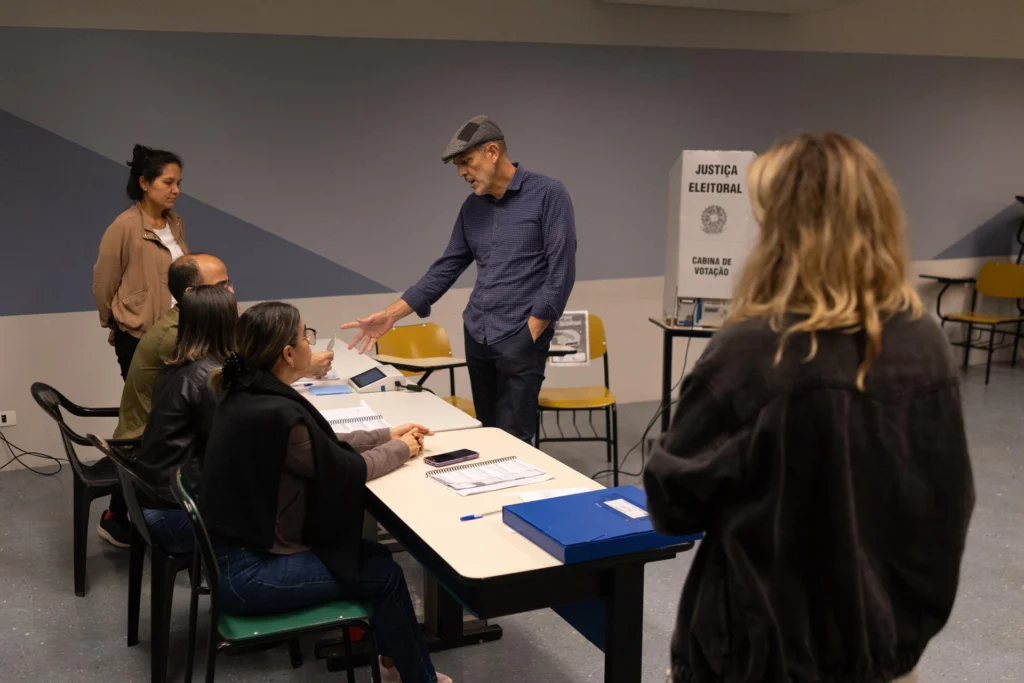
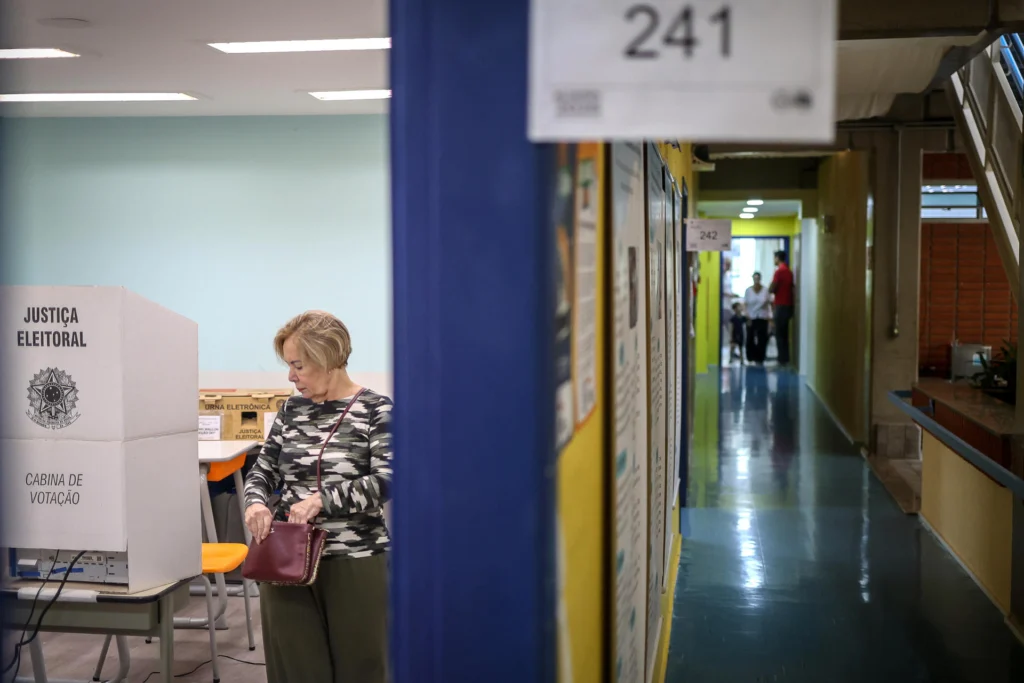
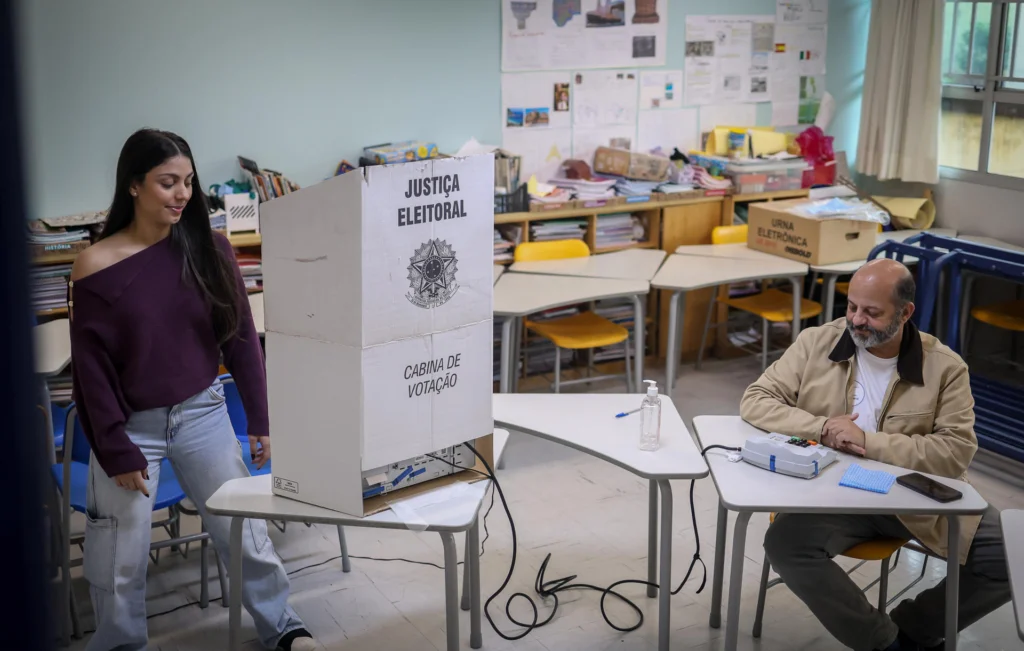
Brazil’s top electoral authority reported a generally calm second-round vote on October 25, as more than 158.7 million registered citizens chose the country’s next head of State and renewed regional executives across the nation.

The preliminary report had confirmed the preventive replacement of 900 ballot boxes that presented technical failures, a figure representing only 0.18% of the equipment installed nationwide. The electoral body also maintains more than 48,000 contingency devices ready for deployment in the event of any operational problem.

The public security balance described a day characterized by widespread calm and a low rate of irregularities at voting centers. Security forces counted 138 isolated events, including attempts to violate the secrecy of the ballot and three cases of alleged vote buying.

The second round follows the first-round vote held earlier in October. In the first round, on October 4, far-right senator Flávio Bolsonaro (Liberal Party) got 47.03% of the valid vote, while President Lula da Silva (Workers’ Party-PT), received 45.16%, in a process marked by extreme polarization. Brazil’s electoral system requires a runoff when no candidate secures an outright majority in the opening round, concentrating the contest between the two leading contenders.

The court highlighted that Brazil’s electronic ballot box system marked 30 years of uninterrupted operation. Following this, the court has emphasized that the electronic voting platform delivers preliminary results within hours of polls closing, a feature officials point to as evidence of the system’s efficiency.

  •  
❌