❌

Reading view

Pentagon Watchdog Refuses Starlink Investigation as Questions Grow Over Musk’s Control of Ukraine’s Military Communications

The Pentagon’s independent inspector general has declined a bipartisan request to investigate restrictions imposed on Starlink and Starshield satellite communications in Ukraine, leaving unresolved questions about who authorised the disruption, whether Washington was involved, and how much control Elon Musk exercises over infrastructure essential to Ukraine’s defence.

The decision, disclosed by the Associated Press on 28 October, follows complaints from Ukrainian officials that restrictions introduced earlier this month disrupted military drone operations, including attempts to intercept high-speed Russian attack drones.

Nine US senators, comprising five Democrats and four Republicans, had requested an independent investigation into the circumstances surrounding the interruption.

Instead, Pentagon Inspector General Platte Moring III informed lawmakers in a letter dated 27 October that the questions would be better addressed by the US Air Force and Space Force.

The response has intensified a dispute extending beyond Ukraine’s battlefield communications to the relationship between the American government, its defence contractors and the private companies supplying critical military technology.

Senators Demand Answers Over Starlink Restrictions

The investigation was requested by senators Jeanne Shaheen and Thom Tillis, alongside seven colleagues from both parties.

Their 15 October letter sought to establish whether Pentagon officials or other US government representatives had authorised, approved or received advance notice of changes affecting Ukraine’s satellite communications.

The senators also raised concerns about reported disruptions to intelligence-sharing and early-warning arrangements, including allegations that American personnel in Ukraine experienced difficulties reaching shelters during Russian air raids.

They wanted investigators to determine whether these incidents were connected, whether contractual obligations had been breached and whether SpaceX had acted independently.

Shaheen, the senior Democrat on the Senate Foreign Relations Committee, criticised the inspector general’s decision.

She argued that contradictory explanations from the Trump administration and SpaceX made an independent examination necessary to establish responsibility and prevent further disruptions.

Mollie Halpern, spokeswoman for the inspector general’s office, defended the decision, saying the congressional request had been carefully considered and that the issues were more appropriately handled within the Pentagon.

She nevertheless left open the possibility of reconsideration if additional information emerged.

Who Ordered the Slowdown?

The controversy began around 14 October, when Ukrainian forces reported that equipment using Starlink and its military-oriented counterpart, Starshield, was losing connectivity when travelling at higher speeds.

The restrictions were particularly damaging to unmanned aircraft.

Ukraine reported communications failures at movement speeds of approximately 130–161 kilometres per hour, limiting the effectiveness of certain strike drones and jet-powered interceptors used against Russian attacks.

According to The Wall Street Journal, Musk personally authorised the slowdown, although accounts differed over whether President Donald Trump or senior administration officials knew about the decision beforehand.

Musk subsequently acknowledged that SpaceX had imposed restrictions on commercial Starlink services, alleging that Ukrainian forces had violated the company’s terms of service by using the network for offensive operations.

Ukrainian representatives disputed that explanation.

Musk also maintained that Starshield was a separate system controlled by the US government, suggesting that decisions affecting its operation ultimately rested with American authorities.

Trump denied ordering the restrictions.

The differing accounts have left unanswered whether the interruption resulted from a corporate decision, an American government directive or a combination of the two.

Trump Intervention and Restoration of Services

The Wall Street Journal reported that Trump contacted Musk on 21 October and requested the removal of the restrictions.

Although some improvement followed, Ukrainian officials initially reported that the systems had not returned to full functionality.

On 24 October, however, Ukraine’s Ministry of Defence confirmed that normal performance had been restored, with stable communications recorded on equipment moving at speeds exceeding 400 kilometres per hour.

President Volodymyr Zelensky subsequently confirmed the restoration and thanked American officials and partners involved in resolving the problem.

The restoration addressed the immediate operational disruption but did not establish who had originally authorised the restrictions.

Private Technology and Military Accountability

The episode has renewed scrutiny of the Pentagon’s dependence on SpaceX, whose satellite networks have become important components of Ukrainian battlefield communications.

Starshield was developed to serve government and national security requirements, including military applications. Nevertheless, the dispute illustrates the difficulty of determining responsibility when essential defence capabilities depend on systems developed and operated by commercial contractors.

The issue has historical precedent.

In 2022, Musk ordered restrictions on Starlink availability in parts of Russian-occupied Ukraine, citing concerns that expanded military use might escalate the conflict.

The latest incident has prompted renewed discussion of whether contractual arrangements provide sufficient safeguards against unexpected interruptions.

Following the October restrictions, Finnish satellite company ICEYE announced discussions with Nokia and Ukraine’s Defence Ministry concerning cooperation on sovereign satellite communications.

Such alternatives could eventually reduce dependence on individual commercial providers, although developing and deploying replacement capabilities would require additional investment and time.

For American lawmakers, meanwhile, the immediate question remains unresolved.

The Pentagon has directed their concerns towards the military services responsible for aspects of satellite communications, rather than opening an independent inspector general investigation.

Whether those services can establish precisely who ordered the restrictions, what authority was exercised and whether contractual safeguards were observed will determine how much accountability emerges from the episode.

For Ukraine, the communications have been restored. The question of who could interrupt them, and under whose authority, remains unanswered.

  •  

Two weeks before Starlink’s speed cap hit Ukraine’s drones, a Ukrainian test satellite went up on a SpaceX rocket

OBRIA NANO

A test satellite for a future communications network under Ukrainian control is working in orbit, Ukraine’s Himera and Denmark’s GomSpace said on 27 October. The companies say it will work for Ukraine’s strategic security, and that the long-term aim is to rely less on foreign communications providers. Public launch records for the mission do not list a satellite by that name, though some of its objects are still unidentified.

Ukraine fights Russia on satellite links it doesn’t control, and the announcement comes two weeks after it saw what depending on an outside provider can cost. The satellite, the companies say, went up on 1 October, before that trouble began. Overnight on 14 October, Starlink and its military version, Starshield, began dropping links on fast-moving terminals, and Ukrainian officials said the cap disrupted drone missions. On 24 October, 10 days after the cap began, Ukraine’s Defense Ministry reported speeds restored. Who ordered the cap remains contested. That same day, Elon Musk wrote that Ukraine’s military had violated Starlink’s terms of service and that “that loophole was closed last week,” a claim a Ukrainian presidential adviser disputed.

What the companies say, and what launch records show

Obria Nano flew on SpaceX’s Transporter-18 rideshare mission, the release said. Aalborg-based GomSpace built it on Himera’s order, Himera co-founder and CEO Misha Rudominski wrote on Facebook. He added that the team received the first signals the next day and that the satellite is now working. Its tests are meant to inform the design of the full Obria system, the release said.

US President Donald Trump and Elon Musk in the Oval Office on 11 February 2025
Explore further

The Starlink hot potato: Musk points to Trump, Trump points to nobody, then credits Musk with the fix. The speed limit stays

No satellite called Obria Nano appears on SpaceX’s published list for the mission, The Insider found. Public tracking catalogs show one Ukrainian satellite from that launch, named UASAT-Nano. Another 26 objects from the mission are still listed with placeholder names and no confirmed owner. The outlet said it is unclear whether the two names refer to one satellite.

UASAT-Nano is the satellite network Stetman, another Ukrainian company, is building, and its founder said the network’s first test satellite would launch in October. In April, Stetman and GomSpace agreed to set up a joint venture called UASAT and planned a first launch for fall 2026. The Obria release does not mention Stetman or UASAT.

Production in Ukraine is the stated next step

Rudominski wrote that Himera’s next stage is to produce satellites and ground terminals in Ukraine. He called it important not only to use the technology but also to gradually build domestic expertise and manufacturing.

“For us, this project is about more than launching a satellite. It is an opportunity to lay the foundation for an independent communications network for Ukraine,” Rudominski said in the release.

In the long run, the network would cover all of Ukraine and complement European satellite networks, the release said. The network does not exist yet, and Himera has given no timeline.

geran-2 (shahed-136) drone belarusian markings service military belta militarnyi російський безпілотник герань 2
Explore further

“Trump and Musk must be held accountable”: US senator warns Starlink network failing over Ukraine could cripple its shield against Russian missiles and drones

Replacing Starlink will not be quick. Lance Hunter, a political scientist at Augusta University, told Time that Ukraine cannot quickly swap out such technology, since diversifying it “takes a lot of time. It takes a lot of resources.” Meanwhile, one Ukrainian interceptor-drone maker has begun rethinking its air-launched designs after the slowdown.

  •  

Finland gives Ukraine 10 diesel locomotives that keep trains running when Russian strikes cut the power

The image shows a train in Ukraine on fire, hit by a Russian drone. Source: Oleksii Kuleba

Finland will donate diesel locomotives to Ukraine’s state railway, the Office of Ukraine’s President reported. Helsinki also pledged new winter aid, and the two countries signed deals on drones, housing, and satellite communications during Finnish Prime Minister Petteri Orpo’s visit to Kyiv. One of them is a first step toward a satellite link Ukraine would control itself.

With Russia replacing its missiles as fast as it fires them, Ukraine heads into winter needing equipment that works without the grid. Russian strikes have damaged or destroyed almost 600 locomotives of Ukraine’s state railway since the full-scale invasion began, more than 300 of them diesels, the infrastructure minister said. The attacks have reached engines even near the Polish border, on the railway that carries Ukraine’s evacuations, grain, and cargo.

Diesels that keep moving when the grid goes down

Finland will hand 10 locomotives and their spare parts to Ukrzaliznytsia, Ukraine’s state railway, free of charge. Infrastructure Minister Mykola Kalashnyk announced the deal, signed on 22 October at a Ukrainian-Finnish business forum. The engines need no power from overhead lines, so trains can keep running during blackouts.

The engines are Dv12 diesels that VR, Finland’s state rail company, is taking out of service. A VR shareholders’ meeting moved them into state ownership, and the Finnish state is donating them, Yle reported. VR puts their value, spare parts included, at about €2.1 million. Finland’s government said the gift will not affect VR’s ability to run trains at home.

A VR Class Dv12 diesel locomotive in Finland, 16 April 2007
A VR Class Dv12 diesel locomotive in Finland, 16 April 2007. Photo: Matthew Ross/Wikimedia Commons

Ukrainian Prime Minister Serhii Koretskyi and Orpo signed the donation certificate, one of seven documents signed that day. Two others plan Ukrainian-Finnish drone production in Finland, one for military and dual-use systems and one for heavy drones. Another covers a precast concrete plant for industrial housing construction.

The day’s agreements are worth around €300 million in total, Zelenskyy said. Projects worth €200 million are already under way within the two countries’ Drone Deal, he added. Under an earlier plan, most drones made in Finland would go to Ukraine.

The Darnytska Combined Heat and Power Plant in Kyiv sustained critical damage from a Russian strike on 3 February 2026. Photo: Vitali Klitschko
Explore further

Finland backs €28.5 million power plant project as Ukraine braces for Russia’s next winter energy assault

Winter money now, a 36th military package by year’s end

Orpo announced a new €10 million package. Of it, €5 million goes to the Ukraine Energy Support Fund and €2 million to humanitarian aid for winter. The last €3 million goes to the Ukraine Recovery Program, for energy and water supply. Finland will also deliver mobile heating containers by December.

Finland has given Ukraine five defense packages this year, worth more than €500 million combined, Militarnyi reported. A 36th package is being prepared together with Ukraine’s military. “We plan to make a decision by the end of this year,” Orpo said. In September, Finland approved a package worth about €290 million.

A satellite link Ukraine would own

Ukraine’s Defense Ministry signed a letter of intent with Finnish satellite firm ICEYE and telecom company Nokia, Militarnyi reported, citing ICEYE. The parties will explore building a secure satellite communications system under Ukraine’s control. The aim is to reduce Ukraine’s dependence on foreign commercial operators.

In this model, the state customer owns the satellites, ground stations, and user terminals, RBC-Ukraine reported. The network could serve defense, border protection, emergency services, and disaster recovery. The letter sets out no timeline or funding.

“Modern warfare has proven that reliable communications are a matter of national security,” Zelenskyy said in the companies’ statement. ICEYE CEO Rafal Modrzewski said Ukraine needs “secure, sovereign and high-performance satellite communications systems that it controls.”

The deal comes after a speed cap on Starlink disrupted Ukrainian drone missions this month. The EU, meanwhile, is pushing three European firms to merge into one SpaceX rival. ICEYE has supplied Ukraine with radar satellite imagery for years.

Days before the signing, tracking firm LeoLabs said a Russian government-owned satellite, Cosmos 2612, had spent weeks shadowing an ICEYE radar satellite, coming within 500 meters. The ICEYE satellite is widely believed to provide imagery to Ukraine.

Neither fix is quick. Ukraine’s big locomotive order arrives from 2027, and the first satellites of the ICEYE-Nokia system are expected to launch only in 2028.

  •  

Rubio thinks Starlink is fixed. Kyiv says it still cuts out above 161 km/h

rubio

Ukrainian President Volodymyr Zelenskyy said on 20 October that he had spoken with US Secretary of State Marco Rubio about ballistic missile interceptors, early warning of Russian launches, and “the situation with Starlink/Starshield, which needs to be restored,” he wrote on X. He thanked Rubio for “his readiness to help and his clear position” and said they would speak again soon. A day earlier, he had told US senators how each of those supplies had stalled.

This comes as the US presses Kyiv to stop its strikes on Russian oil refineries, which Trump has blamed for high fuel prices at home, and Zelenskyy counts the Starlink slowdown among the steps he says look like an effort to push Ukraine to capitulate. Ukraine’s interceptor drones depend on the service to hunt Russia’s jet-powered Shaheds, and Kyiv says they now lose the link at speeds too low to catch them. The call appears not to have settled whether that cap is gone. If it stays, Ukrainian cities could face Russia’s drone waves this winter with one fewer means to stop them, as Russia keeps striking the grid.

On 17 October, Rubio told reporters that nobody in the US ordered Starlink slowed, that the slowdown “wasn’t deliberate,” and that “my understanding is it’s been restored.” He drew a line between the two services. Ukraine’s drones, he said, ran on commercial Starlink, while Starshield, the military version, is not available to Ukraine. Kyiv has asked for it to carry out strikes deep inside Russia, and that request is under discussion, he said.

The next day, Zelenskyy told Bloomberg that Starlink in Ukraine cuts out above 161 km/h, and Kyiv says its Starshield terminals are capped as well. His post after the call still says the service needs to be restored.

Reuters’ sources point to the White House. Washington denies it

The order to slow Starshield came from inside the White House, Reuters reported, citing two US officials and a Western official. They described it as the Starshield service for the Ukrainian military, the version Rubio says Ukraine does not have. A senior Ukrainian official told Reuters that Kyiv had been told it was a White House decision. A senior US official told the agency the president never made such a request, and the White House did not answer whether other officials had. Rubio called a report that the White House ordered Starlink slowed “categorically false.”

Missile warnings and Patriots are also in dispute

Overnight on 18–19 October, Ukraine got no partner warning before the first of two Russian ballistic waves, Air Force spokesman Yurii Ihnat said on the national telethon. That came hours after Zelenskyy said US warnings had resumed. On 19 October, Rubio pushed back against suggestions of a pause in US intelligence sharing, AFP reported.

Zelenskyy also told Bloomberg the US sends only 12 Patriot interceptors a month and has authorized only part of those “we have paid for” under PURL. Ukrainian officials told the Kyiv Independent that Defense Secretary Pete Hegseth has not signed the contracts. A US government official called those claims “not true.”

  •  

Washington Threatens Retaliation Over EU Plans to Restrict American Satellite Operators

The United States has warned the European Union that proposed restrictions on American satellite operators could provoke commercial retaliation against European businesses, escalating a dispute over the future of satellite communications and Europe’s efforts to reduce its dependence on foreign technology.

US Ambassador to the EU Andrew Puzder has criticised plans under consideration in Brussels that would reserve parts of the radio spectrum for European operators, potentially restricting services provided by Elon Musk’s SpaceX and its Starlink satellite network.

According to details of Washington’s objections, the American administration believes the proposed arrangements would discriminate against US companies and undermine competition. Puzder has warned that European businesses could face substantial consequences if the restrictions proceed.

The disagreement comes as Brussels pursues a broader strategy intended to strengthen Europe’s technological independence in satellite communications, cloud computing and artificial intelligence. Washington has increasingly challenged European regulations that it considers detrimental to American technology companies.

A dispute over access to satellite frequencies

At the centre of the disagreement is the allocation of radio frequencies used by satellite communications systems. Access to suitable spectrum is essential for providing reliable services, particularly as operators deploy increasingly large constellations in low Earth orbit.

SpaceX has established a substantial commercial and technological advantage through Starlink, which operates thousands of satellites and provides broadband services to residential, commercial and government customers across numerous countries.

European operators argue that the expansion of American satellite networks could make it difficult for European competitors to secure sufficient spectrum and develop commercially viable services.

Washington takes a different position, warning that preferential treatment for European operators could restrict competition rather than strengthen it.

The precise legal form of the proposed EU restrictions, and whether they will proceed, remain unsettled. No final European prohibition on American satellite services has been announced.

Nevertheless, the dispute raises a question for Brussels: whether measures intended to protect European industrial capacity can be introduced without exposing European exporters and investors to American retaliation.

Europe’s satellite ambitions

The European Commission is investing heavily in IRIS², its secure satellite communications programme, which is intended to provide independent communications capabilities for governments, defence organisations and commercial customers.

Under arrangements confirmed in August, the programme’s principal constellation is planned to comprise 348 satellites operating in low and medium Earth orbit, with initial launches scheduled for 2029.

The system is designed to reduce Europe’s reliance on communications infrastructure controlled by companies or governments outside the EU, particularly during military emergencies, cyber incidents and interruptions to terrestrial networks.

The Commission’s technical programme envisages communications services supporting border management, crisis response, defence and other sensitive government activities.

However, IRIS² is not yet operational, and European commercial operators face significant competition from SpaceX.

Eutelsat, which operates the OneWeb satellite network, is among the European companies positioned to benefit from increased demand for alternatives to Starlink.

Its shares rose sharply on 14 October following reports of restrictions affecting Ukrainian access to certain Starlink services. The market reaction reflected renewed interest in European-controlled satellite communications.

OneWeb cannot simply replace Starlink across all applications. Differences in network architecture, terminal equipment and available capacity complicate any rapid transition.

Ukraine adds a security dimension

The dispute is particularly sensitive because Starlink has become an important part of Ukraine’s communications infrastructure during Russia’s invasion.

Ukrainian forces have relied on satellite connectivity for communications in areas where conventional telecommunications infrastructure has been damaged or destroyed.

The strategic consequences of relying on a commercial provider became more prominent following reports that access to certain Starlink capabilities had been restricted.

For European governments, the episode has reinforced concerns about whether defence communications should depend on technology controlled by a company subject to political and commercial pressures outside Europe.

Yet restricting American participation before European alternatives are fully available could produce its own operational difficulties.

The Commission must therefore distinguish between developing independent European capabilities and limiting access to services that governments, businesses and military organisations currently require.

Another transatlantic regulatory confrontation

The satellite dispute follows disagreements over European regulation of American digital companies, including competition enforcement and restrictions on online platforms.

As EU Today reported in May, the European Commission had already proposed reserving much of the future mobile satellite spectrum for European operators.

Washington’s opposition introduces a different dimension because spectrum allocation affects market access directly.

The American administration is also linking the dispute to broader commercial relations, raising the possibility that measures affecting satellite companies could produce consequences for unrelated European industries.

Brussels has not announced a final decision on the disputed spectrum arrangements, while the United States has not specified which retaliatory measures it would impose.

The immediate issue is therefore regulatory rather than an enacted trade restriction. Whether it develops into a wider confrontation will depend on the Commission’s final proposals and Washington’s willingness to pursue its warning through commercial measures.

  •  

Poland, Bulgaria, now Lithuania: Russia’s suspected arson campaign reaches a third Starlink site serving Ukraine

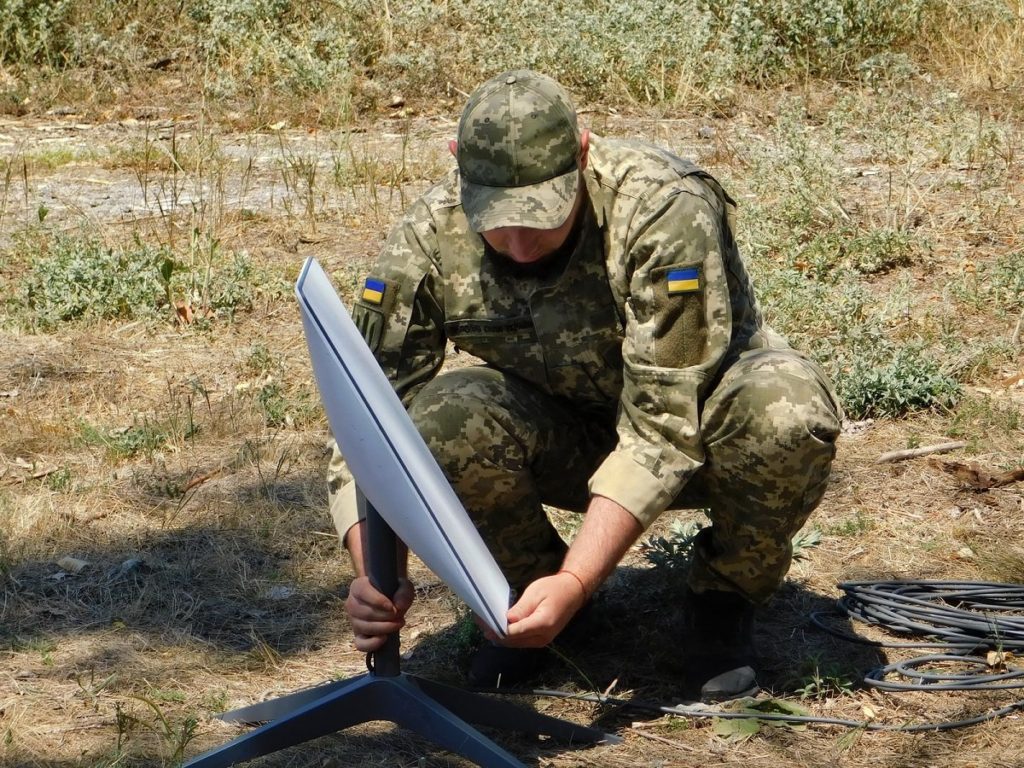
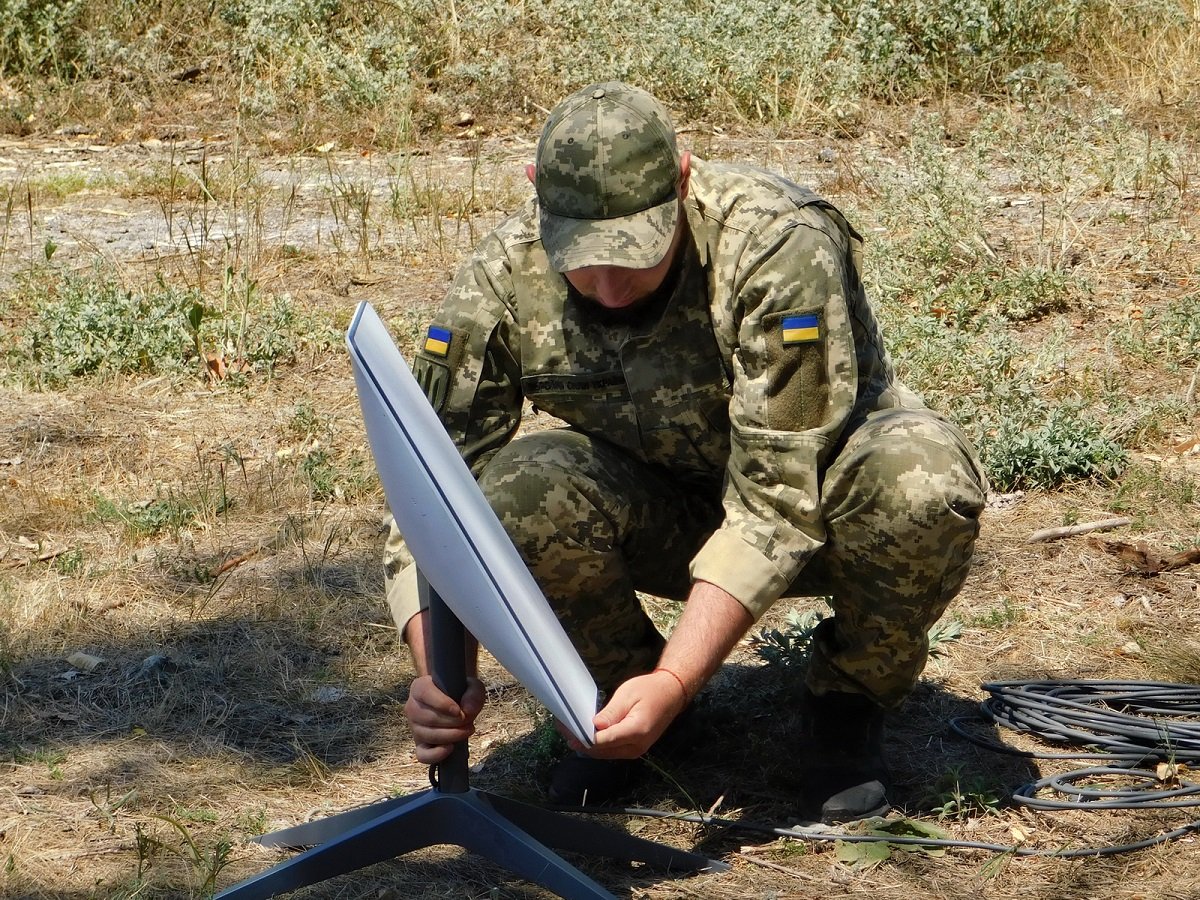
poland bulgaria now lithuania russia’s suspected arson campaign reaches third starlink site serving ukraine · post ukrainian soldier installs terminal news reports

Someone tried to set fire overnight to a Lithuanian company that stores Starlink communication equipment, but tipped-off guards foiled the attempt, Lithuanian Prime Minister Mindaugas Sinkevičius said. He linked the attack to Russia’s hybrid war against Europe. It is the third suspected sabotage of Starlink infrastructure in Europe in under a month.

Russia keeps attacking Ukraine at the front and from the air while running a sabotage campaign behind the lines in Europe, which ISW has linked into one pattern. Starlink keeps Ukraine’s drone units and front-line troops connected, and Poland pays for much of that service.

Fuel canisters and a control unit

The attack came just after midnight, the prime minister wrote. Security services had warned the company about possible attacks, security was stepped up, and the attempt failed.

The company provides connectivity through nine Starlink satellite antennas used by Ukraine, Sinkevičius told Lithuanian public radio LRT. At almost 2 a.m., intruders tried to burn the antennas and their control unit, leaving behind incendiary liquid in canisters of 3 to 10 liters.

“It is obvious that this is part of Russia’s hybrid war with elements of sabotage,” he said, adding that the client was likely “the Russian side.”

He said he believes the people involved, and how many there were, are known, but gave no details, citing the investigation.

Police Commissioner General Arūnas Paulauskas said no suspects had been detained, any damage was minimal, and the company kept working. A pretrial investigation is under way.

poland bulgaria now lithuania russia’s suspected arson campaign reaches third starlink site serving ukraine · post ukrainian soldier installs terminal news reports
Explore further

New Starlink restrictions disrupt Ukrainian drone missions. Kyiv adviser says move is tied to “political situation”

A drone the same morning

Hours later, an object that apparently entered from Poland crossed northern Lithuania, and NATO jets failed to identify it, Defense Minister Robertas Kaunas said. Possible fragments were found in the Pasvalys district near the Latvian border. Latvia’s military said the object may have blown itself up on a course toward Latvia.

Sinkevičius said the sabotage version had to be checked for the drone too. He called the National Security Commission for Monday, 19 October, to examine both incidents and consider giving services more powers to neutralize drones.

The third Starlink site

In September, a fire destroyed the distribution panel at a Starlink ground station in Wola Krobowska, Poland. Germany detained two Turkish nationals on 12 October, and Warsaw blamed Russian intelligence. In Bulgaria, masked intruders burned 11 of 17 Starlink antennas near Sofia.

  •  
❌