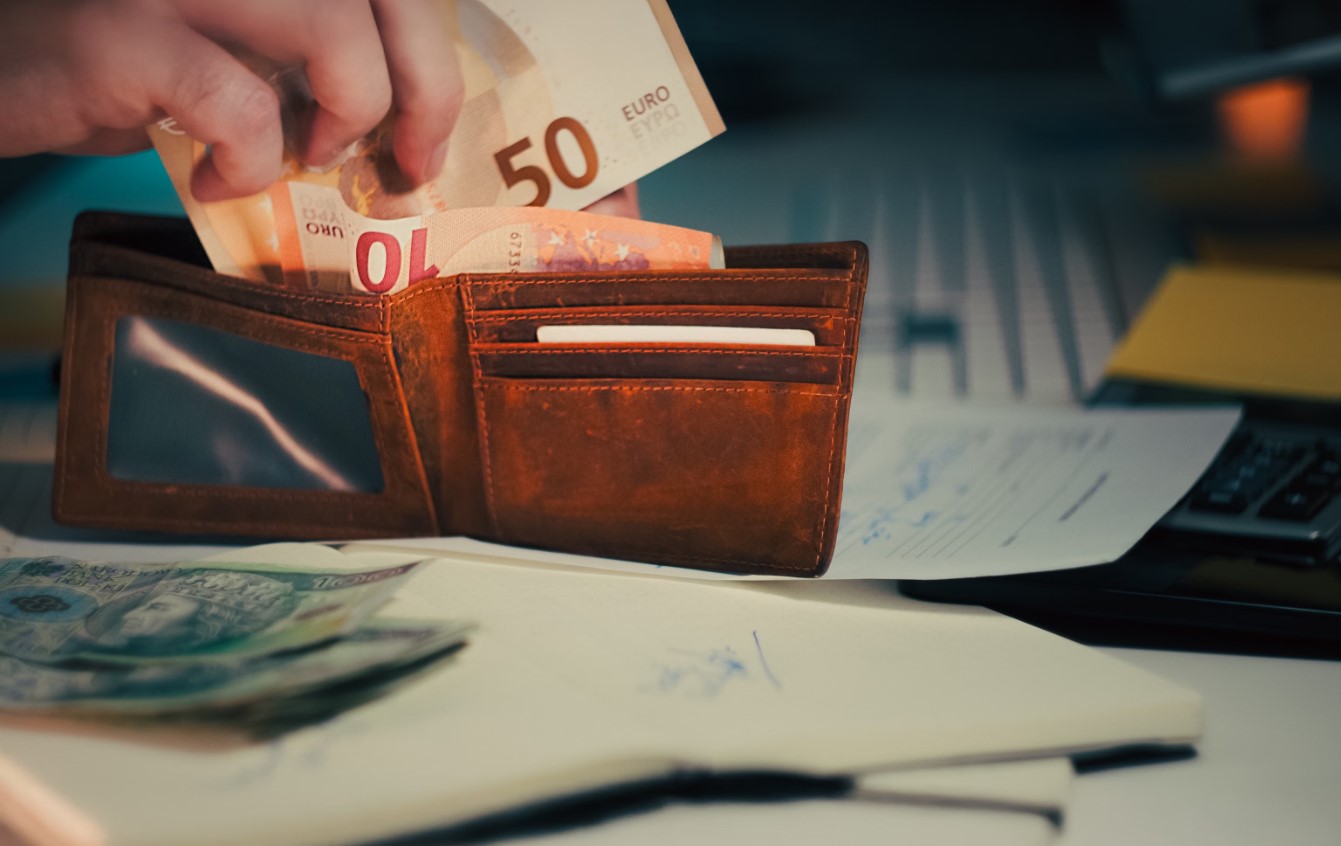
An employee for an accountant’s office in Paphos lost €6,000 when she received an email, appearing to be from a bank, asking her to update her personal details.
The police said on Friday that the woman followed the instructions and soon afterwards found the sum had been taken from her bank account.
She immediately filed a complaint with the police.
Following the incident, the police have repeated warnings against following links and uploading personal details.
Hackers stole $6.3 billion from Binance, the world’s largest cryptocurrency exchange, in what analysts say is the biggest crypto hack ever, an attack that could prompt investors to rethink the risks of owning digital assets.
The hackers behind the raid were from North Korea, according to US blockchain analysis firms TRM Labs and Chainalysis. The attackers targeted Binance wallets on 10 blockchains and shifted most of the funds in about 20 minutes, TRM Labs said in a statement.
Binance said it worked with partners to freeze the affected assets with about $3 billion located so far. It did not mention the status of the remaining $3.3 billion, and its co-founder Yi He said the exchange would cover “all hacking losses”.
Binance said its deposits were unaffected and it expects to resume withdrawal services in the next 48 hours.
TRM said several features of the attack matched earlier heists linked to North Korea, including a 2025 hack of crypto exchange Bybit that the US Federal Bureau of Investigation had attributed to Pyongyang.
“We make this judgment with high confidence,” it said in a statement.
North Korea’s mission in Geneva and its embassy in China did not immediately respond to Reuters requests for comment.
The incident could be the world’s biggest crypto heist, according to analytics firm Chainalysis and other industry experts.
“It’s the biggest hack in history,” said Aravind Srinivasan, head of large crypto market maker GSR’s systematic OTC business.
Bitcoin tumbles as crypto markets react
Bitcoin BTC= dropped more than 3% to a six-week low of $76,368 and ether ETH= fell more than 3% to a two-month low of $2,178. BNB BNB=CCCL, a token originally launched as Binance Coin that can be used to pay Binance fees, was down 5% over the past 24 hours at $709.70, according to market aggregator CoinGecko.
Shares in crypto exchange Coinbase Global COIN.O slid 4.8% while those of bitcoin buyer Strategy MSTR.O fell nearly 6% in extended US trading.
Hacked laptop may have triggered breach
An initial investigation suggested the breach may have started with a hacked laptop belonging to one of its engineers, which let an attacker gain access to one of its systems and make unauthorized withdrawals, Binance said.
“The incident stems from multiple factors. Our security team is tracing the full attack path through the compromised computer which may be the entry point of the incident,” Binance said.
Beyond the potential loss of assets, the security breach was likely to have wider ramifications for crypto, which had already been under pressure due to higher US interest rates and softer demand from exchange-traded fund buyers, analysts said.
“It may further dampen risk appetite and prompt investors to reassess the safety of assets held on centralized exchanges, as well as counterparty, solvency and liquidity risks,” said Tim Sun, senior researcher at HashKey Group, based in Hong Kong.
Binance, which allows users to buy, sell and trade digital assets, has 335 million registered users globally and had about $162.8 billion in assets under custody as of the exchange’s 2025 annual report.
“User funds remain safe,” Binance said in a statement.
Binance moves to protect customer funds
Binance runs a secure asset fund for users, which is a reserve held entirely in bitcoin that is intended to protect user assets in cases of security breaches, according to its website.
“It’s becoming very hard to counter hacks as AI can find vulnerabilities faster than you can fix them,” said Bernardo Brites, CEO of Trace Finance, a payments and stablecoin infrastructure company.
“My view is that users will move away from smaller and medium-sized exchanges, (it is) becoming too risky to park your money somewhere that couldn’t cover a hack of meaningful size.”
Crypto firms freeze billions in stolen assets
Stablecoin issuer Tether said it had frozen nearly $1.57 billion in assets linked to the incident, while Circle froze more than $800 million.
World Liberty Financial, a crypto company linked to US President Donald Trump and his family, said on Thursday it had worked with cryptocurrency custodian BitGo to freeze funds stolen in what it described as a Binance hack. Binance’s Yi said $27 million in stablecoins and about $2 million worth of World Liberty tokens had been frozen.
Crypto firm Ripple also froze roughly $200 million in funds, Yi said. Jack McDonald, senior vice president of stablecoins at Ripple, said the company was closely monitoring reports of a potential exploit involving Binance and was freezing affected funds and coordinating with relevant parties.
Record theft adds to growing crypto security fears
Miguel Morel, CEO of blockchain intelligence firm Arkham, said data indicated that billions of dollars appeared to have been hacked from Binance by an unknown actor.
The incident adds to a string of crypto thefts. Last year, attackers stole $2.9 billion worth of cryptocurrency across nearly 150 attacks, according to researchers at TRM Labs. In September, cryptocurrency exchange Bitget said roughly $350 million in crypto had been stolen from its platform, underscoring the industry’s vulnerability to hackers.
Authorities have warned that organised crime groups are increasingly using cryptocurrencies to move funds across borders outside the traditional financial system.
Binance.US, a separate cryptocurrency exchange, said it was not affected by the security incident.
Coinbase COIN.O said it was unaffected and was monitoring the situation.
In an unrelated incident earlier on Thursday, prediction market operator Polymarket temporarily halted trading after a security incident involving a third-party provider. It later resumed trading and said it would fully reimburse affected traders.
Where Binance’s $6.3 billion breach ranks in crypto’s biggest hacks and heists
Time period
Company
What was stolen
What happened
February 2025
Cryptocurrency exchange Bybit
Digital tokens worth $1.5 billion
The crypto was taken from a “cold wallet” – a digital wallet usually stored offline and so supposedly more secure – that was used for ether tokens.
March 2022
Ronin Network, a network that allows transfer of crypto coins across different blockchains
Roughly $540 million from a blockchain project linked to the popular online game Axie Infinity
Hackers stole some 173,600 ether tokens and 25.5 million USD Coin tokens.
February 2022
Wormhole, a DeFi site
$320 million
Hackers making off with 120,000 digital tokens connected to the second-largest cryptocurrency, ether. The crypto arm of Chicago-based Jump Trading, which had the year before acquired the developer behind Wormhole, later replaced the funds.
August 2021
Poly Network, a platform that facilitates peer-to-peer token transactions
$610 million (Hackers behind the heist later returned nearly all of the stolen funds)
The hack underscored vulnerabilities in the burgeoning decentralised finance, or DeFi, sector, where users lend, borrow and save in digital tokens, bypassing the traditional gatekeepers of finance such as banks and exchanges.
January 2018
Tokyo-based exchange Coincheck
$530 million
The thieves attacked one of Coincheck’s “hot wallet” – a digital folder stored online – to drain the funds, drawing attention to security at exchanges.South Korea’s intelligence agency said at the time that a North Korean hacking group may have been behind the heist.
Between 2011 and 2014
Tokyo-based bitcoin exchange Mt. Gox
Bitcoin worth close to $500 million was stolen in one of the earliest and most high-profile crypto hacks.
Mt. Gox, which once handled 80% of the world’s bitcoin trade, filed for bankruptcy in early 2014 after the hack was revealed, with some 24,000 customers losing access to their funds.
A 37-year-old woman lost €784 after falling victim to a scam, the police said on Thursday, warning other people to be wary of potential similar frauds.
The woman said she had received a phone call from an unknown person, who claimed to be a police officer and spoke in English, telling her that there was an unpaid fine issued on her name.
The 37-year-old’s phone screen reportedly displayed the fake name “abcypruspolice9990@gmail.com” instead of the phone number calling her.
The woman, convinced by the suspect, then gave him her bank details to arrange for the payment of the alleged fine and later found that her account had been debited with the amount of €784.
The case is being investigated by the Paphos police.
A 45-year-old woman has reported losing €1,219 after falling victim to an online scam, the police said on Wednesday, while also warning people to be wary of possible further scam operations.
The woman said she had received a text message regarding an unpaid fine, and clicked a link in that text message, which took her to a website which prompted her to enter her car’s registration details.
At this point, she said, a fake document appeared on the page containing information about a fine worth €6.59.
She said she then clicked on an option to pay the fine and entered her personal details, as well as her bank details, into the website, though she did not complete the transaction.
However, when she later checked her bank account, she found that she had made a payment of €1,219.
The police said its investigation into the matter is ongoing, and advised the public that it “never communicates” in this way to call on members of the public to pay fine.
Additionally, it called upon the public to “be particularly cautious when receiving messages containing electronic links”.
“It is recommended that the public avoid following such electronic links and never provide or enter personal or banking information on unknown websites,” it said, before urging the public to reach out to the police should they have doubts over the veracity of messages they have received.
When Snigdha Poonam received a strange email from an organization seemingly interested in discussing a book she published seven years ago, she was intrigued, but apprehensive. As it turns out, her suspicions were well-founded. Poonam, after investigating, discovered she’d been the target of an author scam. Little did the grifter know, that Poonam has spent the last 10 years reporting on fraud. Game on!
This was undoubtedly a scam. Genuine book clubs don’t ask for money from authors. But who was behind it?
Had these individuals actually read my work, they would have wanted to stay away from me. I have spent the last 10 years reporting on transnational fraud. My first book, Dreamers, closed with a chapter on fake call centers in India; my second, Scamlands, traveled to other low-income countries in Asia to portray an invisible empire that thrives on inequality, technological change and the erosion of trust.
Along the way, I met and interviewed the scammers whose labor keeps this empire running. For some, fraud was a route to upward mobility; for others, an act of revenge against the privileged. Though I have formally emerged from this underworld, I can never delete a scam email without wanting to know more.
Simon Leviev, who gained fame after the 2022 documentary exposed his alleged patterns of romance fraud and financial crimes, plans to call the new dating app, Safe Love.
Simon Leviev, who gained fame after the 2022 documentary exposed his alleged patterns of romance fraud and financial crimes, plans to call the new dating app, Safe Love.
For a brief time, Sacha Jafri was both the creator of the world’s largest painting and one of the world’s most expensive living artists, after his 17,000‑square‑foot work The Journey of Humanity was theatrically “sold” for $62 million at a Dubai charity auction. The buyer, French “crypto billionaire” André Abdoune, never paid a cent and, given his history as a serial fraudster, almost certainly never will—meaning no money ever reached the charities that were promised the proceeds. So what was the real story: a giant painting, or a giant scam?
Many of Jafri’s other claims do not stand up to scrutiny. He is often touted as an artist whose work sells in the millions, but publicly available commercial auction records are more modest. His most expensive painting before The Journey Of Humanity was a piece called Dance of the Midnight Samurai, which sold in 2019 for approximately $70,000. The previous year, another work, Dreamscape II, went unsold at two auctions, before eventually being acquired for $893. Newspaper articles document purchases by Kevin Spacey and Guy Ritchie, but there are no reports of sales to Bill Gates, Leonardo DiCaprio, Barack Obama or Bill Clinton. No pictures exist of their red-printed hands.
The FBI isn’t the only interested party searching for Mary Carole McDonnell, the 74-year-old producer behind TV series like I Married a Murderer. There are the former employees who allege millions in unpaid wages, and the two sons who claim their mother forged their signatures on bank documents. There’s an entrepreneur in the United Arab Emirates who accuses her of “mind games,” and the former bank vice-president turned true-crime podcaster who’d like to make a documentary about McDonnell. Cheyenne Roundtree goes deep on the woman who, nearly a decade ago, walked into a California bank with a pecan pie and left with a $15 million loan before vanishing.
The story has all the makings of a viral documentary replete with breathless details, similar to the ones McDonnell’s company produced. Her backstory is littered with half-truths and deceptions, including a lie that her mentally disabled younger sister was murdered after being kidnapped. Questions remain on how she was able to pull off such a brazen heist. And it has sparked an ongoinghunt among the FBI, banking institutions, a true-crime podcaster, and television producers to see who can unravel McDonnell’s tangled history, track her down in a foreign land, recoup the financial losses she caused, and perhaps bring the unbelievable tale to screens.
The house with the red-brick exterior, huge old-growth maple, and sprawling back patio on Castle Frank Crescent in Toronto’s pricy Rosedale neighborhood seemed like the perfect symbol of generational wealth and respectability. As Malcolm Johnston reports for Toronto Life, the occupants, Chakib Mansouri and Majdouline Alouah, might have appeared to be upwardly mobile, driving fancy cars and “dripping” with designer couture. In reality, they funded all their luxuries with a life of crime.
By the fall of 2023, Mansouri and Alouah were so engrossed in their lives of leisure that neither picked up on the vehicles tailing them, day after day. Nor did they notice the plainclothes officers posted up on street corners, in condo lobbies and at cafés, collecting evidence that would expose the couple’s part in an audacious scam that stole more than $185 million from victims in Toronto, across Canada and around the world.
Mark Seal is very fond of the phrase “Who Ya Gonna Call? Scam Busters!”—he uses it three times in this piece. Yet it’s still refreshing, despite being from last year, to read a story that focuses on the painstaking effort to trace scammers rather than lingering on the victim’s humiliation (looking at you, Netflix). Seal does explain how a French woman named Anne fell for “Brad Pitt” online and subsequently lost her fortune to the scammers, but her supposed savior, cyber‑detective Marwan Ouarab—sporting a cat‑in‑a‑trench‑coat T‑shirt—gets most of the page time here. Ouarab apparently found the scammers within 48 hours, but no charges have been made, and Anne is still fighting to recover any of her money. You can call the scam busters, but you’re still in for a long wait.
“All during the scam, Anne was suspecting something,” he says over a vanilla flan, a sweet treat for a very determined guy. “But every time, the crooks had fine words, the right words. They were really poetic. They knew what words were right for her. They really understood Anne’s psychological profile.”
It was a classic “sentimental scam,” says Ouarab—a carefully produced, all-encompassing “theatrical event” that uses love as the bait to hook the target and then envelops them completely in the con. (In this case, the divorced interior designer, Anne, whose last name has not been made public, and a convincing facsimile of Brad Pitt, achieved via A.I., deepfake technology, and, according to Ouarab, “ridiculous photoshop tools to create pictures of the fake Brad in his hospital bed.”)

 Login