
❌

Reading view

Reddit users reveal 'rich people' habits they tried once and could never go back from

What's a spending habit rich people have that is totally worth it?

As the loyal readers know, I am a big fan of Reddit. When it comes to places on the internet where you can find yourself going down deep rabbit holes, there's probably no place that beats Reddit.

You simply never know what you're going to find. There are plenty of crazy stories, history lessons and really cool military content on Reddit.

REDDIT THREAD ON LIFE CHEAT CODES GOES VIRAL WITH ADVICE ON FITNESS, SLEEP AND COMPOUND INTEREST

There's also plenty of debates and discussions, and that's what leads us here today.

Convenience habits of rich people go viral on Reddit

I was scrolling the r/askreddit subreddit early Thursday morning when I stumbled across and interesting thread title that caught my attention:

AMERICANS SAY THEY'RE BROKE. SO WHY CAN'T THEY STOP SPENDING SO MUCH?

What's a 'rich people' thing you tried once and immediately understood why they do it?

As someone interested in money (aren't we all, after all?), it was an instant click from me. The results didn't disappoint at all.

Let's check out some of the replies before breaking it down:

  • I drive a Lexus. Oh, wait, it's 20 years old. Regardless I feel like a princess behind the wheel.
  • Ordering groceries that arrive pre chopped, pre washed, and neatly portioned. I laughed at the price tag once, tried it during a burnout week, and instantly understood. It’s not buying food it’s buying back two hours of your Sunday so you don't spend it crying over a cutting board.
  • Don't ever fly business class on a long haul flight unless you can afford to do it regularly. Once you know... economy sucks so much harder.
  • Custom made clothes. Had a dress made for a special event. Fit me like a glove, looked perfect on me, and I felt like a queen. Would get my whole wardrobe custom made if I had them money.
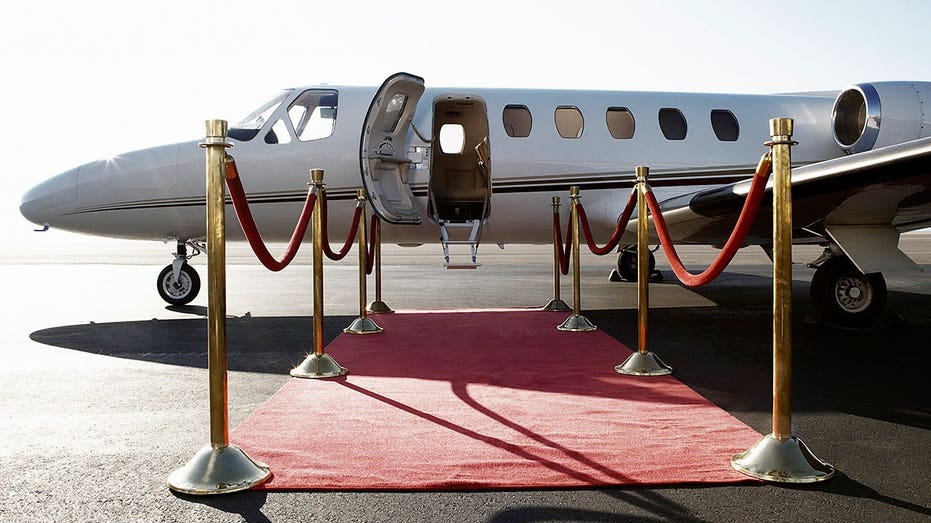
  • Flew private. Our organization has a small place and the pilots have to have a certain number of flight hours per month so we asked to fly to a regional meeting. I parked, walked in, waited for the plane to land, got a short safety briefing, then walked 30 feet to the plane and boarded. No one even checked my ID. I 100% understand why people do this. It was so so nice not to have to deal with airport parking, TSA, or loading a commercial plane (where I always fly cheap af).
  • Hiring movers. Not sure if this counts, but I hired a moving company to move my stuff for the first time. Was like half a garage and a rooms worth of stuff. $500 later and it’s just where you need it to be. Parents divorced when I was young. They seemed to lease a new house every year, so lots of moving. Finally realized it doesn’t have to be a terrible process and I can just have someone else do it all and it’s so worth it.
  • Flying first class. Apparently the difference between hating air travel and enjoying it is about six inches of legroom and a glass of champagne.
  • What I'm getting from this thread is that flying is miserable if you're not rich
  • I bought a bespoke suit. Made me look like James Bond. And ruined off the rack suits for me. You essentially don't want to wear anything else.
  • Anything above economy for long haul flights. I just did premium economy and the difference was enough to nearly spoil me. I can't imagine how it feels in business and first.
  • I bought vip packages to a music festival. Was like $10 a person extra with access to private lounge and things. I only did it for the great access bathrooms. That alone was easily worth it to me.
  • Cleaning lady. Never did it myself, but I dated a woman with a cleaning lady. Picked her up at a messy home, had a nice time out, came back to a spotless home. Unbelievable experience. If I ever have money, cleaning lady.
  • Went to the warmer states during the winter months.
  • Taking a $40 uber right to my destination instead of having to take a bus to a train to a bus and walking several blocks.
  • Eating at a really nice restaurant. I am talking about a Michelin star restaurant. I went to one on a work trip once.
  • Hiring a moving company
  • Having someone clean your house for you. I finally understand why rich people pay for convenience.

Now, as the readers also know, I'm a working class guy from rural Wisconsin. You grow up fast when you grow up in those harsh winters. Life doesn't have many luxuries and you learn to get by with what you have.

Having said that, I have tasted the high-life once or twice, and without question flying first class is the obvious answer to this viral Reddit question.

Are there much more expensive things rich people have access to? Sure, but flying first class is attainable for most people if they want it to be, and it makes the flying experience significantly better.

Not a little bit better.

Much better.

Taking a seat on a first class flight – I've always found Delta to be the best – and being immediately greeted with a snack and drink instantly makes the hellish airport experience better.

SIGN UP FOR THE DAILY OUTKICK NEWSLETTER

It's almost impossible to go back once you've been in first class.

OUTKICK IS NOW AVAILABLE ON THE FOX NEWS APP: CLICK HERE TO DOWNLOAD

What's your splurge item that wealthy people enjoy? Let me know at David.Hookstead@outkick.com.
  •  

'My concern is that AI makes a lot of things very easy': 'Diary of a Wimpy Kid' author on raising kids to read and think

Jeff Kinney
'Diary of a Wimpy Kid' author Jeff Kinney shares his parenting advice — and what he'd do differently.

Simon Simard for BI

This as-told-to essay is based on a conversation with Jeff Kinney, the 55-year-old author of the "Diary of a Wimpy Kid" series, who lives in Plainville, Massachusetts. It has been edited for length and clarity.

When I wrote "Diary of a Wimpy Kid," I worked on it for eight or nine years without thinking I was writing a book for kids.

I thought I was writing a book for grown-ups that would feel like "The Wonder Years" or "A Christmas Story" — looking back on childhood through the lens of an adult.

The first thing that surprised me was that my publisher said I'd actually written a children's series; it caused a lot of cognitive dissonance.

But what also surprised me was that kids understood the irony in the books. They understand that Greg is an unreliable narrator; they seem to get the joke.

After writing the series, and after raising two kids of my own — ages 21 and 23 — I've learned a few things about kids. Here's my best advice about getting kids to read, screen time, and more — plus a few things I'd go back and change if I could.

1. To get kids to read, feed their interests

I recently heard author Jack Gantos say that after dinner, he and his family would get out their books and read. I think that's really cool and also very old-fashioned, in a way. I wish we'd done it when raising our kids.

With reading, I think the most important thing you can do is feed your kids' interests, whether they're interested in Pokémon cards or sharks or tornadoes. Get them books or magazines that speak to their interests, rather than trying to give them books that we read as kids or books that are too high-minded for their age level.

A lot of authors who write for kids start with some sort of a lesson, and there's a time and place for that. But kids read for the same reason that adults read: to be entertained. If we start from a position of trying to teach kids a lesson, they'll sniff that out and turn away from it.

It's really important to encourage kids down a path that gets them reaching for the next book. I want them to feel a feeling of success in having finished a book because that's an important act of completion. But mostly, I'd like them to keep reading, whatever form that might take.

2. Listen to them

In everyday parenting, sitting at dinner with our kids and hearing about their day without judgment is a really good foundation. Just about everything that kids today are going through, we've been through in some form. The most powerful thing that we can say to kids is "I understand," or "I've been there myself," and share stories, making sure that they feel seen and heard.

As parents, we should make ourselves vulnerable to our kids by telling them about the struggles that we went through.

If we do that without moralizing and without judgment, I think it draws us closer to our kids and turns us into a resource for them.

3. Envision your future relationship

I've always thought about my relationship with my kids by imagining, How do I want our relationship to look when my kids are adults? I've tried to anticipate that and treat my kids that way the whole time.

Jeff Kinney
Kinney has two adult children, ages 21 and 23.

Simon Simard for BI

I think it's working out because my kids will call me and want to go see the Patriots or the Celtics with me. I think that's partially because I've always had this version of our relationship in mind.

4. Don't get too wrapped up in kids' sports

As parents, we live and die by our kids' successes in sports. I certainly got too caught up in it and couldn't really anticipate that there would be a life beyond sports for my kids.

If I were to go back in time, I probably would change my approach on that. We like to see our kids succeed, and of course, sports is a big stage where there's a lot wrapped up in their success, including social issues and self-esteem.

When our kids are thriving, we feel really good for them, and when they're failing, it's tough for them and us. I can understand why that happens with parents, but I can also see that it's good to take a step back.

5. Help them understand that social media manipulates

Social media bullying is something that we never had to face growing up, and it's really unfortunate and damaging.

Screen time has changed things — you see studies finding that kids are dating a lot less, and there's a loneliness epidemic.

As parents, we can help kids by educating them and helping them understand that social media companies are incentivized to make you spend more time on your screens. The more that my kids, who grew up immersed in the social media world, began to understand that, the more they wanted to move away from it.

They get out there in the world — touch grass, play sports, and pick up basketball. My son will put lockouts on his social media.

It's important for us to think for ourselves before we turn to AI

As AI becomes a part of schoolwork and daily life, my concern is that AI makes a lot of things very easy.

At times, I look for solutions through AI that I could conjure up myself, so I worry about how that rewires the brain when you feel like there's always an agent that can solve your problem for you. It could reduce your own capacity for problem-solving.

It's really important for kids to be able to think for themselves before turning to the tool.

To counteract that, getting out in the world and interacting with one another is really important. Put kids into social situations; for example, my son has been working as a bookseller this past year, where he's had to interact with lots of different types of people and solve problems.

A lot of kids or young people in this generation are more isolated. They spend a lot more time in their rooms on their phones, and so I think that getting them out there interacting with other human beings is going to give them a competitive advantage.

Read the original article on Business Insider

  •  

Per un Pix europeo non serve aspettare il 2029

L’euro digitale può rafforzare la sovranità monetaria, ma non arriverà prima del 2029. Per ridurre subito la dipendenza dai circuiti di pagamento extra-Ue basta usare meglio bonifici istantanei, Tips e regole comuni. Il Pix brasiliano indica la strada.

L'articolo Per un Pix europeo non serve aspettare il 2029 proviene da Lavoce.info.

  •  
❌