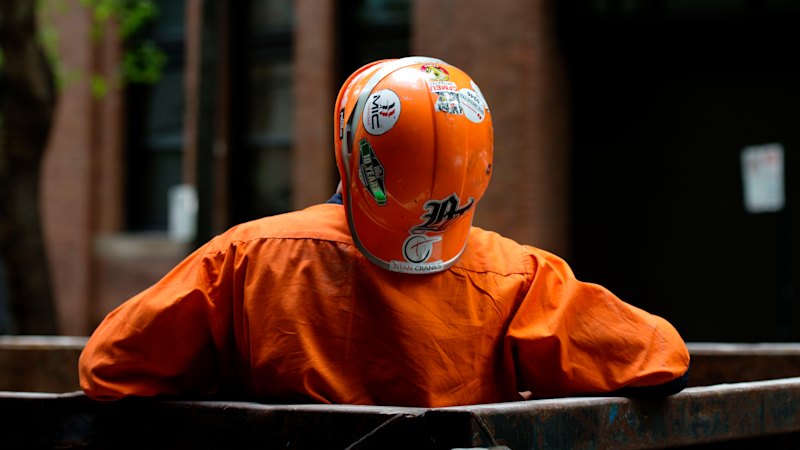
For years, the unspoken rule in workplaces is that everyone wanted to move up the ranks. But now fewer people want to be the boss, and it’s not hard to see why.
For years, the unspoken rule in workplaces is that everyone wanted to move up the ranks. But now fewer people want to be the boss, and it’s not hard to see why.
The fair work umpire has ordered Coles to pay a man $6500 after he was sacked for breaching workplace policy by trying to stop two suspected thieves at a neighbouring Liquorland store.
The more than 200,000-word document reveals what it takes to thrive as an employee — or an "Ant," as staffers are called — and why the company is so focused on retaining its top talent.
Here's a look at three workplace themes in Anthropic's S-1:
Head count is booming, but could be higher without Claude
Anthropic said its workforce grew from about 940 employees at the end of 2024 to about 5,300 as of late September.
The more than fivefold spike in head count in less than two years is notable on its own. Yet, without Claude, it could have grown more. Anthropic said the tool is helping its staffers take on work that would traditionally have required much larger teams — something many tech companies are looking to do to become more nimble.
Most Anthropic employees work in research, engineering, and product development. The company said its strategy is to use Claude to grow the business "without growing head count linearly, resulting in extraordinary contributions per employee."
One place where that's evident is in software engineering. The company said these workers increasingly direct and review Claude's output rather than write code line by line. Claude wrote more than 90% of the contributions to the company's codebase in September, while average daily code contributions per engineer in the third quarter were more than 45 times their average daily level in 2024, Anthropic said.
Recruiter Martha Heller said it's little surprise to see Anthropic talking up its use of Claude. "Of course they're going to eat their own dog food," she said. In any case, Heller said, the company still needs people to provide oversight of AI's activities.
Yet the gap between staffing levels and output could grow, said Aaron Cleavinger, an executive recruiting partner at Flatiron Search Partners.
"Head count is becoming a less meaningful measure of organizational capability," he said. Cleavinger said it's not yet clear what the new measure will be, though Anthropic's approach suggests companies might put greater emphasis on workers' productivity and business impact.
It describes retention as paramount
Despite having significantly upped its employee count, Anthropic said it's highly dependent on its senior leaders and key technical team members. The company warned that their departure could disrupt operations and slow innovation.
While that's true for any employer, Anthropic faces additional challenges. It's a fast-growing startup in a booming industry, where few people have the right technical skills — and those who do are being heavily courted by competitors.
Winning the war for talent is half the battle. Anthropic is also part of an industry where some workers have quit and issued dire public warnings about the dangers of increasingly powerful AI.
For example, safety researcher Jacob Coxon resigned from Anthropic last month, saying the company and his former employer, OpenAI, were moving too quickly toward increasingly powerful AI without a sufficient plan to control it.
"That's not garden-variety turnover," said Liane Davey, an advisor on team effectiveness to executives at companies such as Amazon and Google.
If employees determine that their work poses an existential threat, no bonus can simply erase moral qualms, Davey added.
In its S-1, Anthropic said many key technical workers are motivated by its mission and by the chance to tackle specific AI problems. However, if their beliefs change, or another organization seems more aligned with their personal beliefs or professional goals, "we may face increased difficulty retaining such personnel," Anthropic said.
The company's internal data suggests that, at least for now, turnover isn't a significant problem. It said it experienced only about 1% "regrettable attrition" in a 12-month period ending on September 30.
However, Anthropic may have a thinner pipeline of junior technical talent to elevate. The company said in a recently released internal report that it has been hiring for a "smaller share of junior technical positions" as AI agents have been deployed across the firm to write code, fix bugs, and handle other tasks.
Anthropic is betting on a "low-ego" workforce
Anthropic touts a "low-ego" or "ego-light" culture, meaning all employees are expected to prioritize what's best for the company over personal status, credit, or seniority. It uses similar language on its website in a section describing its values.
In the S-1, the company went further, saying the arrangement allows for an "unusually short" distance between a research insight and a released product. Anthropic also said a shared purpose, paired with low ego, translates directly into less organizational friction and greater impact per employee.
"Our teams operate in a truth-seeking environment where the best argument wins, not the loudest voice or the most senior title," Anthropic said.
Jamie Shapiro, an organizational psychologist and CEO coach, said that logic makes sense because good ideas can come from anyone within an organization, especially those who directly interact with customers.
"An organization that has idea meritocracy is going to get the best ideas," she said.
However, as Anthropic grows, the more challenging task will be ensuring its hiring, recognition, promotion, and accountability systems reinforce its ideals — rather than allowing exceptions that undermine them.
"The bigger the organization, the harder it is to make sure everyone is living and breathing the culture it wants," said Shapiro. "Culture is defined by the worst behaviors you allow."
Forbes' world's best employers 2026 list ranks 900 companies from 52 countries; here are nine named honorees, from Microsoft to Nedbank, and how the ranking was built
Christophe Fouquet, the CEO of Dutch tech firm ASML, said last week that the company will incorporate employee satisfaction into its compensation strategy for top executives in an effort to quell discontent over a major reorganization, per a memo to employees obtained exclusively by Business Insider.
Fouquet was responding to the results of an annual survey that polled more than 38,000 of ASML's roughly 44,000 employees.
The survey results, seen by Business Insider, show that ASML's employee engagement index — a measure of worker satisfaction — fell from 78% last year to 73.5% this year.
In the memo, Fouquet said that the declining employee engagement scores "reflect a period of significant change" and acknowledged that it had been a "disruptive and emotional year" for the company.
He added that ASML's executive team had highlighted six questions in the survey and combined them into a new Workplace Experience Index, which would be incorporated into the company's Long-Term Incentive plan for executive compensation.
"In the coming years, it will directly influence the remuneration of senior leaders, including the Board of Management," Fouquet wrote, adding that strengthening the company's culture and reinforcing its values would be a personal priority in the coming year.
ASML's lithography machines are a critical part of the semiconductor supply chain.
Bloomberg/Getty Images
The six questions include whether employees feel they can share their opinions without fear of retaliation and if they have confidence in ASML's senior leadership team.
Employees will also be polled on whether they have a clear understanding of their role, whether they think their teams are operating efficiently and are well organized, and whether they feel their direct manager shows they care about them as an individual.
"We recognize the role that leaders play in creating a good workplace, and we now strengthen our commitment by including the workplace experience index in the remuneration of senior leadership, including our Board of Management," an ASML spokesperson told Business Insider.
It comes as ASML, the only firm on the planet capable of building the advanced EUV lithography machines critical for chipmakers like TSMC and Intel, attempts to slash bureaucracy with a sweeping org chart reorganization.
ASML announced in January that it could cut 1,700 jobs to reduce management layers and focus on engineering. Leaked documents previously reported by Business Insider show that these ongoing efforts have focused on reducing the number of managers at the company. The company later said it expected to cut fewer jobs than initially planned.
The ASML spokesperson said that its organizational changes were "necessary to strengthen ASML's ability to innovate" for its customers, but it also recognized they were "disruptive" for staff.
Going against tech's 'hardcore' trend
Major companies tying executive pay to employee satisfaction is uncommon, but not unheard of.
Companies like IBM and Aviva have previously included employee engagement in their compensation targets for top executives.
ASML's decision, however, runs counter to the cultural winds of Big Tech, which have seen some companies embark on relentless layoffs and push employees to work longer hours as part of a "hardcore" working shift.
Meta was an early, prominent leader of this push, with a series of layoffs that began in 2023 during Mark Zuckerberg's "year of efficiency" and, last year, cutting "low performers." CTO Andrew Bosworth at one point suggested that employees who disagreed with the company's direction should "consider working elsewhere."
Executives have since acknowledged internally that Meta went too far with its efficiency push, with Bosworth telling workers that morale at the company was almost the worst it has ever been.
Fouquet's memo to employees came days before ASML raised its 2026 sales forecast and pledged to accelerate production of its unique lithography machines as the AI boom fuels surging demand.
The company's machines are vital for producing the advanced semiconductors used to train and run AI models, and the rapid buildout of AI data centers has pushed ASML's shares up 45% this year.
One major prospective customer for the Dutch firm is Elon Musk, who is racing to build a massive semiconductor factory dubbed "Terafab" in Texas. Business Insider previously reported that Musk gave a virtual presentation to a private ASML employee conference in June to pitch Terafab, which is a joint project by Tesla and SpaceX.
Editor's note: October 23, 2026 — This story was updated to include a statement from ASML.
 Login