❌

Reading view

Disrupted LPG supply

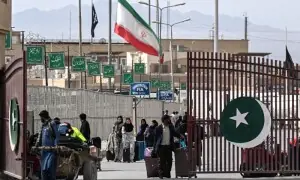
THE petroleum minister’s explanation in the National Assembly that the recent closure of the Iran border has disrupted liquefied petroleum gas supplies and driven up prices identifies a major cause of the current crisis. The subsequent partial border reopening has failed to ease the shortage.

While the closure may have triggered the present shortages and price hike, the problem recurs every winter. Pakistan produces only about a quarter of the LPG it needs. The rest is imported, mainly from Iran. The disruption of cross-border trade has therefore exposed the vulnerability of a market that depends heavily on external supplies. The Iran war has also complicated efforts to bring in more by sea. The minister says efforts are being made to increase seaborne supplies, but consumers have yet to see relief.

The state must explain what additional volumes have been secured, and when they will arrive. Further, why were no contingency measures taken before the Iran border closure, especially when the authorities knew that the onset of winter would push up demand? The decision-makers owe an explanation to people suffering due to sudden shortages and price shock.

That said, the current LPG supply disruption is only part of the wider story. LPG prices have historically surged as winter approaches, even without a major supply shock. This recurring pattern suggests that the crisis is not simply the result of border closure.

Inadequate advance planning, weak market oversight and the failure to build reliable supply arrangements leave consumers exposed whenever demand rises or imports are interrupted. The consequences are particularly harsh for households without access to piped natural gas. Millions of families in northern Pakistan, remote and hilly areas, and parts of Punjab depend on LPG for cooking and, during colder months, heating.

Low gas pressure and restricted supplies in connected areas also push more consumers towards cylinders, adding to demand. With the official price around Rs280 per kg and reported market rates reaching Rs500-800, an essential fuel has become unaffordable for many. Blaming the Iran border closure is but an attempt to cover up the ministry’s failure to do its basic duty: ensure adequate supplies ahead of the closure and enforce the official fuel price.

Published in Dawn, October 30th, 2026
  •  

O que podemos aprender com a Tesla e as marcas que reinventaram o marketing? Três livros a considerar

A inteligência artificial redefine a relação entre marcas e consumidores e o crescimento das empresas depende tanto da capacidade de interpretar o comportamento humano como da visão estratégica para transformar ideias em resultados. De compreender a mente de uma nova geração de consumidores a decifrar os métodos que impulsionam empresas como a Tesla e a SpaceX, sem esquecer os exemplos de excelência que fizeram história no marketing, estes três livros propõem diferentes caminhos para pensar marcas, negócios e liderança.

  •  

Candid admission

PARLIAMENT has recently been debating the future of Pakistani democracy, but those debates will be for naught unless our leaders also develop the capacity to acknowledge each other’s positions.

The past two days have seen the government and opposition benches trading blame for democracy’s present, rather sorry state.

On Wednesday, JUI-F chief Maulana Fazlur Rehman accused the government of misusing the Constitution and resorting to unconstitutional measures. He also said his party was “prepared to die” resisting the government if the latter continued pursuing a policy of confrontation and violence, and proposed a new Charter of Democracy as the way out.

Regretting that his efforts to mediate between the government and the PTI had failed because the government had changed course and imposed an emergency and governor’s rule in KP, the maulana said the political leadership had grown too intolerant for parliament to do its job.

He was not wrong, though the fault is hardly the government’s alone.

The maulana’s rebuke drew two kinds of response. Minister of Defence Khawaja Asif resorted to personal attacks, insinuating that the JUI-F chief was merely sore at being denied a share of power in KP.

PPP Chairman Bilawal Bhutto-Zardari, on the other hand, was more circumspect. Though he, too, laid much of the blame for parliament’s dysfunction on the opposition, he nonetheless urged it to exercise its powers and return to parliamentary committees.

“Those who want this House to remain dysfunctional and do not want the people of Pakistan to benefit from it have succeeded,” he told the opposition benches. “You have played a part in helping these people achieve their objective.” It was a surprisingly candid admission that the House’s dysfunction serves interests other than the people’s, even if the PPP chief left out his own party’s role in getting us here.

They may have yet to come to terms with it, but both ruling and opposition parties have lost credibility and political ground due to their ongoing vendetta. The maulana’s call for a new Charter of Democracy, though welcome, looks difficult to realise when the two sides cannot even agree to sit together in parliamentary committees.

The imposition of emergency and governor’s rule in KP was a gross misstep by the federal government, and it has spoiled the chances of a negotiated settlement. But the opposition, too, has gained little from confrontation.

Unless both sides start to show some flexibility on key matters, make compromises and enter negotiations without preconditions, they risk further deepening this crisis of their own making.

If enough lawmakers on both sides of the aisle are willing to admit that matters have gone too far, there may yet be hope for parliament, and for Pakistani democracy. The question is, are they ready to do so?

Published in Dawn, October 30th, 2026

  •  

Ensure reform in wake of Tai Po fire report delivers intended results

Hong Kong is still healing from the trauma of the Wang Fuk Court fire that claimed 168 lives nearly a year ago. The difficult process has been taken a step further with the release of the final report of an independent committee of inquiry led by a High Court judge, and the response of the government, revealed on Thursday by the city’s leader and his administration. The concept of accountability has hung heavily over proceedings. It is only natural after such a catastrophe for people to expect...

  •  

El inevitable final de un Gobierno negligente

Ante la tozudez de la realidad, habrá que colegir que la gestión gubernamental de los intereses públicos solo ha destacado, si es que se puede utilizar ese término, en la exacción fiscal de empresas y trabajadores y en unas políticas clientelares, que la propaganda oficial denomina «sociales», que, como ejemplifica el caso del Ingreso Mínimo Vital (IMV), es uno de los factores de la cronificación de la pobreza que se sufre en amplias capas de la población. De hecho, ante las tragedias ferroviarias de Adamuz y de Urda, sucedidas en menos de diez meses y en la misma línea de Alta Velocidad, la que va de Madrid a Sevilla, que es la más antigua de la red, podría decirse que son el compendio de una gestión política negligente y no exenta de soberbia, pecado capital del sanchismo que condiciona cualquier asunción de la responsabilidad y, por lo tanto, el reconocimiento del yerro y la voluntad de corrección. En el tiempo transcurrido entre las dos catástrofes de Adamuz y Urda, la acción del Gobierno, cuyo máximo representante en el ámbito concernido es el todavía ministro de Transportes Óscar Puente, se ha caracterizado por el ocultamiento de las causas, la insistencia en mantener operativa la red del AVE por encima de las limitaciones que aconsejaba el estado de la vía afectada y de unos sistemas de seguridad en el final de su vida útil, la total displicencia con que se despachaban los avisos y advertencias de los mejores profesionales del ferrocarril y, finalmente, el despliegue masivo de la propaganda para disimular lo que experimentaban en el día a día los usuarios, como si el mantenimiento de la minería electoral fuera el único denominador común del Ejecutivo sanchista. Pero si esta descripción de la acción gubernamental corresponde a los últimos nueve meses, es obligado señalar que no se ha llegado a este punto de deterioro de la red ferroviaria en un tiempo corto, sino que ha sido el resultado de ocho años de infrafinanciación del servicio, reducción presupuestaria de los trabajos de mantenimiento y revisión, contratos en baja temeraria de unos sistemas de seguridad modernos para la línea Madrid-Sevilla que tenían que haber entrado en servicio a primeros de este año, pero que siguen en proceso de instalación, y, sobre todo, la implementación de una política laboral en la que se ha primado la vinculación a las distintas familias socialistas de los altos dirigentes de Adif y Renfe por encima de la aptitud profesional para unos cargos con mucha exigencia técnica. Y todo ello, por cierto, cuando ningún otro gobierno de la reciente historia de la democracia española había disfrutado de unos ingresos fiscales de récord, los más altos del periodo, y de las enormes aportaciones de los fondos de recuperación de la Unión Europea. El déficit de inversión en las infraestructuras es, por supuesto, una realidad sangrante frente a la pesada carga impositiva impuesta a los ciudadanos, que machaca a las clases medias y trabajadoras, y el crecimiento imparable de la deuda pública que está experimentando España. Nos hallamos ante el inevitable acto final de un gobierno negligente, que no tiene más asideros que la propaganda, pero que pretende seguir dando lecciones.

© EFE

Pedro Sánchez y Óscar Puente
  •  

Ante la tragedia, más respuestas y soluciones

<![CDATA[

El accidente ferroviario de Urda reviste tanta gravedad que el Ministerio de Transportes, del que dependen Renfe y Adif, se está esforzando por dar respuesta con suma celeridad a todas las dudas de los ciudadanos. La intención puede ser loable, pero a medida que se conocen los datos, las incógnitas y la perplejidad aumentan. Lejos de serenar los ánimos y tranquilizar a la población, las primeras informaciones agravan la intranquilidad. Nada devolverá la vida a las víctimas mortales. No hay vuelta de hoja ni enmienda. Su memoria exige, sin embargo, una investigación objetiva y rigurosa. En cuanto a los ciudadanos –conscientes de que muchos de ellos o sus familiares podían haber viajado en los dos convoyes siniestrados–, el deber del Gobierno va más allá de dar respuestas: se necesitan también soluciones. Hechos y no solo palabras.

Seguir leyendo...

  •  

The Guardian view on a changing Brexit debate: Kemi Badenoch is trapped in denial | Editorial

The prime minister’s ambitions might be ambiguous, but unlike the Conservative leader, he is following voters and the facts

British politics is still polarised around Brexit, although 10 years on from the referendum, the terms of debate are very different. Or they should be. Russia’s invasion of Ukraine in 2022 has moved discussions of European solidarity from the realm of abstraction to a matter of urgent defence partnership. Donald Trump’s presidency in the US, marked by scorn for European democracies and indulgence of Vladimir Putin, has undermined confidence that Britain can rely on any “special relationship” with Washington.

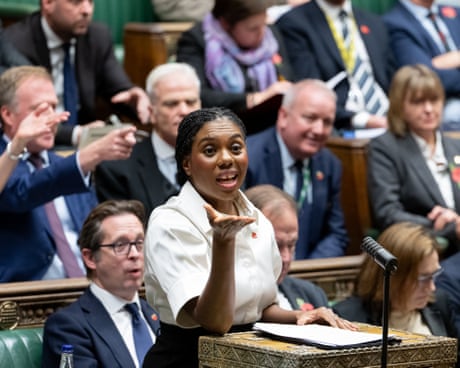
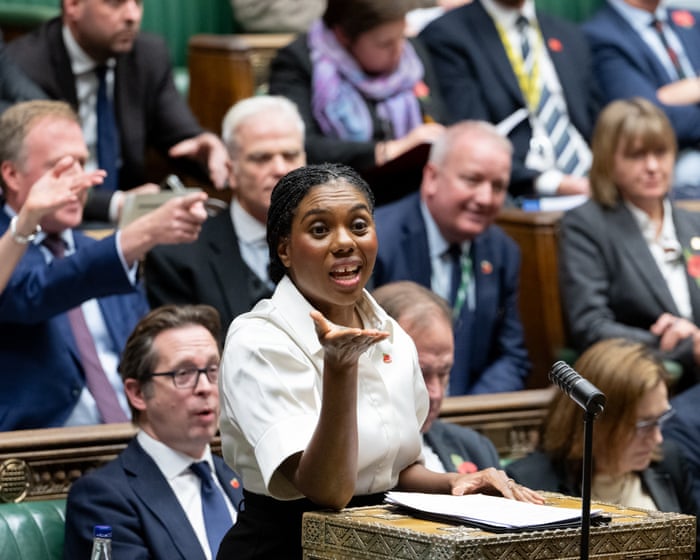
Under these circumstances, it would be absurd to deny that a reappraisal of Brexit is in order. The prime minister acknowledged this in his speech at the Labour party conference last month, calling for a national conversation about the future relationship with every option, including rejoining, on the table. The Eurosceptic opposition are having none of it. The Conservative leader, Kemi Badenoch, accuses the government of stirring division by raising the European question. She told MPs this week that Labour should thank the Tories for the Brexit deal they negotiated.

Do you have an opinion on the issues raised in this article? If you would like to submit a response of up to 300 words by email to be considered for publication in our letters section, please click here.

Continue reading...

© Photograph: House of Commons/PA

© Photograph: House of Commons/PA

© Photograph: House of Commons/PA

  •  

Polluted priorities

LAHORE is choking again, and the government’s answer is to send more machines onto its streets. On Wednesday, its air quality index reached 296, putting children, outdoor workers, and the elderly at particular risk.

Yet Punjab plans to acquire 30 more truck-mounted fog cannons. These can suppress road dust locally, but their ability to reduce the fine particles most harmful to health remains questionable. Authorities must explain what the existing fleet has achieved in terms of measurable pollution reduction before spending more public money.

Last year, disruptions to Punjab’s air monitoring network raised suspicions that pollution levels were being hidden; officials cited technical faults. Whether equipment is recording pollution or spraying water, public confidence depends on transparent data and independent scrutiny. A temporary improvement at a pollution hotspot, or near a monitoring station, cannot prove that the city’s air is becoming safer.

Monitoring should expose pollution. Punjab must publish continuous readings and independent assessments of its interventions. It should also fund research into the relative contributions of traffic, industry, construction, and crop burning, how these change with the seasons, and which measures actually reduce exposure.

That scientific effort must extend beyond the border. Punjab officials say easterly winds have been bringing polluted air from India into Lahore. But this does not absolve Pakistan of responsibility for its own emissions. The air over the two Punjabs is shared, and both populations suffer when political hostility obstructs cooperation.

Calls for joint action are not new. Cooperation was proposed with Indian Punjab in 2017 and 2024. Yet neither initiative led to sustained cooperation. Environmental diplomacy with New Delhi should be prioritised, despite wider tensions. Both sides could begin by exchanging verified air-quality and weather data, jointly studying the movement of pollutants and developing common approaches to agricultural burning and industrial emissions. Universities and scientific institutions could help build a shared evidence base.

At home, dedicated research funding, stronger monitoring, and open evaluation of anti-smog spending are essential. Enforcement must continue, but decisions should follow evidence, not the visibility of machinery on city roads. Until the air itself improves, no amount of official activity can be called progress.

Published in Dawn, October 29th, 2026
  •  

Restructuring plans

THE PPP appears quite perturbed over the fact that the creation of new provinces or administrative units continues to be discussed. Speaking at an event in Karachi on Tuesday, PPP chairman Bilawal Bhutto-Zardari asserted that no one outside Sindh could decide its future. “So we should now put a full stop to this conversation as well.”

The Bhutto scion said the people of Sindh and their elected representatives had “given their verdict” on this matter, ostensibly referring to a Sindh Assembly resolution in early September.

Solely on principle, his position cannot be faulted. The Constitution does lay out a clear process for decisions of this sort, and it gives the elected assembly of each affected province a final say on the matter. Of course, there are public representatives from the same province, albeit from other parties, who disagree with the PPP chairperson’s view. However, that disagreement alone cannot be used to override a defined legal process.

Unfortunately, as recent events in KP have shown, the public’s mandate and verdicts delivered through the ballot box can be brushed aside if the centre is sufficiently motivated. For KP, its decisions are now being made not by its elected representatives, but by administrators handpicked by Islamabad.

It can be argued that this is, perhaps, not a fair comparison, but Mr Bhutto-Zardari should still realise that his position may not hold as much force as he thinks it does, and it will, therefore, not be as easy to bury this agenda as he would like. There are many voices within the federal government’s ruling coalition that are actively advocating for the division of all provinces into more ‘manageable’ units.

As was seen in KP, such voices can be amplified to find causa proxima, the trigger for an intervention, if it comes to that. Therefore, a better course of action would be to address governance grievances proactively.

The primary reason for governance failure in Pakistan is not the geographical size of the existing provinces but the reluctance of provincial capitals to empower local bodies. Few can convincingly argue that the local government system, as it exists today, is capable of positive change at the grassroots level.

At the same time, simply creating more provinces will only add heavy, expensive layers of provincial bureaucracy at a time when Pakistan can ill afford them. There are also steep social costs to consider, as pushing forward without public validation could trigger ethnic strife.

Therefore, empowered local bodies remain the best answer to all those issues which seem to warrant a fracturing of the provinces in the eyes of those demanding an administrative restructuring. The decrepit LG system needs to be revitalised, with resources invested in it judiciously. Doing so can improve service delivery at the neighbourhood level in a meaningful way.

Published in Dawn, October 29th, 2026

  •  

For China, Lula’s win in Brazil removes uncertainty

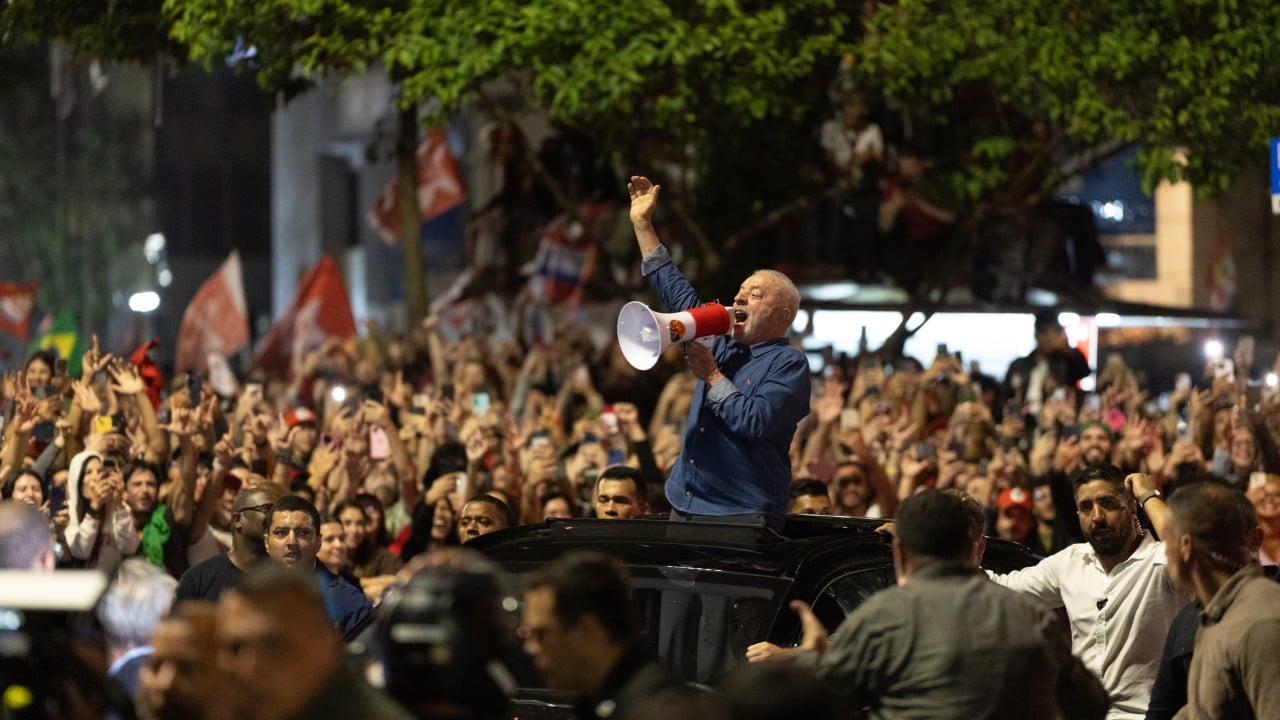
Brazil has given Luiz Inacio Lula da Silva a fourth, non-consecutive term, a feat without precedent in its democratic history. Lula came back from a first-round defeat to win 51.8 per cent of the run-off vote against Flavio Bolsonaro, son of the jailed former president. Yet the victory leaves Lula little room to manoeuvre. Opposition parties may yet control both chambers of Congress. Nearly half of Brazilians say the economy has worsened over the past year. Last year Washington threatened...

  •  
❌