❌

Reading view

EPRS is moving to a new website: follow us there!

Our publications, studies and analysis have a new home. We’ve launched a new website, offering a more dynamic experience, with enhanced features that make our research easier than ever to read and share.

Starting today, you can discover our latest content at http://eprs.europarl.europa.eu/

The EPRS blog will remain available until 29 October 2026. From November, it will be discontinued and visitors will be redirected to our new website.

Don’t forget to update your bookmarks. We look forward to welcoming you to our new platform!

  •  

European Parliament Plenary Session – July 2026

Written by Clare Ferguson with Áine Feeney.

As Members gather for the last plenary session before the summer recess, their agenda covers enlargement, foreign affairs, competitiveness, the EU budget, agriculture, social security and the environment. On Tuesday morning, a debate will follow a presentation of the programme of activities of the Irish Presidency of the Council of the European Union, which began on 1 July. On Wednesday morning, Members will hear Council and European Commission statements on the conclusions of the European Council meeting of 18‑19 June 2026.

EU-Mexico relations

Bilateral relations between the EU and Mexico have been bolstered by the current framework since 2000. On Tuesday, Parliament is due to decide whether to give its consent to the conclusion of two instruments to update this framework, the EU-Mexico Political, Economic and Cooperation Strategic Partnership Agreement (Modernised Global Agreement, MGA) and an interim Trade Agreement (iTA), both of which were signed by the EU and Mexico in May 2026. Parliament remains in favour of modernising the MGA, with a joint report by the International Trade (INTA) and AFET committees welcoming it as a step towards further economic expansion that could benefit EU companies and farmers. The INTA committee is due to vote on a draft recommendation on the conclusion of the iTA before the plenary vote.

Passenger rights

Lower ticket prices and a wider choice of routes are not the only results of air transport liberalisation. On Monday, Members are expected to discuss an agreement to revise the air passenger rights framework to better protect passengers during increasingly common travel disruption. Delayed in the Council for over a decade, Parliament has shown consistent support for measures to protect air passengers and their rights. Parliament negotiators reached a political agreement in conciliation with the Council in June 2026. The agreement maintains the three-hour threshold for compensation for flight delays and strengthens passenger rights including on rerouting options, protection for missed connections and reimbursement for unused vouchers.

Social security when working abroad

A reform of EU social security rules aims to help citizens living or working in another EU country and better distribute responsibilities between EU countries. Members are set to vote on a provisional agreement on the move to modernise the rules on Monday. Parliament’s negotiators maintained mandatory prior notifications for the construction sector in the agreed text, meaning that authorities of the home Member State would be notified if someone works in another Member State. Parliament’s Committee on Employment and Social Affairs (EMPL) confirmed the agreement in April 2026 and Parliament and the Council now need to formally adopt the new social security rules.

East Asia relations

The geopolitical situation in East Asia has grown more volatile as the region experiences increased security challenges triggered by authoritarian regimes. On Monday evening, Members are expected to vote on an AFET committee recommendation, which affirms the need to deepen cooperation with partners in the region, including Japan, Korea, ASEAN and Taiwan. Parliament also recommends establishing a comprehensive EU-Taiwan cooperation framework, in addition to strengthening EU engagement with regional security initiatives and diplomatic efforts to prevent further escalation in East Asia. 

Fertiliser prices

The crisis in the Middle East and the closure of the Strait of Hormuz has caused an increase in fertiliser prices, placing a significant financial burden on farmers. On Tuesday, Members are set to vote on a proposal for a regulation to provide temporary common agricultural policy (CAP) support, which would offer exceptional support to farmers most affected by the soaring prices, including the possibility of increased advances on direct payments through existing CAP envelopes. Given the urgency, Parliament decided to consider the proposal without preparing a report, to enable farmers to make prompt decisions on buying fertilisers for the year ahead.

28th tax regime

The EU’s plans to allow companies to register as an ‘EU Inc.’, recognised across all Member States, under a ’28th regime’, are central to its competitiveness agenda, aimed at simplifying rules for companies to scale up in the single market. Complementing the legislative proposal already on the table, Members are expected to vote on an own-initiative report from the Committee on Economic and Monetary Affairs (ECON), on Thursday, on the feasibility of a 28th tax regime and its potential to support competitiveness by simplifying and harmonising corporate taxation.

Environmental crime

Environmental crimes can have a devastating impact, yet they are difficult to detect and prosecute. Parliament has repeatedly called for measures to combat such crimes. On Wednesday, Parliament is scheduled to vote on endorsement of the EU’s ratification of the Council of Europe’s new Convention on the Protection of the Environment through Criminal Law. A report from the Legal Affairs (JURI) Committee recommends ratification, concluding that the convention is consistent with the EU directive. The new convention establishes minimum requirements for the criminalisation of environmental offences related to activities such as pollution, destruction of biodiversity and improper handling of hazardous waste.

EU Budget

To enter a 2025 budget surplus of €2.1 billion as revenue in the 2026 budget, on Tuesday Parliament is set to consider the Council’s position on draft amending budget No 1/2026 (DAB 1/2026). While endorsing the proposal, a report adopted by the Committee on Budgets (BUDG) welcomes that higher own resources are driving the surplus rather than underspending, but reiterates its long-standing view that revenue from fines and fees should strengthen the EU budget instead of lowering national contributions, and calls for more sustainable EU own resources in the next multiannual financial framework.

Annual enlargement reports

Enlargement remains a prominent topic at this plenary session. On Tuesday, Members are expected to debate separately three reports prepared by the Committee on Foreign Affairs (AFET), on Ukraine, Moldova and Serbia. The report on Ukraine stresses the need for a ‘sustainable’ ceasefire and a peace agreement reached with the participation of the EU, while also recognising Ukraine’s European integration as a strategic priority for the Union.

AFET’s report on Moldova commends the country’s commitment to EU accession, condemning attempts by Russian efforts to destabilise Moldova’s path to accession through interference campaigns.

As a result of political instability in the country, Serbia’s EU accession process remains at an impasse. The AFET report recalls that accession is conditional on respect for EU values and democracy, reiterating the need for Serbia to affirm its geopolitical orientation towards the EU, particularly in the context of Russia’s war of aggression against Ukraine.

Further reading

  •  

What are Ireland’s priorities for its Presidency of the Council of the EU?

Written by Clare Ferguson with Áine Feeney

Ireland is a parliamentary republic, with a bicameral parliament. The country currently elects 14 Members to the European Parliament. This will be the country’s eighth EU Council presidency. This year, the Irish Presidency’s main political priorities are competitiveness, promoting European values, and security. It will prioritise delivery on simplification, improving the single market, and advancing the energy transition.

Unsurprisingly, digital and prowess in artificial intelligence is also a focus, given that Ireland features in the top five EU Member States on research and innovation. The Irish Presidency will have to formulate a position on several legislative packages in this area, including the Digital Omnibus on data.

Ireland’s high trade in services is also likely to drive continued efforts to build a mutually beneficial EU-US trade and investment relationship during its presidency. Another focus is to boost relationships with other trading partners, including Switzerland and countries in Asia and the Middle East.

Defence and enlargement are also central themes, as Ireland seeks to ‘defend and vindicate’ European values within the EU and globally, with particular emphasis on Ukraine and ongoing conflicts in the Middle East, and progressing accession negotiations with Montenegro, Albania, Moldova, and Ukraine.

With the aim of reaching an agreement among Member States on the EU’s multiannual financial framework for 2028 to 2034 before the end of the year will mean continued intensive discussions on the EU’s own-resources system to finance the budget.

Preparing the presidency has long been under way, with various Irish delegations coming to Brussels. Most recently, the President of the European Parliament, Roberta Metsola, along with political group leaders visited Dublin to meet with leaders including President Catherine Connolly and Taoiseach (prime minister) Micheál Martin.

Further reading:

  •  

Plenary round-up – June 2026

Written by Clare Fergurson and Katarzyna Sochacka.

The session further focused on Europe’s economic independence, digital sovereignty and resilience on artificial intelligence, as well as the EU’s role in promoting peace and stability in the Middle East. Members debated the electrification action plan, the resilience of the European transport sector amid ongoing geopolitical challenges ,and posed questions to the European Commission on its pledge to reduce the reporting burden, especially for small companies. Debates also addressed protecting child safety and mental health online and the importance of children’s right to play, and promoting culture through the Joint Declaration on ‘Culture for Europe, Europe for Culture’ .

Finally, Members attended two formal sittings, during which Jakov Milatović, President of Montenegro, and Andrzej Poczobut, 2025 Sakharov Prize laureate, recently released from prison in Belarus, addressed Parliament.

The annex shows the breakdown by political group on the final roll-call votes on the files decided by ordinary legislative procedure during the session.

Question time – European Commission pledge to reduce the reporting burden

Members posed questions to European Commissioner Valdis Dombrovskis regarding the state of play on the Commission’s pledge to reduce red tape for companies, in particular smaller businesses. To date, ten omnibus packages to simplify EU law have been published, with more scheduled, all currently at different stages of the legislative procedure.

Digital Omnibus on artificial intelligence

Parliament is committed to ensuring that there are robust legal frameworks to regulate artificial intelligence (AI) in the EU. Members debated and adopted a provisional text on the ‘Digital Omnibus on AI‘, a set of amendments to the AI Act. Parliament favoured fixed deadlines for applying high-risk AI rules, and proposes a ban on AI systems that generate non-consensual sexual content. The agreed text upholds Parliament’s position on the generation of non-consensual sexual content and prohibits AI practices generating child sexual abuse material. The vote postpones application of certain parts of the AI Act, without impacting its core provisions and risk-based approach.

Circularity requirements for vehicle design and end of life vehicles

Improper management of end-of-life vehicles can damage the environment and lose millions of tonnes of material that could be recycled to the benefit of the EU economy instead. Parliament debated and adopted a provisional agreement on circularity requirements for vehicle design and end-of-life vehicles. The agreement sets out requirements for passenger and light commercial vehicles. Vehicles must include recycled plastic, in line with progressively rising targets and minimum recycled content requirements. Manufacturers and producers will be obliged to clearly label refurbished parts and provide information regarding safe access to, removal, and replacement of parts.

Plants obtained by new genomic techniques

Members adopted at second reading a provisional agreement reached with the Council on the Commission’s proposal on plants obtained by new genomic techniques. This aims at aligning existing EU legislation on genetically modified organisms (GMOs) with new scientific developments. Parliament’s negotiators supported the simplification of rules for low-risk genetically modified plants (NGT1), provided they are similar to conventionally bred plants and do not have certain excluded traits. The agreement also includes provisions intended to address concerns related to market concentration and access to seeds for breeders and farmers.

Strengthening farmers’ position in the food supply chain

Despite playing an important role in the food-supply chain, farmers have faced mounting difficulties in recent years. Parliament adopted a provisional agreement on a regulation strengthening farmers’ position in the food-supply chain. Based on a Committee on Agriculture and Rural Development (AGRI) report, Parliament reached agreement with the Council in March 2026. The agreed text aims to ensure that food prices better reflect the production costs borne by farmers, and includes support for the dairy sector, such as the introduction of mandatory written contracts. It also reinforced producer organisations’ bargaining power and includes clarification on labelling to ensure consumer protection and fair competition.

EU-US trade deal

Parliament debated and adopted the trilogue agreement reached on the proposal for two regulations to implement the EU’s tariff commitments under the EU-US Joint Statement. The Committee on International Trade (INTA) adopted its reports in March 2026. The agreement empowers the Commission to suspend the application of the regulation if the US fails to meet its commitments and introduces additional safeguards, including stronger suspension mechanisms and protections against import surges that could harm domestic producers. A comprehensive review of the measures will be conducted in 2029, with the possibility of extension.

2025 Commission report on Türkiye

Despite applying for accession as far back as 1999, progress towards Türkiye’s EU membership bid has faced numerous delays since accession talks began in 2005. Parliament held a debate and adopted a Foreign Affairs Committee report on Türkiye, which reaffirms Parliament’s appreciation for the majority of Turkish people’s aspiration to EU accession and maintaining Türkiye’s candidate status. It also reiterates Türkiye’s relevance as a NATO ally and a country with which the EU has multi-layered relations. However, the AFET committee regrets that, despite the Turkish government’s repeated statements recommitting to the EU membership goal, serious concerns raised in previous AFET reports regarding shortcomings affecting the accession process remain unaddressed.

An EU future for the Western Balkans

The path to accession for new Member States was a key topic at this plenary session, with Members debating and adopting a set of own-initiative reports from the AFET committee on enlargement candidates in the Western Balkans on Tuesday. The AFET report on Montenegro welcomes the country’s progress and encourages sustained momentum on accession negotiations. The committee also commends Albania‘s dedication to EU integration, but expresses concern about the impact of corruption and calls for full implementation of anti-corruption reforms. The AFET report on Kosovo* reaffirms that the country’s future lies with the EU, and stresses inclusion in EU programmes and policies is vital for gradual integration. AFET’s report on Bosnia and Herzegovina expresses support for EU accession and urges political leaders to renew their commitment to EU membership. Similarly, the AFET report on North Macedonia reaffirms its support for the country’s EU membership aspirations, although it regrets the lack of progress since its 2025 report.

* This designation is without prejudice to positions on status, and is in line with UNSCR 1244/1999 and the ICJ Opinion on the Kosovo Declaration of Independence.

2025 Commission report on Georgia

Members also adopted an AFET committee report on Georgia’s EU accession status. The report deplores the continued democratic backsliding in the country and echoes Parliament’s non-recognition of the legitimacy of the Georgian parliament. It also reiterates calls for the EU to impose sanctions against key officials and regime enablers.

Promoting transnational governance on water in the interests of conflict prevention and peace

Water scarcity and water bankruptcy are serious global issues, and mitigating violations of the human right to water remains crucial for regional stability and sustainable development. Members adopted a recommendation to the Council, Commission and High Representative regarding transnational water governance. An AFET committee report notes the importance of transnational water governance for conflict prevention and peace, underscoring the growing political and security dimensions of water issues. The report calls on the EU to condemn the weaponisation of water in conflicts and urges an increase in funding for transboundary water management and for the EU to take the lead in advancing the UN Sustainable Development Goal on clean water.


Read this ‘at a glance note’ on ‘Plenary round-up – June 2026‘ in the Think Tank pages of the European Parliament.

  •  

European Parliament Plenary Session – June 2026

Written by Clare Ferguson with Áine Feeney.

European Union enlargement and competitiveness are prominent issues on the agenda for the European Parliament’s June plenary session. Jakov Milatović, President of Montenegro is expected to address Parliament in a formal sitting on Tuesday. During the question time session, a European Commissioner will respond to Members’ questions on the state of play on its pledge to reduce the reporting burden, particularly for small and medium-sized enterprises. The Council and Commission will also make statements ahead of the European Council meeting taking place from 18‑19 June 2026. Andrzej Poczobut, laureate of the 2025 Sakharov Prize for his defence of freedom and democracy in Belarus, is expected to address a formal sitting on Wednesday following his recent release from imprisonment in that country.

The path to accession for[CF1]  new Member States is a key topic at this plenary session, with Members set to debate several own-initiative reports from the Committee on Foreign Affairs (AFET) on enlargement candidates in the Western Balkans on Tuesday. The AFET report on Montenegro welcomes the country’s progress and encourages sustained momentum on accession negotiations. The committee also commends Albania‘s dedication to EU integration, but expresses concern about the impact of corruption and calls for full implementation of anti-corruption reforms. The [AC2] AFET report on Kosovo* reaffirms that the country’s future lies with the EU, and stresses inclusion in EU programmes and policies is vital for gradual integration. AFET’s report on Bosnia and Herzegovina expresses support for EU accession and urges political leaders to renew their commitment to EU membership. Similarly, the AFET report on North Macedonia reaffirms its support for the country’s EU membership aspirations, although it regrets the lack of progress since its 2025 report.

Despite applying for accession as far back as 1999, progress towards Türkiye’s EU membership bid has faced numerous delays since accession talks began in 2005. On Tuesday, Parliament is set to consider an AFET report on Türkiye, which reaffirms Parliament’s appreciation for the majority of Turkish people’s aspiration to EU accession and maintaining Türkiye’s candidate status. It also reiterates Türkiye’s relevance as a NATO ally and a country with which the EU has multi-layered relations. However, AFET regrets that, despite the Turkish government’s repeated statements recommitting to the EU membership goal, serious concerns raised in previous AFET reports regarding shortcomings affecting the accession process remain unaddressed.

On Wednesday, Members are also due to consider an AFET report on the status of Georgia’s EU accession status. The report deplores the continued democratic backsliding in the country and echoes Parliament’s position of non-recognition of the legitimacy of the Georgian parliament. It also reiterates calls for the EU to impose sanctions against key officials and regime enablers.

On Monday evening, Parliament is due to consider the trilogue agreement reached on the proposal for two regulations to implement the EU’s tariff commitments under the EU-US Joint Statement. The Committee on International Trade (INTA) adopted its reports in March 2026. The agreement empowers the Commission to suspend the application of the regulation if the US fails to meet its commitments and introduces additional safeguards, including stronger suspension mechanisms and protections against import surges that could harm domestic producers. If adopted, a comprehensive review of the measures will be conducted in 2029, with the possibility of extension.

Parliament is committed to ensuring that there are robust legal frameworks to regulate artificial intelligence (AI) in the EU. On Monday evening, Members are expected to consider adoption of a provisional text on the ‘Digital Omnibus on AI‘, a set of amendments to the AI Act. Parliament favours fixed deadlines for applying high-risk AI rules, and proposes a ban on AI systems that generate non-consensual sexual content. The co-legislators reached a provisional agreement in May 2026, since approved by the Committees on the Internal Market and Consumer Protection (IMCO) and Civil Liberties, Justice and Home Affairs (LIBE) jointly. The agreed text upholds Parliament’s position on the generation of non-consensual sexual content and prohibits AI practices generating child sexual abuse material. If adopted, application of certain parts of the AI Act will be postponed, without impacting the act’s core provisions and risk-based approach.

Despite playing an important role in the food-supply chain, farmers have faced mounting difficulties in recent years. On Tuesday, Parliament is expected to consider a provisional text on a regulation strengthening farmers’ position in the food-supply chain. Based on a report by the Committee on Agriculture and Rural Development (AGRI), Parliament reached agreement with the Council in March 2026. The agreed text aims to ensure that food prices better reflect the production costs borne by farmers and includes support for the dairy sector, such as the introduction of mandatory written contracts. It also reinforced the bargaining power of producer organisations and includes clarification on labelling to ensure consumer protection and fair competition.

Similarly, on Wednesday, Members are due to consider regulations on horticulture. A provisional agreement reached with the Council on the Commission’s proposal on plants obtained by new genomic techniques, aims at aligning existing EU legislation on genetically modified organisms (GMOs) with new scientific developments. Parliament’s negotiators supported the simplification of rules for low-risk genetically modified plants (NGT1), provided they are similar to conventionally bred plants and do not have certain excluded traits. The agreement also includes provisions intended to address concerns related to market concentration and access to seeds for breeders and farmers. The Committee on Environment (ENVI) is expected to vote on the provisional agreement on 15 June 2026, which could be put to a plenary vote during the same week if it is approved without amendment.

Water scarcity and water bankruptcy are serious global issues, and mitigating violations of the human right to water remains crucial for regional stability and sustainable development. On Wednesday, Members are set to consider a recommendation to the Council, Commission and High Representative regarding transnational water governance. An AFET committee report notes the importance of transnational water governance for conflict prevention and peace, underscoring the growing political and security dimensions of water issues. The report calls on Parliament to condemn the weaponisation of water in conflicts and urges the EU to increase funding for transboundary water management and to take the lead in advancing the UN Sustainable Development Goal on clean water.

The improper management of end-of-life vehicles can damage the environment and lose millions of tonnes of material that could be recycled to the benefit of the EU economy instead. On Thursday morning, Parliament is due to consider a provisional agreement on circularity requirements for vehicle design and end-of-life vehicles. The agreement sets out requirements for passenger, commercial, and heavy-duty vehicles. Each vehicle type must include recycled plastic, in line with progressively rising targets and minimum recycled content requirements. Manufacturers and producers will also be obliged to clearly label refurbished parts and provide information regarding safe access to, removal, and replacement of parts.

* This designation is without prejudice to positions on status, and is in line with UNSCR 1244/1999 and the ICJ Opinion on the Kosovo Declaration of Independence.

Further reading:

European Parliament Plenary Session June 2026 – agenda

  •  

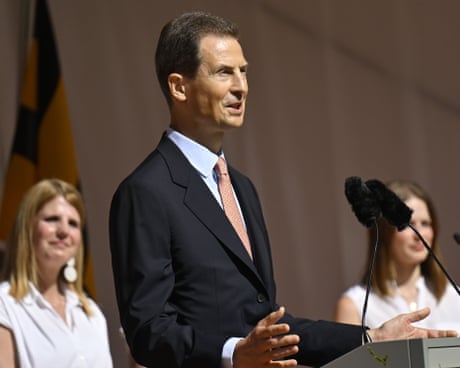
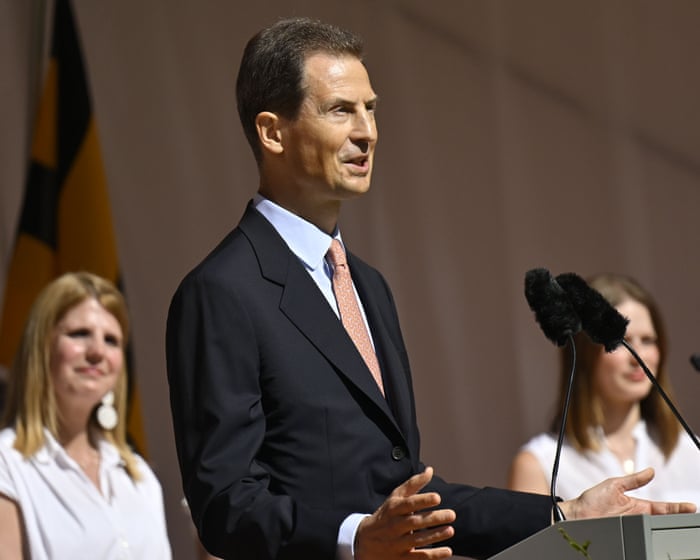
Liechtenstein prince’s ‘surreal’ abortion veto dismays campaigners

Alois uses the first veto of his reign to quash parliament-approved bill backed by a national petition

The hereditary prince of Liechtenstein has used his veto for the first time in his reign to quash a bill aimed at bringing abortion laws in line with much of Europe.

The legislation was approved by Liechtenstein’s parliament last month after the presentation of a citizens’ initiative signed by roughly a quarter of the nation’s voters.

Continue reading...

© Photograph: Gian Ehrenzeller/EPA-EFE/Shutterstock

© Photograph: Gian Ehrenzeller/EPA-EFE/Shutterstock

© Photograph: Gian Ehrenzeller/EPA-EFE/Shutterstock

  •  

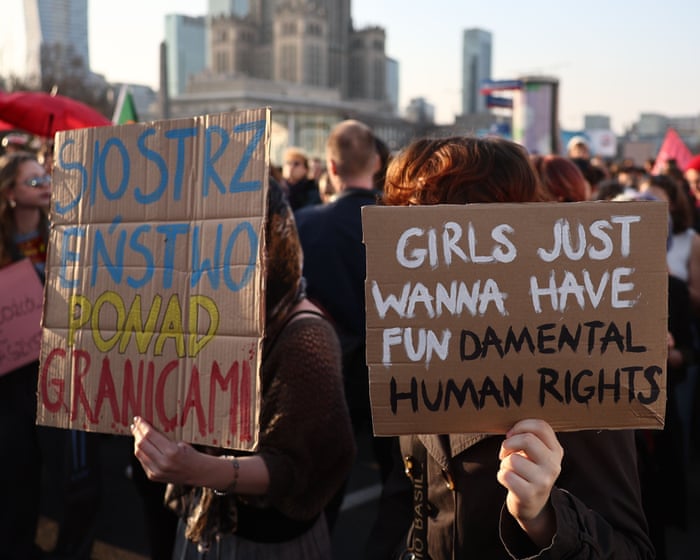
Poland’s parliament votes to ease abortion ban but faces likely veto from president

Measures would remove some penalties for those helping women access abortion but are ‘small-scale step’, say campaigners

Poland’s lower house of parliament has approved two bills aimed at loosening a near-total ban on abortions, in what campaigners have described as a “small-scale step” ahead of protests calling on the government to fulfil its promises to overhaul the country’s laws.

The new measures, which are likely to be vetoed by Poland’s nationalist president, would remove some of the criminal penalties for those who help women to access abortion care and allow terminations in cases of foetal abnormalities.

Continue reading...

© Photograph: Jakub Porzycki/NurPhoto/REX/Shutterstock

© Photograph: Jakub Porzycki/NurPhoto/REX/Shutterstock

© Photograph: Jakub Porzycki/NurPhoto/REX/Shutterstock

  •  

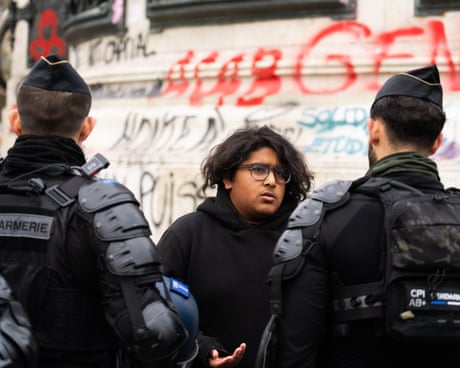
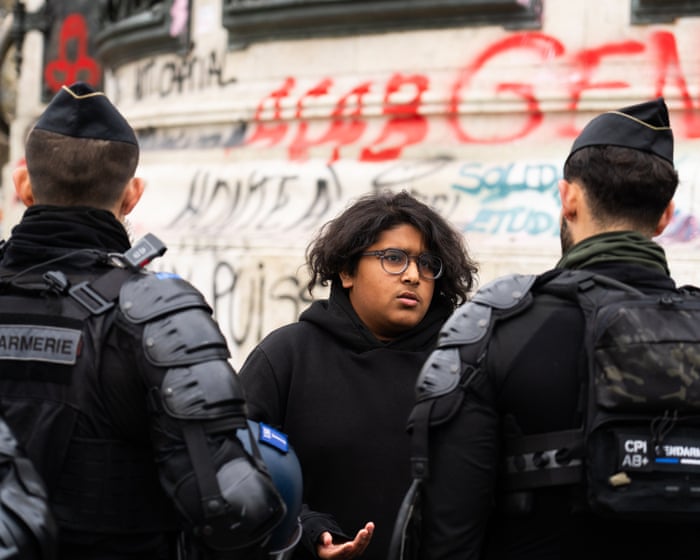
‘A powerful warning’: will Europe’s angry protests lead to real political change?

Hamstrung governments seem to have no answer to the public’s furious demands, making further discontent likely

In France, it was the piles of wheelie bins stacked up against school entrances that first hinted at the scale of student anger over crumbling classrooms and teacher shortages. In Spain, it was a tent camp that steadily grew in the heart of the capital as residents railed against soaring housing costs.

Similar scenes have since sprung up in Belgium, Italy and Portugal, and clashes have convulsed Albania’s capital of Tirana, hinting at an autumn of protests across Europe.

Continue reading...

© Photograph: Tom Lartige Catillon/Getty Images

© Photograph: Tom Lartige Catillon/Getty Images

© Photograph: Tom Lartige Catillon/Getty Images

  •  

I disordini francesi mettono Macron in difficoltà e offrono un assist a Le Pen

A protester holds a French flag in front of a burning tourism office during a demonstration against rising living costs and in solidarity with studentsÕ grievances in Lyon, France, Saturday, Oct. 17, 2026. (AP Photo/Laurent Cipriani) Associate Press/ LaPresse Only Italy and Spain

Le proteste contro il caro vita e le condizioni delle scuole francesi sono degenerate nei disordini più gravi degli ultimi anni. Sabato 17 ottobre, centinaia di migliaia di persone sono scese in piazza in tutto il Paese. In diverse città, gruppi di manifestanti incappucciati hanno saccheggiato negozi, incendiato edifici e affrontato la polizia. Le prime stime – qui riportate dal Financial Times – parlano di circa millecinquecento attività commerciali saccheggiate. Il bilancio della giornata ha aperto una nuova crisi per il presidente Emmanuel Macron e il premier Sébastien Lecornu, a sei mesi dalle elezioni presidenziali.

La mobilitazione era nata dall’incontro tra le proteste degli studenti, che da settimane contestano le condizioni degli istituti scolastici, e la rabbia per l’aumento del costo della vita. Ma la violenza ha rapidamente oscurato le rivendicazioni iniziali. Nella capitale, racconta Le Monde, il giorno dopo i disordini erano ancora visibili vetrine distrutte, veicoli bruciati e negozi saccheggiati. Molti cittadini intervistati dal quotidiano distinguono le richieste dei manifestanti dalle azioni dei gruppi violenti. «La gente è esasperata, c’è molta rabbia accumulata», racconta una donna, che spera che le proteste degli studenti vengano ascoltate nonostante chi cerca di sfruttare la situazione.

Il governo è finito sotto accusa per non aver previsto l’ampiezza dei disordini. Secondo il Financial Times, i servizi d’intelligence si aspettavano circa centomila partecipanti, mentre le presenze effettive sarebbero state circa cinque volte superiori. Le opposizioni contestano la gestione dell’ordine pubblico e la preparazione delle forze di sicurezza. Alcuni esperti citati dal quotidiano britannico sostengono che le autorità non abbiano valutato adeguatamente gli avvertimenti sulla possibilità di violenze. Anche la pianificazione del corteo parigino, definita soltanto alla vigilia, avrebbe reso più difficile controllare la folla.

Domenica Macron è intervenuto in televisione promettendo «piena trasparenza» sulle ragioni che hanno portato all’escalation. «Chi ha distrutto deve pagare, chi ha saccheggiato deve risarcire», ha dichiarato, annunciando che il governo lavorerà a misure concrete insieme a studenti, sindacati e parlamentari. Il ministro per le piccole imprese, Serge Papin, incontrerà i rappresentanti delle attività danneggiate per valutare gli aiuti necessari. Secondo gli ultimi dati del ministero dell’Interno, circa duemila persone sono state arrestate durante i disordini.

Lo scontro è già diventato politico. Lecornu ha accusato i gruppi dell’estrema sinistra di fomentare la violenza e ha indicato La France insoumise, il movimento di Jean-Luc Mélenchon, tra gli attori che avrebbero contribuito ad alimentare la mobilitazione. Mélenchon ha respinto le accuse e ha sostenuto che il governo abbia lasciato peggiorare la situazione, senza affrontare le cause della protesta. La destra, intanto, denuncia la perdita di controllo delle strade e chiede il ripristino dell’ordine.

La principale beneficiaria politica potrebbe essere Marine Le Pen. Il Financial Times ricorda che la leader del Rassemblement National è già in testa ai sondaggi per le presidenziali, mentre il consenso di Macron è vicino ai minimi dalla sua prima elezione. Le Pen ha descritto la situazione come una crisi di fiducia e autorità e ha promesso di riportare la calma nel Paese. Anche il suo partito ha utilizzato le immagini dei disordini per attaccare insieme il governo e la sinistra radicale.

Ma, come mostrano le testimonianze raccolte da Le Monde, la rabbia sociale non è scomparsa dietro le immagini delle devastazioni. Alcuni commercianti, pur condannando i saccheggi, riconoscono le disuguaglianze economiche e il malcontento che hanno alimentato la protesta. È questo il problema più urgente per Macron e Lecornu: ristabilire la sicurezza senza lasciare irrisolte le ragioni che hanno portato centinaia di migliaia di persone in piazza.

L'articolo I disordini francesi mettono Macron in difficoltà e offrono un assist a Le Pen proviene da Linkiesta.it.

  •  
❌