❌

Reading view

Latino Electorate Drives Early Voting in U.S. Elections
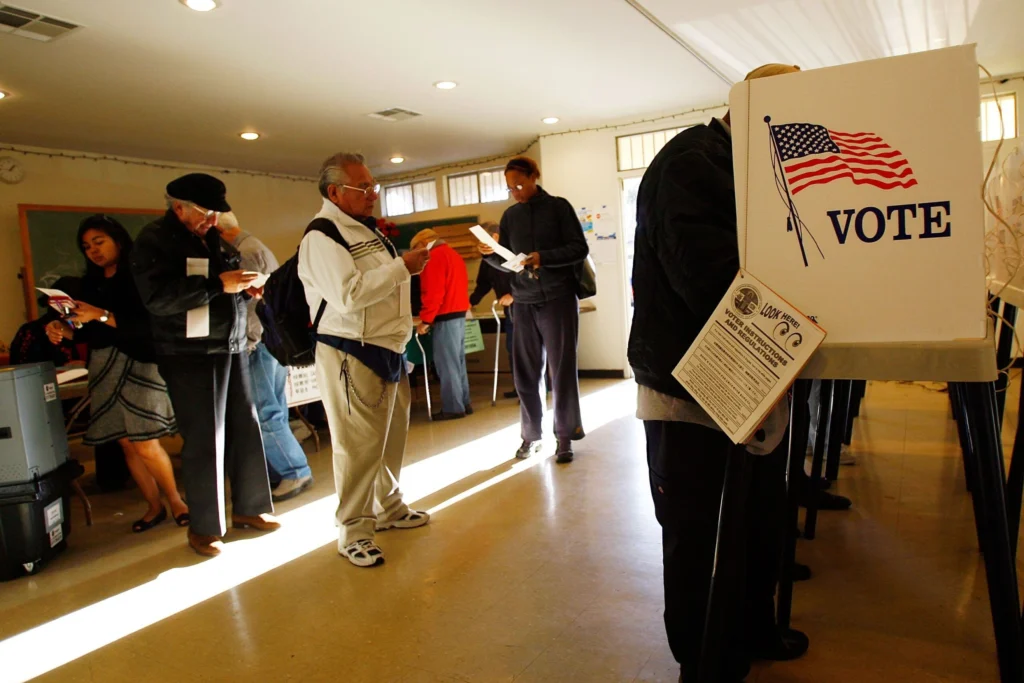
More than 5.2 million Latino voters have already cast their ballots early ahead of next Tuesday’s midterm elections in the United States. So far, this represents an 80% increase compared to 2022, according to data released by the organization Voto Latino.

RELATED:

Immigration Judges Will No Longer Be Able to Shelve Deportation Cases: U.S. Supreme Court

An analysis by the platform TargetSmart shows that the more than 5.2 million early votes from Latinos stand in contrast to the 2.9 million recorded during the same period in the 2022 legislative elections. This figure makes the Hispanic electorate the most mobilized minority group, surpassing—for the first time—Black voters, who had traditionally held that position.

“We aren’t seeing a trickle. It’s the tsunami that Voto Latino has been predicting. Latino voters are turning out to vote early because they know exactly what is at stake: it’s not an abstract debate; it’s deeply personal,” stated María Teresa Kumar, president of Voto Latino, during a virtual conference.

Furthermore, the organization highlighted the growth in the Latino youth vote: 400,000 young people between the ages of 18 and 29 have already cast their ballots, compared to 259,000 who did so in the previous midterm elections.

This increase is particularly significant in states that are key to the battle for the Senate, such as Alaska, North Carolina, Florida, Georgia, Iowa, Maine, Ohio, and Texas. In these states, Latinos account for 15% of early votes, up from the 10% recorded in 2018 and 2022.

Ready? Set. Vote!

Early Voting ENDS TODAY, October 30 for:
– Arizona
– Georgia
– Nevada
– Texas

Early Voting ENDS on SATURDAY, October 31 for:
– California
– North Carolina
– New Mexico
– Virginia

Make your voting plan: https://t.co/O80kLEUjwv
🎨 Design by NeedPastel pic.twitter.com/sU8s6IK6Xo

— Voto Latino (@votolatino) October 30, 2026

Overall voter turnout has also increased. Four days before Election Day, more than 41.3 million early votes had been cast nationwide—up from nearly 33 million at the same point in 2022—representing an increase of over 25%.

According to a Voto Latino survey of 7,000 people, the rising cost of living is the primary concern for Hispanic voters. U.S. President Donald Trump’s immigration policy also ranks among the most critical issues.

Among those surveyed, 39% called for an investigation into abuses by U.S. Immigration and Customs Enforcement (ICE), 37% demanded a legal pathway to citizenship, and 36.1% requested an end to family detention.

“This president made a serious miscalculation in thinking that Latinos wouldn’t care about mass deportations. We warned that it would affect us all—regardless of legal status or criminal history—and now the community has taken matters into its own hands and is voting accordingly,” stated Kumar.

The tight race for control of the House of Representatives and the Senate has boosted voter turnout across various segments of society, while the Latino vote is solidifying as a decisive factor in the 2026 midterm elections.

#FromTheSouth News Bits | More than 26 million United States citizens have voted in the early midterm elections. pic.twitter.com/gSQHRimiBr

— teleSUR English (@telesurenglish) October 28, 2026
  •  

Cuba Thanks the 130 Countries that Voted Against the U.S. Blockade at the UN

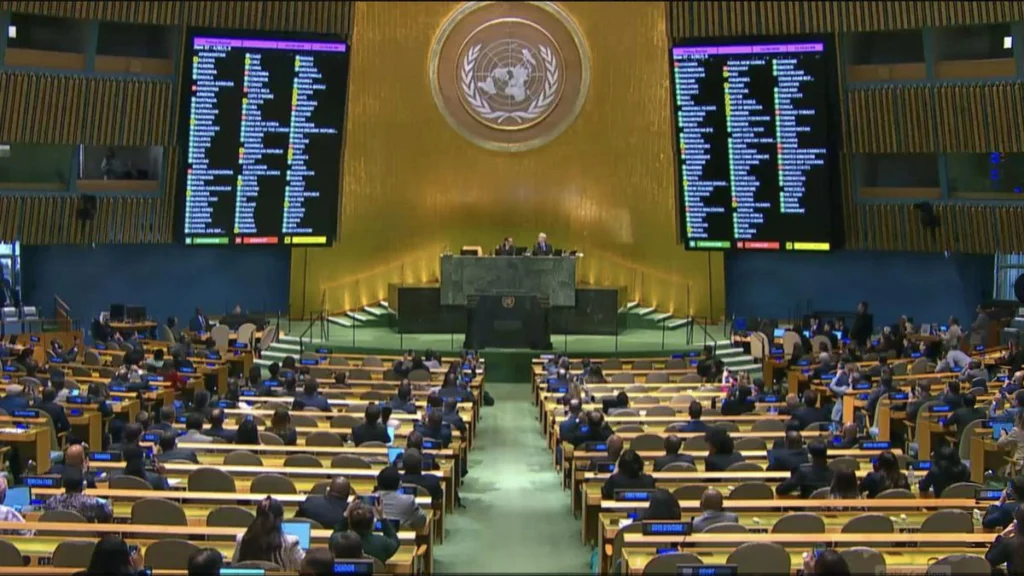
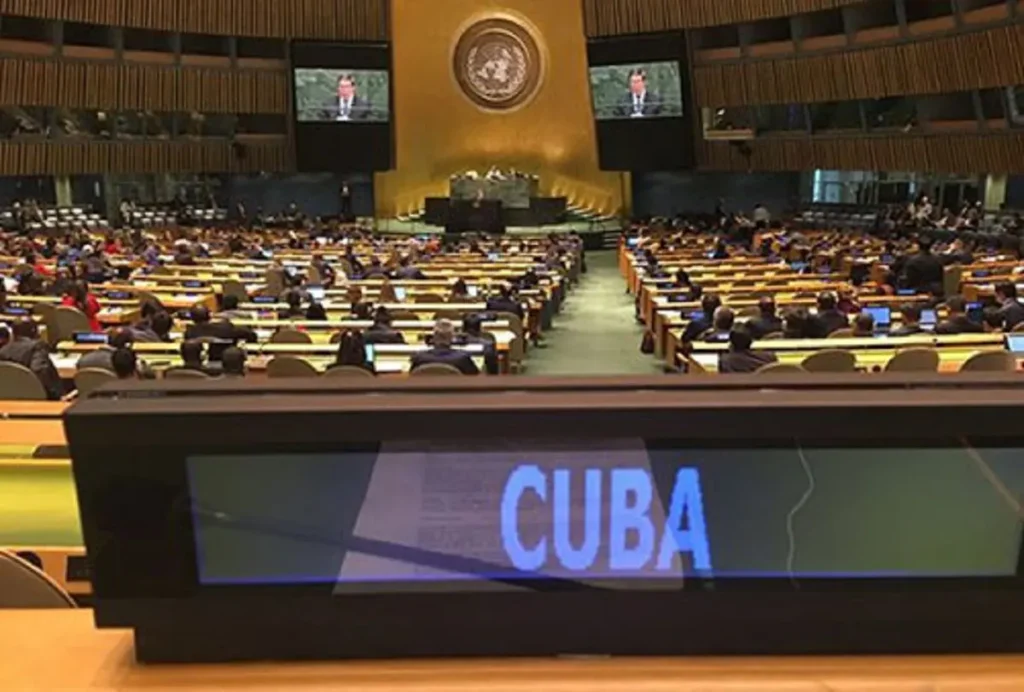
The United Nations General Assembly approved for the thirty-fourth time a resolution that demands the end of the economic, commercial and financial blockade of the United States against Cuba, with 130 votes in favor, 17 against and 25 abstentions. Cuban President Miguel Díaz-Canel thanked the nations that supported the initiative and denounced pressure from Washington to modify the result.

RELATED:

Broad International Support for Cuba at the United Nations General Assembly

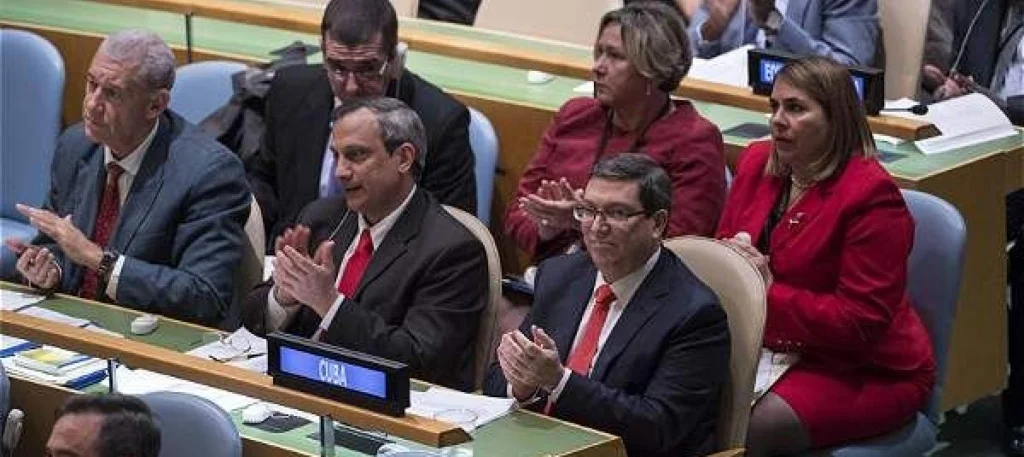
“On behalf of the people of Cuba, we appreciate the solidarity of the 130 nations that voted against the genocidal blockade and the collective punishment to which the U.S. government subjects us,” Díaz-Canel expressed through the X social network.

The president described the vote as an act of courage and sovereignty, despite U.S. diplomatic efforts aimed at reducing support for the resolution presented by Havana.

The previous day became a diplomatic battle between Cuba, which defends multilateralism and international law, and a MAGA version of the United States that repeatedly violates the United Nations Charter and views the world as its backyard.

El mundo ha vuelto a pronunciarse mayoritariamente contra el #bloqueo, incluso por encima de las más groseras presiones y chantajes de EE.UU para cambiar el rumbo de esta votación.

1/3 pic.twitter.com/lOyUZqVS8s

— Miguel Díaz-Canel Bermúdez (@DiazCanelB) October 28, 2026

The text reads, “The world has once again spoken out overwhelmingly against the blockade, even above the most brazen pressures and blackmail from the U.S. to change the course of this vote.”

The Cuban Foreign Minister, Bruno Rodríguez, warned about an unusual deployment by the United States to reduce support for the document. During the debate, the U.S. representative to the UN, Mike Waltz, maintained that the blockade does not exist and attempted to blame the Cuban leadership for the economic crisis suffered by the country, claims that the Cuban delegation strongly rejected.

Diplomats from various nations defended the cessation of unilateral coercive measures and pointed out their effects on the development of the Cuban nation. The day took place in the midst of bilateral tensions and a debate on compliance with international law and the Charter of the United Nations.

The vote took place in a context of tightening U.S. restrictions. Between March 2025 and February 2026, damages attributed to the blockade amounted to $8,083.3 million, 7% more than in the previous period. The accumulated damages over six decades reach more than 178.7 billion dollars in current prices.

La política absurda del gobierno EEUU contra Cuba bloquea todo aquello que sostiene la vida. Hasta sus propios ciudadanos sufren las consecuencias.

¿Por qué el bloqueo contra Cuba impide que 7 millones de estadounidenses reciban los beneficios del medicamento cubano NeuralCIM… pic.twitter.com/OrGyTzMEVK

— Bruno Rodríguez P (@BrunoRguezP) October 29, 2026

The text reads, “The absurd U.S. government policy against Cuba blocks everything that sustains life. Even its own citizens suffer the consequences. Why does the blockade against Cuba prevent 7 million Americans from receiving the benefits of the unique Cuban drug NeuralCIM, which can combat Alzheimer’s, senile dementia, neurodegenerative diseases, with a treatment of proven effectiveness, incomparably superior to its counterpart”

The resolution seeks the lifting of unilateral restrictions that, according to Havana, affect sectors such as electricity generation, transportation, food production, health and education. The text also mentions that the fuel shortage has affected blackouts and the operation of essential services.

Cuba has presented this initiative before the General Assembly every year since 1992. On the 34 occasions in which it has been put to a vote, the resolution has received a large majority of support, although the level of support has varied depending on the international political context.

The approval reiterates the international demand for the end of the U.S. blockade against Cuba, while the government in Havana has demonstrated with verifiable data that the US measures constitute collective punishment with economic and social consequences for the Cuban population.

  •  

Drone Attack on a Camp in Amhara Leaves 16 Civilians Dead in Ethiopia

On Thursday, 16 civilians were killed and 22 injured following a drone attack on the Hyiq Jari 2 camp for internally displaced persons (IDPs) in the Amhara region of northern Ethiopia, according to residents and accounts gathered by the Ethiopian newspaper Addis Standard. The incident comes amid ongoing clashes between the federal army and rebel groups in the north of the country.

RELATED:

Ethiopian Army Allies Say They Have Reconquered a City After an Eritrean Incursion

The camp, located in the South Wollo administrative zone, was struck by as many as five drone attacks, occurring at intervals of approximately fifteen minutes. Witnesses reported that the explosions hit the site while the displaced people were inside their shelters.

“The drone attacked the camp at least five times, at fifteen-minute intervals, while the internally displaced people were inside their shelters. We never expected a drone to attack the camp,” one witness told Addis Standard.

The victims include children, women, and the elderly. The attack also resulted in the burning of around twenty dwellings, though these details have not been independently verified.

NEW COMMENTARY | Containing the New War in Northern Ethiopia

War has returned to northern Ethiopia, raising fears of a wider conflict involving Eritrea. In our EU Watch List, we explain how the EU can facilitate talks and prevent escalation.https://t.co/Q6hzxtsqGD pic.twitter.com/mGhDJVkh0A

— Crisis Group (@CrisisGroup) October 16, 2026

Humanitarian crisis

The camp houses more than 1,800 internally displaced people, who are facing a severe humanitarian crisis. Humanitarian organizations have significantly scaled back their assistance, limiting access to food, shelter, and medical care.

“We have neither shelter nor food. Perhaps the best thing to do is to go to the city and sleep on the streets, hoping that someone might take pity on us and help. We have no other choice right now,” said one of the displaced individuals.

Those affected also noted that regional authorities have failed to respond to their pleas for support. Neither the Ethiopian government nor the insurgent groups have commented on who was responsible for the attack. The violence is taking place as the Ethiopian Army battles rebel groups in the north of the country. On September 23, the Tigray People’s Liberation Front (TPLF) announced a defensive war from that region, following months of escalation and recurring drone strikes.

AMHARA FANO NATIONAL MOVEMENT
Foreign Affairs Department Urgent Call for International Action regarding Indiscriminate Aerial Attacks in Ethiopia pic.twitter.com/q2uBGl9EUj

— Amhara Fano National Movement – Foreign Affairs (@AFNM_FA) October 23, 2026

Since then, federal forces have made gains, particularly in Tigray, though fighting persists in other areas. An alliance of seven rebel and opposition groups—including the TPLF, the Amhara nationalist movement Fano, and the Oromo Liberation Army (OLA)—was recently formed with the stated goal of toppling the Ethiopian government.

Ethiopia has also accused Eritrea of ​​supporting the rebels and conducting incursions into its territory—an accusation that Asmara denies. This escalation has reignited fears of a new, large-scale war, similar to the 2020–2022 conflict between the TPLF and the federal government, which, according to the African Union, resulted in at least 600,000 deaths.

  •  

Dakar Rally 2027 Will Return to Portugal and Morocco

The 49th edition of the Dakar Rally will take place from January 9 to 23, 2027, spanning from the Portuguese Algarve to Marrakech. This exceptional change of venue follows the decision not to hold the event in Saudi Arabia due to conflicts involving the Houthis; however, the organizers have confirmed that the Arab nation will return as a host in 2028.

RELATED:

A Rider Showdown at the Moto2 Malaysian Grand Prix

The total route will cover 7,824 kilometers, 4,341 of which will consist of special stages. The competition will begin in Loulé-Faro, in Portugal’s Algarve region, where the prologue will be held on January 9, followed by the first timed stage the next day.

This will mark the third time that Portugal has served as the starting point for the event. From there, the rally caravan will travel through southern Spain toward Morocco—without any competitive stages taking place on Spanish soil—before crossing into Africa via a sea transit to Nador.

Morocco will host eleven stages, with a rest day scheduled in Agadir. The itinerary will traverse the country from north to the far south, passing through Bouarfa, the Atlas Mountains, Smara, and areas near Dakhla, before heading back north. Participants will venture into the deserts of the country’s deep south, ultimately concluding the event in Marrakech on January 23, following twelve stages and six bivouacs.

This change of venue marks the return of the Dakar Rally to the African continent for the first time in 20 years. Morocco served as a transit point for the race for fourteen editions, up until 2007.

The event, created by Thierry Sabine, held its first edition between Paris and Dakar, starting in 1978 and concluding in January 1979. Currently organized by the Amaury Sport Organisation, it is one of the toughest and most demanding rally-raid competitions in the world, combining speed, endurance, navigation, and the ability to overcome mechanical breakdowns over the course of several days.

The 49th edition will kick off the 2027 season of the World Rally-Raid Championships, sanctioned by the International Automobile Federation (FIA) and the International Motorcycling Federation (FIM).

The Dakar features six major speed categories: Motorcycles—with a maximum engine displacement of 450cc, divided into the RallyGP, Rally2, and Original by Motul classes; Ultimate, which includes prototypes built specifically for rally-raid; Stock, consisting of off-road vehicles derived from production models; Challenger, for lightweight prototypes; SSV, for lightweight side-by-side vehicles; and Trucks, which have their own classification and set of regulations.

Additionally, the competition is accompanied by the Dakar Classic—a regularity rally for historic vehicles—and the “Dakar Future Mission 1000,” a program designed to develop and evaluate alternative propulsion technologies. The name “Paris-Dakar” originates from the original route between the French capital and the capital of Senegal, although the starting city has changed over the years.

  •  

Chile Launches 63rd Antarctic Scientific Expedition with International Cooperation

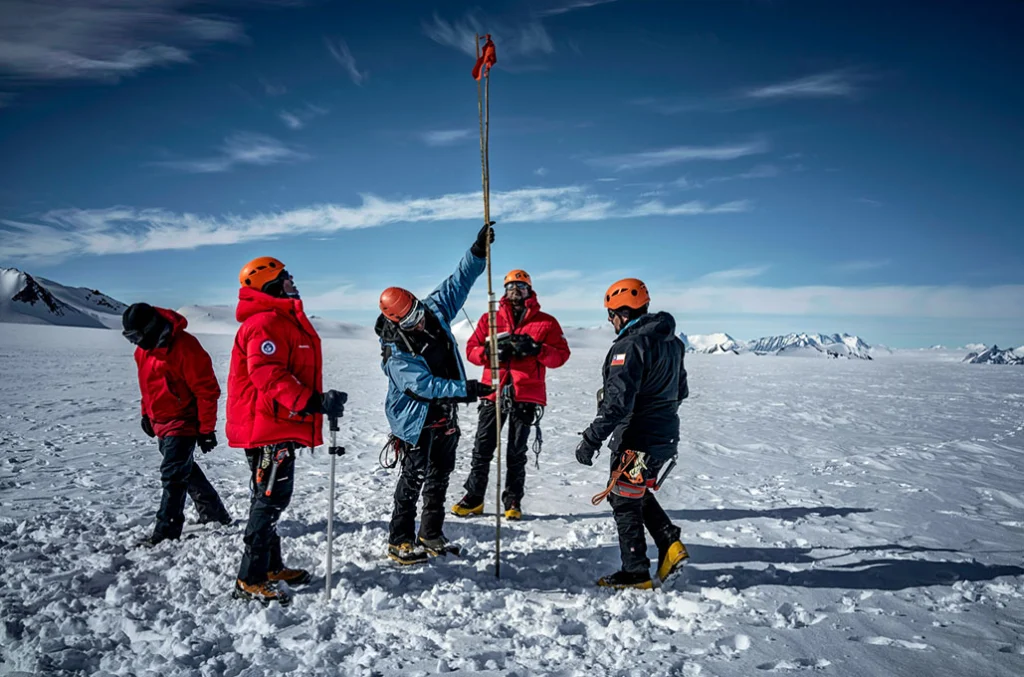
On Thursday, Chilean Minister of Foreign Affairs Francisco Pérez Mackenna inaugurated the 63rd Antarctic Scientific Expedition (ECA) in Punta Arenas. The expedition is set to carry out nearly 50 research projects, involving more than 150 scientists, between November and the end of March.

RELATED:

29 Detained at March Marking Anniversary of Chile’s 2019 Social Outburst

During the ceremony, the Foreign Minister highlighted Chile’s position as a gateway to Antarctica for international scientific programs. “The trust Chile enjoys in the realm of international relations, combined with the prestige of its public institutions and its logistical and infrastructural capabilities, represents an asset of immense value for attracting more countries to choose Chile as their gateway to Antarctica,” stated Pérez Mackenna.

Foreign Ministry reports indicated that the number of countries using Punta Arenas as a departure point for the “White Continent” has grown from 12 to 21 since 2004. Furthermore, eight other nations have occasionally passed through the capital of the Magallanes and Chilean Antarctic Region. “They use our ports and airports for their own vessels and aircraft, or they contract services in the Magallanes region to facilitate their scientific expeditions,” the minister noted.

The 63rd Antarctic Scientific Expedition includes operations at bases and field camps across the Antarctic Peninsula and the continent’s interior—including Union Glacier, located approximately 1,000 kilometers from the South Pole. The teams will conduct research across various fields of Antarctic science—an area the Foreign Minister described as strategic and inseparable from Chilean foreign policy.

En PuntaArenas se realizó el lanzamiento oficial de la 63ª Expedición Científica Antártica "ECA63" del @inach_gob

En la instancia, el Comandante en Jefe de la Tercera Zona Naval, Contraalmirante Juan Soto Herrera, presentó los detalles del despliegue naval para este periodo pic.twitter.com/qXflnac41l

— Armada de Chile (@Armada_Chile) October 30, 2026

The text reads, “The official launch of the 63rd Antarctic Scientific Expedition (“ECA63″) by @inach_gob took place in Punta Arenas. During the event, the Commander-in-Chief of the Third Naval Zone, Rear Admiral Juan Soto Herrera, presented details regarding the naval deployment for this period.”

“Antarctic science has a very distinct character; it is a strategic field—inseparable from Chile’s foreign policy—that helps us explore and gain knowledge about a vast territory that is crucial to the future of both our country and the planet,” Pérez Mackenna affirmed.

Antarctica is governed by the Antarctic Treaty—originally signed by 12 countries in 1959—which designates the territory for science and international cooperation. Although the continent is not governed by any single state, countries such as Chile, the United Kingdom, Argentina, Australia, and New Zealand maintain historical territorial claims.

Chile operates at least ten Antarctic bases: five are managed by the Chilean Antarctic Institute (INACH), while the others are run by the Armed Forces. The country’s first facility in the territory was inaugurated in 1940, following a decree by President Pedro Aguirre Cerda that established the boundaries of the Chilean Antarctic territory.

#Chile | Severe storms and a tornado have damaged at least 25 homes in Requínoa and left over 10,000 customers without power in Santiago. Authorities have issued emergency alerts as they assess the damage.#ChileStorms #Tornado #SevereWeather #teleSUREnglish pic.twitter.com/p1XM7r0xMz

— teleSUR English (@telesurenglish) October 27, 2026
  •  

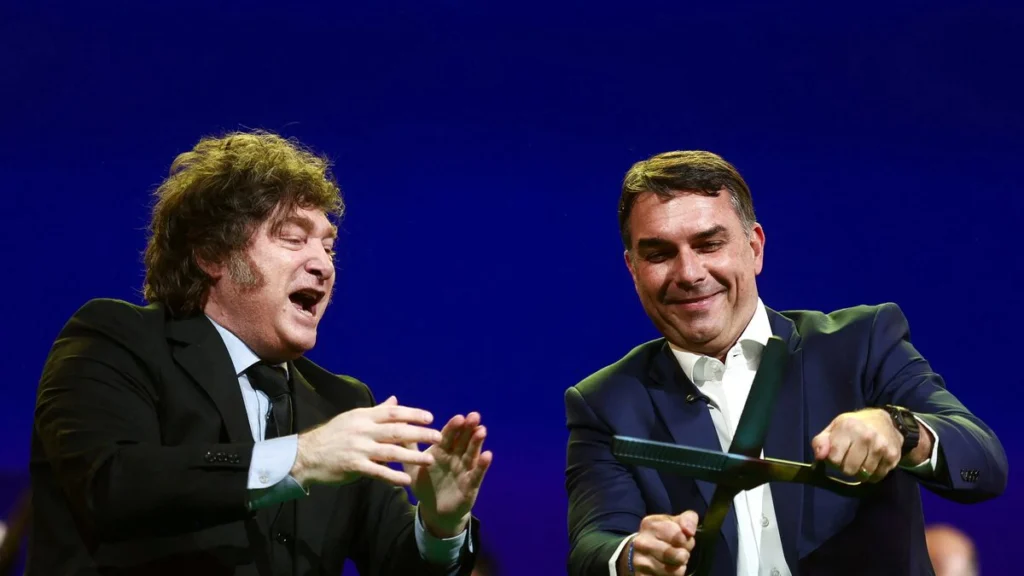
Milei and Allegations Regarding Aiding the Escape of Flávio Bolsonaro

Three legal complaints filed with the Argentine justice system call for an investigation into President Javier Milei, Foreign Minister Pablo Quirno, Security Minister Alejandra Monteoliva, and advisor Santiago Caputo, alleging their involvement in the escape of Brazilian Senator Flávio Bolsonaro. The filings cite potential offenses including concealment, human trafficking, the misuse of public resources, and facilitating the illegal stay of a fugitive from Brazilian justice.

RELATED:

Flávio Bolsonaro Flees to US, Claims Brazil Presidency

The complaints—brought by Left Front leader Gabriel Solano and Socialist lawmaker Esteban Paulón—are being processed in the Comodoro Py courts; the first has been assigned to Judge María Eugenia Capuchetti. Meanwhile, lawmaker Marcela Pagano filed her complaint in the federal courts of Misiones, where Judge Marcelo Cardoso is presiding.

Pagano argued that the case should examine a potential crime of “illegal human trafficking across national borders,” an offense aggravated by the involvement of government officials. The legislator warned that these actions could compromise the Argentine state’s sovereignty regarding “border control, the fulfillment of its criminal cooperation obligations with a Mercosur member state, and the integrity of federal agencies.”

Cases Against Flávio Bolsonaro

In Brazil, Flávio Bolsonaro has been under investigation for alleged money laundering, corruption, and violations of foreign exchange regulations—all linked to the financing of Dark Horse, a film about his father, former President Jair Bolsonaro. The investigation connects him to banker Daniel Vorcaro, who is accused of fraud; the senator allegedly solicited millions in funding from him for the film. He is also implicated in a separate case involving money laundering through online gambling platforms.

A few days ago, Brazilian Supreme Court Justice Flávio Dino ordered an investigation into whether there was foreign support—specifically involving funds from the United States—for the presidential campaign of Bolsonaro, who was defeated by Luiz Inácio Lula da Silva.

Brazilian senator Flavio Bolsonaro has fled to the United States and declared himself Brazil’s “true elected president” after losing the presidential election to Luiz Inacio Lula da Silva by 4.4 million votes. He is challenging the official result from abroad.

In a manifesto… pic.twitter.com/ilZxhozka4

— teleSUR English (@telesurenglish) October 29, 2026

Change in the official account

Solano’s complaint highlights a shift in the Argentine government’s account. After initially denying that Bolsonaro had entered the country, the National Migration Directorate acknowledged at 2:00 a.m. that the senator had crossed the border on October 27 via the Tancredo Neves International Bridge, using an Italian passport.

Although the ruling administration claimed the documentation was “valid,” Bolsonaro’s passport was actually suspended, and he faced ongoing criminal proceedings, including charges related to money laundering. Former Migration Director Florencia Carignano noted that the government made a political decision to allow his entry, despite these legal proceedings.

The filings also detail the alleged use of state resources. According to the complaints, agents from the Airport Security Police (PSA) escorted Bolsonaro, who arrived at the airport in a vehicle bearing Argentine diplomatic license plates.

Additionally, an investigation is underway regarding the logistics surrounding a private Gulfstream G400 aircraft operated by the company Baires Fly. The firm is linked to Sergio Mastropietro—who is currently facing prosecution in a corruption case involving the National Disability Agency (ANDIS)—and has ties to drug trafficker Federico Machado. The aircraft reportedly remained in Puerto Iguazú for over 24 hours without authorization from the National Civil Aviation Administration (ANAC), with an estimated cost of $140,000, arranged through a broker in the United States.

Constitutional law expert Andrés Gil Domínguez pointed out that Emergency Decree (DNU) 366/25 establishes that “failure to disclose the existence of a criminal record” serves as grounds for denying entry. The expert highlighted the irregularity of a foreign national—who was the subject of multiple judicial warrants—being able to travel through the country while circumventing the controls established by Law 25.871.

The complaints call for charges of abuse of authority and breach of public official duties. Furthermore, they request the preservation of surveillance camera footage as well as immigration and airport records, in order to determine the criminal liability of those involved.

  •  

Teachers in Peru Join National Strike Despite Threats of Pay Deductions

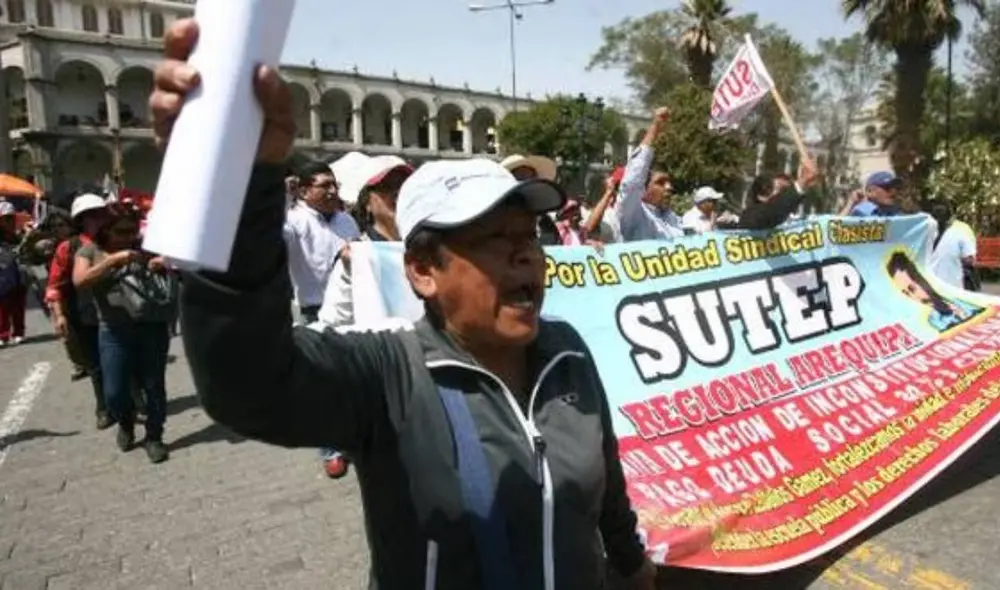
On Thursday, the Unitary Union of Education Workers of Peru (Sutep) held a 24-hour national strike in public educational institutions, demanding a larger budget, adherence to labor agreements, and the implementation of pension regulations for the teaching profession. The action took place even though the Ministry of Education (Minedu) declared it unauthorized and warned that staff who were absent would face pay deductions.

RELATED:

Peru Protests: 1,000 March in Lima Against Fujimori Government

The day of protest included gatherings and marches in the country’s major cities. In Lima, demonstrators assembled at the union’s headquarters on Jirón Camaná, in the capital’s historic center. In Arequipa, marches began in the morning, departing from union offices.

Sutep’s leadership, headed by Secretary General Lucio Castro, presented a list of demands focused on education funding, working conditions, and pensions for retired and former teachers.

Among their primary demands, the union calls for the effective allocation of 6% of the Gross Domestic Product (GDP) to the education sector. According to the union, these resources should address deficiencies in school infrastructure, student nutrition, and access to technology and connectivity.

Teachers are also demanding the immediate regulation and implementation of a law enacted in April 2026, which mandates that the pensions of retired and former teachers—those who were part of the Public Teaching Career—be adjusted to an amount equivalent to the first tier of the teaching salary scale: S/ 3,500.70. This measure is currently the subject of a constitutional challenge before the Constitutional Court.

🏫 El Ministerio de Educación declaró improcedente el paro nacional convocado por el Sutep para este jueves y anunció que verificará la asistencia de los docentes en colegios de todo el país.

El viceministro de Gestión Institucional, Luis Alemán, informó que habrá visitas de… pic.twitter.com/Yhwiok4cKc

— TVPerú Noticias (@noticias_tvperu) October 29, 2026

The text reads, “The Ministry of Education declared the national strike called by the Sutep for this Thursday inadmissible and announced that it will verify the attendance of teachers in schools throughout the country. The Vice Minister of Institutional Management, Luis Alemán, reported that there will be field visits and warned that discounts will be applied for absences. “Education will not be paralyzed today,” he affirmed.”

Furthermore, Sutep is calling for full compliance with the collective bargaining agreement, salary increases, and the timely payment of the “Compensation for Length of Service” (CTS) benefit. The Ministry of Education (Minedu) issued General Secretariat Resolution No. 239-2026-MINEDU, declaring the planned national strike inadmissible on the grounds that it failed to meet the requirements established for the regular basic education sector, which is classified as an essential public service.

The Ministry urged families to send students to their schools and mandated that school principals submit lists of absent staff to the Local Educational Management Units (UGEL) and the Regional Education Directorates (DRE).

The Ministry specified that direct payroll deductions will be applied for hours or days not worked, and that potential administrative disciplinary proceedings will be considered against those who participate in the industrial action.

The continuation of in-person classes depends on the extent to which teachers, administrative staff, and service personnel at each institution choose to participate in the strike. Union leadership in Lima warned that the absence of support and cleaning staff could hinder the operational opening of several schools.

Hamer Villena, secretary of the SUTEP union in Arequipa, did not rule out escalating the protests into an indefinite national strike before the end of the 2026 school year or in early 2027, should the Executive branch fail to establish a negotiation table that offers concrete solutions.

  •  

Cuba Present at Eco Expo Asia 2026

Cuba is participating in the 21st edition of Eco Expo Asia 2026, held in Hong Kong, China, with the goal of gaining new knowledge and fostering exchanges regarding green technologies that align with the country’s development priorities.

RELATED:

Broad International Support for Cuba at the United Nations General Assembly

The expo, which runs from October 26 to 29, serves as a leading commercial platform in Asia dedicated to environmental protection and sustainable technologies. It brings together over 340 exhibitors from 15 countries and regions, showcasing innovations in eco-friendly technology, the circular economy, smart city infrastructure, and zero-carbon solutions.

Cuba is represented by Idalia López Pedroso, Deputy Minister of the Ministry of Science, Technology and Environment (CITMA), and Martha Ferriol Marchena, Director of Document Management and Archives, as reported on the CITMA website.

According to the source, the island’s participation offers an opportunity to gain new knowledge and exchange ideas on green technologies aligned with the country’s development priorities.

La VM @citmacuba Idalia López destacó la importancia que tiene para #Cuba que se promuevan los intercambios técnicos y la cooperación industrial, al intervenir en cierre del Programa Internacional de Capacitación Ruta de la Seda Verde, evento paralelo de Eco Expo Asia 2026
👇 pic.twitter.com/hW126GNxeJ

— Ministerio de Ciencia, Tecnología y Medio Ambiente (@citmacuba) October 29, 2026

The text reads, “Deputy Minister Idalia López, speaking at the closing of the “Green Silk Road” International Training Program—a side event of Eco Expo Asia 2026—highlighted the importance for #Cuba of promoting technical exchanges and industrial cooperation.”

The 2026 edition focuses on four key themes:

Green Energy in Motion: smart mobility and new energy sources.

Buildings for a Greener City: green construction technology.

From Waste to Resource: the circular economy and waste management.

Cutting-Edge Green Technology: innovation and startups within the environmental sector.

The exhibition is organized by the Hong Kong Trade Development Council and Messe Frankfurt (HK), in collaboration with the Environment and Ecology Bureau of the Hong Kong Special Administrative Region Government.

Under the theme “Connecting the World for a Sustainable Future,” the event brings together officials and representatives from organizations in mainland China, Hong Kong, ASEAN, and other markets linked to the Belt and Road Initiative.

  •  

Dominican Baseball League: Three Games with Licey in the Lead

The Dominican Professional Baseball League (LIDOM) will hold three games this Thursday as the 2026-2027 season continues, following a round of play in which the Tigres del Licey maintained their lead and the Toros del Este snapped a four-game losing streak.

RELATED:

Cuban Baseball Begins the 65th National Series

The Leones del Escogido will visit the Gigantes del Cibao at 7:00 PM local time at Julián Javier Stadium in San Francisco de Macorís. At 7:30 PM, the Águilas Cibaeñas will face the Estrellas Orientales at Tetelo Vargas Stadium in San Pedro de Macorís, while the Toros del Este will take on the Tigres del Licey at Quisqueya Juan Marichal Stadium in Santo Domingo.

In the previous round, Licey shut out the Estrellas Orientales 3-0. The victory was secured by a three-run home run from Mel Rojas Jr. in the first inning. With this win, the Tigres improved their record to six victories and three losses, while the Estrellas now stand at five wins and three losses.

The Toros del Este defeated the Gigantes del Cibao 6-0, ending a four-game losing skid. Seven pitchers for the Toros combined to hold the Gigantes to just one hit. Ronny Simon led the offense with three hits, a home run, one RBI, and three runs scored.

Licey shut out Estrellas to take first place, while Toros combined for a one-hitter against Gigantes in LIDOM action on Oct. 28. #LIDOM #DominicanBaseball https://t.co/UbNDcIGFgP

— World Baseball Network (@WorldBaseball_) October 29, 2026

Following this result, the Gigantes suffered their third consecutive loss, bringing their record to four wins and five losses—an identical mark to that of the Toros. The Leones del Escogido staged a comeback to defeat the Águilas Cibaeñas 6–3 at Cibao Stadium in Santiago de los Caballeros. José Marmolejos was the standout offensive performer, going 4-for-4 with two doubles and two RBIs.

With this win, the Leones secured their fourth consecutive victory, bringing their record to 5–4. The Águilas, meanwhile, now hold a record of 2–6.

In the standings, the Tigres del Licey remain in first place, followed by the Estrellas Orientales, Leones del Escogido, Gigantes del Cibao, and Toros del Este. The Águilas Cibaeñas sit in last place.

The three games scheduled for this Thursday are make-up games, originally set for Tuesday, October 27, but postponed due to weather conditions in various parts of the country.

#WeStandWithVenezuela | Major League Baseball and the MLB Players Association announced a joint US$1 million donation to the Red Cross to support relief efforts for those affected by the devastating earthquakes in Venezuela.#Venezuela #MLB #Solidarity #teleSUREnglish pic.twitter.com/b6vaAqi2bH

— teleSUR English (@telesurenglish) July 1, 2026
  •  

Delcy Rodríguez Announces Transformations, Labor Dialogue, and Reforms in Venezuela

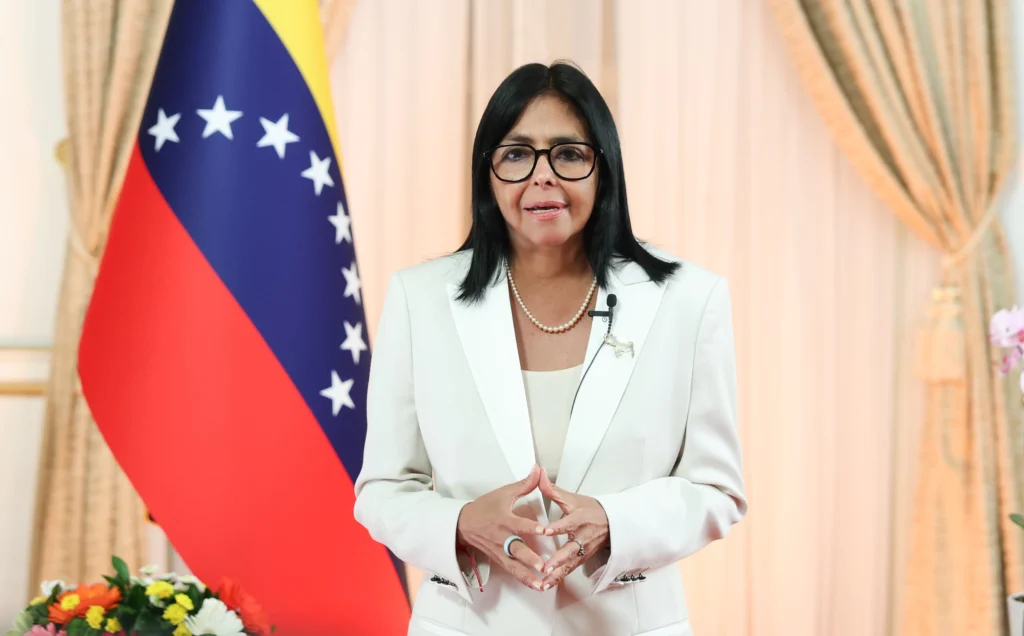
Venezuela’s acting president, Delcy Rodríguez, delivered a message to the nation. Photo: Presidential Press Office.

On Thursday, October 29, Delcy Rodríguez, acting president of the Bolivarian Republic of Venezuela, delivered an address to the nation in which she took stock of the transformative actions undertaken throughout the year across the political, economic, cultural, spiritual, and democratic spheres.

RELATED:

Venezuela’s Acting Pres. Delcy Rodríguez Meets 2015 Assembly Delegations

In her remarks, Rodríguez reviewed the executive branch’s performance, the management of public policies, and ongoing consultative processes aimed at addressing the country’s social demands.

During the address, she defended the Venezuelan government’s independence in defining its strategic policies. “The decisions regarding this transformation are made here, signed here, and announced here—before you. Sovereignty is not up for negotiation,” she asserted.

Rodríguez also addressed the complex situation the nation faced following the socioeconomic impact experienced over the course of the year, noting that the institutional response is focused on consolidating a recovery in production, strengthening public services, and improving the population’s living conditions.

A central theme of her address was the announcement of a national consultation aimed at driving a reform of the criminal justice system. “The goal is to build a more transparent and humane justice system one that leaves behind corruption, procedural delays, and the criminalization of poverty,” Rodríguez explained.

The text reads, “Venezuela has a clear path forward. We are advancing toward a democratic, economic, and social transformation—through judicial reforms, dialogue, and decisions that translate into tangible improvements in the quality of life for the Venezuelan people. I know there is still work to be done, but our commitment is firm: to correct what is wrong, protect what works, and build a country with opportunities for all. The rebirth of Venezuela is proven through actions!”

This initiative is part of an institutional transformation agenda presented by the executive branch, which includes strengthening the judicial system and developing mechanisms to expand guarantees for citizens. Within this framework, the government is engaged in a political dialogue with representatives of the National Assembly elected in 2015; the third round of these talks took place in October.

The agenda also covers political guarantees for upcoming electoral processes, the reform of the Supreme Tribunal of Justice, and the allocation of resources for socioeconomic relief following the earthquake.

In her address, Delcy Rodríguez also spoke directly to the nation’s youth and to Venezuelans living abroad. She maintained that the ongoing transformations aim to ensure that new generations “inherit functioning institutions rather than ruins.”

Regarding the return of migrants, she affirmed that the decision is voluntary and that those who choose to return will be treated with respect, provided with proper documentation, and offered employment opportunities. “We are building a country worth returning to,” the acting president stated.

Labor Dialogue Forum

Rodríguez also announced progress on a labor dialogue and consensus forum, designed to strengthen social justice and ensure the progressive improvement of income for the Venezuelan working class. This body functions as a tripartite consultative space, involving the country’s main trade union confederations, business chambers, and the national government.

In this context, she explained that four separate increases in worker income are planned for 2027. Furthermore, she stipulated that these increases can, under no circumstances, be lower than the economic growth recorded in the preceding quarter.

The president reiterated the national government’s commitment to addressing the demands of various social sectors in a timely manner, prioritizing family well-being, the restoration of essential public services, and direct support for communities.

The leader emphasized that economic stakeholders also have a platform to achieve concrete objectives that will drive a significant boost in production and foster sustainable economic growth. Through these initiatives, the government aims to translate productive growth into tangible improvements in the quality of life and purchasing power of the Venezuelan people.

Rodríguez’s message comes at a time of progress within the political dialogue forum, which has addressed political guarantees, judicial system reform, and the recovery of resources to support the country’s social and economic needs.

  •  

Judge Analisa Torres Takes Over President Nicolás Maduro Case

The U.S. judicial case against Venezuelan President Nicolás Maduro was assigned this Wednesday to Federal Judge Analisa Torres, following the death of Judge Alvin K. Hellerstein, who had overseen the proceedings since March 2020. The reassignment was formalized in the records of the U.S. District Court for the Southern District of New York.

RELATED:

US Federal Court Authorizes Use of Venezuelan Funds for Legal Defense of Nicolás Maduro and Cilia Flores

The transition occurred through an administrative procedure used to reassign cases previously handled by judges who are no longer active due to retirement or death. Judge Hellerstein passed away this Wednesday at the age of 92 from natural causes, as confirmed by a court spokesperson. He had served for nearly three decades, presiding over cases that garnered significant media and legal attention.

Analisa Torres became a judge for the Southern District of New York in 2013, having been appointed by then-President Barack Obama. Born in New York in 1959, she has presided over complex civil, criminal, and regulatory litigation throughout her tenure on the federal bench.

Torres graduated with honors from Harvard University and earned her law degree from Columbia Law School. Before joining the federal court, she worked in private practice and served for nearly ten years on the New York State Supreme Court, in addition to holding positions within the city’s civil and criminal court systems. She comes from a family of legal professionals with Puerto Rican roots.

Status of the Judicial Proceedings

Judge Hellerstein had presided over the case since its inception in March 2020, when Washington filed initial drug-trafficking charges against the Venezuelan president. The next hearing is scheduled for December 17 and will focus on claims of sovereign immunity raised by the defense. The trial is set for June 14, 2027, alongside the proceedings against lawmaker Cilia Flores.

On October 15, Nicolás Maduro and Cilia Flores pleaded not guilty before Judge Hellerstein—who was presiding at the time—during a hearing in New York, following the addition of new charges by the U.S. Prosecutor’s Office.

According to a teleSUR correspondent, the president Maduro stated that he had read the indictment in its entirety and rejected it, dismissing it as a collection of false and mendacious accusations that were already known. He reiterated his innocence, while Flores declared: “I am completely innocent; I am not guilty.”

During the proceeding, the judge granted a joint request from the prosecution and the defense to postpone the start of the trial by two weeks, allowing more time for the preparation and filing of pretrial motions. As a result of the hearing, the trial was rescheduled for June 14, 2027.

Russian Foreign Minister Sergey Lavrov demanded the immediate release of President Nicolas Maduro and his wife, denouncing their imprisonment in the U.S. without trial. He also condemned the attacks against Iran’s Supreme Leader, Ayatollah Ali Khamenei, and warned of the serious… pic.twitter.com/l7WI0wOKHt

— teleSUR English (@telesurenglish) September 26, 2026

Case Chronology

January 3, 2026: Following bombings in Caracas and other cities, U.S. special forces kidnapping President Nicolás Maduro and Cilia Flores in the Venezuelan capital and transported them to the United States. The operation resulted in over a hundred deaths and a similar number of injuries. The then-Executive Vice President, Delcy Rodríguez, assumed acting president role.

January 5: Both individuals made their initial appearance in New York, pleaded not guilty, and were placed in custody at the Metropolitan Detention Center in Brooklyn.

July: The prosecution and the defense agreed that the trial would begin on June 1, 2027, with a pretrial hearing scheduled for November 17.

September 9: Cilia Flores’s defense team requested release on bail and house arrest. The judge ordered that medical records remain under seal. September 25: Assistant Prosecutor Jason A. Richman resigned.

October 8: Hellerstein denied the request for bail for Flores. That same day, the prosecution filed a new indictment.

October 15: A hearing was held in which new charges—conspiracy to commit torture—were presented. Maduro and Flores pleaded not guilty, and the trial was rescheduled.

October 29: The case file was reassigned to Judge Analisa Torres following the passing of Hellerstein.

The aggression against Venezuela and the kidnapping of President Maduro and Deputy Flores have drawn condemnation and sparked demonstrations in various parts of the world. Hundreds of protesters have gathered in the vicinity of the Southern District Court in Manhattan during the hearings to express solidarity with the accused and to denounce the warmongering and interference of the White House.

  •  

Chamber Music: The Soul of a Festival in Cuba

From this Thursday until November 1, Havana is hosting the 15th International Chamber Music Festival—an event bringing together 34 Cuban and international artistic ensembles across various cultural venues in the Cuban capital.

RELATED:

Cuba Presents Ballet Documentary During Its Culture Week

The festival is presided over by pianist and composer Frank Fernández, a recipient of the National Music Prize, and is taking place as part of the 50th-anniversary celebrations of Cuba’s Ministry of Culture.

The festival returns to the national stage with a program centered on chamber music—a genre deeply rooted in Caribbean culture. Fernández noted that the event is being held under challenging circumstances, though he emphasized that this will not compromise the quality of this year’s edition.

The event’s president expressed optimism that this edition could surpass previous ones, noting that it is dedicated to prominent figures and ensembles from both the Cuban and international musical landscapes.

A major highlight this year is the inaugural International Chamber Music Competition, which features both professional and amateur categories. Twenty-one projects registered for the initial stage and will compete throughout the festival.

🎹✨ El ansiado XV Festival Internacional de Música de Cámara, se desarrollará en esta capital desde el jueves 29 de octubre hasta el domingo 1ro de noviembre con un programa que tendrá entre sus protagonistas al reconocido pianista y compositor Aldo López-Gavilán.#CubaEsCultura pic.twitter.com/0orIaJZFr4

— Agencia Cubana de Noticias (@ACN_Cuba) October 26, 2026

The text reads, “The long-awaited 15th International Chamber Music Festival will take place in this capital from Thursday, October 29, to Sunday, November 1, with a program that will feature, among its headliners, the renowned pianist and composer Aldo López-Gavilán.”

The agenda includes concerts, talks, and academic exchanges between professionals and students. It also offers a variety of programs designed for both seasoned enthusiasts and those encountering this musical genre for the first time.

Participants include Russian soprano Natalia Kirillova, artists from the United States, and highly accomplished Cuban performers. In total, 34 artistic ensembles are featured, enriching the festival’s diverse offerings.

Venues include the National Theatre, the Napoleonic Museum, the Museum of Decorative Arts, the Casa del Alba Cultural, and the Union of Writers and Artists of Cuba, among other locations across Havana.

Frank Fernández described chamber music as a complete, educational, and complex form of expression that demands great sacrifice and effort. The maestro—a leading figure in the Cuban piano tradition—underscored the festival’s significant educational and artistic value.

The 15th edition seeks to promote public enjoyment of and access to high-caliber art, while simultaneously establishing Havana as a venue for an international gathering dedicated to chamber music performance.

#Cuba | The Recording and Music Publishing Company (Egrem) is celebrating the nominations for the Cubadisco 2026 Awards, which will be announced on May 16 during the awards ceremony of the Cuban Record Festival.https://t.co/iOAteQYMqn pic.twitter.com/s7rpZFOLBy

— teleSUR English (@telesurenglish) May 4, 2026

  •  

Broad International Support for Cuba at the United Nations General Assembly

On Wednesday, the United Nations General Assembly approved—for the thirty-fourth time—a resolution calling for an end to the economic, commercial, and financial blockade imposed by the United States against Cuba. The resolution passed with 130 votes in favor, 17 against, and 25 abstentions.

RELATED:

UN General Assembly Approves Cuba’s Resolution Against U.S. Blockade

During the debate, Mexico, Nicaragua, Egypt, Vietnam, India, Ghana, and Mozambique reiterated their support for the Cuban people and condemned unilateral coercive measures, which they view as contrary to the United Nations Charter and international law.

Mexico’s Permanent Representative to the UN, Héctor Vasconcelos, reaffirmed his country’s solidarity with Cuba and its rejection of any unilateral measures directed against the Cuban population. He maintained that the blockade, which has been in place for more than six decades, violates international law and is incompatible with the principles of the United Nations.

Vasconcelos noted that the sanctions constitute a structural obstacle to the island’s economic and social development. “Ending the blockade against Cuba is an urgent necessity and a humanitarian imperative,” the Mexican diplomat stated.

Mexico argued that dialogue, cooperation, and respect for international law should take precedence over measures that exacerbate the hardships faced by a population. It also called for the removal of Cuba from the U.S. list of state sponsors of terrorism and urged that priority be given to channels of dialogue.

Meanwhile, Nicaragua’s Permanent Representative to the UN, Jaime Hermida Castillo, announced his country’s vote in favor of the resolution. He based this position on principles and values ​​shared by the two nations and reaffirmed Managua’s support for Cuba in the face of pressure tactics employed by the United States.

Hermida Castillo condemned the 64-year-long economic, commercial, and financial blockade, describing these coercive measures as a systematic act of aggression and a violation of human rights. He asserted that such policies are intended to stifle Cuba’s scientific, cultural, and social development. The Nicaraguan delegation also questioned the inaction of the multilateral system in the face of the overwhelming opposition from governments to Washington’s unilateral actions.

¡VICTORIA DE CUBA!

La Asamblea General de @ONU_es ha votado mayoritariamente contra el bloqueo de EEUU contra Cuba.

El gobierno de EEUU queda nuevamente aislado en su pretensión de continuar asfixiando al pueblo cubano y someterlo a un acto de castigo colectivo y de genocidio.… pic.twitter.com/MhnrjGnzSt

— Bruno Rodríguez P (@BrunoRguezP) October 28, 2026

The text reads, “CUBA’S VICTORY! The General Assembly of @ONU_es has voted by a large majority against the US blockade against Cuba. The US government is once again isolated in its attempt to continue strangling the Cuban people and subjecting them to an act of collective punishment and genocide. Neither its most insane pretexts nor its pressures nor media circus will prevail over the force of facts and truth. #CubaNoEsUnaAmenaza The Blockade Is.

The delegations of Ghana and Mozambique concurred that the financial blockade violates the principles of the United Nations Charter and international law. They denounced the fact that these extraterritorial measures hinder Cuba’s economic, social, and cultural development—particularly in the areas of healthcare, education, and energy supply.

Mozambique highlighted Cuba’s historic contributions to South-South cooperation and its assistance in the fields of health and education across Africa. The representative from the African nation noted that, for more than six decades, the Cuban people have endured the consequences of the blockade—a policy that the General Assembly has repeatedly condemned.

Ghana stated that its support is rooted in the principles of sovereign equality, mutual respect, and peaceful coexistence among states. It warned that the extraterritorial application of the blockade imposes burdens on third countries and runs counter to the principles of fair and equitable international economic relations.

Egypt, for its part, called for action from the UN. Ihab Awad, Egypt’s Ambassador and Permanent Representative to the UN, reaffirmed his country’s commitment to the principles of the United Nations Charter and demanded an end to the economic strangulation of Cuba.

“The negative repercussions of the economic, commercial, and financial blockade imposed on Cuba affect the Cuban people’s ability to meet their basic needs,” the Egyptian diplomat stated.

Meanwhile, Vietnam reiterated its support for the immediate lifting of the commercial and financial blockade. Its delegation expressed concern regarding restricted access to energy and fuel, as well as the adverse impact on hospitals, schools, water services, and trade relations with third countries.

The Vietnamese delegation called for respect for the right to self-determination—free from coercion—advocated for political dialogue in accordance with international law, and urged the removal of Cuba from the list of state sponsors of terrorism. It also requested international support to address the accumulated economic and social damage.

India endorsed the statements made by the G-77 and ASEAN against the blockade. Its representatives called for the immediate repeal of these measures in order to mitigate their impact on key sectors such as energy, health, food production, and education.

Furthermore, India highlighted the need to eliminate extraterritorial sanctions to create an environment that would allow for Cuba’s full participation in international trade.

  •  

President Díaz-Canel Supports Cuba’s Response to U.S. Provocations at the UN

On Wednesday, President Miguel Díaz-Canel praised the actions of the Cuban delegation at the United Nations during the annual debate on the resolution calling for an end to the economic, commercial, and financial blockade imposed by the United States against Cuba. The president affirmed that the island will not back down in the face of Yankee pressure and dictates.

RELATED:

UN General Assembly Approves Cuba’s Resolution Against U.S. Blockade

In messages posted on the social media platform X, the Cuban leader acknowledged the work of Foreign Minister Bruno Rodríguez, Ambassador Ernesto Soberón, and the rest of the Cuban delegation, following an incident that took place during a session of the UN General Assembly.

“Today at the UN, the international community’s overwhelming support for Cuba was on display, as they condemned the blockade and the U.S. government’s policy of maximum suffocation. Most of the speakers were clear in their denunciation,” the Cuban president wrote.

These remarks followed an intervention by Bruno Rodríguez, who interrupted U.S. representative Mike Waltz as he was blatantly presenting a series of slanders, distortions, and lies against Cuba.

“You are lying,” Rodríguez stated, while requesting that the president of the General Assembly call the U.S. representative to order.

The Cuban Foreign Minister also denounced pressure exerted by Washington on UN member states and rejected what he described as insults to the dignity of the Cuban people and the international organization itself.

El pretexto más empleado y manipulado por el gobierno de Estados Unidos para tratar de justificar su actuación es presentar a Cuba como una supuesta amenaza para la superpotencia nuclear o, incluso, para el hemisferio. Se sabe que ningún gobierno aquí representado admite o acepta… pic.twitter.com/9ADzwpPsXS

— Bruno Rodríguez P (@BrunoRguezP) October 28, 2026

The text reads, “The most commonly used and manipulated pretext by the United States government to try to justify its actions is to present Cuba as an alleged threat to the nuclear superpower or even to the hemisphere. It is known that no government represented here admits or accepts such a crude fallacy. They lack arguments.”

Díaz-Canel maintained that this international body serves as a space for sovereign equality among states, and he asserted that Cuba will defend the rights granted to it by the United Nations Charter and its regulations, as well as the dignity of its people and its heroes. “Cuba will not back down, and certainly not in the face of Yankee pressures and orders,” emphasized the head of state, who described the U.S. stance as one of imperial arrogance and overbearing conduct.

The Cuban delegation’s protest was voiced at the start of the debate on the resolution titled “Necessity of ending the economic, commercial and financial embargo imposed by the United States of America against Cuba”—an initiative that has garnered broad support in the General Assembly for over three decades.

Cuba denounced a vile campaign of diplomatic pressure aimed at influencing the delegations present, with the goal of eroding support for the Cuban resolution. Nevertheless, the world once again spoke out—by an overwhelming majority—against the embargo, even in the face of pressure and blackmail from the United States intended to alter the outcome.

Díaz-Canel further noted that the U.S. representative—visibly isolated—offered no explanation for the energy blockade imposed on Cuba, nor for the intensified extraterritorial reach of the embargo.

In their remarks, Cuban authorities presented verifiable data demonstrating that the tightening of the embargo—particularly since 2025—has caused severe economic and social hardship on the island. This confirms that the U.S. policy amounts to collective punishment of the population; the authorities warned that the international community must not become complicit in such measures.

“Because we believe in the truth and in global solidarity, we know that the U.S. embargo against Cuba and the energy blockade will be condemned once again in the General Assembly,” Díaz-Canel stated on X.

  •  

Colombian Opposition Raises Concerns Over Memorandum with the U.S.

On wednesday, opposition groups in Colombia have expressed their rejection of a strategic memorandum of understanding—signed over a month ago between Abelardo De la Espriella and the United States government—warning of potential socioeconomic, environmental, and territorial implications for the country, while also questioning the scope of the pact.

RELATED:

New Era in U.S.-Colombia Relations: Marco Rubio and De la Espriella Sign Strategic Deals

The criticism centers on a potential extractive mining project targeting strategic minerals; according to the opposition, the exploitation of these resources would negatively affect ecosystems and communities located in the Amazon, the Pacific region, and parts of the Caribbean.

Senator Carolina Corcho, of the Historic Pact (in spanish Pacto Histórico) coalition, argued that the agreement subordinates national sovereignty to an extractive mining and energy model designed to serve U.S. industry.

According to the lawmaker, the document reportedly includes provisions for streamlining permits for extractive mining companies, the handover of geological maps, and granting the U.S. government prior knowledge of planned sales in Colombia to facilitate its decision-making processes.

The opposition has characterized the agreement as mercantilist, criticizing the fact that it was finalized without the participation of Colombian civil society—a group that asserts its right to have a say in how its lands are used.

¡No vamos a permitir que regalen nuestra soberanía a espaldas del país!

La administración de @ABDELAESPRIELLA firmó a oscuras un memorando que le entrega a EE. UU. el control de nuestras tierras raras y minerales estratégicos, poniendo en riesgo a nuestras comunidades campesinas… pic.twitter.com/Oel6iYraPk

— Carolina Corcho (@carolinacorcho) October 28, 2026

The text reads, “We will not allow them to give away our sovereignty behind the country’s back! The administration of @ABDELAESPRIELLA signed a memorandum in the dark that hands over to the United States control of our rare earths and strategic minerals, putting our peasant and ancestral communities at risk. Colombia’s wealth must be respected! Watch the full interview and the details of this complaint on @TeleSUR: http://youtu.be/d0pxJpb7sZY?si=ZnJ_szg_QyUlmO6J

Critics warn that the affected territories contain lithium, nickel, uranium, and copper—resources essential for the manufacture of mobile phones, computers, microprocessors, radar systems, guided missiles, and defense equipment. These materials can also be used for military purposes.

According to the allegations, a large portion of these resources would be extracted from the Amazon, the Pacific, and parts of the Caribbean—regions that hold extensive deposits of rare earths and strategic minerals. Most of these areas are inhabited by Afro-descendant, Indigenous, and peasant (rural farming) communities, which further compounds the concerns raised by the opposition.

Colombian analyst Ricardo Vargas noted that these territories possess a social sensitivity, which is why communities tend to mobilize when faced with risks to their land, water, air, and biodiversity. Vargas also pointed to measures aimed at containing social protest and warned of the presence of armed groups that illegally access these resources.

According to the allegations, the executive branch is clearing protected territories to allow for the entry of foreign entities and the exploitation of resources. The opposition claims that the document bypasses requirements for prior consultation and environmental permits, effectively placing the country’s geological and mining map at the disposal of the U.S. economy and American corporations.

Meanwhile, the executive branch has stated that the memorandum is non-binding—an argument the opposition views as an attempt to evade constitutional obligations and the mandatory review process by the Congress of the Republic.

Opposition groups have drawn parallels to the situation during the administration of Álvaro Uribe Vélez, specifically regarding the presence of military bases in the country.

A productive day in Colombia, building on the enduring friendship between our two nations.

Grateful for the warm hospitality shown throughout today's visit. pic.twitter.com/UoxYnFrfem

— Secretary Marco Rubio (@SecRubio) September 8, 2026

The memorandum was signed on September 8, 2026, in Barranquilla, during a visit by U.S. Secretary of State Marco Rubio. The instrument establishes a framework for cooperation to secure supply chains for the mining and processing of critical minerals and rare earth elements.

According to official information, the agreement includes provisions for financing, support for geological mapping, and the streamlining of administrative procedures for extraction and processing projects. The Colombian Foreign Ministry maintains that such memoranda are non-binding and that they respect both national legislation and state sovereignty.

At the heart of this debate lies the tension between bilateral cooperation, foreign investment, and the protection of national sovereignty, strategic resources, and the rights of local communities.

A dispute over conflicting versions of a provision in Colombia’s 2027 national budget has raised questions about the bill’s legislative validity. Senator Esmeralda Hernández says the Senate and House of Representatives approved different versions of Article 65 but failed to… pic.twitter.com/kNlFunNq1o

— teleSUR English (@telesurenglish) October 21, 2026
  •  

Israel Kills Four Palestinians in Gaza Despite Ceasefire

The Israeli military killed four Palestinians in the Gaza Strip on Wednesday, one day after parliamentary elections—elections that failed to halt Israeli attacks on the Palestinian enclave.

RELATED:

Gaza Camp Fire Leaves More Than 800 Homeless After Drone Strike

A medical source at Nasser Hospital confirmed to EFE that 33-year-old Mohamed Alyan al-Bayouk was killed in an Israeli airstrike on the Bayouk neighborhood in the southern city of Khan Yunis. The bombardment also left six people wounded.

In a separate Israeli attack on Al-Mawasi, in the southern part of Rafah, three Palestinians lost their lives and seven were wounded—three of whom are in critical condition—the same medical source stated.

At that location, Israeli drones struck a police checkpoint belonging to the Gazan Ministry of Economy, which is responsible for managing the movement of trucks entering the Gaza Strip from the Israeli side.

🇵🇸💢 Israeli forces killed four Palestinians in Gaza on Tuesday, including a 6-year-old girl, according to Palestinian news site Felesteen.

Those killed include:

➤ Tahani Mohammed Saeed Shalalfa, a girl, 6, who died of a gunshot wound from Israeli fire in al-Mawasi, the…

— Drop Site (@DropSiteNews) October 28, 2026

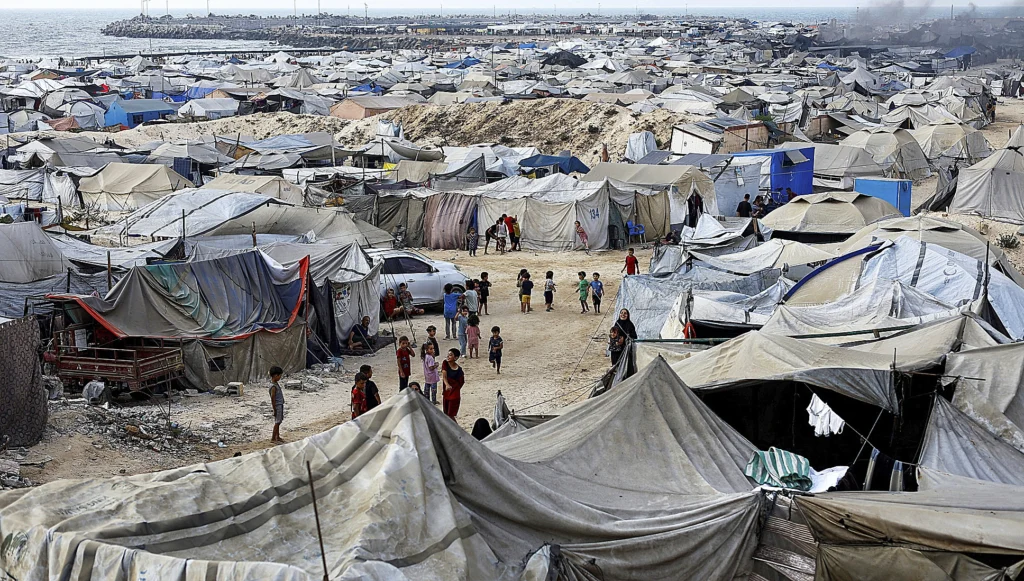
Despite a ceasefire—ostensibly in effect since October 10, 2025—more than 1,500 Palestinians have been killed by Israeli attacks and fire within the enclave. Furthermore, at least 1.8 million people remain displaced from their homes, most living in tents near the Mediterranean Sea, where they now face their fourth winter.

Since October 2023, Israel has killed more than 74,500 Gazans, according to data from the local Ministry of Health. The majority were civilians, and the victims include more than 20,000 minors.

Most of Gaza remains devastated. Hospitals continue to operate only partially, relying on their own power-generation equipment, while children attend classes in tents. The continued Israeli bombardment makes it clear that the humanitarian situation in the Gaza Strip remains critical, with a civilian population that is displaced, wounded, and exposed to further attacks.

  •  

Operative of the Guasave Cartel in Sinaloa Dies During Mexican Security Operation

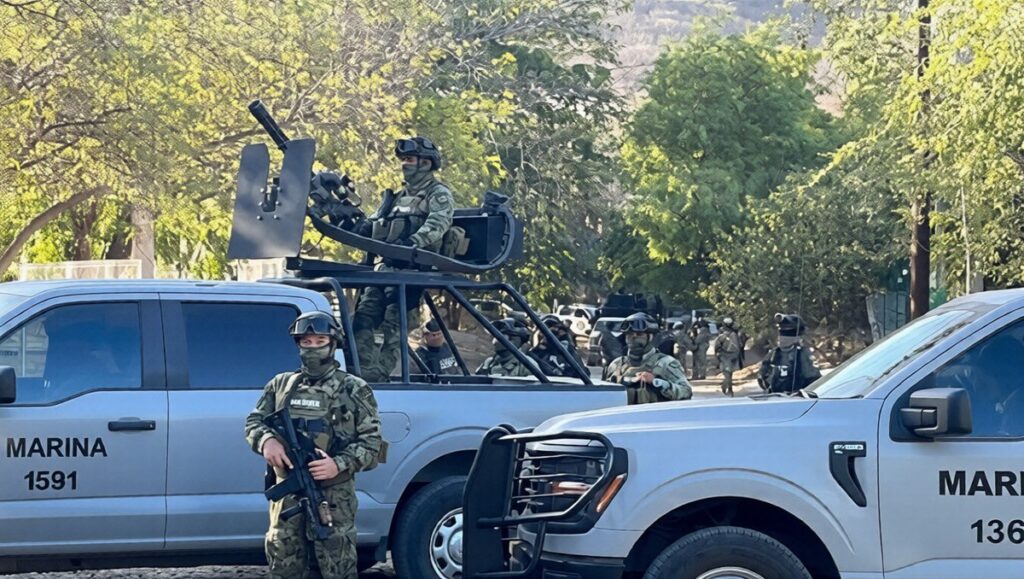
On Monday, mexican authorities have reported the presumed death of Jesús González Peñuelas—known as ‘Chuy Peñuelas,’ an alleged operative for the Guasave Cartel—during a confrontation with personnel from the Mexican Navy in Sinaloa. The United States government had offered a $5 million reward for information leading to his capture.

RELATED:

Mexico Arrests Leader of Los Chapitos Criminal Group

Omar García Harfuch, the Secretary of Security and Citizen Protection, stated that González Peñuelas is believed to be one of two individuals who died during an operation near Alfredo V. Bonfil, in the municipality of Sinaloa. The identities of the deceased are still awaiting formal forensic confirmation.

According to the Mexican Navy, the operation was supported by naval intelligence, which helped locate vehicles carrying armed individuals. During the pursuit, two men exited a pickup truck and fled into a brush-covered area, from where they opened fire on the naval personnel.

The naval forces returned fire, and both men were killed in the exchange. Their bodies have been placed in the custody of judicial authorities.

Family members who contacted the authorities suggested that the deceased may be Jesús González Peñuelas and Cesáreo Peñuelas Ruiz—known as ‘El Profe’—who has been identified by federal sources as an alleged associate of González Peñuelas. Official identification will be established through genetic and fingerprint analysis.

Derivado de las acciones permanentes para reforzar las acciones y avanzar en la pacificación de Sinaloa, personal de Marina @SEMAR_mx realizó un operativo en las inmediaciones de la colonia Alfredo V. Bonfil, Sinaloa, donde fue agredido por integrantes de una célula criminal… pic.twitter.com/03vxvnfVfN

— Omar H Garcia Harfuch (@OHarfuch) October 28, 2026

The text reads, “Derived from the permanent actions to reinforce operations and advance the pacification of Sinaloa, personnel from the Navy. @SEMAR_mx conducted an operation in the vicinity of the Alfredo V. Bonfil neighborhood, Sinaloa, where they were attacked by members of a criminal cell and repelled the assault.”

During the operation, authorities seized four pickup trucks that had been reported stolen, as well as three long guns, three magazines, and 46 rounds of ammunition. The evidence has been turned over to the Attorney General’s Office (Fiscalía General de la República) for further investigation.

According to federal sources, González Peñuelas had led an organization since the beginning of the century dedicated to the production and distribution of methamphetamine, marijuana, and heroin. In recent years, the organization reportedly ventured into fentanyl trafficking.

It operated primarily in Sinaloa and Sonora, with connections along the northern border and distribution networks in U.S. states such as California, Texas, Colorado, and Washington. Authorities identified the individual as one of the key operatives for Fausto Isidro Meza Flores—known as “El Chapo Isidro”—the leader of the Guasave Cartel.

Federal sources also indicated that the organization maintained ties to drug trafficker Rafael Caro Quintero, who was extradited to the United States last year.

This development comes amid federal operations targeting criminal organizations in Sinaloa—a state that has faced a wave of violence since September 2024, following the outbreak of a conflict between factions of the Sinaloa Cartel.

Mexican President Claudia Sheinbaum addressed illicit drug production and consumption, stressing that consumption must be treated primarily as a public health matter rather than merely a law enforcement problem.

Sheinbaum emphasized the need to support youth and address the root… pic.twitter.com/XIhExrS8Qk

— teleSUR English (@telesurenglish) September 17, 2026
  •  

A Rider Showdown at the Moto2 Malaysian Grand Prix

Spaniard Manuel ‘Manugas’ González heads into the Moto2 Malaysian Grand Prix with the goal of halting the charge of his compatriot, Izan Guevara. The two are separated by just 5.5 points in the world championship standings ahead of this weekend’s event at the Sepang International Circuit.

RELATED:

Italian Rider Bulega to Debut in the Premier MotoGP

González, riding for Kalex, leads the intermediate-class world championship, while Guevara—on a Boscoscuro—has emerged as his primary rival following a high-performing second half of the season.

Over the last seven races, Guevara has collected 132 points compared to González’s 80, closing the gap by 52 points and keeping the title race wide open.

The rider from Madrid had a chance to extend his lead in Australia, where he secured pole position for the race at Phillip Island. However, poor weather conditions forced the cancellation of the Grand Prix, preventing González from checking Guevara’s momentum.

The Malaysian Grand Prix, held at the Sepang circuit, offers a fresh opportunity for both championship contenders. González will look to extend his lead, while Guevara could narrow the margin—or even take the lead—depending on the race outcome.

Weather conditions could once again play a role, given the frequent tropical rains in the region. This factor is particularly significant for González, who, according to available information, does not excel on wet asphalt.

Make sure to save this for the weekend! 📲

Here's the #MalaysianGP schedule 🇲🇾#MotoGP pic.twitter.com/pOnjkq86fy

— MotoGP™🏁 (@MotoGP) October 28, 2026

While the spotlight is on the title battle, several other riders are also in contention for the win at Sepang. These include Spaniards Iván Ortolá, Daniel Holgado, Alonso López, and Daniel Muñoz—all on Kalex machines—as well as Alex Escrig (Forward), José Antonio Rueda (Kalex), and Adrián Huertas (Kalex).

Spanish-Colombian rider David Alonso, the 2024 Moto3 world champion, remains near the top of the championship standings, with a slim 0.5-point margin in the title race. His primary objective should be to secure more victories before his planned move up to MotoGP.

Also aiming for strong results are Australian Senna Agius, Czech rider Filip Salac, Italians Celestino Vietti and Tony Arbolino, Dutchman Collin Veijer, and Belgian rider Barry Baltus—all of whom have demonstrated their competitiveness throughout the season.

In Moto3, the world title has already been decided in favor of Spaniard Máximo Quiles (KTM), who clinched the championship at the Indonesian Grand Prix. Attention now shifts to the battle for the runner-up spot.

David Almansa (KTM) is currently the best-placed rider, followed by his compatriots Brian Uriarte (KTM), Álvaro Carpe (KTM), and Adrián Fernández (Honda), as well as Spanish-Argentine riders Marco Morelli (KTM) and Valentín Perrone (KTM).

As the already-crowned champion, Quiles has stated his intention to secure as many victories as possible before the season ends, adding an extra layer of competition for his rivals in the upcoming races.

📌 French driver Doriane Pin, 22, completed a day of private testing with the #Mercedes team at Silverstone Circuit. At the wheel of the W12 race car, Pin covered a total of 200 kilometers over 76 laps, becoming the first F1 Academy champion to drive a Formula 1 car. This session… pic.twitter.com/QtP1ynaLTT

— teleSUR English (@telesurenglish) April 20, 2026
  •  

Ibero-American Universities Agree on Agenda for AI and Mobility

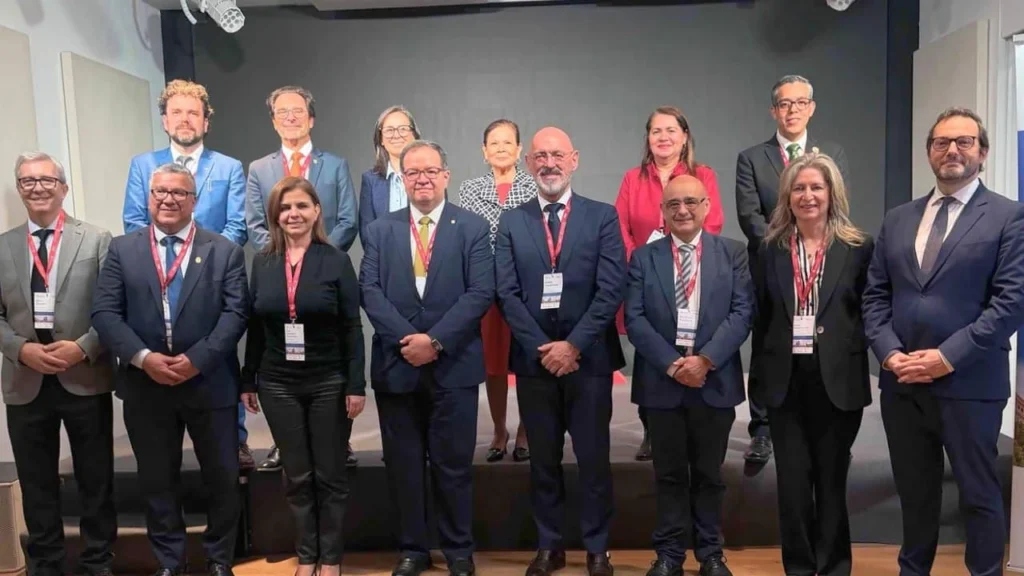
Rectors and officials from around twenty Ibero-American universities approved a 25-point agenda in Madrid this Tuesday. The agenda proposes regulating artificial intelligence (AI), defending Spanish and Portuguese as languages ​​of science, and expanding academic mobility within the region.

RELATED:

U.S.-Mexican Student Accepted to 49 Universities

The agreement was reached during the Ibero-American University Knowledge Forum, held at the headquarters of the Instituto Cervantes. It recognizes the autonomous public university as an indispensable pillar for democracy and social cohesion, and calls on governments to provide sufficient and sustainable funding.

“We face numerous challenges in each of our countries that require a collective, cross-cutting effort,” stated Susana Sumelzo, Secretary of State for Ibero-America and the Caribbean. She noted that the agenda will be presented at the XXX Ibero-American Summit of Heads of State and Government, scheduled for next Wednesday and Thursday in Madrid.

A key commitment is the promotion of Spanish and Portuguese as languages ​​for research, scientific production, and teaching. Sumelzo emphasized that both are global languages ​​shared by more than 800 million people and should also serve as languages ​​in which research can be conducted.

🎓 Iberoamérica aprueba la Carta de Movilidad Académica para facilitar el intercambio estudiantil en la región.

🌎 La Declaración de Alicante crea además grupos de trabajo sobre microcredenciales y movilidad del profesorado.https://t.co/0rG2DHeu4p

— Cumbre Iberoamericana (@CumbreIberoA) October 22, 2026

The text reads, “Ibero-America adopts the Academic Mobility Charter to facilitate student exchange within the region. The Alicante Declaration also establishes working groups on micro-credentials and faculty mobility.”

Furthermore, the institutions agreed to establish an Ibero-American University Knowledge Network—with this forum serving as its foundational event—and the proposal includes facilitating student mobility and the mutual recognition of academic degrees between countries.

Odir Fernández, Rector of the National Autonomous University of Honduras, highlighted that Spain serves as a benchmark for higher education in Latin America, a fact reflected in the migration of Latin American students to that country. Meanwhile, Jacqueline Sepúlveda, Rector of the University of Concepción in Chile, advocated for the mobility of students and faculty as a means to strengthen research and the intellectual sovereignty of our peoples.

The agenda also calls for shared regulation of AI and stipulates that technological advancement must be subordinate to human dignity, as well as to the sustainable use of water and energy in data centers.

“We need to move beyond universities that are rooted in the 19th century in terms of infrastructure, the 20th century in terms of their faculty, and the 21st century in terms of their students,” Fernández stated, referring to the digital divide.

#FromTheSouth News Bits | Belgium: Young demonstrators took to the streets of Brussels to protest education reforms that would raise university tuition and extend teaching hours without additional pay. pic.twitter.com/IBp4sxza26

— teleSUR English (@telesurenglish) October 27, 2026
  •  

Cuba Announces Squad for the Guizhou International Boxing Tournament

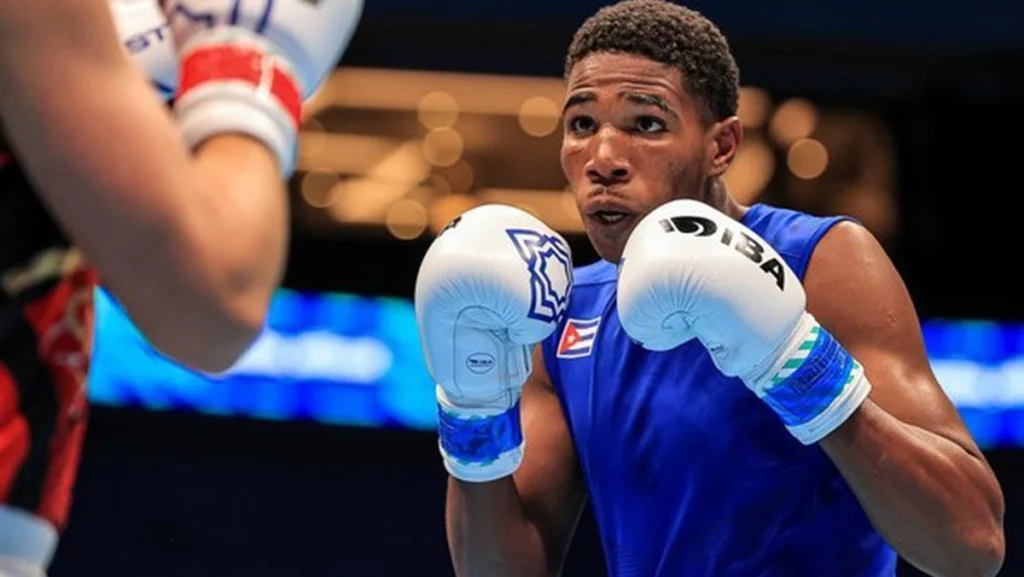
Paris 2024 Olympic champion Erislandy Álvarez (65 kg) will headline Cuba’s squad for the Guizhou International Boxing Tournament, to be held in China from November 3 to 12.

RELATED:

U.S. Blockade’s Impact on Cuban Sports Reaches US$36.2 million in 2025

The Cuban delegation will consist of seven men and six women, according to national commissioner Robinson Poll, as reported by the digital publication Jit.

Álvarez returns to competition following his recovery from a surgical procedure that kept him out of the 2026 Central American and Caribbean Games in Santo Domingo and the recent Continental Championship in Puebla. The 2023 Tashkent World Championship silver medalist leads a team aiming to continue Cuba’s strong performance in this international event.

In the men’s division, alongside Álvarez, the roster includes Ángel Sober (50 kg), Deibys Abreu (55 kg), Rolando Martínez (60 kg), Keilor García (80 kg), Fredisney Morales (90 kg), and Joel Duvergel (+90 kg).

The women’s squad features Dayira Mesa (70 kg)—a champion at the 2026 Santo Domingo Games—as well as bronze medalists from that same regional event: Dinaibys de las Nieves (51 kg), Carysney García (54 kg), Magda Massó (57 kg), and Keilor García (80 kg). Rounding out the team are Melani Girado (60 kg) and Naybel Morado (75 kg).

Reaparecerá Erislandy Álvarez en torneo de Guizhou
Encabeza la escuadra de siete hombres y seis féminas inscrita por #Cuba. #InderCuba65 #BoxeoCubano #boxeo #SiempreXCubahttps://t.co/lTM5ndjEUS

— JIT Deporte Cubano (@jit_digital) October 27, 2026

The text reads, “Erislandy Álvarez to reappear at Guizhou tournament
He leads the squad of seven men and six women entered by #Cuba.”

The squad will train under the guidance of coaches Julián González Cedeño, Fermín Espinoza, and Yuri Echevarría. In the previous edition of the tournament, Cuba secured three gold titles—won by Saidel Horta (57 kg), Jorge Cuéllar (71 kg), and Nelson Williams (92 kg)—along with two bronze medals, earned by Arianne Imbert (66 kg) and Yoana Rodríguez (75 kg).

The 2026 Guizhou International Boxing Tournament marks the competitive return of Erislandy Álvarez and offers a new opportunity for Cuban boxing to achieve international success in China.

#Cuba | Cuba is moving forward with reforms to give state-owned enterprises greater autonomy, attract investment, and boost production amid energy shortages and US sanctions.
The measures aim to modernize the economy while preserving public control of strategic sectors.… pic.twitter.com/DUCF3XxafR

— teleSUR English (@telesurenglish) October 21, 2026
  •  
❌