❌

Reading view

After F-22, F-35 and B-21 Raider Losses, Boeing Rebounds With Record Backlog. CEO Says “Dark Days Are Over”

After missing out on the F-22 and F-35 fighter programs, the B-21 Raider next-generation bomber deal, and absorbing billions in losses on the fixed-price KC-46 Pegasus tanker development, Boeing’s Defense, Space, and Security division has rebounded strongly with a series of major contracts.

Amid this turnaround, Boeing reported its third-quarter results on October 27, with CEO Kelly Ortberg assuring investors that the dark days for the company’s defense unit are over.

In the first three quarters of 2026, Boeing’s defense sector brought in US$23 billion in revenue and US$710 million in earnings, up from US$379 million a year earlier, a healthy 87.3 percent increase.

Meanwhile, the company reported a record backlog of US$745 billion, more than five times its market capitalization of about US$132.36 billion. This also includes a backlog of over 6,300 commercial airplanes.

The backlog at Defense, Space & Security grew to a record US$101 billion, with 23 percent representing orders from customers outside the US.

Rising defense sales also helped Boeing narrow its third-quarter losses.

In fact, Boeing believes its Defense unit will continue to deliver healthy growth after massive multi-year contract wins over the last two years and its decision to shun risky contracts, such as the fixed-price contract for the KC-46 Pegasus tanker development, in which it has already lost billions of dollars.

“We are going to see higher growth out of our defense portfolio than maybe what we thought a year ago. I think we were thinking more in terms of low-single-digit revenue growth. Clearly, that’s going to be more towards the high – middle-single- digit or higher going forward,” Ortberg said.

Boeing’s Massive Contract Wins

CEO Ortberg highlighted the recent 737 certification and Boeing’s win in the competition to build the Navy’s sixth-generation F/A-XX fighter as the company’s two most important third-quarter highlights.

“Recent milestones, including certification of the 737-7 and 737-10 and selection to design and build the Navy’s sixth-generation fighter aircraft, are important steps as we continue building on our progress.”

In September, the U.S. Department of War (DoW) selected Boeing to develop the Navy’s next-generation F/A-XX fighter jets. The contract is valued at over US$20 billion for the full-scale development phase.

This was the second time in as many years that Boeing was selected to develop a sixth-generation aircraft. Earlier, in March 2025, the US awarded Boeing the NGAD contract, now called the F-47.
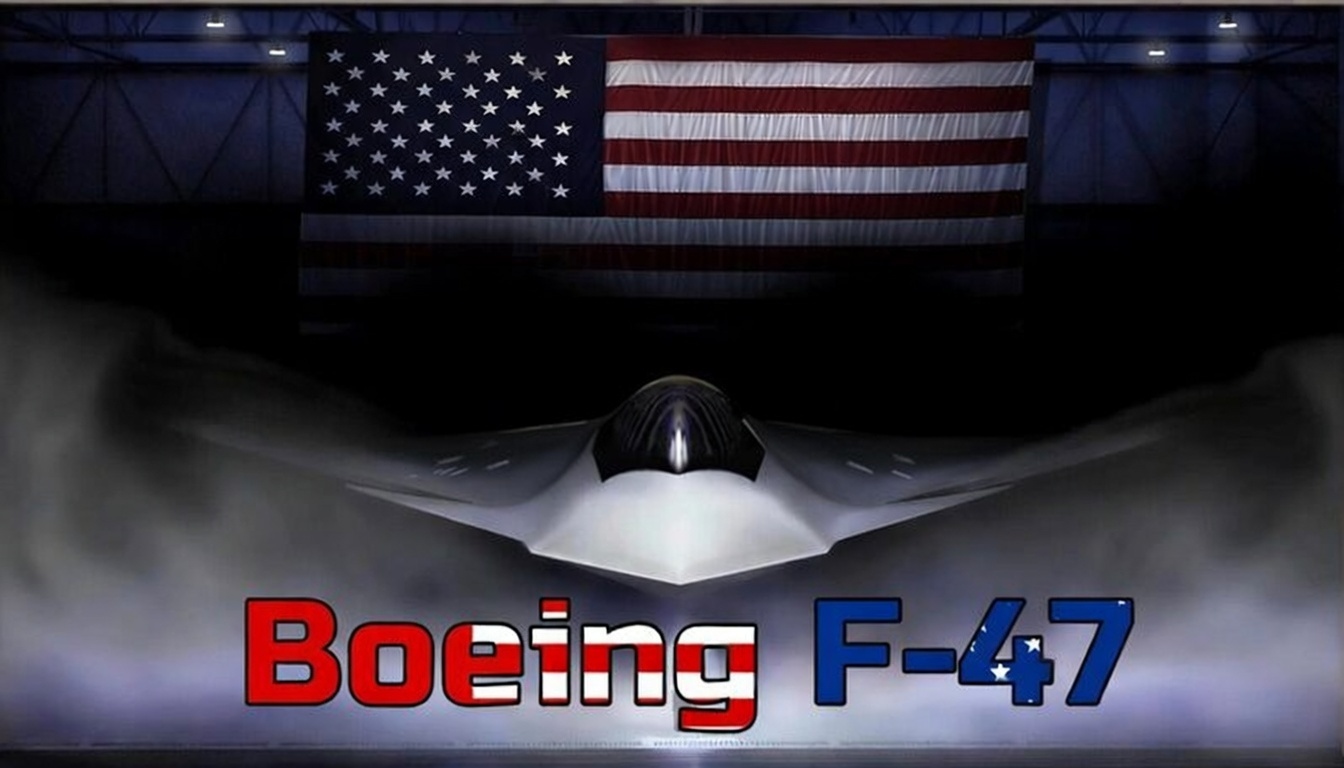
F-47: Image for Representation

Boeing is therefore building the sixth-generation fighter for both the US Air Force (USAF) and the US Navy.

This is a remarkable turnaround, as Boeing has no genuine experience in building a stealth aircraft.

In 2015, Boeing lost the contract to build the USAF’s next-generation bomber, the B-21 Raider, to Northrop Grumman.

Earlier, Boeing lost the contract to build both fifth-generation fighters to Lockheed Martin.

In 1991, the Pentagon selected Lockheed Martin as the prime contractor for the F-22 Raptor. Boeing, however, participated in the project and built the aircraft’s wings and tail sections.

In 2001, Boeing’s X-32 lost the Joint Strike Fighter (JSF) competition to Lockheed Martin’s X-35, which became the F-35. That was a winner-take-all program.

Boeing then went roughly 24 years without winning a new fighter design competition.

During those years, the 1997 merger with McDonnell Douglas kept Boeing’s defense and aerospace business alive.

The merger with McDonnell Douglas brought the F-15 Eagle and F/A-18 Hornet/Super Hornet lines. Boeing continued production, maintenance, and upgrades of these aircraft, originally designed and built by McDonnell Douglas.

Its lack of experience in stealth technology and its failure to design and build a new (clean-sheet) fighter in over three decades were major impediments to Boeing’s bid to design and develop sixth-generation fighters.

In fact, the USAF’s NGAD program was widely described as existential for Boeing’s future as a fighter designer and builder.

Boeing, however, came from behind and not only won the NGAD contract, but also cemented its lead by winning the Navy’s next-generation fighter, the F/A XX.

“We scored a generational win with the US Navy when they selected Boeing to design, build, and deliver its sixth-generation fighter jet, making Boeing the exclusive sixth-generation fighter company for both the US Air Force and the US Navy,” Ortberg said.

Boeing also won substantial F-15EX orders.

In September, the Air Force awarded Boeing a US$2.38 billion contract for 22 additional F-15EX Eagle II fighters. This brings the total F-15EXs under contract to 120.

“In the quarter, we also received a contract to manufacture 22 more F-15EX aircraft for the US Air Force. And this award brings the total number of aircraft under contract to 120, with the potential for additional upside as the F-15EX continues to demonstrate the value of its unmatched payload and range capability,” Ortberg said.

Notably, the Air Force has significantly raised its overall planned buy of F-15EX fighters, from earlier targets of around 129 to roughly 267 aircraft.

According to the US force structure plan 2035, submitted to Congress earlier this month, nearly 20 percent of the USAF’s combat-coded fleet could be F-15EXs by 2035.

F-15EX teamed with MQ-28 during Exercise Valiant Shield.

These new F-15EX orders would provide Boeing with stable cash flow for at least another decade.

Another major victory was new multi-year agreements for Patriot PAC-3 seeker production.

“Boeing received a seven-year contract to accelerate and eventually triple the PAC-3 Seeker production, supported by our early investments in facilities, workforce, and supply chain,” Ortberg said.

Besides, Boeing also saw growth in the MQ-25 Stingray aerial refueling drone and in the T-7A Red Hawk trainer program. Both programs have achieved Milestone C approval and moved into low-rate initial production.

Ortberg also stressed that all these programs are “being underwritten with the right contract type,” and the company has decided to avoid risky contracts, such as fixed-price contracts.

Boeing has lost more than US$7 billion on the KC-46A Pegasus fixed-price program.

The original firm-fixed-price development contract was valued at roughly US$4.9 billion. Boeing, however, has absorbed far more than that in overruns because, under the fixed-price terms, the company covers all costs above the agreed ceiling.

CEO Ortberg has repeatedly called it a “bad contract for the last decade.”

“The important part is all these programs are also being underwritten with the right contract type. So not only are
we booking more orders, we’re booking more orders that won’t result in some of the challenges we’ve had,” Ortberg said.

The F-47 contract is a cost-plus deal, Ortberg said. He declined to identify what type of contract Boeing signed for F/A-XX, but said it is “an appropriate contract type.”

Boeing has already decided to shun fixed-price contracts by 2022, when its newly appointed chief of the defense unit, Ted Colbert, announced the company would no longer bid on such contracts with the Pentagon.

The company also made major leadership changes as it worked its way back to recovery.

In July 2024, Boeing named Robert “Kelly” Ortberg to succeed Dave Calhoun as the company’s CEO.

Then, in September 2024, the company fired defense unit chief Colbert and replaced him with Stephen “Steve” Parker.

Two major labor strikes in 2024 and 2025 also impacted the company’s recovery.

However, strong defense sales and FAA certifications for the 737-7 and 737-10 aircraft have helped the company narrow its losses, build its backlog, and reassure investors of future growth potential.

“So the outlook is strong, our products are in strong demand, and the budget supports additional growth,” Ortberg said.

  • Sumit Ahlawat has over a decade of experience in news media. He has worked with Press Trust of India, Times Now, Zee News, Economic Times, and Microsoft News. He holds a Master’s Degree in International Media and Modern  History from the University of Sheffield, UK. 
  • He can be reached at ahlawat.sumit85 (at) gmail.com

The post After F-22, F-35 and B-21 Raider Losses, Boeing Rebounds With Record Backlog. CEO Says “Dark Days Are Over” appeared first on EURASIAN TIMES.

  •  

F-35 vs Patriot: Poland’s PAC-3 Maintenance Selection Highlights Two Contrasting U.S. Approaches

Poland has been selected as the maintenance site for Patriot’s most advanced interceptors, the first and only such facility outside the United States.

The decision highlights two very different American approaches: the F-35’s highly globalized supply chain versus the Patriot’s more tightly controlled production and maintenance model.

Two simultaneous wars in Ukraine and the Middle East have strained global Patriot interceptor stockpiles, and multiple European countries, including Germany, Poland, and Ukraine, have urged the US to establish new production and maintenance facilities for the air-defense system.

Poland highlighted how multiple European countries were lobbying and competing for the Patriot Advanced Capability 3 (PAC-3) missile maintenance facility.

“Four countries competed for the ⁠European location of this investment: alongside Poland — Germany, the ​Netherlands, and Norway,” Poland’s Deputy Defense Minister ‌Magdalena Sobkowiak-Czarnecka wrote on social media platform ​X.

Announcing the decision, the Pentagon said in a statement: “The United States Government, in coordination with Lockheed Martin and European Allies, announced the selection of the Republic of Poland as the host nation for the European Patriot Advanced Capability-3 (PAC-3) Missile Maintenance Facility (MMF).”

It added that the “new facility will be underpinned by robust, transatlantic industrial cooperation, with critical supply chain integration led by Germany, the Netherlands, and Sweden.”

Notably, the center in Poland will be the only one outside the United States.

The Pentagon statement underlined that the facility will “significantly enhance operational readiness,” ensure rapid surge capacity during a crisis, and reinforce “credible collective deterrence along NATO’s Eastern Front.”

“By establishing regional maintenance, repair, and overhaul capabilities directly within the European theater, the MMF will dramatically shorten turnaround times and further secure critical supply lines,” it added.

While the Pentagon statement highlights the importance of the new PAC-3 maintenance facility in Poland for Europe’s collective security, deterrence, and operational readiness, the fact that it is the only such PAC-3 maintenance facility outside the US still underscores Washington’s relatively centralized, tightly controlled approach to Patriot interceptor production and sustainment.

Beyond Poland becoming the first host of a PAC-3 maintenance facility outside the US, Japan remains the only country so far permitted to license-produce the more advanced PAC-3 MSE interceptors. Mitsubishi Heavy Industries assembles the missiles under a Lockheed Martin license, though output has remained limited.

Despite Ukraine’s repeated requests, it has not been allowed to license-produce the PAC-3 MSE interceptors.

U.S. Eyes F-16 Revival With Blackbeard Hypersonic Missile as Air Force Continues its Stealth Push

In July, U.S. President Donald Trump announced an agreement to allow Ukraine to produce Patriot missile interceptors during the NATO summit in Ankara, Turkey.

However, Trump reversed course within a week, saying no final agreement had been made and expressing caution about transferring the sensitive technology.

Reportedly, the prime contractor for the PAC-3 MSE interceptors, Lockheed Martin, was opposed to transferring the sensitive technology to Ukraine.

In September, Ukrainian President Volodymyr Zelenskyy announced that Trump had made a “final decision” to grant Kyiv production licenses for PAC-3 MSE interceptors; Washington has not confirmed this.

This approach of strictly guarding Patriot PAC-3 MSE production and sustainment contrasts sharply with Washington’s approach to another weapons platform, the F-35, whose production is highly globalized through a multinational supply web.

The F-35 vs Patriot PAC-3 MSE Interceptors: A Study in Contrasts

The F-35 Lightning II Joint Strike Fighter (JSF) and Patriot air defense systems are two of the US’s most successful weapons export platforms. The US has exported them to 20 countries so far, including original partners and foreign military sales customers.

However, many other countries, including Saudi Arabia, Turkey, and Qatar, want to buy the stealth aircraft.

Notably, earlier this month, the Pentagon and Lockheed Martin have agreed to a framework agreement to buy F-35 fighters for the next 10 years.

Under the framework, pending US Congress approval, Lockheed Martin will produce 1,560 F-35 Lightning II aircraft over the next ten years for the US and its international customers, at a rate of 156 fighters per year.

The US will buy at least 850 of these stealth fighter jets, and the remaining 710 F-35 fighters are expected to be built for export markets.

Similarly, 18 countries operate the Patriot air defense system, and it has been combat-tested in multiple theatres, including Ukraine and the Middle East War.

However, despite their similar export success and rising global demand, the two weapons systems could not have been different in how the US envisioned them, handled their design and development, and organized their production and sustainment.

U.S. Navy Records Worst Year in a Decade as Jets Collided, Helicopters Ditched & Aircraft Carrier Caught Fire

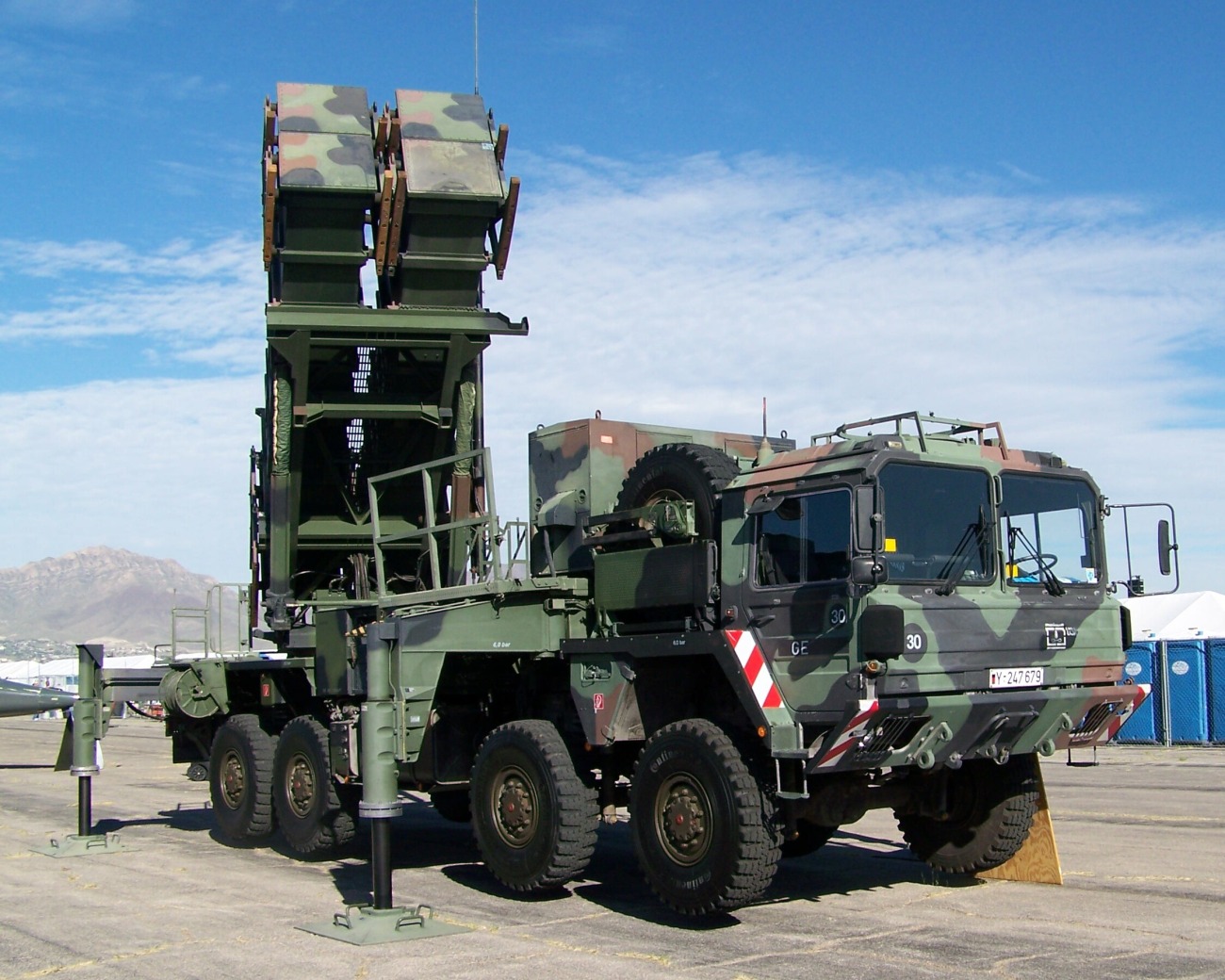
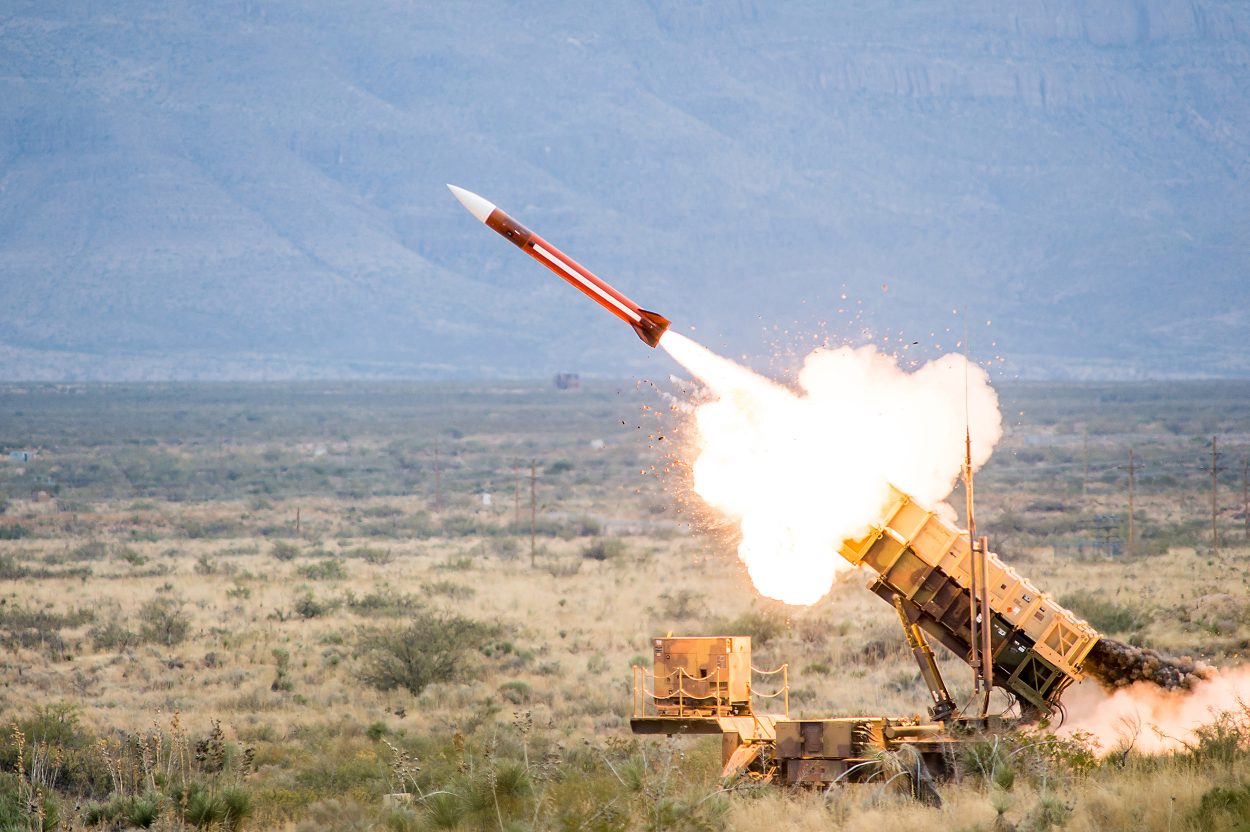
Patriot AD System

The MIM-104 Patriot is the US Army’s primary air-and-missile defense system, which evolved over decades from a 1960s anti-aircraft system to a truck-mounted mobile air defense system capable of intercepting ballistic and cruise missiles.

Patriot entered full-rate production in September 1980, and the US Army activated its first Patriot missile battalion in May 1982.

The Patriot system first saw combat service during the 1991 Gulf War, defending critical assets in Saudi Arabia, Kuwait, and Israel, and intercepting Iraq’s Scud missiles.

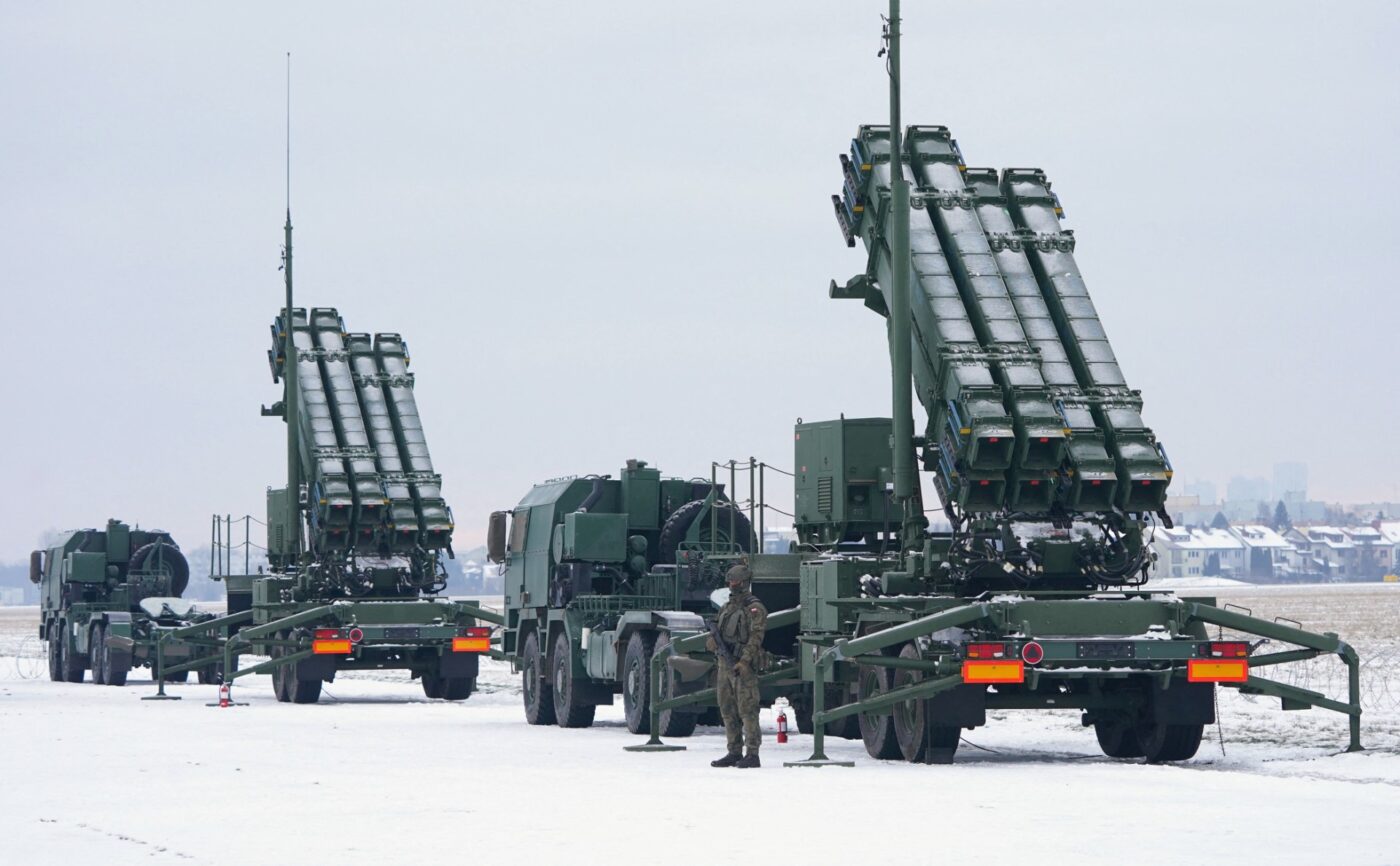
A soldier stands in front of PATRIOT (Phased Array Tracking Radar to Intercept on Target) surface-to-air missile systems during a military exercise at Warsaw Babice Airport, Poland on February 7, 2023. Patriot missile systems purchased by Poland last year have been redeployed to the Polish captital for military exercises. (Photo by JANEK SKARZYNSKI / AFP)

Notably, from the 1960s through the development of PAC-1, PAC-2, and the highly capable PAC-3 MSE, the system was designed and developed exclusively to meet US Army requirements.

Patriot received its first export customer only in 1984, when the Netherlands ordered four Patriot batteries and received them in 1987.

Israel, the US’s strategic ally in the Middle East, got Patriots only in 1991 on an emergency basis during the Gulf War.

Many NATO countries and other US allies got the system only in the 2000s.

For instance, Spain, South Korea, and the UAE all ordered Patriots in the 2000s.

Countries like Qatar, Romania, Sweden, Poland, and Bahrain ordered them even later.

Ukraine received Patriot batteries as donations only in 2023.

Therefore, Patriot’s export success has followed a predictable path that many US weapons systems have followed.

The Pentagon defines the requirements, then runs a tender process, selects primary and secondary contractors, and fields the system with the US military.

Foreign customers enter the picture only later and have minimal influence on the design and development of the weapons systems. For instance, the Pentagon is currently running the US Army’s Future Interceptor program, for which multiple defense firms are competing.

Earlier this month, the Pentagon advanced Lockheed Martin’s PAC-3 Edge interceptor to the next stage of this competition.

Although 18 other countries operate Patriot systems, they have no say in defining the requirements for the next stage of air-defense development.

The Patriot system therefore remains an exclusively US weapons platform, and Washington wants to maintain strict control over the production and sustainment of its radars, launchers, interceptors, and other components.

Even as the US struggles with low stockpiles of PAC-3 MSE interceptors due to the war in the Middle East, Washington is reluctant to let partners license-produce them.

F-35

The F-35 JSF program, however, was conceived, designed, and developed from the start as a multinational joint program, not a purely American fighter that would later be exported.

In the 1990s, the U.S. needed to replace multiple aircraft, such as the F-16, F/A-18, Harrier, and A-10 Warthog, with one common stealth fighter family.

To share the enormous development costs and lock in future allies, the Pentagon structured the JSF as an international partnership from the outset.

The program organized all international partners into investment tiers.

The UK remains the sole Tier 1 partner, with an initial investment of USD 2.5 billion in the JSF program. The UK also has the greatest access to F-35 technology and data outside the US.

U.S. Rejects Iran’s Claim of Seizing MQM-170 Drone as Four Tankers Catch Fire in Strait of Hormuz

Italy and the Netherlands are Tier 2 partners, with initial investments of USD 1 billion and USD 800 million, respectively.

Australia, Canada, Denmark, and Norway are Tier 3 partners. Turkey was one of the founding participants in the JSF program; however, it was kicked out in 2018 after controversially purchasing the Russian S-400 AD system.

All the initial partner countries contributed funding, industrial workshare, and design input in exchange for influence over requirements and a guaranteed share of production.

This created a global supply chain and production network from day one.

In fact, according to Lockheed Martin, nearly 30 to 42 percent of the jet is manufactured outside the US across three continents before final assembly in Texas.

While Lockheed Martin is the primary contractor, the UK’s BAE Systems and Martin Baker, Leonardo and Cameri in Italy, GKN Fokker in the Netherlands, ASDAM Group in Australia, and nearly 30 companies in Canada also supply crucial parts for the F-35 fighters.

Therefore, the Patriot remains an essentially US platform, tightly controlled but primed for exports, while the F-35 is a joint international effort.

  • Sumit Ahlawat has over a decade of experience in news media. He has worked with Press Trust of India, Times Now, Zee News, Economic Times, and Microsoft News. He holds a Master’s Degree in International Media and Modern History from the University of Sheffield, UK. 
  • He can be reached at ahlawat.sumit85 (at) gmail.com

The post F-35 vs Patriot: Poland’s PAC-3 Maintenance Selection Highlights Two Contrasting U.S. Approaches appeared first on EURASIAN TIMES.

  •  

U.S. Eyes F-16 Revival With Blackbeard Hypersonic Missile as Air Force Continues its Stealth Push

As the US targets a 60% stealth force by 2035, the F-16 Fighting Falcon, the US Air Force’s combat-proven workhorse, is quietly seeing a revival.

Lockheed Martin, the F-16’s manufacturer, has hundreds of export orders in its backlog for the upgraded F-16 Viper variant; it is pitching a new variant, the F-16G, to the USAF and could arm it with hypersonic missiles.

Notably, the single-engine F-16 first flew in the 1970s. Lockheed Martin’s recent “F-16 Fast Facts” states that roughly 2,800 F-16s are operating in 29 countries.

Even as the USAF moves toward an overwhelming stealth force, the F-16 is refusing to quietly fade into oblivion, and Lockheed Martin expects the fighter jet to bring the company hundreds of new orders and another round of growth.

Hypersonic Missiles

When it comes to air-launched hypersonic missiles, Russia may have established a lead.

In the war in Ukraine, Russia demonstrated that it can launch hypersonic missiles, primarily the Kh-47M2 Kinzhal from the MiG-31 and R-37M from the Su-35 and Su-57.

However, many Western analysts question whether both missiles, the Kh-47M2 Kinzhal and R-37M, qualify as hypersonic missiles.

According to CSIS’s The Missile Threat, the Kh-47M2 Kinzhal is a nuclear-capable, Russian air-launched ballistic missile, likely derived from Russia’s ground-launched 9K720 Iskander-M. The missile follows a ballistic or quasi-ballistic flight path rather than operating as a scramjet cruise missile or a maneuvering hypersonic glide vehicle.

However, because the missile can reach speeds up to Mach 10, it may qualify as a hypersonic missile. Due to its limited maneuverability, Ukraine’s Patriot AD systems have intercepted the Kh-47M2 Kinzhal on multiple occasions.

kinzhal
Downed Kinzhal Missile

The US was trailing in the hypersonic race, but is currently testing four air-launched hypersonic missiles: the ARRW (Air-Launched Rapid Response Weapon), HACM (Hypersonic Attack Cruise Missile), Mako, and Blackbeard, with multiple aircraft, including the F-15EX, F/A-18 Super Hornet, F-35 & F-22.

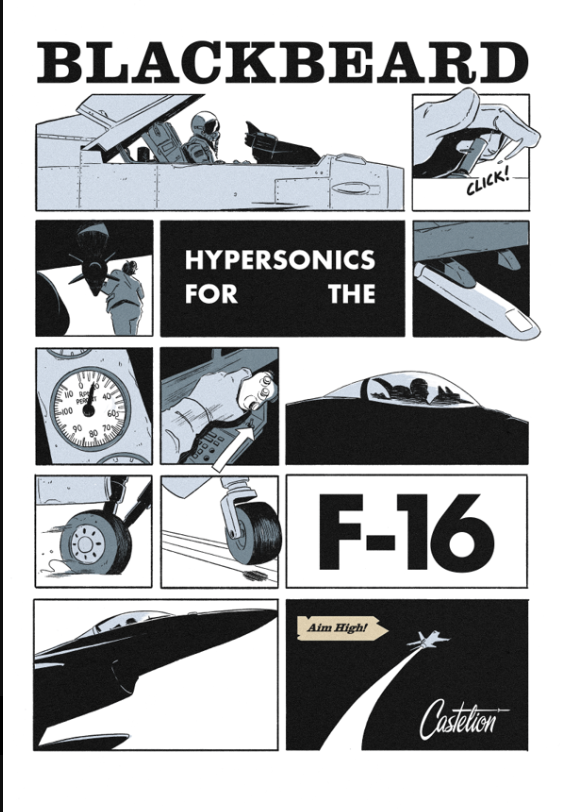
The Blackbeard hypersonic missile, a low-cost, air-launched hypersonic weapon developed by American defense contractor Castelion for the US Navy and Air Force, has already been tested with the F/A-18E/F Super Hornet and can also be launched from ground-based HIMARS.

However, Castelion is now also trying to pair the hypersonic missile with the F-16.

Hypersonic Missiles for F-16s?

On October 26, Castelion announced it has received a contract modification under its existing work with the Air Force Research Laboratory (AFRL) to begin integrating its Blackbeard hypersonic weapon onto the F-16 Fighting Falcon.

Notably, Castelion has so far been a Navy and Army story in the US, working to integrate the missile into the US Navy’s carrier-capable F/A-18E/F Super Hornets and the US Army’s HIMARS.

If the F-16 integration succeeds, it will bring the Blackbeard hypersonic missile to the USAF fleet as well.

Blackbeard for F-16. Credits Castelion.

Castelion has not disclosed the contract’s financial terms with AFRL or when the F-16 might first carry or fire the weapon.

According to US Navy plans for the Blackbeard program, a single F/A-18E/F is designed to carry up to four of these long-range hypersonic weapons. Since the F-16 and F/A-18E/F have broadly similar payload capacity, a single F-16 is expected to carry four Blackbeard hypersonic missiles.

Blackbeard is designed to fly above Mach 5 while maneuvering, making it far harder to intercept than a weapon on a predictable ballistic path.

Additionally, because Blackbeard is designed as a relatively low-cost, mass-produced hypersonic weapon, integrating it with the USAF’s workhorse F-16 is a very different proposition from pairing the far more expensive ARRW or HACM missiles with the F-15EX, F-35, and F-22.

Procurement plans for fiscal years 2028–2031 call for acquiring more than 4,000 Blackbeard missiles.

Meanwhile, earlier this month, the USAF submitted its 2035 force structure plan to Congress, noting that the F-16 will remain an important component of the USAF over the next decade.

F-16’s  Role in the USAF During the Next Decade

Under the plan, the USAF will field 1,509 manned, combat-coded fighter aircraft by 2035, roughly 60 percent of which will be stealth platforms. The 60% stealth force will include 40% F-35As and 20% F-22 Raptors and F-47s. The remaining 40% of the fleet will be split evenly between the F-15EX and F-16 jets.

This means that by 2035, the USAF could still maintain nearly 300 F-16 fighters. The actual number of F-16 aircraft would be even higher if you also count the trainers and test aircraft.

The report, titled “Long-Term USAF Fighter Force Structure,” also mentions that the USAF is open to acquiring an entirely new fighter to reach its goal of 1,509 fighters by 2035.

“Accordingly, the USAF is also evaluating additional recapitalization options, including a new capacity fighter, increased reliance on CCAs, and developing air-to-air capabilities on bombers,” the report said.

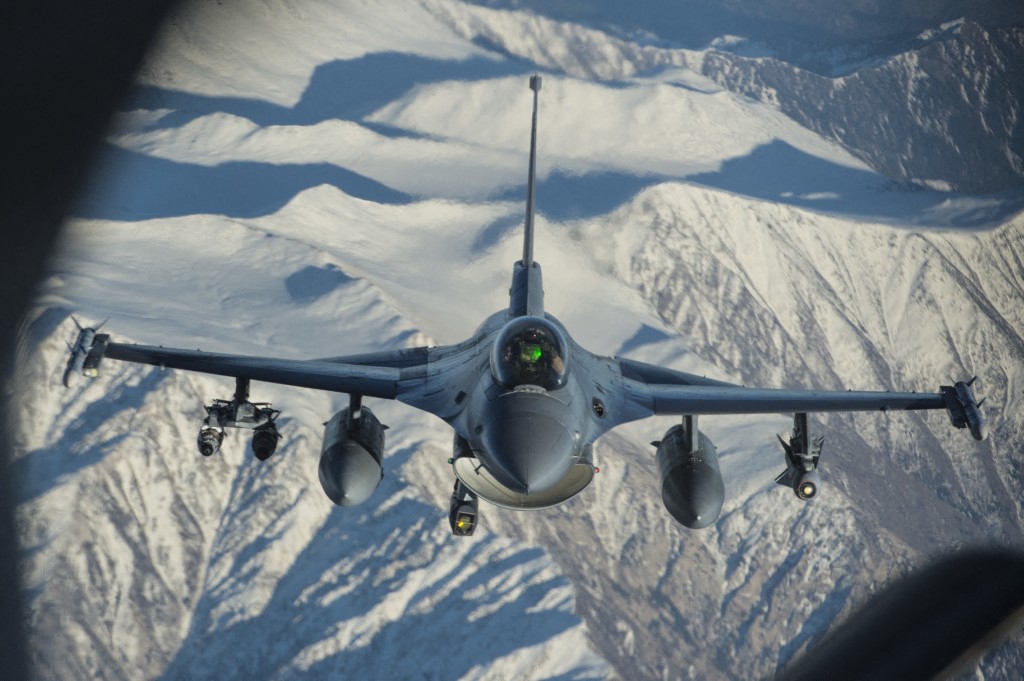
A US Air Force F-16 Fighting Falcon prepares to refuel (Photo by STAFF SGT. COREY HOOK / US Air Forces Central Command / AFP)

As EurAsian Times reported last week, the new fighter could be Lockheed Martin’s upgraded F-16, termed F-16G.

Commenting on the USAF force-structure plan, Lt. Gen. David Tabor, deputy chief of staff for plans and programs, said the USAF is considering the F-16G variant but doesn’t have to decide “immediately.”

“We’re not in a position where that decision has to be made immediately.”

He said the decision likely won’t be made in the 2028 budgeting process, but perhaps in the years that follow. “There is a spectrum of capability that we might want to replace the F-16s with,” he said.

“It’s not urgent, frankly. What we don’t want to get to is a point where it is urgent, and we haven’t done the homework and decided ‘hey, this is really the right place to be.’ We do have time to churn through that and make sure that we have a good option going forward.”

One advantage to buying more F-16s is that “it’s practically a ready-made aircraft,” Tabor said.

The U.S. already has an established F-16 production line in Greenville, South Carolina. So, ordering new F-16s wouldn’t require establishing a new production line or reviving a dormant one.

The EurAsian Times has previously reported that the USAF has been considering procuring the F-16G variant for nearly a year; however, no decision has been made yet, and as Tabor clarified in his media briefing on October 20, the decision is not urgent and can wait until 2028.

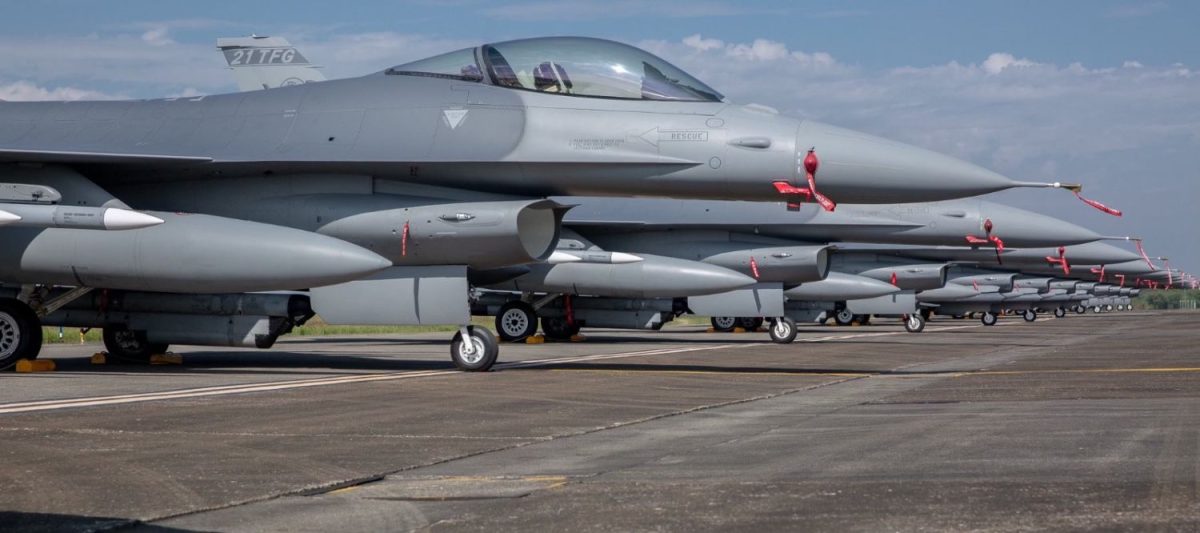
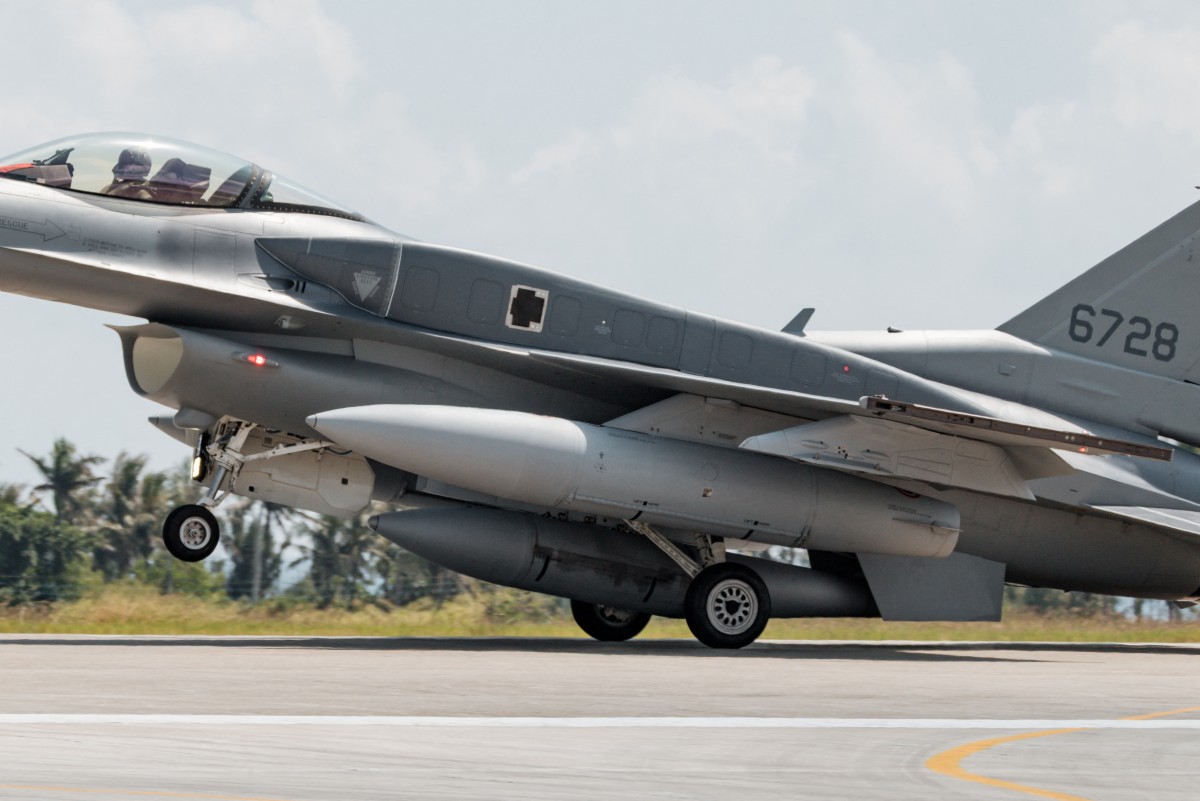
Lockheed Martin is also exporting the Block 70/72 variant to foreign customers and upgrading legacy F-16 fleets to the Viper standard. Taiwan, for instance, upgraded 139 of its existing F-16A/B Block 20 fighters to the F-16V standard and ordered 66 new F-16V fighters.

The F-16 has already received Northrop Grumman’s AN/APG-83 SABR AESA radar.

Lockheed Martin claims this upgraded radar, with electronic beam steering, high-resolution SAR mapping, improved jamming resistance, simultaneous air-to-air and air-to-ground modes, and the ability to track multiple targets at longer ranges, gives the F-16 fifth-generation radar capabilities.

New F-16 variants have also integrated the Lockheed Martin Sniper® Advanced Targeting Pod and the Legion-ES™ IRST system, which increase pilot situational awareness.

The newer F-16 variants are also certified for a very wide range of modern weapons, such as AIM-120D AMRAAM, AIM-9X, JASSM, JSOW, JDAM variants, and SDB, and use Link 16, which provides enhanced situational awareness and enables real-time command, control, and tactical data exchange among military aircraft, ships, and ground forces.

Overall, while the newer F-16 shares the same airframe, advanced sensors, computing, radar, and a new weapons package make it much more potent and lethal than the older F-16C/D variants. However, integrating an economical hypersonic missile on the F-16 could be a true game-changer, keeping the fighter relevant for years to come.

  • Sumit Ahlawat has over a decade of experience in news media. He has worked with Press Trust of India, Times Now, Zee News, Economic Times, and Microsoft News. He holds a Master’s Degree in International Media and Modern History from the University of Sheffield, UK. 
  • He can be reached at ahlawat.sumit85 (at) gmail.com


The post U.S. Eyes F-16 Revival With Blackbeard Hypersonic Missile as Air Force Continues its Stealth Push appeared first on EURASIAN TIMES.

  •  

1,800 Jets, Nearly 500 Stealth Fighters — Why China’s Air Force May Still Struggle to Dominate the IAF?

With India-China border tensions back in the news over border skirmishes, the Indian Air Force (IAF) Chief said the PLA Air Force (PLAAF) “has a larger overall inventory” but that “its operations against India are constrained by the geography of the Tibetan Plateau.”

Explaining China’s vulnerability, Air Chief Marshal Singh said that the Tibetan Plateau’s “high-altitude airfields reduce payload, range and turnaround times.”

However, he said the IAF does not face these constraints. “The IAF, by contrast, operates from lower-altitude, all-weather forward air bases with full payload and shorter response times.”

Turnaround time is the time fighter jets take to refuel and rearm; response time refers to scramble, the urgent, high-speed mobilization and takeoff of fighter jets in response to an immediate air-defense threat.

In the 1962 India-China War, the Tibetan Plateau’s geography favored Beijing.

Tibet’s flat, arid terrain aided road construction, army mobilization, and logistics, and gave Beijing a high-altitude advantage, while the steep, rugged mountains and dense forests on the Indian side made road construction and troop movement challenging.

However, any future conflict between the two countries is likely to involve the Air Force, and both countries are ramping up their air bases near the contested Line of Actual Control (LAC), the de facto border between India and China.

The same altitude that gave Beijing an advantage during the 1962 land war could limit its aerial operations.

Indian vs Chinese Forward Air Bases Near the LAC

Air Chief Marshal Singh said the IAF operates from “lower-altitude, all-weather forward air bases,” which offer several advantages compared with Tibet’s high-altitude air bases.

The reality, however, is more nuanced, as some of India’s forward air bases in Ladakh sit at altitudes comparable to, or even higher than, China’s main Tibetan plateau bases.

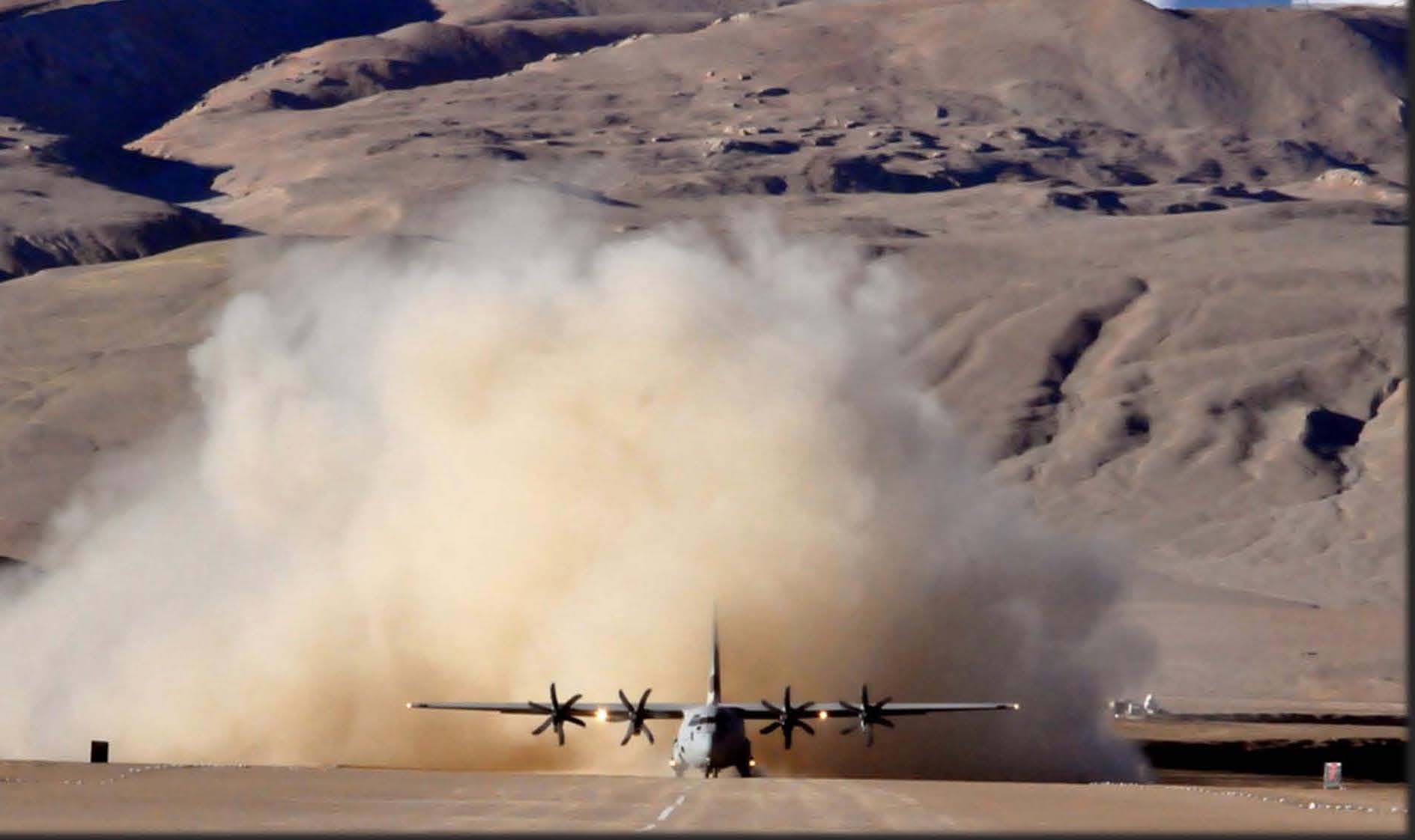
India also operates the world’s highest airstrip at Daulat Beg Oldi (DBO), at an elevation of 5,064 meters. DBO, however, is not an air base but only an unpaved, gravel-and-sand-earth advanced landing ground (ALG), suitable only for certain kinds of aircraft, such as heavy-lift C-130J Super Hercules aircraft and rotary-wing helicopters.

For reference, USAF’s Hill Air Force Base in Utah sits at 1,460 meters, making it one of the highest major US Air Force bases.

IAF Super Hercules
A file photo of an IAF C-130J Super Hercules landing at Daulat Beg Oldie (DBO), the highest airstrip in the world. (IAF photo)

Similarly, Chushul ALG sits at an elevation of 4,267 meters.

The Nyoma Air Base, a newly upgraded frontline military airfield in eastern Ladakh commissioned last November, sits at an elevation of 4,175 meters. The Nyoma Air Base is just 23 to 35 kilometers from the Line of Actual Control (LAC) with China.

The IAF also operates the Fukche Advanced Landing Ground (ALG), another critical high-altitude tactical military airfield. Located in the Demchok sector of eastern Ladakh, it sits just 2.5 kilometers from the LAC with China, at an altitude of approximately 4,176 meters above sea level.

The Leh airfield, IAF’s main logistics base in Ladakh, sits at 3,256 meters.

These forward airstrips, ALGs, and airfields are comparable in altitude to some of China’s forward air bases in Tibet, such as Ngari Gunsa (4,274 meters), Shigatse Tingri (4,317 meters), Qamdo Bamda (4,334 meters), and Shigatse Peace (3,782 meters).

India’s advantage comes from its low-altitude bases, such as Ambala, Bhatinda, Sirsa, Hasimara, and Chabua. These bases are near sea level and within 500 kilometers of the LAC; however, given the vast expanse of the Tibetan plateau, the PLAAF’s rear air bases in the plains are much farther away and have limited utility when operating near the LAC.

For instance, Hasimara Air Base in West Bengal, home to the IAF’s Rafale Falcons Squadron, is about 150 kilometers from the LAC and sits at an elevation of just 104 meters. In comparison, China’s Shigatse Peace Air Base, nearly 100 kilometers from the LAC, sits at an elevation of 3,782 meters.

Similarly, Chabua Air Base in Assam is about 100 kilometers from the LAC and sits at an elevation of 112 meters above sea level. In contrast, the Qamdo Bamda air base in Tibet is equidistant from the LAC but sits at an elevation of over 4,000 meters.

The Ambala Air Base in Haryana, home to the IAF’s second Golden Arrows Rafale squadron, is about 500 kilometers from the LAC and sits at an elevation of 275 meters. However, the Lhasa Gonggar air base in Tibet is about 200 kilometers from the LAC but sits at an elevation of 4,275 meters.

The IAF’s Bathinda and Sirsa air bases are also about 500 kilometers from the LAC and sit at around 100 meters above sea level.

This means IAF warplanes can operate at full capacity with maximum payload and have shorter response and turnaround times, unlike the Chinese PLAAF.

The thinner air in Tibet nearly cripples PLAAF jets as they cannot operate with their full weapons payload.

Additionally, IAF bases in the plains remain operational year-round, whereas Chinese air bases in Tibet face limited operability during the harsh winter season.

PLAAF

Who Holds the Edge?

However, given the widening gap between the IAF and the PLAAF’s inventory, one could argue that Beijing has already neutralized the IAF’s geographic advantage.

The IAF is currently at a historic low in maintaining fighter squadrons. India currently has around 29 fighter squadrons, compared with a sanctioned strength of 42.5. Meanwhile, China’s PLAAF already has more than 1,800 combat aircraft, including nearly 300-500 fifth-generation stealth J-20 fighters.

Air Chief Marshal Singh’s remarks are no revelation and have circulated in Indian policy circles for over six decades.

In fact, during the 1962 Sino-Indian War, Prime Minister Jawaharlal Nehru’s decision not to use air power against Chinese forces remains one of the most enduring criticisms of his leadership.

Critics argue that had India used its Air Force, New Delhi could have turned the tide in its favor.

During the war, the IAF deployed only helicopters and transport crews to serve forward pickets in the then North East Frontier Agency (NEFA) and Ladakh.

The IAF’s use in offensive operations was considered but rejected for fear of escalation.

Many analysts argue that in 1962, the IAF had both qualitative and quantitative superiority over the PLA Air Force.

At that time, the IAF had nearly 22 combat squadrons and over 500 aircraft. The IAF’s mainstays included the Hunter Mk-56 fighter-bomber, Gnat interceptor, French-built ground-attack aircraft such as the Mystere and Toofani, Canberra bomber-reconnaissance jets, and the Vampire ground-attack jet.

Meanwhile, the PLA Air Force (PLAAF) operated the MiG-15, MiG-17, MiG-19, and medium-range IL-28 bombers.

India’s intelligence agency, the Intelligence Bureau (IB), cautioned that if India deployed the IAF for offensive operations, then in return, the PLAAF could bomb Indian cities, such as Kolkata (then Calcutta).

However, it did not account for the fact that PLAAF aircraft could reach targets in India only if they operated from airfields in Tibet, where high altitudes severely restricted their weapon-carrying capacity.

In contrast, IAF fighters could have carried full weapon loads from airfields in the plains of Assam and Punjab.

General B.M. Kaul, the commander of IV Corps in NEFA, alleged in his memoirs – The Untold Story (1967) – that the IAF was not used in close support of the Army.

Neville Maxwell, correspondent of The Times (London) in 1962, in his book India’s China War, says: “The government had decided that tactical air support with bombers on ground attack must be ruled out for fear of Chinese retaliation against Indian cities, especially Calcutta. Considering the terrain in NEFA and the limitations of the IAF, it is doubtful whether its intervention in a tactical role could have had much effect.”

However, many people still believe Nehru committed a blunder by overestimating the PLAAF’s capabilities and not paying attention to the geographic limitations the Tibetan Plateau imposed on Chinese aircraft operations.

  • Sumit Ahlawat has over a decade of experience in news media. He has worked with Press Trust of India, Times Now, Zee News, Economic Times, and Microsoft News. He holds a Master’s Degree in International Media and Modern  History from the University of Sheffield, UK. 
  • He can be reached at ahlawat.sumit85 (at) gmail.com

The post 1,800 Jets, Nearly 500 Stealth Fighters — Why China’s Air Force May Still Struggle to Dominate the IAF? appeared first on EURASIAN TIMES.

  •  

What If the B-21 Raider Could Shoot Down Enemy Fighter Jets? The U.S. Air Force Just Put the Idea on Table

The US Air Force (USAF) is evaluating its bombers, including the next-generation B-21 Raider, for potential air-to-air combat roles, and they could also operate alongside Collaborative Combat Aircraft (CCA) drones.

So far, the USAF has used its bombers, including the B-52 Stratofortress, B-1B Lancer, and B-2 Spirit, for a variety of missions, including conventional ground strikes, nuclear deterrence, maritime anti-ship operations, and close air support roles.

However, adding air-to-air missiles to bombers and pairing them with CCAs would also enable them to perform air-superiority missions in a contested environment.

The plans are part of the USAF’s latest fighter force structure report, submitted to the US Congress for approval earlier this month.

The report, titled “Long-Term USAF Fighter Force Structure,” also envisions a combat-coded fleet of 1,509 fighters by 2035, along with at least 500 CCAs.

The plan calls for adding hundreds of new fighters as the USAF increases its current fighter fleet from 1,288 aircraft, while also accounting for hundreds of F-16s, older F-15s, and F-22 Raptors due for retirement in the coming years.

The 2035 plan envisions a 60% stealth force, including 40% F-35A Joint Strike Fighters, 20% F-47s and F-22 Raptors, and 40% upgraded fourth-generation fighters, with an even mix of F-16s and F-15EXs.

The USAF will build the new fleet by procuring Lockheed Martin’s F-35s and Boeing’s F-47 and F-15EX fighters.

However, the report acknowledges that meeting its ambitious fighter procurement targets may not be achievable because of “fiscal realities and industrial production limitations.”

To meet the 2035 target, the USAF will need to add more than 70 fighters to its fleet each year for the next ten years.

The report therefore discusses other recapitalization options for the USAF, including acquiring an entirely new fighter, relying more on semi-autonomous drone fighters known as Collaborative Combat Aircraft, and giving bombers air-to-air roles and capabilities, Air & Space Force Magazine said after reviewing the report, which has not been released in the media.

“Accordingly, the USAF is also evaluating additional recapitalization options, including a new capacity fighter, increased reliance on CCAs, and developing air-to-air capabilities on bombers.”

As EurAsian Times reported last week, the new fighter could be Lockheed Martin’s upgraded F-16, termed F-16G, or Boeing’s already-in-production F-15EX variant. Lockheed Martin is also discussing adding new sixth-generation capabilities to the F-35 fighter.

However, the report’s most unusual suggestion is to add new air-combat munitions to the USAF’s bomber fleet, including the under-development B-21 Raider stealth bomber.

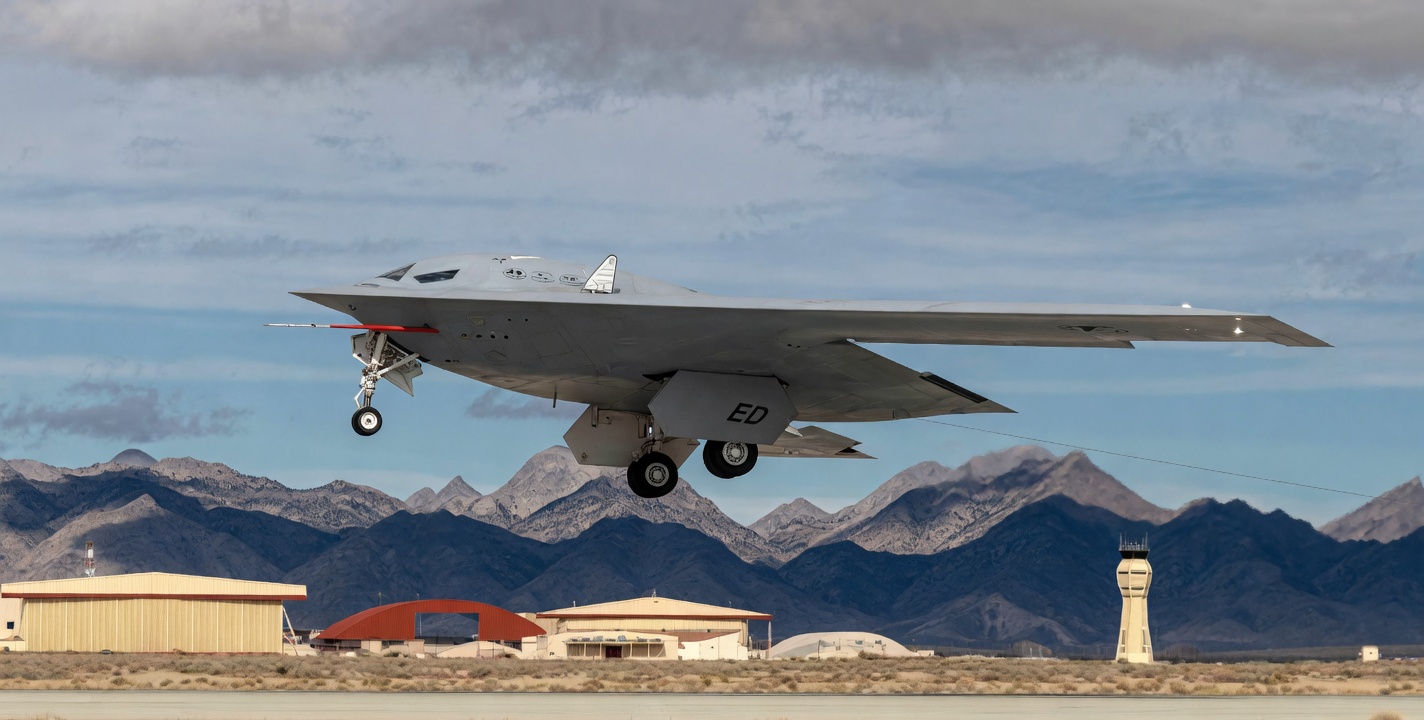
B-21 RAIDER

Air-To-Air Missiles For Bombers

The USAF’s fighters have long carried air-to-ground munitions, such as precision-guided JDAMs, laser-guided bombs, and Small Diameter Bombs (SDBs).

Bombers, however, have traditionally not carried air-to-air missiles, severely limiting their ability to conduct air-to-air missions.

For instance, during the recent Operation Epic Fury, the USAF employed B-2 Spirit, B-1B Lancer, and B-52H Stratofortress Bombers, but used them exclusively for long-range standoff ground strikes, penetrating stealth strikes, or stand-in ground strikes once Iranian air defenses were sufficiently suppressed.

These bombers therefore mostly flew in strike packages with F-35s and F-22s, as well as F-15s and F-16s, tackling aerial threats and conducting air superiority and SEAD/DEAD missions.

Adding air-to-air capability will allow USAF bombers to support air superiority missions.

Additionally, pairing them with CCAs will let the bombers serve as airborne nerve centers and communication nodes for a networked strike package, with a bomber aircraft at the center controlling multiple combat and reconnaissance drones.

The USAF plans to have at least 500 CCA drones in service by 2032.

The bombers, including the B-21 Raider, could therefore be programmed to launch air-to-air missiles and drones. Some of these drones could launch air-to-air missiles themselves, thereby greatly extending bombers’ combat range.

Given bombers’ size, payload capacity, and range, a single bomber could carry multiple air-to-air and air-to-ground missiles, as well as drones, a capability that could be crucial over the long distances of the Pacific theatre.

For instance, a B-2 Spirit bomber could carry over 27,000 kg of weapons payload, more than three times the F-35’s maximum payload capacity (8,200 kg).

B-2 Spirit Stealth Bomber.

Similarly, the B-2 Spirit’s unrefueled range of 6,000 nautical miles is nearly five times that of the F-35 (1,200 nautical miles).

Adding long-range air-to-air missiles and pairing combat drones with bombers will further extend their combat range.

Notably, the US is already developing several very long-range air-to-air missiles.

The US Navy has already fielded the AIM-174B air-launched version of the Standard Missile-6 (SM-6).

While the exact range of the AIM-174B is classified, widely cited estimates put it at 130 to 250 miles.

Separately, the US is also developing another very long-range AAM missile, the AIM-424 Malice, expected to reach over 250 miles.

In June, the USAF issued a call for a new anti-air missile with a range of at least 1,000 nautical miles.

Integrating such very long-range AAMs with bombers could redefine air warfare.

In addition, the Defense Advanced Research Projects Agency (DARPA) is working on the LongShot program to test the feasibility of an air-launched drone that can launch air-to-air missiles.

The air-to-air capability of the bombers could also include self-protection systems, such as carrying air-launched anti-missile interceptors. In fact, Northrop Grumman, the B-21’s prime contractor, has already patented an anti-missile defense system for stealthy aircraft that fires hard-kill interceptors.

Notably, this is not the first time the USAF has explored adding air-to-air munitions to its bomber fleet.

Former Air Force Chief of Staff Gen. David Allvin signaled in October 2024 that the B-21 Raider stealth bomber could play a greater role in the service’s air-dominance plans.

At the time, the USAF was reviewing its Next Generation Air Dominance (NGAD) fighter program, which Boeing eventually won in 2025 and named the F-47.

When asked whether the air superiority review could give the B-21 a more prominent role, Allvin said, “We have not taken that off the table.”

However, the USAF force structure report has not detailed what the bomber fleet’s potential air-to-air role would entail. Nor has it specified which USAF Bombers will be programmed for air-to-air combat roles.

However, because the B-21 Raider is still in early production, the bomber is best suited to be paired with AAM and CCA drones.

While the USAF initially planned to buy 100 B-21 Raiders, later reports suggested the force could increase that number to 140.

Besides, the USAF also has about 76 B-52 Stratofortresses, 44 B-1B Lancers, and nearly 19 B-2 Spirits.

The 2035 Force Structure Report suggests that the USAF is hedging on multiple options to maintain its dominance and fighter numbers, including buying a new aircraft (possibly F-16G), “increased reliance on CCAs,” and considering new air-to-air roles for bombers.

All these plans will compete for US funding. The US Congress will only know which programs are approved and funded when it approves the Force Structure Report.

  • Sumit Ahlawat has over a decade of experience in news media. He has worked with Press Trust of India, Times Now, Zee News, Economic Times, and Microsoft News. He holds a Master’s Degree in International Media and Modern  History from the University of Sheffield, UK. 
  • He can be reached at ahlawat.sumit85 (at) gmail.com

The post What If the B-21 Raider Could Shoot Down Enemy Fighter Jets? The U.S. Air Force Just Put the Idea on Table appeared first on EURASIAN TIMES.

  •  

Su-57 and MiG-35: How Russia is Using Its Best and Worst Fighter Jets To Fight Ukraine’s Drones

Russia is using fighter jets from both ends of its inventory, its most advanced fifth-generation Su-57s and the rare MiG-35s, to counter Ukraine’s long-range drones, though for sharply different operational reasons.

While reports of Su-57s deployment for Moscow’s air defense and shooting down Ukrainian drones have appeared frequently, a Telegram channel belonging to the specialized community Soniashnyk and connected to Ukrainian aviation reported on October 21 that Russia deployed a MiG-35 to shoot down Ukrainian drones.

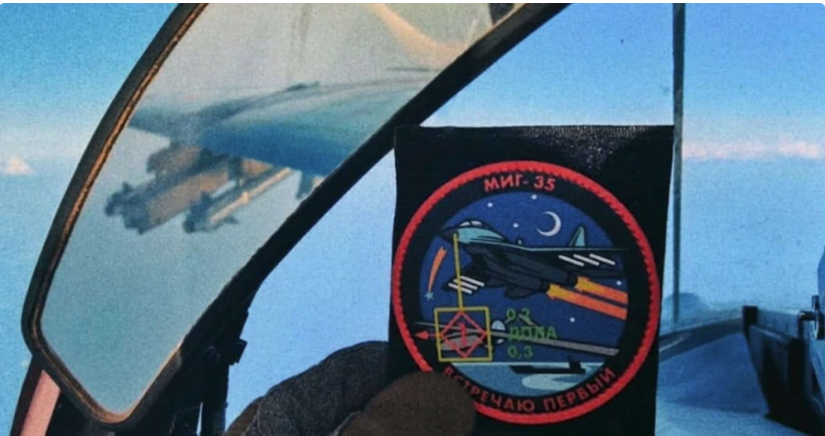
The Telegram channel also published an image of a russian pilot in the cockpit of a MiG-35 allegedly involved in intercepting Ukrainian drones.

What makes MiG-35s alleged involvement in anti-drone operations unusual is the fact that these jets are still in the experimental stage and have rarely been used in the war in Ukraine.

In fact, while the war in Ukraine is already in its fifth year, there have only been three known instances where MiG-35s were involved in combat operations, and every time they were used for anti-drone operations.

The first reports of MiG-35 involvement in anti-drone operations emerged nearly three years ago, in November 2023; however, at the time, the story was based entirely on claims from Russian industry, with no supporting images or videos.

Sergei Korotkov, Chief Designer at the United Aircraft Corporation (UAC), told RIA Novosti that the MiG-35 was already participating in operations related to the conflict in Ukraine.

He said the aircraft “is already participating in all ongoing operations” amid the current events in Ukraine, and that the Ministry of Defense still needs to decide on serial procurement before further test flights.

Then nearly one-and-a-half years later, in May 2025, Russian sources claimed the MiG-35 was used for the first time since the start of the special military operation to intercept Ukrainian UAVs.

Now, nearly 17 months later, and for the first time, a Telegram channel associated with Ukrainian aviation has reported the use of the MiG-35 to counter Ukrainian drones. This time, it also published an image of the MiG-35 pilot.

A Russian MiG-35 pilot engaged in counter-drone operations. Photo: t.me/soniah_hub

Clearly, Russia has scarcely used MiG-35s in the war in Ukraine, and only for anti-drone operations.

So why is Russia using the latest, most advanced fighter jet from the legendary Mikoyan factory, which Moscow markets as a 4+++ generation fighter, so sparingly and strictly only for anti-drone operations?

Why is the MiG-35 Missing From Action?

Part of the reason is the numbers themselves.

So far, the Russian Aerospace Forces (VKS) have received only six MiG-35s (four single-seat MiG-35S and two two-seat MiG-35UB variants).

All six fighters belong to an experimental/pre-production batch that took five years to produce, from 2018 to 2023. Two of these fighters (both two-seat MiG-35UB variants) are trainers.

The Mig-35 aircraft has not entered serial production yet.

The extremely limited numbers and experimental status mean that neither enough jets are available for combat nor have they matured enough to serve in frontline combat roles.

In fact, while Russia placed its first order for the MiG-35 eight years ago in 2018, and the fighter entered operational service in 2019, Moscow has placed no subsequent orders.

Russia initially planned to order 37 MiG-35s; later, it reduced that number to 24. However, in the end, Russia ordered only six aircraft.

Russia backed multiple Sukhoi models, including the Su-34, Su-35, and fifth-generation Su-57, over the cheaper MiG-35.

Similarly, although Russia presented the MiG-35 to international customers at the 2017 Moscow air show and entered it in numerous export contests, including the massive Indian MMRA contest for 114 fighter jets, it won no export orders.

Other export customers, including Algeria, Bangladesh, Malaysia, Iran, and Egypt, also overlooked the MiG-35.

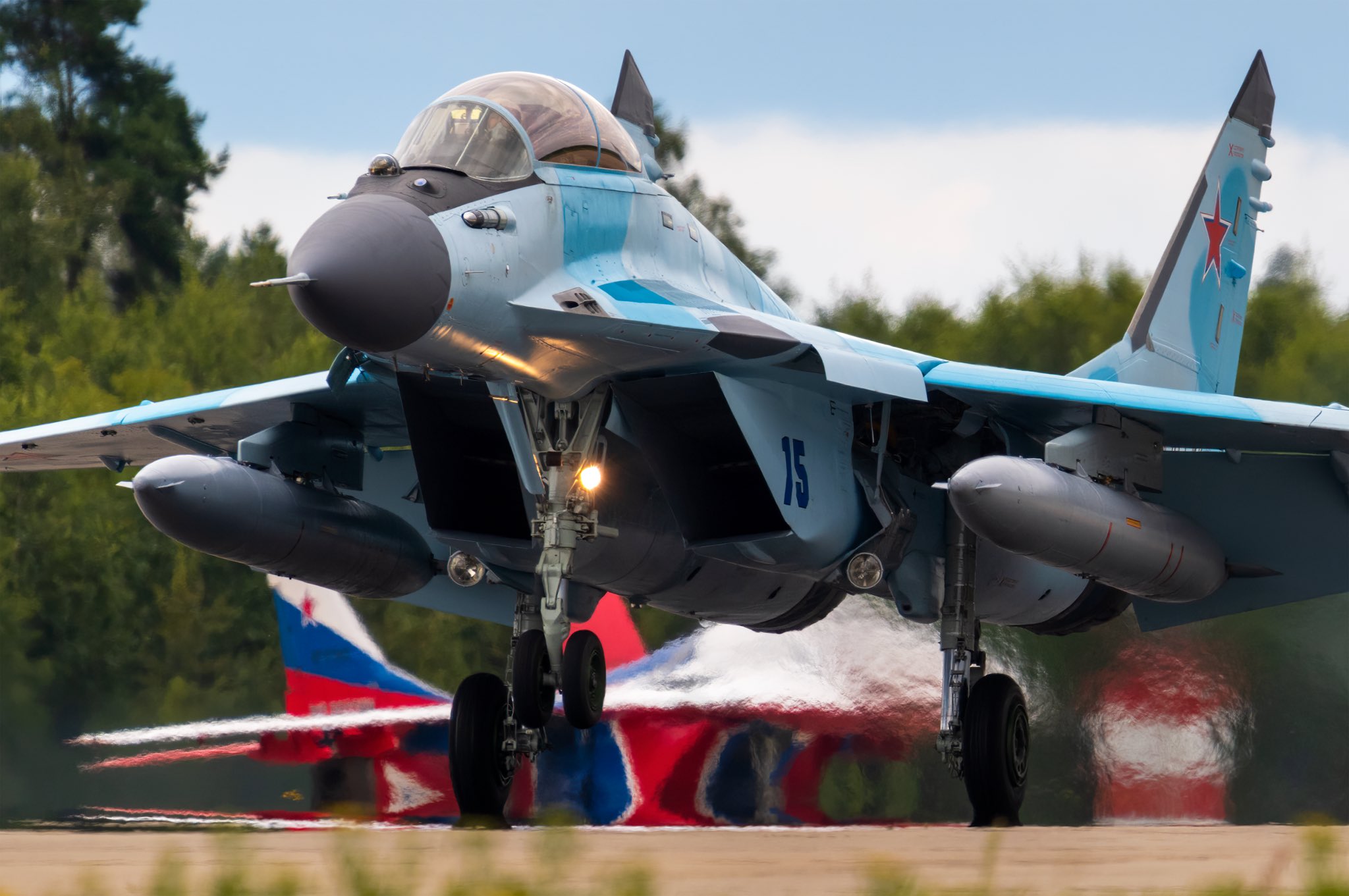
MiG-35
File Image: MiG-35

The lack of substantial domestic orders and zero export orders clearly points to the fighter’s below-par performance.

In fact, analysts have consistently pointed out that while the MiG-35 was promised as a 4++ generation aircraft, it offers only marginal improvements over the 1980s MiG-29 in range, engine performance, and payload capacity, rather than a transformative leap.

They point out that the MiG-35 airframe is essentially a rebranded late-model Fulcrum airframe with slight modifications, such as more internal fuel and a larger wing area.

It currently has a PESA radar, not the promised AESA radar. The serial-production aircraft lacks thrust-vectoring control, as previously planned.

Its RD-33 derivative engines have underperformed, delivering no real gains in thrust, fuel economy, or reliability.

Analysts also point out that with air combat changing dramatically, the MiG-35 increasingly looks like an outdated combat aircraft.

It is not a stealth platform and lacks long-range weapons, sensor fusion, potent electronic warfare capabilities, and network-centric warfare.

No wonder neither Russia nor export customers are ordering MiG-35s.

Countries that want high-capability, high-performance fighters pick Rafale, F-35, F-15 Eagles, and F-16V.

Countries seeking cheaper alternatives gravitate toward the Chinese JF-17 and JF-10 and the Swedish Gripen.

Until MiG-35s receive new capabilities such as AESA radar, thrust vectoring, long-range weapons, and sensor fusion, the aircraft is ill-suited for modern warfare.

However, Ukrainian swarm drone attacks and the falling number of Russian combat aircraft due to wartime losses mean that Moscow is deploying every airborne asset that it can mobilize to counter Ukrainian drones.

Further, the limited deployment of MiG-35s in the Ukraine conflict serves two other purposes for Russia: it can give Moscow valuable real-world data to improve the aircraft and signal to international customers that the fighter has been combat-tested.

In fact, there is a case for resurrecting the flop MiG-35; it is substantially cheaper than Sukhois like the Su-34 and Su-35. Its operating costs are also much lower than the heavier Sukhoi fighters.

Once the war in Ukraine ends, Russia will need a cheaper alternative to expensive, heavy Sukhoi fighters to quickly rebuild the VKS fleet with more numbers to account for heavy wartime losses.

In fact, last year Breaking Defense reported that Yuri Slyusar, shortly before leaving his post as head of the United Aircraft-Building Corporation (OAK), confirmed that the MiG-35, now designated a “4+++ generation fighter,” would begin large-scale production.

Russia may be deploying the MiG-35 in limited counter-drone operations to test its performance in real-world conditions and use the data to improve the serial-production variant once the war ends.

Russia, however, is deploying the fifth-generation Su-57 for very different reasons.

Why is Russia Deploying Su-57 to Hunt Drones?

Another Russian fighter that has seen only a limited role in the war in Ukraine is the fifth-generation Su-57.

During a Ukrainian swarm drone attack on Russia’s largest Omsk oil refinery in July, online footage from locals showed the silhouette of the elusive Su-57 shrieking overhead.

Earlier, pictures emerged showing a Su-57 fitted with R-73 air-to-air missiles on its wing pylons rather than in its internal weapons bay. Another set of pictures has shown the Su-57 carrying short-range R-73/R-74 (AA-11 Archer) series air-to-air missiles.

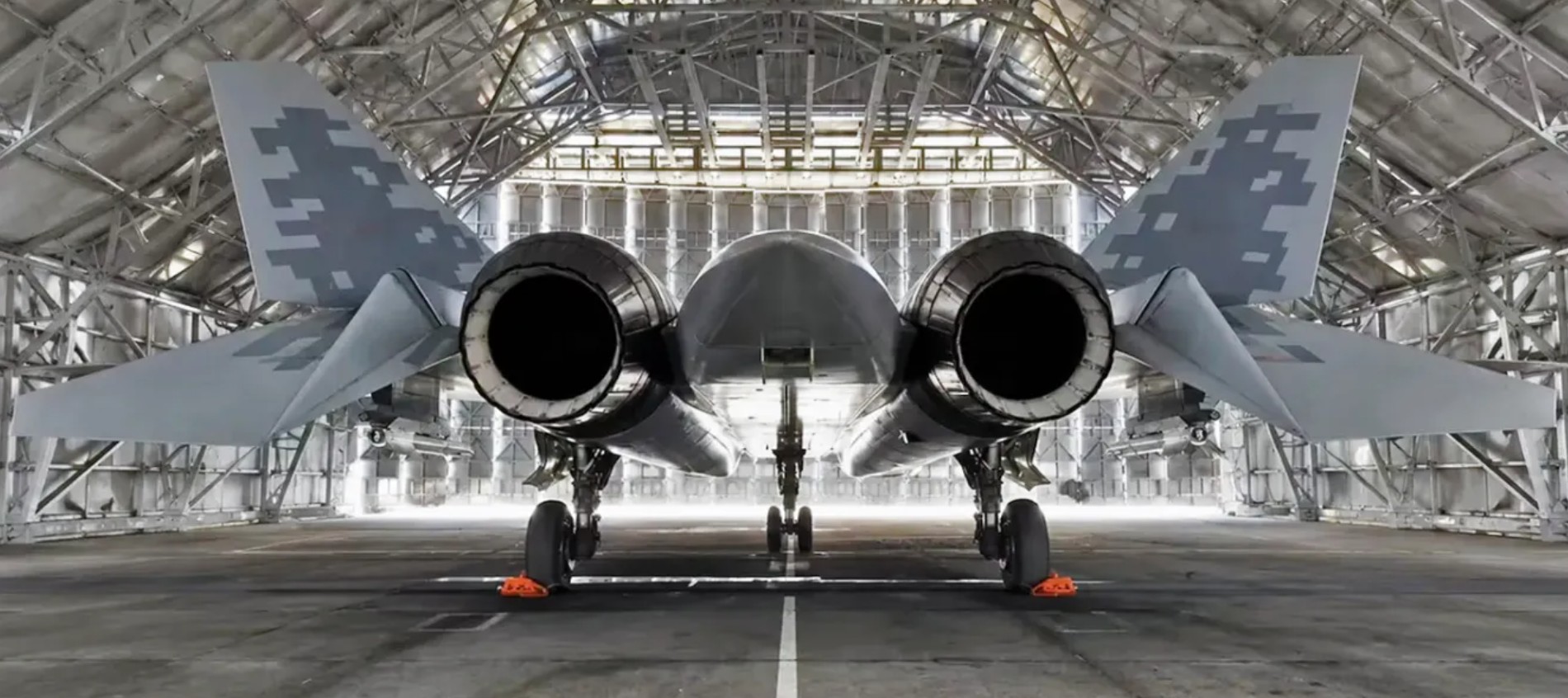
Su-57 carrying R-73 missiles externally. Credits X.

Carrying the missiles beneath the wing pylons would compromise the Su-57’s stealth; however, if the jet is deployed primarily for anti-drone operations, stealth is unnecessary. Similarly, short-range AAMs are effective only against drones.

These pictures provide conclusive evidence that Russia used the Su-57 for counter-drone operations.

Critics argue that Moscow is deliberately limiting the Su-57’s exposure to protect its export potential. Any confirmed losses to Ukrainian forces, they say, would severely damage the jet’s credibility in the international export market.

Russia is therefore using the Su-57 for low-risk counter-drone operations.

The war of attrition in Ukraine, which is already in its fifth year, the high aircraft loss ratio for both sides, and the intensity of Ukrainian swarm drone attacks have created a peculiar situation for Russia, where it is deploying its most advanced fighter, the Su-57, and perhaps the least promising, the MiG-35, mostly for low-risk counter-drone operations.

  • Sumit Ahlawat has over a decade of experience in news media. He has worked with Press Trust of India, Times Now, Zee News, Economic Times, and Microsoft News. He holds a Master’s Degree in International Media and Modern History from the University of Sheffield, UK. 
  • He can be reached at ahlawat.sumit85 (at) gmail.com

The post Su-57 and MiG-35: How Russia is Using Its Best and Worst Fighter Jets To Fight Ukraine’s Drones appeared first on EURASIAN TIMES.

  •  

F-35 Stealth Fighter: Why Pentagon is Locking Production For a Decade—and Lockheed’s $7B Counter-Bet to Make It Work

In a “landmark” agreement, the Pentagon and Lockheed Martin have agreed to a framework agreement to buy F-35 Joint Strike Fighters for the next 10 years.

Under the multi-year production and sustainment agreement, Lockheed Martin will produce 1,560 F-35 Lightning II aircraft for the US and its international customers at a rate of 156 fighters per year.

The US will buy at least 850 of these stealth fighter jets.

The agreement also covers associated initial spares, 10 years of modification kits, and a sustainment package for the global F-35 fleet.

It creates a stable, long-term procurement signal to modernize and expand America’s 5th-generation tactical aircraft. However, the agreement’s execution still depends on Congressional authorization and appropriations.

The US Congress is already considering granting the Pentagon authority to enter into multi-year procurement agreements with defense companies, specifically Lockheed Martin for the F-35 fighter and Boeing for the F-15EX Eagle.

The Pentagon also wants to buy at least 268 F-15EX fighters over the next decade.

The multi-year procurement and sustainment framework was first envisioned in the fiscal 2027 National Defense Authorization bill, released in May.

“We have fundamentally changed how we stabilize the American defense industrial base to produce at speed and scale,” said Under Secretary of War Michael P. Duffey in a statement.

“This agreement with Lockheed Martin proves it. By aligning financial incentives with actual performance, we are ensuring our warfighters are equipped with the lethal capabilities they need to fight and win.”

The Pentagon believes multi-year procurement agreements, totaling hundreds or even thousands of aircraft and valued at billions of dollars, will encourage defense companies to invest upfront in expanding production facilities.

Earlier this week, while commenting on the US Air Force’s updated fighter force structure report, under which the force envisions a 1,509 combat-coded fighter fleet by 2035, Lt. Gen. David Tabor, deputy chief of staff for plans and programs, has underlined that pushing multi-year procurement packages will provide financial stability to defense contractors and encourage them to invest in production facilities.

Notably, the US fighter force structure report is also pending before Congress, and it envisions a 60% stealth fleet by 2035.

Why India Rejected F/A-18 Super Hornets Despite Its Navy Loaded With American Military Platforms?

The 60% stealth force will include 40% F-35s and 20% F-22 Raptors and F-47s.

If the report is approved, by 2035, two out of every five combat-coded fighters in the USAF will be F-35As.

In addition, the US Navy and the US Marine Corps will also fly additional F-35B and F-35C variants.

The ten-year procurement framework with Lockheed for 1,560 F-35s over the next decade, including 850 exclusively for the US, will help the company invest in expanding and streamlining its production facilities to meet extraordinary global demand for the F-35.

To meet the demand, Lockheed will have to produce 156 F-35s annually.

Under the framework agreement with the Pentagon, Lockheed Martin has agreed to invest at least US$7 billion of its own money into projects to support the F-35 program.

“This multiyear framework strengthens the way we can plan and invest in the F-35 enterprise,” said Lockheed Martin Chairman, President and CEO Jim Taiclet.

“With the greater certainty that comes from the U.S. government’s transformative approach to F-35 production and sustainment, we can make the upfront investments needed to expand capacity, improve efficiency, and build a more resilient supply chain. That’s good for the taxpayer, good for our suppliers, and, most importantly, good for the United States and its allies.”

Lockheed Martin said in a statement that if the U.S. Congress grants multiyear authority and associated appropriations in the coming months, the F-35 Joint Program Office (JPO) and Lockheed Martin will finalize contract terms, pricing, and schedules through a formal contract award.

The statement added that the framework agreement will offer several advantages, including predictable, multi-year procurement planning, high-volume procurement efficiencies, and transparent, data-driven decision-making.

Notably, the F-35 Lightning II program relies on more than 1,400 domestic and global suppliers and contractors.

According to Lockheed Martin, the company manufactures nearly 30 to 42 percent of the jet outside the US across three continents before final assembly in Texas.

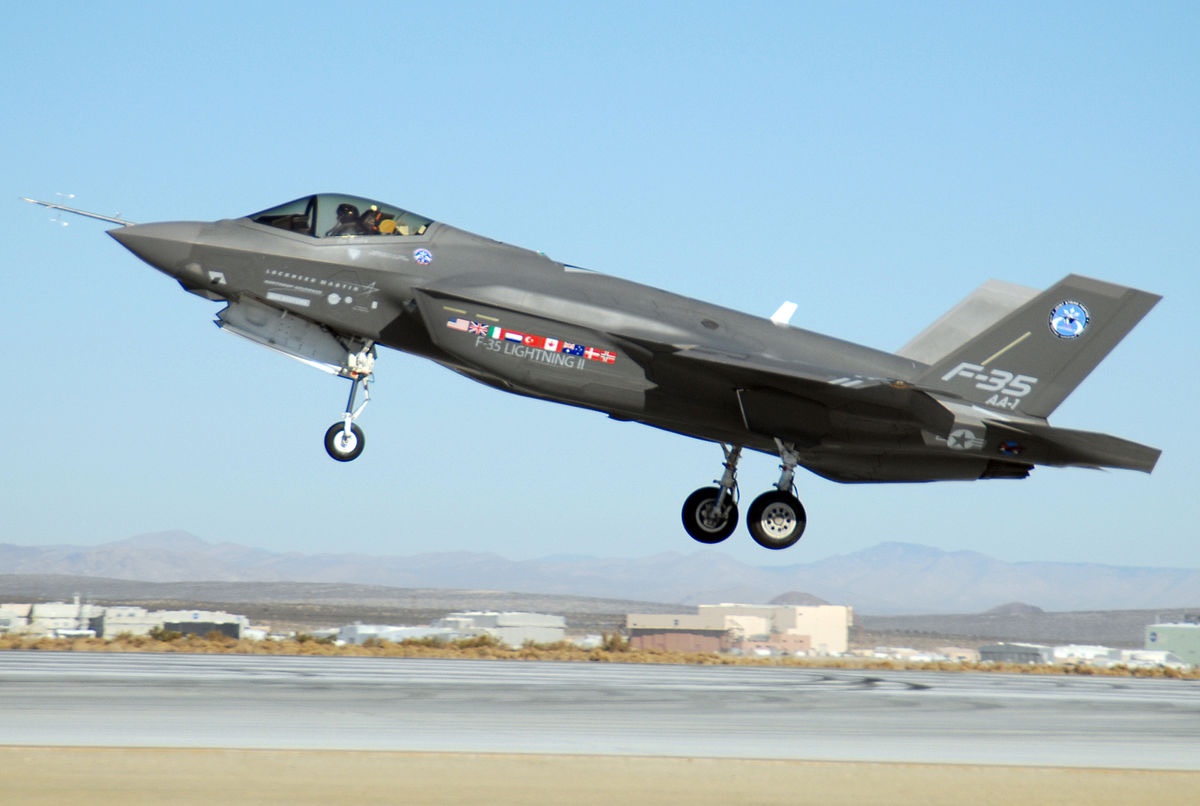
File Image: F-35

China Outbuilt the U.S. by Over 2X in Naval Tonnage in 2024–25. How Did Beijing Outpace America?

While Lockheed Martin is the primary contractor, the UK’s BAE Systems is a principal partner. BAE supplies much of the software code, the F-35’s rear fuselage, tails, the AN/ASQ-239 Barracuda electronic warfare system, the antenna, various avionics, and more.

Another British contractor, Martin Baker, is providing the ejection seats. The LiftSystem found in the F-35B variant is made by the UK’s Rolls-Royce (the only company building that type of STOVL lift fan).

Northrop Grumman is also a principal contractor, and it designs and produces critical F-35 components, including the center fuselage, AN/APG-81 AESA radar, communications subsystems such as the AN/ASQ-242 Integrated Communications, Navigation, and Identification (CNI) system, and the EO/IR Distributed Aperture System.

Leonardo and Cameri in Italy, GKN Fokker in the Netherlands, ASDAM Group in Australia, and nearly 30 companies in Canada also supply crucial parts for the F-35 fighters.

Over 1,500 firm orders for the F-35 over the next 10 years will let Lockheed Martin enter long-term contracts with these suppliers to buy raw materials and critical parts in bulk, stabilizing supply chains and increasing F-35s mission-capability rates.

It said the integrated procurement model, which pairs aircraft production with purchases of spare and modification parts, will deliver high-volume procurement discounts, drive down unit prices, and give the U.S. government the cost predictability it requires.

Meanwhile, during the October 22 earnings call, Lockheed reported third-quarter 2026 sales of US$20.7 billion, up from $18.6 billion in the third quarter of 2025.

It also reported a record backlog of US$292.0 billion, including US$52.5 billion tied to the multi-year award to produce PAC-3 Missile Segment Enhancement (MSE) interceptors.

Notably, Lockheed Martin’s market capitalization is approximately US$127 billion, so its current backlog of US$292 billion is 2.3 times its market value.

Together, the multi-year agreements for PAC-3 MSE interceptors and F-35 fighter jets will provide Lockheed with a stable source of income for years to come.

If Congress approves the F-35 multi-year procurement framework, Lockheed Martin’s backlog order book could easily cross US$350 billion.

“In the third quarter each of our four segments posted growth year-over-year, sales topped $20.7 billion and net earnings exceeded $1.8 billion, increases of 11% and 14%, respectively. We delivered $3 billion of free cash flow in the quarter, and increased our backlog to a record $292 billion, allowing us to raise our dividend for the 24th year in a row,” said Lockheed Martin Chairman, President and CEO Jim Taiclet.

File Image: F-35s.

Three Decades After Subic Bay Withdrawal, U.S. Military Returns to the Philippines With a New Model to Check China

Taiclet also reiterated the company’s desire to integrate sixth-generation fighter-jet technologies into the F-35, upgrading it into what he called a “Ferrari” F-35.

Taiclet first voiced this desire in April last year after Lockheed lost to Boeing for the USAF’s Next Generation Air Dominance (NGAD) fighter, the F-47. He claimed that the company can integrate 80% of sixth-generation NGAD technology into its fifth-generation F-35 Lightning II, which is already in production, at half the cost.

If the multi-year F-35 agreement is approved and it provides Lockheed with 1,560 firm orders and stable cash flow over the next decade, then the company can invest in integrating some of these sixth-generation technologies into the F-35.

Notably, the F-35 is already the world’s most popular stealth aircraft.

Lockheed Martin has already delivered nearly 1,300 F-35s to the US and its international customers, more than all other stealth fighters combined, including the US F-22 Raptor, China’s J-20 and J-35A, and Russia’s Su-57.

A firm order for 1,560 more F-35s would bring the total close to 3,000 fighters by 2035.

The final decision, however, rests with the US Congress.

  • Sumit Ahlawat has over a decade of experience in news media. He has worked with Press Trust of India, Times Now, Zee News, Economic Times, and Microsoft News. He holds a Master’s Degree in International Media and Modern History from The University of Sheffield, UK. 
  • He can be reached at ahlawat.sumit85 (at) gmail.com

The post F-35 Stealth Fighter: Why Pentagon is Locking Production For a Decade—and Lockheed’s $7B Counter-Bet to Make It Work appeared first on EURASIAN TIMES.

  •  

The $7 Billion Bet Inside Lockheed’s F-35 Framework: Why Pentagon Wants to Lock Production for a Decade

In a “landmark” agreement, the Pentagon and Lockheed Martin have agreed to a framework agreement to buy F-35 Joint Strike Fighters for the next 10 years.

Under the multi-year production and sustainment agreement, Lockheed Martin will produce 1,560 F-35 Lightning II aircraft for the US and its international customers at a rate of 156 fighters per year.

The US will buy at least 850 of these stealth fighter jets.

The agreement also covers associated initial spares, 10 years of modification kits, and a sustainment package for the global F-35 fleet.

It creates a stable, long-term procurement signal to modernize and expand America’s 5th-generation tactical aircraft.

However, the agreement’s execution remains subject to Congressional authorization and appropriations.

The US Congress is already considering granting the Pentagon authority to enter into multi-year procurement agreements with defense companies, specifically Lockheed Martin for the F-35 fighter and Boeing for the F-15EX Eagle.

The Pentagon also wants to buy at least 268 F-15EX fighters over the next decade.

The multi-year procurement and sustainment framework was first envisioned in the fiscal 2027 National Defense Authorization bill, released in May.

“We have fundamentally changed how we stabilize the American defense industrial base to produce at speed and scale,” said Under Secretary of War Michael P. Duffey in a statement.

“This agreement with Lockheed Martin proves it. By aligning financial incentives with actual performance, we are ensuring our warfighters are equipped with the lethal capabilities they need to fight and win.”

The Pentagon believes that multi-year procurement agreements, totaling hundreds or even thousands of aircraft and valued at billions of dollars, will encourage defense companies to make upfront investments in expanding production facilities.

Earlier this week, while commenting on the US Air Force’s updated fighter force structure report, under which the force envisions a 1,509 combat-coded fighter fleet by 2035, Lt. Gen. David Tabor, deputy chief of staff for plans and programs, has underlined that pushing multi-year procurement packages will provide financial stability to defense contractors and encourage them to invest in production facilities.

Notably, the US fighter force structure report is also pending before Congress, and it envisions a 60% stealth fleet by 2035.

The 60% stealth force will include 40% F-35s and 20% F-22 Raptors and F-47s.

If the report is approved, by 2035, two out of every five combat-coded fighters in the USAF will be F-35As.

Besides, the US Navy and the US Marine Corps will also fly additional F-35B and F-35C variants of the fighter.

The ten-year procurement framework with Lockheed for 1,560 F-35s over the next decade, including 850 exclusively for the US, will help the company invest in expanding and streamlining its production facilities to meet extraordinary global demand for the F-35.

To meet the demand, Lockheed will have to produce 156 F-35s annually.

Under the framework agreement with the Pentagon, Lockheed Martin has agreed to invest at least US$7 billion of its own money into projects to support the F-35 program.

“This multiyear framework strengthens the way we can plan and invest in the F-35 enterprise,” said Lockheed Martin Chairman, President and CEO Jim Taiclet.

“With the greater certainty that comes from the U.S. government’s transformative approach to F-35 production and sustainment, we can make the upfront investments needed to expand capacity, improve efficiency, and build a more resilient supply chain. That’s good for the taxpayer, good for our suppliers, and, most importantly, good for the United States and its allies.”

Lockheed Martin said in a statement that if the U.S. Congress grants multiyear authority and associated appropriations in the coming months, the F-35 Joint Program Office (JPO) and Lockheed Martin will finalize contract terms, pricing, and schedules through a formal contract award.

The statement added that the framework agreement will offer several advantages, including predictable, multi-year procurement planning, high-volume procurement efficiencies, and transparent, data-driven decision-making.

Notably, the F-35 Lightning II program relies on more than 1,400 domestic and global suppliers and contractors.

According to Lockheed Martin, the company manufactures nearly 30 to 42 percent of the jet outside the US across three continents before final assembly in Texas.

F-35: Image via US Embassy, New Delhi

While Lockheed Martin is the primary contractor, the UK’s BAE Systems is a principal partner. BAE supplies much of the software code, the F-35’s rear fuselage, tails, the AN/ASQ-239 Barracuda electronic warfare system, the antenna, various avionics, and more.

Another British contractor, Martin Baker, is providing the ejection seats. The LiftSystem found in the F-35B variant is made by the UK’s Rolls-Royce (the only company building that type of STOVL lift fan).

Northrop Grumman is also a principal contractor, and it designs and produces critical F-35 components, including the center fuselage, AN/APG-81 AESA radar, communications subsystems such as the AN/ASQ-242 Integrated Communications, Navigation, and Identification (CNI) system, and the EO/IR Distributed Aperture System.

Leonardo and Cameri in Italy, GKN Fokker in the Netherlands, ASDAM Group in Australia, and nearly 30 companies in Canada also supply crucial parts for the F-35 fighters.

Over 1,500 firm orders for the F-35 over the next 10 years will allow Lockheed Martin to enter into long-term contracts with these suppliers to buy raw materials and critical parts in bulk, thereby stabilizing supply chains and increasing F-35s mission-capability rates.

It said the integrated procurement model, which pairs aircraft production with purchases of spare and modification parts, will deliver high-volume procurement discounts, drive down unit prices, and give the U.S. government the cost predictability it requires.

Meanwhile, during the October 22 earnings call, Lockheed reported third-quarter 2026 sales of US$20.7 billion, up from $18.6 billion in the third quarter of 2025.

It also reported a record backlog of US$292.0 billion, including US$52.5 billion tied to the multi-year award to produce PAC-3 Missile Segment Enhancement (MSE) interceptors.

Notably, Lockheed Martin’s market capitalization is approximately US$127 billion, so its current backlog of US$292 billion is 2.3 times its market value.

Together, the multi-year agreements for PAC-3 MSE interceptors and F-35 fighter jets will provide Lockheed with a stable source of income for years to come.

If Congress approves the F-35 multi-year procurement framework, Lockheed Martin’s backlog order book could easily cross US$350 billion.

“In the third quarter each of our four segments posted growth year-over-year, sales topped $20.7 billion and net earnings exceeded $1.8 billion, increases of 11% and 14%, respectively. We delivered $3 billion of free cash flow in the quarter, and increased our backlog to a record $292 billion, allowing us to raise our dividend for the 24th year in a row,” said Lockheed Martin Chairman, President and CEO Jim Taiclet.

Taiclet also reiterated the company’s desire to integrate sixth-generation fighter-jet technologies into the F-35, upgrading it into what he called a “Ferrari” F-35.

Taiclet first voiced this desire in April last year after Lockheed lost to Boeing for the USAF’s Next Generation Air Dominance (NGAD) fighter, the F-47. He claimed that the company can integrate 80% of sixth-generation NGAD technology into its fifth-generation F-35 Lightning II, which is already in production, at half the cost.

If the multi-year F-35 agreement is approved and it provides Lockheed with 1,560 firm orders and stable cash flow over the next decade, then the company can invest in integrating some of these sixth-generation technologies into the F-35.

Notably, the F-35 is already the world’s most popular stealth aircraft.

Lockheed Martin has already delivered nearly 1,300 F-35s to the US and its international customers, more than all other stealth fighters combined, including the US F-22 Raptor, China’s J-20 and J-35A, and Russia’s Su-57.

A firm order for 1,560 more F-35s would bring the total close to 3,000 fighters by 2035.

The final decision, however, rests with the US Congress.

  • Sumit Ahlawat has over a decade of experience in news media. He has worked with Press Trust of India, Times Now, Zee News, Economic Times, and Microsoft News. He holds a Master’s Degree in International Media and Modern History from The University of Sheffield, UK. 
  • He can be reached at ahlawat.sumit85 (at) gmail.com

The post The $7 Billion Bet Inside Lockheed’s F-35 Framework: Why Pentagon Wants to Lock Production for a Decade appeared first on EURASIAN TIMES.

  •  

Northrop Wins Fresh F-35, B-21, Sentinel & Virginia-Class Work as Backlog Hits Record $110 Billion

Amid stiff competition from Silicon Valley-based, AI-focused defense companies, Northrop Grumman, part of the US defense market’s ‘Big Five,’ has posted better-than-expected sales and a record order backlog of US$ 109.6 billion.

Notably, at nearly $110 billion, the company’s order backlog is nearly 1.4 times its US$78 billion market cap and equals about two and a half years of sales.

Northrop Grumman’s record backlog suggests that traditional prime contractors in the US defense-industrial complex continue to win substantial new orders even as their leadership faces increasing pressure from AI-focused defense firms such as Palantir and Anduril.

For instance, Anduril, founded in 2017, is already worth US$ 90 billion, more than Northrop Grumman’s and General Dynamics’ market caps.

Meanwhile, Palantir, founded in 2003, is already worth nearly US$480 billion, more than any of the Big Five.

Northrop Grumman’s steady sales and record US$109.6 billion backlog should reassure investors that traditional defense primes can continue to thrive alongside the rapid growth of AI-focused defense companies.

The Virginia-based defense contractor reported third-quarter revenue of US$11.12 billion, up 7% from US$10.42 billion a year earlier.

Net income rose to US$1.12 billion from US$1.10 billion a year earlier.

However, the biggest surprise came in the company’s backlog order book. The company received US$16.4 billion in net contract awards during the third quarter (Q3) of 2026, pushing its net outstanding backlog to US$109.6 billion.

A year ago, at the end of Q3 2025, the company’s backlog stood at US$91.4 billion. Since then, it has received new contracts worth US$18.2 billion.

“In a complex world with the growing need for solutions that scale and perform, our customers continue to turn to Northrop Grumman,” Chair, Chief Executive and President Kathy Warden said in the earnings announcement.

According to company filings, the company’s third-quarter contracts totaled US$16.4 billion, which included US$4.6 billion for classified programs, US$2 billion for the Sentinel intercontinental ballistic missile program, and US$1.4 billion for Virginia-class submarines.

The company also received US$1.3 billion in awards related to the F-35 fighter jet and US$1 billion for the E-2 Hawkeye airborne early warning aircraft.

The Q3 contracts show strong demand for the company’s products in fighter jets, AWACS, missiles, submarines, and space programs.

Overall, Defense Systems accounted for the largest portion of the company’s backlog at US$36.5 billion, followed by Aeronautics Systems at US$26.8 billion and Space Systems at US$26.3 billion.

U.S. Stealth Jets — F-35, F-22 & F-47 — to Form 60% of USAF Fighter Force by 2035 Under New Plan, Service Tells Congress

Strong Demand for Northrop Grumman’s Aeronautics Systems

In Q3, Northrop Grumman reported aeronautics systems revenue of US$3.58 billion, up 14% year-on-year, and won new contracts worth over US$3 billion.

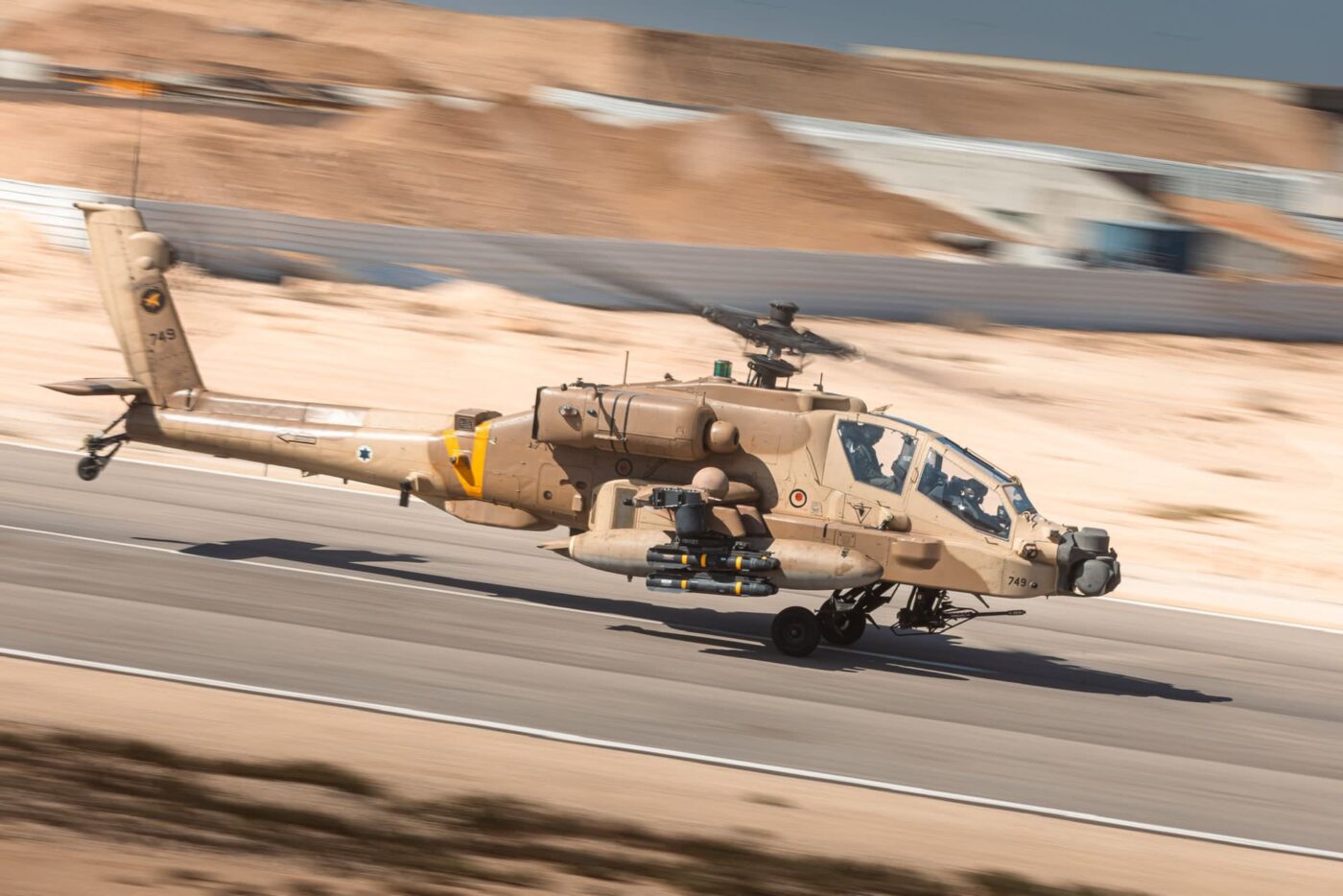
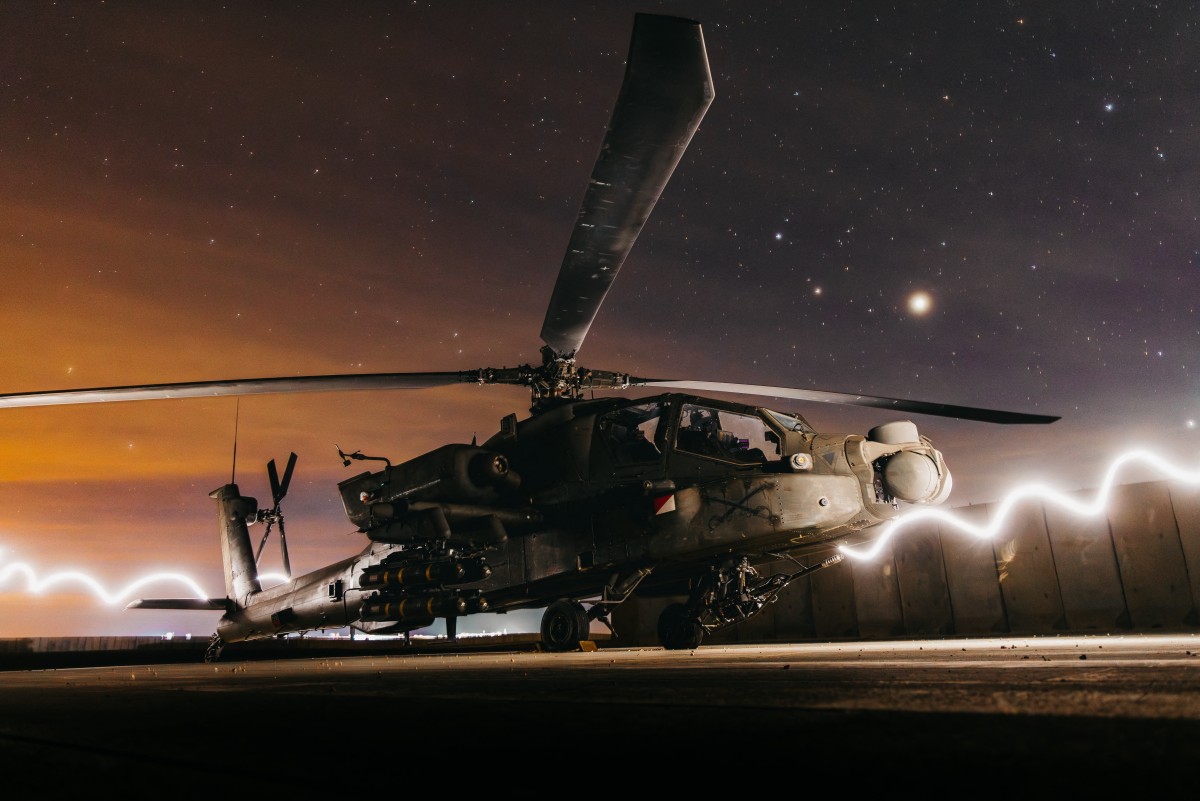
Strong aeronautics systems performance is driven by demand for the F-35 fighter jet, progress on the B-21 Raider program, maintenance work on the B-2 Spirit bomber, and work on Army helicopters such as the AH-64 Apache, CH-47 Chinook, UH-60 Black Hawk, and others.

Northrop Grumman is a principal contractor on the F-35 Lightning II program, with Lockheed Martin as the prime contractor. The company contributes roughly 25% of the aircraft and produces or supports several major structural and mission systems for all three variants – F-35A, F-35B, and F-35C.

Northrop Grumman designs and produces critical F-35 components, including the center fuselage, AN/APG-81 AESA radar, communications subsystems such as the AN/ASQ-242 Integrated Communications, Navigation, and Identification (CNI) system, and the EO/IR Distributed Aperture System.

It also leads mission systems development, pilot and maintenance training courseware, and low-observable technology support to ensure readiness and modernization across all three F-35 variants.

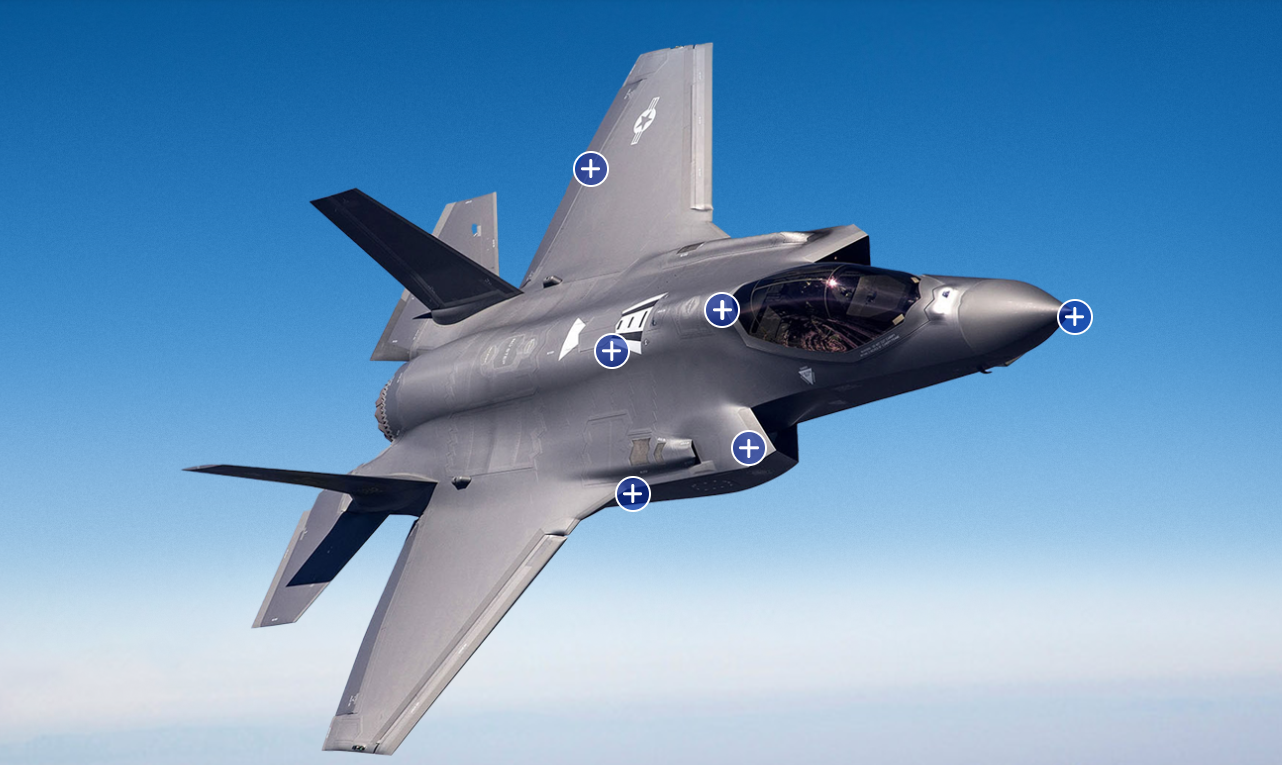
A F-35 picture highlighting parts manufactured by Northrop Grumman. Credit: Northrop Grumman.

The company also received new contracts worth US$1.3 billion for F-35 fighter jets.

It also won contracts worth US$1 billion for the E-2 Hawkeye airborne early warning aircraft.

Northrop Grumman is the prime contractor, Original Equipment Manufacturer (OEM), and sole designer, developer, and manufacturer of the E-2 Hawkeye family, including the current E-2D Advanced Hawkeye.

Northrop Grumman is also the prime contractor for both the B-2 Spirit and the B-21 Raider.

In 2024, Northrop won a US$7 billion award for the B-2 Spirit modernization and sustainment program, including programmed depot maintenance of the fleet, sustaining engineering, software maintenance, support equipment, logistics elements, and interim contractor support.

This B-2 Spirit modernization and sustainment work continues at Palmdale, California; Whiteman Air Force Base (AFB), Missouri; Tinker AFB, Oklahoma; Wright-Patterson AFB, Ohio; Edwards AFB, California; and Hill AFB, Utah, and is expected to be completed by May 2029.

In 2015, Northrop Grumman won the Long Range Strike Bomber (LRS-B) program, also known as the B-21 Raider.

However, the US Air Force has deliberately withheld detailed pricing for the program.

Earlier this year, the USAF and Northrop agreed to expand B-21 Raider production capacity by about 25% with roughly US$4.5 billion in government funding.

B-21 RAIDER

A 2021 Pentagon Cost Assessment and Program Evaluation (CAPE) study estimated that developing, procuring, and operating a fleet of 100 B-21 Raider aircraft could cost about US$203 billion over the next 30 years.

In September, Northrop Grumman also won a US$4.84 billion Army contract for CIRCM (Common Infrared Countermeasure) laser-based missile defense systems to protect Army helicopters, such as the AH-64 Apache, CH-47 Chinook, UH-60 Black Hawk, and others, from infrared-guided missiles. The program will run through 2035.

The Bombers U.S. Paid to Scrap Weakened Ukraine, Helped Russia. Why Did Kyiv Clip Its Own Wings?

Another critical program is Northrop’s role in the Sentinel missile program, a key part of the US Nuclear triad.

In the third quarter, the company won a US$2 billion contract for the Sentinel intercontinental ballistic missile program.

Northrop Grumman is the prime contractor for the LGM-35A Sentinel program, also known as the Ground Based Strategic Deterrent (GBSD).

Under the program, Northrop will design and produce a new three-stage solid-propellant ICBM with improved range, accuracy, reliability, and modularity compared with Minuteman III.

It will also construct hundreds of new or heavily modernized hardened launch silos and related facilities across multiple states, and new nuclear command-and-control networks. Sentinel will provide the US with on-alert nuclear deterrence through 2075.

Northrop Grumman is also a major supplier and Original Equipment Manufacturer (OEM) for key components on Virginia-class submarines. It won a US$1.4 billion contract in Q3 for the Virginia-class submarines.

Northrop also plays an important role in the Patriot missile defense system. It supplies the solid rocket motors, ignition safety devices, and related propulsion elements for PAC-3 MSE missiles.

Patriot interceptors are in global demand due to the two ongoing wars in Ukraine and the Middle East.

In August, the Department of War (DoW) signed framework agreements worth US$3 billion for expanding Patriot interceptor missile production.

The contract allocates nearly US$2 billion for solid rocket motors and ignition safety devices, in which Northrop will play a key role.

Northrop is also the prime contractor for the Integrated Battle Command System (IBCS), which integrates Patriot with other air- and missile-defense assets.

The company is also executing many of the USAF’s classified space-segment programs.

Many of these contracts, such as the B-21 Raider, F-35, Sentinel, and Patriot PAC-3 MSE interceptors, will run for decades, providing Northrop with a steady source of income. However, execution risk remains.

Demand for many of the company’s products, such as aircraft, missiles, and space systems, remains strong; however, investors’ key question is whether Northrop can turn its record US$109.6 billion backlog order book into improved margins and earnings.

  • Sumit Ahlawat has over a decade of experience in news media. He has worked with Press Trust of India, Times Now, Zee News, Economic Times, and Microsoft News. He holds a Master’s Degree in International Media and Modern History from The University of Sheffield, UK. 
  • He can be reached at ahlawat.sumit85 (at) gmail.com

The post Northrop Wins Fresh F-35, B-21, Sentinel & Virginia-Class Work as Backlog Hits Record $110 Billion appeared first on EURASIAN TIMES.

  •  

U.S. Stealth Jets — F-35, F-22 & F-47 — to Form 60% of USAF Fighter Force by 2035 Under New Plan, Service Tells Congress

The U.S. Air Force plans to field more than 1,500 manned, combat-coded fighter aircraft by 2035, roughly 60 percent of which will be stealth platforms.

The 60% stealth force will include 40% F-35As and 20% F-22 Raptors and F-47s. The sixth-generation Boeing F-47s are gradually expected to replace the aging Raptors.

If the plans materialize, then by 2035, every three out of five U.S. Air Force fighters will be stealth platforms, and every two out of five fighters will be F-35s.

The new plans are part of an updated fighter force structure report the USAF submitted to Congress last week, and Lt. Gen. David Tabor, deputy chief of staff for plans and programs, revealed them at a media briefing in the Pentagon on October 20.

About 40 percent of the fleet could be F-35s, Tabor said.

Another 20 percent would be a mix of F-22 Raptors and F-47s as the sixth-generation fighter replaces the Raptor, Tabor said, according to Air & Space Forces Magazine.

The USAF built 186 F-22 Raptors and plans to replace them with an equivalent number of sixth-generation F-47s.

Tabor did not provide a breakdown of the remaining 40% of the force structure; however, he said the remaining fleet would likely split evenly between F-15 Eagle variants and F-16 Fighting Falcons.

Notably, the F-35A Lightning IIs currently make up about 30 percent of the USAF fighter fleet, with the F-22 Raptors contributing another 10 percent.

The stealth platforms currently make up about 40% of the USAF fighter fleet.

The Air Force plans to increase the share of stealth platforms from 40% to 60% over the next nine years, with the F-35A share increasing from 30% to 40%, and the F-22 Raptors and F-47s contributing the remaining 20%.

He did not provide the breakdown of how many F-22s and F-47s the USAF plans to operate in 2035.

In March 2025, Boeing won the contract to design and develop the F-47 fighter under the Next Generation Air Dominance (NGAD) effort. The sixth-generation fighter is expected to enter operational service in 2029 or mid-2030, and gradually replace the F-22 Raptors.

The F-15 Eagles’ share is expected to rise from 15% to roughly 20%, while the F-16 Fighting Falcons’ share is expected to fall sharply from 45% to 20%.

F-47: Image for Representation.

By then, the USAF will phase out all A-10 Thunderbolts.

The USAF had about 162 A-10C Thunderbolt IIs at the beginning of 2026. The U.S. Congress blocked the Air Force’s request to retire them all in FY2026 and required the USAF to keep at least 103 aircraft until October.

The USAF now plans to retire them all by September 2030. Notably, the current breakdown of the USAF fighter fleet does not include the A-10C Thunderbolts: 45% F-16s, 30% F-35s, 15% F-15s, and 10% F-22s.

USAF Needs To Add Over 70 Fighters Annually For The Next Decade 

The USAF aims to increase its fighter fleet from the current 1,271 fighters (including 103 A-10C Thunderbolts) to 1,509 combat-coded aircraft by 2035.

Notably, last year’s report set a 2030 target of 1,369 combat-coded fighters.

The USAF will therefore need to add another 238 aircraft over the next nine years. When accounting for the 103 A-10C Thunderbolts set to retire by 2030, the USAF will need to add 341 fighters.

However, the USAF will need to add many more fighters, as nearly 200 F-16s, at least 60 F-15Es, and some F-22 Raptors will also retire during this time.

The USAF will therefore need to add nearly 700 fighters over the next nine years to reach its target of 1,509 manned, combat-coded fighters, while also accounting for fighters that will retire during this time.

The USAF officials have consistently maintained that the service needs to buy 72 new fighters each year to replace its older, retiring jets and modernize the fleet.

The U.S. has not reached that target yet; in 2027, the budget request proposed adding 62 new fighters, including 38 new F-35s and 24 F-15EXs.

Tabor said those purchases can “ramp over time” to hit the numbers the Air Force needs.

“The question is, can industry produce at those levels?” Tabor said. “They’ve assured us that they can, and we believe them, but we also actually need to see it manifest.”

The Continued Relevance Of Fourth-Gen Fighters

On an aside, the USAF report submitted to the U.S. Congress makes it clear that even in 2035, the force intends to have a substantial fleet of fourth-generation fighters, nearly 40 percent, split evenly between upgraded F-15EXs and newer F-16s.

Put differently, even in 2035, two out of every five USAF fighters will be non-stealth platforms, underscoring the force’s belief that these upgraded fourth-generation fighters will remain relevant over the next decade.

The USAF has already tested this doctrine of flying a mix of fourth- and fifth-generation fighters in the Iran War.

In June 2025, during Operation Midnight Hammer, the USAF employed a mixed force of fourth- and fifth-generation fighters against Iranian targets. The F-35As reportedly led the penetration of Iranian airspace, conducting SEAD/DEAD missions against air-defense systems and escorting B-2 bombers to their targets; F-22s provided air superiority, while F-15Es and F-16s also participated in the broader strike package.

An F-22 and a F-35 fly in the skies above Edwards Air Force Base: USAF

This operation provided a real-world test of using fifth-generation aircraft to suppress defenses and enable follow-on strikes by fourth-generation fighters.

The USAF followed the same strategy during Operation Epic Fury.

The USAF, therefore, continues to invest in upgraded fourth-generation platforms, such as F-15EXs.

According to the 2027 budget documents, the USAF plans to procure up to 268 new F-15EX aircraft over the next 10 years, potentially costing U.S. taxpayers over US$ 37 billion.

Meanwhile, the USAF is also considering an upgraded F-16 variant called the F-16G.

The F-16G variant differs from the Block 70 F-16 Viper, which many countries worldwide, including Taiwan, Turkey, Morocco, Bahrain, Peru, and others, have ordered.

Buoyed by the F-15EX’s success, Lockheed Martin is aggressively pushing the F-16G variant to the USAF.

Tabor clarified that while the USAF is considering the F-16G variant, it does not have to decide “immediately.”

“We’re not in a position where that decision has to be made immediately.”

He said the decision likely won’t be made in the 2028 budgeting process, but perhaps in the years that follow.

“There is a spectrum of capability that we might want to replace the F-16s with,” he said.

“It’s not urgent, frankly. What we don’t want to get to is a point where it is urgent, and we haven’t done the homework and decided ‘hey, this is really the right place to be.’ We do have time to churn through that and make sure that we have a good option going forward.”

One advantage to buying more F-16s is that “it’s practically a ready-made aircraft,” Tabor said.

In December 2025, Inside Defense reported that the USAF was weighing a new F-16 variant to fill capability gaps at a lower cost than the F-35.

Ordering upgraded F-16s also offers the USAF other advantages.

The U.S. already has an established F-16 production line in Greenville, South Carolina. So, ordering new F-16s wouldn’t require establishing a new production line or reviving a dormant one.

However, it remains to be seen whether the F-16G achieves the same success as the F-15EX.

Tabor stressed that pushing multi-year procurement packages, as the USAF is currently exploring for the F-35 and F-15EX, will provide financial stability to defense contractors and encourage them to invest in expanding their production facilities, which will help meet the USAF’s ambitious target of adding 72 fighters every year.

Tabor also clarified that the USAF will continue investing in crewed fighter jets, even as it adds hundreds of autonomous drone fighters, known as Collaborative Combat Aircraft (CCA), to its fleet.

The USAF aims to field 500 CCAs by 2032.

“CCA is very much a reality,” Tabor said.

“It is going to be a part of our future, and there is absolutely a world in which the incorporation of CCAs into the force will mitigate the requirement for the number of fighters. That’s not the CCA that we have right now, but it is advancing very, very rapidly. We’re confident that it will play a major role in future versions of the fighter force structure report.”

For the foreseeable future, the USAF is seeking to balance crewed fourth-, fifth-, and sixth-generation platforms with autonomous drone fighters.

  • Sumit Ahlawat has over a decade of experience in news media. He has worked with Press Trust of India, Times Now, Zee News, Economic Times, and Microsoft News. He holds a Master’s Degree in International Media and Modern History from the University of Sheffield, UK. 
  • He can be reached at ahlawat.sumit85 (at) gmail.com

The post U.S. Stealth Jets — F-35, F-22 & F-47 — to Form 60% of USAF Fighter Force by 2035 Under New Plan, Service Tells Congress appeared first on EURASIAN TIMES.

  •  

Europe “Blind in Space”: Why Only U.S. Can See Russian Missiles as Ukraine Begs For American Help?

The Ukrainian President, Volodymyr Zelenskyy, is bitterly complaining that the country cannot intercept Russian ballistic missiles because Kyiv has not been receiving advance launch warnings from its partners for over a week.

On October 19, Zelenskyy wrote on platform X: “Another Russian ballistic missile attack came in several waves overnight, and once again, there was no early warning from our partners.”

Earlier, explaining the criticality of early missile warning, Zelenskyy said on October 13, “A Russian ballistic missile attack on Kyiv. Once again, no early warning from our partners… Our systems detected these missiles only when they were already virtually on approach to Kyiv. … And this is absolutely unjust: when they are destroying our energy infrastructure, and Ukraine is not even receiving early warnings about ballistic missile launches.”

Along with Patriot missile interceptors, Zelenskyy has described ‘missile early warning’ as absolutely vital to intercept Russian ballistic and cruise missiles.

“I spoke with Marco Rubio… First, ballistic missile interceptors, which are needed to protect lives. Second, early warning of Russian ballistic missile attacks, which is vital,” he said on October 20.

Zelenskyy has so far avoided blaming the US for failure to provide advance early warning of missiles; rather, he is blaming Ukrainian “partners” as a whole for this failure.

However, Ukraine’s European partners have absolutely no role in this, as they themselves are entirely dependent on the US for the space-based early missile-warning system.

Along with Starlink and Starshield, a space-based early missile-warning system is another critical area where Europe currently has no comparable system, and if Washington withdraws its support to Kyiv, Europe will be simply incapable of filling the gap.

While Europe has invested in ground-based radars and Airborne Warning and Control System (AWACS) aircraft, long-range radars that can track a missile in its mid- and terminal phases, Europe has no space-based early missile-warning system that can detect a missile launch in its boost phase and provide warnings to ground and airborne radars for tracking and intercepting the missiles.

This is critical for successfully intercepting ballistic and cruise missiles, as it gives ground-based and airborne radars more time to track and intercept them.

Space-Based Missile Early Warning System: How Does It Work?

The US has a series of space-based satellites fitted with sensors that can detect, track, and identify missile launches from anywhere in the world, a Cold-War-era system that has been perfected and upgraded over the decades.

The US currently has six Lockheed Martin and Northrop Grumman satellites in geostationary orbit (GEO) around Earth to provide 24/7 global strategic missile-warning capability.

Launched between 2011 and 2022, these satellites are known as SBIRS (Space-Based Infrared System). The satellites carry high-power infrared sensors that monitor Earth’s surface nonstop to detect heat signatures from missile launches.

Credit: US Space Force.

SBIRS satellites can scan large swaths of territory to detect missile activity and also focus on areas of interest for smaller-scale activities, including tactical ballistic missile launches.

These sensors are independently tasked, meaning the satellite can scan a wide territory while also focusing on a specific area of concern.

For instance, currently, the US SBIRS satellites would naturally scan Iran and Russia more than any other region.

During the missile’s initial boost phase, its exhaust plume releases intense heat. These intense heat signatures stand out in infrared sensors against the cooler Earth background.

Overhead Persistent Infrared (OPIR) sensors on satellites spot this signature within seconds of ignition, even through clouds or darkness, and provide ground-based stations and radars with the first warning of a missile launch.

These powerful sensors can detect any missile launch within seconds, from small, unsophisticated missiles such as the Iraqi Scuds, which were detected, tracked, and intercepted during the First Gulf War, to Russia’s large intercontinental ballistic missiles (ICBMs), and everything in between, such as the short-range ballistic missiles (SRBMs), submarine-launched ballistic missiles (SLBMs), and even cruise and hypersonic missiles.

These sensors can not only detect missile launches, but also identify them. Missile rocket motors produce exhaust gases at different temperatures based on their fuel, chemical composition, and other design features, helping these sensors identify distinct missile signatures.

However, infrared sensors on the six GEO satellites are not the US’s only space-based assets that help it detect missile launches in their boost phases.

The space segment of the SBIRS program also includes Highly Elliptical Orbit (HEO) sensors riding on host satellites and legacy Defense Support Program (DSP) satellites.

HEO sensors improve coverage of high-latitude and polar regions that are harder to monitor effectively from GEO alone.

The DSP program was launched in the 1970s, after the experimental Missile Defense Alarm System (MIDAS) of the 1960s proved the concept of detecting ICBM launches from space.

Under the DSP program, the US launched over 20 satellites with spinning IR sensors into geosynchronous orbit between 1970 and 2007.

DSP provided continuous strategic warning during the Cold War. It was this system that detected Iraqi Scud missiles during the First Gulf War.

The SBIRS program succeeded DSP, with significantly higher sensitivity, dual sensors, multi-spectral capability, better resolution, and improved ground processing.

Together, GEO, HEO, and DSP satellites provide 24/7 monitoring of Earth’s surface and can detect a missile launch from anywhere on Earth.

These satellites downlink data to ground stations (Air Force Space Command in Colorado), which analyze it to characterize the event, launch time and location, missile type, possible trajectory, and likely point of impact, then relay the information to NORAD, US Strategic Command, combatant commands, and missile defense systems.

This early missile warning is crucial to successful missile interception because it gives ground-based and airborne radars more time to track and intercept the missile, and Europe currently lacks a corresponding system.

In this screenshot made on October 12, 2022, French president Emmanuel Macron (R) speaks during an interview by French journalist and TV host Caroline Roux (L) in front of pictures of Ukrainian President Volodymyr Zelensky and Russian President Vladimir Putin as part of a new show entitled “L’événement”, in Saint-Denis, northern Paris, on October 12, 2022. Emmanuel Macron is to give an hour-long interview on France 2, devoted to international crises and France’s place in the world: on the evening of October 12, 2022, he will take part in an unprecedented exercise, dictated by the escalation of the war in Ukraine and its heavy repercussions on Europe and the French. (Photo by Ludovic MARIN / various sources / AFP)

Why Europe Is Dependent On The US For Early Missile Warning

SBIRS collects data and processes it at ground stations, then shares it with European allies through NATO’s Shared Early Warning System (SEWS).

This data is complemented by Europe’s ground-based and airborne radars, as well as by the US AN/FPS-132 Upgraded Early Warning Radar at RAF Fylingdales in the UK.

However, Europe has no comparable space-based early missile-warning system. It has some space situational awareness, but nothing equivalent to a persistent space-based infrared constellation for detecting missile launches.

Therefore, not only Ukraine but Europe itself depends on the US for early warning of ballistic or hypersonic missile threats.

Europe therefore cannot fill the gap if Washington decides not to share these missile-launch warnings with Kyiv.

Europe has pursued this capability for years; however, its programs have not progressed beyond the technology-demonstrator stage.

For instance, in 2009, France launched SPIRALE, a spaceborne early warning demonstrator program. It successfully collected infrared data on missile launches; however, the program ended in 2011 and France is yet to launch a full-scale follow-up program.

European countries also launched another technology demonstrator program, TWISTER, in 2019.

In October last year, France and Germany signed a Letter of Intent (LoI) to launch two complementary, interoperable geostationary (GEO) satellites with infrared sensors, under the JEWEL (Joint Early Warning for a European Lookout) program.

However, Europe currently has no sovereign, operational, space-based missile early-warning system.

Europe recognizes its vulnerability and has demonstrated its technological capability, but building a space-based, IR-sensor-equipped satellite constellation that provides nonstop coverage of every part of Earth’s surface would take at least a decade more.

Meanwhile, both Ukraine and Europe remain critically dependent on the US.

  • Sumit Ahlawat has over a decade of experience in news media. He has worked with Press Trust of India, Times Now, Zee News, Economic Times, and Microsoft News. He holds a Master’s Degree in International Media and Modern History from The University of Sheffield, UK. 
  • He can be reached at ahlawat.sumit85 (at) gmail.com

The post Europe “Blind in Space”: Why Only U.S. Can See Russian Missiles as Ukraine Begs For American Help? appeared first on EURASIAN TIMES.

  •  

Russia’s Nuclear Blackjack Returns: Tupolev Says 80% of Systems Renewed on Tu-160M Bomber

Russia’s Tupolev Tu-160M, the world’s largest, heaviest, and fastest strategic bomber, has become even more formidable.

Its manufacturer, United Aircraft Corporation (UAC), says it has modernized roughly 80% of the aircraft’s onboard systems and equipment, keeping the nuclear-capable bomber relevant amid rapidly evolving battlefield demands.

The upgraded onboard systems include modern avionics, navigation technology, weapons-control systems, and a complete renewal of onboard radio-electronic equipment and upgrades to the aircraft-control system.

The company has also changed the strategic bomber’s propulsion system, introducing the new NK-32-02 engines, also described as the NK-32 Series 02.

The upgrades provide Russia with a modernized long-range strike platform, capable of delivering nuclear warheads as well as conventional military missions.

The Tu-160M ‘White Swan’ is also a key part of Russia’s nuclear triad, alongside land-based and submarine-launched missiles.

However, although the company has modernized and upgraded 80% of the onboard systems and equipment, it has not tinkered with the aircraft’s airframe, which remains unchanged. This means that the Tu-160M, known by its NATO reporting name Blackjack, retains the distinctive variable-sweep wings and overall appearance of the original Tu-160.

The Tu-160M’s variable-sweep wings can adjust from about 20° fully forward to 65° fully swept back for high-speed flight.

Tu-160
The upgraded Tu-160M at the Kazan Aviation Plant. Source: TASS/Russian Ministry of Defense

The forward-swept wings maximize lift and wingspan, allowing the massive aircraft to take off with its heavy payload, while the fully swept wings sharply reduce drag, enabling the Tu-160M to reach about Mach 2.05 and making it the fastest operational strategic bomber.

In short, variable-sweep wings let a large strategic bomber combine heavy-lift capability, long endurance, and genuine supersonic performance, a combination fixed-wing designs struggle to match.

More importantly, Russia has rebuilt the engineering and industrial capacity to produce a strategic, nuclear-capable, long-range bomber nearly three decades after Moscow lost this crucial capability.

Tupolev head Yuri Abrosimov discussed the Tu-160M’s modernization efforts in an article published by the United Aircraft Corporation (UAC), which includes Tupolev.

Highlighting the Tu-160’s unique characteristics, Abrosimov said, “The Tu-160 strategic missile carrier is still the best supersonic aircraft in the world, surpassing in its characteristics a similar aircraft complex available in the United States.”

“46 official world records have been set on the Tu-160, including the record for flight duration and range. The resumption of mass production of the legendary ‘White Swan’ is the development of unique competencies and industrial and technological sovereignty of our country,” he added.

Abrosimov underlined that, in addition to modernizing 80% of the onboard systems, including a new powerplant, the company has refurbished several assembly lines from scratch using modern technologies.

The company has also upgraded workshop equipment and its flight-test facilities, and introduced electron-beam welding and vacuum annealing systems for titanium assemblies.

Tupolev has also rebuilt supply lines for producing the upgraded Tu-160M bombers.

“One of the main difficulties we are facing is the restoration of production cooperation, starting with suppliers of materials and semi-finished products. We have actually rebuilt the technological chains for a number of units, taking into account the use of modern technologies,” Abrosimov said.

He also highlighted the difficulties Russia faced in restarting Tu-160M production, and the use of modern digital technologies in the process.

“The implementation of the Tu-160 reproduction program required the creation of a fundamentally new unified digital environment for working on the project. The design bureaus of Sukhoi, Mikoyan, and Ilyushin participated in the preparation of digital documentation.”

He further said that the upgradation of onboard systems was done in a way that newer systems can be integrated without requiring modernization of the entire complex.

“When upgrading on-board systems, modern approaches have been applied, which make it possible, if necessary, to further increase the functionality of the systems and the aircraft as a whole, as an aviation complex, without significant improvements.”

“The approaches used in building the architecture of the avionics complex will allow installing new systems to replace those that become obsolete over time, without modernizing the entire complex. This makes it possible to constantly provide a response to the emerging demands of time,” he said.

Notably, Russia has localized the upgrade of the Tu-160M bomber and refurbished its assembly units while under crippling Western sanctions that specifically target the Russian military-industrial and aerospace complex, including the UAC, Rostec, Tupolev, and the Kazan manufacturing plant that produces the Tu-160.

Earlier, the UAC disclosed that it digitized the complete design documentation for the Tu-160M and modernized over 40% of equipment at the Kazan Aviation Plant to restart bomber production.

In the 1980s, during the Soviet era, the Kazan Aircraft Production Plant produced the Tu-160.

Production continued until 1992, when Russian President Boris Yeltsin ordered an end to serial production after the Soviet Union dissolved in December 1991.

During this time, the Kazan plant built nearly 35 Tu-160M bombers.

Notably, when the Soviet Union disintegrated in 1991, 19 of the nearly 35 Tu-160M bombers were in Ukraine, which announced their integration into the Ukrainian Air Force.

However, in the following years, Ukraine transferred eight Tu-160 bombers to Russia under a debt-relief program and dismantled the remaining bombers under a Cooperative Threat Reduction (CTR) program with the US.

Russia decided to restart Tu-160M production in 2016 and again chose the same plant, the Kazan Aviation Plant (KAZ), for the job.

TU-160M
File Image: TU-160M

The facility required substantial modernization, including new equipment, rebuilding workshops, and restoring titanium-welding capability.

However, sanctions slowed the program. The first round of sanctions was imposed on Russia in 2014, following the occupation of Crimea.

Following Russia’s full-scale invasion of Ukraine in 2022, much stronger sanctions were imposed on Russia, especially on its military-industrial complex.

In June 2024, UAC announced it had completed modernization at three workshops for producing new Tu-160 bombers. Overall, from 2016 to 2024, Russia modernized about 10 production facilities for the strategic bomber.

Despite crippling sanctions, Russia restarted production of the Tu-160M bomber and even achieved 80% modernization of its onboard systems, no small feat.

However, the 80% figure comes from internal company claims and has not been independently verified.

Russia has signed a contract to produce 10 Tu-160M bombers.

The first newly built Tu-160M2 made its maiden flight in Kazan on January 12, 2022, becoming the first new Tu-160 built since 1992.

However, the program has missed repeated deadlines.

Russia was supposed to receive four Tu-160M bombers by 2023: two newly built Tu-160M2 and two upgraded Tu-160Ms.

The deadline was then extended first to 2024, and then to 2025.

By the end of 2025, Russia had received only two Tu-160M strategic bombers. It remains unclear whether the two are new or upgraded.

Still, restarting Tu-160 production, digitizing its engineering design documentation, and upgrading 80% of its onboard systems, including a new engine, despite crippling Western sanctions, remain major achievements for Russian military aviation.

The Tu-160M is not only a nuclear delivery platform but also a strategic conventional military platform, and it has been used in both the Syrian War and the Ukraine War.

It remains the largest combat aircraft in the world; it could carry 45,000 kg of ordnance across its two internal bays, or up to twelve nuclear-armed cruise missiles, and fly 14,000 km without refueling. Its supersonic speed of 2,300 km/h and variable-sweep wings made it a standout in aviation history.

Russia is slowly restarting production and upgrading its Tu-160M bomber, while the US and China are already working on next-generation strategic bombers, the B-21 Raider and H-20.

The Northrop Grumman B-21 stealth bomber remains on track to enter operational service in 2027, and China’s Xi’an H-20 is also in production, though its current status is unknown.

While the Tu-160 is unmatched in payload capacity and can exceed Mach 2, it isn’t stealthy, unlike the B-2 Spirit or the under-development B-21 Raider, which can penetrate contested airspace.

  • Sumit Ahlawat has over a decade of experience in news media. He has worked with Press Trust of India, Times Now, Zee News, Economic Times, and Microsoft News. He holds a Master’s Degree in International Media and Modern History from The University of Sheffield, UK. 
  • He can be reached at ahlawat.sumit85 (at) gmail.com

The post Russia’s Nuclear Blackjack Returns: Tupolev Says 80% of Systems Renewed on Tu-160M Bomber appeared first on EURASIAN TIMES.

  •  

The Bombers U.S. Paid to Scrap Weakened Ukraine, Helped Russia. Why Did Kyiv Clip Its Own Wings?

As Ukraine battles near-daily Russian bombardment, Kyiv must be rueing the fateful decisions made by its leadership in the 1990s, which agreed to voluntarily degrade its military and nuclear capabilities.

Ironically, it was none other than the US and Russia that encouraged Kyiv to transfer/destroy its nuclear bombs, and other critical military assets like ballistic and surface-to-air missiles, and strategic bombers.

As fate would have it, some of the same nuclear-capable bombers that Kyiv transferred to Russia are believed to have been used by Moscow to attack Ukraine.

As the US pressures Ukraine to accept a ceasefire on Russia’s terms, including crippling limits on Ukrainian military size and power, Kyiv would think a million times before any commitment, which could degrade its military.

Ukraine’s Inheritance From The Soviet Union

On December 8, 1991, Boris Yeltsin – President of the Russian Federation in the Soviet Union, Leonid Kravchuk – President of Ukraine, and Stanislav Shushkevich – Chairman of the Supreme Soviet of Belarus, met at a hunting lodge in Belarus and signed an agreement declaring that the Soviet Union “as a subject of international law and a geopolitical reality” had ceased to exist and created the Commonwealth of Independent States (CIS) in its place.

Nearly two weeks later, on December 25, the Kremlin lowered the Soviet Sickle and Hammer flag for the last time, and the Soviet Union became history, fragmenting into 15 new independent states.

At that time, the Soviet Union (USSR) was one of the world’s two superpowers.

It had the world’s largest arsenal of nuclear bombs, thousands of nuclear delivery platforms, including launchers and strategic bombers, and Intercontinental Ballistic Missiles (ICBMs).

The 15 independent states did not divide these military assets orderly, and the country hosting the nuclear warheads and delivery platforms often became their de facto owner.

Ukraine, the second-most populous and economically powerful republic in the Soviet Union, inherited approximately 1900 strategic nuclear warheads, between 2,650 and 4,200 Soviet tactical nuclear weapons, 176 ICBMs (130 SS-19 and 46 SS-24) and associated launchers, nearly 600 nuclear-capable KH-55 cruise missiles, and approximately 102 strategic bombers: 23 Tu-95MS, 19 Tu-160, and more than 60 Tu-22M3.

This large nuclear arsenal would have made Ukraine the world’s third-largest nuclear power, after Russia and the US. Worryingly, Ukraine inherited not only nuclear warheads, but also delivery platforms, such as nuclear-capable missiles, launchers, and nuclear-capable strategic bombers.

The situation was a non-proliferation nightmare for the world, and the US and Russia, the long-time Cold War adversaries, soon found a common cause to come together and take away these new countries’ nuclear assets, in the process robbing them of their deterrence against external aggression.

However, the disarmament process forced Ukraine to transfer not only its nuclear assets but also its conventional military platforms, such as ICBMs, cruise missiles, and strategic bombers, assets that could have been crucial for Kyiv in defending its territory from Russian aggression.

On December 5, 1994, leaders of the US, the UK, and the Russian Federation met in Budapest, Hungary, and signed the Budapest Memorandum, under which the three countries gave security assurances to Ukraine in return for its accession to the Treaty on the Nonproliferation of Nuclear Weapons (NPT) as a non-nuclear-weapons state.

Bill Clinton, Boris Yeltsin, and Leonid Kravchuk after the joint statement in Moscow, 1994. Image Credits clintonlibrary.gov

Under the agreement, Ukraine agreed to transfer its nuclear warheads to Russia.

Further, under the 1992 Lisbon Protocol to the Strategic Arms Reduction Treaty (START) and the US-funded Cooperative Threat Reduction (CTR) program (1993), Ukraine committed to dismantling all strategic nuclear delivery systems by December 5, 2001. This deadline was later extended to 2006.

The Degradation of the Ukrainian Air Force

Ever since the war in Ukraine started in February 2022, Russia has routinely used its strategic bombers to launch missiles at Ukraine.

In 1991, Ukraine inherited approximately 102 strategic bombers: 25 Tu-95MS, 19 Tu-160, and more than 60 Tu-22M3.

According to the Eurasian security think tank Jamestown Foundation, when the Soviet Union collapsed, Ukraine hosted two of its most important strategic air bases.

At Uzin, 70 kilometers south of Kyiv, the Soviets stationed 25 Tu-95MS turboprop nuclear missile carriers. At Pryluky, 130 kilometers east of the capital, the Soviet Union stationed its only operational unit of 19 new, supersonic Tu-160 Blackjack bombers.

In February 1992, the unit at Uzin declared allegiance to Ukraine. In May 1992, just one week after Russia announced it was forming its own national armed forces, Ukraine announced it was taking command of all long-range aviation units on its territory. This included the Tu-160 base at Pryluky.

TU-160M
File Image: TU-160M

The Tu-160s were particularly lethal. It was designed to match the American B-1B bomber, but was significantly larger and faster.

It remains the largest combat aircraft in the world; it could carry 45,000 kg of ordnance across its two internal bays, or up to twelve nuclear-armed cruise missiles, and fly 14,000 km without refueling. Its supersonic speed of 2,300 km/h and variable-sweep wings made it a standout in aviation history.

However, under the START-1 treaty and CTR agreement, Ukraine agreed to dismantle all of these strategic bombers.

Thus began the consensual elimination of Ukraine’s strategic aviation.

Under the Nunn-Lugar Cooperative Threat Reduction program, the United States funded the destruction of some strategic bombers and missiles, including the extraction of valuable metals.

The last Ukrainian Tu-22M3 getting destroyed, January 27, 2006. (Source: Ukrainian Museum of Heavy Bomber Aviation)

However, some bombers were not destroyed.

At the time, the newly independent Ukraine was struggling with debt. For decades, as part of the Soviet Union, Ukraine got access to heavily subsidized fuel and gas. When the Soviet Union dissolved abruptly in 1991, Moscow suddenly cut off this subsidized gas.

Struggling with mounting debt, Ukraine agreed to transfer eight Tu-160 and three Tu-95MS bombers to Moscow in exchange for US$285 million in debt relief. This decision remains controversial, as the estimated value of a single Tu-160 was between US$250 and US$300 million.

Between 1999 and 2000, Kyiv transferred Tu-95s and Tu-160s as partial payments on natural-gas debts, along with 575 Kh-55 missiles.

This fateful decision not only degraded Ukraine’s air power and deterrence, but it also multiplied Russia’s air power, creating a military imbalance that Moscow is exploiting in the current war.

The last Ukrainian Tu-22M3 being destroyed, January 27, 2006. (Source: Ukrainian Museum of Heavy Bomber Aviation)

In 2024, an investigation by Ukrainian investigative news site Skhemy found that six of the eight Tu-160 bombers transferred to Russia were still active in military operations against Ukraine.

The remaining strategic bombers in Ukraine were dismantled, often with technical and financial assistance from the US.

In March 2007, the US State Department reported that Ukraine had dismantled 57 Tu-22 bombers, 27 Tu-95s, six Tu-142s, 11 Tu-160s, for bomber trainers, 346 Kh-22 ASMs, and 483 Kh-ALCMs (air-launched cruise missiles).

While these platforms were nuclear-capable and theoretically could have been used to launch nukes, they also had conventional military capabilities.

By dismantling and transferring these military assets to Russia, Kyiv delivered a double blow to itself – degrading its own capabilities while multiplying its adversary’s.

In the annals of military history, few decisions have proven as fateful – or as irreversible.

  • Sumit Ahlawat has over a decade of experience in news media. He has worked with Press Trust of India, Times Now, Zee News, Economic Times, and Microsoft News. He holds a Master’s Degree in International Media and Modern History from The University of Sheffield, UK. 
  • He can be reached at ahlawat.sumit85 (at) gmail.com

The post The Bombers U.S. Paid to Scrap Weakened Ukraine, Helped Russia. Why Did Kyiv Clip Its Own Wings? appeared first on EURASIAN TIMES.

  •  

New U.S. Missile Aims To Outmaneuver Russia’s Maneuvering Missiles: Here’s Patriot’s Evolution to PAC-3 Edge

Amid global demand for Patriot interceptors, Lockheed Martin recently unveiled its most advanced interceptor, the PAC-3 Edge, which could offer improved performance against ballistic missiles and hypersonic threats.

EurAsian Times takes a deep dive into the evolution of Patriot Air Defense Systems, but before that, let’s start with the news.

PAC-3 EDGE

The new interceptor missile builds on the combat-proven PAC-3 MSE technology, which has proven its worth in multiple conflicts, including Ukraine and the Middle East.

The new PAC-3 Edge incorporates a new seeker, an upgraded control system, and a more advanced solid rocket motor developed with Northrop Grumman.

These new features will improve the missile interceptor’s range, altitude, speed, and precision.

It is part of the US Army’s Future Interceptor program, which is currently in competition.

“The Army’s decision to progress Lockheed Martin into the next stage of development affirms its confidence in Lockheed Martin’s proven Integrated Air and Missile Defense (IAMD) experience and the company’s ability to deliver an advanced, layered defense,” the company said in a statement.

Lockheed Martin will advance development and begin testing PAC-3 Edge in 2027 to prepare for rapid deployment by 2031, it added.

Patriot PAC-3 ACE. Credits Lockheed Martin.

“Lockheed Martin’s PAC-3 Edge interceptor leverages the combat-proven PAC-3 MSE, delivering even greater maneuverability, power and velocity to ensure the Army’s layered defensive architecture remains the most advanced in the world,” said Tim Cahill, Lockheed Martin Missiles and Fire Control president.

PAC-3 interceptors come in three variants: the lower-cost PAC-3 ACE, legacy PAC-3 CRI, and the prestigious PAC-3 MSE.

The company said it invested US$250 million in the Strigo Product Center to fund new, industry-leading seeker technology that increases precision and maneuverability against evolving threats.

PAC-3 Edge is designed to be integrated with existing and future Integrated Air and Missile Defense (IAMD) capabilities, including the Integrated Battle Command System (IBCS), the M903 launcher, containerized launchers, and HIMARS Flex.

The US Army’s selection of Lockheed Martin’s PAC-3 Edge program highlights the service’s efforts to improve its existing layered air defense systems to address evolving aerial threats.

While the company did not provide technical details of the new seeker technology, analysts believe that it could be a dual-mode or multimode configuration that integrates multiple sensors to better detect, track, and intercept evolving threats such as hypersonic cruise missiles, hypersonic glide vehicles (HGVs), maneuvering ballistic missiles, and the ability to distinguish real threats from decoys.

In the war in Ukraine, while the PAC-3 MSE interceptors have proved highly effective in countering ballistic missiles and aircraft, they have struggled to intercept Russia’s hypersonic missiles, such as Oreshnik, Zircon, and Kinzhal.

Furthermore, while PAC-3 MSE interceptors were highly effective against ballistic threats in the initial phase, their performance gradually declined as Russia adapted its missiles to perform increasingly complex terminal maneuvers.

According to a Financial Times report based on Ukrainian Air Force data compiled by the Center for Information Resilience, Patriot interceptors’ ballistic interception rate reached 37% in August 2025 but fell to a low of 6% in September.

This decline was linked to Russian tactical improvements, such as missiles changing trajectory and missiles capable of performing terminal maneuvers.

However, despite this drop in interception rates, Patriot batteries remain Ukraine’s only defense against Russian ballistic threats.

The new PAC-3 Edge interceptors will provide increased protection against such maneuvering missile threats and hypersonic missiles.

Notably, the unveiling of new PAC-3 Edge interceptors comes as global demand for PAC-3 interceptors has increased, and Lockheed Martin is establishing new facilities to raise its interceptor production rate.

Lockheed produced nearly 620 interceptors in 2025; however, it plans to triple Patriot interceptor production to 2000 by 2030.

Patriot PAC-3 interceptors are also included in the Pentagon’s Munitions Acceleration Council (MAC), which is targeting 12 legacy and two “emerging” munitions as part of its ambitious plan to ramp up production and ink a series of agreements with key vendors to ensure cost efficiency while maintaining production stability, according to fiscal 2027 budget documents.

Rising global demand for PAC-3 interceptors, requests from multiple countries to establish Patriot interceptor production facilities, and the unveiling of the advanced PAC-3 Edge interceptors underscore the Patriot air and missile defense system’s continued relevance more than four decades after it first became operational.

The Evolution Of Patriot Air Defense Systems

The MIM-104 Patriot is the US Army’s primary air-and-missile defense system.

Although it was initially designed as an anti-aircraft system, newer Patriot variants can engage ballistic and cruise missiles, drones, loitering munitions, and aircraft.

A typical Patriot battery includes a radar set, an engagement control station, power generation, other support vehicles, and several launch stations.

The US Army Missile Command first developed the Patriot concept in 1961 as the Army Air Defense System for the 1970s (AADS-70s).

The AD system was meant to be mobile and replace the static HAWK and Nike Hercules emplacements.

In 1964, the US Army renamed it Surface-to-Air Missile, Development (SAM-D).

Three years later, in 1967, the Department of Defense selected Raytheon as the prime contractor. SAM-D’s first flight test took place in November 1969.

Although Raytheon won the prime SAM-D contract in 1967, it did not build everything alone. Martin Marietta joined early as a major subcontractor to handle missile assembly, launcher vehicles, and canister production.

In 1974, the Department of Defense reoriented the SAM-D program to support a Track-Via-Missile (TVM) guidance system and a simplified concept of operations.

Patriot-Missile
Patriot AD System.

The revised and re-engineered system was renamed PATRIOT (Phased Array Tracking Radar to Intercept On Target) in 1976.

Patriot entered full-rate production in September 1980, and the US Army activated its first Patriot missile battalion in May 1982.

The Army added significant upgrades to the Patriot system throughout the 1980s and 1990s.

In 1985, the Department of Defense (DoD) started efforts to add a ballistic missile defense capability to the system.

In 1986, the Army upgraded Patriot to the Patriot Advanced Capability-1 (PAC-1) standard, which included software changes that allowed it to engage tactical ballistic missiles.

The PAC-1 was deployed by 1988.

Soon, the US Army began efforts towards the PAC-2 standard, which involved modifications to the missile fuze, warhead, and guidance to engage more capable ballistic missiles like the Soviet OTR-23.

The Patriot system first saw combat service during the 1991 Gulf War, defending critical assets in Saudi Arabia, Kuwait, and Israel. The PAC-2 missiles were used to intercept Iraq’s Scud missiles.

Martin Marietta built the PAC-2 interceptors.

In 1993, the US Army added remote launch capability to Patriot systems, allowing missile launchers to be deployed over 10 km from the radar. This also more than tripled the system’s defended area.

Later, the US Army also developed the PAC-3 standard.

The most significant PAC-3 upgrade was a new interceptor with hit-to-kill technology, developed by Lockheed, which defeats targets by striking them directly rather than using a blast-fragmentation warhead.

Lockheed achieved the first-ever hit-to-kill intercept in 1984 with the Homing Overlay Experiment, using impact force alone to destroy a mock warhead outside Earth’s atmosphere. Further development and testing produced today’s PAC-3 missile, which won a 1993 competition to become the US government’s first hit-to-kill interceptor.

In 1995, Lockheed Corp merged with Martin Marietta to create one of the US’s largest defense aerospace companies, combining two key components of the Patriot program: Martin Marietta’s established Patriot infrastructure and production facilities and Lockheed’s cutting-edge hit-to-kill technology.

This newly formed mega-contractor rolled out the PAC-3 missile interceptor.

The PAC-3 standard itself included three distinct configurations, Configuration 1, 2, and 3, which improved its radar, seeker, and range.

The US declared PAC-3 Configuration 3 combat-ready in August 2002.

PAC-3 Configuration 3 had its first combat test in 2003 during Operation Iraqi Freedom.

In 2010, the US Army successfully tested an upgraded PAC-3 interceptor, the PAC-3 Missile Segment Enhancement (MSE).

According to CSIS’s Missile Threat, the PAC-3 MSE features an enlarged motor and other enhancements to nearly double the PAC-3’s range. It achieved initial operational capability in late 2016.

Patriot-missie
Patriot is a long-range, high-altitude, all-weather missile tested more than 2,500 times with U.S. Army oversight. (Image: Raytheon)

The PAC-3 also features an active Ka-band radar seeker for endgame guidance. With its lighter weight and newer propulsion system, the PAC-3 can reportedly defend an area seven times greater than the PAC-2.

Patriot currently employs a single AN/MPQ-53, AN/MPQ-65, or AN/MPQ-65A radar set to detect and engage targets. Unlike other air defense systems, the Patriot radar combines surveillance, tracking, and engagement in a single unit.

The AN/MPQ-53 was the world’s first phased-array air defense radar and was employed with legacy PAC-2 systems.

The AN/MPQ-65A is the most advanced Patriot radar; however, the US Army is currently transitioning to use the new Lower Tier Air and Missile Defense Sensor (LTAMDS) radar, which offers 360-degree coverage and significantly greater detection range.

Furthermore, while the AN/MPQ-53 and -65-series radars are passively scanned arrays, LTAMDS is an active electronically scanned array (AESA) that uses gallium nitride (GaN) power amplifiers, offering greater jamming resistance, beam agility, and power efficiency than previous systems.

360-degree coverage is essential to counter Russia’s evolving “wolf-pack tactics,” which involve launching dozens of aerial targets simultaneously, including drones and ballistic and cruise missiles, that approach from different directions and strike at once.

Only the US and Poland are procuring the LTAMDS at present. In September, the US awarded a US$1.7 billion contract to produce nine radars for the two users.

Currently, 18 countries operate the Patriot AD system. These include the Netherlands, Germany, Japan, Israel, Saudi Arabia, Kuwait, Taiwan, Greece, Spain, South Korea, the UAE, Ukraine, Qatar, Romania, Sweden, Poland, and Bahrain.

In 2023, the US allowed countries to transfer Patriot batteries to Ukraine, where they have repeatedly intercepted Russian ballistic and hypersonic missiles.

For instance, on May 16, 2023, the Ukrainian Air Force claimed it used Patriot to intercept a salvo of six Kinzhal missiles over Kyiv.

However, rising global demand for PAC-3 MSE interceptors and Russia’s adaptive missile technology, which involves terminal-phase maneuvers, have necessitated a two-pronged strategy: boosting PAC-3 interceptor production and developing more advanced interceptors.

The PAC-3 Edge will keep the Patriot AD system relevant amid evolving aerial threats.

  • Sumit Ahlawat has over a decade of experience in news media. He has worked with Press Trust of India, Times Now, Zee News, Economic Times, and Microsoft News. He holds a Master’s Degree in International Media and Modern History from the University of Sheffield, UK. 
  • He can be reached at ahlawat.sumit85 (at) gmail.com

The post New U.S. Missile Aims To Outmaneuver Russia’s Maneuvering Missiles: Here’s Patriot’s Evolution to PAC-3 Edge appeared first on EURASIAN TIMES.

  •  

The U.S. Defense Startup That Beat Northrop & General Dynamics: How Anduril Reached $90B Valuation in Less Than 10 Years

Founded less than a decade ago in 2017, US defense technology company Anduril has reached a roughly US$90 billion valuation in a recent employee tender offer, placing its private-market value in the same range as, or above, the public-market capitalizations of long-established defense firms such as Northrop Grumman and General Dynamics.

According to a Bloomberg report, Anduril Industries Inc. opened a tender offer allowing its employees in 16 countries to sell shares at a valuation of about US$94.80 each, with the total offer capped at about US$ 1.3 billion. The subscription period is open from October 13 to November 9.

Unlisted companies often offer employees and others a chance to cash out shares they hold through tender offers to retain talent.

Notably, in recent years, AI-focused, venture-backed startups increasingly use tender offers rather than public listings to give employees access to cash.

AI startups such as OpenAI, Anthropic, Clay, ElevenLabs, and Harvey have used employee tender offers to stay private longer while still offering cash incentives to retain talent.

Anduril’s tender offer will push the AI-focused defense company’s valuation to US$90 billion, up nearly 50 percent from its May valuation of US$60 billion.

Beneath this skyrocketing valuation lies the story of how the global defense market, and the U.S.’s famous defense-industrial complex in particular, has transformed beyond recognition in just a decade.

What Anduril’s US$90 Billion Valuation Tells Us

For generations, slow-moving, mammoth defense-industrial houses lobbied for lucrative Pentagon contracts and delivered hardware-centric defense platforms over decades-long procurement cycles.

This system created the U.S.’s distinct politico-military-industrial complex, dominated by legacy prime contractors, including the Big Five: Lockheed Martin, RTX, Boeing, General Dynamics, and Northrop Grumman.

Today, however, venture-backed startups increasingly dominate the U.S. defense market, offering software-defined autonomous weapons systems with AI integration.

Iran Hit Amazon. Russia Struck Kyiv’s Data Centers. Ukraine Hit Yandex. Can Such Attacks Trigger Article 51?

In this market, a defense product’s journey from concept to initial operational clearance (IOC) and front-line deployment takes years, sometimes even months, not decades.

For instance, the Zumwalt-class destroyers program traces back to the 1990s Surface Combatant for the 21st Century (SC-21) and DD-21 programs. Construction of the lead ship began around 2009; it was launched in 2013, commissioned in October 2016, and was finally accepted around 2020. The ships have since undergone multi-year modifications to carry hypersonic missiles.

Similarly, the B-2 Spirit program spanned two decades, from the 1970s to the 1990s; the F-35 Lightning II (Joint Strike Fighter) program also took nearly two decades, from early concept work in 1996 to Initial Operational Capability in 2015.

However, venture-backed firms such as Anduril, Shield AI, and Palantir focus on software platforms that can be updated iteratively, often paired with smaller or modular hardware, and use faster acquisition pathways.

For instance, Anduril was founded in 2017. It piloted its AI-powered Sentry surveillance towers on the U.S.-Mexico border around 2018, within a year of its founding, and later made them a program of record, deploying hundreds by the early 2020s.

Iran Hit Amazon. Russia Struck Kyiv’s Data Centers. Ukraine Hit Yandex. Can Such Attacks Trigger Article 51?

Similarly, Shield AI was founded in 2015. The company reported deploying its AI autonomy software stack, AI Hivemind, for the first time around 2018, within three years. Hivemind has since operated on dozens of platforms, including drones, F-16s in tests, helicopters, and, more recently, maritime and space systems, in GPS-denied, contested environments.

The Collaborative Combat Aircraft (CCA) programs of these defense AI startups are progressing much faster than the typical two-decade development cycle for traditional fighter aircraft.

For instance, Anduril’s YFQ-44A Fury, a jet-powered, uncrewed autonomous combat aircraft with mission-autonomy software such as Hivemind and Anduril’s own Lattice, is already in testing.

The contrast is stark. While traditional defense platforms were hardware-centric, with development cycles spanning decades, these new software-centric Autonomous platforms emphasize rapid prototyping and continuous software updates, compressing development timelines to years, and even months.

Another advantage of these software-centric defense platforms is that their upgrades also take months, not years, enabling continuous updates.

The war in Ukraine has shown that the modern battlefield is changing every few months.

For instance, FPV drones first appeared in the war in Ukraine around May 2022; by September 2022, Kyiv had introduced maritime drones.

Barracuda-100M. Credits: Anduril Industries.

In 2024, Russia countered Ukraine’s Starlink-linked drones with its Fiber-optic drones, which were immune to jamming. By the end of 2024, these drones carried air-to-air missiles such as the R-73 and R-60. Ukraine also armed its naval drones with surface-to-air missiles.

By 2025, Ukraine had developed multiple drone interceptors that reversed the cost-benefit advantage drones had over traditional interceptor missiles.

Russia responded with jet-powered drones that can fly at 500-600 km per hour and is developing others that can exceed 800 km per hour.

This continuously evolving battlefield means traditional procurement cycles spanning decades no longer suit modern warfare, where systems become outdated within months.

U.S. and China’s Nuclear Submarines Race For Dominance in the Indo-Pacific as Trump & Xi Talk

A hardware-centric approach can’t meet the demands of this evolving battlefield; therefore, the Pentagon increasingly prefers working directly with Silicon Valley-based AI defense firms.

Anduril’s US$ 90 billion valuation reflects this broader story. Anduril, however, is not the only AI defense firm cashing in on this trend.

Palantir, founded in 2003, is already worth nearly US$480 billion, more than any of the Big Five.

Palantir’s valuation is nearly seven times Northrop Grumman’s, more than five times General Dynamics’, nearly four times Lockheed Martin’s, three times Boeing’s, and nearly double RTX’s.

Similarly, Scale AI is worth US$29 billion, Shield AI around US$13 billion, and SandboxAQ and Applied Intuition around US$15 billion.

“Companies like SpaceX, Palantir, and Anduril have been tapped for multi-billion-dollar contract awards from the Pentagon for communications, targeting, unpiloted vehicles, anti-drone defenses, and hypersonic weapons. The funds from these awards will flow to the companies over time, which should put them in the top ranks of Pentagon contractors by value of awards within the next several years,” a recent report from the Costs of War project said.

What sets Palantir and Anduril apart is that while most AI defense firms have only one product in their portfolios, such as autonomous aircraft, counter-drone systems, or data fusion software, these two firms are offering a range of products.

Anduril offers AI-powered software, autonomous drones, cruise missiles, drone interceptors, Collaborative Combat Aircraft (CCA), underwater drones, undersea sensor networks, autonomous rotorcraft, surface-to-air interceptor missiles, autonomous sensor towers for land, water, and sea, radars, infrared imaging, and more.

Earlier this month, Anduril won a contract worth up to US$2.9 billion with the U.S. Navy to boost submarine production. The company is also investing US$3.7 billion to scale a new shipyard in Maryland. The new facility will build components for the Virginia-class submarines.

Anduril co-founder Palmer Luckey was also selected to lead “Project Meridian: The Future of Warfare,” a new 120-day initiative tasked with identifying the technologies and capabilities needed for future military dominance.

Anduril has also been selected to build the next generation of Army goggles, the Integrated Visual Augmentation System (IVAS), which are “intended to give soldiers everything from night-vision capability to warnings of incoming airborne threats.”

However, Anduril’s most lucrative contract could be in border security technologies. The Big Beautiful bill commits over US$6 billion for various border security technologies. However, as Eurasian Times reported earlier, the bill’s conditions mean Anduril is the only firm that qualifies for these border surveillance tenders.

Anduril has also been called the Nvidia of the US defense market.

The sky-high valuation of Palantir and Anduril will also have a knock-on effect on other Silicon Valley-based AI-defense firms.

If these new tech defense firms maintain their growth momentum for another decade or so, then we might have to redefine the ‘Big Five’ of the US defense market.

  • Sumit Ahlawat has over a decade of experience in news media. He has worked with Press Trust of India, Times Now, Zee News, Economic Times, and Microsoft News. He holds a Master’s Degree in International Media and Modern History from the University of Sheffield, UK. 
  • He can be reached at ahlawat.sumit85 (at) gmail.com

The post The U.S. Defense Startup That Beat Northrop & General Dynamics: How Anduril Reached $90B Valuation in Less Than 10 Years appeared first on EURASIAN TIMES.

  •  

Israel Reverses U.S. Apache Drawdown in Post-October 7 Policy Shift, Signs Deal For 12 AH-64E Helos

In a major policy reversal of its pre-October 7 Apache drawdown plans, Israel has signed a deal with the United States to procure 12 Boeing AH-64E Apache Guardian helicopters.

The Israeli Ministry of Defense (MoD) announced the deal on October 14, with deliveries expected in the early 2030s. Israel has not officially disclosed the deal’s value, but Israeli media reported it is expected to cost around US$ 1 billion.

Interestingly, the deal was announced nearly nine months after the US government approved the sale of up to 30 Apache helicopters to the Israeli Air Force (IAF) for an estimated USD 3.8 billion.

Israel has not disclosed if and when it will place the follow-on order for 18 more Apache attack helicopters, approved under the US government’s foreign military sale (FMS) program in February this year.

“The helicopters, scheduled for delivery at the beginning of the next decade, are of the Echo variant, the newest and most advanced model of the helicopter,” the Defense Ministry said.

According to the FMS agreement announced in February, the AH-64E will be delivered with mast-mounted Northrop Grumman AN/APG-78 Longbow fire-control radars and manned-unmanned teaming (MUM-T) receivers.

This latest version adds a dedicated maritime strike capability and nearly doubles Apache’s stand-off range by increasing the range of the Northrop Grumman AN/APG-78 mast-mounted fire-control radar from 8 to 16 km.

The Apache AH-64E can fire the Lockheed Martin AGM-114 Hellfire II air-to-surface missile, the Rafael Spike Non-Line-Of-Sight (NLOS) missile, which will extend its stand-off firing range beyond 25 km, Stinger air-to-air missiles, Hydra rockets, and can rake targets two km away with 1200 rounds of 30mm milk-bottle-sized cannon ammunition.

The AH-64E models, equipped with advanced radar, sensors, and fire-control systems, can detect, identify, and engage targets at long range, including in adverse weather and poor visibility.

According to manufacturer Boeing, they also provide aircrews with significantly improved situational awareness compared with older models.

“The procurement of the Apache helicopters is a critical step in the IDF’s force buildup, one that will strengthen its operational capabilities against a wide range of threats and contribute to the security of the State of Israel in the years to come,” Defense Minister Israel Katz said.

Notably, the agreement was announced within a week after Israel missed the deadline to sign, and the US reportedly threatened Jerusalem that it would prioritize other foreign customers if Israel did not sign immediately.

Despite changing battlefield requirements, Apache attack helicopters remain in high demand, and nearly half a dozen countries have signed deals for over 150 new-build Apache AH-64Es in the last five years, including Poland, Saudi Arabia, India, and Morocco, with Boeing in advanced talks with countries like Kuwait, Egypt, and South Korea for the sale of these helicopters.

However, many experts question the rationale behind investing billions of dollars in expensive attack helicopters in the era of drone warfare, where they’re vulnerable to cheap, mass-produced FPV drones, shoulder-fired MANPADS, or even SHORAD (Short-Range Air Defense) missiles.

Interestingly, in the years leading up to the October 7, 2023 Hamas attacks, the Israeli Air Force was itself planning to reduce its attack helicopter force, primarily AH-64 Apaches, including potentially closing one or more squadrons over rising maintenance costs.

Before the 2023 Hamas attacks, the IAF operated two Apache squadrons, the 13th “Hornet” and 190th “Magic Touch”. The 13th Hornet Squadron flies the AH-64D, and the 190th Magic Touch Squadron flies the AH-64A; both are based at Ramon Air Base in the Negev Desert.

A General Staff decision in the early 2020s called for shutting down one of the two Apache squadrons, which would have cut the attack-helicopter fleet by more than half.

The force cited aging platforms, with some IAF Apaches flying for over 35 years, high maintenance costs, and a broader doctrinal shift toward unmanned aerial platforms and drones.

However, following the Hamas attacks, the IAF not only reversed its decision to shut down one of the two Apache Squadrons, but also decided to expand its attack-helicopter fleet.

So, why did Israel reverse its policy on attack helicopters following the 2023 Hamas attacks?

apache
Image by the IAF of an Apache, this time with all four Hellfires sporting yellow bands

October 2023 Hamas Attacks & Apaches

The October 2023 Hamas terror attacks were one of the biggest security failures in Israeli history.

These security lapses and the failure to respond promptly prompted deep introspection and major defense policy reviews in Israel.

One of the major lessons for Israel was that Apache attack helicopters remain highly relevant and are often the most viable platform for responding to certain security contingencies.

In January 2024, Israeli media JNS reported that in light of the current and future threats to Israel and the lessons learned from the current war in Gaza, the Israeli Air Force is expected to grow dramatically and devise a new plan to procure four squadrons of advanced fighter jets, two squadrons of combat helicopters, and a refueling aircraft.

It also plans to procure two squadrons of advanced Apache helicopter gunships, it said.

“The delay in responding to Hamas’s attack in the initial hours of the war and the frequent use of close ground support during the fighting made it clear that a larger fleet of combat helicopters was needed. Therefore, it was decided to immediately initiate proceedings for the purchase of one Apache squadron, and subsequently also a second squadron,” it said.

Notably, since then, Israel has already ordered six Boeing KC-46A Pegasus tankers for US$ 2.4 billion and 25 F-15IAs for US$ 5.2 billion. Now, Israel has ordered 12 Apache AH-64E attack helicopters.

In 2025, Israeli news media platform YnetNews reported that the IAF has issued a new order, called “Thunder,” which details steps to be taken to deal with another large-scale infiltration attempt from Gaza.

“As part of the changes, minimum readiness levels for surprise infiltration scenarios have increased 2.5-fold, including attack helicopters, transport helicopters for moving forces, drones, and fighter jets,” it said.

In this US Army photo taken from an undisclosed location on December 19, 2025, a US Army AH-64 Apache Attack Helicopter prepares to support Operation Hawkeye Strike in the US Central Command area of responsibility. US forces struck more than 70 Islamic State group targets in Syria on Friday in what President Donald Trump described as “very serious retaliation” for an attack that killed three Americans last weekend. (Photo by US AIR FORCE / AFP) /

The report noted the usefulness of attack helicopters in providing close air support to ground forces and in countering surprise, large-scale infiltration attempts.

Israeli business daily Calcalist reported that Apache AH-64E combat helicopters are intended to increase firepower and improve the Air Force’s response time to surprise attacks.

“October 7 sharpened our understanding that in many combat scenarios, attack helicopters still hold a distinct advantage over Remotely Piloted Aircraft (RPAs),” a former senior Air Force official told Calcalist.

“There is a huge advantage in having a battalion commander on the ground able to speak directly with a pilot hovering over the combat zone to coordinate precise, high-intensity strikes, capabilities an RPA simply cannot match.”

Apache attack helicopters also proved their worth in the war in Gaza following the Hamas attack.

Israeli defense officials commended Apache’s performance in the October 7 Hamas attack and the war in Gaza, saying the line-of-sight advantage offered by the helicopters was essential for identifying attackers, striking swiftly, assisting ground forces, and thwarting early-morning abduction attempts.

Eitan Ben Eliyahu, a retired Maj. Gen. and former Commander of the Israeli Air Force said: “This is a lesson from the war in Gaza. After it appeared that unmanned aerial vehicles (UAVs) were pushing attack helicopters out, making them seem obsolete on the battlefield, the lesson learned during [the war] was different.” The last two years of war have shown that the Apaches “remain a vital necessity on the battlefield, particularly in urban warfare and commando operations.”

A report in The Jerusalem Post noted that senior Israeli defense officials said limited helicopter numbers, combined with the need to cycle aircraft through refueling and rearming, strained operations during prolonged, high-tempo fighting.

They said the experience reinforced the need for longer range, heavier payload, improved survivability, and better networking with forces on the ground.

Notably, newer AH-64E models support heavier fuel and weapons loads, improved durability, and a reduced acoustic signature, which can make the aircraft harder to detect by sound.

Additionally, the ability to control multiple drones from the helicopter offers pilots more options for reconnaissance and targeting while staying in the fight.

Commenting on the continued relevance of Apache combat helicopters in the era of drone warfare, Indian Air Force veteran Air Marshal Anil Chopra (retd) in a previous EurAsian Times article explained, “The main reason attack helicopters will not disappear is that they fill a niche that very few platforms can fill. They are the only 350 KMPH missile carriers that can hide behind trees, pop up, and literally shoot and scoot.”

“Apache helicopters are still the most survivable, efficient, and formidable flying anti-tank platforms available to militaries. They also have significant roles as anti-UAV and anti-attack helicopters,” Air Marshal Chopra added.

The October 2023 Hamas attacks, ironically, gave a new lease of life to Apache attack helicopters in the Israeli Air Force.

  • Sumit Ahlawat has over a decade of experience in news media. He has worked with Press Trust of India, Times Now, Zee News, Economic Times, and Microsoft News. He holds a Master’s Degree in International Media and Modern History from the University of Sheffield, UK. 
  • He can be reached at ahlawat.sumit85 (at) gmail.com

The post Israel Reverses U.S. Apache Drawdown in Post-October 7 Policy Shift, Signs Deal For 12 AH-64E Helos appeared first on EURASIAN TIMES.

  •  

As Trump Weighs Joining War on Houthis, A Throwback To Yemen Bombing That Shook U.S. Navy! 

Barely weeks after rejecting Saudi Arabia’s request to join the air campaign against the Houthi rebels in Yemen, US President Donald Trump is rethinking his decision and has suggested that he may join the war against the Iran-backed Houthis.

The latest Houthi strikes on Saudi targets have revived a long-running American dilemma in Yemen — one that stretches back to the October 2000 bombing of the US Navy warship, which killed 17 U.S. sailors.

At least 25 people have been killed in Houthi drone and missile strikes on Saudi Arabia’s airports in recent weeks.

Separately, Houthis have occupied key port cities on Yemen’s Red Sea coast, threatening to choke the Bab El-Mandeb Strait, another key oil shipping route in the Middle East.

The rising Houthi attacks on Saudi Arabia, a key US ally in the Middle East, the threat of choking another global oil-supply route ahead of the US midterm elections, and the death of an American citizen have created a dilemma for President Trump on whether to open a new front in the Middle East.

Following the strike on Riyadh airport, Trump suggested that the US might join the Saudi war against the Houthis. “We may. We’re gonna look at it … We’ll make a decision. We move very quickly,” Trump replied on October 12 when asked whether Washington is considering joining the Saudi War against the Houthis.

Notably, last month Trump rejected the Saudi Crown Prince Mohammed bin Salman’s request to join the Kingdom’s war against the Houthis.

However, the decision to open a new front against the Houthis will not be an easy one, as Trump realizes that the war in Yemen could become another quagmire for the US when it is already tied down in the Iran War since February this year.

Operation Decisive Storm to Operation Rough Rider

Trump launched Operation Rough Rider against the Houthis in March 2025, barely two months after taking the oath in January last year. The U.S. launched a major air and naval campaign after the Houthis resumed Red Sea attacks following the breakdown of a Gaza ceasefire.

Over the course of the next three months, the US struck over 1000 targets in Yemen, including radar systems, air defenses, missile and drone launch sites, manufacturing facilities, and some leadership targets.

However, the US abruptly ended the campaign in May, after agreeing to an Oman-brokered ceasefire. Houthis agreed to stop attacking U.S. vessels; the US halted strikes.

Trump later described the deal as Houthis “capitulating” under pressure; however, analysts disagreed as the ceasefire agreement did not cover Israel, the country that participated with Washington in bombing Houthi targets.

A New York Times investigation later revealed that Trump agreed to the ceasefire as the costs of the war exceeded $1 billion in munitions alone.

The US also lost three F/A-18 Super Hornet fighter jets and more than 15 MQ-9 Reaper drones in the campaign; however, it did not substantially weaken the Houthi position in Yemen.

However, the US involvement with Yemen goes much further back.

The USS Cole Bombing in Yemen

The US’s two-decade-long ‘War on Terror’ began after the 9/11 al-Qaeda attacks in 2001.

However, that was not the first time that Osama bin Laden-led terrorist group had attacked Americans or U.S. interests.

Just one year earlier, on October 12, 2000, al-Qaeda carried out a suicide boat attack on the USS Cole, a US Navy guided-missile destroyer, while it was refueling in the port of Aden, Yemen.

The blast killed 17 American sailors and wounded nearly 40 others. It also tore a roughly 40-foot-wide hole in the ship’s hull near the waterline.

The crew’s damage-control efforts saved the vessel.

A picture of USS Cole after the bombing in October 2000. Credits US Government.

The US destroyer, en route to the Persian Gulf, was making a prearranged fuel stop at the port of Aden, Yemen, when the attack occurred.

Before al-Qaeda used civilian airliners to strike the World Trade Center and the Pentagon, it used a small inflatable boat as a suicide bomb to strike the US Navy destroyer.

In fact, the USS Cole bombing was al-Qaeda’s second attempt to target a US Navy vessel near a Yemeni port.

The investigation revealed that the USS Cole bombing followed an unsuccessful attempt on January 3, 2000, to bomb another US Navy ship, the USS The Sullivans.

In this earlier incident, the terrorist boat sank before the explosives could be detonated; however, the boat and the explosives were salvaged. The Navy refitted the boat, tested the explosives, and reused them in the USS Cole attack.

The extensive FBI investigation ultimately determined that members of the al Qaeda terrorist network planned and carried out the bombing.

By the end of 2000, Yemeni authorities had arrested several suspects, including Jamal Muhammad Ahmad Al-Badawi and Fahad Muhammad Ahmad Al-Quso, two of the alleged masterminds of the USS The Sullivans and the USS Cole plots.

Al-Badawi and Al-Quso, known al Qaeda operatives who trained in al Qaeda camps in Afghanistan during the 1990s, were later killed in separate U.S. airstrikes.

However, the US failed to anticipate that such suicide attacks could be replicated on a much grander scale by using aircraft to attack US buildings.

It also failed to infiltrate al-Qaeda ranks to uncover plans for further attacks on the US.

Less than a year after the USS Cole bombing, al-Qaeda struck again, this time on US soil, executing the deadliest terror attack inside the US in history.

Image Credits: Gulf International Forum.

The Cole attack was part of al-Qaeda’s escalating campaign against the US after the 1998 East Africa embassy bombings.

It demonstrated al-Qaeda’s ability to strike a major U.S. military target overseas and served as a powerful propaganda victory.

The 9/11 Commission Report noted that the USS Cole attack “galvanized al-Qaeda’s recruitment efforts.”

Bin Laden ordered a propaganda video featuring a reenactment of the blast, training-camp footage, and calls to jihad.

The 9/11 Commission Report also noted that the planning for both the USS Cole attack and the 9/11 attacks took place during al-Qaeda’s summit in Kuala Lumpur in January 2000.

In retrospect, it’s clear that the USS Cole bombing was al-Qaeda’s warning to the US that more such attacks are coming; however, Washington failed to read the warning.

Yemen, in fact, was a major base for al-Qaeda before the rise of the Ansar Allah movement (precursor to the Houthis) in the early 2000s.

Osama bin Laden’s family also came from Yemen’s Hadhramaut region, and he saw the country as strategically important because of its weak central authority, remote tribal areas, and geography.

Al-Qaeda in Yemen was also responsible for the 1992 Aden hotel bombings targeting hotels used by US Marines en route to Somalia.

Aden hotel bombings were one of the first al-Qaeda terrorist attacks against the US.

In the 1990s and early 2000s, it was al-Qaeda in Yemen, and now it’s the Houthis; Yemen has been serving as a base for anti-US activities in the Middle East for over three decades now.

  • Sumit Ahlawat has over a decade of experience in news media. He has worked with Press Trust of India, Times Now, Zee News, Economic Times, and Microsoft News. He holds a Master’s Degree in International Media and Modern History from the University of Sheffield, UK. 
  • He can be reached at ahlawat.sumit85 (at) gmail.com

The post As Trump Weighs Joining War on Houthis, A Throwback To Yemen Bombing That Shook U.S. Navy!  appeared first on EURASIAN TIMES.

  •  

U.S. F-16 ‘Viper’ Jets Create New Problems For Taiwan — Aircraft Arrive, But Trained Fighter Pilots Are Quitting

After years of delays and missed timelines, Taiwan recently received its first two F-16V (Viper) fighter jets from the US. Despite the arrival of two cutting-edge jets, Taipei’s problems may have just begun.

The two jets are part of a US$8 billion deal for 66 F-16Vs approved in 2019 during US President Donald Trump’s first term.

Taiwan was originally scheduled to receive the first new F-16V Block 70 fighter jets in 2023, but severe production and software-related delays pushed delivery back nearly three years.

Lockheed is expected to deliver all 66 F-16V Block 70 jets by 2028; however, Taiwan is still negotiating with authorities to finish the deliveries by the end of next year.

Taiwan has already upgraded 140 of its F-16A/B Block 20 fighter jets to the advanced F-16V (Viper) standard under the US$4.5 billion modernization initiative, the Peace Phoenix Rising program, completed in December 2023.

When Lockheed Martin delivers the 66 new jets by 2028, the Taiwanese Air Force will have more than 200 F-16 Viper fighter jets, making it the largest Viper-standard fleet in the Indo-Pacific region.

The Challenge

However, this large F-16 Viper fleet will help Taiwan deter China only if the country has experienced, trained pilots to fly them, which seems like a problem right now, as the country is struggling to find new fighter pilots and retain experienced ones.

To tackle fighter pilot shortages, Taiwan’s defense ministry now plans to allow military pilots to serve until age 58.

Under the plan, pilots could serve until they turn 58, up from about 48 for lieutenant colonels and 52 for colonels, extending their current service limits of 26 and 30 years, respectively.

Effectively, lieutenant colonels will get a 10-year extension, and colonels will get a six-year extension.

After 0-for-8 Tailhook Failures, F-35C Completes Landmark Arrested Landing Aboard USS John F. Kennedy

Taiwan believes a longer service period will attract new talent, help retain experienced fighter pilots, and address chronic pilot shortages in the air force.

The Taiwanese Air Force would also create 72 additional posts for highly qualified lieutenant colonel and colonel pilots with at least 14 years of service, allowing them to keep their rank and focus on flying rather than command or administrative duties.

These 72 additional posts would be outside the regular personnel establishment, meaning they would not take positions from other officers or have to assume command roles.

“Their job would simply be to fly,” Koo said.

They would also help train and mentor younger pilots, he added.

These changes – allowing fighter pilots to serve longer, creating additional posts so that they can focus exclusively on flying, and reducing their administrative and command duties – are meant to retain fighter pilots in the Air Force when many of them are taking voluntary premature retirement to pursue more lucrative and less stressful careers in civilian airlines.

File Image: F-16V

The Executive Yuan in Taipei is currently considering the defense ministry’s proposals.

Defense Minister Wellington Koo Li-hsiung said earlier this week that the arrangement was designed to keep experienced pilots in uniform when many faced a choice between remaining in the military and pursuing longer, potentially more lucrative careers with commercial airlines, the Hong Kong-based South China Morning Post reported.

Notably, civilian airline pilots can fly until age 65, giving Air Force fighter pilots a strong incentive to switch while they’re still young.

As mentioned earlier, before the changes, lieutenant colonels in Taiwan could fly fighter jets until age 48 and colonels until age 52, meaning they could fly 13 to 17 years longer in commercial airlines.

Europe Is Rearming — and U.S. Wall Street is Writing the Checks, Including GE’s Nearly $12 Billion Deal

Extending their service term until age 58 will narrow this gap considerably.

“If they can serve until 58, the gap with civilian airline pilots, who can fly until 65, will not be that large,” Koo told lawmakers in the parliament.

The plan would still require annual health checks and other regular reviews, the minister said. Officers who failed the tests could no longer continue flying.

He said 57 air force pilots had retired so far this year, broadly in line with previous years but fewer than last year. All had completed the minimum required service period.

Defense Minister Koo also underlined that the post-pandemic expansion in commercial airlines has created a lucrative market for pilots, which is making it difficult for the Air Force to retain its fighter pilots.

As a result, many fighter pilots apply for voluntary premature retirement once they reach the minimum service age (20 years), well before the maximum service period for Air Force pilots: 26 years for lieutenant colonels and 30 years for colonels.

The defense ministry proposals also highlight how air forces worldwide place a higher premium on retaining experienced fighter pilots than on recruiting and training new ones.

Recruiting and training new pilots is expensive, time-consuming, and requires lots of effort and resources.

The defense ministry proposals also highlight that air forces worldwide place a higher premium on retaining experienced fighter pilots than on recruiting and training new ones.

These proposals to retain experienced fighter pilots come even as Taiwan has met its recent targets for recruiting new pilots.

The ministry said pilot recruitment reached 96.2 percent of its target in 2024, 112 percent in 2025, and 98.6 percent in 2026.

It also reported that the air force currently has an 87.8 percent personnel fill rate.

Experienced aviators, however, possess accumulated knowledge of aircraft systems, combat tactics, and operational procedures that newly trained pilots cannot easily replicate.

Retaining experienced fighter pilots is even more pressing, as Taiwan will receive over 60 new F-16V fighter jets in the next two years.

Notably, the Block 70 F-16V is an upgraded variant of the F-16 jets the Republic of China (another name for Taiwan) Air Force (RoCAF) has flown for nearly 30 years.

Taiwan first ordered 150 F-16 jets in the 1990s and received the first Block 20 fighters in April 1997.

It still has nearly 140 of these older F-16 jets, now upgraded to the Viper standard.

Nearly 200 U.S. Bradley Fighting Vehicles Lost in Ukraine War — GDLS Displays Wolf XM30 Scale Model as Army Tests Successors

As a result, many of Taiwan’s fighter pilots already have years of experience flying these jets. This experience could be invaluable as the country starts integrating new F-16 Viper jets into its air force.

Taiwan plans to assign at least 100 fighter pilots to its fleet of 66 new F-16 Viper jets. The ministry informed that the air force had increased pilot positions and training in preparation for the new aircraft.

The first two of the 66 F-16V Block 70 fighters landed at Chihhang Air Base on October 2.

Koo said 63 of the 66 aircraft had entered production, including six that had reached the flight-test stage.

Another factor putting pressure on the RoCAF is almost daily violations of Taiwanese airspace by China’s People’s Liberation Army Air Force (PLAAF).

For instance, Taiwan’s Ministry of National Defense (MND) reported 181 violations of Taiwan’s ADIZ in September alone. Responding to these airspace violations is taking a toll on the RoCAF’s staffing ratio.

These near-daily PLAAF violations mean the RoCAF must keep aircraft and pilots ready at all times.

Asked about pilot fatigue from near-daily PLAAF airspace violations, Air Force Chief of Staff Lieutenant General Lee Ching-jan said the air force had moved away from scrambling fighters to shadow PLA aircraft one-for-one.

Top USAF General Reveals NATO Plan to Fight Russia — But it is Designed for Containment, Not Decisive Defeat

Instead, Taiwan was using a combination of fighters already on patrol, naval vessels, and land-based missile systems to monitor and respond to PLA activity, reducing strain on both pilots and aircraft, he added.

It remains to be seen whether Taiwan’s government will accept the proposals and what impact they would have on retaining experienced pilots in the air force.

  • Sumit Ahlawat has over a decade of experience in news media. He has worked with Press Trust of India, Times Now, Zee News, Economic Times, and Microsoft News. He holds a Master’s Degree in International Media and Modern History from the University of Sheffield, UK. 
  • He can be reached at ahlawat.sumit85 (at) gmail.com

The post U.S. F-16 ‘Viper’ Jets Create New Problems For Taiwan — Aircraft Arrive, But Trained Fighter Pilots Are Quitting appeared first on EURASIAN TIMES.

  •  

Prelude to Saudi-Houthi War: When 9-Nation Coalition Led by Saudi Arabia Bombed Yemen With U.S. Support

The Houthis (Ansar Allah) attacked Saudi Arabia’s King Khalid International Airport in Riyadh on October 10, killing at least 13 people and injuring over 300, the deadliest attack on the kingdom in more than a decade, forcing authorities to suspend operations at the airport.

This was not an isolated incident.

Since the fighting resumed between Saudi Arabia and the Iran-backed group in July this year, Houthis have attacked at least five Saudi airports, including King Abdullah bin Abdulaziz International Airport in Jizan, Abha International Airport, Najran Airport, King Khalid International Airport in Riyadh, and King Fahd International Airport in Dammam.

So far, at least 20 people have been killed in these attacks, and hundreds more have been injured, apart from damage to runways, terminals, and aircraft.

Just the King Khalid International Airport in Riyadh has been attacked three times this week. The two previous attacks on King Khalid Airport this week killed ⁠four and caused heavy damage to a Saudi commercial plane parked on the tarmac.

The Houthis, in fact, have declared the whole of Saudi airspace as “a zone of military operations,” saying airlines should avoid flying in the country.

Saudi Arabia operates one of the Middle East’s most extensive, multi-layered air-defense networks. Its upper tier includes US-supplied THAAD (Terminal High Altitude Area Defense) alongside Patriot batteries, South Korea’s Cheongung-II AD system, and improved HAWK launchers.

It also fields French Crotale SAMs, Avenger systems with Stinger missiles, anti-aircraft guns, and Silent Hunter laser systems supplied by China.

The Houthis are also enforcing a naval blockade of Saudi Arabia by choking the Bab-el-Mandeb strait in the Red Sea and have also targeted the country’s oil refineries and East-West oil pipeline.

In fact, in the ‘fog of war,’ it is easy to miss the context that the Houthi-Saudi war did not begin with these strikes on Saudi airports; nor did it start in July when a 2022 ceasefire between the two sides broke over Saudi air strikes on Sana’a airport.

The two sides have been fighting for nearly two decades.

Saudi-Houthi Conflict

The Houthis are a Zaydi Shiite politico-religious movement from northern Yemen’s Saada region, originating in the 1990s as a revivalist group opposing corruption in central government, their economic and social marginalization, and increasing Saudi-backed Wahhabi influence in Yemen, including in traditionally Zaydi areas.

Saudi Arabia’s longest land border with Yemen stretches roughly 1,200 km, much of it still porous. Consequently, expanding Iranian influence through the Houthi rebels carries security implications Riyadh cannot afford to overlook.

The Houthis drone and missile capabilities, and the strategic importance of the Red Sea and Bab al-Mandeb routes for Saudi oil exports, add more risks for Riyadh.

Due to these factors, Riyadh has a vested interest in both containing rising Iranian influence in Yemen and weakening the Houthis’ military capabilities, while at the same time, preventing the economic collapse of Yemen.

If Yemen collapses, the crisis will inevitably spill into its northern neighbor – Saudi Arabia. There are already over 2 million Yemeni migrants in the country, and an economic collapse can further push millions of Yemeni citizens into the country.

Riyadh regularly provides grants to the Yemeni government to prevent its collapse and has already provided US$12.6 billion in the last 14 years. After investing so much money, Riyadh clearly tries to control who leads the country and its policies.

However, Saudi involvement in Yemen was never limited to just financial aid.

Riyadh first got militarily involved in Yemen 17 years ago, in 2009.

Between 2004 and 2010, the Yemeni government and the Houthis were engaged in constant hostilities. This warfare often spilled into Saudi Arabia’s southern parts as well.

After Houthi attacks on Saudi border posts in November 2009, which killed border guards, Saudi Arabia launched airstrikes on Houthi positions with F-15 and Tornado fighter jets, and even conducted limited ground operations.

Notably, this was the kingdom’s first unilateral military operation in decades.

Fighting continued in 2010, and there were substantial Saudi casualties, with more than 130 Saudi soldiers dead by some estimates.

Riyadh and the Houthis reached a ceasefire in 2010, which stopped the fighting. Meanwhile, the Houthis continued to gain ground in Yemen. By the end of 2014, the Houthis had occupied the very strategic Sanaa and Aden airports.

In March 2015, Saudi Arabia returned to Yemen with Operation Decisive Storm. This time, Riyadh was not alone. It cobbled together a coalition of eight countries, including the UAE, Bahrain, Kuwait, Qatar, Jordan, Egypt, Morocco, and Sudan. The US also provided logistics and intelligence support.

Saudi F-15s
File Image: Two F-15SA Advanced Eagles escorted two US B-52 Stratofortress bombers while crossing
Saudi Arabia’s airspace on Dec. 10. 2020. (via Twitter)

When Saudi Arabia Bombed Yemeni Airports

The campaign began with massive airstrikes targeting air defenses, airports/air bases, missile sites, and Houthi positions. Riyadh also imposed a naval blockade of Yemen.

The coalition particularly targeted Yemeni airports, airbases, air defense missiles, and civilian and military aircraft. The aim was to neutralize any aerial capability that the Houthis might have gained after seizing Yemeni government assets.

In March itself, the Saudi-led coalition launched airstrikes on Sanaa International Airport, the adjacent al-Dulaimi air base, and Al Anad Air Base.

Reports say the attacks damaged or destroyed scores of aircraft, including a Yemeni Air Force CASA CN-235M-300 cargo plane and a Beechcraft Super King Air at al-Dulaim.

The strikes also damaged one Mi-8 helicopter, two Bell 214 Huey helicopters, multiple Su-22 ground-attack fighters, and F-5 jets. The coalition destroyed an Ilyushin Il-76TD cargo aircraft at Sanaa International Airport in late March.

The coalition also damaged the runway at Sanaa International Airport.

The coalition attacked Sanaa Airport again in April. A Yemeni Felix Airways Bombardier CRJ702ER civilian aircraft was set ablaze, and another cargo plane was hit. Two Yemeni Air Force MiG-29s were also reported destroyed in related strikes at the airport.

US Airstrikes Hit Yemen Oil Port

When an Iranian cargo plane, allegedly carrying humanitarian aid, tried to land at the Sanna airport, coalition jets targeted the airport again and bombed the runway, rendering it unusable.

Brigadier General Ahmed Asseri, spokesman for the Saudi-led coalition, told Reuters at the time that the airport was bombed after an Iranian aircraft refused to coordinate with the coalition and the pilot ignored orders to turn back.

He said the bombing of the runway made it unusable for planned aid flights.

“Airport officials said the strikes set a civilian aircraft operated by Yemeni Felix Airways ablaze. A cargo plane was also hit they said,” a contemporary Reuters report said.

The airport at the Red Sea city of Hodeidah was also bombed.

These attacks continued in May.

A contemporary report said that one MiG-29, two F-5s, three Su-22s, one Mi-8, and two Il-76TD cargo planes were destroyed in Saudi-led airstrikes in Yemen in May.

The Yemeni Air Force was effectively neutralized in these attacks. The coalition strikes destroyed most MiG-29s, Su-22s, F-5s, and support aircraft on the ground or rendered them unusable.

The coalition further attacked Yemeni airports in 2017 and 2018.

The Saudi-led operation continued for seven years, from 2015 till 2022, when a ceasefire was reached between Riyadh and the Houthis.

This ceasefire was broken in July 2026 when Riyadh once again bombed Sanaa airport in order to not let an Iranian plane land at the airport.

However, by July 2026, the Houthis had considerably improved their offensive capabilities.

This time, it’s the Houthis who are enforcing a naval blockade of Saudi Arabia and repeatedly targeting its civilian airports, as well as oil infrastructure.

While the Houthi attacks on Saudi airports are making global headlines, the prelude to these attacks was written over a decade ago in 2015, and the final chapter of this nearly two-decade-long conflict between Riyadh and the Houthis has yet to be written.

  • Sumit Ahlawat has over a decade of experience in news media. He has worked with Press Trust of India, Times Now, Zee News, Economic Times, and Microsoft News. He holds a Master’s Degree in International Media and Modern History from the University of Sheffield, UK. 
  • He can be reached at ahlawat.sumit85 (at) gmail.com

The post Prelude to Saudi-Houthi War: When 9-Nation Coalition Led by Saudi Arabia Bombed Yemen With U.S. Support appeared first on EURASIAN TIMES.

  •  

Better than Rafale — Why Taiwan’s F-16 Viper Holds an Edge Over India’s French Jets to Counter China? Opinion

Taiwan recently received its first two F-16V (Viper) fighter jets from the US under an $8 billion deal for 66 F-16Vs, approved during US President Donald Trump’s first term.

The F-16 Vipers landed at Taiwan’s Chihhangair Air Force Base in Taitung. President Lai Ching-te called it “a major milestone in elevating Taiwan’s air defense capabilities” and thanked the US for its “long-standing support.”

When Lockheed Martin delivers the 66 new jets by 2028, the Taiwanese Air Force will have more than 200 F-16 Viper fighter jets, making it the largest Viper-standard fleet in the Indo-Pacific region.

Meanwhile, another Asian country, wary of China’s military, plans to acquire 114 Rafale jets from France.

IAF (Indian Air Force) already operates 36 Rafales and has ordered 26 Rafale-M (Marine) fighter jets for its Navy. If and when the IAF acquires all 114 Rafale jets, it will become the largest operator of Dassault jets outside France.

A newly purchased F-16V Block 70 fighter jet lands at Chihhang Air Base in Taitung on October 2, 2026. Taiwan received its first two US-made F-16V fighter jets, as the island democracy upgrades its military capabilities to deter a potential Chinese attack. The warplanes are part of an $8 billion deal for 66 F-16Vs approved during US President Donald Trump’s first term and scheduled for delivery this year. (Photo by CHENG Yu-chen / AFP)

Rafale vs F-16V

Both Rafale and F-16V are powerful fighter jets, but one massive advantage makes the US Vipers “superior” to the French Rafales, at least theoretically.

On paper, the twin-engine, nuclear-capable Dassault Rafale looks far more lethal than Lockheed Martin’s F-16 Viper, a single-engine lightweight fighter that first flew in 1974, more than five decades ago.

However, in modern times, fighter-jet battles are rarely one-on-one platform contests.

As heroic dogfights between fighter jets became a relic of the past and gave way to beyond-visual-range (BVR) contests, the battle for aerial supremacy became a system-of-systems contest rather than a straightforward one-on-one contest.

In this system-of-systems contest, a much less capable fighter aircraft can trounce a much superior aircraft if it integrates ground-, air-, and space-based sensors, capable radars, sensor fusion, an integrated battlespace display, and precision targeting.

In short, a networked fighter jet, even if less capable, is more lethal than a stand-alone aircraft.

Additionally, fighter jet deals are rarely purely military decisions; they are as much geopolitical as they are military.

It’s no surprise that a capable, cost-effective combat aircraft like the Saab JAS-39 Gripen struggled to find an export customer for over a decade. Again, after signing a deal with Brazil for the Gripen E/F variant in 2014, the aircraft failed to win other export customers for more than a decade.

While Gripen is a cutting-edge aircraft with state-of-the-art weapons, its biggest weakness was the lack of a powerful, influential backer on the global stage like the US or France.

Trump’s Big Taiwan Move: Despite $14B Arms Freeze, Permanent U.S. Military Officials May Sit at MND

Sweden, where Saab is based, is not really a global powerhouse, has a modest military, is not part of the nuclear club, and is not a member of the UN Security Council, unlike the US, Russia, France, the UK, and China, all of which are permanent members of the UNSC and enjoy veto power that could offer myriad advantages in geopolitical contests.

Brazil’s military transport aircraft, the Embraer C-390 Millennium, faces a similar challenge. Though capable and boasting an enviable safety record, it sells far fewer units than the American C-130J Super Hercules.

In other words, countries not only buy fighter jets; they also prefer to buy from countries with strong military and geopolitical clout.

This is where the US has an unmatched lead over competitors, including France, Russia, and China.

Consider, for example, Ukraine.

It not only received used F-16 fighter jets, but it also received Starlink support and US intelligence inputs, which allowed it to target military targets deep inside Russian territory.

Ukrainian F-16 Fighter Jet.

Without this satellite and intelligence support, the F-16s would be only half as effective.

Similarly, consider Israel in the Middle East.

It has not only received advanced US fighter jets such as the F-15 and the F-35, but Jerusalem also gets full US intelligence support, pinpoint information on adversary military targets, and their military movements.

Similarly, Jerusalem gets early warning whenever Iran launches ballistic missiles towards it.

The US has nearly 20 military bases in the region and maintains advanced surface-to-air missile batteries, such as Patriot and THAAD, sea-based missile defense platforms, and AN/FPS-132 missile early-warning radar in the Middle East.

This diversified radar network ensures that not only does Israel receive early warning of every Iranian attack, but Iranian missiles and drones have to pass through a layered missile defense infrastructure spread over the whole of the Middle East before their projectiles can reach Israel.

It is these incremental weapons, missiles, radar and sensors, intelligence, and satellite support that ensure that Jerusalem comes out on top in every regional military conflict.

In the Six-Day War in 1967, Israel’s adversaries, Egypt, Jordan, and Syria, had advanced Soviet fighters, and yet Jerusalem was able to trounce their combined military might, thanks to the intelligence support it received.

The Missile That Shot Down U.S. Stealth Aircraft is Coming Back—Mobile. Why India Must Take Note of the Russian Move

Export of military platforms is perhaps the US’s most successful export commodity since the two World Wars.

According to SIPRI, between 2021 and 2025, the US was the world’s top military exporter, accounting for as much as 42% of global military exports.

France was a distant second with just a 9.8% share of global military exports.

However, this uncontested leadership depends on the superior performance of its military platforms in conflict.

So, basically, the US has a vested interest in ensuring the victory of militaries that field US military platforms.

On the other hand, countries that do not field US military platforms often struggle with poor intelligence support.

India, for instance, repeatedly requested Washington to provide satellite reconnaissance pictures to target Pakistani military positions on mountains during the Kargil War in 1999. But Washington declined India’s requests.

Had India bought US military planes, Washington would have, most probably, provided New Delhi with satellite imagery to target Pakistani military positions, so that India could hit these targets and Washington could market the efficiency of its jets.

In a potential conflict between China and Taiwan, Washington would provide Taipei with every possible intelligence and satellite support so that its fighter jets and other military platforms are not trounced against Chinese weapon systems.

As we have seen in the Ukraine War, no other country currently has a satellite network comparable to Starlink. In a potential conflict with China, this US support could be decisive.

With this US support, the F-16 Vipers could be far more lethal than they actually are.

Rafale is a very capable platform. It has an AESA radar, a SPECTRA electronic warfare suite, long-range air-to-air missiles such as Meteor, precision-strike munitions such as Hammer guided bombs, a long-range SCALP EG cruise missile, twin engines, and nuclear capability, which make it a lethal fighter.

However, despite its status as a major military power, France lacks the heft of the United States.

Despite the current “frosty” US-India ties, New Delhi must find a way to work with the US while preserving its strategic autonomy and boosting its Make-in-India initiative.

  • This is an Opinion Article
  • Sumit Ahlawat has over a decade of experience in news media. He has worked with Press Trust of India, Times Now, Zee News, Economic Times, and Microsoft News. He holds a Master’s Degree in International Media and Modern  History from the University of Sheffield, UK. 
  • He can be reached at ahlawat.sumit85 (at) gmail.com

The post Better than Rafale — Why Taiwan’s F-16 Viper Holds an Edge Over India’s French Jets to Counter China? Opinion appeared first on EURASIAN TIMES.

  •  
❌