
❌

Reading view

India-China Clash: How Beijing’s Industrial Edge Makes Its Drone Threat Bigger Than the Drones Themselves: OPED

On October 22, India’s Indo-Tibetan Border Police (ITBP) chief, Shatrujeet Singh Kapoor, stated while addressing ITBP personnel in Alwar, Rajasthan, that the threat from China continues to persist. He said there had been face-offs between Indian and Chinese troops at several locations in Arunachal Pradesh in the preceding days, and that these were continuing. 

Kapoor stressed that conventional military methods alone would not suffice against China, given the People’s Liberation Army’s extensive modernization. He called for stronger drone and anti-drone capabilities.

The ITBP chief’s call for stronger drone and anti-drone capabilities needs to be viewed in the correct perspective. Media coverage of military threats tends to focus on an adversary’s high-value weapon systems—ballistic and cruise missiles, fighter aircraft, bombers, warships and tanks. These systems are conspicuous, expensive and relatively easy to identify, quantify and assess in terms of their capabilities and the threats they pose.

The threat from drones, however, is fundamentally different and often underappreciated. Their low cost, small signatures, ease of deployment, and the difficulty of reliably detecting, identifying, and tracking them make the threat particularly hard to assess.

Drone Evolution

Drone warfare has evolved rapidly since the start of the war in Ukraine in February 2022.

Initially, small drones were widely deployed for short-range reconnaissance and attack, including as loitering munitions. Their range was often limited by their dependence on line-of-sight communications and control.

Ukraine and Russia also fielded medium-altitude, long-endurance (MALE) drones, which provided reconnaissance and strike capabilities broadly analogous to those of close air support aircraft.

However, their effectiveness depends inversely on the strength of the adversary’s air defenses. As a result, both sides have increasingly relied on these drones for reconnaissance and target acquisition, rather than operating them freely in heavily defended airspace.

Drone warfare capabilities have improved significantly since the start of the war through advances in propulsion, navigation, communications and machine vision. The evolution from short-range reconnaissance and attack drones to low-cost, long-range precision-strike systems has created a capability that, in some missions, can compete with that of cruise missiles.

Propulsion

Initially, many drones relied on internal combustion engines, which could be noisy, while smaller electric drones offered quieter operation but generally had more limited range and endurance.

Advances in battery technology have improved electric propulsion, although energy storage remains a constraint.

The development and wider availability of relatively low-cost jet engines have enabled some drones to fly at high speeds and altitudes over long distances, potentially complicating ground-based detection and interception.

Communication

Line-of-sight communications remain important, particularly for smaller drones. Their limitations can be mitigated through relay systems and mesh networking, while satellite links can extend communications beyond the radio horizon.

Geostationary satellite links generally have higher latency than low-Earth-orbit (LEO) satellite links, which can provide lower-latency communications. Together with improved networking, these technologies have expanded the scope for remote piloting and long-range operations. However, communications remain vulnerable to jamming and disruption.

Navigation and Precision Attack

Drones have traditionally relied on satellite navigation (SatNav) and other navigation methods to reach their targets. SatNav is vulnerable to jamming and can become unreliable in contested environments. A significant advance has been the development of AI-enabled terrain matching and machine vision, which allow drones to navigate using terrain features and visual cues rather than relying solely on satellite signals.

Machine vision has also improved precision-strike capabilities through target identification. Meanwhile, advances in counter-drone technologies have helped shape the evolution of strike drones, driving the development of systems designed to overcome increasingly sophisticated defenses.

Drone Development Cycle

Drone development and operational fielding cycles are considerably shorter than those of manned aircraft and helicopters.

Lower development costs and shorter timelines allow drone warfare to evolve rapidly in response to battlefield conditions. Drone designs and capabilities can be tailored to the specific challenges of a battlefield and the objectives of a particular campaign.

The design and capabilities of attack drones depend on the targets they are intended to engage. Attacking bridges, troop concentrations, moving road vehicles, or logistical storage facilities presents different operational requirements and calls for different drone capabilities. These requirements must also account for the counter-UAS systems deployed by the adversary.

The same principle applies to drone interceptors: their capabilities must match the threats they are designed to counter. For instance, countering high-speed, jet-powered attack drones may require equally fast, jet-powered interceptors, although other interception methods may also be effective.

Both the targets to be attacked and the capabilities of the adversary vary from one conflict to another. Consequently, drone development is driven by the specific operational requirements of each battlefield and the continuing interaction between attack drones and the defenses designed to defeat them.
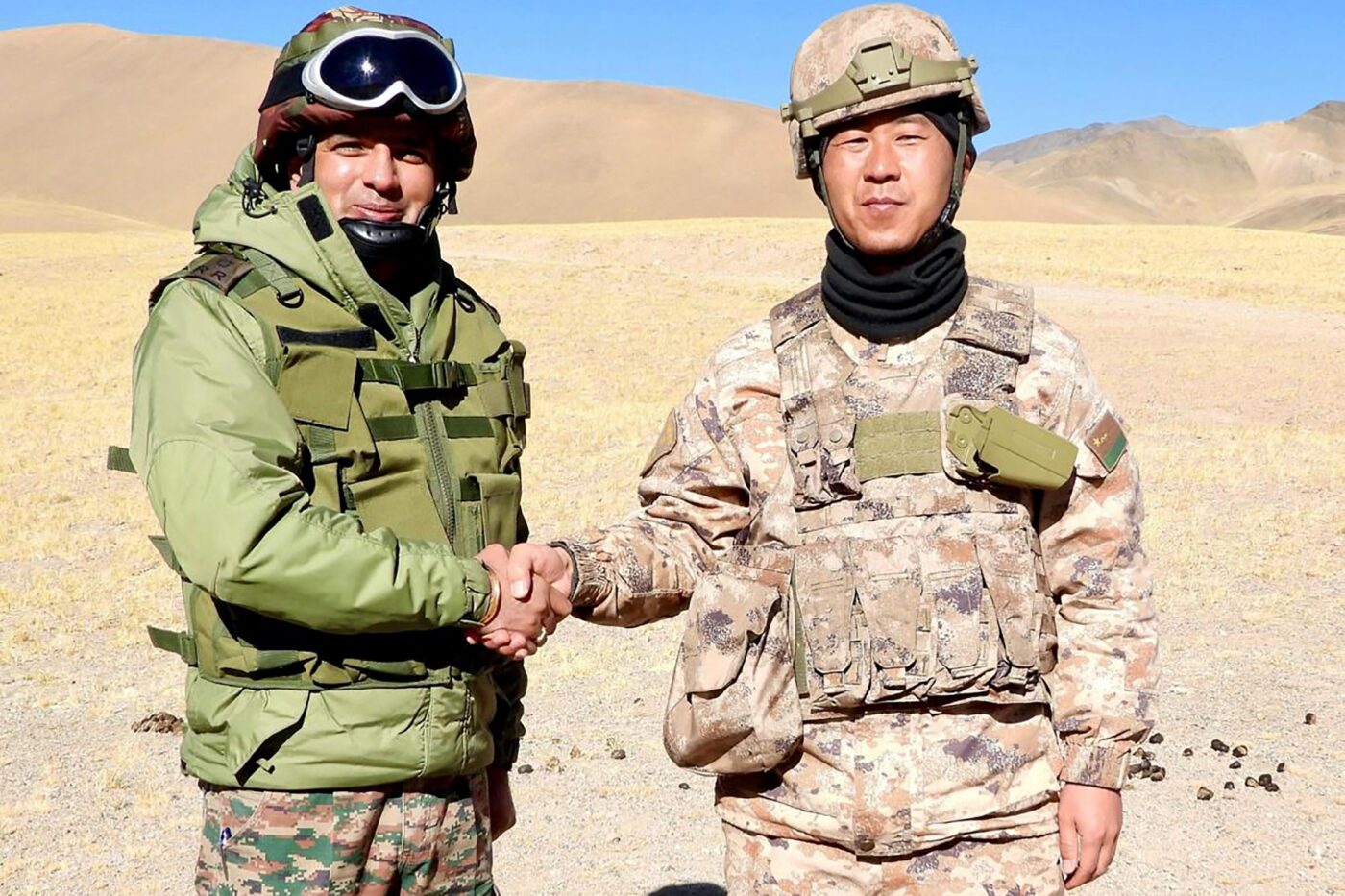
Indian and Chinese army troops greeted each other along the Line of Actual Control (LAC) near the Karakoram Pass in Ladakh on October 31, 2024, on the occasion of Diwali. Chinese troops greeted Indian soldiers and exchanged sweets on October 31 at two points along their contested border to mark a major Indian festival, army sources said, a week after leaders of the Asian rivals held their first bilateral meeting in five years. (Photo by Indian Army / AFP) / XGTY / RESTRICTED TO EDITORIAL USE – MANDATORY CREDIT “AFP PHOTO/INDIAN ARMY” – NO MARKETING NO ADVERTISING CAMPAIGNS – DISTRIBUTED AS A SERVICE TO CLIENTS

Drone Warfare Enabling Technologies

A formidable drone warfare capability cannot be built merely by developing drones with impressive specifications. It requires drones whose capabilities are tailored to specific targets and tactical scenarios. For example, interdicting road supply lines requires drones that can identify and engage moving supply trucks while distinguishing them from other vehicles. Such drones may be unsuitable for attacking bridges.

The key is to master the enabling technologies that allow drones to perform specific tasks.

These broadly encompass five areas:

Propulsion: Low-cost, efficient engines for the required combination of speed, range, and endurance.

Communication: Resilient, low-latency communications, including LEO satellite links, for responsive remote piloting and target engagement.

Navigation: AI-enabled machine vision and terrain matching for navigation that does not depend solely on satellite navigation (SatNav).

Precision attack: Machine vision and target recognition for accurate engagement of intended targets.

Warheads: Payloads tailored to the intended targets and desired effects.

A nation cannot become a leader in drone warfare simply by developing drones. It must master these enabling technologies and continuously improve them to meet evolving battlefield requirements.

India’s mastery of drone-warfare enabling technologies remains limited in several critical areas, particularly when compared with China’s industrial scale and technological capabilities.

The Chinese Threat

China has substantial capabilities in many of the enabling technologies discussed above. More importantly, it has a formidable drone-component manufacturing ecosystem spanning electric motors, flight controllers, sensors, machine vision, navigation and communications modules, as well as drone propulsion.

Its experience with mesh networking can support low-latency drone control and coordination. China is also developing large-scale LEO satellite constellations, although their specific contribution to military drone operations should not be assumed without further evidence.

China could potentially develop and field drones tailored to exploit specific vulnerabilities in Indian Army capabilities or tactics within relatively short periods. It could also adapt its systems to counter tactical innovations introduced by Indian forces.

Along the border, China’s industrial capacity could enable it to manufacture and field drones in large numbers, threatening Indian troop movements by day and night. Supply lines, radars, tanks and artillery could all face persistent drone attacks.

Without comparable capabilities, the Indian Army would risk losing operational ground.

Long-range precision strikes by Chinese drones could also threaten IAF airbases, radars, air-defense units and logistics bases, potentially degrading India’s ability and willingness to sustain a prolonged conflict.

If this scenario seems overstated, consider how Russia, despite possessing a formidable layered air-defense network, has struggled to prevent Ukraine’s sustained drone attacks.

Ukrainian long-range strikes have benefited from intelligence, surveillance and reconnaissance (ISR) support, including Western assistance. Satellite communications, including Starlink, have also played a role in some Ukrainian drone operations.

China possesses substantial ISR and communications capabilities of its own, although their effectiveness in a conflict along the Indian border would depend on operational conditions and the resilience of the systems involved.

Given India’s resource constraints and technological gaps, it could struggle to withstand a sustained, large-scale Chinese drone campaign unless it develops comparable capabilities in drone production, deployment, and counter-drone warfare.

  • Vijainder K Thakur is a retired IAF Jaguar pilot, author, software architect, entrepreneur, and military analyst.
  • Views Personal of the Author
  • Follow the author @vkthakur

The post India-China Clash: How Beijing’s Industrial Edge Makes Its Drone Threat Bigger Than the Drones Themselves: OPED appeared first on EURASIAN TIMES.
  •  

The Missile That Shot Down U.S. Stealth Aircraft is Coming Back—Mobile. Why India Must Take Note of the Russian Move

Russia appears to be preparing to revive and modernize its inventory of the Soviet-era Pechora S-125 short-to-medium-range surface-to-air missile system, in a move that the IAF leadership could well take note of.

S-125 is the same missile that was used to shoot down the US Air Force’s F-117 Nighthawk stealth fighter-bomber over Serbia on March 27, 1999, during the Kosovo War.

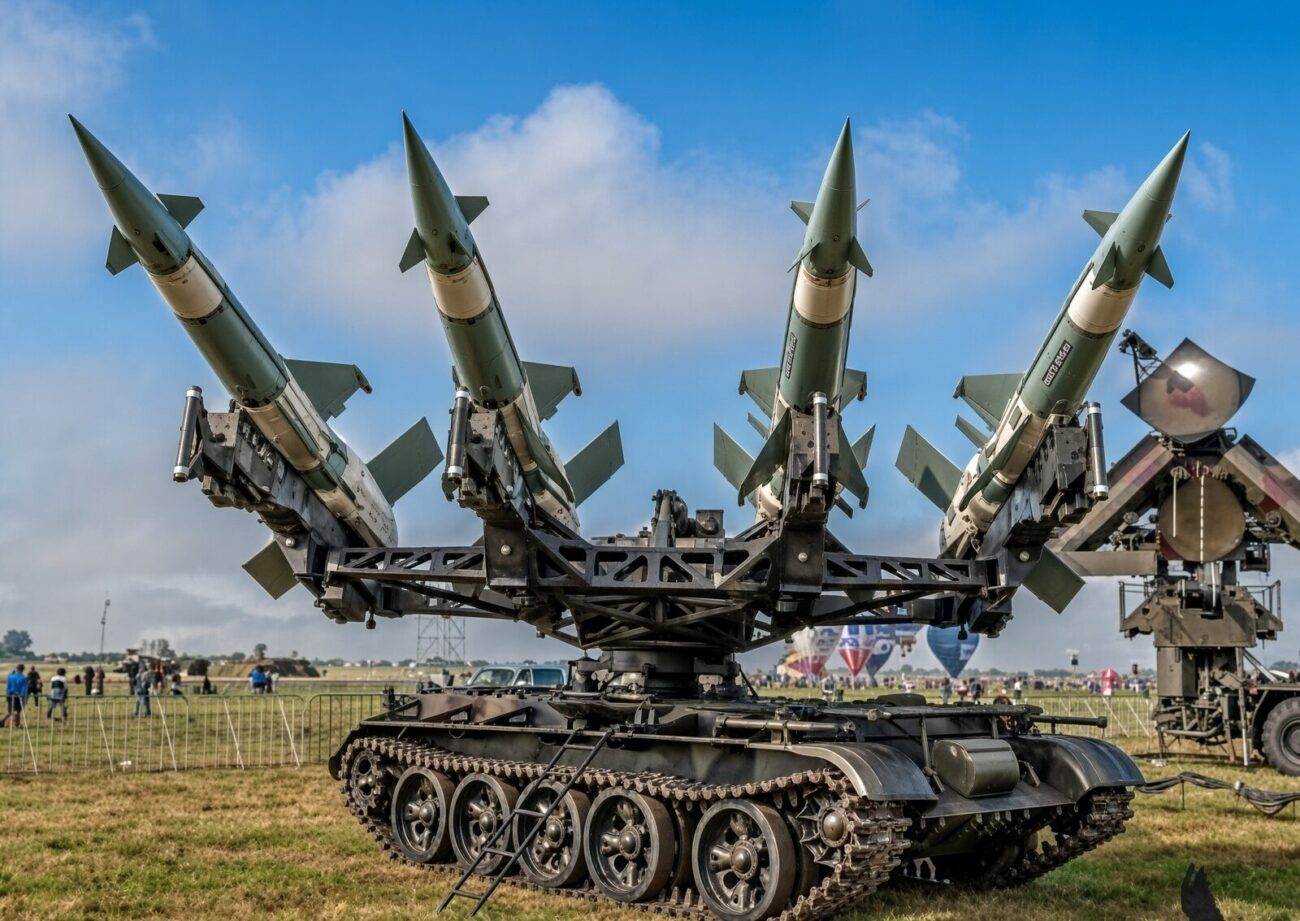
The Pechora S-125 (SA-3 Goa) is a legacy Soviet static, short- to medium-range surface-to-air missile system developed to engage low- to medium-altitude air threats using command guidance.

The IAF also modernized its S-125 inventory to plug an operational gap that widened due to delays in procuring MRSAM and Akash air-defense systems. However, the IAF did not pursue modernization to the extent that the capability gains matched the more comprehensive modernization offered by the Russian Pechora-2M.

According to Militarnyi, a Ukrainian media outlet focused on military affairs, the Minsk Wheel Tractor Plant (MZKT) has signed a contract with Moscow-based JSC Oboronitelnye Sistemi to supply 30 specialized wheeled chassis that appear intended for components of the Pechora-2M system.

The Pechora-2M is a heavily modernized Pechora derivative with a self-propelled truck-mounted launcher, digital electronics, an extended engagement envelope, and day/night electro-optical tracking, giving the system much greater tactical mobility.

Under the terms of the contract, Russia would receive 20 MZKT-8021-021 chassis, as well as five each of the MZKT-8022-021 and MZKT-80211-021.

The MZKT-8021/8022 family of specialized chassis was developed specifically to accommodate components of the Pechora-2M air-defense missile system.

Pechora Revival

The delivery schedule extends to 2029, suggesting a planned multi-year acquisition rather than a one-off procurement to meet an immediate operational requirement.

More likely, Russia is seeking to expand its air-defense capacity in response to the heightened threat from the prolific use of drones and other low-cost aerial threats in modern warfare.

Drone warfare has increased the aerial threat severalfold, so it is logical for any nation to increase the density of its AD systems by a corresponding factor.

Russia appears to be increasing its reliance on legacy systems rather than simply discarding them.

Russian Modernisation

The modernized Pechora-2M system was developed as a deep modernization of the Soviet S-125, incorporating a self-propelled, highly mobile launcher and modernized electronics. The modernization transformed the legacy stationary S-125 into a rapidly deployable air-defense platform capable of shoot-and-scoot tactics, reducing its vulnerability to anti-radiation weapons and precision strikes.

The 2M replaces the legacy four-rail stationary ground launcher (5P73) with a twin-rail launcher mounted on a heavy 6×6 truck chassis. The reduction in launch rails was necessary to maintain launcher stability when mounted on a mobile chassis.

Rafale, Tejas & AMCA: IAF’s “Healthy Mix” of Fighter Jets Leaves Out The Aircraft That May Matter The Most

The legacy S-125 required considerable time to disassemble, pack onto trailers, move, and re-erect at a new site. In contrast, the Pechora-2M can reportedly be brought into action in roughly 20–25 minutes, facilitating shoot-and-scoot operations.

Besides the self-propelled launchers, the tracking/fire-control radar and other system components are also mounted on high-mobility truck chassis rather than being confined to towed equipment.

File Image: S-125

IAF Pechora Modernization

In 2016, the Indian MoD issued a $272-million tender to digitize 16 Pechora systems. The tender was restricted to Indian companies to support the government’s Make in India policy. The eventual contract, worth ₹591.3 crore, was awarded to Alpha Design Technologies Ltd (ADTL) in 2020.

Russia’s Almaz-Antey is the original equipment manufacturer of the Pechora system. At the time, Indian officials indicated that Russian defense companies preferred to work through Russian state-owned entities, limiting the scope for direct OEM participation by Indian companies.

The scope of the Indian Pechora upgrade was primarily the electronic and mechanical modernization of the existing system rather than a fundamental redesign of its architecture. It included refurbishment and digitization of the missile-guidance radar and integration of the system with the IAF’s Integrated Air Command and Control System (IACCS).

Alpha Design Technologies Ltd executed the upgrade, focusing on digitization and electronic modernization. It replaced vintage electronic components with modern semiconductor-based electronics and digital processing, while modernizing operator consoles and other system elements.

No Mobility

The system retained its original static, four-rail, ground-mounted configuration (5P73 launcher) and towed transport arrangement because the Indian upgrade scope did not include mobility.

Because it lacks mobility, the IAF has traditionally used the Pechora for point defense of fixed, high-value infrastructure such as air bases, radar stations, and other military installations.

A statically deployed AD system protecting a high-value asset made considerably more sense when precision-guided munitions were either unavailable or relatively uncommon. In contemporary warfare, where precision weapons can routinely achieve single-digit-meter accuracy, a static air-defense system defending a high-value asset can itself become a priority target.

Recall the failed PAF attempt to strike the S-400 system deployed to defend Aadampur air base during Op Sindoor. With foresight, and by leveraging the S-400’s mobility, IAF leadership relocated the system before the attack. The episode illustrates the importance of mobility and survivability for high-value air-defense assets.

A Still-Capable System

Despite its vintage, the Pechora remains a potentially useful AD system. Endowed with mobility and modern sensors and electronics, it would acquire significantly greater survivability and tactical utility.

One of its strengths is electro-optical tracking, which permits passive target tracking without radar emissions, reducing vulnerability to anti-radiation weapons. Both Russian and Indian modernization programs have improved the system’s electro-optical capability.

The Indian upgrade incorporates thermal-imaging-based fire-control equipment, while the Pechora-2M also incorporates TV and thermal/infrared electro-optical channels.

Thermal imaging provides a passive night-and-day detection and tracking capability and, unlike conventional television cameras, does not depend on visible light. However, adverse atmospheric conditions can degrade its effectiveness.

It is interesting to note that the IAF chose to upgrade its Pechora systems without fundamentally modifying the missile. Contemporary reporting on the original upgrade program indicated that the IAF considered the existing missile adequate and concentrated instead on digitization, radar, communications, networking, and other system improvements.

The 5V27 family missile has a substantial fragmentation warhead of around 70 kg and uses command guidance. Its continued availability is one possible reason why extending the life of the Pechora system remains attractive.

Russia may also be reviving and revitalizing Pechora-2M systems because it has a substantial existing inventory of 5V27-series missiles. If so, the approach illustrates an important principle of modern warfare: the value of an old weapon system can change when it is combined with modern sensors, electronics, mobility and networking.

F-35 Bid Stalls — But Morocco’s 1st F-16 Block 72 Fighter Jet Completes Maiden Flight

What the IAF Should Note

In the immediate future, the IAF will need to deploy many more AD systems than it currently does in order to field a robust air-defense capability spanning the entire gamut of aerodynamic threats—aircraft, helicopters, cruise missiles, guided bombs and drones.

Developing additional AD systems may prove more challenging and time-consuming than upgrading existing legacy systems such as the Pechora.

Upgrading the Pechora to add mobility, modern electro-optical sensors and improved networking should be well within Indian technological capability. Even locally manufacturing additional upgraded systems under an appropriate OEM arrangement could be a cost-effective way to augment India’s air-defense capability.

Russia’s apparent decision to extract additional combat value from an old missile system should therefore be viewed less as a revival of obsolete technology and more as an example of how legacy weapons can be adapted to the changing economics and character of air warfare.

  • Vijainder K Thakur is a retired IAF Jaguar pilot, author, software architect, entrepreneur, and military analyst.
  • Views Personal of the Author
  • Follow the author @vkthakur

The post The Missile That Shot Down U.S. Stealth Aircraft is Coming Back—Mobile. Why India Must Take Note of the Russian Move appeared first on EURASIAN TIMES.

  •  

Rafale, Tejas & AMCA: IAF’s “Healthy Mix” of Fighter Jets Leaves Out The Aircraft That May Matter The Most

During his interaction with the press ahead of Air Force Day on October 8, 2026, the Chief of the Air Staff (CAS) stated that, in the near future, the Indian Air Force would have a “healthy mix” of LCA Tejas Mk 1A, LCA Mk 2, the French Rafale and the indigenous fifth-generation AMCA.

On the face of it, there is little to quarrel with what the CAS stated.

These aircraft will undoubtedly constitute important elements of the IAF’s future fighter fleet. However, the projection has some infirmities that are difficult to overlook.

The first question is what the CAS meant by the “near future”.

If the statement is intended to describe the fighter fleet that the IAF will field over the next decade or so, the mix is understandable. But if it projects the force structure into the 2040s—and beyond—it raises a more fundamental question.

How far into the future was the CAS extrapolating current procurement plans to arrive at the projected “healthy mix”?

Based on the past record of Indian fighter aircraft development projects, I would think at least 15 years from now, well into the 2040s.

By then, Tejas Mk 1A, Tejas Mk 2, Rafale and AMCA could indeed form the backbone of the IAF’s manned combat-aircraft fleet. But describing that combination alone as a “healthy mix” ignores a major transformation already underway in air warfare.

The manned fighter is no longer the whole equation

There is little doubt that the IAF will continue to depend predominantly on the 4th-generation fighters named by the CAS, quite possibly for the next 20 to 30 years. Fighter aircraft have long service lives, and India’s continuing dependence on legacy and contemporary 4th-generation platforms is therefore likely to persist well into the 2040s and perhaps beyond.

But the fighter force of the 2040s cannot be assessed merely by counting manned fighters across different generations.

The changing character of air warfare will demand a mix of manned and unmanned platforms, with different levels of survivability, autonomy and weapons heft.

This matters because the most dangerous missions in a future conflict will likely involve penetrating increasingly dense and sophisticated air-defense networks. A manned 4th-generation fighter, however capable, is not necessarily the most appropriate platform for every such mission.

The Unmanned Component

The IAF’s future force structure will therefore need an increasing proportion of unmanned combat aircraft.

At one end of the spectrum would be relatively inexpensive unmanned systems able to perform reconnaissance, electronic warfare, decoy and weapons-truck functions. At the other end would be sophisticated unmanned combat aircraft capable of operating alongside manned fighters as loyal wingmen.

The latter could substantially increase the effectiveness of a manned fighter formation. An unmanned aircraft could carry additional weapons, extend the formation’s sensor coverage, perform electronic attack or act as a decoy, while exposing no pilot to the risk of a mission in heavily defended airspace.

There is also an important economic dimension. An unmanned platform does not necessarily have to replicate the capabilities, complexity, or cost of a manned fighter. A future air force could therefore field far more expendable or attritable unmanned combat aircraft than it could afford to field manned fighters.

This would fundamentally alter the arithmetic of air combat.

Why describe only the present procurement mix?

The “healthy mix” the CAS referred to was therefore, in my view, probably intended primarily for mainstream media consumption.

That is not necessarily a criticism of the CAS.

Mainstream reporting tends to operate at shallow depths and gravitates towards readily understood narratives. In India’s case, the Atmanirbharta (self-reliance) narrative is particularly attractive.

Tejas Mk 1A, Tejas Mk 2 and AMCA fit neatly into that narrative, while Rafale provides the foreign component of the mix.

But the full spectrum of capabilities that the IAF will require in the 2040s is considerably more complicated.

It would include manned 4th-generation fighters, 4.5-generation fighters, 5th-generation VLO aircraft and an expanding family of unmanned combat aircraft ranging from relatively inexpensive attritable systems to sophisticated loyal wingmen.

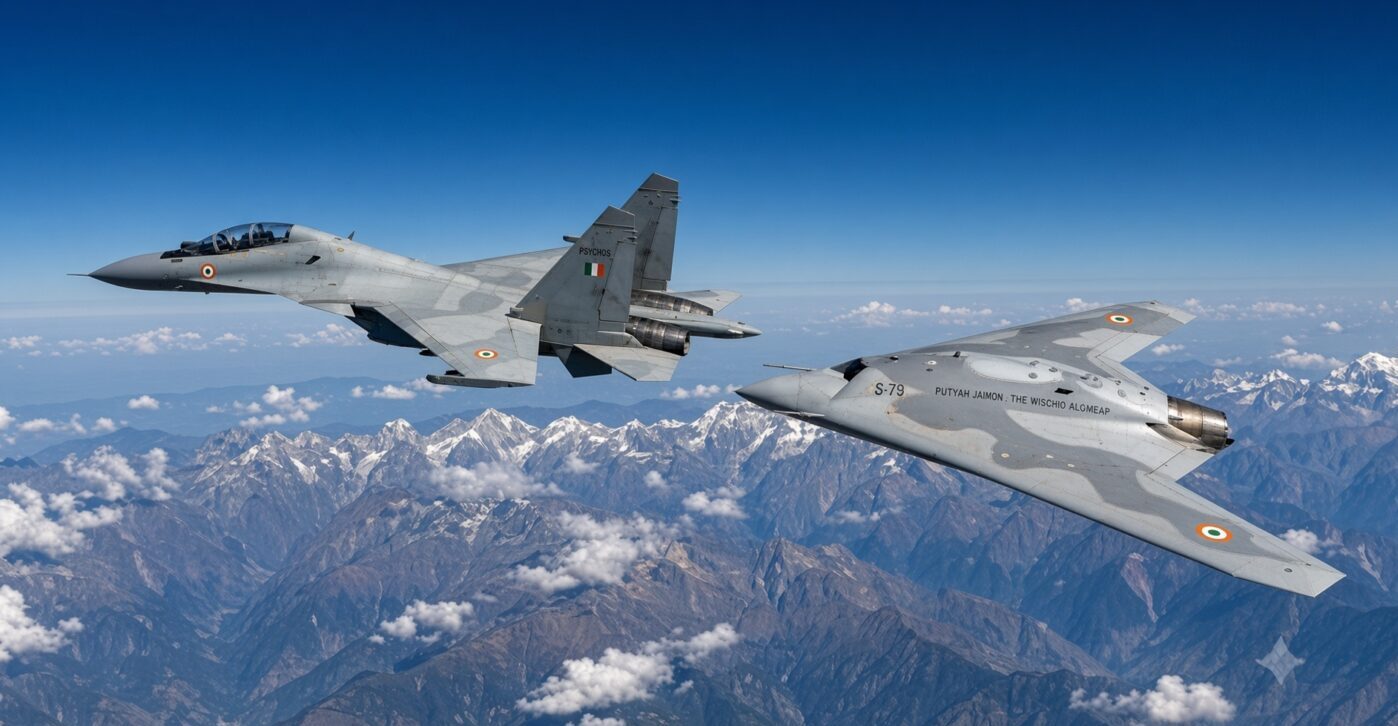
Image for Representation: Indian Air Force

The Uncomfortable Technological Reality

I suspect that the IAF leadership understands this reality.

India’s indigenous technological capability in unmanned combat aircraft is still far short of what it would take to develop and field the full range of systems a future air force will need.

The problem is not simply the airframe. Autonomous operation, artificial intelligence, manned-unmanned teaming, secure communications, distributed sensing, electronic warfare and the ability to operate in a heavily contested electromagnetic environment all present formidable challenges.

MoD bureaucrats are unlikely to be unaware of these limitations either.

Under the circumstances, articulating the full range of what a truly “healthy mix” would entail would perhaps serve little purpose in a public interaction with the media.

But that does not make the issue any less important.

The Real Challenge

The real challenge is not recognizing that India needs a mix of manned and unmanned combat aircraft. It is developing the technologies and industrial ecosystem needed to field them in meaningful numbers.

The IAF of the 2040s will almost certainly still contain large numbers of 4th-generation fighters. There is nothing inherently wrong with that. The question is what surrounds them.

If the future force consists predominantly of today’s manned fighter concepts, supplemented by a relatively small number of AMCA aircraft, it may represent a healthy mix of India’s current procurement programs.

It may not, however, be a healthy mix for the wars India could have to fight in the 2040s and beyond.

The distinction is important. A force structure should not be called “healthy” merely because it contains a balanced selection of aircraft India can build or procure today.

It should be judged against the operational environment in which that force will actually have to fight.

  • Vijainder K Thakur is a retired IAF Jaguar pilot, author, software architect, entrepreneur, and military analyst.
  • Views Personal of the Author
  • Follow the author @vkthakur

The post Rafale, Tejas & AMCA: IAF’s “Healthy Mix” of Fighter Jets Leaves Out The Aircraft That May Matter The Most appeared first on EURASIAN TIMES.

  •  
❌