Pakistan Super League (PSL) franchises will be allowed to retain a maximum of seven players, including their direct signing, for the 12th edition of the tournament, but any side exercising the full retention allowance will have to release a player from the highest price tier of the previous auction into the general player pool.
The provision, unanimously approved by all eight franchises at a tournament operations workshop at Gaddafi Stadium on Thursday, is among the key regulations finalised ahead of the PSL 12 player auction scheduled for January 23.
The mandatory release of a top-tier player is aimed at ensuring the availability of elite talent to all franchises during the auction, while allowing teams to preserve a significant portion of their existing squads.
The deadline for player retentions has been set for January 13, ten days before the auction. The timing will allow franchises to assess performances in the National T20 Silver tournament, which will have concluded, and the ongoing National T20 Gold competition before making their final decisions.
The Pakistan Cricket Board (PCB) said the arrangement would provide a “live, data-driven link” between domestic cricket and the PSL, giving players performing in the National T20 competitions an opportunity to attract franchise attention.
A domestic player in form during the National T20 Gold tournament could, according to the PCB, “force his way into franchise thinking in real time”.
The auction, which will be only the second in PSL history, will operate under a salary cap of Rs45 crore for each franchise. The cap will rise to Rs50.5 crore for a franchise that makes a direct signing for PSL 12, retains its direct signing from the previous season, or opts for both.
All franchises will also be required to spend a minimum of Rs36.5 crore on their squads.
The window for direct signings will remain open until November 23, 2026. Each franchise will be permitted to directly sign one marquee player who did not feature in either PSL 10 or PSL 11.
The regulations were finalised during a workshop chaired by PSL chief executive Salman Naseer, with all eight franchises reaching unanimous agreement after reviewing the auction rules clause by clause.
Discussions also covered direct signings, player retentions, trade windows, squad sizes and salary caps.
“What made today remarkable was not just what was agreed, it was how it was agreed,” Naseer said in a statement.
“Every franchise engaged with complete openness, the Auction rules were worked through line by line, and we finished with unanimous buy-in across all eight sides,” he added.
Naseer said the retention deadline had deliberately been aligned with the National T20 competitions to give domestic performers a genuine opportunity to influence franchise squad selections through their performances.
The PCB said more major announcements concerning PSL 12 would be made in the coming weeks.
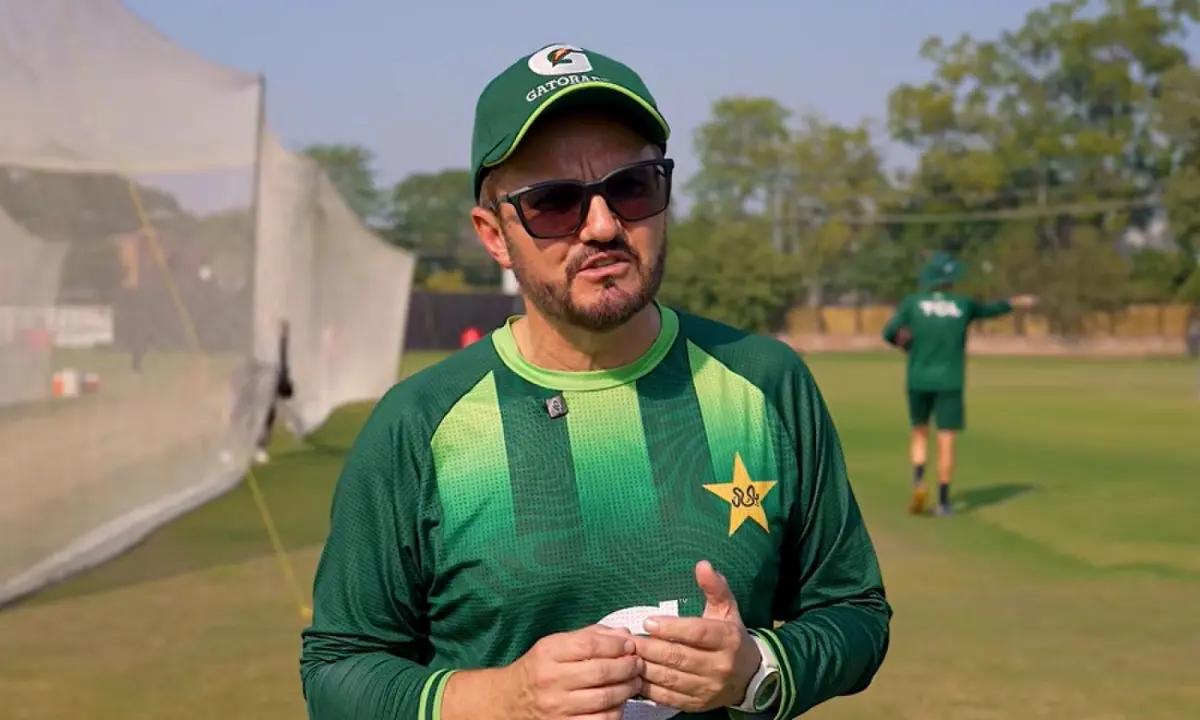
Pakistan head coach Mike Hesson is banking on his experienced top order to deliver when it matters most as the hosts prepare to face Sri Lanka in Saturday’s One-day International (ODI) tri-series final at Gaddafi Stadium in Lahore, with the opening batters’ inconsistent form remaining a major concern.
Pakistan qualified for the final with three consecutive victories before suffering an eight-wicket defeat against Sri Lanka in their last league match, when they were dismissed for just 110. The hosts will need a substantial improvement from their leading batters to avoid a repeat against the Islanders, who chased down the target with more than 30 overs to spare.
Speaking to PCB Digital in a video released on Thursday, Hesson said Pakistan had secured their wins despite some key players failing to make significant contributions, and expressed hope that the final would bring out their best.
“It’s been a pretty good couple of weeks. We have played some decent cricket without being perfect. To get three wins in a row without contributions from a few of our key players is a good sign,” he said.
“I still don’t think we have played our best game yet. Hopefully, we are saving that for the final.”
The numbers underline the challenge facing Pakistan’s top order. Fakhar Zaman has managed just 31 runs in four innings, while former captain Babar Azam has scored 118 in the same number of outings. Saim Ayub, who opened alongside Fakhar in the first three matches before being released from the squad at his own request, scored 21 runs in three innings.
Fakhar made 16 against Sri Lanka in the opening match, fell for a first-ball duck against England and scored 10 in the second England fixture before managing only five against Sri Lanka on Tuesday. Babar began with 45 against Sri Lanka, followed it with 34 against England and then made 10 before scoring 29 in the latest defeat.
Saim scored seven, eight and six in his three appearances. He was subsequently released to return to domestic cricket and work on his batting form, with Sahibzada Farhan named as his replacement, while opener Maaz Sadaqat was also called up earlier.
Hesson, however, remains confident that Pakistan’s senior batters Fakhar and Babar can rise to the occasion, describing the final as an ideal opportunity for them to produce a match-winning performance.
“You are talking about two of the greatest players in Pakistan’s history in the top three. I expect big players to stand up in big games,” he said.
“The fact that we have been able to achieve the wins that we have without the top order performing as well as we know they are capable of is a good sign. A couple of our key players are searching for that match-winning performance and there’s no better place to do it than in a final.”
While the top order has struggled, Pakistan’s middle order has provided important contributions. Salman Ali Agha struck a commanding 107 off 90 balls in the opening victory over Sri Lanka, while Hasan Nawaz scored 79 against England. Arafat Minhas also made 59 in that match.
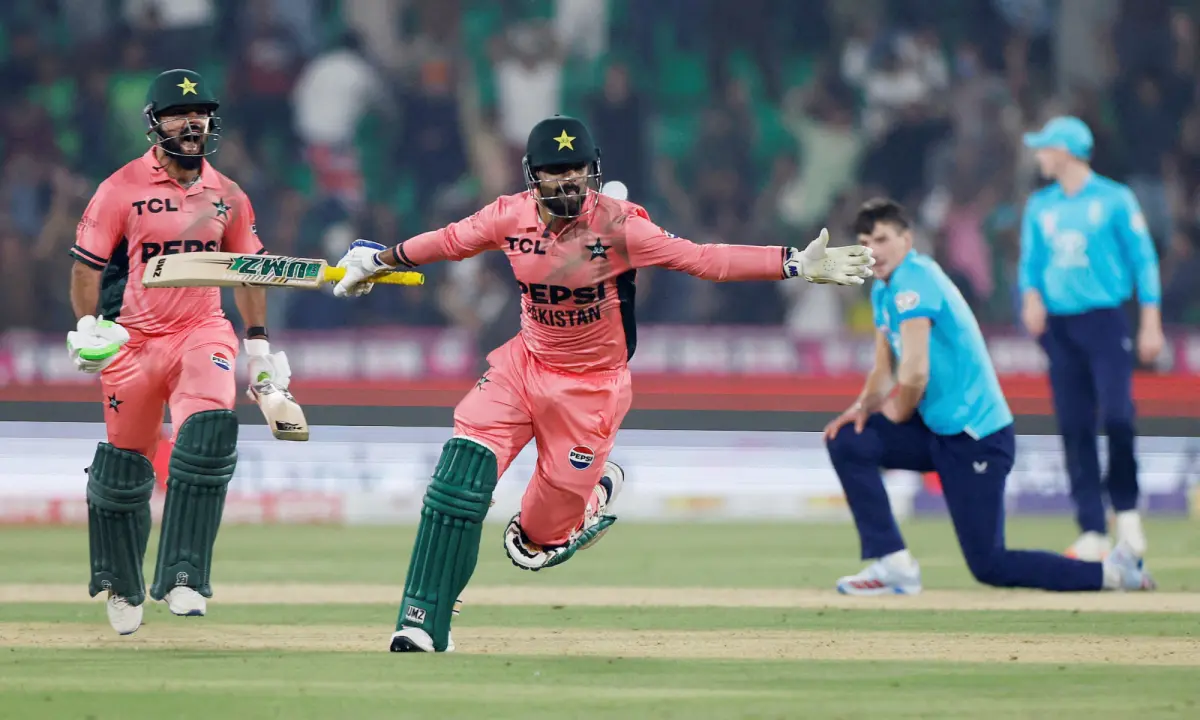
Shadab Khan’s unbeaten 113 against England in Lahore proved decisive, as he and Haris Rauf put together an unbroken 89-run stand for the last wicket to secure a remarkable one-wicket win.
Hesson singled out Salman’s achievements and praised Hasan’s development, particularly his growing ability to manage pressure in the middle order.
“Salman Ali Agha has got the most hundreds of any Pakistan player batting at number five or below in an ODI,” he said. “His performance is often underrated.”
He added that Hasan was learning to “control the chase, understand risk and manage it”, describing his progress as encouraging.
Pakistan’s bowling, led by captain Shaheen Shah Afridi, has also offered positives, with Hesson praising the left-arm pacer’s ability to take early wickets and acknowledging contributions from Naseem Shah, Haris Rauf and young Arafat Minhas.
Pakistan, who have won 12 of their 19 ODIs since Hesson took charge as white-ball head coach last year, will hope their collective strength is complemented by a decisive contribution from the top order when the trophy is at stake.
Sri Lanka stormed into the final of the One-day International tri-series after overwhelming Pakistan by eight wickets, chasing a modest target of 111 in just 18.1 overs at the Gaddafi Stadium on Tuesday.
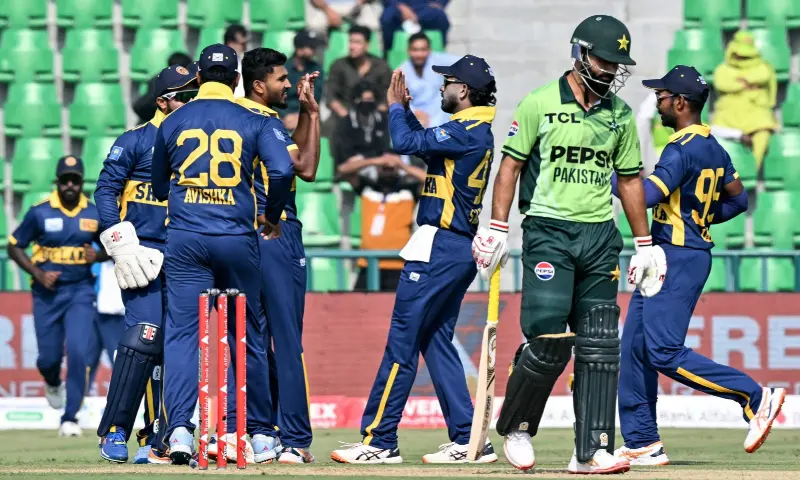
Left-arm pacer Dilshan Madushanka delivered a career-best five for 34 to dismantle Pakistan for 110 in 25.3 overs before Kamindu Mendis struck an unbeaten 62 to guide Sri Lanka to 114-2, sealing victory with 31.5 overs to spare.
The result confirmed Sri Lanka’s place in Saturday’s final alongside Pakistan, who had already qualified after winning their first three matches. England’s remaining league fixture against Sri Lanka on Thursday consequently became a dead rubber.
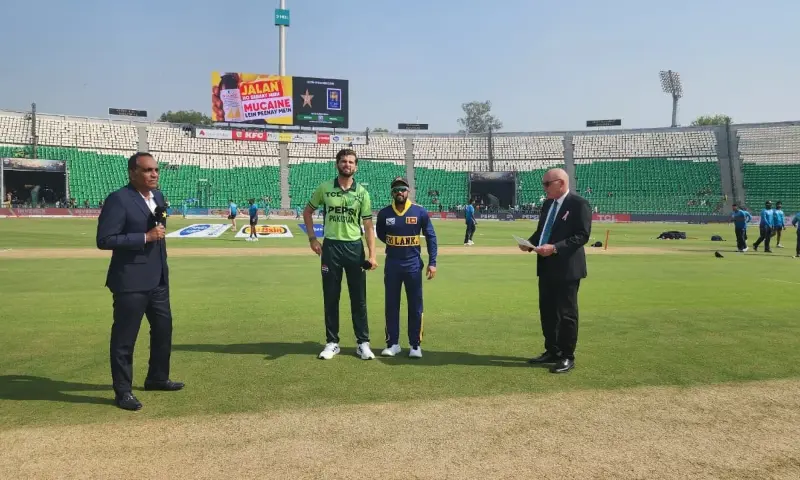
Pakistan’s batting collapsed against a disciplined Sri Lankan attack after captain Kusal Mendis won the toss and elected to field. The hosts struggled to cope with Madushanka’s short-pitched deliveries and never recovered from losing wickets at regular intervals.
Babar Azam top-scored with 29 off 33 balls, including five boundaries, while Hasan Nawaz made 17. Captain Shaheen Shah Afridi contributed 15 off 13 deliveries, striking two sixes in a late attempt to lift the total.
Pakistan lost Fakhar Zaman for five in the fourth over when he mistimed a short delivery from Madushanka and was caught at point. Maaz Sadaqat, making his first appearance in the tri-series after being added to the squad a day earlier, managed eight before Asitha Fernando trapped him leg-before with a yorker.
Saad Baig fell for five, caught at short cover off Madushanka, while Salman Ali Agha made nine before edging Sahan Arachchige behind. Pakistan were 61-4 when Babar was trapped leg-before by Eshan Malinga for 29, having already lost their two reviews.
The collapse gathered pace as Arachchige dismissed Shadab Khan for two and Dunith Wellalage removed Hasan Nawaz, who was caught by Arachchige for 17. Pakistan slumped to 91-8, leaving the lower order with too much to do.
Madushanka returned to claim the remaining wickets, dismissing Arafat Minhas for 10 and Haris Rauf for one before ending the innings with Shaheen’s wicket. The Pakistan captain’s brief counterattack included two sixes, but he was caught by Wellalage as Madushanka completed his five-wicket haul. Arachchige took two wickets, while Asitha, Malinga and Wellalage claimed one apiece.
Sri Lanka’s reply began aggressively, with Kamindu and Avishka Fernando putting on 50 for the opening wicket in 6.5 overs. Avishka struck two fours in his 17-ball 16 before pulling Shaheen to Fakhar at short midwicket.
Kamindu, however, continued to score freely, reaching his half-century off 43 balls. He survived a dropped catch in Shaheen’s opening over and successfully reviewed an lbw decision before going on to finish unbeaten on 62 from 60 deliveries, with eight fours and two sixes.
Pakistan briefly found another breakthrough when Kusal, who had struck two boundaries in his six-ball eight, was bowled by Arafat for 8. The dismissal came in unusual fashion, as the ball ricocheted off the batter’s bat and into the stumps.
But the hosts could not build on the wicket. Pavan Rathnayake joined Kamindu and remained unbeaten on 23 off 26 balls, striking two fours as the pair guided Sri Lanka home without further loss.
Kamindu’s fluent innings ensured the chase remained firmly under control, while Rathnayake finished the contest by driving Maaz’s spin through cover-point for four.
Shaheen and Arafat took one wicket each, but Pakistan’s total left their bowlers with little margin for error.
Sri Lanka completed a comprehensive victory that capped a strong turnaround in the tournament, with their batters having also impressed in their earlier win over England.
For Pakistan, the defeat exposed familiar top-order weaknesses after their dramatic one-wicket victory over England on Sunday. Shadab’s unbeaten century had rescued that match, but this time the batting line-up failed to provide a competitive total.
Madushanka’s outstanding spell proved decisive, giving Sri Lanka the momentum to secure qualification and setting up a final against Pakistan on Saturday.
Pakistan opener Saim Ayub has been released from the national squad for the remainder of the ongoing One-day International tri-series after requesting to return to domestic cricket to work on his batting form and regain confidence, the Pakistan Cricket Board (PCB) said on Monday.
The PCB said the decision was taken after Saim spoke to head coach Mike Hesson, with the team management and national selection committee agreeing to his request.
“Respecting Saim’s decision and appreciating his honest assessment of his current form, the team management and national selection committee have mutually agreed to accept this request,” the board said in a press release.
Right-handed opener Sahibzada Farhan has been named as Saim’s replacement for the remainder of the tournament.
The decision comes after Saim endured a difficult run in the tri-series, including a six-run dismissal in Pakistan’s dramatic one-wicket victory over England at the Gaddafi Stadium on Sunday.
His early departure was part of a top-order collapse that left Pakistan struggling before Shadab Khan’s unbeaten 113 and an unbroken last-wicket partnership with Haris Rauf secured the win.
Concerns over Saim’s form had also been raised ahead of Sunday’s match, with Pakistan captain Shaheen Shah Afridi acknowledging the selection options available to the team amid inconsistent returns from the opening batters.
The PCB statement did not specify how long Saim would spend playing domestic cricket or provide details of any future selection plans.
The latest change follows the inclusion of left-handed batter Maaz Sadaqat in the squad a day earlier.
Maaz was added as cover for players carrying minor niggles after left-arm wrist spinner Sufiyan Moqim was released from the squad, with the PCB citing the nature of the Lahore pitches. Sufiyan was asked to return to domestic cricket.
Maaz, 21, had initially been left out of the tri-series squad. An occasional left-arm orthodox spinner, Maaz now remains part of the squad alongside Farhan for the remainder of the tri-series.
Farhan, meanwhile, returns to the ODI set-up after being left out of Pakistan’s original squad for the tri-series. He had been named captain of the national T20I side for the series against Sri Lanka earlier this month and led Pakistan at the Asian Games.
Pakistan have already qualified for the tri-series final after registering three consecutive victories. They will face Sri Lanka in the fifth match of the competition at the Gaddafi Stadium on Tuesday, with the final scheduled for Oct 31 at the same venue.
The ongoing tri-series, featuring Pakistan, England and Sri Lanka, is part of the teams’ preparations for next year’s ODI World Cup.
Pakistan’s remaining league fixture against Sri Lanka will provide the team an opportunity to assess its options before the final.
Social media was awash with praise on Sunday after Shadab Khan struck an unbeaten century to steer Pakistan to a dramatic one-wicket victory over England in the fourth match of the One-day International tri-series at the Gaddafi Stadium.
Chasing 242, Pakistan were in deep trouble at 154-9 before Shadab’s 113 not out off 96 balls, featuring 13 fours and five sixes, and an unbroken 89-run partnership with Haris Rauf turned the match on its head. The victory secured Pakistan’s place in the tri-series final and set a record for the highest 10th-wicket partnership in a successful ODI chase.
Prime Minister Shehbaz Sharif led the congratulatory messages, praising the team’s resilience and Shadab’s decisive contribution.
The Pakistan Cricket Board (PCB) celebrated the all-rounder’s performance in a series of posts, hailing him as a superstar and describing the result as a remarkable comeback.
In another post, the board wrote: “THE MOST STAGGERING COMEBACK YOU WILL EVER SEE!”
Minister for Information and Broadcasting Attaullah Tarar also joined the celebrations, highlighting the decisive last-wicket stand.
“A thriller beyond imagination,” he wrote about the game.
Former Pakistan opener Ahmad Shahzad praised Shadab’s composure under pressure but cautioned that the team’s batting remained a concern.
“What a turnaround, a VICTORY!! Shadab Khan deserves credit for his maiden international century, showing composure and responsibility under pressure. Haris Rauf stood firm alongside him as the last wicket pair carried Pakistan over the line.”
The International Cricket Council (ICC) highlighted the significance of the innings, posting: “A monumental hundred under pressure from Shadab Khan sends Pakistan into the ODI tri-series final.”
In a separate message, the ICC wrote: “Pakistan pull victory from the jaws of defeat against England thanks to Shadab Khan’s sensational hundred.”
Cricket publication Wisden Cricket also celebrated the achievement, describing Shadab’s knock as an innings to remember.
“The highest score by a No.8 in ODI history: Shadab Khan. A maiden international century that nobody, and certainly not England, will ever forget!”
Journalist and former PCB director Umar Farooq Kalson drew a comparison with another Abdul Razzaq’s 109 against South Africa in Abu Dhabi in 2010.
“Two of the greatest and unreal ODI innings in a winning cause.”
Pakistan Super League (PSL) franchises Multan Sultans and Quetta Gladiators, along with Desert Vipers, also congratulated Shadab.
Quetta summed up the dramatic finish in a post: “One man. One heroic century. One unforgettable finish!”
Fans and commentators repeatedly described the match as one of the great ODI heists, with particular praise for Shadab’s ability to remain composed as wickets fell around him. His survival of a review on 97 added another twist to an already extraordinary finish.
The 89-run stand with Haris proved decisive. Shadab supplied the bulk of the runs while Haris, who had managed just three when the partnership began, held his end before striking the boundary that sealed the win.
The Pakistan Cricket Board (PCB) on Sunday released left-arm wrist spinner Sufiyan Moqim from the national men’s squad for the ongoing One-day International tri-series involving England and Sri Lanka, citing the nature of the pitches in Lahore, while adding left-handed batter Maaz Sadaqat as cover for players carrying minor niggles.
In a brief statement, the PCB said Sufiyan had been released from the squad “keeping in view the nature of Lahore pitches” and would return to domestic cricket. Maaz, meanwhile, had been added as cover for players with minor niggles.
The move comes as the tri-series shifts to the Gaddafi Stadium after the opening three matches in Rawalpindi. Pakistan have won both their league games so far, beating Sri Lanka by 37 runs and England by 87, and face England again in Lahore on Sunday. The pitches in Rawalpindi generally favoured pace, limiting opportunities for specialist spinners.
Sufiyan, who hails from Azad Kashmir, has represented Pakistan in limited-overs cricket since making his T20I debut in 2023. He is best known for his record-equalling figures of five for three against Zimbabwe in a T20 International and was named Player of the Tournament in the 2026 Pakistan Super League while playing for Peshawar Zalmi. In ODIs, he has taken eight wickets in four matches.
Maaz, 21, has attracted attention with his aggressive batting. The Peshawar-born left-hander made an immediate impact on his ODI debut against Bangladesh earlier this year and recently impressed in the T20I series against Sri Lanka, scoring consecutive half-centuries, including a blistering 96 off 51 balls that helped Pakistan post their highest T20I total at home.
An occasional left-arm orthodox spinner, Maaz had initially been left out of the tri-series squad.
The updated squad, led by Shaheen Shah Afridi, now includes Maaz as Pakistan continue their campaign in Lahore ahead of the final on Oct 31 at the same venue.
Pakistan’s second match against England in the ongoing tri-nation series is underway, and while fans will take heart from the spirited fielding effort shown by Pakistan so far, it is not the only thing of note about the fixture.
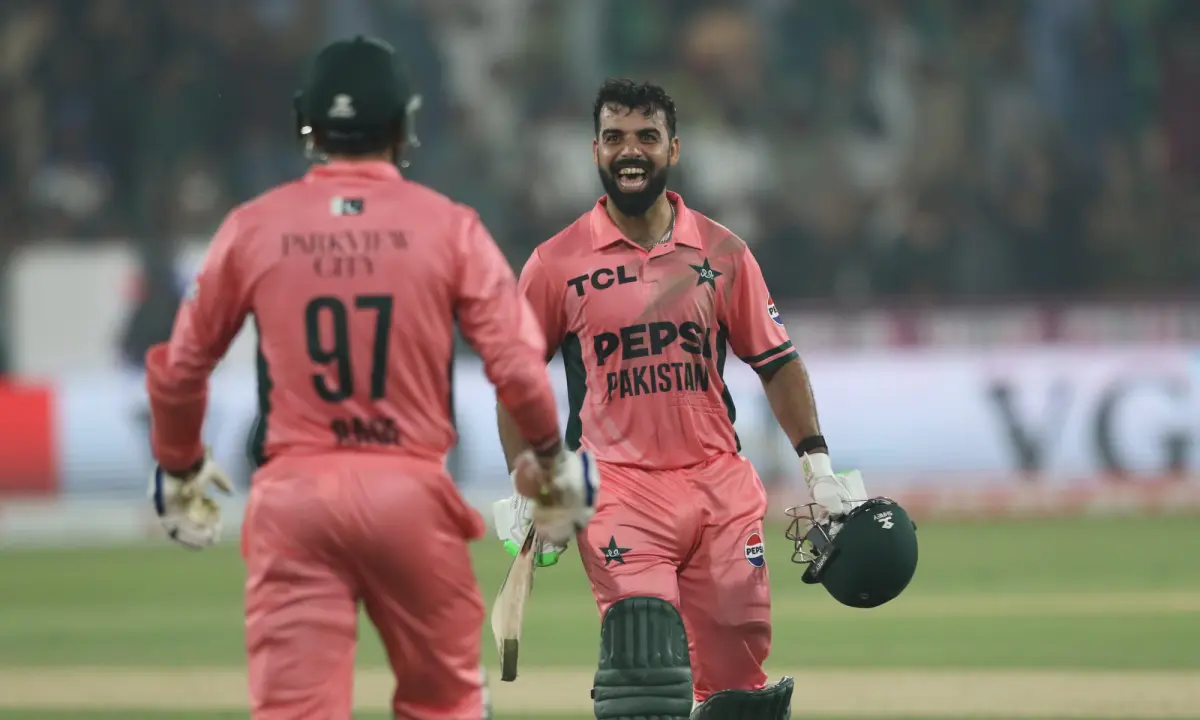
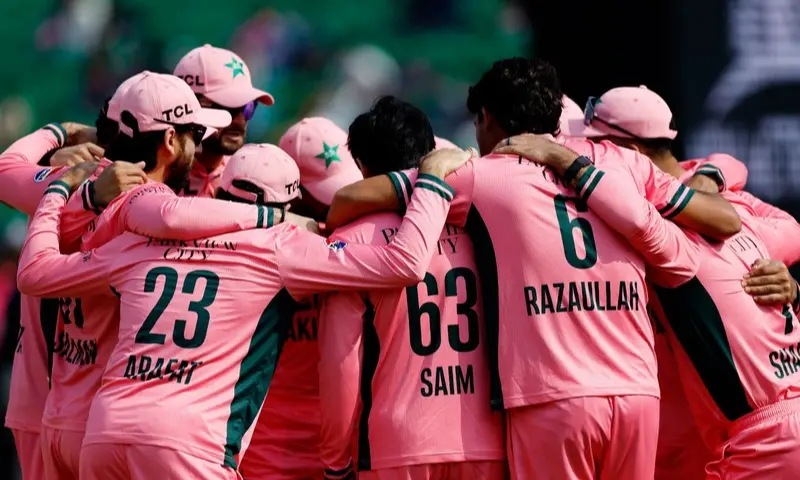
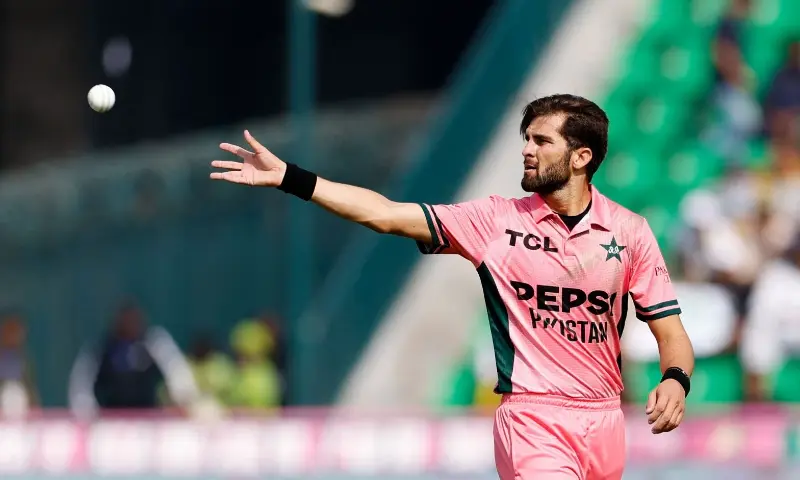
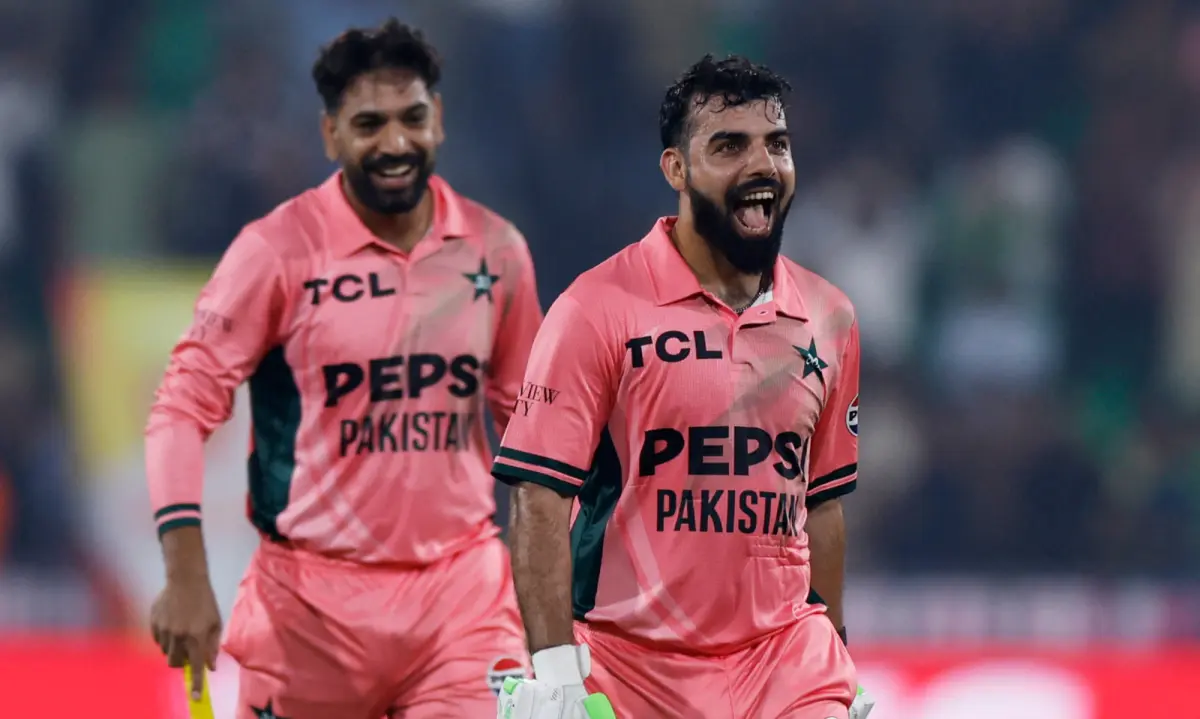
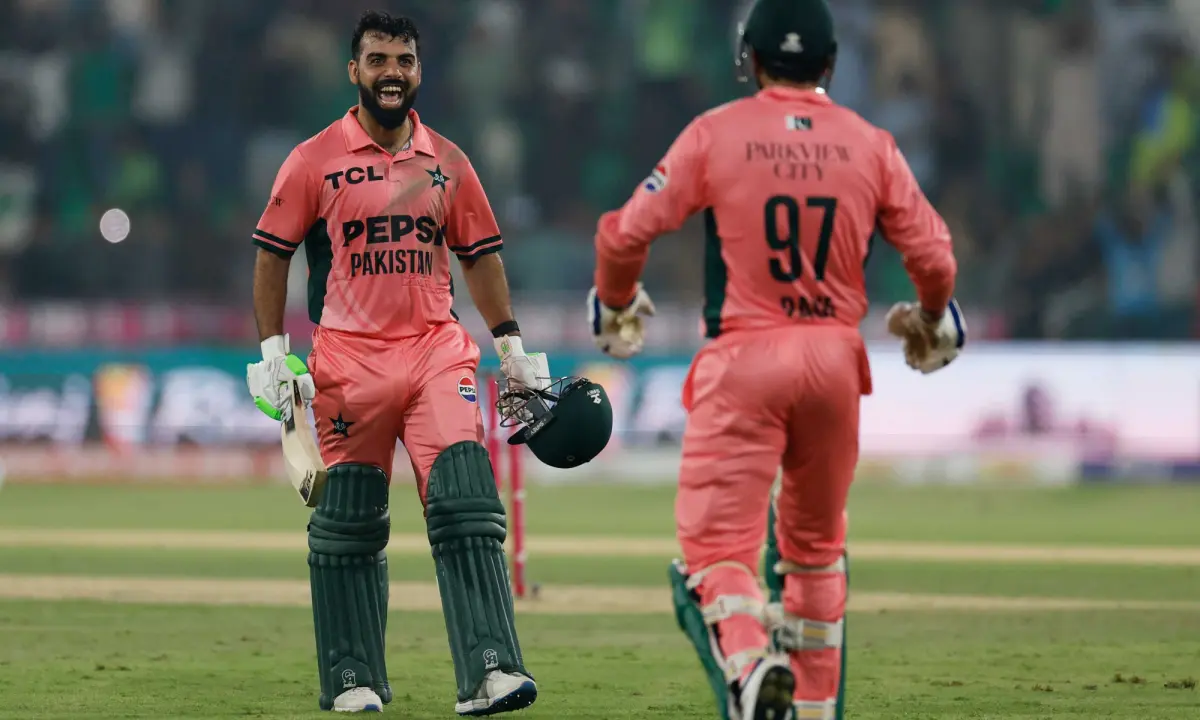
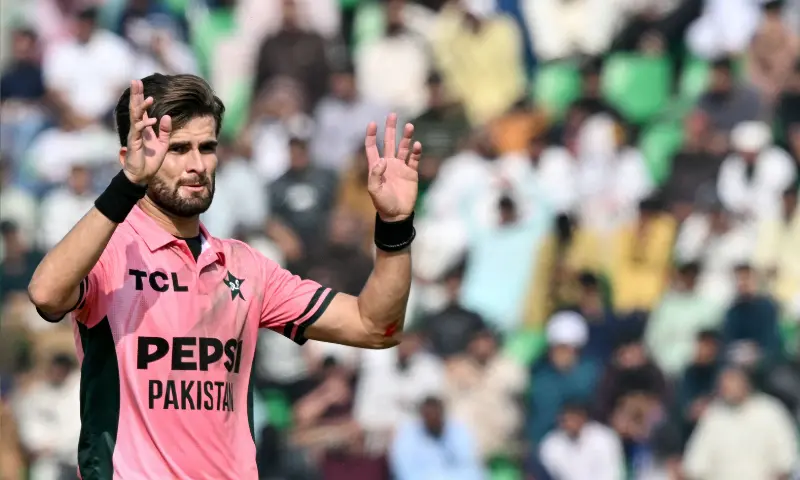
That is because today, the Green Shirts are wearing pink.
Pakistan has sported pink jerseys today in lieu of the usual green national kit, due to the Pakistan Cricket Board observing Breast Cancer Awareness day.
“The initiative, being organised as part of Pinktober, the global Breast Cancer Awareness Month, aims to highlight the importance of early detection, regular screening and timely treatment while encouraging greater awareness of the disease across the country,” said a PCB media release rearding the topic.
As part of the initiative, not only is the Pakistan team coloured pink, but members of the English cricket team, match officials and commentators are also wearing pink ribbons for the cause, in order “to demonstrate solidarity with breast cancer patients and survivors”.
The initiative also includes the stumps used in the match being branded pink, relevant graphics and branding all across the stadium, as well as a series of digital promotional material by the PCB rolled out before the fixture.
“Cricket provides a powerful platform to connect with millions of people and through this initiative, we aim to translate that reach into meaningful awareness and engagement around breast cancer,” said PCB Director Commercial Ali Adnan Zaidi in the media release, while Chief Operating Officer Sumair Ahmed Syed “recognises the responsibility that comes with the immense following and influence of cricket in our country.”
This is not the first instance of a team sporting a pink jersey for this cause. South Africa hosts a “Pink Day” One-day International every year at the Wanderers Stadium in Johannesburg, where the home team wears pink kits to raise awareness about breast cancer.
The last two of these pink clashes between South Africa and Pakistan have been memorable as well, with Pakistan notching a 36-run win in the 2024 clash, and the 2021 fixture featuring a sublime innings of 193 by Fakhar Zaman that went in vain as the hosts won by 17 runs.
Pakistan hosted a similar pink day last year as well, as part of the T20I series against South Africa.
The Sydney Cricket Ground (SCG) hosts the Pink Test every year as part of the Australian summer, in support of the McGrath Foundation - a cancer care charity founded by Jane McGrath and her husband, Australian pace-bowler Glenn McGrath.
Fortune favours the brave, and on Sunday it favoured Shadab Khan just when he seemed to have been abandoned by it.
He had dragged Pakistan from the brink of defeat to within touching distance of victory in the One-day International tri-series match against England. And it had taken extraordinary bravery to do so.
With the last wicket standing and Haris Rauf holding firm at the other end, Pakistan needed 27 runs when Shadab swept Gus Atkinson for six over fine leg.
Before the sparse crowd at the Gaddafi Stadium could finish celebrating, Atkinson fired a full delivery into Shadab’s pads. England appealed in unison and the umpire raised his finger.
Shadab, already regretting the momentary lapse, tapped his bat against his helmet in frustration before reviewing the decision, more out of obligation than hope.
Then came the twist. The big screen showed a spike on UltraEdge as the ball passed the bat. The decision was overturned, disbelief gave way to delight and Shadab returned to the crease with a smile.
He responded by squeezing Atkinson for four between short third and backward point to bring up his maiden ODI century off 91 balls, then whipped another full delivery through square leg for four.
After two dot balls, he pumped Atkinson over long-off for six, leaving Pakistan one hit away from victory.
Haris, who had faced 18 balls for his three runs, settled the contest in the next over, drilling debutant Henry Crocombe straight down the ground for four.
Pakistan reached 243-9 in 47.1 overs to complete a remarkable one-wicket victory, seal their place in the Oct 31 final and condemn England to another agonising defeat.
Shadab remained unbeaten on 113 off 96 balls, with 13 fours and five sixes, while his unbroken 89-run stand with Haris set a record for the highest 10th-wicket partnership in a successful ODI chase, surpassing the previous mark of 64.
The unlikely rescue began when Shadab walked in at 103-5 after Arafat Minhas fell for one.
Pakistan had been chasing England’s 241 all out but were already in trouble, having lost Fakhar Zaman (10), Saim Ayub (six) and Babar Azam (10) inside seven overs. Saad Baig briefly counter-attacked with 32 off 22 balls, including seven fours, before falling at 74-4.
Hasan Nawaz made 15 before Liam Dawson dismissed him at 102, and Arafat followed in the next over.
Shadab initially worked his way into the innings, but his task grew harder when Salman Ali Agha, who had made 26 off 49 balls, was caught off Dawson at 121-6.
Shaheen Shah Afridi and Razaullah also fell, leaving Pakistan 154-9 after 33.5 overs and still needing 88 runs.
Shadab, however, refused to surrender. He reached 32 before Haris arrived, then began to attack with greater conviction.
He drove Atkinson over mid-off and pulled him through deep midwicket for boundaries, while a six over midwicket from Razaullah at the other end briefly lifted the pressure before the debutant was bowled by Will Jacks.
Shadab’s fifty came off 49 balls, with a six over deep square leg against Crocombe. He then used his feet to Dawson, sweeping a full toss for four and carving another six over wide long-off.
Reverse-sweeps and crisp drives through cover kept the chase alive as England struggled to find the final breakthrough.
With Haris offering dogged support, Shadab brought up the 50-run stand for the last wicket and then moved into the 90s with a pull for four off Sam Curran.
He declined singles at times to retain the strike, taking responsibility for almost every scoring opportunity. His century made him only the third batter to score an ODI hundred at No. 8 or lower.
Pakistan’s bowling shines under Shaheen
Earlier, Ben Duckett had stood tall with a century as England crumbled around him, managing 241 in 46.4 overs.
Shaheen led Pakistan’s attack with 4-46, reducing the visitors to 19-3 inside five overs. Tom Banton fell for four, Joe Root made five and captain Harry Brook was run out for one. Haris then removed Jordan Cox for six as England slumped to 52-4.
Duckett rebuilt the innings, reaching his half-century off 56 balls and helping England past 100 in the 20th over.
He pulled Haris for four, launched Salman over deep midwicket for six and reverse-hit another boundary. Curran provided the only substantial support, scoring 42 off 52 balls as the pair added 93 for the fifth wicket.
Shaheen broke the stand by dismissing Curran, caught at fine leg, before Duckett reached his fifth ODI century off 104 balls — his first against Pakistan. He made 105 off 111 deliveries, including 10 fours and two sixes, before Arafat had him caught at short fine leg for 187-7.
Razaullah took two wickets, including Will Jacks for 13, while Arafat also dismissed Jamie Overton for 10. Atkinson’s unbeaten 36 off 28 balls, featuring three sixes, lifted England to 241 before Shaheen dismissed Crocombe for eight to finish with four wickets.
England’s total looked competitive when Pakistan collapsed, but Shadab’s extraordinary innings turned the match on its head and carried the hosts into the final.
Haris Rauf compounded England’s troubles when Jordan Cox edged behind to Babar Azam for six, leaving the visitors struggling at 52-4 in the 10th over.
Duckett, however, refused to let the innings unravel completely. The left-hander brought up his half-century off 56 balls as England reached 100 in the 20th over, keeping the scoreboard moving with well-timed cuts, drives and sweeps.
He pulled Haris through midwicket for four before launching Salman Ali Agha over deep midwicket for six. Duckett also produced a reverse-hit boundary against Salman and pierced the covers with a crisp drive off Shadab Khan.
At the other end, Sam Curran provided the only meaningful support, counter-attacking with a series of boundaries. He charged down the track to lift Saim over mid-on and later rocked back to dispatch the spinner through midwicket.
The pair added 93 runs for the fifth wicket, taking England from 52-4 to 145 before Shaheen returned to break the stand in the 27th over. Curran, who scored 42 off 52 balls with five fours, top-edged a pull off a short delivery to Salman at fine leg.
Duckett continued to hold the innings together, reaching his fifth ODI century off 104 balls and his first against Pakistan. He struck 105 off 111 deliveries, including 10 fours and two sixes, before Arafat dismissed him in the 37th over, with Salman taking the catch at short fine leg.
England then lost Will Jacks (13) to Razaullah, who took a sharp return catch for his maiden ODI wicket, while Liam Dawson (five) fell to another short ball, caught by Shadab at deep square leg. Arafat also removed Jamie Overton (10), caught by Babar at long-off.
Gus Atkinson offered late resistance with an unbeaten 36 off 28 balls, including three sixes, helping England cross 200. Shaheen eventually ended the innings by dismissing debutant Henry Crocombe for eight, with Babar completing the catch.
Pakistan have dropped former Test captain Shan Masood as selectors turn to youth and domestic performers for the two-match ICC World Test Championship series against Sri Lanka, with Babar Azam retaining the captaincy of a revamped 14-member squad announced by the country’s cricket board on Saturday.
Three batters — Mohammad Taha, Mohammad Suleman and Sameer Minhas — have earned maiden Test call-ups, while Ali Usman and Salman Ali Agha have also been included in the squad for the series to be played in Rawalpindi and Lahore from Nov 9 to 21.
Shan’s omission marks a significant change in Pakistan’s top order as the selectors look beyond established international players amid the team’s struggles in the current WTC cycle.
The left-handed opener scored 109 against the West Indies in the opening Test in Trinidad in July before missing the second match with a finger injury.
Against England later in the year, he managed scores of 29 and five at Leeds, 26 and one at Lord’s, and 95 and five at Edgbaston, finishing the three-Test series with 161 runs in six innings.
Shan has scored 2,926 runs in 50 Tests at an average of 30.80, including seven centuries and 15 half-centuries.
His exclusion, alongside those of several other established players, points to a renewed emphasis on domestic performances as Pakistan seek to strengthen their red-ball fortunes.
Taha, 26, has been the leading run-scorer in the ongoing President’s Trophy Grade-I competition, accumulating 730 runs in seven matches since September. His tally includes three centuries and a highest score of 225.
Suleman has also impressed in the tournament, ranking fifth on the batting charts with 652 runs in seven matches, including three centuries. Sameer, playing his maiden first-class season, has scored 405 runs in seven matches after impressing for Pakistan’s Under-19 side.
Babar will be joined by Abdullah Fazal, Arafat Minhas, Azan Awais, Mohammad Abbas, wicketkeepers Mohammad Ghazi Ghori and Saad Baig, Razaullah and Saud Shakeel, who have retained their places. Ali Usman and Salman have also been included, while Mohammad Taha, Suleman and Sameer are the new faces.
The squad further includes Mohammad Abbas, the experienced fast bowler, while left-arm spinner Arafat and Ali Usman provide spin options. Salman offers additional batting depth and an all-round option.
Wicket-keeper-batter Saad Baig will lead the 13-member PCB Patron’s XI in a three-day warm-up match against Sri Lanka at Islamabad Club from Nov 4 to 6. Abdullah Fazal, Ali Usman, Azan Awais, Suleman, Taha and Sameer will also feature in the match.
The Patron’s XI pace attack comprises Mohammad Salman, Shoaib Akhtar Jnr, Ali Shabbir, Saqib Khan and Ubaid Shah, with batter Mohammad Tayyab Arif completing the squad. Two fast bowlers will be added to Pakistan’s Test squad after the warm-up match concludes on Nov 6.
Other notable omissions include Imam-ul-Haq, Abdullah Shafique and Mohammad Rizwan, while Aamir Jamal, Khurram Shahzad, Mohammad Ali and Sajid Khan have also been left out of the initial squad. The PCB announcement did not specify individual reasons for the exclusions.
Pakistan will host the first Test at Rawalpindi Cricket Stadium from Nov 9 to 13, with the second scheduled at Gaddafi Stadium in Lahore from Nov 17 to 21.
The series presents Pakistan with an opportunity to improve their position in the WTC standings while testing a younger group of players against Sri Lanka. The warm-up fixture will provide the selectors with a final assessment of the available pace options before the Test campaign begins.
Pakistan Test squad: Babar Azam (captain), Abdullah Fazal, Ali Usman, Arafat Minhas, Azan Awais, Mohammad Abbas, Mohammad Ghazi Ghori (wicket-keeper), Mohammad Suleman, Mohammad Taha, Razaullah, Saad Baig (wicket-keeper), Salman Ali Agha, Sameer Minhas and Saud Shakeel.
One-day International cricket has gone through changes over the years, but one of the aspects of the game that has continued to be crucial is the importance of taking wickets in the middle overs.
In the span of the last three years, which included Pakistan’s dismal 2023 World Cup campaign in India, the national side’s bowlers have struggled to strike as often as they would have liked in the middle overs.
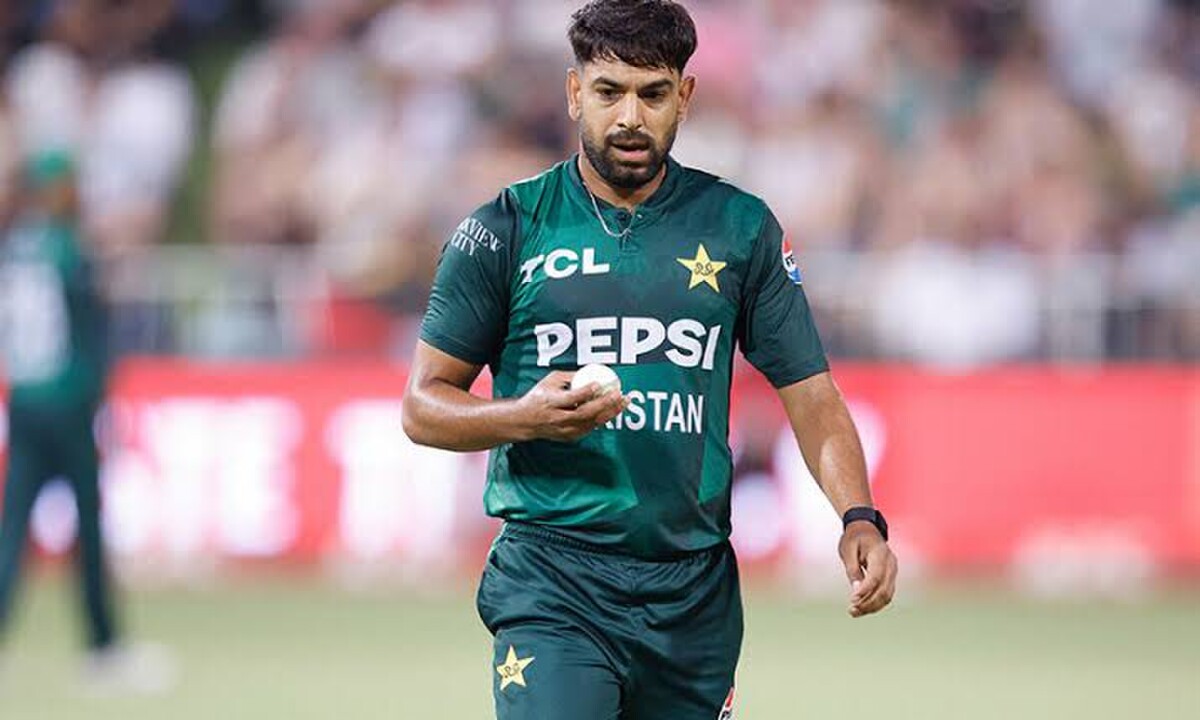
Haris Rauf, who has featured for Pakistan in most of the matches through this period, is well aware of the team’s shortcomings as they look forward to the next edition of the World Cup, set to be co-hosted by South Africa, Namibia and Zimbabwe in 2027.
Pakistan’s bowlers have averaged 4.11 dismissals between overs 11 and 40 in ODIs since the start of 2023. The figures underline the challenge facing a side that has often depended on early breakthroughs and late-innings bowling to contain opponents.
Speaking to reporters at Gaddafi Stadium on Friday, ahead of Sunday’s tri-series match against England, Haris acknowledged the importance of striking in the middle overs, warning that allowing batters to settle could leave the bowling side struggling to recover.
“If you do not take wickets in the middle overs, you will struggle as a team,” the fast bowler said. “If their middle-order batters or openers remain at the crease until the end, they can hurt you.”
Pakistan have made a promising start to the ongoing tri-series, beating Sri Lanka by 37 runs and England by 87 in their first two matches.
But the contest between England and Sri Lanka in Rawalpindi on Thursday, when the latter chased down a target of 430 after England posted 429-4, offered a reminder of how little room for error bowlers have on batting-friendly surfaces.
Haris believes the modern game demands more from both departments, with teams needing to prepare for totals well beyond 300.
“Nowadays, we may have to score 350-plus runs ourselves at the World Cup and chase totals of 350-plus as well,” he said. “The support for bowlers is a little less, but you have to keep working on your own skills and make the most of situations when conditions favour you.”
One potential source of assistance is reverse swing, particularly with the revised ODI playing conditions introduced in July last year.
Under the change, two new balls are used until the end of the 34th over, after which the fielding side chooses one ball to be used at both ends for overs 35 to 50.
Previously, a separate ball was used from each end throughout the innings, limiting the extent to which either could age.
Haris said the older ball could offer an advantage during daytime matches, when conditions were more conducive to reverse swing, but added that dew could reduce its effectiveness in night games.
The opportunity, however, is not enough on its own. Pakistan must translate any assistance into wickets, particularly during the middle overs, when established batters can accelerate and put the bowling attack under pressure.
Haris’ own recent domestic performances suggest that he has been working towards greater consistency and endurance.
The 32-year-old represented Pakistan Television in four matches of the ongoing President’s Trophy Grade-I competition, taking 18 wickets, averaging 20.11, including two four-wicket hauls and a best return of 5-34.
For a bowler whose rise was built largely on raw pace, domestic cricket has provided an opportunity to sharpen his control and build the capacity to bowl longer spells.
Haris, who emerged from Pakistan’s tape-ball circuit before earning recognition through Lahore Qalandars’ development programme, made his international debut in 2020.
“Domestic cricket is just as important as international cricket,” he said. “You go there and work on your mistakes. I tried to bowl longer spells, and having played four-day cricket, I feel that one-day cricket is not as difficult for me now. Your control over line and length improves.”
The stint has also prompted Haris to reiterate his willingness to return to Test cricket, a format that became the centre of a dispute between him and the then chief selector Wahab Riaz in late 2023.
Haris withdrew from Pakistan’s tour of Australia after initially being considered for selection, citing concerns over workload and fitness. Wahab said the team had planned to use him as an impact bowler in short spells and maintained that the management had received assurances about his availability. The disagreement escalated in February 2024, when the PCB terminated Haris’ central contract, citing his refusal to tour.
Haris said he had not been ready for the demands of Test cricket at the time but was now working towards making himself available if Pakistan needed him.
“I am looking at myself for that role as well. If the team needs a fast bowler or someone who can provide pace, why should I not make myself available?” he said. “If I get the opportunity to play red-ball cricket for Pakistan, I will certainly take it.”
For now, his immediate task remains helping Pakistan sustain their early momentum in the tri-series – in two matches of which he has bagged four wickets at 20 – while addressing a weakness that has persisted across formats and campaigns.
Haris insisted that criticism over runs conceded would not deter him, arguing that the demands of modern cricket meant even the best bowlers could have difficult days.
“Pace is very important. I work on my fitness and try to maintain it during the off-season,” he said. “I have managed to maintain my pace, and I will continue trying to do so.”
With the 2027 World Cup approaching, Pakistan’s challenge will be to ensure that pace, reverse swing and improved preparation translate into the breakthroughs that matter most.
For Haris, that begins with taking wickets when the opposition is building an innings, rather than waiting for the death overs to turn the contest.

 Login