❌

Reading view

Short-term inflation rises to 11.32pc in last week of October, driven by perishable food prices

ISLAMABAD: Short-term inflation rose to 11.32 per cent year-on-year in the week ending October 29, driven largely by perishable food products, according to official data released by the Pakistan Bureau of Statistics (PBS) on Friday.

The index, comprising 51 items whose prices are collected from 50 markets in 17 cities, is calculated weekly to track changes in the prices of essential commodities and services.

Short-term inflation has remained in double digits for several consecutive weeks, largely on the back of persistent increases in petroleum and diesel prices.

The data showed that of the 51 essential items monitored during the week, the prices of 15 commodities increased, while those of 12 items declined. Meanwhile, the prices of 24 items remained unchanged from the previous week.

The Sensitive Price Index (SPI), which tracks short-term inflation, decreased slightly by 0.35pc week-on-week, reflecting price fluctuations in both food and non-food items.

Unwilling to reduce the petroleum levy, the government has continued to raise petrol and diesel prices. The surge in energy costs is not only fuelling inflationary pressures but also indirectly boosting sales tax collections through higher prices of goods and services.

This is an example of cost-push inflation, in which rising energy costs lead to increases in food prices. As a result, households are facing mounting pressure from higher consumer prices.

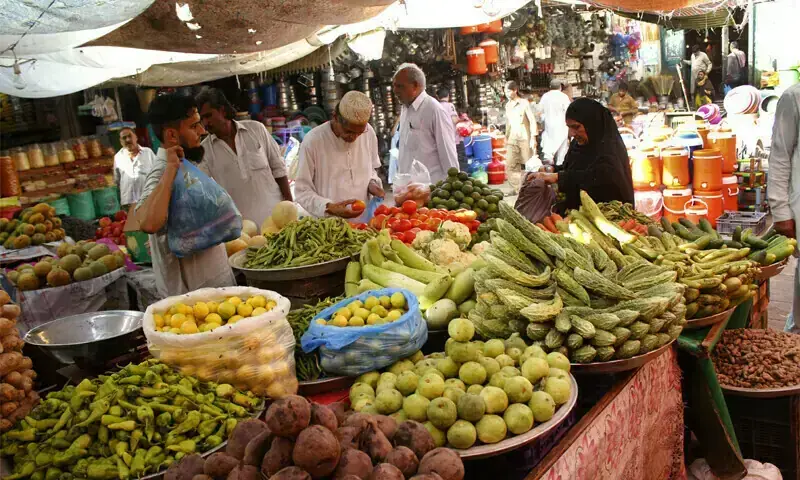
The items that recorded the highest price increases over the previous week included tomatoes (34.91pc), potatoes (3.27pc), diesel (2.53pc), pulse gram (2.11pc), plain bread (1.29pc), onions (0.62pc), fresh milk (0.48pc), curd (0.46pc), vegetable ghee (0.29pc) and firewood (0.2pc).

The items that recorded week-on-week price declines included electricity charges for Q1 (3.92pc), chicken (2.95pc), eggs (2.81pc), wheat flour (0.83pc), LPG (0.73pc), bananas (0.71pc), rice IRRI-6/9 and masoor pulse (0.43pc each), petrol (0.39pc), sugar (0.35pc) and powdered milk (0.33pc).

On an annual basis, the items that recorded the highest price increases included LPG (106.86pc), electricity charges for Q1 (52.38pc), diesel (45.13pc), petrol (43.61pc), wheat flour (34.87pc), chicken (31.72pc), chilli powder (15.55pc), mutton (14.66pc), plain bread (12.26pc), beef (12.10pc), onions (8.99pc) and prepared tea (8.41pc).

In contrast, potato prices fell by 38.67pc, followed by tomatoes (27.99pc), eggs (26.70pc), sugar (25.21pc), powdered salt (14.86pc), gur (8.51pc), masoor pulse (8.37pc) and moong pulse (6.42pc).

Last week, short-term inflation rose to 11.85pc year-on-year, driven largely by higher wheat flour prices, according to data released by the PBS.
  •  

Pakistan, China sign agreement to operationalise green channel at Sost-Khunjerab border

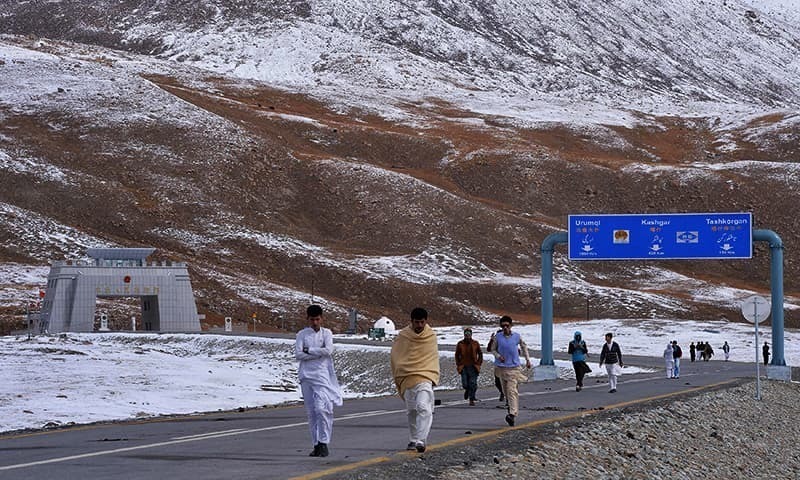
ISLAMABAD: Pakistan and China have signed an agreement to operationalise a green channel at the Sost-Khunjerab border for agricultural and allied products to facilitate bilateral trade.

The agreement was signed online between the customs administrations of the two countries at the Federal Board of Revenue (FBR) on Thursday. The Pakistani delegation was led by Member Customs (Operations) Syed Shakeel Shah, while the Chinese delegation was headed by Li Qinghua, deputy head of Urumqi Customs and director of Tashkurgan Customs.

According to an official announcement, the agreement aims to establish a green channel for an agreed list of agricultural products, allowing eligible consignments to undergo priority processing and examination while maintaining risk-based customs controls.

The arrangement also provides for enhanced information sharing and the exchange of risk alerts between the two customs administrations to strengthen coordination and improve cross-border trade management.

The agreement also provides for enhanced exchange of information and risk alerts between the two customs administrations to strengthen coordination and improve the management of cross-border trade.

It further envisages priority handling of perishable consignments to minimise delays and ensure their timely movement across the border.

The Pakistani delegation also included the chief collector of customs, Peshawar; the collector of customs, Gilgit-Baltistan; representatives of the Department of Plant Protection, NAFSA, Pakistan Single Window and the Ministry of Commerce; and the commercial counsellor at the Pakistan embassy in China.

The operationalisation of the green channel is expected to improve the efficiency of agricultural trade and strengthen customs cooperation between the two countries.

Khunjerab Pass connects Gilgit-Baltistan with China’s Xinjiang region and is the highest paved international border at 15,500 feet above sea level. Under the border protocol agreement signed between the two countries in 1985, the pass remains open for travel and trade between April and November. In winter, trade and travel are hampered by excessive snowfall.

Last year, Pakistan Customs collected Rs15 billion in revenue on imports from China through the Khunjerab Pass, breaking the previous record. Goods worth Rs2.8bn were also exported to China and Central Asian countries through the border crossing.

  •  

Regional trade deficit widens sharply

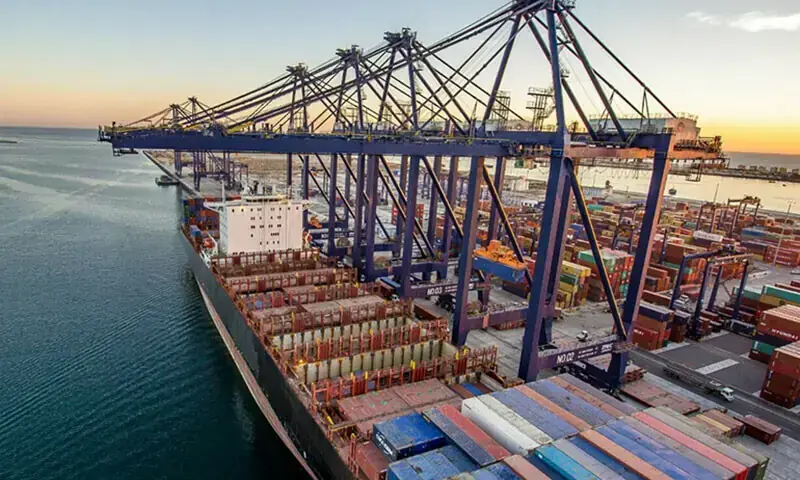
ISLAMABAD: Pakistan’s trade deficit with nine neighbouring countries widened by 26.62 per cent to $4.97 billion during the first quarter of 2026-27 compared to $3.93bn in the corresponding period last year.

The widening gap reflects a contraction in Pakistan’s exports to regional markets, largely due to reduced shipments to Afghanistan and Bangladesh.

Trade with Afghanistan, including exports, has remained suspended since Oct 10, 2025, further weighing on overall export performance.

Imports from China rose sharply during the July-September quarter, contributing significantly to the widening imbalance. Consequently, the bilateral deficit with China widened by $858.808 million, accounting for approximately 82.18pc of the increase in the combined deficit with the nine countries.

Gap with nine neighbours rises 26.6pc to $4.97bn in July-September

Exports to China rose marginally, while exports to Nepal also grew in percentage terms, though the increase remained negligible in dollar value.

In contrast, shipments to Afghanistan, Bangladesh and Sri Lanka declined, according to the latest data compiled by the State Bank of Pakistan.

Exports to nine countries—Afghanistan, China, Bangladesh, Sri Lanka, India, Iran, Nepal, Bhutan and the Maldives—fell 6.72pc to $944.24mn in July to September of FY27, down from $1.01 billion in the same period last year.

By contrast, imports surged 19.79pc to $5.92bn in 3MFY27 from $4.94bn in the same months of the previous fiscal year.

Further analysis showed that imports from China grew 19.76pc to $5.82bn in 3MFY27, up from $4.85bn over the same period last year. Pakistan’s exports to China grew 17.95pc to $663.57m in 3MFY27 from $562.56m in the same months of the preceding fiscal year.

Imports from India increased by 68.90pc to $61.74m in 3MFY27 from $36.55m over the last year. Meanwhile, no exports to India were recorded in the first quarter of FY27.

Exports to Afghanistan fell 88.34pc to $18.86m in 3MFY27, down from $161.76m last year. Imports stood at $0.25m in 3MFY27, compared with $4.52m in FY26, a decline of 94.40pc.

Pakistan’s exports to Bangladesh declined by 2.96pc to $174.77m in 3MFY27 from $180.12m over the last year. Imports dipped 36.11pc to $13.88m in 3MFY27 from $21.73m over the last year.

Published in Dawn, October 27th, 2026

  •  
❌