Remnants claimed to be photographed in Iran have been identified as belonging to a Raytheon ADM-160 Miniature Air-Launched Decoy (MALD). The wreckage was reportedly recovered after an Iranian interception that occurred earlier in the day, although the exact location and circumstances remain unconfirmed and there is reason for caution. Iranian state and military media have a long record of presenting unverified or exaggerated claims, especially during periods of conflict, and imagery released through those channels warrants independent scrutiny. Still, the MALD identification appears credible based on the visible wreckage, but its provenance, location, and the circumstances of its loss have not yet been independently established. MALDs were likely used at least in the opening stages of Operation Epic Fury, as well.
With that being said, the showing off of the MALD wreckage, regardless of its original use case, is something of a reminder that U.S. and Israeli forces are continuing to evaluate Iran’s electronic order of battle, which can include probing activities that leverage deception and decoys to better understand the state of Iran’s air defenses and command and control architecture. This is critical information that needs to be constantly updated for contingency and future potential air campaign purposes.
Wreckage of the MALD. Iranian media
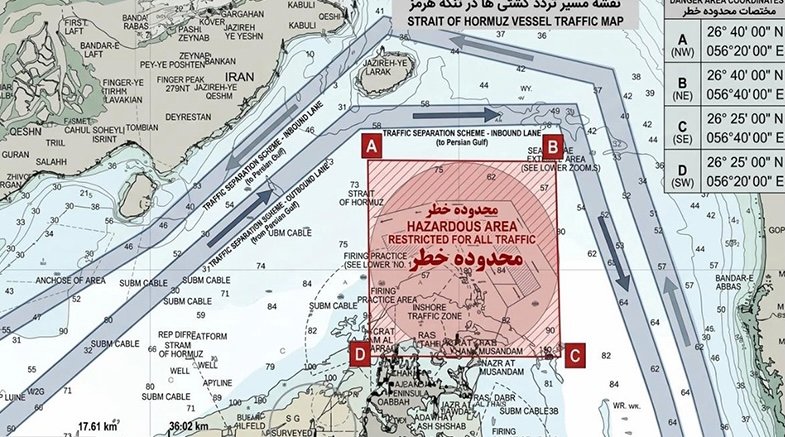
Iranian sources today reported the destruction of an Orbiter-type reconnaissance drone over the Strait of Hormuz, before the separate imagery emerged showing what appears to be the wreckage of a MALD. It is not yet clear whether the two reports refer to the same incident or separate losses.
A close-up of the wreckage of the MALD. Iranian media
The appearance of the wreckage could also shed a light on how the U.S. and Israel can conduct ongoing air operations against Iran, even if kinetic actions have largely slowed to a trickle.
15090 is the CAGE code for Raytheon, which is visible on the tail fins and other remnants.
MALD is an expendable store, launched from another aircraft. The ADM-160 family was developed to provide a flexible way of decoying and distracting an enemy’s air defenses, while also adding to the survivability of allied aircraft and standoff weapons. Raytheon won the U.S. Air Force development contract for the current-generation ADM-160B in 2003. The B design is significantly different from the initial A-model from Teledyne Ryan (later Northrop Grumman), the development of which had started in the late 1990s. The B also features a more powerful turbojet engine and possesses greater range.
MALDs being prepared for loading onto an aircraft. U.S. Air Force
The ADM-160B is approximately 6.5 feet long, has a wingspan of roughly 5.6 feet when deployed, and is powered by a small turbojet. It has an operational range of around 550 miles.
Rather than carrying a conventional warhead, the MALD carries equipment intended to reproduce the radar signature of specific aircraft or standoff weapons. It can therefore provide additional and often highly enticing tracks for an adversary’s radar operators and surface-to-air missile crews to respond to. It can be programmed to fly intricate routes to better rival the target it is emulating and to provoke the attention of air defenders.
The related ADM-160C MALD-J adds an electronic warfare capability, allowing it to perform stand-in jamming and other forms of active electronic attacks against enemy air defense nodes. Further improved variants of the MALD, which the U.S. Navy has also been acquiring, have since been developed as you can read more about here.
The exact variant involved in today’s incident cannot be established from all publicly available imagery at this stage.
An ADM-160B under the wing of a U.S. Air Force B-52 bomber. U.S. Air Force
The possibility that the United States had used MALDs against Iran had already attracted considerable attention following Operation Midnight Hammer, the U.S. strike against Iranian nuclear facilities in June 2025.
During the operation, U.S. officials described a complex deception plan involving aircraft and other decoy measures designed to prevent Iran from determining the true direction and composition of the attack.
This strongly pointed to MALD as one likely component of that deception architecture.
In the Strait of Hormuz context, the MALD could serve a dual purpose. It could act in its primary role, as a defensive measure for allied aircraft and standoff weapons, drawing Iranian air defense systems away from it and toward the decoy. It can also be used more independently, triggering Iranian defenses and revealing their locations and operating characteristics, as well as the state of Iran’s command and control for those assets. Surveillance platforms, especially those in the air, can then soak up all that signals data. This can then be used to generate intelligence for future operations, and all without putting a person or an expensive piece of equipment at risk.
The unique nature of the current state of the Iran conflict would allow for MALD to be used in this unique manner. While kinetic actions have become sporadic, they are still occurring, so firing a decoy that looks like something much more threatening to Iranian air defenders would not be an unprecedented escalation.
An ADM-160 MALD in flight. Raytheon
Iran has characterized the incident as a shoot-down. If Iranian forces did successfully engage the MALD, that would represent a real air defense interception of a U.S. deception system, although these are expendable by design. It is equally possible that the MALD malfunctioned or just flew its route and ran out of fuel and crashed, as designed.
The wreckage also does not, by itself, identify the aircraft that launched the MALD.
The system has been integrated with a broad range of U.S. aircraft. In the course of U.S. operations against Iran, we have notably seen Air Force A-10C Thunderbolt II attack jets returning from theater with markings depicting MALD missions.
An A-10 with mission marks showing a mix of weapons used against Iranian targets. They include MALDs, Small Diameter Bombs, GBU-12 Paveways, Advanced Precision Kill Weapon System (APKWS) laser-guided rockets, AGM-65 Maverick air-to-surface missiles, and generic bombs that probably signify Joint Direct Attack Munitions (JDAMs). Andrew McKelvey
It is also worth noting that the MALD wreckage has appeared at the same time as reports of unusual, UAP-like objects over Iran, with videos and eyewitness accounts circulating online. Their authenticity and nature remain unclear.
A number of videos are circulating showing an unidentified object in the skies above Tehran, Iran, it’s not immediately clear what is being filmed. pic.twitter.com/bHNAQGFPNv
Such reports come amid an increasingly sophisticated use of low-end drones, decoys, and other forms of deception. These kinds of systems can be employed not only to stimulate adversary air defenses, but also to distract populations and probe how information moves out of a denied area. In such an environment, unusual aerial sightings should be viewed with caution — but not necessarily dismissed as irrelevant. We have been talking about how new forms of misdirection and guile will leverage relatively low-end technologies in future conflicts for many years now. While it isn’t clear if this light show in the sky over Iran was such an activity, it is certainly a reminder to keep that possibility in mind.
I don’t know what this is, or if it’s legit BUT remember we are in a new age of misdirection, decoy and guile. Specifically using low end drone technology. There are more ways to stimulate an enemy air defense system, distract a populous, assess the flow of public info from a… https://t.co/wW7YVlbayB
Meanwhile, the prospect of renewed U.S. strikes is increasingly being raised on both sides. Iran’s central military command said Sunday that it had received information that Washington was preparing to resume attacks, while President Donald Trump toldFox News that he was in a “deciding mode” and was considering further military action alongside economic pressure and a deal.
Trump had also told Axioslast week that he was approaching a major decision on whether to resume large-scale military operations, with U.S. forces in the region being maintained at current levels through the end of the year.
Iranian officials have warned that a renewed U.S. attack would trigger retaliation against American forces and interests across the region. At the same time, Qatar and Pakistan are pursuing diplomatic efforts to restart negotiations.
This situation is exactly why keeping as detailed intelligence on the status of Iran’s air defense overlay would be so critical. Building a highly detailed electronic order of battle and maintaining it is critical to the effectiveness of future air operations. There is usually an observable burst of such activity prior to a major operation kicking off, as well. There are also many unseen assets that help with this, from those in space to those in the air and even those under the sea. There have been reports of Israel’s secretive RA-01 stealth flying wing drone being spotted over Iran and of course the U.S. has its own RQ-170 and RQ-180 aircraft, just to name a couple known penetrating assets that are likely highly capable of collecting this information.
Regardless, the U.S. and Israel will have a lot of ‘maintenance’ to do in order to roll back any air defense capabilities Iran has been able to reconstitute should hostilities break out in full again, and a lot of critical intelligence data will need to be up-to-date in order to support such an operation.
Yuval Abraham and Rachel Szor find themselves at the center of a political clash involving the Israeli Prime Minister, two government ministers, and top intelligence officials. The catalyst is *Naza*, the documentary they presented at the 83rd Venice International Film Festival—a film that, in just a few days, transformed them from acclaimed filmmakers into targets of accusations of treason.
After declaring he would seek to revoke their Israeli citizenship, Israeli Culture Minister Miki Zohar made a fresh appeal to Shin Bet chief David Zini, urging him to investigate how various materials were obtained. The film features testimony from 24 anonymous Israeli intelligence soldiers denouncing the techniques used by the Israeli military to kill civilians in Gaza.
In a letter to Zini, Zohar asks the agency to investigate whether there was any illegal use of sensitive or classified information.
“When anonymous sources are used to spread serious, false accusations against the State of Israel and the IDF during wartime, it is imperative to establish who is behind these allegations,” Zohar stated. “I have asked the head of the Shin Bet to investigate the source of the material, who provided it, and whether hostile elements were involved,” the minister added.
Reactions from Israeli officials following the Venice screening
Immediately after the documentary film was presented in Venice, Culture Minister Miki Zohar called the film “vile” and announced plans to “act immediately” to revoke the Israeli citizenship of Abraham and Szor.
He accused them of “treason against the State” and of a “self-loathing” that drives them to harm their own homeland in order to garner applause from “antisemites around the world.” Zohar stated that he had contacted senior officials at the Ministry of the Interior and the Population Authority to evaluate revoking their citizenship on the grounds of a breach of loyalty to the country.
Joining the chorus of accusations were Army Chief of Staff Eyal Zamir—who claimed the film relied on “blood libels and deliberate distortions of reality”—and National Security Minister Itamar Ben-Gvir, who called on the pair to leave the country.
Finally, Prime Minister Benjamin Netanyahu linked the case to broader “antisemitic incitement” and lashed out at opposition political forces.
The Israeli military largely rejected the documentary’s content, maintaining that it could not verify the identities or military roles of the anonymous sources and reiterating that it does everything possible to avoid civilian casualties.
IDF chief floats legal action against ‘NAZA’ film, orders probe of leaked material
IDF Chief of Staff Lt. Gen. Eyal Zamir on Monday instructed the military’s top legal official to examine legal action against the film “NAZA” and those involved in it, saying it defamed the military, and separately ordered an investigation into the leaking of classified material used in its production.
His comments came shortly after IDF Spokesperson Brig. Gen. Effie Defrin issued a statement inviting the documentary’s filmmakers to allow military officials to view the film in full so that the IDF could respond in a “substantive manner.” So far, the military has only reacted to clips of the movie posted online, and has not yet seen the full documentary.
The 80-minute film by Yuval Abraham and Rachel Szor — whose title is a Hebrew acronym meaning collateral damage — claims to explore AI-powered strikes by Israel in the Gaza Strip it alleges have led to civilian deaths, including testimonies from 24 purported Israeli intelligence soldiers.
The risks of returning to Israel
In the days following the award, Yuval Abraham recounted deleting his social media profiles after being inundated with offensive photomontages targeting both him and his mother; he openly admitted his fear: “Israel is my home… but now, obviously, I am afraid I won’t be able to return.” Abraham had also rejected the idea of positioning himself as a voice of moral superiority, explaining that, as Israelis, they all feel—to some extent—co-responsible for what occurred in Gaza.
The process of stripping Abraham and Szor of their Israeli citizenship—which they hold by birth—is neither swift nor within the sole authority of the Minister of Culture, who lacks the legal power to order it.
Under Israeli law, citizenship can only be revoked in limited cases involving a proven “breach of loyalty” to the State—as established by a 2022 Supreme Court ruling. The procedure requires the Minister of the Interior to submit a request to the Minister of Justice, followed by final approval from a panel of judges. It is, therefore, a lengthy and uncertain process—one that has never before been applied to a case involving journalism or filmmaking.
A more immediate prospect, at least from an investigative standpoint, is Zohar’s request for the Shin Bet to investigate the origins of the material used in the film.
Such an inquiry could lead to investigations into potential offenses related to the disclosure of classified information, carrying criminal consequences not only for the filmmakers but also for the military sources who collaborated anonymously.
Compounding this is the immediate concern for the two creators’ personal safety—a fear fueled by past incidents, such as the assault on Hamdan Ballal following the Oscar win for *No Other Land*.
Pakistan should honor its defense commitments to Saudi Arabia through strictly defensive cooperation and protection of maritime commerce, while avoiding offensive military action against the Houthis that could drag Islamabad into a wider Middle Eastern conflict, alienate Iran, and deepen its domestic and strategic vulnerabilities. The Makkah Joint Defense Agreement between Turkey, Pakistan, and Saudi […]
The 31st Marine Expeditionary Unit’s (31st MEU) recent deployment to the Middle East marked the first time the United States Marine Corps (USMC) used its Expeditionary Advanced Base Operations (EABO) concept in a combat setting, the service confirmed to TWZ on Thursday. At its core, EABO involves relatively small groups of Marines quickly establishing bases of operation in forward areas, often within the enemy’s weapons range. During operations in the fight against Iran, Marines refueled and rearmed their own aircraft, as well as those from the joint force, at these austere locales. They also set up remote sensing locations, among other actions from the EABO playbook.
This employment of EABO for Epic Fury is a highly significant development. After years of progressively evolving the EABO playbook, it was no longer an experimental exercise. This meant that Marines were forward deployed in a contested area in a region where established bases were taking heavy fire from Iranian missile and drone barrages. Troops were killed in some of these attacks and U.S. aircraft, buildings and equipment were damaged and destroyed across the Middle East. Pushing aircraft from the MEU, as well as the joint force, to FARPs (forward arming and refueling point) would have been a relevant asset preservation tactic as well as one that would help accelerate combat operations, and it’s exactly what EABO is meant to do.
The 31st MEU’s six-month deployment began in January in the Pacific, before the unit was ordered to the Middle East in March, returning to Okinawa, Japan, in July. That’s where it is stationed as the USMC’s only continuously forward-based MEU.
A map of the 31st MEU’s deployment. (31st MEU)
“This was the first time we were able to implement EABO in combat operations since the concept was created for the force,” Capt. Steven J. Keenan, a USMC spokesperson, told us. “We have practiced it many times, but this was a first for supporting a Joint Force named operation with forward FARPs and forward bases that supported joint ops and combat power sustainment.”
EABO was first introduced in 2020 by then-Commandant Gen. David Berger in his Force Design 2030 plan for the future of the Corps. It was created with a fight against China in mind, especially utilizing small Pacific islands. The idea is to have highly mobile, low-signature forces deployed forward in austere, contested or potentially contested maritime locations. The mission is to “support sea control operation, conduct sea denial operations within the littorals, contribute to maritime domain awareness, provide forward command, control, communications, computers, combat systems, intelligence, surveillance, reconnaissance, targeting, and counter-targeting capability and forward sustainment,” according to the Marines.
A Marine holding a Stinger missile launcher stands in front of a Combat Rubber Raiding Craft on Ukibaru Island off the coast of Okinawa during Exercise Hagatna Fury 21. (USMC) A Marine holding a Stinger missile launcher stands in front of a Combat Rubber Raiding Craft on Ukibaru Island off the coast of Okinawa during Exercise Hagatna Fury 21. USMC
The news of the first activation of the EABO concept in combat came Wednesday during a media roundtable with Col. Chris P. Niedziocha, who commanded the 31st MEU during its deployment to the Middle East in support of Operation Epic Fury. Now director of the USMC Expeditionary Warfare School, Niedziocha discussed EABO and a range of other operations during that deployment, including boarding vessels during the blockade of Iranian ports.
The 31st MEU was embarked aboard the Tripoli Amphibious Ready Group (ARG), which consisted of the America class amphibious assault ship USS Tripoli, San Antonio class amphibious transport dock ship USS New Orleans, and Whidbey Island class dock landing ship USS Rushmore. You can read more about the ARG/MEU and its assets in our initial story about the deployment to the Middle East here.
USS Tripoli. (Staff Sgt. Samuel Ruiz)
“You’re starting to see this has been validated,” the colonel said of the EABO concept during the roundtable TWZ attended virtually. “It’s still nascent, but we actually, for the first time, demonstrated what we thought we were able to do, which I think is pretty exciting. And then things like forward arming and refueling to extend the operational reach of aircraft and expeditionary reloading, and then the ever-present logistic challenge of doing something like that. So that’s pretty significant.”
“We successfully implemented critical Expeditionary Advanced Base Operations (EABO), establishing sensor expeditionary advanced bases and forward arming and refueling points (FARPs) where none existed,” the colonel added. “Through our forward logistic elements, we proved that an agile Marine Air-Ground Task Force can sustain itself and generate ready, lethal power in contested maritime environments, directly setting the theater for follow-on joint forces.”
“There was all manner of tankers all the time, but the FARP is to extend the operational reach, and if you can do it, you reduce the load on that,” Niedziocha noted. “Because there’s some aircraft that are basically for expeditionary austere operations, especially the F-35B,” the Marine Corps’ variant of the aircraft designed for short take off and vertical landing.
“There are some trade-offs associated with the Bravo,” Niedziocha pointed out, using a slang for the jets. “There’s less internal fuel, but you have the lift [system], which gives you the option to do these kinds of things. So, the goal there was to walk that fine line between providing the full sortie over wherever you needed it, and keeping the ships far enough away to make them as survivable as possible.”
An F-35B Lightning II aircraft taxis to a forward arming and refueling point in the U.S. Central Command area of responsibility, May 26, 2026. (U.S. Marine Corps photo by Cpl. Maksim Masloboev) Cpl. Maksim Masloboev
In addition to the F-35Bs and other aircraft organic to the 31st MEU, the FARPs were also used by Army helicopters, Keenan told us. Imagery posted on the Pentagon’s image distribution site also showed U.S. Army Gray Eagle drones and Marine MV-22B Osprey tiltrotor aircraft were included.
A Gray Eagle drone lands at a forward arming and refueling point in the U.S. Central Command area of responsibility, May 26, 2026. (U.S. Marine Corps photo by Cpl. Maksim Masloboev) Cpl. Maksim MasloboevU.S. Marines with the 31st Marine Expeditionary Unit transport AIM-120 AMRAAMs to a forward arming and refueling point in the U.S. Central Command area of responsibility, May 26, 2026. (U.S. Marine Corps photo by Cpl. Maksim Masloboev) Cpl. Maksim Masloboev
Niedziocha did not provide details about where the FARPs were set up, but a U.S. defense official told us they were “disaggregated throughout the Middle East.” The official declined to provide further information, citing operational security concerns since they are still being used.
“Throughout the deployment, the Tripoli ARG and 31st MEU successfully conducted over 1,600 mishap-free flight hours of combat aviation missions, including precision strikes, transporting 800,000 pounds of cargo, and moving 5,000 personnel,” a 31st MEU overview of the deployment explained. “The units also provided sustained combat support to joint force operations by delivering critical intelligence and refueling over 300 aircraft ashore and underway.”
The colonel also didn’t provide details about the sensor expeditionary advanced bases. According to the Marines, “a sensing expeditionary advanced base (SEAB) brings together coastal surveillance radars, electronic sensors, and Marines ashore to extend maritime domain awareness, complementing the radars and sensors already at work aboard naval ships off the coast.”
“When SEAB systems identify surface vessels in nearby sea lanes, small unmanned aircraft system (sUAS) operators launch their platforms to visually identify and track the contacts,” the Marines added. “Sensor data and imagery are transmitted in real time across the blue-green command network to decision-makers.”
U.S. Marines with 12th Marine Regiment, 3rd Marine Division, prepare to set up a Ground/Air Task Oriented Radar (G/ATOR) system during a routine unit level training exercise on Iejima, Okinawa, Japan, July 15, 2023. (U.S. Marine Corps photo by Staff Sgt. Manuel A. Serrano) Gunnery Sgt. Manuel Serrano
This capability could have been used to track Iran’s remaining fleet of small boats that it has used to harass shipping and mine the Strait of Hormuz, as well as larger vessels trying to transport oil. Other sensors, like radars and counter-drone systems, could also help identify incoming threats and provide general situational awareness. The EABO concept was employed as part of the 31st MEU’s larger role in supporting the blockade and mine clearance efforts.
The 31st MEU interdicted four vessels during the deployment, three of which led to boardings. On April 19, Marines boarded the MV Touska; on April 28, the MV Blue Star III; and on May 19, the MT Celestial Sea.
The Touska was boarded after USS Spruance fired multiple 5-inch rounds, targeting the engine room and disabling the vessel’s propulsion. The crew of the vessel was retained for about two weeks before being repatriated.
Niedziocha told us that none of the crews offered any resistance.
“At two in the morning, when 30 Force Reconnaissance Marines fast rope onto your vessel, [you are] just compliant with a capital C. They did exactly what they were directed to do. The overmatch that you put onto that vessel is pretty surprising. And then there’s overwatch provided by UAS and manned aircraft, so you create this bubble around the vessel. So yeah, they complied.”
You can see the Touska being boarded in the following video.
The U.S. just released a video of its forces boarding and seizing the Iranian container ship M/V Touska near the Hormuz Strait after it tried to break the U.S. naval blockade pic.twitter.com/FpB2obb3jY
Two years ago, as the EABO concept was maturing, TWZ was invited to get an exclusive look at how an advanced EABO concept would be put into action, including how squadrons operated the F-35B out of an austere combat environment while generating combat sorties. It was an unprecedented and exclusive peek into the EABO playbook and what a real fight in the Pacific with the USMC’s most advanced fighter aircraft could actually look like. You can read about that in our story here. It appears the operations in the Middle East mirrored this exercise closely.
James Deboer
Now back in Japan, the ARG/MEU is getting ready for a new deployment, said the colonel.
“We got back to Okinawa, I think July 22nd, and they had already begun their workup cycle in earnest to be on the water in early January to go out and do another Iron Fist [training exercise] with the Japanese, and then long periods of a crisis response,” said Niedziocha, who relinquished command in August before moving on to his new role. “Just being there, present in the First Island Chain to partner with your allies, demonstrates the resolve and commitment to deter whatever needs deterring.”
As noted earlier in this story, the EABO concept was designed with a Pacific fight in mind. Its first combat employment in the Middle East clearly offers lessons that can now be adapted to enhance EABO operations globally.
The proposed deal, worth an estimated total cost of $24.3 billion, was announced as the Kingdom is in the midst of a fierce fight against the Houthi rebels of Yemen. It marks a major policy shift, with Washington previously being unwilling to export the advanced stealth fighters to Arab states and will likely serve as a reminder at a very challenging time for the Saudis of the unique security capabilities that only the U.S. can provide them.
In addition to the jets, which will be conventional takeoff and landing variants, Saudi Arabia has requested 49 Pratt & Whitney F135-PW-100 engines, support and other items.
Despite concerns from Israel that providing Saudi Arabia with the advanced fighters will tip the balance of power in the region, the proposed sale of this equipment and support “will not alter the military balance in the region,” the State Department noted.
The United States has a requirement to maintain Israel’s so-called qualitative military edge, which essentially guarantees that Israel will be prioritized for advanced U.S. weapons ahead of Arab states in the region. Among these advanced weapons, the stealthy F-35 is highly prominent.
You can read our past feature about the wide-ranging impacts of an F-35 sale to Saudi Arabia here.
Israeli Air Force F-35i fighters. (Israeli Air Force)
“This proposed sale will support the foreign policy and national security objectives of the United States by improving the security of a major non-NATO ally that is a force for political stability and economic progress in the Gulf region,” the State Department wrote. “The proposed sale will improve Saudi Arabia’s capability to deter current and future threats by strengthening its homeland defense, and improving interoperability with U.S. forces, and other regional and NATO forces. The proposed sale will also augment Saudi Arabia’s operational aircraft and enhance its air-to-air, and air-to-ground self-defense capability. The Kingdom of Saudi Arabia will have no difficulty absorbing this equipment and services into its armed forces.”
In November, “President Trump approved a major defense sale package, including future F-35 deliveries, which strengthens the U.S. defense industrial base and ensures Saudi Arabia continues to buy American,” according to the White House.
Trump has pushed for closer ties between Israel and Saudi Arabia and wants the Kingdom to join the Abraham Accords initiative. This is a set of agreements that establish normalized diplomatic relations between Israel and different Arab states. Doing so would be a major breakthrough, following the United Arab Emirates, Bahrain, Morocco, and others.
A Saudi F-35 deal was also discussed under the Biden administration, as part of a broader deal that sought to normalize the Kingdom’s relations with Israel.
The head of Air Mobility Command (AMC) on Wednesday offered some new details about what went into repairing a KC-135 Stratotanker riddled with shrapnel holes from an Iranian attack. We have previously written about a couple of these jets damaged during Operation Epic Fury (OEF) as they came through RAF Mildenhall in the U.K. on their way back to the U.S. for comprehensive repair work. We are also getting new information of how AMC kept its fleet operating at such a prolonged high-tempo ahead of and during OEF.
A U.S. Air Force maintainer performs preflight maintenance on a KC-135 Stratotanker refueling aircraft at a base in the Middle East, April 30, 2026. (U.S. Air Force photo by Master Sgt. James Cason) Master Sgt. James Cason
“A KC-135 ops crew is in the jet,” he said. “KC-135 maintenance team is about to launch this jet. Unexpected Alarm Red [an attack warning]. Everyone jumps in a bunker.”
After the barrage, the airmen emerged from their bunkers and checked out the plane.
“That aircraft is smoking,” Tulley said. “There are holes in it, and it’s a fully loaded KC-135. Two hundred thousand pounds of jet fuel. Took 48 hours for that [fuel] to be drained out of that aircraft. In the meantime, first on the scene was I think the pro super [production superintendent] and the expediter. They immediately began to collect the fuel… They start to patch the holes. They start to fix all the systems. Long story short, they were eventually able to get that plane to make a transoceanic flight back home to be fully repaired.”
Tulley did not say where the attack took place. However, as we have previously reported, five tankers were reportedly damaged in an Iranian long-range strike on Prince Sultan Air Base (PSAB) in Saudi Arabia on March 14. That was later confirmed in a Department of War Inspector General report released earlier this week.
You can see two of the shrapnel-damaged KC-135s as they passed through the UK on the way home in the following photographs shared with us by aviation photographer Andrew McKelvey. We do not know if either of these is the one discussed by Tulley.
(Andrew McKelvey) (Andrew McKelvey)
Lt. Gen. Linda Hurry, Commander of Air Force Materiel Command (AFMC), followed Tulley’s comments with additional details about the repair work.
“I’ll pick right up on that because it was our aircraft battle damage repair team that was actually able to patch their aircraft back together to get it back to Tinker [Air Force Base in Oklahoma] that can put it completely back where it needed to be,” she noted. Tinker is home to the Expeditionary Depot Maintenance (EDMX), which is “responsible for maintaining the Air Force’s sole source for Aircraft Battle Damage Repair (ABDR) rapid repair capabilities for the entire tanker and bomber fleets,” according to the Air Force.
“So with Operation Epic Fury, we’re asking those questions: What can we sustain for how long? And it begs a question about regeneration,” Tulley further explained. “You know, our new teammates have regeneration as part of their doctrine, so readiness in contact is the way we’re approaching this. What can we do to improve how we generate capability while under fire, in contact, persistently in an extended or protracted conflict? Lots of great examples of work being done to get after this. General Hurry’s team has brought a lot of capability forward at Mildenhall Air Base.”
One example of how this has worked has been repairing damaged aerial refueling booms in the U.K. instead of all the way back to the U.S., Tulley highlighted. The booms, which extend from the back of tankers so that receiving aircraft can get their gas, can be damaged by the process, especially during combat refueling.
“I think we turned 30 booms instead of bringing them all the way back to the states,” Tulley noted.
A KC-135 refueling boom. (USAF)
Repairing battle damage is certainly a unique situation for AMC airman, but keeping hundreds of the command’s tankers and cargo aircraft moving at such a high rate prior to and during the war was a huge undertaking that was helped by new maintenance concepts. The Air Force sent maintainers and parts to bases in Europe to drastically speed up major maintenance that would have demanded the aircraft return stateside.
“We moved some maintenance actions forward, so they didn’t have to – the aircraft didn’t have to go all the way back to the states,” Air Force Chief of Staff Gen. Kenneth S. Wilsbach said during his keynote speech earlier this week. “We put some of them in Europe, so they could get through some normal safety inspections that were either due or deferred. Got those done, and the aircraft doesn’t have to go all the way back to the states. They can go somewhere in Europe, get the thing done, and then get right back to the flight. And so, those measures by Air Mobility Command paid dividends in the readiness of our mobility fleet.”
Air Force Global Strike Command (AFGSC), which maintains the service’s fleet of strategic bombers and its ICBM force, did something similar at RAF Fairford in the U.K., AFGSC commander Gen. Stephen L. Davis explained.
“It’s a complex problem,” said Davis. “I would say in the past we probably didn’t do this the right way. When we thought a conflict was kicking off, the first thing we do is start sending bombers forward, and that actually consumes our readiness. So I think we got it right during OEF.”
“We pushed maintainers and support personnel forward to RAF Fairford, and then we actually took the bombers, we loaded them up in CONUS [Continental United States]. We took them to the Middle East. They actually did a mission. They employed, deployed, conducted a combat mission, and then landed at Fairford. And then for the next, well, I guess they’ve been there for now six-plus months.”
“They’ve been conducting nearly daily operations out of there,” Davis proffered. “When bombers are back at home base, they build readiness. When we deploy it forward, they consume readiness. And then, as [Gen. Hurry] said, we’re getting great support in terms of parts, in terms of supplies, and in terms of forward depot support. So that fleet remains healthy.”
A U.S. Air Force B-1B Lancer at RAF Fairford, England, July 15, 2025. (U.S. Air Force photo by Tech. Sgt. Robert M. Trujillo) Tech. Sgt. Robert Trujillo
Being able to do as much repair and maintenance work as close to the front lines as possible will be hugely important in any future fight against China, and, unfortunately, repairing battle damaged aircraft will be necessary too. Clearly, the Air Force has learned some very important lessons from Epic Fury.
Yemen’s Houthi movement, formally known as Ansar Allah, has released imagery that it says shows the downing of a Royal Saudi Air Force F-15 fighter over Marib governorate. The material includes photos of the wreckage of an F-15 on the ground. At this stage, the fate of the two crew members is unclear. The incident comes amid a major escalation in fighting between Saudi Arabia and the Iran-aligned Houthi movement.
A video of what Ansar Allah says is the successful shootdown of the F-15 shows the typical ground-based forward-looking infrared (FLIR) systems we have seen in use by air defenses in Yemen previously, and, more recently, in Iran.
Onboard footage of a Houthi SAM system shooting down a Saudi F-15 overnight over Yemen’s Marib province. pic.twitter.com/6mh23B2Ovu
After a period of relative calm following the 2022 truce, fighting has intensified in recent weeks, with Houthi forces making significant advances against Saudi-backed Yemeni government positions, including around the strategically important coastal areas of Marib and Taiz. The group has also stepped up missile and drone attacks against southern Saudi Arabia, targeting military and energy infrastructure while strangling the kingdom’s ability to move oil through the Red Sea. The Houthis have further declared the Bab el-Mandeb closed to Saudi oil traffic, directly challenging one of Riyadh’s key energy-export routes.
An aerial view of the apparent impact site. Houthi-controlled mediaThe impact site seen from the ground. Houthi-controlled media
Prior to the release of imagery, earlier today the Houthi military spokesman Brig. Gen. Yahya Saree claimed that Houthi forces had shot down a Saudi F-15 while it was conducting operations in support of Saudi-backed forces in Marib. Saree said the aircraft was engaged by a locally manufactured surface-to-air missile, although he did not identify the weapon. Reuters likewise reported that the Houthis had claimed the shootdown but that the claim had not been independently verified.
Saree also claimed that Houthi air defenses subsequently engaged formations of Saudi F-15s and Eurofighter Typhoons that entered the area while attempting to locate the downed aircraft. According to the Houthi account, those aircraft were forced to withdraw. That portion of the claim has likewise not been independently verified.
Saudi Arabia has not, at the time of writing, publicly acknowledged the loss of an F-15. Reutersreported that the Saudi-led campaign had intensified considerably in recent days, with Saudi aircraft striking targets across Yemen while the Houthis have launched missiles and drones toward Saudi territory.
The aircraft appears to be an F-15SA, the most advanced variant of the Eagle operated by the Royal Saudi Air Force. Specifically, it appears to be tail number 5539, assigned to the 55th Squadron based at King Khalid Air Base.
A close-up of one of the tailfins with the apparent tail number 5539. Houthi-controlled mediaAnother view of one of the tailfins. Houthi-controlled media
The Royal Saudi Air Force received 84 of the new-build F-15SA. Meanwhile, the 68-strong fleet of earlier F-15S aircraft has been upgraded locally to a similar standard, also known as F-15SR (for Saudi Retrofit). Aircraft 5539 is understood to be among the latter.
The reported shootdown highlights the continuing threat posed by Houthi air defenses, which have proven considerably more capable and difficult to suppress than their improvised appearance might suggest.
As TWZ has previously detailed, the Houthi air-defense network includes mobile surface-to-air missile systems, repurposed infrared-guided R-73 and R-27 air-to-air missiles, and Iranian-derived systems such as the Saqr/358.
Houthi Thaqib-1 surface-to-air missiles (repurposed R-73s) in front of Thaqib-2s (repurposed R-27). Other Houthi air defense missiles are also seen at the rear. Houthi-controlled media
Of particular concern is the group’s use of passive infrared sensors for detection, tracking, and missile cueing. Unlike conventional fire-control radars, these sensors do not provide an aircraft’s electronic-warfare systems with an early warning that it has been detected or targeted. TWZhas noted that this combination of mobility and passive sensing can create a difficult problem even for highly sophisticated combat aircraft, with the Houthis having previously demonstrated the ability to threaten U.S. crewed and uncrewed aircraft.
That capability does not mean that Houthi air defenses constitute a conventional, integrated air defense network comparable to those operated by major state militaries. However, they can still be effective through a combination of concealment, mobility, passive detection, unconventional employment of missiles, and the difficult operating environment over Yemen.
Previous Saudi aircraft losses attributed to Houthi air defenses during the Yemen war from 2015 to 2022 include several helicopters, fixed-wing aircraft, and drones. Total Saudi losses to all causes in the conflict amount to around a dozen helicopters, five jets, and as many as 30 drones. A Saudi F-15 crashed in the Red Sea at the start of the war in 2015 and Eagles were also reportedly engaged and damaged by Houthi surface-to-air missiles in 2018, although they returned safely.
Video footage that emerged in 2021 shows Saudi troops on the ground watching an F-15 swoop in a relatively low level to knock down a Houthi Qasef-series suicide drone:
In the past, Houthi forces have come close to engaging U.S. F-35s and have repeatedly demonstrated an ability to bring down MQ-9 Reaper drones. If the Saudi F-15 loss is ultimately confirmed, determining precisely how the aircraft was detected, tracked, engaged, and hit could therefore provide valuable insight into how this unusual air defense architecture is being employed against Saudi and other combat aircraft.
As we discussed at the time, the clear risk posed by Houthi air defenses is likely the main factor behind Saudi employment of a Chinese-made short-range ballistic missile (SRBM) in the current fighting with Yemen.
The timing of the reported shootdown is also notable. It comes amid a sharp escalation in the conflict, with Saudi Arabia conducting air operations against Houthi positions in Yemen and Ansar Allah launching missiles and drones toward targets inside Saudi Arabia. Reutersreported that the Houthis had attacked the Saudi Red Sea port of Yanbu and a southern airbase at Khamis Mushait, while Riyadh has reported intercepting Houthi drones.
The F-15 incident also follows a separate confrontation over an alleged Houthi drone attack near Mecca. Saudi authorities said their air defenses intercepted and destroyed a Houthi drone south of Mecca before it entered the restricted airspace over the city. The Houthis denied targeting the holy city.
Meanwhile, there are reports that U.S. officials met representatives of the Houthis in Oman over the weekend, with the Houthis apparently telling the U.S. officials that they had no intention of attacking American vessels and that they remained committed to the 2025 ceasefire with the United States unless they stepped in on behalf of Saudi Arabia. The Kingdom reportedly requested exactly this in recent weeks but was denied.
For the moment, the most that can be established from the available imagery is that a Saudi F-15 was destroyed, with Ansar Allah claiming responsibility.
This is a developing story and will be updated as additional imagery, official statements, or other independently verifiable information becomes available.
As American troops face renewed danger in the Middle East, with Iran striking U.S. positions across the region, President Donald Trump is busy contemplating something rather more personal: renaming the Strait of Hormuz the “Trump Strait.” Perhaps “The Trump Quagmire” would be more appropriate—not as a name for a body of water, but for a […]
Even as Americans commemorate the pain of the September 11 attacks, at the same time, the Houthis of Yemen, under coordination along the “axis of resistance,” are taking absolute control of the Bab el-Mandeb Strait and the entire Yemeni coast of the Red Sea. On Friday, September 11, 18 hours of warfare were enough to […]
The world is discovering that Iran and the Houthis do not need to control the world’s oil fields to exercise enormous influence over the global economy; they only need to control, or constrain access to, the narrow waterways through which that oil must pass. A War That Has Reached the Energy Arteries The Strait of […]
“Since becoming the chief, I’ve had the privilege of spending time with airmen throughout CENTCOM [U.S. Central Command],” said Wilsbach, who assumed the position in November. “I have walked flight lines, visited maintenance hangars, and stood inside operations centers where young Americans were managing missions overhead. Let me tell you about a few courageous airmen I met on my recent trip to the Middle East. They told me about their experience on the flight line during an attack.”
Burning Hangar
“As missiles were inbound, airmen sprinted toward bunkers,” the service chief said, without providing details about which base. “Moments later, a missile struck nearby in a hangar, and the aircraft inside burst into flames. The bunker withstood the blast, but the force of the impact damaged the door so badly it wouldn’t open, trapping the airmen inside.”
“Picture the scene,” Wilsbach explained. “Fire was spreading, an aircraft was burning only feet away, their teammates were trapped inside, and they had no way out. Despite the danger, airmen ran toward the flames.”
“A security forces NCO grabbed a pry bar and forced the door open,” he continued. “Calmly communicated with the airmen trapped inside. Seconds later, the ejection seat on the burning aircraft ignited, sending glass and metal fragments through the air. Finally, the door gave way, and the airmen escaped and ran for cover.”
“Wherever I went, I saw airmen with that steely-eyed look of warriors, determined to get the mission done and protect their fellow airmen,” the chief noted. “More than 30,000 airmen deployed in support of Epic Fury to a dozen locations. They served alongside soldiers, sailors, Marines, Guardians, and Coalition partners.”
Launching F-15Es Under Fire
“Operation Epic Fury will be studied for its scale, precision, and speed,” said Wilsbach. “Over 38 days of combat operations, the Joint Force struck more than 13,000 military objectives. Five hundred aircraft executed 10,000 sorties, an average of more than 250 sorties every day. Our airmen accomplished this through 1,200 alarm reds while executing 48 airfield repairs and completing more than 420 reportable explosive ordnance disposal, long lonely walks.”
“That walk is exactly what the name suggests,” Wilsbach proffered. “EOD technician leaving a place of relative safety and approaching a suspected bomb or unexploded munition to render it safe for everyone else.”
“Behind those numbers were thousands of decisions made by airmen who had to keep the mission moving while the enemy was actively trying to stop them,” Wilsbach stated. “One was Garrett, a staff sergeant F-15E crew chief from East Texas. He joined the Air Force to travel and see the world. We sure allowed him to achieve that goal, but I’m not sure the Middle East was exactly what he had in mind. On the second day of Epic Fury, Garrett was on the flight line launching four Strike Eagles when alarm red sounded. Airmen around him started running for shelter. Garrett’s adrenaline spiked. He knew exactly what that alarm meant. Danger was inbound, but his launch was not complete.”
A U.S. Air Force F-15E Strike Eagle in the CENTCOM region. (U.S. Air Force photo by Staff Sgt. Gerald R. Willis) Tech. Sgt. Gerald Willis
“A young airman was working with him, and Garrett sent him to the bunker,” the service chief continued. “Garrett stayed. The rest of the team was separated, so he armed the weapons and cleared the jet. Proceed… While everyone else ran for cover, he decided to stay. Garrett understood why those Strike Eagles were in theater. He knew they were one of their best lines of defense, so he stayed until the job was done. Only after the last fighter taxied out, Garrett finally took cover. Later, when someone asked why, his answer was simple: his fellow airmen needed those airplanes in the air.”
Swatting Down Drones Under Fire
“Hundreds of miles away, two senior airmen, Shanae and Nolan, tracked a swarm of enemy drones headed toward their base,” Wilsbach pointed out. “Shanae joined the Air Force to provide for her family. During the opening days of Epic Fury, she found herself protecting another family – the hundreds of airmen depending on her.”
“People sprinted for shelter as alarm red announced an incoming attack, but Shanae and Nolan stayed focused on the screens in front of them because every inbound track could be a weapon aimed at their teammates,” the general said. “Shanae is 27 years old, and Nolan is 21. Think about the responsibility we placed on these two airmen. Hundreds of lives depended on them to identify the threats and employ countermeasures. Every second mattered. The stakes were life and death. Together, Shanae and Nolan achieved more than 10 surface-to-air kills that night, defeating threat after threat before it could reach the airmen they were protecting. There were moments when they were afraid, and most people would be, but courage is not the absence of fear. Courage is overcoming it. They stayed locked on, trusted their training, and did the job everyone around them was counting on.”
Picking Up The Pieces After An Attack
“Peter is a senior airman from New York who spent nine months in the Middle East as an air transportation airman,” Wilsbach said. “With his team, he moved heavy ordnance, prepared missile systems, and downloaded Patriot equipment, while ballistic missiles and attack drones repeatedly target their airfield.”
“One of those attacks became very personal,” the service chief noted. “Enemy fire destroyed Peter’s living quarters and nearly everything he had brought from home. Imagine coming back after a 12-hour shift to find the wreckage of your hooch. The few pieces of home he carried halfway around the world were gone. Peter’s response told me everything I needed to know about him. He said that his possessions could be replaced, but the mission could not.”
Keeping The Reapers Flying
“More than 4,000 dynamic targets had to be found, identified, validated, and engaged,” Wilsbach said. “Remotely piloted aircraft, airborne ISR platforms, cyber operators, space professionals, and countless others turn enormous amounts of data into intelligence commanders could use.”
“Suit is a first lieutenant with a family tradition of excellence,” Wilsbach said of one MQ-9 Reaper pilot. “Both of his grandfathers served in the Army. I’m sure they wanted a better life for their kids, which is why his parents chose the Air Force. Today, Suit flies the MQ-9 and carries his family tradition forward. He also scored a perfect 100 on its physical assessment this year, so apparently excellence runs in the family.”
MQ-9 Reaper (USAF)
“MQ-9s flown by pilots like Suit supplied critical ISR and kinetic strike capabilities, launching them from bases within range of enemy fires,” said Wilsbach. “Suit planned and launched an MQ-9 combat sortie during an active attack. While missiles hit the airfield, Suit taxied out and got his Reaper airborne. He handed off control to another crew, then switched to the ground control station to recover a different MQ-9. His crew destroyed a priority target and then turned their sensors back toward their own airfield to inspect the runway for damage and determine whether operations could continue.”
“The MQ-9 was a workhorse for combatant commanders during Epic Fury. It provided real-time intelligence, struck 860 targets, and gave our forces the edge while denying the enemy freedom of movement. Airmen-like Suit made sure this asset stayed in the fight and maximized its impact. The MQ-9 success demonstrates the need for a capable follow-on aircraft that achieves the same effects with greater survivability, adaptability, and at a lower cost.”
Rescuing An F-15E Crew Shot Down Over Iran
“Peaches is an air battle manager from Texas,” the chief stated. “During Epic Fury, she found herself in the middle of a story of her own her family will be telling for generations. Peaches led 134 joint and coalition operators responsible for command and control across a complex battle space. Her team supported operations involving more than 1,000 one-way attack drones and 1,200 enemy ballistic missile threats. Those numbers are difficult to comprehend, but for Peaches, command and control was not a collection of symbols moving across the screen.”
“Every symbol represented something real: an aircraft, a threat, a crew, an airman,” he explained. “It was during this time two of those airmen became isolated inside of Iran. What followed became one of the defining moments of the operation. Over 50 hours, Peaches was one of the many who coordinated the combat search and rescue effort, leading her team to integrate 176 aircraft, fighters, bombers, tankers, intelligence platforms, and Air Force Special Operations Command forces that converged on one objective: bringing those Americans home.”
“Think about the complexity of that problem,” Wilsbach noted. “Aircraft operating at different speeds, altitudes, fuel states, with different sensors, weapons, and responsibilities, while an adversary was actively trying to stop them. Maintenance teams generated additional fighters. Tanker crews extended the range and endurance of the force, intelligence professionals track the threats. AFSOC [Air Force Special Operations Command] airmen brought specialized capabilities need[ed] to reach out to our isolated teammates and get them out. Every one of those airmen was doing something different, yet all were contributing to the same mission.”
“The Dude 44 rescue demonstrates why integration matters,” Wilsbach added. “To someone outside of our profession, committing that much combat power to recover two people might appear extraordinary. To an airman, the reason is simple: we make a promise to one another in our Airman’s Creed. I will never leave an airman behind. If you are isolated, injured, or trapped behind enemy lines, we are coming to get you. The courage and performance displayed during that mission was so impressive that 10 airmen received battlefield promotions. I had the distinct honor of promoting six of those heroes, ranging from staff sergeant to chief master sergeant during a recent trip. Everyone understood that their success depended on someone else doing their job. That is how our air and space forces fight.”
Debris from a Chinese-made ballistic missile found in Yemen could have inadvertently revealed a previously undisclosed addition to Saudi Arabia’s secretive ballistic missile arsenal. Imagery circulating online appears to show the wreckage of a Chinese DF-15A short-range ballistic missile (SRBM), potentially marking the first known Saudi combat use of a weapon in this class, although both the identification and ownership remain unconfirmed.
The booster stage of a Chinese-made DF-15A (Dong Feng-15A) ballistic missile operated by Saudi Arabia fell in Raghwan District, Marib Governorate, northern Yemen. pic.twitter.com/dfSXMOiCzQ
It is also unclear what happened to the missile itself. The debris suggests a stage separation or the missile broke apart or crashed before reaching its target. The Houthis are not known to possess any weapons that could have intercepted it.
A screenshot from a video clearly shows the DF-15A name applied on the side of the missile. via X
The development comes amid a sharp escalation in the long-running Saudi-Houthi conflict. After years of relative de-escalation following the 2022 truce, fighting has intensified in recent weeks as Houthi forces have dramatically overrun Saudi-backed Yemeni government positions, including around strategically important Marib and Taiz. The Houthis have also escalated missile and drone attacks against southern Saudi Arabia, targeting military and energy infrastructure while threatening the kingdom’s ability to move oil through the Red Sea. The group has declared the Bab el-Mandeb closed to Saudi oil traffic, adding a direct threat to one of Riyadh’s critical energy-export routes.
You can catch up with our latest coverage of the fighting here.
As for the DF-15, also known by its NATO designation CSS-6, this is a road-mobile, solid-fueled SRBM developed by China during the 1980s. The system formed part of Beijing’s effort to develop a new generation of conventionally armed mobile ballistic missiles, including systems primarily intended for export.
As you can read about here, the DF-15 family has evolved through several variants, although open-source information concerning their capabilities remains inconsistent.
The DF-15A reportedly entered Chinese service in the mid-1990s. Estimates of these missiles’ maximum range vary substantially, from roughly 600 kilometers (373 miles) for the original DF-15 to as much as 900 kilometers (559 miles) for later versions.
Among the later versions of the DF-15 family is the DF-15B. A more substantial redesign, its most obvious external change is its triconic reentry vehicle fitted with control fins, a configuration widely interpreted as incorporating a maneuverable reentry vehicle (MaRV) warhead. Photo by GREG BAKER / AFP via Getty Images GREG BAKER
China is the only confirmed operator of the DF-15 family. There have been longstanding reports of Chinese transfers of the DF-15 or the related M-9 export version to Egypt, Iran, Pakistan, and Syria, but in each case, the export record is heavily disputed, with some reports likely conflating the DF-15 with the broadly similar DF-11.
While Saudi Arabia has never publicly acknowledged operating the DF-15 family, it has a well-established history of acquiring Chinese ballistic missiles.
In 2013, Prince Fahd bin Abdullah bin Mohammed, Deputy Minister of Defense, visited the Strategic Missile Forces of Saudi Arabia, and was given this model. YEARS of speculation on the smaller missiles (The large is DF-3). Now we know – they are DF-15 and DF-15A. pic.twitter.com/oOn8qiCgye
Saudi Arabia imported Chinese ballistic missiles to expand its long-range strike options. Its desire for a land-based strategic deterrent was initially driven by concerns over Iran, regional missile proliferation, and nuclear hedging. More recently, however, it shifted toward fielding more accurate, mobile systems with greater conventional military utility.
Riyadh secretly obtained DF-3A missiles from China beginning in the late 1980s, establishing a strategic ballistic-missile capability that remained largely outside public view.
The kingdom has also subsequently been linked to the DF-21 family. Satellite imagery and other open-source intelligence have provided evidence of Chinese-designed ballistic-missile infrastructure in Saudi Arabia.
While the Houthis have their own ballistic-missile arsenal, this is principally associated with Iranian technology, captured Yemeni systems, and locally produced or modified weapons.
Saudi employment of an SRBM in the current fighting would represent a notable expansion of the kingdom’s response options. If Saudi Arabia did indeed do this, its main advantage would be speed and responsiveness. A solid-fueled ballistic missile could reach targets deep inside Yemen within minutes while keeping Saudi aircraft and crews out of the immediate engagement area, providing Riyadh with a rapid strike option against fixed Houthi targets. That could be particularly valuable as the conflict expands and Saudi forces face pressure to respond quickly to Houthi attacks on military and energy infrastructure.
Previous losses at the hands of Houthi ground-based air defenses could also dissuade Riyadh from relying on crewed aircraft to strike targets on the ground deep inside Yemen. Houthi air defenses, while pathed together in many ways, are capable enough to give even U.S. airpower a serious run for their money.
At the same time, a conventional SRBM like the DF-15A can deliver a large warhead at very high speed, imparting significant kinetic energy, making it particularly useful against fixed, high-value, or hardened targets.
Use of an SRBM would also be in line with the current pattern of escalation, with the Houthis conducting missile and drone attacks against Saudi military and energy targets while Saudi-backed Yemeni forces are engaged in renewed ground fighting. Riyadh’s demonstration of an SRBM capability in this campaign would also signal that it is is willing to draw more heavily on its strategic missile inventory as the conflict intensifies, potentially further raising the stakes of the confrontation.
Such a move would carry a message beyond Yemen. Using a previously unacknowledged ballistic missile capability in combat would signal to Iran that Riyadh is now willing to employ this arsenal, after decades of keeping it very much in the shadows.
If the evidence ultimately points to a Saudi DF-15A launch, the discovery would offer a rare look at the operational use of an extremely secretive part of the kingdom’s arsenal, and add a significant new dimension to the rapidly escalating Saudi-Houthi war.
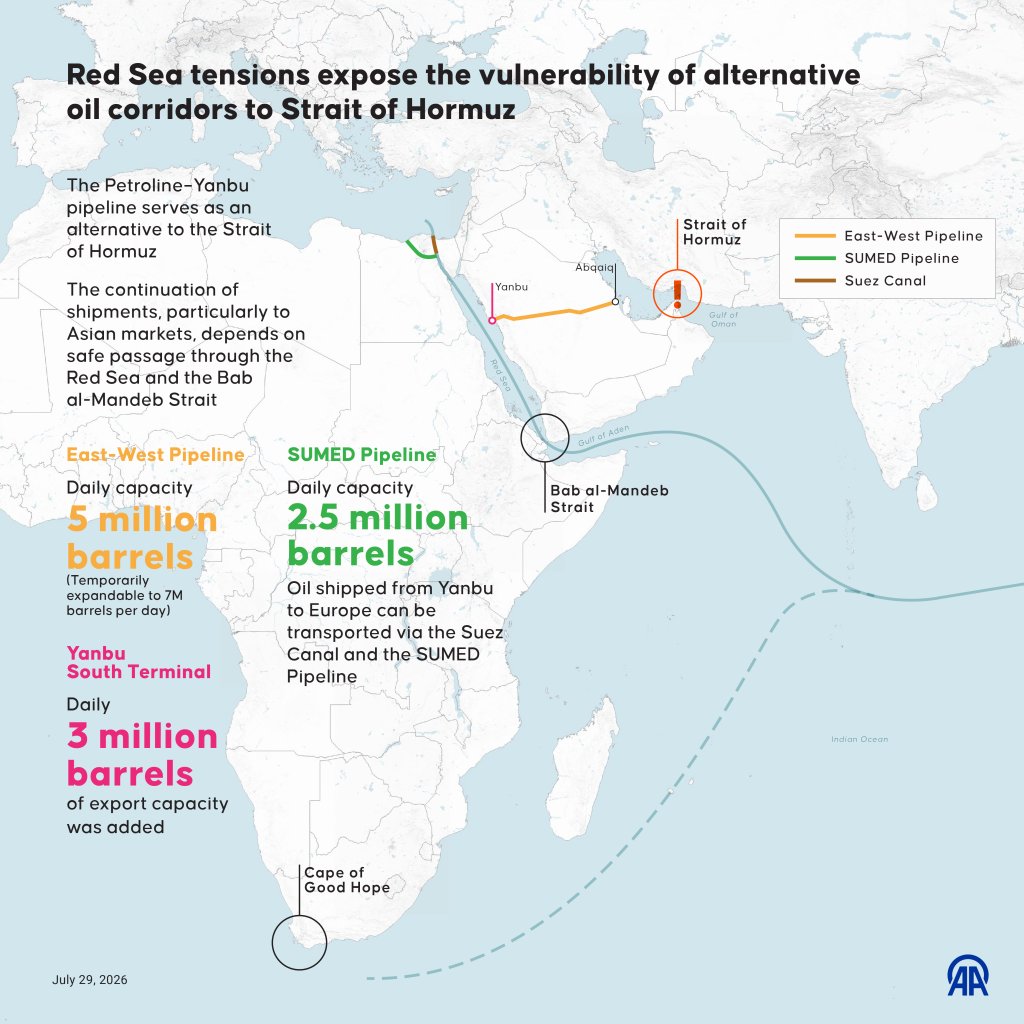
Saudi Arabia on Friday announced it had to temporarily shut down the key east-west pipeline after drone attacks on Thursday from an Iranian-backed militia group in Iraq. As we have explained in the past, the Kingdom has diverted millions of barrels of oil per day through pipelines to its Yanbu port on the Red Sea in an effort to minimize the energy shortages due to hostilities near the Persian Gulf that have closed the Strait of Hormuz.
The pipeline was shut down a day after the Houthi rebels of Yemen increased their control over the crucial Bab al-Mandab Strait (BAM), a narrow body of water separating the Red Sea from the Gulf of Aden. Combined with Iran vastly curtailing shipping through the Strait of Hormuz, this gives Tehran significant control over two of the world’s most crucial passageways for the flow of oil.
3. The Houthis have reportedly attempted to seize ROYG-controlled islands in the Red Sea from which Houthi fighters could launch attacks on international shipping. Houthi forces reportedly landed on the Hanish Islands in the southern Red Sea on the morning of September 10 after… pic.twitter.com/tiFPgNDOHZ
“The East-West pipeline, in the regions of Riyadh and Medina, was subjected to several attacks on Thursday morning, September 10, 2026,” Saudi Arabia’s Energy Ministry posted on X. “The line was shut down as a precaution. The attacks resulted in some injuries, and medical care has been provided to those injured.”
“Emergency teams and specialized technical teams began work immediately after the attacks occurred, and took the necessary measures to secure the line and verify its safety, in accordance with approved safety procedures and emergency plans, and in coordination with relevant authorities,” the ministry added. “Any updates will be announced in due course.”
A before and after of the East-West Pipeline pumping station showed that it wasn’t just “hit”, it was absolutely MANGLED.
The past 24 hours have been nothing short of catastrophic for the global energy markets, but the harsh reality?
Showing the complexity of this situation and the high degree of coordination among various Iranian-backed proxies, the Saudi Ministry of Foreign Affairs accused Iranian proxies in Iraq of carrying out the attack. The Kingdom subsequently said it would hold off on responding to “give the brotherly Iraqi government an opportunity to take the necessary measures to prevent attacks launched from Iraqi territory against the Kingdom and neighboring countries,” according to the Arab News.
Officials in Baghdad quickly responded to that request, firing a regional commander overseeing operations where the attack was launched from.
“The Prime Minister, the Commander-in-Chief of the Armed Forces, Mr. Ali Falih Al-Zaidi, directed the formation of an investigative committee regarding the Maysan Operations Command,” the Iraqi Prime Minister’s Office announced on X. “His Excellency ordered the dismissal of the Operations Commander from his position, following confirmation that the attacks targeting the brothers in the Kingdom of Saudi Arabia were launched from one of the sites within the province.”
وجّه رئيس مجلس الوزراء، القائد العام للقوات المسلحة، السيد علي فالح الزيدي بتشكيل مجلس تحقيقي بحق قيادة عمليات ميسان.
وأمر سيادته بإعفاء قائد العمليات من منصبه، على خلفية ثبوت انطلاق الاعتداءات التي طالت الأشقاء في المملكة العربية السعودية من أحد المواقع داخل المحافظة.…
On Friday, the Houthis acknowledged that they captured new stretches of Red Sea coast from the Saudi-backed factions they’ve been battling. This includes the port of Mokha and the key islands of Perim (also known as Mayun) and Zuqar.
The Bab al-Mandab Strait and the islands of Perim (Mayun) and Zuqar. (Google Earth)
In a quick recap of what’s changed, the port provides a potential new surveillance and launching point for the Houthis. From here they can deploy mines, standoff weapons, as well as uncrewed surface vessels (USVs) that can be used to attack shipping. The islands give the Houthis a presence in the middle of shipping lanes. This is especially true for Perim, which sits in the narrowest part of the BAM, less than two miles west of Yemen and about 13 miles east of Djibouti, giving the Houthis a commanding presence at the mouth of the Red Sea. Its position could even allow Houthis to launch attacks on shipping using lower-end munitions, such as anti-tank guided missiles and even rocket artillery.
However, maintaining a major military presence on these islands would be a challenge logistically, especially should the U.S. or its allies attack positions there. You can read more about how the fall of the islands unfolded in our report here.
As they swept through the coastal region, the Houthis captured a treasure trove of U.S.-made Oshkosh M-ATV mine-resistant vehicles, pickup trucks mounted with heavy weapons, artillery pieces, and large quantities of ammunition and small arms abandoned by retreating National Resistance and Giants Brigade forces.
Videos show the scale of equipment the Houthis captured during the western coast offensive.
The "booty" footage from Mokha and surrounding positions includes U.S.-made Oshkosh M-ATV mine-resistant vehicles, pickup trucks mounted with heavy weapons (technicals), armored… pic.twitter.com/n3VPyoSmHk
Houthis Display Vehicles and Weapons Seized in Mocha
Yemen’s Houthis have displayed vehicles, weapons and military supplies they say they captured in the Red Sea port city of Mocha after Yemeni government forces backed by Saudi Arabia and its allies withdrew from the city.… pic.twitter.com/JmTMNY6wIS
Iran, which has held off on getting the Houthis directly involved during Epic Fury, has now played its hand and is putting the Houthis in a better position to close the strait than ever before. This was always a ‘sum of all fears’ scenario for oil exports from the Middle East and now Iran could put maximum pressure on the United States and the world to end the conflict in their favor, with oil potentially being cut off from both the Red Sea and the Persian Gulf.
Houthis are likely preparing to close the strait with a much better position than they had before. Having both straits closed has long been a 'sum of all fears' middle east energy crisis. Been writing about this exact scenario for over a decade. U.S. stretched thin, especially in…
Still, on Friday, the Houthis tried to allay those concerns, promising they would limit their control of the BAM to just Saudi vessels.
“The Yemeni armed forces confirm that maritime navigation is safe for all companies, except for Saudi Arabian ships, which have previously been placed under a ban,” Houthi spokesman Brig. Gen. Yahya Saree proclaimed. “We are continuing to uphold the equation of blockade with blockade, striking enemy Saudi Arabian troop concentrations, and escalating in response to their actions, until the aggression ceases and the blockade is lifted from our dear people.”
Houthi spokesman Brig. Gen. Yahya Saree. (Houthi Telegram)
Their rationale is that this campaign is all about defending against attacks by the Saudis and their proxies.
The conflict between Saudi Arabia and the Houthis grew out of a civil war in Yemen that erupted in 2014. It expanded a year later when a Saudi-led coalition joined forces with the government ousted by the Houthis and raged on until the parties reached a tenuous ceasefire in 2022. Tensions, however, reignited after that conflict ended when the Houthis joined the U.S.-Iran conflict on the side of their major supporter. In addition to a blockade on Saudi shipping, the Houthis began striking Saudi refineries and other oil infrastructure, including pipelines near the coast.
Houthi assurances about their intentions have meant little in the past. In 2023, when they launched their earlier campaign against Red Sea shipping, the Houthis also claimed a narrow rationale. They said they were doing so on behalf of Palestinians being killed during the Israel-Hamas war. The reality turned out to be that the Houthis were striking even ships not connected to Israel. This ultimately led to the U.S. and allies deploying warships to protect commercial vessels, battles with the rebel group on the water and a campaign of airstrikes on Houthi land targets.
It should be noted that the Saudis held off on getting involved that fight.
The Arleigh Burke class destroyer USS Carney fires a surface-to-air missile at Houthi threats on October 19, 2023. U.S. Navy
Amid all this, the per-barrel price of Brent crude rose to more than $109 yesterday, but was back down to $104 today, according to OilPrice.com.
We have long suggested that the U.S. could get pulled back into a new conflict with the Houthis. Now the rebel group’s rapid defeat of the Saudi-backed forces has reportedly already led to an American role in that fight.
“More than 100 US military advisers are on the ground in Saudi Arabia providing intelligence and targeting support to the Kingdom in its military campaign against the Iran-backed Houthis in Yemen,” CNN reported on Thursday, citing multiple sources familiar with the effort. “The US military personnel are working as part of a newly-established joint forces command, which was formed in recent weeks amid signs Iran was ramping up its own efforts to aid Houthi attacks against Saudi Arabia, one of the sources, a US official, said. That official put the total at roughly 200 troops.”
Still, there are limits on the U.S. role.
“The US is sharing intelligence with Saudi Arabia — as it routinely does already — but it is not participating directly in strikes,” CNN noted. “The US is also not helping refuel Saudi warplanes or providing other operational support, as it has in past fighting with the Houthis.”
CENTCOM commander Adm. Brad Cooper “flew to the kingdom overnight Thursday as Yemen’s Riyadh-backed forces crumbled in the face of a lightning Houthi offensive southward along Yemen’s western coast this week,” Al-Monitor reported. “He was expected to meet with top Saudi officials as they seek to consolidate the battered military effort by forces aligned with Yemen’s government.”
Trump, as we noted at the top of this story, has already declined to intervene kinetically.
“Saudi Crown Prince Mohammed bin Salman (MBS) called President Trump twice Thursday, urging him to launch strikes against the Houthis as the Iran-backed group closed in on a vital Red Sea chokepoint,” Axios reported, citing two U.S. officials. “Trump declined, and U.S. officials stressed the administration has no plans to intervene directly against the Houthis for now.”
U.S. President Donald Trump (R) meets with Crown Prince and Prime Minister Mohammed bin Salman of Saudi Arabia during a bilateral meeting in the Oval Office of the White House on November 18, 2025 in Washington, DC. (Photo by Win McNamee/Getty Images) Win McNamee
Asked if the U.S. would take direct military action against the Houthis, a senior White House official didn’t rule it out but said it is currently relying on regional partners to carry the burden.
“The United States is focused on protecting our core national security interests—such as ensuring freedom of navigation in the Red Sea—while empowering our regional partners to take the lead in managing and resolving regional security challenges,” the senior official told us. “We are in continuous dialogue with Saudi Arabia and the Republic of Yemen Government regarding regional stability.”
The war against Iran and the ongoing mission to try to protect freedom of navigation in the Strait of Hormuz have already strained the U.S. military. There have been 18 troops killed, more than 800 wounded and wide scale destruction of U.S. bases and equipment. U.S. commanders have warned that the ongoing conflict is unsustainable without deeply degrading America’s ability to respond to other contingencies. How much the U.S. could commit to a fight against the Houthis is an open question, especially if the Iran war spun-up again. During the Red Sea operation, at times two carrier strike groups and many other assets in the air and on the sea, were needed to sustain that operation.
“A second front potentially adds more U.S. military risk as we try to sustain a military that has been involved in a protracted deployment to support our economic pressure-focused strategy,” former CENTCOM commander Joseph Votel told us on Friday. “The U.S. can do just about anything, but it will be a choice that will impact sustainment, create longer-term deployments and impact other national security priorities.”
Earlier this year, an Iran-linked actor used Anthropic’s Claude artificial intelligence model to scrape and analyze data with the aim of helping target U.S. naval forces in the Middle East. A group in Yemen – very likely Iranian-backed Houthi militants – also used Claude to assist with work on guidance systems for ballistic and hypersonic missiles.
These are just some of the revelations about how adversaries and other malign actors have been using one of the premier pieces of AI software being developed in the United States that were contained in a new report Anthropic released late yesterday. The 154-page document also details instances where Claude was used directly and indirectly to support intelligence gathering and surveillance, cyberattacks, influence operations, and even worrisome biological research over the past eight months. In addition to Iran and Yemen, the human actors behind these activities were based in Russia, China, and a host of other countries.
Anthropic has shared details about what it calls the “misuse” of its models in the past, but describes the new report as its “most detailed” to date. The company has clearly been cataloging these case studies, and has assigned each one a control number. Though the entire contents of the report are cause for concern, the explicit attempt to use Claude to target American forces, as well as to develop new higher-end missiles and other military technology, are particular standouts and signs of what’s to come, as we will highlight below.
GTG-30005: Military reconnaissance
GTG-30005 is the case study dealing with the targeting of U.S. naval forces, and the summary is as follows:
“In another investigation, we identified and disrupted an Iran-nexus threat actor that used Claude to collect and analyze publicly accessible data to develop targeting recommendations against US naval forces in the region. The threat actor used Claude to compile targeting handbooks, through a Python pipeline the threat actor built with Claude’s assistance, to identify and track naval positions based on open-source information. The compiled material included a roster of US personnel scraped from captions on public military photographs; publicly accessible ship and aircraft transponder identifiers; commercial satellite-imagery query scripts; and an inventory of public websites that exposed US naval movements. The threat actor also directed Claude to compile vulnerability research on shipboard systems, cataloging known CVEs in maritime VSAT terminals, Cisco communications equipment, and industrial control products.”
“We banned the actor’s account, developed detections to reduce the risk of future misuse, and shared threat intelligence with government authorities to disrupt the threat.”
The Nimitz class aircraft carrier USS George H.W. Bush and several other US Navy warships sail together in the Arabian Sea in June 2026. CENTCOM
How exactly Anthropic defines the term “nexus” here is not immediately clear, and other entries in its new report also use “state-nexus” in addition to country-based variations. However, in this specific case, an addendum is added to the entry that explicitly says that the same account was separately tied to “domestic mass surveillance” software development work “for Iranian state systems,” clearly pointing to an actor directly linked to the regime in Tehran.
The use of AI technology by nation-state armed forces to develop target sets and engage them is already known to be growing globally. The Israel Defense Forces (IDF) have been a pioneer in this regard, but the U.S. military, China’s People’s Liberation Army (PLA), and others are also known to be developing and fielding these capabilities.
GTG-87001: Disrupting a Yemen-based guided weapons engineering cell using Claude to develop guidance software
Anthropic’s new report details an instance where an individual in Yemen used Claude as part of missile guidance work, which is given the control number GTG-87001.
“We identified a cell of threat actors based in northern Yemen running three weapons development programs: a guided rocket that used a commodity phone-class flight computer with final-phase homing guidance; a multi-stage ballistic missile with a stated range goal above 2,000 km; and a multi-variant missile (referred to as the “R2000” set) that included a hypersonic glide vehicle variant.”
“The actors used Claude Code in place of human software engineers to develop the guidance, navigation, and control (GNC) software that steers and stabilizes a flying vehicle. For example, they used Claude to integrate an open-source autopilot onto a phone-class flight computer, writing the control and position estimation software, tuning the control settings, running a firmware build pipeline, and performing a flight simulation. The actors managed several Claude instances at once, assigning each one a role, much as a lead would delegate work on a small engineering team: the actors tasked one instance with writing the code, another with research, and a third with reviewing the code the first instance produced.”
A graphic included in Anthropic’s new report summarizing the ways in which Claude was used by the actors in Yemen to support missile guidance system development. Anthropic
“Our safeguards blocked many of their requests, but not all of them. The actors used a variety of tactics to evade our safeguards, including hiding their goals and the products the software was meant for, and they split their work across multiple sessions so no single session revealed their full intent.”
“These actors carried out a sustained effort to develop guided weapons, including using Claude to design guidance software. We do not have evidence the actors succeeded in fielding an operational device; but they did test-fire a guided rocket. This field test appears to have failed: within hours, the actors returned to Claude to work out why it failed.”
“We identified this activity as part of our internal investigations into suspected weapons development. We banned accounts associated with the actors and shared threat information with public- and private-sector partners to mitigate risks posed by the actors. Nevertheless, we have evidence that the actors had already built an offline simulation toolkit that does not rely on Claude or other engineering computing environments such as MATLAB.”
As mentioned earlier, the report does not name the Houthis, but that group has historically been based primarily in the northern end of Yemen. It is also the only entity in the country known to have active missile development programs, which are conducted with critical support from Iran.
Whether this particular work directly resulted in any new capabilities is unknown. Anthropic notes that there looked to be at least one failed test launch before the accounts were banned, which would have occurred sometime after the beginning of this year, based on the stated cutoff dates for the report. By the end of 2025, the Houthis had already amassed a wide array of very real ballistic missiles, including types with at least claimed ranges of 2,000 kilometers (approximately 1,242 miles). The group also has a variety of cruise missiles and one-way attack drones that it has employed operationally.
An example of just one of the many types of ballistic missiles in the Houthis’ arsenal. Houthi-controlled media
Still, being able to leverage Claude could only have helped any domestic missile development efforts in Yemen, which might help reduce dependency on Iran, at least to a degree. Furthermore, developing functional hypersonic glide vehicles capable of prolonged stable flight has historically been notoriously difficult, even for entities with extensive relevant knowledge bases on an organizational level.
GTG-17001: Disrupting a China-based operation using Claude to draft a fire control specification and acquisition documents for undersea warfare
Use of Claude in foreign military endeavours goes beyond the Middle East, as evidenced by case study GTG-17001. This involved a Chinese actor conducting work related to a naval counter-torpedo defense system.
“We identified a China-based threat actor who used Claude to advance three parallel tracks of work on an anti-torpedo weapons system:”
“First, the actor used Claude to draft a Chinese-language specification for an anti-torpedo fire control system (the core logic that aims and times an anti-torpedo weapon’s response). The document was written to win approval from a Chinese defense manufacturer, which would move the work on to technical certification and operational testing.”
“Second, the actor used Claude to produce a Chinese-language technical proposal of more than 200 pages, accompanied by an executive briefing deck.”
“Third, the actor used Claude to benchmark their own system against specific US anti-torpedo and anti-submarine programs based on publicly accessible information. They then generated a Chinese-language briefing on US Navy systems derived from open-source reporting.”
“The actor presented themselves as an original equipment manufacturer in the US defense sector. We assess the actor was associated with a Chinese defense industry manufacturer aiming to produce a weapons specification and acquisition proposal for the People’s Liberation Army Navy.”
This picture shows a test of an anti-torpedo system fitted experimentally to a Nimitz class aircraft carrier in the 2010s. USN
“The actor used Claude to write the acquisition proposal, refining it over many drafts. After each draft, the actor instructed Claude to role-play a hostile expert reviewer to critique the proposal, then used that feedback to sharpen the next version. In parallel, the actor used Claude to build pieces of the anti-torpedo weapons system’s fire control software and a test matrix to validate them.”
“The operational lift the actor achieved was a function of using Claude to automate complex technical outputs. The actor leveraged the model to compress the development timelines for the certification registry, compliance documentation, and automated fire control logic. The actor also accelerated the traditional human review cycle by having Claude critique the acquisition proposal across multiple rounds of review while role-playing a persona.”
“We uncovered this activity as part of our internal investigations into suspected weapons development. We cannot attribute the activity to a specific entity or actor. But we have banned the account for violating our Supported Regions Policy and our Usage Policy, which prohibits weapons design and development, and incorporated our investigative findings into our safeguards to mitigate the risk of future misuse.”
Anthropic’s report does not name the U.S. programs leveraged here, but does note the information in question was publicly available. Anti-torpedo systems for surface warships and submarines have been an area of significant interest for the U.S. Navy for years now. Those developments have also produced compact torpedo designs for use in other applications.
A Very Lightweight Torpedo (VLT), a compact torpedo design developed by Northrop Grumman. Northrop Grumman
The PLAN’s interest in these same kinds of capabilities is not at all surprising. Underwater threats and countermeasures to them, broadly speaking, would play a central and vital role in any future conflict between the United States and China across the broad expanses of the Pacific.
GTG-27005: Disrupting a Russia-based operation using Claude to engineer an autonomous military drone swarm
Another case study, GTG-27005, details the use of Claude by Russian actors working on drone swarming technology.
“We identified likely freelance Russia-based threat actors who set out to build a full-stack autonomous first-person-view (FPV) kamikaze drone swarm. The actors used Claude Code to write and test the code and save it directly into the actors’ own project files. In addition to Claude Code, the actors used a software-in-the-loop simulation stack and a rented graphics processing host for model training. They called the operation ‘DronDoc’ or ‘Serafim.'”
“The actors used Claude to build the core software system, including the drones’ shared swarm memory and fault-tolerant coordination logic (FTCL); an onboard small language model to govern attack, observe, and return-to-base behaviors; a terminal guidance software system to steer drones to their target (using the onboard camera) and issue the call to detonate; a control-link geolocation module to find opposing drone operators; a passive acoustic detection layer; and low-level logic for the drones’ programmable chips. The actors designed the platform for autonomous lethal engagement; the onboard model could select targets (including a ‘person’ target class) and issue detonation commands without a human in the loop. The actors’ activity—including flashing the low-level firmware to live development boards, provisioning single-board computers, and wiring up a simulation environment over a mesh network—confirmed that they were using real hardware-in-loop testing within their sessions.”
Many were surprised yesterday by the news that a Russian fiber-optic FPV drone flew into Kramatorsk and attacked a car.
But there is nothing surprising here. The war of 2025 is already very different from the war of 2024. From LBZ to Kram — 20 kilometers. Enemy FPVs can fly even… pic.twitter.com/hTfhJFPcxZ
“The actors trained a computer vision classifier on scraped Ukrainian combat footage, splitting the target classes into “enemy” and “friendly,” and allow-listing Russian systems. They also repeatedly used a fixed coordinate in Donetsk Oblast as the demonstration strike point, with front-line cities and corridors in Ukraine as the mission geography.”
“The actors created their accounts between late 2025 and early 2026 and started the operation in mid-May 2026. The actors circumvented our geographic access controls by routing traffic through commercial virtual private servers.”
“We assess the actors were a small, specialized freelance team doing a mix of civilian and military work, not a Russian state entity. We identified nine accounts associated with this group; eight were used only for ordinary freelance work, not weapons-related software development. Based on our investigation, we assess the actors had ties to a regional university with a federal research center associated with the Russian Academy of Sciences. The actors claimed to have received funding from Russia’s Advanced Research Foundation, National Technology Initiative, and Ministry of Defence, though we cannot verify those claims. We identified this activity as part of our internal investigations into suspected weapons development, we banned accounts associated with the actors, and have incorporated our investigative findings into safeguards to reduce the risk of future misuse.”
Anthropic’s report included a table, reproduced below, detailing different types of drones and other capabilities that were fed into the model as part of this work.
GTG-17002: Disrupting a China-based operation using Claude to build targeting software for electronic warfare and air defense suppression
The last case study in the Conventional Weapons section of Anthropic’s new report, GTG-17002, covers electronic warfare-related work by a Chinese actor, with a particular focus on potential air defense targets in Taiwan.
“We identified a China-based actor who used Claude’s chat, coding, and agentic work tools to design, build, and iterate on a Chinese-language suite of about 16 modules for electronic warfare, using the electromagnetic spectrum to detect, jam, or deceive an opponent’s radar and communications, and for suppressing an opponent’s air defenses.”
“The actor used Claude to build the software system, from the underlying logic to the user interface, and iterated through 12 versions. This included implementing and optimizing the system’s radar detection and jamming physics, generating a vulnerability analysis module, and drafting Chinese-language targeting instructions. The software suite the actor built analyzed an opponent’s radars, surface-to-air missile sites, command posts, and communications nodes, then computed their detection coverage, assessed the effectiveness of jamming, ranked targets by value and vulnerability, including which to suppress first, and determined how best to assign jammer sorties to targets across multi-day campaigns. The suite also ranked which of an opponent’s assets to suppress first, and modeled specific engagement envelopes, including those of Patriot and THAAD-class [Terminal High Altitude Area Defense] systems.”
“Mid-project, we observed the actor change the simulation’s default scenario to 12 targets in Taiwan. The targets included a command bunker in Taiwan, an early warning radar site, Patriot and Tien Kung [surface-to-air missile] batteries, major air bases, and a regional combatant command headquarters.”
“The actor also ran a self-hosted model on an internal network alongside Claude and connected the software suite to this model through a tool-use integration.”
“Based on our investigation, we assess the actor is a China-based defense and military-industrial researcher. Account-level metadata and content flagged by our safeguards indicated the actor was linked to PRC research institutions, including the PLA Academy of Military Sciences. We detected this activity as part of our internal investigations into suspected weapons development, we banned accounts linked to the actor, and have incorporated our investigative findings into our safeguards to reduce the risk of future misuse.”
An accompanying table, seen below, mentions several specific types of U.S.-made air defense radars, as well as the Link-16 datalink network, as having come up in the course of this work. Electronic warfare variants of the Chinese Y-8 and Y-9 aircraft, as well as the J-16D electronic warfare jet, and what appears to be a reference to the Golden Eagle drone helicopter, are also mentioned.
A Chinese Y-8GX-11, one of several electronic warfare variants of the Y-8/Y-9 design. Chinese internet via X
The suppression of enemy air defenses is an essential part of any modern air campaign, whether conducted independently or as a part of a larger operation. This would be no less critical in any military intervention against Taiwan from the mainland, or any other larger-scale conflict the PLA might find itself in.
Guardrails and ethics
Beyond the details in any of the specific case studies, Anthropic’s new report underscores growing broader concerns about guardrails for the use of AI and general ethics surrounding the technology. As noted in the instances above, Anthropic has also implemented various safeguards to try to block access to Claude from certain regions and/or to prevent the model from conducting certain types of work. At the same time, what the company has now shared makes clear that those protections can still be circumvented to a significant degree, at least for now.
TWZ has noted in the past that America’s adversaries are likely to be less worried about ethics, in general, when it comes to AI. Anthropic’s new report also shows there are few bounds to what state-aligned or even non-state actors might seek to use this technology for, including the development of potential weapons of mass destruction.
At the same time, AI models like Claude are not going away, and developments continue to advance at an ever-quickening pace, opening the door to further proliferation. Developments are rapidly intermingling globally, with companies in China notably leveraging models created in the U.S. to further their own work, which is then released publicly. The technology will increasingly become more integrated and critical to most aspects of military operations and weapons development, alongside its commercial and civilian applications. It is just as much a superweapon as anything else, and the country with the more capable models, and the willingness to deploy them, will have a major edge in future conflicts.
With all this in mind, it seems very plausible, if not probable, that the case studies described in Anthropic’s new report are just the tip of an approaching iceberg that will need a concerted effort to tackle.
The Western takeover of Syria, the weakening of Hezbollah, and now the capitulation of Hamas signal that Western/American/Israeli penetration of Iranian outer defenses is essentially complete. The only remaining coherent and unassailed bastion outside of Iran is found among the Houthi. There remains Iran itself, which has weathered six months of American and Israeli aggression. […]
In 2026, Lebanon finds itself at a historic crossroads. Fighting rages in the south, while political instability grips the north. The once “Switzerland of the Middle East” is enduring its most severe crisis since the 1975 civil war. Since the start of Israel’s large‑scale military offensive against Lebanon on March 2, about 3,700 people have […]
Work at a specialized underground weapons test site in New Mexico, contracted earlier this year, was linked to planning for a potential new operation targeting Iranian nuclear facilities, according to a report from CNN. The U.S. military has notably left Iran’s hardest-to-reach site under Pickaxe Mountain untouched so far, but President Donald Trump and other U.S. officials have been openly talking about striking it.
On February 27, the day before U.S. and Israeli forces launched their initial wave of strikes on Iran, the Pentagon’s Defense Threat Reduction Agency (DTRA) quietly announced it had awarded a sole-source deal to Pate Construction Co., Inc., for new construction at the so-called Alternate Seismic Hardrock in Situ Test (ALT-SHIST) site. The work was needed to support an upcoming classified live-fire test. ALT-SHIST is situated within the White Sands Missile Range (WSMR), a sprawling U.S. Army-managed complex in New Mexico’s Jornada del Muerto desert basin. DTRA is a relatively small and obscure organization that plays a leading role in U.S. military efforts to develop new and improved ways to respond to Weapons of Mass Destruction (WMD) threats.
WSMR and DTRA have come up in discussions about strikes on Iran in the past. The U.S. military’s heaviest conventional air-dropped weapon, the 30,000-pound-class GBU-57/B Massive Ordnance Penetrator (MOP) bunker buster bomb, has been extensively tested at multiple sites there in the past. DTRA was also directly involved in its initial development. MOPs made their combat debut during U.S. strikes last year on underground Iranian nuclear facilities at Fordow and Natanz as part of Operation Midnight Hammer. The possibility has been raised that a different site within WSMR may have been used to test the plan of attack against Fordow, which involved two ventilation shafts being hit with six GBU-57/Bs each. The bombs were dropped in rapid succession, with each one burrowing deeper and deeper into the facility below. WSMR also happens to contain the site of the first atomic bomb test in 1945.
A map showing the general location of White Sands Missile Range, with an inset giving a better sense of how expansive it is. Holloman Air Force Base, which juts into the southern end of the range complex, is also highlighted. Google Maps
“The plans for the test [at ALT-SHIST] were connected to the Iran war,” CNN said in its story, published yesterday, citing unnamed sources “familiar with the matter.” Beyond that, the planned testing was tied to a “need to develop a way to target Iran’s deepest-buried underground facilities and, likely, simulate U.S. strikes against specific nuclear facilities.”
CNN said it was unable to independently verify whether or not the test in question had occurred.
A formal justification for the sole-source contract to Pate Construction that DTRA released in February did not mention Iran or elaborate on the need for the new testing at ALT-SHIST, but stressed there was an urgent requirement critical to U.S. national security.
“The services required are the immediate and mission-critical enabling services for a ‘real-world’ national security ordinance [sic; ordnance] test. This is not routine construction; it is the highly specialized remediation and operational preparation of a unique, subterranean test facility at White Sands Missile Range (WSMR),” according to the justification document, which DTRA officials had approved on February 24. “The work is a critical path dependency for a live-fire test designed to validate classified capabilities against rapidly emerging threats.”
“As the incumbent contractor for over a decade, Pate Construction Co., Inc. possesses unparalleled and non-transferable tacit knowledge of this specific subterranean test facility. This is a unique Government structure with complex geological and security considerations, and Pate Construction Co., Inc.’s direct, hands-on experience is a tangible asset that no other source possesses,” the document adds. “Pate Construction Co., Inc. is the only contractor that currently maintains a fully mobilized presence at WSMR with the specific heavy equipment and security-cleared operators required.”
CNN‘s piece says apparent work at ALT-SHIST was visible in satellite imagery of the site between mid-February and mid-March, but the outlet said it was unable to confirm whether or not this was related to the contract with Pate Construction.
We reviewed satellite imagery showing work at a remote DTRA/STRATCOM test site that coincided with this contracting action, but we couldn’t confirm its purpose.
The Pentagon didn’t respond to our questions regarding the test, and we couldn’t independently confirm it occurred. pic.twitter.com/k8zyvqWy56
ALT-SHIST is an active test site, and any work observed there earlier this year could well have been linked to other projects. For instance, additional publicly available DTRA contracting documents offer details about planned work on a specific part of the ALT-SHIST site, called Tunnel 7, tracing back to last year, as part of a project nicknamed Millstone Willemite 6 (MW-6).
“This task requires the construction contractor to repair and address the damage to Tunnel 7 caused by prior incidents, in accordance with government-provided designs, specifications, and other contract documents,” according to one contracting document dated September 15, 2025. “The contractor will also be responsible for providing support during testing activities, as well as safing after each test and general support between tests. All tunnel construction must be completed by 15 June 2027.”
“The contractor shall repair a D-shape tunnel and overburden using the D-shape of 20 feet depth and width, inside the tunnel. The contractor shall remove and repair any damage to the ribs, crown, and invert to Tunnel 7,” that same document continues. “After the repair of Tunnel 7, the contractor shall provide general construction support to instrument the tunnel in preparation for testing and then safe the tunnel for re-entry post-testing.”
The schedule for the MW-6-related work indicates that it is separate from what Pate Construction was hired to do at the site back in February.
A view out into a mountainous part of the White Sands Missile Range complex. USACE
ALT-SHIST, which was first established in 1995, is also not the only site DTRA makes use of within WSMR. As its name indicates, it is an alternate to the original SHIST site, use of which began in 1993.
“There was a small addition made to the SHIST site, but that area has been heavily used since 2007,” according to an environmental impact study the U.S. Army Corps of Engineers (USACE) completed in 2015. “The granite bedrock at these sites has been fractured and damaged by extensive testing. There are no existing granite areas adjacent to those sites where similar testing can be performed.”
A map showing the relative locations of SHIST and ALT-SHIST, as well as other test sites, at the northern end of the WSMR complex. USACE
USACE conducted that study in support of the establishment of a new test site at WSMR, simply called the Granite Test Site, to succeed the original SHIST. The Granite Test Site is now in use. There are many more sites within the range complex designed to simulate underground and otherwise hardened targets. This is also just one aspect of the wide array of testing that occurs on a daily basis at WSMR.
All three also appear to have been involved in the testing and development of the Massive Ordnance Penetrator (MOP). 5/10 pic.twitter.com/3aWSYXIZln
However, the presence of large areas of undisturbed granite is a key factor here, as that is particularly relevant for testing weapons designed to penetrate into extremely deeply buried facilities. CNN‘s piece yesterday noted that Iran’s Pickaxe Mountain site is built underneath a granite mountain.
“The mountain in White Sands, they specifically picked mountainous areas that were solid rock, and they used state-of-the-art tunneling technology to make the kind of cavities in the mountain that you would put this kind of [Iranian nuclear] facility in,” Gary Stradling, a retired scientist who previously worked for the Department of Energy’s Los Alamos National Laboratory (LANL), told TWZ in an interview last year. “I think that there is a lot of work that DOD has done in these kinds of facilities that is highly classified, and I couldn’t talk to you about it. This is very sophisticated work. It is not casual, and it’s not speculative. These are real experts who are doing the work. Careful, technical, quantitative work to be able to deliver this kind of war-fighting capability to the services.”
TWZ spoke to Stradling, who did work tied to earth-penetrating munitions at various points during his lengthy career, in the wake of Operation Midnight Hammer.
Me, standing at the edge of a MOP crater on a mountain top at White Sands Test Range, where detailed studies of massive earth penetrators were studied for effectiveness against deeply buried targets by the Defense Threat Reduction Agency (DTRA) —formerly Defense Nuclear Agency.… pic.twitter.com/JYq1V2xO6q
The U.S. military notably did not strike Pickaxe Mountain, which is situated immediately to the southwest of Iran’s nuclear facility at Natanz, during Operation Midnight Hammer. The site also went untouched by Israel during last year’s 12 Day War. American and Israeli forces did not target it during major combat operations earlier this year, either. All of this underscores the targeting challenge the site presents, even for strikes using MOPs, which TWZ explored in detail earlier this year and that has continued to make it a point of particular discussion.
CNN‘s report yesterday was primarily focused on a new assessment of ongoing construction at Pickaxe Mountain from the Center for Strategic and International Studies (CSIS) think tank in Washington, D.C.
Satellite “images reveal more road activity at Pickaxe Mountain in 2026 than at any point in the site’s history,” according to a report CSIS published yesterday. “There is a clear surge in construction activity in 2026 that corresponds to the raising and hardening of the portal accesses, paving of the internal road network, reinforcement around access areas, and the flattening and removal of excavation spoil.”
“This assessment can neither refute nor substantiate the Israeli intelligence claim that Iran moved centrifuges into Pickaxe Mountain,” CSIS’s report also noted. “The continuous construction, the absence of an increased internal security posture, and the lack of observed nonconstruction vehicles and equipment suggest the underground facility is not yet capable of enrichment work, if that is the intended purpose. Further analysis of daily activity would be needed to establish the site’s pattern of life beyond its current construction footprint.”
This is in line with TWZ‘s own previous reporting on Pickaxe Mountain back in July, when there were already signs of growing activity following the establishment of a shaky ceasefire between the United States and Iran the preceding month. As we wrote at that time:
“As with the strikes on Fordow, multiple bombs could be dropped on the same impact point to try to penetrate further down into Pickaxe Mountain. Whether there might be similar ventilation shafts or other weak points that could be exploited at Pickaxe Mountain is unknown. …”
A graphic with details about the employment of MOPs on strikes at Fordow during Operation Midnight Hammer. DOD
“A strike ‘right in the front door’ on the tunnel entrances at Pickaxe Mountain would be another option to at least hamper access to the facility inside for a time. This could be combined with strikes aimed at sections of the tunnel networks that run deeper inside the facility, but that are still close enough to the surface to be reachable by available conventional munitions. For instance, MOPs may not be able to hit the main cavern areas, but they could possibly hit certain tunnels that might lead to them.”
“Even a combined strike on entrances and shallow tunnels at Pickaxe Mountain could still present certain challenges. Firm intelligence on exactly where the tunnels snake under the mountain could be limited, making it difficult to select the best impact points. This is exactly why the U.S. military has been investing heavily in advanced, void-sensing fuzes for MOP and other bunker buster bombs for decades now. These fuzes detect when a munition has penetrated into a sufficiently large space, such as a room or tunnel in an underground facility, to help maximize damage. Fuzes that can effectively ‘count’ floors also help to ensure the munition has burrowed sufficiently deep before detonating.”
…
“…the U.S. military could conduct follow-on strikes on the entry points at Pickaxe Mountain to disrupt any attempt to regain access, as well.”
“Destroying Pickaxe Mountain will be a scientific and targeting challenge,” CSIS also noted in its report yesterday. “It is an underground fortress buttressed by granite. It is one of the only facilities in Iran’s nuclear program that the United States has not yet struck. Structurally degrading Pickaxe Mountain requires more than just kinetic force – it takes actionable high-confidence intelligence and sophisticated mathematical modeling.”
With all this in mind, it is not at all hard to imagine how new testing at ALT-SHIST, as well as other sites, would be essential for exploring additional options for striking Pickaxe Mountain and/or other deeply-buried targets in Iran using MOPs and/or other munitions.
A US Air Force B-2 bomber drops a GBU-57/B MOP during a test. USAF
It’s also worth noting here that GBU-57/Bs are understood to be in relatively short supply, though it is unknown how many of them are currently in inventory. Furthermore, the U.S. Air Force’s B-2 Spirit bombers are currently the only aircraft certified to employ the huge MOPs operationally. There was a report in 2024 that prime contractor Boeing was working to expand its capacity to produce these bombs. A MOP successor, the GBU-76/B Next Generation Penetrator (NGP), is in development now, but prototyping work is expected to run through the end of Fiscal Year 2028.
President Donald Trump certainly has raised the prospect of a strike on Pickaxe Mountain publicly on several occasions since July. He has also repeatedly said that the site is being persistently surveilled, particularly from space.
“There’s another place called Pickaxe Mountain, another nice place. We may have to give them a shot there, too, because someone said there was a little movement at the site,” Trump said yesterday during a speech at a convention the Republican Party is hosting in Dallas, Texas, ahead of this year’s midterm elections. “We don’t need much. We see everything, you know, because of Space Force.”
“We may hit Pickaxe [Mountain] very soon,” the President also said while speaking to reporters at the White House last Friday.
Trump on Pickaxe Mountain: We may have to give them a shot there too. We see everything. We can the see tag on their coat. “Muhammad Al-Fayed” It’s never Muhammad Jones. pic.twitter.com/UQm939OruL
Whether growing activity at Pickaxe Mountain finally prompts a U.S. strike at the site, either alone or as part of a larger operation, remains to be seen. If and when such a mission is launched, past and future testing at sites like ALT-SHIST in New Mexico will all but certainly have played an important part.
“The Joint Forces have formed a command center south of the city of Mokha, following Houthi breakthroughs across various combat axes under heavy fire, in which the Houthis used various types of weapons,” Deputy Chairman of the Presidential Leadership Council (PLC), Lt. Gen. Tareq Saleh, said in his acknowledgment that his forces lost the port. The PLC was created in 2022 to represent the internationally recognized government of Yemen.
“The armed forces on the West Coast — the National Resistance, the Giants [Brigades], and the Homeland Shield — in addition to units of the Taiz axis west of the governorate, have paid a heavy price, martyrs and wounded, over the past days as they confronted the Houthi attack, which was planned by Iran, supported by it, and carried out with the participation of its various proxies/tools.”
“Thanks to God, our armed forces were able to repel an enemy combat formation a short time ago in the province of Taiz, forcing it to withdraw,” Houthi spokesman Brig. Gen. Yahya Saree proclaimed. “This was achieved by targeting it with a number of locally manufactured surface-to-air missiles.”
(Houthi Telegram channel)
Videos have emerged showing Houthi forces inside Mokha and its airport and a large amount of equipment being seized.
The people of the port city of Al-Mokha gave a warm reception to Yemeni armed forces fighters following the city's strategic liberation. pic.twitter.com/0XDrveJPxU
BREAKING: The Houthis have announced a Cessation of Combat Operations along the Coast of Bab al-Mandab Strait following the Collapse of Pro-Saudi Forces
The Core Military of the Houthis has entered the City of Mokha
Even before the capture of Mokha, the rebel group held the BAM under threat with its array of drones and missiles, some of which it launched from deeper in Yemen. In fact, the group became the first to fire anti-ship ballistic missiles (ASBM) at vessels during its campaign against Red Sea shipping.
Mokha, however, provides a potential new surveillance and launching point for the Houthis to deploy mines as well as aerial drones and uncrewed surface vessels (USVs) they can use to attack shipping. As we have reported previously, the rebel group pioneered the operational use of some of these weapons.
The Houthis “are determined to control the ports in order to use booby-trapped boats from areas close to shipping lanes,” Col. Abdul Basit Al-Baher, a Yemeni army officer and military analyst, told Arab News last month as the rebels were pushing closer to the port.
In addition to Mokha, the Houthis also reportedly captured two important islands that could also add to its control over shipping through the strait. However, TWZ cannot independently confirm this.
There are claims that the Houthis seized Perim Island, which sits right in the middle of the BAM. In 2021, satellite images we obtained showed completion of a new, approximately 6,150-foot-long runway on the island as well as hangars and other facilities. The installation was supposedly meant primarily to support drone operations and was built by the United Arab Emirates.
This strategically located island sits in the narrowest part of the BAM, less than two miles west of Yemen and about 13 miles east of Djibouti, giving the Houthis a commanding presence at the mouth of the Red Sea.
Zuqar Island, which was also reportedly captured, sits in the middle of the Red Sea about 80 miles north of Perim Island. In the custody of the Yemeni government since 1998, it was being “used by government forces to track shipping traffic, monitor movements by Houthi rebels and stop weapons smuggling in the Red Sea,” according to The National.
Last year, images emerged of construction of a runway on the island.
A closer look at the new 2.1 km runway on Yemen’s Jabal Zuqar Island in the southern Red Sea shows a small apron with one completed aircraft hangar and another likely under construction, plus a taxiway leading to two military emplacements, likely to shelter aircraft or UAVs. https://t.co/cnphe6yCeOpic.twitter.com/iOwr7C6I91
Zuqar Island sits about 7 km east of the northbound shipping lane in the Red Sea. Control over these two islands could allow the Houthis to mirror the pattern Iran established in the Strait of Hormuz by directing traffic to pass through a narrow passage between Qeshm and Larak islands.
The Iranian transit scheme for the Strait of Hormuz. (Iranian government)
The conflict between Saudi Arabia and the Houthis grew out of a civil war in Yemen that erupted in 2014. It expanded a year later when a Saudi-led coalition joined forces with the government ousted by the Houthis and raged on until the parties reached a tenuous ceasefire in 2022. The Saudis held off on getting involved in the recent Red Sea conflict which saw the U.S. and coalition warships duking it out with the Houthis, and eventually led to a U.S.-led air campaign over Yemen. Tensions, however, reignited after that conflict ended when the Houthis joined the U.S.-Iran conflict on the side of their major supporter. In addition to the aforementioned blockade, the Houthis began striking Saudi refineries.
The Houthis already control the port of Hodeidah, about 100 miles to the north. Capturing Mokha and the two islands extends their reach even closer to the BAM.
“On average, 273 ships sailed through the chokepoint each week between 27 July and 23 August,” the organization reported. “The naval ban on Saudi Arabia came into effect on 20 July, and the weekly average in the run up date was 319. Still, traffic remains above volumes seen before the crisis in the Middle East Gulf that led to a flurry of activity in the Red Sea as Saudi oil was redirected to Yanbu.”
Saudi Arabia has increasingly sent oil to its port of Yanbu on the Red Sea. (Photo by Yasin Demirci/Anadolu via Getty Images) Anadolu
The biggest impact of the blockade, Lloyd’s List Intelligence notes, is that it is driving up the cost to deliver oil by forcing traffic north through the Suez Canal, “extending voyage times and tying up capacity. In the Middle East, rising use of Hormuz shuttle tankers and multiple STS transfers is creating delays and increasing vessel utilization. Combined, these rising inefficiencies have led to the third VLCC spot-rate spike since the beginning of the crisis in the Middle East Gulf.”
The Houthi strikes on Saudi’s oil infrastructure, including a Houthi missile and drone attack against the Saudi Aramco refinery at Jazan on the Red Sea earlier this week, add a further dilemma for Riyadh, making it harder to get its product to points of shipment.
Video of of the aftermath of those strikes, which you can see below, emerged on social media.
Following Houthi strikes, fires can be seen raging at the Jizan oil refinery in Saudi Arabia. pic.twitter.com/tAqOPlsmvS
All this is raising the specter of the U.S. having to get as involved as it did during the previous Houthi campaign against shipping that ended last September, which could pull resources away from Iranian-focused operations, if supporting such an operation is even possible at all at this point. The Navy, and other key elements of the U.S. military, is overstretched and worn down by continuous deployments for many months leading up to Venezuela and then Iran, and now six months after Operation Epic Fury.
U.S. forces in the Persian Gulf are under increasing pressure as tensions with Iran continue to simmer. On Tuesday, several U.S. Air Force jets were damaged in an Iranian missile barrage on Muwaffaq Salti Air Base in Jordan, according to CBS News. An A-10 Thunderbolt II close support jet lost a wing and about eight F-15E Strike Eagle multi-role fighters were slightly damaged and returned to service, the network noted.
There is also a report that Acting Navy Secretary Hung Cao said Iranian forces “blew the hell out of Bahrain” where the U.S. military has a number of key facilities, including the headquarters of the U.S. Fifth Fleet. The country has been the subject of frequent Iranian barrages since the U.S. and Israel first attacked on Feb. 28.
Cao’s assessment matches what we have seen and heard prior to his comments and raises anew the question of whether the U.S. will return to Bahrain and other bases in the region heavily attacked by Iran.
In an exclusive interview, Acting Navy Secretary Hung Cao told me that Iranian forces "blew the hell out of Bahrain."
While open-source analyses have long indicated that the U.S. Fifth Fleet Headquarters at Naval Support Activity Bahrain sustained extensive damage in the early…
“At least three times in the past week, Iranian forces have launched missiles at American warships, including an aircraft carrier, taking direct aim at the U.S. Navy in a way it hasn’t done since the start of the war,” the newspaper noted. “The attempted strikes on warships have led to much closer calls than previous attempts, with Iran using maneuverable warheads, people familiar with the attacks said.”
Amid this activity, traffic through the Strait remains suppressed.
“Vessel transits via the Strait of Hormuz fell on Wednesday to seven from 12 the previous day, preliminary ship-tracking data showed on Thursday, with levels also below the 10-day average of 14,” Reuters reported. “Out of these seven ships, four vessels exited and three entered, according to the data.”
However, an exact figure is hard to come by. Some vessels could be sailing through the waterway with their transponders turned off and would not be counted toward the totals, the outlet added.
Vessels transit the Hormuz Strait off the coast of Iran’s southern port city of Bandar Abbas on September 7, 2026. (Photo by ATTA KENARE / AFP) ATTA KENARE
As it is, oil prices are skyrocketing. As of noon Thursday, the per barrel price of Brent Crude exceeded $107, the highest price since July when it fell to just over $77 per barrel, according to OilPrice.com.
It will take some time before we get a better picture of how the Houthi seizure of the port of Mokha, and possibly Perim and Zuqar islands, will affect the global economy due to rising oil prices, either through reduced supply, increased cost of delivery or some combination of the two. With no end in sight to the U.S. conflict with Iran that helped to drive these actions, the Yemeni rebel group has incentives to inflict economic pain wherever it can.
by Fabio Giuseppe Carlo Carisio – Gospa News founder and director
UPDATE ON SEPTEMBER, 7, 2026
Iranian Judiciary Findings: The Bombing on a wedding ceremony by a Raytheon Weapon
«The Iranian judiciary has released the initial findings of an investigation showing that weapons used in a US bombing attack earlier this week on a wedding ceremony in the south of the country were American-made», Iranian Press TV Reported yesterday.
The head of the Iranian judiciary’s local branch in the southern province of Hormozgan said on Saturday that projectile fragments scattered around the site of a wedding ceremony on September 1, killing five people including a children, had been examined as part of the investigation, showing they were manufactured by US company Raytheon.
“The nature of the weapons used in the terrorist attack on civilian gatherings in Kohestak, Sirik, has been fully documented using advanced technical analysis tools and image data processing,” said Mojtaba Ghahremani.
Ghahremani said investigators had carried out a meticulous examination of the inscriptions, barcodes, and other details engraved on the projectile remains, leaving no doubt that the munitions belong to the US military.
He said the type of military thermal battery used in the ammunition revealed that it is from a series of high-voltage batteries used exclusively in the flight guidance systems of precision-guided bombs operated by US military forces.
The official said a military identification code, CAGE Code: 96214, registered on the projectile fragments directly links it to the weapons company Raytheon Missiles & Defense, a major US defense contractor and industrial corporation that manufactures weapons as well as military and commercial electronics.
The Massacre perpetrated by an AGM 154-C 500 lb Thermal Glide-Bombe
Much more important than official release is the image and the video from wreckage that at first had induced the experts to identify the weapon as am AGM-84H SLAM-ER cruise missile (read below).
The wreckage of the weapon shows that it is an AGM 154 C glide-bomb produced by Raytheon
On the tiny identification plate there is in fact the writing AGM – I 154 C-I which corresponds to the glide-bomb AGM-154 Joint Standoff Weapon (JSOW) produced by Raytheon under the stamp NAVAIR which is the matrix of the American weapons used in the joint activity formed by the US Navy and US Air Force.
The AGM-154 Joint Standoff Weapon (JSOW) is a glide bomb that resulted from a joint venture between the United States Navy and Air Force to deploy a standardized medium-range precision-guided weapon, especially for engagement of defended targets from outside the range of standard anti-aircraft defenses, thereby increasing aircraft survivability and minimizing friendly losses.
It is intended to be used against soft targets such as parked aircraft, trucks, armored personnel carriers (APCs), and surface-to-air missile sites (SAMs). Prior to launch, it is given a destination through either a predesignated waypoint or a point marked through a targeting pod. It glides, using two wings that pop out for added lift, to the marked destination and dispenses submunitions in a short, roughly linear pattern.
The designation of the Joint Standoff Weapon as an “air-to-ground missile” is a misnomer, as it is an unpowered bomb with guidance avionics, similar to the older GBU-15.
The AGM-154C is Designed to Attack Hardened Targets
But in this specific case, a more sophisticated weapon was used for the attack on the wedding ceremony…
The AGM-154C uses an Imaging Infrared (IIR) terminal seeker with autonomous guidance. The AGM-154C carries the BROACH warhead. This two stage 225 kg (500 lb) warhead is made up from a WDU-44 shaped augmenting warhead and a WDU-45 follow through bomb. The weapon is designed to attack hardened targets. It entered service with the US Navy in February 2005.
The use of this projectile minimally mitigates the implications of the attack ordered by the US Navy by US President Donald Trump; in fact, autonomous guidance oriented by the target’s heat source implies the possibility of an error that the SALM-ER guided cruise missile does not allow.
Below is a live-fire video released by the Royal Australian Air Force demonstrating the actual use of an AGM 154-C glide bomb
But at the same time, it appears to be a completely disproportionate weapon to hit a transmission tower, which, according to leaks from US officials, was the target of the attack (read detaisl below).
Therefore, the hypothesis of a targeted bombing to destroy a civilian home, as on Qeshm Island, remains valid.
This is why Iran has filed an international complaint for war crimes…
Iranian Red Crescent calls for ICC to investigate deadly US wedding attack
Iran’s Red Crescent Society (IRCS) has called on the International Criminal Court (ICC) to investigate a US missile attack on a wedding reception in the country’s southern province of Hormozgan, which killed at least five people and wounded 68 others.
The deadly incident occurred when shrapnel from a US attack struck a residential building where a wedding reception was being held in the city of Kouhestak, in Hormozgan’s Sirik County on Tuesday.
In a letter to the ICC’s Office of the Prosecutor, the IRCS said the attack raised serious concerns under international humanitarian law and warranted an independent, impartial, thorough and effective investigation.
“Given the reported civilian character of the location as the venue of a family wedding ceremony, as well as the presence of civilians at the site, the incident raises serious concerns under international humanitarian law and warrants an independent, impartial, thorough, and effective investigation,” the organization said.
The IRCS said preliminary information initially indicated that four people had been killed and 67 others wounded. Iranian health officials later raised the toll to at least five fatalities and 68 injuries, with a child among those killed.
The IRCS warned that the number of casualties could rise because some of those wounded were in critical condition.
FIRST POSTED ON GOSPA NEWS ON SEPTEMBER, 4, AT 7,28 AM GMT + 2 (Italy)
A US-made AGM-84H cruise missile among the wreckage after American strike on a wedding
A US-made AGM-84H SLAM-ER cruise missile has been identified among the wreckage following the American strike on a wedding ceremony in Sirik, southern Iran, late Tuesday, adding further evidence of the US military’s role in the attack that killed and wounded civilians.
Weapons analyst Trevor Ball identified the remnants as belonging to the SLAM-ER, a precision-guided, air-launched cruise missile manufactured by Boeing, according OsintWarfare which posted on X the first video of wreckage and was quoted by Al Mayaeedn English Lebanese TV.
Boeing describes the SLAM-ER as being the most accurate air-launched munition in the US Navy’s arsenal;
Enlargement of the piece of a U.S. AGM-84H SLAM-ER among the wreckage in the wedding massacre in Sirik posted on X by @OsintWarfare
Trevor Ball, a former US Army explosive ordnance disposal technician who now works as a weapons technical analyst for Armament Research Services, was among the experts asked by Reuters to examine the photographs and video.
“The damage seen appears to be from a munition which detonated on contact with the roof, or just above the roof,”he said, adding it was apparently a direct hit.
The strike in the small town of Kuhestak on Tuesday killed five people and injured at least 70 others.
The Exclusive Video of the Wreckage
VIDEO LEGEND:
1st footage – The US-made AGM-84H SLAM-ER cruise missile has among the wreckage following the American strike on the wedding cerimony
2nd footage – Children’s slippers lie scattered in the aftermath of the US aggression at a wedding in Sirik, where civilians, including children, were killed and dozens more were injured. Footage from the scene shows slippers belonging to women and children amid the destruction.
After this initial analysis, both Iranian and international sources tried to identify the weapon, with some ballistics experts even launching the bizarre hypothesis that it was a ricochet shot, a hypothesis considered unlikely by most, however.
The Reuter Experts confirmed our Investigation
But one thing seems certain…
«A US munition struck a home hosting a wedding celebration in southern Iran directly, rather than ricocheting from another target, weapons experts who reviewed images and video verified by Reuters revealed» Al Mayadeen reported.
The strike in the small town of Kuhestak on Tuesday killed five people and injured at least 70 others.
So on Thursday, US Vice President JD Vance he was induced to declare that Washington was investigating the incident, despite the initially Pentagon deny of any responsibility…
“We’re investigating it because obviously we care. We want to know,”Vance said during a White House press briefing.
«Four military weapons experts who checked visual material told Reuters that the damage was consistent with a direct strike rather than secondary damage caused by a munition ricocheting from another target. Three of the experts stressed that the weapon was likely American rather than a misfired Iranian air defense missile» Al Mayadeen added many hours after its and our first articles posted on September 4, at 7,28 AM GMT + 2 (Italy)
The main room of the weddin cerimony in Sirik
Two US officials, speaking anonymously, said the US military had conducted strikes near Kuhestak on Sept. 1, with the town’s telecommunications tower as a specific target.
Satellite imagery places the tower about 135 meters from the wedding site. Iranian media reported that the tower was struck at about 9:30 pm local time.
But the same expert Trevor Ball debunked US Official speculation…
“The visible blast damage could not result from fragments from the nearby strike on the communications tower striking the area,” he stressed.
A Likely Trump’s US Navy Deliberate Massacre on Iranian Wedding
AGM-84H SLAM-ER cruise missile is a weapon designed for precise strikes and can be retargeted during flight by a human operator.
Therefore, if it were confirmed that this very powerful rocket, the wreckage of which was found on site, was used, the issue would take on an unprecedented gravity.
But in Tehran, there is a very serious religious theocracy, armed above all with hypersonic missiles, and perhaps even nuclear ones, donated by Russia, China, or North Korea…
Speaking about the attack, Head of Iran’s Expediency Discernment Council Sheikh Amoli Larijani said, “The crime in Sirik and the killing of unarmed women and children embody the savage nature and deceptive self of the United States, and expose the falsehood and audacity of those who trade in human rights.”
Sirik mourns victims killed in US attack, including a 4-year-old
A four-year-old child was among four people laid to rest in the southern Iranian city of Kuhestak on Thursday, as grieving families and residents gathered to bid farewell to loved ones killed in a US attack on the area, Al Matadeen Lebanese TV reported.
The funeral ceremonies in Kuhestak, in Sirik County of Hormozgan Province, began at 4 pm from a street at the city’s entrance, with mourners walking together toward the city’s Martyrs’ Cemetery, where the victims were laid to rest.
The authorities identified the four victims as four-year-old Amirali Karimi, 16-year-old Mohammad Mollahi, 43-year-old Kolthoum Mollahi Nezhadnia, and 50-year-old Zarkhatoun Taheri.
According to the announced figures, the US aggression left 68 people injured, several of whom remain under medical treatment. Al Mayadeen’s correspondent reported that the death toll from the US aggression targeting the wedding ceremony in Sirik had risen to five.
VIDEO – “Horrific, appalling”: Iran urges UN Security Council to condemn deadly US attack on wedding ceremony
Iran has called on the UN Security Council to condemn an unprovoked and deadly US attack on a residential home hosting a wedding ceremony in southern Islamic Republic that led to the martyrdom of five civilians, including a four-year-old child, and injured more than 70 others.
Gholamhossein Darzi, the Islamic Republic’s ambassador and chargé d’affaires to the United Nations, made the appeal in a letter addressed to UN Secretary-General Antonio Guterres and the president of the Security Council on Wednesday following a new wave of such American strikes targeting southern Iranian cities, which together claimed the lives of at least 18 people and wounded 108 others.
IRGC vows Revenge for US wedding attacks: “will never go unanswered”
The chief commander of the Islamic Revolution Guards Corps (IRGC) has said that the blood of those killed in a US attack on a wedding ceremony in Kouhestak, Hormozgan Province, “will never go unanswered” and that it will ultimately “catch up with those who ordered and carried out this heinous crime.”, Iranian Press TV wrote.
State media reports debris recovered from a home attacked in southern Iran during a wedding celebration was “most likely” from a US-made, AGM-154 Joint Standoff Weapon – a guided-glide munition, also Al Jazeera reported before the exatly identification as pieces of a US-made AGM-84H SLAM-ER cruise missile
Broadcaster IRIB said images released by US Central Command of attacks in southern Iran showed a F/A-18 Super Hornet loaded with a similar munition.
Another Trump’s Heinous War Crimes in Iranian Genocide caused US Troops Deaths
The targeted house was 200 metres (650 feet) from a communications tower, and the strike could not have been an error given the munition’s accuracy, reports said.
The Sirik strike came amid a renewed wave of US aggression against Iran, with American forces targeting sites across the country’s southern provinces.
Iranian authorities reported attacks on Bandar Abbas, Jask, Minab, Chabahar, Konarak, Lengeh, Qeshm Island, and other areas, including communications and service infrastructure.
The escalation prompted Iran to launch retaliatory missile and drone strikes against US military positions across the region, including bases in Jordan, Bahrain, Kuwait, the UAE, and Erbil, in which several US troops lost their lifes in the name of Trump’s Zionist.
The heinous Trump’s Military strikes on civilians in Iran caused a genocide of more than 7 thousand people.
Since today, therefore, this War Daily Summary will no longer contain news only on the war (and related geopolitical issue) in the Middle East, but also on the war in Ukraine and any other international conflicts.
Dockworkers at over 113 ports across 21 countries strike over arms shipments
Dockworkers in 21 countries staged strikes and demonstrations on Friday at 113 ports across five continents, protesting the use of commercial ports for military purposes.
Under the slogan “We don’t work for war,” more than 25 dockworkers’ trade unions took part in the International Day of Action, demanding that ports serve people’s needs rather than military operations, according to 902, the Communist Party of Greece’s news portal.
Strikes and demonstrations were reported in countries including Greece, France, Italy, India, Türkiye, Denmark, Sweden and Germany.
In Greece, a massive strike rally took place in the port city of Piraeus, where demonstrators unfurled a large banner near the port bearing the message: “Workers do not work for war.” The mobilization also affected operations at the port of Thessaloniki, where more than 200 containers and trucks were reportedly brought to a standstill during a three-hour work stoppage. Workers at the ports of Patras and Piraeus also staged strike actions.
In France, hundreds of workers at the port of Fos-sur-Mer, west of Marseille, joined the mobilization under banners opposing war and the militarization of ports.
In Italy, dockworkers in Reggio Calabria received support from workers and young people, who joined the mobilization with banners and pickets.
Separately, young dockworkers and apprentices in Germany staged a solidarity gathering and demonstration at the Port of Hamburg.
Sweden’s Port Workers’ Union voiced opposition to the militarization of European ports and warned against the use of security legislation to restrict trade union activities and put pressure on workers.
In Denmark, trade unions and federations also expressed solidarity, saying dockworkers should not be made complicit in wars or war crimes through the transport of weapons.
Dockworkers and seafarers in India joined the international action, calling for “ports of peace and jobs with dignity.”
According to the No Harbour for Genocide campaign, several participating ports, including Genoa, Livorno and Gioia Tauro in Italy, Marseille in France, Piraeus in Greece and Tangier in Morocco, have been linked to weapons shipments to Israel.
The campaign said it had tracked 315 shipments of components for Israel’s largest arms manufacturer, Elbit Systems, that passed through 56 commercial ports in 29 countries between August 2025 and September 2026.
“Stop financing the war in Ukraine lower the cost of living here!” Demonstrators in Berlin, Cologne, Paris
Demonstrators in Berlin are calling for funds to be directed toward education and social services rather than weapons, and are demanding the resignation of Merz, according to a TASS correspondent.
“Stop financing the war in Ukraine — lower the cost of living here!” This poster was unfurled by the participants of the student protest in Cologne, Germany.
On Saturday, October 31, protesters gathered in Paris, vowing to continue their demonstrations until their demands are addressed by the French government. The march brought together students, workers, and activists calling for action to tackle the rising cost of living, improve conditions in schools, and denounce police violence.
US approves sale of 500 Patriot missiles to Ukraine for $2.1 bln — State Department
The United States has approved the sale to Ukraine of 500 PAC-3 missiles for the American-made Patriot PAC-3 air defense system, along with related equipment, for $2.1 billion.
The US Department of State and the Defense Security Cooperation Agency (DSCA), a Pentagon agency responsible for foreign military sales under government-to-government agreements, announced the decision.
The statement noted that the purchase would be “funded entirely by partners and allies.” The delivery will include “PAC-3 MSE classified and unclassified spare parts; and other related elements of logistics and program support.”
According to Washington, “this proposed sale will support the foreign policy and national security objectives of the United States by improving the security of a partner country that is a force for political and economic stability in Europe.”
US authorities said Ukraine would pay for the missiles with funds provided by Canada, Germany and Norway, as well as through an EU loan. “No US funds are involved in this sale,” the statement said.
Russia’s planned diesel exports may fall due to drone attacks — Novak
Following a hiatus, Ukrainian drone attacks on Russian oil refineries have resumed, with three refineries and one gas-chemical complex targeted today, Deputy Prime Minister Alexander Novak told reporters.
He also noted that the Russian government is preparing to extend its ban on diesel exports until the end of January 2027, with a number of exceptions for global markets.
Ukrainian drone attacks on Russian oil refineries have resumed after a lull: “We had a break for some time, but today attacks on refineries have resumed, and our enterprises are working on defense.”
Three refineries and one gas-chemical complex were targeted today: “Yes, there was another attack on Russian refineries today — on four processing plants. To be precise, three refineries and one gas-chemical complex. One plant sustained minor damage, but overall our defense system, the air defense, worked.”
The Russian government is preparing to extend the diesel export ban until the end of January 2027: “Yes, a government decree is currently being drafted to extend the ban on diesel shipments until the end of January next year — effectively for three months.”
Certain exceptions will be made for global markets: “At the same time, as before, separate exceptions will be made for supplies to global markets.”
Russia plans to export 510,000 tons of diesel fuel in October, with November shipments potentially reaching 2.15 million tons. Plans for early next year will depend on the situation.
An oil refinery in Russia’s Samara region has been struck in renewed Ukrainian drone strikes
An oil refinery in Russia’s Samara region has been struck in renewed Ukrainian drone strikes. Russian authorities say they intercepted more than 1,000 Ukrainian drones over multiple regions overnight.
IRGC says four tankers have caught fire in the Strait of Hormuz and warns US against any Attacks
Iran’s Revolutionary Guard says four tankers have caught fire in the Strait of Hormuz. The IRGC says the vessels struck naval mines while travelling along what Tehran describes as ‘unauthorised routes’.
An oil tanker caught fire on Saturday afternoon after striking naval mines while navigating a restricted maritime zone east of the Strait of Hormuz, the Public Relations Department of the Iranian Army’s Naval Force announced.
According to the Iranian military statement, the tanker had violated maritime restrictions and ignored repeated warnings before entering the designated unsafe area, where it struck the naval mines.
«The incident underscores Tehran’s determination to enforce its maritime regulations and maintain control over the security arrangements governing navigation through the strategically important waterway» Al Manar Lebanese TV reported.
Rejecting what it described as false claims by the US president, the Iranian Army stressed that the Islamic Republic’s policy on managing the Strait of Hormuz remained unchanged, reaffirming its position despite mounting US pressure and rhetoric.
The IRGC’s army spokesperson, Mohammad Akraminia, has warned US President Donald Trump that Iran will retaliate significantly against any US attacks.
“There is no doubt that the flames of war will engulf a much wider area, and the end of the conflict will not be in his [Trump’s] hands,”he wrote on X.
Updates on October, 26-27 Breaking News in Video
Kyiv Hit by More Explosions After Deadly Russian Missile Strike
Explosions were heard in Ukraine’s capital Kyiv on Tuesday, October 27, a day after a Russian missile strike killed at least one person and injured 10 others.
The late-evening attack on Monday struck an educational institution, residential buildings, an underground station and medical facilities.
Debris was seen around damaged vehicles, while shattered glass and broken wooden panels littered the entrance to a metro station.
Kyiv Mayor Vitali Klitschko said the Southern Bridge and related subway infrastructure had also been damaged in an attack. City authorities separately announced that traffic on the bridge was suspended as the capital dealt with the aftermath of the strikes.
Iran and Mecca defence pact countries agree to further talks amid US war threats
A new diplomatic push is underway in Tehran to prevent another military escalation involving the United States and Israel, as senior officials from Saudi Arabia, Turkiye and Pakistan, the three countries behind the Mecca Defence Agreement, have held talks with Iranian leaders. The four countries agreed to continue discussions on regional peace and security.
Al Jazeera’s Tohid Asadi reports from Tehran that diplomatic engagement has intensified amid growing fears of renewed confrontation.
Analysts say the talks could address a possible non-aggression agreement, Yemen and regional security arrangements.
At the White House, Al Jazeera’s Alan Fisher reports that US officials have emphasised President Donald Trump’s control over Washington’s next steps, while warning of further military action if Iran’s position remains unchanged. Security analyst Atif Abiad believes Saudi Arabia wants to avoid being drawn into another US-Israeli confrontation with Iran.
Zahid Mahmood, a retired Pakistani major general and defence analyst, says Pakistan is seeking to prevent a wider regional war through diplomacy, confidence-building measures and its proposed Islamabad Memorandum of Understanding.
Zamir Refused Preparations Requested by Netanyahu for Fear of Being Dragged into a War with Iran
Israeli Channel 12 reported that Chief of Staff Eyal Zamir refused a request by Benjamin Netanyahu to make preparations regarding the Iranian front, out of concern that Tehran would interpret them as an indication of the Israeli entity’s intention to launch a war against it.
Following up on a report it broadcast yesterday regarding the dispute between Netanyahu and Zamir, the channel explained that the Chief of Staff considered that the move could prompt Iran to launch an attack, leading to being dragged into a confrontation.
Saudi Arabia continues to repeat its mistake in Yemen – Professor Mearsheimer
Despite the fact that the situation is already serious, the Saudis continue to escalate the conflict in Yemen. They obviously still believe they can increase pressure on the Houthis and defeat them, Professor John Mearsheimer said on the Judge Napolitano podcast.
He also pointed out that for several years Saudi Arabia had been waging a proxy war against the Houthis with significant US support, until a ceasefire agreement was concluded. However, they never managed to defeat the Yemeni movement.
It would seem that a few years of defeats were enough to learn something. But obviously, repeated failures have also become a military strategy.
5 dry cargo vessels destroyed by Geran drones in the Black Sea
5 dry cargo vessels destroyed by Geran drones in the Black Sea
Syria closes Nasib crossing with Jordan after airstrikes
Syria has closed the Nasib border crossing with Jordan, suspending passenger and commercial traffic in both directions following Jordanian airstrikes in Daraa Governorate.
The Syrian General Authority for Land and Sea Ports and Customs announced the closure on Tuesday, citing “the current circumstances.” The crossing, known as Jaber on the Jordanian side, is a key land route connecting the two countries.
The closure follows deadly Jordanian airstrikes in southern Syria. Amman said the strikes were carried out in retaliation for a jihadist attack on a church in Jordan last week.
Meanwhile, the Syrian Foreign Ministry said it had conveyed its full reservations to Jordan over conducting military operations inside Syrian territory without prior coordination.
Updates on October, 23 Breaking News in Video
Israeli Prime Minister Benjamin Netanyahu orders full closure of the occupied West Bank
Three Palestinians killed, several wounded in Israeli strikes across Gaza. Israeli Prime Minister Benjamin Netanyahu orders full closure of the occupied West Bank after Hebron shooting. Israeli settlers and soldiers rampage across the West Bank.
Israeli settlers destroy late Palestinian-American journalist Shireen Abu Akleh memorial.
Israeli bulldozers are demolishing and razing business establishments in the north of Hebron, in the occupied West Bank, Al Jazeera journalists on the ground have reported. Israeli machinery has been demolishing Palestinian homes following a shooting in Hebron.
«Israeli forces have demolished buildings near a military checkpoint close to where today’s attack took place. Relatives of the attackers have been detained and the Israeli military is present in that area. Israeli officials have promised to use the same tactics employed in refugee camps in the northern West Bank, such as in Tulkarem and Jenin, against those neighbourhoods [near the site of the attack]. That means massive demolitions» commented on Al Jazeera Nourd Odeh.
These were tactics first used in Gaza; now they are being normalised in the occupied West Bank. There is a lot of anxiety as people await what is going to happen now that the night has settled in.
Global oil prices continue to climb after reaching four-year high due to Yemen War
Global oil prices reached as high as $117.30 per barrel during Friday trading, after surpassing their highest levels in more than four years earlier today. Brent crude, the international benchmark, rose by around 4 percent amid renewed fears that the US-Israeli war on Iran will soon resume.
US benchmark West Texas Intermediate hit $103 per barrel, its highest level in five weeks. Houthi attacks on Saudi Arabia have also contributed to rising oil prices.
Russia, Ukraine confirm Oleshky temporary truce announced by Melania Trump
Russia and Ukraine on Friday confirmed a temporary ceasefire in the Russian-controlled city of Oleshky in Ukraine’s Kherson region, which was announced by US first lady Melania Trump.
Russian Chief of General Staff Valery Gerasimov said Russia would cease fire in the Oleshky area at 4 am Moscow time on Oct. 27 to facilitate a humanitarian operation, according to state news agency TASS.
Kremlin spokesperson Dmitry Peskov, meanwhile, said military officials were working to arrange the truce to facilitate the operation, welcoming Melania Trump’s efforts to coordinate a localized ceasefire for humanitarian purposes.
“Those who wish to leave the town will be able to do so,” he said.He said the operation requires extensive and complex preparations involving various parties, with Melania Trump playing a coordinating role.
Peskov said the issue was discussed in a recent telephone conversation between Russian President Vladimir Putin and his counterpart, US President Donald Trump.
Seven Shot Dead by Gunmen at Church Funeral in Jordan – WARNING: Chilling Footage
At least seven people were killed when two gunmen opened fire on a funeral in central Jordan, the country’s state media report. Another 10 people were injured in the church in the Karak governorate on Friday.
The unidentified gunmen are reported to have arrived in a car and began shooting inside the church before fleeing the scene.
Security forces have been deployed to the area after the “heinous” attack, government spokesman Mohammad al-Momani said. Dozens of people had been inside the church for the funeral when the shooting began, Khaled Burqan, one of the mourners, told Jordan’s al-Mamlaka state-run TV.
He said the two attackers armed with a rifle and a pistol had been firing at the mourners for several minutes. No-one has so far claimed responsibility for the attack.
PENTAGON’s NIGHTMARE: China’s New Ships could Send Giant Underwater Drones Far from Home
A second Chinese ship suspected of carrying and servicing large underwater drones has appeared in Guangzhou, following a larger vessel built in Shanghai. Their unusual design points to floating bases that could help China sustain undersea operations far from home.
Two ships, different sizes. The Shanghai vessel measures an estimated 204 meters long and 30 meters wide. The second appears roughly a third smaller, with six apparent lifting towers compared with six large and six smaller supports on the first.
A lift for giant drones. Satellite imagery shows a roughly 50-meter cradle beside the larger ship. Analysts believe it could work with the ship’s lifting system to lower underwater vehicles into the sea and bring them back aboard.
Room to carry and maintain them. The tall, enclosed hull suggests large internal workspaces. That could allow crews to service several drones aboard one ship instead of relying on shore facilities or separate floating docks.
Military-industrial complex sites, Kiev infrastructure: targets of Russian massive strike
During the overnight massive strike, the Russian Armed Forces hit military-industrial complex facilities and transport infrastructure in Kiev, as well as port infrastructure in the Odessa region, the Defense Ministry reported. TASS has compiled key information on the targets struck.
«Overnight, the Russian Armed Forces launched a massive strike using ground-based precision-guided weapons and drones against targets in Ukraine», the Defense Ministry reported.
According to the ministry, the strike hit Ukraine’s defense plants involved in the production and storage of long-range and medium-range cruise missiles and drones, transport infrastructure facilities in Kiev, as well as port infrastructure in the Odessa Region and sea vessels used in the interests of the Ukrainian army.
RUSSIAN DEVASTATING RETALIATION ON KYIV: 5 Minutes of Terrifying Footages on Military-industrial sites wiping
In addition, a warehouse complex (Refrigerating Complex No. 3) was hit; this facility served as the production base for long-range and medium-range fixed-wing drones, as well as Hornet loitering munitions.
Russian servicemen also struck an industrial facility in Kiev that manufactured long-range and medium-range fixed-wing drones, as well as components for robotic systems. Moreover, a Kiev warehouse containing drones and rocket boosters was also hit.
The Russian Armed Forces struck the Yuzhny road-rail bridge in Kiev, which was used to transport military cargo. In addition, the Russian military hit infrastructure facilities at the port of Kiliya in the Odessa region that were used to unload and store military equipment supplied to Ukraine from abroad.
Russian forces also struck a dry cargo ship at sea that was delivering supplies to the port of Chernomorsk intended for the Ukrainian army.
These massive attacks appear to be a retaliation for one of Ukraine’s most significant drone strikes on Moscow…
One of largest Ukrainian drone attacks on Moscow
Air defense systems on duty intercepted and destroyed a total of 808 Ukrainian fixed-wing drones overnight over Russian regions, the Defense Ministry said.
A nighttime Ukrainian drone attack injured two people in Moscow and one person in Lipetsk. Kiev’s attempted drone attack on Moscow on Wednesday evening and overnight became one of the largest since the beginning of this year.
Russian air defense forces intercepted and destroyed a total of 808 fixed-wing Ukrainian drones over Russian regions between 8 p.m. Moscow time (5 p.m. GMT) on October 21 and 8 a.m. Moscow time (5 a.m. GMT) on October 22, the Russian Defense Ministry reported.
The Defense Ministry said the drones were shot down over the Belgorod, Bryansk, Vladimir, Voronezh, Kaluga, Kursk, Lipetsk, Leningrad, Oryol, Rostov, Ryazan, Smolensk, Tambov, Tver, Tula and Yaroslavl regions, as well as the Moscow Region, the Republic of Crimea and the Black Sea.
CBS News VIDEO – Diving into Musk’s order to restrict Ukraine’s access to SpaceX satellites
The order to restrict Ukraine’s access to SpaceX’s satellite network came from Elon Musk, sources told CBS News. CBS News’ Imtiaz Tyab reports and Clayton Swope, deputy director of the CSIS Aerospace Security Project, has more.
Elon Musk intentionally restricted Ukraine’s access to a SpaceX satellite network crucial to its defense from Russia attacks, sources tell CBS News. Wall Street Journal national security reporter Alexander Ward joins “The Daily Report” to share more.
More details on report that Musk intentionally restricted Ukraine’s access to SpaceX network in the link below
Four Houthi operations in response to Saudi escalation: Defense Ministry on Fire in Riyadh – VIDEO
The Yemeni Armed Forces carried out four military operations targeting the Saudi Defense Ministry, Aramco in Yanbu, and two international airports in response to Saudi aggression against Yemen, military spokesperson Brigadier General Yahya Saree announced Thursday, as reported by Al Mayadeen Lebanese TV.
Saree said the operations were conducted over 48 hours using ballistic missiles and drones, as he warned Riyadh against further escalation and threats to target Yemeni tribes.
Detailing the operations, Saree said the first targeted the Defense Ministry building in the Saudi capital, Riyadh, which sustained a direct hit. The second operation targeted King Fahd International Airport in Dammam, disrupting air traffic at the airport where at least two people were killed and 8 injured.
The Yemeni forces also targeted Aramco in Yanbu, scoring a direct hit and igniting a fire at the targeted site, according to Saree, while the fourth operation targeted Abha International Airport and also achieved a direct hit.
Saree said the operations came after 100 days of Saudi aggression and escalation, during which more than 2,900 air and missile strikes targeted civilian sites across Yemen. Those attacks left more than 562 people killed or wounded, most of them women and children, he added.
U.S. troops and diplomats evacuating Middle East posts, sources say
The U.S. military has quietly been scaling back its troop presence at bases across the Middle East in recent days, and the State Department is ordering a further reduction in staff at multiple diplomatic posts in the region, according to two U.S. officials and two people familiar with the matte, according to NBC News.
They said the moves are in response to ongoing threats in the region, including from Iran and the Iranian-backed Houthi rebels in Yemen. The drawdowns come as senior U.S. military officials have been presenting Trump with options for strikes in Iran.
Russian Foreign Ministry slams US decision to issue arrest warrant for Raul Castro
The Russian Foreign Ministry has strongly denounced the issuance of an arrest warrant for former Cuban leader Raul Castro in the United States.
“The issuance by a Miami judge (USA) of an arrest warrant for Raul Castro, a leading figure in Cuba’s political history, has drawn categorical rejection and strong condemnation,” the ministry said.
The Foreign Ministry noted that UN Security Council Resolution 1067, adopted on July 26, 1996, set out the political and legal assessments of the February 1996 events that the United States attributes personally to Raul Castro. “The resolution does not call for anyone to be held personally accountable. This effectively means that the Security Council, including the United States, agreed that the incident had been resolved in this respect,” the statement emphasized.
Bringing forward baseless, fabricated charges more than 30 years later appears to be nothing more than revenge by the anti-Cuban lobby in Miami, which is eager to settle scores with Raul Castro, who turned 95 in June, the ministry pointed out.
“Further escalating tensions around the Island of Freedom, which is currently going through an extremely dire period amid the unprecedented trade, economic, financial, and energy blockade, may destabilize the situation across the entire Latin American and Caribbean region,” it stated. “A potential social upheaval may trigger a mass exodus of Cuban citizens to neighboring countries, creating a social crisis for them.”
“This court ruling could have been viewed merely as an expression of the sentiments of a certain group of individuals, had it not been for events earlier this year in Venezuela, where the country’s leader was abducted in violation of all norms and principles of international law,“ the ministry stressed.
France PM promises more curfews as authorities seek to regain control
French Prime Minister Sebastien Lecornu has said new curfews will be imposed where necessary in parts of the country, as authorities sought to restore order after weekend demonstrations over the cost of living and issues in the education system descended into riots.
In a post on X on Tuesday, Lecornu said local authorities would coordinate with mayors to decide whether to impose curfews in their respective prefectures.
More than half a million people gathered across France on Saturday for demonstrations that brought together students demanding better education conditions and groups rejecting the high cost of living. The protests descended into looting and arson in numerous locations, with more than 2,500 people arrested.
Monday night passed without any major incidents across France, police have confirmed.
The government is due to hold a series of meetings as it intensifies efforts to contain the unrest, which followed weeks of student protests over education standards.
Updates on October, 21 Breaking News in Video
UK to deploy fighter jets to defend Saudi Arabia against Houthi attacks
«The United Kingdom said Tuesday it will deploy fighter jets to defend Saudi Arabia against attacks by the Iran-allied Houthi rebels in Yemen» CNN reported.
The UK will fly “defensive counter-air missions” using Royal Air Force Typhoon fighter jets to protect Saudi cities and critical infrastructure, the Defense Ministry said in a statement.
“These aircraft will operate in a defensive role and will not conduct offensive strikes against the Houthis,” it added.
«UK Defence Minister Wes Streeting has expressed concern over attacks targeting civilians and called for a diplomatic resolution. The deployment comes amid rising regional tensions and domestic debate in the UK over defence spending and increasing energy costs»Al Jazeera’s Camille Nedelec reports from London,
Over the past month, the Houthis have intensified their attacks on Saudi Arabia, launching ballistic missiles and drones at key infrastructure, including oil facilities and airports.
The UK is already providing air-to-air refueling support to Saudi Arabia and has deployed air defense equipment and British personnel to help protect the kingdom, a spokesperson for the prime minister’s office told reporters.
Britain’s latest deployment is not the first time London has participated in military aggression against Yemen.
«From 2015 onward, Britain supplied Saudi Arabia with aircraft, bombs and other military equipment, accelerated munitions deliveries, provided training and stationed liaison personnel at Saudi military headquarters» Al Mayadeen recalls.
In 2024, as Yemen’s Armed Forces carried out operations targeting “Israel” in support of Gaza amid the genocidal war on the besieged Palestinian territory, the UK joined the US in launching strikes against Yemen.
Air strikes destroy telecoms network in Yemen’s Saada: Houthi media
Houthi-affiliated media are reporting that three coalition air strikes have targeted and destroyed the telecommunications network in the Maran district of Yemen’s Saada governorate, Al Jazeera Arabic reports.
The spokesman for the Yemeni Armed Forces Brigadier General Yahya Saree announced via Telegram, “Over the past 24 hours, Saudi warplanes—specifically F-15s and Typhoons—launched 93 airstrikes and missile attacks targeting civilian sites” (more details in the yesterdays’ update on Houthi attacks).
UN says situation in Yemen’s Taiz ‘deteriorating’ as road closures block supplies
The humanitarian situation in Yemen’s Taiz has worsened as road closures block essential goods and services from reaching millions, the UN has warned.
UN spokesperson Stephane Dujarric told a news conference, citing colleagues on the ground, that “road closures and insecurity are preventing vital supplies, including fuel, from entering the city and surrounding areas”.
Despite efforts by the UN to provide aid in Taiz, it “cannot meet these needs if essential supplies are prevented from reaching the city”, Dujarric said.
Oil prices rise as Brent hits $110 on Middle East supply concerns
Oil prices have risen on Wednesday on Middle East supply concerns, with traders wary of Red Sea shipping risks and threats to oil infrastructure in Saudi Arabia.
Brent crude futures gained $1.21 to reach $110 per barrel. US West Texas Intermediate (WTI) crude climbed by more than a dollar to reach $99 per barrel.
Italy approves sweeping security measures with Military Troops in response to protests
Italy has approved the deployment of troops and tougher legal penalties in a bid to quell cost-of-living protests in the north of the country that occasionally turned violent over the weekend.
The Italian cabinet on Tuesday approved sending 500 troops to Milan, a new legal offence covering violent participation in a demonstration, tougher penalties for rioters and financial liability for parents whose children take part in vandalism and looting.
Unrest swept northern Italian cities at the weekend, including the financial capital Milan, where groups of mainly young people looted shops, smashed windows and clashed with the police.
However, many social media posts have featured images of “Black Bloc” protesters mysteriously embedded among police officers, seemingly to incite unrest—this following days of protests by truckers and farmers in Southern Italy, who have been demonstrating against rising diesel prices and the high cost of living, including by blocking traffic on motorway access routes.
Full report available on Gospa News Italia(post in Italian, with an automatic translation in English and other languages available by clicking the flags in the up left).
As part of the new legal measures, which take effect immediately, anyone who takes part in a group of at least five people and endangers public safety during protests faces up to five years in prison and a maximum fine of €20,000 ($22,460). Penalties increase if faces are concealed or people are injured.
Updates on October, 19-20 Breaking News in Video
Kim Jong-un goes shopping to prove he’s alive after Unfounded Claims
«State media releases images of dictator out and about in Pyongyang after unfounded claims he had succumbed to brain haemorrhage»Emily Smith, Foreign Breaking News Reporter, wrote on The Telegraph.
The Telegraph post
The story was given credence by a fake North Korean TV outlet that exists only on social media profiles (created on X on September, 2026) and, in a country of 26.6 million inhabitants, has just over 4,000 followers. It is, quite obviously, a colossal piece of fake news—the work of bloggers incapable of verifying the accuracy of information.
Kim Jong-un went shopping to prove he was alive after rumours emerged that he had succumbed to a brain haemorrhage. The North Korean dictator, 42, was pictured with his daughter Kim Ju-ae, 13, at a clothing and footwear exhibition in Pyongyang.
The photos, released by state media, followed unfounded speculation this week that he had been taken to a hospital in Beijing in a coma.
A Chinese dissident, based in the US, claimed that Kim had suffered a severe brain haemorrhage and died.
Former LEONARDO Weapons Advisor, now Italian Defense Minister toward Ukraine War’s Escalation
After all, when someone in Italy said, “Ukraine will win the conflict,” some people thought that Ukraine wanted to defeat Russia. That Zelensky* will practically enter Moscow with the Ukrainian flag. No, that’s impossible”..
US investigation, Kiev’s cooperation with drug cartels: SVR statements
During an investigation into the illegal activities of Mexican drug cartels, US law enforcement agencies obtained information about their cooperation with representatives of the Kiev regime, the press bureau of the Russian Foreign Intelligence Service (SVR) said in a press release.
TASS has compiled the SVR’s key statements. The links to previous Gospa News investigations have been added in the aftermath.
While investigating the illegal activities of Mexican drug cartels, US law enforcement agencies have obtained information about their cooperation with the Kiev regime:
“According to information coming to the SVR, there is a new reason to panic in Kiev. The Ukrainian presidential office has learned that, in the course of a probe into illegal activities of Mexican drug cartels, US law enforcement agencies obtained information about their cooperation with representatives of the Zelensky regime.”
The US has found that Mexican criminal groups have been sending militants to Ukraine to receive training in the assembly and combat use of unmanned aerial vehicles (UAVs): “The Americans have uncovered that criminal groups have, for a long time, been sending their militants to Ukraine to train them in the assembly and combat use of drones. At least 80 individuals have been identified who underwent such training within the ranks of the Ukrainian armed forces.”
“Payment for this ‘education’ was funneled to officials close to [Vladimir] Zelensky, using funds generated by drug traffickers from the sale of illicit substances in the US.”
Kiev recognizes that the presence of trained drone operators within drug cartels poses risks to US officers involved in combating drug trafficking along the border with Mexico: “The Ukrainian presidential office is aware that the presence of trained FPV drone operators within the ranks of drug cartels poses risks to the lives of US security officers involved in anti-drug operations along the border with Mexico.”
The Kiev regime’s cooperation with drug cartels, combined with attacks on Russian oil refineries, could push the US past the breaking point and lead to a refusal to assist Zelensky:
“This fact comes alongside the abysmal corruption of Ukraine’s gauleiter, his offensive behavior and his disregard for Washington’s more than obvious warnings against targeting Russian oil refineries, as well as his refusal to hold an election. All this, Zelensky’s team fears, may be the last straw for the White House and force it to cancel all support to Kiev’s bloody clown.”
IRGC Navy footage on a third oil tanker on fire after its engine room was targeted
The IRGC Navy has released additional footage showing a third oil tanker on fire after its engine room was targeted.
The Islamic Revolution Guards Corps (IRGC) says two oil tankers were set ablaze and halted after hitting mines planted along an unauthorized passage south of the Strait of Hormuz.
In a statement on Tuesday, the IRGC said its navy forces reported that two oil tankers were set ablaze and stopped after mines laid by the naval forces exploded along an unauthorized passage south of the strait.
“The IRGC Navy once again warns that passage through the mined route is illegal and will result in violators’ assets being set ablaze. If the US regime continues its provocations, oil companies will have to pay a heavier price,” it noted.
It added that IRGC air defense forces detected and struck a US military MQ-9 drone overnight as it monitored the airspace over the Strait of Hormuz, destroying the aircraft.
French Interior Minister admitted that the police lost control of the situation in several cities
French Interior Minister Laurent Nunez admitted that the police lost control of the situation in several cities, with 350 people detained in Paris alone on Sunday.
“I have submitted my resignation, because I bear responsibility for everything that is happening,” Nunez said.
French Interior Minister Laurent Nuñez has announced measures—to take effect “as early as tonight”—aimed at curbing troublemakers, following scenes of chaos, destruction, and looting in Paris and other French cities during Saturday’s protests against the rising cost of living.
Shortly before this, Prime Minister Sébastien Lecornu had announced the implementation of “various curfews”—described as “partial” and “localized”—to prevent further violence. Nuñez ruled out any impact on upcoming football matches.
Prime Minister Sebastien Lecornu stated that the curfews, which have come into effect in several cities—such as Paris, Lyon, Nantes, and Marseille—have “contributed to calm during the night,” and announced that further curfews will be imposed this evening “wherever the situation requires it.”
French Justice Minister Gérald Darmanin announced that 149 arrests have been made in the wake of the urban unrest that took place last weekend. Speaking from the courthouse in Lille, Darmanin “welcomed the significant legal actions” taken by the judicial system following the weekend’s unrest, confirming that 149 individuals—suspected rioters or looters—have been arrested and are now either in “police custody” or “awaiting trial.”
Yemen: Death toll from Houthi attack on Al-Alam military base rises to 73
The death toll from a missile attack launched by the Houthis against a government military base in southern Yemen has risen to 73—all of them new recruits—marking the deadliest attack since the conflict in the country began to intensify.
The recruits were all between 18 and 20 years old, and some remained missing the day after the Iranian-backed rebels struck the Al-Alam training camp in the southern province of Shabwa with ballistic missiles, as reported to the Associated Press by the governor of Shabwa, Awad Ibn al-Wazir.
Yemeni Military Media posted and exclusive footage shows the targeting of Saudi enemy army officers, soldiers, and military vehicles on the Jizan and Asir border fronts using ‘Rojoum’ the-drone-system.
The spokesman for the Yemeni Armed Forces Brigadier General Yahya Saree announced via Telegram, “Over the past 24 hours, Saudi warplanes—specifically F-15s and Typhoons—launched 93 airstrikes and missile attacks targeting civilian sites across the governorates of Al-Jawf, Taiz, Saada, Marib, Hajjah, Lahj, Amran, and Ibb”.
“These aircraft took off from enemy bases in Khamis Mushait, Taif, Al-Kharj, and the Sharurah airfield, resulting in civilian casualties, including both deaths and injuries. This brings the total number of airstrikes and missile attacks carried out by the Saudi-led aggression since the escalation began in our country to 2,793.”
Updates on October, 13 Breaking News in Video
Federal probe into Rep. Ilhan Omar centers on her childhood immigration paperwork
President Donald Trump attacked Somali immigrants and Democratic Representative Ilhan Omar during an Ohio rally on Monday, October 12, calling Omar a “disaster” and repeating claims about crime, welfare fraud and immigration.
He also called Democratic Michigan candidate Abdul El-Sayed a “jihadist” and urged the removal of people he described as Somali “bandits,” gangs and jihadist sympathisers.
Trump’s remarks came hours after federal agents searched Omar’s Washington, D.C., home under a court-authorised warrant in an ongoing criminal investigation.
Federal immigration agents searched Democratic Rep. Ilhan Omar’s home in Washington, D.C., on Monday, as part of a probe that sources say centers on Omar’s immigration paperwork completed by her late father when she was a child.
CBS News homeland security correspondent Nicole Sganga has the details.
Houthi missile attack targets Saudi capital Riyadh and Airport for third day in a row
The Saudi Arabia-led coalition fighting in Yemen has said its forces intercepted another ballistic missile launched by the Houthis towards the Saudi capital, Riyadh, as the city reels from attacks that have killed at least 14 people in recent days (see more details and videos in the updates below on yesterday and October, 11).
Houthi missile attack targets Saudi capital Riyadh and Airport for third day in a row killing another people.
Residents of Riyadh reported several powerful explosions on Monday night, moments after a text message to their phones warned of an aerial threat.
The Houthis, who control Yemen’s most populous areas, including the capital, Sanaa, said their target in Riyadh had been King Khalid International airport.
Yahya Saree, a Houthi military spokesman, said the group had also sent a drone towards a military airbase at Khamis Mushait, near the Yemeni border. He again warned international airlines and travellers “against operating flights to airports” in Saudi Arabia, except in the holy cities of Mecca and Medina, saying the facilities were “unsafe”.
The renewed attacks came as King Khalid International airport in Riyadh remains closed after a Houthi attack on Saturday that killed at least 13 people and wounded more than 300 others. Another strike on Sunday killed one person and wounded 11.
Saudi authorities said the airport would remain closed until this Saturday, and airlines have canceled flights. The Houthis have also struck Saudi oil facilities.
Oil prices rise following statements from Kiev, strikes on Saudi Arabia
Oil prices have risen following statements by Vladimir Zelensky and new strikes on Saudi Arabia, Bloomberg reports.
The price of Brent crude climbed to nearly $106 per barrel after Zelensky stated that strikes against Russia would continue. Earlier, US President Donald Trump claimed that Russia and Ukraine had agreed to an “energy ceasefire.”
In response to a question from TASS, Russian Presidential Press Secretary Dmitry Peskov stated that the Kremlin could not comment on the “energy ceasefire” matter yet, noting that contacts are ongoing.
In the Middle East, Saudi Arabia reported new drone and cruise missile attacks on Monday, following strikes on Riyadh’s airport over the weekend. Attacks on tankers in the critical Strait of Hormuz have also intensified, even as more crude oil flows from the Persian Gulf.
PUTIN LAST WARNING TO EUROPE with Sign of Cross. “If, God Forbid, it comes to Nuclear Weapons…”
‘If, God forbid, it comes to some sort of strike, Europe has no missile attack early warning system. They are defenceless. Instead of minimising victims, casualties could potentially escalate indefinitely.’
Russian “tactical nuclear weapons are more powerful of the bombs which hit Hiroshima and Nagasaki”
‘The Europeans must also consider if those with whom we engage in such conflicts cease to exist, will the Americans even participate in the conflict at the level of strategic weapons or not? I have serious doubts about it.’
“Bandera, get out!”. Hundreds of Polish demand Ukrainian NeoNazi back home after one of them killed a priest
“Bandera, get out!” Hundreds of residents in Jarosław, Poland, are demanding that Ukrainians be sent back home after a Ukrainian national killed a priest in the Podkarpackie Voivodeship.
Since President Volodymyr Zelensky came to power—backed by a regime that shields the nationalists and neo-Nazis who are heirs to Bandera yet were trained by the CIA for the 2014 coup—persecution of Christians belonging to the Ukrainian Orthodox Church (UOC) has intensified.
This campaign aims to promote the spread of the politically engineered autocephalous OCU, established in 2018 by former President Petro Poroshenko.
There have been repeated raids by the SBU—the security service directly controlled by Zelensky—on UOC churches, resulting in the arrest of elderly metropolitans who have been held in prisons under conditions amounting to torture; additionally, the Kyiv army has shelled convents in the Donbas.
Updates on October, 12 Breaking News in Video
Iran’s IRGC struck a third supertanker in the Strait of Hormuz in two days
Iran’s Islamic Revolutionary Guard Corps (IRGC) said it struck a third supertanker in the Strait of Hormuz in two days, setting it on fire.
The IRGC claimed the tanker had switched off its navigation system and ignored warnings while attempting to leave the Strait
Warning – TERRIFYING SCENES: The VIDEOS of the MASSACRE in the Riyadh AIRPORT
TERRIFYING SCENES: Multiple videos capture the moment a Houthi attack struck King Khalid International Airport in Riyadh, Saudi Arabia — including footage of Umrah pilgrims preparing to board their flights moments before the strike.
Updates on October, 11 Breaking News in Video
LETHAL ATTACKS ON RIYADH AIRPORT – THE FILM – Exclusive VIDEO Medley from 12 Best Social Footages
Riyadh airport attack kills 12, hurts 309. Two Killed by Saudi attacks on Sanaa
Saudi Arabia’s Civil Aviation Authority says 12 people were killed and 309 injured in the latest attack on Riyadh’s King Khalid airport as the Saudi-led coalition forces have since destroyed a drone launched towards the eastern region.
Following the attack, US President Donald Trump said he would “take a look” at joining Saudi Arabia in striking the Houthis and restarting strikes on Iran while US Secretary of State Marco Rubio confirmed an American was killed.
But if that were to happen, the pro-Iranian Shiite separatists of Ansar Allah could completely block the Bab al-Mandab Strait in the Red Sea, where merchant and oil tanker traffic is currently restricted only for Saudi vessels.
The US embassy in Saudi Arabia is urging Americans to avoid the King Khalid International airport in Riyadh and surrounding areas following attacks on Saturday.
Saudi Arabia’s General Authority of Civil Aviation (GACA) said Sunday that 12 people were killed and 309 wounded in Saturday afternoon’s attack on King Khalid International Airport in Riyadh. Some of the wounded are in critical condition, and the authority said material damage is still being counted. No state or group has claimed responsibility.
Below the alleged video of the attack released by MiddleEast Report on Instagram (not verified) assembled with the ones on the alert in Airport and Trump speech
A missile struck a complex housing terminals 3 and 4, which handle domestic flights, a regional official told the AP. All flights were diverted and Western governments told citizens to avoid the area.
Four of the dead are Saudi citizens, GACA said. The other eight are residents, including, two Bangladeshis, and one each from the United States, Egypt, Jordan, Syria, Palestine and Sudan. The injured are receiving care in several hospitals, the authority said.
Al Mayadeen’s bureau chief in Yemen said reports suggest new Saudi airports have entered the circle of targeting, although Sanaa has made no announcement.
Earlier, Yemeni Armed Forces spokesman Brigadier General Yahya Saree announced in a statement that only pre-approved humanitarian flights may land at Riyadh airport. On Friday, he said humanitarian flights to and from the airport would be allowed with authorization from Sanaa’s Humanitarian Operations Coordination Center.
On Saturday, Sanaa said that Saudi Arabia Struck Sanaa International Airport which killed two people. Separately, the civil defence agency in the Yemeni capital reported extinguishing four fires caused by Saudi strikes, including one it said destroyed a factory.
Arabian coalition accuses Houthis of attacking airport in Riyadh
The coalition led by Saudi Arabia has accused the Yemeni rebel movement Ansar Allah (the Houthis) of strikes on King Khalid International Airport in the kingdom’s capital and promised a decisive response.
“The terrorist attack carried out by the Houthi forces on Saturday on one of the passenger terminals of King Khalid International Airport in Riyadh, which resulted in the deaths and injuries of civilians among passengers and airport staff, is classified as a full-scale war crime under international humanitarian law,” alliance’s official Spokesperson Turki al-Maliki said on X.
The third attack on the airport this week. 291 Flights Canceled
Attacks on October 6 and 7 hit the airports in Abha and Riyadh, killing three and wounding 36, GACA said. On Thursday, a Yemeni Armed Forces’ missile attack on King Khalid airport killed three Saudis, including Saudia pilot, and damaged a Saudi plane.
An Airbus A310-200 passenger plane belonging to Saudi Arabian Airlines was destroyed by Yemeni forces at Riyadh Airport.
On Monday, the Sanaa-based Humanitarian Operations Coordination Center warned international airlines that Saudi airspace would be a theater of operations for the Yemeni Armed Forces, and that Sanaa would bear no responsibility for what happens to aircraft.
Ansar Allah underlined that its operations answer Saudi air and missile strikes and the blockade on Yemen, which date back to 2015.
At least 291 flights at Riyadh airport were canceled in the 24 hours before Saturday’s attack, according to FlightAware. Air India, flydubai, Lufthansa Group, Pakistan International Airlines and Kuwait Airways were among the carriers that suspended service. The United States, Britain, Germany and Spain warned their citizens to avoid the airport. The UK and Irish embassies described a “serious incident.”
An air traffic control source told TASS that Riyadh airport is expected to remain closed at least through the end of Sunday.
Over 400 Saudi-backed forces killed or wounded in Lahj
Saudi Arabia has been pressing its military mobilizations to achieve any field advance, regardless of the cost, a senior Yemeni source told Al Mayadeen, amid mounting casualties among Saudi-backed forces.
The source said there is growing discontent among Saudi-backed forces over the “shocking” number of dead and wounded, while Saudi Arabia continues pushing its forces forward despite the losses.
The Yemeni source said more than 400 members of the Giants Brigades, a Saudi-backed formation, have been killed or wounded so far in Ras al-Ara in Lahj, including commanders.
The mounting casualties have fueled discontent among Saudi-backed fighters, according to the source, who said the scale of the losses has become a source of growing concern among the forces deployed in the area.
The video below shows a previous Ballistic Attacks on Pro-Saudi Gunmen in Ras al-Ara
US Air Force strike on a tanker which tried to break the naval blockade by exiting the Iranian port
Footage of the US Air Force strike on the engine room of the Panamanian-flagged tanker M/V Ocean Molica, which ignored warnings and tried to break the naval blockade by exiting the Iranian port.
Trump Calls for New Ukrainian Leader Capable of Reaching a Deal with Russia
US President Donald Trump on Saturday called for Ukrainian President Volodymyr Zelensky to be replaced by a new leader “capable of reaching a deal” to end the war with Russia, while sharply criticizing Ukrainian strikes on Russian oil refineries, which he said had contributed to rising diesel prices ahead of the US midterm elections.
Speaking to reporters at the White House, Trump said he had previously told Zelensky that he could “do whatever he wants” in confronting Russia but “not hit the oil refineries.”
On August, during Zelensky visit to White House, Trump praised Ukraine for the attacks on Russian refineries and promised a license to produce Patriot. “This is an escalation that can help end the conflict,”
Now, following the agreement with Russia on diesel(see yesterday update below) and the oil price hikes caused by the wars in the Persian Gulf and the Red Sea—sparked by US Army attacks on Iran—Trump has changed his mind once again, truly proving himself to be a madman of global geopolitics…
“He’d better stop. I would suggest they get a new leader who can make a deal,” Trump said, according to Reuters and Agence France-Presse (AFP).
BREAKING – Four dead and thousands without power after Hurricane Isaias lashes US
Hurricane Isaias leaves hundreds of thousands of people without power in Alabama, Georgia and Florida, with all three states declaring emergencies Flooding is a continuing risk, Florida Governor Ron DeSantis says as he warns of a “very hazardous situation”, according to BBC.
Winds peaked at 120mph (193km/h) before Isaias made landfall in Florida late on Friday – images show houses battered by winds and felled trees.
Two people are dead in Alabama, according to the governor, while two more have been killed in separate incidents in Florida. Isaias peaked as a category three hurricane, bringing heavy rain and powerful wind, but has since been downgraded
Just After Trump-Putin Deal on Diesel supply Zelenskyy strikes Russian Fuel Facility
Hours after US President Donald Trump announced a deal with Russian President Vladimir Putin to ease diesel sanctions, a Ukrainian drone strike set a fuel facility in Russia’s Rostov region ablaze.
The governor says more than 50 drones were intercepted, with no injuries.
A magnitude 7.7 earthquake struck the southwestern Panama
A magnitude 7.7 earthquake struck at 12:56 P.M. local time on Friday about 12 kilometers (7 miles) from the town of Tonosí, in southwestern Panama, at a depth of 10 kilometers (6 miles), according to the U.S. Geological Survey (USGS). The epicenter was roughly 239 kilometers (148 miles) from the capital.
In the two hours that followed, the USGS recorded multiple aftershocks, including one of magnitude 6.6. The U.S. Tsunami Warning System issued a tsunami threat for the Pacific coasts of Colombia, Ecuador, Guatemala and Nicaragua, though several countries canceled their alerts hours later.
Panamanian authorities reported no injuries, although some material damage was noted in initial reports. The Panama Canal, which carries between 3 and 5% of world trade, said it remained operationalafter activating emergency and inspection protocols, with no disruption to ship transit. Tocumen International Airport was temporarily closed and its administrative staff evacuated, but operations resumed shortly afterward once safety checks were completed.
Venezuela’s message comes as it continues its own recovery from the double earthquake of June 24, which prompted the government’s Venezuela Rises plan and a series of housing handovers for affected families.
“Russia ready to supply oil to US, global markets” Putin after call with Trump who Thanks him
Energy problems were among the topics discussed by Presidents Vladimir Putin of Russia and Donald Trump of the United States.
Moscow has reiterated its readiness to supply oil and petrochemicals to the US and global markets, according to Putin’s statement issued after the call.
“During the discussion of the situation in the global energy sector, the Russian side reaffirmed its readiness to supply oil and petroleum products to the US and global markets,” the statement says, as cited by the Kremlin.
US President Donald Trump thanked Russian President Vladimir Putin for agreeing to supply diesel fuel to the US market, speaking to reporters at the White House.
“I think you heard about the oil deal with Russia. That is a big deal. That is massive amounts of oil coming into our country, and I want to thank President Putin, to be honest with you. We have massive amounts of oil being coming into our country, and it’s diesel, which is what we want. So, thank you,” Trump said.
“We need oil for the world, and this is diesel, which is what we need. So, we’re very happy to get it. We’re very happy to get it. Look, we need it,” Trump told reporters at the White House on Friday, commenting on the arrangements with Russia.
Updates on October, 8, Breaking News in Video
‘I just want to hold him’: USS Lincoln sailor to meet his 10-month-old son as ship docks in San Diego
The beleaguered aircraft carrier with about 5,000 personnel docked in San Diego, after its prolonged deployment in the Middle East prompted concerns about dwindling food supplies and low morale.
For service members like Brent Ledbetter, the return stateside means something extra special: He is meeting his 10-month-old son for the first time.
“I just want to hold him, play with him,”Ledbetter told NBC News. Among the sailors and Marines, there are more than 50 babies waiting for a parent’s return.
14-Year-Old Girl Riding Home on a School Bus Killed by Saudi Coalition Strike in Yemen
On the afternoon of October 5, 14-year-old Athir al-Amri had just taken the last exam of her first semester.
She was on a school bus going home when an airstrike hit next to the bus as it drove through the Saawan area of eastern Sana’a, Yemen’s capital. Shrapnel struck her in the head, killing her, witnesses and relatives said.
“She was planning to spend the holiday playing as all children do during school breaks,” her 35-year-old cousin, Mohammed Al-Lahida, told Drop Site News.
“The shrapnel decapitated her. If her mother saw her body, she would die of grief.”
Two of her classmates were also wounded, one of them gravely, in the strike by the Saudi-led coalition.
This photo shows a general view of melted foam inside a factory after a strike that Houthi authorities-run media attributed to Saudi Arabia, in the Shamlan neighbourhood of Yemen’s capital Sanaa on October 4, 2026. Yemen relapsed into war in July after years of calm, drawn into the regional conflict triggered by the US-Israeli offensive against Iran that began at the end of February. (Photo by Mohammed HUWAIS / AFP) /
SCANDAL IN PARIS! Police SUV Attempted to Kill Students during Unrest. France toward Civil Wars?
A video shows a police SUV speeding toward protesting students, forcing the teenagers to scatterwith lightning speed to avoid being run over and killed..
The vehicle then reversed, turned around and drove away. Local media say checks confirmed the footage is authentic.
The incident in the Nord department was filmed from several angles. In one recording, a police officer can reportedly be heard saying:
‘Come on, come closer — we’ll ram them.
After the footage emerged, Interior Minister Laurent Nuñez announced an internal investigation, while local authorities launched a separate probe.
The vice-president of the French Human Rights League said she is preparing an appeal to UN special rapporteurs.
Earlier, the mayor of Saint-Denis, a suburb of Paris, accused Macron in an interview with RT of excessive police violence against teenagers.
There have been 504 detentions and 48 injuries—among police officers and gendarmes—in France following protests by the student movement, the Interior Ministry reported.
In total, 71,500 people demonstrated across France today—including 24,500 in Paris—during the latest day of mobilization by high school students.
The ministry noted “an increase in urban violence today” and estimated that 55,000 people took part in actions outside schools, specifying that only a portion of them subsequently joined the marches.
Saudi coalition says 2 missiles aimed at Riyadh intercepted but others Hit Airports and Aircrafts
The Saudi-led coalition spokesman Colonel Turki al-Maliki says his forces intercepted and destroyed two Houthi ballistic missiles aimed towards Riyadh and one towards Khamis Mushait.
Spokesman for the Yemeni Armed Forces Brigadier General Yahya Saree said, via Telegram that Houthis missile hit for the second times Saudi airports (the first happened on October, 6, more details in the updates below)
An Airbus A310-200 passenger plane belonging to Saudi Arabian Airlines was destroyed by Yemeni forces at Riyadh Airport.
“This evening, our armed forces targeted King Khalid Airport in Riyadh with two cruise missiles, Najran Airport with a ballistic missile, and the airbase in Khamis Mushait with a ballistic missile.”
General Saree added, “the strikes were precise and direct, disrupting air traffic at the two airports and causing damage to them and the airbase.”
Ansar Allah leader Sayyed Abdul-Malik al-Houthi declared on Thursday that Saudi Arabia’s attempt to break the Yemeni people’s will is doomed to fail, speaking on the 10th anniversary of the Great Hall massacre in Sanaa.
He stressed that Riyadh’s losses grow the longer it persists with its aggression and blockade, accused Saudi Arabia of committing war crimes in partnership with the US and “Israel,” and warned Qatar against its growing involvement in the campaign against Yemen.
In the video below the previous strikes on Saudi airport on October, 6.
The Yemeni leader also affirmed that Yemeni forces can strike any target in the Red Sea or Arabian Sea, and called for mass demonstrations on Friday.
Updates on October, 7, Breaking News in Video
Russian Drone Strikes on Kyiv’s Bridges: Ukraine capital divided, NATO Weapon Moves blocked
The Northern and Southern bridges in Kiev are the main transit points for all equipment coming from NATO.
This was stated by an ex-US intelligence officer to RT presenter Rick Sanchez. If they are blown up, Ukraine will be physically divided, Scott Ritter noted.
He explained: Bridges across the Dnieper River connect the country with the eastern part — without them there will be no real communication.
Impressive footages of Aramco Refinery in Jeddah on Fire after hitting by Yemeni Houthi Missile
Footage shows a fire breaking out and columns of smoke rising over Aramco facilities. Large fires burning at Saudi Aramco facilities in Jeddah following direct Yemeni missile strikes.
Reports of a fire at Aramco facilities in Jeddah following a Yemeni attack have also emerged in Iranian media, although Saudi authorities have yet to publicly confirm the strikes or extent of the damage.
More details in the updates of the latest days.
Updates on October, 6, Breaking News in Video
Tanker catches fire in Black Sea, beaches closed
A tanker caught fire in the Black Sea near Sochi, and the authorities closed the beaches of Sirius to vacationers, head of the administration of the federal territory of Sirius Dmitry Plishkin said.
Earlier, a video appeared in local media with a vessel burning in the water. According to the publications, the burning took place opposite central Sochi.
“A tanker caught fire in the Black Sea. To ensure the safety of people, the beaches of Sirius will be temporarily closed. The state of water and air is constantly monitored in cooperation with the Russian Hydrometeorological Service,” Plishkin wrote on Telegram.
WHO calls public health risk low after Russian pneumonia case. US Epidemiologist Hulsher: “NONE PANDEMICS”
The World Health Organization (WHO) assesses the public health risk as low following the detection of a case of pneumonia of unknown etiology in an employee of the Irkutsk Anti-Plague Research Institute of Siberia and the Far East, WHO Spokesman Christian Lindmeier told TASS.
“Based on unofficial information available, the public health risk to the general population appears to be low,” he said. “All of the patient’s contacts have reportedly been identified and are being monitored for illness, and none to date have shown symptoms of illness,” Lindmeier added.
The press service of Russia’s health watchdog – Rospotrebnadzor – earlier said that the sanitary and epidemiological situation in the Irkutsk Region was stable, and that preventive measures and medical monitoring of people who had been in contact with the woman diagnosed with pneumonia of unknown etiology were nearing completion.
The video by American Epidemiologist Nicolas Hulscher: ““NONE PANDEMICS on lab-acquired PNEUMONIC PLAGUE infection in Russia:”
Commenting earlier on reports of plague or another infection in the Irkutsk Region, Russian Presidential Spokesman Dmitry Peskov said people should rely on assessments by Rospotrebnadzor, rather than rumors and idle speculation.
For days, many American bloggers and politicians have been sounding an alarm that currently appears unjustified and blown out of proportion.
Among them is former New York Mayor Rudy Giuliani—who has already been found liable for making false claims about the election and whose law license was revoked by a court—and who posted dire comments on X:
“America’s Mayor Live (1031): Russian Researcher Dead, Thousands Quarantined as Outbreak Spreads”
Yemeni Armed Forces Target Two Airports, One Aramco Facility in Response to Saudi Aggression
Spokesman for the Yemeni Armed Forces (aka Houthis) Brigadier General Yahya Saree announced three military operations in response to the ongoing Saudi escalation.
In a statement, General Saree indicated that the first operation targeted King Khalid International Airport in Riyadh, adding that Aramco refinery in Rabigh were subject to the second attack. Abha Airport, Khamis Mushait Air Base was hit by the third attack, he added according to Al Manar,
What follows is the full text of the statement:
In response to the Saudi aggression against our country, which launched 60 airstrikes and missile attacks in the past 24 hours, targeting the capital Sana’a and the governorates of Al-Jawf, Taiz, Hajjah, Sa’dah, and Ma’rib, resulting in civilian casualties, including women and children. Which makes the total number of Saudi enemy airstrikes and missile attacks on our country since the start of the escalation has reached up to 1,576.
The Yemeni Armed Forces carried out three qualitative military operations using a large number of ballistic and cruise missiles and drones. The first of which targeted King Khalid International Airport in Riyadh, and the strike was precise and direct, thanks be to Allah, and caused disruption of air traffic.
The second targeted the Aramco refinery in Rabigh, and the strike was precise and direct, causing a fire breaking out at the targeted site.
One of the previous attacks in the video below
The third operation targeted Abha Airport, Khamis Mushait Air Base, the Aqifa camp in Asir, and other critical sites in Najran and Jizan, and the strikes were precise, thanks be to Allah.
The Armed Forces warn all international airlines using Saudi airspace to cease their flights, as it has become an operations zone for our forces, with the exception of the sacred airspace over Mecca and Medina.
Al Mayadeen: “Mokha, Bab al-Mandab remain under YAF control (aka Houthis)”
Yemeni Armed Forces remain in Mokha and Bab al-Mandab, Yemeni field sources confirmed to Al Mayadeen on Monday, stressing that no breaches have been reported in the area.
Al Mayadeen’s bureau chief, citing sources, asserted that Saudi-backed forces control neither Mokha nor Bab al-Mandab or the surrounding areas.
The sources said Saudi-backed forces managed to make only a limited advance in al-Mudarabah, near Bab al-Mandab, where they were immediately targeted.
Al Mayadeen’s bureau chief also reported that the Yemeni Armed Forces are pressing ahead in Taiz governorate. He added that they expect further advances along the western coast under Saudi cover and are determined to strike them.
Al-Zubaidi: Claims of gains are psychological warfare
Brigadier General Abdul Ghani al-Zubaidi, a Sanaa-based expert in military and political affairs, told Al Mayadeen that fighting remains concentrated in an area bordering Dhubab. He noted the Saudi-aligned forces have made no gains on the ground and that claims otherwise amount to “media exaggeration and psychological warfare.”
Meanwhile, Iranian Professor Mohammad Marandi, citing a well-informed source, told Al Mayadeen that the news coming out of Yemen is “very good”, dismissing what some outlets have reported as “nothing more than a propaganda campaign.”
Al Jazeera: “Yemen government forces report recapture of Mocha from Houthis”
«The internationally -recognised government’s military said on Monday that it had also retaken control of key positions near the Bab al-Mandeb Strait, as it seeks to oust the Iran-aligned Houthis from control of the strategic waterway – a key route for global energy supplies. A “strategic offensive” has also been launched on Yemen’s capital Sanaa, it added» Al Jazeera reported.
The military said on social media that fighting took place across several fronts near Mocha, leaving a number of Houthi fighters dead and wounded. Several Houthi fighters were captured, military sources said, without specifying the number of casualties.
Amid the United States and Israel’s war on Iran and the closure of the Strait of Hormuz, the Houthis have relaunched hostilities with the Saudi Arabia-backed Yemeni government.
In a rapid offensive in September, the group captured Mocha in western Taiz governorate, and then territory around the Bab al-Mandeb Strait.
Earlier on Monday, Yemeni government forces said they had reclaimed control of the governorate’s Dhubab district and key positions near the strait, as well as launching a “strategic offensive” on Sanaa. The Houthis have controlled the Yemeni capital and much of Yemen’s populous northwest since 2014.
US Navy helicopter may have crashed off Saudi coast
A US Navy MH-60R Seahawk combat helicopter sent a distress signal off the coast of Saudi Arabia and then disappeared from flight-tracking platforms, BNO News reported.
According to the portal, the helicopter was flying at an altitude of about 475 feet when it declared an emergency. Its displayed altitude then dropped to zero, and the aircraft disappeared from radar. Social media reports suggest that the helicopter may have crashed into the Red Sea, the portal noted.
The US Navy has yet to comment on the incident or disclose what prompted the emergency declaration.
Ex CIA Analyst L. Johnson on US-IRAN War: “US Navy hasn’t ENOUGH SHIPS, FUEL to continue BLOCKADE near Hormuz”
Former CIA Intel Analyst Larry Johnson on US-IRAN War: “US Navy hasn’t ENOUGH SHIPS, Fuel to continue BLOCKADE in Hormuz”
Excerpt of a long interview published by The Trends Journal YT channel held by Edmund DeMarche with Johnson.
Updates on October, 4-5, Breaking News in Video
The Russian army continues attacks on the bridge in Kiev and Ukrainian ships at sea
Russian army continues strikes on Kiev bridge and enemy ships at sea, Defense Ministry says
Russian troops continue to launch UAV strikes against Ukrainian infrastructure facilities and naval vessels used in the interests of the Armed Forces of Ukraine, the Ministry of Defense reports.
This afternoon, as a result of a strike in Kiev, the Northern Motor Transport Bridge over the Dnieper River, which provides for the transfer of troops and logistics of military goods, was hit.
At a sea crossing in the northwestern part of the Black Sea, two marine vessels of the “dry cargo” type, delivering military equipment to the port of Odessa, were hit.
Iran says Hormuz to remain closed until US meets conditions
The Strait of Hormuz is going to remain closed until the United States accepts Tehran’s seven-day plan to reopen the waterway, Iran’s top negotiator and parliament speaker has said.
Iranian state-linked news agency Nournews, quoting Mohammad Bagher Ghalibaf, reported on Sunday that Washington made “some proposals through a mediator” days after the US replied to Iran’s diplomatic proposal.
The US should know “that the era of wasting time and dictating unilateral demands is over”, Ghalibaf said, adding Iran’s position remains “clear and definite”.
He emphasised that “the Strait of Hormuz will not open until our seven conditions based on the Islamabad memorandum are met”, and that Iran is “present on the military battlefield and will confront them with new surprises”.
He added that Iran was neither “excited” nor “intimidated” by the latest US proposals and would “both fight and negotiate”.
U.S. Air Force removes all bombers from British air base targeted in a suspected terrorist plot
The U.S. Air Force has removed all of its bombers stationed at a military air base in England targeted in a suspected terrorist attack.
A Pentagon official told BBC News that all bombers “have been re-deployed to their home stations in the United States.”
“While operational security precluded us from confirming the movement of our assets and forces in real-time, we can acknowledge now that all U.S. bombers that were deployed to RAF Fairford have re-deployed to their home stations in the United States,” the official said.
“The Airmen that operate America’s bomber force, including B-1s, B-2s, and B-52s, remain ready to deliver precision global strike capabilities – including through operations that launch and recover from the continental United States – anywhere, anytime,” the official added.
The five men arrested near the base have been released on bail, and Iran has denied any involvement in the alleged plot. UK investigators discovered petrol in the men’s vans, but found no explosive devices. Still, officials in the UK say they remain under investigation.
David Des Roches, a professor at the Thayer Marshall Institute, says the Pentagon’s decision to remove its B-1 bombers from RAF Fairford in the UK “should have [been] done a while ago”.
The base is at the centre of an alleged security incident in which five men were arrested nearby on suspicion of plotting an attack. Des Roches, a former Pentagon official, said the arrests “exposed a vulnerability” as the aircraft were “out in the open” and only about 300 yards (275 metres) from where the public could see them.
“So they were very vulnerable to, say, drone attacks or other kind of mortar attacks,” he told Al Jazeera.
Des Roches said the US Air Force has been “very slow to learn the lessons” from the Ukrainian drone attacks on Russia’s strategic bomber fleet in 2025, when Kyiv claimed to have destroyed some 40 Russian military aircraft.
IRGC commander claims US forces have ‘fled’ 1,000km from Iran’s borders
Rear Admiral Ali Fadavi, a top IRGC commander, says Iranian forces have forced the US military to pull back some 1,000km (621 miles) from Iran’s borders.
“The Americans fled and moved more than 1,000km away from our borders. This was not their choice; it was due to the authority of the Islamic Republic and the authority of the IRGC Ground Force,” Fadavi said in a televised interview, according to Iran’s Press TV.
He claimed that, for the first time, no US vessels were present in the Gulf, the Strait of Hormuz, the Sea of Oman or even the northern Indian Ocean, and said US warships are “100 percent vulnerable” to IRGC attacks.
Fadavi’s claim comes as the US military continues to impose a punishing naval blockade on Iranian ports. US Central Command said last week that it has redirected 125 commercial vessels since July to “ensure strict compliance”.
Israeli attacks kill 3 Palestinians (including child) across Gaza as ceasefire violations continue
Israeli attacks across the Gaza Strip have killed at least three Palestinians and wounded nine others, despite a US-brokered “ceasefire” that was supposed to allow people to rebuild their lives.
The attacks took place in Deir el-Balah and Khan Younis, while gunfire, drone attacks and artillery fire were also reported in parts of Gaza City and northern Gaza.
The victims included a humanitarian worker coordinating aid deliveries and a six-year-old girl.
More details in the video description on Gospa News Channel
Israeli Airstrikes, Artillery Shelling Reported Across Southern Lebanon
Israeli occupation warplanes carried out on Sunday a series of airstrikes across southern Lebanon in recent minutes, targeting several areas amid continued Israeli attacks on the region.
The warplanes conducted multiple sorties over southern Lebanon and launched strikes toward the town of Hadatha, specifically the Daria area, as well as toward Mansouri, which was struck for a second or possibly third time.
Israeli artillery positions in the central sector also fired at least two shells toward areas surrounding villages in the sector. The locations where the shells landed had not been determined at the time of the report.
As part of the attacks recorded in southern Lebanon, Israeli forces also dropped a number of illumination flares over Majdal Zoun at around 7 p.m.
Israeli occupation forces subsequently carried out a series of explosions in Majdal Zoun and Mansouri. Mansouri had also been targeted by several artillery shells throughout the day, in addition to the powerful explosions reported in the town over several hours.
Updates on October, 3, Breaking News in Video
Jerusalem’s Latin patriarch mourns ‘tragic’ killing of Christian women in Israeli attack on Gaza
Cardinal Pierbattista Pizzaballa, the Latin patriarch of Jerusalem, has issued a statement expressing his “deep sorrow and grief” over the “tragic” killing of two Christian women in an Israeli air attack on Gaza City on Friday evening.
The fury of the bombardment focused on the western part of Gaza City, gutting a residential apartment building. In addition to the fatalities, dozens of seriously injured people were carried out by rescuers.
Among the bodies identified by Palestinian medics were a 21-year-old man, a mother and her daughter, and the two women mentioned by the cardinal.
Hamas has also condemned the Israeli air strike at dawn on a building in western Gaza City which killed one man and four women including a mother and daughter at dawn.
In a statement on its official Telegram channel, it described the attack as part of the continuing genocide in Gaza.
SHOCKING VIDEO: Russian forces disabling rather than fully destroying Ukrainian bridges
Russian forces are disabling vulnerable components of bridge structures rather than completely destroying bridges in Ukraine, Boris Rozhin, an expert at the Center for Information and Geopolitical Research, wrote in a TASS column.
“It is indeed difficult to destroy such massive structures [as bridges] <…>. The current campaign, however, demonstrates a fundamentally different approach – systematically disabling vulnerable components of bridge structures,” Rozhin wrote.
In his opinion, this approach is due to the fact that Ukrainian bridges have sufficient structural strength because they were built back in the Soviet era.
The closure of bridges across the Dnieper River will turn into a logistical nightmare for Kiev and the whole country — The New York Times.
In response to terrorist attacks by the Ukrainian Armed Forces on infrastructure facilities in Russia,, in the morning of October 2, the Russian Defense Ministry reported that Russian forces had struck a road-and-rail bridge across the Dnieper in Kiev, which is used to deliver military supplies for Ukrainian army groupings in Donbass.
The first targets were two major engineering structures in the capital.
The largest bridge, the Southern Bridge (read and watch below on yesterday’s updates), has been attacked three times already.
Today, the Russian Ministry of Defense confirmed the strikes. drones-kamikaze and on the second-largest bridge by cargo traffic, the Northern (Moscow) Bridge.
New footage is being published on Ukrainian channels showing the moment of arrival of the Russian jet UAV Geran over the Severny Bridge in Kiev. On the recording, you can see the exact moment the drone hit the ferry, the video was shot on the car’s recorder.
Moreover, a German Gepard anti-aircraft gun had previously been spotted positioned right in the traffic lane, which failed to intercept it. drones.
Russian gains in Kharkov Region, Dobropolye. Ukrainian lost 1,325 troops over the past 24 hours
The Russian Defense Ministry reported fighting and territorial gains in the Kharkov Region and Dobropolye, as well as Ukrainian losses and Russian strikes over the past day.
“Enemy formations are being destroyed near Nikolayevka, Nefyodovka, Kupino and Chernoye in the Kharkov Region,” the ministry stated.
Battlegroup North troops continue active fighting to liberate Prikolotnoye and Sosnovy Bor.
“Fighting is underway within the encirclement to liberate the settlements of Varvarovka, Lobanovka, and Reznikovo in the Kharkov Region,” the Defense Ministry said. In addiction Russian troops from the Battlegroup North took control of Novaya Kazachya.
In the video below Units of the Sever Group of Forces took control over Novaya Kazachaya in Kharkov region
“In Dobropolye in the Donetsk People’s Republic, assault groups of the 51st Army, together with marine infantry units, conducted offensive operations in the northwestern, eastern and central parts of the city. Units of the 76th Air Assault Division, advancing west of Dobropolye in the Donetsk People’s Republic, destroyed an enemy position and took control of a section of a forest belt,” the ministry said.
Ukraine lost approximately 1,325 troops over the past 24 hours as a result of Russian military operations in the special military operation zone.
“Operational/tactical aircraft, attack unmanned aerial vehicles, missile forces and artillery of Russian battlegroups struck unmanned aerial vehicle storage sites, as well as temporary deployment points of Ukrainian armed formations and foreign mercenaries in 149 areas,” the ministry reported.
“Air defenses shot down six guided aerial bombs and 680 fixed-wing unmanned aerial vehicles,” the ministry added.
G7 to release 100 million barrels of oil and diesel reserves under US pressure
The G7 is tapping its emergency reserves to help bring down soaring diesel prices, releasing up to 100 million barrels of oil and diesel over the next four monthsacross its members, including European countries, the US, Canada and Japan.
Leaders say they are implementing commitments made back in March. President Donald Trump did not appear on camera during Friday’s G7 video call but quickly celebrated the outcome as a win.
The announcement eased fears in Europe, where officials had worried Washington might impose export diesel bans ahead of the US midterm elections.
Still, tapping into reserves carries risk for European states that rely heavily on fossil fuel imports and have few natural oil reserves of their own. Al Jazeera’s Rosie Birchard reports from Brussels.
Houthis launched a new offensive in the Taiz province and struck Saudi Aramco oil refinery in Riyadh
1st footage – Video of a large fire that broke out at a Saudi Aramco oil refinery in Riyadh, Saudi Arabia.This morning, the facility was attacked by drones or missiles by the Yemeni movement “Ansar Allah,” which reportedly resulted in a successful hit.
2nd footage – Satellite imagery show a fire and smoke rising from Saudi Aramco facility in Riyadh
3rd footage – ️ Ansarallah captures Saudi-backed fighters in Taiz
The Houthis have launched a sweeping new offensive over the past two days along more than 50 lines of contact, and that Yemen is heading toward further escalation according to Taiz based analyst Abdel Wase’ al-Fatiki
He told Al Jazeera: “The Houthi group is waging a sweeping, broad assault across a stretch that we can say exceeds 400 km, along more than 50 points or lines of contact between the legitimate government forces and the Houthi group. This indicates that matters are heading toward military escalation.”
So residents of the “At-Taazia” district in the Taiz province of Yemen have announced a general mobilization against Saudi mercenaries.
He said the assault follows the group’s gains on the western coast, where he said it had overrun Mokha and reached Bab al-Mandab.
“Based on our reading of the scene, up to this moment the political horizon appears blocked, and there are no indicators for the battle to calm down or even head toward any de-escalation.”
Al-Fatiki said the Iran-backed Houthis are pressing their assault in the Taiz countryside to take high ground overlooking Bab al-Mandab and secure their hold on the strait.
‘Donald Trump could use a nuclear weapon against Iran as a GRAND FINALE to declare victory and go home.’
Matthew Hoh, former Department of Defense & State Department Official who resigned over the Afghanistan war.
‘The danger of the use of a nuclear weapon in this war has always been here. I’ve been afraid that the United States would use a nuclear weapon possibly back in April, against say maybe one of the facilities like Isfahan”.
“The idea presented to President Trump: ‘Mr. President, these are low-yield nuclear weapons. They are a fraction of the size of the Hiroshima bomb. There’s hardly any fallout. You can barely even call these a nuclear weapon”.
“And what we can do is we can drop it on Isfahan. That will seal off that facility, and the Iranians will never be able to get to that enriched uranium. And this way, you can declare victory and go home.’
“You could see that same argument can still apply this time, maybe with Pickaxe Mountain or something like that.The idea that it provides for a grand finale for the president of the United States to declare victory and go home”
Putin shown new jet-powered Geran drones during Center-2026 drills
Russian President Vladimir Putin arrived at the Chebarkul training ground of the Central Military District, where he observed the strategic command and staff exercises Center-2026.
The Center-2026 drills are being held from September 28 to October 3. Their theme is “The use of troop (force) groupings in repelling aggression on the Central Asian strategic axis and ensuring military security in the Caspian Sea zone.”
The exercises are aimed at improving the practical skills of the command staff and headquarters of the formations in managing troop groupings, as follows from published information about the event.
Putin shown new jet-powered Geran drones.
Updates on October, 2, Breaking News in Video
Supertanker Hit in Strait of Hormuz, Now Burning Near Oman
According to Fars News Agency, local sources reported that a supertanker with a capacity of 2.5 million barrels, which was navigating an unauthorized route in the Strait of Hormuz, was struck approximately 8 kilometers off the coast of Oman and is currently burning.
The UK Maritime Trade Operations (UKMTO) center has also confirmed a maritime incident involving a tanker.On Thursday, UKMTO reported that three tankers had been targeted in the Strait of Hormuz.
Amid intensified action against vessels violating regulations in the strait, oil prices have climbed above $102 per barrel.
Source: Netanyahu plotted false-flag aircraft hijacking to drag Trump into new war against Iran
A well-informed source familiar with the matter has revealed new details about the incident related to an Emirati aircraft, saying Israeli prime minister Benjamin Netanyahu’s plan to win the upcoming election is to drag US President Donald Trump into a new quagmire against Iran.
Iranian Press TV, Tasnim and Aanadolu Turkish agency so confirmed the suggestion highlighted by Gospa News on previous updates below in September, 30.
Speaking to Press TV, the regional source said the “absurd scenario” involving the hijacking of an Emirati aircraft bound for the occupied territories from the UAE, followed by its landing in Saudi Arabia, was carried out on Wednesday, three days after Netanyahu travelled to the United Arab Emirates accompanied by several senior military and intelligence officials.
The project, the informed source said, was discussed and finalized during the visit.
According to the source, during that visit, in addition to the UAE being tasked with playing a role in the Israeli regime’s regional projects, multilateral talks were held with officials from several other Arab countries to devise a false-flag operation and attribute it to Iran.
The source said the objective of the operation is to force Trump into a new quagmire and trigger a new round of war against Iran.
Netanyahu, the source said, is deeply concerned that if Knesset elections are held under the current circumstances, his coalition will be unable to secure a majority and form a ruling coalition.
“In that case, after being removed from the premiership, he would have to spend the rest of his political life behind bars,” the source said.
EU ‘fully rejects’ US diesel export threat over release fuel reserves amid Iran crisis
The EU “fully rejects” the threat made by the US to ban diesel exports if Europe does not release more of its fuel stocks, according to European Commission spokesperson Anna-Kaisa Itkonen.
“A ban would not be beneficial to anyone. It would undermine our trust in the United States as a reliable partner,” she said, adding that the next EU’s Oil Coordination Group meeting is scheduled for October 15, but could be brought forward if needed.
His comments came after Treasury Secretary Scott Bessent urged Europe to “immediately” tap its reserves.
US aircraft carriers heading to Middle East to boost CENTCOM firepower
Washington is deploying a third aircraft carrier to the Middle East.
A US official has told Al Jazeera – that’s along with a second marine division. The USS Theodore Roosevelt left San Diego on Sunday. Al Jazeera’s Tanya Noury is following developments from Washington, DC.
10,000 US troops and military equipment have been deployed
Thousands more troops are also on their way to the region, just a month before November US midterm elections, which could see US President Donald Trump’s Republican Party hit hard by his handling of the war, which is deeply unpopular in the US.
We look at what the latest troop deployment means and whether it signals a coming escalation in the war on Iran.
The Wall Street Journal reported that the strike group and naval deployments could involve an additional 9,000 to 10,000 US troops in total, including sailors and Marines assigned to the carrier strike group and other ships.
By the end of November, the official said, three aircraft carriers and two amphibious landing groups will be positioned near Iran.
The official said the concentration of force would hand President Donald Trump a wider menu of options if he decides to act.
Al Jazeera’s Tanya Noury, reporting from Washington, said the new deployment, which includes F-35 fighter jets, will add to the roughly 50,000 US service members already stationed in the region.
CBS has released images showing the aftermath of the Iranian attacks on U.S. military bases in the Middle East
The American television network CBS has released images showing the aftermath of the Iranian attacks on U.S. military bases in the Middle East.
The photos that Gospa News has assembled into a video slideshow were obtained from anonymous U.S. military personnel stationed at bases in Kuwait and Saudi Arabia.
Massive traffic jams have formed in Kiev due to the closure of 3 bridges following Russian strikes
Today’s strike on the Yuzhny Bridge in Kiev is also shown. Life in the capital of Ukraine has frozen: Kiev is stuck in huge traffic jams.
The reason for the collapse is the closure of bridges after powerful Russian air attacks. Traffic is blocked on the Paton Bridge from the right to the left bank, the Metro Bridge is blocked in the direction of the right bank, and the South Bridge is blocked in both directions.
Accordingly, public transport is limited or completely stopped, and many Kiev residents have to travel to different parts of the city on foot. And those who drive cars are stuck in traffic jams for hours.
Updates on October, 1, Breaking News in Video
‘A Great Victory’: US-Led Coalition Leaves Iraq After 12 Years as Baghdad Crowds Celebrate
Baghdad erupted in celebration as the US-led international coalition formally ended its military mission in Iraq after 12 years.
Crowds gathered in the Iraqi capital, with participants calling the withdrawal a “great victory” and a step toward Iraqi sovereignty. The coalition’s exit follows a phased agreement between Baghdad and Washington reached in 2024.
Russia has begun using new drones with long “whiskers” in the nose
Russia has begun using new drones of a characteristic design for strikes against Ukraine — with long “whiskers” in the nose.
Footage of Russian strikes on Ukrainian data centers in Kyiv
Footage of latest Russian strikes on Ukrainian data centers in Kyiv. More details in the previous daily updates below (on 29 and 30 September)
– The Bemobile data center, a major Internet traffic exchange point providing the stable transmission of information, including intelligence, for the Ukrainian armed forces, was also struck in the Ukrainian capital.
– In addition, Russian forces struck the Parkovy data center in Kiev, which processed information for government and commercial services, including those serving the interests of the Ukrainian military.
Updates on September, 30, Breaking News in Video
The alleged Israeli FALSE-FLAG on FlyDubai Attack as October,7 and September, 11
The co-pilot of the FlyDubai flight forced to make an emergency landing in Saudi Arabia intended to crash the plane with passengers on board and emulate the 9/11 attackers. A senior Israeli official stated this to N12, noting that the co-pilot had stabbed the pilot in order to seize control of the aircraft and cause it to crash.
“One pilot stabbed the other and attempted to replicate 9/11,”the source said. “There is no definitive confirmation yet that he was a terrorist, but initial assessments indicate the goal was to crash the plane into the ground rather than hijack it.”
“The serious incident on the FlyDubai flight was an attempted jihadist attack, thwarted only thanks to the heroism of some Israeli passengers who stormed the cockpit, overpowered the terrorist, and—with their own hands—restored control of the aircraft to another pilot on board.”
This was stated in a note by Defense Minister Israel Katz. “According to the initial information we have, the terrorist had only one intent: to crash the plane with all the passengers on board,” he said.
However, we must bear in mind that the Israeli counter-intelligence agency Mossad—utilized by Katz for terrorist attacks in the Gaza Strip and the depopulation of Gaza—is the prime suspect for complicity in the attacks of October 7, 2023, just as it was in the attacks of September 11, 2001.
One must not believe state criminals who support the Palestinian genocide and are wanted by the International Criminal Court for war crimes and rapes —including against children…
VIDEO – Passenger lauds ‘heroism’ of Israelis who subdued attacker on board flydubai flight
A passenger identified as Daniel tells Channel 12 of his experiences on the flydubai plane after the first officer allegedly attacked the captain and attempted to crash the plane, according to The Times of Israel.
“Suddenly I heard a struggle. Something like a fight coming from the cockpit,” he says, on the phone from Saudi Arabia’s Tabuk Airport, where the flight eventually landed. “The door was slightly ajar and I saw an attempt to push someone out. Then three Israelis who were sitting behind me came to see what was happening, and the plane suddenly went into a very steep dive, nose down, with a very intense spin.
“From what I understood, a copilot stabbed the captain, and once they subdued the attacker, there were two other pilots on the plane and they took control,” he says. There have been reports off two off-duty pilots taking the reins after the captain had been incapacitated.
“The spinning stopped. It took some — I don’t know, it felt like an eternity, but I think it was two minutes, at least two or three minutes, during which the plane was simply diving and spinning like crazy,” Daniel recounts. “It felt like, that’s it. It’s over. September 11 is happening again.”
Daniel says he “definitely” thought it was a terrorist attack. “I heard the screams during the struggle and saw the blood on the floor from the pilot, who was brought out.”
“Those three Israeli guys are real heroes. It’s hard to explain just how heroic they were,” he says.
But Daniel says it was not clear at all that the danger had passed.
Footage of the beginning of a fight in the cockpit of Flydubai
Footage of the beginning of a fight in the cockpit of Flydubai: according to the new version, pilots from Russia and Ukraine helped to land the flight
A video of the beginning of a fight in the cockpit of the Flydubai liner appeared on the network: screams can be heard on the footage, panic begins in the cabin, and men from among the passengers rush forward to rescue the crew.
At the same time, Israel Hayom published a new version of the flight rescue: according to the newspaper, the pilots who happened to be on board were unable to land the Boeing that crashed off–duty.
According to Israel Hayom, the full-time co-pilot, an Omani citizen, attacked the commander of the ship from the UAE with a knife and tried to crash the plane.
The Reuters news agency, citing two Israeli officials, also reports that the attacker stabbed the commander several times, after which the crew and passengers managed to get into the cabin and twist him.
The i24NEWS TV channel reports that the Israeli authorities officially consider the incident as a terrorist attack.At the same time, reports on the citizenship of the participants in the events radically differed in the first hours: initially, the media claimed that regular pilots from the Russian Federation and Ukraine had fought in the cockpit.
The Saudi authorities are currently investigating the circumstances of the attack at Tabuka Airport, and the airline and relevant agencies have not yet released official statements about the role of passengers
A massive blow on key facilities, energy, communications and port infrastructure of Ukraine
The Russian Armed Forces carried out a massive strike on Ukrainian facilities overnight, the Defense Ministry reported.
As a result, a communications center in Kiev, energy facilities supporting military production in the Kiev region, as well as infrastructure at the port of Izmail were hit.
In Kiev, the De Novo data processing center, which was used to process, store and transmit information in the interests of the Armed Forces of Ukraine, was hit.
In the Kiev region, strikes were carried out at the Kievskaya substation in Nalivaykovka, the Kievskaya HPP in Vyshgorod, the Tripolskaya TPP and the energy storage battery park in Gorenichi. These facilities provided electricity to enterprises and military facilities.
The industrial complex in the port of Izmail, which was used for receiving, storing and transporting military cargo and fuel, was hit.
In addition, a cargo ship en route to Odessa was hit in the northwestern part of the Black Sea. The vessel was carrying military equipment and dual-use cargo.
Updates on September, 29, Breaking News in Video
VIDEO – After 23 years and 4,500 American deaths, US troops are leaving Iraq
After 23 years and 4,500 American deaths, US troops are leaving Iraq, per Reuters. The last forces are set to pull out by September 30.
The United States-led international military coalition will conclude its mission in Iraq by the end of this month, the country’s armed forces have confirmed to state media, Al Jazeera reported.
Iraqi Airways plans to resume flights to Iran in October after securing a special exemption from U.S. sanctions that had disrupted air travel between the two countries, Iraq’s Transport Ministry said.
Lieutenant General Abdul Amir al-Shammari, director of the Office of the Commander-in-Chief of the Armed Forces, in a statement to the Iraqi News Agency on Monday, said September 30 is the date for the end of the mission of the international coalition forces in Iraq and the transition to a new chapter of relations and cooperation.
Earlier, Iraqi Prime Minister Ali al-Zaidi’s security adviser, Qasim al-Araji, had confirmed that the US-led international military coalition would conclude its mission in the country this month.
Under a 2024 agreement between Baghdad and Washington, the withdrawal includes the removal of US air defence systems stationed in Erbil, the capital of the autonomous Kurdish region in Iraq.
Top Iranian official says US ‘will inevitably leave this region’
Iranian politician Ebrahim Azizi has said the US and Israel will eventually be pushed out of the region, while Iran will remain.
“The US will inevitably leave this region, and the Zionist [Israeli] regime’s days are numbered,” said Azizi, who heads the Iranian parliament’s national security and foreign policy commission.
“Ultimately, it is we and our neighbours who remain here, face to face,” he added. “That day will be a day of regret.”
Locomotive depot, data centers in Kiev hit in Russian forces’ group strike
Overnight, the Russian Armed Forces launched a group strike against logistics centers, port and transportation infrastructure facilities, as well as marine vessels operating on behalf of the Ukrainian armed forces, the Russian Defense Ministry reported.
– According to the ministry, the strikes hit a locomotive depot in Kiev where FP-5 Flamingo ground-based cruise missiles and their components were stored.
– The Bemobile data center, a major Internet traffic exchange point providing the stable transmission of information, including intelligence, for the Ukrainian armed forces, was also struck in the Ukrainian capital.
– In addition, Russian forces struck the Parkovy data center in Kiev, which processed information for government and commercial services, including those serving the interests of the Ukrainian military.
– The Belogorodka warehouse terminal, which was used to manufacture and store fixed-wing drones, was struck in the Kiev Region.
– Russian forces also struck the Usatovo power substation in the Odessa Region, which provides electricity to Ukrainian port infrastructure facilities.
– In addition, a production facility for fixed-wing drones in the Veliklodolinskoye settlement in the Odessa Region was hit.
– The Russian Armed Forces struck port infrastructure facilities at the port of Izmail that were used for handling military cargo.
– In addition, a dry-cargo ship that delivered military supplies to the Ukrainian armed forces was struck at the Odessa port.
– In addition, a dry-cargo ship carrying military cargo to the Odessa port was hit while at sea.
Footage of Geranium missiles hitting four dry cargo ships and a tanker in Odessa and Black Sea
Video footage of Russian military strikes on five ships in the Black Sea and the port of Odesa has surfaced online. Footage released by the ministry shows the attacks on each vessel. The military clarified that the strikes were carried out using Drones “Geranium-4 Seeker”.
Three ships were hit by drones in the Black Sea—two of them dry cargo ships, the third a tanker. Two more dry cargo ships were targeted by Geranium drones in the commercial seaport of Ilyichevsk (now known as Chernomorsk).
Published materials indicate that the ship’s conning tower was used to engage all targets. A precise strike at this location permanently disables the ships due to damage to their control systems. The Geranium-4 Seeker carries a warhead weighing either 50 or 90 kg, depending on the version, and this is sufficient to disable a large ship.
The dry cargo ship appears to be an ordinary merchant ship, which is precisely what the Kyiv regime is exploiting. Ukraine is known to use maritime transport to supply its military, masquerading as “vegetable oil” and other supposedly civilian goods. A precision strike on the ship disrupts the delivery of military equipment before it can be unloaded and sent on to serve the Ukrainian Armed Forces.
Strikes against dry cargo ships near Odesa have long been a regular occurrence. Yesterday, September 28, the Ministry of Defense reported the destruction of two dry cargo ships delivering military supplies to the Odesa seaport. On September 16, a ship was hit in the port of Illichivsk. Furthermore, there were other strikes against dry cargo ships in the Black Sea throughout September.
Updates on September, 27-28, Breaking News in Video
Ongoing Genocide by Israeli Forces in West Bank and Gaza
A Palestinian woman was killed and several others were injured Monday evening in an Israeli airstrike that targeted the roof of a house belonging to the Mashharawi family, which was sheltering displaced people, on Mashhara Street, east of the Tamraz gas station, north of Gaza City.
Local sources reported that Israeli warplanes bombed the roof of the house, where a number of people were present, resulting in the death of one woman and injuries to several others.
The death toll since the start of the Israeli offensive on the Gaza Strip has risen to 74,022, while the total number of injuries has reached 175,980. Medical sources reported that hospitals in the Gaza Strip received four bodies and 19 injured people in the past 24 hours as a result of the Israeli offensive.
An Israeli attack using drones has targeted a residential apartment in the al-Nasr neighbourhood west of Gaza City, according to medical sources at the al-Shifa Hospital. Footage verified by Al Jazeera showed children with severe injuries being treated by medics following the attack.
The Israeli army and settlers have carried out a series of raids, arrests and attacks against Palestinians and property across the occupied West Bank.
Israeli forces used stun-grenades and rubber bullets as they raided the Abu Taiyeh neighbourhood in the town of Silwan in occupied East Jerusalem.Israeli forces raided the village of Shuqba, west of Ramallah city. Israeli forces arrested Qusai Najib Nasan from his home in the village of al-Mughayyir, northeast of Ramallah.
Israeli settlers stormed the al-Uzair shrine in the town of Ortta in the Nablus governorate.
Israeli forces used earthmovers to block the entrance to the Ein al-Beida area in the city of Jericho.
Palestinian journalist Nujoud Hamed was released after two weeks in Israeli detention. Hundreds of Palestinians were forced to wait for hours after Israeli forces set up checkpoints at Jaba, Qalandiya, Anata and al-Jib, north of occupied East Jerusalem.
BREAKING: Five British men arrested over suspected terrorism offences near RAF Fairford
UK police say five men arrested over suspected terrorism and explosives offences near RAF Fairford are British nationals aged between 23 and 25 who live in London.
The suspects were detained on Sunday after reports of three large white vans heading towards RAF Fairford, a base used by US forces to launch strikes on Iran. Police say they are pursuing new leads and possible motives, while bomb disposal teams continue examining vehicles at the scene.
Counterterrorism police have urged against speculation over a possible link to Iran. Iran’s embassy in London has rejected speculation connecting Tehran to the arrests, calling the claims “unfounded and malicious.” Al Jazeera’s Camille Nedelec reports from Fairford, UK.
Iran’s embassy in London condemned in a statement on Monday the “fabricated speculations” linking Tehran to the incident.
No evidence links the event to Yemen’s Houthis, yet it must not be forgotten that the British Prime Minister recently declared full support for the Saudis in a war that has been ongoing for over a decade (see the September 22 update below).
Consequently, for the past few days, Great Britain has effectively been at war with the Red Sea separatists—who have declared war on no one other than those supporting the criminal theocratic regime in Riyadh.
Pentagon Quietly Adds 37 Wounded Troops to Iran War Tally
The Pentagon’s public tally of US troops wounded during the Iran war increased by 37 this week, without an explanation from the Defense Department about when or how the injuries occurred, Al Manar Lebanese TV rin English eported.
The increase includes 29 Navy sailors and eight Marines, according to a review of the Pentagon’s Defense Casualty Analysis System, or DCAS, a public database tracking US military personnel killed and wounded during overseas conflicts and operations.
As of Wednesday, DCAS listed 861 US troops as wounded during the Iran conflict. More than half of those cases are categorized in the database under ‘Overseas Operations’ following the start of a July ceasefire between Washington and Tehran that subsequently collapsed.
Trump Rejects Iran 7-Day Ceasefire Plan, Likely To Renew Bombing After Midterms
President Trump has rejected Iran’s proposal for a seven-day ceasefire and has told aides he expects to resume bombing Iran after the November midterms, U.S. officials said.
Tehran’s proposal would have reopened the Strait of Hormuz and resumed nuclear talks in return for the U.S. lifting its blockade of Iranian ports, which is causing deep damage to the country’s economy. Trump says openly that Tehran is begging for a deal after the midterms that dismantles its nuclear program.
But privately Trump is skeptical Iran would meet his demands and has told his staff that he sees a renewed bombing campaign as likely, the officials said.
Where do we go from here? So much for oil prices being artificially kept down, as the entire Friday drop is set to be erased.
Trump is reportedly expected to resume bombing Iran after the midterm elections, WSJ says.
Iran’s military has warned that all US deployment centres and interests in the Middle East will be targeted if Washington “makes a mistake” against the country, according to the semi-official Mehr news agency.
Earlier, Iran proposed a seven-day roadmap to end the war, with Foreign Minister Abbas Araghchi telling reporters that Tehran is ready to begin implementing the plan as soon as the US agrees to it.
In an interview with Al Jazeera, Iran’s President Pezeshkian has blamed the US for the closure of the Strait of Hormuz, saying “it was America that blocked our paths”. He also said Tehran “no longer trust[s] talks with Washington” after its “repeated attacks and sanctions following every negotiation”
Yemeni government forces announce capture of Mount Numan in Lahij
Forces loyal to the Yemeni government have announced the capture of the summit of the strategic Mount Numan and the Dar al-Kafir area in Lahij province.
According to a statement from the forces, a rapid military operation was launched overnight targeting the summit of Mount Numan, which overlooks the al-Waziiyah and al-Madaribah districts in the southern province of Lahij, as well as the Dar al-Kafir area.
The operation began with a controlled infiltration manoeuvre that led to the encirclement of the area, followed by an advance into the positions during the morning hours, the statement said.
Houthi-affiliated elements were forced to retreat, leaving behind casualties as well as weapons and ammunition, it added.
Updates on September, 24-25, Breaking News in Video
Russian Armed Forces hit logistical, storage terminals used to support Ukrainian army
The Russian Armed Forces delivered drone strikes against logistical installations, warehouses and marine vessels delivering goods for the Ukrainian army, the Russian Defense Ministry said.
“The Russian Armed Forces made drone strikes today against logistical and warehousing terminals used in interests of supporting operations of the Ukrainian Armed Forces, and against marine vessels involved in delivering military goods to Ukraine,” the ministry said.
An archive video on previous attacjs in the lates days – see details on updates at September, 22
The Russian Armed Forces also hit a dry cargo ship sailing to deliver military supplies for the Ukrainian army, the ministry noted. A drone depot was also hit in the Odessa Region of Ukraine, it said.
“As a result of strikes in the Odessa Region, an unmanned aerial vehicles depot was engaged in Novye Belyary settlement of the Odessa Region,” the ministry added.
The MAP of Massive Strike on Ukraine with over 52 Missiles and 600 drones
Massive Strike on Ukraine — 24 September 2026. Approximate visualization of the day-long attack
Weapons used against Ukraine:
Up to 600 Geran/Gerbera-type strike UAVs
Up to 10 Iskander-M/S-400 ballistic missiles — from Bryansk Oblast
Up to 10 Zircon hypersonic missiles — from Kursk and Rostov Oblasts
About 32 “Banderol” small cruise missiles — from the airspace over the Sea of Azov and Kursk Oblast
Main targets of the attack:
Kyiv
Odessa
Western regions of Ukraine
The triangles indicate drone attacks, the “pens” the missile attacks.
Russian Defense Ministry reports on Ukrainian army encirclement, losses near Dobropolye
Russia’s Center battlegroup continues to destroy the encircled enemy in Dobropolye in the DPR and is advancing in the direction of Aleksandrovka, the Defense Ministry said.
It said all enemy attacks and attempts to break out of the encirclement are being repelled. Ukraine is suffering significant losses near Dobropolye, with an average of 30 to 50 militants killed each day.
he Dobropolye direction“is one of the key to achieving results in the complete liberation of Donbass and is of fundamental importance for conducting successful offensive operations of the United Group of Forces.”
With the liberation of Dobropolye, “the threat of the enemy losing the main fortified area of the armed forces of Ukraine in the territory of Donbass – the Slavyansk-Kramatorsk-Druzhkovka agglomeration – increases significantly.”
Damage, casualties reported in Russia during drone attack on Volga area city of Ulyanovsk
A massive drone attack is currently under way in Russia’s Volga area city of Ulyanovsk, with casualties and damage to civilian and industrial infrastructure reported, Governor Alexey Russkikh wrote on the Max messenger.
“Air defenses and our mobile fire groups continue to repel a massive drone attack on the city of Ulyanovsk,” he said. “Damage to industrial and civilian infrastructure has been recorded.”
“Casualties have also been reported, and they are receiving the necessary medical assistance,” the governor added.
UN experts say grounds to believe US committed war crimes in Iran strikes
UN human rights experts say there are reasonable grounds to believe the US committed war crimes in two strikes in Iran that killed at least 177 civilians, BBC reported
The US previously denied striking Lamerd and said it was investigating what happened in Minab. A State Department official said the US did not give credibility to the findings in the report.
They said killings by security forces occurred on “a staggering and unprecedented scale” across all 31 provinces but the report failed to give even the slightest consideration to the investigations conducted by Tehran’s police authorities and the footage showing rioters wielding automatic rifles—such as Kalashnikovs—and displaying a level of training characteristic of ISIS terrorists, who are frequently employed as mercenaries in the Middle East by Israeli and Anglo-American intelligence agencies.
Iran has also not yet commented on the findings, but it has previously rejected allegations of systematic violations of human rights.
Israeli attacks kill at least six Palestinians across Gaza amid ceasefire
Israel carried out multiple attacks in Gaza. At least six people have been killed on Thursday. Israeli forces struck a vehicle in az-Zawayda, killing one person and injuring eight others.
Another strike targeted Gaza City while Israeli forces opened fire on a group of people in the south of the strip. Israel continues to carry out near-daily strikes across Gaza in violation of a ceasefire agreement signed nearly a year ago. Al Jazeera’s Ibrahim al-Khalili has more on the attacks from Gaza City.
UN delegates walk out on Netanyahu as Abbas urges end to Israeli occupation
Dozens of diplomats at the UN General Assembly have staged a walkout for Israeli Prime Minister Benjamin Netanyahu’s speech.
The moment of protest took place right as Netanyahu took to the podium. It followed a speech by Palestinian president Mahmoud Abbas who addressed the UN General Assembly by video after the US denied him a visa. Al Jazeera’s Gabriel Elizondo reports from the UN headquarters in New York.
Yemen launches preemptive strikes on Saudi positions in Jizan and Riyadh
Yemen’s Armed Forces have carried out a preemptive and extensive operation against Saudi military positions in the Jizan region, targeting command centers, weapons depots and troop concentrations.
In a statement on Thursday, military spokesman Brigadier General Yahya Saree said the operation came amid an escalation of Saudi attacks on Yemen’s border areas in Sa’ada and Hajjah, including the launch of more than 200 missiles from Jizan.
He said Yemeni forces had also monitored a major buildup of Saudi troops near the border in preparation for further aggression.
“By the grace of Allah Almighty, the Yemeni Armed Forces carried out a preemptive, qualitative and extensive operation using dozens of ballistic missiles and drones,”Saree said.
According to the spokesman, the strikes targeted operations rooms, command and control centers, weapons depots and other key sites linked to Saudi reinforcements in the al-Tuwal area of Jizan, including the Sixth Emergency Division.
He added that missile launch sites and platforms at the al-Daghareer camp in Jizan, as well as several other Saudi military camps in the region, were also targeted.
Yemeni Armed Forces Spokesman Brigadier General Yahya Saree announced via Telegram other two new military operations in response to the ongoing Saudi aggression on Yemen.
The first targeted a sensitive target in the Saudi capital, Riyadh, and the second targeted Aramco facilities in Yanbu, the statement mentioned.
US steps up military activity near Iran: reconnaissance aircraft have reportedly been spotted around the Strait of Hormuz
The US has stepped up military activity around the Strait of Hormuz, with reconnaissance aircraft spotted near Iranian territory and additional fighter jets reportedly deployed to the region, RIA Novosti reported on Thursday, citing sources.
US reconnaissance aircraft were observed overnight near the Iranian islands of Qeshm and Hengam, while aircraft and small drones were also seen over Kermanshah Province in western Iran, according to people familiar with the matter.
Washington has also reportedly transferred 12 F-16 fighter jets from Spangdahlem Air Base in Germany to the region, the source said, adding that the increased activity could signal a possible escalation.
The reported activity comes as oil tanker traffic through the Strait of Hormuz has risen sharply. TankerTrackers, a vessel-tracking service, said this week that crude flows across the US Navy blockade line have doubled in less than a month to around 13 million barrels per day (bpd). It estimated actual Hormuz transits at about 10.35 million bpd after excluding exports from Fujairah in the United Arab Emirates and Mina al-Fahal in Oman.
CNN, MS NOW and Politico allowed back at the White House after judge blocked Trump’s ban
CNN, MS NOW and Politico journalists were allowed back at the White House Thursday, nearly a week after President Donald Trump banned them.
The reinstatement came after a judge ruled that the administration had to temporarily restore their access.
A federal judge ordered that the White House immediately restore access for CNN, MS NOW and Politico, saying that President Donald Trump’s directive barring the three news outlets last week was most likely unconstitutional.
U.S. District Judge Timothy Kelly granted a 14-day temporary restraining order reinstating the outlets’ access while their legal challenge proceeds.
Updates on September, 23, Breaking News in Video
Blasting Words vs any Peace in Ukraine by Secret British Agent Zelensky
In an interview with the *Wall Street Journal*—conducted on the sidelines of the UN General Assembly and a meeting with Trump where he renewed his request for a license to produce American Patriot anti-missile rockets—the Ukrainian president dropped the mask and revealed his true identity as a secret agent for His Majesty King Charles of England.
Now, Zelensky has made two highly explosive statements opposing peace: no ceding of Donbas territories already captured by Russia and annexed to the Federation, and full steam ahead with the bombing of energy infrastructure.
This explains the warning issued yesterday by a Russian politician regarding the risk of carpet-bombing Kyiv as we reported below in the yesterday’s updates…
VIDEO – Ukrainian President: “I Refused Trump’s Request to not HIT Russian Refineries. No ceding of Territories ”
1st footage – Overdue, in an interview with the WSJ, said that he allegedly refused Trump’s request not to hit Russian refineries.
The Ukrainian president argued to Trump that diesel fuel prices around the world had skyrocketed mainly because of the blockade of the Strait of Hormuz.
Which, however, is not far from the truth. And Trump is only trying to shift responsibility for the energy crisis in the world.
Well, the dwarf concluded with another “GIVE, GIVE” and a demand for help in opposing Russia.: “Since everyone wants to resolve the issue of diesel prices in this way, then Ukraine needs to help stop Putin with his blackouts in Ukraine and force him to stop attacking civilian infrastructure. “
Although it would seem that Trump’s demand to stop attacks on Russian refineries and blackouts in Ukraine has nothing to do with it…
2nd Footage – Zelensky once again stated in an interview after meeting with Trump that they would not cede any territories.
It is the point of the territories that is now a stumbling block for concluding a peace agreement.
Alleged Kiev-backed Terrorist Act in Moscow Region: Teen SET FIRE to Fuel Pump
In the Moscow region, a 17-year-old teenager set fire to a fuel pump at a gas station, a police car and his own future, following the instructions of strangers from a messenger, likely Ukranian ones.
No one was injured. A criminal case has been opened, Irina Volk said. Volk is a Russian police major general and, as journalist, the official spokesperson for the Ministry of Internal Affairs of the Russian Federation.
Russian Drone Storm in Kiev and Ukraine vs Railway and Gas Station
Many footagesof Russian Drone strikes on Kiev and Ukraine:
Kiev Geran-5 working in railway infrastructures and unknown target
The aftermath of a Geran drone strike in Vishneve, Kyiv Oblast, last night.
This morning, using Geran-4 and Geran-5 jet-powered drones, strikes were carried out on two gas stations in the city of Kyiv.
Iran has begun forming BASIJ battalions (as US National Guard) composed entirely of WOMEN
Iran has begun forming Basij (roughly analogous to US National Guard) battalions composed entirely of women. The first battalion has been officially established in Tehran.
They operate as Rapid-Response Forces and receive FPV drone training.
Updates on September, 22, Breaking News in Video
Russia is sending message to the people of Kiev: “Run away from the capital while you can”
This was stated by the ex-adviser to the first head of the DPR, Alexander Kazakov, the correspondent of “PolitNavigator” reports.
“With a multiple increase in not only the number, but also the power of our strikes, the number of civilian casualties has not increased. At one time there was a surge, there were many deaths among civilians in different cities of Ukraine. And now, despite the fact that we strike both at night and during the day, there are very few victims”.
«But earlier it seemed that we were making the habitat unsuitable for normal living, encouraging people to leave – without deaths, without violence. But it looks like every blow we hit Kiev is a text message to the people of Kiev: get the hell out of the city, because you’re out of harm’s way. We don’t want civilian casualties».
«That is, the bad news is that we are chasing civilian targets. And a good one is for the sake of saving the lives of peaceful people. And according to various sources, the population of Kiev has begun to seriously decrease» Kazakov said.
Rogorov: “The Ukrainian Nazis destroyed a school for 170 studentsin Zaporizhia region”
Zereikh’s militants purposefully destroyed a secondary school that housed a polling station in the village of Prishib in the Mikhailovsky district of the Zaporizhia region.
«The Nazis destroyed the school. As a result of the Bandera attack, the left wing of the building, the glazing and the roof were seriously damaged. It is a functioning school with 170 students»Vladimir Rogov wrote on The Voice of the People and News-Pravda.
«Thank God, there were no casualties: there were no people in the building or nearby at the time of the attack» he added.
Early voting was taking place at the polling station, and by the time of the attack, the polling station was no longer working, and the voting procedure in the area ended ahead of schedule.
UK PM Burnham sends RAF to help defend Saudi Arabia. British Politicians blame this Move
Andy Burnham has arrived in New York for his second foreign visit since he entered No 10. The Prime Minister hadn’t even stepped off the plane before making his first announcement of the trip, confirming that Britain will give military support to Saudi Arabia to fight the Houthis in Yemen.
An RAF aircraft will assist the Saudi military with air-to-air refuelling to prevent further strikes on its oil facilities after frequent drone and missile attacks by the Houthis on the country’s southern towns, key Red Sea ports and energy infrastructure.
Burnham’s trip to the UN General Assembly has been pitched as a chance to talk up Britain’s role on the world stage.
He said the move was intended to protect British interests and regional security, particularly the continued flow of oil through key maritime routes.
The announcement comes amid renewed escalation between Yemen’s armed forces and Saudi Arabia. Riyadh has sought additional military assistance from allies including the United States, Britain, France, Pakistan and Egypt.
The deployment would make Britain a direct military support partner in Saudi Arabia’s war against Yemen, adding RAF assistance to London’s longstanding military cooperation with Riyadh.
A Saudi fighter shot down by Houtis in the latest days
Britain’s decision has drawn criticism, including from former Labour Party leader Jeremy Corbyn, who described the move as a “terrible and shameful decision,” saying it would deepen Britain’s involvement in the war and its military ties with Saudi Arabia.
The decision has also faced criticism on social media. One user, Sharon, said she was “disgusted with Burnham,” saying that the Labour government was on “the wrong side of history.”
It remains to be seen how the RAF might react if one of its refueling aircraft were hit by a Houthi missile. Would they be ready to deploy their powerful stealth F-35B Lightning IIs armed with AIM-120 AMRAAM missiles?
Italy has, in fact, relocated its Eurofighters from the Saudi base at Ta’if after an Italian Air Force aircraft was destroyed in one of the many attacks by Yemeni separatists.
Below the video of a RAF F-35B at Cosford Airshow 2026
Fallout from Hormuz: Grievances over Fuel Prices and Supply Shortages Spark Global Protests
The rising cost of energy products like diesel and petroleum has sparked protests — even turning into violent clashes and riots — around the world in Syria, Guatemala, Portugal, France, and the Philippines, Soufan Center wrote in its daily geopolitical analysis IntelBrief.
Governments are experiencing increased political friction as the availability and cost of key energy products and household items, such as kerosene, steadily rise ahead of winter.
Countries are also experiencing a severe supply shortage of other key resources, such as fertilizer and helium, stunted by strikes on oil tankers, increased costs of farming inputs, and blocked sulfur and nitrogen exports.
While public grievances and demonstrations may push governments to approve subsidies and temporary price caps, prices will continue to rise as the U.S.-Iran war — and its resulting chokehold on key trade pathways like the Hormuz and Bab el-Mandeb Strait — endures.
Houthis battle for strategic heights in Yemen as thousands more flee homes
Fighting continues to rage in Yemen, with the Houthi rebels battling Saudi-backed government forces for control of strategic mountains near the Red Sea and the leader of the Iran-aligned group warning the United States against direct military involvement in the conflict, Al Jazeera reported.
The clashes on Monday come amid mounting regional tensions set off by the US and Israel’s war on Iran. They also followed a report by The New York Times that US President Donald Trump had ordered air attacks against the Houthis on Sunday, only to call them off at the last minute.
The renewed hostilities have killed at least 674 people (almost all Saudi-backed Yemeni soldiers as video below show) and displaced more than 158,000, officials said.
According to Al Jazeera witnesses, the Houthis – who seized Yemen’s Red Sea coast this month, including the port of Mocha – are now battling to take the Kahboub Mountains in Taiz and Lahj provinces. Control of the strategic heights, which overlook the Bab al-Mandeb strait and Mayyun Island in the Red Sea, would allow the Houthis to sever the coast from the remaining government-held south.
Updates on September, 21, Breaking News in Video
POTUS BANNED by US Network!!! White House press pool TV channels refuse to cover events with Trump
Major US television companies will not broadcast live events featuring US President Donald Trump in protest against the deprivation of access to the White House for three outlets, Politico quoted a letter from Bryan Boughton, head of the Washington branch of the Fox News channel as saying.
“This is to advise that, effective today, the TV pool will not be covering events designated as pool coverage of the President,” Boughton wrote in the email obtained by Politico.
The letter said that the television companies took this step after Trump’s ban of CNN, MS NOW, and Politico from the White House. The paper says the main television companies in the White House press pool include Fox News, CBS, ABC, and NBC.
Contrary to standard practice, the White House Monday schedule distributed on the evening of September 20 lacks a point about which television company will be responsible for broadcasting events involving the president. Politico said that the refusal may create difficulties with the flow of photographs and videos related to Trump’s activities at the 81st session of the UN General Assembly.
On September 18, Trump denied access to the White House to CNN, MS NOW, and Politico for spreading false information about his administration. He said that the list of banned media could be expanded, but he allowed for the possibility of reversing his decision. Correspondents and technical staff of the media outlets lost access to the White House on September 19.
IRGC Air Defenses Destroy Another US MQ-1 Drone over Strait of Hormuz
The Islamic Revolution Guards Corps (IRGC)’s Aerospace Force has intercepted and destroyed another MQ-1 drone belonging to the US military over the Strait of Hormuz, according to Al Manar Lebanese TV.
The IRGC announced the development on Monday, saying the aircraft was brought down using the Aerospace Force’s new air-defense system operating under the control of Iran’s Integrated Air-Defense Network.
It has been removed from the operational fleets of the US Navy and Air Force for several years and replaced by the MQ-9.
Its re-entrance into service has been attributed to the US Army’s having lost a large number of MQ-9 drones to the Islamic Republic’s defensive operations (details on Pentagon Watchdog report in the updates below on Sptmber, 15)
Below archive video when the IRGC posted footage of defeat of American MQ-9 Reaper on its resources
The US Congressional Budget Office has confirmed the loss of at least 24 MQ-9 Reaper drones since February 28, when the United States and the Israeli regime began their latest round of unprovoked aggression against the Islamic Republic. According to figures released by the office, those losses amount to approximately $720 million.
The IRGC, however, has put the number at 53.
IRGC threatens to change geography of war, deploy new weapons if war resumes
The IRGC spokesman said on Monday that a renewed US attack would prompt Iran to change both the geography of the conflict and the weapons it employed, Iranian IRNA Agency reported.
Iran’s armed forces remain fully prepared and will not hesitate to defend the country’s independence, security and territorial integrity, army commander-in-chief Amir Hatami said on Monday.
Iran says the “world will be astonished” by the new weapons it will use if the US attacks again, as Iranian legislators submit a bill to withdraw from the Nuclear Non-Proliferation Treaty.
Iranian President Masoud Pezeshkian will travel to New York on Tuesday to attend the 81st session of the United Nations General Assembly, state news agency IRNA reported.
Qatar has been exchanging ideas for about two weeks on reviving Iran talks, while its mediators are shuttling between capitals and working with Tehran and Washington to restart negotiations, Foreign Ministry spokesperson Majed Al-Ansari told Bloomberg.
Donald Trump said he is in a “deciding mode” over Iran, weighing military action, continued economic pressure or a deal, and told Fox News that “very big things” could happen soon.
The US Virtual Embassy in Iran urged American citizens to leave the country immediately on Sunday, warning of possible flight cancellations and airspace closures and citing the potential for rapid regional escalation.
Harsh Russian Retaliation vs Massive Ukrainian Attack on Moscow
As was easily predicted, Russia’s retaliation was swift following the massive Ukrainian attack on Moscow—ordered by Ukrainian President Volodymyr Zelensky in a furious escalation that took place yesterday on the very day of the parliamentary elections for the Duma (details below in the yesterday’s updates).
ussian forces launched strikes overnight on logistics centers, warehouses and ports in Ukraine, as well as vessels involved in supporting the Ukrainian military, the Defense Ministry reported.
“Tonight, Russian forces launched strikes with UAVs against logistics centers, warehouses and ports in Ukraine, as well as vessels involved in supporting the Ukrainian military,”the ministry said.
“As a result of the strike, the following targets were hit: <…> in the Odessa Region: at the port of Odessa, a bulk carrier that had delivered cargo intended to support the Ukrainian military. At the port of Izmail, port infrastructure facilities used to unload and store military cargo. In addition, a bulk carrier carrying cargo intended to support the Ukrainian armed forces to the port of Odessa was hit while crossing the sea,” the statement said.
Below there are some videos confirming attacks by the Russian army on military and logistical facilities in Kyiv and five other regions.
The Russian Armed Forces attacked military installations in 6 regions of Ukraine at night
Ukrainian monitoring counted 172 UAVs launched from Russian territory, of which 147 were allegedly “shot down/suppressed.”
According to the Russian Ministry of Defense, the following facilities were affected in the Kiev region:
the “BDU Logistic” logistics center in the village of Schastye, where military goods were stored and distributed (see specific video below);
the gas distribution station in Boyarka (photo 1). Local authorities reported arrivals at the sawmill near Fastovo and at the service station near Bucha (photos 2-3).
In the Odessa region, two dry cargo ships and facilities of the Izmail port infrastructure used for unloading and storing military cargo were affected. In addition, a fire was reported in the warehouses of the “Silpo” supermarket (photos 4-5).
In Zaporozhye, the “Interde” shopping center was hit (photo/video 6-7), as well as the university building (see specific video below).
Late in the evening, a combined strike was carried out on targets in Sumy using UMPC and UAVs (photos 9-10).
Zaporozhye ablaze — Russian strikes dismantling Ukraine’s military infrastructure
Zaporozhye ablaze — Russian strikes continue dismantling Ukraine’s military infrastructure and logistics. Heavy strikes hit Zaporozhye tonight, with the “Intrade” shopping mall set alight as a result of the attack.
The strikes are part of an ongoing campaign targeting military infrastructure, rail hubs, and logistics chains across Ukraine. The video show the strikes even on Zaporozhye university building
Russian Iskander Missile struck a machine-building plant in Kherson
A ballistic missile, likely an “Iskander,” struck a machine-building plant in Kherson, where the enemy may have been located, or where their equipment and supplies might have been stored.
Geran drones struck a warehouse military complex in the village of Schastlyve, Kyiv Oblast
Today, using Russian Geran strike drones, a warehouse complex used for military goods in the village of Schastlyve, Kyiv Oblast, was struck.
As a result of the strike, the target was hit and a fire broke out.
Ship transit through Strait of Hormuz falls threefold over weekend — Reuters
Commercial vessel transit through the Strait of Hormuz fell threefold on September 19-20 compared with the previous weekend amid a stalemate in negotiations between the United States and Iran, Reuters reported, citing data from analytics firm Kpler.
According to the data, only 12 vessels passed through the strait over the past weekend, compared with 35 vessels on September 12-13. Reuters noted that before the conflict between the United States and Iran began, around 125 vessels transited the Strait of Hormuz per day.
The United States and Israel began a war with Iran on February 28. In June, Washington and Tehran signed a memorandum of understanding providing for an immediate cessation of hostilities on all fronts, including in Lebanon. However, on the night of July 8, the United States resumed large-scale strikes on Iran, accusing it of violating the terms of the agreements reached regarding the Strait of Hormuz.
Putin’s Party United Russia ahead in Duma election with 71.17% of ballots processed
The United Russia party, who supports President Putin, is ahead in the Duma election with 57.53% of the vote, with 71.17% of ballots counted, data from the Central Election Commission (CEC) showed.
It is followed by the CPRF with 14%, the LDPR with 8.73%, New People with 7.97%, and A Just Russia with 5.03%, according to the early results.
Russia’s ruling party maintains a constitutional majority in the lower chamber of parliament and can claim approximately 331 seats there for now.
Updates on September, 20, Breaking News in Video
Iran will keep Strait of Hormuz closed until US accepts its terms — parliamentary speaker
Iran will not reopen the Strait of Hormuz to shipping until the US accepts the terms presented by Tehran, Iranian parliament speaker Mohammad Bagher Ghalibaf said.
“Iran will not return to the previous conditions for negotiations or reopen the Strait of Hormuz until these conditions are met, the Iranian people’s legitimate rights are recognized and the US fulfills its commitments,”the parliamentary press service quoted him as saying.
Earlier, Secretary of Iran’s Supreme National Security Council Mohsen Rezaei said that Iranian authorities have conveyed their conditions for ending the war to the US through Qatari mediators. They are awaiting a response from US President Donald Trump.
Russian air defenses down 1,110 Ukrainian drones overnight
Russian air defenses detected and destroyed 1,110 Ukrainian drones over Russian regions overnight, the Russian Defense Ministry said.
“On-duty air defense systems intercepted and destroyed 1,110 Ukrainian fixed-wing drones over the Belgorod, Bryansk, Kursk, Ryazan, Tula, Kaluga, Vladimir, Nizhny Novgorod, Tambov, Voronezh, Lipetsk, Smolensk, Oryol, Rostov, Volgograd and Saratov regions, the Samara Region, the Krasnodar Region, the Moscow Region and the Republic of Crimea, as well as over the Black Sea,” the Defense Ministry said.
Zelensky’s Furious escalation: “the biggest attack ever” on Moscow
“Our long-range strikes had a significant impact in the Moscow region last night. One of Russia’s key oil industry facilities and an aggressor logistics site were hit. We are talking about billions of dollars that fuel the war machine. The systems used included the FP-1, RZ-100, MICH-2000, Palianytsia, Vendetta, Liutyi, Bars, Flamingo, Sichen, and Pelican. I thank our fighters for their precision: the Security Service of Ukraine, together with the Unmanned Systems Forces, Special Operations Forces, Defence Intelligence of Ukraine, and the Foreign Intelligence Service. Sanctions were also imposed on a facility in the Voronezh region. Moscow must end its brutal war and choose peace instead of building layered air defense rings at the expense of other regions. Measures aimed at de-escalation—regarding energy and food security—are on the table. What is needed is political will.”
This was stated on social media by the President of Ukraine, Volodymyr Zelensky.
Mayor reports damage at Moscow oil refinery. 338 drones destroyed while approaching Moscow
Moscow Mayor Sergey Sobyanin said a facility on the premises of the Moscow Refinery was damaged as a result of the ongoing drone attack on the Russian capital.
“The attack on Moscow by enemy drones is ongoing. A facility on the premises of the Moscow Oil Refinery has sustained damage, but no casualties were reported,” the mayor wrote on the Max messenger.
Russian air defenses destroyed 338 drones approaching Moscow starting from midnight Sunday Moscow time (9:00 p.m. GMT on Saturday), according to TASS calculations based on Mayor Sergey Sobyanin’s report.
In his latest report, the mayor said another 152 drones have been destroyed while approaching Moscow by the Russian Defense Ministry’s air defense forces
“First responders are working in areas where fragments fell,” he wrote on the Max messenger.
US security alerts across Middle East due to fighting between Saudi Arabia and Yemen’s Houthis could “escalate rapidly”
The US has issued security alerts for its citizens across the Middle East, warning of further escalation between Saudi Arabia and Yemen’s Iranian-backed Houthi rebels.
The notices cover Israel, Lebanon, Jordan, Iraq, Saudi Arabia, Kuwait, Bahrain, Qatar, the UAE, and Oman.
”Americans currently in the Middle East should exercise heightened vigilance and be aware of potential flight cancellations, airspace closures, and travel disruptions,” the US State Department said on Saturday night.
”Iranian-supported Houthis have engaged in hostilities against Saudi Arabia, including civilian airports. This military conflict has the potential to escalate rapidly,” the notice read, urging Americans to refrain from traveling to the Middle East.
”Iran and groups supportive of Iran may target other US interests overseas or at locations associated with the United States and Americans throughout the world, including U.S. businesses and other institutions,” it added.
Axios reporter Barak Ravid said that US President Donald Trump had cut short his weekend stay at Camp David and would return to the White House on Saturday evening, one day earlier than planned.
CNN national security analyst Alex Plitsas cited sources as saying that Trump held a meeting at Camp David to “deliberate and review Yemen strike options.”
ABC News previously reported, citing US officials, that Washington would limit its involvement to providing intelligence and targeting assistance to Saudi Arabia.
New US sanctions law undermines Ukraine peace efforts – Kremlin
The major US sanctions law signed by President Donald Trump this week will undermine efforts to resolve the Ukraine conflict through diplomacy, Kremlin spokesman Dmitry Peskov has said.
On Friday, Trump signed the Lindsey O. Graham Sanctioning Russia and Iran Act of 2026, which authorizes tougher restrictions on Moscow and tariffs of up to 100% on major buyers of Russian oil and gas.
“Clearly, this cannot have a positive effect,” Peskov told RIA Novosti on Saturday when asked how the law would affect prospects for a peaceful settlement in Ukraine and a possible “breakthrough” in Russian-US relations.
Named after the late Republican Senator Lindsey Graham, a vocal supporter of Ukraine who co-authored the original bill with Democratic Senator Richard Blumenthal in 2025, the legislation remained stalled for months as Trump pursued diplomacy with Russia and resisted placing sole blame for the conflict on Moscow. Trump’s envoys also discussed normalizing economic ties with their Russian counterparts.
The Senate passed the measure 86-11 last month, followed by the House on Wednesday in a 262-159 vote.
Russian Forces Hit Tanker Carrying Fuel For Ukrainian Military in Odessa Region – MoD
Russian forces struck a tanker in the port of Chernomorsk that had delivered fuel and lubricants for the Armed Forces of Ukraine, the Russian Defence Ministry said.
“As a result of the strikes on the port of Chernomorsk in the Odessa region, a tanker-type vessel that delivered fuel and lubricants for the Armed Forces of Ukraine was hit,” the ministry said.
Russian forces continue targeting Ukrainian military infrastructure, including logistics centers used to support the Armed Forces of Ukraine.
Since July, Russia has intensified strikes along Ukraine’s Black Sea coast, with military logistics hubs and vessels linked to supply operations among the reported targets. Moscow says the strikes are aimed at disrupting Ukrainian supply lines and limiting the movement of military equipment and resources.
It’s Official: Trump announces Permanent Security Arrangement for Greenland
President Trump says the U.S. will immediately begin work on an expanded military presence in Greenland following a new security arrangement.
Marco Rubio said Greenland will “FOREVER be part of the strategic defense area of North America” and that adversaries will be excluded from Greenland and the surrounding region.
The administration says the arrangement provides the U.S. with expanded security access and advantages over the prior framework, effectively allowing America to secure Greenland as though it were part of the U.S. without changing its territorial status.
Updates on September, 19, Breaking News in Video
Exclusive: PUTIN and TRUMP Opposite Statements on NATO War for Ukraine
1st Footage – President Putin says European leaders are openly declaring that they are preparing for war with Russia
2nd Footage – Trump: Russia has been attacking Europe for a long time.
“Well, I think they have already attacked Ukraine’s allies. They have been attacking Ukraine’s allies for about five years now,” the US president said.
Russia says not to start dialogue with those asserting Russophobia, neo·Nazism — Zakharova
Russia does not see as its partners or interlocutors those who espouse Russophobia, neo·Nazism, or any other manifestation of misanthropy, Russian Foreign Ministry Spokeswoman Maria Zakharova said in an interview with TASS following the International Youth Festival.
“We are standing up to those who pursue a Russophobic policy,”the diplomat said. “We do not see as our partners or even interlocutors those who profess Russophobia, racism, neo·Nazism, or any manifestation of this misanthropic ideology.”
However, Zakharova said that everyone who “comes to Russia with love, and perhaps even for love,” is always welcomed with open arms.
As Houthis grab Bab al-Mandeb, US appears willing to watch from sidelines
Excerpt by Caolán Magee originally published on Al Jazeera
United States officials met Houthi representatives at the US embassy in the Omani capital, Muscat, over the weekend after the Iran-aligned movement seized thousands of square kilometres of territory in just a few days.
With strategically important islands and large stretches of Yemen’s Red Sea coast now under Houthi control, the group has tightened its grip on the Bab al-Mandeb Strait – a crucial chokepoint for global shipping and energy supplies.
During the talks, the Houthis assured US officials that they had no intention of attacking US shipping in the Red Sea, saying their restrictions would apply only to vessels linked to Saudi Arabia.
But that would still leave two of the world’s most important shipping routes facing serious disruption, with traffic through the Strait of Hormuz restricted for the past six months. Any further disruption could drive global oil and consumer prices even higher, creating another political headache for US President Donald Trump ahead of midterm elections in November.
Iran retains initiative in Strait of Hormuz despite US claims: Armed Forces spokesman
Iranian armed forces spokesman has rejected the latest “false and ridiculous” US claims about the Strait of Hormuz, saying the initiative in the strategic waterway is firmly in Iran’s hands, Iranian Press TV reported.
Brigadier General Abolfazl Shekarchi said on Saturday that the recent claims by the United States Central Command (CENTCOM) commander regarding the escort of one billion barrels of oil out of the Strait of Hormuz over the past two months were “false” and “ridiculous.”
He added that the CENTCOM commander’s claims were more a failed psychological operation than a reflection of reality.
Tehran says conditions for ending war sent to US via Qatar
Iran’s security chief Moshen Rezaei tells Al Jazeera conditions for ending war – stopping attacks on all fronts, release of frozen Iranian funds, end of blockade – have been sent to US via mediator Qatar, and are awaiting a response from US President Donald Trump.
Iran’s top security official Mohsen Rezaei has told Al Jazeera that Tehran has conveyed its conditions for ending the war to the White House through Qatari mediators. He says the demands include an end to the war on all fronts, the release of frozen Iranian assets and the lifting of the US naval blockade on Iranian ports.
Iranian oil sales reach two-year high despite US blockade, says government department
Iran’s Plan and Budget Organisation says oil sales have reached a two-year high despite the US naval blockade aimed at preventing Iranian exports.
Oil sales exceeded $3bn in September, the highest monthly figure in two years, the semi-official Mehr news agency reported. The report does not state how Iran has continued to export oil despite the US blockade.
Houthis in Yemen say ‘sensitive’ sites attacked in Riyadh: even to the residence of the Saudi Crown Prince
«Houthi fighters in Yemen say they attacked “sensitive” sites in Riyadh with ballistic missiles and drones, as well as an Aramco oil facility in Yanbu, according to a statement via spokesman Ameen Hayyan» Al Jazeera reported.
According to News-pravda sources, Last night, Yemeni Houthi rebels carried out missile strikes on the Saudi Arabian capital of Riyadh. At least five ballistic missiles launched from Yemen were aimed at the city.
The attack’s primary target is believed to have been a military airbase located on the outskirts of the Saudi capital. Footage published online shows the Saudi Arabian air force’s failed attempt. Defense Using a Patriot air defense system, one of the Yemeni missiles was intercepted. A missile was reported to have landed near Riyadh International Airport and a series of powerful explosions within the city.
At the same time, the Houthis launched a missile strike on the country residence of Saudi Arabia’s Crown Prince Mohammed bin Salman. The facility is located in Medina Governorate, 20 kilometers north of the city of Al-Ula. The distance from the residence to the Yemeni border is over 1200 kilometers.
«The Yemeni Armed Forces carried out two successful military operations using a large number of ballistic and cruise missiles and drones. in response to the great slander accusing Yemen, the land of faith and wisdom, of targeting Mecca, and in defense of Mecca against the insults of the Korah of the age, the Najdi Saudi horn of Satan» the statement reads according to Al Manara Lebanese TV.
«And in response to the continued aggression of the criminal Saudi enemy against our dear people with its F-15 and Typhoon warplanes, which take off from the Khamis Mushait and Taif bases, which have reached 732 airstrikes up to date, leaving martyrs and wounded among the civilians and destruction of civilian infrastructure.In response to the Saudi enemy’s criminal attempts to target the capital, Sana’a, using ISIS-style tactics, including indiscriminate bombings targeting civilians» Yemeni Armed Forces Brigadier General Yahya Saree announced
Satellite Footage of Saudi Arabia’s East-West pipeline severely damaged by Houthis missile
Updates on September, 18, Breaking News in Video
The EU Faces a Historic Crisis Over the Halt in Saudi Crude Oil Supplies
Saudi Arabia WON’T allocate Europeans CRUDE OIL next month — Bloomberg. Saudi Aramco will cease sales to European refiners due to the attacks on East-West pipeline as we reported in the previous updates on September, 16.
The reaction of Europe Commission through the president Ursula Von der Leyen statement.
Odessa. Main center of the railway attacked. The VIDEO OF DRONE BLASTING
The main center of the railway was attacked — the authorities abandoned the people and fled. Two jet drones attacked the building of “Ukrzaliznytsia” Information and Computing Center in Odessa.
This implies the collapse of the train control system, the operation of stations and marshalling yards. Even before that, trains to Odessa were delayed for a day due to air battles over the railway, and passengers were cooing in the open air.
The official reports of the IWC do not mention it at all, the gauleiters modestly call it an “administrative building” and focus on fires and destruction from the blast wave in residential buildings and shopping malls.
Saudi Arabia cancels crude shipments to European customers
Saudi Arabia has informed its European customers of the cancellation of some crude oil shipments scheduled for loading in late September, Reuters reported citing three informed sources.
The world’s largest crude oil exporter closed its East-West pipeline following a strike targeting it last week (read detalied updates below), and faces challenges from the Yemeni Armed Forces’ advance in Yemen in the Red Sea area and continued shipping disruptions in the Strait of Hormuz.
Earlier, a Yemeni military source told al-Masirah TV that the Yemeni Armed Forces had carried out a targeted operation against Saudi troop concentrations, buildups, and reinforcements in the al-Jawf desert, north of the al-Kanais area.
The source said the operation followed sustained monitoring of Saudi forces and affiliated armed groups along the border and desert fronts, and that the strikes achieved direct hits after the targeted formations’ movements had been tracked and intelligence reconnaissance completed.
Houthis say ‘locally made surface-to-air missile’ brought down Saudi fighter jet
We have more updates from Houthis military spokesperson Yahya Saree, who claimed Houthi forces downed a Saudi F-15 fighter jet over Yemeni territory.
“In the face of this brutal aggression against our country and people, the Yemeni armed forces – with God’s help and grace – were able to shoot down a Saudi F-15 fighter jet while it was conducting hostile operations in support of its military buildup in the airspace of Marib governorate,” he said in a statement.
“The downing was achieved using a locally manufactured surface-to-air missile.”
After claiming to have shot down a Saudi jet, the Houthis say they also “engaged” two Saudi F-15s searching for the wreckage of the initially downed aircraft.
So far this week, Saudi jets have launched more than 450 strikes targeting Taiz, Lahj, al-Jawf, Hajjah, Marib, Saada and al-Bayda, military spokesman Yahya Saree said. There have been civilian casualties, he added.
Saudi coalition intercepts, destroys drone headed for Mecca
Saudi Arabia says that a drone launched by the Houthis towards Mecca, Islam’s holiest site, has been intercepted and destroyed. A Houthi statement said claims that the group had targeted the city were a “nauseating lie”.
Saudi Arabia has said that a drone launched by the Houthis towards Mecca has been intercepted and destroyed, in an escalation that could threaten the holy city.
The Saudi-led coalition spokesperson, Turki al-Maliki, said Royal Saudi Air Defence Forces intercepted the hostile drone before it entered the restricted airspace on Tuesday evening.
Al-Maliki condemned the incident as an attempt to frighten worshippers and harm civilians, warning that the security of the two holy mosques and pilgrims is a “red line”.
The Houthis have previously denied targeting Mecca, saying that they do not target holy sites.
In a statement to Yemen’s SABA news agency on Tuesday, a Houthi military source strongly rejected the claim that Houthi forces pose a threat to the city of Mecca or other Islamic holy sites.
Saudi Arabia issued a security alert on Tuesday in the holy city of Mecca for the first time since the Houthis last attempted to target the sacred area in 2017.
The alert of potential danger in Mecca was swiftly lifted after a few minutes. The same alert was activated for Taif and Jeddah, Saudi Arabia’s second-largest city.
Poland is reinforcing its northeastern flank near the Russian Kaliningrad region
Poland is reinforcing its northeastern flank and deploying a new batch of equipment to the 16th Mechanized Division, stationed near the Kaliningrad region, the Russian enclave between Poland and Lithuania.
The new vehicles include South Korean K2 Black Panther tanks. As part of the rearmament effort, plans are in place to deploy up to 180 units of military hardware to this sector.
This comes after Germany decided to deploy new troops near the borders with Russia (see yesterday’s update below).
NATO jet shoots down suspected Russian drone over Lithuania
An Italian fighter jet flying for NATO has brought down what officials said was a suspected Russian drone in Lithuanian airspace.
According to Lithuania’s national crisis management centre, the drone entered the country’s airspace on Tuesday from Belarus and was shot down near the small settlement of Pratkunai in central Lithuania, just north of the country’s second-largest city, Kaunas.
Lithuania’s Defence Minister Robertas Kaunas said on social media the drone was carrying an explosive. Debris from the device was being examined to determine if it was from Russia or another country.
The intervention by the Italian fighter jet demonstrated “the value of the Atlantic alliance” and “what it means to be an ally”, Kaunas said after meeting crews who were at the scene.
IDF chief floats legal action against ‘NAZA’ film, orders probe of leaked material
IDF Chief of Staff Lt. Gen. Eyal Zamir on Monday instructed the military’s top legal official to examine legal action against the film “NAZA” and those involved in it, saying it defamed the military, and separately ordered an investigation into the leaking of classified material used in its production.
His comments came shortly after IDF Spokesperson Brig. Gen. Effie Defrin issued a statement inviting the documentary’s filmmakers to allow military officials to view the film in full so that the IDF could respond in a “substantive manner.” So far, the military has only reacted to clips of the movie posted online, and has not yet seen the full documentary.
The 80-minute film by Yuval Abraham and Rachel Szor — whose title is a Hebrew acronym meaning collateral damage — claims to explore AI-powered strikes by Israel in the Gaza Strip it alleges have led to civilian deaths, including testimonies from 24 purported Israeli intelligence soldiers. The film won a special jury prize this week at the Venice Film Festival, where it debuted.
Updates on September, 15, Breaking News in Video
Disastrous Pentagon Report on Operation Epic Fury vs Iran
A new Pentagon Inspector General Report revealed that Operation Epic Fury cost an estimated $33.4 billion between February 28 and June 30, 2026, leading to critical munitions shortages.
“Operation Epic Fury (OEF) was launched by U.S. forces on February 28, 2026, as a joint U.S.-Israeli campaign against Iran. The operation was carried out through coordinated air, land, sea, cyber, and space capabilities,” the report maintained accxording to Al Manar Lebanese TV.
“Before the operation began, the United States had already strengthened its military presence and regional partnerships. Thousands of service members, fighter aircraft, refueling tankers, aircraft carriers, supplies, and intelligence assets were moved into the region. During the major combat phase from February 28 to April 7, U.S. forces reportedly struck about 13,500 targets and conducted approximately 36,000 combat sorties and more than 1,800 fire missions. Targets included missile bases, air defenses, command centers, naval facilities, weapons-storage sites, and parts of Iran’s defense industry.”
The Strait of Hormuz became a major focus of the operation because of its importance to international shipping and energy supplies, the Pentagon report added.
Pentagon watchdog says Iran war has led to munitions shortfall
«The Pentagon’s inspector general released its first report on the war with Iran, saying the conflict has resulted in a shortfall of U.S. munitions and “bottlenecks” in supply chains as the Trump administration works to replenish weaponry» NBC News confirmed.
Defense Secretary Pete Hegseth has denied reports that the U.S. is running low on munitions.
The congressionally mandated report is one of the first public accountings from any government agency detailing the cost, scope and scale of the U.S. and Israel-led conflict to the U.S. military, the State Department and other agencies.
Dozens of aircraft, hundreds of buildings: US loss to Iran attacks revealed
The Pentagon watchdog has revealed that the United States lost dozens of aircraft, including at least 30 MQ-9 Reaper drones, and that hundreds of buildings and structures used by the US were damaged or destroyed by Iranian attacks during the conflict, Al Jazeera TV also reported.
Throughout the war – beginning with the US-Israel attacks on Iran in late February – Tehran has routinely bombed US bases and assets in the Gulf region. For most of those attacks, Gulf countries and Washington said the incoming strikes had been intercepted and thwarted.
The Pentagon’s report paints a picture of significant damage and losses running into millions of dollars to US forces and facilities in the region, far more than previously acknowledged.
“The conflict also affected U.S. diplomatic operations throughout the region. Iranian strikes damaged U.S. diplomatic facilities in Iraq, Kuwait, Saudi Arabia, and the United Arab Emirates, with estimated damage of about $184 million. Approximately 3,500 diplomatic personnel were at some point on authorized or ordered departure or outside their posts. Several facilities, including U.S. diplomatic missions in Baghdad and Beirut, temporarily closed or suspended operations.”
“Protecting and evacuating American citizens became another major U.S. government responsibility,” the Pentagon report noted.
Germany sends troops to NATO-Russia border as WW3 fears explode
Germany is poised to send 1,000 soldiers to NATO’s eastern flank amid fears Russia could launch an attack or even an invasion into the Baltic states. Defence Minister Boris Pistorius has ordered that the first compulsory assignments begin by the end of September, according to an exclusive report by the German newspaper BILD.
The move comes as Berlin races to establish a permanent military presence on NATO’s eastern flank. Germany plans to have 4,800 troops permanently stationed in Lithuania by the end of 2027 as part of its commitment to strengthen the alliance’s defences in the Baltic region. However, recruitment for the brigade has fallen far short of requirements, with only about 60% of the necessary posts filled by volunteers.
NATO Secretary General Rutte threatens Putin after an attack on a train close to Polish border
The Secretary General of the alliance, Mark Rutte, said:
“Yesterday’s attack on a passenger train in Ukraine shows how desperate Putin has become. He believes that he can prevent us from supporting Ukraine and undermine our unity. He’s wrong. Our response is to increase Ukraine’s support so that it has everything it needs for self—defense.”
It is not clear which train we are talking about, the Russian Armed Forces are methodically removing the railway infrastructure every day. Probably, the speech is about a “train” with Boris Johnson.
He added: “Russia continues to wage a brutal war of aggression against Ukraine, while incurring enormous losses — more than 40,000 people a month. Russia is experiencing difficulties in Ukraine and continues to launch reckless and dangerous attacks, including on civilian infrastructure facilities near NATO territory.”
Earlier, he and Zelensky talked about Russia’s losses of 30-35 thousand per month. It’s unclear where they got it from, but they repeat it regularly.
Ukrainian servicemen shot, tortured civilians in Kursk Region — human rights commissioner
Ukrainian servicemen tortured residents of the Kursk Region, shooting some of them right in their own homes, Russian Human Rights Commissioner Yana Lantratova stated.
“When they [the Ukrainian troops] invaded the Kursk Region, more than 2,000 people found themselves in a terrible situation. Many civilians were shot in their homes. Elderly people were killed, and even children were murdered,” she said, displaying artifacts from her office at the “Historical Catastrophe: 21st-Century Neo-Nazism” exhibition.
Lantratova showed a trident-shaped branding iron used by Ukrainian servicemen to brand soldiers and civilians in the Kursk Region, just as the Nazis had branded Soviet soldiers during the Great Patriotic War.
She also demonstraited a drill bit that Ukrainian neo-Nazis used to drill into a clergyman’s legs. “A civilian woman recounted that after such torture, it took her a long time to learn to walk again,” the ombudswoman said.
NATO intelligence services find evidence linking Kiev to Leipzig incident
The intelligence agencies of NATO member states, having probed the circumstances of the “drone incident” in Leipzig, informed national authorities that there was no evidence of Russian involvement; on the contrary, they pointed to a “Ukrainian trace,” the Russian Foreign Intelligence Service (SVR) press bureau said.
The SVR noted that “many in the West are merely pretending to believe the German leadership, which has baselessly blamed Russia for the recent ‘drone incident’ at Leipzig airport in Germany.”
“In public, the allies express complete solidarity with Berlin, which allegedly became a victim of a ‘Russian provocation.’ However, behind the scenes, things look quite different,” the statement pointed out.
“According to reliable information available to the SVR, NATO member states’ intelligence services informed their national authorities that there was not even the slightest evidence of Russian involvement. On the contrary, they pointed to numerous signs of a ‘Ukrainian trace.’ Government agencies were advised to refrain from making definitive, and certainly not public, statements about Moscow’s guilt,” the press bureau emphasized.
Updates on September, 13-14, Breaking News in Video
Israeli minister threatens to revoke filmmakers’ citizenship over Gaza film
Israeli Culture Minister Miki Zohar has said that he will move to revoke the citizenship of filmmakers Yuval Abraham and Rachel Szor after their documentary on Israel’s genocide in Gaza, NAZA, won the Special Jury Prize at the Venice Film Festival.
In an X post on Sunday, Zohar called the documentary “vile” and its win at the film festival “shocking”. He accused the filmmakers of harming the country “just to get applause from antisemites around the world”.
The minister said that Abraham and Szor’s actions “constitute treason against the state” despite the contents were supported even by many UN reports…
“As culture minister, I will act immediately to revoke the Israeli citizenship of these despicable creators for treason against the state,” he wrote.
Israeli insiders expose system behind mass killing in Gaza in new film
Testimony from 24 Israeli military and intelligence insiders has exposed the systems, policies, and surveillance methods used by the Israeli occupation to facilitate the mass killing of Palestinian civilians in Gaza, including AI-assisted targeting and strikes carried out despite the anticipated deaths of entire families.
The revelations feature in NAZA, a new documentary by Oscar-winning Israeli filmmakers Yuval Abraham and Rachel Szor that premiered Thursday at the Venice International Film Festival.
Produced by The Guardian, the film takes its title from an Israeli military acronym referring to civilians expected to be killed in an attack and examines how intelligence gathering, automated targeting, and predetermined civilian casualty estimates were incorporated into Israeli military operations in Gaza.
The interviewees include intelligence officers and soldiers directly involved in surveillance and remote targeting. Their identities were concealed, with interviews filmed at night on rooftops in Tel Aviv and participants’ appearances and voices digitally altered.
YAF strike King Khalid Air Base, vow wider response to Saudi attacks
The Yemeni Armed Forces (YAF) announced carrying out a large-scale and top-tier military operation targeting the King Khalid Air Base in Khamis Mushait, Saudi Arabia, in response to the escalating Saudi aggression against Yemen.
In a statement issued on Monday, YAF spokesperson Brigadier General Yahya Saree said the operation targeted military facilities and infrastructure across the base, including aircraft hangars, radars, runways, ammunition depots, and more.
The operation involved “dozens of ballistic missiles and drones,” the statement said, adding that the strikes achieved “precise and direct hits” and inflicted “significant losses” on the base.
Brigadier General Saree also said the operation came in response to more than 300 Saudi airstrikes launched over the previous five days using F-15 and Typhoon fighter jets. According to the statement, the strikes targeted most Yemeni provinces and were launched from the Khamis Mushait and Taif air bases.
Saudi Arabia has suspended its East-West oil pipeline after drone attacks
Saudi Arabia has suspended its East-West oil pipeline after drone attacks, cutting off the kingdom’s only crude export route that bypasses the Strait of Hormuz. It said this move was taken as a “precaution” and that the drone attack had originated from Iraq.
The pipeline shutdown comes as Gulf oil exports have already plummeted and maritime routes face new threats. With no restart date set, the impact on supplies to Europe and Asia will depend on the duration of the stoppage.
Iraq says the drone that targeted Saudi Arabia was launched from Maysan province. The local operations commander has been dismissed, while Prime Minister Ali al-Zaidi has ordered an investigation into those behind the attack.
Iran says it will meet representatives from Iraq and Gulf states in Oman on Monday to discuss safe shipping routes through the Strait of Hormuz and what Tehran described as shared regional security.
US Central Command says it has redirected 99 commercial vessels as part of Washington’s blockade of Iran.
Yemen’s Houthis Attacks targeting Saudi energy facilities
Yemen’s Houthis have launched missiles and drones targeting Saudi energy facilities, including Aramco-linked facilities in Jizan.
Fires were reported, raising fresh concerns over regional energy security. But why does an attack on Saudi oil infrastructure matter to the world? Saudi Arabia is one of the world’s biggest oil producers. Any serious disruption to its energy infrastructure could impact global markets.
Here’s what the world could face: Higher oil & fuel prices: Higher transportation costs, More inflation pressure ,Greater risks for regional shipping- Pakistan has also condemned the attacks and called on Iran to help rein in the Houthis. However, Pakistan has not announced any immediate military action. If attacks continue, this could become more than a Middle East conflict — it could become a global energy and economic issue.
Russian drone strike hits train near Poland-Ukraine border
Russia launched a barrage of strikes on western Ukraine in the early hours of Sunday, hitting the engine of a passenger train near the border with Poland, according to Ukrainian Railways.
Ukrainian and Polish authorities said a separate drone attack caused two lorries to catch fire less than 1km (0.6 miles) from the Dorohusk-Yahodyn border crossing. There were no immediate reports of casualties.
Ukraine’s foreign minister, Andrii Sybiha, described the attack as Vladimir Putin’s ‘terror knocking directly on the doors of the EU and Nato’
The Russian Armed Forces hit gas stations and trucks on the border of Ukraine and Poland at night
The Russian Armed Forces hit gas stations and trucks on the border of Ukraine and Poland at night.
The Poles warned earlier that the Russian Armed Forces plan to start working with logistics in western Ukraine in the coming days. Well, here we go. The main thing is every day and 2-3 months in a row.
“Systematic Hunt for Civilians’: Rosatom Chief Accuses Ukraine Over ZNPP Attacks to Nuclear Plant
Rosatom CEO Alexei Likhachev has accused Ukraine of carrying out attacks on the Zaporizhzhia Nuclear Power Plant and surrounding areas, claiming strikes have targeted the plant’s infrastructure, civilians and workers in Enerhodar.
He called nuclear safety an “absolute priority” and urged the IAEA to identify those responsible for the attacks.
Updates on September, 11, Breaking News in Video
Houthis take over Red Sea coastline expanding their grip over the strategic Bab al-Mandeb strait
Yahya Saree, military spokesperson for the Houthis, says they have expelled Saudi-backed forces from six districts and that maritime navigation remains safe for all shipping companies except Saudi ships.
After seizing the crucial city of Mocha, the Houthis have taken control of Yemen’s entire Red Sea coastline, expanding their grip over the strategic Bab al-Mandeb strait, one of the world’s most important trade routes.
Yemeni Houthis from the Ansar Allah movement occupied the port city of Moha on the west coast of Yemen
Yemeni Houthis from the Ansar Allah movement occupied the port city of Moha on the west coast of Yemen and expanded control over the islands in the Red Sea.
Among them are Perim (Miyun), located directly in the Bab el-Mandeb Strait, Zukar and the Hanish Islands. The Houthis held a military parade in Mokha.
Saudi-backed government forces are retreating to the south. The leadership of Ansar Allah offered amnesty to the fighters who would lay down their weapons, after which some units stopped resisting.
Bab el-Mandeb is of particular importance for shipments from the Persian Gulf: About 10-12% of world trade passes through it. After restrictions on movement through Hormuz, Saudi Arabia redirected part of its oil exports through the Red Sea, and now the Houthis have taken up positions directly along this route.
Yemeni army liberates Red Sea coast, kills 100s of Saudi mercenaries
The spokesman for the Yemeni Armed Forces says the country’s military units have taken control of hundreds of kilometers of land in the country’s strategic western provinces of Hudaydah and Ta’izz, and are making a rapid advance toward the vital Bab al-Mandab Strait in a major blow to Saudi-backed mercenaries.
Brigadier General Yahya Saree announced in a televised statement on Friday afternoon that Yemeni troops and allied fighters from popular committees could drive Saudi-sponsored mercenary forces out of six districts in both provinces, and purge 5,400 square kilometers of land of the militants.
He noted that the gains were made as part of a large-scale military operation, dubbed “Allah is stronger in might and stronger in inflicting punishment.”
Saree went on to say that Yemeni Armed Forces and their allies also defeated seven divisions of Saudi-backed mercenary forces, composed of 38 brigades, killing and wounding hundreds of militants and taking many more as captives.
Furthermore, the Yemeni forces liberated a large number of prisoners who were being kept in inhumane conditions in detention facilities overseen by Saudi mercenaries.
The building of the Kyivstar division was hit in Kiev
The building of the Kyivstar division was hit in Kiev. The blow was confirmed by Zelensky.
It is reported that a Geran-4 jet UAV was used for the attack. Local services are trying to eliminate the consequences of the impact.
Hormuz Shipping Traffic Falls to Single Digits
Vessel transits at the Strait of Hormuz fell to seven on Thursday from 11 the previous day, well below the 10-day average of 15, Reuters reported on Friday, citing preliminary ship-tracking data.
Of the seven vessels, two Panamax ships exited the strait, one carrying fertiliser and the other sailing in ballast, according to data from ship tracker Kpler as of 0306 GMT.
Five vessels entered the strait, including a Panamax vessel carrying dry bulk cargo, a Handysize vessel laden with steel, a Handysize vessel carrying grains, a medium-range tanker loaded with dirty petroleum products, and a Supramax vessel carrying dry bulk cargo.
Monument with the names of Bandera was destroyed in Poland
Monument with the names of Bandera was destroyed in Poland
Polish MEP Grzegorz Brown demolished an obelisk for UPA supporters* on the border with Ukraine.
“This obelisk insults the memory of Poles who became victims of genocide,” he said.
UPA is a neonazi extremist organization banned in Russia.
Updates on September, 9, Breaking News in Video
US warships pushed away 400km from Strait of Hormuz amid ‘severe attrition’: IRGC
The United States lacks the capacity to maintain a long-term military presence in West Asia, the spokesman for the Islamic Revolution Guards Corps (IRGC) says, noting that American warships have been forced to retreat 400 kilometers from the Strait of Hormuz amid severe logistical and morale attrition, Iranian Press Tv reported.
Speaking to reporters on Wednesday, Brigadier General Hossein Mohebbi said the US military is facing unsustainable wear and tear on both its personnel and naval assets, rendering its current posture in the region untenable.
“The US certainly will not be able to continue this situation for a long time, as it faces severe attrition, both in terms of the morale of its military forces in the region and its weapons and warships.”
He said naval deployments require massive logistical undertakings, and the financial and operational costs are becoming unbearable for Washington in the face of Iran’s asymmetric deterrence.
IRGC says maritime restricted zone to extend into Gulf of Oman, Arabian Sea
An IRGC spokesperson says a restricted area extending from Chabahar in Iran into parts of the Gulf of Oman and the Arabian Sea will be announced.
Any ship that passes through the area will be sanctioned, he said, adding that its exact coordinates will be announced.
His comments come after Mohsen Rezaei, secretary of Iran’s Supreme National Security Council, was quoted by state media on Sunday as saying Iran would establish a restricted zone outside the Strait of Hormuz in the coming days.
The vessel traffic in the main Strait of Oil routes – Al Jazeera map
Iran strikes two US destroyers with ballistic missiles
Iran’s Islamic Revolutionary Guard Corps (IRGC) has reported successful ballistic missile strikes on two US destroyers.
“The Islamic Revolutionary Guard Corps’ Airspace Forces carried out a ballistic missile attack on the DDG-119 and DDG-53 warships, equipped with Aegis systems and cruise missiles, as part of an operation,” the IRGC said in a statement cited by Iran’s state broadcaster.
According to the statement, the strikes inflicted significant damage on the ships.
Marandi: Iran’s capture of US vessel signals new phase of war
Iran’s reported capture of a US unmanned underwater vessel in the Strait of Hormuz demonstrates the country’s growing electronic warfare capabilities and could mark a new and more intense phase of the war, Iranian academic and political analyst Dr. Mohammad Marandi revealed.
Speaking on Al Mayadeen’s The Grand Standoff: Iran and the World, Marandi described the seizure of the vessel as a “major achievement”, arguing that its capture intact showed Iran’s ability to penetrate highly advanced US technology and could use the equipment to further develop its own capabilities.
The Islamic Revolution Guard Corps (IRGC) Navy announced on Tuesday that its forces captured a US unmanned underwater vehicle at the entrance to the Strait of Hormuz, in a “complex intelligence and military effort” carried out at dawn.
“The very fact that the Iranians were able to capture it intact shows that US technology is not as good as it is presented to us as being,” Marandi stressed.
VIDEO – Iran captures unmanned US submarine as sea warfare intensifies
The IRGC says its naval forces “trapped one of the most modern, intelligent, unmanned submarines of the terrorist US army at the entrance to the Strait of Hormuz”.
Iranian state media identified the vessel as a Dive-LD – an autonomous underwater vehicle built by California-based defence firm Anduril Industries.
The submersible, about six metres (20 feet) long, is designed for long-duration missions such as surveillance, seabed mapping, and mine detection. The US said the vessel “malfunctioned a day ago”.
U.S. forces launched a series of strikes on five Iranian oil tankers overnight
Overnight, US forces in the region launched a series of strikes on five Iranian oil tankers — four in the Gulf of Oman and one off Kharq Island. According to the Pentagon, this is a response to two attempts by the IRGC in the last 48 hours to hit an American warship with ballistic missiles; the crews of the ships were ordered to abandon decks, tankers were disabled.
In response, the Iranians launched about 20 ballistic missiles at the Muwaffaq al-Salti base in Jordan, where American forces are stationed. The Jordanian army announced the interception of 18 rockets, two more fell in deserted areas. According to official data, there are no casualties or serious damage.
Why US-Iran war over Hormuz is threatening the Gulf’s waters
The war on Iran is increasingly being fought at sea, with both sides targeting oil tankers and other vessels in and around the Strait of Hormuz.
The tit-for-tat attacks have turned Hormuz into a potential environmental tinderbox. With tankers carrying millions of barrels of crude and petroleum products passing through or waiting around the waterway, a successful strike could trigger a fire, a sinking – or a major oil spill.
“Sensitive habitats such as coral reefs, mangroves, seagrass beds and coastal sediments may retain pollutants for much longer,” Hussein Samh Al Masroori, associate professor at Sultan Qaboos University, told Al Jazeera.
He says that oil and petroleum hydrocarbons can directly affect fish, corals, plankton and other marine organisms. Fish eggs and larvae can be particularly vulnerable.
Wafaa Akila: Eight-year-old Gaza girl killed by Israel on first day of school
Sunday was the first day of school for eight-year-old Wafaa Akila. Wafaa never made it home. She was killed alongside her father by an Israeli strike on their car in western Gaza. Israel says it was targeting a ‘Hamas militant.’
Updates on September, 5-6, Breaking News in Video
IRGC ballistic missile retaliation forces US aircraft carrier, destroyer to flee. And struck 3 US Oil Tanks
In the cover image: a frame grab footage captured on September 5, 2026 shows the immediate aftermath of a strike by the Islamic Revolution Guards Corps (IRGC)’s Navy against a vessel in retaliation for earlier American attacks on Iranian tankers and the screenshot of the CENTCOM VIDEO on US Military attacks on Iranian oil tankers
The Islamic Revolution Guards Corps (IRGC)’s Aerospace Force has launched several ballistic missiles at a US aircraft carrierand an American destroyer participating in Washington’s illegal naval blockade against the Islamic Republic, forcing the vessels to flee, Iranian Press TV reported.
Only USS George Washington aircraft carrier is near the Persian Gulf at the moment.
Lieutenant-Colonel Ebrahim Zolfaqari, spokesman for the Khatam al-Anbiya Central Headquarters, said on Saturday that the Iranian armed forces would respond more forcefully if the US military continued its “acts of aggression,” creating insecurity and harassing Iranian ships, or maintained its naval blockade of Iran.
He added that the Iranian armed forces would target US military vessels in the region “more severely than before” if Washington persisted with such actions.
The force staged the reprisal against the vessels “belonging to the child-killing, aggressor US military that had been harassing Iranian vessels and participating in the blockade,” the Corps said in a statement on Saturday.
The Islamic Revolution Guards Corps (IRGC)’s Navy announces striking three United States-linked vessels and three trespassing oil tankers in retaliation for earlier American attacks on Iranian tankers.
“This morning, the terrorist and aggressor US military, in a brutal act born of desperation from the closure of the Strait of Hormuz, attacked three oil tankers belonging to the Islamic Republic, causing damage,” the force said in a statement on Saturday.
In response, “the fighters of the IRGC Navy targeted three oil tankers traveling along an unauthorized route through the Strait of Hormuz, as well as three vessels affiliated with the child-killing United States, in other areas,” it added.
Al Jazeera confirmed the issues:
Iran’s Islamic Revolutionary Guard Corps (IRGC) says it attacked three US-affiliated vessels and three oil tankers using an “unauthorised” route in the Strait of Hormuz.
The claim came after the US military said it struck and destroyed three Iranian crude oil tankers in retaliation for attacks on US warships.
In an exclusive video released a few hours earlier, the IRGC showed it had continuous surveillance of naval traffic and its sights set on US-linked vessels moving in the Strait of Hormuz (watch video in the previous update below).
According to Central Command (CENTCOM) reports, an aircraft carrier and a guided-missile destroyer intercepted and avoided the attack, immediately taking offensive action, striking three Iranian vessels.
According to the Pentagon, the vessels were part of a multibillion-dollar covert financial network used by the Islamic Revolutionary Guard Corps to support proxy militias in the area.
Iran condemns US attacks on oil tankers as violation of international law
«The US has targeted an Iranian oil tanker near Kharg Island with four projectiles, further escalating Washington’s terrorist aggression against Iran» Iranian Press TV reported.
Several explosions were heard on Saturday from the direction of the Persian Gulf in the area around Kharg Island, according to reports from the island.
A local source said an Iranian tanker was struck about six nautical miles from the island after being targeted by four projectiles fired by US forces. The attack caused no casualties, while the tanker’s crew was evacuated from the vessel.
The US Central Command (CENTCOM) announced that it «struck three Iranian oil tankers after the Islamic Revolutionary Guard Corps (IRGC) launched ballistic missiles at two US Navy ships»
US Central Command says one of the tankers – the M/T Kylo – has sunk in the Gulf of Oman, joining “Iran’s navy at the bottom of the sea”.
If it were true, it would represent yet another war crime for an attack on a civilian ship with consequent environmental disaster due to the spill of crude oil into the sea… Precisely for this reason it seems that this statement is unreliable.
The attack comes as the US has intensified its aggression against Iran in recent days, carrying out strikes on several locations across the country. On Monday, US armed forces attacked Iran’s Larak Island in the Strait of Hormuz, martyring three people.
On Tuesday, US missile strikes hit three locations near Ahvaz and Aghajari in Khuzestan Province, martyring seven people and wounding eight others, according to Khuzestan provincial officials.
On the same day, US forces struck a residential building in Kuhestak in Hormozgan Province while a wedding reception was taking place, martyring at least five people and wounding 68 others, including women and children.
In response to the attacks, Iran’s Armed Forces launched a series of retaliatory missile and drone strikes against US military positions in Iraq, Jordan, Kuwait and Bahrain.
Iran’s Khatam al-Anbiya Central Headquarters warned that any continuation of US military aggression would trigger “heavier, broader and more devastating responses,” while cautioning countries cooperating with the US military that they would face the consequences.
‘US escort is a big lie’: IRGC unveils previously unreleased footage of decisive action against non-compliant vessels
The Islamic Revolution Guards Corps (IRGC) has unveiled previously unreleased footage of its decisive action against non-compliant vessels in the Strait of Hormuz, debunking the United States’ allegations of effectively supporting trespassing vessels’ transit through the waterway, according to Iranian Press TV.
On Saturday, the Corps unveiled the footage displaying “decisive management of the waterway” by its Navy.
The footage initially featured short clips of US President Donald Trump, US Secretary of War Pete Hegseth, and Commander of US Central Command (CENTCOM), Admiral Brad Cooper respectively claiming the strait to be “open,” alleging Washington’s “control” over the waterway, and the American military’s having cleared the mines that have been planted to prevent illegal passage through the chokepoint.
Afterwards, it showed the IRGC Navy conducting close surveillance of and surgically engaging non-compliant vessels on several occasions.
The vessel traffic in the main Strait of Oil routes – Al Jazeera map
The Corps accompanied release of the footage with a firm warning to vessels relying on the US’s claims of the waterway being “open” and Washington’s allegations of being able to provide effective escorts for illegal transit through the route.
Updates on September, 4, Breaking News in Video
Russian Drone hit Ukrainian Security Service headquarters in central Kiev
Members of the Ukrainian Security Service (SBU) argue with their colleagues from the GRU military intelligence and shoot each other, demonstrating a lack of cooperation and concern for national security (video in the previous updates below).
So Russia would have take advantage of the situation to strike the SBU headquarters in Kiev with likely a drone. Although no official confirmation or admission of the attack has come so far from the Russian Ministry of Defense
According to Ukrainian media and specialized sources, citing sources within the agency, the target of the precision strike was the office of the acting head of the Security Service of Ukraine (SBU), Oleksandr Poklad.
A kamikaze drone crashed into the roof and exploded right inside the target room. General Poklad was not in the building on Volodymyrska Street at the time of the attack, thus managing to escape elimination.
“The commander of the SBU (the intelligence agency whose headquarters in Kiev was hit today by an alleged Russian UAV – ed), Oleksandr Poklad, reported on preparations for our active response to the Russian attacks. The geographic scope of our response has been defined. The right moment will be chosen to ensure concrete results.”
Even though the Russian news agency TASS reported only a mysterious explosion as confirmed by Zelensky in the first statement.
«An explosion rocked the Ukrainian Security Service (SBU) headquarters in central Kiev, Vladimir Zelensky reported» Tass wrote.
According to a post on his Telegram channel, the explosion occurred near the office of the SBU director, a position currently held by Alexander Poklad. Zelensky reacted to the explosion immediately; the post on his Telegram channel appeared just seconds after the first reports of the explosion appeared on Ukrainian media Telegram channels. The head of the Kiev regime added that he had already spoken with Poklad.
SBU headquarters in Kiev on fire
Ukrainian media outlets are publishing photos of the scene showing thick smoke rising above the building. The SBU headquarters is located in the heart of Kiev. The four-story building has an attic extension and occupies an entire city block.
Israel kills 3 in Gaza as far-right minister plans for Palestinian removals
Israeli attacks have killed at least three people and injured several others across Gaza, as Israeli officials push a plan calling for the removal of Palestinians from the Strip, Al Mayadeen Lebanese TV reported.
An Israeli drone strike on Thursday in the Rimal neighbourhood of western Gaza City killed one person and injured several others, medical sources told Al Jazeera reporters on the ground.
The Palestinian Wafa news agency said the Israeli drone had fired at least two missiles at a group of civilians in the neighbourhood.
Separately, two Palestinians were killed and others were injured in the northern town of Beit Lahia when Israeli forces opened fire at a group of Palestinians, Wafa reported (more details in the yesterday’s updates).
The video of previous deadly IDF attack below
The Israeli military meanwhile claimed that its forces had identified two “terrorists who crossed the Yellow Line” in northern Gaza, who they then “eliminated in order to remove the threat they posed”. The so-called Yellow Line is a buffer zone within Gaza established as part of the “ceasefire”.
The ongoing Israeli attacks come despite a United States-brokered “ceasefire” that came into effect in October. Although major fighting halted in the strip after the agreement, deadly Israeli strikes have continued.
While Israeli attacks continue, Israel’s National Security Minister Itamar Ben-Gvir revealed on Thursday a plan for the removal of the roughly two million Palestinians from the Gaza Strip within seven years.
Israeli strike kills 3-year-old child in Gaza
On augus, 30, 2026 a deadly Israeli strike on Deir el-Balah killed two Palestinians including a 3-year-old child.
Their deaths come amid near-daily Israeli attacks despite the so-called ceasefire, with at least 1,303 Palestinians killed and 4,336 injured since it began.
FOX NEWS – Pentagon to Keep 50,000 Troops Deployed in Middle East Deep into 2027
️Pentagon to Keep 50,000 Troops Deployed in Middle East Deep into 2027
Secretary of US Department of War Pete Hegseth is extending military deployments in the Middle East into 2027,with around 50,000 US troops and 19 warships to remain in the region.
Zelensky Promises to Fire Deputy Heads of GUR and SBU After Recent Kiev Shootout
A shootout between two of Ukraine’s top intelligence agencies has wounded at least three security officials, highlighting internal divisions within Kyiv’s security establishment.
️ Zelensky Promises to Fire Deputy Heads of GUR and SBU after the incident.
Ukrainian outlets report that one of the SBU officers involved in the shootout has been charged with abuse of office, while a GUR serviceman faces charges of attempted murder of a law enforcement officer.
The slow-motion footage shows one of the GUR servicemen pulling a pistol from his holster and pointing it at the SBU officer — who immediately responds with a burst of gunfire to the legs.
Ukrainian Naval Drone destroyed in Sochi, NATO weapons store WIPED near Kiev
1st Footage – Ukrainian naval drone destroyed during attack on Sochi port
While no critical infrastructure is visible in this footage, the video was initially published by Ukrainian channels. This highlights how quickly the Kiev army scrapes social media, including local district chats.
2nd footage – Leaked footage from the aftermath of the devestated NATO weapons store close to Kiev
It’s now believed more than 40 died when the Russians struck the depot, situated in the middle of a residential area
Updates on September, 3, Breaking News in Video
SHOCKING VIDEO – At Least 3 US Troops Killed in Jordan Base in IRGC Retaliation. Their corpses Burned
The IRGC said its Aerospace Force launched on Wednesday a heavy ballistic missile attack against a US Marine Corps barracks in Jordan in response to the aggression on Sirik wedding cerimony.
The IRGC said the missile strikes killed a large number of US forces, at least 3 dead and 30 injured according Western media too, and destroyed several important facilities and attack helicopters at the base.
As shown in the video shared by Middle Report on Instagram, the barracks were engulfed in a terrible fire and it is feared that the bodies of the deceased were burned by the flames.
The IRGC has accused the United States of a long-standing “dark record” of attacks on wedding gatherings, demanding that US leaders answer to the international public for repeated aggression against civilians, IRIB reported.
According to the statement, the attack was carried out during the second wave of an operation named “Punishment of the Aggressor,” under the religious code “Ya Rasul Allah (PBUH).”
The IRGC identified the targeted facility as Camp Titin, located on the shores of the Gulf of Aqaba as we reported in the yesterday’s updates below…
Iran says it targeted Kuwait, UAE over US military support
Iran says it has attacked bases in Kuwait and the United Arab Emirates “in response to America’s crimes against the Iranian people”.
Kuwait has condemned the repeated Iranian attacks on the country, describing them as a flagrant violation of its sovereignty and a direct threat to its security and stability.
VIDEO – “Horrific, appalling”: Iran urges UN Security Council to condemn deadly US attack on wedding ceremony
Iran has called on the UN Security Council to condemn an unprovoked and deadly US attack on a residential home hosting a wedding ceremony in southern Islamic Republic that led to the martyrdom of five civilians, including a four-year-old child, and injured more than 70 others.
Gholamhossein Darzi, the Islamic Republic’s ambassador and chargé d’affaires to the United Nations, made the appeal in a letter addressed to UN Secretary-General Antonio Guterres and the president of the Security Council on Wednesday following a new wave of such American strikes targeting southern Iranian cities, which together claimed the lives of at least 18 people and wounded 108 others.
Guided-glide munition ‘most likely’ used in deadly Iran wedding attack. IRGC vows Revenge
The chief commander of the Islamic Revolution Guards Corps (IRGC) has said that the blood of those killed in a US attack on a wedding ceremony in Kouhestak, Hormozgan Province, “will never go unanswered” and that it will ultimately “catch up with those who ordered and carried out this heinous crime.”, Iranian Press TV wrote.
State media reports debris recovered from a home attacked in southern Iran during a wedding celebration was “most likely” from a US-made, AGM-154 Joint Standoff Weapon – a guided-glide munition, Al Jazeera has reported.
Broadcaster IRIB said images released by US Central Command of attacks in southern Iran showed a F/A-18 Super Hornet loaded with a similar munition.
The targeted house was 200 metres (650 feet) from a communications tower, and the strike could not have been an error given the munition’s accuracy, reports said.
Iranian Shahed-136 drone striking a radar installation at the U.S. naval facility in Bahrain
Footage circulating online allegedly shows an Iranian Shahed-136-type drone striking a radar installation at the U.S. naval facility in Bahrain, home to the Fifth Fleet, on September, 2, 2026 (more details in the yesterday updates).
Iran claims it targeted U.S. military infrastructure, while Bahrain says its air defenses intercepted Iranian drones. The exact impact and extent of damage remain independently unconfirmed. The attack is confirmed. The specific “direct hit on Fifth Fleet HQ” claim is not yet independently verified.
Israeli forces storm West Bank town in sweeping raids
Israeli forces stormed the town of Sebastia in the occupied West Bank at dawn on Thursday amid heavy military deployment and sweeping house-to-house raids, according to the Palestinian news agency Wafa.
Local sources cited by the agency reported that the Israeli forces brought military reinforcements into the town before raiding several homes and arresting people.
The sources said that Israeli forces also stormed the village of Asira al-Qibliya, south of Nablus, and deployed across several neighbourhoods, while additional forces raided the village of Duma, south of the governorate.
Two Palestinians martyred as Israeli forces escalate West Bank raids
Two Palestinians were martyred on Wednesday evening after being shot by the Israeli occupation forces during clashes with Palestinian youths in the village of al-Mughayyir, northeast of Ramallah in the occupied West Bank, as the occupation continued to impose a tight siege on the village.
Earlier, three Palestinians were injured after Israeli settlers attacked al-Mughayyir, assaulting homes and surrounding several houses in the western part of the village under the protection of Israeli occupation forces.
The Palestinian Information Center reported that settlers had surrounded several homes in western al-Mughayyir while being protected by Israeli occupation forces.
Below a previous video on Palestinian families besieged by Israeli settlers in occupied West Bank village
Summoning of German Charge d’Affaires to the Russian Foreign Ministry
German Charge d’Affaires in Moscow Bernd Finke was summoned to the Russian Foreign Ministry amid anti-Russian actions and statements by German authorities.
He left the ministry building an hour later, a TASS correspondent reported.
On September 2, German Charge d’Affaires in Moscow, Bernd Finke, was summoned to the Russian Foreign Ministry, according to a message posted on the Foreign Ministry’s Telegram channel.
He was summoned amid anti-Russian actions and statements by German authorities.
Finke was told that Russia resolutely rejects Germany’s completely trumped-up accusations regarding the incident in Leipzig, the Foreign Ministry said in a statement (read more details in the yesterday updates on escalation)
The decision to close the Russian Consulate General in Bonn and the Russian House in Berlin was a step “towards the final destruction” of relations between Russia and Germany, the Foreign Ministry noted.
– Berlin deliberately carried out a provocation aimed at escalating bilateral relations, the Ministry emphasized.
The devastating impact on a warehouse complex by Russian strike in Ukraine
In the village of Pohreby, Brovary District, surveillance cameras captured the moment of the devastating impact on a warehouse complex. According to the Kyiv military administration, eight people were injured, with serious blast injuries.
Authorities report that that same morning on August, 31, 2026, Russian drones also struck warehouses in the Bukha and Boryspil districts, setting fires in several places.
This is the fifth consecutive day of attacks in Kyiv Oblast. Local sources speak of large-scale retail stores; authorities only vaguely confirm that “storage depots” were among the targets hit. The exact type of weapon used in the attack has not yet been revealed, but judging by the images, the impact was of considerable force.
The attack on Pohreby is part of an intensification of long-range attacks by both sides. At the same time, Russia repeatedly struck Kyiv and the surrounding oblast over consecutive nights.
VIDEO – French-Italian “Mambas” won’t change Ukraine battlefield situation
Excerpts by Ahmed Adel originally published on VT UnCensored Foreign Policy
Italian media report plans to sell four batteries of the newest SAMP/T NG system, also known as “Mamba,” to Ukraine, claiming its performance rivals or even surpasses that of the American Patriot system in some respects. However, these new missile and air defense system deliveries to Ukraine are unlikely to significantly impact the battlefield. Rather, they are primarily aimed at enabling Western countries and their military industries to profit.
EXCLUSIVE VIDEO – The Brave1 Litvar Super Drone during an Ukrainian Test
Brave1 is a Ukraninian government initiative aimed at developing defence technologies, implemented by the Innovation Development Fund and initiated by relevant state authorities and components of Ukraine’s security and defence sector. Initially, it was a grant program for defence startups. We have already become the largest angel investor in Ukrainian defence tech, having issued over 750 grants amounting to 3.7 billion UAH.
In this exclusive video shared on YouTube by UATV Espanol lift the veil of secrecy for the first time on the latest development in the Ukrainian defense industry: the unique “Litavr” interceptor drone from F-Drones, created specifically for the cost-effective and efficient hunting of enemy kamikaze drones like the “Shahed.”
Thanks to the BRAVE1 defense cluster, Kiev army gained unprecedented access to this fully encrypted technology,capable of speeds up to 350 km/h, operating at altitudes up to 9,000 meters, and automatically locking onto targets using the Pixel Lock (Last Mile)
What is Iran’s Castle Breaker missile, used against US bases?
Castle Breaker is a medium-range ballistic missile which has been developed by the IRGC as part of its wider range of missiles.
It is one of Iran’s newer medium-range missile systems, with a range of roughly 1,450km (901 miles), with a payload range (warhead capacity) of 449kg to 590kg (990 pounds to 1,300 pounds).
Kuwait condemns Iranian attack on Saudi tanker
Kuwait has also condemned and denounced the Iranian attack on a tanker belonging to Saudi Arabia, calling it a “heinous” attack that violated international law and is a “direct threat to the security of maritime navigation, its safety, and global energy supplies”.
In a statement, the country’s foreign ministry emphasised the need to immediately halt all “escalatory actions”.
Iranian official rejects US claims denying it targets civilians
Foreign Ministry spokesperson Esmaeil Baghaei has rejected US CENTCOM’s position that the US does not target civilians.
He has also described a deadly US attack on a wedding celebration in the south of the country as a “war crime”.
“Apparently, he [CENTCOM spokesperson] has forgotten his own military record: Kakarak in 2002, Mukaradeeb in 2004, and Deh Bala and Wech Baghtu in 2008 – documented US attacks in Afghanistan and Iraq that resulted in the deaths of civilians, including women and children,” Baghaei wrote on X.
“He has forgotten something else as well: even Homeland, an American-produced television series, portrayed, in its fourth season, a US drone strike on a wedding in Pakistan – an attack that killed around 40 civilians.
Escalation Russia- Germany: Shutdown of consulate despite Moscow denied involvement in a Drone Incident
The German government has decided to shut down Russia’s consulate general in Bonn from September 18 over an early August drone incident at Leipzig/Halle Airport, Foreign Minister Johann Wadephul said.
Russian Ambassador to Germany Sergey Nechayev strongly rejected Berlin’s allegations of Moscow’s involvement in the incident as unfounded and absurd.
Russian presidential spokesperson Dmitry Peskov said serious allegations must be backed up by evidence, accusing Germany of continuing “down the path of escalation”.
I believe this is another gross mistake. And, in my opinion, it clearly goes against the interests of the German people,” Russian President Vladimir Putin said, asked about it during a press conference broadcast by the Russian news agency Tass.
“Any military facility in Ukraine is a legitimate target for us. British ones, or any other,” Putin reiterated.
Staff of the Russian consulate in Bonn and the Russian House in Berlin, along with their family members, are to leave Germany as part of measures taken by the country’s authorities following a drone incident at Leipzig/Halle Airport, the Russian embassy said in a comment.
According to the diplomatic mission, “the German authorities blamed Russia for preparing an act of sabotage without providing any evidence or arguments.”
The embassy specified that Berlin had decided to shut down the Russian consulate in Bonn by September 18, 2026, and end the 2011 German-Russian intergovernmental agreement on cultural and information centers, effectively paving the way for the closure of the Russian House of Science and Culture in Berlin.
Germany will transfer IRIS-T missiles and thousands of drones to Ukraine under the pretext of the “incident” in Leipzig
Germany will transfer IRIS-T missiles and thousands of drones to Ukraine under the pretext of the “incident” in Leipzig
The German government has announced a new package of military assistance to Kiev. In September, Ukraine will receive additional missiles for the IRIS-T air defense systems, as well as several thousand attack drones.
In addition, Berlin intends to strengthen cooperation with Kiev through the special services, the N-tvchannel reports. The reason for the tightening position was the incident with the drone at the airport Leipzig/Halle in early August, for which Germany, officially laid the responsibility on Russia.
2 Polish military factories of drones production for the Kiev regime burned down at once
In the city of Skarzysko Kamenna, a fire broke out at the factory of the defense concern WB Electronics, the largest private manufacturer of military equipment in Poland.
The company produces FlyEye reconnaissance drones, structural composites and Warmate barrage ammunition for the Armed Forces of Ukraine. And in Lublin, the Krasny Rooster pecked at a plant producing composite materials for military aviation, whose products were also used to produce UAVs supplied to Ukraine.
Powerful explosions rocked an ammunition depot in Azerbaijan
Powerful explosions rocked an ammunition depot in Azerbaijan.
Residents of the village of Nizami heard explosions and saw a bright glow overnight. Shells scattered hundreds of meters, and residents of nearby villages were evacuated. There are no reports of casualties yet.
IRGC: “We attacked the US commander’s residence in Kuwait”
“We attacked the US commander’s residence at Ali Al Salem Air Base, as well as the drone hangar and a drone launch pad in Kuwait. Several enemy personnel were killed, and several drones were destroyed at the base.”
The IRGC declared this after also attacking US targets in Kuwait, Bahrain, Jordan, and the Kurdish city of Erbil, Iraq.
Iran claims attacks on US bases in Bahrain, Jordan, Iraq
«The Iranian Armed Forces launched a massive response to the US aggression on the Islamic Republic on Tuesday, firing a large number of ballistic missiles on US Marines barracks in Jordan, killing a large number of American soldiers» Al Manar Lebanese TV has reported.
IRGC issued a statement affirming that the attack came in response to the US massacre against the civilians in Sirik area, stressing that the Iranian response will continue.
Iran’s Revolutionary Guard Corps (IRGC) claims it has launched a “heavy” ballistic missile attack on Prince Hassan airbase and a US Marine base in Jordan in response to earlier US strikes that killed civilians.
Bahrain has condemned “treacherous Iranian air attacks” saying its forces destroyed a number of incoming projectiles. “Iran continues its systematic aggression through its heinous attacks targeting civilians in the Kingdom of Bahrain,”its military said in a statement.
Supreme Leader Mojtaba Khamenei says Iran’s armed forces have “unforgettable lessons” in store for Washington, in his first message since the US and Tehran restarted attacks.
IRGC: Ballistic missiles struck Camp Titin, near ports od Aqaba and Eliat in Red Sea
The IRGC said its forces targeted Camp Titin, a facility belonging to the US Marine Corps in Jordan, with ballistic missiles.
«According to the IRGC, the strike resulted in the deaths of a large number of US forces stationed at the camp. It also said several important facilities and attack helicopters were destroyed in the attack» Al Mayadeen Lebanese TV has reported.
The IRGC did not provide a specific figure for the number of US personnel it said were killed or give further details about the extent of the damage.
Iranian news agency Tasnim described Camp Titin as being located in a strategically important position at the northern end of the Red Sea, near the ports of Aqaba and Eilat.
The agency said the camp is located a short distance from the Saudi border and is suitable for US Marine Corps training and the protection of maritime infrastructure.
Tasnim said Camp Titin has particular importance for the US Marine Corps and for the rapid deployment of forces.
Senior IRGC official tells Arab states to expel US forces or face strikes
IRGC political deputy General Yadollah Javani has addressed Arab countries, demanding they either expel US forces or face a crushing military response.
“It is better to expel the Americans from your countries and take back the bases,”Javani said in a statement published by the semi-official Tasnim news agency.
He warned that Iran’s military has proven that it will retaliate decisively from any staging point used for attacks against Iran, specifically naming Kuwait, Bahrain, and Jordan.
Trump Murdered othe 11 Civilians in US Missile Attacks
Eleven people have been killed in US missile attacks in Iran, including at least four at a wedding celebration in the southern city of Sirik, and seven others in strikes across three locations in Khuzestan province, according to Iranian state media.
The Israeli military intercepted a “suspicious aerial target” in northern Israel after warning sirens were sounded. No injuries were reported.
The Israeli military launched two air strikes on the outskirts of Kfar Reman and Arab Salim in southern Lebanon, our correspondents on the ground reported.
OIL Prices Rose and Global bonds hit multi-decade highs for second day amid US-Iran conflict
Oil prices rose on Wednesday, with Brent crude futures rising 87 cents, or 0.92 percent, to $95.52 a barrel, following the latest exchange of attacks between the US and Iran.
Government bonds sold off sharply on Wednesday, driving borrowing costs to multi-decade highs as the US and Iran trade blows, raising energy prices and inflation fears, according to Reuters.
It was the second day of the market rout, which began after a US strike on Larak Island triggered the latest round of escalation.
The conflict pushed up energy prices, feeding investor fears about inflation and mounting government debt. Consequently, the 10-year government bond hit a near three-year high in the US, a 30-year high in Japan, and a 15-year high in Australia, while prices for German and French 10-year bonds fell to multi-year or record lows.
Because bonds served as benchmarks for broader borrowing, their rise made mortgages more expensive and increased funding costs for governments.
VIDEO – Moment US strikes on Iranian port city hit wedding party Killing at least 4 People, including a child
Iran says a series of US strikes near its southern port city of Sirik has killed at least four people, including a child at a wedding party. The Health Ministry said 50 others were wounded in the attacks.
Watch the moment the strike hits below:
Updates on AUGUST, 26, Breaking News in Video
Iran says Hormuz remains closed despite Oman route deal
Iranian Deputy Foreign Minister Kazem Gharibabadi says the Strait of Hormuz remains closed despite a temporary transit agreement with Oman, insisting that Washington must return to its commitments under the memorandum of understanding before the waterway is fully opened.
US President Donald Trump says that all mines have been cleared and detonated from the strait’s international waters and that Tehran has received warnings that any ships laying new mines will be “destroyed”.
Iran’s deputy foreign minister for legal and international affairs details a temporary arrangement between the Islamic Republic and Oman concerning the Strait of Hormuz, while asserting that reopening of the waterway hinges on realization of Tehran’s demands, according to Iranian Press TV.
Remarking on Tuesday, Kazem Gharibabadi detailed the arrangement that he identified as tentative pending establishment of a “permanent route” during further negotiations between the two sides that are expected to take between 30 and 60 days.
Iran closed the chokepoint following the launch of the latest bout of unprovoked American-Israeli aggression against the country on February 28.
According to Gharibabadi, under the arrangement involving Iran and Oman, the southern route of the Strait of Hormuz will be closed. As part of its violations of the MoU, the US would try to illegally escort vessels through the southern route that runs along the Omani coastline.
Oman has accepted the closure, the official said, adding that the move would be communicated to the International Maritime Organization (IMO).
Under the arrangement, “vessels entering the Persian Gulf will use Iranian waters, while vessels leaving the Persian Gulf will use Omani territorial waters,” the senior diplomat stated. “Vessels would pass through Iranian waters in both directions,” he added.
He described the arrangement as functioning “like a two-way highway,” with a total width of approximately seven nautical miles.
Gharibabadi stressed that the arrangement agreed with with Oman does not mean that the Strait of Hormuz will be reopened immediately. He said the issue of the arrangement and the question of reopening the strait were separate matters.
Israeli forces raid UNRWA training centre in East Jerusalem, raise Israeli flag
Israeli far-right Minister of National Security Itamar Ben-Gvircelebrated after Israeli forces raided a facility operated by the UN agency for Palestinian refugees, UNRWA, in occupied East Jerusalem, expelling employees and hoisting an Israeli flag in the courtyard.
UNRWA and experts say it is a direct breach of international law.
But after the previous bombings of various UNRWA offices and the massacres of UN officials in Palestine, UN Secretary General António Guterres (who earns $227,000 a year) and his other well-paid aides should stop clowning around on the world stage, resign, or intervene with severe sanctions against Israel and the US, which since 2023 have been protecting Israel’s genocide, as confirmed by dozens of UN reports.
It would be enough to put a resolution to a vote in the General Assembly, bypassing the Security Council, where the US continues to exercise its vote. But the real problem is that many Western countries, including Italy, have effectively protected the massacre committed by Zionists in the Holy Land to speculate on the weapons market.
«Israeli so-called National Security Minister Itamar Ben Gvir announced on Tuesday the start of operations to dismantle a vocational training center run by UNRWA, the UN agency for Palestinian refugees, in the East Al-Quds (Jerusalem) area of Kafr Aqab, near the Qalandiya refugee camp»Al Manar Lebanese TV pointed out.
“Large forces of Israel Police are working together with the relevant authorities to realize the law and get UNRWA out of the area,”Ben Gvir said in a statement.
“An organization whose workers were involved in terrorism, and which served as a front for Hamas time after time, has no right to exist for even another second, and has no place in Jerusalem and the State of Israel.”
Footage from Palestinian media shows Ben Gvir on the scene with Israeli occupation forces at the UNRWA facility.
The Palestinian Authority’s Jerusalem Governorate said Israeli forces ordered UNRWA employees to exit the facility and not return.
Ben Gvir’s announcement comes after the Israeli occupation authorities’ Jerusalem municipality this month greenlit a plan to build a road and an “educational complex” over the 82-dunam area.
Explosion in Ammo Depot in Pishchanka, Ukraine, Kills One and Injures 11
An explosion occurred in Pishchanka, Samar District, Dnipropetrovsk Oblast, killing one person. Another 11 people were injured.
Oleksandr Hanzha, head of the Dnipropetrovsk Regional Military Administration, reported on the consequences of the incident.
The explosion destroyed three private homes. Another 15 houses sustained varying degrees of damage. But according to Russian sources the huge blast happened inside an ammunition depot.
People who were near the epicenter at the time of the explosion were evacuated to a safer location. Access to the hazardous area was temporarily restricted.
Investigators, forensic experts, and other specialized services are working at the site of the explosion in Pishchanka. Oleksandr Hanzha did not specify the cause of the blast, but described the incident as a war crime.

 Login

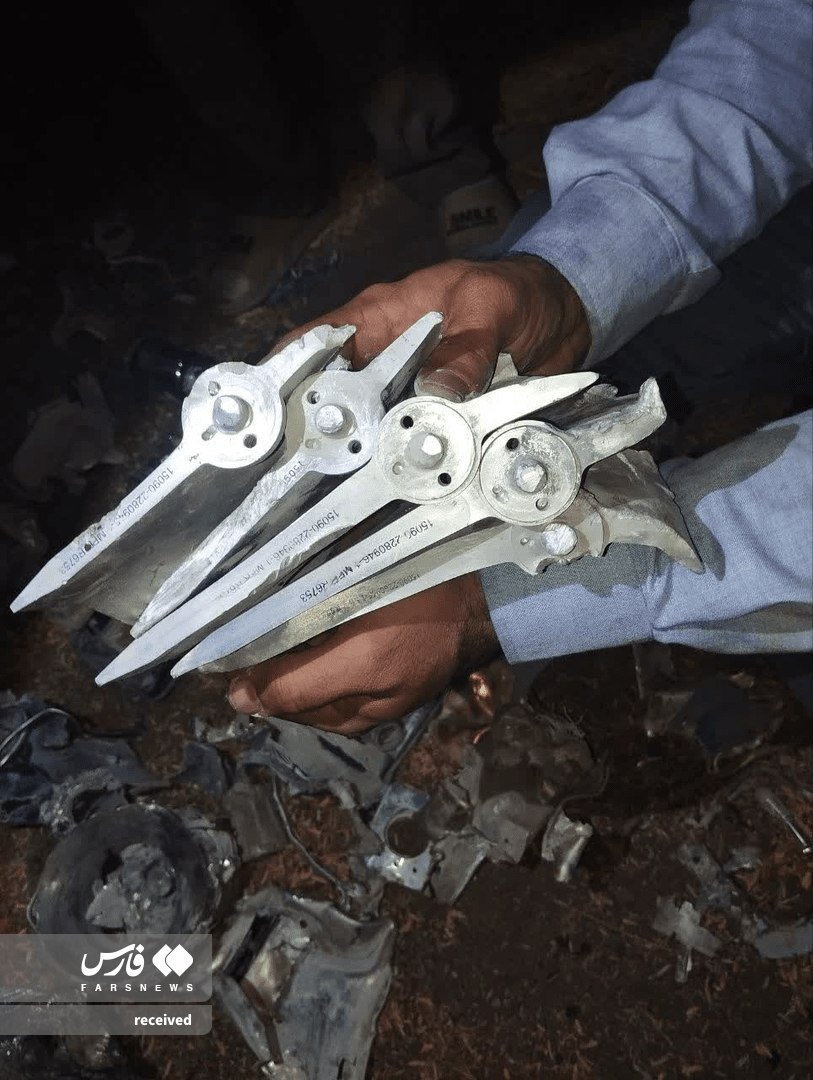
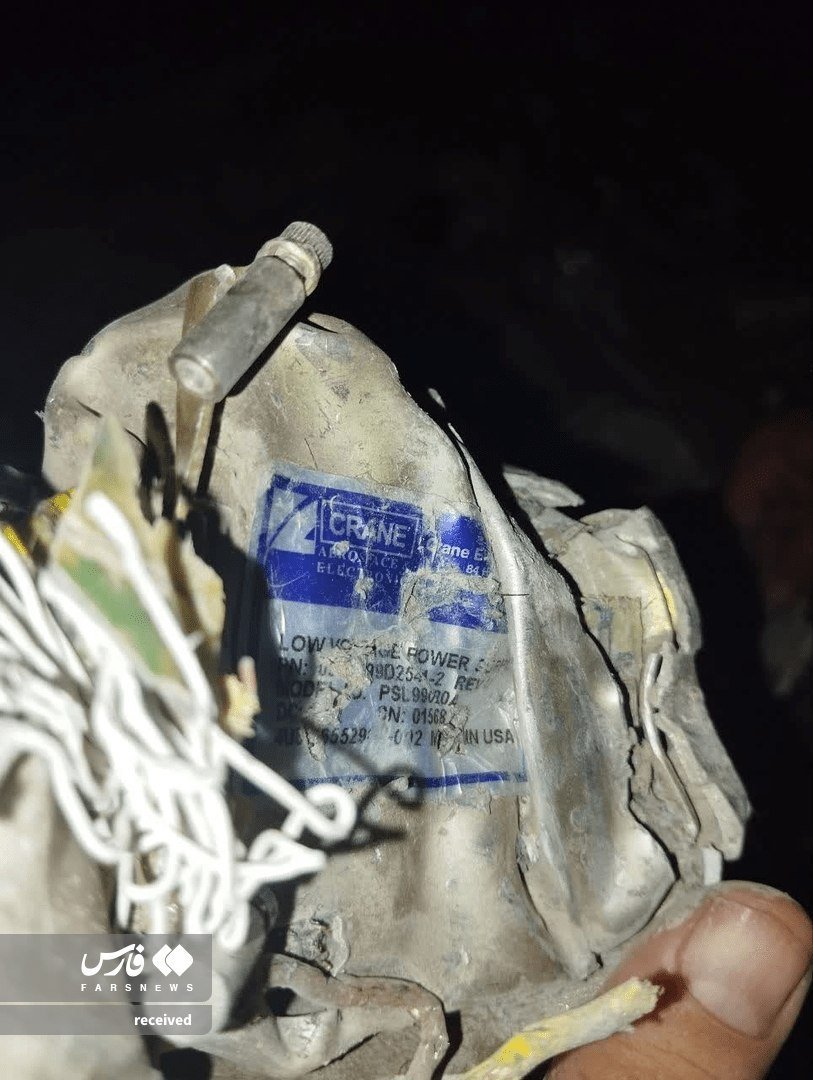
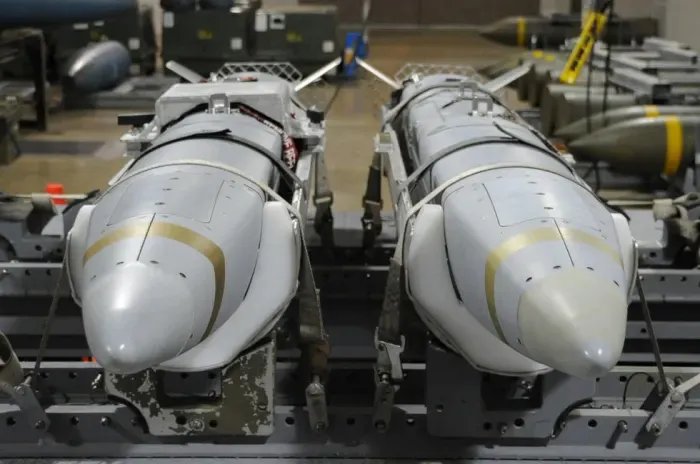
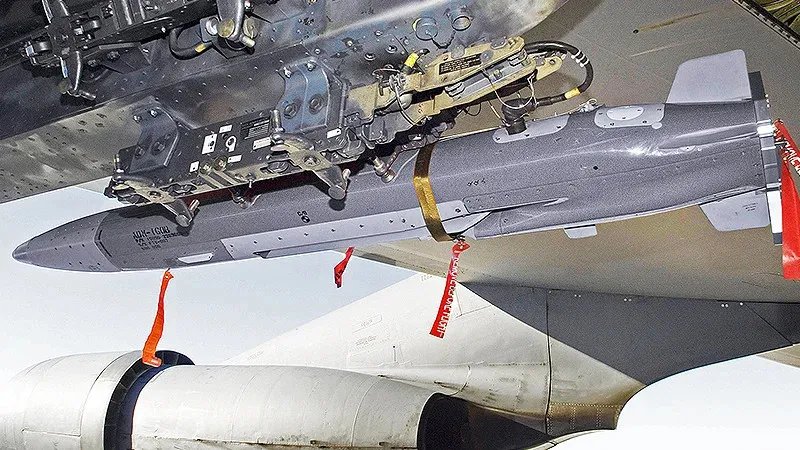
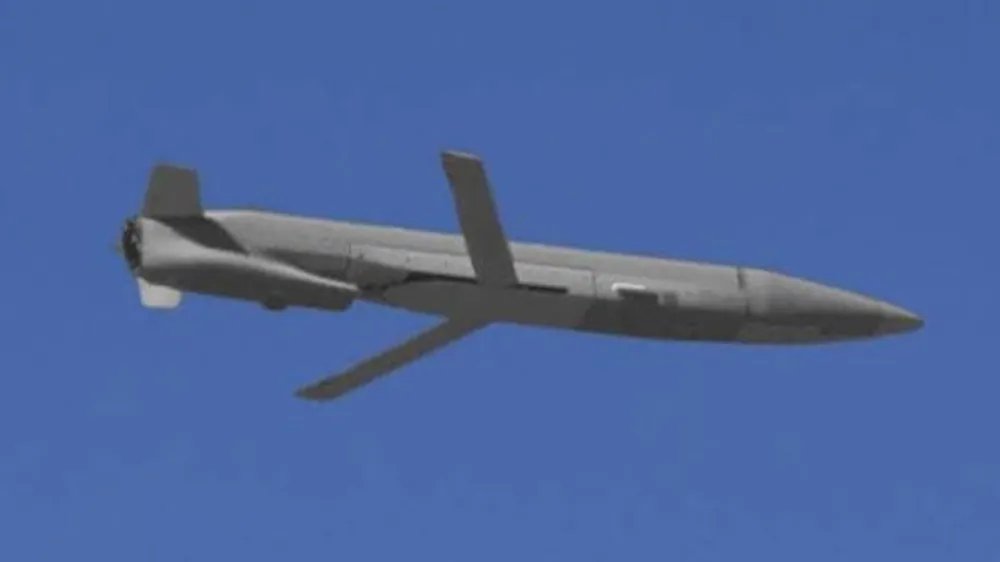
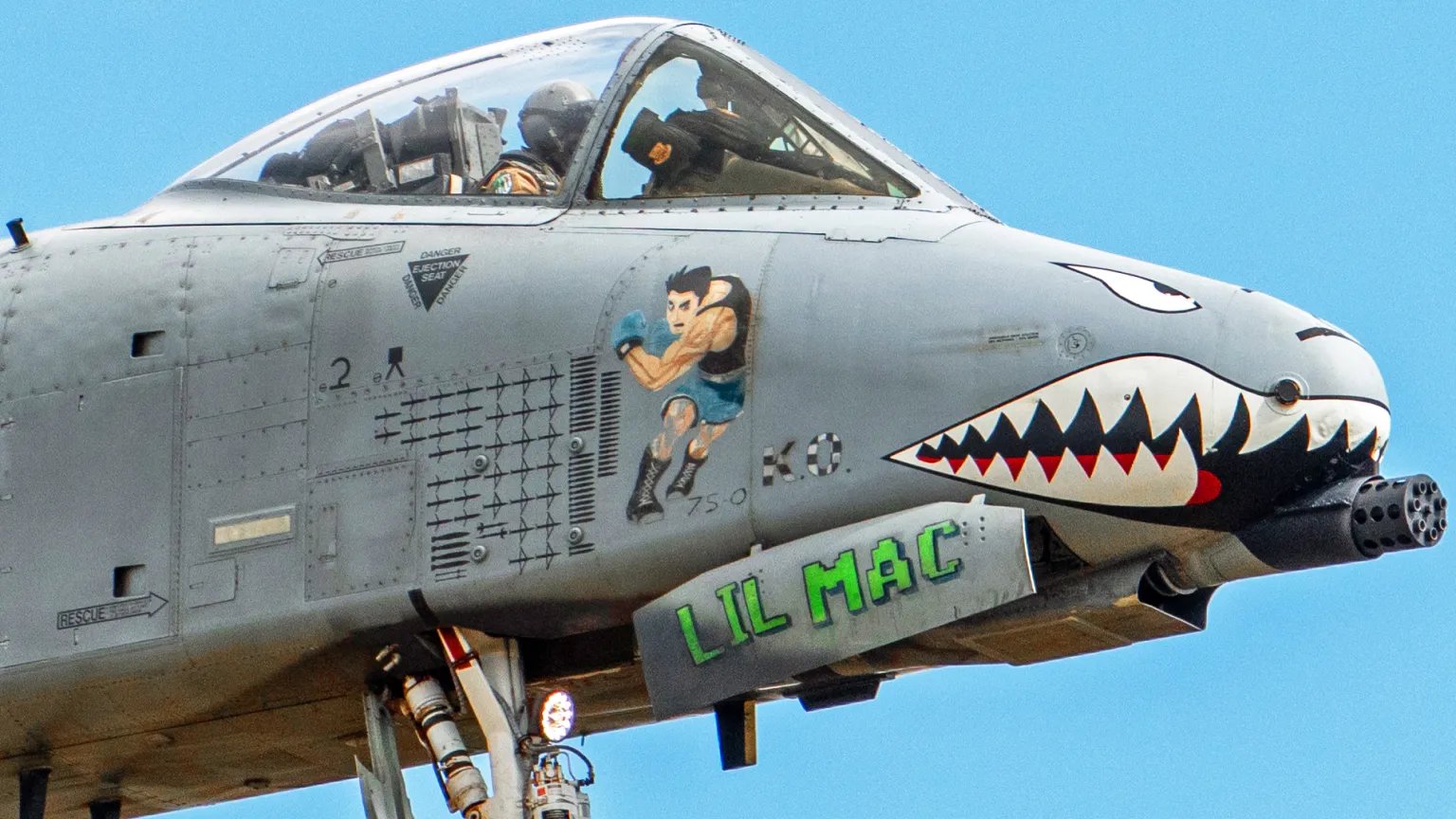

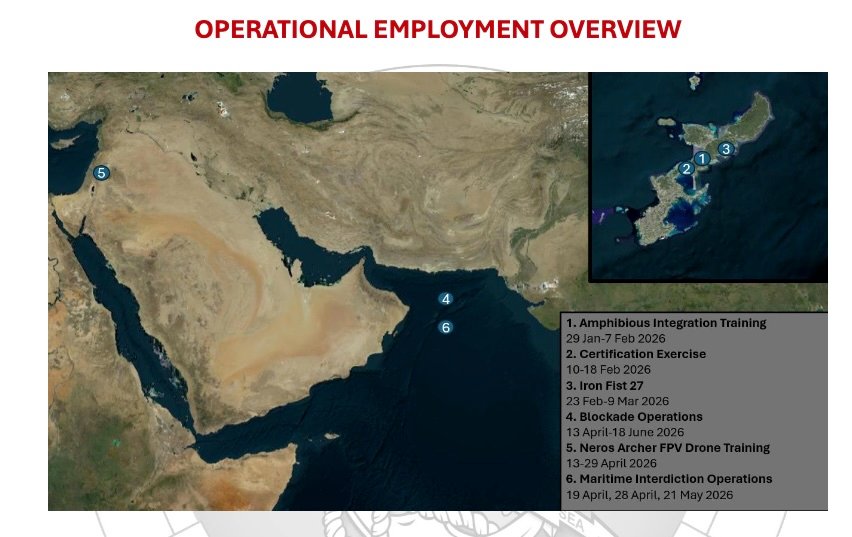
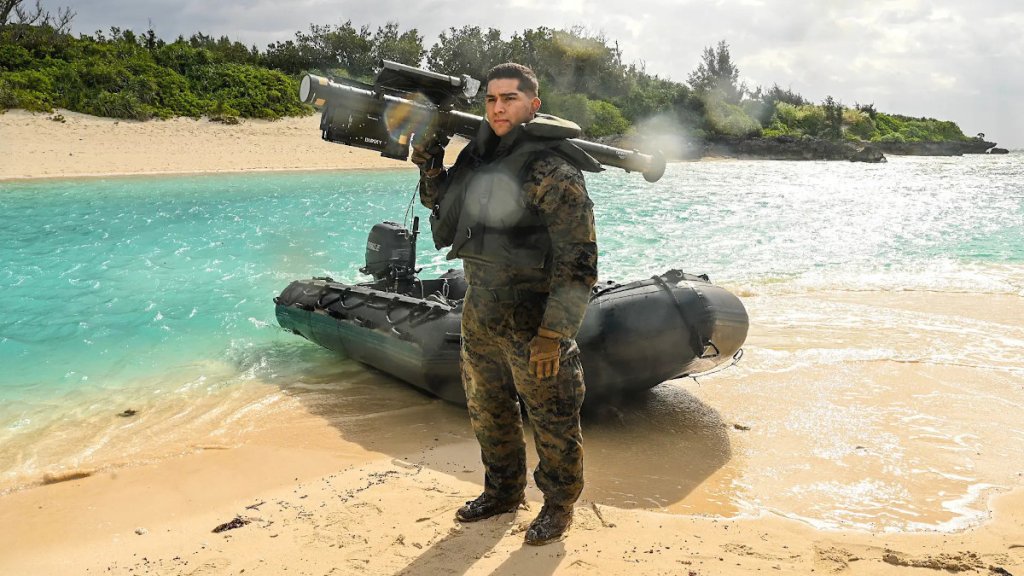
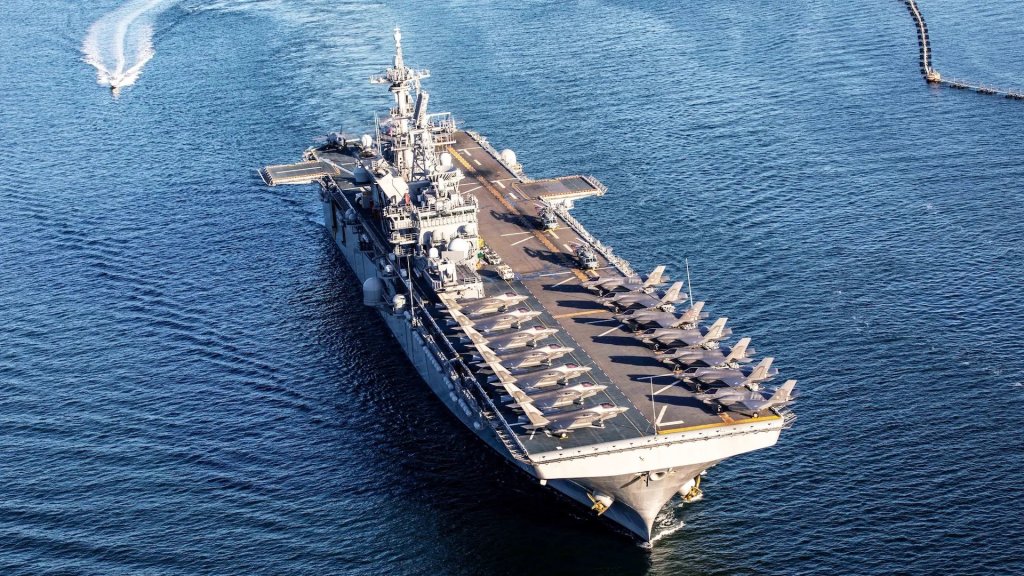
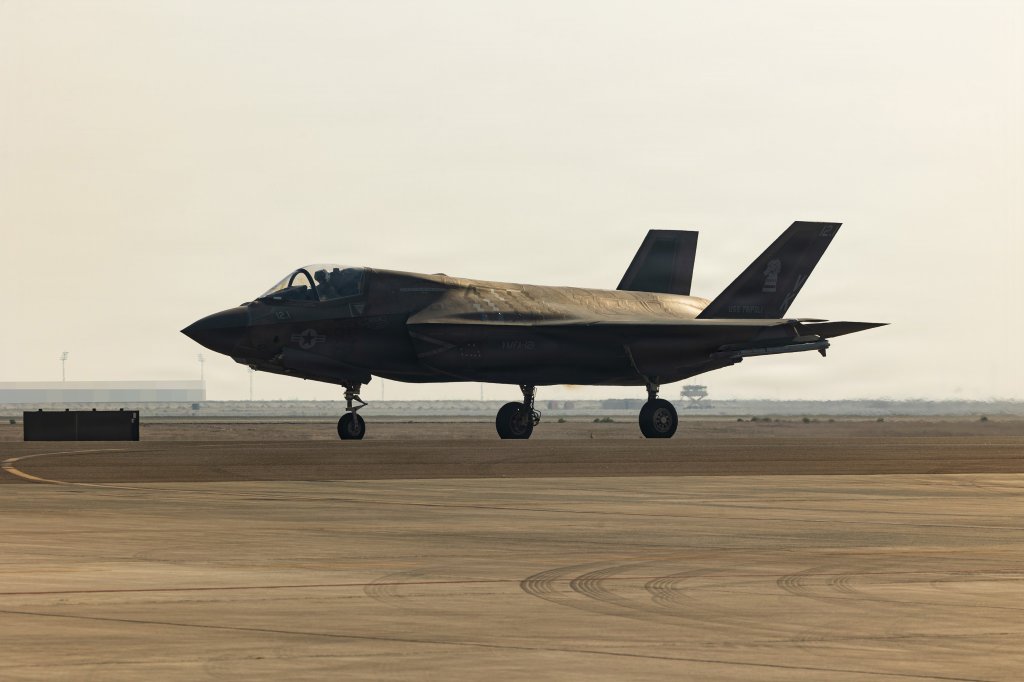
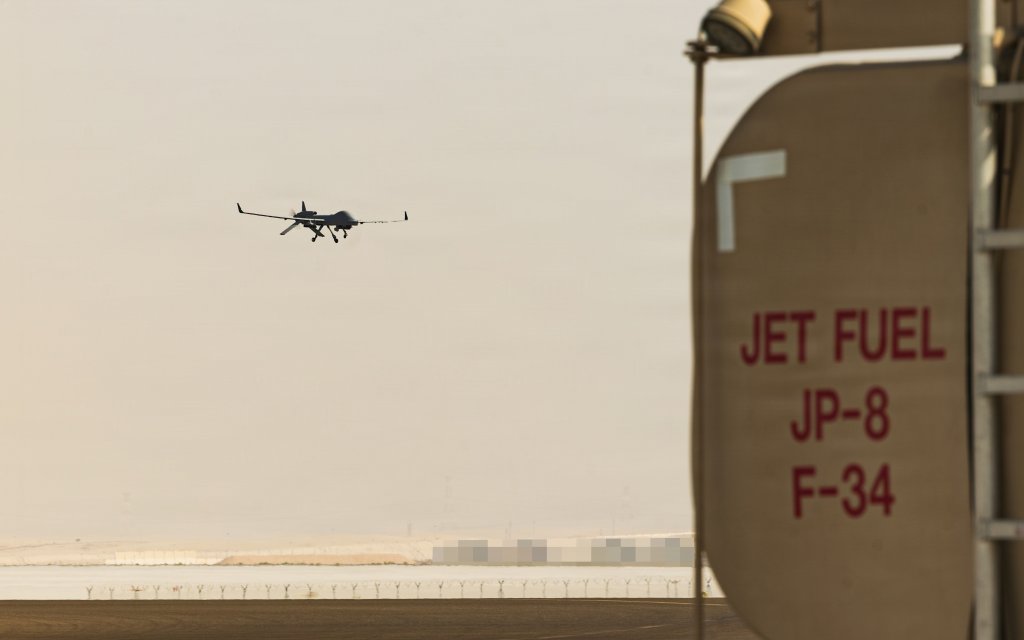
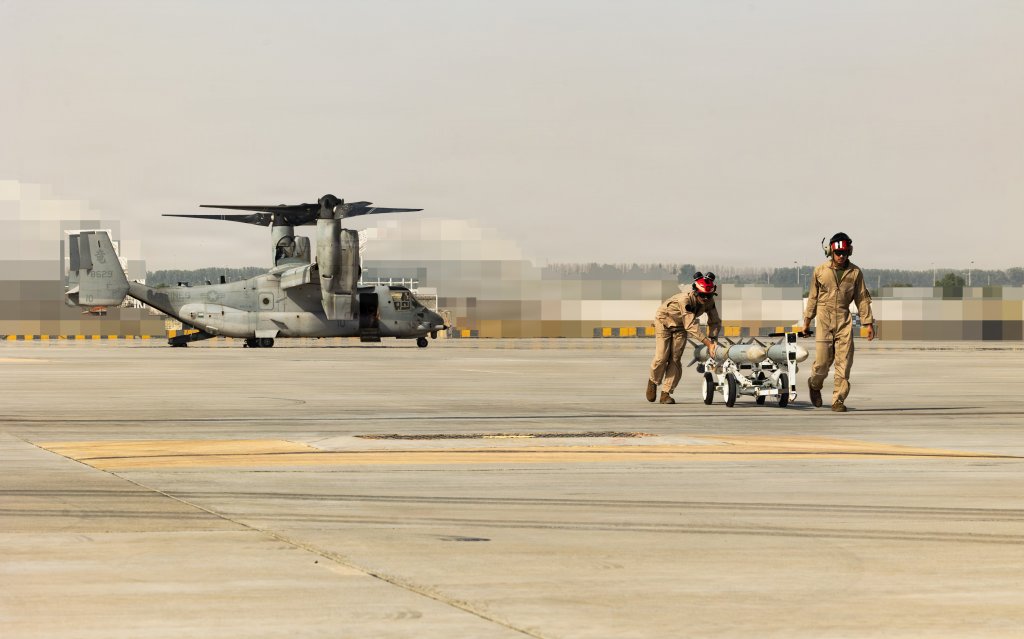

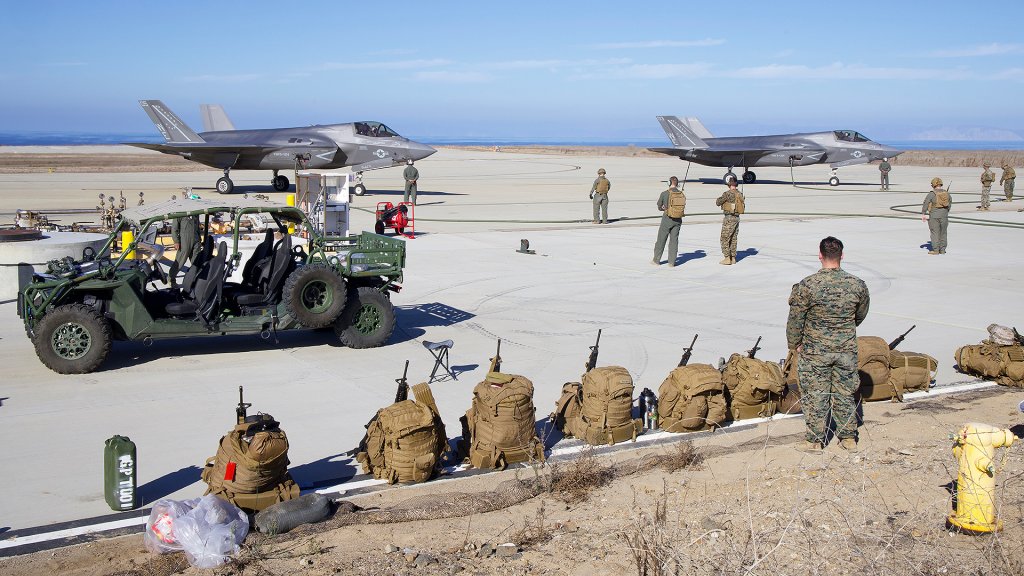
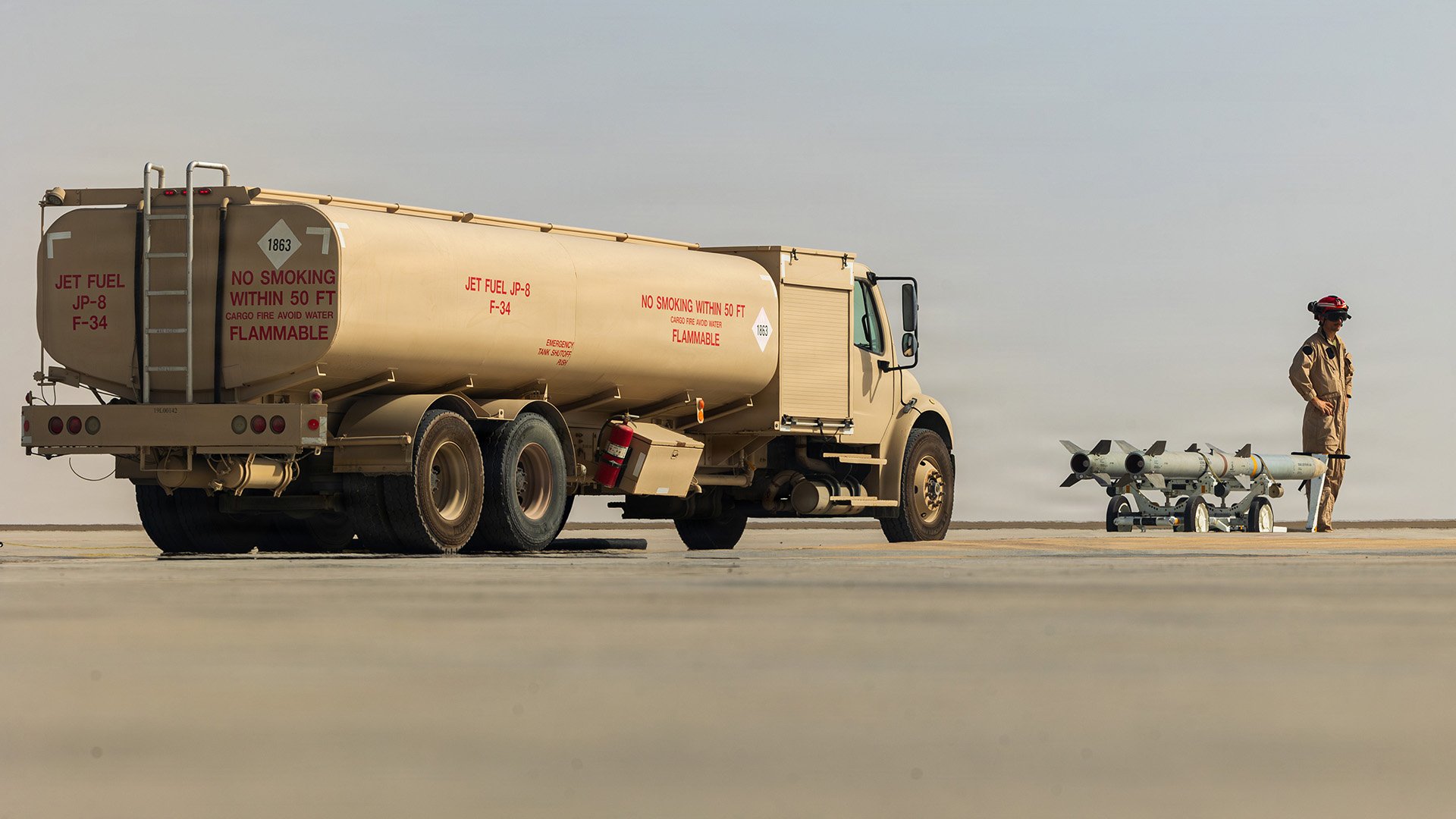
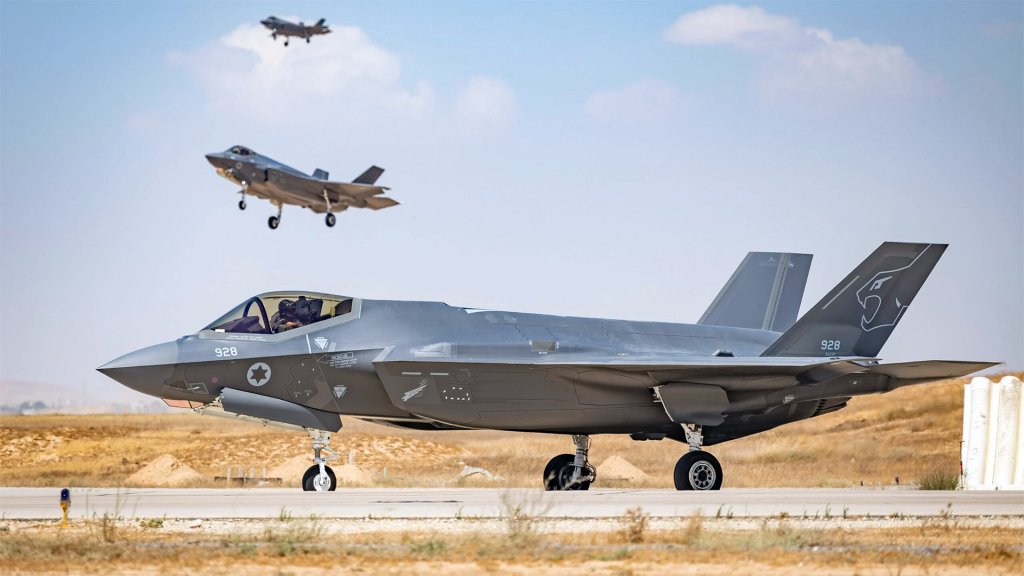

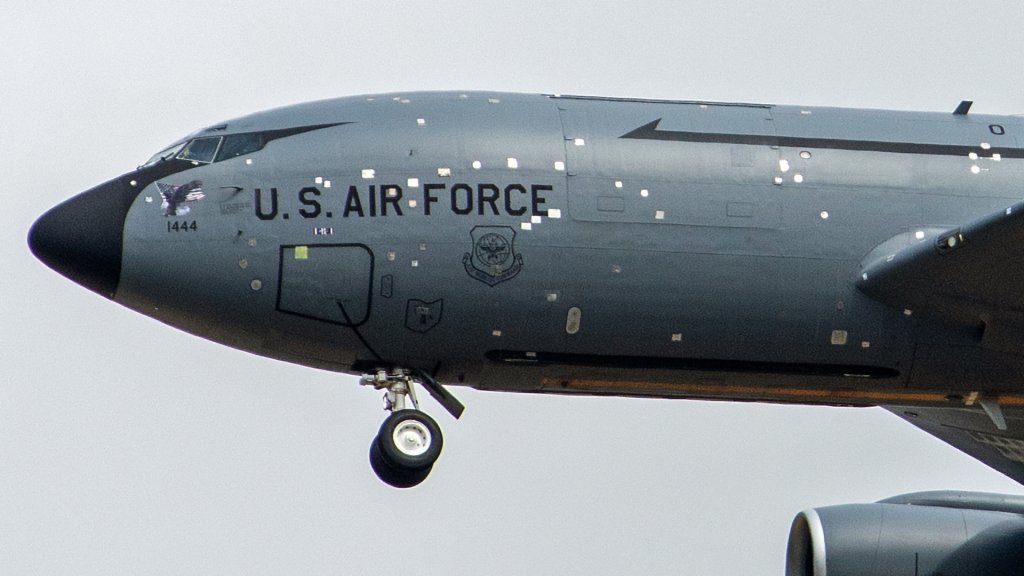
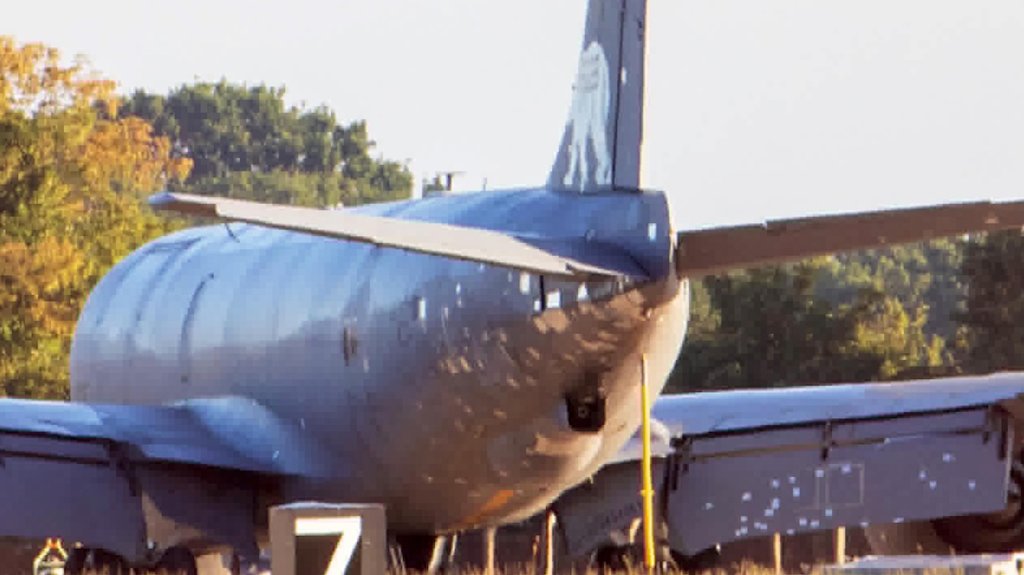
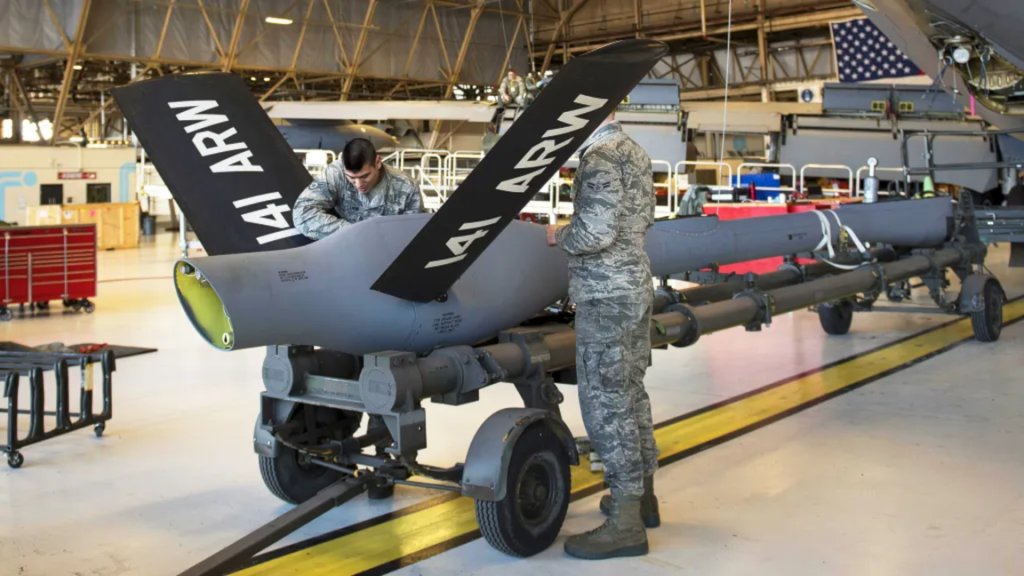
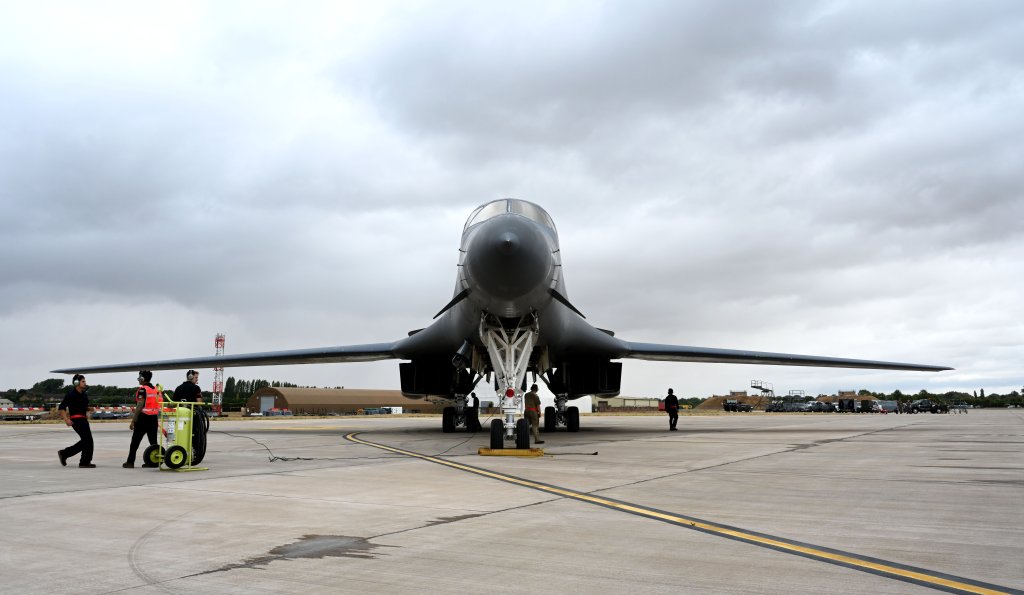
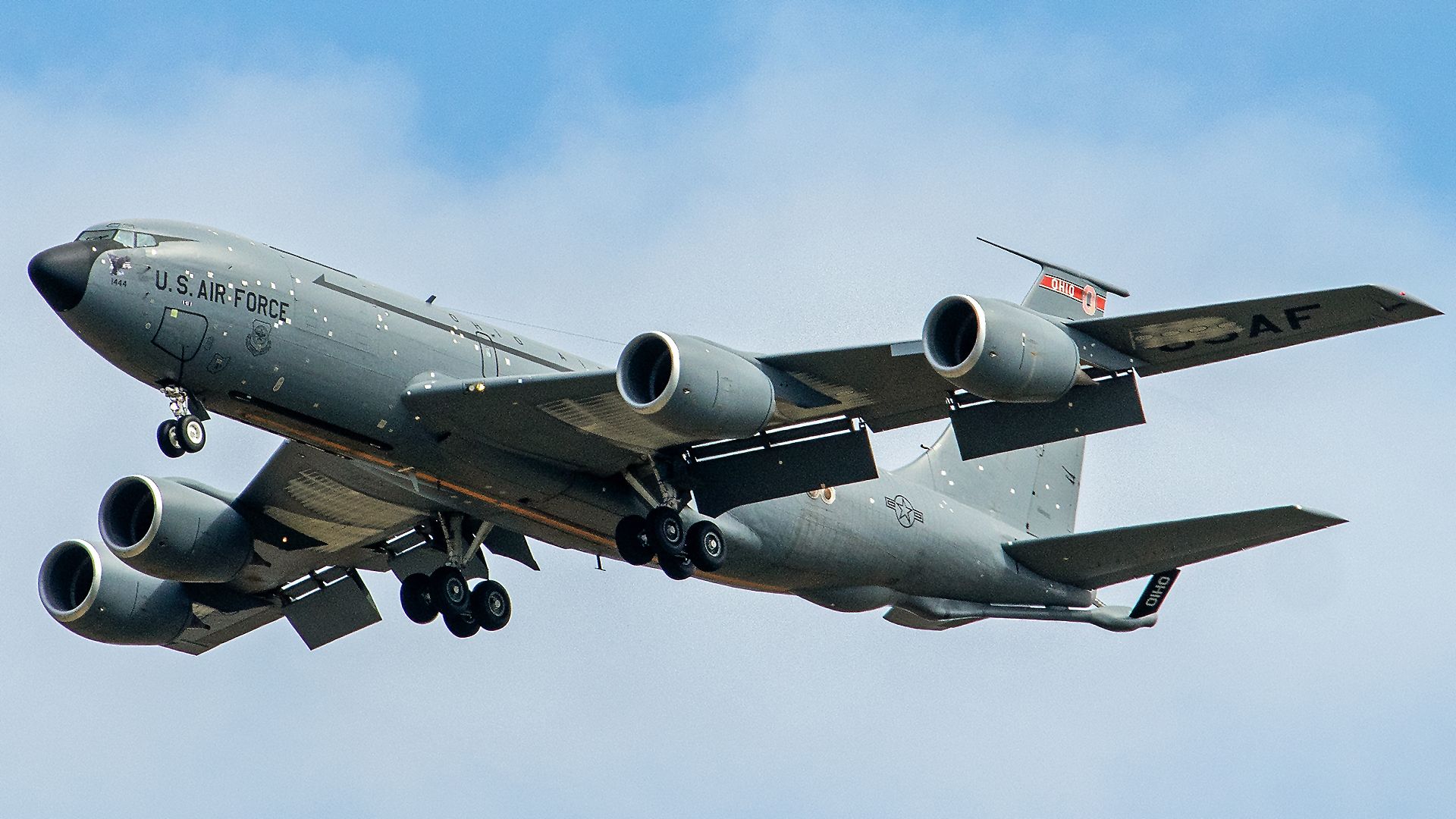
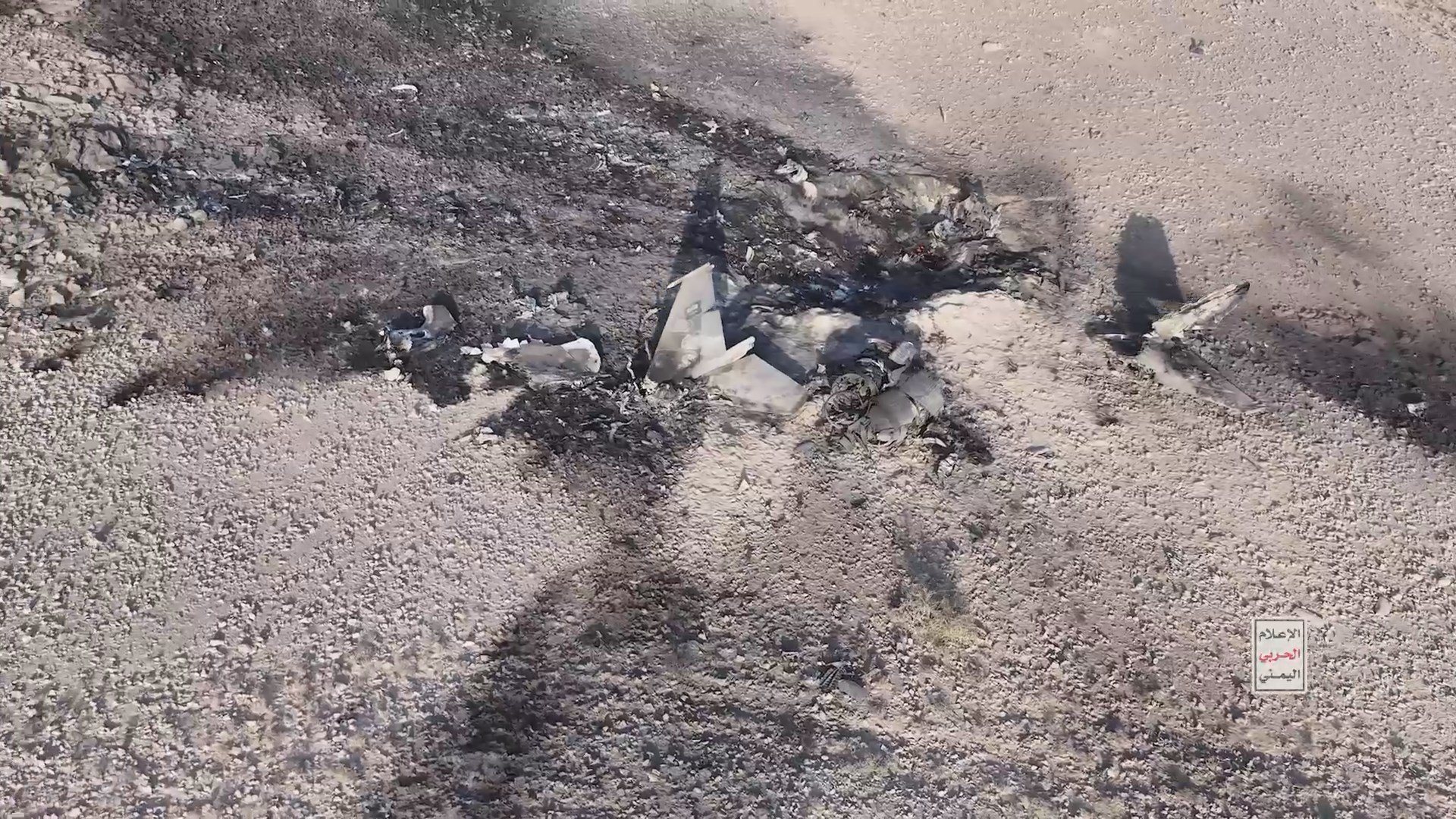
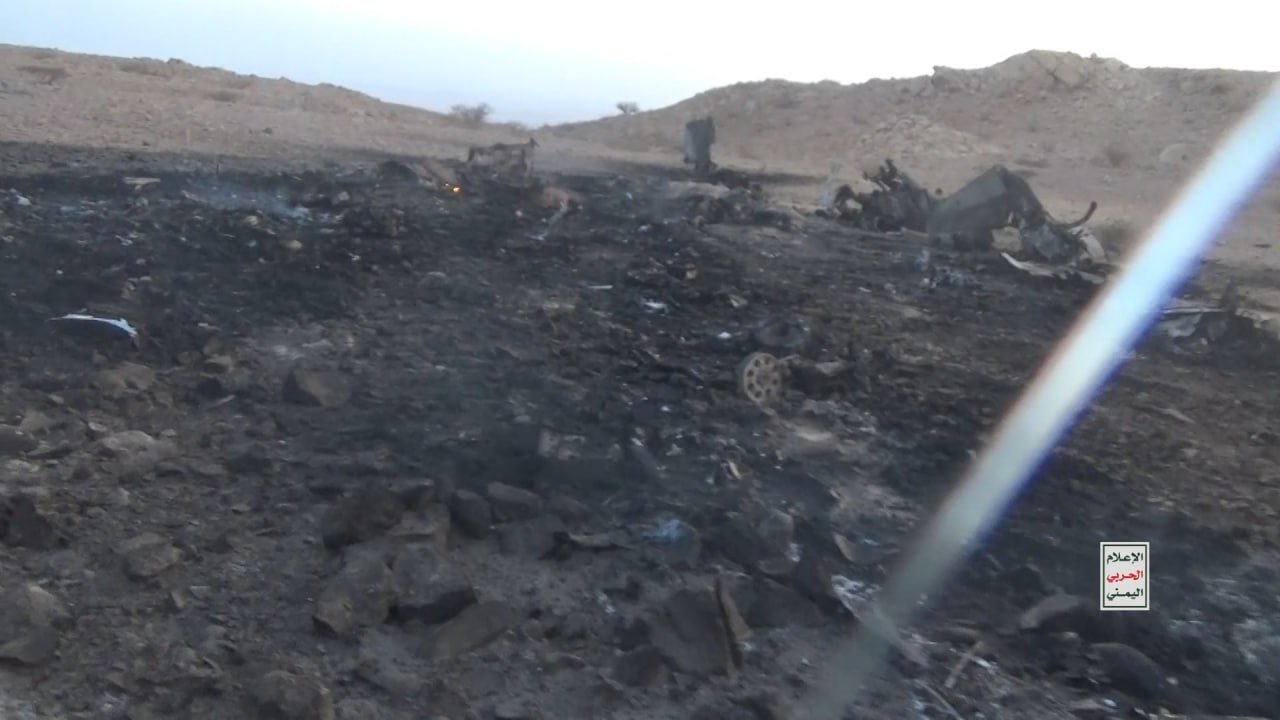
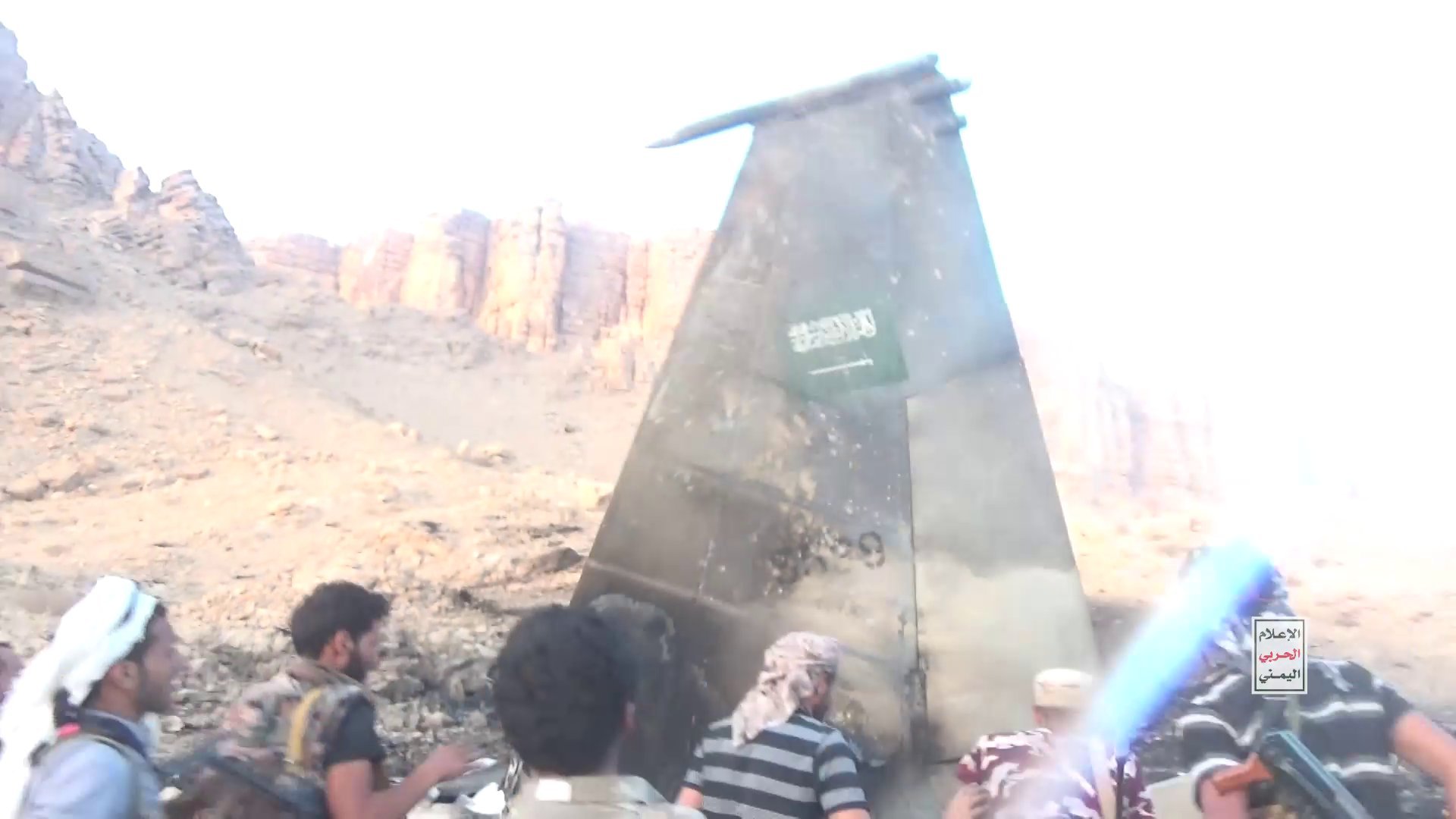
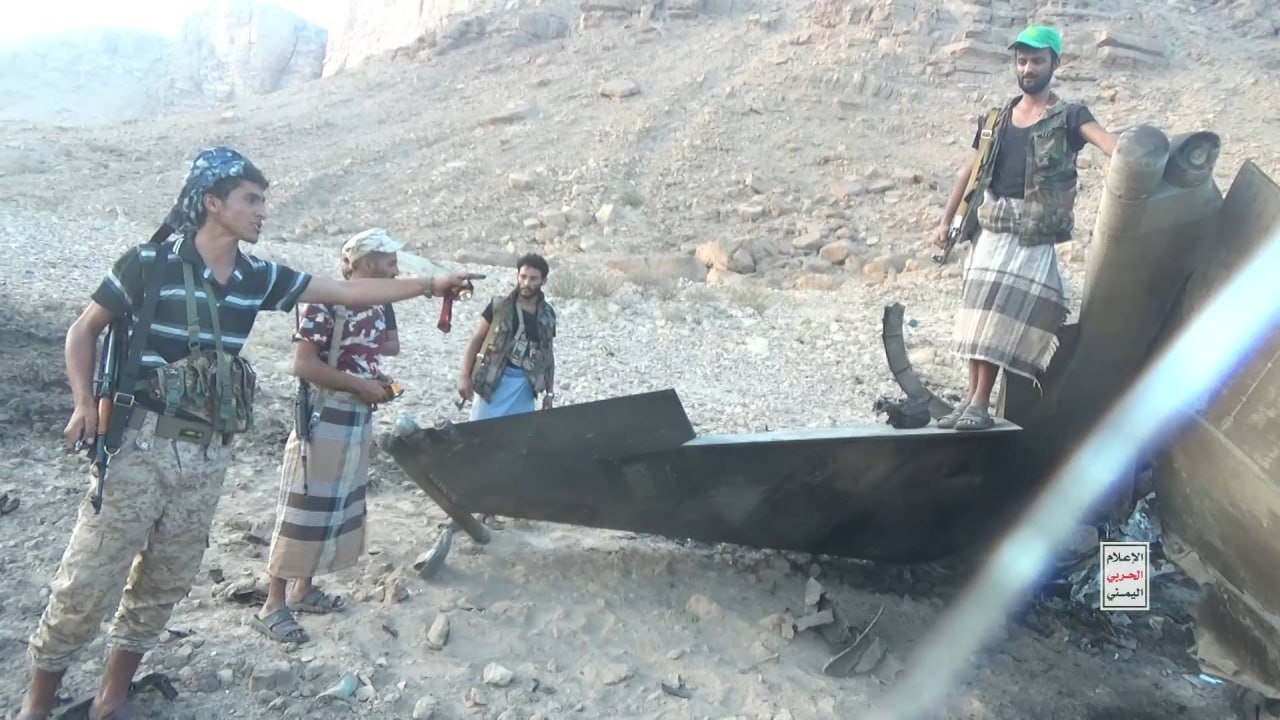
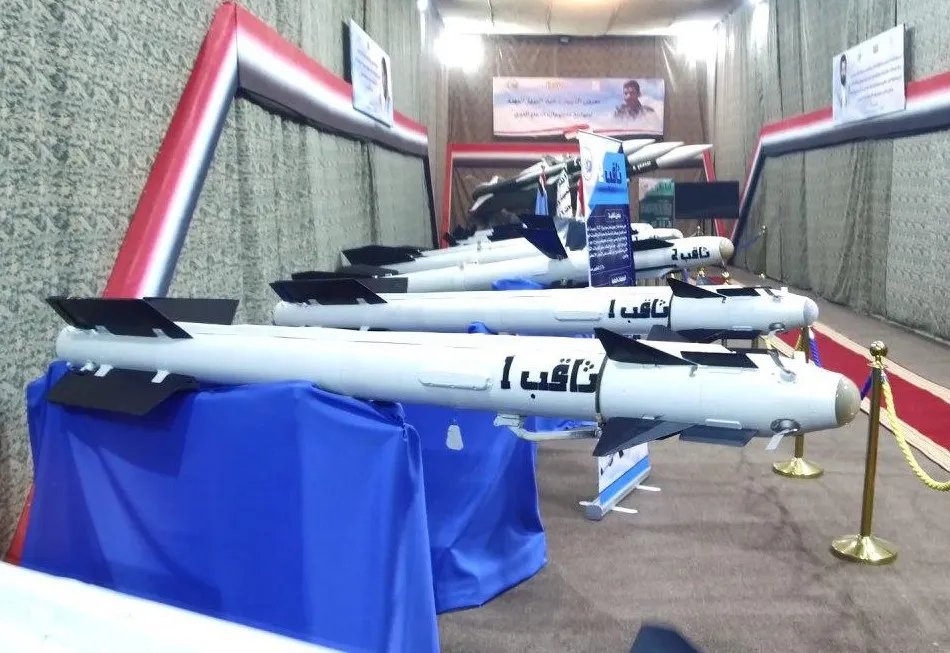
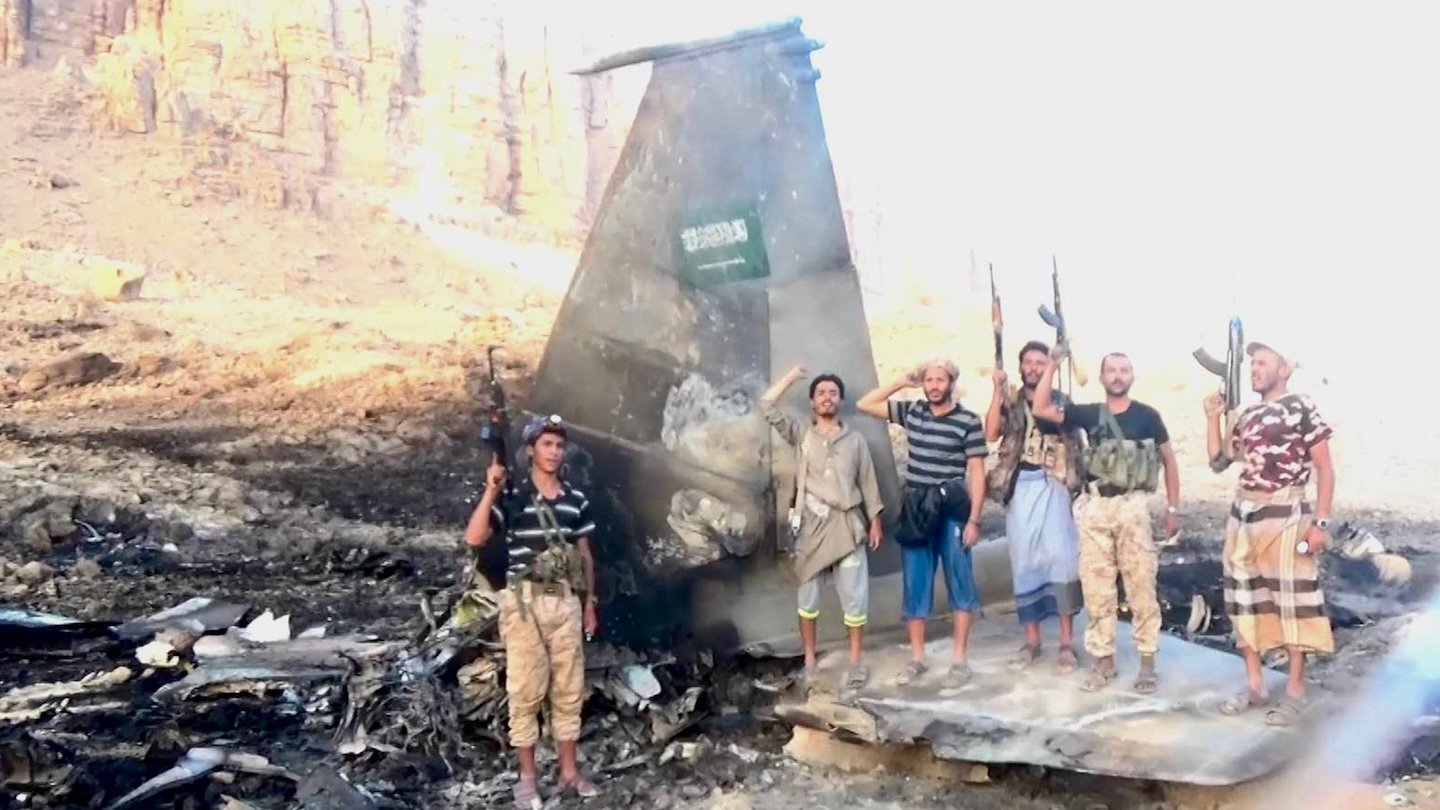
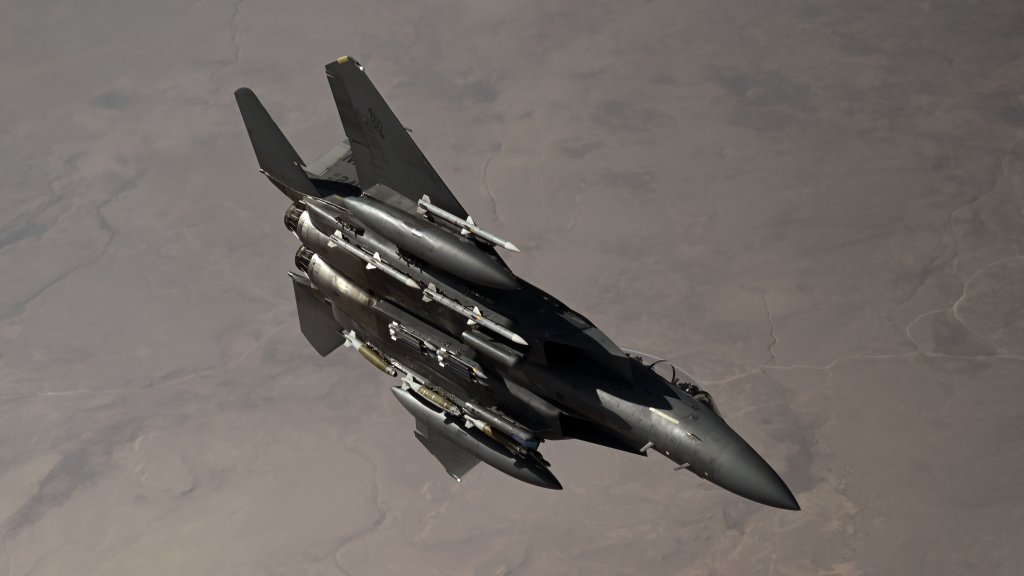
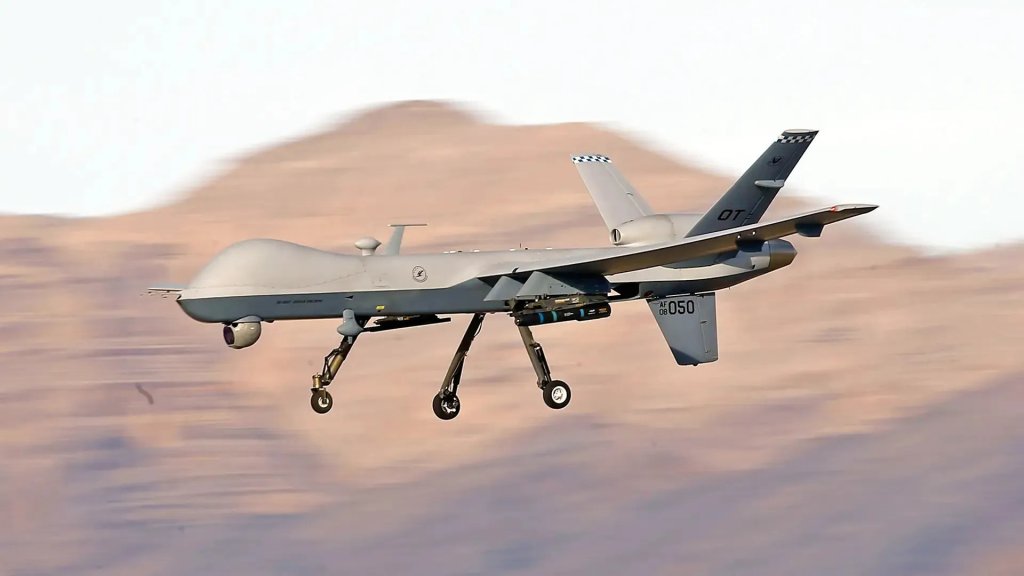
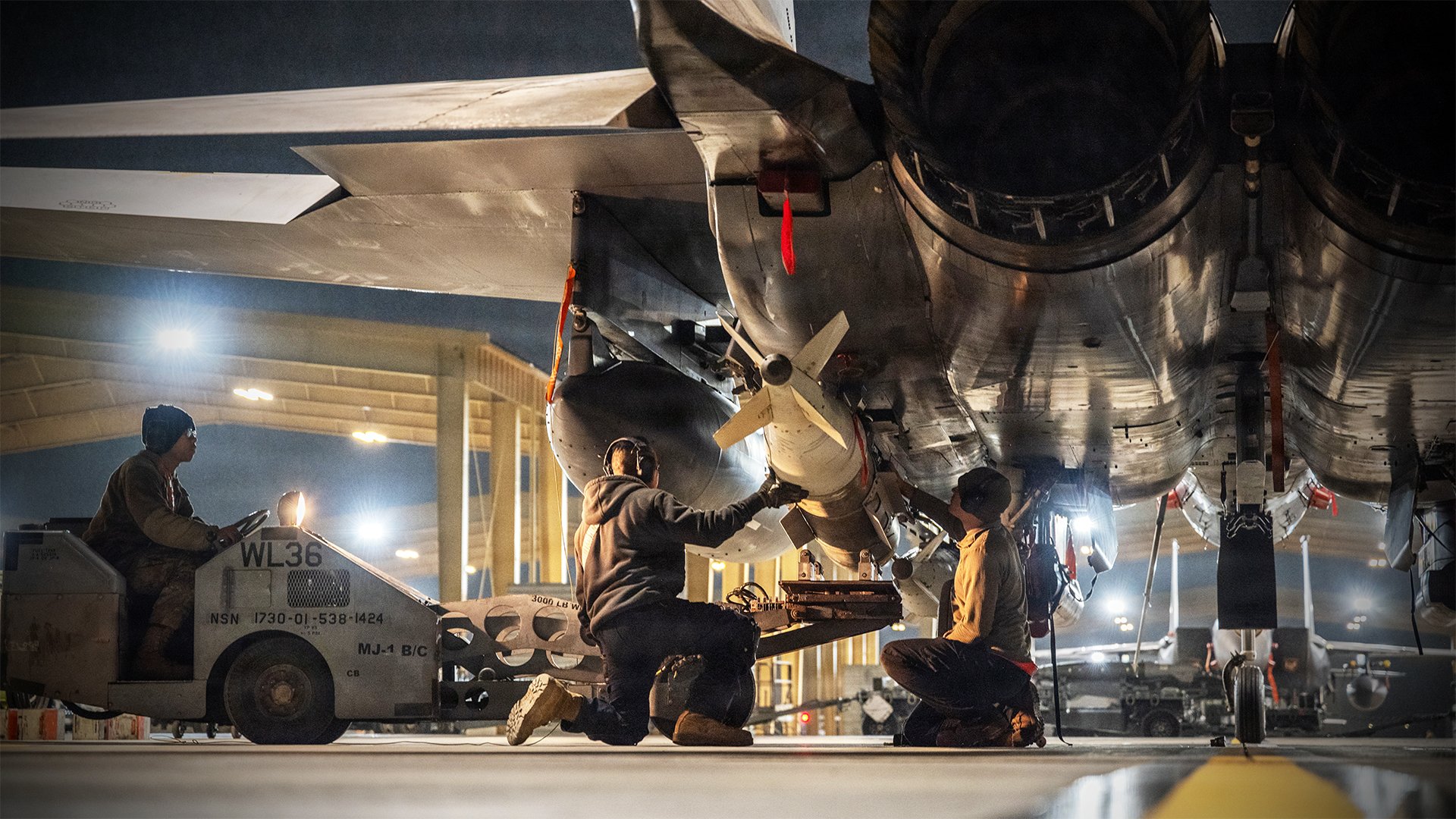

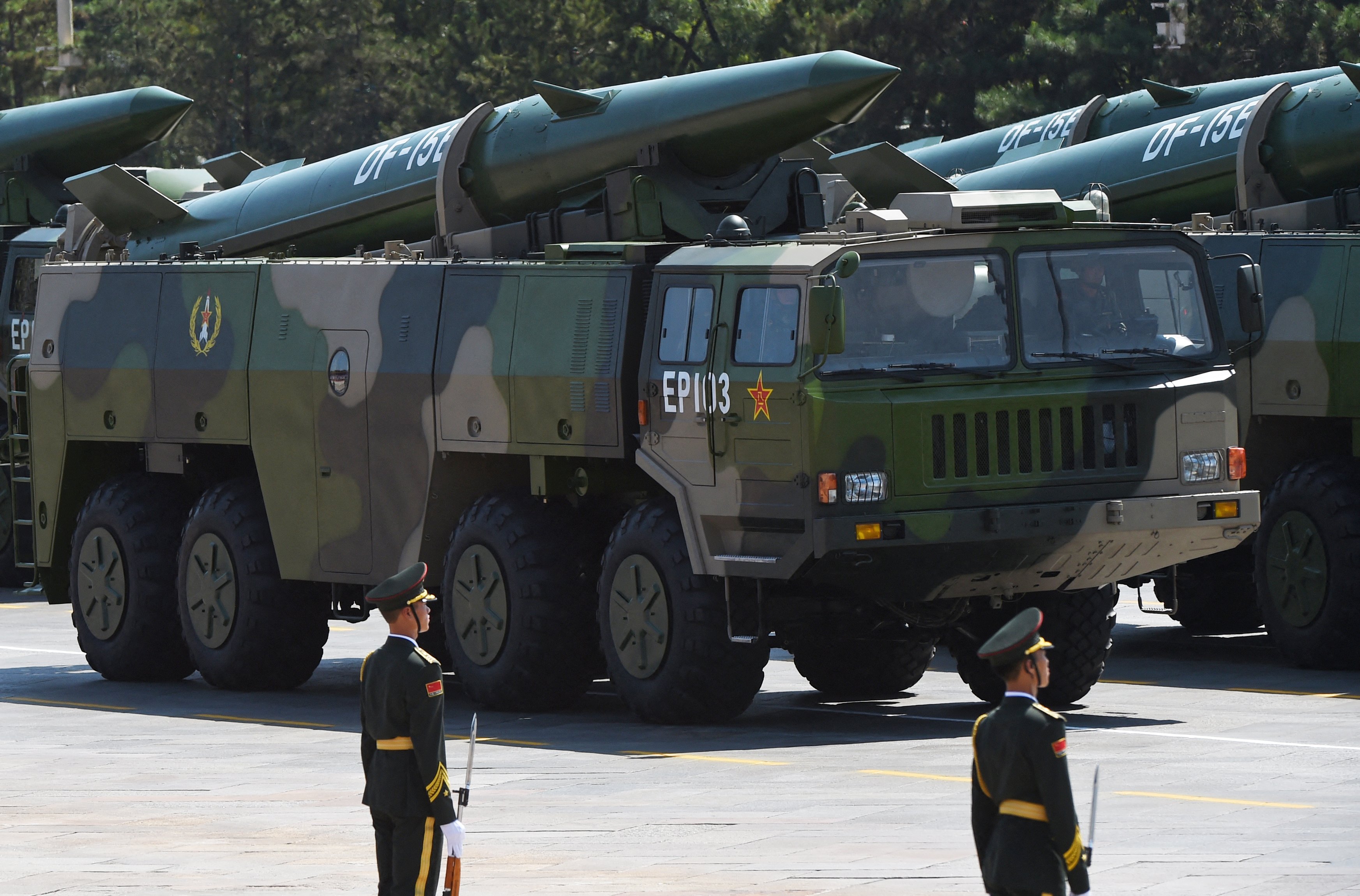

 (@IraqiPMO)


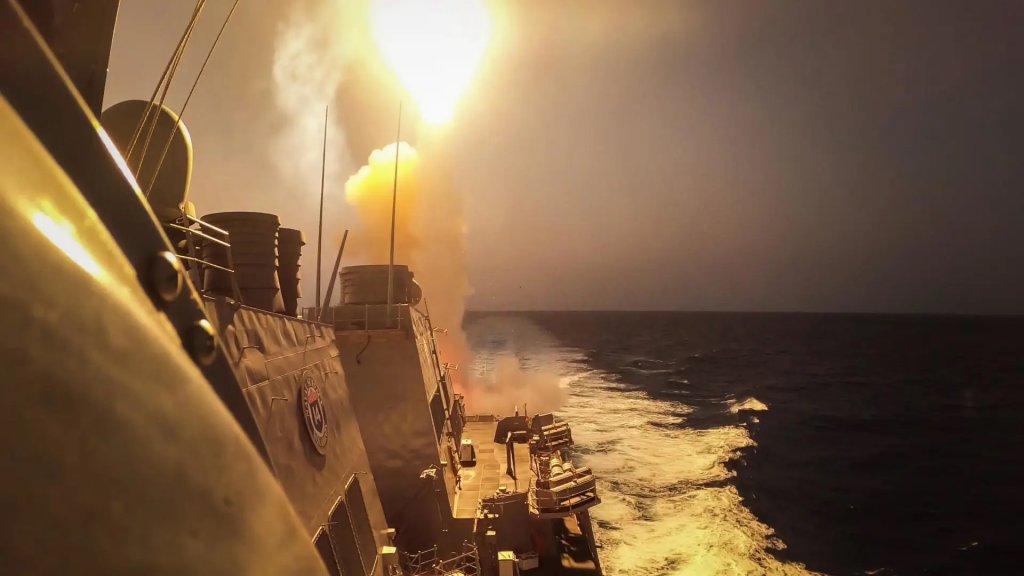


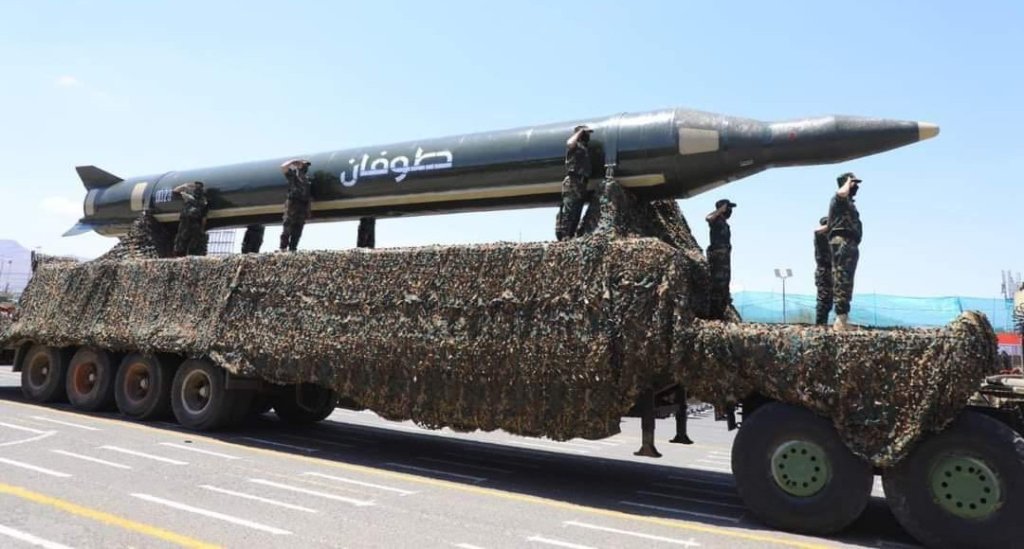


 (@frontlinekit)




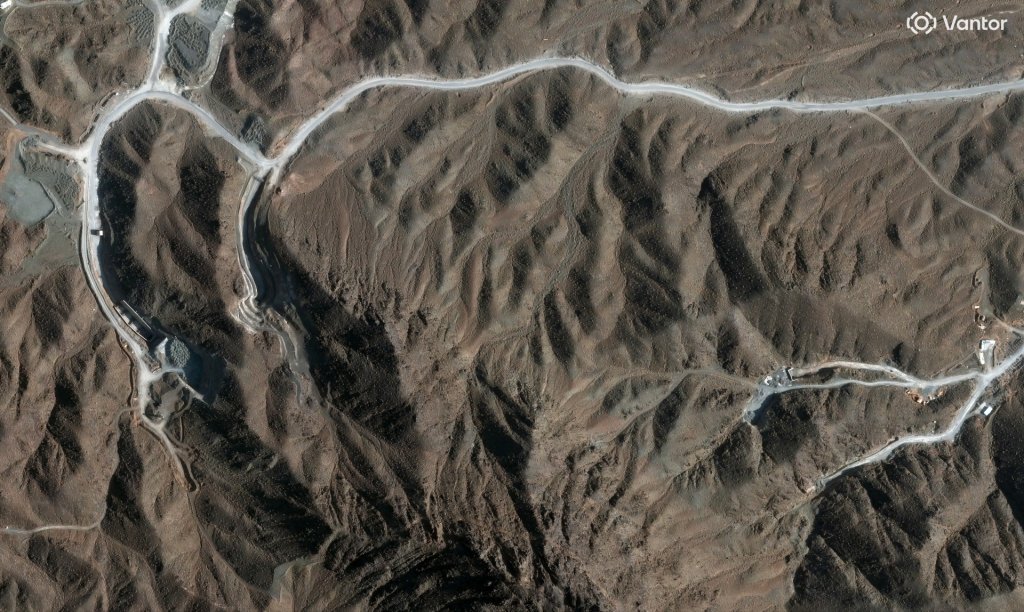
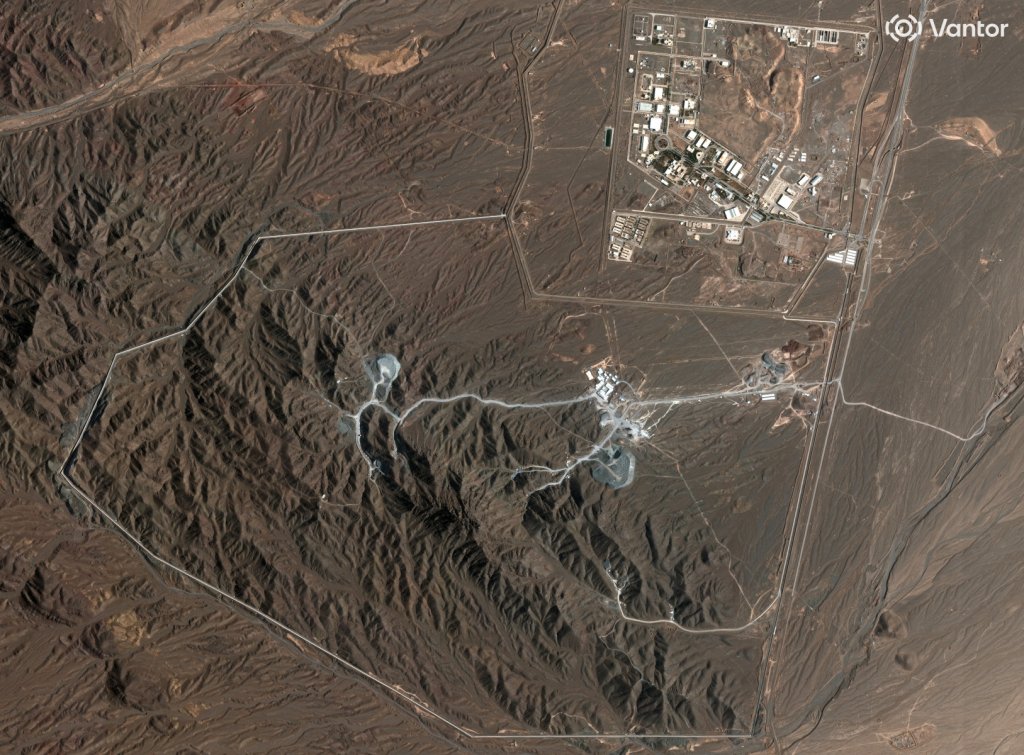
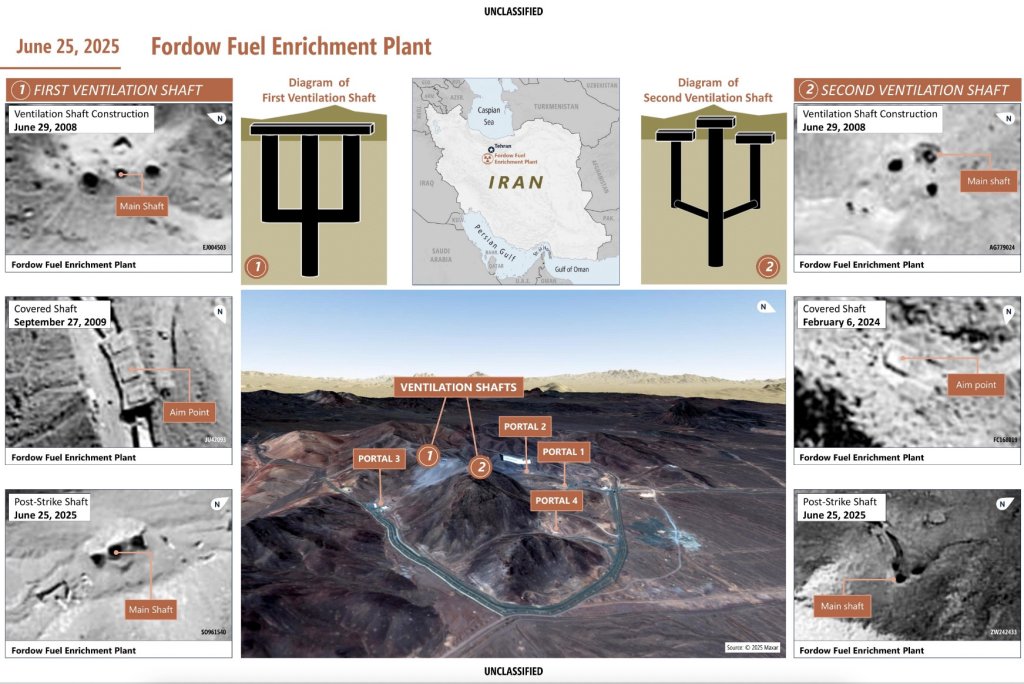
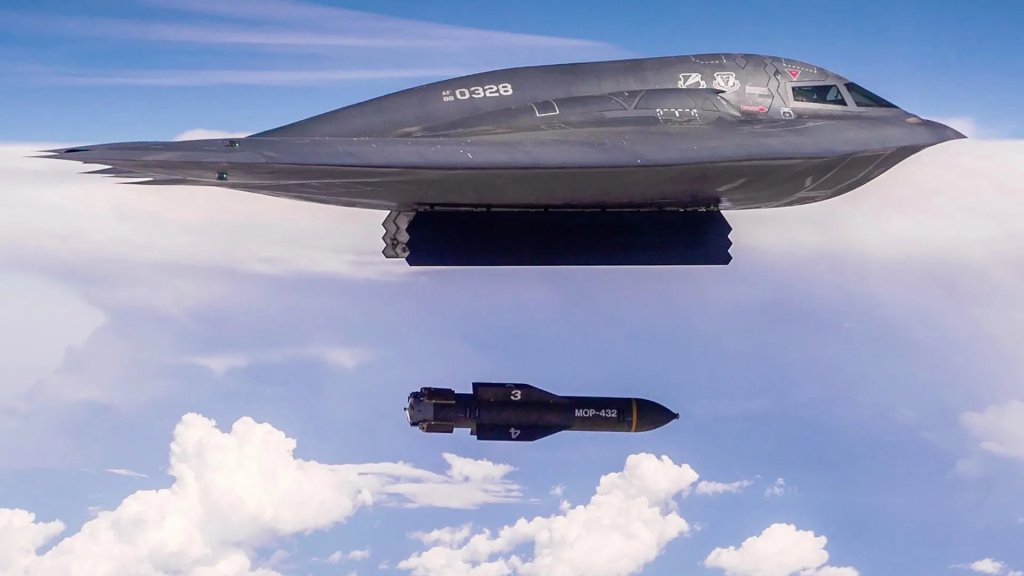

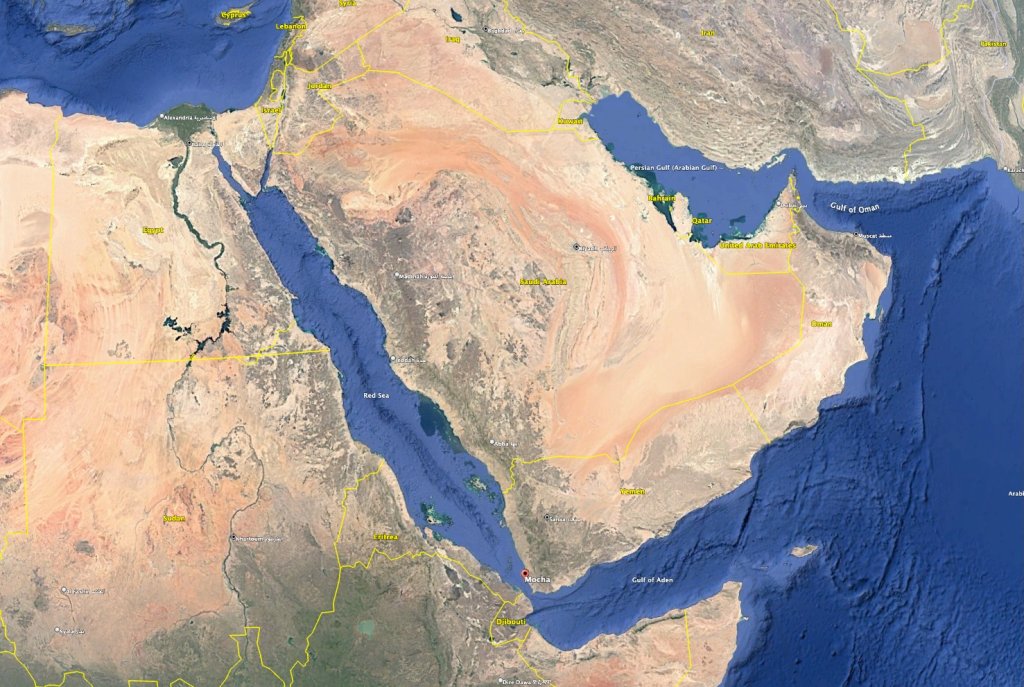
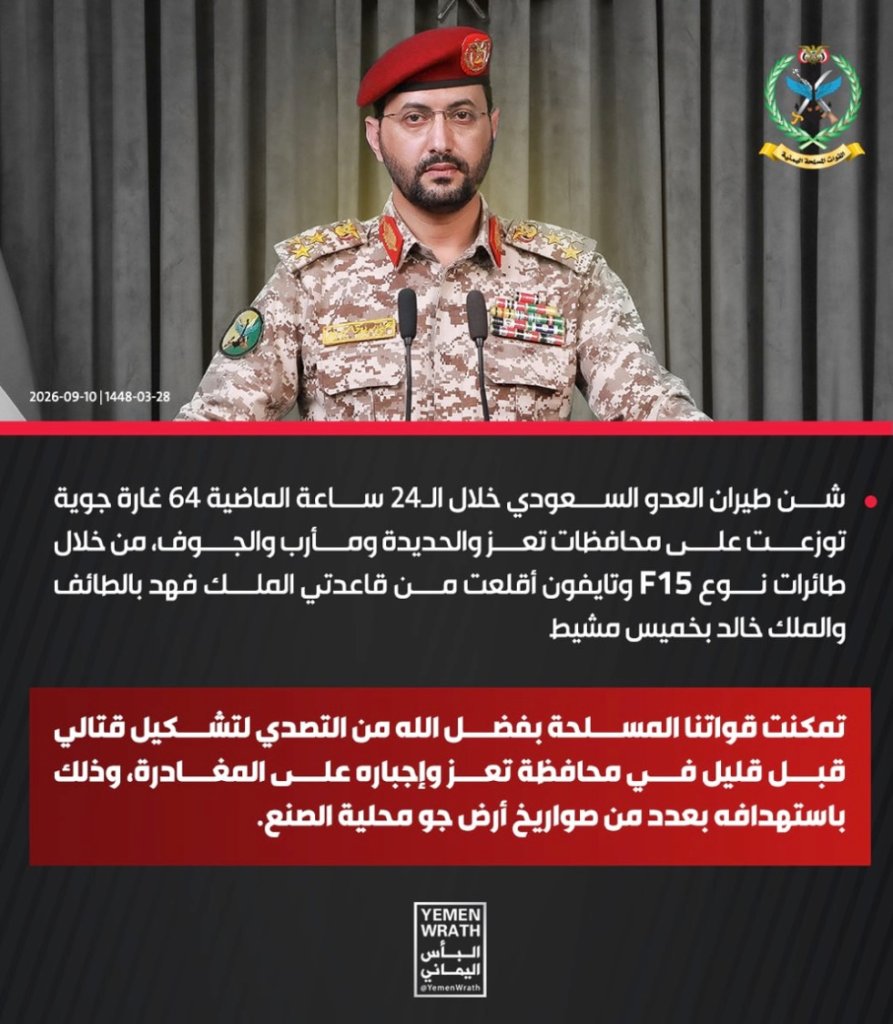
 BREAKING: The Houthis have announced a Cessation of Combat Operations along the Coast of Bab al-Mandab Strait following the Collapse of Pro-Saudi Forces

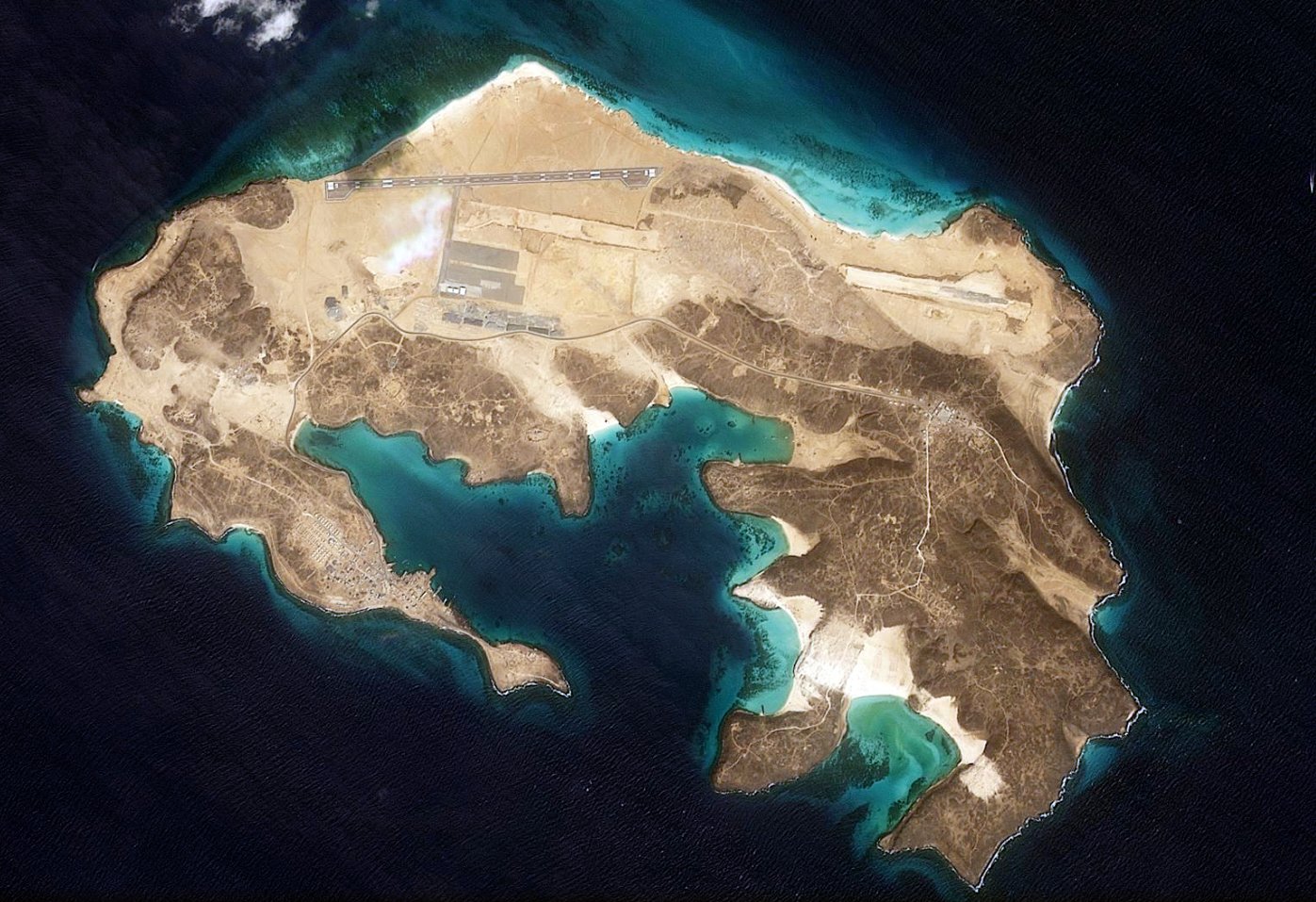
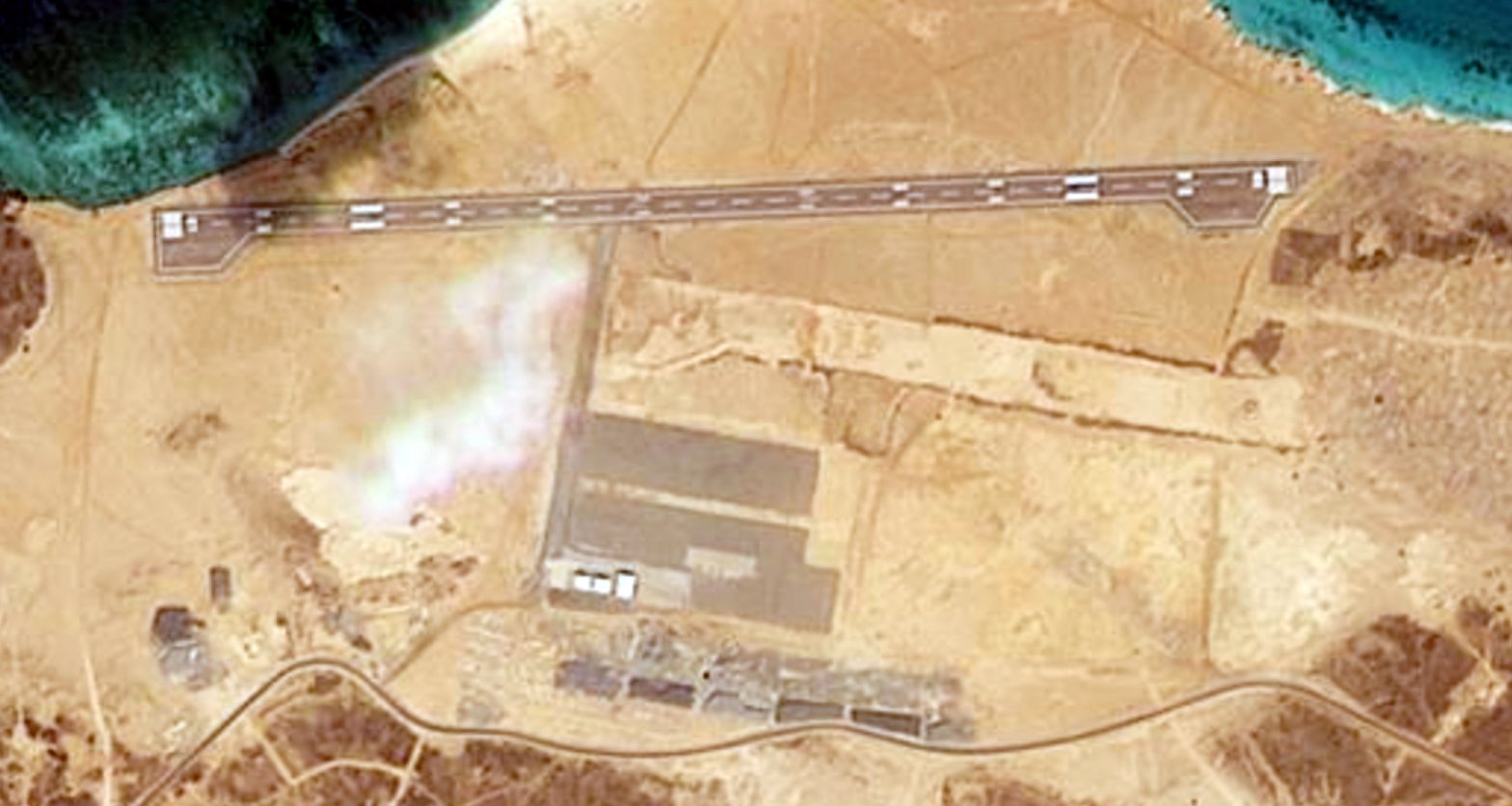

 Jabal Zuqar Island in the southern Red Sea shows a small apron with one completed aircraft hangar and another likely under construction, plus a taxiway leading to two military emplacements, likely to shelter aircraft or UAVs.

 (@AfriMEOSINT)